DEVELOP YOUR PLAN
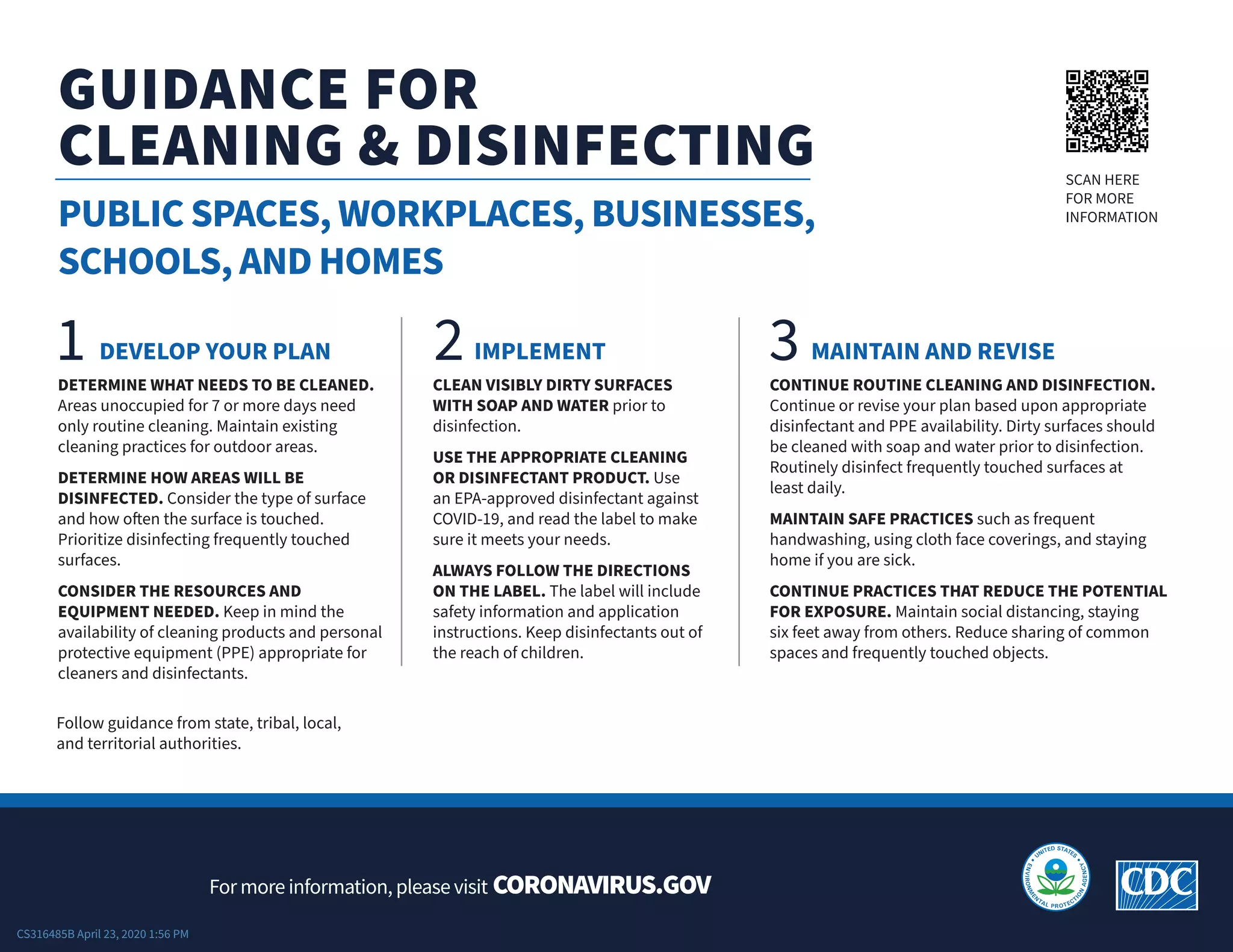
DETERMINE WHAT NEEDS TO BE CLEANED.
Areas unoccupied for 7 or more days need
only routine cleaning. Maintain existing
cleaning practices for outdoor areas.
DETERMINE HOW AREAS WILL BE
DISINFECTED. Consider the type of surface
and how often the surface is touched.
Prioritize disinfecting frequently touched
surfaces.
CONSIDER THE RESOURCES AND
EQUIPMENT NEEDED. Keep in mind the
availability of cleaning products and personal
protective equipment (PPE) appropriate for
cleaners and disinfectants.
1 	 IMPLEMENT
CLEAN VISIBLY DIRTY SURFACES
WITH SOAP AND WATER prior to
disinfection.
USE THE APPROPRIATE CLEANING
OR DISINFECTANT PRODUCT. Use
an EPA-approved disinfectant against
COVID-19, and read the label to make
sure it meets your needs.
ALWAYS FOLLOW THE DIRECTIONS
ON THE LABEL. The label will include
safety information and application
instructions. Keep disinfectants out of
the reach of children.
2 	 MAINTAIN AND REVISE
CONTINUE ROUTINE CLEANING AND DISINFECTION.
Continue or revise your plan based upon appropriate
disinfectant and PPE availability. Dirty surfaces should
be cleaned with soap and water prior to disinfection.
Routinely disinfect frequently touched surfaces at
least daily.
MAINTAIN SAFE PRACTICES such as frequent
handwashing, using cloth face coverings, and staying
home if you are sick.
CONTINUE PRACTICES THAT REDUCE THE POTENTIAL
FOR EXPOSURE. Maintain social distancing, staying
six feet away from others. Reduce sharing of common
spaces and frequently touched objects.
3
Follow guidance from state, tribal, local,
and territorial authorities.
GUIDANCE FOR
CLEANING & DISINFECTING
PUBLIC SPACES, WORKPLACES, BUSINESSES,
SCHOOLS, AND HOMES
SCAN HERE
FOR MORE
INFORMATION
CS316485B April 23, 2020 1:56 PM
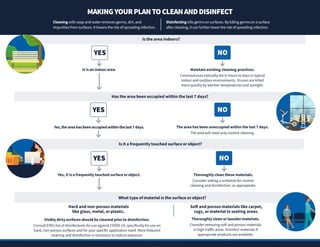
MAKING YOUR PLAN TO CLEAN AND DISINFECT
Has the area been occupied within the last 7 days?
Is it a frequently touched surface or object?
Maintain existing cleaning practices.
Coronaviruses naturally die in hours to days in typical
indoor and outdoor environments. Viruses are killed
more quickly by warmer temperatures and sunlight.
Yes, the area has been occupied within the last 7 days. The area has been unoccupied within the last 7 days.
The area will need only routine cleaning.
It is an indoor area.
YES
YES
YES
NO
NO
NO
Is the area indoors?
Yes, it is a frequently touched surface or object. Thoroughly clean these materials.
Consider setting a schedule for routine
cleaning and disinfection, as appropriate.
What type of material is the surface or object?
Visibly dirty surfaces should be cleaned prior to disinfection.
Consult EPA’s list of disinfectants for use against COVID-19, specifically for use on
hard, non-porous surfaces and for your specific application need. More frequent
cleaning and disinfection is necessary to reduce exposure.
Thoroughly clean or launder materials.
Consider removing soft and porous materials
in high traffic areas. Disinfect materials if
appropriate products are available.
Cleaning with soap and water removes germs, dirt, and
impurities from surfaces. It lowers the risk of spreading infection.
Disinfecting kills germs on surfaces. By killing germs on a surface
after cleaning, it can further lower the risk of spreading infection.
Hard and non-porous materials
like glass, metal, or plastic.
Soft and porous materials like carpet,
rugs, or material in seating areas.

CDC Guidance for Cleaning & Disinfecting

  • 1.
    DEVELOP YOUR PLAN DETERMINEWHAT NEEDS TO BE CLEANED. Areas unoccupied for 7 or more days need only routine cleaning. Maintain existing cleaning practices for outdoor areas. DETERMINE HOW AREAS WILL BE DISINFECTED. Consider the type of surface and how often the surface is touched. Prioritize disinfecting frequently touched surfaces. CONSIDER THE RESOURCES AND EQUIPMENT NEEDED. Keep in mind the availability of cleaning products and personal protective equipment (PPE) appropriate for cleaners and disinfectants. 1 IMPLEMENT CLEAN VISIBLY DIRTY SURFACES WITH SOAP AND WATER prior to disinfection. USE THE APPROPRIATE CLEANING OR DISINFECTANT PRODUCT. Use an EPA-approved disinfectant against COVID-19, and read the label to make sure it meets your needs. ALWAYS FOLLOW THE DIRECTIONS ON THE LABEL. The label will include safety information and application instructions. Keep disinfectants out of the reach of children. 2 MAINTAIN AND REVISE CONTINUE ROUTINE CLEANING AND DISINFECTION. Continue or revise your plan based upon appropriate disinfectant and PPE availability. Dirty surfaces should be cleaned with soap and water prior to disinfection. Routinely disinfect frequently touched surfaces at least daily. MAINTAIN SAFE PRACTICES such as frequent handwashing, using cloth face coverings, and staying home if you are sick. CONTINUE PRACTICES THAT REDUCE THE POTENTIAL FOR EXPOSURE. Maintain social distancing, staying six feet away from others. Reduce sharing of common spaces and frequently touched objects. 3 Follow guidance from state, tribal, local, and territorial authorities. GUIDANCE FOR CLEANING & DISINFECTING PUBLIC SPACES, WORKPLACES, BUSINESSES, SCHOOLS, AND HOMES SCAN HERE FOR MORE INFORMATION CS316485B April 23, 2020 1:56 PM
  • 2.
    MAKING YOUR PLANTO CLEAN AND DISINFECT Has the area been occupied within the last 7 days? Is it a frequently touched surface or object? Maintain existing cleaning practices. Coronaviruses naturally die in hours to days in typical indoor and outdoor environments. Viruses are killed more quickly by warmer temperatures and sunlight. Yes, the area has been occupied within the last 7 days. The area has been unoccupied within the last 7 days. The area will need only routine cleaning. It is an indoor area. YES YES YES NO NO NO Is the area indoors? Yes, it is a frequently touched surface or object. Thoroughly clean these materials. Consider setting a schedule for routine cleaning and disinfection, as appropriate. What type of material is the surface or object? Visibly dirty surfaces should be cleaned prior to disinfection. Consult EPA’s list of disinfectants for use against COVID-19, specifically for use on hard, non-porous surfaces and for your specific application need. More frequent cleaning and disinfection is necessary to reduce exposure. Thoroughly clean or launder materials. Consider removing soft and porous materials in high traffic areas. Disinfect materials if appropriate products are available. Cleaning with soap and water removes germs, dirt, and impurities from surfaces. It lowers the risk of spreading infection. Disinfecting kills germs on surfaces. By killing germs on a surface after cleaning, it can further lower the risk of spreading infection. Hard and non-porous materials like glass, metal, or plastic. Soft and porous materials like carpet, rugs, or material in seating areas.