ISRS 4410 (Revised) –
Compilation Engagements


A standard for today‟s financial reporting needs


  Kuala Lumpur March 23, 2012
                          Page 1   | Confidential and Proprietary Information
ISRS 4410 (revised)


• A flexible standard for the professional accountant in
  public practice

• Adaptable to a wide variety of non-assurance
  engagements

• Effective for compilation reports issued on or after
  September 1, 2013

• Early adoption permitted

                                              Page 2 | Confidential and Proprietary Information
Benefits to the engagement


What your client gains-
• Your expertise in accounting and financial reporting
  tailored to their specific needs
• An objective view from a professional accountant
• A clear report outlining the nature of the engagement

What you gain from the engagement-
• Clearly communicated terms of engagement
• Flexibility to deliver a meaningful service
• A happy client 

                                            Page 3 | Confidential and Proprietary Information
Why and when to use 4410


• 4410 (Revised) can be tailored to your engagements

• The prescribed report clearly describes:
   – Management responsibilities
   – Your value added and your responsibilities
   – That no assurance is being given by you


• If stating compliance with 4410, you must issue a report
  prescribed by 4410


                                                  Page 4 | Confidential and Proprietary Information
Flexibility in financial reporting


• The basis of accounting can be complex or simple

• It must be appropriate to the engagement

• The basis is always disclosed as part of the compiled
  financial information


                                             Page 5 | Confidential and Proprietary Information
Understanding your client


• You need sufficient understanding of:

   – The entity‟s business and operations and
   – The financial reporting framework


  To be able to perform the compilation.

This may require a lot or a little depending on the
engagement


                                                Page 6 | Confidential and Proprietary Information
Communicating with clients


Communication is required throughout the standard.

Specifically:

   – In the engagement acceptance phase

   – All significant matters during the engagement

   – A report accompanying the compiled information


                                                      Page 7 | Confidential and Proprietary Information
Significant judgments


Management is responsible for the reported information

• Not required to second guess management judgments

• You must discuss significant judgments with management
  where you have provided assistance

• Discussion must be sufficient to allow management to take
  responsibility for the compiled information

                                           Page 8 | Confidential and Proprietary Information
Ethical responsibilities


• Must comply with the IESBA Code

• No requirement for independence

• If you know compiled information to be materially
  misstated or misleading, you must resign. No middle
  ground.


                                           Page 9 | Confidential and Proprietary Information
Summing it up

ISRS 4410 (Revised)

 New opportunities for professional accountants

 Flexibility permits good client service

 A focus on communication throughout

 Promotes consistent high quality practice

 Clients and accountants will benefit
                                              Page 10 | Confidential and Proprietary Information
ISRS 4410 (Revised)


                        Try it.
            You and your clients will benefit.


                                          Page 11 | Confidential and Proprietary Information
REVIEW ENGAGEMENTS
AN ASSURANCE ALTERNATIVE


ISRE 2400

• Under revision now
• Completes the suite of standards for professional
  accountants and their clients
– Reasonable assurance - audits - the ISAs
– Limited assurance - reviews - ISRE 2400
– No assurance – compilations – ISRS 4410


                                            Page 12 | Confidential and Proprietary Information
2400 – Basic concepts


Limited assurance – what is it?

• Risk of undetected misstatement greater than in an audit

• Assurance must be meaningful to users of the information


                                           Page 13 | Confidential and Proprietary Information
A limited assurance engagement


• The report conclusion is evidenced based

• Specified procedures are required

• Professional judgment required throughout

• Ethics based (independence/competence/due care)

• Firms must be in compliance with ISQC1

                                           Page 14 | Confidential and Proprietary Information
Challenges in Defining a middle ground


• How much evidence is enough to support the conclusion
  “nothing has come to my attention…”?

• Needs a practitioner with up-to-date assurance skills

• A review is not „audit-lite‟. If statements cannot be
  audited, they likely cannot be reviewed either


                                               Page 15 | Confidential and Proprietary Information
The review process #1


Engagement acceptance

• Confirm management‟s responsibility

• Review management‟s integrity – critical for inquiry

• Are systems likely sufficient to produce data adequate for
  meaningful analytical review?


                                             Page 16 | Confidential and Proprietary Information
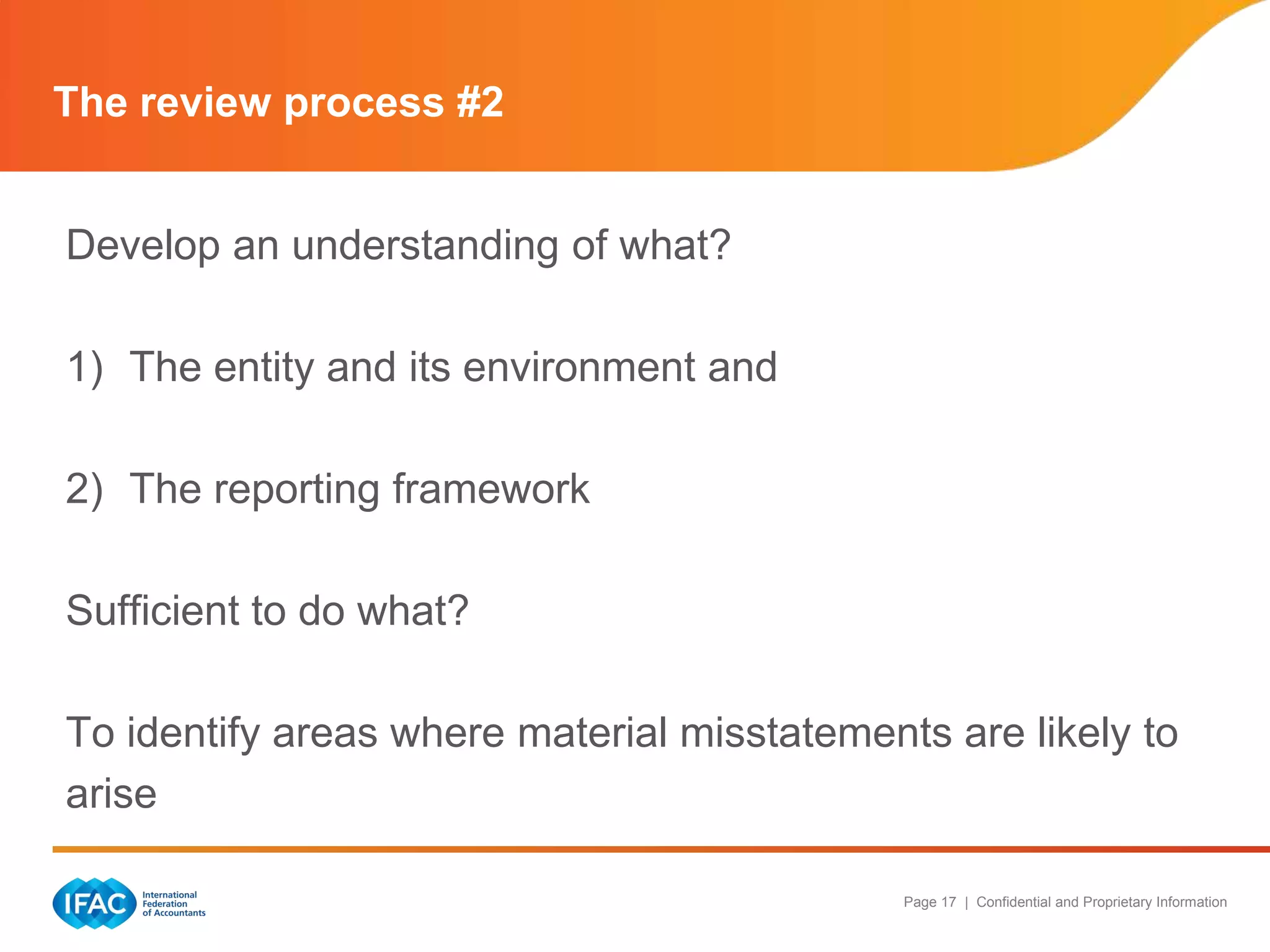
The review process #2


Develop an understanding of what?

1) The entity and its environment and

2) The reporting framework

Sufficient to do what?

To identify areas where material misstatements are likely to
arise

                                             Page 17 | Confidential and Proprietary Information
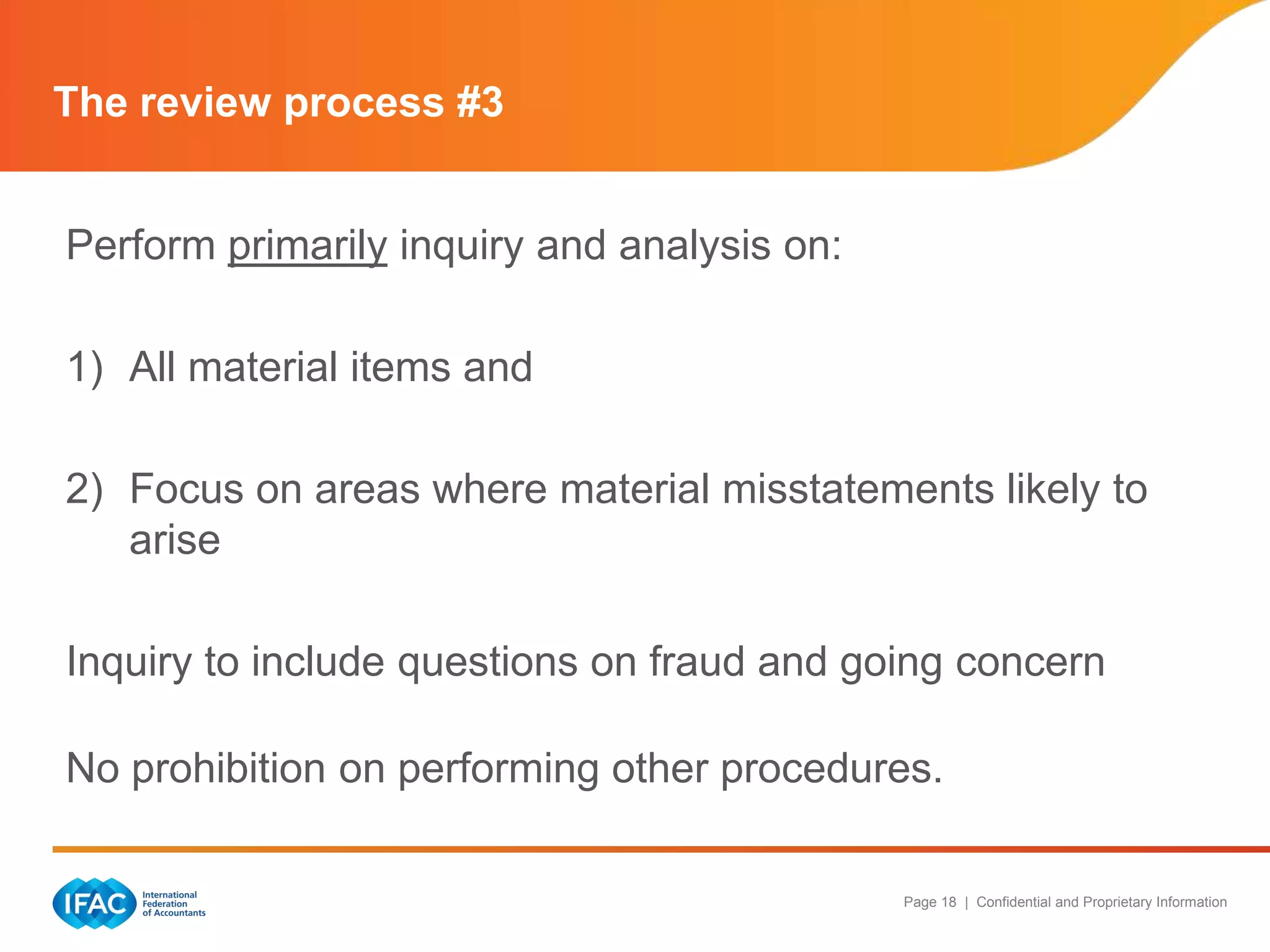
The review process #3


Perform primarily inquiry and analysis on:

1) All material items and

2) Focus on areas where material misstatements likely to
   arise

Inquiry to include questions on fraud and going concern

No prohibition on performing other procedures.

                                             Page 18 | Confidential and Proprietary Information
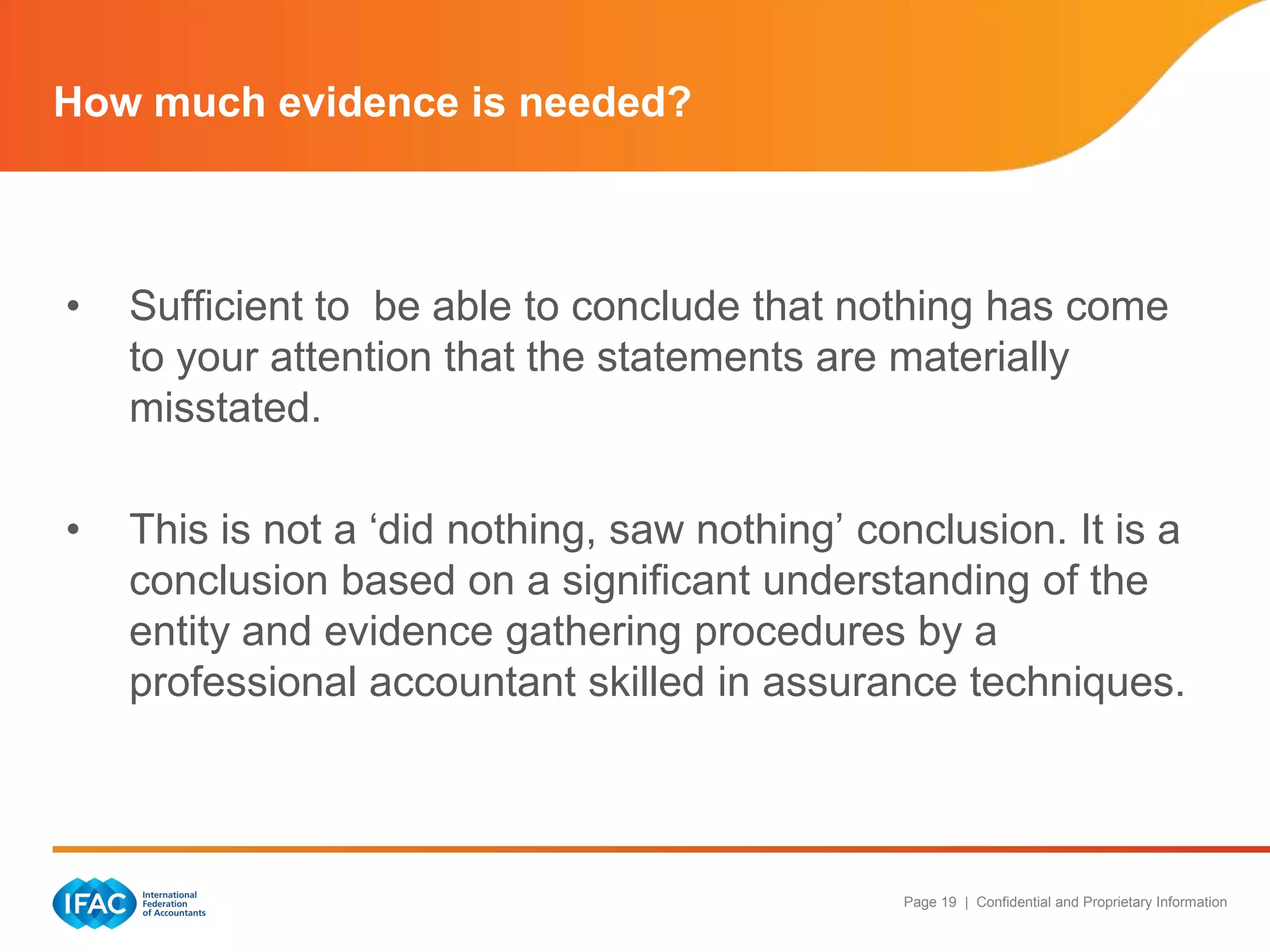
How much evidence is needed?


•   Sufficient to be able to conclude that nothing has come
    to your attention that the statements are materially
    misstated.

•   This is not a „did nothing, saw nothing‟ conclusion. It is a
    conclusion based on a significant understanding of the
    entity and evidence gathering procedures by a
    professional accountant skilled in assurance techniques.


                                               Page 19 | Confidential and Proprietary Information
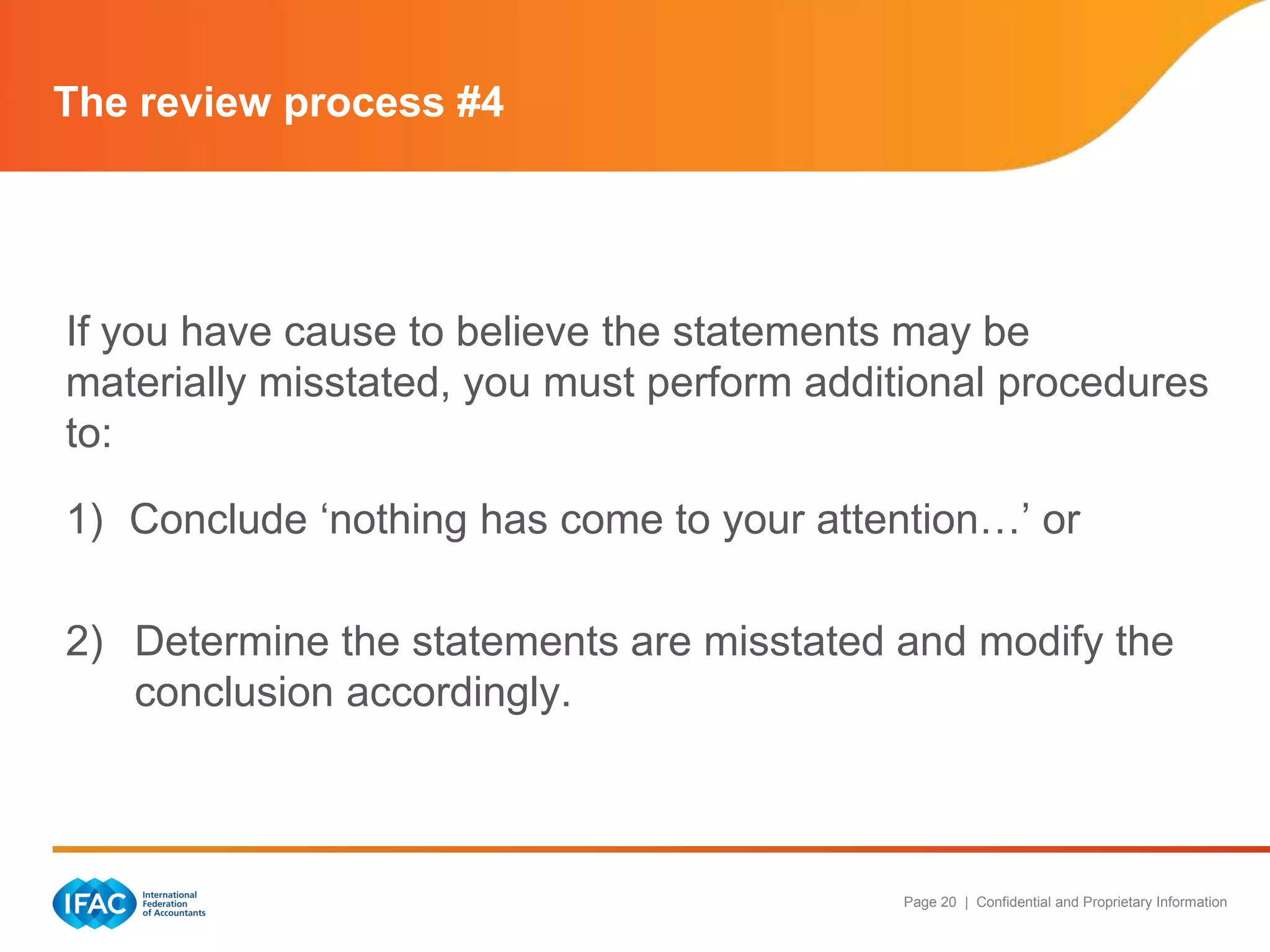
The review process #4


If you have cause to believe the statements may be
materially misstated, you must perform additional procedures
to:

1) Conclude „nothing has come to your attention…‟ or

2) Determine the statements are misstated and modify the
   conclusion accordingly.


                                           Page 20 | Confidential and Proprietary Information
Communication critical

Communication is emphasized throughout 2400:

• At the engagement acceptance phase

• At the planning phase with the client and staff

• Inquiry of management and others at every stage

• All significant matters identified in the engagement

• In the review report itself
                                             Page 21 | Confidential and Proprietary Information
Summing it all up


• 2400 is a nuanced standard

• Part of the suite of standards covering services offered by
  professional accountants to their client

• Result in a meaningful level of assurance to users at an
  appropriate price


                                             Page 22 | Confidential and Proprietary Information
Reviews and compilations


              Thank you for your attention.

                    Any questions?


                                          Page 23 | Confidential and Proprietary Information
www.ifac.org

ISRS 4410 (Revised) Compilation Engagements, A Standard for Today's Financial Reporting Needs

  • 1.
    ISRS 4410 (Revised)– Compilation Engagements A standard for today‟s financial reporting needs Kuala Lumpur March 23, 2012 Page 1 | Confidential and Proprietary Information
  • 2.
    ISRS 4410 (revised) •A flexible standard for the professional accountant in public practice • Adaptable to a wide variety of non-assurance engagements • Effective for compilation reports issued on or after September 1, 2013 • Early adoption permitted Page 2 | Confidential and Proprietary Information
  • 3.
    Benefits to theengagement What your client gains- • Your expertise in accounting and financial reporting tailored to their specific needs • An objective view from a professional accountant • A clear report outlining the nature of the engagement What you gain from the engagement- • Clearly communicated terms of engagement • Flexibility to deliver a meaningful service • A happy client  Page 3 | Confidential and Proprietary Information
  • 4.
    Why and whento use 4410 • 4410 (Revised) can be tailored to your engagements • The prescribed report clearly describes: – Management responsibilities – Your value added and your responsibilities – That no assurance is being given by you • If stating compliance with 4410, you must issue a report prescribed by 4410 Page 4 | Confidential and Proprietary Information
  • 5.
    Flexibility in financialreporting • The basis of accounting can be complex or simple • It must be appropriate to the engagement • The basis is always disclosed as part of the compiled financial information Page 5 | Confidential and Proprietary Information
  • 6.
    Understanding your client •You need sufficient understanding of: – The entity‟s business and operations and – The financial reporting framework To be able to perform the compilation. This may require a lot or a little depending on the engagement Page 6 | Confidential and Proprietary Information
  • 7.
    Communicating with clients Communicationis required throughout the standard. Specifically: – In the engagement acceptance phase – All significant matters during the engagement – A report accompanying the compiled information Page 7 | Confidential and Proprietary Information
  • 8.
    Significant judgments Management isresponsible for the reported information • Not required to second guess management judgments • You must discuss significant judgments with management where you have provided assistance • Discussion must be sufficient to allow management to take responsibility for the compiled information Page 8 | Confidential and Proprietary Information
  • 9.
    Ethical responsibilities • Mustcomply with the IESBA Code • No requirement for independence • If you know compiled information to be materially misstated or misleading, you must resign. No middle ground. Page 9 | Confidential and Proprietary Information
  • 10.
    Summing it up ISRS4410 (Revised)  New opportunities for professional accountants  Flexibility permits good client service  A focus on communication throughout  Promotes consistent high quality practice  Clients and accountants will benefit Page 10 | Confidential and Proprietary Information
  • 11.
    ISRS 4410 (Revised) Try it. You and your clients will benefit. Page 11 | Confidential and Proprietary Information
  • 12.
    REVIEW ENGAGEMENTS AN ASSURANCEALTERNATIVE ISRE 2400 • Under revision now • Completes the suite of standards for professional accountants and their clients – Reasonable assurance - audits - the ISAs – Limited assurance - reviews - ISRE 2400 – No assurance – compilations – ISRS 4410 Page 12 | Confidential and Proprietary Information
  • 13.
    2400 – Basicconcepts Limited assurance – what is it? • Risk of undetected misstatement greater than in an audit • Assurance must be meaningful to users of the information Page 13 | Confidential and Proprietary Information
  • 14.
    A limited assuranceengagement • The report conclusion is evidenced based • Specified procedures are required • Professional judgment required throughout • Ethics based (independence/competence/due care) • Firms must be in compliance with ISQC1 Page 14 | Confidential and Proprietary Information
  • 15.
    Challenges in Defininga middle ground • How much evidence is enough to support the conclusion “nothing has come to my attention…”? • Needs a practitioner with up-to-date assurance skills • A review is not „audit-lite‟. If statements cannot be audited, they likely cannot be reviewed either Page 15 | Confidential and Proprietary Information
  • 16.
    The review process#1 Engagement acceptance • Confirm management‟s responsibility • Review management‟s integrity – critical for inquiry • Are systems likely sufficient to produce data adequate for meaningful analytical review? Page 16 | Confidential and Proprietary Information
  • 17.
    The review process#2 Develop an understanding of what? 1) The entity and its environment and 2) The reporting framework Sufficient to do what? To identify areas where material misstatements are likely to arise Page 17 | Confidential and Proprietary Information
  • 18.
    The review process#3 Perform primarily inquiry and analysis on: 1) All material items and 2) Focus on areas where material misstatements likely to arise Inquiry to include questions on fraud and going concern No prohibition on performing other procedures. Page 18 | Confidential and Proprietary Information
  • 19.
    How much evidenceis needed? • Sufficient to be able to conclude that nothing has come to your attention that the statements are materially misstated. • This is not a „did nothing, saw nothing‟ conclusion. It is a conclusion based on a significant understanding of the entity and evidence gathering procedures by a professional accountant skilled in assurance techniques. Page 19 | Confidential and Proprietary Information
  • 20.
    The review process#4 If you have cause to believe the statements may be materially misstated, you must perform additional procedures to: 1) Conclude „nothing has come to your attention…‟ or 2) Determine the statements are misstated and modify the conclusion accordingly. Page 20 | Confidential and Proprietary Information
  • 21.
    Communication critical Communication isemphasized throughout 2400: • At the engagement acceptance phase • At the planning phase with the client and staff • Inquiry of management and others at every stage • All significant matters identified in the engagement • In the review report itself Page 21 | Confidential and Proprietary Information
  • 22.
    Summing it allup • 2400 is a nuanced standard • Part of the suite of standards covering services offered by professional accountants to their client • Result in a meaningful level of assurance to users at an appropriate price Page 22 | Confidential and Proprietary Information
  • 23.
    Reviews and compilations Thank you for your attention. Any questions? Page 23 | Confidential and Proprietary Information
  • 24.