PR-278: RAFT: Recurrent All-Pairs Field Transforms for Optical Flow
The document discusses RAFT (Recurrent All-Pairs Field Transforms for Optical Flow), detailing its network structure, supervised optical flow estimation, and results. It outlines the various datasets used for optical flow, the architecture's features such as energy minimization, and the significance of iterative optimization in estimating optical flow without ground truth. The conclusion highlights the model's impressive performance, while acknowledging a lack of novelty in its optimization approach.
PR-278: RAFT: Recurrent All-Pairs Field Transforms for Optical Flow
1.
RAFT: Recurrent All-PairsField
Transforms for Optical Flow
Hyeongmin Lee
Image and Video Pattern Recognition LAB
Electrical and Electronic Engineering Dept, Yonsei University
6th Semester
PR-278
2.
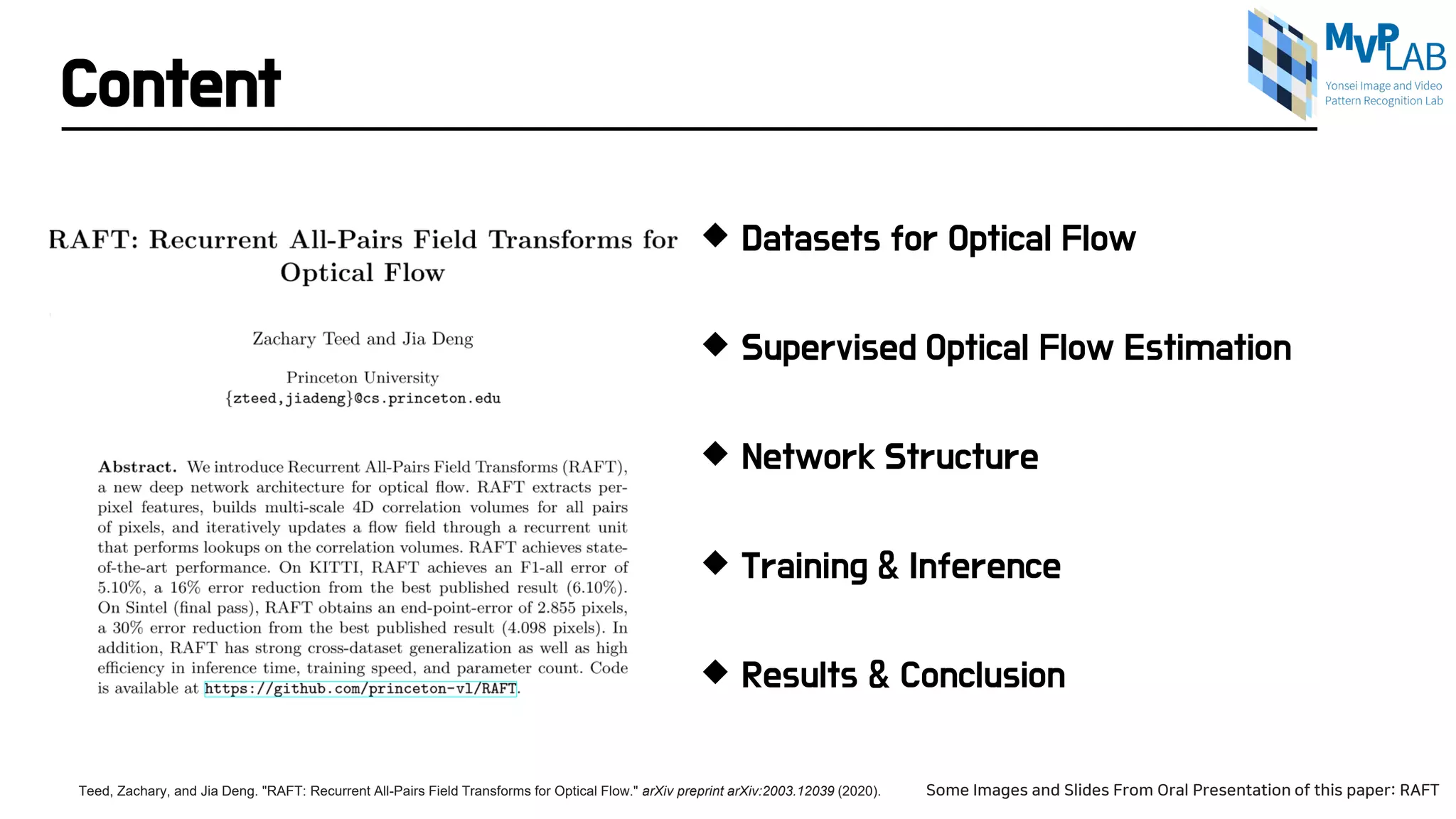
Content
Datasets forOptical Flow
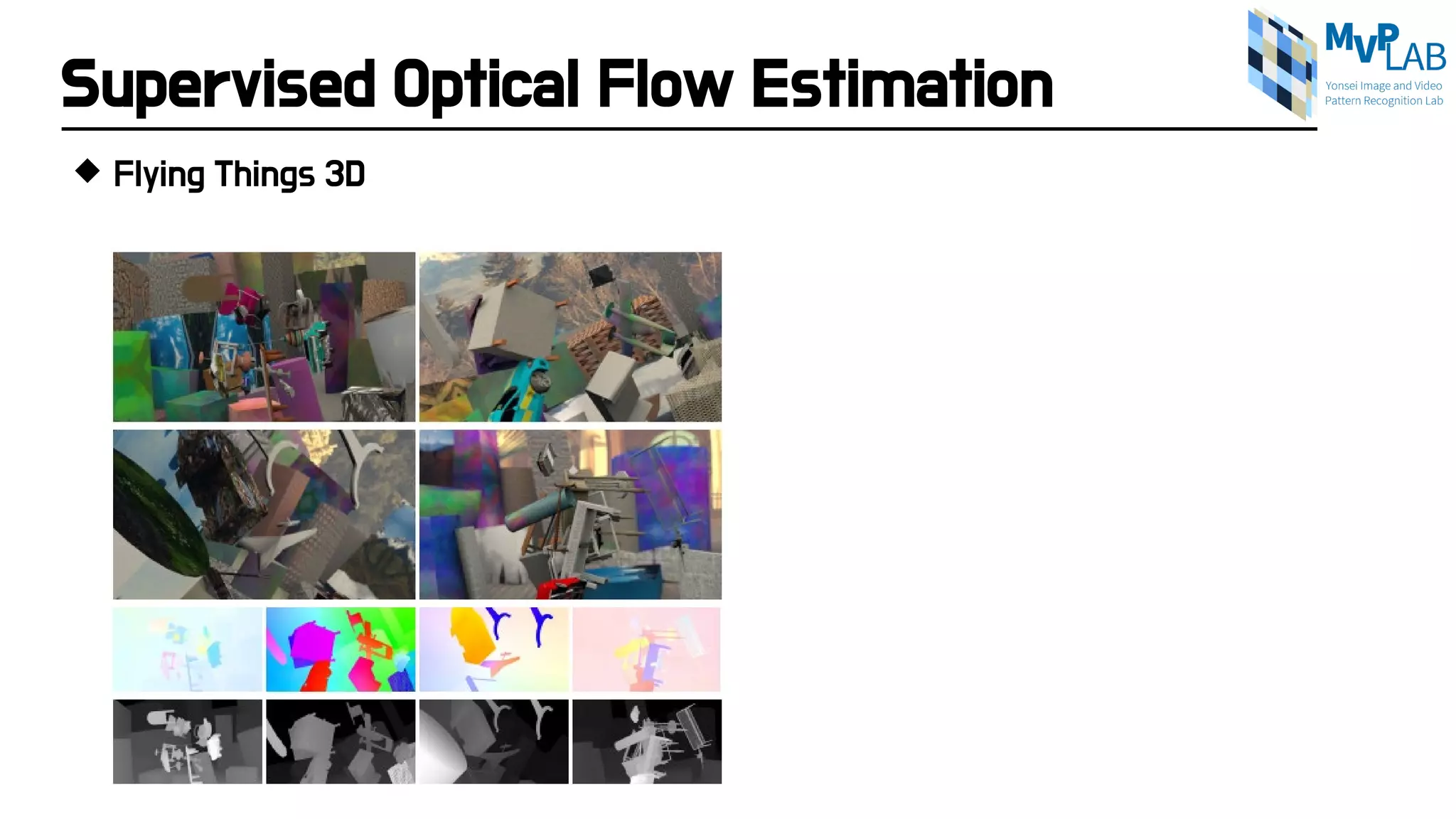
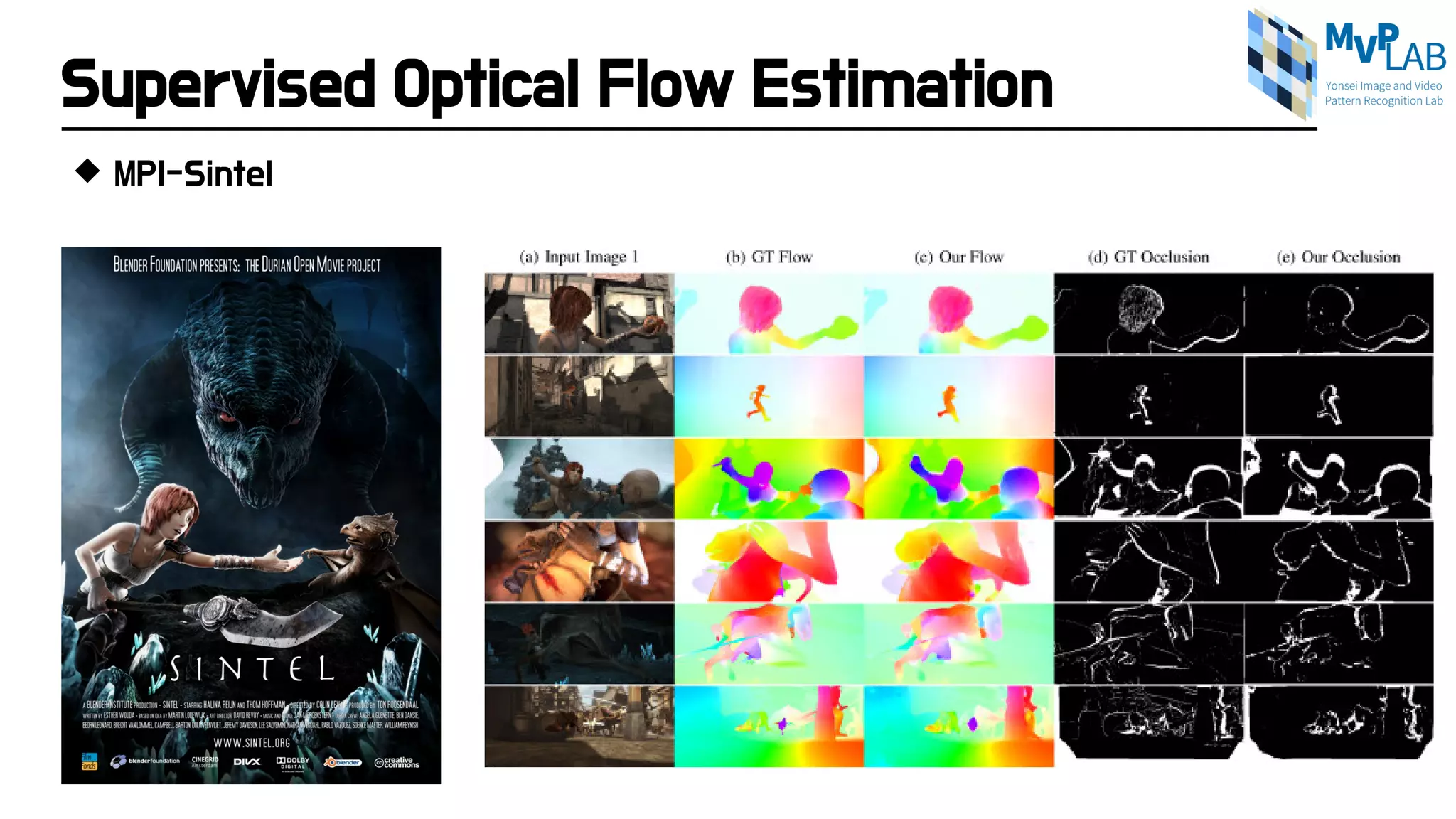
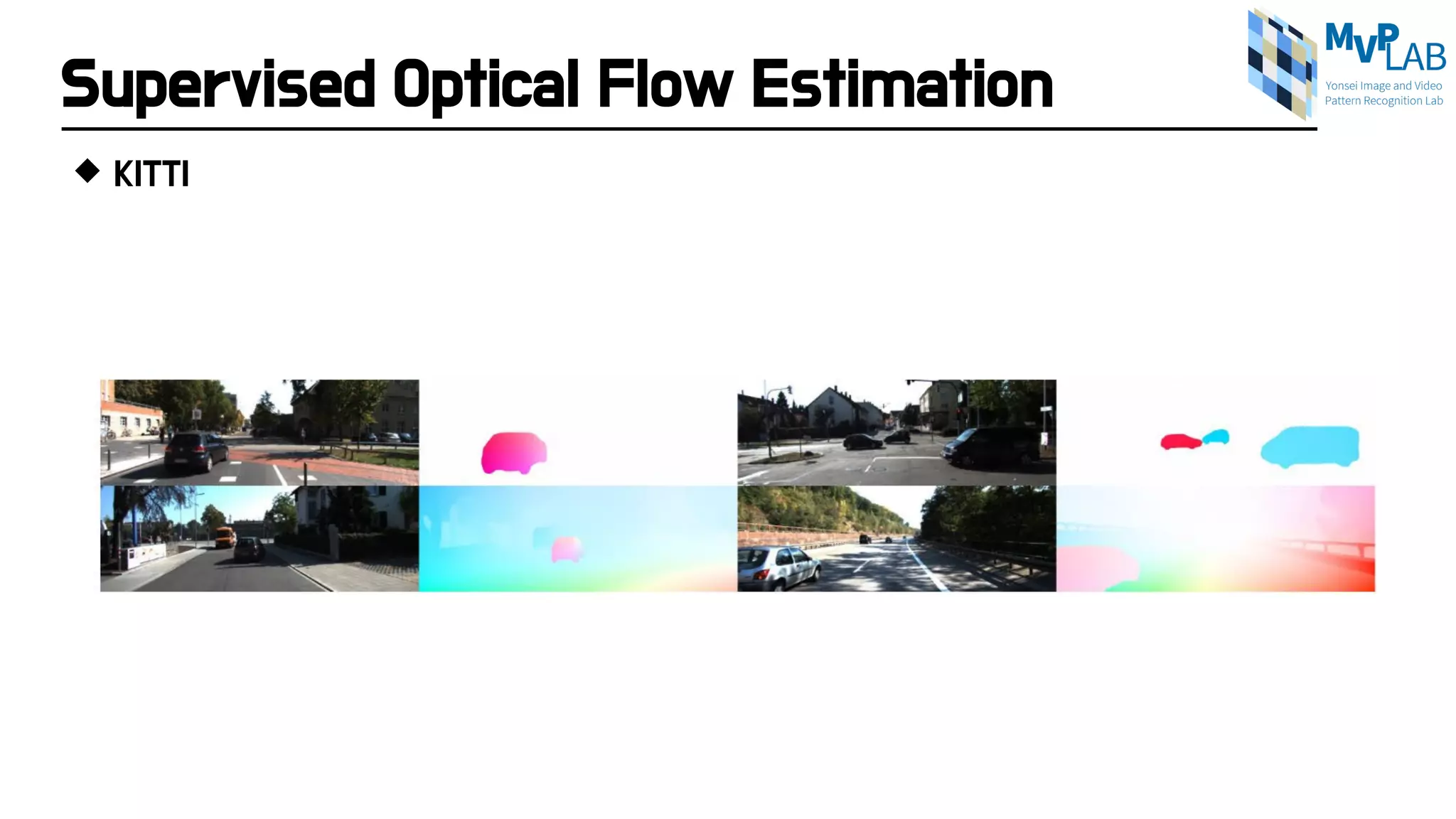
Supervised Optical Flow Estimation
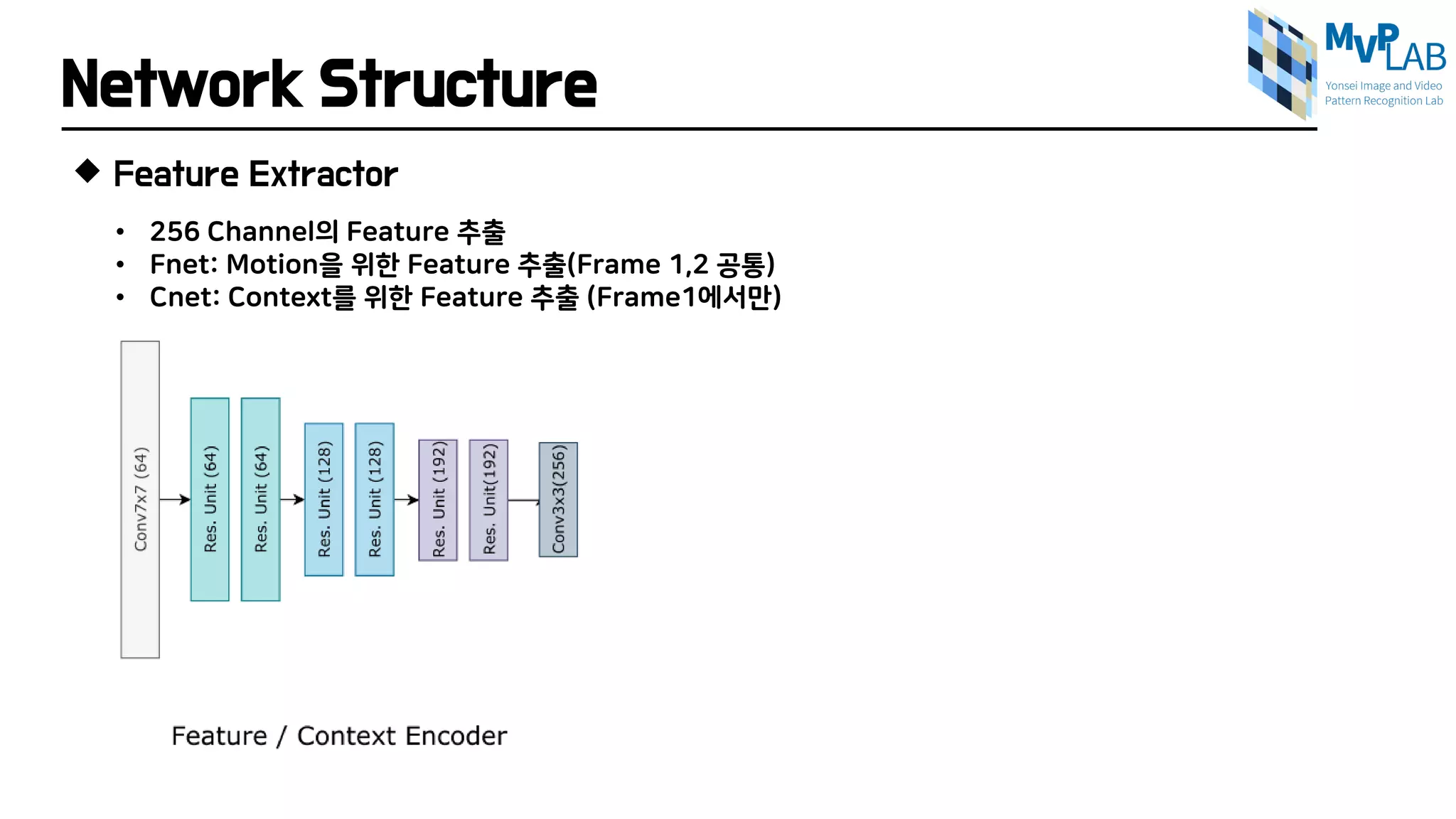
Network Structure
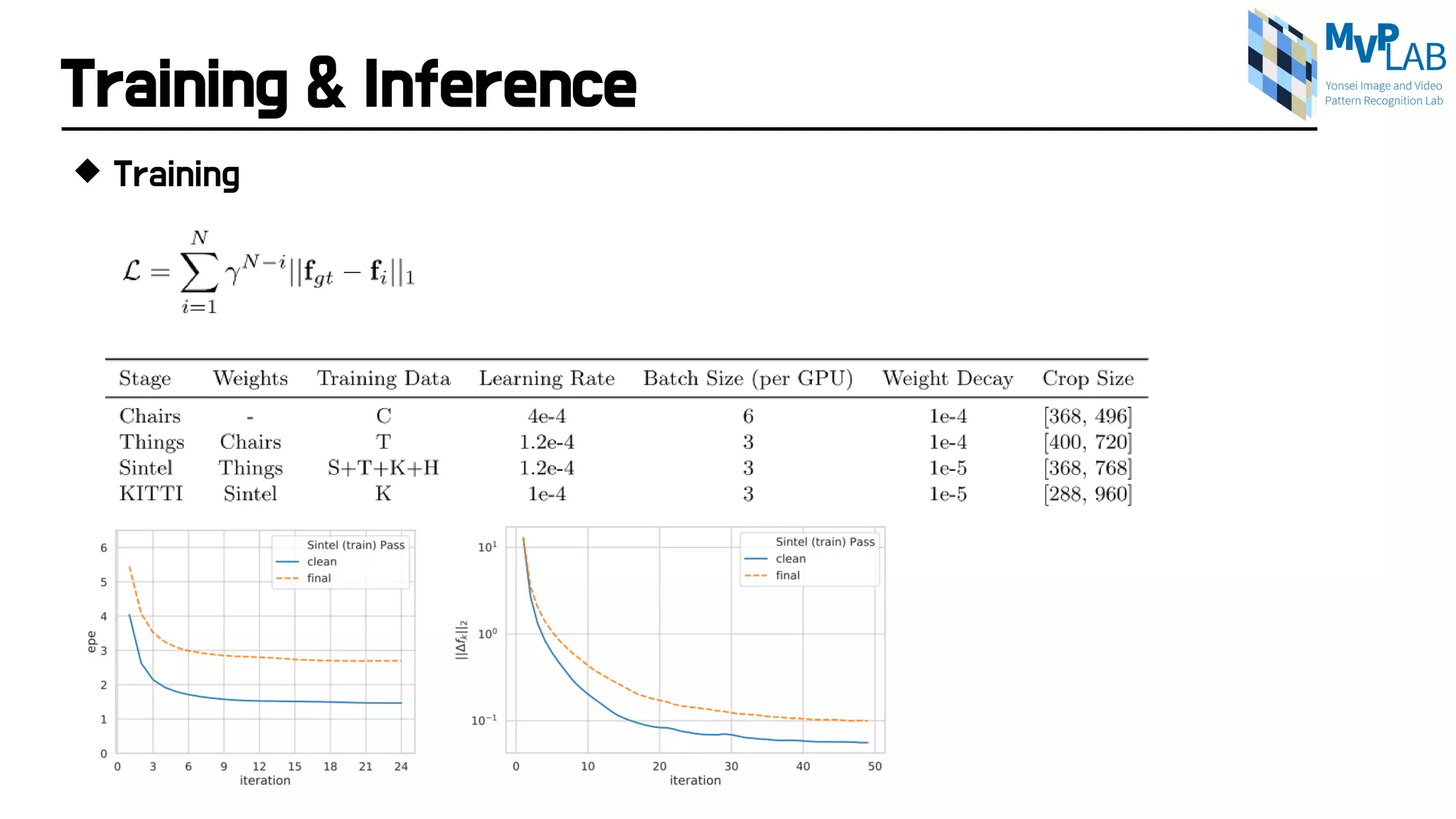
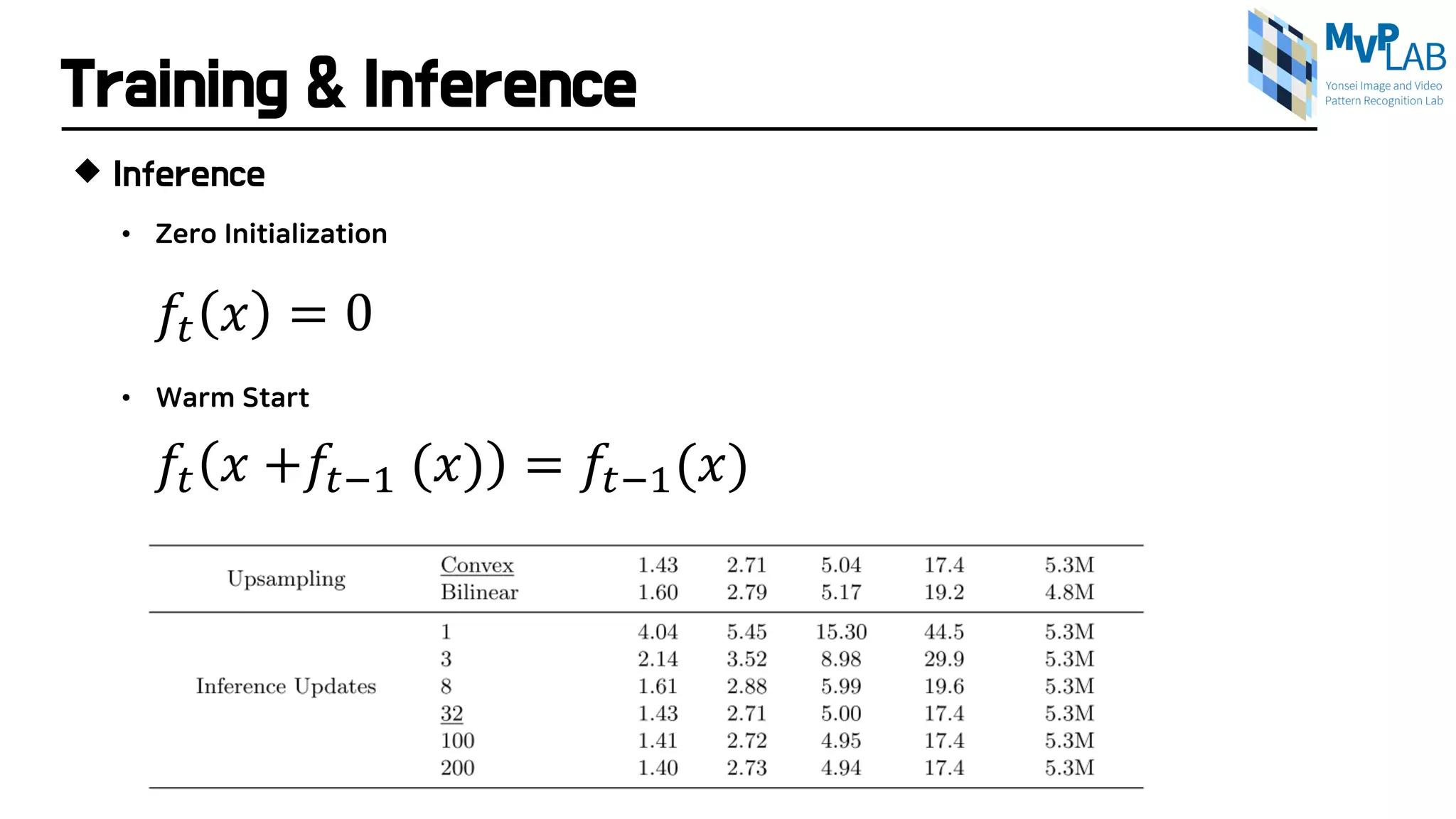
Training & Inference
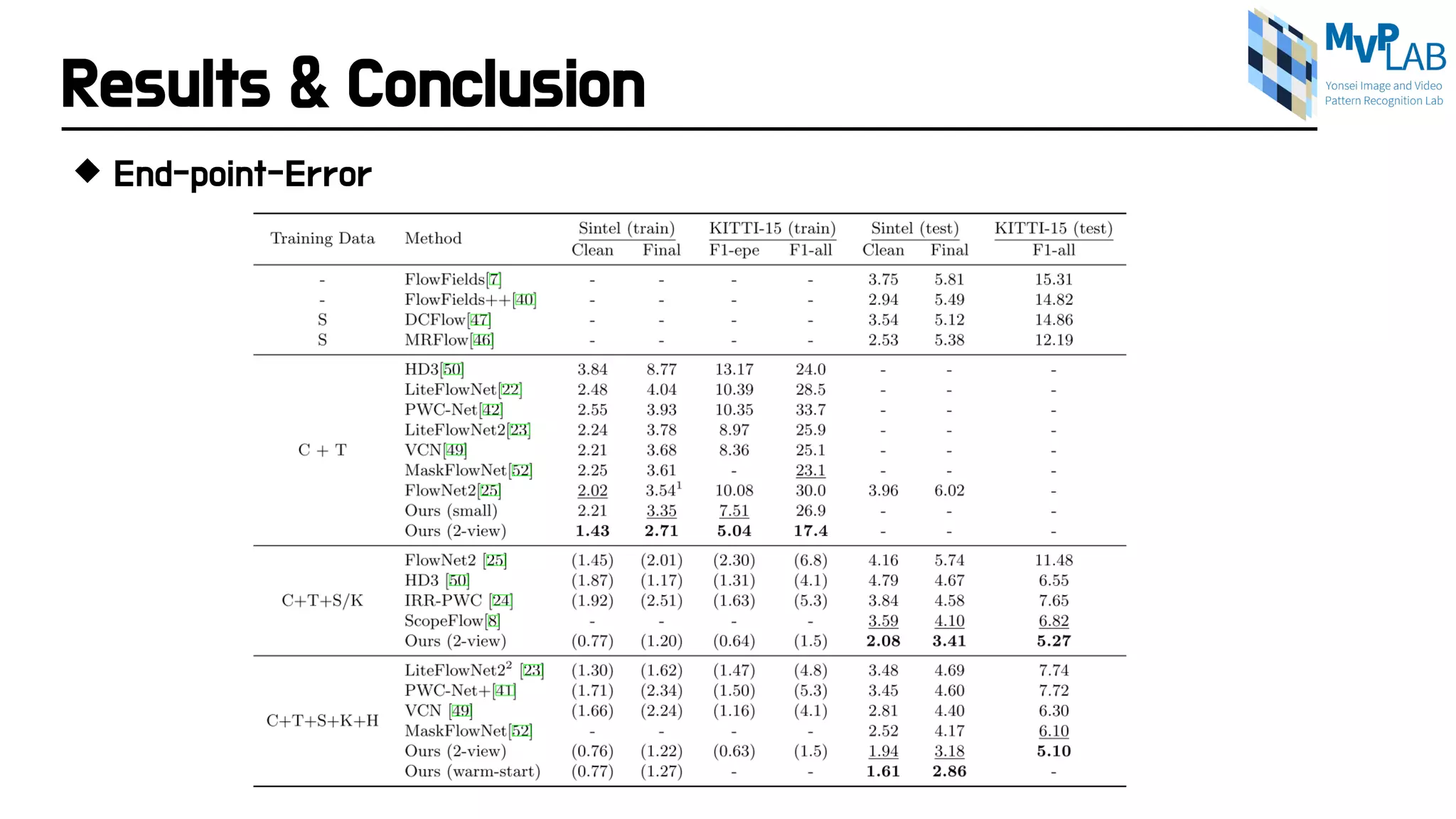
Results & Conclusion
Teed, Zachary, and Jia Deng. "RAFT: Recurrent All-Pairs Field Transforms for Optical Flow." arXiv preprint arXiv:2003.12039 (2020). Some Images and Slides From Oral Presentation of this paper: RAFT
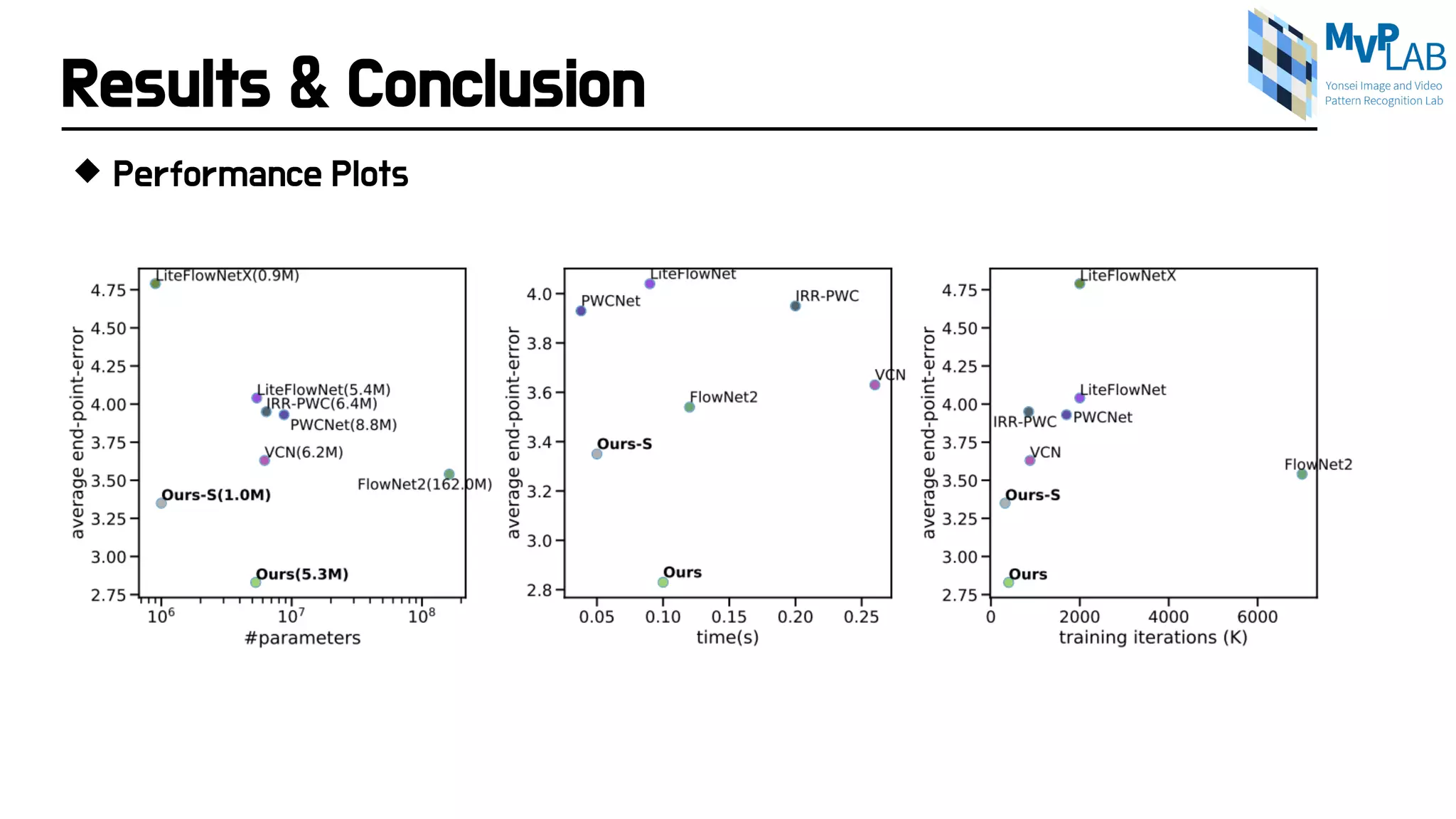
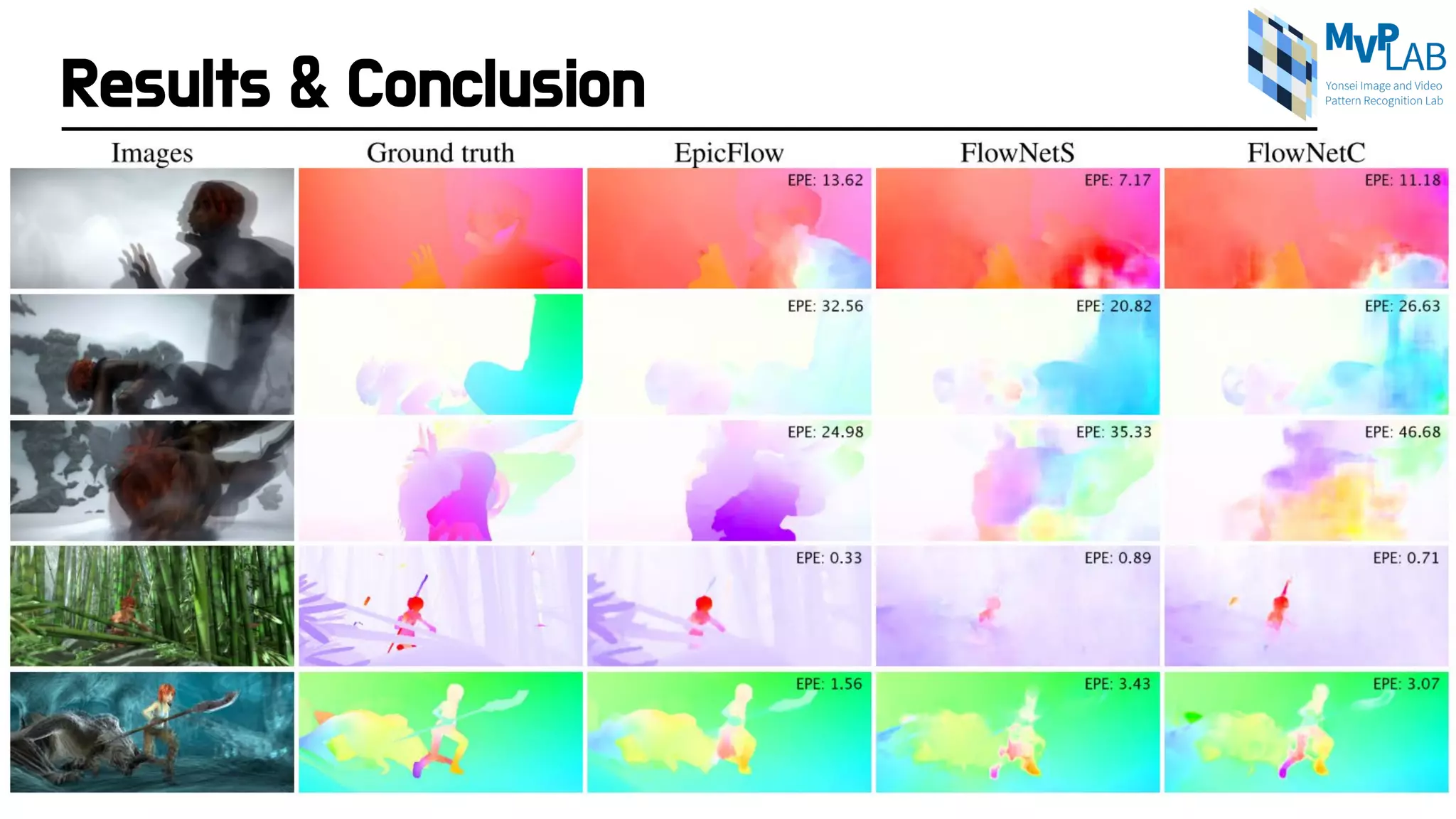
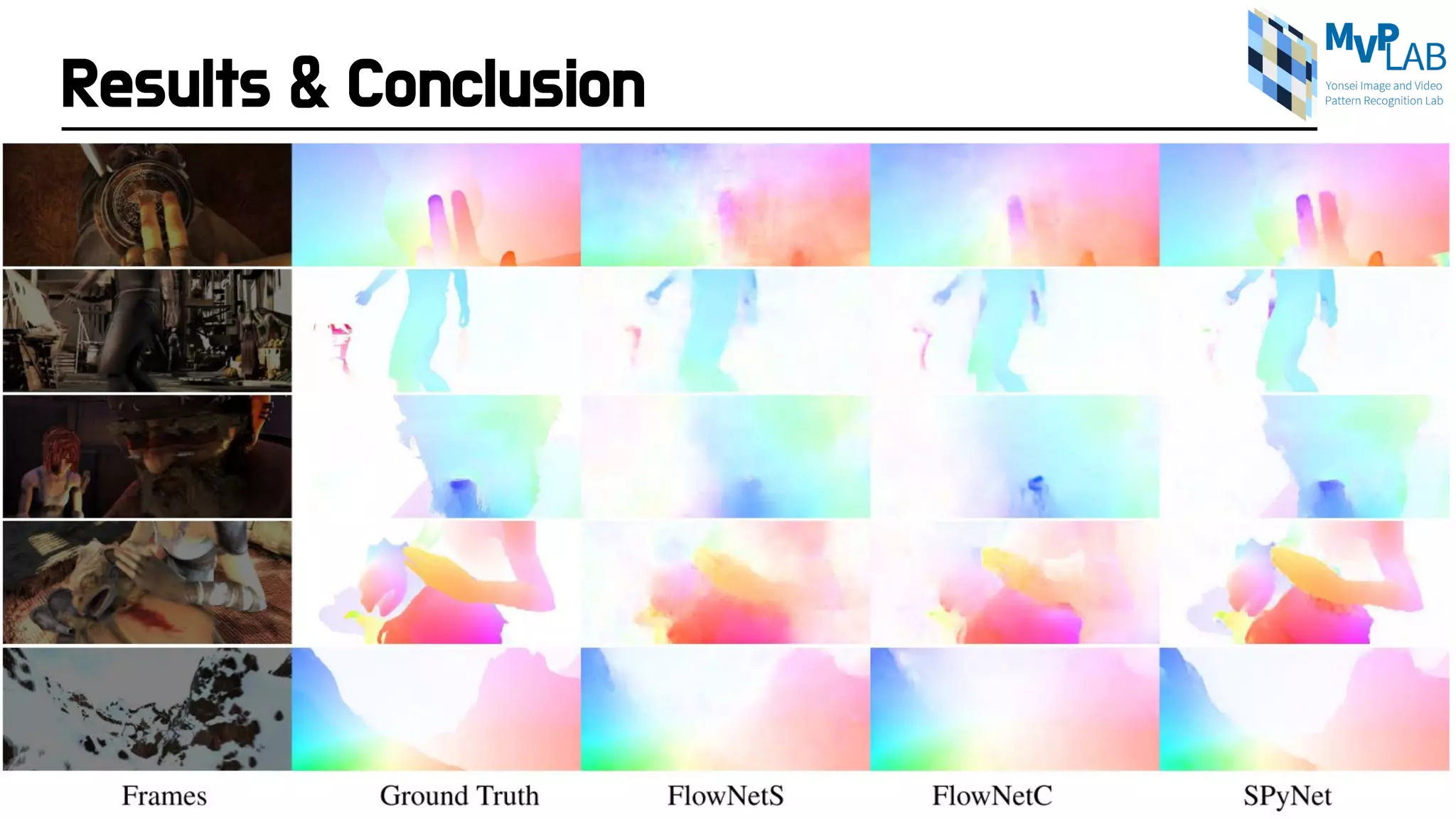
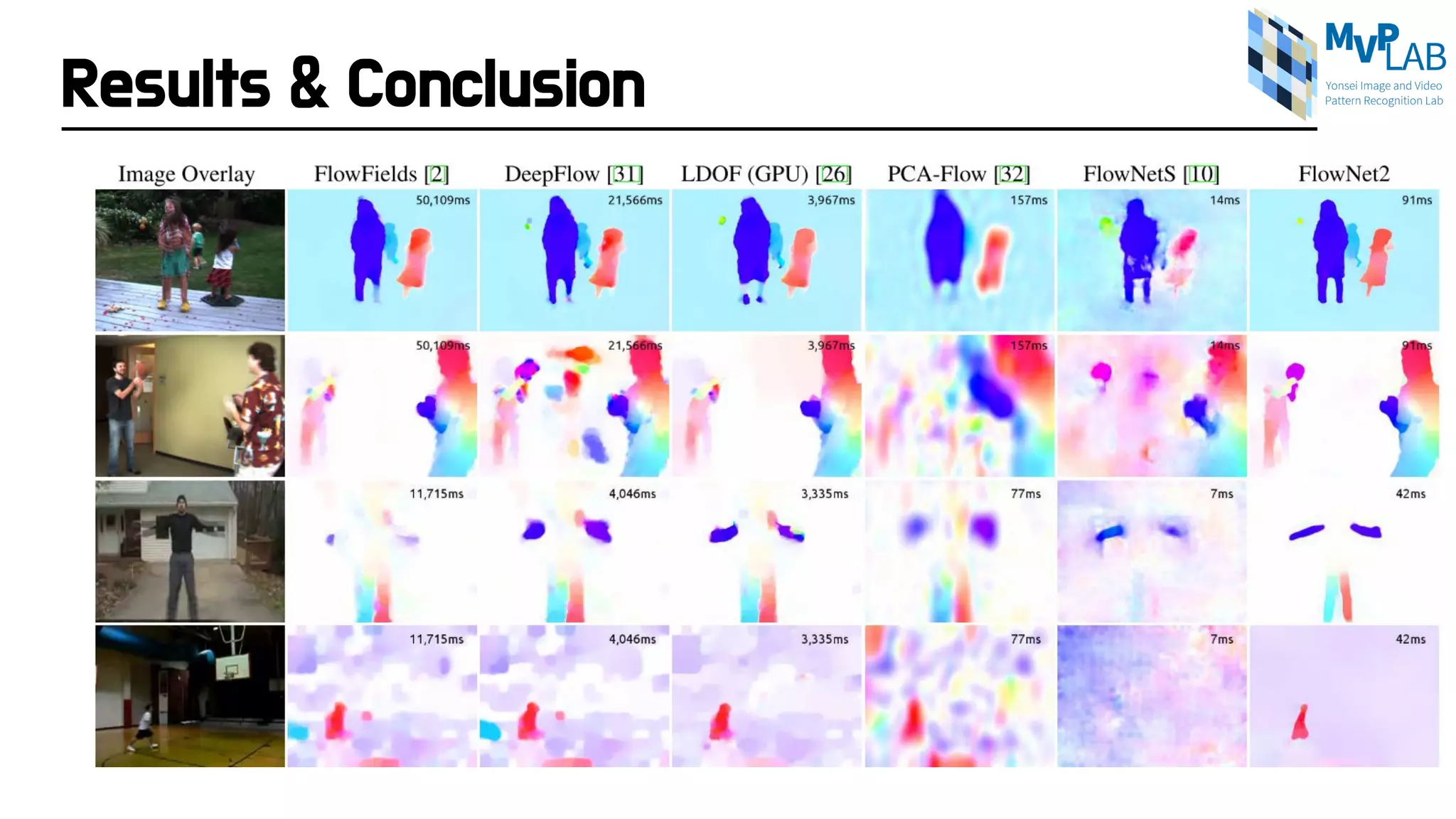
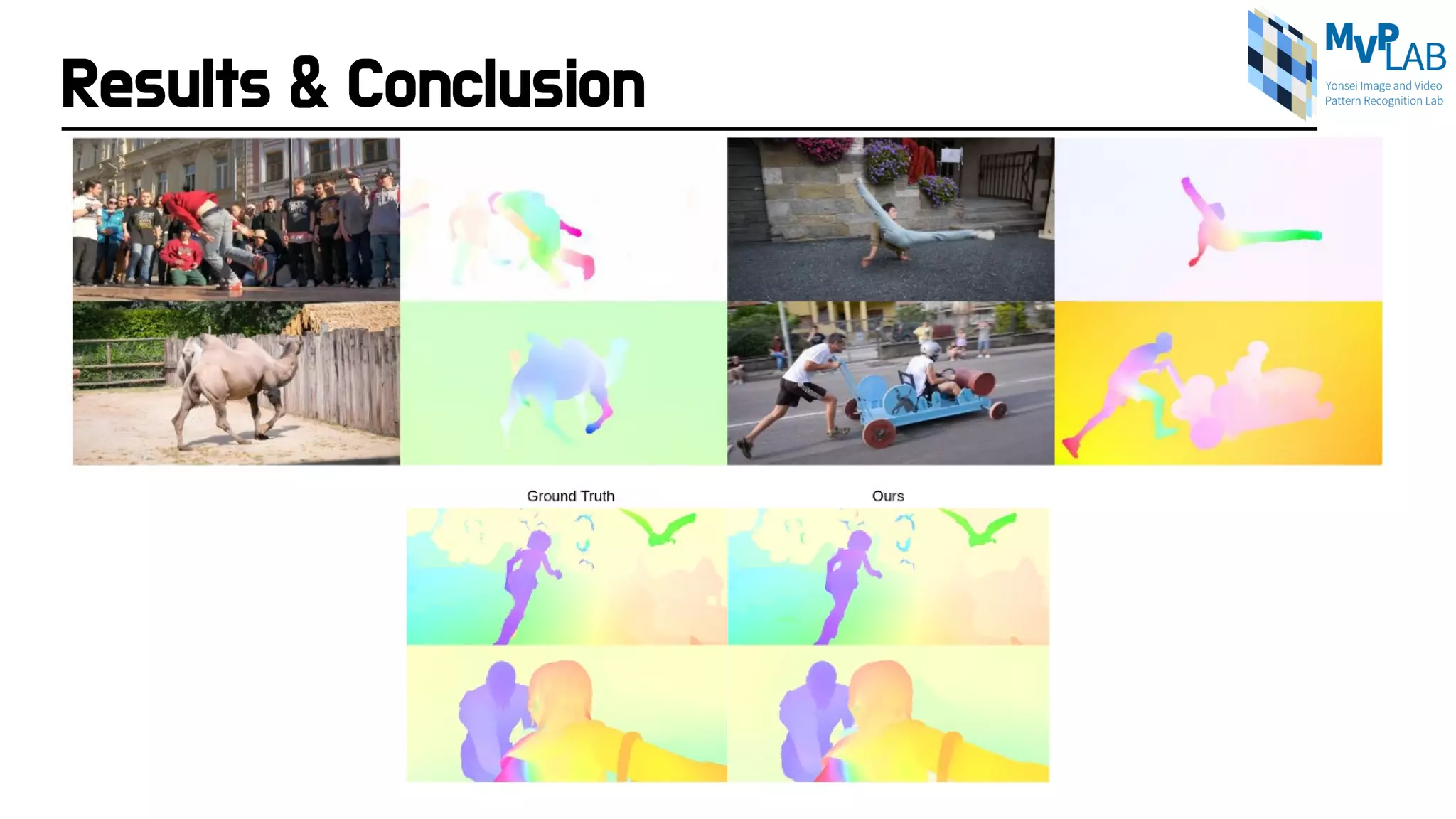
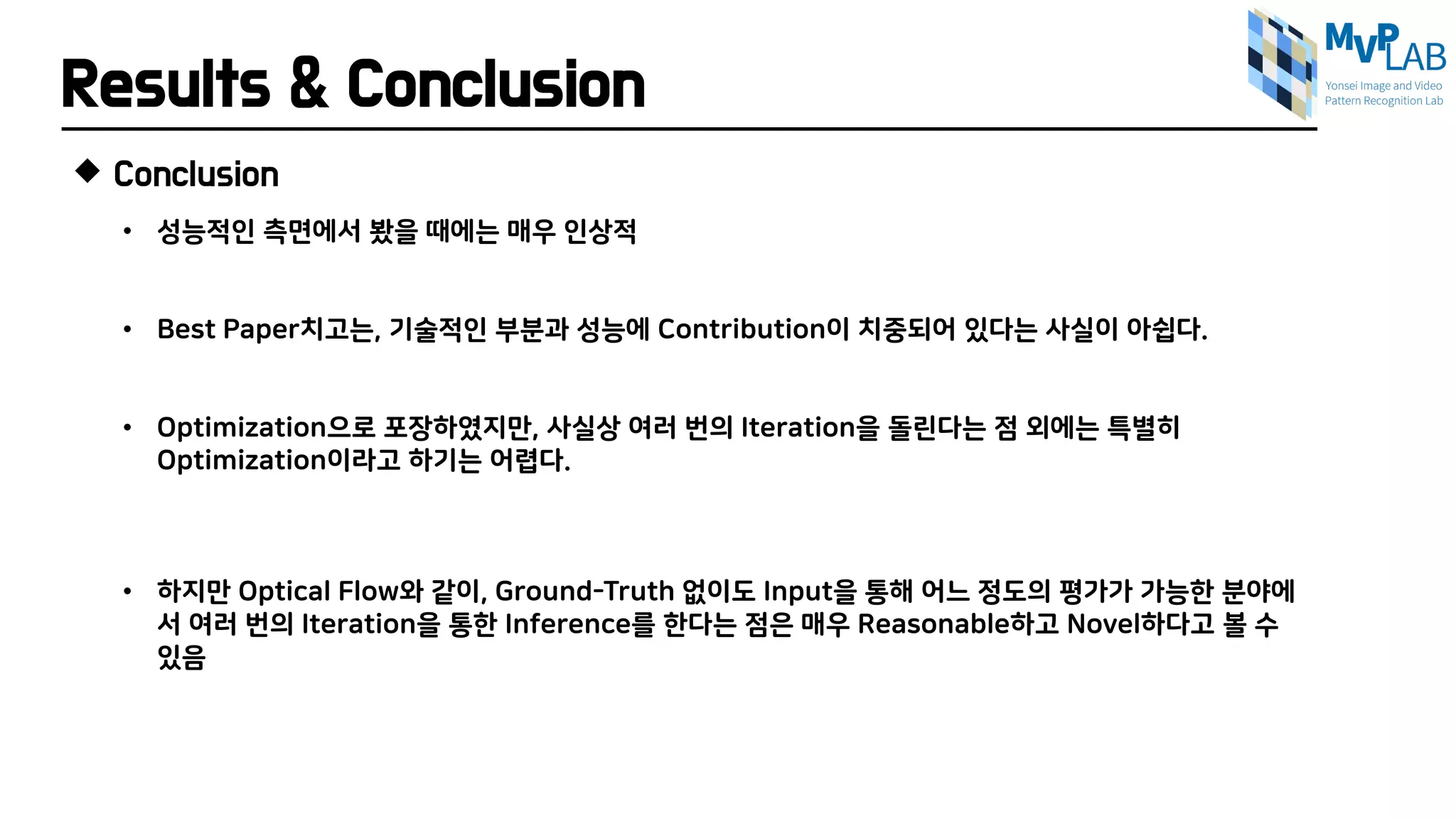
Results & Conclusion
Conclusion
• 성능적인 측면에서 봤을 때에는 매우 인상적
• Best Paper치고는, 기술적인 부분과 성능에 Contribution이 치중되어 있다는 사실이 아쉽다.
• Optimization으로 포장하였지만, 사실상 여러 번의 Iteration을 돌린다는 점 외에는 특별히
Optimization이라고 하기는 어렵다.
• 하지만 Optical Flow와 같이, Ground-Truth 없이도 Input을 통해 어느 정도의 평가가 가능한 분야에
서 여러 번의 Iteration을 통한 Inference를 한다는 점은 매우 Reasonable하고 Novel하다고 볼 수
있음
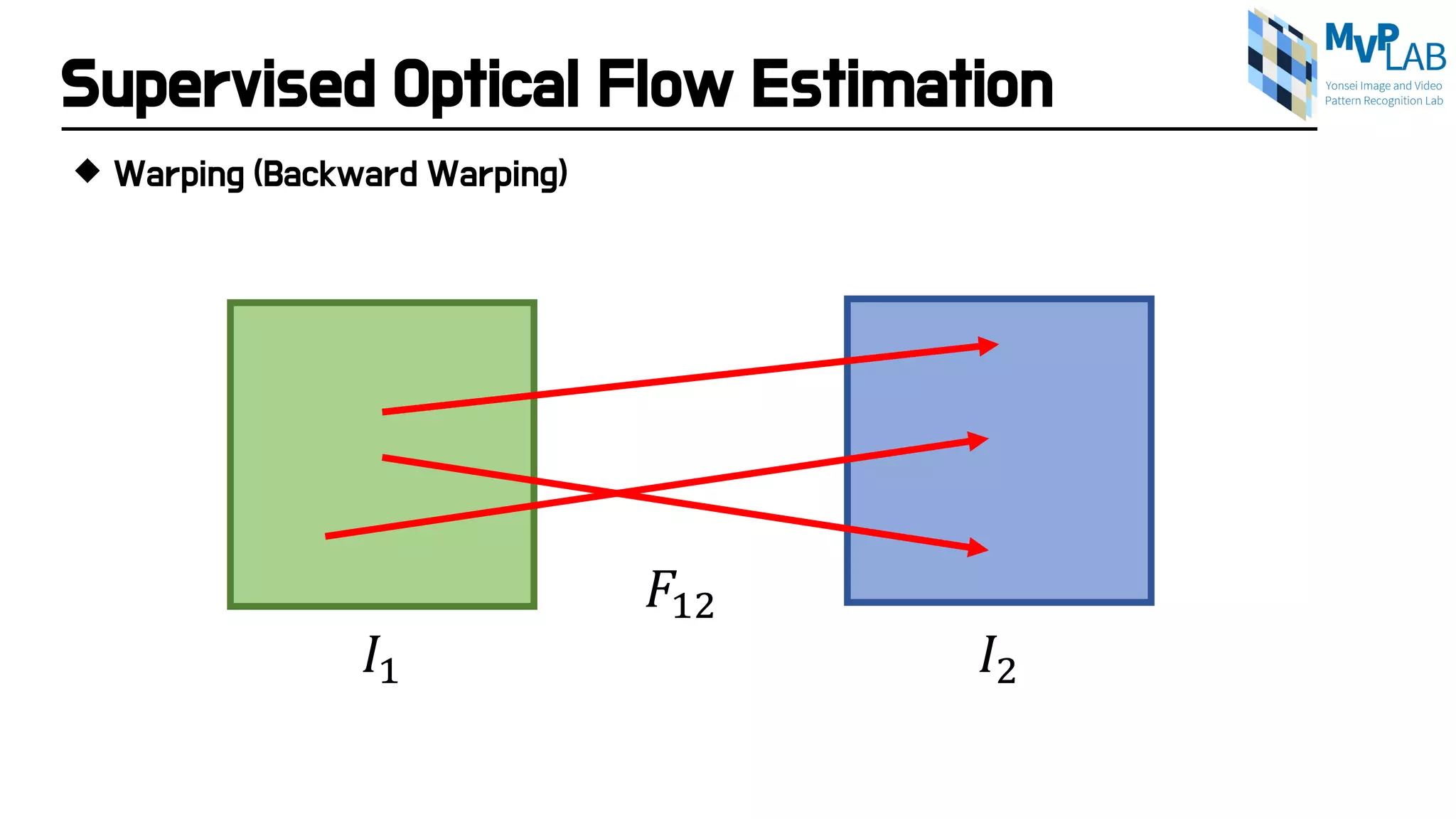
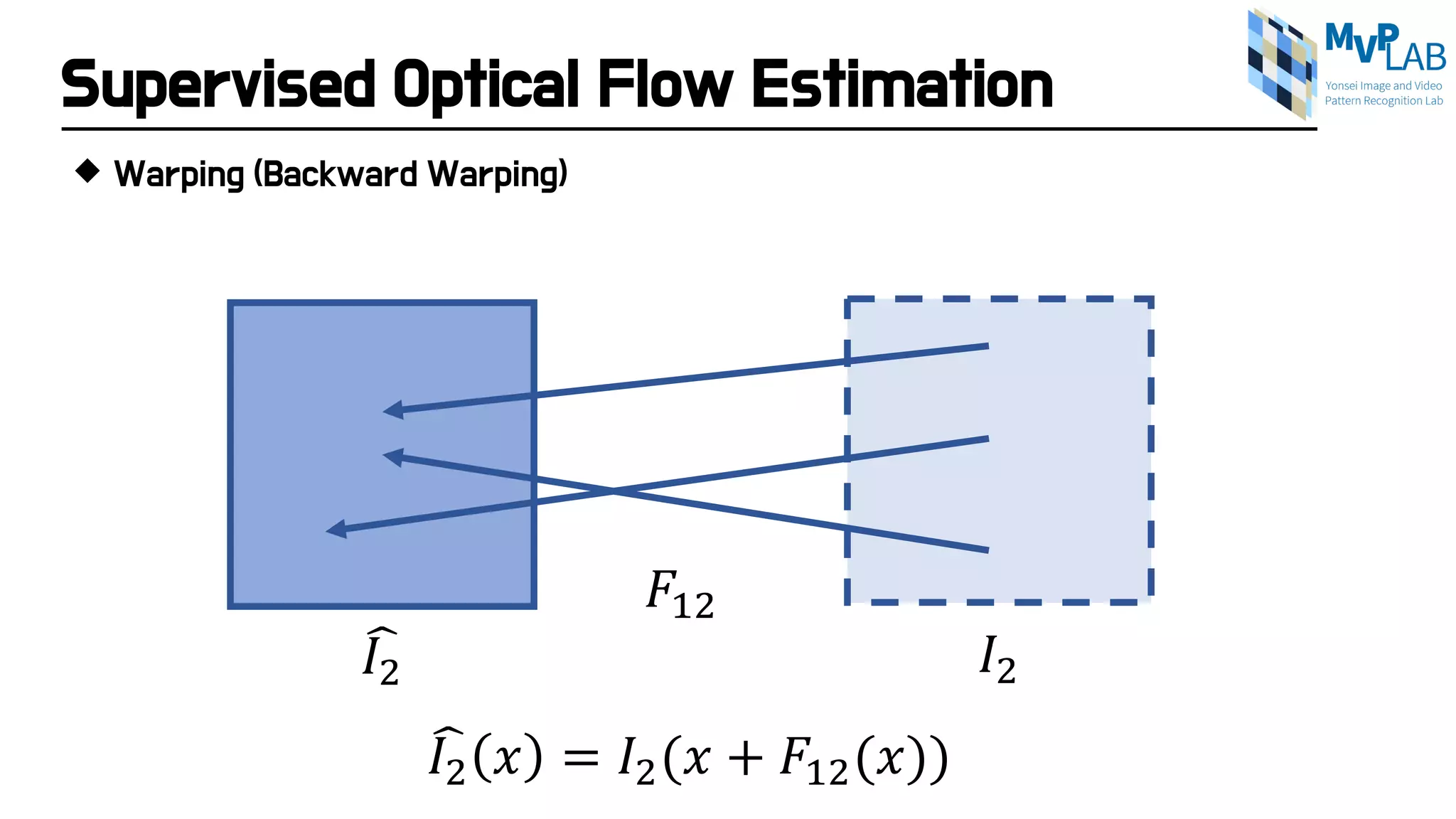
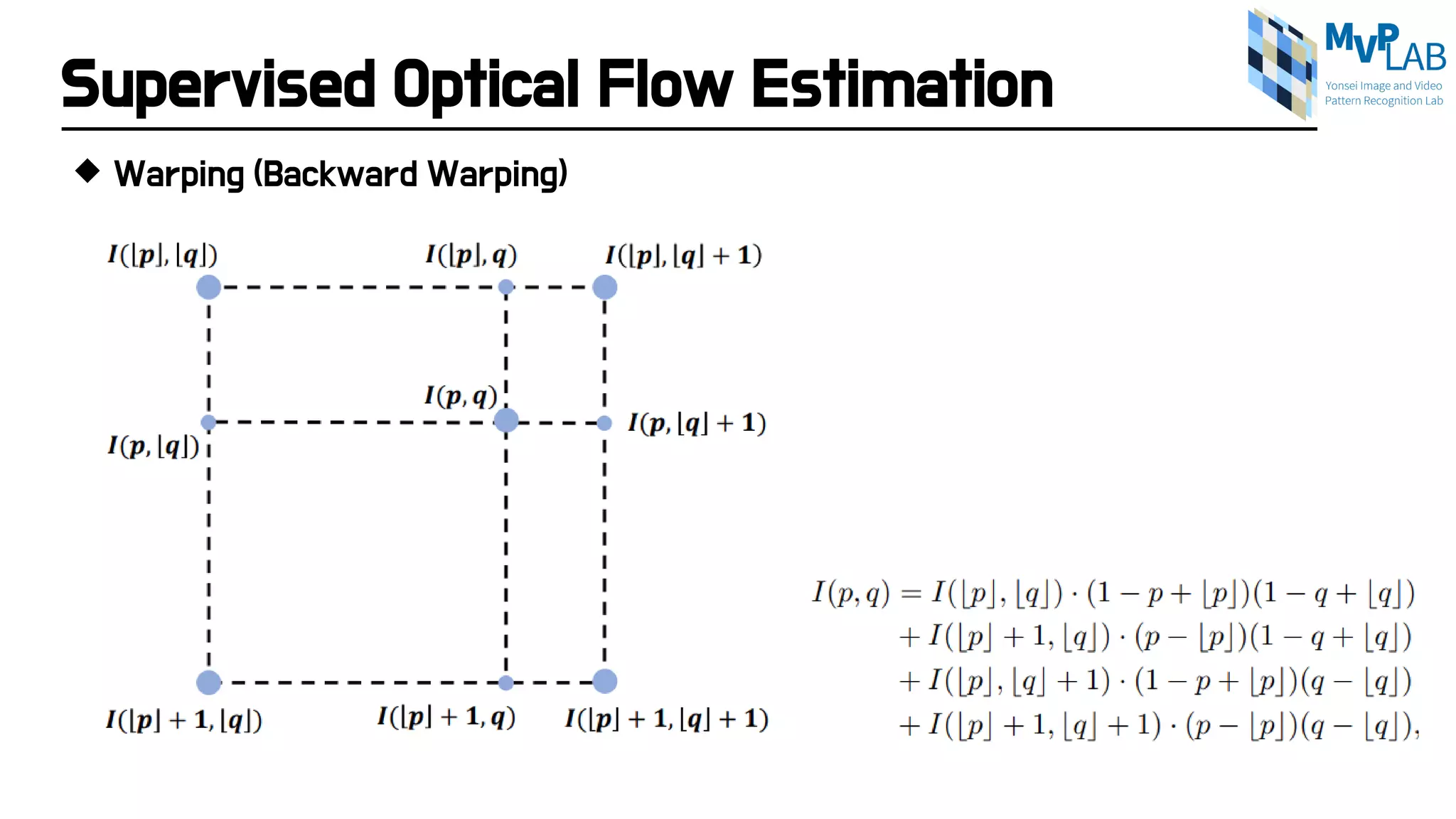
![Supervised Optical Flow Estimation
PWC-Net [CVPR 2018]
• Pyramid
• Warping
• Cost Volume (Correlation Layer)](https://image.slidesharecdn.com/pr278-201012070658/75/PR-278-RAFT-Recurrent-All-Pairs-Field-Transforms-for-Optical-Flow-9-2048.jpg)
![Supervised Optical Flow Estimation
Pyramid Structure
𝐺𝐺𝑙𝑙: 7 × 7 Conv로 이루어 진 CNN
𝑤𝑤: backward warping module
• SpyNet [CVPR 2017]](https://image.slidesharecdn.com/pr278-201012070658/75/PR-278-RAFT-Recurrent-All-Pairs-Field-Transforms-for-Optical-Flow-10-2048.jpg)
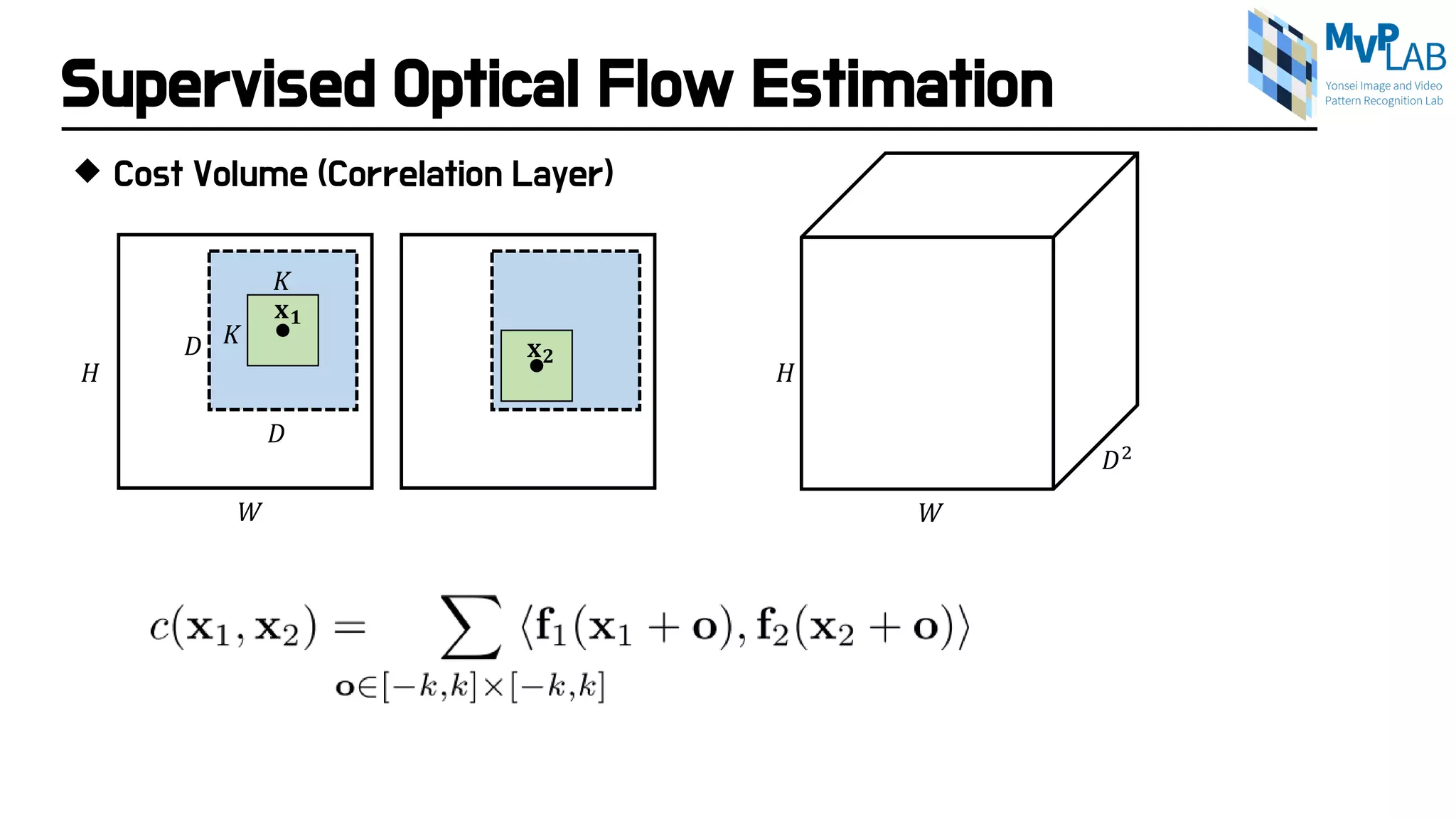
![Supervised Optical Flow Estimation
Cost Volume (Correlation Layer)
• FlowNet [ICCV 2015; PR-214]](https://image.slidesharecdn.com/pr278-201012070658/75/PR-278-RAFT-Recurrent-All-Pairs-Field-Transforms-for-Optical-Flow-14-2048.jpg)

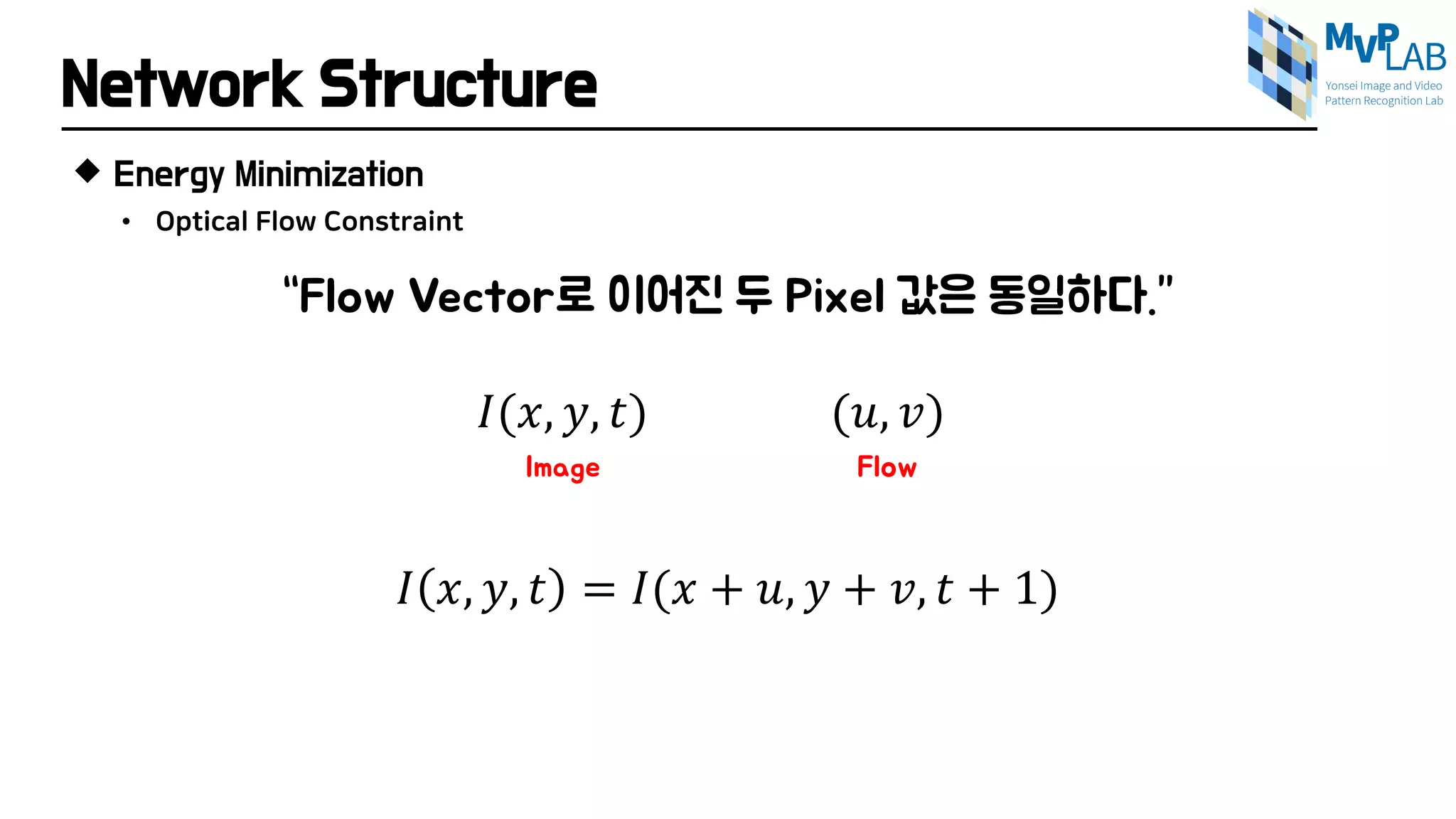
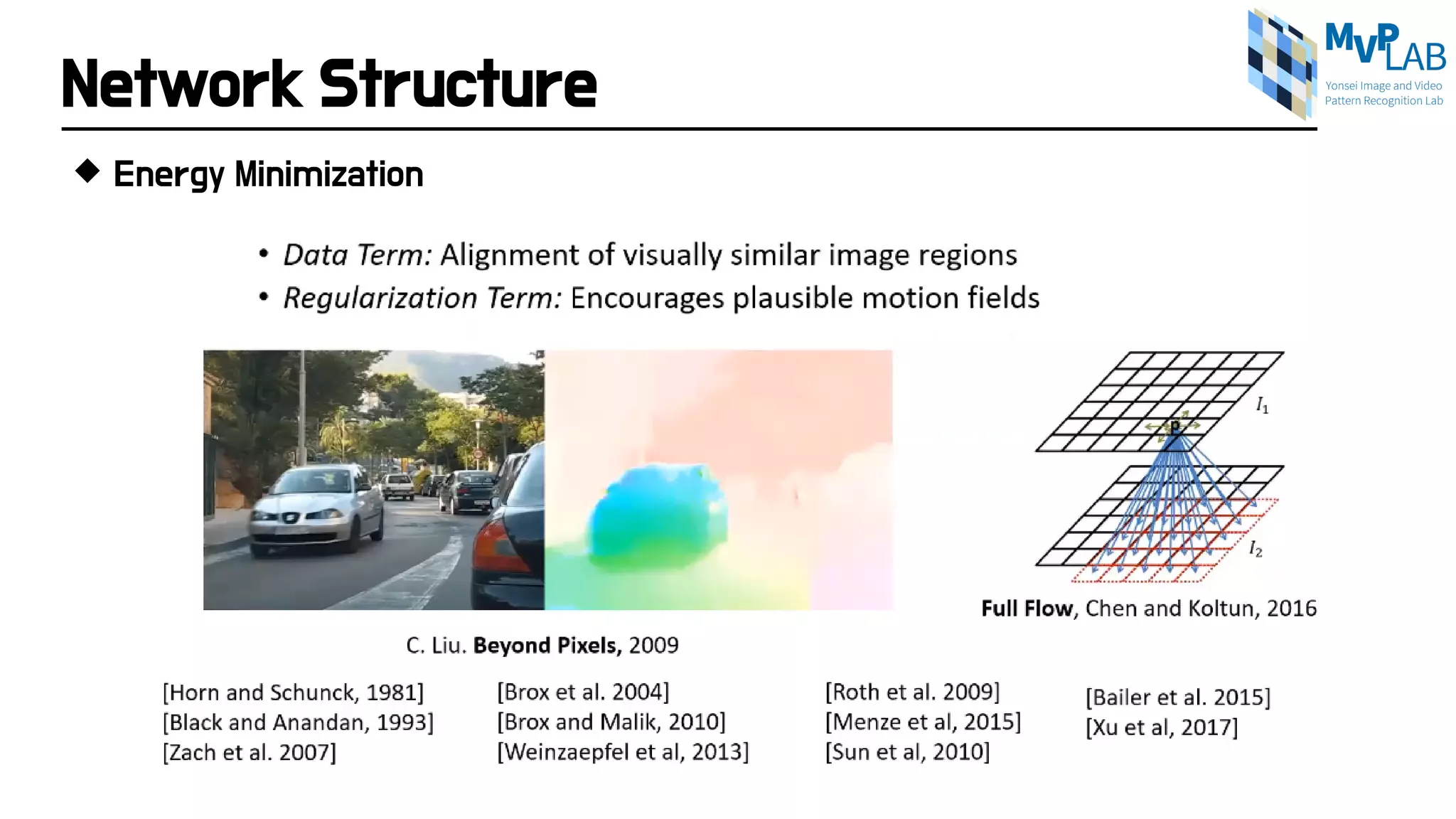
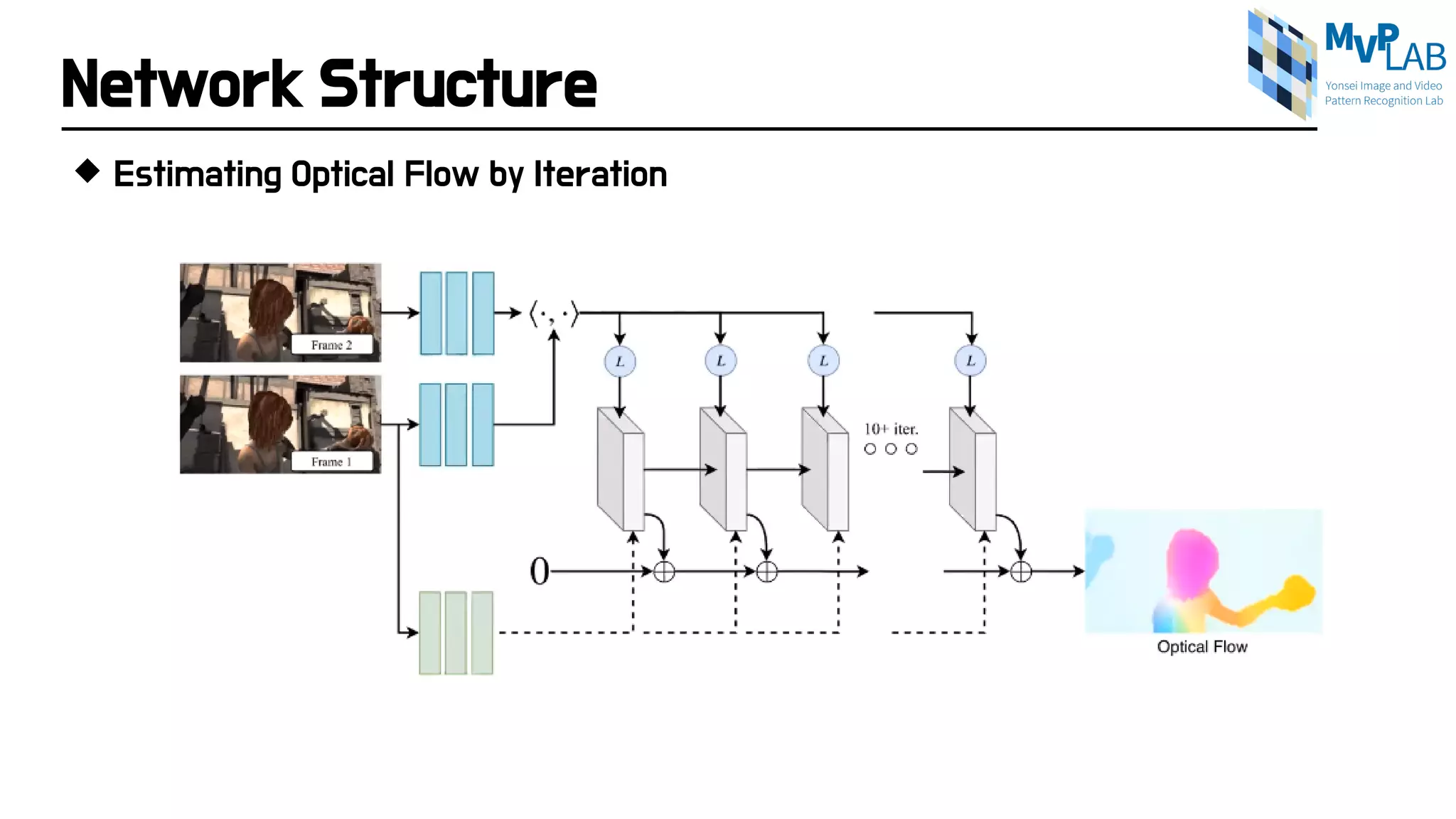
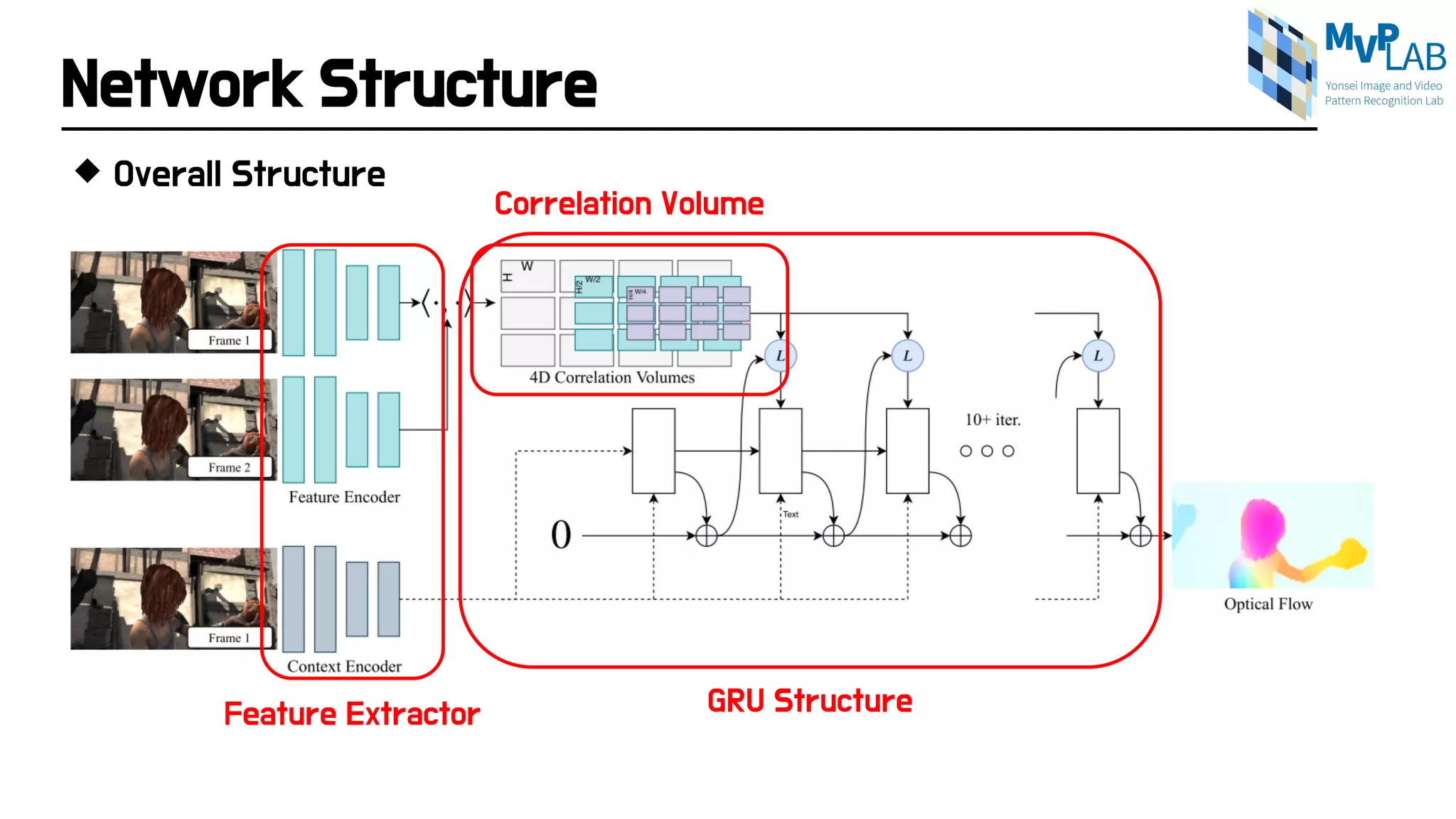
![Network Structure
Correlation Layer [Before Iter]
• Correlation
𝑊𝑊2
𝐻𝐻2
𝑊𝑊2
𝐻𝐻2
𝑊𝑊2
𝐻𝐻2
𝑊𝑊2
𝐻𝐻2
𝑊𝑊2
𝐻𝐻2
𝑊𝑊2
𝐻𝐻2
𝑊𝑊2
𝐻𝐻2
𝑊𝑊2
𝐻𝐻2
𝑊𝑊2
𝐻𝐻2
𝐻𝐻1
𝑊𝑊1𝑊𝑊
𝐻𝐻
𝐷𝐷
𝑊𝑊
𝐻𝐻
𝐷𝐷
(𝑖𝑖, 𝑗𝑗)
(𝑘𝑘, 𝑙𝑙)](https://image.slidesharecdn.com/pr278-201012070658/75/PR-278-RAFT-Recurrent-All-Pairs-Field-Transforms-for-Optical-Flow-22-2048.jpg)
![Network Structure
Correlation Layer [Before Iter]
• Correlation Pyramid
𝑊𝑊2
𝐻𝐻2
𝑊𝑊2
𝐻𝐻2
𝑊𝑊2
𝐻𝐻2
𝑊𝑊2
𝐻𝐻2
𝑊𝑊2
𝐻𝐻2
𝑊𝑊2
𝐻𝐻2
𝑊𝑊2
𝐻𝐻2
𝑊𝑊2
𝐻𝐻2
𝑊𝑊2
𝐻𝐻2
𝐻𝐻1
𝑊𝑊1
𝑊𝑊2
𝐻𝐻2
𝑊𝑊2
𝐻𝐻2
𝑊𝑊2
𝐻𝐻2
𝑊𝑊2
𝐻𝐻2
𝑊𝑊2
𝐻𝐻2
𝑊𝑊2
𝐻𝐻2
𝑊𝑊2
𝐻𝐻2
𝑊𝑊2
𝐻𝐻2
𝑊𝑊2
𝐻𝐻2
𝐻𝐻1
𝑊𝑊1
Down-
sample
𝐶𝐶 𝑘𝑘: [𝐻𝐻 × 𝑊𝑊 ×
𝐻𝐻
2𝑘𝑘
×
𝑊𝑊
2𝑘𝑘
]](https://image.slidesharecdn.com/pr278-201012070658/75/PR-278-RAFT-Recurrent-All-Pairs-Field-Transforms-for-Optical-Flow-23-2048.jpg)
![Network Structure
Correlation Layer [In Iter]
• Correlation Lookup (4D Cost Volume 3D Correlation Feature)
𝑊𝑊2
𝐻𝐻2
𝑊𝑊2
𝐻𝐻2
𝑊𝑊2
𝐻𝐻2
𝑊𝑊2
𝐻𝐻2
𝑊𝑊2
𝐻𝐻2
𝑊𝑊2
𝐻𝐻2
𝑊𝑊2
𝐻𝐻2
𝑊𝑊2
𝐻𝐻2
𝑊𝑊2
𝐻𝐻2
𝐻𝐻1
𝑊𝑊1
𝐻𝐻1
𝑊𝑊1
Current Optical Flow
2𝑟𝑟 + 1
2𝑟𝑟 + 1
𝑊𝑊
𝐻𝐻
2𝑟𝑟 + 1 2](https://image.slidesharecdn.com/pr278-201012070658/75/PR-278-RAFT-Recurrent-All-Pairs-Field-Transforms-for-Optical-Flow-24-2048.jpg)
![Network Structure
GRU [In Iter]
• ℎ𝑡𝑡: Hidden Unit of GRU
• 𝑥𝑥𝑡𝑡: Flow, Correlation Feature, Context Feature
𝑓𝑓𝑘𝑘+1 = 𝑓𝑓𝑘𝑘 + 𝛥𝛥𝛥𝛥](https://image.slidesharecdn.com/pr278-201012070658/75/PR-278-RAFT-Recurrent-All-Pairs-Field-Transforms-for-Optical-Flow-25-2048.jpg)





![[DL輪読会]RobustNet: Improving Domain Generalization in Urban- Scene Segmentatio...](https://cdn.slidesharecdn.com/ss_thumbnails/20210625robustnetlin-210625020332-thumbnail.jpg?width=640&height=640&fit=bounds)


![[DL輪読会]Focal Loss for Dense Object Detection](https://cdn.slidesharecdn.com/ss_thumbnails/focalloss-180208092846-thumbnail.jpg?width=640&height=640&fit=bounds)
![[DL輪読会]Learning Transferable Visual Models From Natural Language Supervision](https://cdn.slidesharecdn.com/ss_thumbnails/dlkobayashi0115-210115012308-thumbnail.jpg?width=640&height=640&fit=bounds)


![[DL輪読会]YOLOv4: Optimal Speed and Accuracy of Object Detection](https://cdn.slidesharecdn.com/ss_thumbnails/200515dlseminar-200515082345-thumbnail.jpg?width=640&height=640&fit=bounds)


![[PR12] Making Convolutional Networks Shift-Invariant Again](https://cdn.slidesharecdn.com/ss_thumbnails/cnnshift4-190923132904-thumbnail.jpg?width=640&height=640&fit=bounds)

![[Paper Review] Temporal Generative Adversarial Nets with Singular Value Clipping](https://cdn.slidesharecdn.com/ss_thumbnails/tgan-180822041515-thumbnail.jpg?width=640&height=640&fit=bounds)
![[Paper Review] A Middlebury Benchmark & Context-Aware Synthesis for Video Fra...](https://cdn.slidesharecdn.com/ss_thumbnails/ctx-aware-180822041245-thumbnail.jpg?width=640&height=640&fit=bounds)
![[Paper Review] Video Frame Interpolation via Adaptive Convolution](https://cdn.slidesharecdn.com/ss_thumbnails/frameinterpolation-180709050627-thumbnail.jpg?width=640&height=640&fit=bounds)
![[Paper Review] A spatio -Temporal Descriptor Based on 3D -Gradients](https://cdn.slidesharecdn.com/ss_thumbnails/3d-gradient-180709050400-thumbnail.jpg?width=640&height=640&fit=bounds)


