Simeon K. Ehui
Practice Manager,
Agriculture Global Practice - World Bank Group
Innovate, generate, disseminate
and adopt improved technologies
Technologies, Platforms and Partnerships in support of the African agricultural science agenda
Abidjan, Cote d’Ivoire / April 4 and 5, 2017
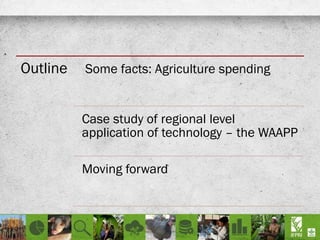
Outline Some facts: Agriculture spending
Case study of regional level
application of technology – the WAAPP
Moving forward
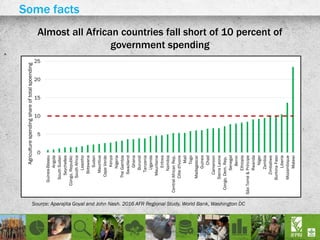
Almost all African countries fall short of 10 percent of
government spending
0
5
10
15
20
25
Guinea-Bissau
Angola
SouthSudan
Seychelles
Congo,Republic
SouthAfrica
Lesotho
Botswana
Sudan
Mauritius
CapeVerde
Kenya
Nigeria
TheGambia
Swaziland
Ghana
Burundi
Tanzania
Uganda
Mauritania
Eritrea
Namibia
CentralAfricanRep.
Côted'Ivoire
Mali
Togo
Madagascar
Guinea
Chad
Cameroon
SierraLeone
Congo,Dem.Rep.
Senegal
Benin
Ethiopia
SãoTomé&Príncipe
Rwanda
Niger
Zambia
Zimbabwe
BurkinaFaso
Liberia
Mozambique
Malawi
Agriculturespendingshareoftotalspoending
Some facts
Source: Aparajita Goyal and John Nash. 2016 AFR Regional Study, World Bank, Washington DC
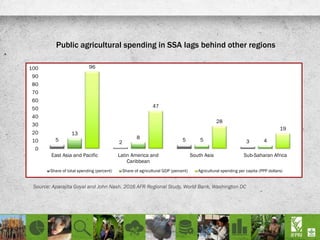
Public agricultural spending in SSA lags behind other regions
5 2 5 3
13
8 5 4
96
47
28
19
0
10
20
30
40
50
60
70
80
90
100
East Asia and Pacific Latin America and
Caribbean
South Asia Sub-Saharan Africa
Share of total spending (percent) Share of agricultural GDP (percent) Agricultural spending per capita (PPP dollars)
Source: Aparajita Goyal and John Nash. 2016 AFR Regional Study, World Bank, Washington DC
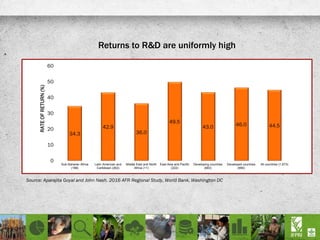
Returns to R&D are uniformly high
34.3
42.9
36.0
49.5
43.0 46.0 44.5
0
10
20
30
40
50
60
Sub-Saharan Africa
(188)
Latin American and
Caribbean (262)
Middle East and North
Africa (11)
East Asia and Pacific
(222)
Developing countries
(683)
Developed countries
(990)
All countries (1,673)
RATEOFRETURN(%)
Source: Aparajita Goyal and John Nash. 2016 AFR Regional Study, World Bank, Washington DC
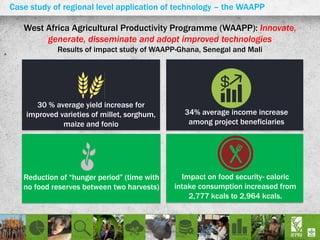
West Africa Agricultural Productivity Programme (WAAPP): Innovate,
generate, disseminate and adopt improved technologies
Results of impact study of WAAPP-Ghana, Senegal and Mali
Case study of regional level application of technology – the WAAPP
30 % average yield increase for
improved varieties of millet, sorghum,
maize and fonio
Reduction of “hunger period” (time with
no food reserves between two harvests)
34% average income increase
among project beneficiaries
Impact on food security- caloric
intake consumption increased from
2,777 kcals to 2,964 kcals.
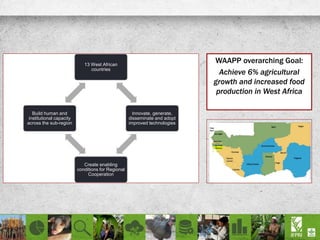
13 West African
countries
Innovate, generate,
disseminate and adopt
improved technologies
Create enabling
conditions for Regional
Cooperation
Build human and
institutional capacity
across the sub-region
WAAPP overarching Goal:
Achieve 6% agricultural
growth and increased food
production in West Africa
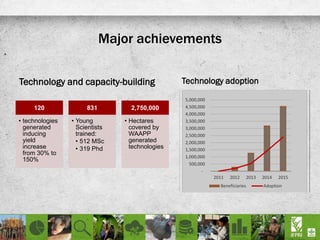
Major achievements
Technology and capacity-building
120
• technologies
generated
inducing
yield
increase
from 30% to
150%
831
• Young
Scientists
trained:
• 512 MSc
• 319 Phd
2,750,000
• Hectares
covered by
WAAPP
generated
technologies
Technology adoption
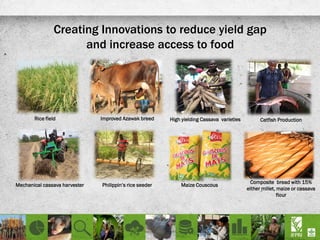
Creating Innovations to reduce yield gap
and increase access to food
Catfish ProductionHigh yielding Cassava varietiesRice field
Mechanical cassava harvester Philippin’s rice seeder
Improved Azawak breed
Maize Couscous
Composite bread with 15%
either millet, maize or cassava
flour
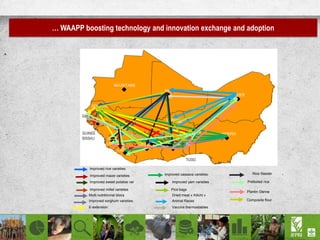
… WAAPP boosting technology and innovation exchange and adoption
Improved rice varieties
Improved maize varieties
Improved sweet potatoe var
Improved millet varieties
Multi nutritionnal blocs
Improved sorghum varieties
E-extension
Improved cassava varieties
Dried meat « Kilichi »
Improved yam varieties
Pics bags
Vaccins thermostables
Animal Races
Rice Seeder
Composite flour
Plantin Canne
Preboiled rice
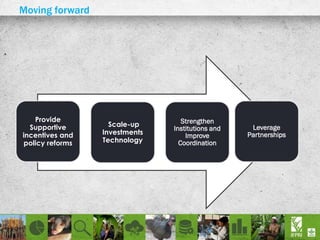
Provide
Supportive
incentives and
policy reforms
Scale-up
Investments
Technology
Strengthen
Institutions and
Improve
Coordination
Leverage
Partnerships
Moving forward
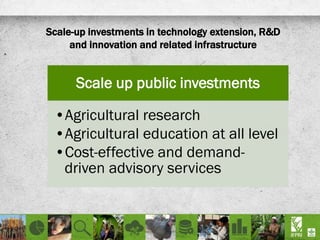
Scale-up investments in technology extension, R&D
and innovation and related infrastructure
Scale up public investments
•Agricultural research
•Agricultural education at all level
•Cost-effective and demand-
driven advisory services
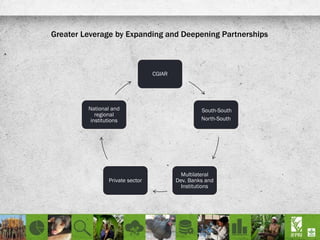
Greater Leverage by Expanding and Deepening Partnerships
CGIAR
South-South
North-South
Multilateral
Dev. Banks and
Institutions
Private sector
National and
regional
institutions
THANK YOU

Innovate, generate, disseminate and adopt improved technologies

  • 1.
    Simeon K. Ehui PracticeManager, Agriculture Global Practice - World Bank Group Innovate, generate, disseminate and adopt improved technologies Technologies, Platforms and Partnerships in support of the African agricultural science agenda Abidjan, Cote d’Ivoire / April 4 and 5, 2017
  • 2.
    Outline Some facts:Agriculture spending Case study of regional level application of technology – the WAAPP Moving forward
  • 3.
    Almost all Africancountries fall short of 10 percent of government spending 0 5 10 15 20 25 Guinea-Bissau Angola SouthSudan Seychelles Congo,Republic SouthAfrica Lesotho Botswana Sudan Mauritius CapeVerde Kenya Nigeria TheGambia Swaziland Ghana Burundi Tanzania Uganda Mauritania Eritrea Namibia CentralAfricanRep. Côted'Ivoire Mali Togo Madagascar Guinea Chad Cameroon SierraLeone Congo,Dem.Rep. Senegal Benin Ethiopia SãoTomé&Príncipe Rwanda Niger Zambia Zimbabwe BurkinaFaso Liberia Mozambique Malawi Agriculturespendingshareoftotalspoending Some facts Source: Aparajita Goyal and John Nash. 2016 AFR Regional Study, World Bank, Washington DC
  • 4.
    Public agricultural spendingin SSA lags behind other regions 5 2 5 3 13 8 5 4 96 47 28 19 0 10 20 30 40 50 60 70 80 90 100 East Asia and Pacific Latin America and Caribbean South Asia Sub-Saharan Africa Share of total spending (percent) Share of agricultural GDP (percent) Agricultural spending per capita (PPP dollars) Source: Aparajita Goyal and John Nash. 2016 AFR Regional Study, World Bank, Washington DC
  • 5.
    Returns to R&Dare uniformly high 34.3 42.9 36.0 49.5 43.0 46.0 44.5 0 10 20 30 40 50 60 Sub-Saharan Africa (188) Latin American and Caribbean (262) Middle East and North Africa (11) East Asia and Pacific (222) Developing countries (683) Developed countries (990) All countries (1,673) RATEOFRETURN(%) Source: Aparajita Goyal and John Nash. 2016 AFR Regional Study, World Bank, Washington DC
  • 6.
    West Africa AgriculturalProductivity Programme (WAAPP): Innovate, generate, disseminate and adopt improved technologies Results of impact study of WAAPP-Ghana, Senegal and Mali Case study of regional level application of technology – the WAAPP 30 % average yield increase for improved varieties of millet, sorghum, maize and fonio Reduction of “hunger period” (time with no food reserves between two harvests) 34% average income increase among project beneficiaries Impact on food security- caloric intake consumption increased from 2,777 kcals to 2,964 kcals.
  • 7.
    13 West African countries Innovate,generate, disseminate and adopt improved technologies Create enabling conditions for Regional Cooperation Build human and institutional capacity across the sub-region WAAPP overarching Goal: Achieve 6% agricultural growth and increased food production in West Africa
  • 8.
    Major achievements Technology andcapacity-building 120 • technologies generated inducing yield increase from 30% to 150% 831 • Young Scientists trained: • 512 MSc • 319 Phd 2,750,000 • Hectares covered by WAAPP generated technologies Technology adoption
  • 9.
    Creating Innovations toreduce yield gap and increase access to food Catfish ProductionHigh yielding Cassava varietiesRice field Mechanical cassava harvester Philippin’s rice seeder Improved Azawak breed Maize Couscous Composite bread with 15% either millet, maize or cassava flour
  • 10.
    … WAAPP boostingtechnology and innovation exchange and adoption Improved rice varieties Improved maize varieties Improved sweet potatoe var Improved millet varieties Multi nutritionnal blocs Improved sorghum varieties E-extension Improved cassava varieties Dried meat « Kilichi » Improved yam varieties Pics bags Vaccins thermostables Animal Races Rice Seeder Composite flour Plantin Canne Preboiled rice
  • 11.
  • 12.
    Scale-up investments intechnology extension, R&D and innovation and related infrastructure Scale up public investments •Agricultural research •Agricultural education at all level •Cost-effective and demand- driven advisory services
  • 13.
    Greater Leverage byExpanding and Deepening Partnerships CGIAR South-South North-South Multilateral Dev. Banks and Institutions Private sector National and regional institutions
  • 14.