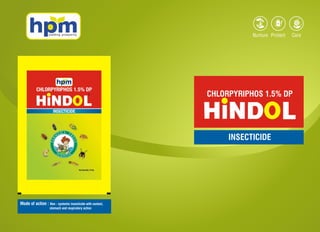
CHLORPYRIPHOS 1.5% DP
INSECTICIDE
Mode of action : Non - systemic insecticide with contact,
stomach and respiratory action
Qualities of HINDOL
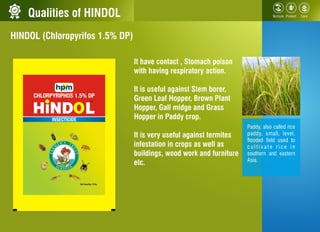
It have contact , Stomach poison
with having respiratory action.
It is useful against Stem borer,
Green Leaf Hopper, Brown Plant
Hopper, Gall midge and Grass
Hopper in Paddy crop.
It is very useful against termites
infestation in crops as well as
buildings, wood work and furniture
etc.
HINDOL (Chloropyrifos 1.5% DP)
Paddy, also called rice
paddy, small, level,
ooded eld used to
c u l t i v a t e r i c e i n
southern and eastern
Asia.
What is Insecticides ?
Granule insecticides are
designed to kill ants, eas,
crickets, and other pests.
These products are used
outdoors only, and should
notbeusedinbuildings.
Insecticide granules consist
of a solid particle that is
i m p r e g n a t e d w i t h
insecticide. Fipronil
insecticides kill insects by
disrupting their brains
andnervoussystem.
Crop
Paddy
Paddy, also called rice paddy,
small, level, ooded eld used to
cultivate rice in southern and
eastern Asia. Wet-rice cultivation is
the most prevalent method of
farming in the Far East, where it
utilizes a small fraction of the total
land yet feeds the majority of the
ruralpopulation.
Rice was domesticated as
early as 3500 BC, and by
about 2,000 years ago it was
grown in almost all of the
present-day cultivation areas,
predominantly deltas,
oodplains and coastal plains,
and some terraced valley
slopes.
Target Pest
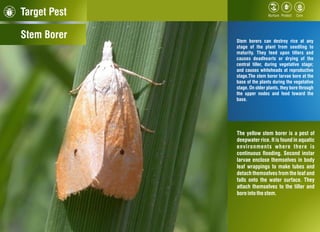
Stem Borer Stem borers can destroy rice at any
stage of the plant from seedling to
maturity. They feed upon tillers and
causes deadhearts or drying of the
central tiller, during vegetative stage;
and causes whiteheads at reproductive
stage.The stem borer larvae bore at the
base of the plants during the vegetative
stage. On older plants, they bore through
the upper nodes and feed toward the
base.
The yellow stem borer is a pest of
deepwater rice. It is found in aquatic
environments where there is
continuous ooding. Second instar
larvae enclose themselves in body
leaf wrappings to make tubes and
detach themselves from the leaf and
falls onto the water surface. They
attach themselves to the tiller and
boreinto thestem.
Target Pest
Green leafhoppers are the most common
leafhoppers in rice elds and transmit
the viral disease tungro. The virus lead to
leaf tip discoloration, reduced number of
tillers, stunted plants with reduced vigor,
andinworstcasesplantwithering.
In order to tell the symptoms of
tungro-infected crops from
nitrogen deciency or iron toxicity,
check for the presence of the
insect:white or pale yellow eggs
inside leaf sheaths or midribs;
yellow or pale green nymphs with
or without black markings; pale
green adults with or without black
markings and with a characteristic
diagonalmovement.
Green Leaf Hopper
Target Pest
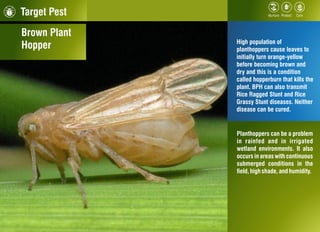
High population of
planthoppers cause leaves to
initially turn orange-yellow
before becoming brown and
dry and this is a condition
called hopperburn that kills the
plant. BPH can also transmit
Rice Ragged Stunt and Rice
Grassy Stunt diseases. Neither
disease can be cured.
Planthoppers can be a problem
in rainfed and in irrigated
wetland environments. It also
occurs in areas with continuous
submerged conditions in the
eld, highshade,andhumidity.
Brown Plant
Hopper
Target Pest
Rice gall midge forms a tubular gall at
the base of tillers, causing elongation of
leaf sheaths called onion leaf or silver
shoot. The Asian rice gall midge is found
in irrigated or rainfed wetland
environments during the tillering stage
of the rice crop. It is also common in
upland and deepwater rice. The adults
are nocturnal and can easily be collected
usinglighttraps.
The plant stunting and leaf deformity,
wilting and rolling are also symptoms
observed on plants caused by drought,
potassium deciency, salinity, and
ragged stunt virus, orange leaf virus and
tungro virus diseases. The rolled leaves
can also be associated with the
symptom caused by rice thrips. To
conrm cause of problem, check for
presence of insect. Particularly,
elongate-tubular eggs and maggot-like
larvafeedinginsidedevelopingbuds.
Rice gall midge
Target Pest
The grasshopper is a medium to
large sized insect and the
grasshopper is found (close to
grass) all over the world.
Grasshoppers are best known for
their ability to jump incredible
heightsanddistances.
Most grasshopper individuals grow
to about 2 inches long although
larger grasshoppers are found on a
fairly regular basis that grow to
more than 5 inches in length. The
grasshopper has wings meaning it
can migrate over long distances
whentheweathergetstoocold.
Grass Hopper
Target Pest
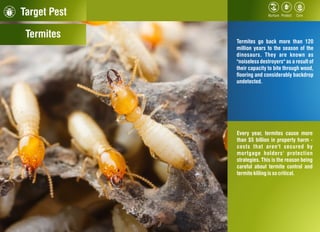
Termites go back more than 120
million years to the season of the
dinosaurs. They are known as
"noiseless destroyers" as a result of
their capacity to bite through wood,
ooring and considerably backdrop
undetected.
Every year, termites cause more
than $5 billion in property harm -
costs that aren't secured by
mortgage holders' protection
strategies. This is the reason being
careful about termite control and
termitekilling is socritical.
Termites
Dose
Quantity
It is completely safe to use Hindol .
It also compatible with the other agrochemicals.
10.0 kg/acre
THanKYOU
ENRICHING LIVES, YIELDS PROSPERITY
HPM Chemicals & Fertilizers Ltd.

Hindol

  • 1.
    CHLORPYRIPHOS 1.5% DP INSECTICIDE Modeof action : Non - systemic insecticide with contact, stomach and respiratory action
  • 2.
    Qualities of HINDOL Ithave contact , Stomach poison with having respiratory action. It is useful against Stem borer, Green Leaf Hopper, Brown Plant Hopper, Gall midge and Grass Hopper in Paddy crop. It is very useful against termites infestation in crops as well as buildings, wood work and furniture etc. HINDOL (Chloropyrifos 1.5% DP) Paddy, also called rice paddy, small, level, ooded eld used to c u l t i v a t e r i c e i n southern and eastern Asia.
  • 3.
    What is Insecticides? Granule insecticides are designed to kill ants, eas, crickets, and other pests. These products are used outdoors only, and should notbeusedinbuildings. Insecticide granules consist of a solid particle that is i m p r e g n a t e d w i t h insecticide. Fipronil insecticides kill insects by disrupting their brains andnervoussystem.
  • 4.
    Crop Paddy Paddy, also calledrice paddy, small, level, ooded eld used to cultivate rice in southern and eastern Asia. Wet-rice cultivation is the most prevalent method of farming in the Far East, where it utilizes a small fraction of the total land yet feeds the majority of the ruralpopulation. Rice was domesticated as early as 3500 BC, and by about 2,000 years ago it was grown in almost all of the present-day cultivation areas, predominantly deltas, oodplains and coastal plains, and some terraced valley slopes.
  • 5.
    Target Pest Stem BorerStem borers can destroy rice at any stage of the plant from seedling to maturity. They feed upon tillers and causes deadhearts or drying of the central tiller, during vegetative stage; and causes whiteheads at reproductive stage.The stem borer larvae bore at the base of the plants during the vegetative stage. On older plants, they bore through the upper nodes and feed toward the base. The yellow stem borer is a pest of deepwater rice. It is found in aquatic environments where there is continuous ooding. Second instar larvae enclose themselves in body leaf wrappings to make tubes and detach themselves from the leaf and falls onto the water surface. They attach themselves to the tiller and boreinto thestem.
  • 6.
    Target Pest Green leafhoppersare the most common leafhoppers in rice elds and transmit the viral disease tungro. The virus lead to leaf tip discoloration, reduced number of tillers, stunted plants with reduced vigor, andinworstcasesplantwithering. In order to tell the symptoms of tungro-infected crops from nitrogen deciency or iron toxicity, check for the presence of the insect:white or pale yellow eggs inside leaf sheaths or midribs; yellow or pale green nymphs with or without black markings; pale green adults with or without black markings and with a characteristic diagonalmovement. Green Leaf Hopper
  • 7.
    Target Pest High populationof planthoppers cause leaves to initially turn orange-yellow before becoming brown and dry and this is a condition called hopperburn that kills the plant. BPH can also transmit Rice Ragged Stunt and Rice Grassy Stunt diseases. Neither disease can be cured. Planthoppers can be a problem in rainfed and in irrigated wetland environments. It also occurs in areas with continuous submerged conditions in the eld, highshade,andhumidity. Brown Plant Hopper
  • 8.
    Target Pest Rice gallmidge forms a tubular gall at the base of tillers, causing elongation of leaf sheaths called onion leaf or silver shoot. The Asian rice gall midge is found in irrigated or rainfed wetland environments during the tillering stage of the rice crop. It is also common in upland and deepwater rice. The adults are nocturnal and can easily be collected usinglighttraps. The plant stunting and leaf deformity, wilting and rolling are also symptoms observed on plants caused by drought, potassium deciency, salinity, and ragged stunt virus, orange leaf virus and tungro virus diseases. The rolled leaves can also be associated with the symptom caused by rice thrips. To conrm cause of problem, check for presence of insect. Particularly, elongate-tubular eggs and maggot-like larvafeedinginsidedevelopingbuds. Rice gall midge
  • 9.
    Target Pest The grasshopperis a medium to large sized insect and the grasshopper is found (close to grass) all over the world. Grasshoppers are best known for their ability to jump incredible heightsanddistances. Most grasshopper individuals grow to about 2 inches long although larger grasshoppers are found on a fairly regular basis that grow to more than 5 inches in length. The grasshopper has wings meaning it can migrate over long distances whentheweathergetstoocold. Grass Hopper
  • 10.
    Target Pest Termites goback more than 120 million years to the season of the dinosaurs. They are known as "noiseless destroyers" as a result of their capacity to bite through wood, ooring and considerably backdrop undetected. Every year, termites cause more than $5 billion in property harm - costs that aren't secured by mortgage holders' protection strategies. This is the reason being careful about termite control and termitekilling is socritical. Termites
  • 11.
    Dose Quantity It is completelysafe to use Hindol . It also compatible with the other agrochemicals. 10.0 kg/acre
  • 12.
    THanKYOU ENRICHING LIVES, YIELDSPROSPERITY HPM Chemicals & Fertilizers Ltd.