


REGULATORY AND
LEGAL ASPECTS OF
3D PRINTING
Utrecht Summer School Course:
Biofabrication
16 July 2014
Erik Vollebregt
www.axonadvocaten.nl
Agenda
• How does the law see 3D printing?
• Regulation of various aspects of 3D printing
• Intellectual property
• Personal data
How the law sees 3d printing
You use a production facility
• Medical devices and medicial products production facilities are regulated
(GMP, ISO 13485)
You make something that can be regulated
• Medical device, advanced therapy medicinal product
You use materials that can be regulated
• Parts for devices and substances for medicinal products are regulated;
harvest, transport and use of biologic material is regulated
You apply a process that can be regulated
• Manufacturing processes for medicinal products and devices require a
quality system
How the law sees 3d printing
You use data that pertain to an identified or identifiable person
• Collection and processing of personal data concerning health
• Customisation links objects to persons
• Data can be breached, stolen etc
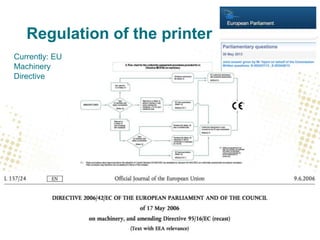
Regulation of the printer
Currently: EU
Machinery
Directive
Regulation of the material
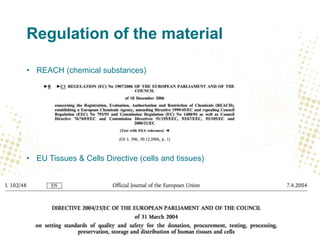
• REACH (chemical substances)
• EU Tissues & Cells Directive (cells and tissues)
Regulation of the end result
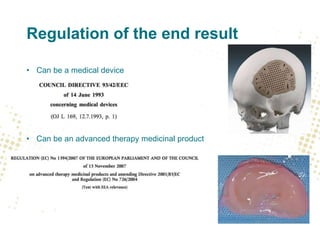
• Can be a medical device
• Can be an advanced therapy medicinal product
Regulation of the end result
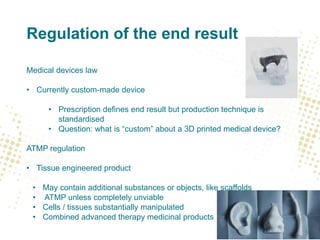
Medical devices law
• Currently custom-made device
• Prescription defines end result but production technique is
standardised
• Question: what is “custom” about a 3D printed medical device?
ATMP regulation
• Tissue engineered product
• May contain additional substances or objects, like scaffolds
• ATMP unless completely unviable
• Cells / tissues substantially manipulated
• Combined advanced therapy medicinal products
Regulation of the end result
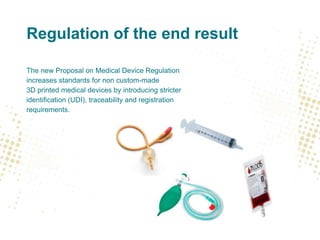
The new Proposal on Medical Device Regulation
increases standards for non custom-made
3D printed medical devices by introducing stricter
identification (UDI), traceability and registration
requirements.
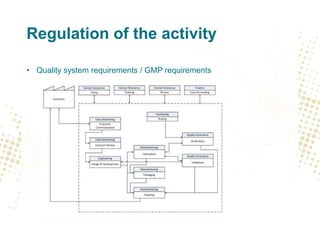
Regulation of the activity
• Quality system requirements / GMP requirements
Intellectual property: general
• Copyright
• Software
• Software model for device / bodypart
• Patents
• Printing method (e.g. living cells)
• End result (ear with particular properties)
• Printing materials
• Contributory Patent infringement:
- the individual operating the 3D printer, and
- the designer of the CAD file/s.
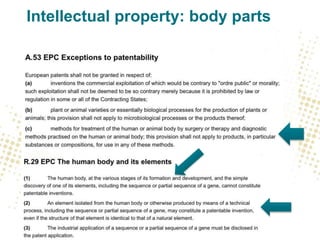
Intellectual property: body parts
Personal data
3d printing related activities involve collection and processing of personal
data concerning health on many levels
• Data from hospital’s electronic health records
• Generation of patient related data for end product
• Data in files describing the end product
• Etc.
Who controls the data?
• Controller has regulatory burden, must conclude processing agreement
with others that get access to the data
Where is the data?
• External printing lab?
• Hosted?
• Sent outside of EU for e.g. modelling?
www.axonlawyers.com
THANKS FOR YOUR ATTENTION
Erik Vollebregt
Axon Lawyers
Piet Heinkade 183
1019 HC Amsterdam
T +31 88 650 6500
F +31 88 650 6555
M +31 6 47 180 683
E
erik.vollebregt@axonlawyers.com
@meddevlegal
B http://medicaldeviceslegal.com
READ MY BLOG:
http://medicaldeviceslegal.com

3d printing and biofabrication

  • 1.
    REGULATORY AND LEGAL ASPECTSOF 3D PRINTING Utrecht Summer School Course: Biofabrication 16 July 2014 Erik Vollebregt www.axonadvocaten.nl
  • 2.
    Agenda • How doesthe law see 3D printing? • Regulation of various aspects of 3D printing • Intellectual property • Personal data
  • 3.
    How the lawsees 3d printing You use a production facility • Medical devices and medicial products production facilities are regulated (GMP, ISO 13485) You make something that can be regulated • Medical device, advanced therapy medicinal product You use materials that can be regulated • Parts for devices and substances for medicinal products are regulated; harvest, transport and use of biologic material is regulated You apply a process that can be regulated • Manufacturing processes for medicinal products and devices require a quality system
  • 4.
    How the lawsees 3d printing You use data that pertain to an identified or identifiable person • Collection and processing of personal data concerning health • Customisation links objects to persons • Data can be breached, stolen etc
  • 5.
    Regulation of theprinter Currently: EU Machinery Directive
  • 6.
    Regulation of thematerial • REACH (chemical substances) • EU Tissues & Cells Directive (cells and tissues)
  • 7.
    Regulation of theend result • Can be a medical device • Can be an advanced therapy medicinal product
  • 8.
    Regulation of theend result Medical devices law • Currently custom-made device • Prescription defines end result but production technique is standardised • Question: what is “custom” about a 3D printed medical device? ATMP regulation • Tissue engineered product • May contain additional substances or objects, like scaffolds • ATMP unless completely unviable • Cells / tissues substantially manipulated • Combined advanced therapy medicinal products
  • 9.
    Regulation of theend result The new Proposal on Medical Device Regulation increases standards for non custom-made 3D printed medical devices by introducing stricter identification (UDI), traceability and registration requirements.
  • 10.
    Regulation of theactivity • Quality system requirements / GMP requirements
  • 11.
    Intellectual property: general •Copyright • Software • Software model for device / bodypart • Patents • Printing method (e.g. living cells) • End result (ear with particular properties) • Printing materials • Contributory Patent infringement: - the individual operating the 3D printer, and - the designer of the CAD file/s.
  • 12.
  • 13.
    Personal data 3d printingrelated activities involve collection and processing of personal data concerning health on many levels • Data from hospital’s electronic health records • Generation of patient related data for end product • Data in files describing the end product • Etc. Who controls the data? • Controller has regulatory burden, must conclude processing agreement with others that get access to the data Where is the data? • External printing lab? • Hosted? • Sent outside of EU for e.g. modelling?
  • 14.
    www.axonlawyers.com THANKS FOR YOURATTENTION Erik Vollebregt Axon Lawyers Piet Heinkade 183 1019 HC Amsterdam T +31 88 650 6500 F +31 88 650 6555 M +31 6 47 180 683 E erik.vollebregt@axonlawyers.com @meddevlegal B http://medicaldeviceslegal.com READ MY BLOG: http://medicaldeviceslegal.com