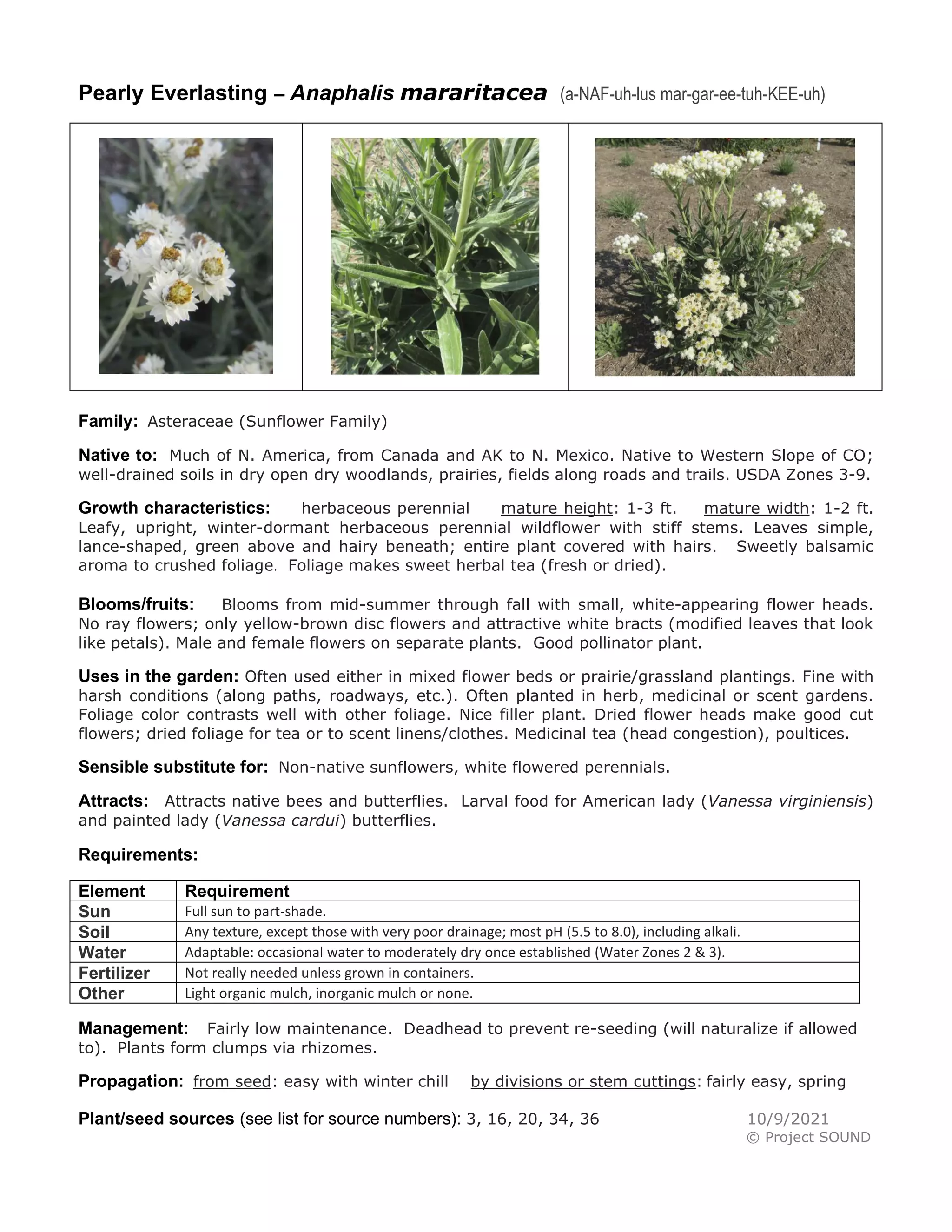
Pearly Everlasting – Anaphalis mararitacea (a-NAF-uh-lus mar-gar-ee-tuh-KEE-uh)
Family: Asteraceae (Sunflower Family)
Native to: Much of N. America, from Canada and AK to N. Mexico. Native to Western Slope of CO;
well-drained soils in dry open dry woodlands, prairies, fields along roads and trails. USDA Zones 3-9.
Growth characteristics: herbaceous perennial mature height: 1-3 ft. mature width: 1-2 ft.
Leafy, upright, winter-dormant herbaceous perennial wildflower with stiff stems. Leaves simple,
lance-shaped, green above and hairy beneath; entire plant covered with hairs. Sweetly balsamic
aroma to crushed foliage. Foliage makes sweet herbal tea (fresh or dried).
Blooms/fruits: Blooms from mid-summer through fall with small, white-appearing flower heads.
No ray flowers; only yellow-brown disc flowers and attractive white bracts (modified leaves that look
like petals). Male and female flowers on separate plants. Good pollinator plant.
Uses in the garden: Often used either in mixed flower beds or prairie/grassland plantings. Fine with
harsh conditions (along paths, roadways, etc.). Often planted in herb, medicinal or scent gardens.
Foliage color contrasts well with other foliage. Nice filler plant. Dried flower heads make good cut
flowers; dried foliage for tea or to scent linens/clothes. Medicinal tea (head congestion), poultices.
Sensible substitute for: Non-native sunflowers, white flowered perennials.
Attracts: Attracts native bees and butterflies. Larval food for American lady (Vanessa virginiensis)
and painted lady (Vanessa cardui) butterflies.
Requirements:
Element Requirement
Sun Full sun to part-shade.
Soil Any texture, except those with very poor drainage; most pH (5.5 to 8.0), including alkali.
Water Adaptable: occasional water to moderately dry once established (Water Zones 2 & 3).
Fertilizer Not really needed unless grown in containers.
Other Light organic mulch, inorganic mulch or none.
Management: Fairly low maintenance. Deadhead to prevent re-seeding (will naturalize if allowed
to). Plants form clumps via rhizomes.
Propagation: from seed: easy with winter chill by divisions or stem cuttings: fairly easy, spring
Plant/seed sources (see list for source numbers): 3, 16, 20, 34, 36 10/9/2021
© Project SOUND

Gardening sheet anaphalis mararitacea

  • 1.
    Pearly Everlasting –Anaphalis mararitacea (a-NAF-uh-lus mar-gar-ee-tuh-KEE-uh) Family: Asteraceae (Sunflower Family) Native to: Much of N. America, from Canada and AK to N. Mexico. Native to Western Slope of CO; well-drained soils in dry open dry woodlands, prairies, fields along roads and trails. USDA Zones 3-9. Growth characteristics: herbaceous perennial mature height: 1-3 ft. mature width: 1-2 ft. Leafy, upright, winter-dormant herbaceous perennial wildflower with stiff stems. Leaves simple, lance-shaped, green above and hairy beneath; entire plant covered with hairs. Sweetly balsamic aroma to crushed foliage. Foliage makes sweet herbal tea (fresh or dried). Blooms/fruits: Blooms from mid-summer through fall with small, white-appearing flower heads. No ray flowers; only yellow-brown disc flowers and attractive white bracts (modified leaves that look like petals). Male and female flowers on separate plants. Good pollinator plant. Uses in the garden: Often used either in mixed flower beds or prairie/grassland plantings. Fine with harsh conditions (along paths, roadways, etc.). Often planted in herb, medicinal or scent gardens. Foliage color contrasts well with other foliage. Nice filler plant. Dried flower heads make good cut flowers; dried foliage for tea or to scent linens/clothes. Medicinal tea (head congestion), poultices. Sensible substitute for: Non-native sunflowers, white flowered perennials. Attracts: Attracts native bees and butterflies. Larval food for American lady (Vanessa virginiensis) and painted lady (Vanessa cardui) butterflies. Requirements: Element Requirement Sun Full sun to part-shade. Soil Any texture, except those with very poor drainage; most pH (5.5 to 8.0), including alkali. Water Adaptable: occasional water to moderately dry once established (Water Zones 2 & 3). Fertilizer Not really needed unless grown in containers. Other Light organic mulch, inorganic mulch or none. Management: Fairly low maintenance. Deadhead to prevent re-seeding (will naturalize if allowed to). Plants form clumps via rhizomes. Propagation: from seed: easy with winter chill by divisions or stem cuttings: fairly easy, spring Plant/seed sources (see list for source numbers): 3, 16, 20, 34, 36 10/9/2021 © Project SOUND