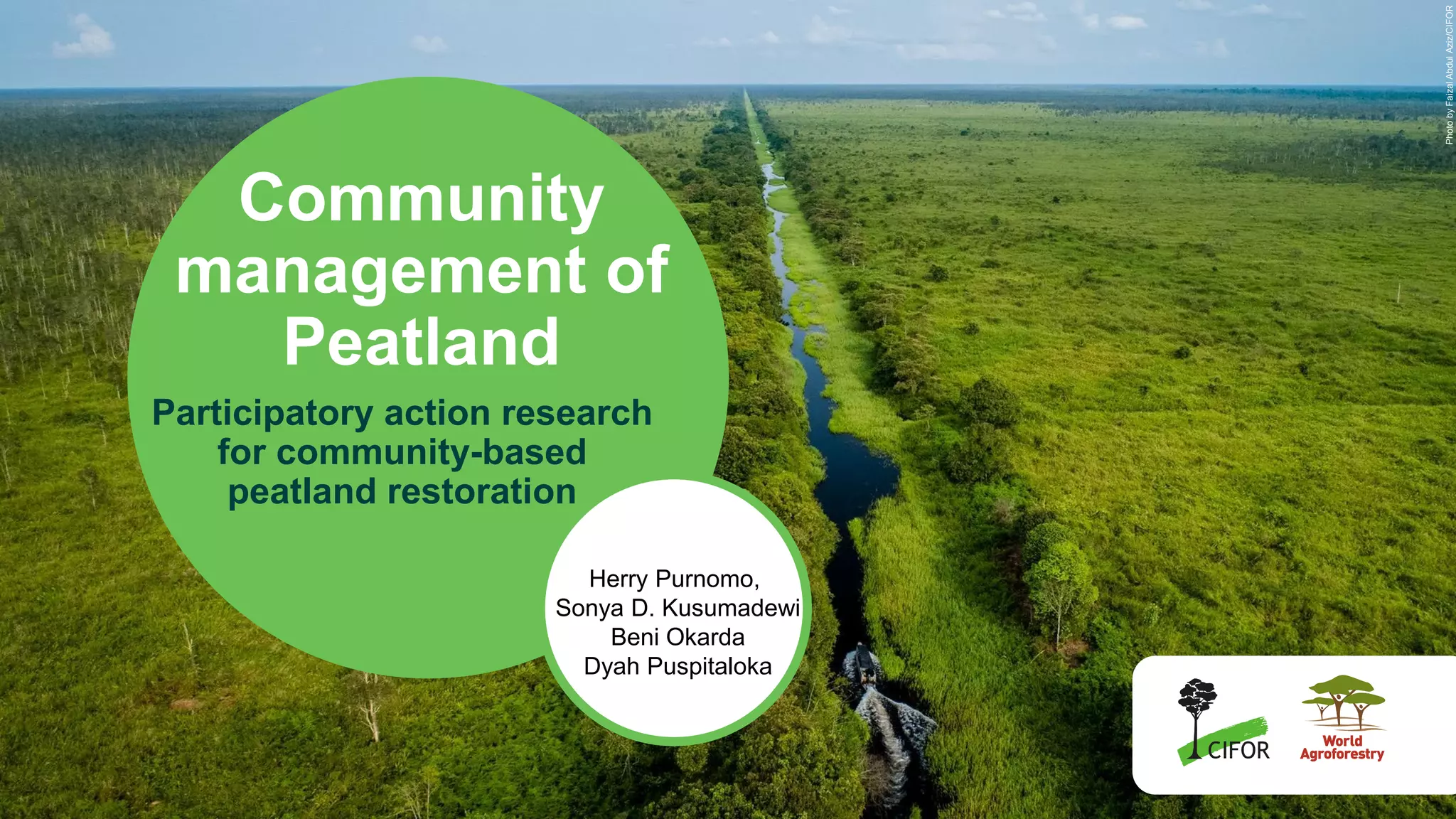
Photo
by
Faizal
Abdul
Aziz/CIFOR
Community
management of
Peatland
Participatory action research
for community-based
peatland restoration
Herry Purnomo,
Sonya D. Kusumadewi
Beni Okarda
Dyah Puspitaloka
Peatland restoration in Indonesia
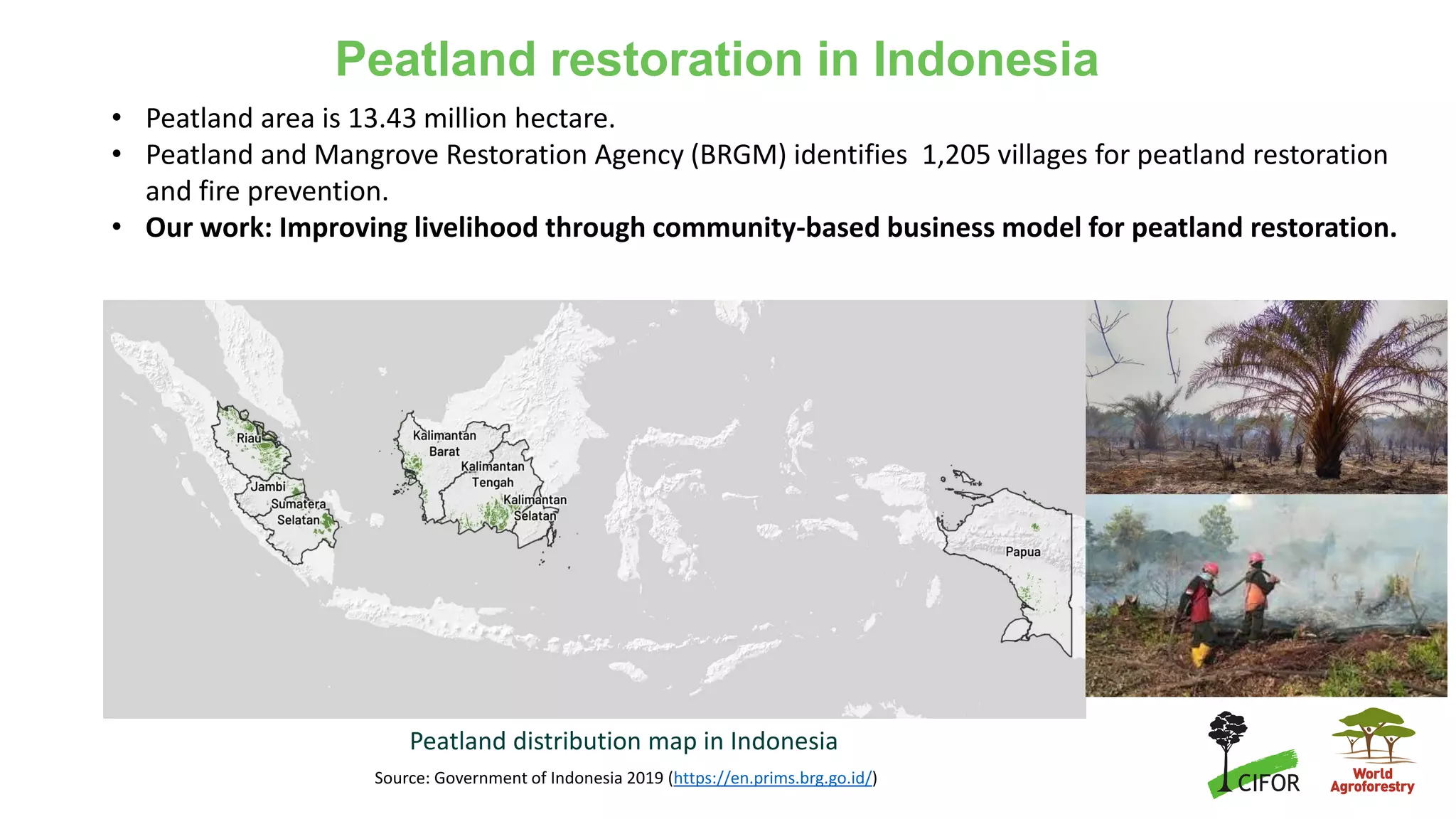
Peatland distribution map in Indonesia
Source: Government of Indonesia 2019 (https://en.prims.brg.go.id/)
• Peatland area is 13.43 million hectare.
• Peatland and Mangrove Restoration Agency (BRGM) identifies 1,205 villages for peatland restoration
and fire prevention.
• Our work: Improving livelihood through community-based business model for peatland restoration.
Framework and
methods
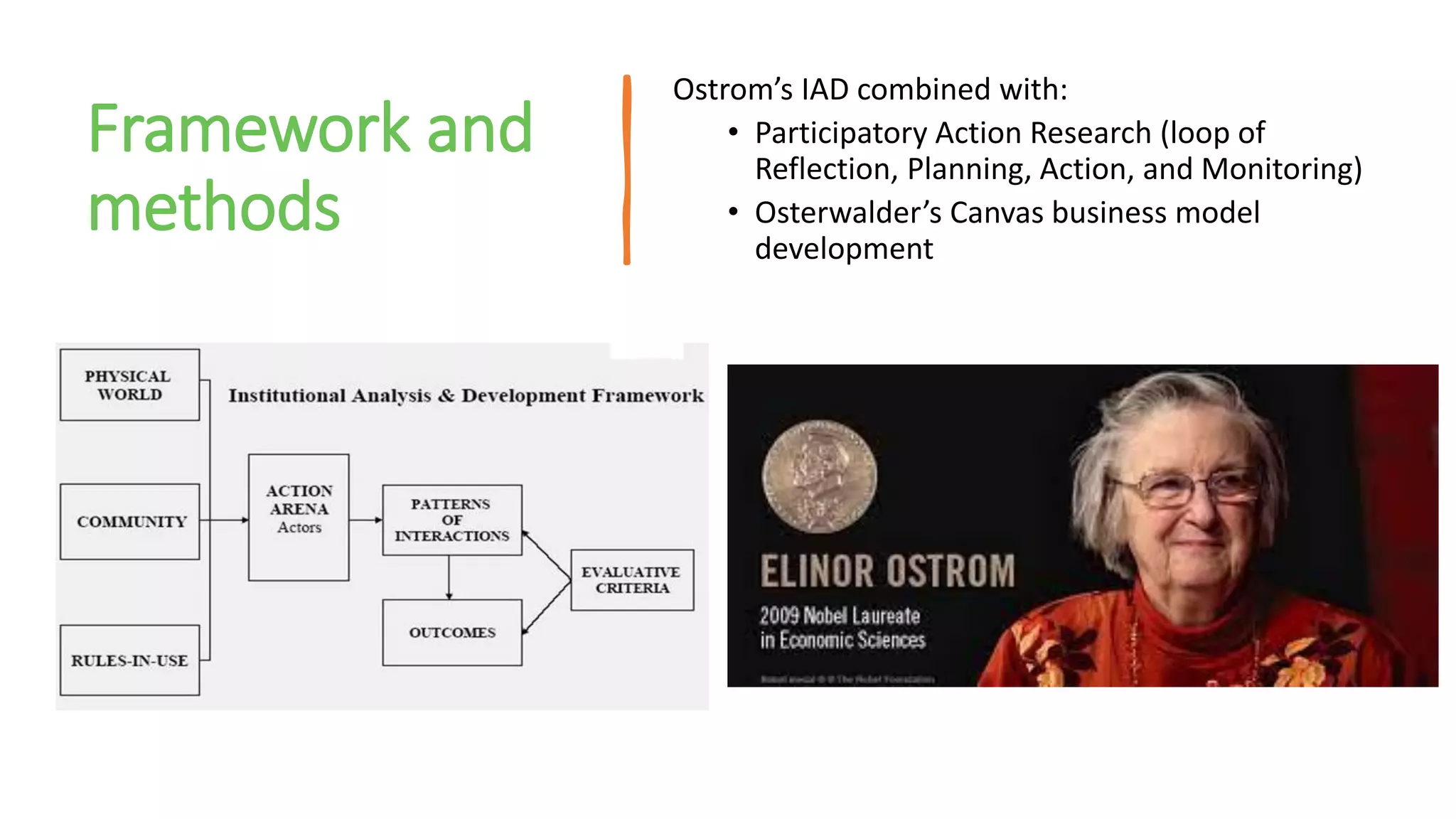
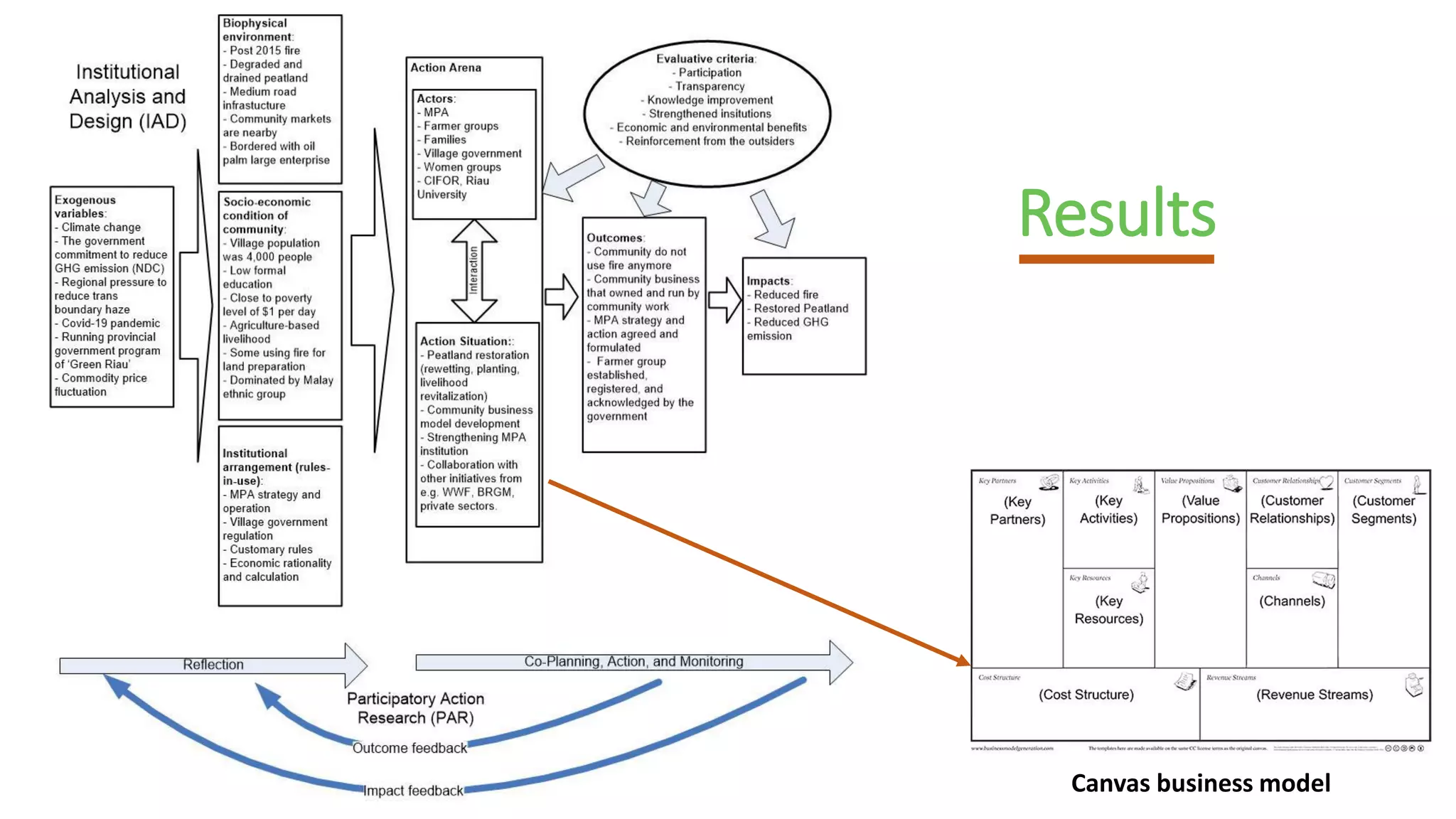
Ostrom’s IAD combined with:
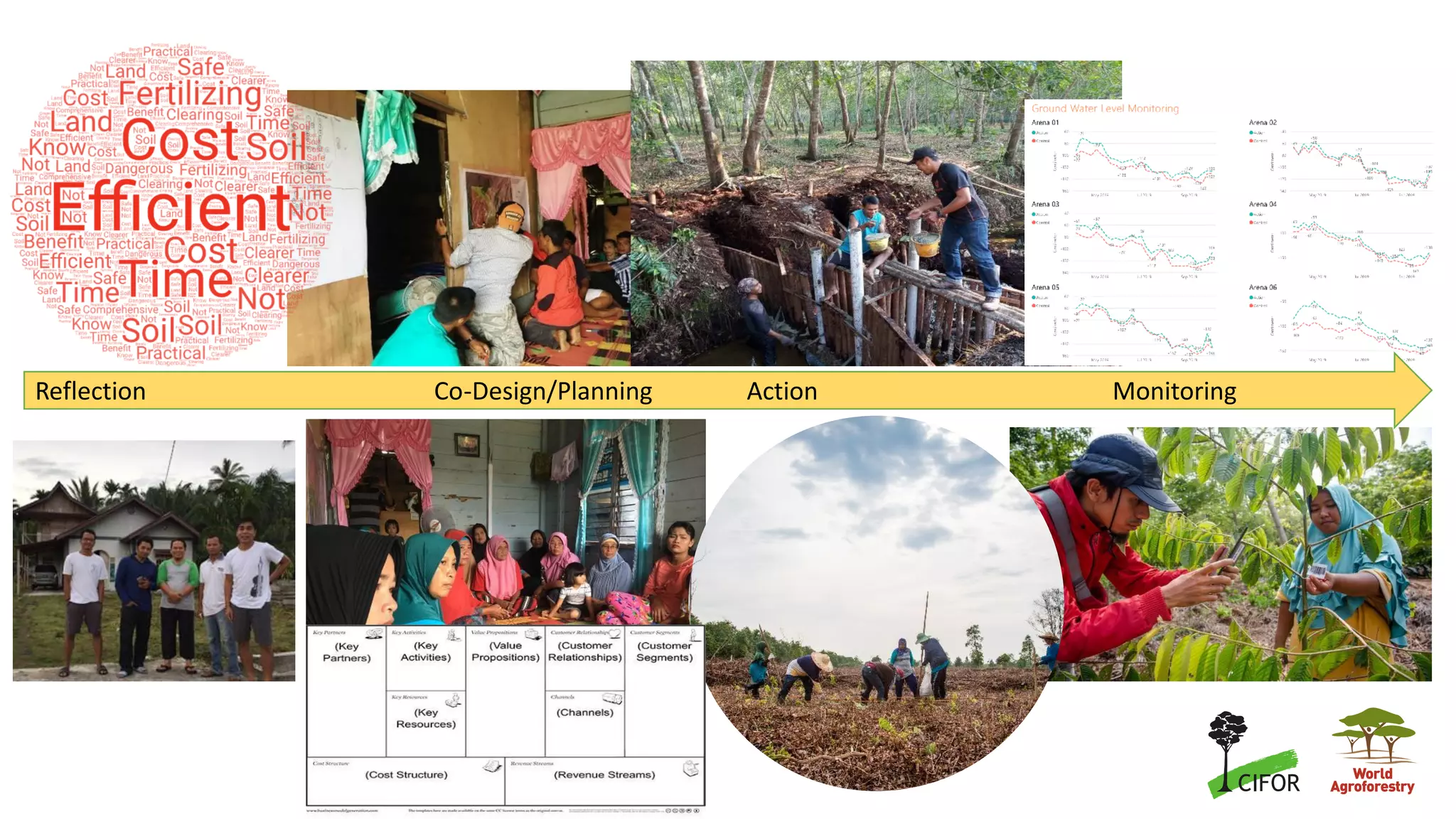
• Participatory Action Research (loop of
Reflection, Planning, Action, and Monitoring)
• Osterwalder’s Canvas business model
development
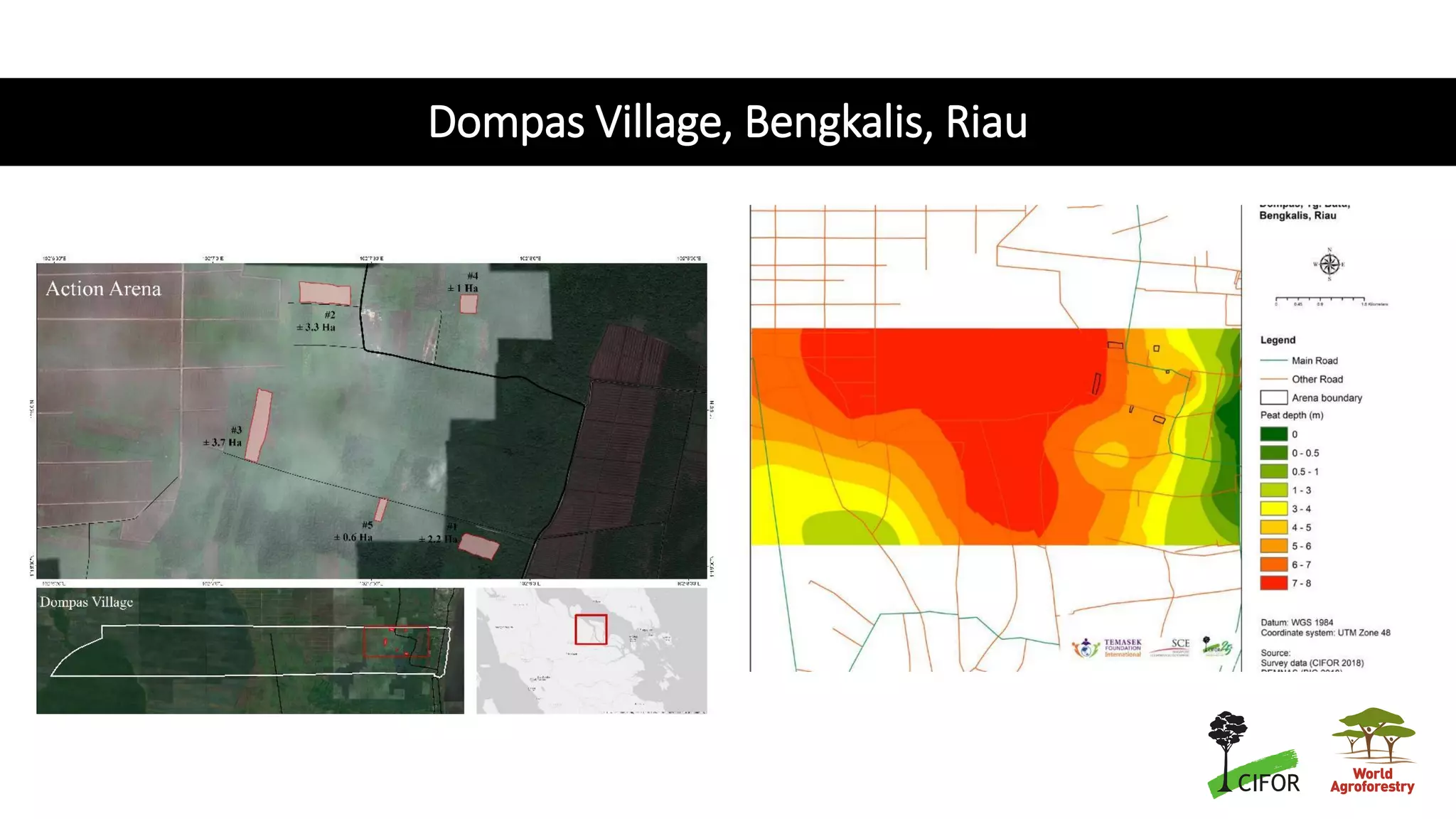
Dompas Village, Bengkalis, Riau
Results
Canvas business model
Reflection Co-Design/Planning Action Monitoring
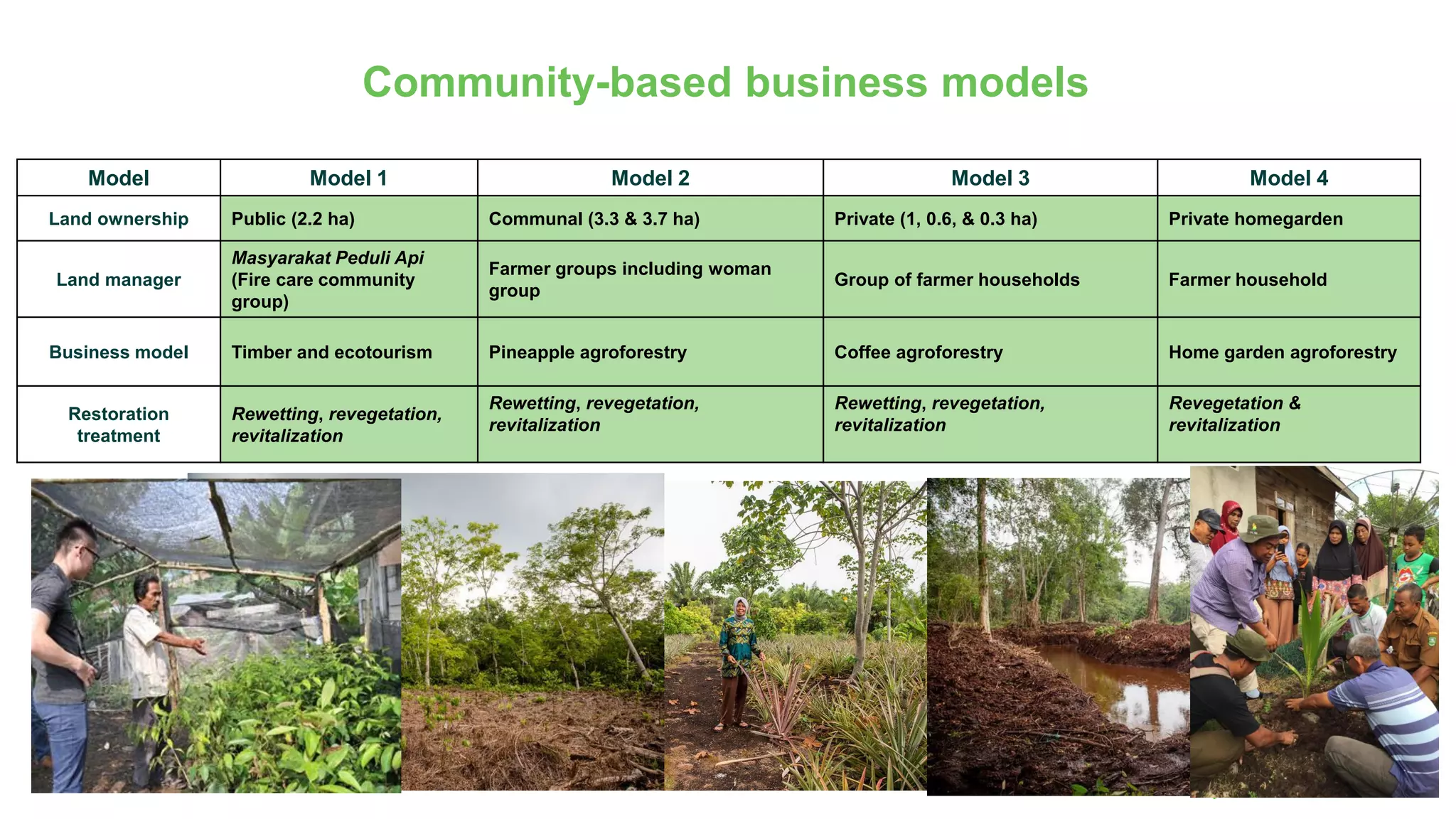
Community-based business models
Model Model 1 Model 2 Model 3 Model 4
Land ownership Public (2.2 ha) Communal (3.3 & 3.7 ha) Private (1, 0.6, & 0.3 ha) Private homegarden
Land manager
Masyarakat Peduli Api
(Fire care community
group)
Farmer groups including woman
group
Group of farmer households Farmer household
Business model Timber and ecotourism Pineapple agroforestry Coffee agroforestry Home garden agroforestry
Restoration
treatment
Rewetting, revegetation,
revitalization
Rewetting, revegetation,
revitalization
Rewetting, revegetation,
revitalization
Revegetation &
revitalization
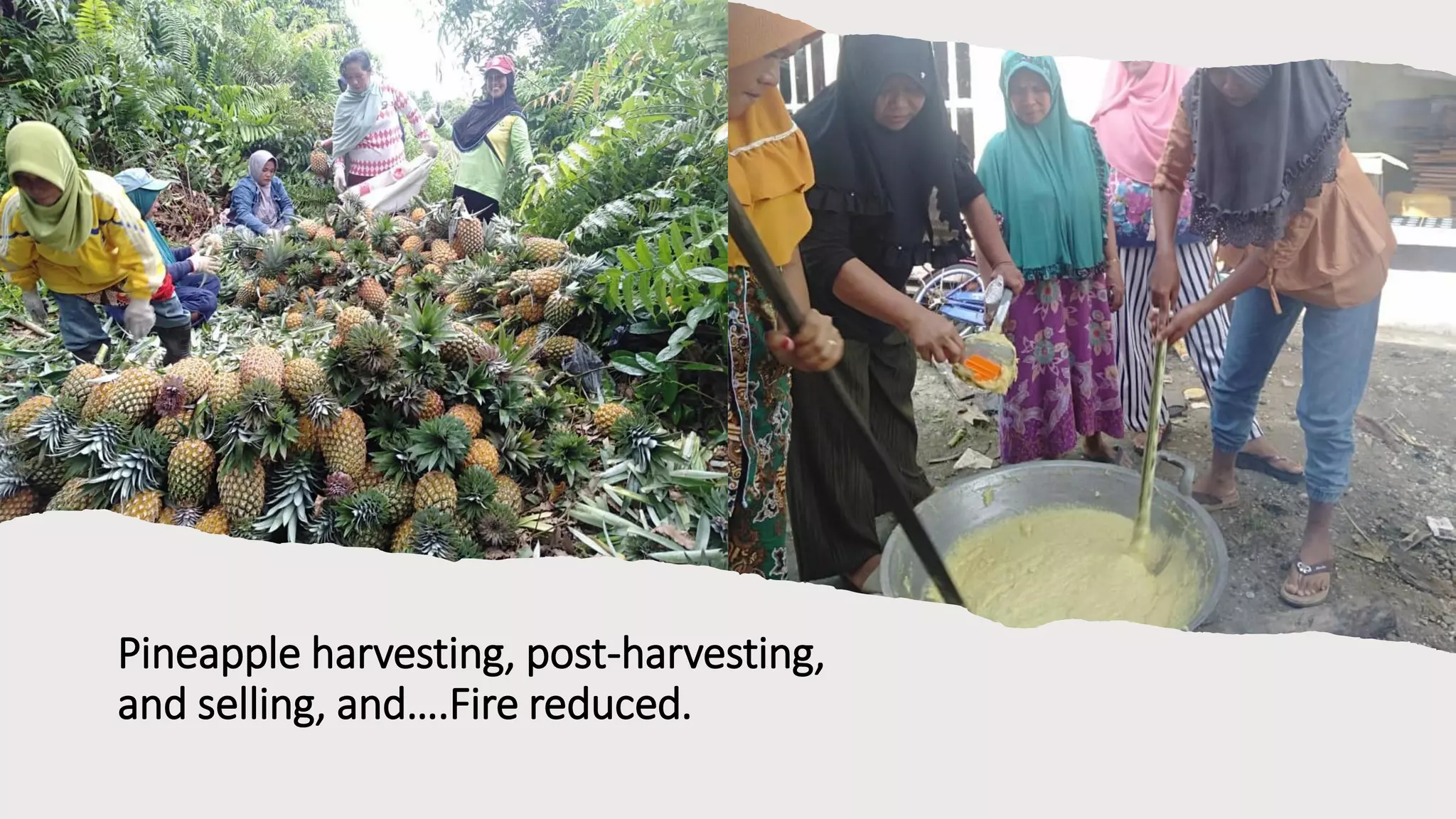
Pineapple harvesting, post-harvesting,
and selling, and….Fire reduced.
Lesson Learned and connecting the dots
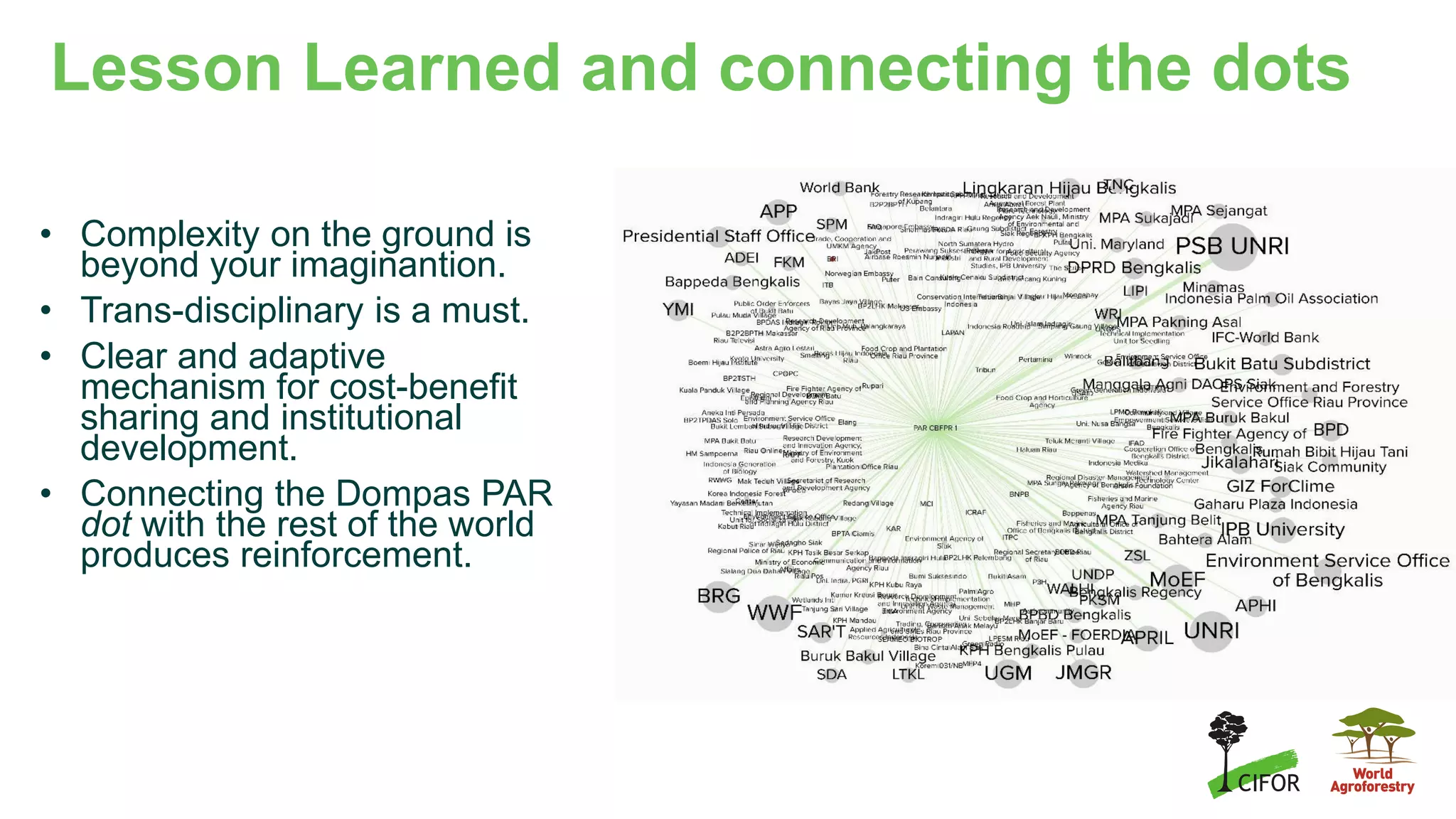
• Complexity on the ground is
beyond your imaginantion.
• Trans-disciplinary is a must.
• Clear and adaptive
mechanism for cost-benefit
sharing and institutional
development.
• Connecting the Dompas PAR
dot with the rest of the world
produces reinforcement.
Related Publications
We are inside the system (constructivism)
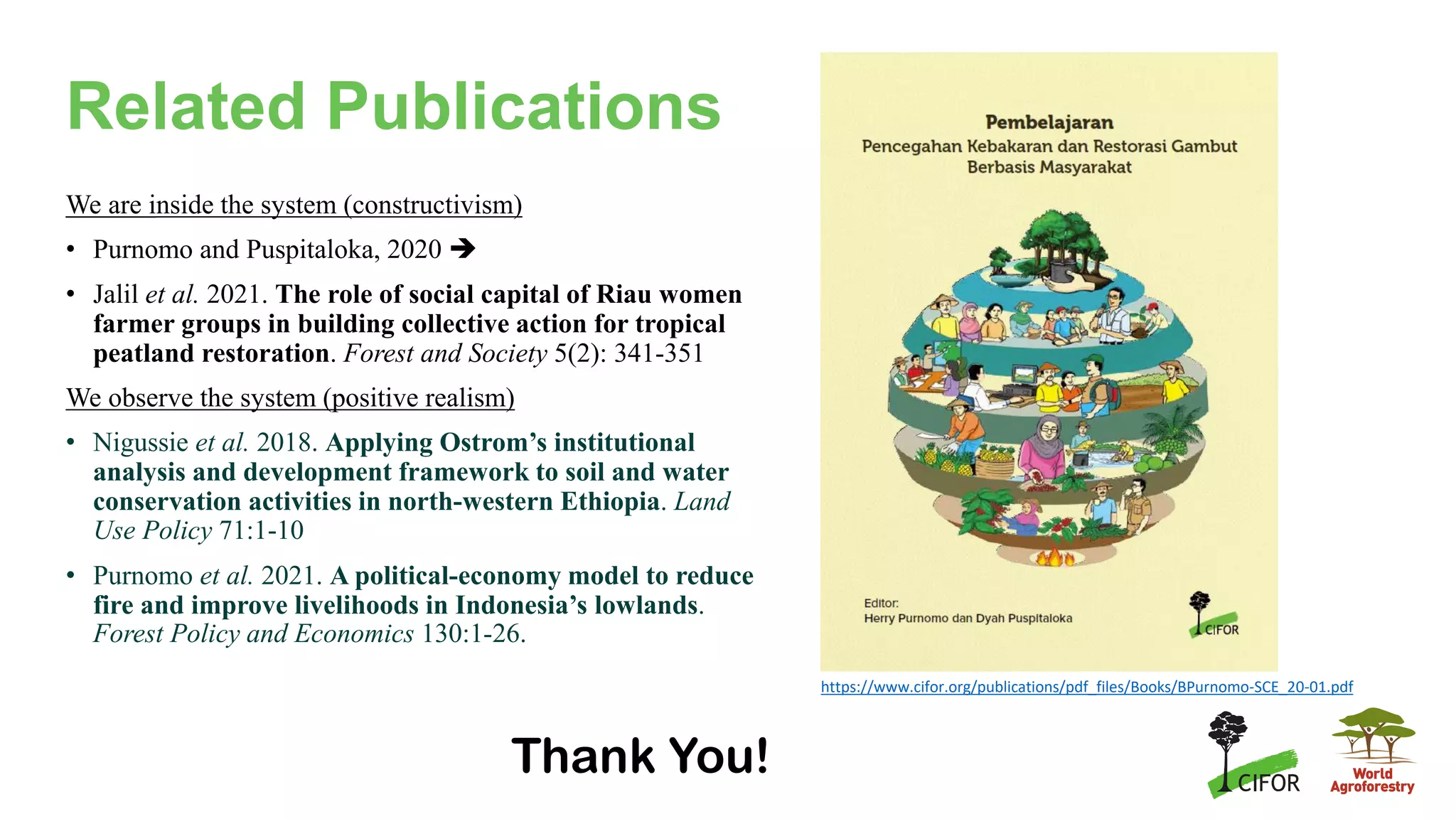
• Purnomo and Puspitaloka, 2020 ➔
• Jalil et al. 2021. The role of social capital of Riau women
farmer groups in building collective action for tropical
peatland restoration. Forest and Society 5(2): 341-351
We observe the system (positive realism)
• Nigussie et al. 2018. Applying Ostrom’s institutional
analysis and development framework to soil and water
conservation activities in north-western Ethiopia. Land
Use Policy 71:1-10
• Purnomo et al. 2021. A political-economy model to reduce
fire and improve livelihoods in Indonesia’s lowlands.
Forest Policy and Economics 130:1-26.
Thank You!
https://www.cifor.org/publications/pdf_files/Books/BPurnomo-SCE_20-01.pdf

Community management of peatland: Participatory action research for community-based peatland restoration

  • 1.
    Photo by Faizal Abdul Aziz/CIFOR Community management of Peatland Participatory actionresearch for community-based peatland restoration Herry Purnomo, Sonya D. Kusumadewi Beni Okarda Dyah Puspitaloka
  • 2.
    Peatland restoration inIndonesia Peatland distribution map in Indonesia Source: Government of Indonesia 2019 (https://en.prims.brg.go.id/) • Peatland area is 13.43 million hectare. • Peatland and Mangrove Restoration Agency (BRGM) identifies 1,205 villages for peatland restoration and fire prevention. • Our work: Improving livelihood through community-based business model for peatland restoration.
  • 3.
    Framework and methods Ostrom’s IADcombined with: • Participatory Action Research (loop of Reflection, Planning, Action, and Monitoring) • Osterwalder’s Canvas business model development
  • 4.
  • 5.
  • 6.
  • 7.
    Community-based business models ModelModel 1 Model 2 Model 3 Model 4 Land ownership Public (2.2 ha) Communal (3.3 & 3.7 ha) Private (1, 0.6, & 0.3 ha) Private homegarden Land manager Masyarakat Peduli Api (Fire care community group) Farmer groups including woman group Group of farmer households Farmer household Business model Timber and ecotourism Pineapple agroforestry Coffee agroforestry Home garden agroforestry Restoration treatment Rewetting, revegetation, revitalization Rewetting, revegetation, revitalization Rewetting, revegetation, revitalization Revegetation & revitalization
  • 8.
    Pineapple harvesting, post-harvesting, andselling, and….Fire reduced.
  • 9.
    Lesson Learned andconnecting the dots • Complexity on the ground is beyond your imaginantion. • Trans-disciplinary is a must. • Clear and adaptive mechanism for cost-benefit sharing and institutional development. • Connecting the Dompas PAR dot with the rest of the world produces reinforcement.
  • 10.
    Related Publications We areinside the system (constructivism) • Purnomo and Puspitaloka, 2020 ➔ • Jalil et al. 2021. The role of social capital of Riau women farmer groups in building collective action for tropical peatland restoration. Forest and Society 5(2): 341-351 We observe the system (positive realism) • Nigussie et al. 2018. Applying Ostrom’s institutional analysis and development framework to soil and water conservation activities in north-western Ethiopia. Land Use Policy 71:1-10 • Purnomo et al. 2021. A political-economy model to reduce fire and improve livelihoods in Indonesia’s lowlands. Forest Policy and Economics 130:1-26. Thank You! https://www.cifor.org/publications/pdf_files/Books/BPurnomo-SCE_20-01.pdf