Postpartum
Hemorrhage
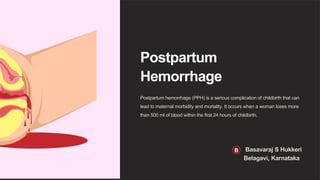
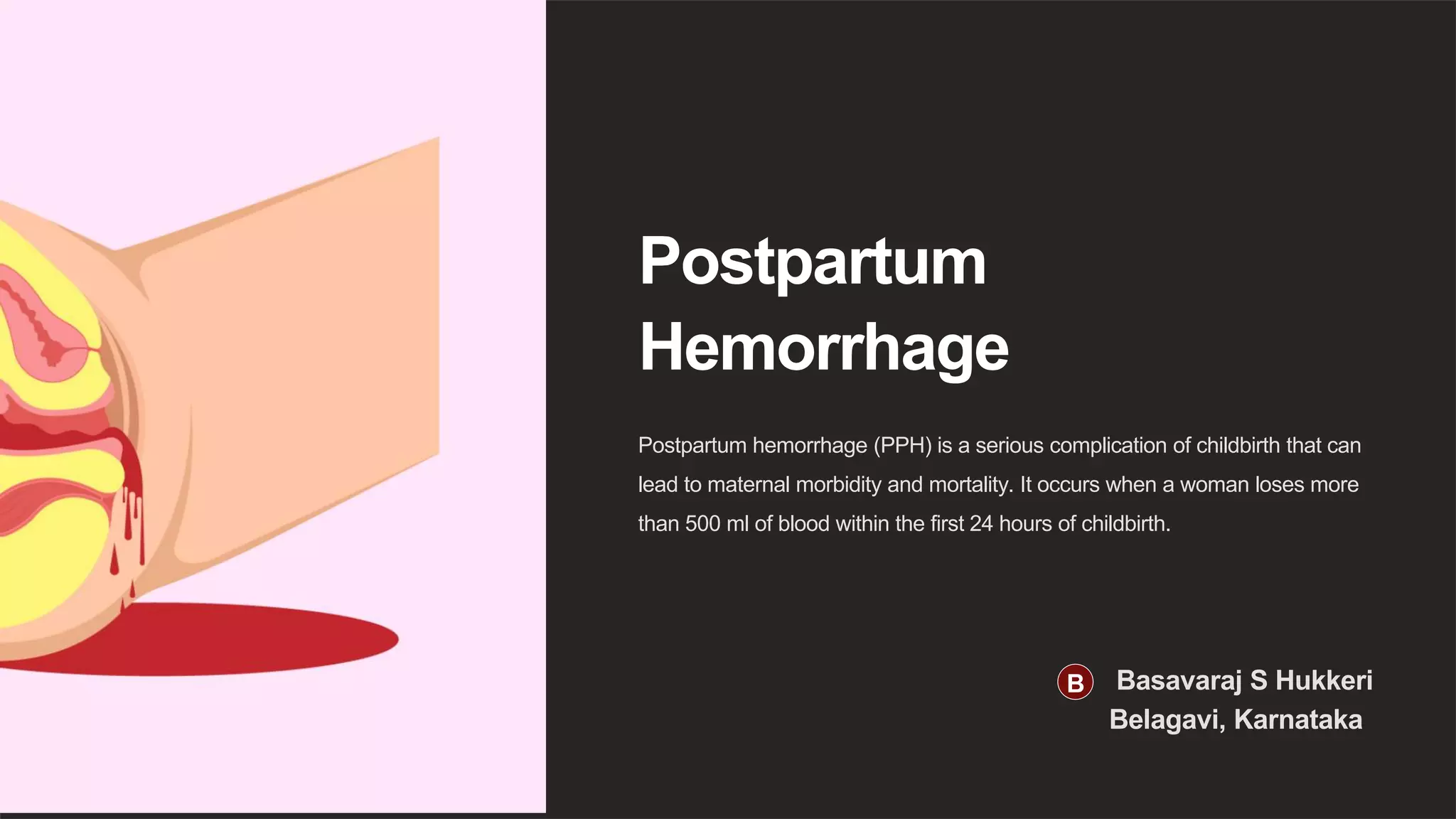
Postpartum hemorrhage (PPH) is a serious complication of childbirth that can
lead to maternal morbidity and mortality. It occurs when a woman loses more
than 500 ml of blood within the first 24 hours of childbirth.
B Basavaraj S Hukkeri
Belagavi, Karnataka
Definition of PPH
Primary PPH
Defined as blood loss of 500 ml or
more within 24 hours after delivery.
Secondary PPH
Defined as blood loss of 500 ml or
more after the first 24 hours and up
to 12 weeks postpartum.
Refractory PPH
Defined as continued bleeding
despite all conventional measures.
Causes of PPH
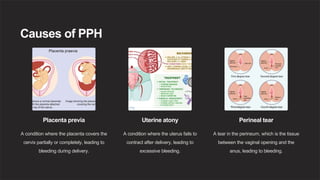
Placenta previa
A condition where the placenta covers the
cervix partially or completely, leading to
bleeding during delivery.
Uterine atony
A condition where the uterus fails to
contract after delivery, leading to
excessive bleeding.
Perineal tear
A tear in the perineum, which is the tissue
between the vaginal opening and the
anus, leading to bleeding.
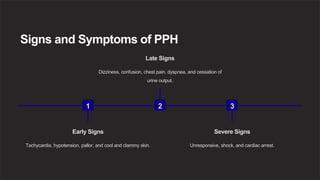
Signs and Symptoms of PPH
1
Early Signs
Tachycardia, hypotension, pallor, and cool and clammy skin.
2
Late Signs
Dizziness, confusion, chest pain, dyspnea, and cessation of
urine output.
3
Severe Signs
Unresponsive, shock, and cardiac arrest.
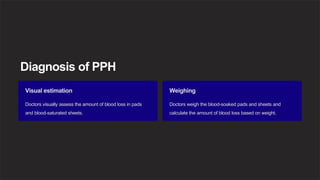
Diagnosis of PPH
Visual estimation
Doctors visually assess the amount of blood loss in pads
and blood-saturated sheets.
Weighing
Doctors weigh the blood-soaked pads and sheets and
calculate the amount of blood loss based on weight.
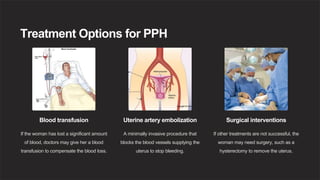
Treatment Options for PPH
Blood transfusion
If the woman has lost a significant amount
of blood, doctors may give her a blood
transfusion to compensate the blood loss.
Uterine artery embolization
A minimally invasive procedure that
blocks the blood vessels supplying the
uterus to stop bleeding.
Surgical interventions
If other treatments are not successful, the
woman may need surgery, such as a
hysterectomy to remove the uterus.
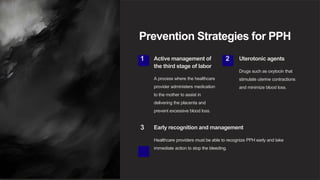
Prevention Strategies for PPH
1 Active management of
the third stage of labor
A process where the healthcare
provider administers medication
to the mother to assist in
delivering the placenta and
prevent excessive blood loss.
2 Uterotonic agents
Drugs such as oxytocin that
stimulate uterine contractions
and minimize blood loss.
3 Early recognition and management
Healthcare providers must be able to recognize PPH early and take
immediate action to stop the bleeding.
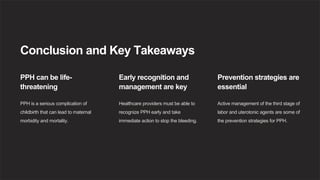
Conclusion and Key Takeaways
PPH can be life-
threatening
PPH is a serious complication of
childbirth that can lead to maternal
morbidity and mortality.
Early recognition and
management are key
Healthcare providers must be able to
recognize PPH early and take
immediate action to stop the bleeding.
Prevention strategies are
essential
Active management of the third stage of
labor and uterotonic agents are some of
the prevention strategies for PPH.

Postpartum-Hemorrhage.pptx

  • 1.
    Postpartum Hemorrhage Postpartum hemorrhage (PPH)is a serious complication of childbirth that can lead to maternal morbidity and mortality. It occurs when a woman loses more than 500 ml of blood within the first 24 hours of childbirth. B Basavaraj S Hukkeri Belagavi, Karnataka
  • 2.
    Definition of PPH PrimaryPPH Defined as blood loss of 500 ml or more within 24 hours after delivery. Secondary PPH Defined as blood loss of 500 ml or more after the first 24 hours and up to 12 weeks postpartum. Refractory PPH Defined as continued bleeding despite all conventional measures.
  • 3.
    Causes of PPH Placentaprevia A condition where the placenta covers the cervix partially or completely, leading to bleeding during delivery. Uterine atony A condition where the uterus fails to contract after delivery, leading to excessive bleeding. Perineal tear A tear in the perineum, which is the tissue between the vaginal opening and the anus, leading to bleeding.
  • 4.
    Signs and Symptomsof PPH 1 Early Signs Tachycardia, hypotension, pallor, and cool and clammy skin. 2 Late Signs Dizziness, confusion, chest pain, dyspnea, and cessation of urine output. 3 Severe Signs Unresponsive, shock, and cardiac arrest.
  • 5.
    Diagnosis of PPH Visualestimation Doctors visually assess the amount of blood loss in pads and blood-saturated sheets. Weighing Doctors weigh the blood-soaked pads and sheets and calculate the amount of blood loss based on weight.
  • 6.
    Treatment Options forPPH Blood transfusion If the woman has lost a significant amount of blood, doctors may give her a blood transfusion to compensate the blood loss. Uterine artery embolization A minimally invasive procedure that blocks the blood vessels supplying the uterus to stop bleeding. Surgical interventions If other treatments are not successful, the woman may need surgery, such as a hysterectomy to remove the uterus.
  • 7.
    Prevention Strategies forPPH 1 Active management of the third stage of labor A process where the healthcare provider administers medication to the mother to assist in delivering the placenta and prevent excessive blood loss. 2 Uterotonic agents Drugs such as oxytocin that stimulate uterine contractions and minimize blood loss. 3 Early recognition and management Healthcare providers must be able to recognize PPH early and take immediate action to stop the bleeding.
  • 8.
    Conclusion and KeyTakeaways PPH can be life- threatening PPH is a serious complication of childbirth that can lead to maternal morbidity and mortality. Early recognition and management are key Healthcare providers must be able to recognize PPH early and take immediate action to stop the bleeding. Prevention strategies are essential Active management of the third stage of labor and uterotonic agents are some of the prevention strategies for PPH.