

Massively Scalable
Applications
Deepansh Malik
Introductions
www.techferry.com /TechFerry /@techferry
Deepansh Malik
CEO at TechFerry
@DeepanshMalik
https://in.linkedin.com/in/deepanshmalik
TechFerry:
Analytics, IT Innovation, R&D Company
Specialization in
o Growth Analytics
o HealthCare Analytics
o Massively Scalable Applications and Rich UI
Massively Scalable Applications
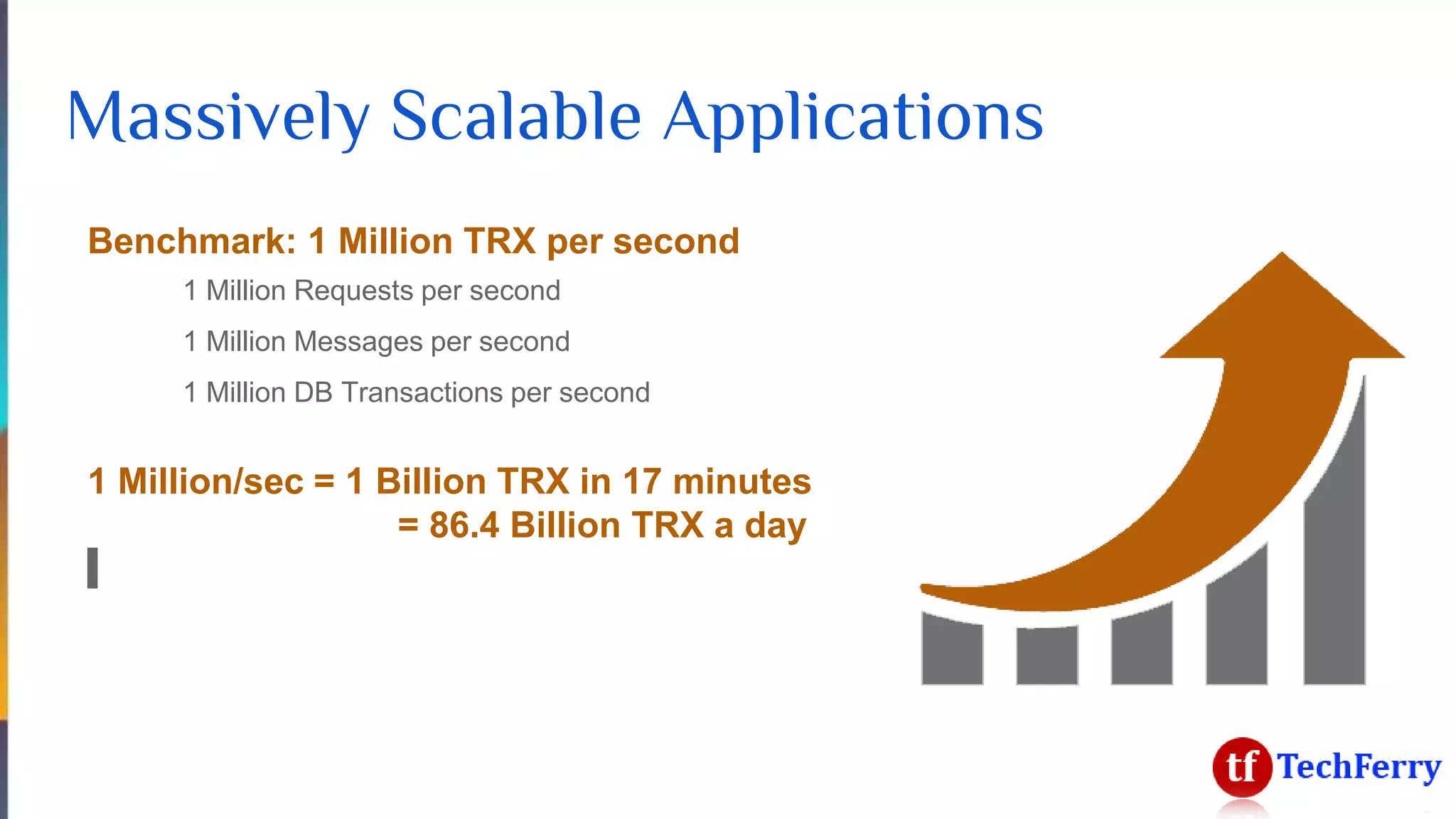
Benchmark: 1 Million TRX per second
1 Million Requests per second
1 Million Messages per second
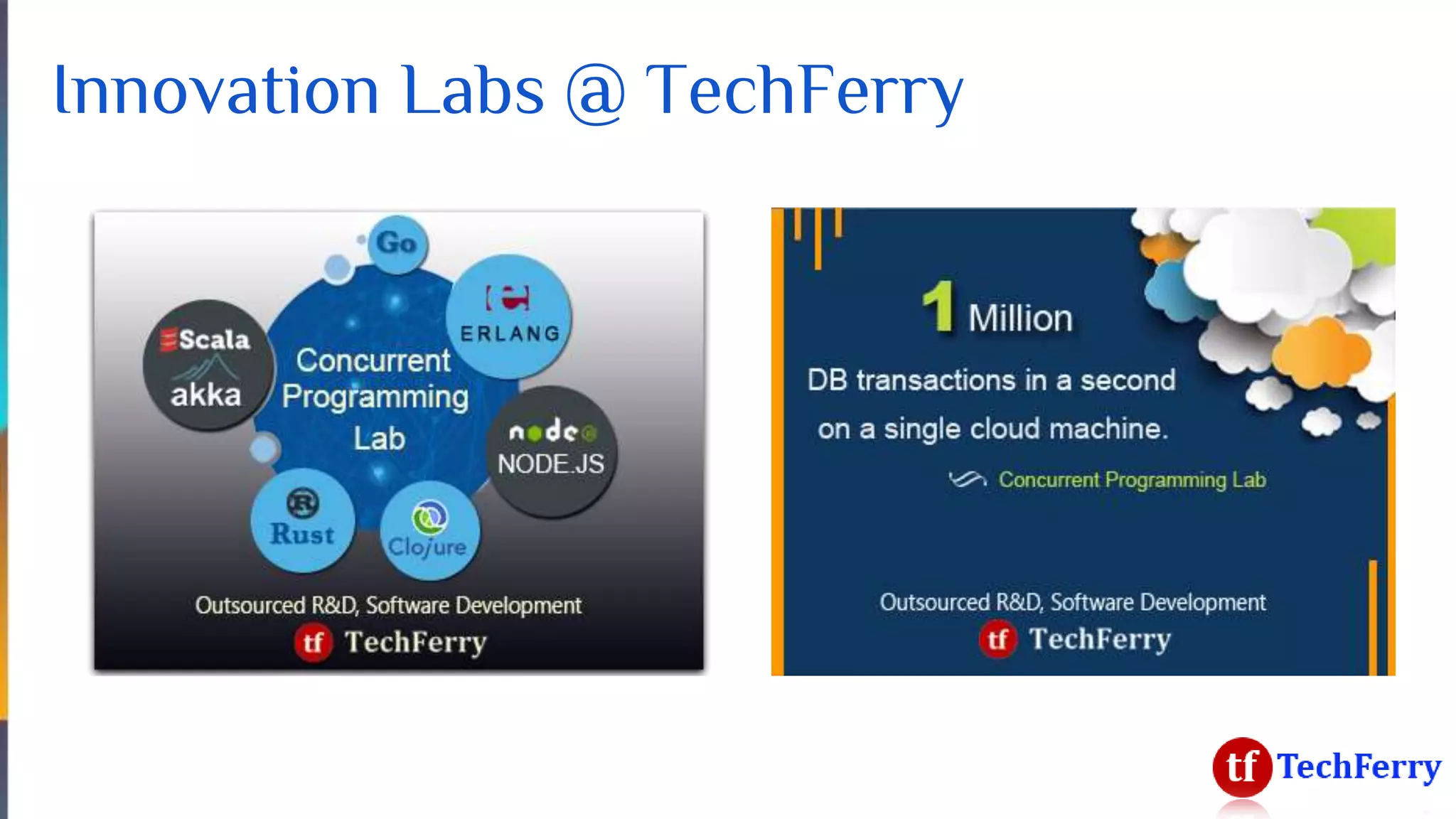
1 Million DB Transactions per second
1 Million/sec = 1 Billion TRX in 17 minutes
= 86.4 Billion TRX a day
Scale out or Scale up?
Scale out -> Add more hardware.
1 CPU Core = 1000 requests/sec
To massively scale (1 Million request/second), we need 1000 cores. 50
machines 20 cores each.
Good idea or stupid idea? Costs??
Scale up?
Can one machine scale to a million transactions per second?
The Answer is YES.
Our commodity hardware is very powerful.
What is the bottleneck then? What do we need to save tons of money being
wasted in scaling out?
Let us begin
Architecting
Massively Scalable Apps
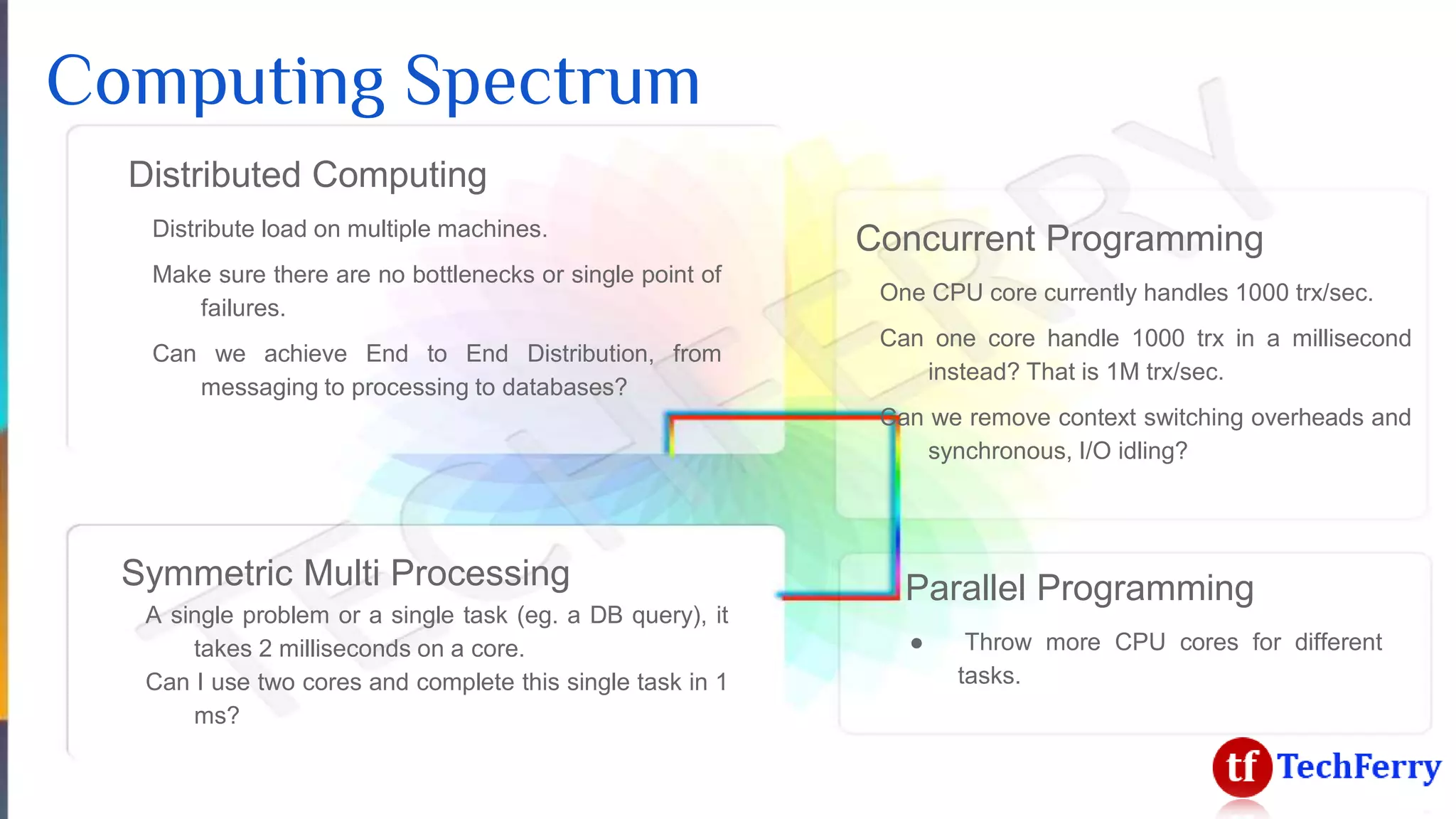
Computing Spectrum
Symmetric Multi Processing
A single problem or a single task (eg. a DB query), it
takes 2 milliseconds on a core.
Can I use two cores and complete this single task in 1
ms?
Distributed Computing
Distribute load on multiple machines.
Make sure there are no bottlenecks or single point of
failures.
Can we achieve End to End Distribution, from
messaging to processing to databases?
Concurrent Programming
One CPU core currently handles 1000 trx/sec.
Can one core handle 1000 trx in a millisecond
instead? That is 1M trx/sec.
Can we remove context switching overheads and
synchronous, I/O idling?
Parallel Programming
● Throw more CPU cores for different
tasks.
Distributed Computing
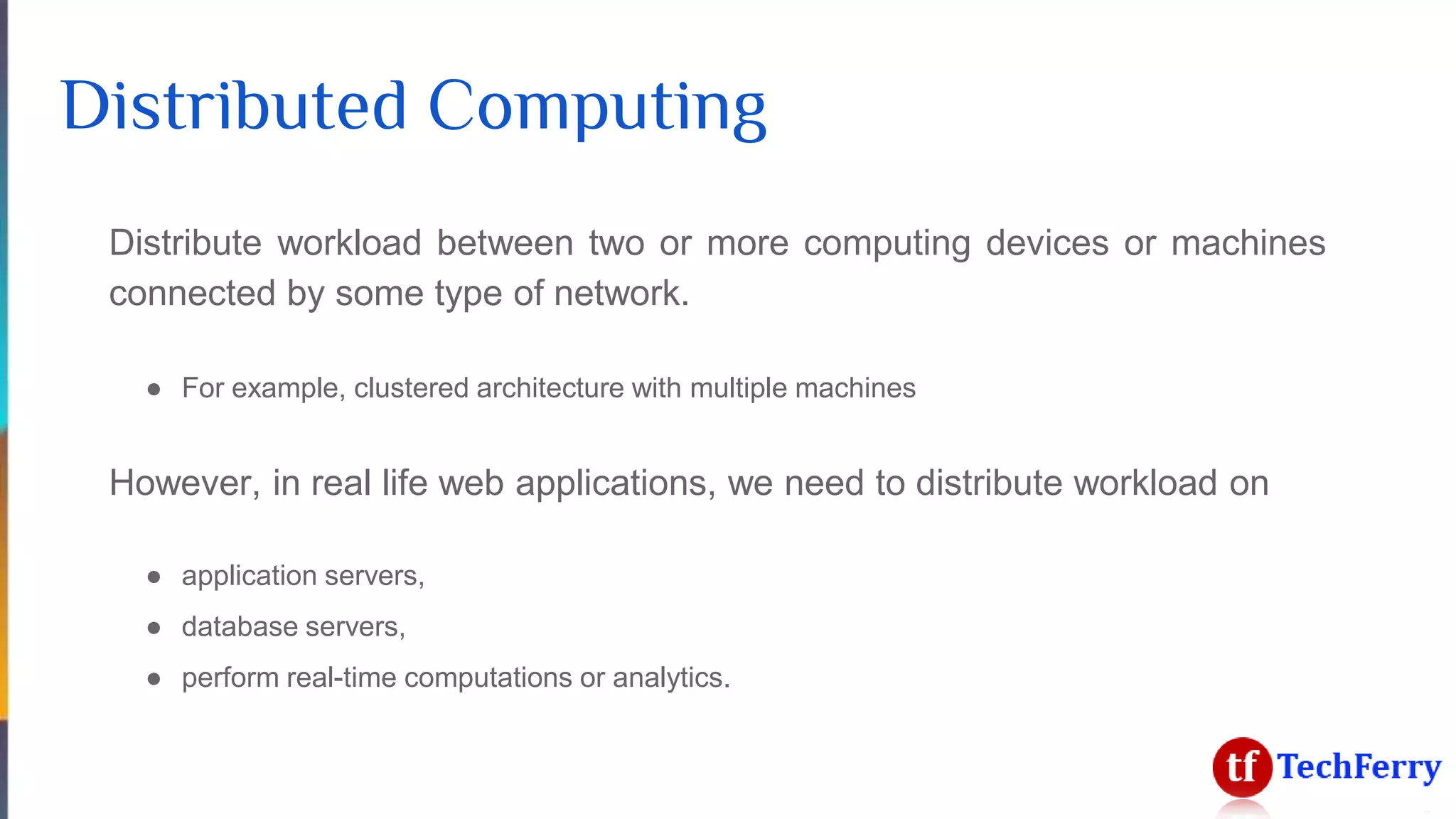
Distribute workload between two or more computing devices or machines
connected by some type of network.
● For example, clustered architecture with multiple machines
However, in real life web applications, we need to distribute workload on
● application servers,
● database servers,
● perform real-time computations or analytics.
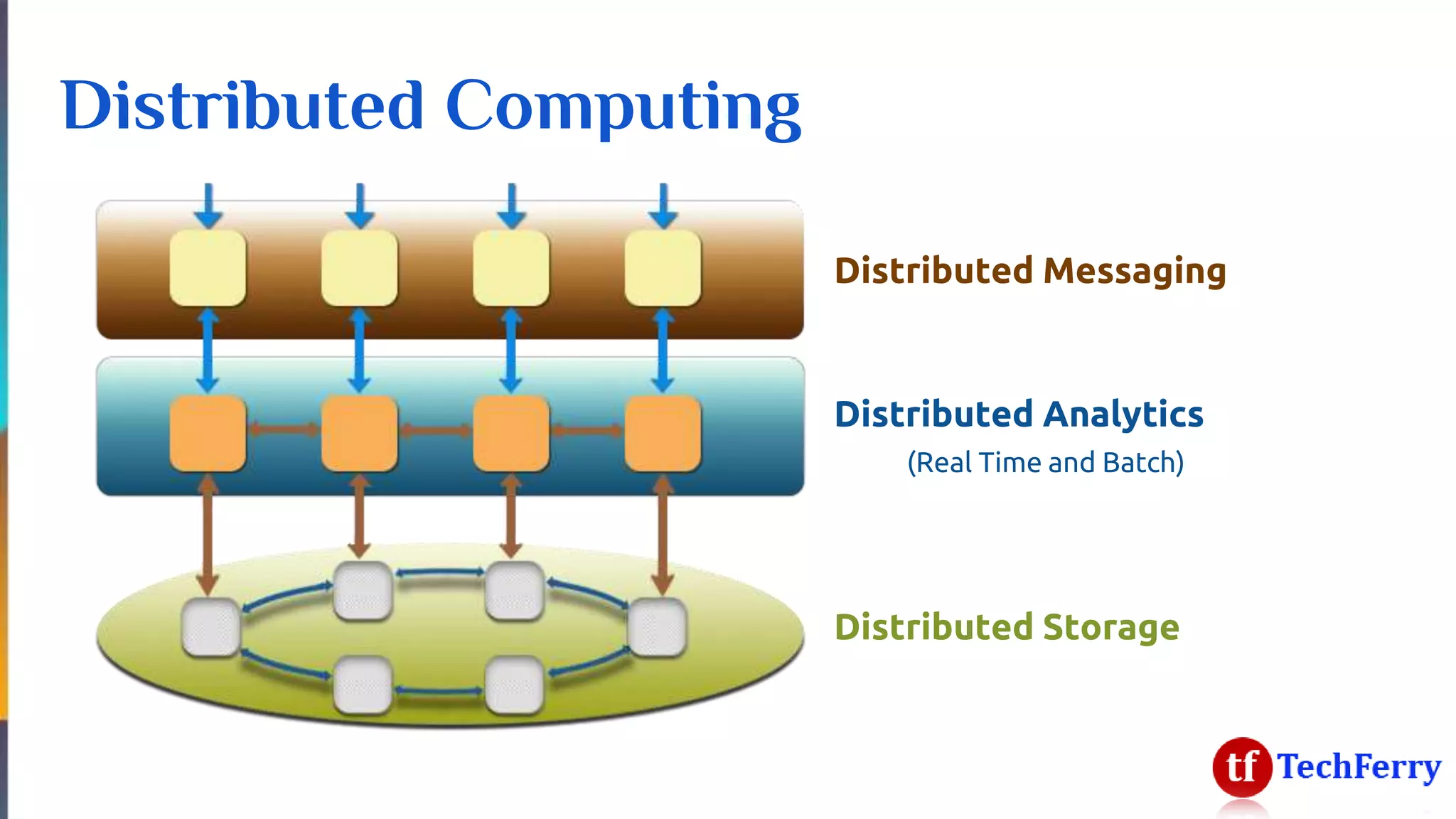
Distributed Computing
Distributed Storage
Distributed Messaging
Distributed Analytics
(Real Time and Batch)
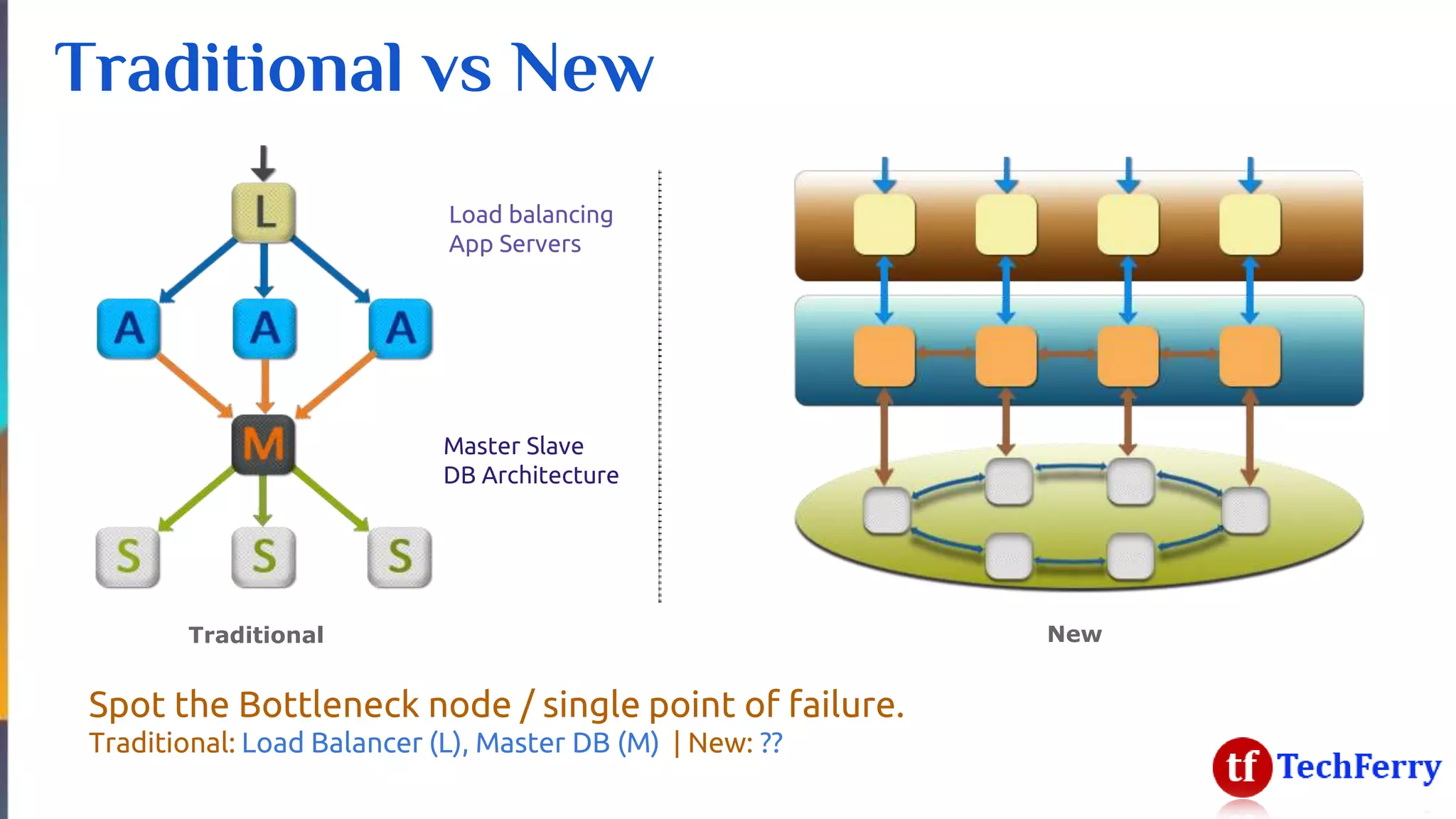
Traditional vs New
Spot the Bottleneck node / single point of failure.
Traditional: Load Balancer (L), Master DB (M) | New: ??
Traditional New
Load balancing
App Servers
Master Slave
DB Architecture
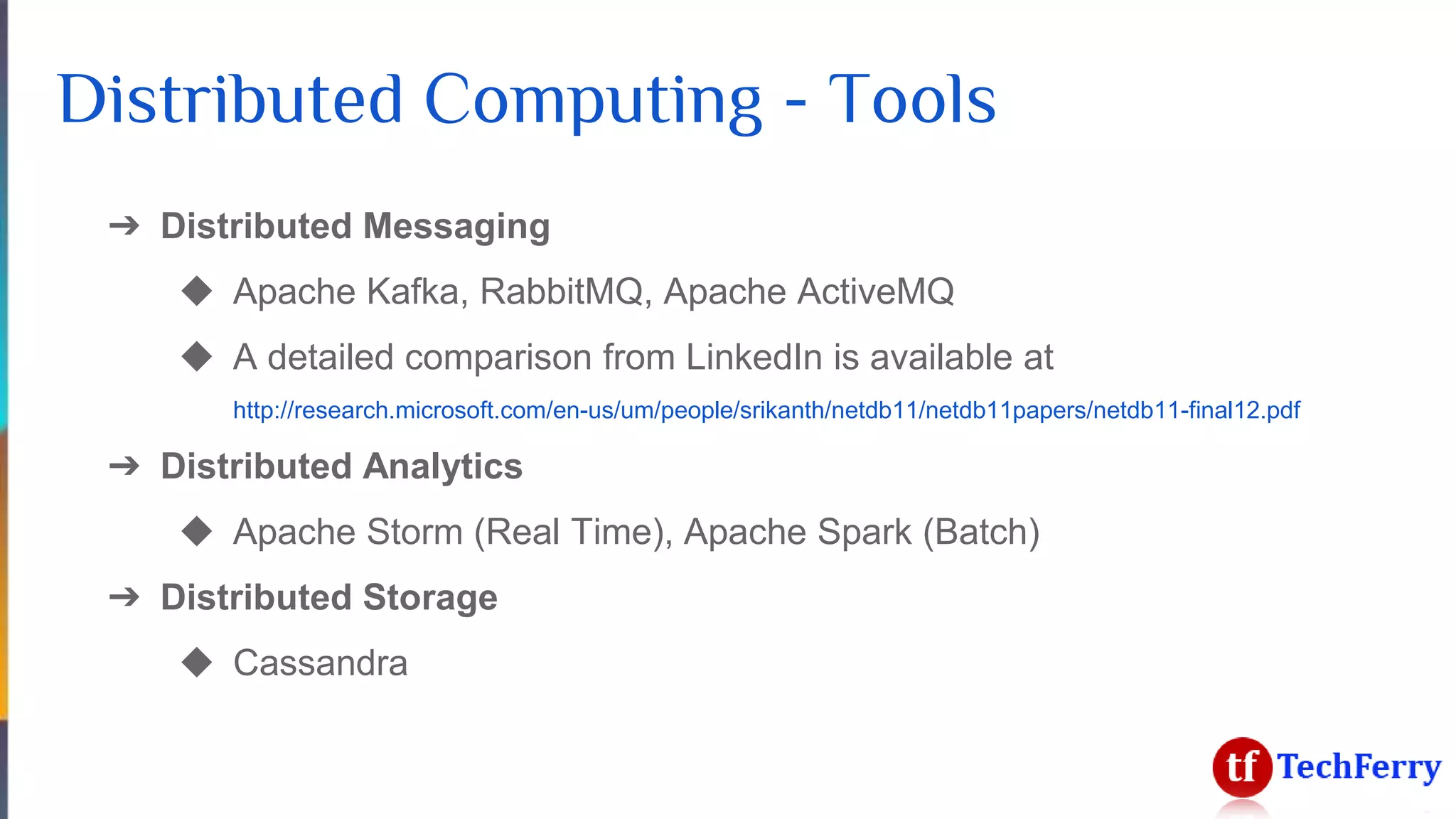
Distributed Computing - Tools
➔ Distributed Messaging
◆ Apache Kafka, RabbitMQ, Apache ActiveMQ
◆ A detailed comparison from LinkedIn is available at
http://research.microsoft.com/en-us/um/people/srikanth/netdb11/netdb11papers/netdb11-final12.pdf
➔ Distributed Analytics
◆ Apache Storm (Real Time), Apache Spark (Batch)
➔ Distributed Storage
◆ Cassandra
Use Cases:
Highly Suitable for Real Time analytics of High Velocity Big Data
Machine to Machine (M2M) or Internet of Things (IoT)
M2M, IoT and real time analytics
https://www.linkedin.com/pulse/20141203105632-40354099-m2m-iot-and-real-time-analytics
Concurrent Programming
is a form of computing in which several computations are executing during
overlapping time periods –concurrently – instead of sequentially
software code that facilitates the performance of multiple computing tasks at
the same time
Architectural Concepts
Events, Threads or Actors?
Asynchronous Programming
Functional Programming
Concurrent Programming
Events vs Threads, Actors
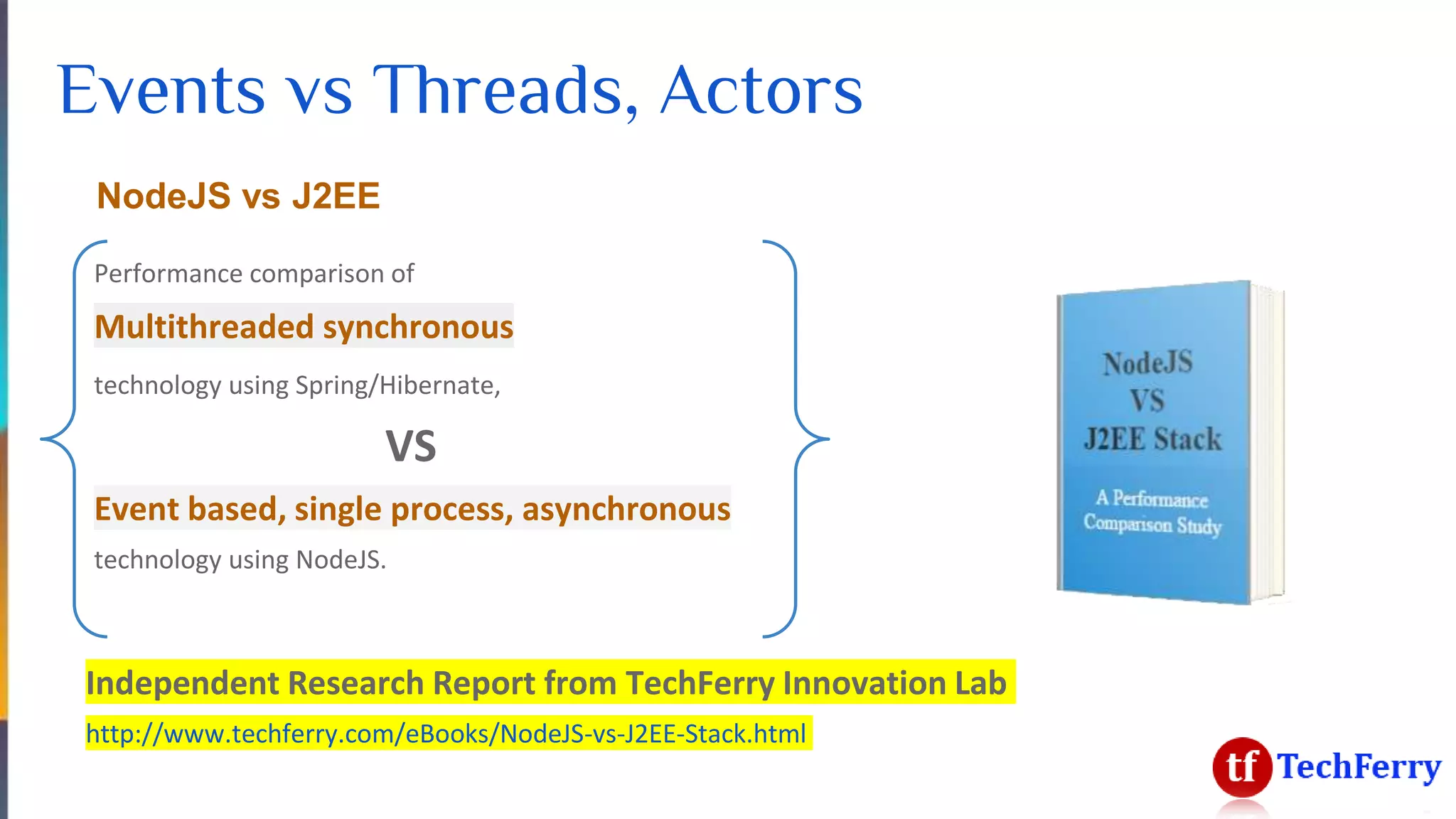
NodeJS vs J2EE
Performance comparison of
Multithreaded synchronous
technology using Spring/Hibernate,
VS
Event based, single process, asynchronous
technology using NodeJS.
Independent Research Report from TechFerry Innovation Lab
http://www.techferry.com/eBooks/NodeJS-vs-J2EE-Stack.html
Asynchronous Programming
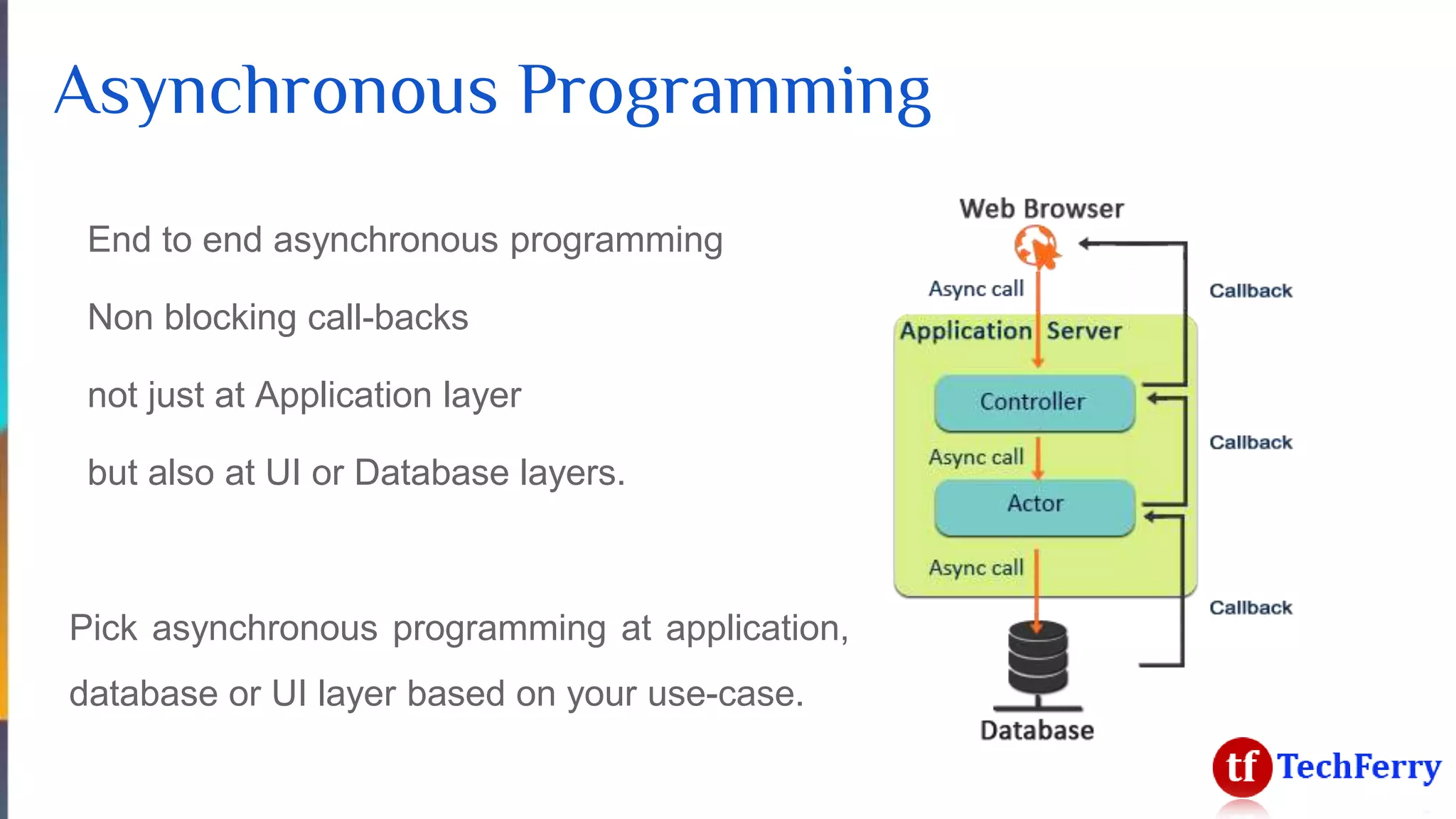
End to end asynchronous programming
Non blocking call-backs
not just at Application layer
but also at UI or Database layers.
Pick asynchronous programming at application,
database or UI layer based on your use-case.
Functional Programming
A programming paradigm, a style of building the
structure and elements of computer programs, that
treats computation as the evaluation of mathematical
functions and avoids changing-state and mutable data.
Routines can easily be moved to a different CPU core.
Scala/Akka Actors
Innovation Labs @ TechFerry
Symmetric Multi Processing
Symmetric Multi Processing (SMP) is the processing of programs by multiple
processors that share a common operating system and memory.
The processors share memory and the I/O bus or data path.
A single copy of the operating system is in charge of all the processors.
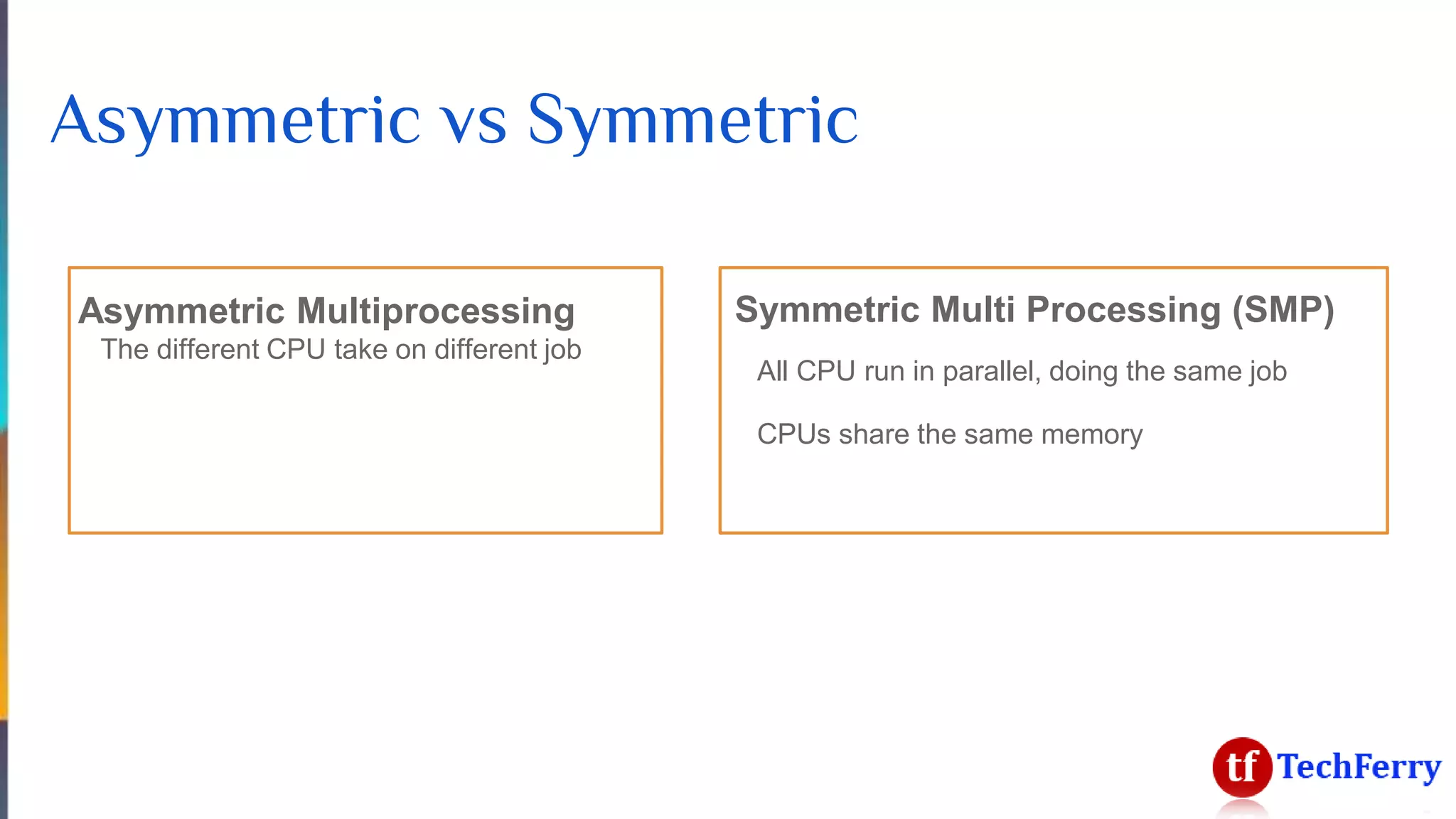
Asymmetric vs Symmetric
Asymmetric Multiprocessing
The different CPU take on different job
Symmetric Multi Processing (SMP)
All CPU run in parallel, doing the same job
CPUs share the same memory
+1 408-337-6607
info@techferry.com
Contact Information
www.techferry.com
Thank You
/techferry /@techferry

Massively Scalable Applications - TechFerry

  • 1.
  • 2.
    Introductions www.techferry.com /TechFerry /@techferry DeepanshMalik CEO at TechFerry @DeepanshMalik https://in.linkedin.com/in/deepanshmalik TechFerry: Analytics, IT Innovation, R&D Company Specialization in o Growth Analytics o HealthCare Analytics o Massively Scalable Applications and Rich UI
  • 3.
    Massively Scalable Applications Benchmark:1 Million TRX per second 1 Million Requests per second 1 Million Messages per second 1 Million DB Transactions per second 1 Million/sec = 1 Billion TRX in 17 minutes = 86.4 Billion TRX a day
  • 4.
    Scale out orScale up? Scale out -> Add more hardware. 1 CPU Core = 1000 requests/sec To massively scale (1 Million request/second), we need 1000 cores. 50 machines 20 cores each. Good idea or stupid idea? Costs??
  • 5.
    Scale up? Can onemachine scale to a million transactions per second? The Answer is YES. Our commodity hardware is very powerful. What is the bottleneck then? What do we need to save tons of money being wasted in scaling out?
  • 6.
  • 7.
    Computing Spectrum Symmetric MultiProcessing A single problem or a single task (eg. a DB query), it takes 2 milliseconds on a core. Can I use two cores and complete this single task in 1 ms? Distributed Computing Distribute load on multiple machines. Make sure there are no bottlenecks or single point of failures. Can we achieve End to End Distribution, from messaging to processing to databases? Concurrent Programming One CPU core currently handles 1000 trx/sec. Can one core handle 1000 trx in a millisecond instead? That is 1M trx/sec. Can we remove context switching overheads and synchronous, I/O idling? Parallel Programming ● Throw more CPU cores for different tasks.
  • 8.
    Distributed Computing Distribute workloadbetween two or more computing devices or machines connected by some type of network. ● For example, clustered architecture with multiple machines However, in real life web applications, we need to distribute workload on ● application servers, ● database servers, ● perform real-time computations or analytics.
  • 9.
    Distributed Computing Distributed Storage DistributedMessaging Distributed Analytics (Real Time and Batch)
  • 10.
    Traditional vs New Spotthe Bottleneck node / single point of failure. Traditional: Load Balancer (L), Master DB (M) | New: ?? Traditional New Load balancing App Servers Master Slave DB Architecture
  • 11.
    Distributed Computing -Tools ➔ Distributed Messaging ◆ Apache Kafka, RabbitMQ, Apache ActiveMQ ◆ A detailed comparison from LinkedIn is available at http://research.microsoft.com/en-us/um/people/srikanth/netdb11/netdb11papers/netdb11-final12.pdf ➔ Distributed Analytics ◆ Apache Storm (Real Time), Apache Spark (Batch) ➔ Distributed Storage ◆ Cassandra
  • 12.
    Use Cases: Highly Suitablefor Real Time analytics of High Velocity Big Data Machine to Machine (M2M) or Internet of Things (IoT) M2M, IoT and real time analytics https://www.linkedin.com/pulse/20141203105632-40354099-m2m-iot-and-real-time-analytics
  • 13.
    Concurrent Programming is aform of computing in which several computations are executing during overlapping time periods –concurrently – instead of sequentially software code that facilitates the performance of multiple computing tasks at the same time
  • 14.
    Architectural Concepts Events, Threadsor Actors? Asynchronous Programming Functional Programming Concurrent Programming
  • 15.
    Events vs Threads,Actors NodeJS vs J2EE Performance comparison of Multithreaded synchronous technology using Spring/Hibernate, VS Event based, single process, asynchronous technology using NodeJS. Independent Research Report from TechFerry Innovation Lab http://www.techferry.com/eBooks/NodeJS-vs-J2EE-Stack.html
  • 16.
    Asynchronous Programming End toend asynchronous programming Non blocking call-backs not just at Application layer but also at UI or Database layers. Pick asynchronous programming at application, database or UI layer based on your use-case.
  • 17.
    Functional Programming A programmingparadigm, a style of building the structure and elements of computer programs, that treats computation as the evaluation of mathematical functions and avoids changing-state and mutable data. Routines can easily be moved to a different CPU core. Scala/Akka Actors
  • 18.
  • 19.
    Symmetric Multi Processing SymmetricMulti Processing (SMP) is the processing of programs by multiple processors that share a common operating system and memory. The processors share memory and the I/O bus or data path. A single copy of the operating system is in charge of all the processors.
  • 20.
    Asymmetric vs Symmetric AsymmetricMultiprocessing The different CPU take on different job Symmetric Multi Processing (SMP) All CPU run in parallel, doing the same job CPUs share the same memory
  • 21.