






Metadata in a Crowd: Shared Knowledge Production

Loading...

Flash Player 9 (or above) is needed to view presentations.
We have detected that you do not have it on your computer. To install it, go here.

0 comments

Post a comment

    Post a comment
    Embed Video
    Edit your comment Cancel

    Notes on slide 1

    http://photosynth.net/

    2 Favorites

    Metadata in a Crowd: Shared Knowledge Production - Presentation Transcript

    1. Metadata in a Crowd
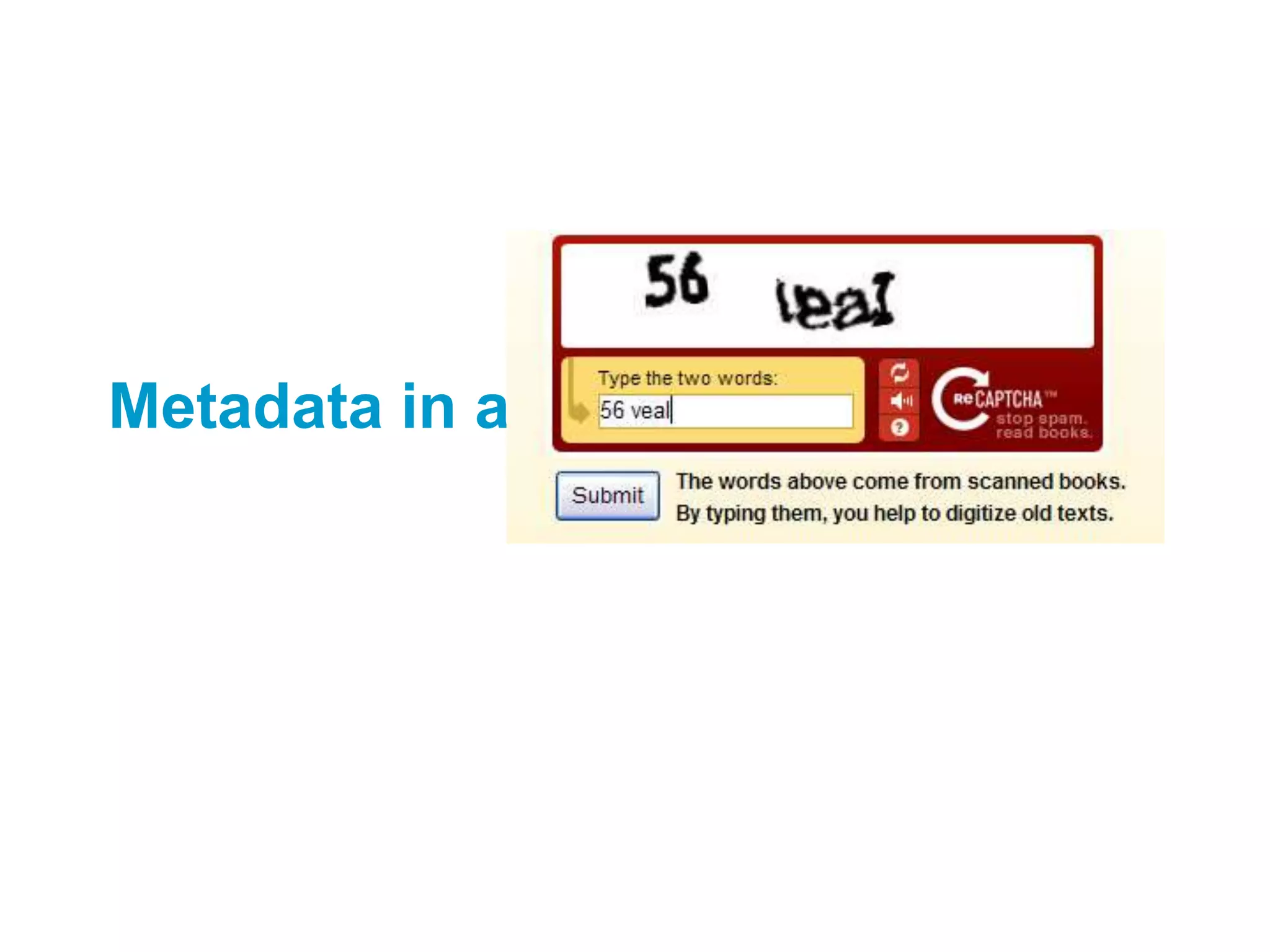
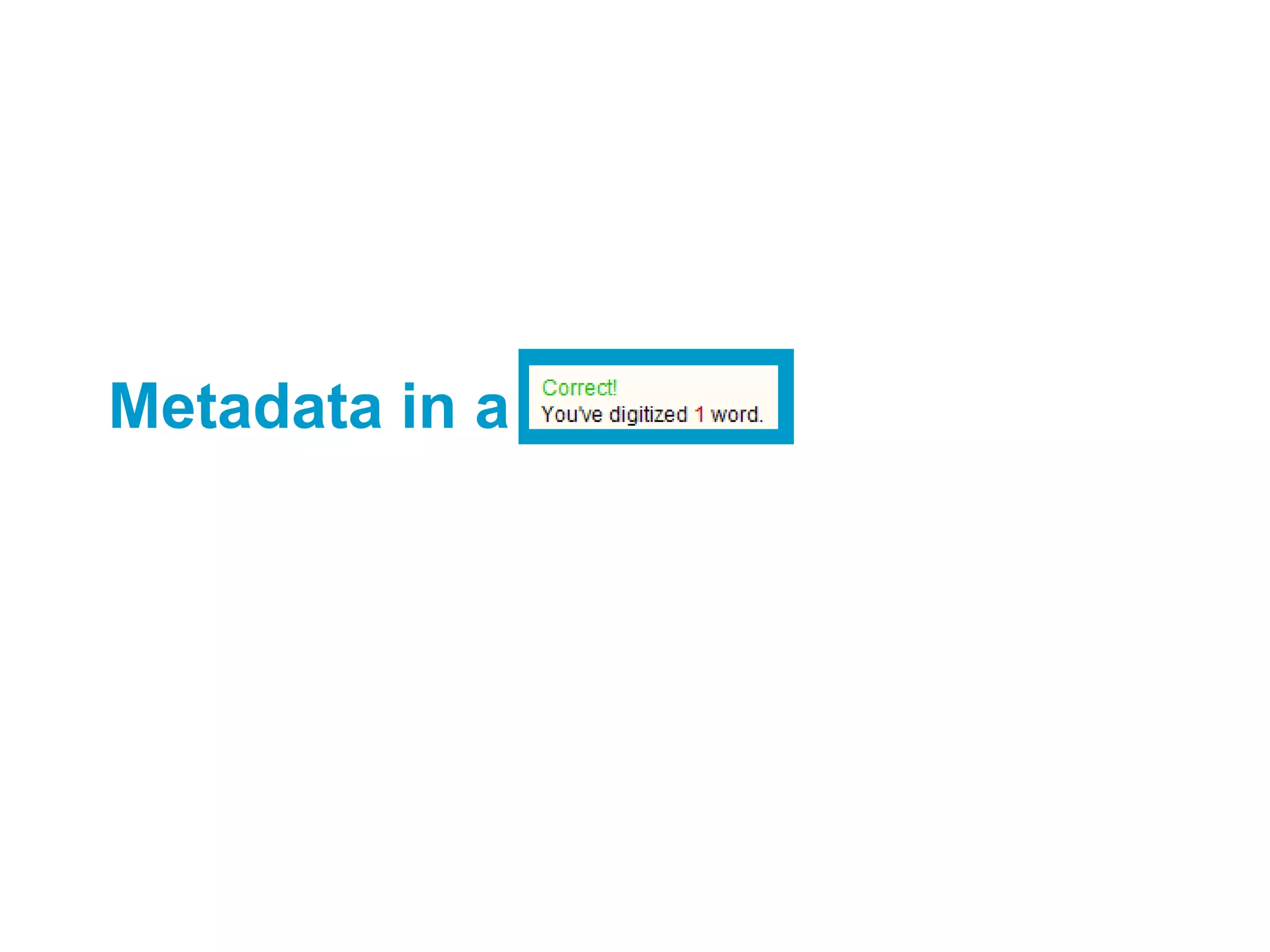
    2. Metadata in a Crowd IN pyxing
    3. Metadata in a Crowd IN pyxing
    4. crowd Metadata in a Crowd
    5. crowd Metadata in a Crowd shared knowledge
    6. Hi, I’m Kevin
    7. Hi, I’m Kevin Rundblad
    8. What is Metadata in a Crowd? INTRO: Real 2.0 vs. Simulated 2.0 MAIN: Simon Says “Tag This Photo” Human Computation Models
    9. Thinking in 2.0 – Engaging the User
    10. 2.0 is a Culture, Not Tech
    11. 2.0 is a Culture, Not Tech
    12. If the 2.0 idea is not about the user …it is artificial 2.0
    13. Real 2.0 comes directly from users
    14. Traditional development will struggle with 2.0 development, since it is focused on the process, not the user.
    15. Technology only expresses 2.0 ideas
    16. 2.0 is about Creators / Participants
    17. Individuals post valuable info
    18. Many consume it
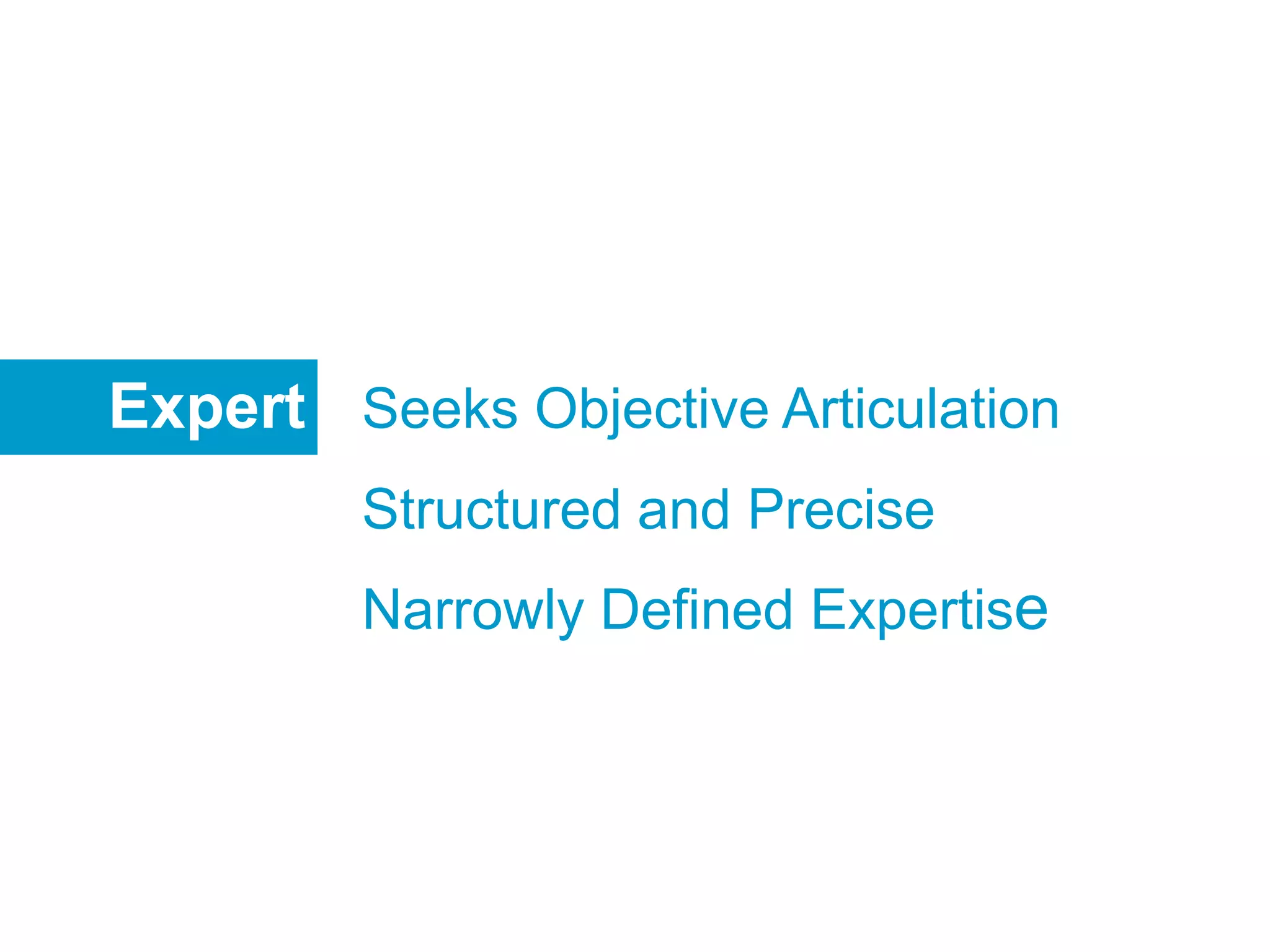
    19. Expert - Seeks Objective Articulation Expert: Structured and Precise Expert: Narrowly Defined Expertise
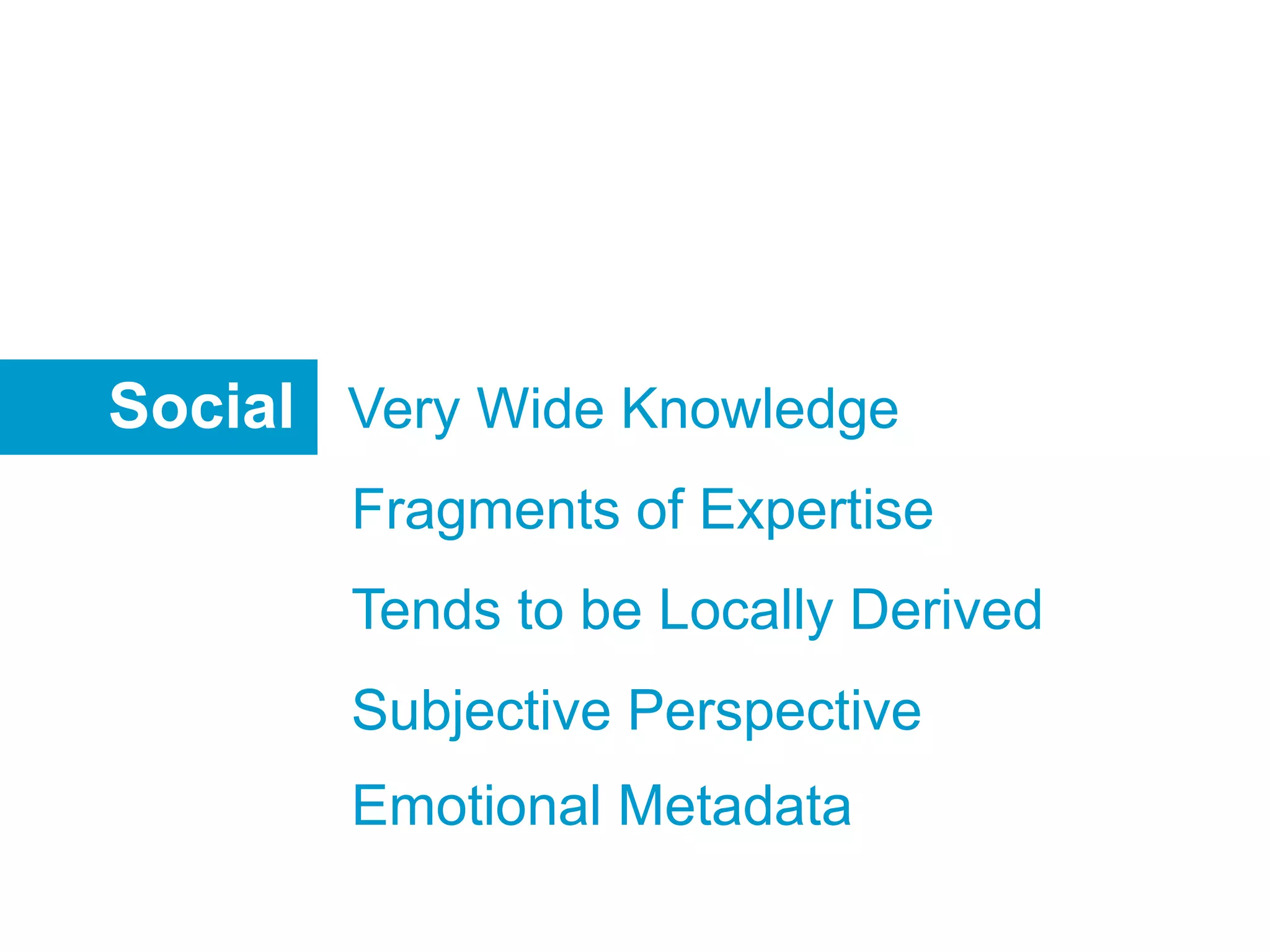
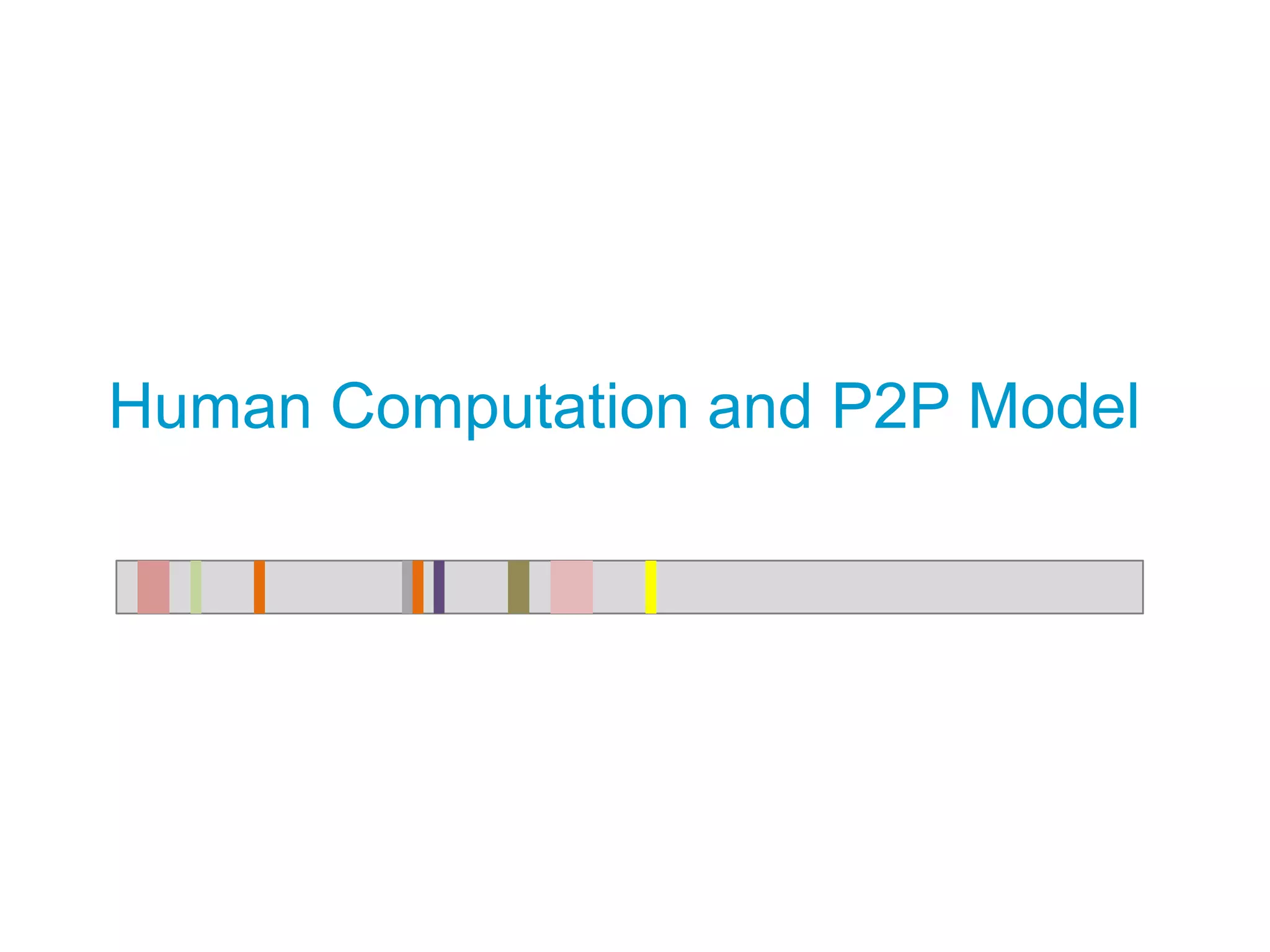
    20. Social Very Wide Knowledge Social: Fragments of Expertise Social: Tends to be Locally Derived Social: Subjective Perspective Social: Emotional Metadata
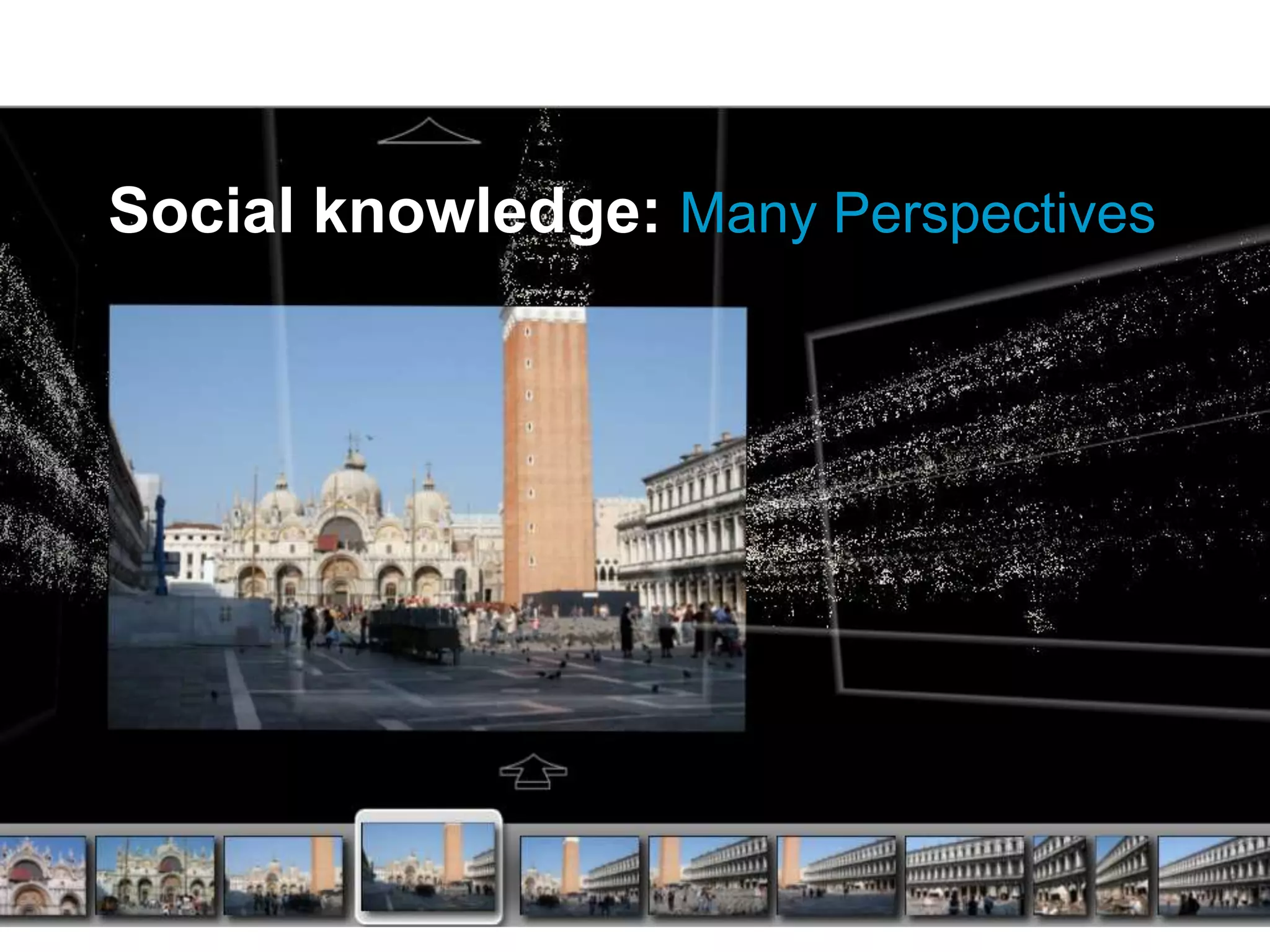
    21. Social knowledge: Many Perspectives Social: Very Wide and Fragmented
    22. Is the Crowd a Viable Source of Metadata?
    23. Aren’t Users Lazy?
    24. Um, Yes and Yes
    25. But they do like to play games…
    26. …spending many hours earning points that don’t mean anything
    27. …motivation is key for participation
    28. …and participation often means completing an intelligent task (ok, mindless too)
    29. Human Computation
    30. Human Computation Finding tasks that humans can do better than computers
    31. Human Computation Finding tasks that humans can do better than computers And creating motivation to perform them
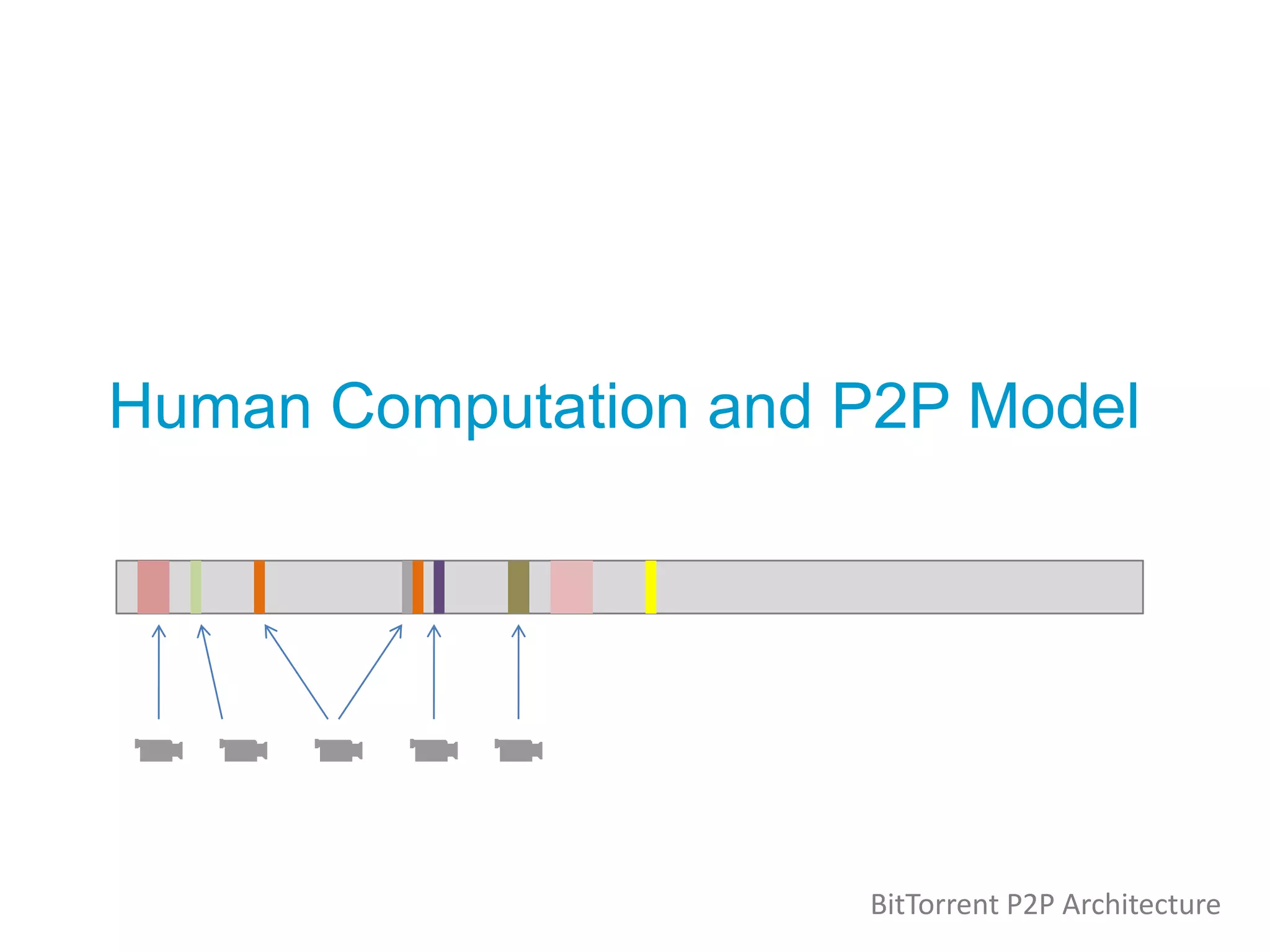
    32. Human Computation and P2P Model
    33. Human Computation and P2P Model
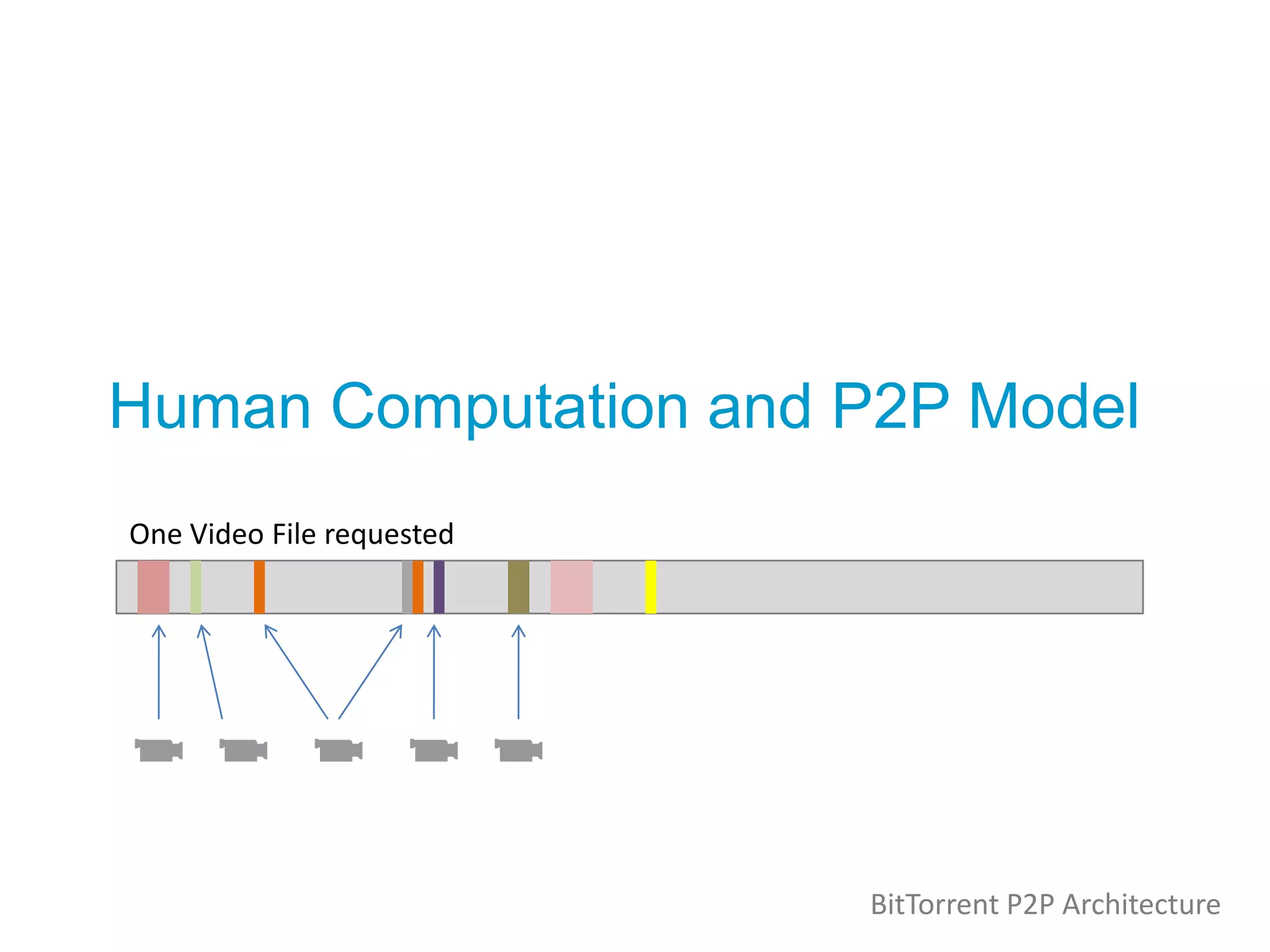
    34. Human Computation and P2P Model
    35. Human Computation and P2P Model BitTorrent P2P Architecture
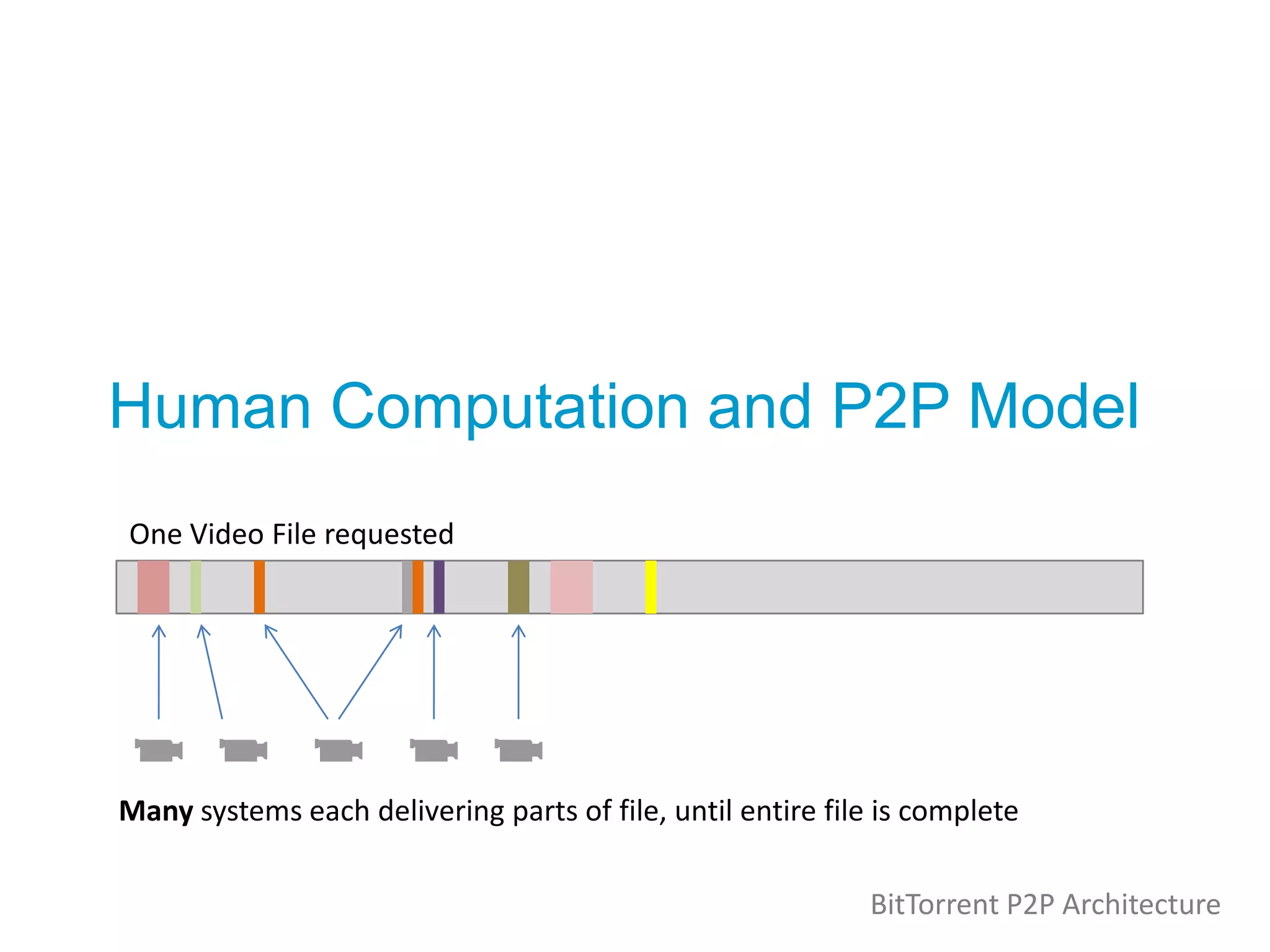
    36. Human Computation and P2P Model One Video File requested BitTorrent P2P Architecture
    37. Human Computation and P2P Model One Video File requested Many systems each delivering parts of file, until entire file is complete BitTorrent P2P Architecture
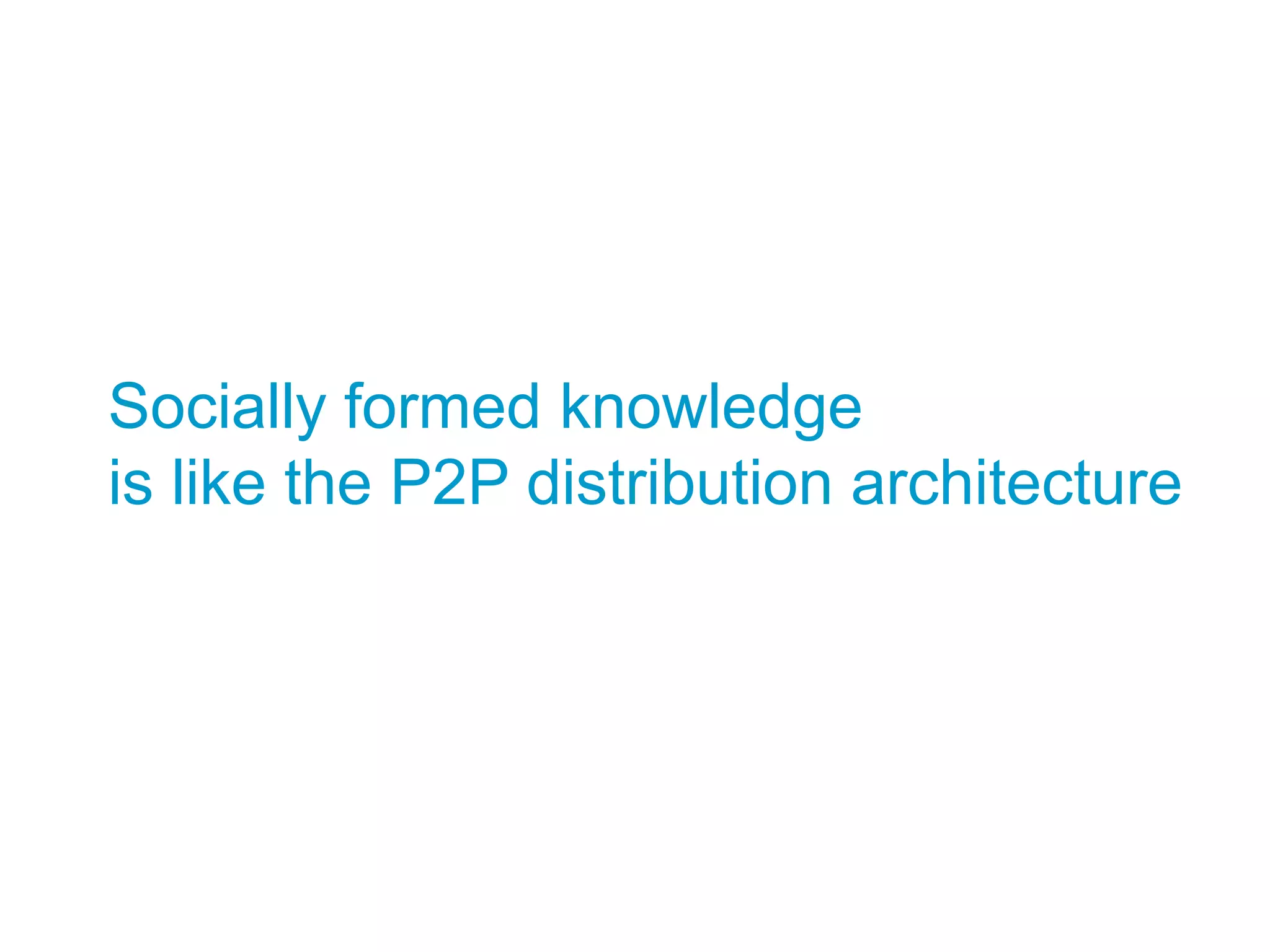
    38. Socially formed knowledge is like the P2P distribution architecture
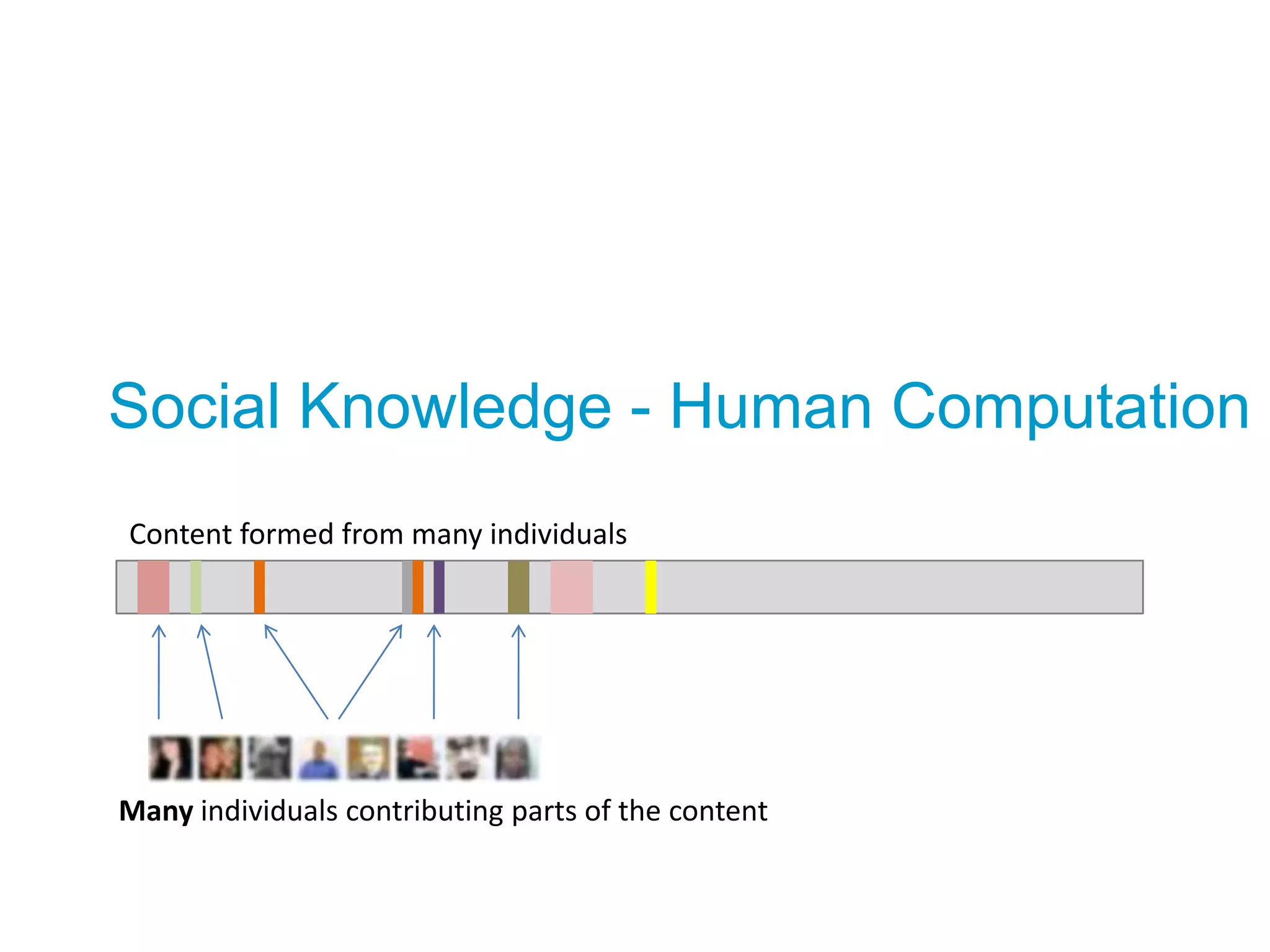
    39. Social Knowledge - Human Computation Content formed from many individuals Many individuals contributing parts of the content
    40. But “…unlike computer processors, humans require some incentive to become part of a collective computation”. Louis Von Ahn Source: invited talk at CMU on Human Computation
    41. Models of Human Computation AKA Human Intelligence Tasks (HITs) (Coined by Amazon)
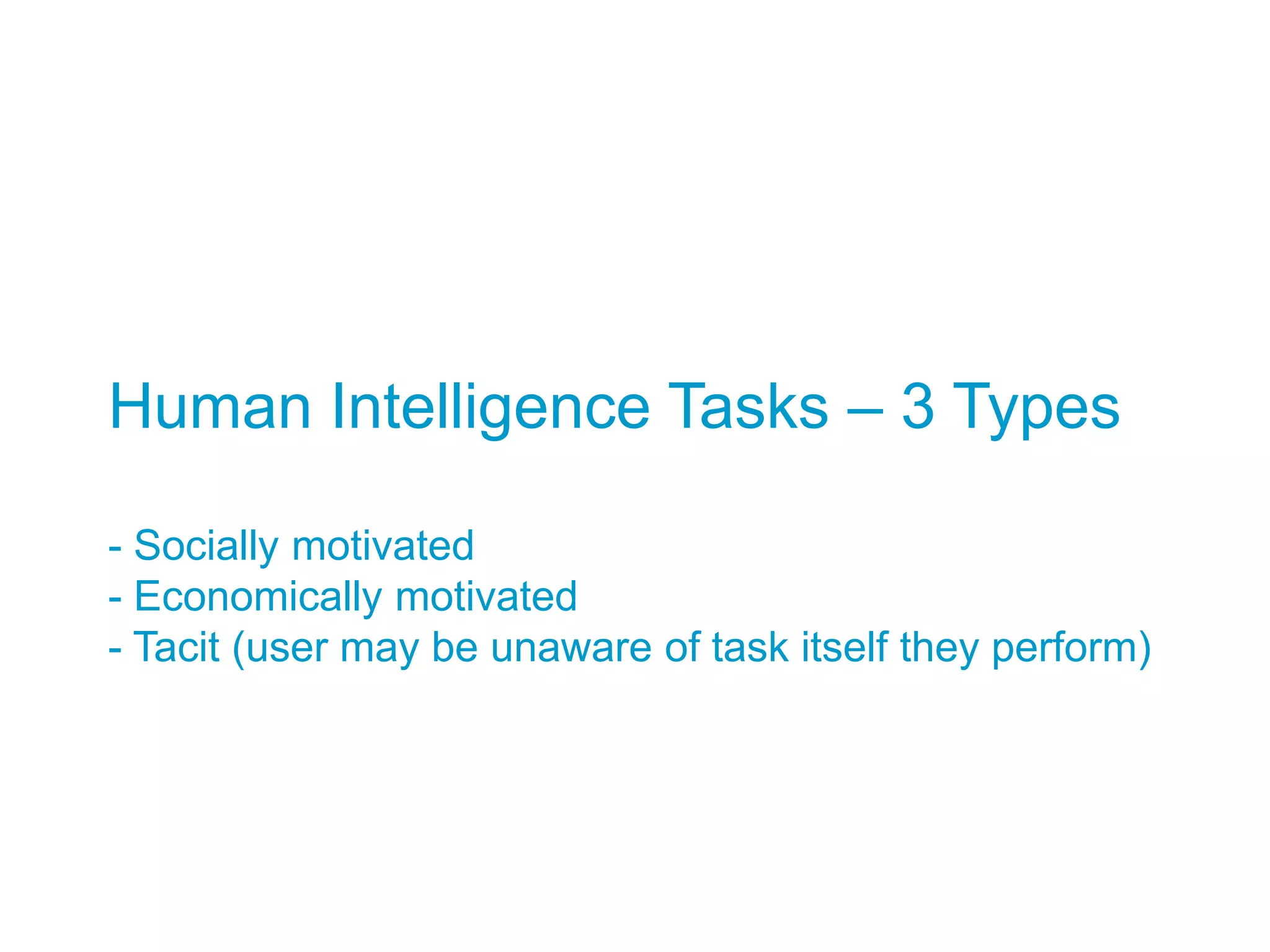
    42. Human Intelligence Tasks – 3 Types - Socially motivated - Economically motivated - Tacit (user may be unaware of task itself they perform)
    43. Human Intelligence Tasks (social) (or social knowledge systems) Tagging (Flickr) and Comments (Amazon) Ratings (Yelp) Problem Solving (StackOverflow)
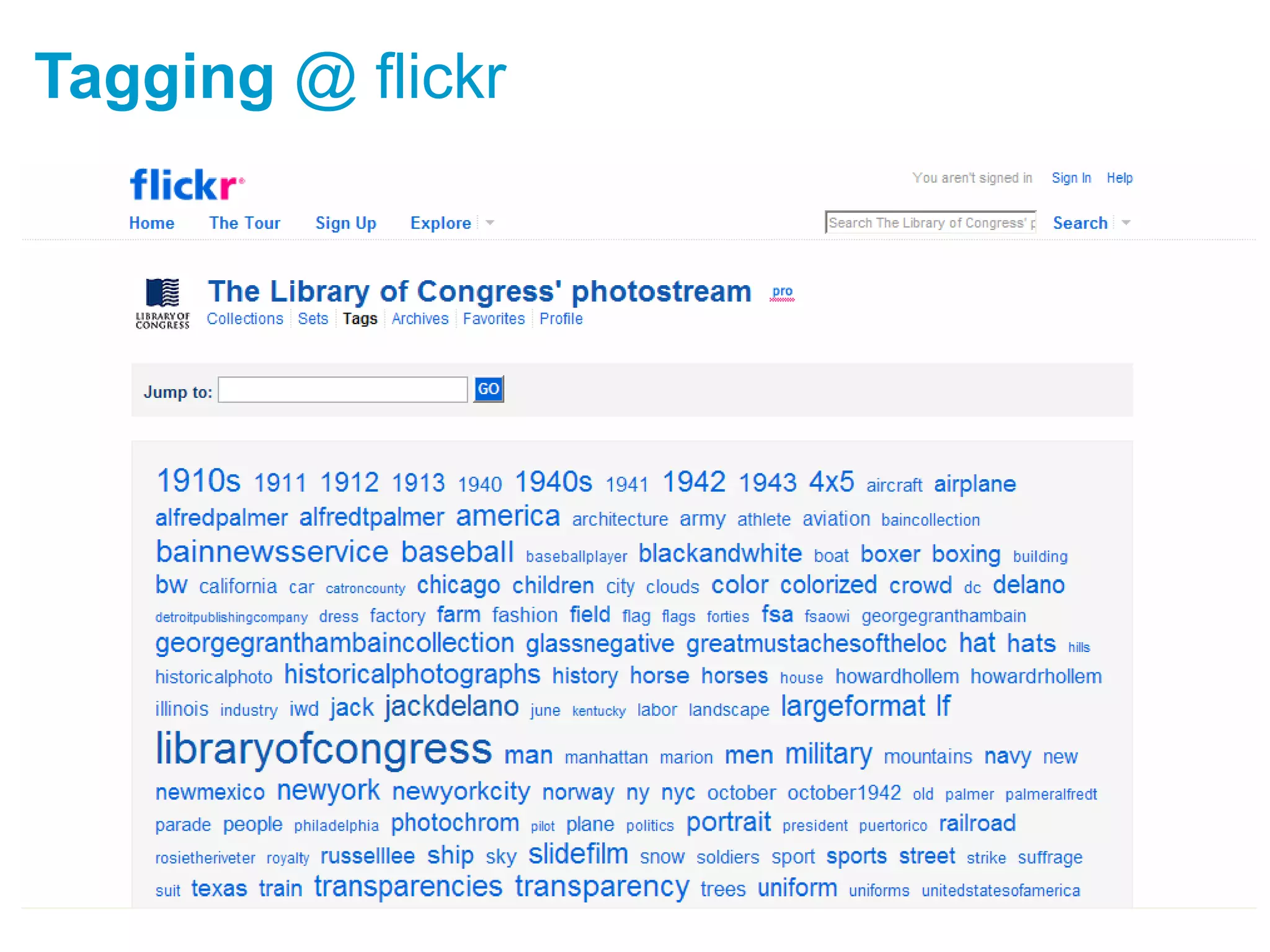
    44. Tagging @ flickr
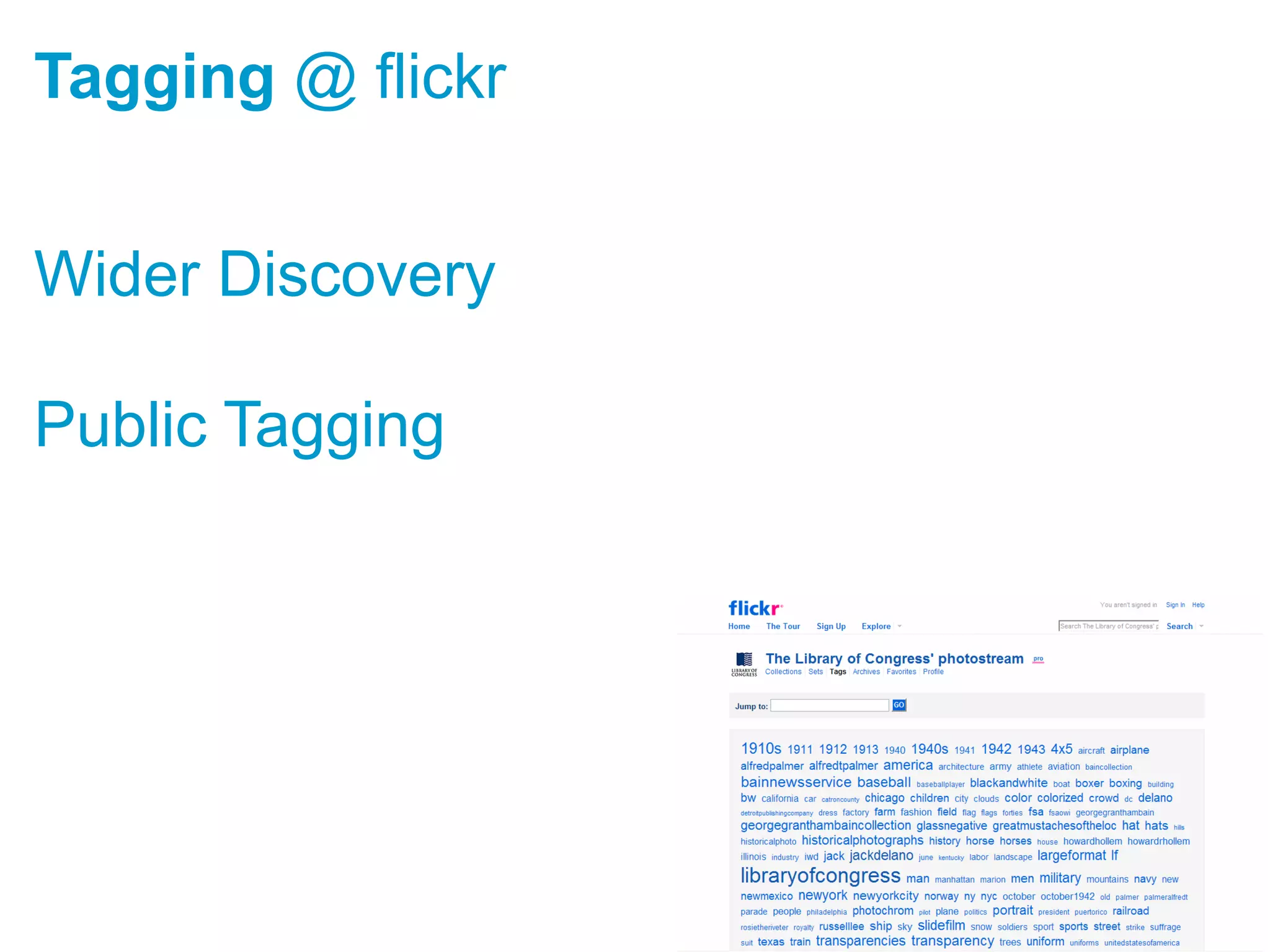
    45. Tagging @ flickr Wider Discovery Public Tagging
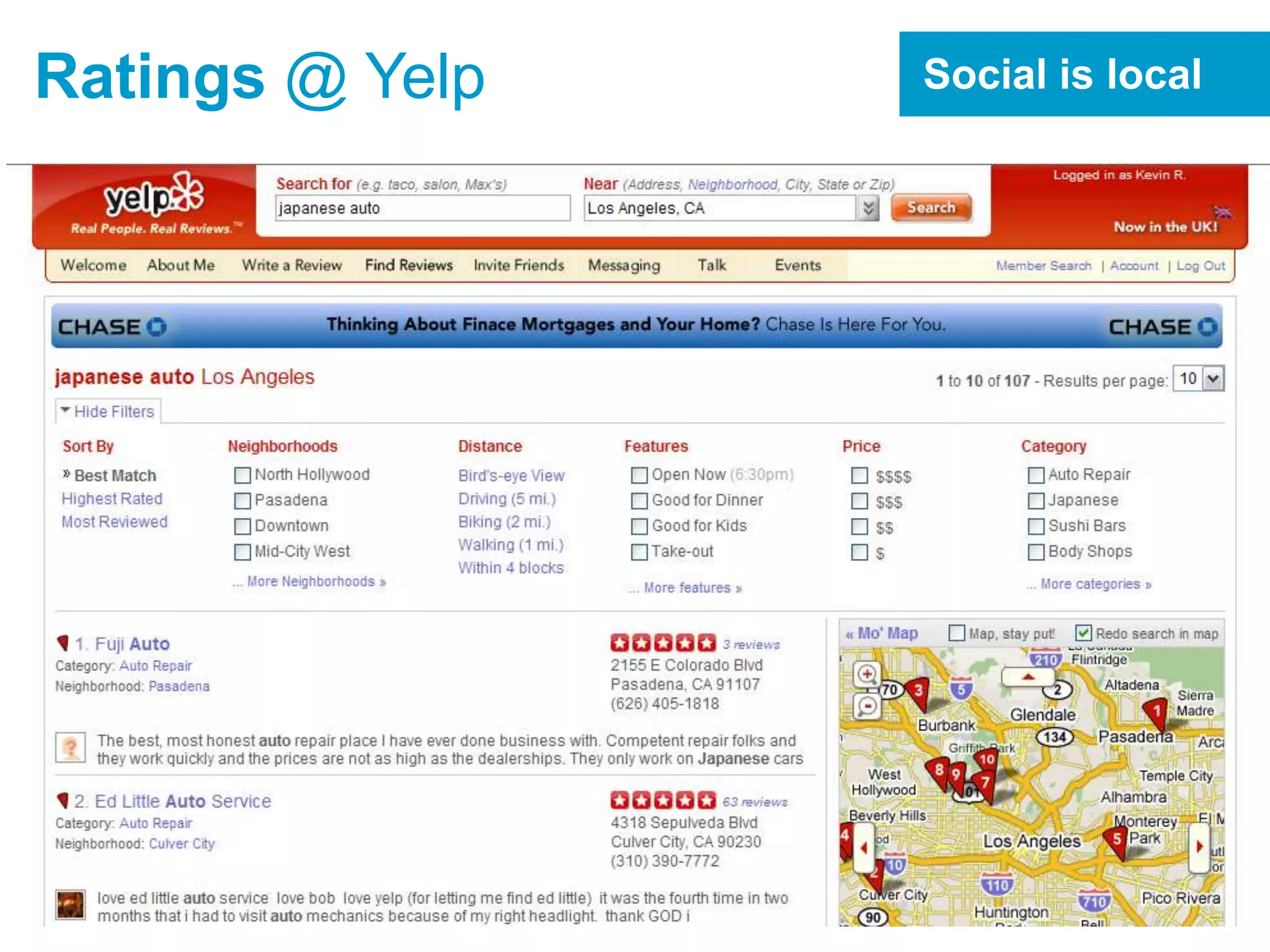
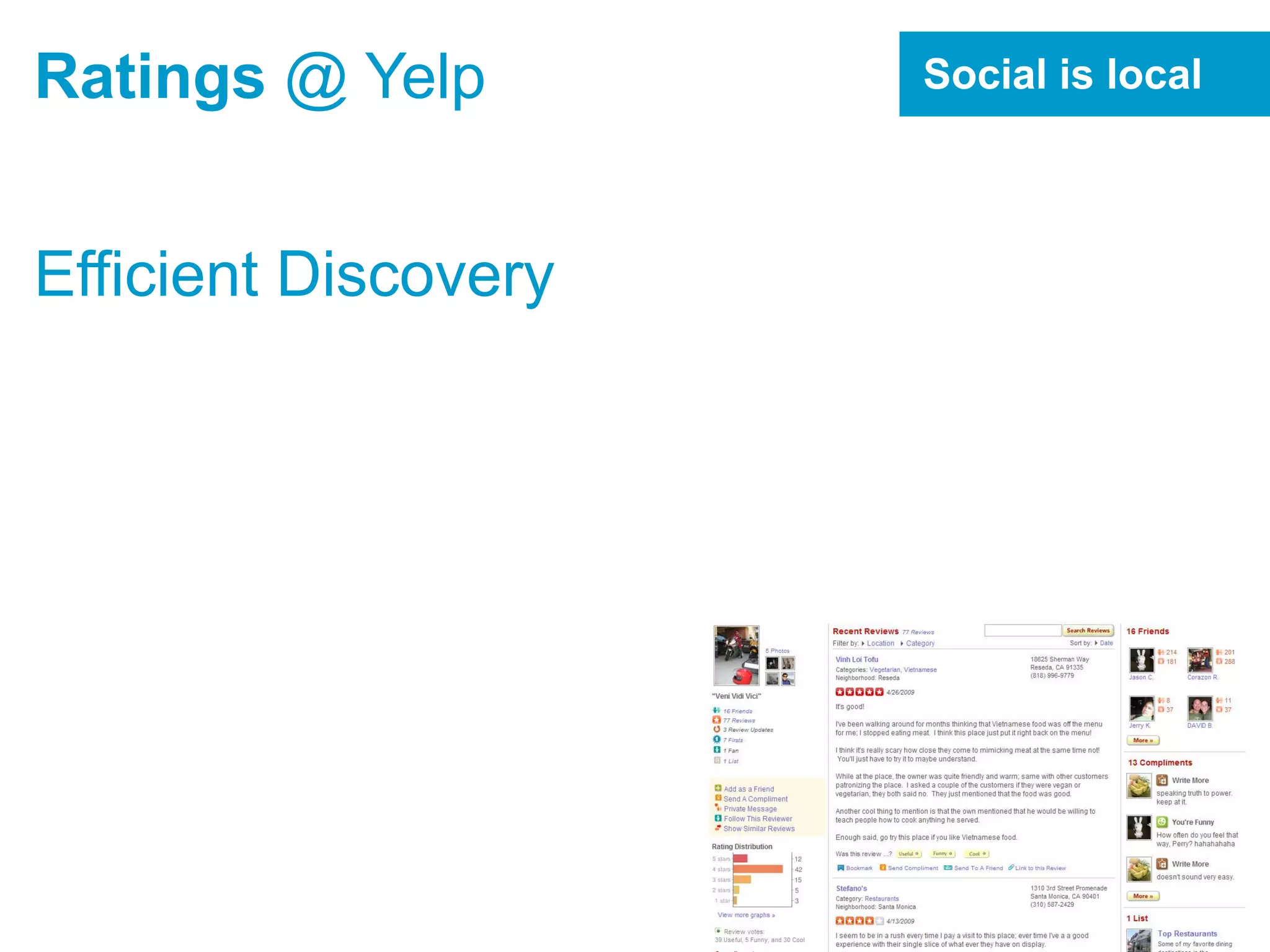
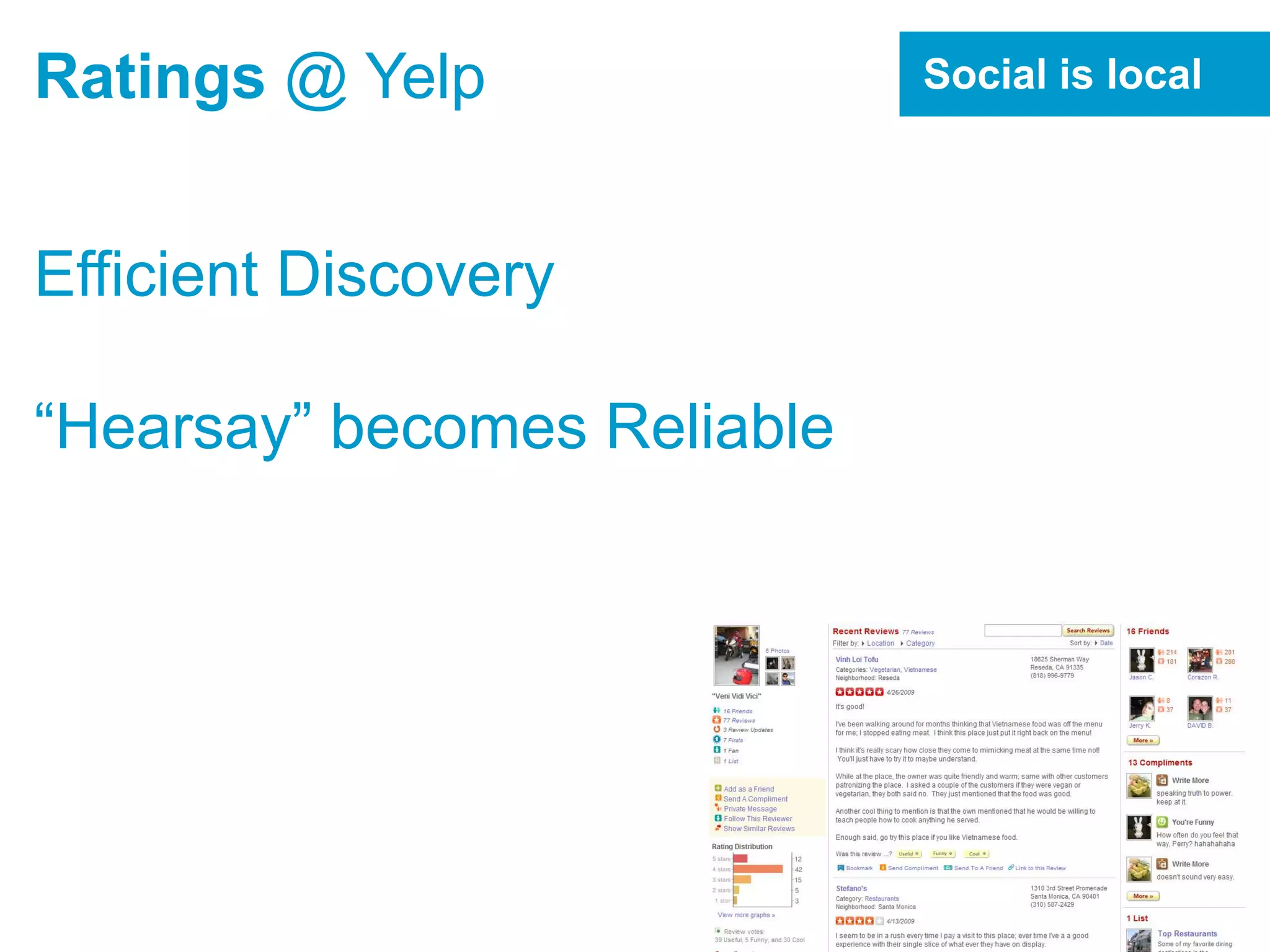
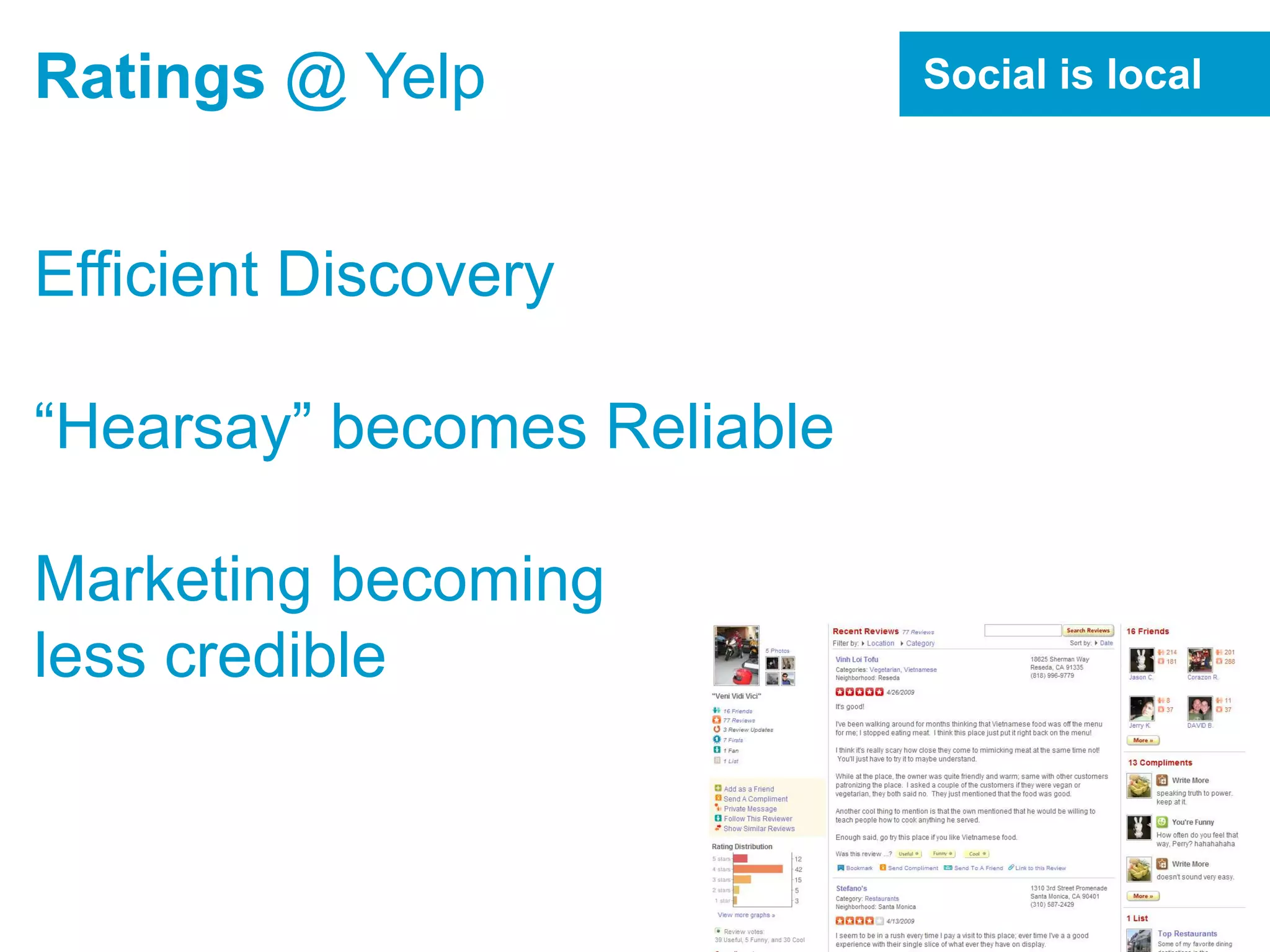
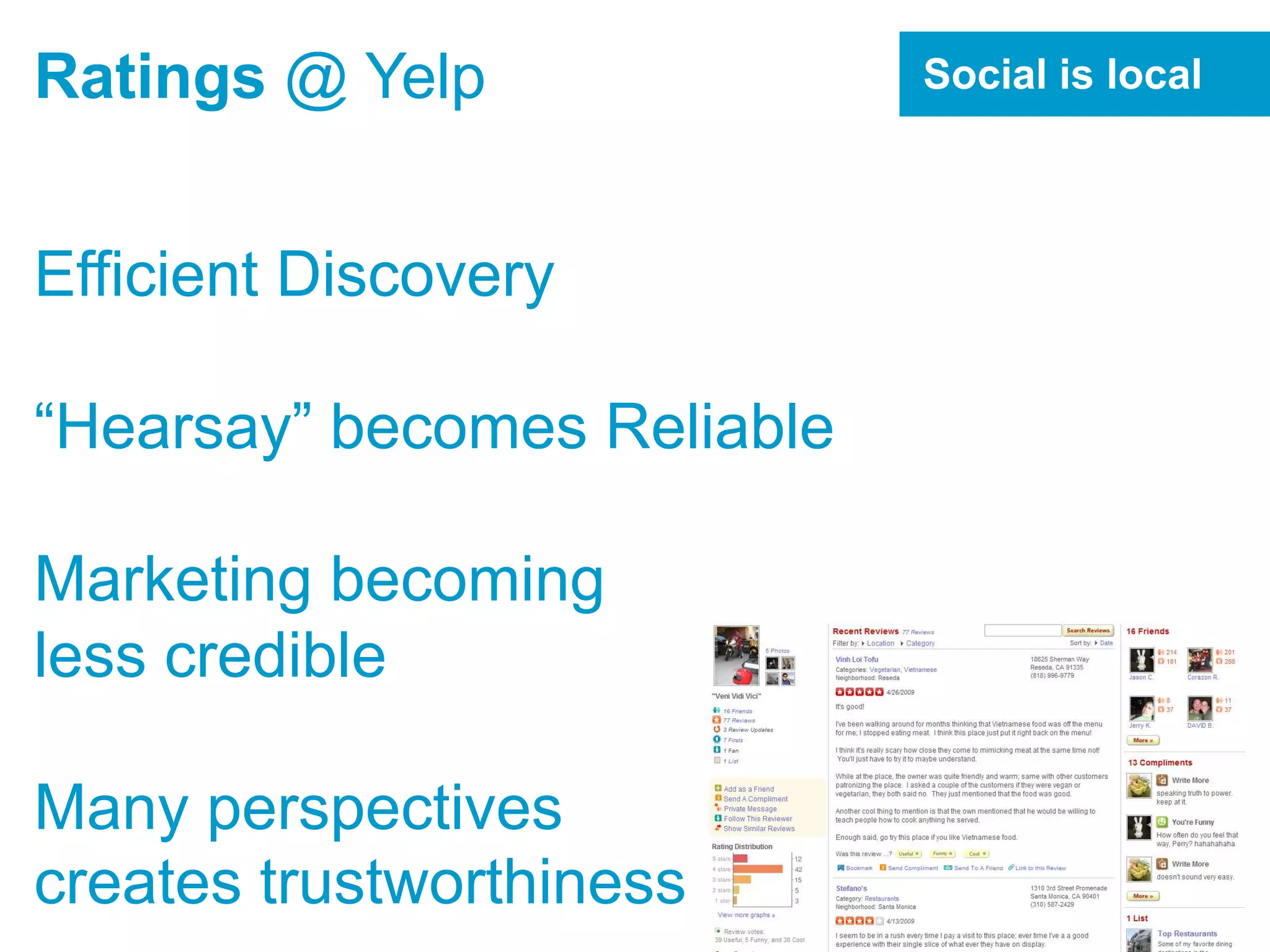
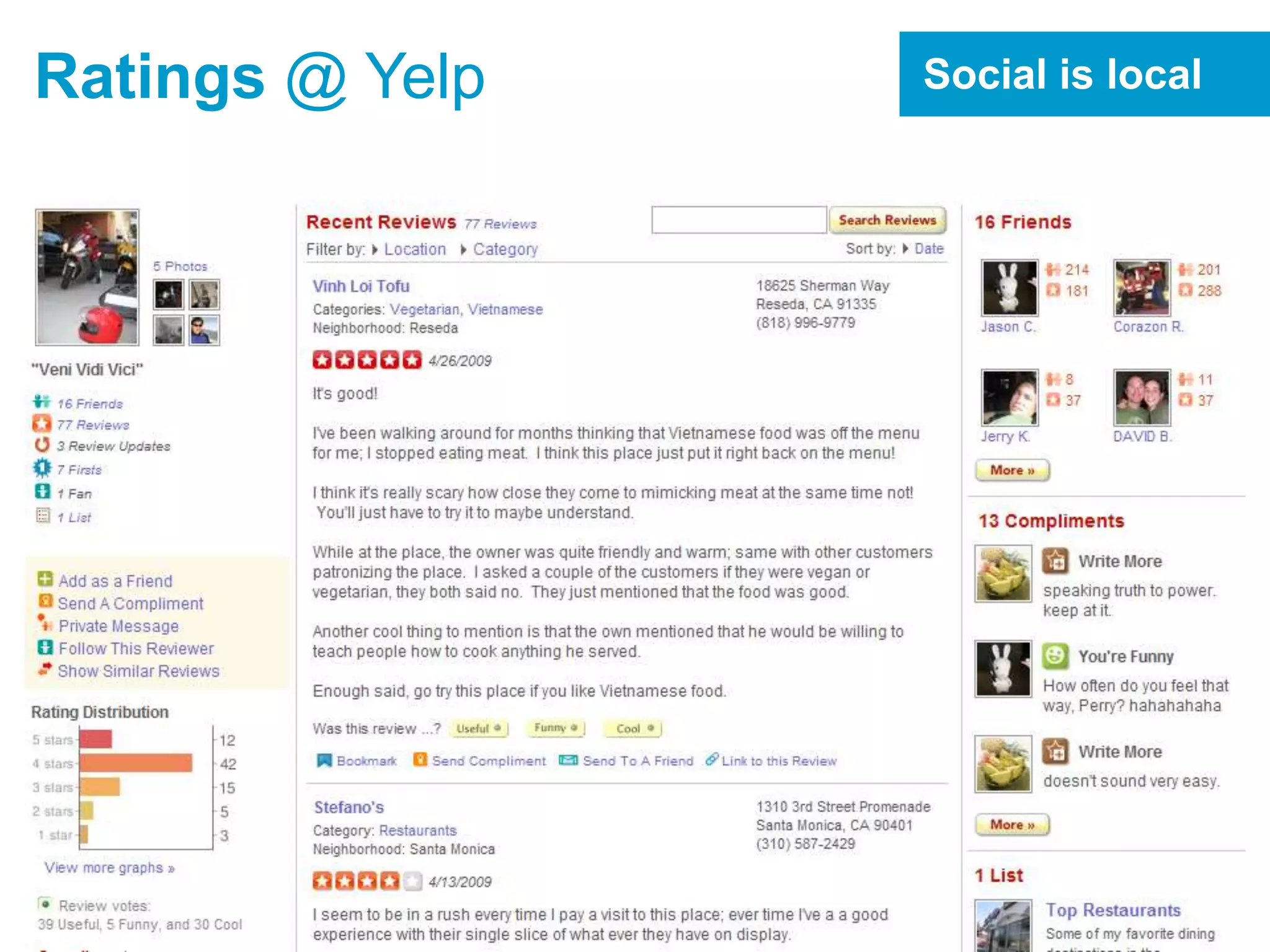
    46. Ratings @ Yelp Social is local Human Intelligence Tasks (social) Tagging (Flickr) Ratings (Yelp) Comments (Amazon) Problem Solving (StackOverflow)
    47. Ratings @ Yelp Social is local Efficient Discovery
    48. Ratings @ Yelp Social is local Efficient Discovery “Hearsay” becomes Reliable
    49. Ratings @ Yelp Social is local Efficient Discovery “Hearsay” becomes Reliable Marketing becoming less credible
    50. Ratings @ Yelp Social is local Efficient Discovery “Hearsay” becomes Reliable Marketing becoming less credible Many perspectives creates trustworthiness
    51. Ratings @ Yelp Social is local
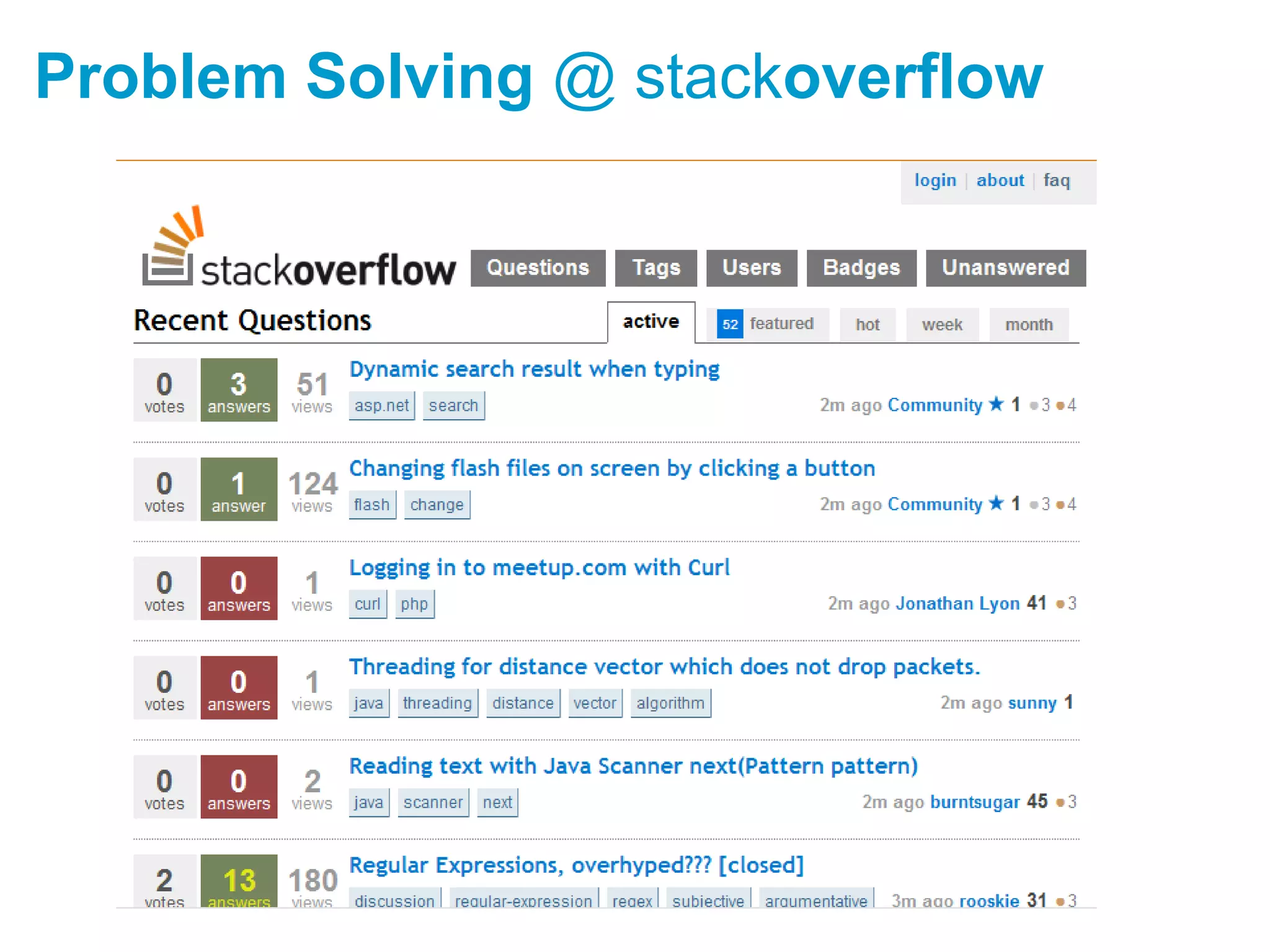
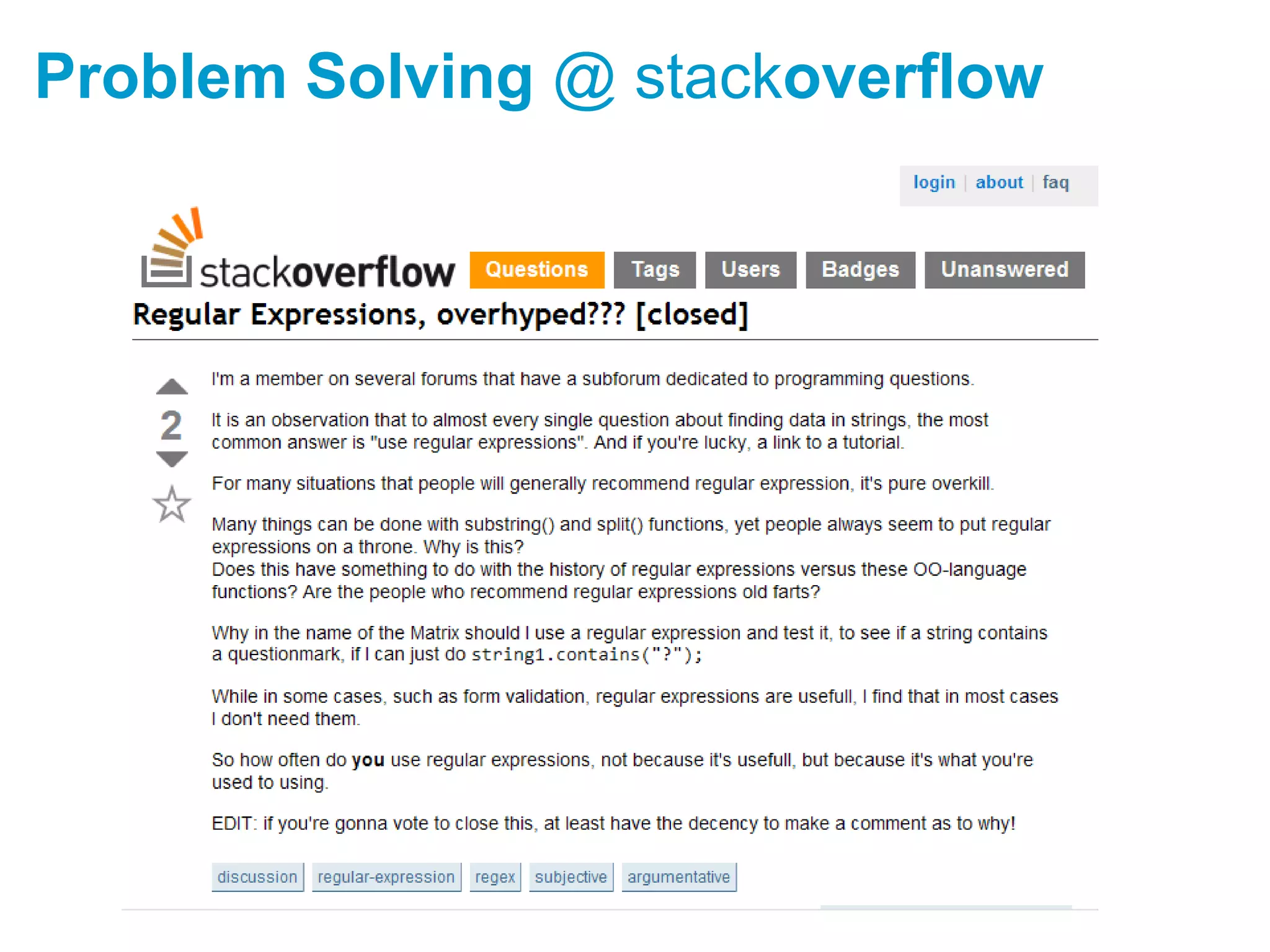
    52. Problem Solving @ stackoverflow
    53. Problem Solving @ stackoverflow
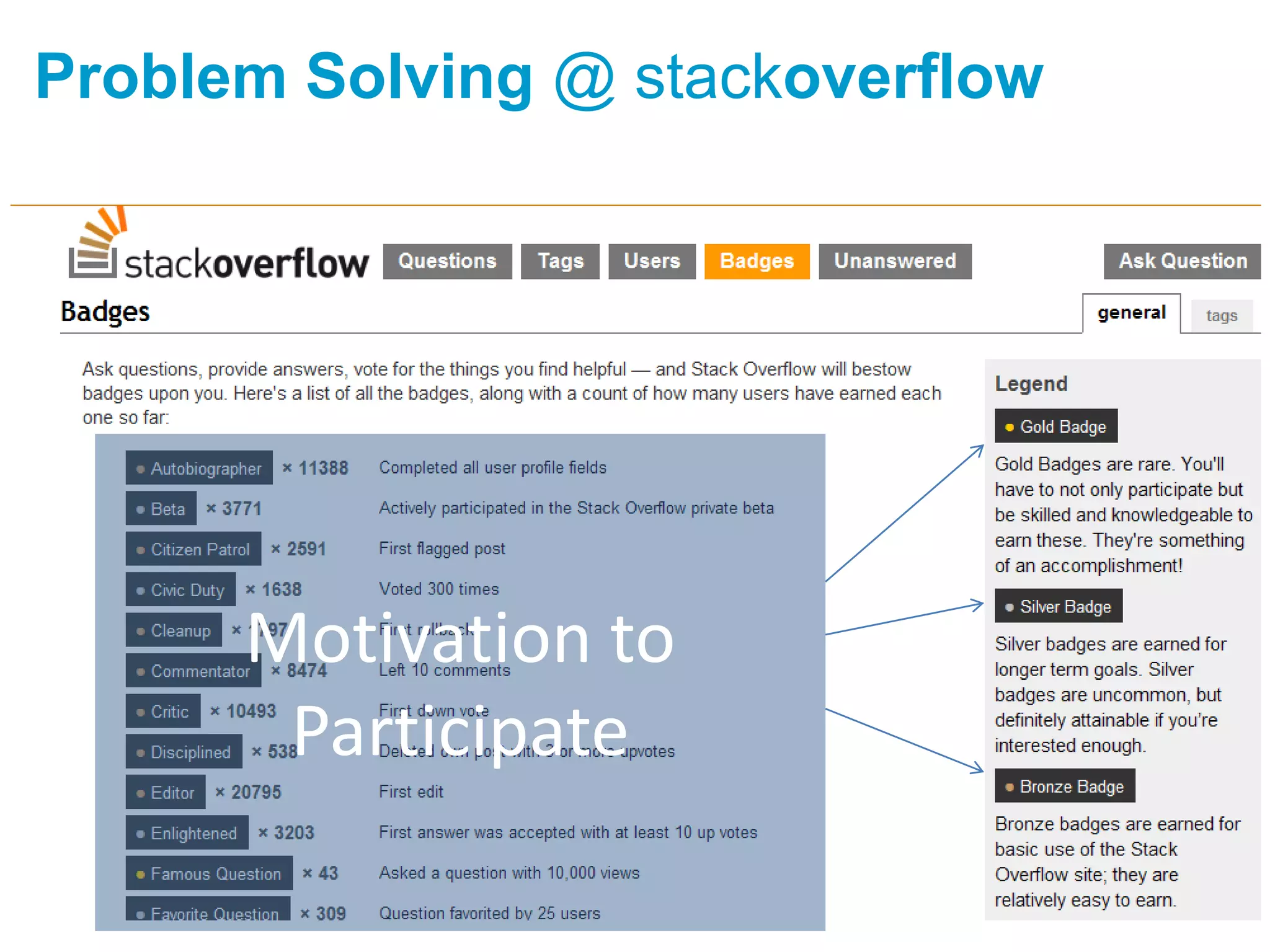
    54. Problem Solving @ stackoverflow Motivation to Participate
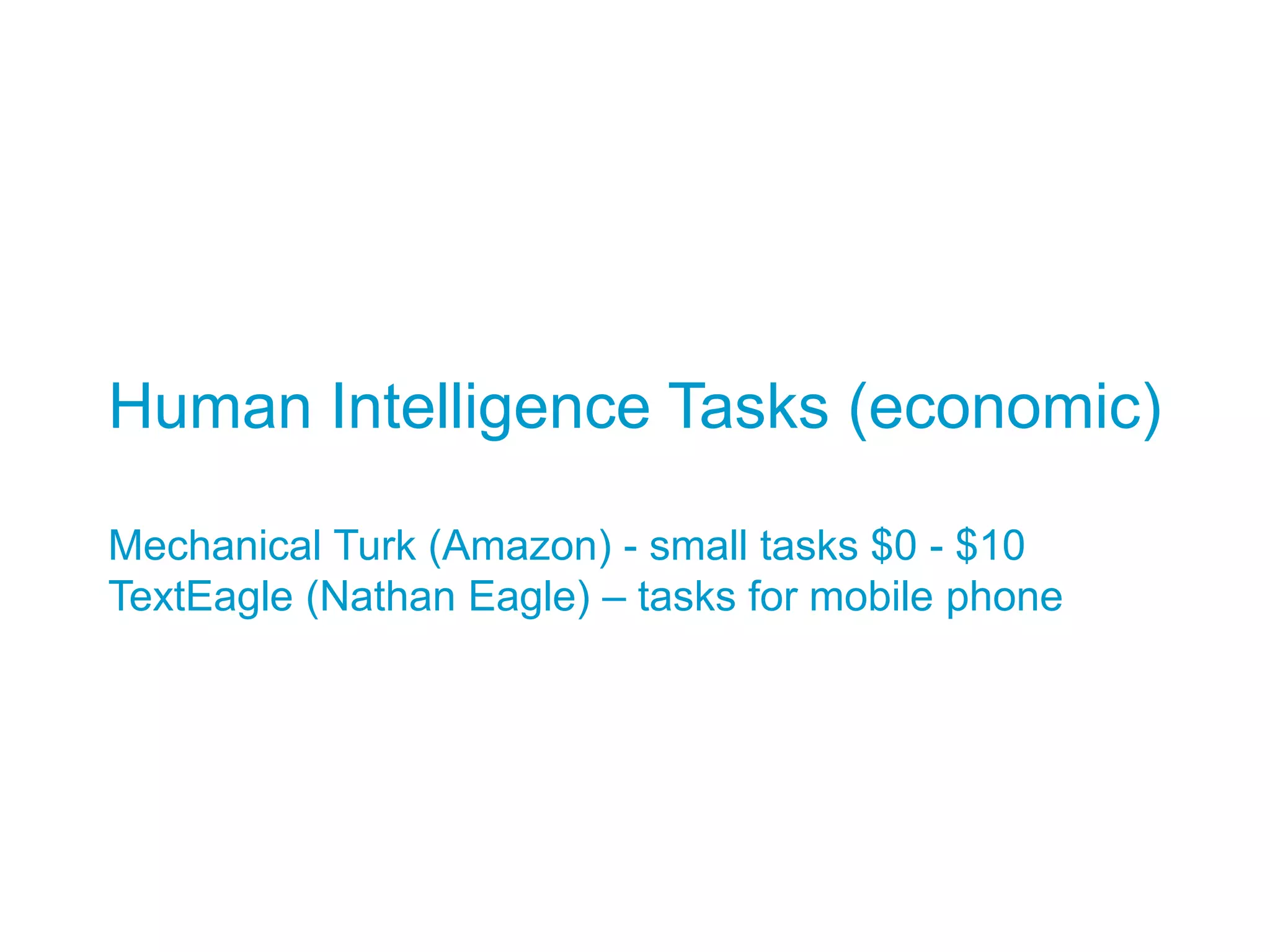
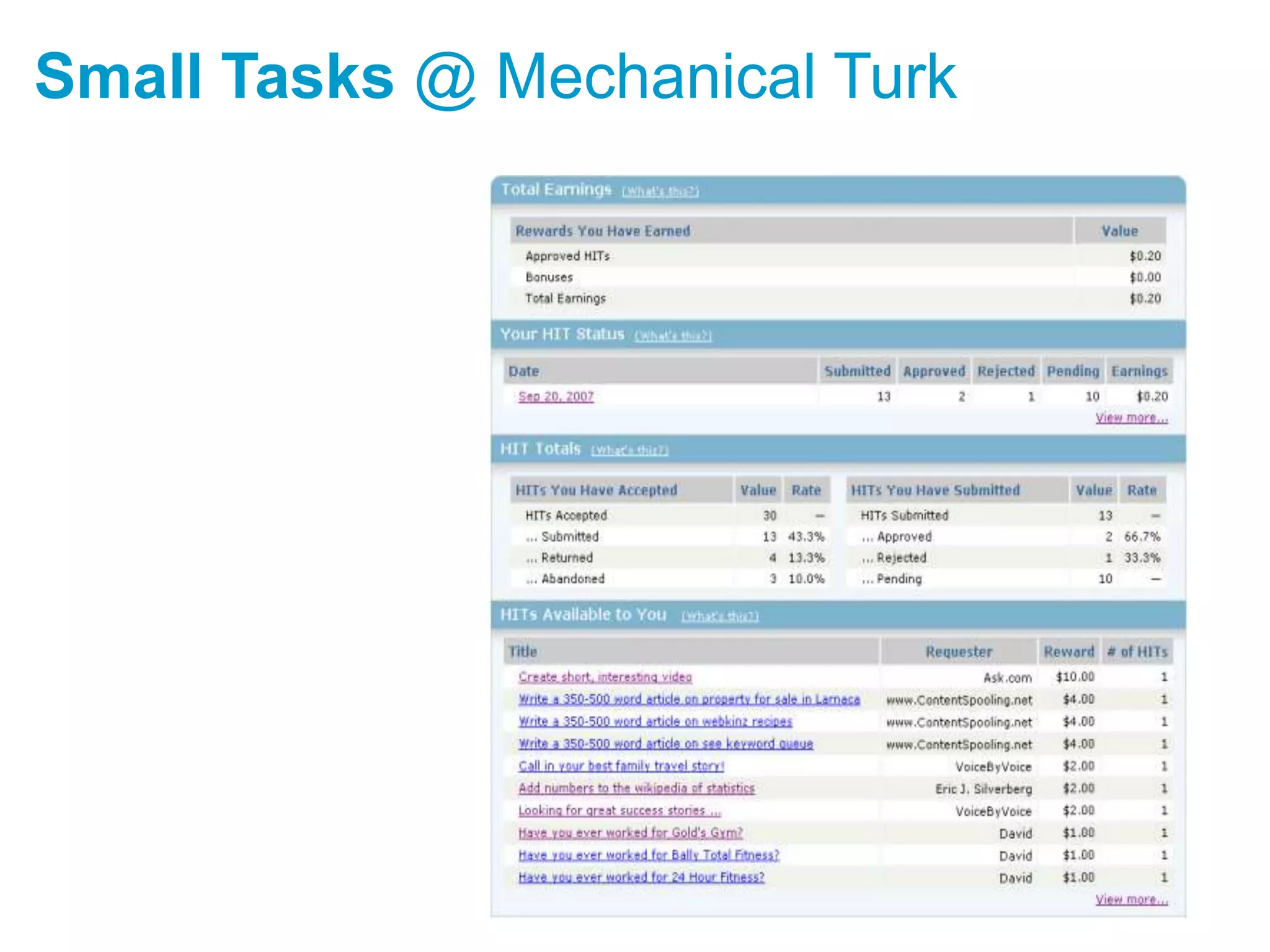
    55. Human Intelligence Tasks (economic) Mechanical Turk (Amazon) - small tasks $0 - $10 TextEagle (Nathan Eagle) – tasks for mobile phone
    56. Small Tasks @ Mechanical Turk
    57. Small Tasks @ Mechanical Turk Small Tasks Time vs. Economics (does not add up)
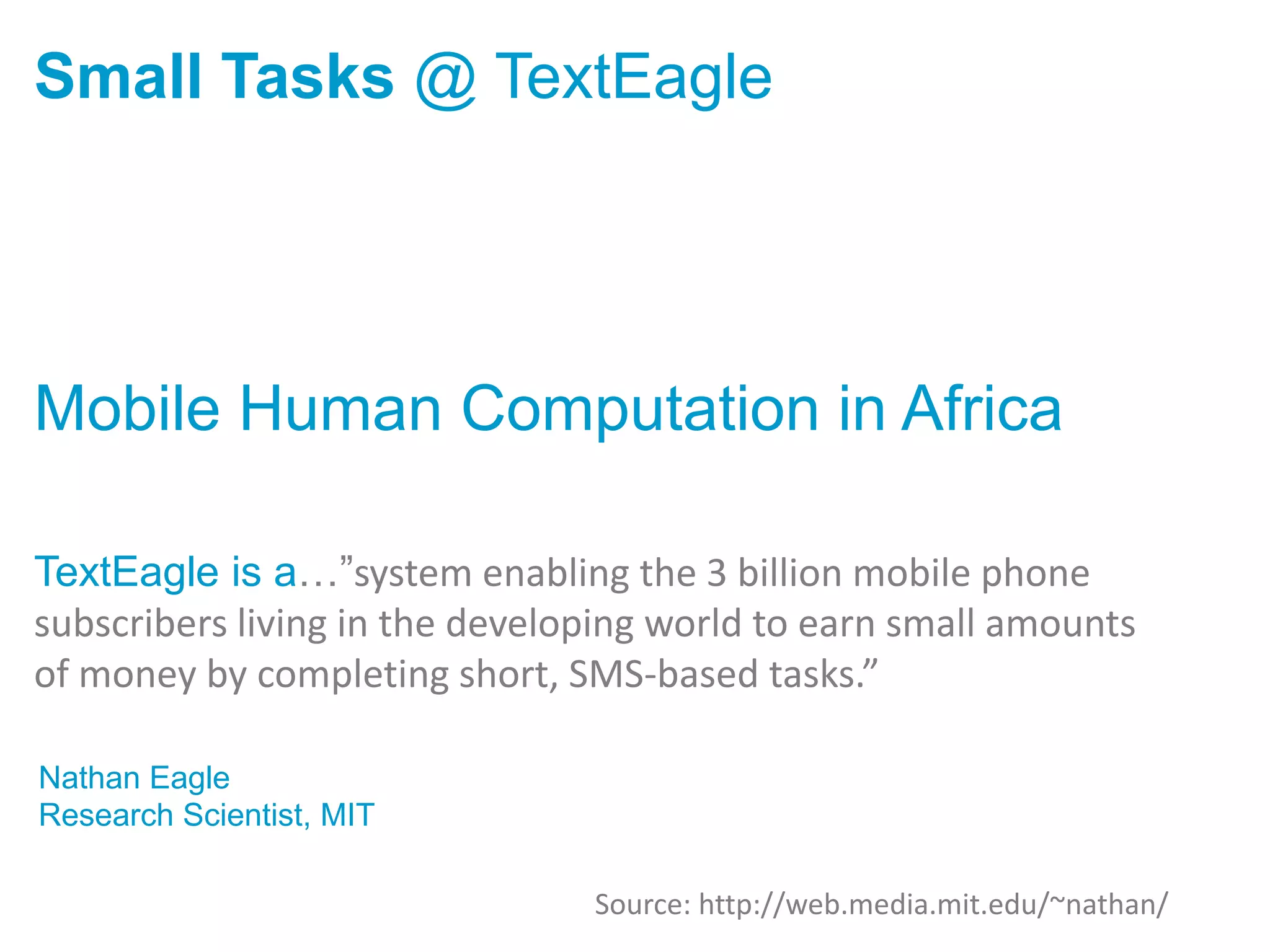
    58. Small Tasks @ TextEagle Mobile Human Computation in Africa TextEagle is a…”system enabling the 3 billion mobile phone subscribers living in the developing world to earn small amounts of money by completing short, SMS-based tasks.” Nathan Eagle Research Scientist, MIT Source: http://web.media.mit.edu/~nathan/
    59. Small Tasks @ TextEagle Translation/Transcription Services Question: Translate the phrase \"Address Book\" into Giriama. Question: Transcribe the following audio clip from a New York hospital. Also Citizen Journalism
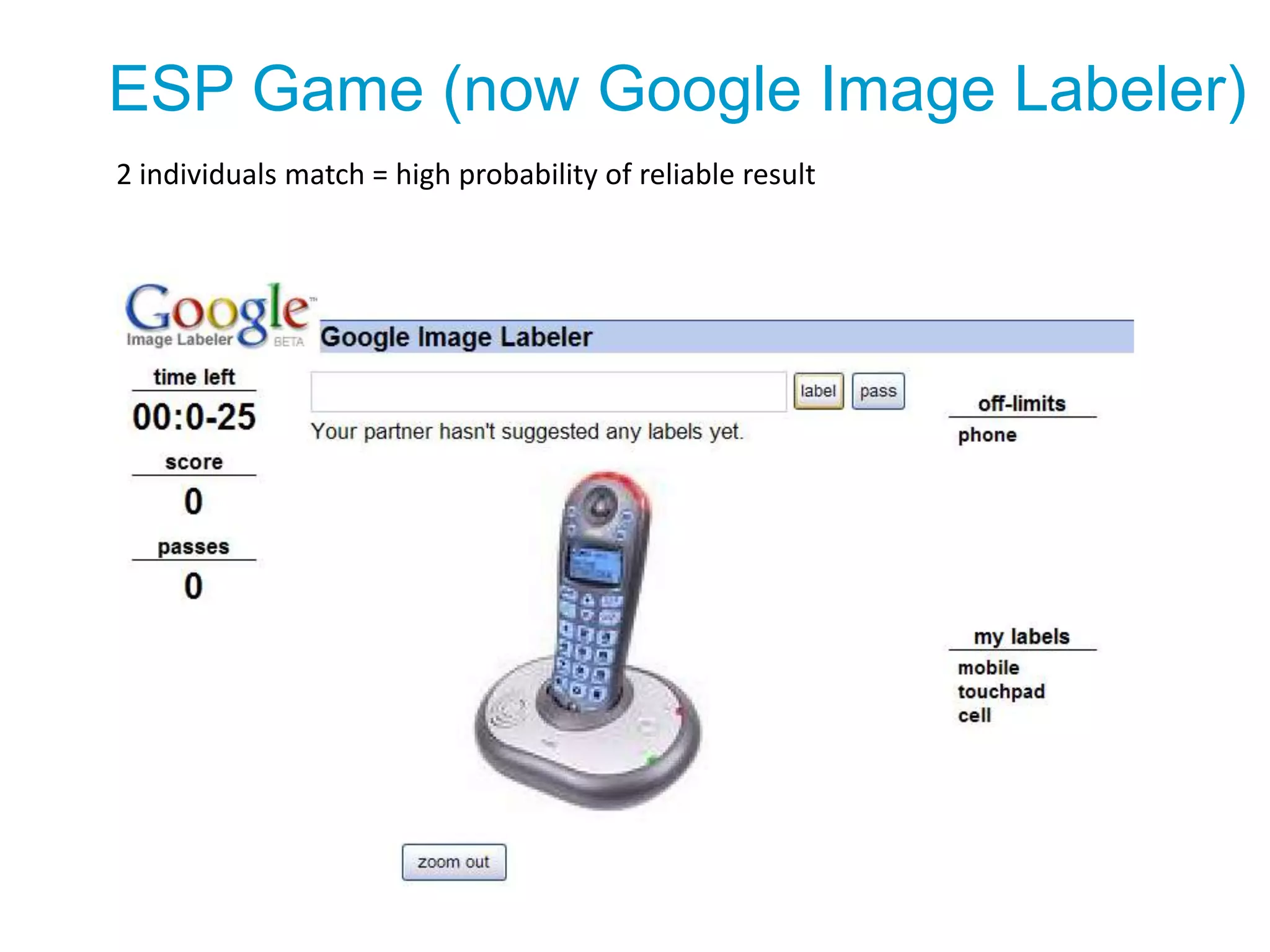
    60. Human Intelligence Tasks (tacit) User may not be aware of how tasks are utilized. reCAPTCHA (based on CAPTCHA) ESP Game (now Google Image Labeler)
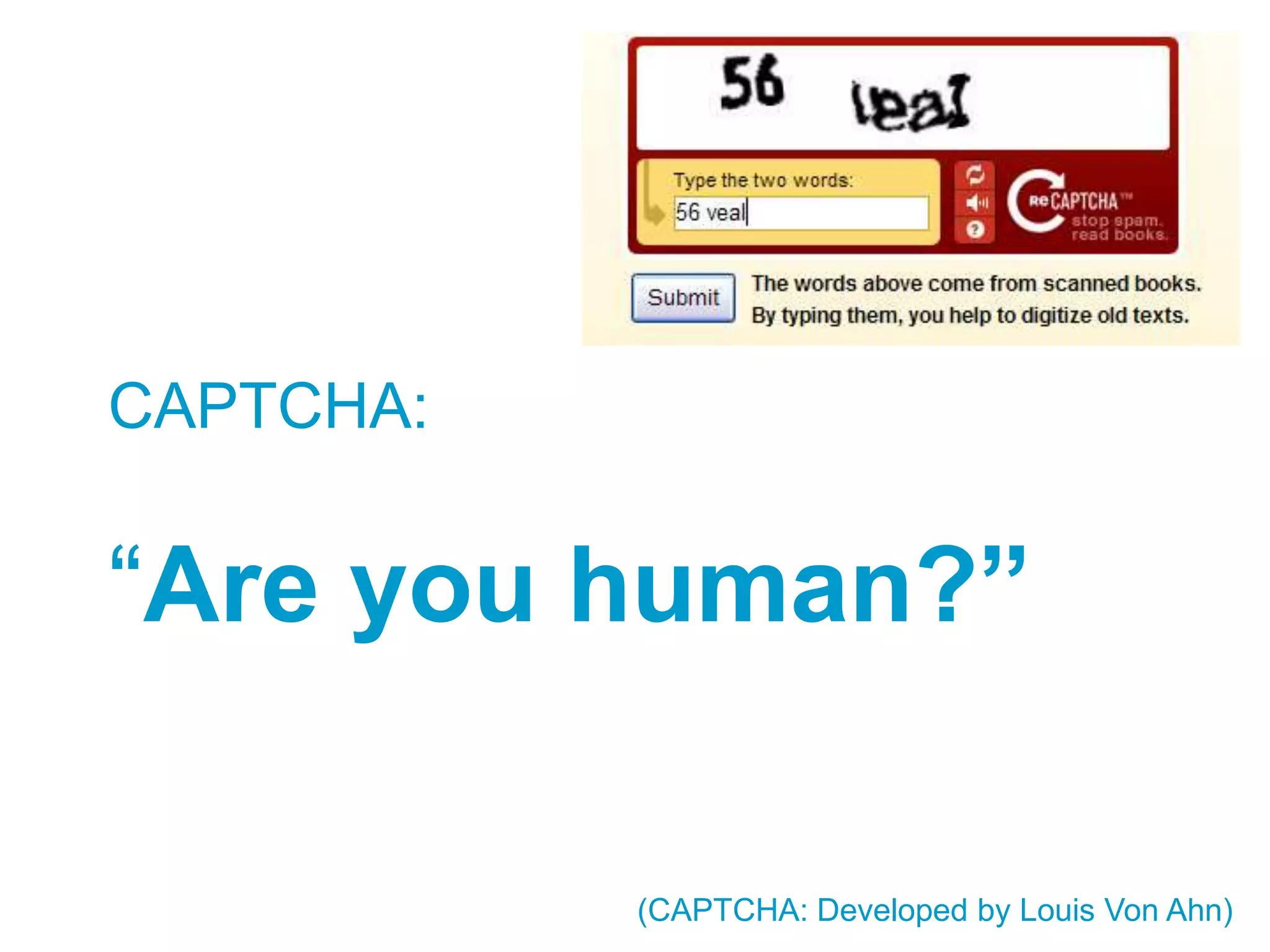
    61. CAPTCHA: “Are you human?” (CAPTCHA: Developed by Louis Von Ahn)
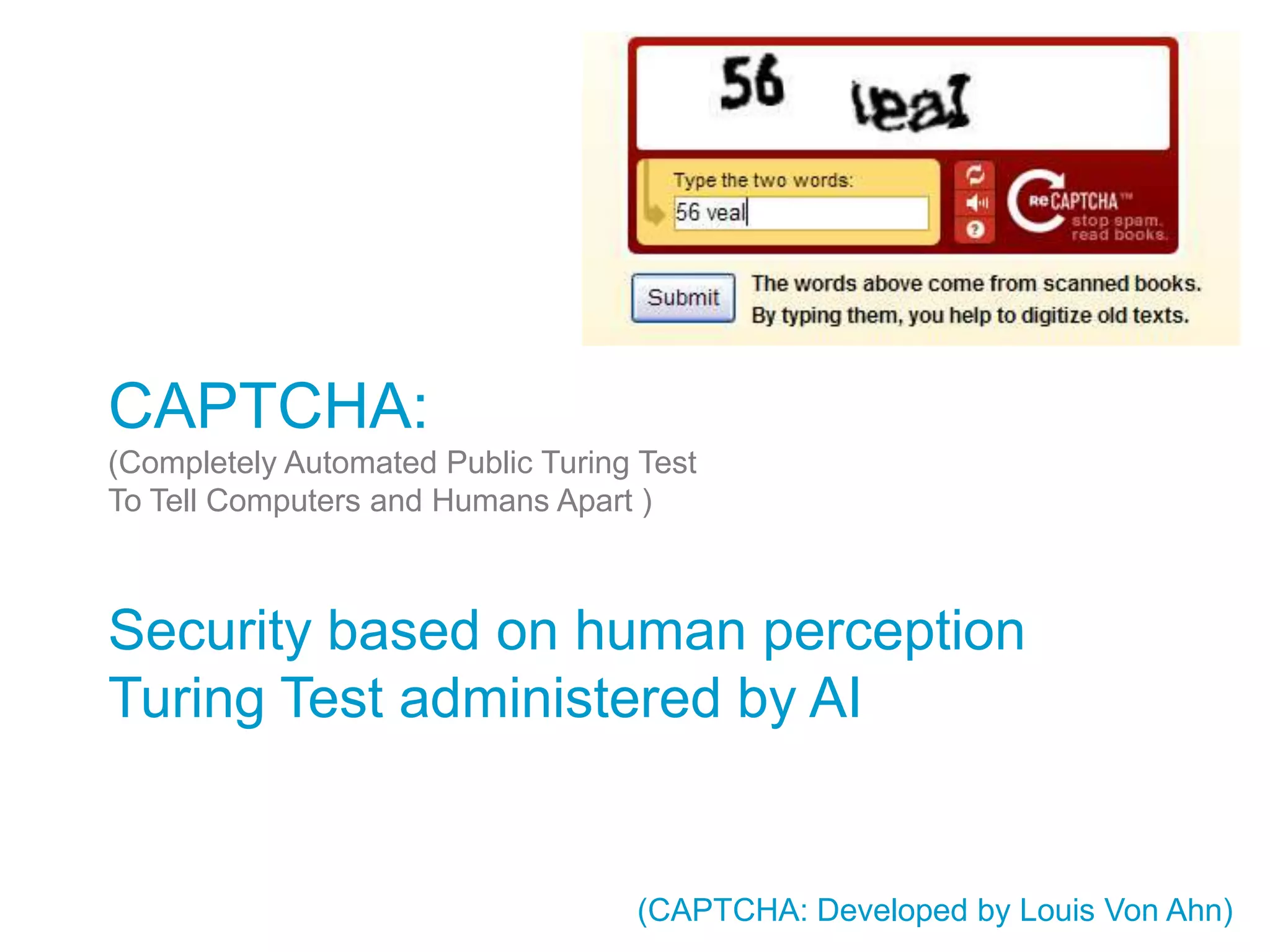
    62. CAPTCHA: (Completely Automated Public Turing Test To Tell Computers and Humans Apart ) Security based on human perception Turing Test administered by AI (CAPTCHA: Developed by Louis Von Ahn)
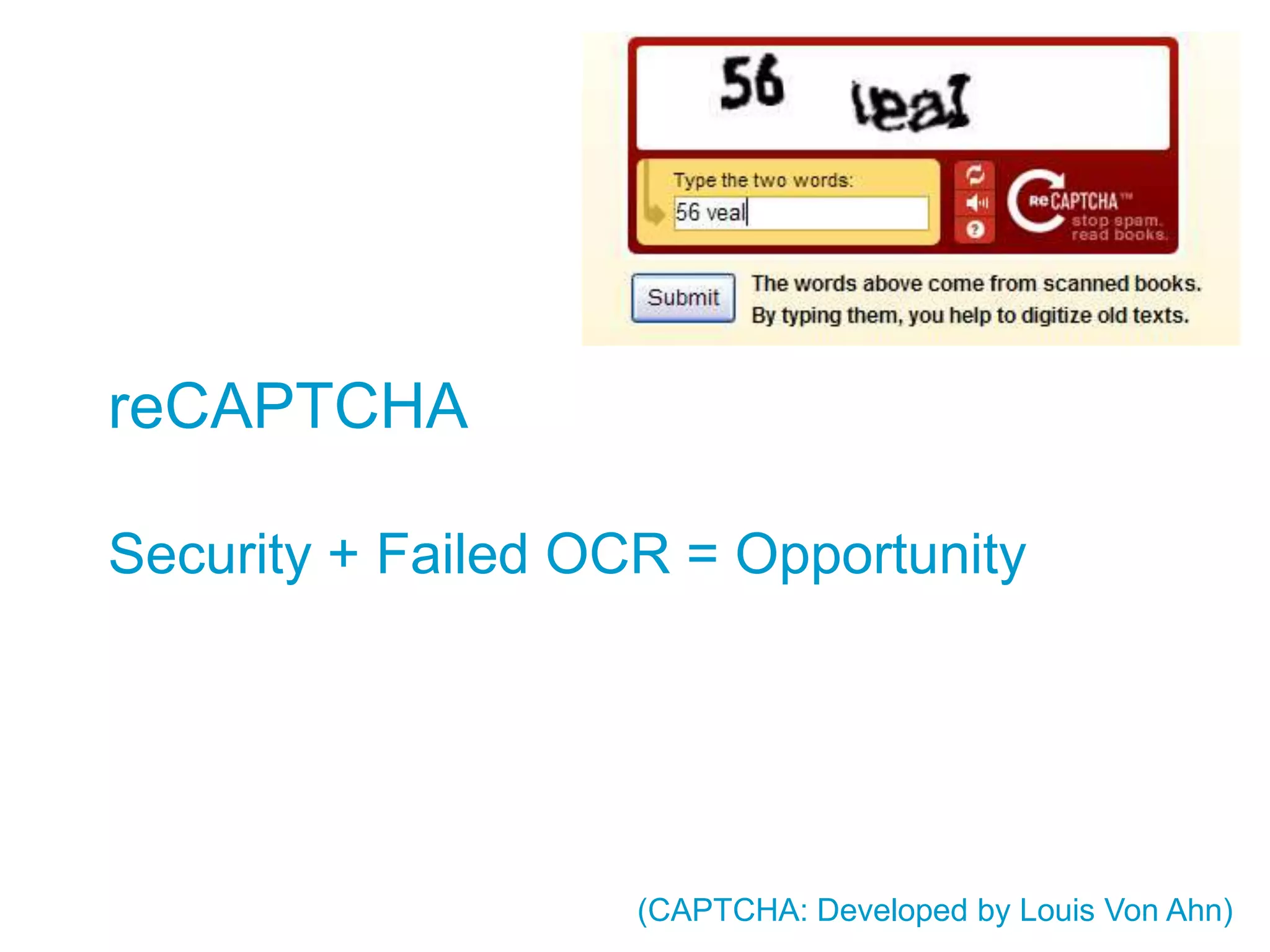
    63. reCAPTCHA Security + Failed OCR = Opportunity (CAPTCHA: Developed by Louis Von Ahn)
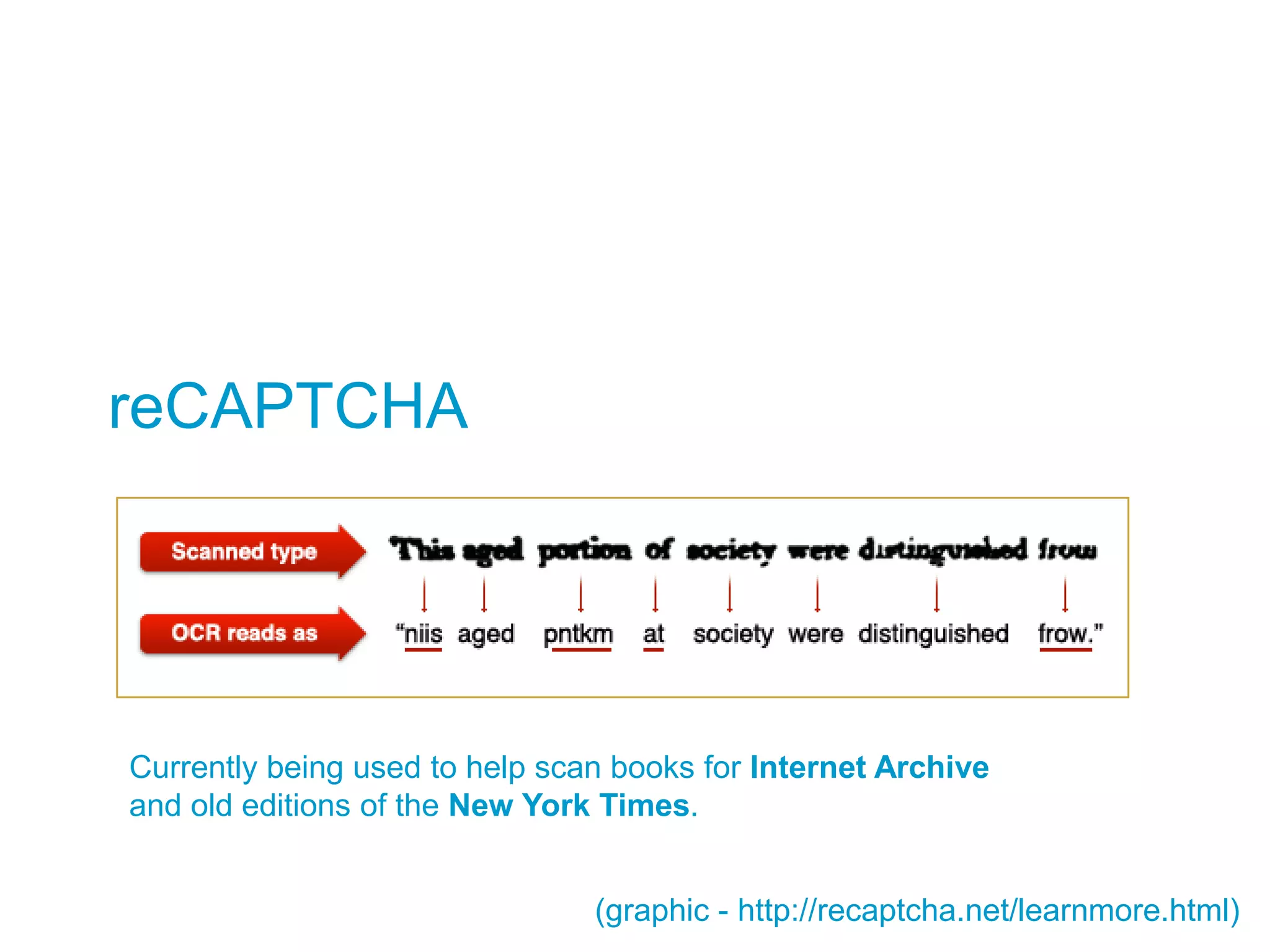
    64. reCAPTCHA Currently being used to help scan books for Internet Archive and old editions of the New York Times. (graphic - http://recaptcha.net/learnmore.html)
    65. reCAPTCHA Bots getting better at deciphering the CAPTCHAs (graphic - http://recaptcha.net/learnmore.html)
    66. reCAPTCHA Bots getting better at deciphering the CAPTCHAs Creates feedback loop - Good thing, since it means OCR gets more precise at same time (graphic - http://recaptcha.net/learnmore.html)
    67. ESP Game (now Google Image Labeler) 2 individuals match = high probability of reliable result
    68. With Human Computation… …computing becomes the coordinating force between many individuals and intelligent or perceptual tasks.
    69. Human Computation Models Social Tagging (Flickr) and Comments (Amazon) Ratings (Yelp) Problem Solving (StackOverflow) Economic Mechanical Turk (Amazon) - small tasks $0 - $10 TextEagle (Nathan Eagle) – tasks for mobile phone Tacit reCAPTCHA (based on CAPTCHA) ESP Game (now Google Image Labeler)
    70. How can you create a platform for capturing social knowledge?
    71. Shared Knowledge Production Public platforms – ex. Flickr Develop platform – ex. Simul8 Model
    72. UCLA Library Simul8 Group Model Listen to users – experience paradigm See user mode, lifestyle, aesthetic Engage in their mode – playful and experimental dev Fast prototyping with high level programming Student developers and designers Creative Commons License
    73. One Question: Are You Human? Kevin Rundblad kevinrundblad@library.ucla.edu
    74. One Question: Are You Human? Kevin Rundblad kevinrundblad@library.ucla.edu
    SlideShare Zeitgeist 2009

    + rundbladrundblad Nominate

    custom

    365 views, 2 favs, 1 embeds more stats

    Presentation given at Society of California Archivi more

    More info about this document

    CC Attribution-NonCommercial LicenseCC Attribution-NonCommercial License

    Go to text version

    • Total Views 365
      • 364 on SlideShare
      • 1 from embeds
    • Comments 0
    • Favorites 2
    • Downloads 0
    Most viewed embeds
    • 1 views on http://www.slideshare.net

    more

    All embeds
    • 1 views on http://www.slideshare.net

    less

    Flagged as inappropriate Flag as inappropriate
    Flag as inappropriate

    Select your reason for flagging this presentation as inappropriate. If needed, use the feedback form to let us know more details.

    Cancel
    File a copyright complaint
    Having problems? Go to our helpdesk?

    Categories