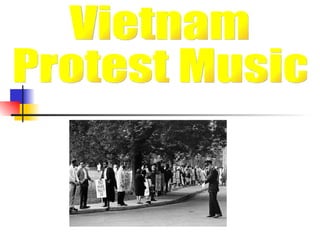
The initial causes for anti-war feelings amongst the men and women of the United States were few. Most people were terrified of the spread of Communism and supported an active stance preventing its spread. The occasional dissident either found fault in this foreign policy: desiring peaceful means for isolating Communism or was swayed by the media’s portrayal of nonviolent protest in Southern Asia.
As the war drew on, more dissent accumulated while American morale dropped following the Tet Offensive and the expansion of the war into Cambodia. President Nixon’s Vietnamization Plan seemed to be a complete failure and many could no longer see reason for war. The movement turned to music as a number of significant artists began openly criticizing the war. Locations such as Haight-Ashbury Street were meccas for musical innovation and protest.
Growing Resistance
While “Eve of Destruction” by Barry McGuire had been the most noticeable inspiration for musical protest, Crosby, Stills, Nash, and Young earned terrific success with their song “Ohio” which objected to the killings of four unarmed students at Kent State. Other famous songs such as “Peace Train” by Cat Stevens, “Masters of War” by Bob Dylan, and “War” by Edwin Starr were instrumental in the musical portion of Vietnam dissent during the 1960’s.
The Movement Reaches its Zenith
Bibliography
Abc Clio. "Kent State Report." American Government (1970). 17 May 2007.
0 comments
Post a comment