Materials of StorageENGI/HUMA 240Matthew Wettergreen, PhD
OverviewMaterials – Engineering focusProperties of MaterialsEngineering focusConservation & Storage Focus Properties of Conservation & Storage MaterialsDesirable propertiesIdeal materialsMaterials to stay away from
Engineering MaterialsEngineers are interested in the material properties of objects, how they interact with the environment and how they degradeFull characterization of these materials is required because they may be subjected to any number of conditionsHeatHumidityChemical environments
Use of Engineering MaterialsNo one material will have all the desired propertiesMost materials will have a mix of these propertiesAs engineers we can create a matrix of characteristics A balancing act is required between what you have and what you need
Properties of Materials - EngineeringWhen we are researching materials to use for a design project, what are some of the properties that we wish to look at?StructureCharacterizationProcessing possibilitiesPropertiesPerformance
Standard Engineering Materials PropertiesElectrical propertiesChargeChemical propertiespHPhysical or architectural propertiesOpen celled vs. close celledTransparencyMechanical propertiesStrength / StiffnessDuctility
Conservation Material PropertiesIn the world of conservation our materials need not be characterized as fullyConservators are not interested in: CrystallinityAtomic structureThermal expansionDensity (quantitative)Conservators are more interested in more general qualities:Physical propertiesMechanical propertiesAesthetic properties
Materials for ConservationConservators are mainly concerned with the following questions:Will the material physically protect the object?Will the material affect the object chemically?Will the material shield the object?
Desirable PropertiesLow weightDoes not interact with surface of artworkShields against lightNon-flammableWater resistantDoes not degradeDoes not support organic growthCushions against shock/vibration
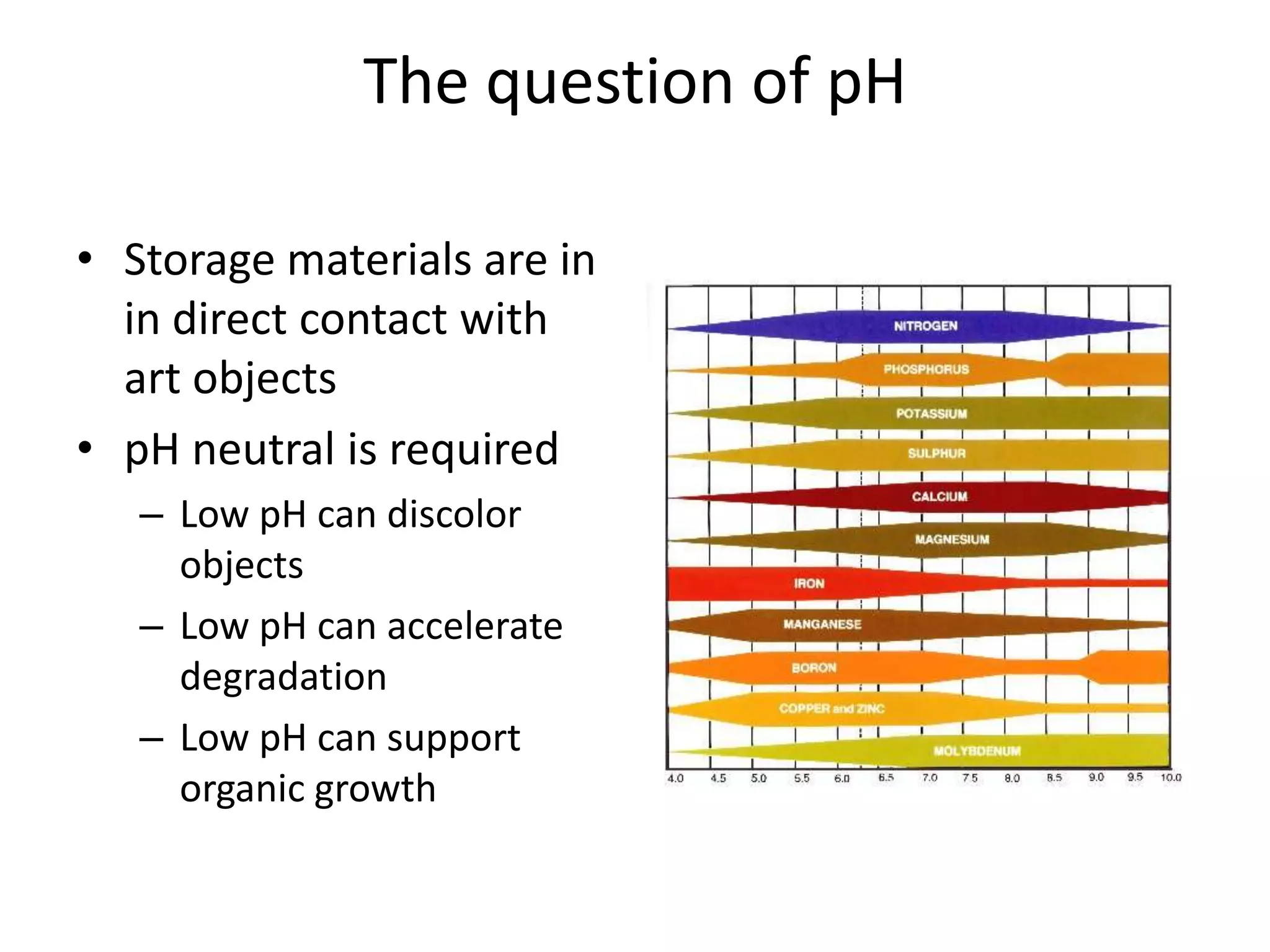
The question of pHStorage materials are in in direct contact with art objectspH neutral is requiredLow pH can discolor objectsLow pH can accelerate degradationLow pH can support organic growth
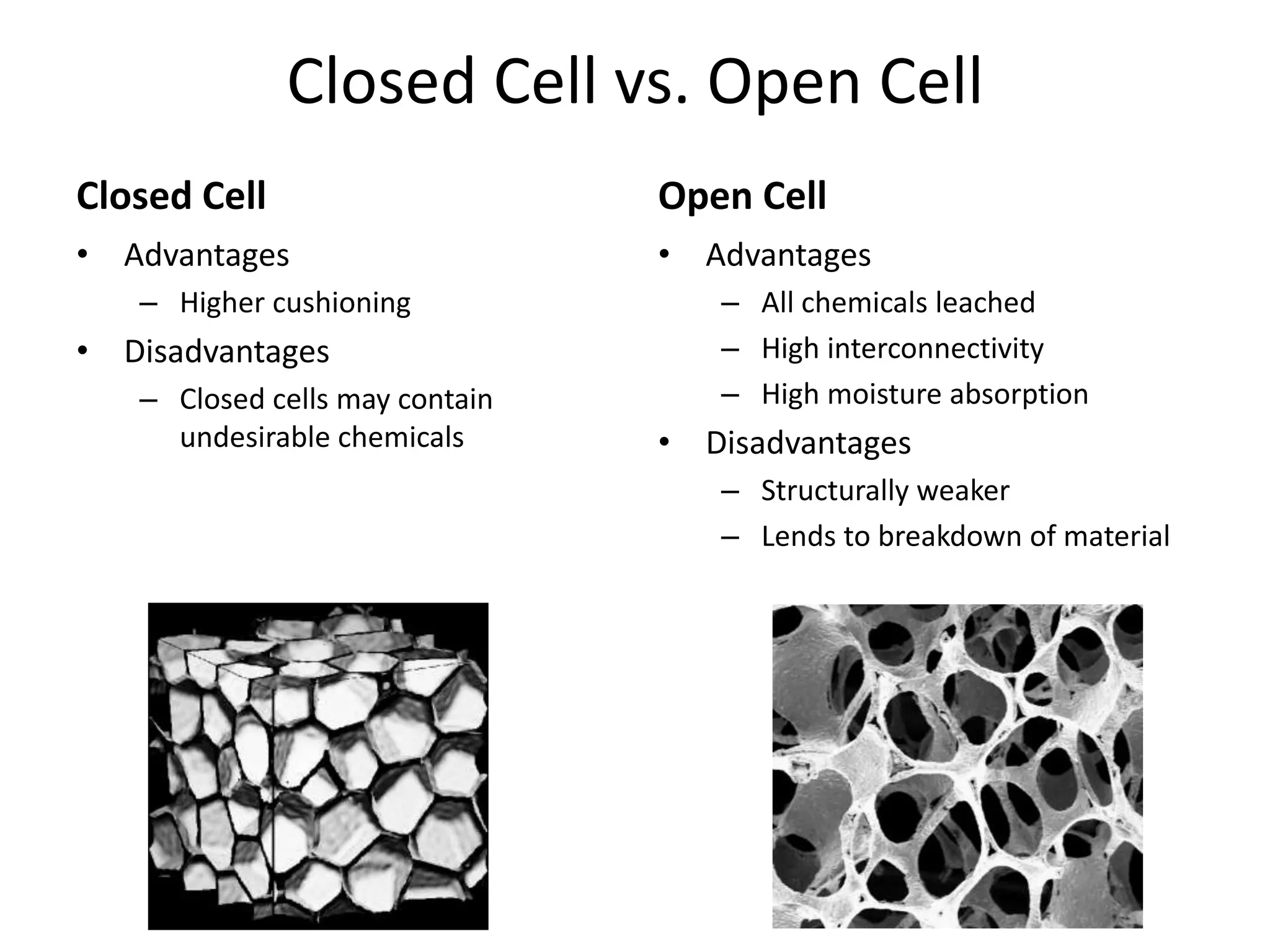
Closed Cell vs. Open CellClosed CellOpen CellAdvantagesHigher cushioningDisadvantagesClosed cells may contain undesirable chemicalsAdvantagesAll chemicals leachedHigh interconnectivityHigh moisture absorptionDisadvantagesStructurally weakerLends to breakdown of material
Translucent vs. TransparentTranslucentAdvantagesProtects object from light damageDisadvantagesvisibilityTransparentAdvantagesDoes not obscure object while in storageDisadvantagesDoes not protect object from light damage
Types of Materials for ConservationWrapsTyvekGlassineBubble wrapFoamsEthafoamVolaraNatural MaterialsClothPaperRigid MaterialsWood
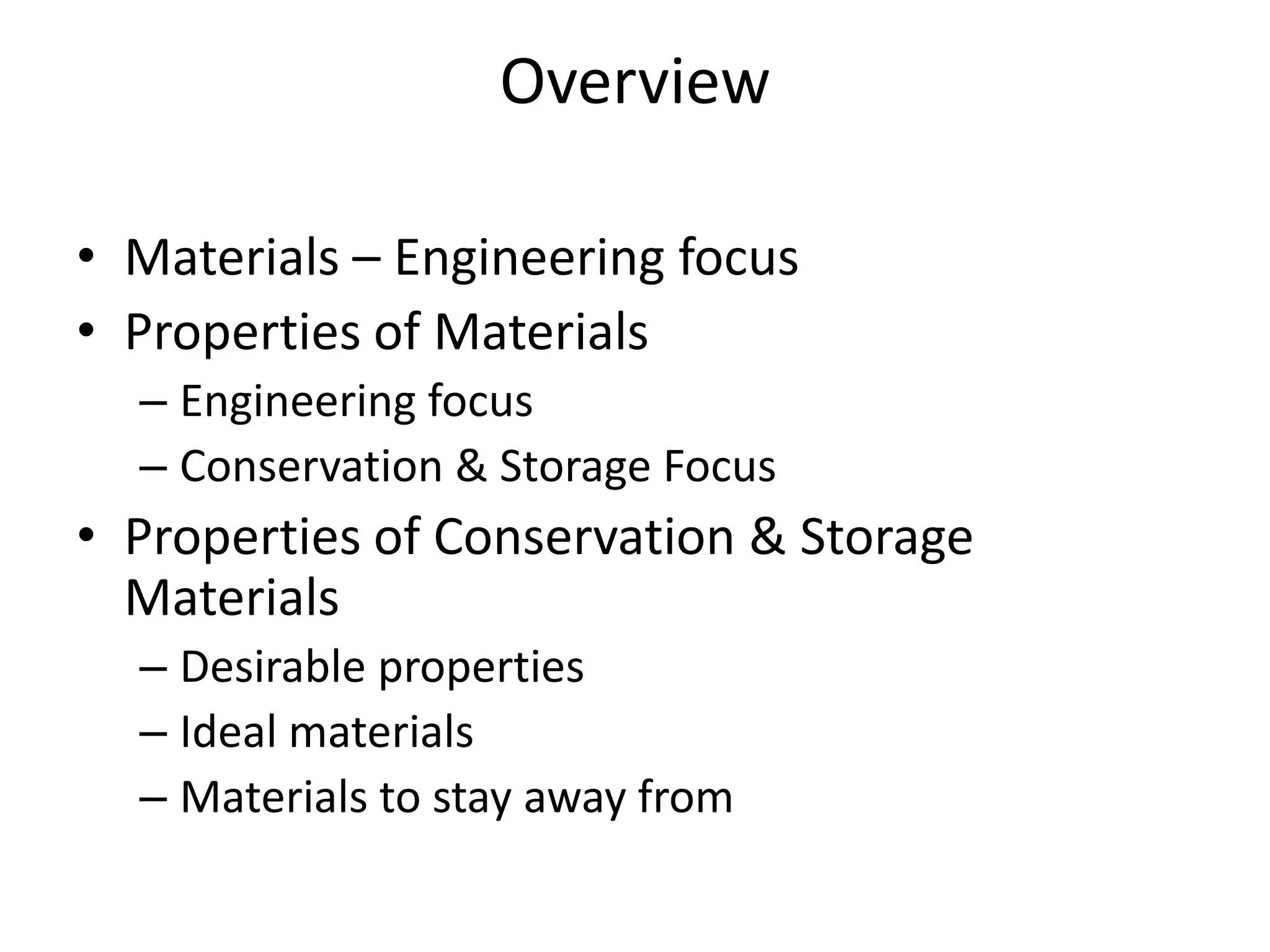
A Note on Desirable PolymersPolyethyleneMany molecular strengthsHigh molecular weight, low, ultra-highSeveral formsSheets, rolls, filmsVery desirable propertiesSmooth, inert, translucent, chemically resistant
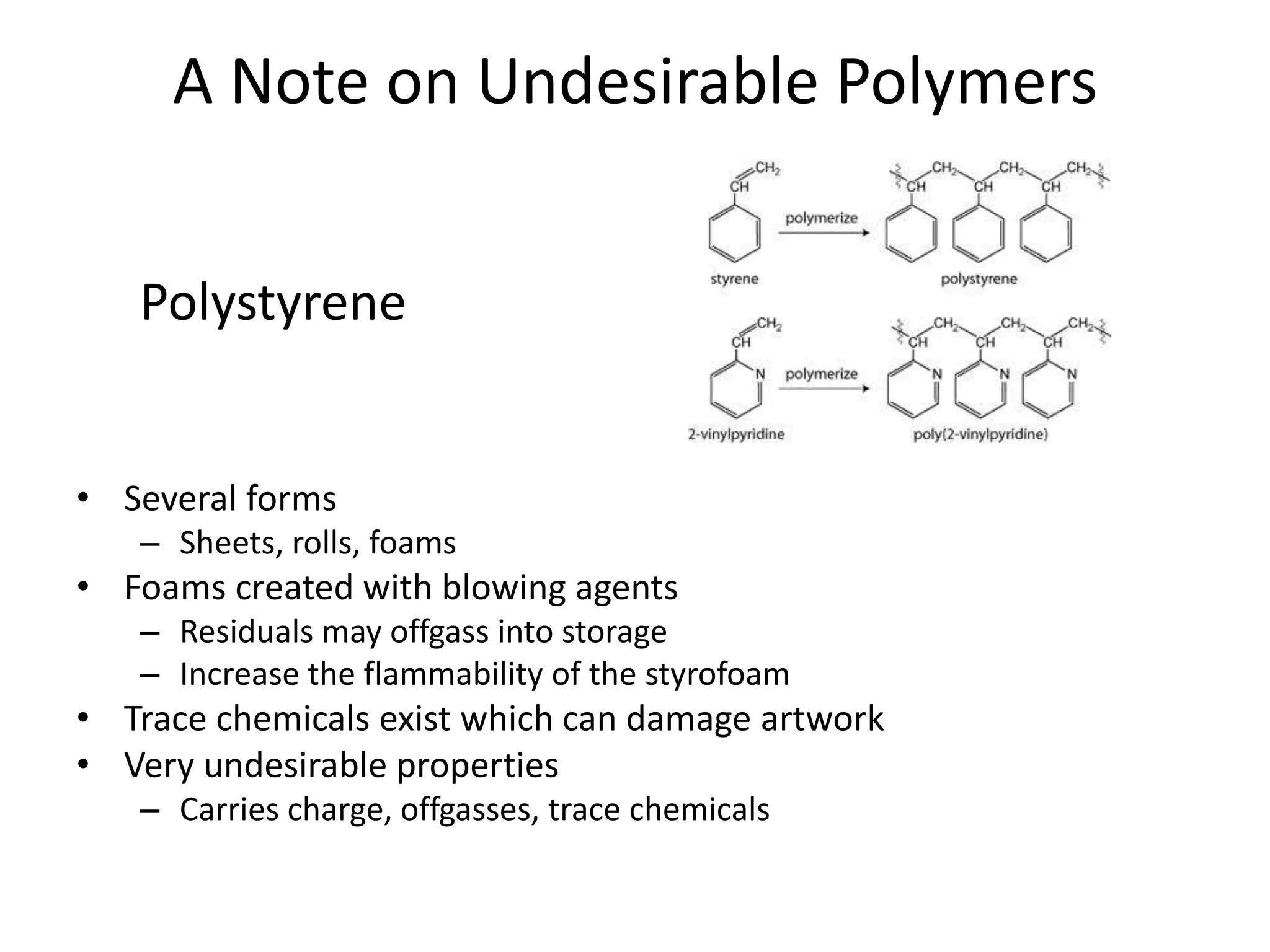
A Note on Undesirable PolymersPolystyreneSeveral formsSheets, rolls, foamsFoams created with blowing agentsResiduals may offgass into storageIncrease the flammability of the styrofoamTrace chemicals exist which can damage artworkVery undesirable propertiesCarries charge, offgasses, trace chemicals
Foams
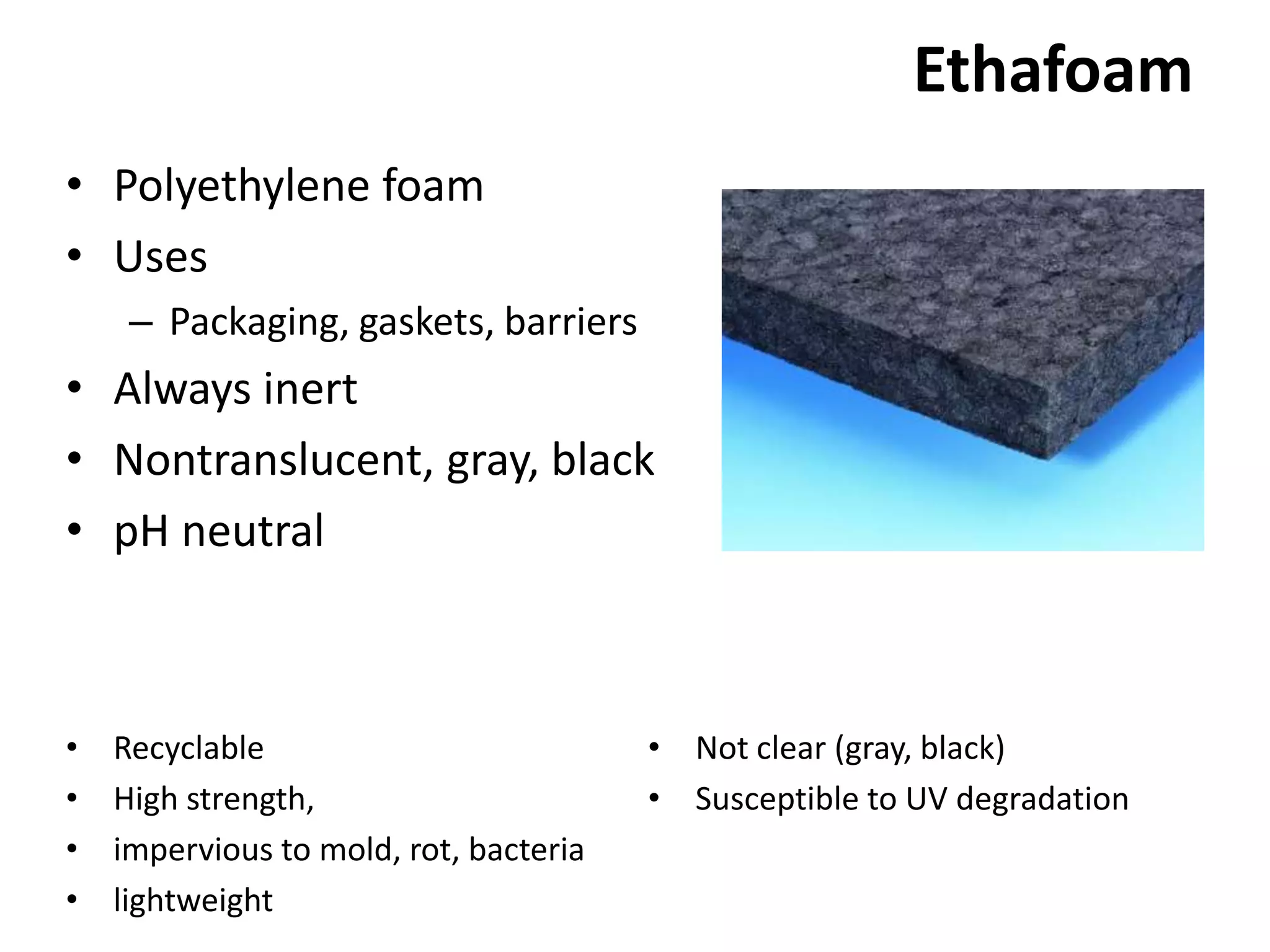
EthafoamPolyethylene foamUsesPackaging, gaskets, barriersAlways inertNontranslucent, gray, blackpH neutralNot clear (gray, black)Susceptible to UV degradationRecyclableHigh strength, impervious to mold, rot, bacterialightweight
VolaraClosed Cell PEUsesLining for display casesVarying densitiesNontranslucent, whiteWater retention can promote organic growthRecyclableNonabrasive, chemical resistance,Water absorption qualitiesAdvantagesDisadvantages
Wraps
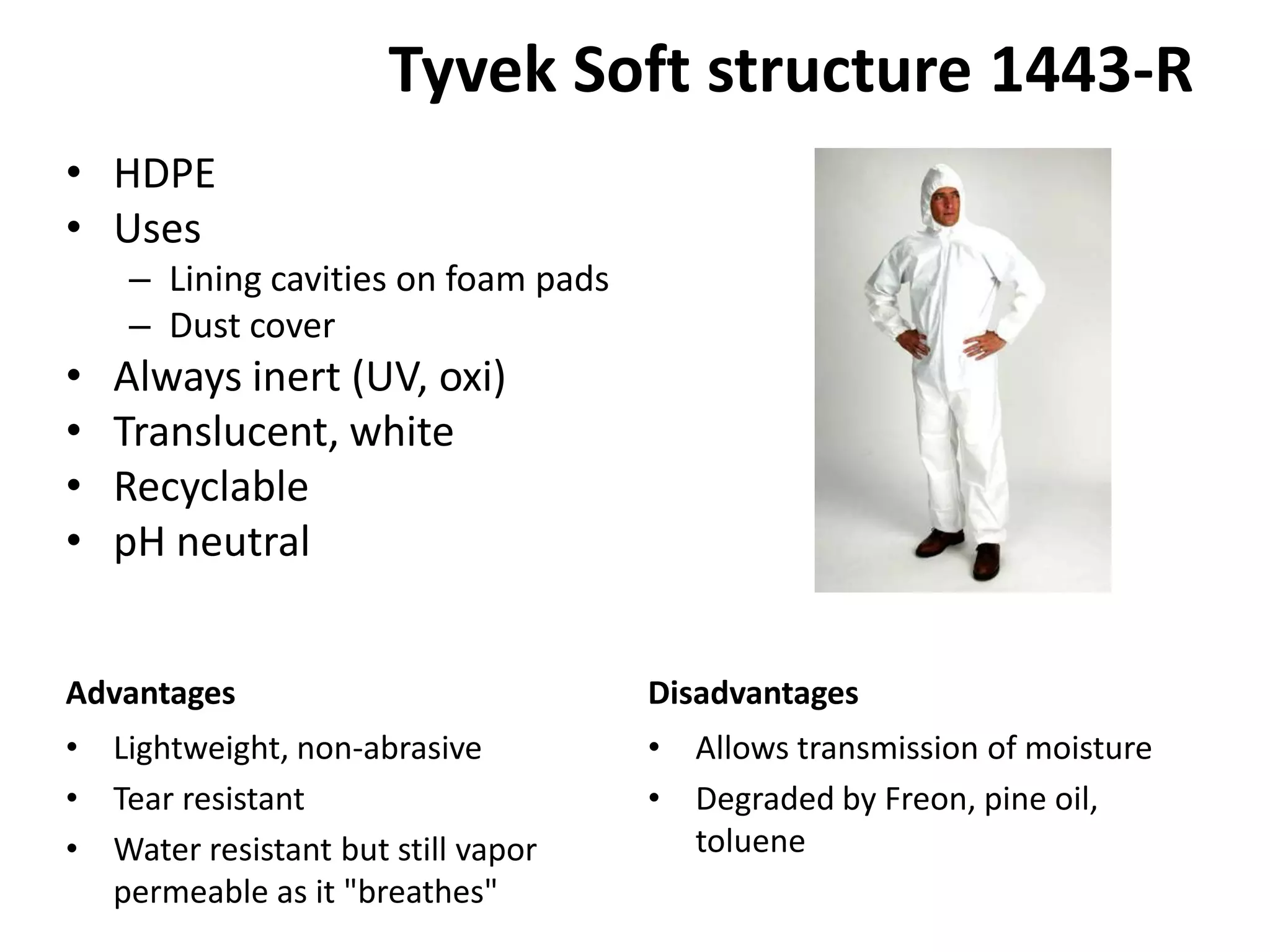
Tyvek Soft structure 1443-R HDPEUsesLining cavities on foam padsDust coverAlways inert (UV, oxi)Translucent, whiteRecyclable pH neutralAllows transmission of moistureDegraded by Freon, pine oil, tolueneLightweight, non-abrasiveTear resistantWater resistant but still vapor permeable as it "breathes"AdvantagesDisadvantages
Tyvek 1025 - Hard StructureHDPEUsesWrappingsupport for transport/storageAlways inert (UV, oxi)Translucent, whitepH neutralAllows transmission of moistureNot a good barrier to plywood off-gassingMold/mildew resistantLint-free, acid-freeAllows transmission of moistureRecyclableAdvantagesDisadvantages
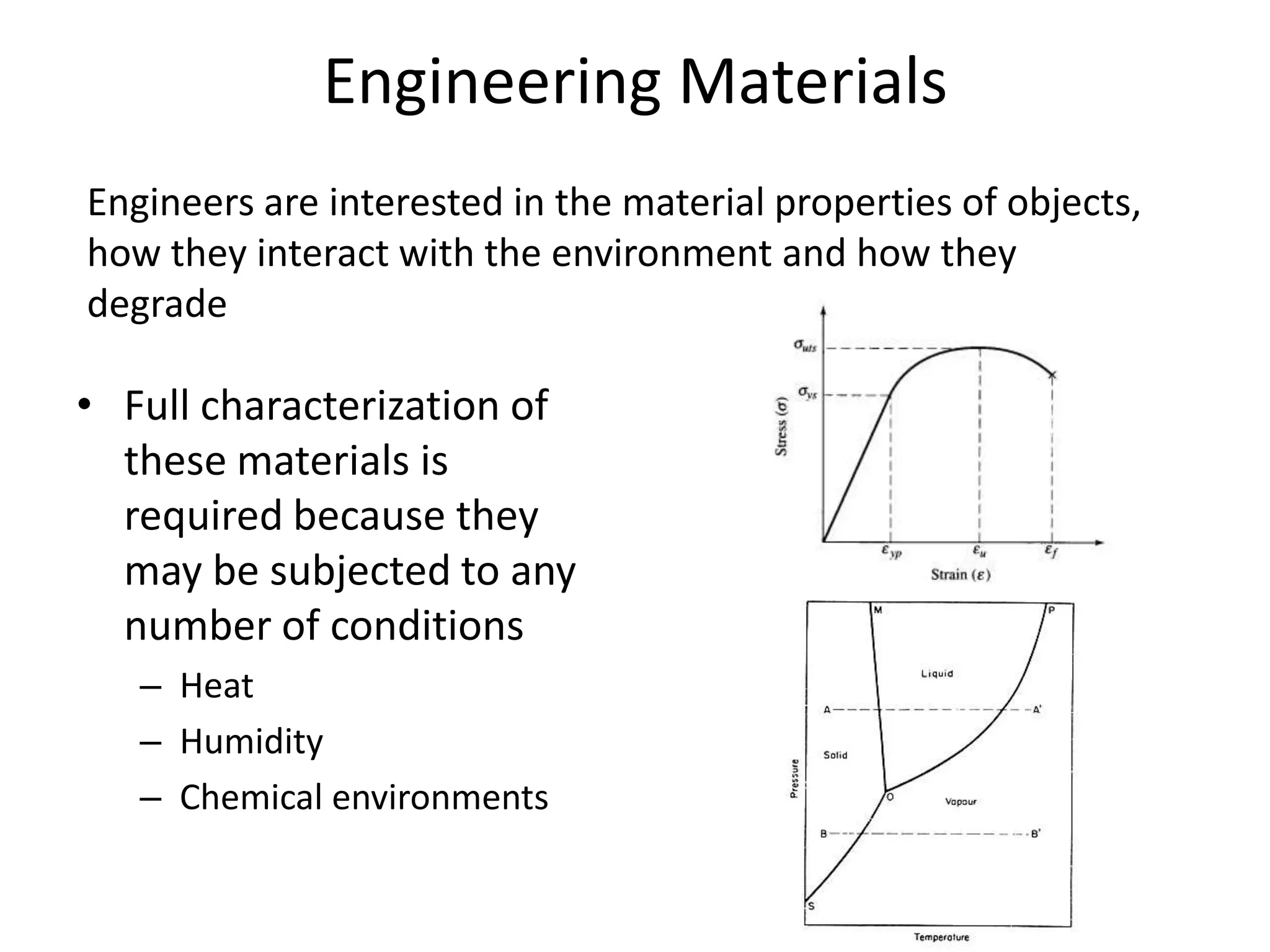
Bubble WrapPolyethylene, PVCUsesLarge bubble for sculptures and packing cratesAntistatic pink double bubble for framed worksCushioning, good for corners and general padding useTranslucentNot for use in direct contact with objectBubbles deflate over timeBubbles leave pattern on objectRecyclableflexible, can be double layered, inexpensivetear resistant
Organic
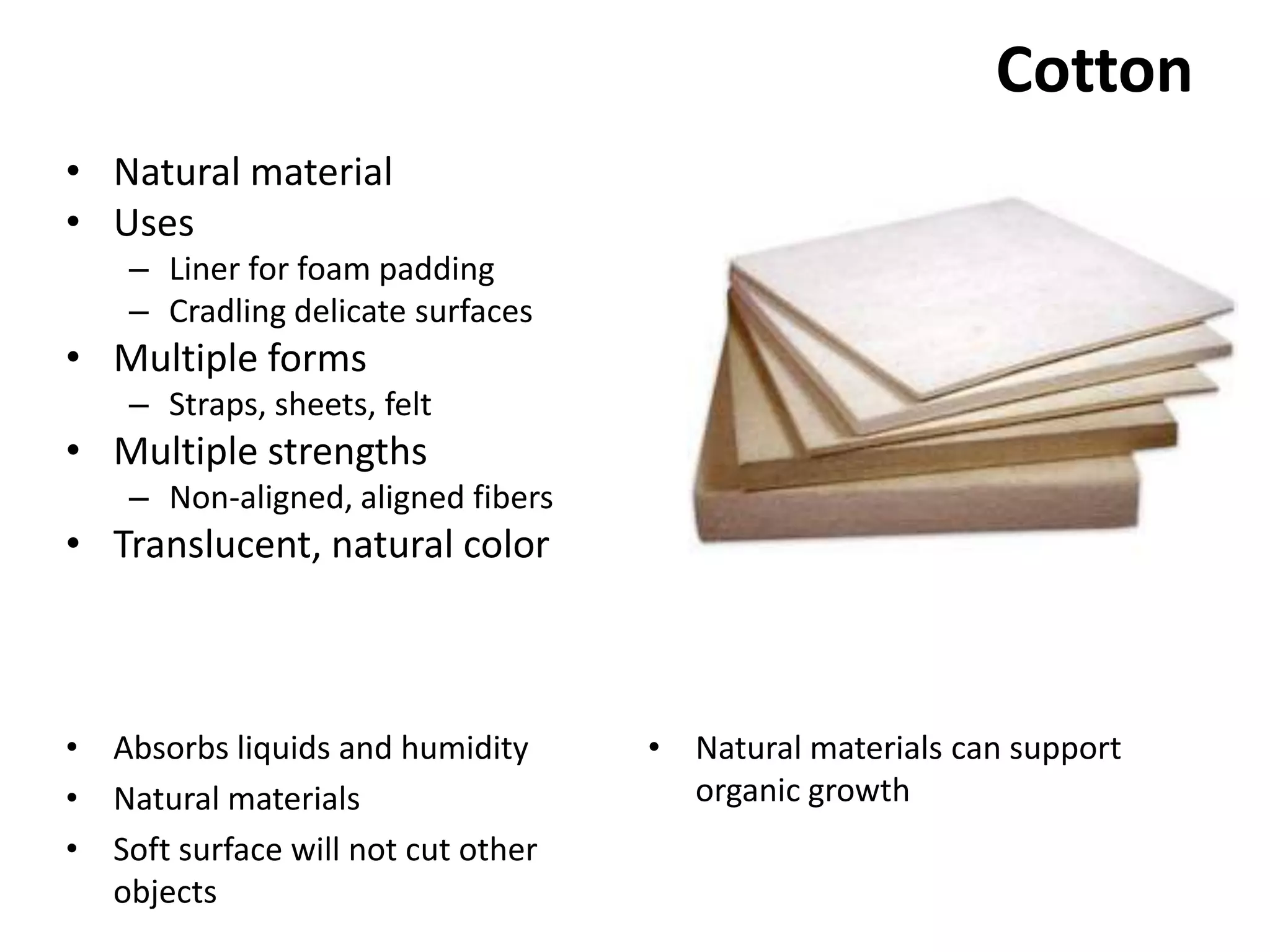
CottonNatural materialUsesLiner for foam paddingCradling delicate surfacesMultiple formsStraps, sheets, feltMultiple strengthsNon-aligned, aligned fibersTranslucent, natural colorNatural materials can support organic growthAbsorbs liquids and humidityNatural materialsSoft surface will not cut other objects
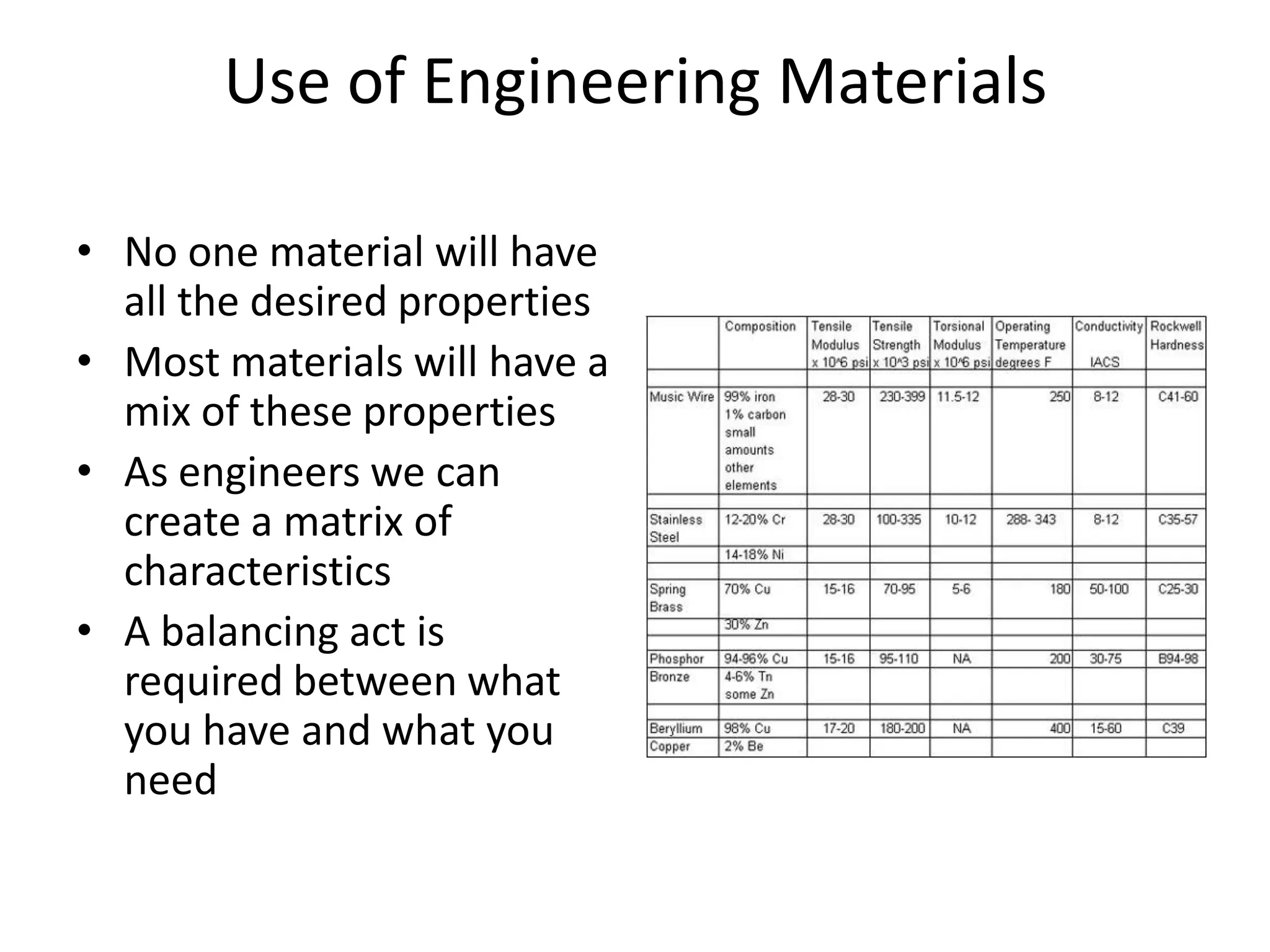
GlassinePaper productUsesinterleaving prints, photographs, drawingswrapping and packagingTranslucent, off-whitepH neutralCreases easilyUnstableNot always lignin freeTears easilyAcid freeRecyclableInexpensiveAdvantagesDisadvantages
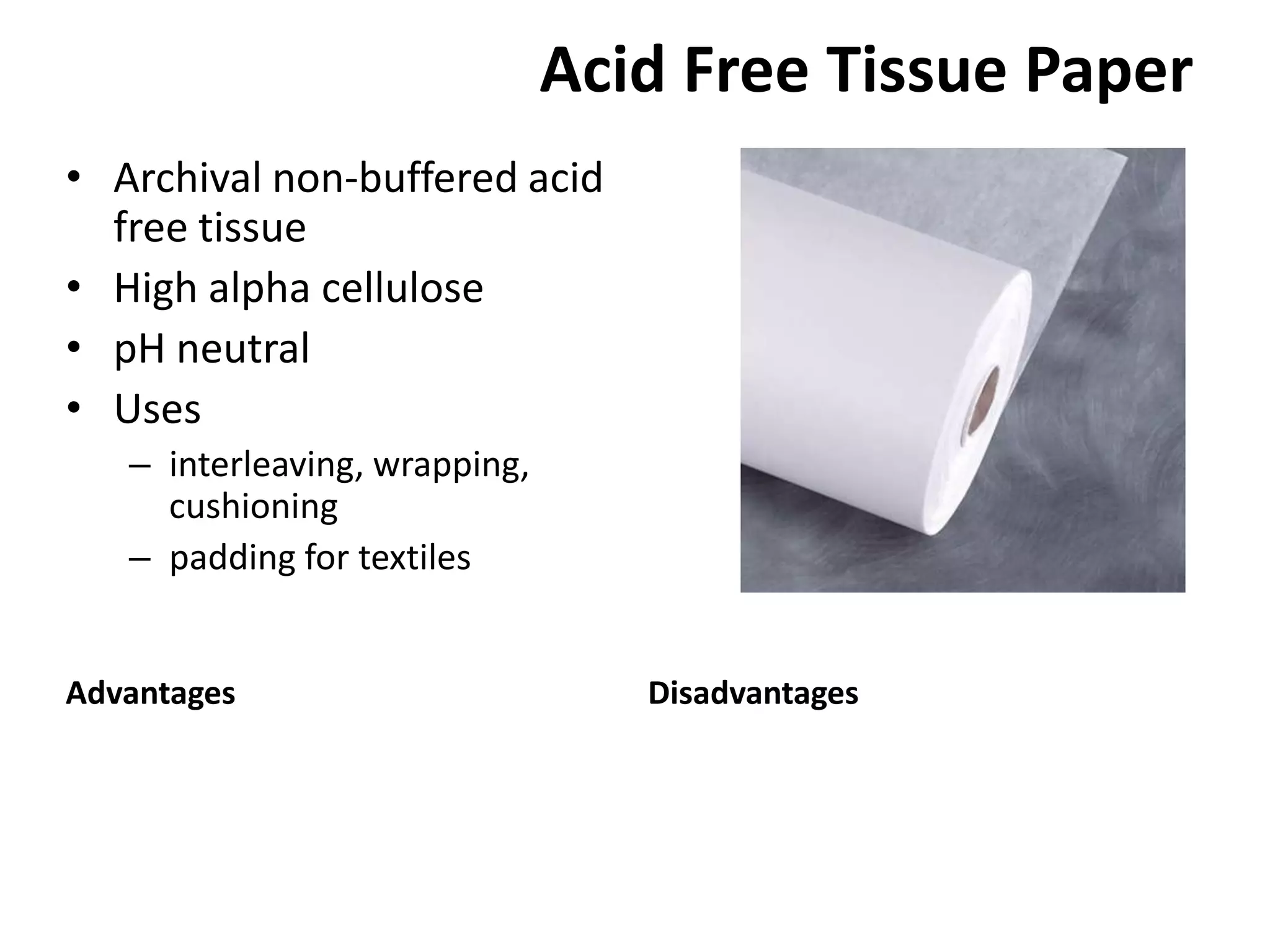
Acid Free Tissue PaperArchival non-buffered acid free tissueHigh alpha cellulosepH neutralUsesinterleaving, wrapping, cushioningpadding for textilesAdvantagesDisadvantages
New materials
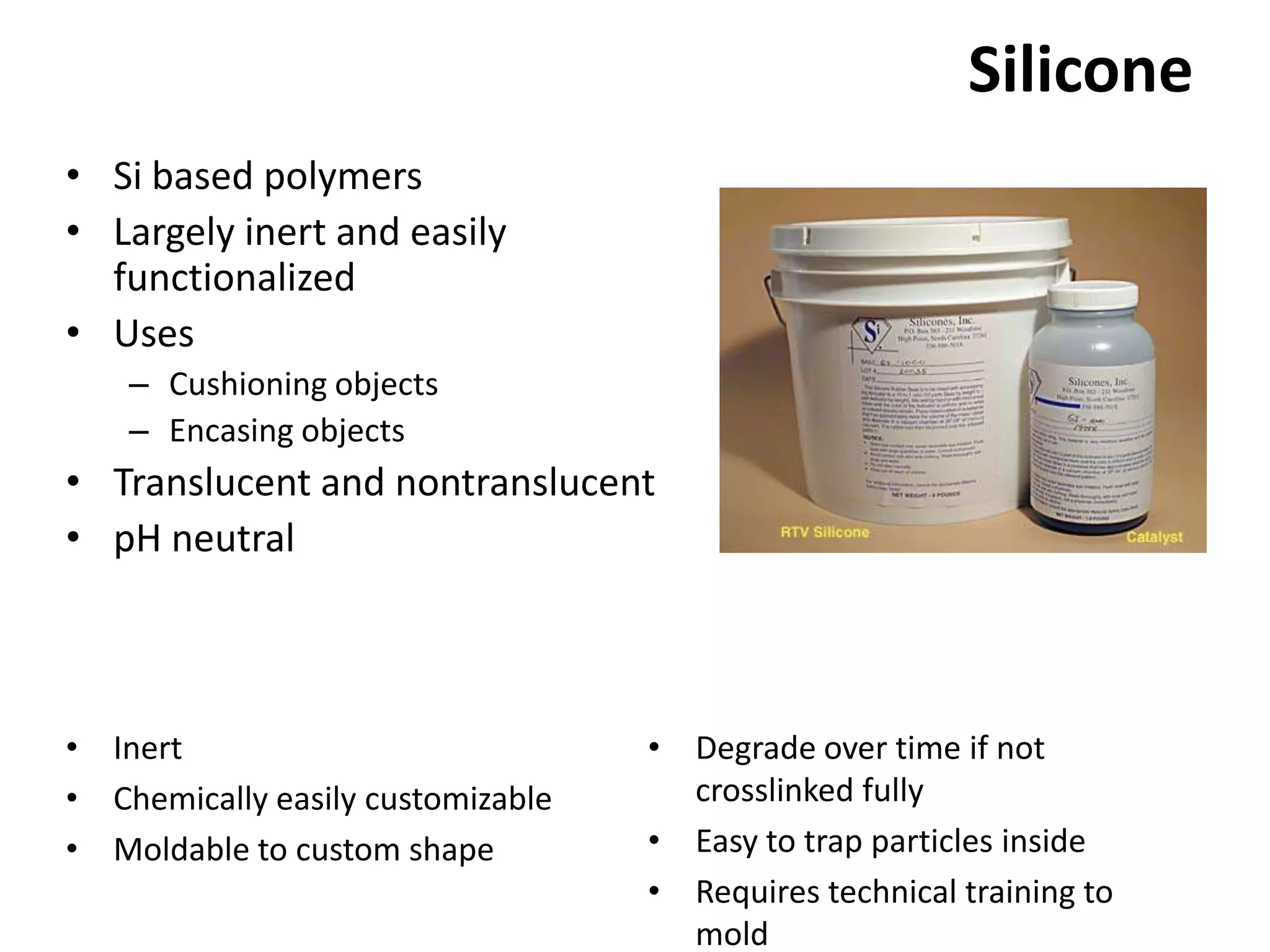
SiliconeSi based polymers Largely inert and easily functionalizedUsesCushioning objectsEncasing objectsTranslucent and nontranslucentpH neutralDegrade over time if not crosslinked fullyEasy to trap particles insideRequires technical training to moldInertChemically easily customizableMoldable to custom shape
Additional ResourcesPacking Art handling and Crating Information Network (PACIN, http://pacin.org)Dow Ethafoam (http://www.qualityfoam.com/ethafoam.asp)

Materials Of Storage

  • 1.
    Materials of StorageENGI/HUMA240Matthew Wettergreen, PhD
  • 2.
    OverviewMaterials – EngineeringfocusProperties of MaterialsEngineering focusConservation & Storage Focus Properties of Conservation & Storage MaterialsDesirable propertiesIdeal materialsMaterials to stay away from
  • 3.
    Engineering MaterialsEngineers areinterested in the material properties of objects, how they interact with the environment and how they degradeFull characterization of these materials is required because they may be subjected to any number of conditionsHeatHumidityChemical environments
  • 4.
    Use of EngineeringMaterialsNo one material will have all the desired propertiesMost materials will have a mix of these propertiesAs engineers we can create a matrix of characteristics A balancing act is required between what you have and what you need
  • 5.
    Properties of Materials- EngineeringWhen we are researching materials to use for a design project, what are some of the properties that we wish to look at?StructureCharacterizationProcessing possibilitiesPropertiesPerformance
  • 6.
    Standard Engineering MaterialsPropertiesElectrical propertiesChargeChemical propertiespHPhysical or architectural propertiesOpen celled vs. close celledTransparencyMechanical propertiesStrength / StiffnessDuctility
  • 7.
    Conservation Material PropertiesInthe world of conservation our materials need not be characterized as fullyConservators are not interested in: CrystallinityAtomic structureThermal expansionDensity (quantitative)Conservators are more interested in more general qualities:Physical propertiesMechanical propertiesAesthetic properties
  • 8.
    Materials for ConservationConservatorsare mainly concerned with the following questions:Will the material physically protect the object?Will the material affect the object chemically?Will the material shield the object?
  • 9.
    Desirable PropertiesLow weightDoesnot interact with surface of artworkShields against lightNon-flammableWater resistantDoes not degradeDoes not support organic growthCushions against shock/vibration
  • 10.
    The question ofpHStorage materials are in in direct contact with art objectspH neutral is requiredLow pH can discolor objectsLow pH can accelerate degradationLow pH can support organic growth
  • 11.
    Closed Cell vs.Open CellClosed CellOpen CellAdvantagesHigher cushioningDisadvantagesClosed cells may contain undesirable chemicalsAdvantagesAll chemicals leachedHigh interconnectivityHigh moisture absorptionDisadvantagesStructurally weakerLends to breakdown of material
  • 12.
    Translucent vs. TransparentTranslucentAdvantagesProtectsobject from light damageDisadvantagesvisibilityTransparentAdvantagesDoes not obscure object while in storageDisadvantagesDoes not protect object from light damage
  • 13.
    Types of Materialsfor ConservationWrapsTyvekGlassineBubble wrapFoamsEthafoamVolaraNatural MaterialsClothPaperRigid MaterialsWood
  • 14.
    A Note onDesirable PolymersPolyethyleneMany molecular strengthsHigh molecular weight, low, ultra-highSeveral formsSheets, rolls, filmsVery desirable propertiesSmooth, inert, translucent, chemically resistant
  • 15.
    A Note onUndesirable PolymersPolystyreneSeveral formsSheets, rolls, foamsFoams created with blowing agentsResiduals may offgass into storageIncrease the flammability of the styrofoamTrace chemicals exist which can damage artworkVery undesirable propertiesCarries charge, offgasses, trace chemicals
  • 16.
  • 17.
    EthafoamPolyethylene foamUsesPackaging, gaskets,barriersAlways inertNontranslucent, gray, blackpH neutralNot clear (gray, black)Susceptible to UV degradationRecyclableHigh strength, impervious to mold, rot, bacterialightweight
  • 18.
    VolaraClosed Cell PEUsesLiningfor display casesVarying densitiesNontranslucent, whiteWater retention can promote organic growthRecyclableNonabrasive, chemical resistance,Water absorption qualitiesAdvantagesDisadvantages
  • 19.
  • 20.
    Tyvek Soft structure1443-R HDPEUsesLining cavities on foam padsDust coverAlways inert (UV, oxi)Translucent, whiteRecyclable pH neutralAllows transmission of moistureDegraded by Freon, pine oil, tolueneLightweight, non-abrasiveTear resistantWater resistant but still vapor permeable as it "breathes"AdvantagesDisadvantages
  • 21.
    Tyvek 1025 -Hard StructureHDPEUsesWrappingsupport for transport/storageAlways inert (UV, oxi)Translucent, whitepH neutralAllows transmission of moistureNot a good barrier to plywood off-gassingMold/mildew resistantLint-free, acid-freeAllows transmission of moistureRecyclableAdvantagesDisadvantages
  • 22.
    Bubble WrapPolyethylene, PVCUsesLargebubble for sculptures and packing cratesAntistatic pink double bubble for framed worksCushioning, good for corners and general padding useTranslucentNot for use in direct contact with objectBubbles deflate over timeBubbles leave pattern on objectRecyclableflexible, can be double layered, inexpensivetear resistant
  • 23.
  • 24.
    CottonNatural materialUsesLiner forfoam paddingCradling delicate surfacesMultiple formsStraps, sheets, feltMultiple strengthsNon-aligned, aligned fibersTranslucent, natural colorNatural materials can support organic growthAbsorbs liquids and humidityNatural materialsSoft surface will not cut other objects
  • 25.
    GlassinePaper productUsesinterleaving prints,photographs, drawingswrapping and packagingTranslucent, off-whitepH neutralCreases easilyUnstableNot always lignin freeTears easilyAcid freeRecyclableInexpensiveAdvantagesDisadvantages
  • 26.
    Acid Free TissuePaperArchival non-buffered acid free tissueHigh alpha cellulosepH neutralUsesinterleaving, wrapping, cushioningpadding for textilesAdvantagesDisadvantages
  • 27.
  • 28.
    SiliconeSi based polymersLargely inert and easily functionalizedUsesCushioning objectsEncasing objectsTranslucent and nontranslucentpH neutralDegrade over time if not crosslinked fullyEasy to trap particles insideRequires technical training to moldInertChemically easily customizableMoldable to custom shape
  • 29.
    Additional ResourcesPacking Arthandling and Crating Information Network (PACIN, http://pacin.org)Dow Ethafoam (http://www.qualityfoam.com/ethafoam.asp)

Editor's Notes

  • #18 http://www.bluearan.co.uk/sales/adam_hall/images/019225.jpg
  • #19 http://www.pacin.org/materials/volara.jpg
  • #21 http://www.disposable-coveralls.com/images/products/coverallzipper-large.jpg
  • #22 http://www.fpm.iastate.edu/postal_parcel/Sidebar_links/USPS_ep15gp.jpg
  • #23 http://boxandbubble.co.uk/media/catalog/product/cache/1/image/5e06319eda06f020e43594a9c230972d/b/u/bubblewrap-large.jpg
  • #25 http://www.indiamart.com/prateekenterprises/pcat-gifs/products-small/felt-sheet_10787249.jpg
  • #26 http://nicholeheady.typepad.com/capture_the_moment/images/2007/11/11/111207_glassine_bags.jpg
  • #27 http://www.archivalsuppliers.com/images/Picture%20874.jpg