Fun Formatives to Accelerate Student LearningJaimieFoulk—Physics First InstructorMarsha Tyson—Oakland Jr. High School/PF InstructorAnn Neubauer—South Shelby High Schoolhttp://www.slideshare.net/mtyson
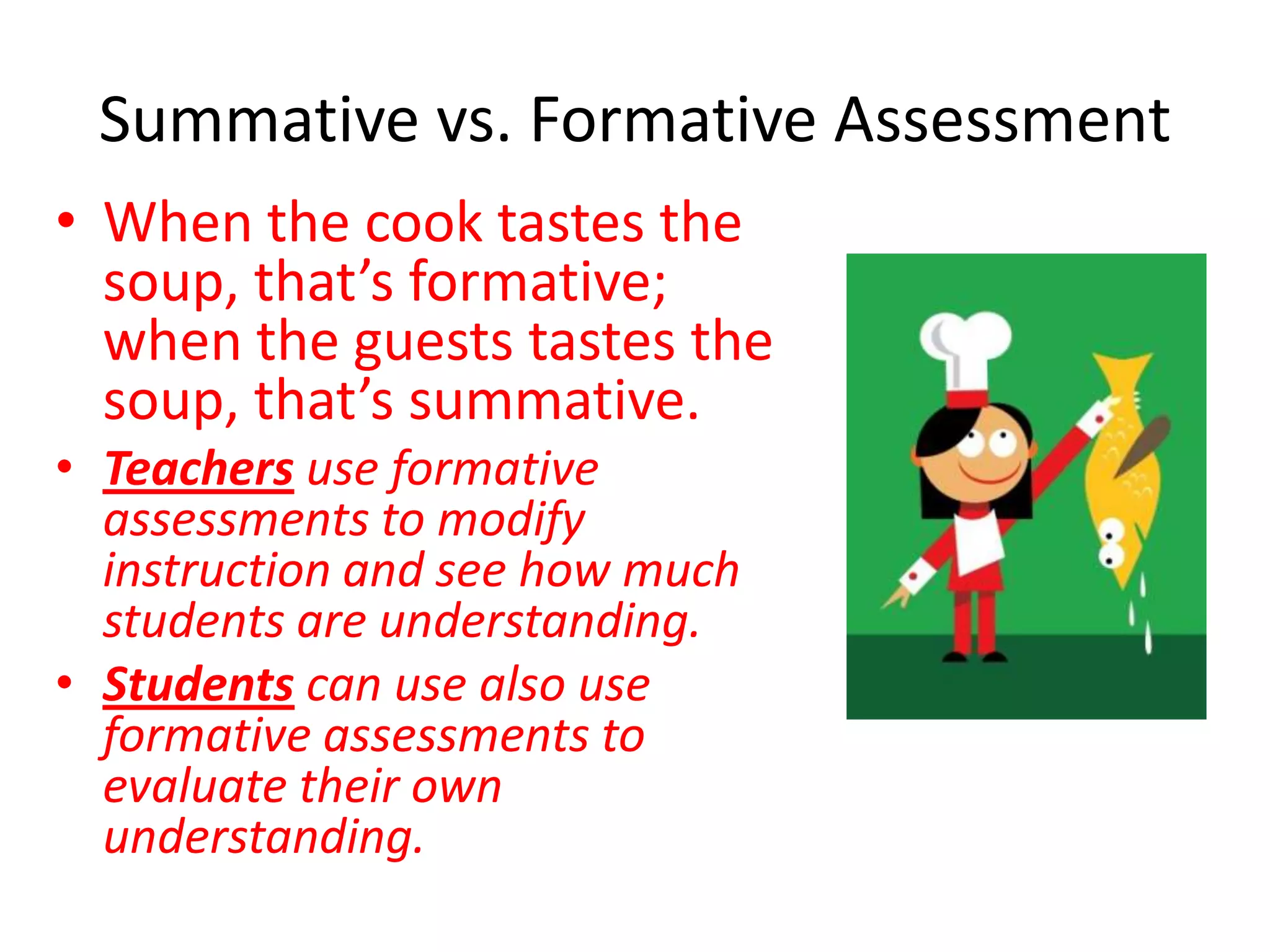
Summative vs. Formative AssessmentWhen the cook tastes the soup, that’s formative; when the guests tastes the soup, that’s summative.Teachers use formative assessments to modify instruction and see how much students are understanding.Students can use also use formative assessments to evaluate their own understanding.
Formative Assessment Strategy 1COLORED PAPER SORTPink slip--Write down some of the different types of Summative Assessments you have in your courseBlue slip--Write down some of the different types of Formative Assessments you have in your courseLet’s Sort and Share!How could you use this strategy to assess student understanding TOMORROW OR THE NEXT UNIT?
Formative Assessment Strategy 2FRAMING QUESTIONSWhat do you think?What do you think your students will say?How could you use this strategy to assess student understanding TOMORROW OR THE NEXT UNIT?Let’s Share!
Box-O-CarsLearning with Motion DiagramsPurpose:Describe the motion of several toys and match them with motion diagrams?Observations—Describe how each toy looks when it moves NOT why it moves.  Match a motion diagram card with a toy or make your own.  One car may have multiple motion diagram cards.WHAT IS A MOTION DIAGRAM?
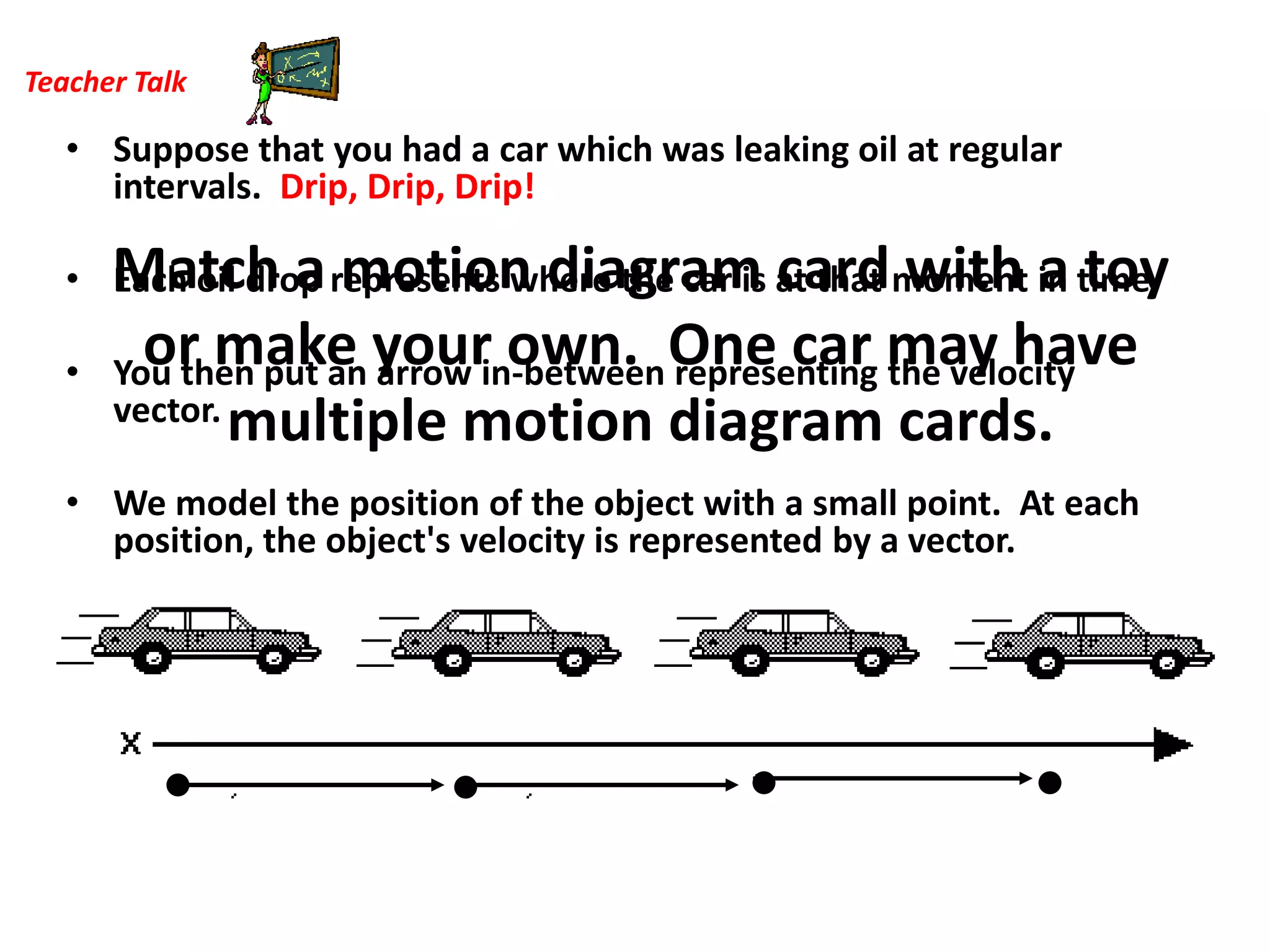
Teacher TalkSuppose that you had a car which was leaking oil at regular intervals.  Drip, Drip, Drip!Each oil drop represents where the car is at that moment in time.You then put an arrow in-between representing the velocity vector.We model the position of the object with a small point.  At each position, the object's velocity is represented by a vector.Match a motion diagram card with a toy or make your own.  One car may have multiple motion diagram cards.
Formative Assessment Strategy 34 CORNERSTake your car and motion diagram and go to your toy corner. Talk with the other people about which car they selected and why.Let’s Share!How could you use this strategy to assess student understanding TOMORROW OR THE NEXT UNIT?
Formative Assessment Strategy 4TASK CARDSUse the task cards sheets to fill the pictures and graphs out as we go.
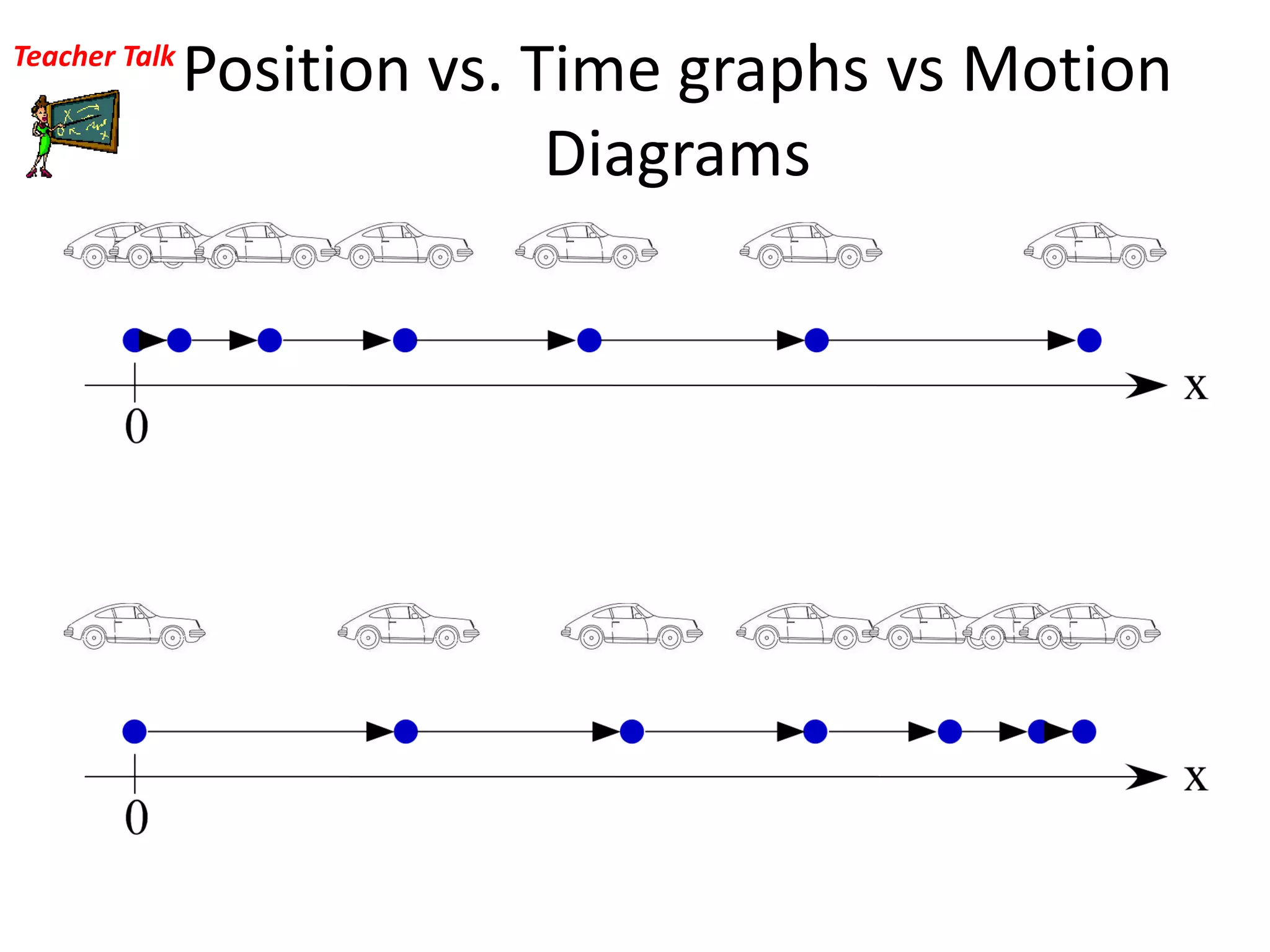
Position vs. Time graphs vs Motion DiagramsTeacher Talk
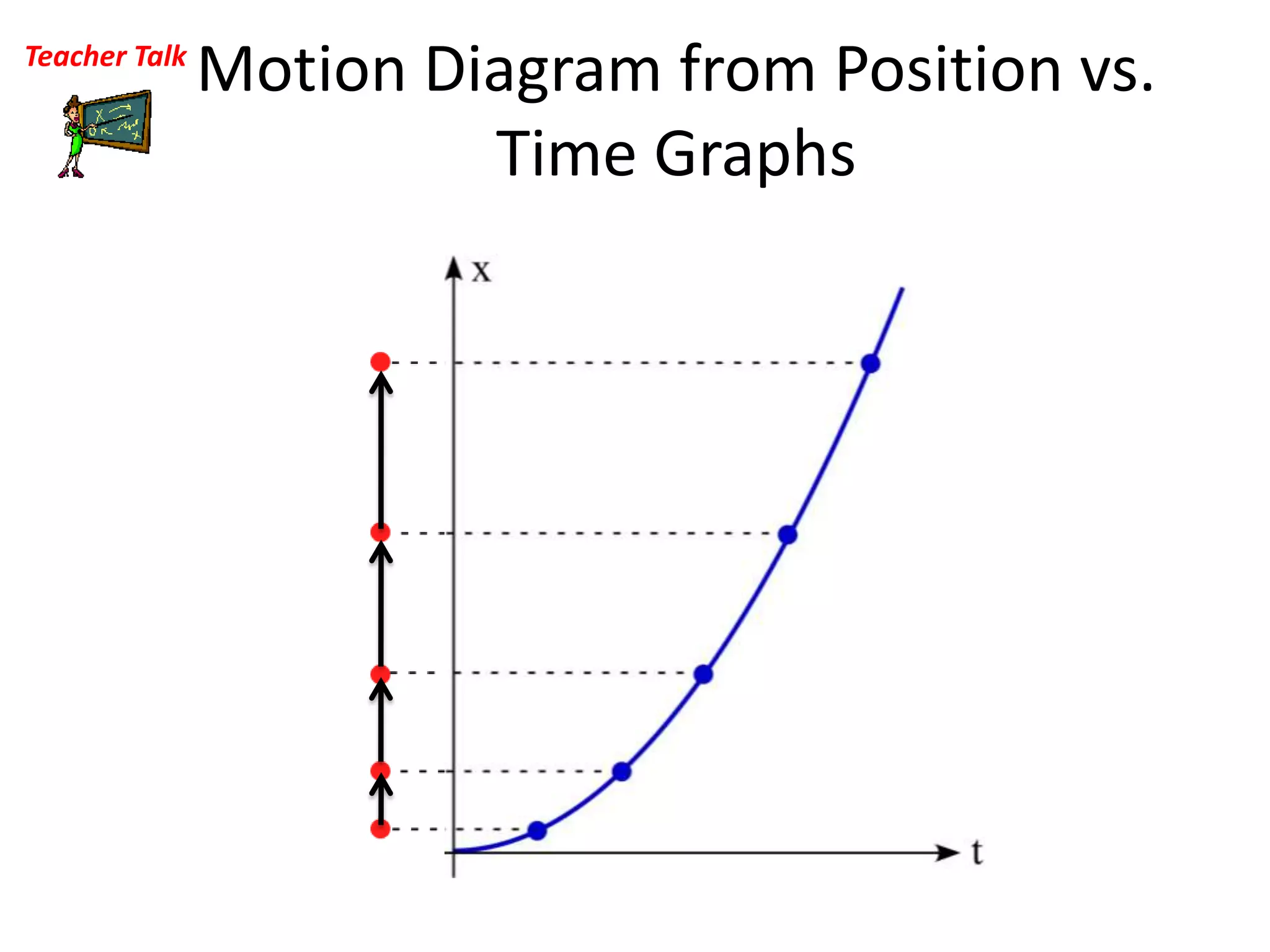
Motion Diagram from Position vs. Time GraphsTeacher Talk
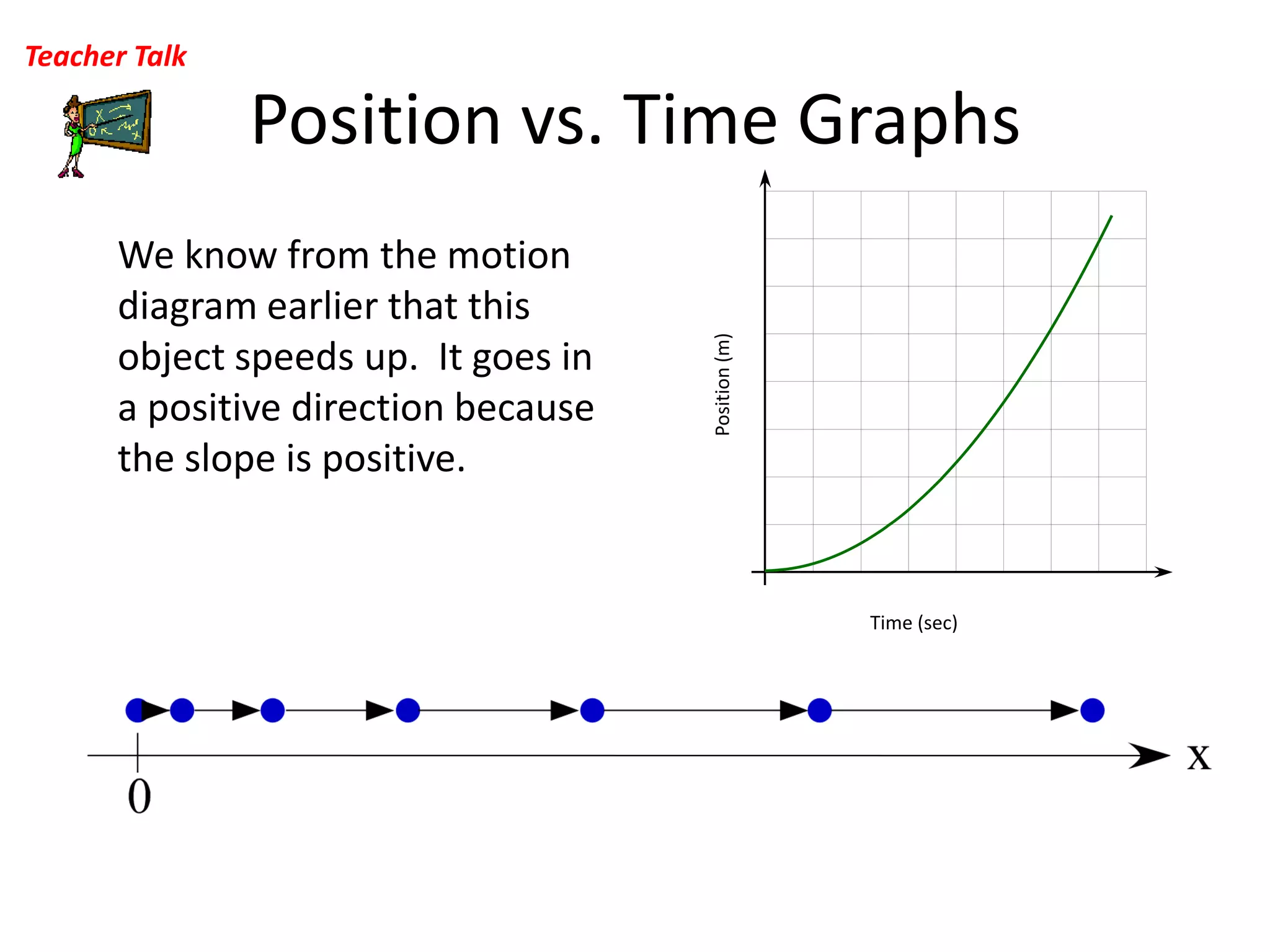
Position vs. Time Graphs Teacher TalkWe know from the motion diagram earlier that this object speeds up.  It goes in a positive direction because the slope is positive.Position (m)Time (sec)
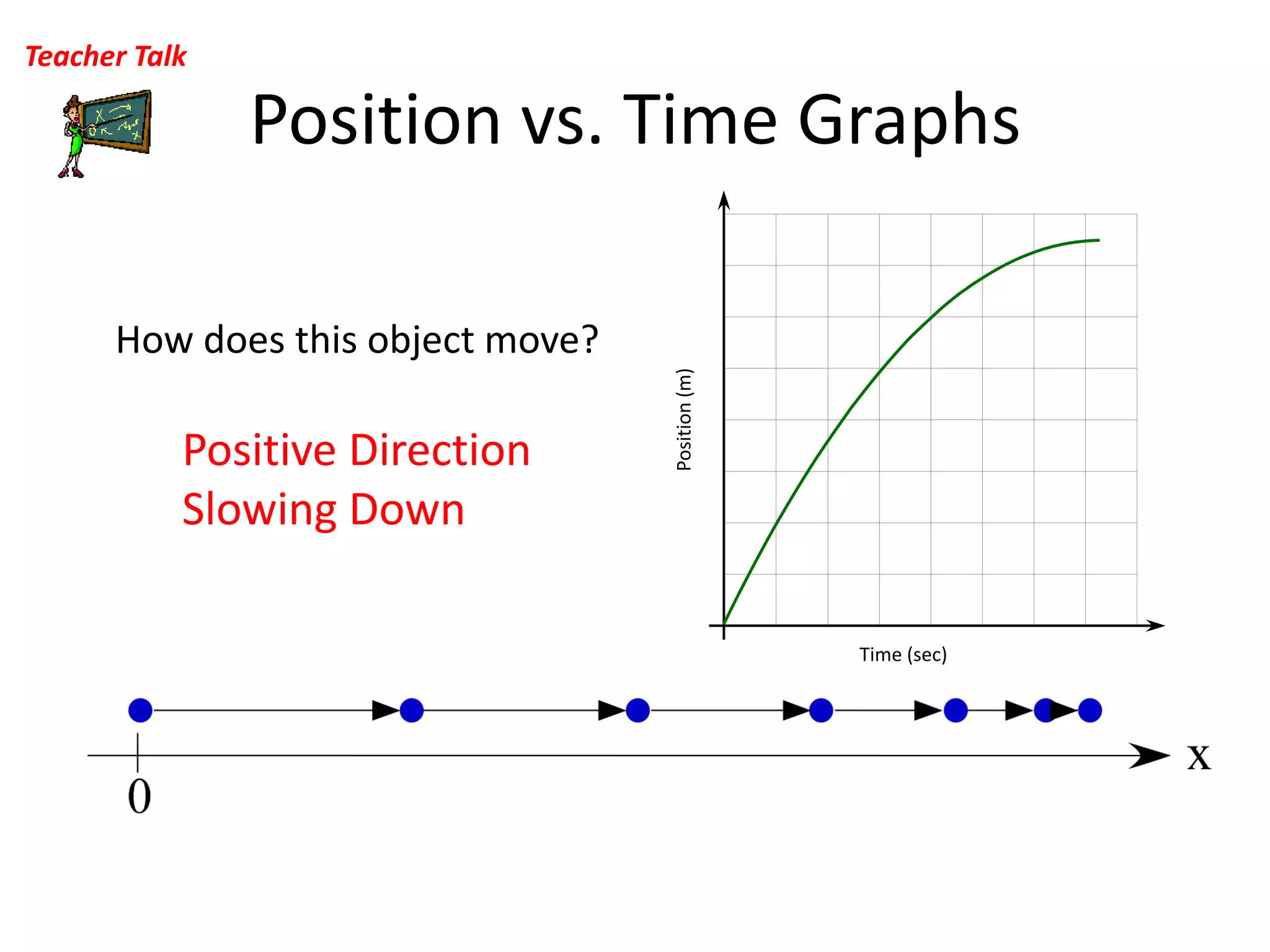
Position vs. Time Graphs Teacher TalkHow does this object move?Position (m)Positive DirectionSlowing DownTime (sec)
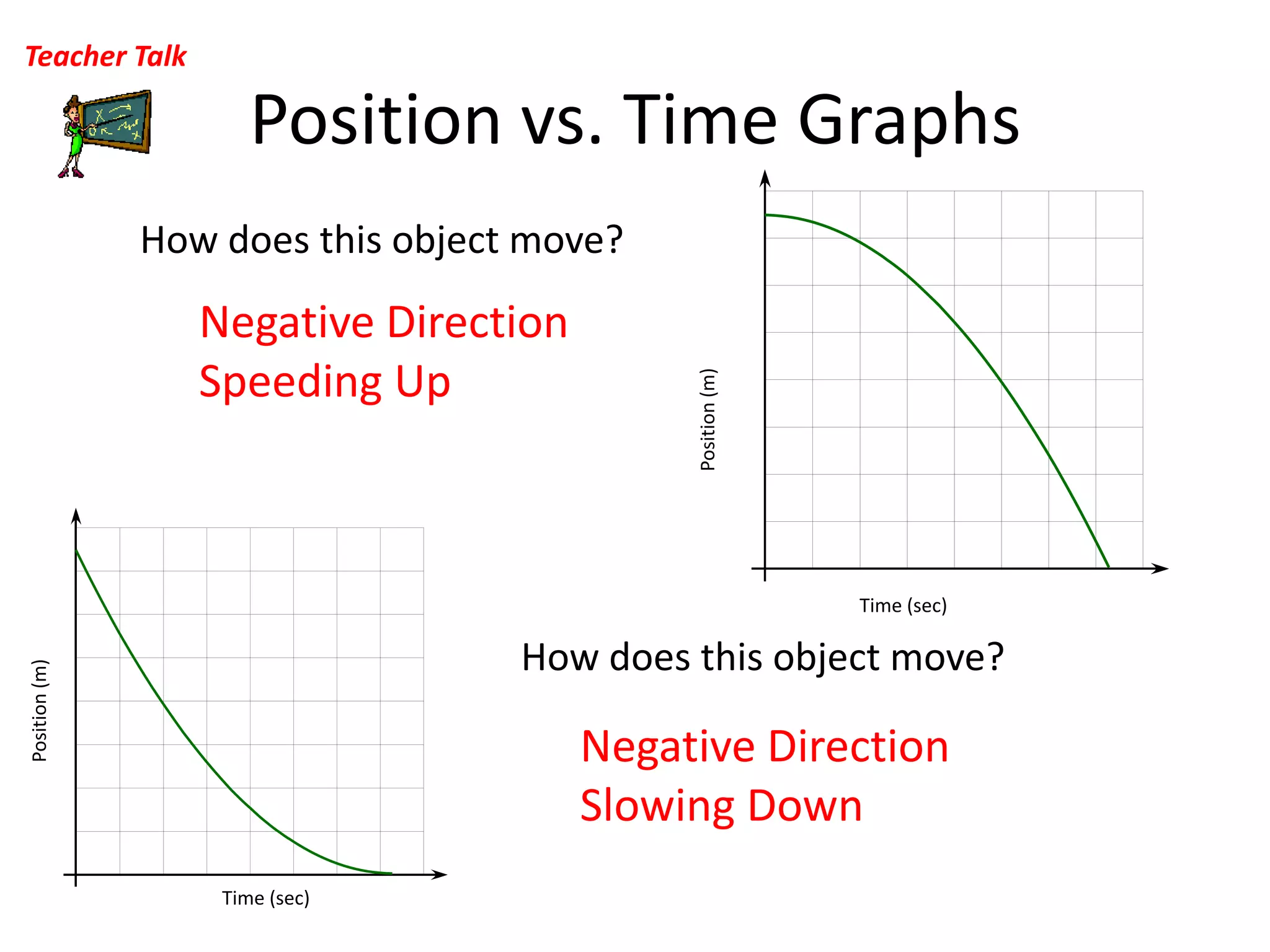
Position vs. Time Graphs Teacher TalkHow does this object move?Negative DirectionSpeeding UpPosition (m)Time (sec)How does this object move?Position (m)Negative DirectionSlowing DownTime (sec)
Formative Assessment Strategy 4TASK CARDSCut the cards out into pieces and place them face down.Repetition!!  Repetition!! Repetition!! How could you use this strategy to assess student understanding TOMORROW OR THE NEXT UNIT?
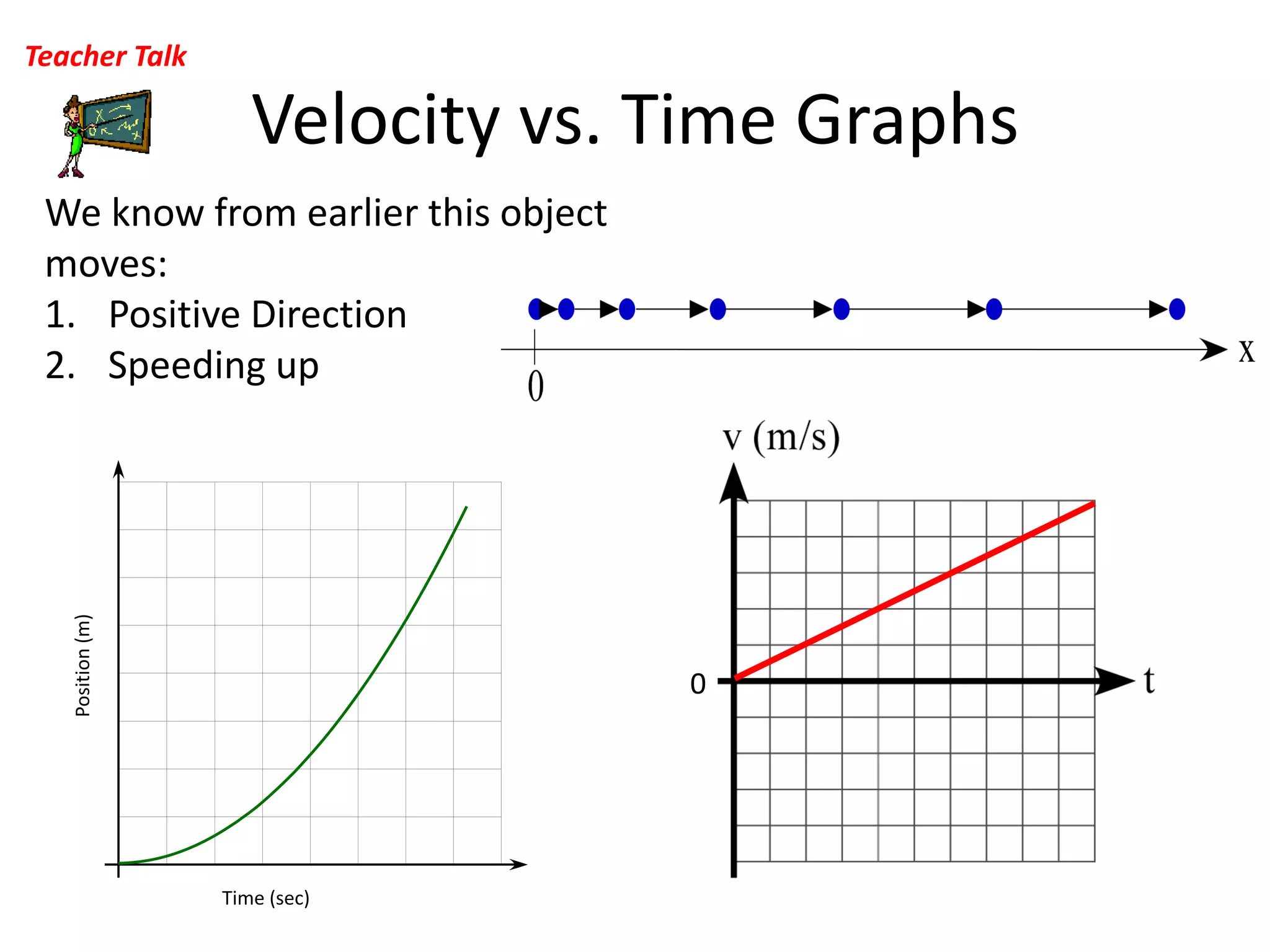
Velocity vs. Time Graphs Teacher TalkWe know from earlier this object moves:Positive DirectionSpeeding upPosition (m)0Time (sec)
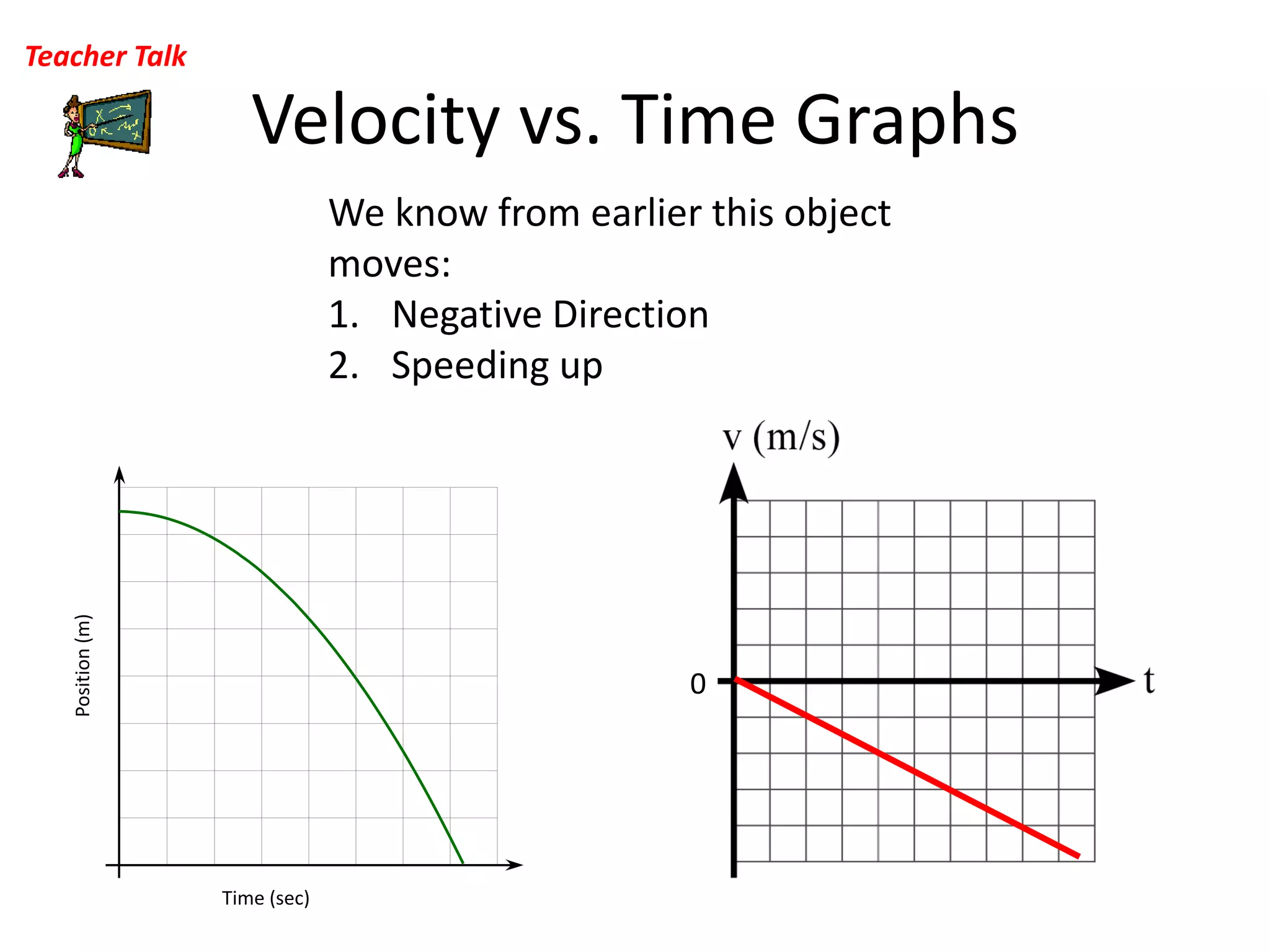
Velocity vs. Time Graphs Teacher TalkWe know from earlier this object moves:Negative DirectionSpeeding upPosition (m)0Time (sec)
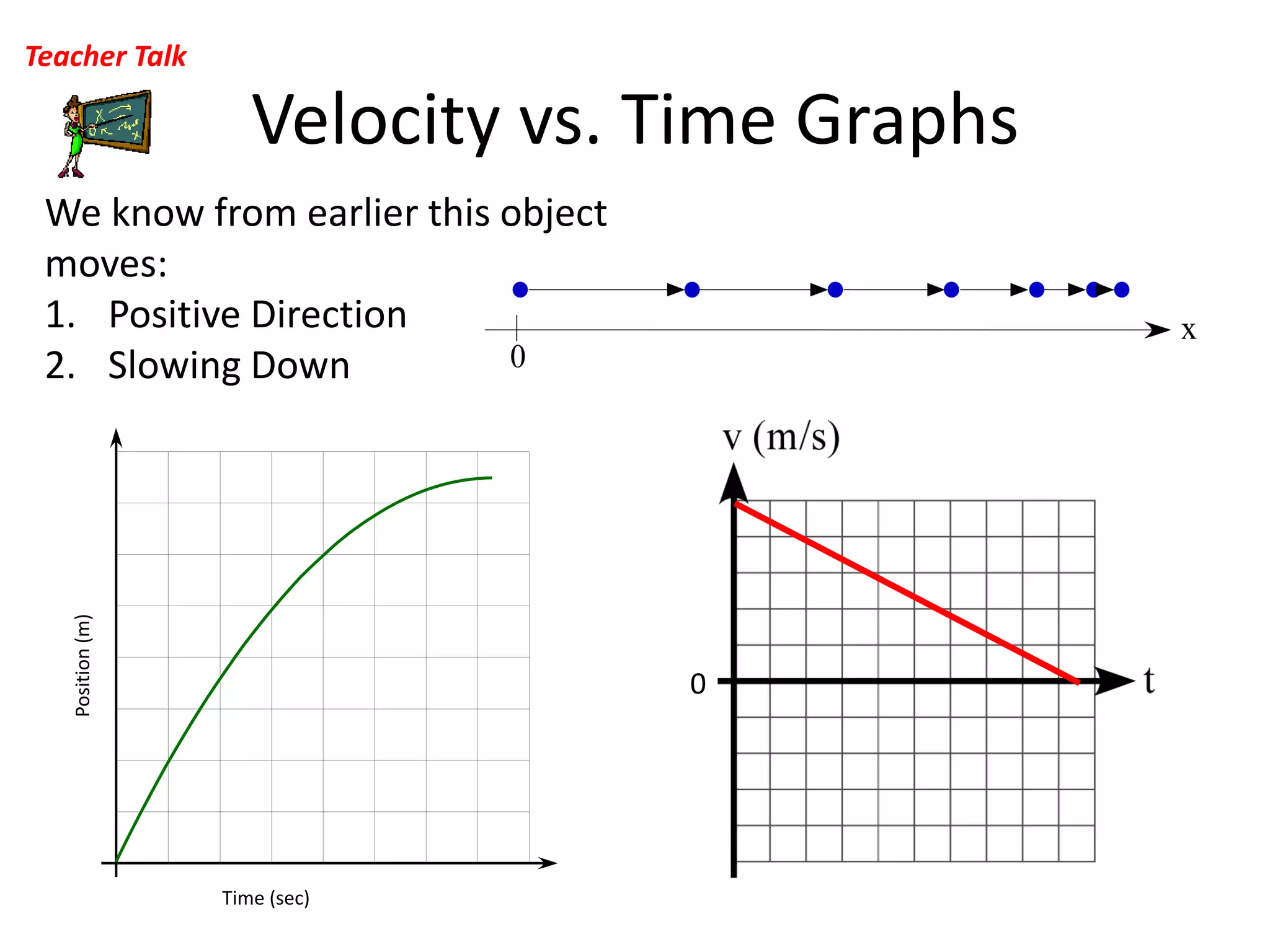
Velocity vs. Time Graphs Teacher TalkWe know from earlier this object moves:Positive DirectionSlowing DownPosition (m)0Time (sec)
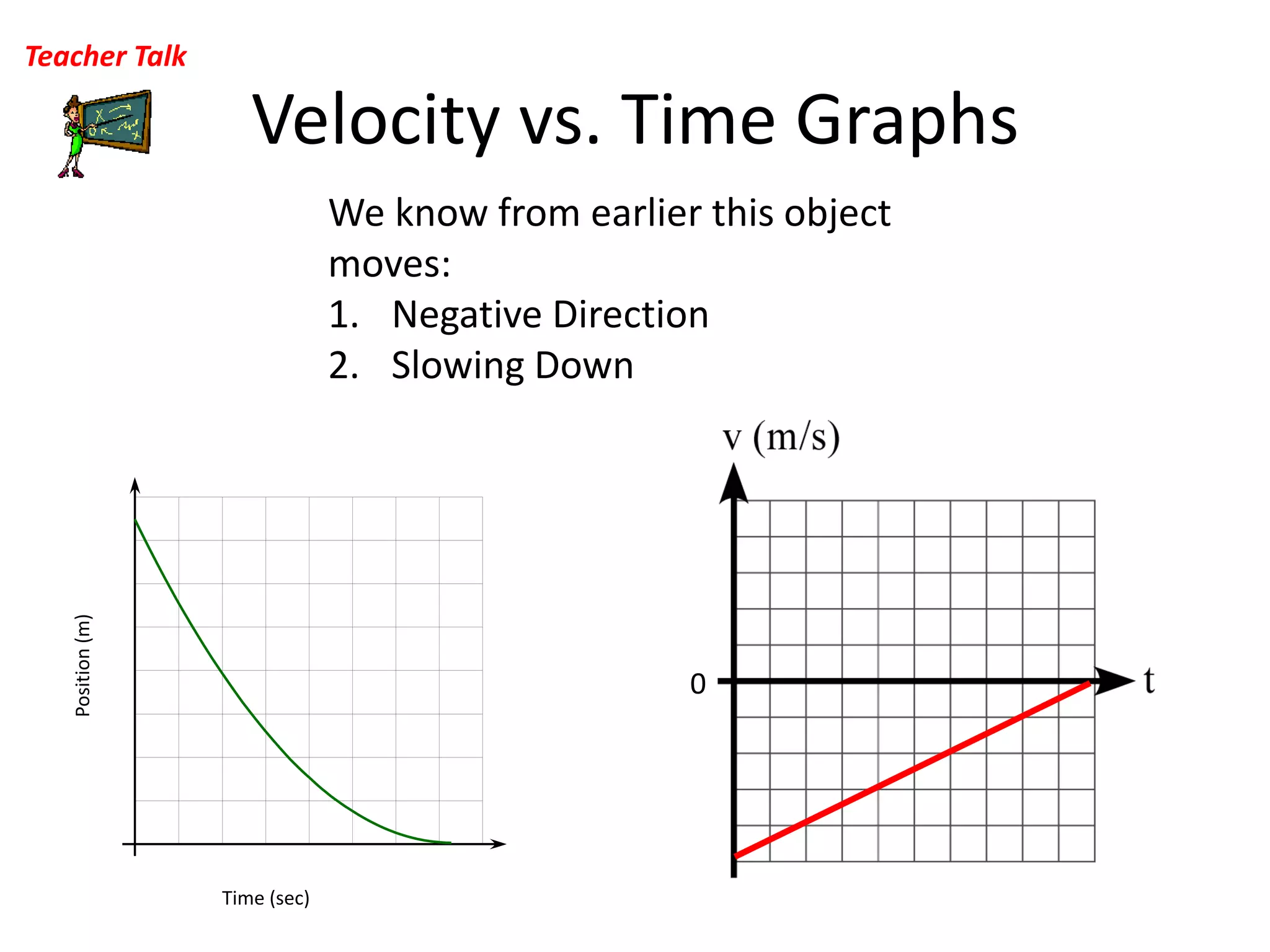
Velocity vs. Time Graphs Teacher TalkWe know from earlier this object moves:Negative DirectionSlowing DownPosition (m)0Time (sec)
Formative Assessment Strategy 5GAME CARD FOLDABLEFill out the game card and fold into 4 stripsHow could you use this strategy to assess student understanding TOMORROW OR THE NEXT UNIT?
Formative Assessment Strategy 6PAPER PASSTeams of 3 or 4Practice using pictures, graphs and motion diagrams for more complicated scenariosHint: Acceleration comes from the slope of the V vs. T graph (either + or -)How could you use this strategy to assess student understanding TOMORROW OR THE NEXT UNIT?
Formative Assessment Strategy 7VERSATILESMakes review a lot more interactiveDifferentiated learning is a lot easierGive students valuable information about how well they understand the content.How could you use this strategy to assess student understanding TOMORROW OR THE NEXT UNIT?
Formative Assessment Strategy 8PICK-A-HOLESMakes review a lot more interactiveDifferentiated learning is a lot easierGive students valuable information about how well they understand the content.How could you use this strategy to assess student understanding TOMORROW OR THE NEXT UNIT?
Formative Assessment Strategy 9WRAP AROUNDSMakes learning units/vocabulary more interactiveHow could you use this strategy to assess student understanding TOMORROW OR THE NEXT UNIT?
Formative Assessment Strategy 10EXPERIMENTAL DESIGN FLIPPABLESMakes learning experimental design fun and engaging.
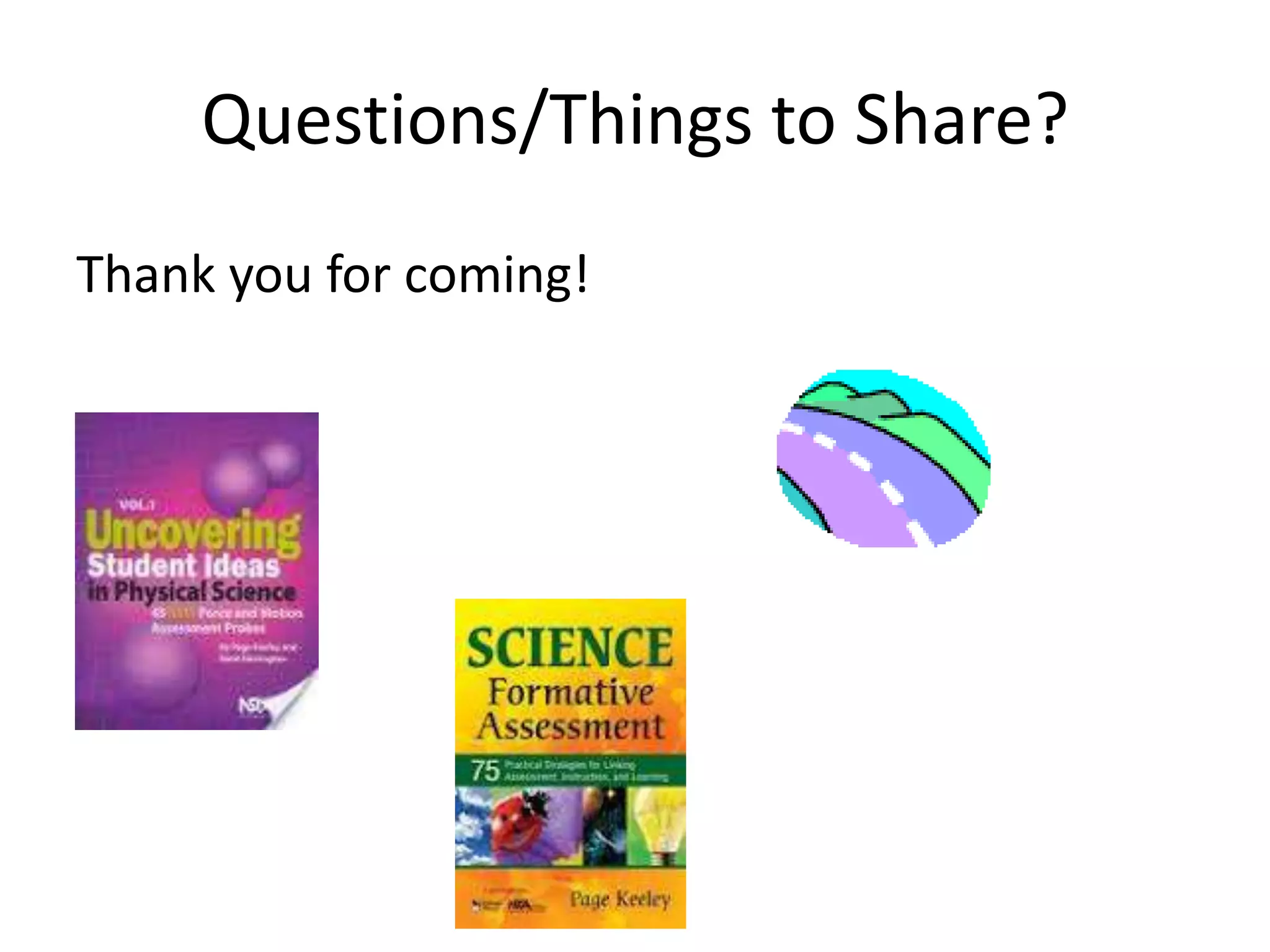
Questions/Things to Share?Thank you for coming!

STOM formative assessment presentation

  • 1.
    Fun Formatives toAccelerate Student LearningJaimieFoulk—Physics First InstructorMarsha Tyson—Oakland Jr. High School/PF InstructorAnn Neubauer—South Shelby High Schoolhttp://www.slideshare.net/mtyson
  • 2.
    Summative vs. FormativeAssessmentWhen the cook tastes the soup, that’s formative; when the guests tastes the soup, that’s summative.Teachers use formative assessments to modify instruction and see how much students are understanding.Students can use also use formative assessments to evaluate their own understanding.
  • 3.
    Formative Assessment Strategy1COLORED PAPER SORTPink slip--Write down some of the different types of Summative Assessments you have in your courseBlue slip--Write down some of the different types of Formative Assessments you have in your courseLet’s Sort and Share!How could you use this strategy to assess student understanding TOMORROW OR THE NEXT UNIT?
  • 4.
    Formative Assessment Strategy2FRAMING QUESTIONSWhat do you think?What do you think your students will say?How could you use this strategy to assess student understanding TOMORROW OR THE NEXT UNIT?Let’s Share!
  • 5.
    Box-O-CarsLearning with MotionDiagramsPurpose:Describe the motion of several toys and match them with motion diagrams?Observations—Describe how each toy looks when it moves NOT why it moves. Match a motion diagram card with a toy or make your own. One car may have multiple motion diagram cards.WHAT IS A MOTION DIAGRAM?
  • 6.
    Teacher TalkSuppose thatyou had a car which was leaking oil at regular intervals. Drip, Drip, Drip!Each oil drop represents where the car is at that moment in time.You then put an arrow in-between representing the velocity vector.We model the position of the object with a small point. At each position, the object's velocity is represented by a vector.Match a motion diagram card with a toy or make your own. One car may have multiple motion diagram cards.
  • 7.
    Formative Assessment Strategy34 CORNERSTake your car and motion diagram and go to your toy corner. Talk with the other people about which car they selected and why.Let’s Share!How could you use this strategy to assess student understanding TOMORROW OR THE NEXT UNIT?
  • 8.
    Formative Assessment Strategy4TASK CARDSUse the task cards sheets to fill the pictures and graphs out as we go.
  • 9.
    Position vs. Timegraphs vs Motion DiagramsTeacher Talk
  • 10.
    Motion Diagram fromPosition vs. Time GraphsTeacher Talk
  • 11.
    Position vs. TimeGraphs Teacher TalkWe know from the motion diagram earlier that this object speeds up. It goes in a positive direction because the slope is positive.Position (m)Time (sec)
  • 12.
    Position vs. TimeGraphs Teacher TalkHow does this object move?Position (m)Positive DirectionSlowing DownTime (sec)
  • 13.
    Position vs. TimeGraphs Teacher TalkHow does this object move?Negative DirectionSpeeding UpPosition (m)Time (sec)How does this object move?Position (m)Negative DirectionSlowing DownTime (sec)
  • 14.
    Formative Assessment Strategy4TASK CARDSCut the cards out into pieces and place them face down.Repetition!! Repetition!! Repetition!! How could you use this strategy to assess student understanding TOMORROW OR THE NEXT UNIT?
  • 15.
    Velocity vs. TimeGraphs Teacher TalkWe know from earlier this object moves:Positive DirectionSpeeding upPosition (m)0Time (sec)
  • 16.
    Velocity vs. TimeGraphs Teacher TalkWe know from earlier this object moves:Negative DirectionSpeeding upPosition (m)0Time (sec)
  • 17.
    Velocity vs. TimeGraphs Teacher TalkWe know from earlier this object moves:Positive DirectionSlowing DownPosition (m)0Time (sec)
  • 18.
    Velocity vs. TimeGraphs Teacher TalkWe know from earlier this object moves:Negative DirectionSlowing DownPosition (m)0Time (sec)
  • 19.
    Formative Assessment Strategy5GAME CARD FOLDABLEFill out the game card and fold into 4 stripsHow could you use this strategy to assess student understanding TOMORROW OR THE NEXT UNIT?
  • 20.
    Formative Assessment Strategy6PAPER PASSTeams of 3 or 4Practice using pictures, graphs and motion diagrams for more complicated scenariosHint: Acceleration comes from the slope of the V vs. T graph (either + or -)How could you use this strategy to assess student understanding TOMORROW OR THE NEXT UNIT?
  • 21.
    Formative Assessment Strategy7VERSATILESMakes review a lot more interactiveDifferentiated learning is a lot easierGive students valuable information about how well they understand the content.How could you use this strategy to assess student understanding TOMORROW OR THE NEXT UNIT?
  • 22.
    Formative Assessment Strategy8PICK-A-HOLESMakes review a lot more interactiveDifferentiated learning is a lot easierGive students valuable information about how well they understand the content.How could you use this strategy to assess student understanding TOMORROW OR THE NEXT UNIT?
  • 23.
    Formative Assessment Strategy9WRAP AROUNDSMakes learning units/vocabulary more interactiveHow could you use this strategy to assess student understanding TOMORROW OR THE NEXT UNIT?
  • 24.
    Formative Assessment Strategy10EXPERIMENTAL DESIGN FLIPPABLESMakes learning experimental design fun and engaging.
  • 25.