Hacking Happiness
        
  Quantified Self NYC Meetup # 19
         February 20, 2013

          Konstantin Augemberg
          www.measuredme.com
Measured Me
• personal initiative
• life optimization through self-quantification and personal
analytics
• n= me, but methods are open-source (n = you!)

Life Optimization Theory
• everyday life can be quantified
• determine major life components Yi (health, happiness,
relationships, success, financial solvency, etc.): life = ∑y i ,
• isolate major internal and external factors Xj
(psychological, physical and cognitive states, habits, weather,
etc.) that influence each life aspect: y i = f(x 1, .. , x j )
• optimize these factors ==>max(life)
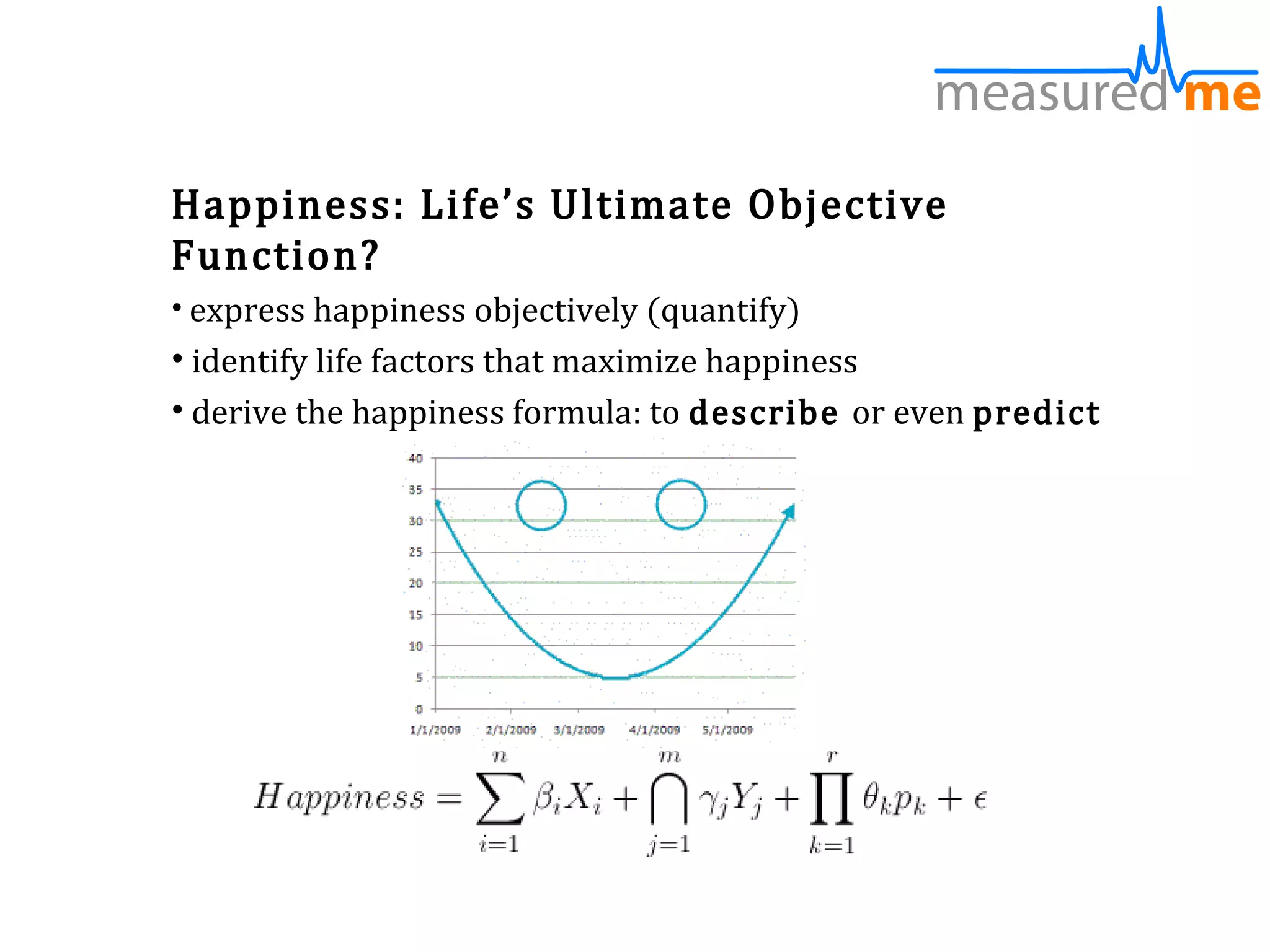
Happiness: Life’s Ultimate Objective
Function?
• express happiness objectively (quantify)
• identify life factors that maximize happiness
• derive the happiness formula: to describe or even predict
Theories Tested:
• Ryff’s Theory of Psychological Well-being
• My Values Dissonance Theory
• My Lifestyle Theory


Method:
• Self-Tracking
• 34 days (December 29 – January 31)


Analytics:
• Correlation is not causation, but it sure is a hint (Edward
Tufte)
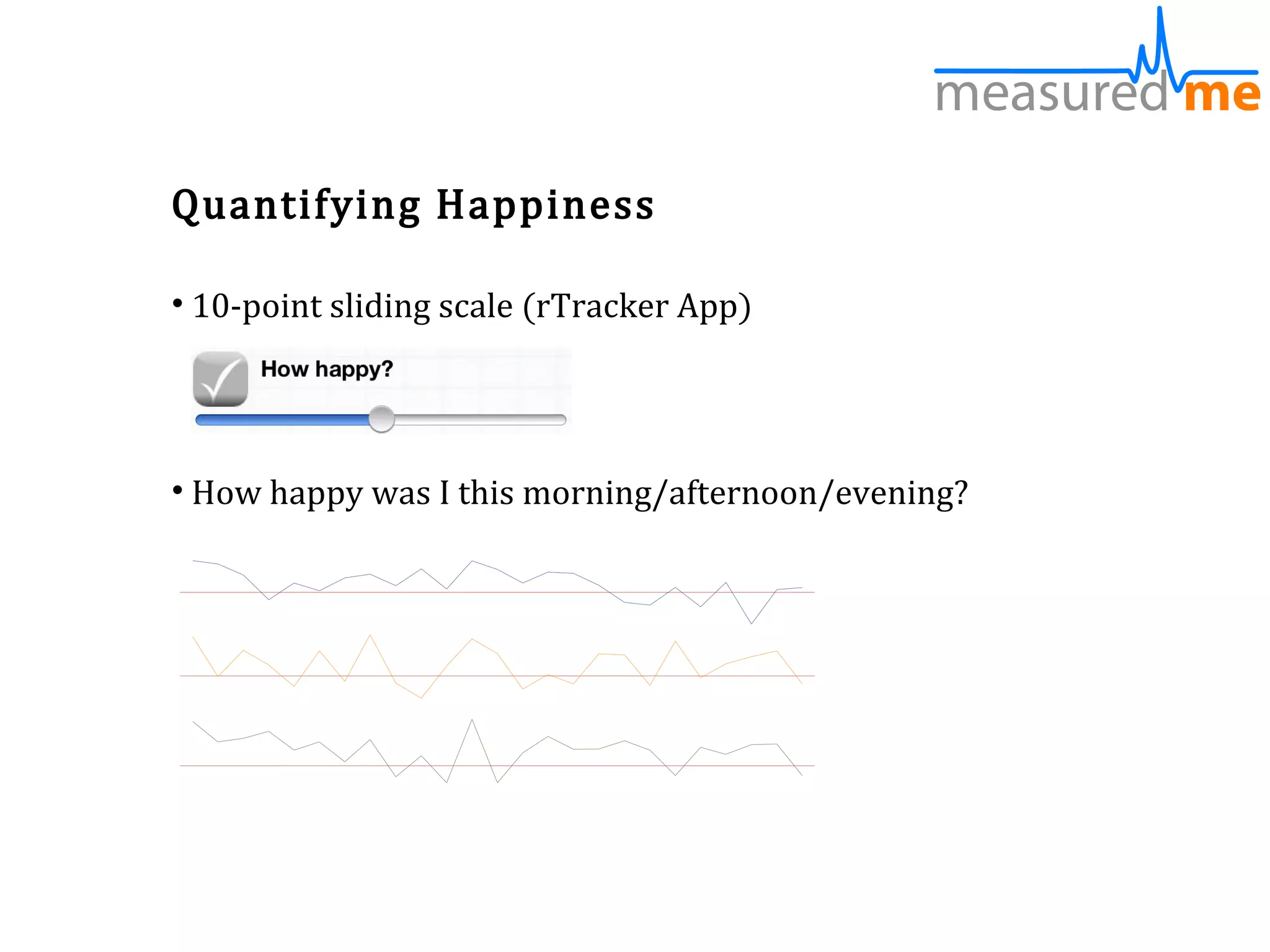
Quantifying Happiness

• 10-point sliding scale (rTracker App)


• How happy was I this morning/afternoon/evening?
Ryff’s Theory of Psychological Well-Being

• Six Dimensions of Psychological Well-being :
     Self Acceptance
     Autonomy
     Environmental Mastery
     Meaningful Goals
     Personal Growth
     Quality Social Ties


• 54 questions (medium form) or 84 questions (long form)

• Advantage of n = 1 research: shorter questionnaires
Ryff’s Theory of Psychological Being

• Three times a day (morning, afternoon, evening)

• 10-point “sliding scale” (rTracker app)
     Confident in opinions and actions (AUTONOMY)
     Life has a meaning and purpose (MEANING)
     In charge of situations (MASTERY)
     Learning and growing (GROWTH)
     Accept myself as I am (SELF-ACCEPTANCE)
     Not alone in this world (SOCIAL TIES)
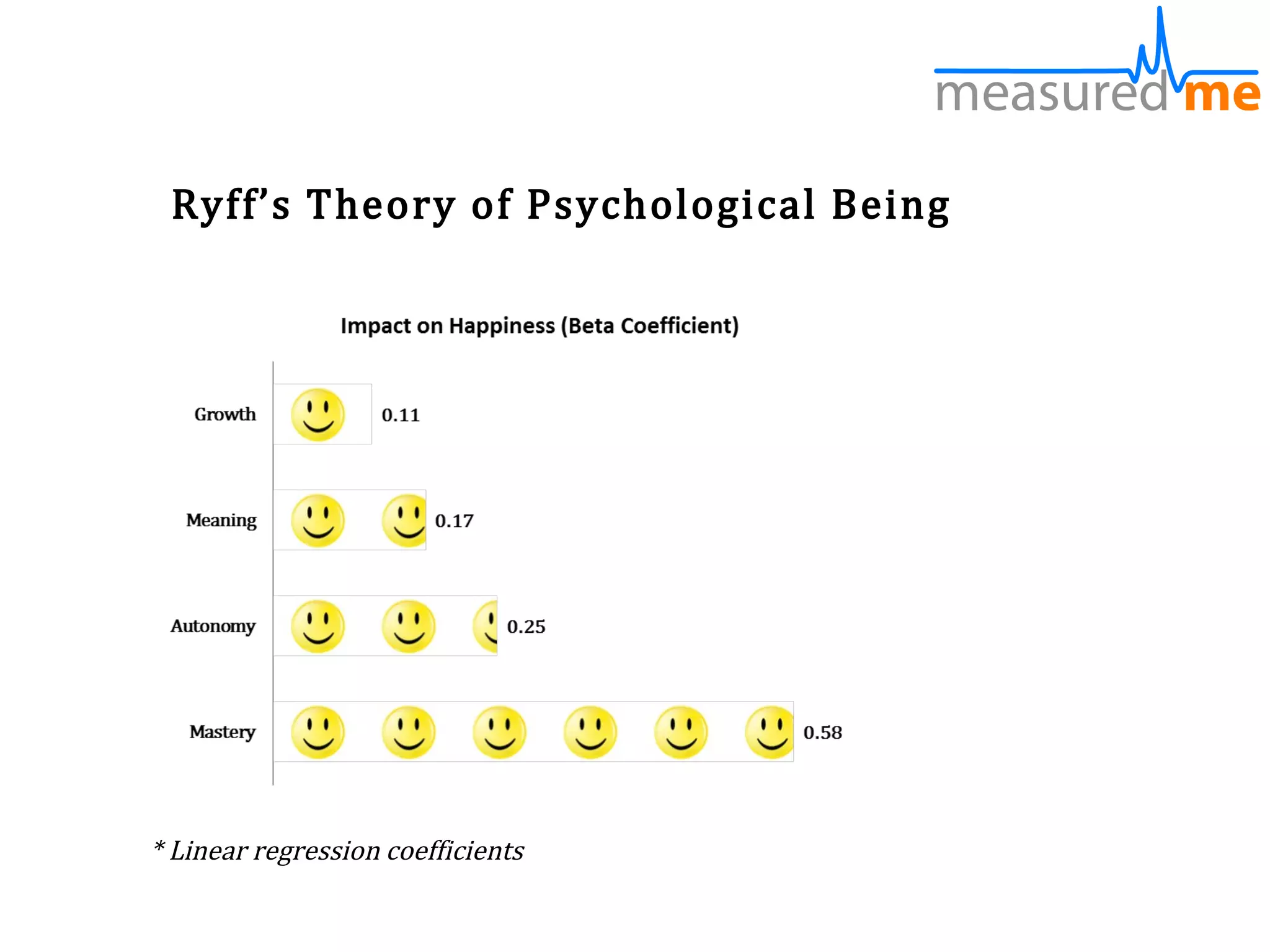
Ryff’s Theory of Psychological Being


* Linear regression coefficients
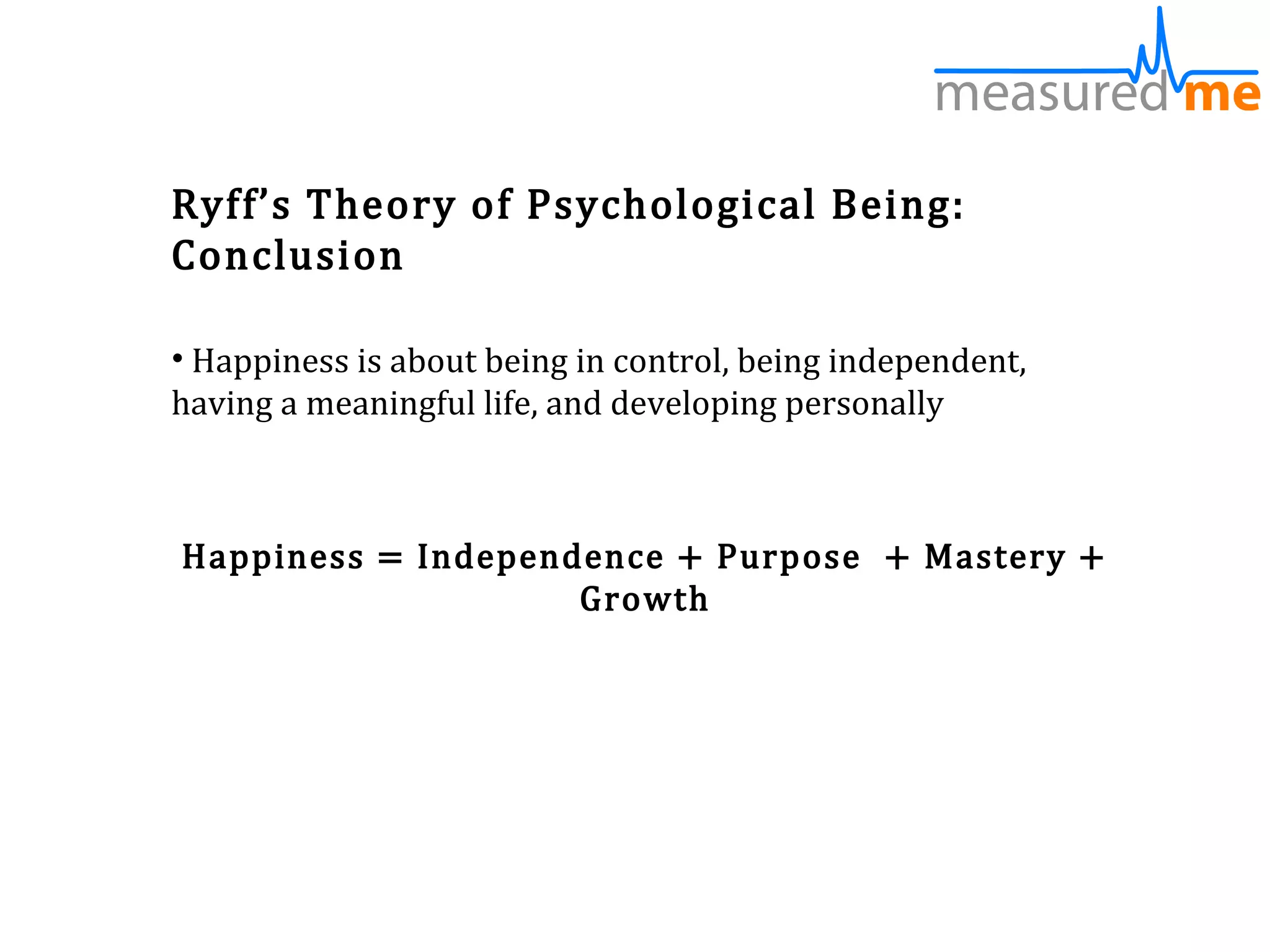
Ryff’s Theory of Psychological Being:
Conclusion

• Happiness is about being in control, being independent,
having a meaningful life, and developing personally


Happiness = Independence + Purpose + Mastery +
                    Growth
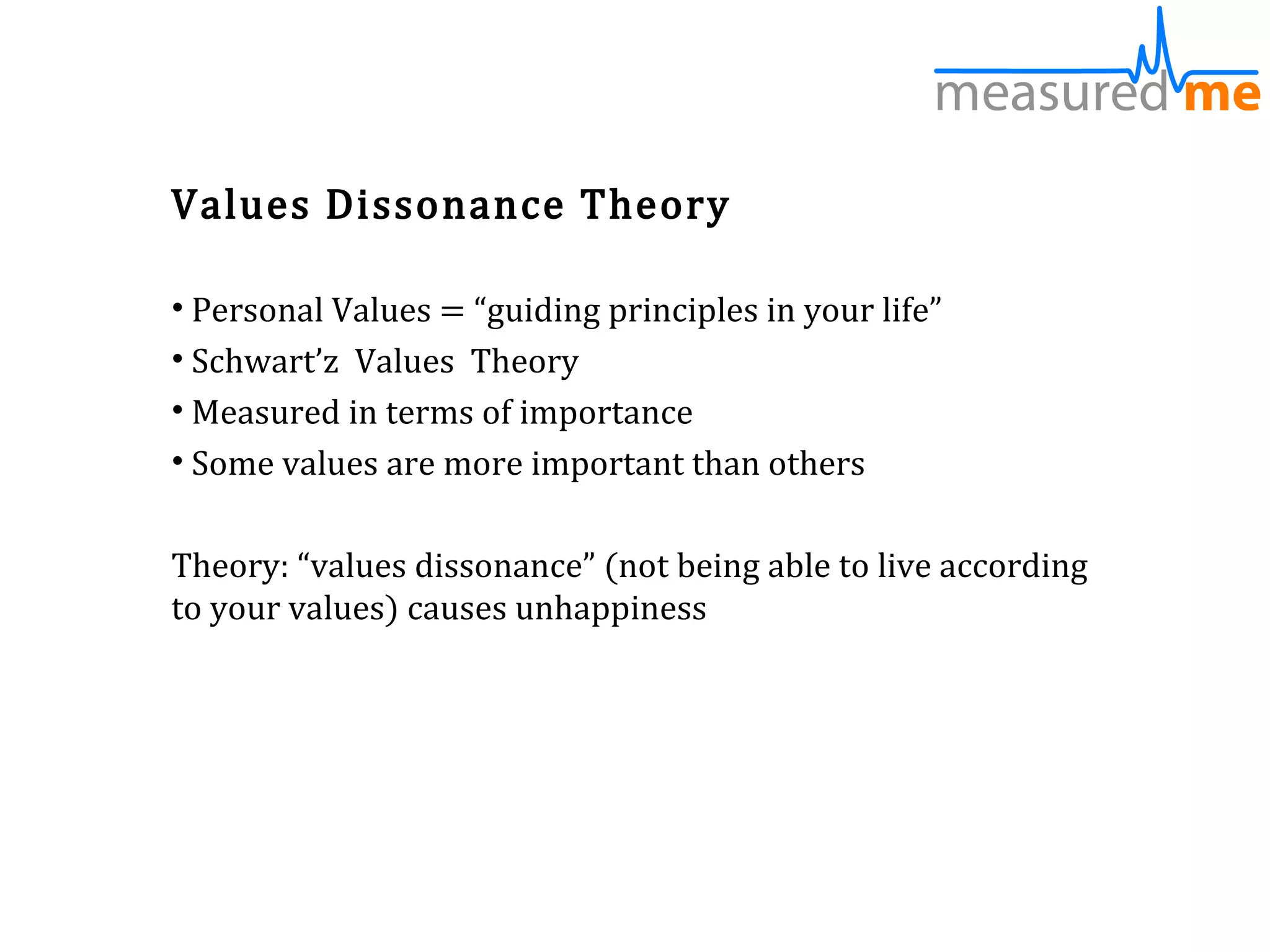
Values Dissonance Theory

• Personal Values = “guiding principles in your life”
• Schwart’z Values Theory
• Measured in terms of importance
• Some values are more important than others

Theory: “values dissonance” (not being able to live according
to your values) causes unhappiness
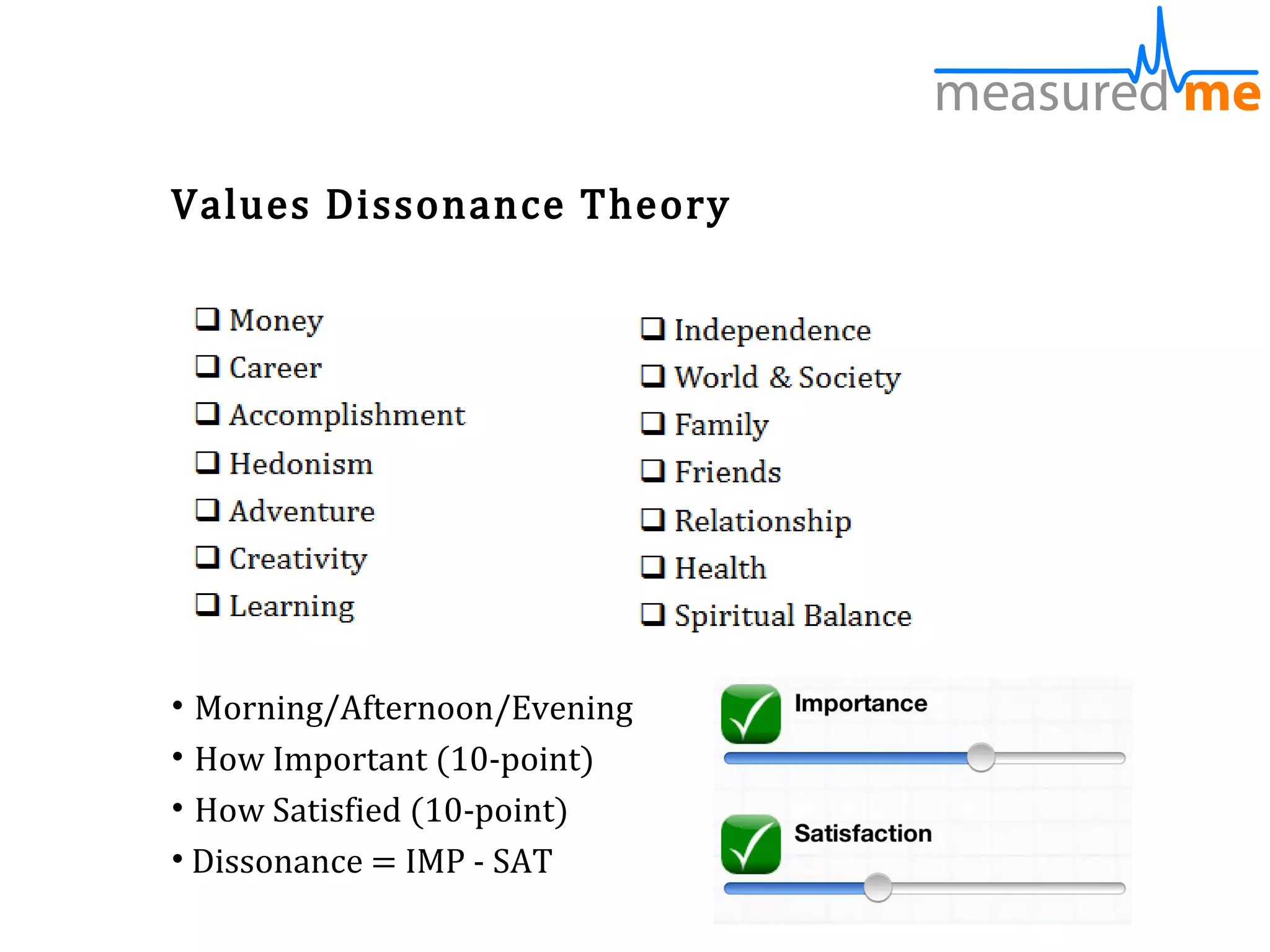
Values Dissonance Theory


• Morning/Afternoon/Evening
• How Important (10-point)
• How Satisfied (10-point)
• Dissonance = IMP - SAT
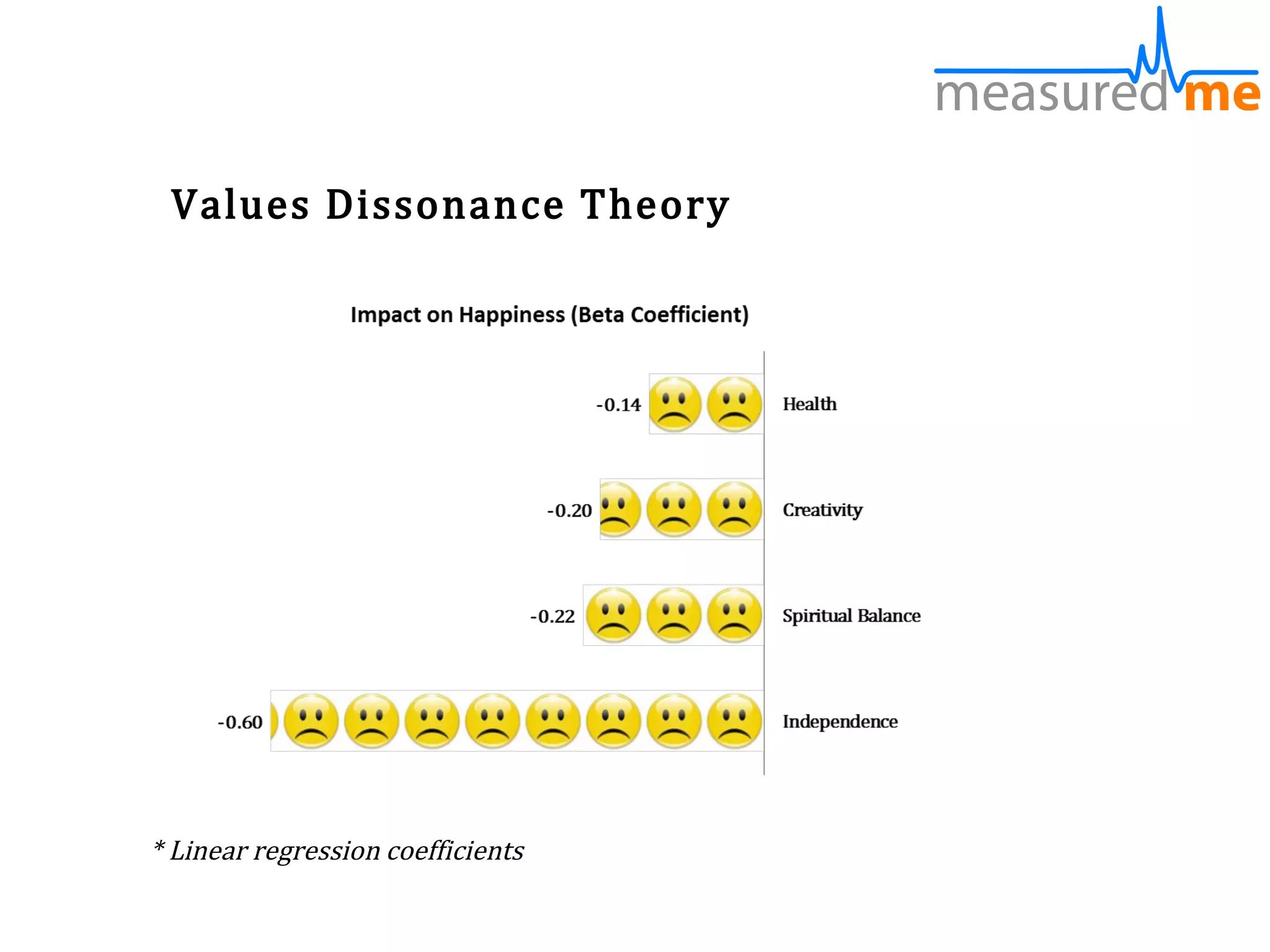
Values Dissonance Theory


* Linear regression coefficients
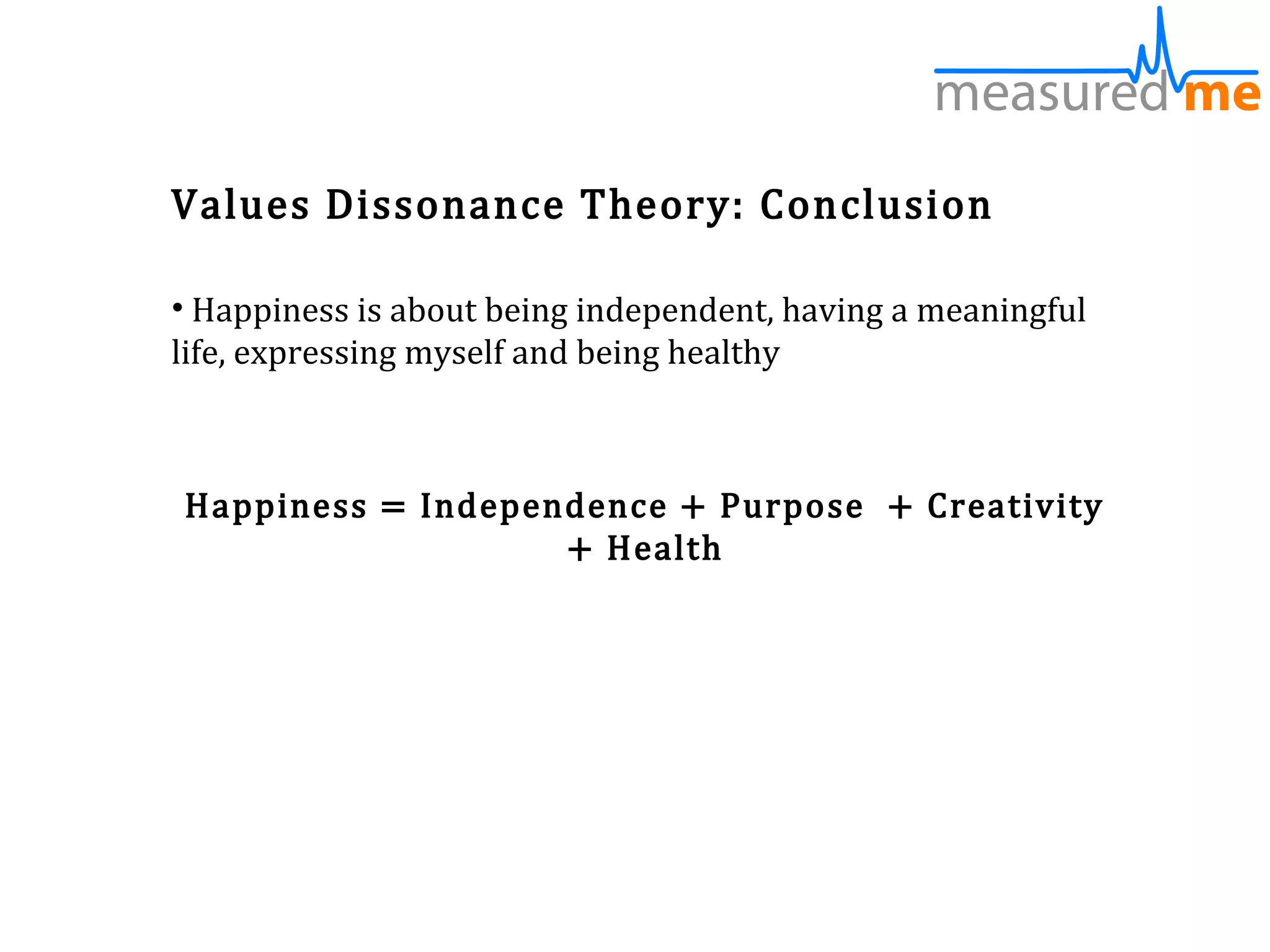
Values Dissonance Theory: Conclusion

• Happiness is about being independent, having a meaningful
life, expressing myself and being healthy


Happiness = Independence + Purpose + Creativity
                   + Health
Lifestyle Theory
Have you ever watched kids on a merry-go-round, or listened to rain slapping the ground?
Ever followed a butterfly's erratic flight, or gazed at the sun fading into the night?
You better slow down, don't dance so fast, time is short, the music won't last.

Do you run through each day on the fly, when you ask "How are you?", do you hear the reply?
When the day is done, do you lie in your bed, with the next hundred chores running through your head?
You better slow down, don't dance so fast, time is short, the music won't last.

Ever told your child, we'll do it tomorrow, and in your haste, not see his sorrow?
Ever lost touch, let a friendship die, 'cause you never had time to call and say hi?
You better slow down, don't dance so fast, time is short, the music won't last.

When you run so fast to get somewhere, you miss half the fun of getting there.
When you worry and hurry through your day, it's like an unopened gift thrown away.
Life isn't a race, so take it slower, hear the music before your song is over.

                                                  “Slow Dance”, by David Weatherford
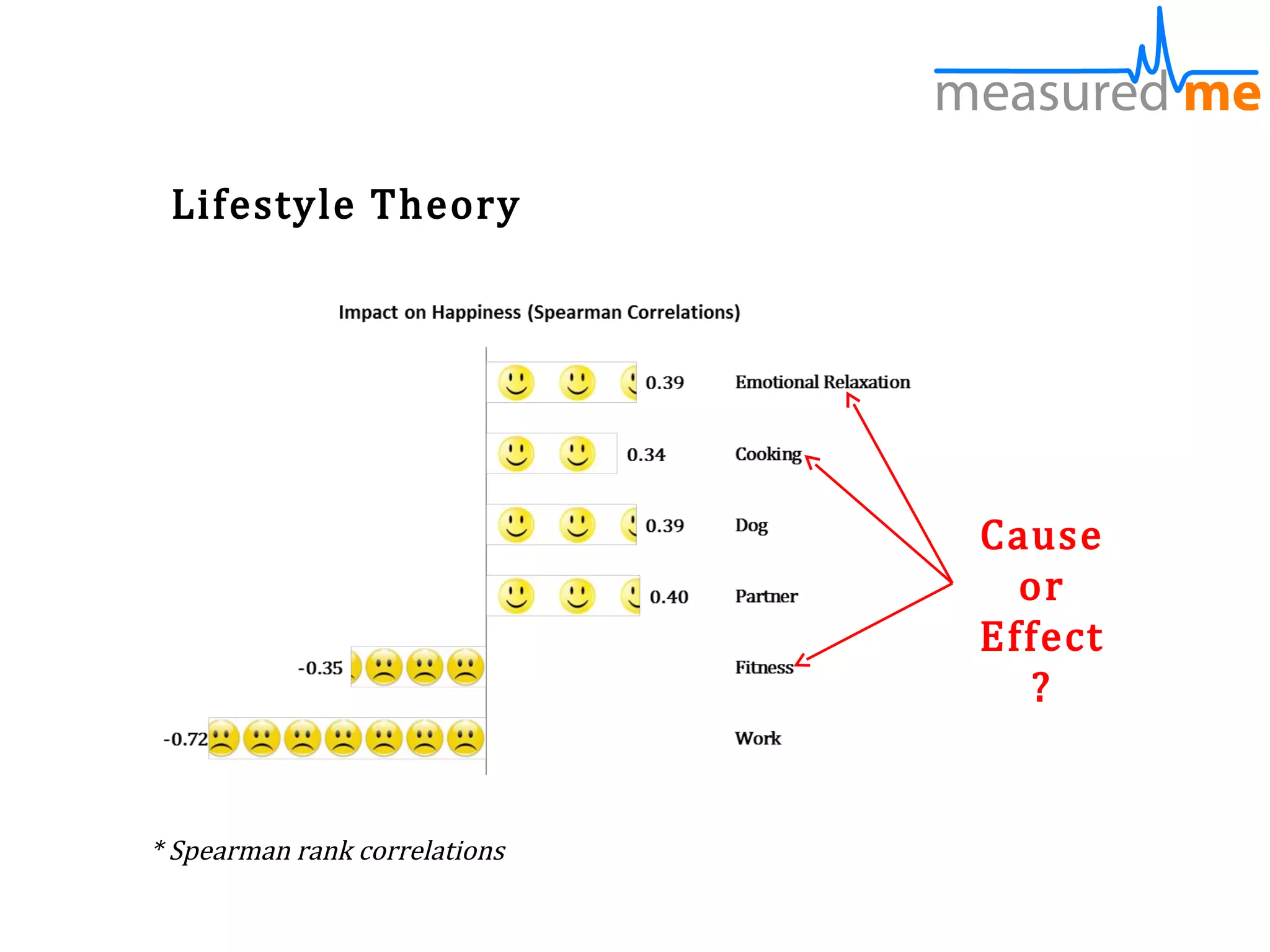
Lifestyle Theory


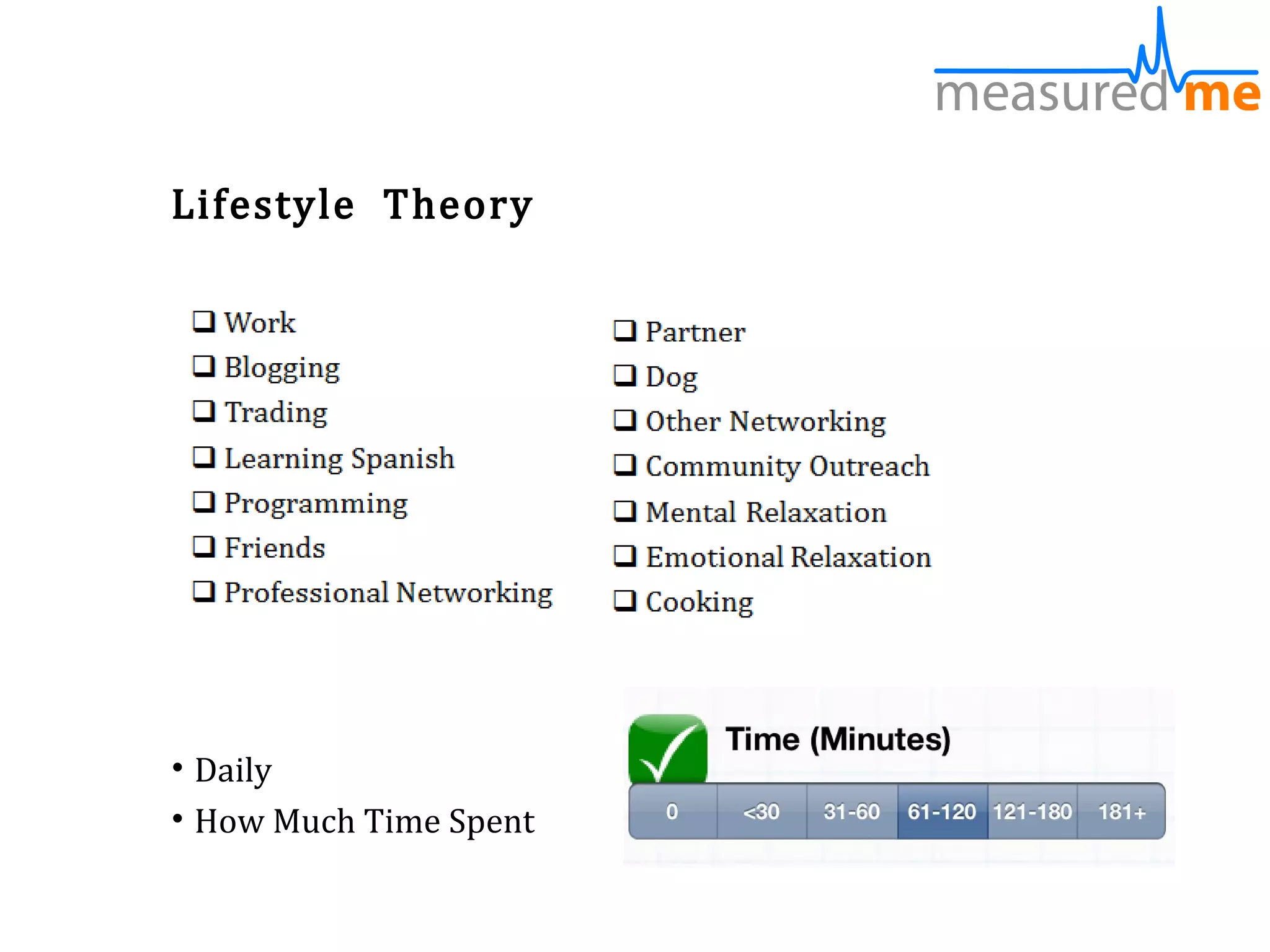
• Daily
• How Much Time Spent
Lifestyle Theory


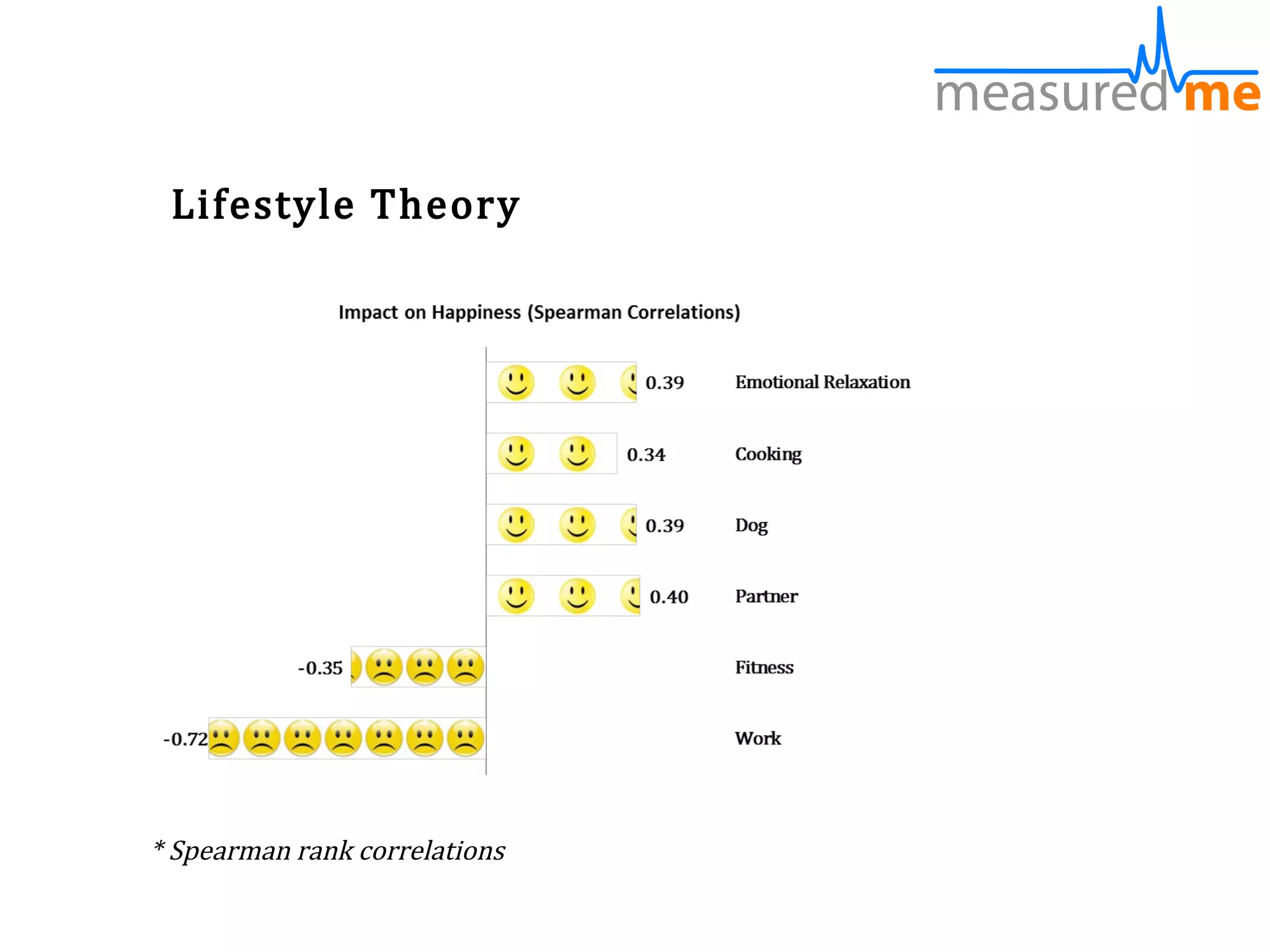
* Spearman rank correlations
Lifestyle Theory


                               Cause
                                 or
                               Effect
                                 ?


* Spearman rank correlations
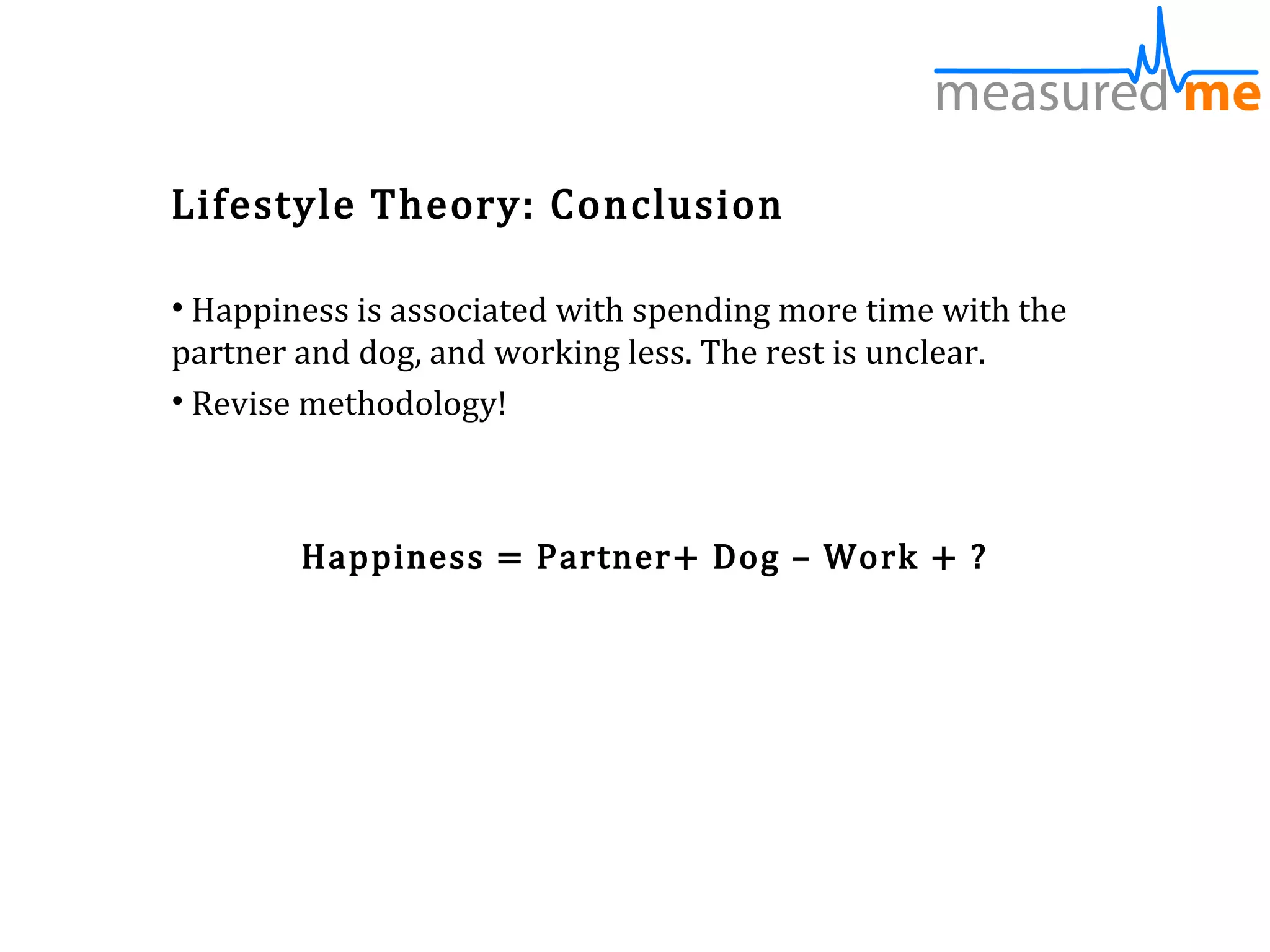
Lifestyle Theory: Conclusion

• Happiness is associated with spending more time with the
partner and dog, and working less. The rest is unclear.
• Revise methodology!


        Happiness = Partner+ Dog – Work + ?
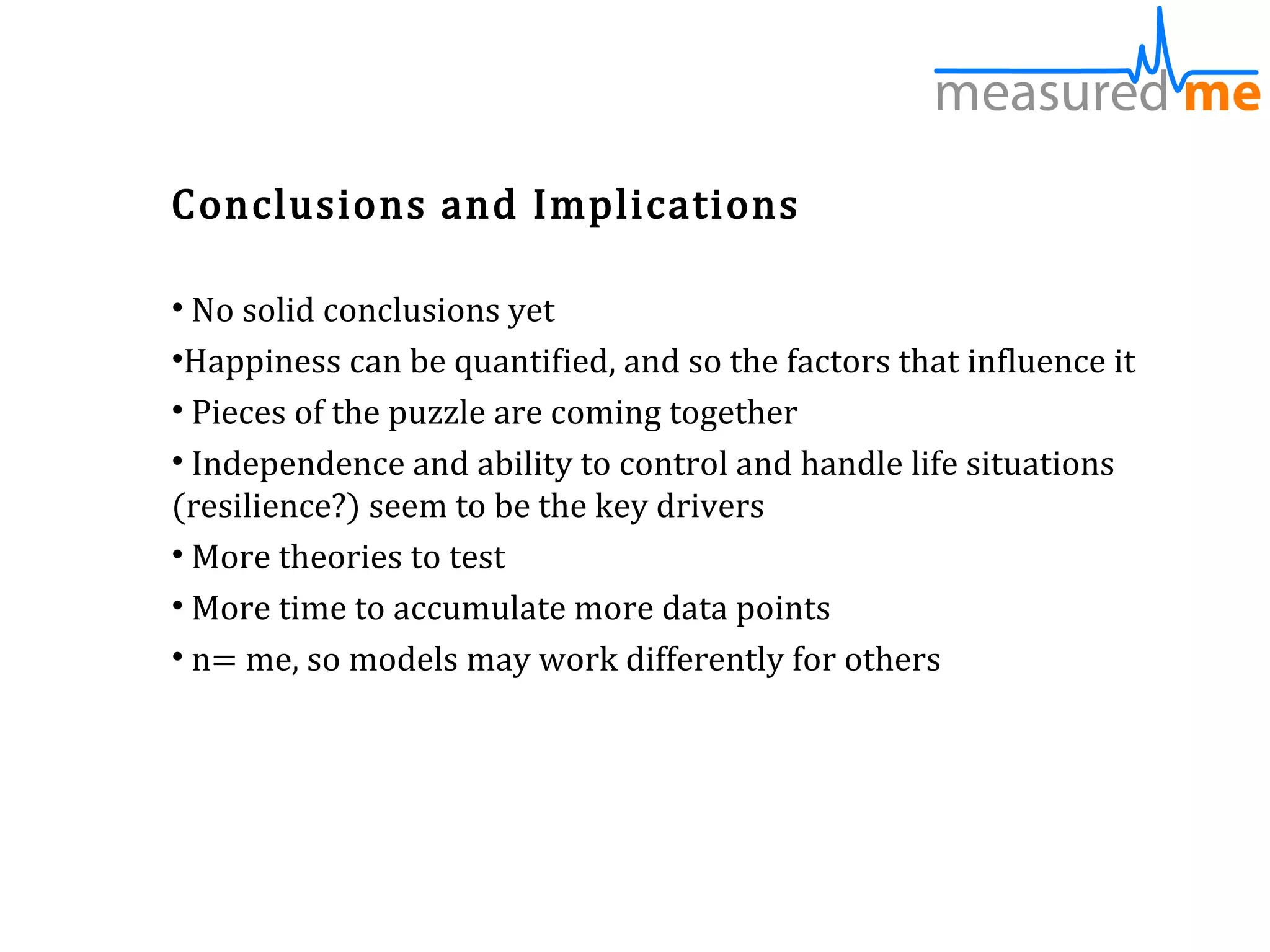
Conclusions and Implications

• No solid conclusions yet
•Happiness can be quantified, and so the factors that influence it
• Pieces of the puzzle are coming together
• Independence and ability to control and handle life situations
(resilience?) seem to be the key drivers
• More theories to test
• More time to accumulate more data points
• n= me, so models may work differently for others
Thank you!

   Follow my experiment at
    www.measuredme.com


       @measuredme
www.facebook.com/measuredme

Hacking happiness

  • 1.
    Hacking Happiness  Quantified Self NYC Meetup # 19 February 20, 2013 Konstantin Augemberg www.measuredme.com
  • 2.
    Measured Me • personalinitiative • life optimization through self-quantification and personal analytics • n= me, but methods are open-source (n = you!) Life Optimization Theory • everyday life can be quantified • determine major life components Yi (health, happiness, relationships, success, financial solvency, etc.): life = ∑y i , • isolate major internal and external factors Xj (psychological, physical and cognitive states, habits, weather, etc.) that influence each life aspect: y i = f(x 1, .. , x j ) • optimize these factors ==>max(life)
  • 3.
    Happiness: Life’s UltimateObjective Function? • express happiness objectively (quantify) • identify life factors that maximize happiness • derive the happiness formula: to describe or even predict
  • 4.
    Theories Tested: • Ryff’sTheory of Psychological Well-being • My Values Dissonance Theory • My Lifestyle Theory Method: • Self-Tracking • 34 days (December 29 – January 31) Analytics: • Correlation is not causation, but it sure is a hint (Edward Tufte)
  • 5.
    Quantifying Happiness • 10-pointsliding scale (rTracker App) • How happy was I this morning/afternoon/evening?
  • 6.
    Ryff’s Theory ofPsychological Well-Being • Six Dimensions of Psychological Well-being :  Self Acceptance  Autonomy  Environmental Mastery  Meaningful Goals  Personal Growth  Quality Social Ties • 54 questions (medium form) or 84 questions (long form) • Advantage of n = 1 research: shorter questionnaires
  • 7.
    Ryff’s Theory ofPsychological Being • Three times a day (morning, afternoon, evening) • 10-point “sliding scale” (rTracker app)  Confident in opinions and actions (AUTONOMY)  Life has a meaning and purpose (MEANING)  In charge of situations (MASTERY)  Learning and growing (GROWTH)  Accept myself as I am (SELF-ACCEPTANCE)  Not alone in this world (SOCIAL TIES)
  • 8.
    Ryff’s Theory ofPsychological Being * Linear regression coefficients
  • 9.
    Ryff’s Theory ofPsychological Being: Conclusion • Happiness is about being in control, being independent, having a meaningful life, and developing personally Happiness = Independence + Purpose + Mastery + Growth
  • 10.
    Values Dissonance Theory •Personal Values = “guiding principles in your life” • Schwart’z Values Theory • Measured in terms of importance • Some values are more important than others Theory: “values dissonance” (not being able to live according to your values) causes unhappiness
  • 11.
    Values Dissonance Theory •Morning/Afternoon/Evening • How Important (10-point) • How Satisfied (10-point) • Dissonance = IMP - SAT
  • 12.
    Values Dissonance Theory *Linear regression coefficients
  • 13.
    Values Dissonance Theory:Conclusion • Happiness is about being independent, having a meaningful life, expressing myself and being healthy Happiness = Independence + Purpose + Creativity + Health
  • 14.
    Lifestyle Theory Have youever watched kids on a merry-go-round, or listened to rain slapping the ground? Ever followed a butterfly's erratic flight, or gazed at the sun fading into the night? You better slow down, don't dance so fast, time is short, the music won't last. Do you run through each day on the fly, when you ask "How are you?", do you hear the reply? When the day is done, do you lie in your bed, with the next hundred chores running through your head? You better slow down, don't dance so fast, time is short, the music won't last. Ever told your child, we'll do it tomorrow, and in your haste, not see his sorrow? Ever lost touch, let a friendship die, 'cause you never had time to call and say hi? You better slow down, don't dance so fast, time is short, the music won't last. When you run so fast to get somewhere, you miss half the fun of getting there. When you worry and hurry through your day, it's like an unopened gift thrown away. Life isn't a race, so take it slower, hear the music before your song is over. “Slow Dance”, by David Weatherford
  • 15.
    Lifestyle Theory • Daily •How Much Time Spent
  • 16.
    Lifestyle Theory * Spearmanrank correlations
  • 17.
    Lifestyle Theory Cause or Effect ? * Spearman rank correlations
  • 18.
    Lifestyle Theory: Conclusion •Happiness is associated with spending more time with the partner and dog, and working less. The rest is unclear. • Revise methodology! Happiness = Partner+ Dog – Work + ?
  • 19.
    Conclusions and Implications •No solid conclusions yet •Happiness can be quantified, and so the factors that influence it • Pieces of the puzzle are coming together • Independence and ability to control and handle life situations (resilience?) seem to be the key drivers • More theories to test • More time to accumulate more data points • n= me, so models may work differently for others
  • 20.
    Thank you! Follow my experiment at www.measuredme.com @measuredme www.facebook.com/measuredme