The Agile PMP
Mike Cottmeyermike.cottmeyer@versionone.com www.linkedin.com/in/cottmeyer www.versionone.comblog.versionone.netwww.leadingagile.com
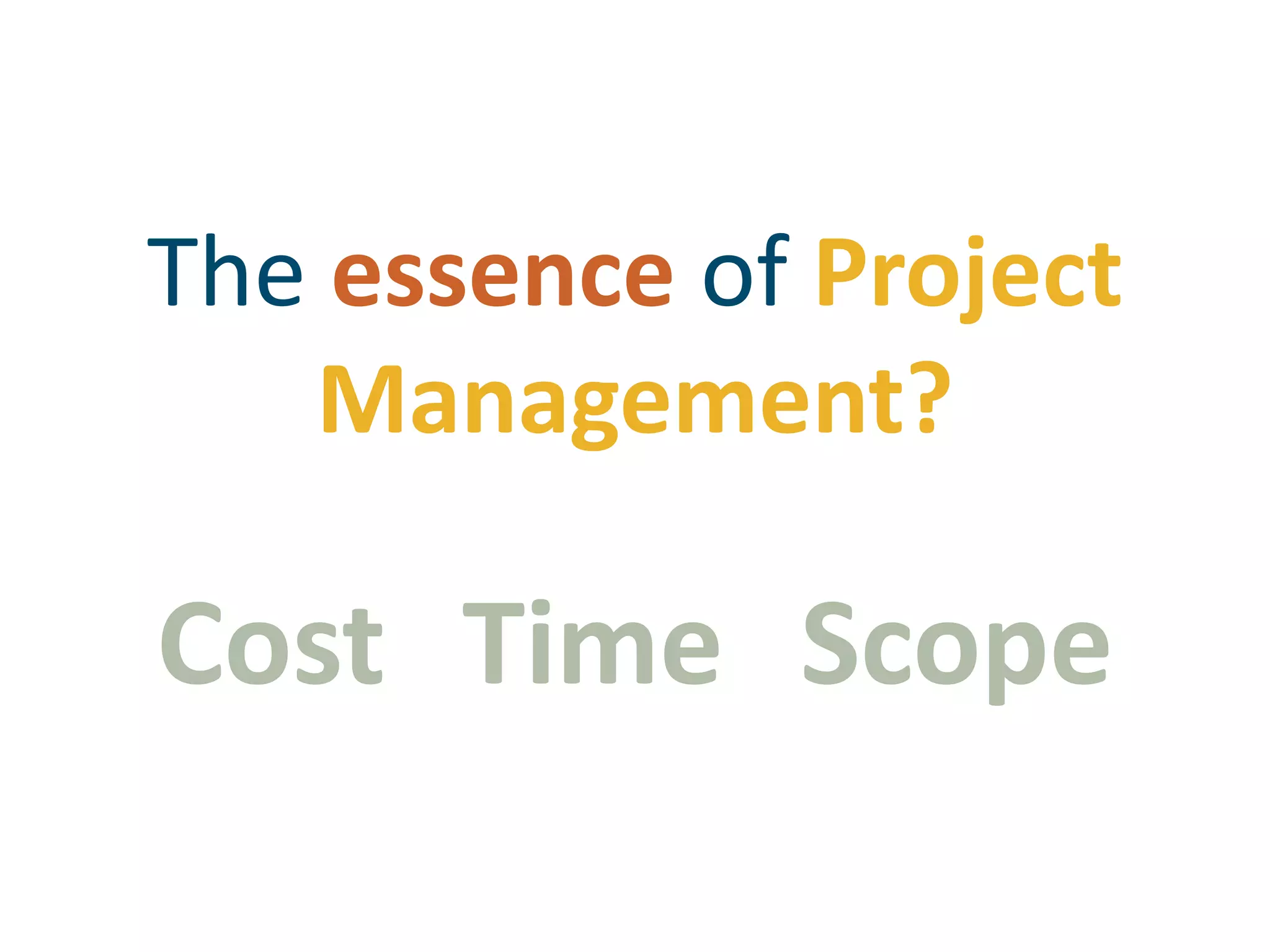
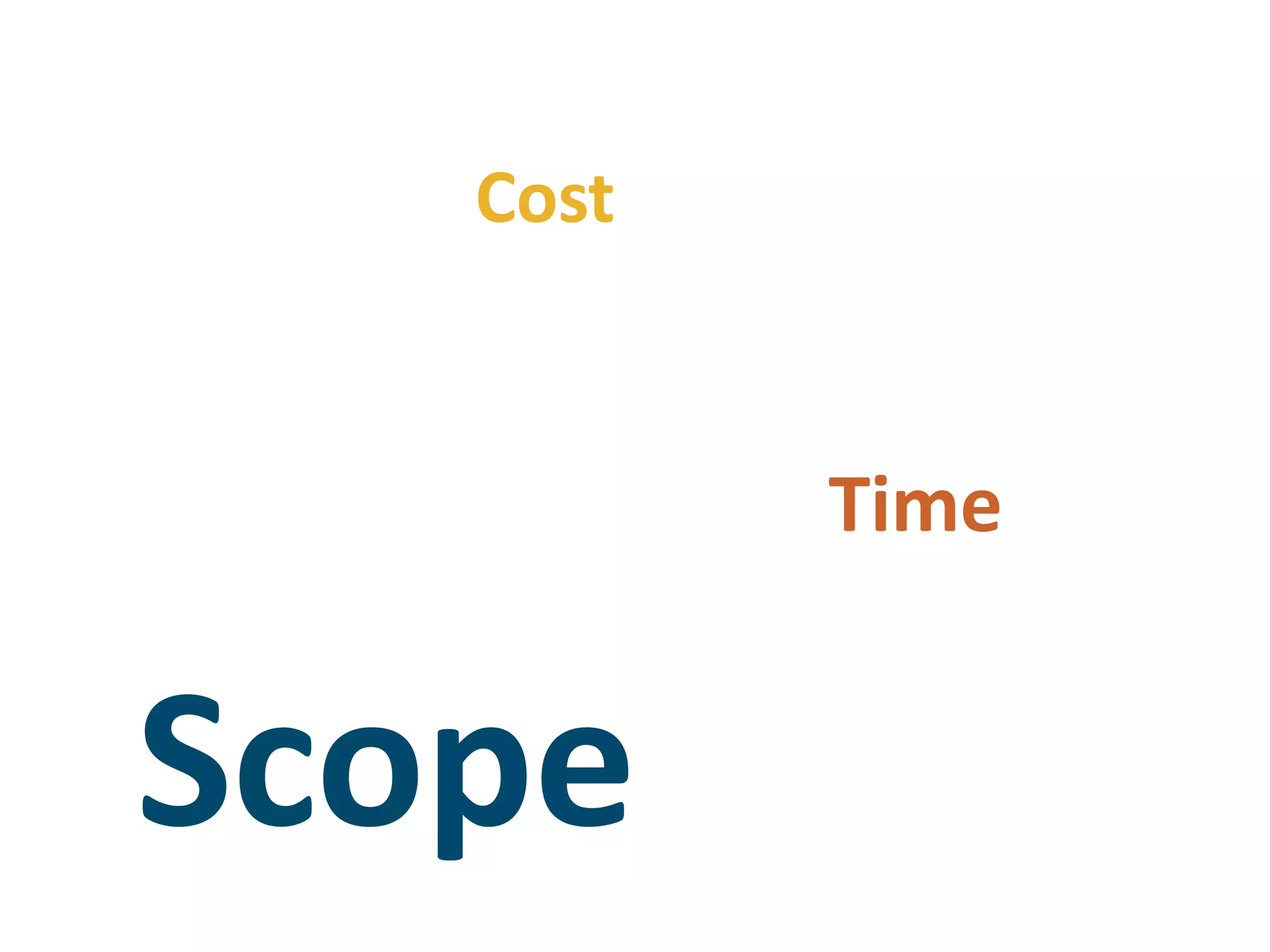
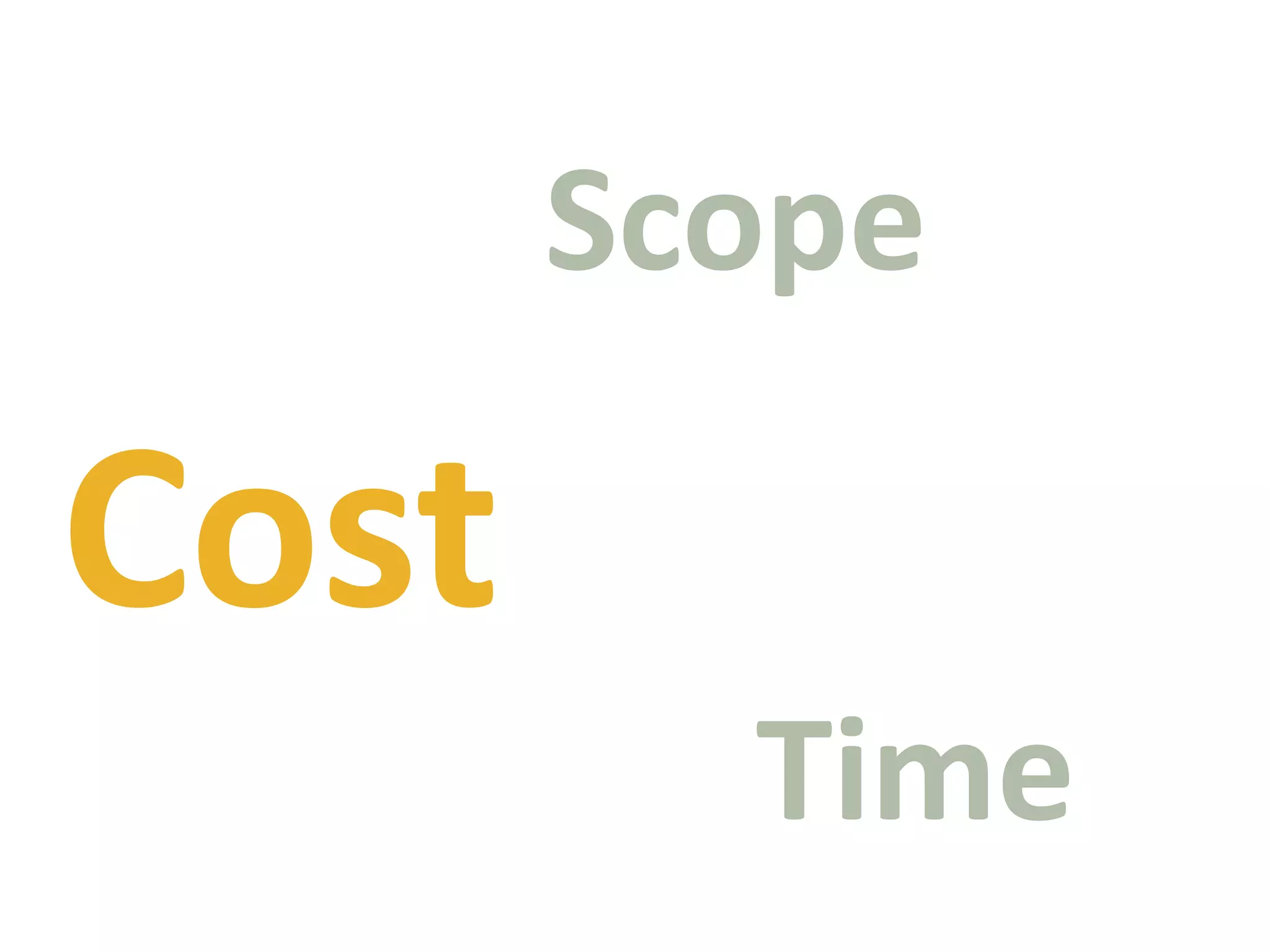
The essence of ProjectManagement?CostTimeScope
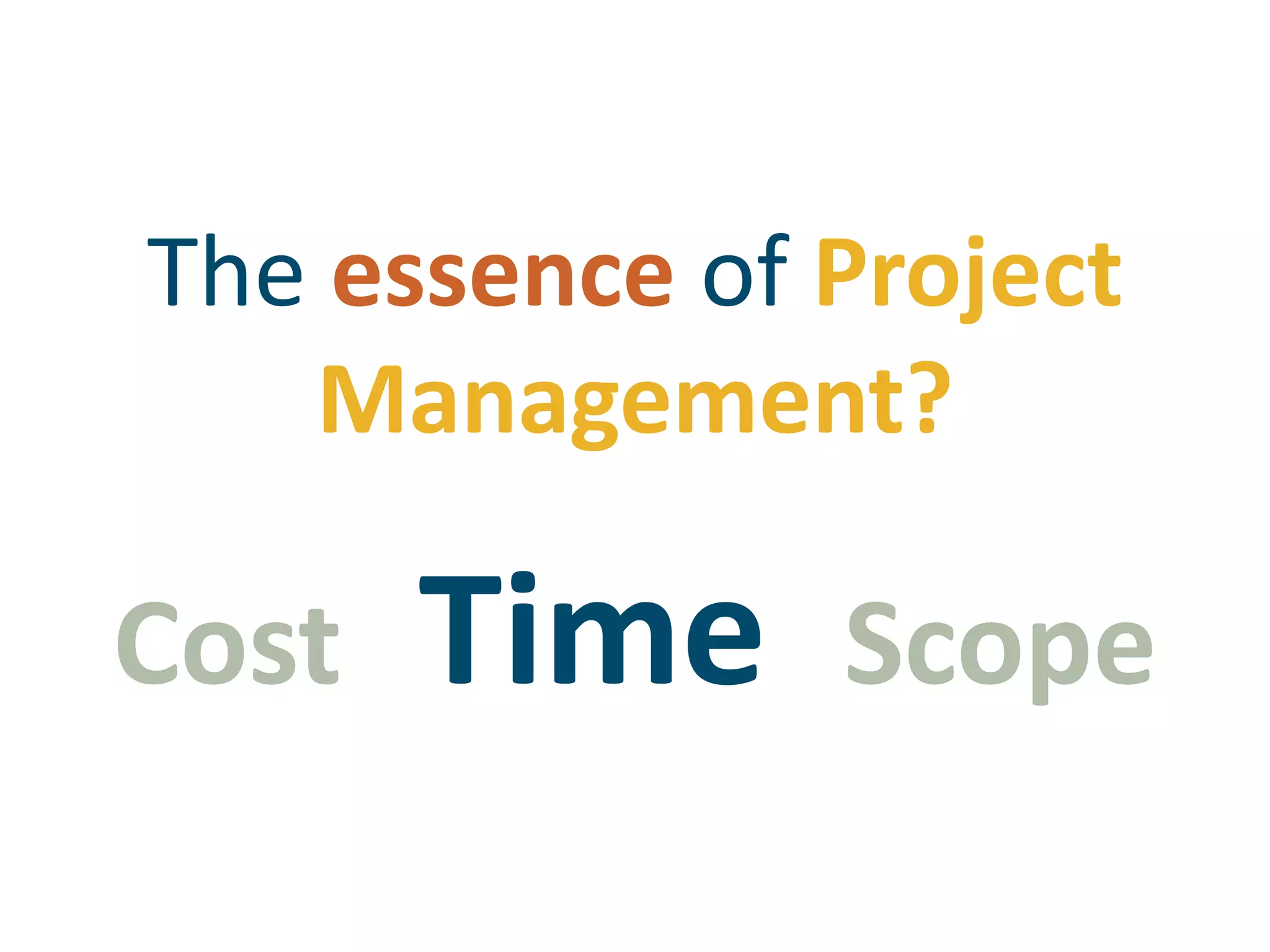
The essence of ProjectManagement?Cost  Time  Scope
The essence of ProjectManagement?Cost  TimeScope
The essence of ProjectManagement?CostTime  Scope
The essence of ProjectManagement?Risk
Manage outUncertainty
So… what is Agile?EngineeringProject ManagementLeadership
So… what is Agile?Engineeringject ManagemLeadership
Manage forUncertainty
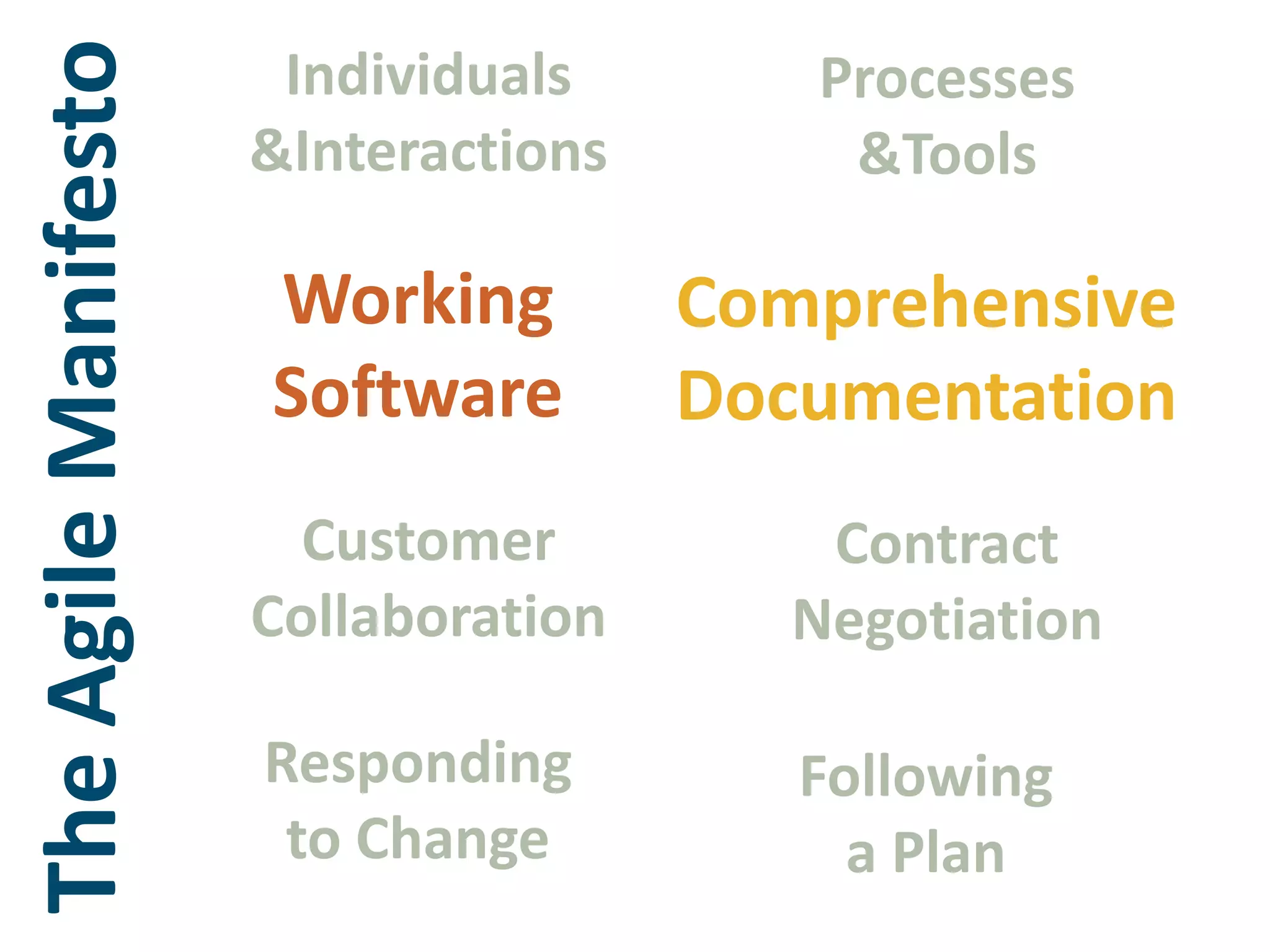
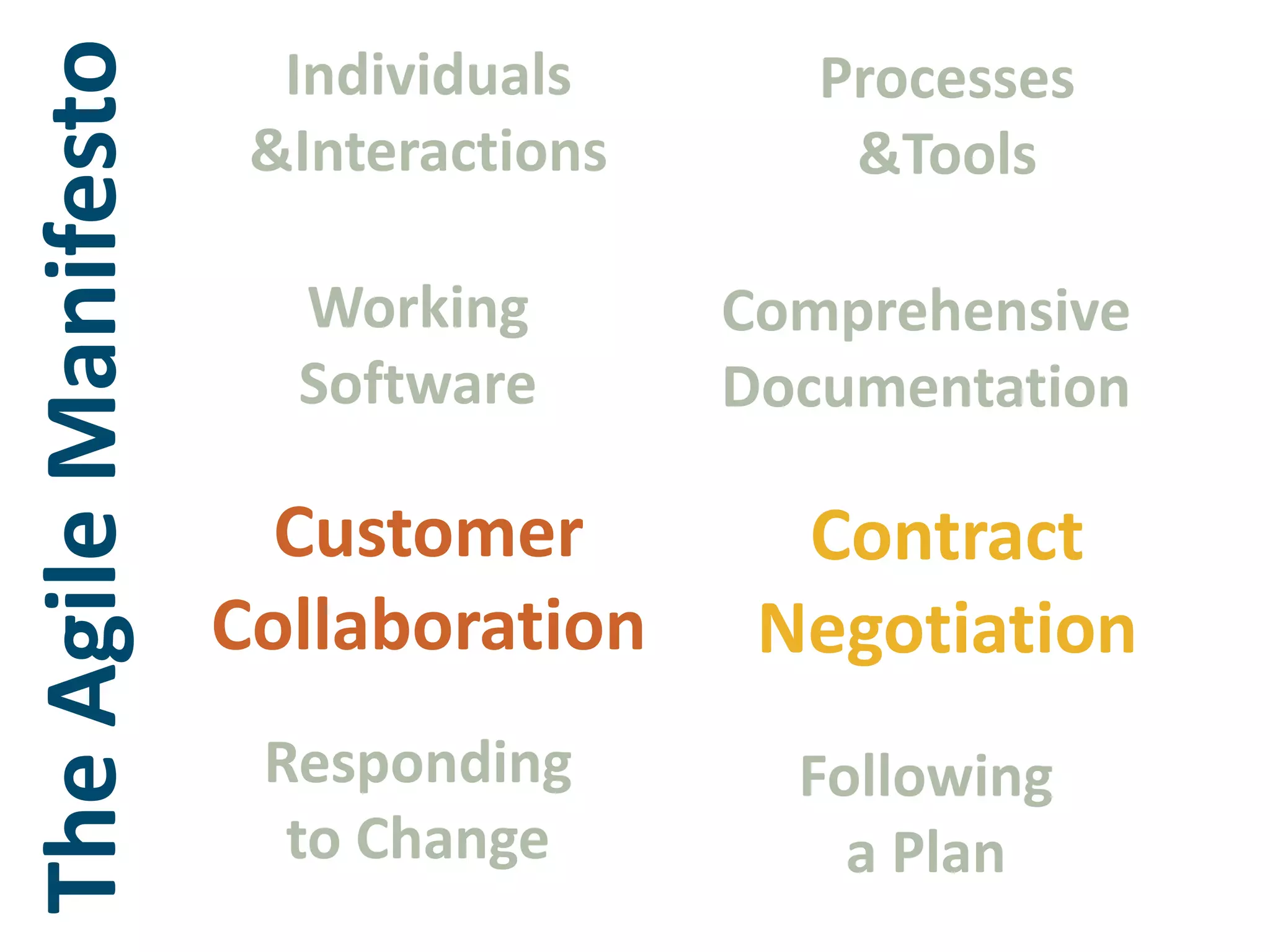
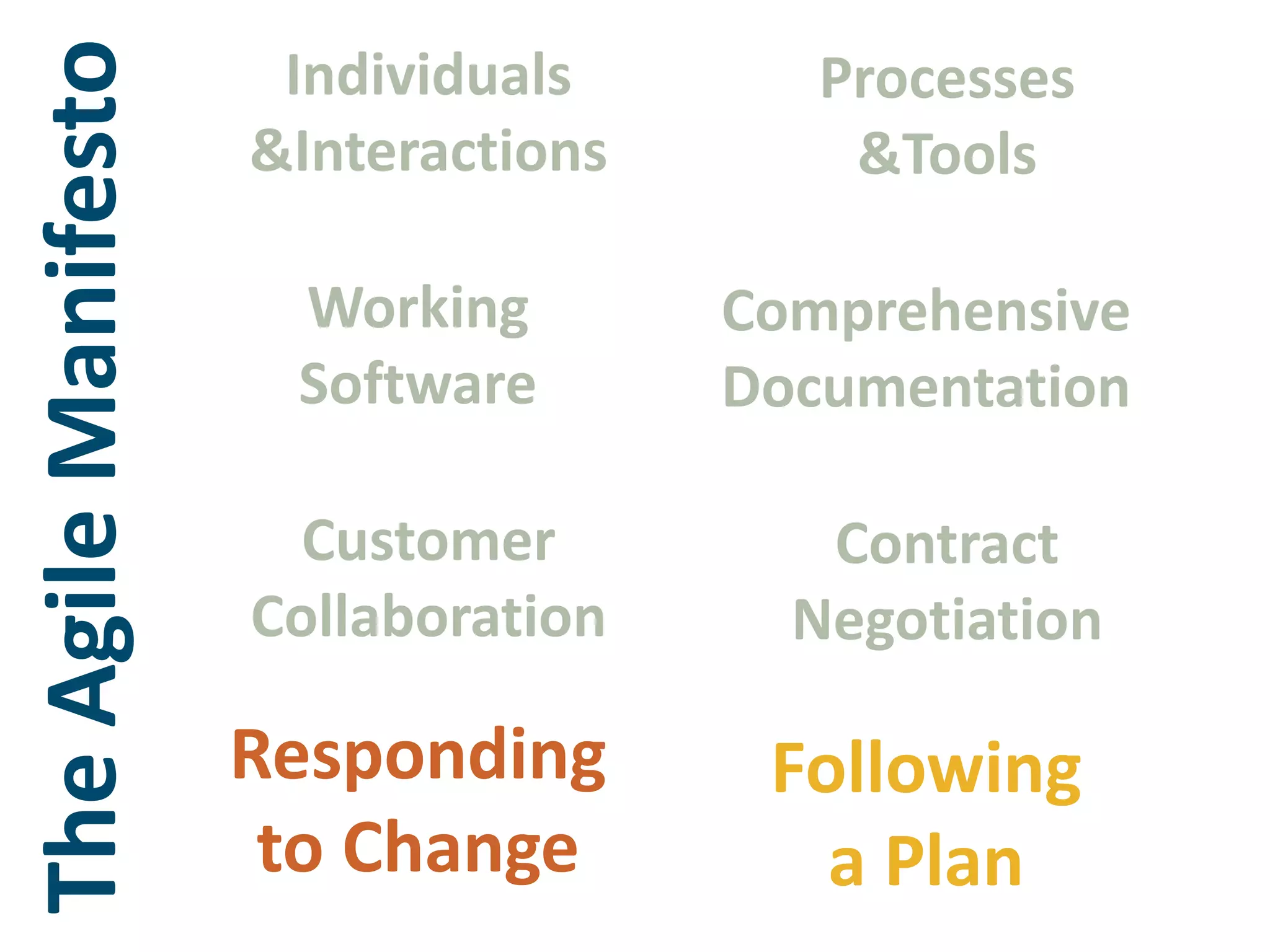
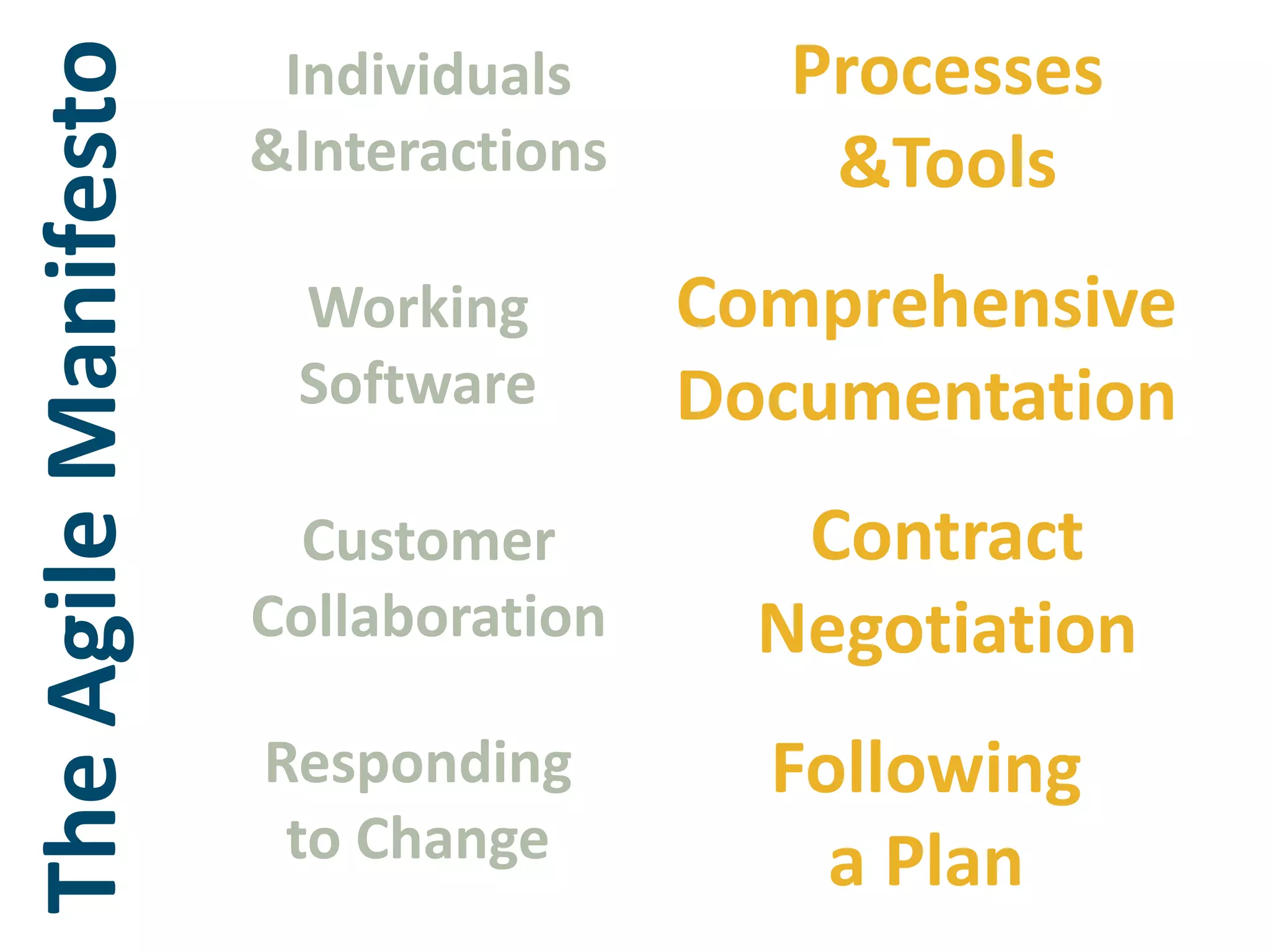
2001The Agile Manifesto
17The Agile Manifesto
UtahThe Agile Manifesto
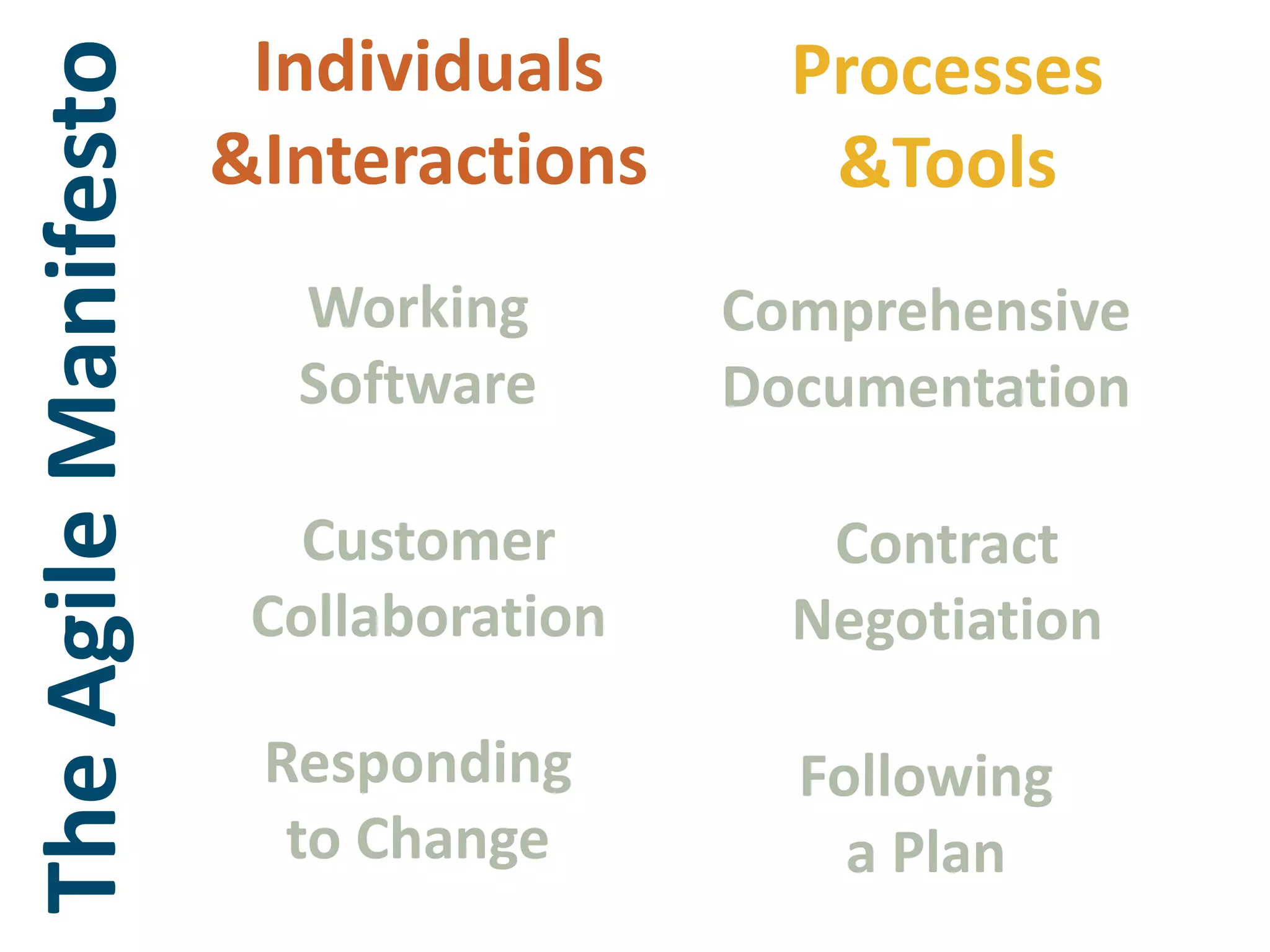
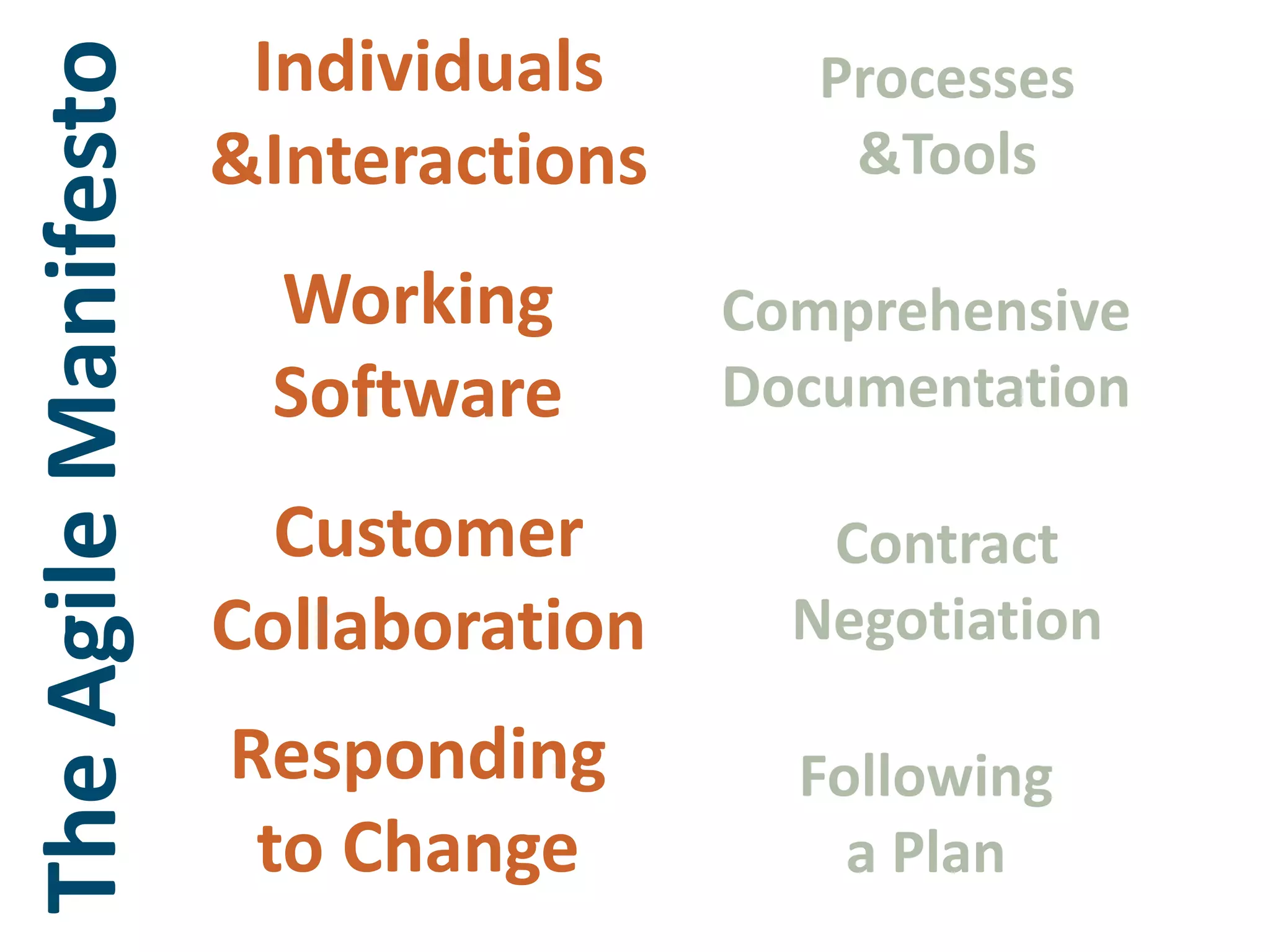
Individuals &InteractionsProcesses&ToolsWorkingSoftwareComprehensiveDocumentationThe Agile ManifestoCustomer CollaborationContract NegotiationResponding to ChangeFollowinga Plan
TraditionalManaging the triple constraints…
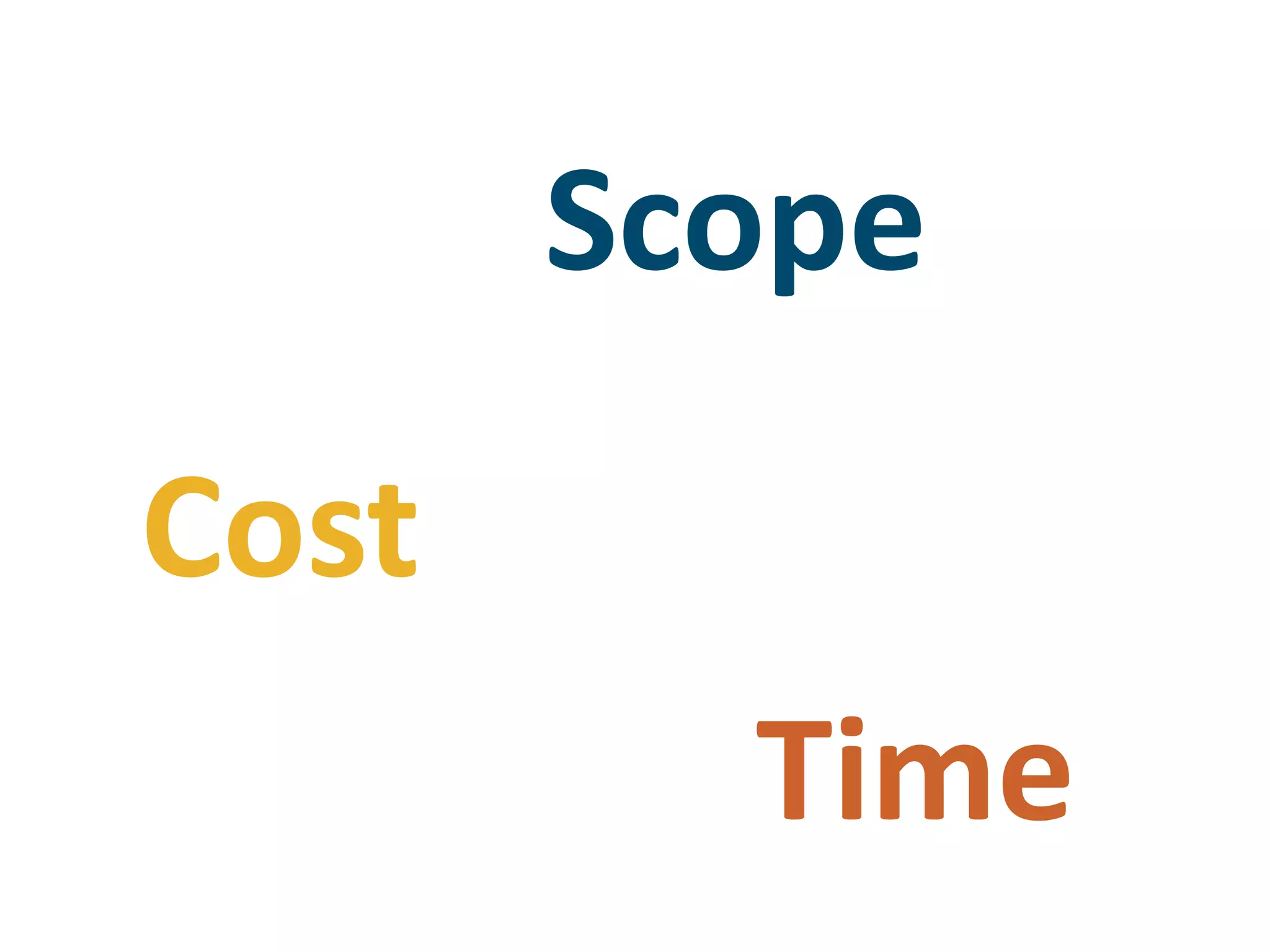
ScopeCostTime
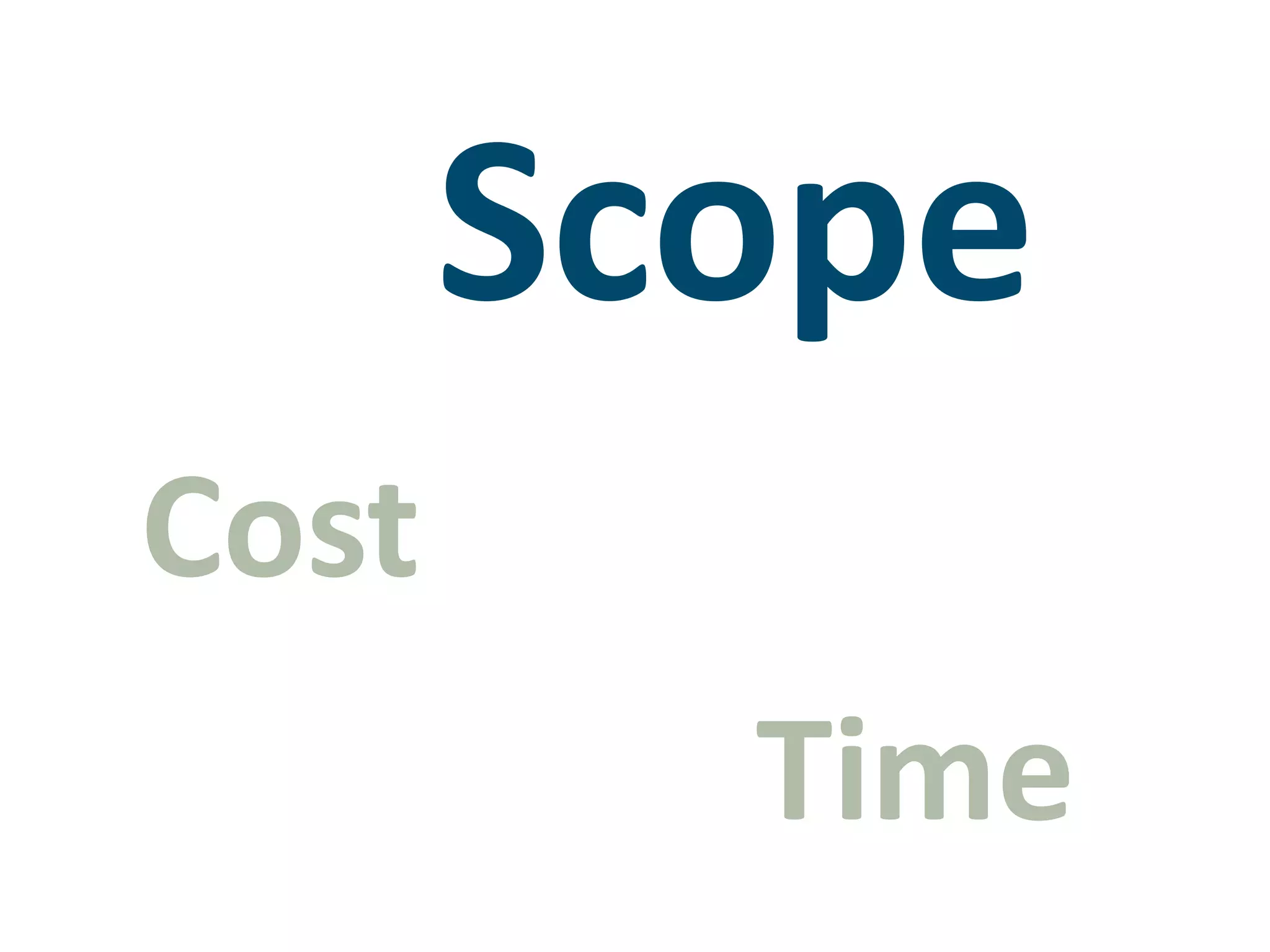
ScopeCostTime
ScopeCostTime
ScopeCostTime
ScopeLet’s figure out what to build…
Cost…how much are we going to spend,
Timeand when we are going to be done.
Who?What Order?When?
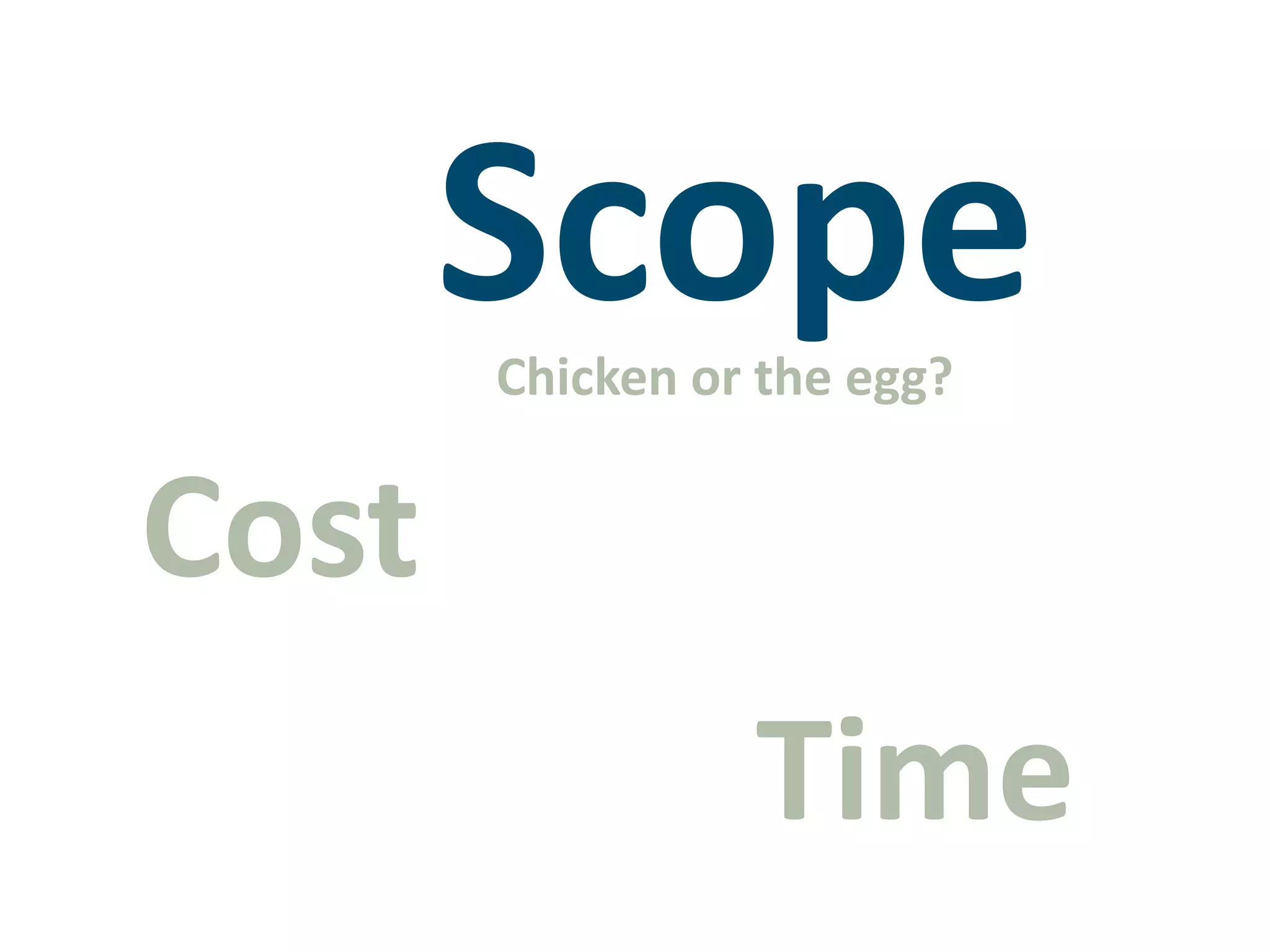
ScopeChicken or the egg?CostTime
ScopeCostTime
ScopeCostTime
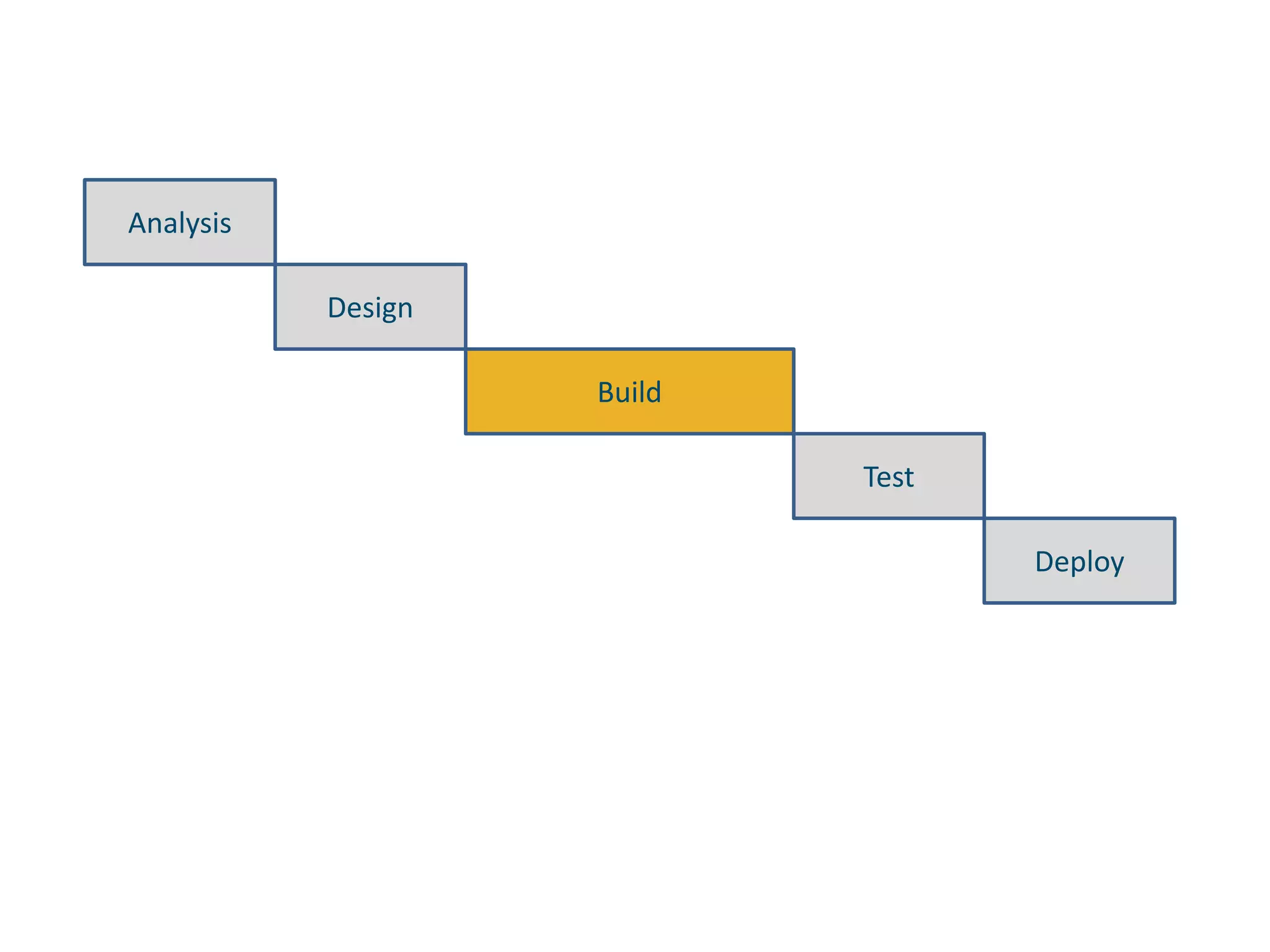
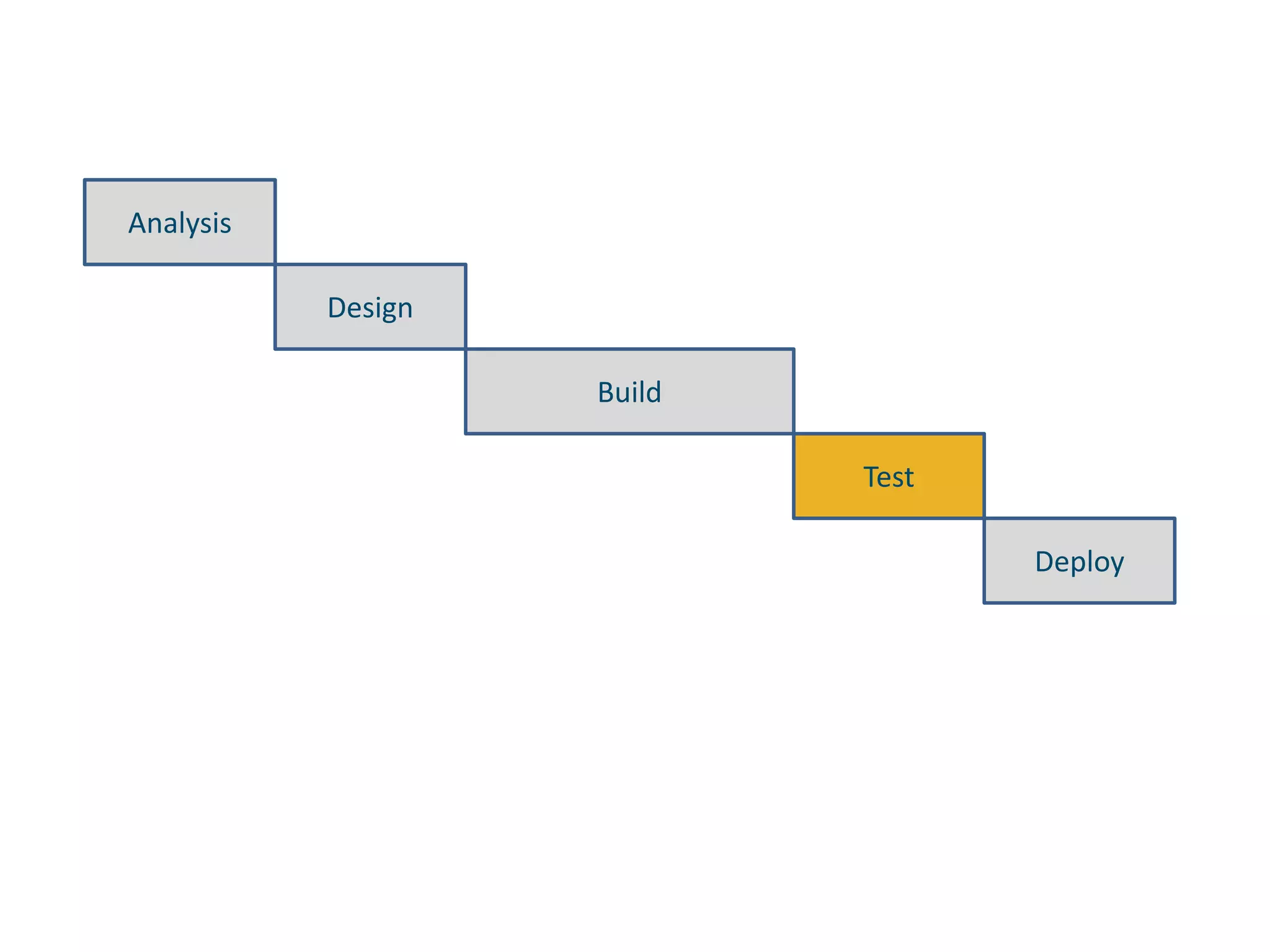
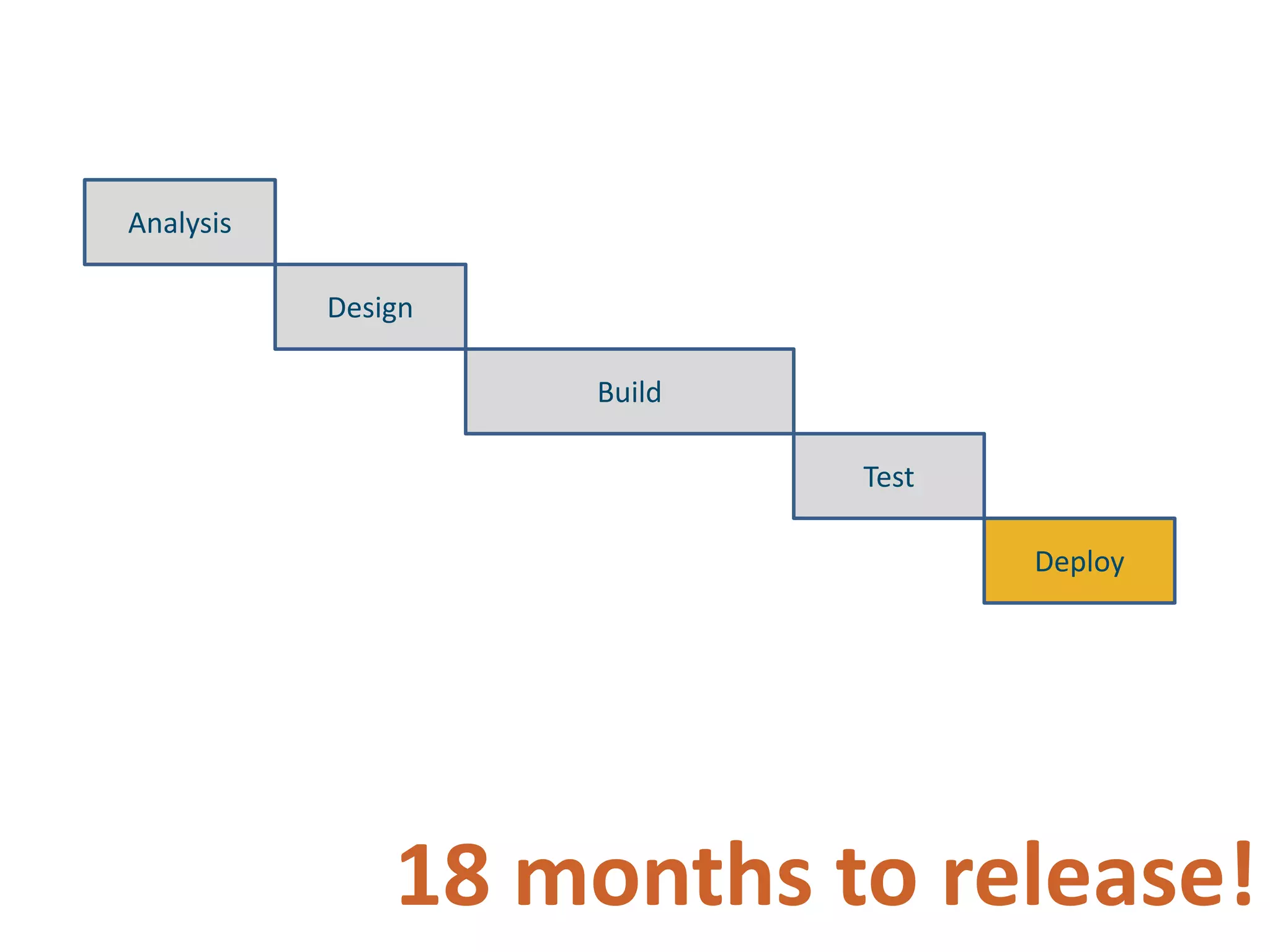
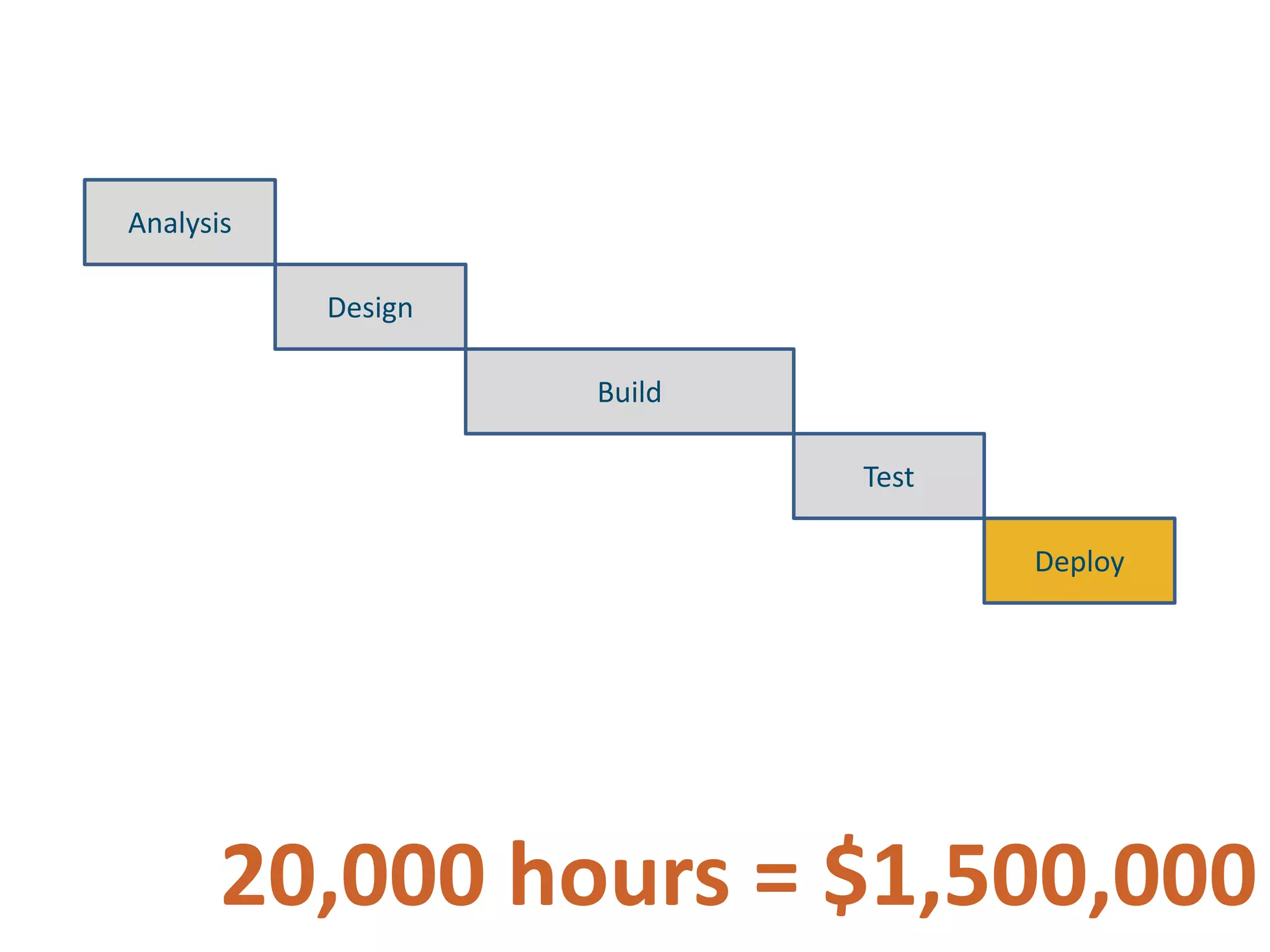
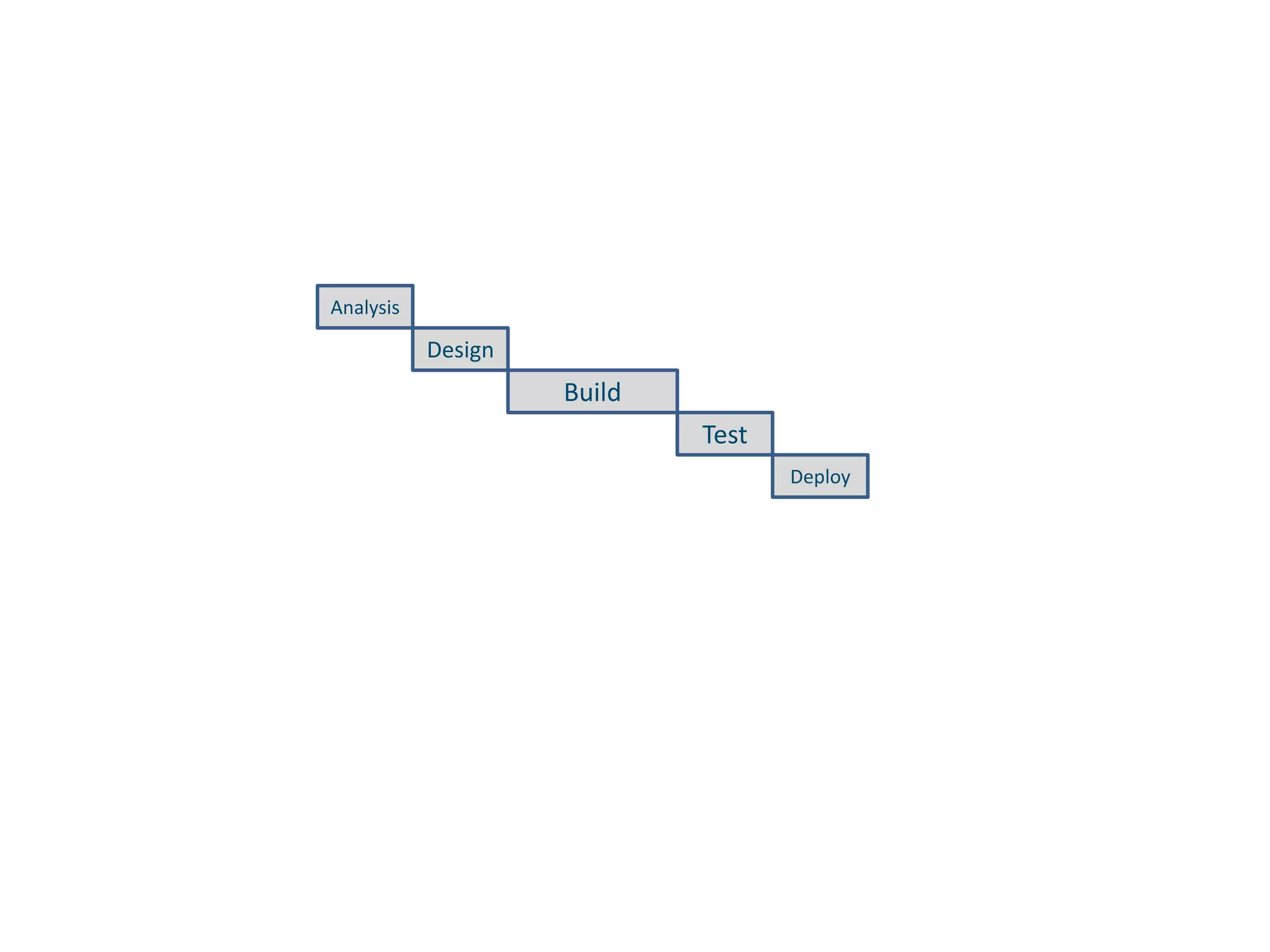
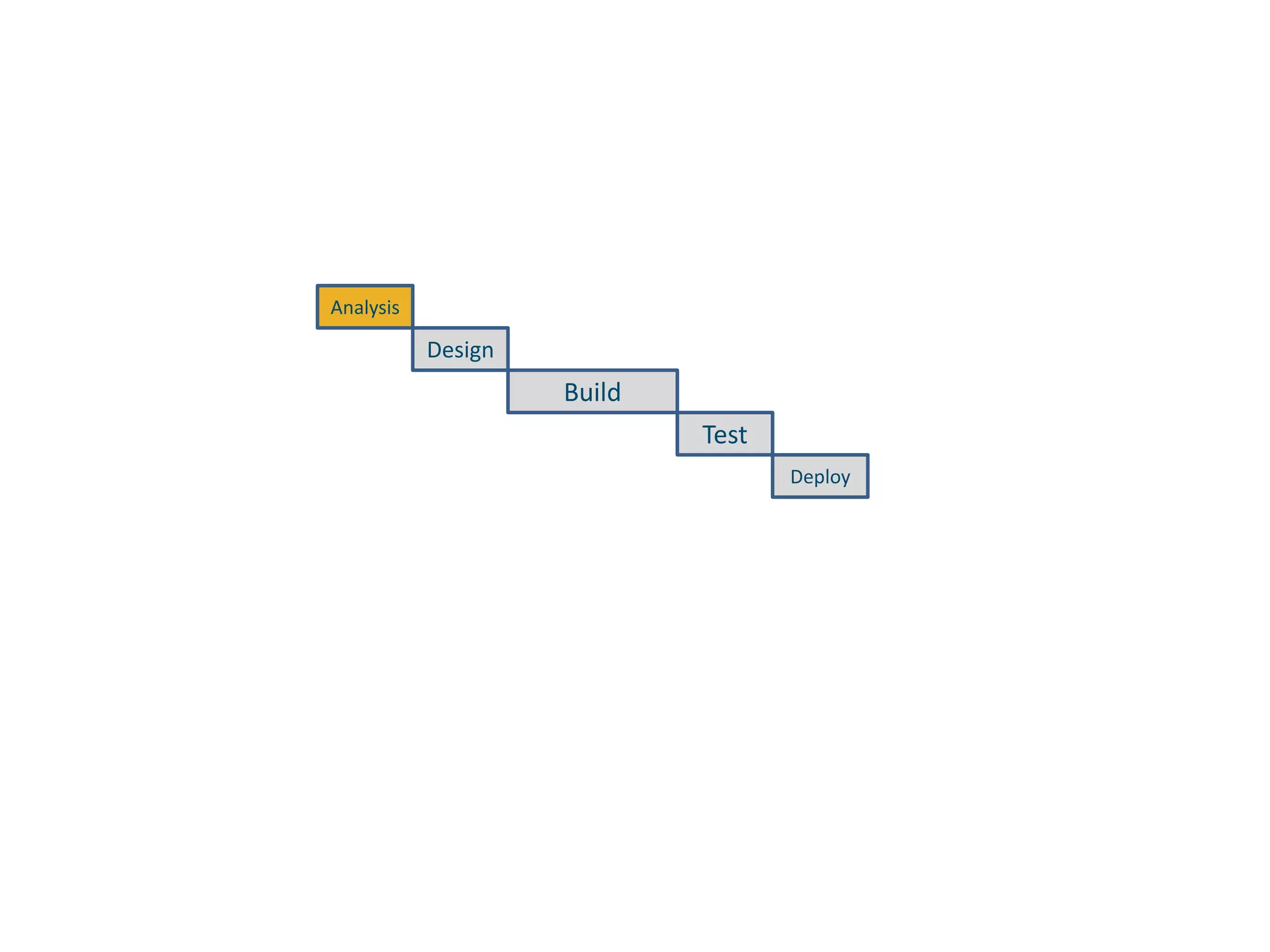
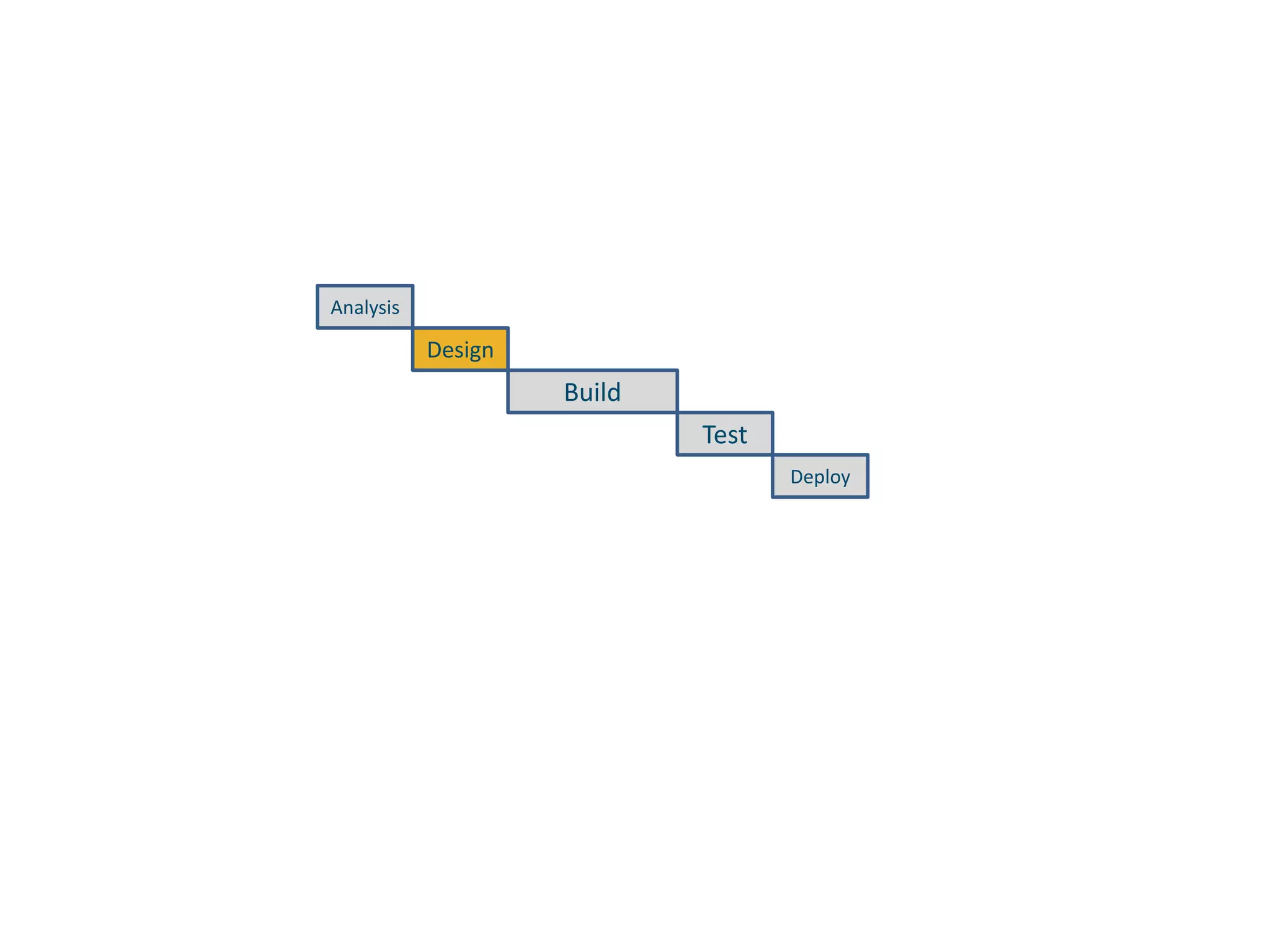
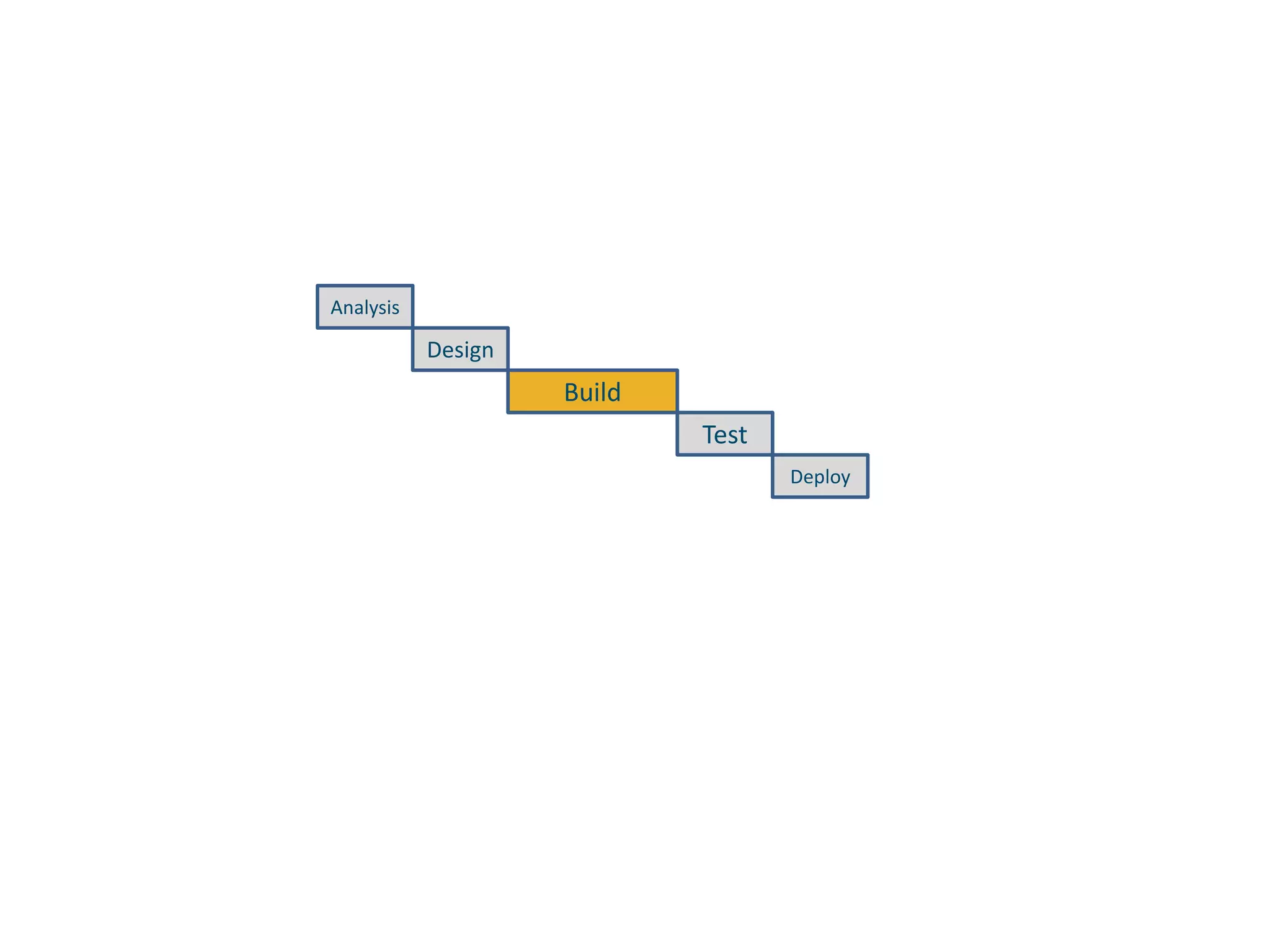
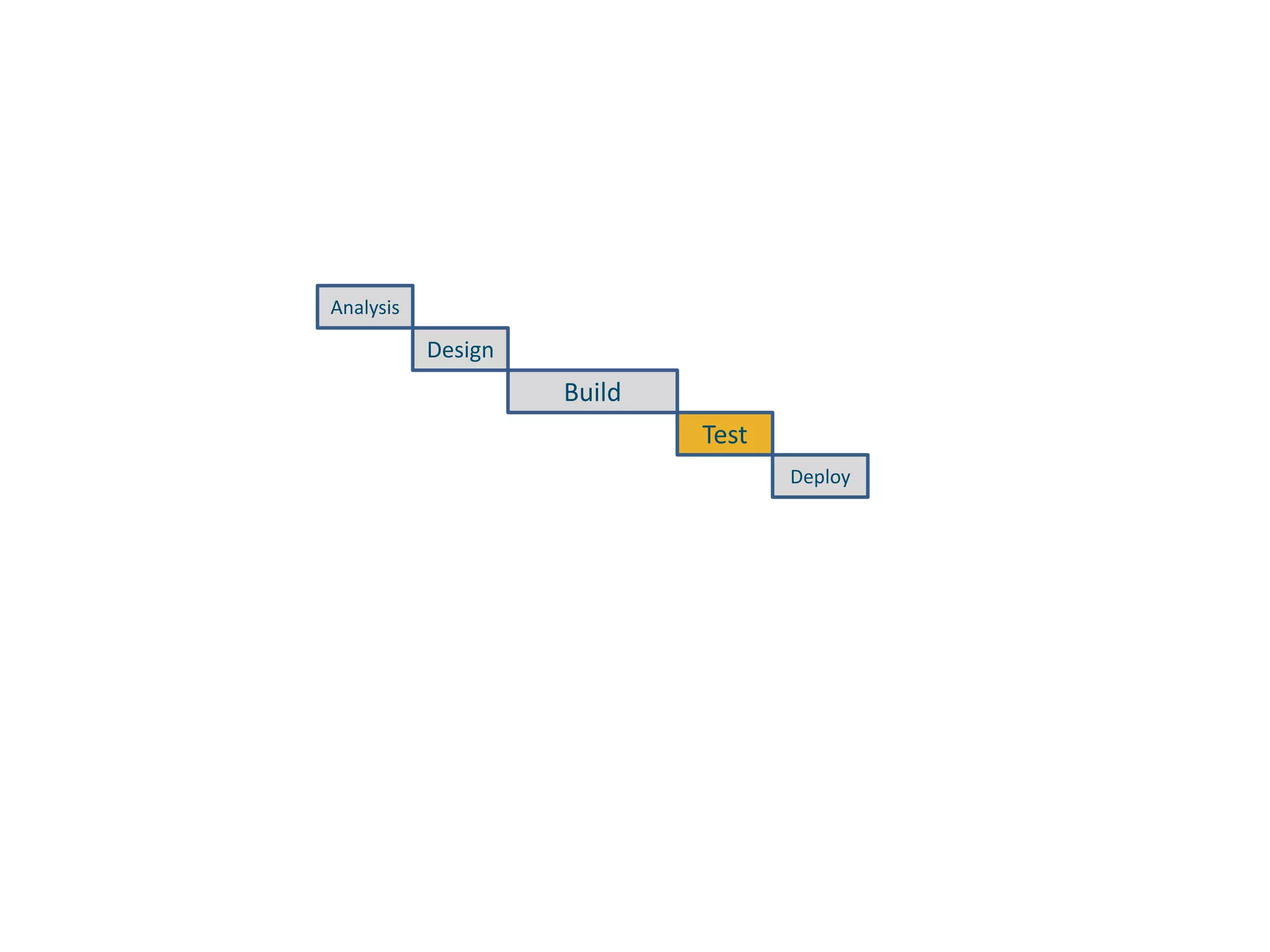
AnalysisDesignBuildTestDeploy
AnalysisDesignBuildTestDeploy18 months to release!
AnalysisDesignBuildTestDeploy20,000 hours = $1,500,000
CostTimeScope
CostTimeScope
CostTimeScope
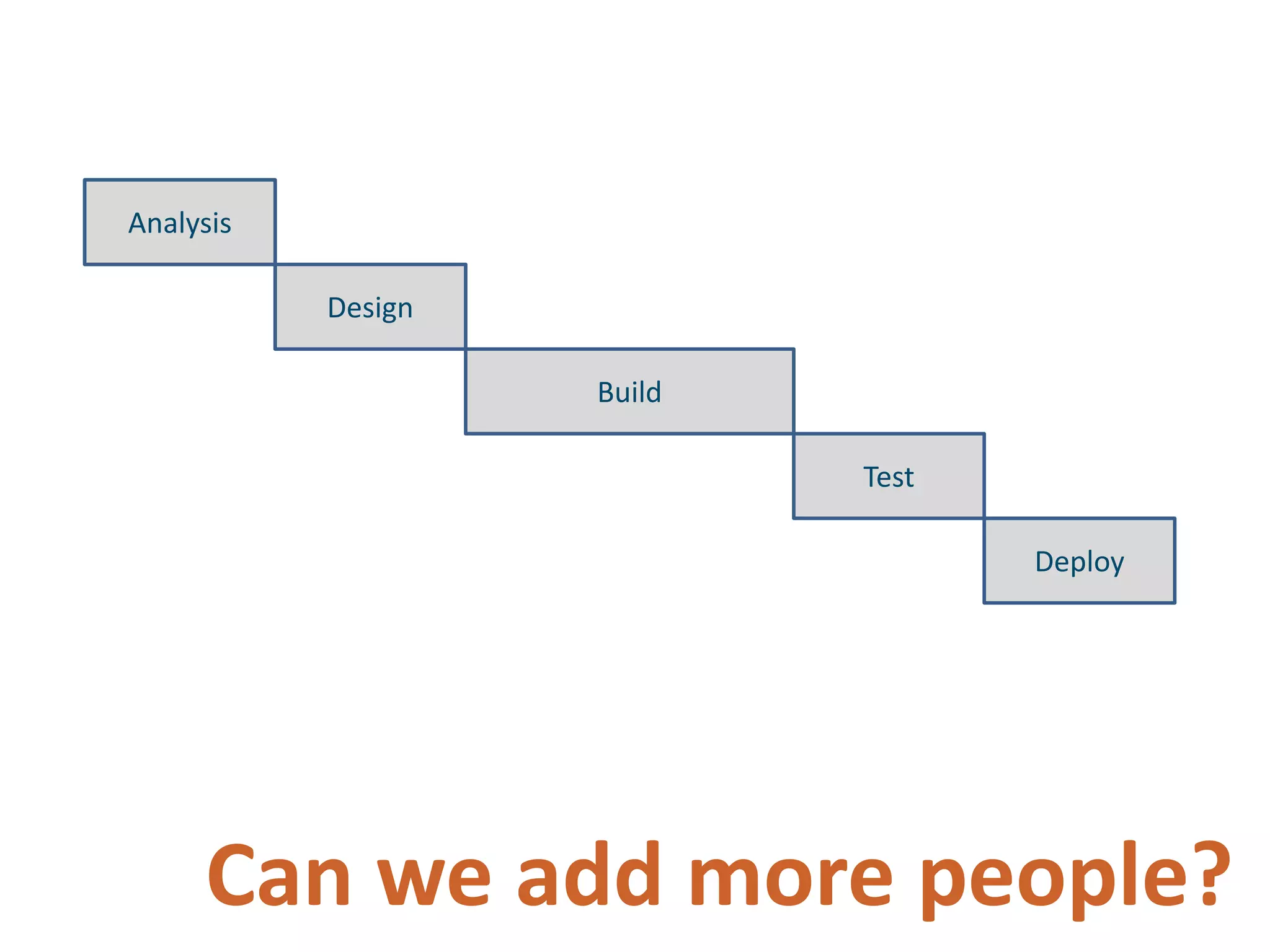
AnalysisDesignBuildTestDeployCan we add more people?
AnalysisDesignBuildTestDeploy
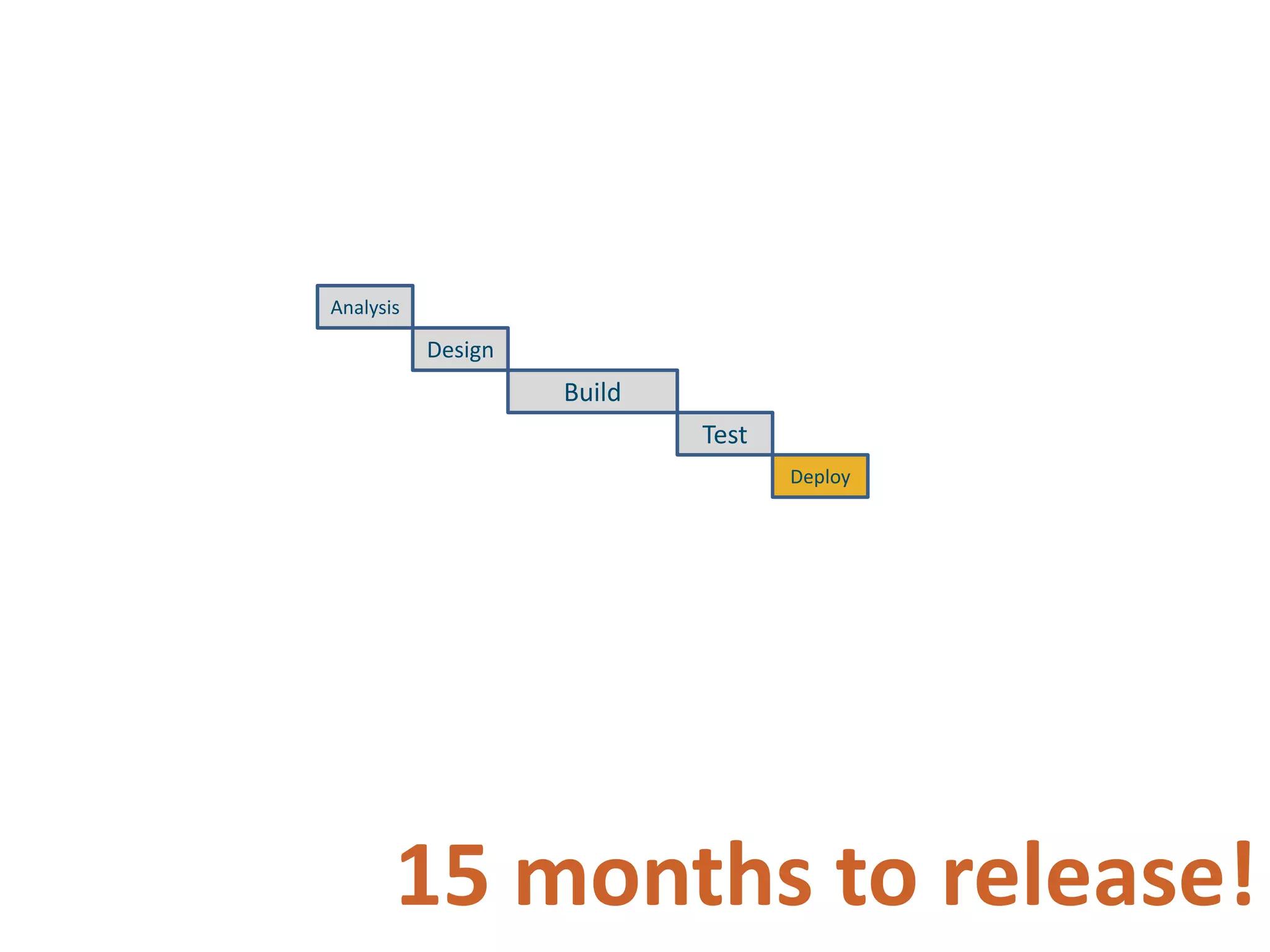
AnalysisDesignBuildTestDeploy15 months to release!
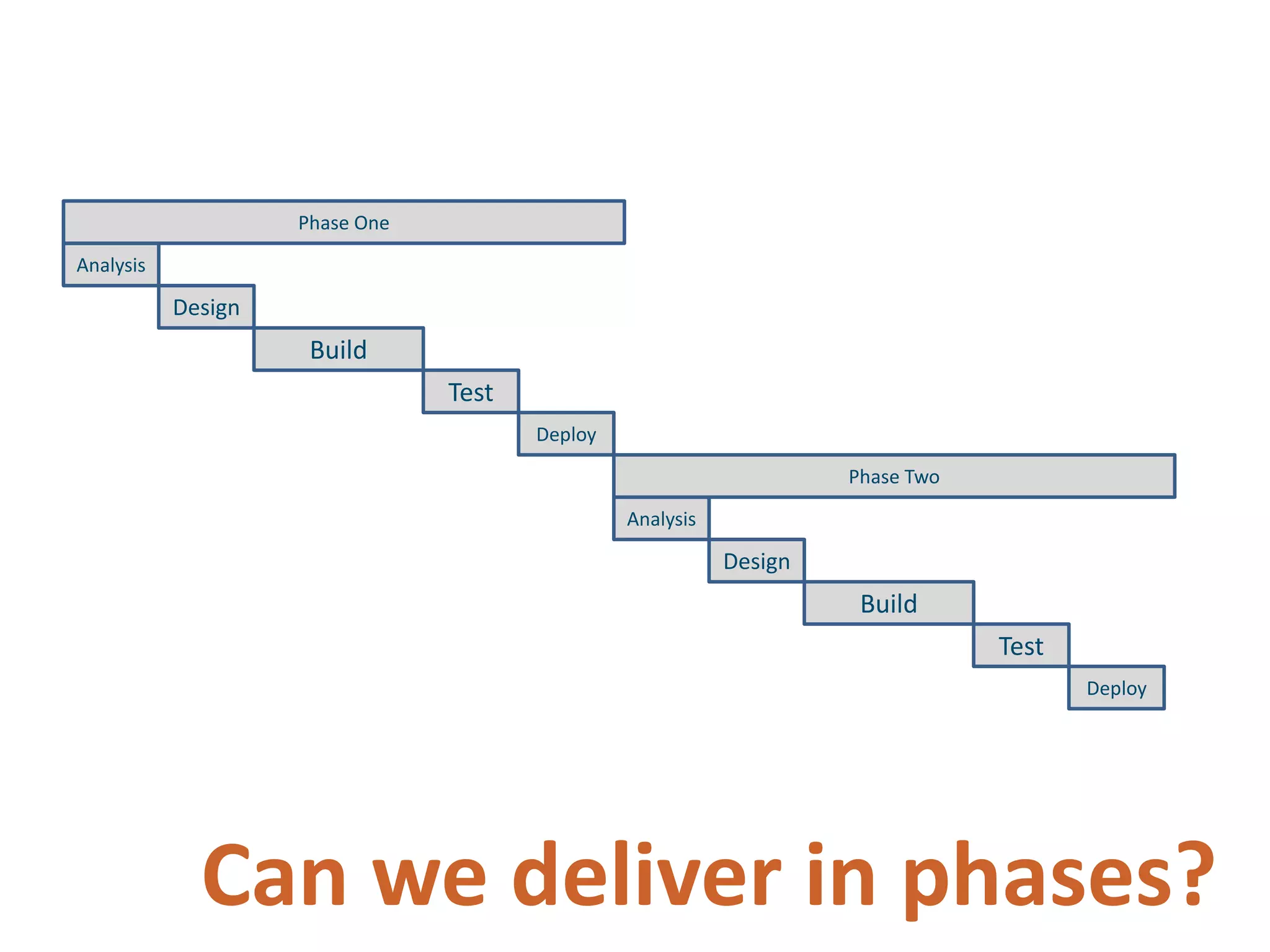
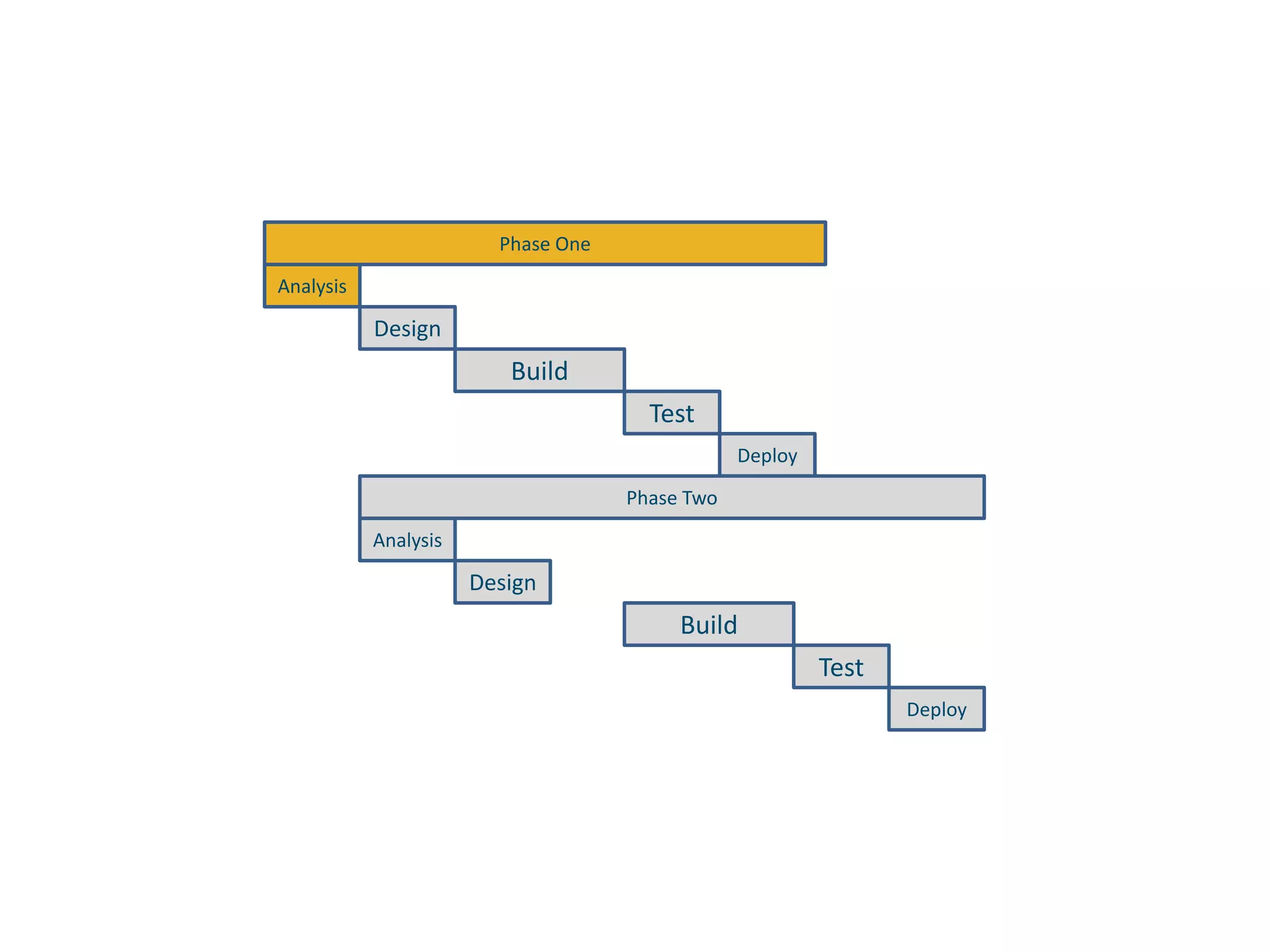
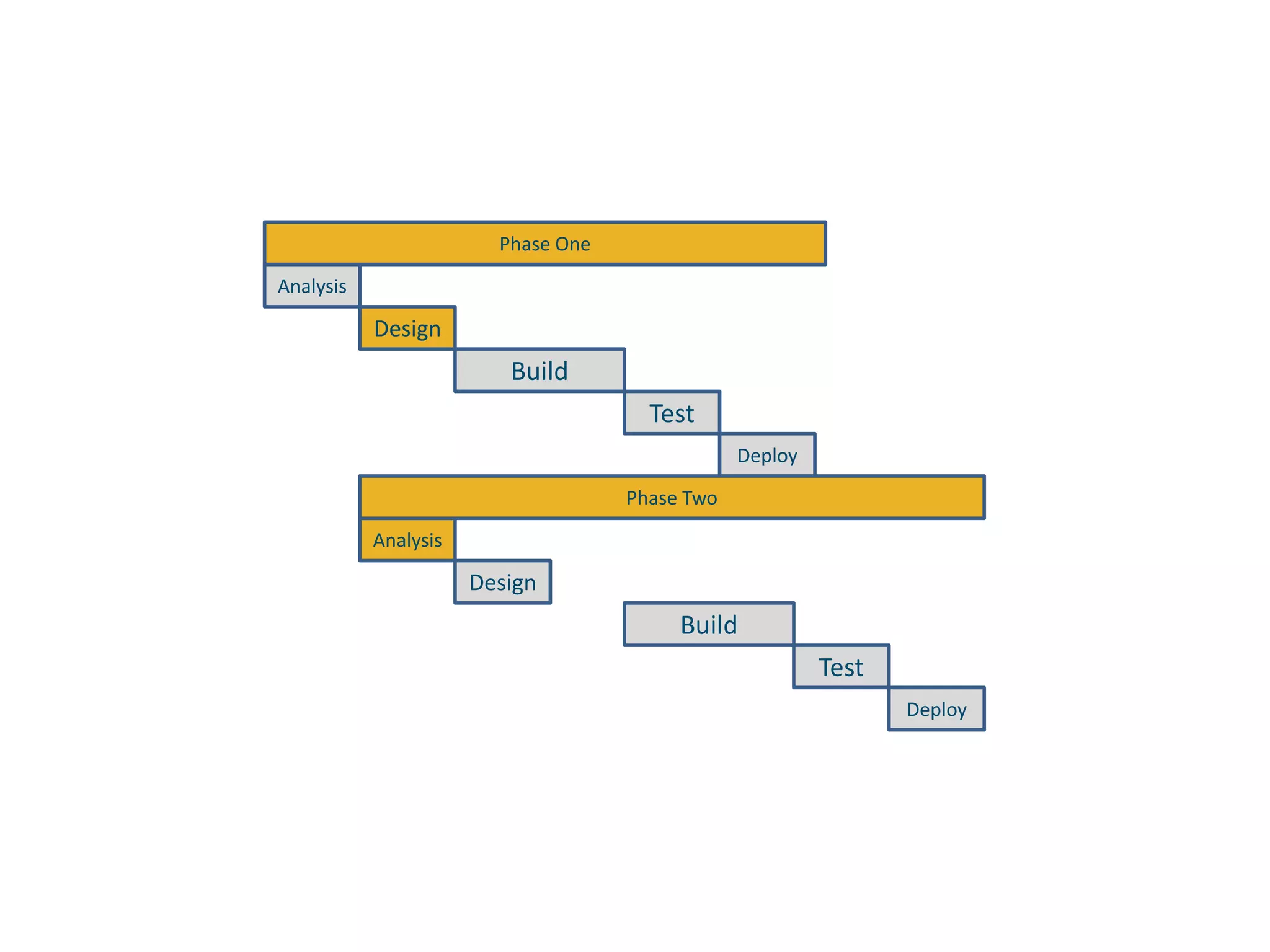
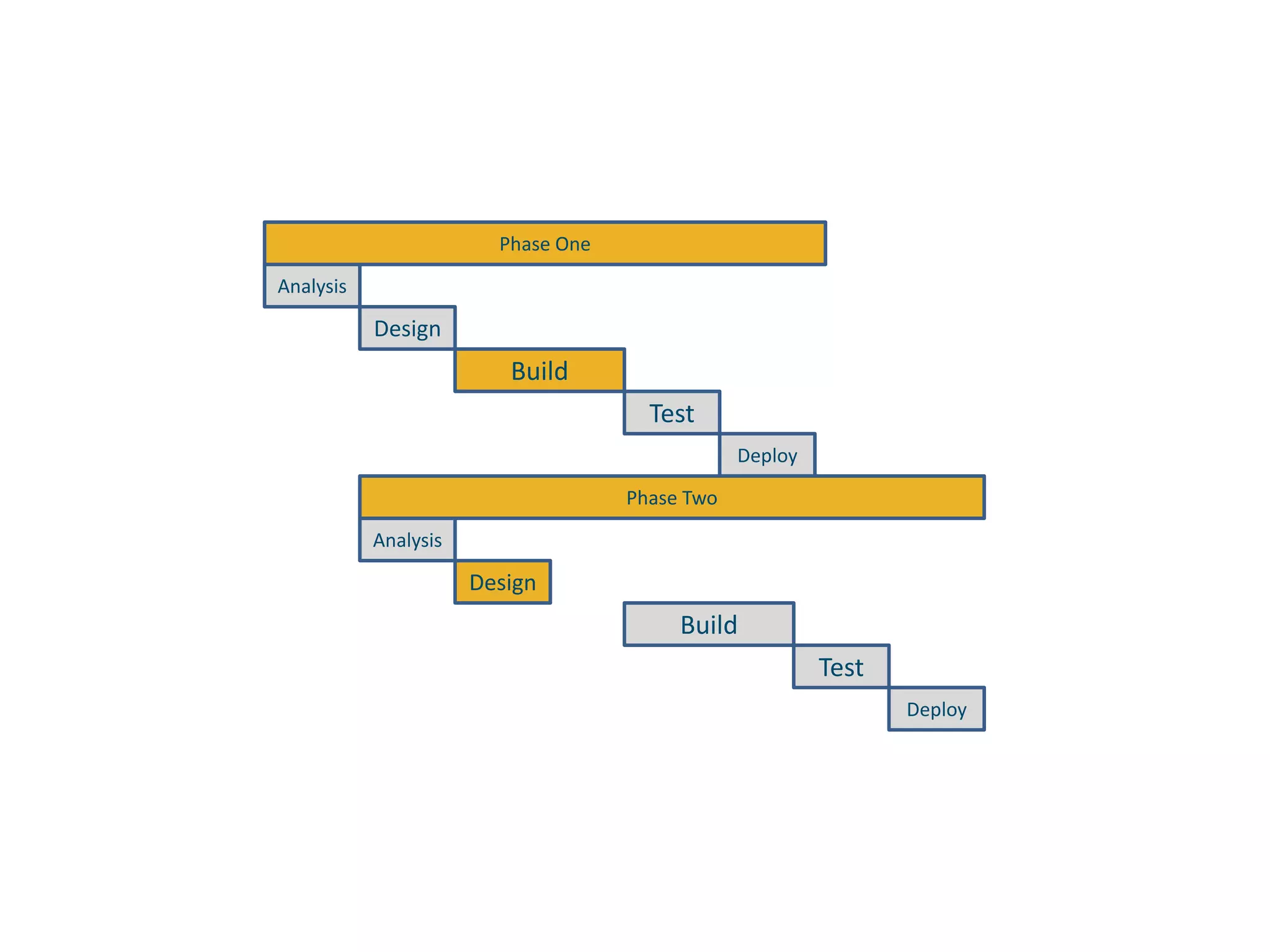
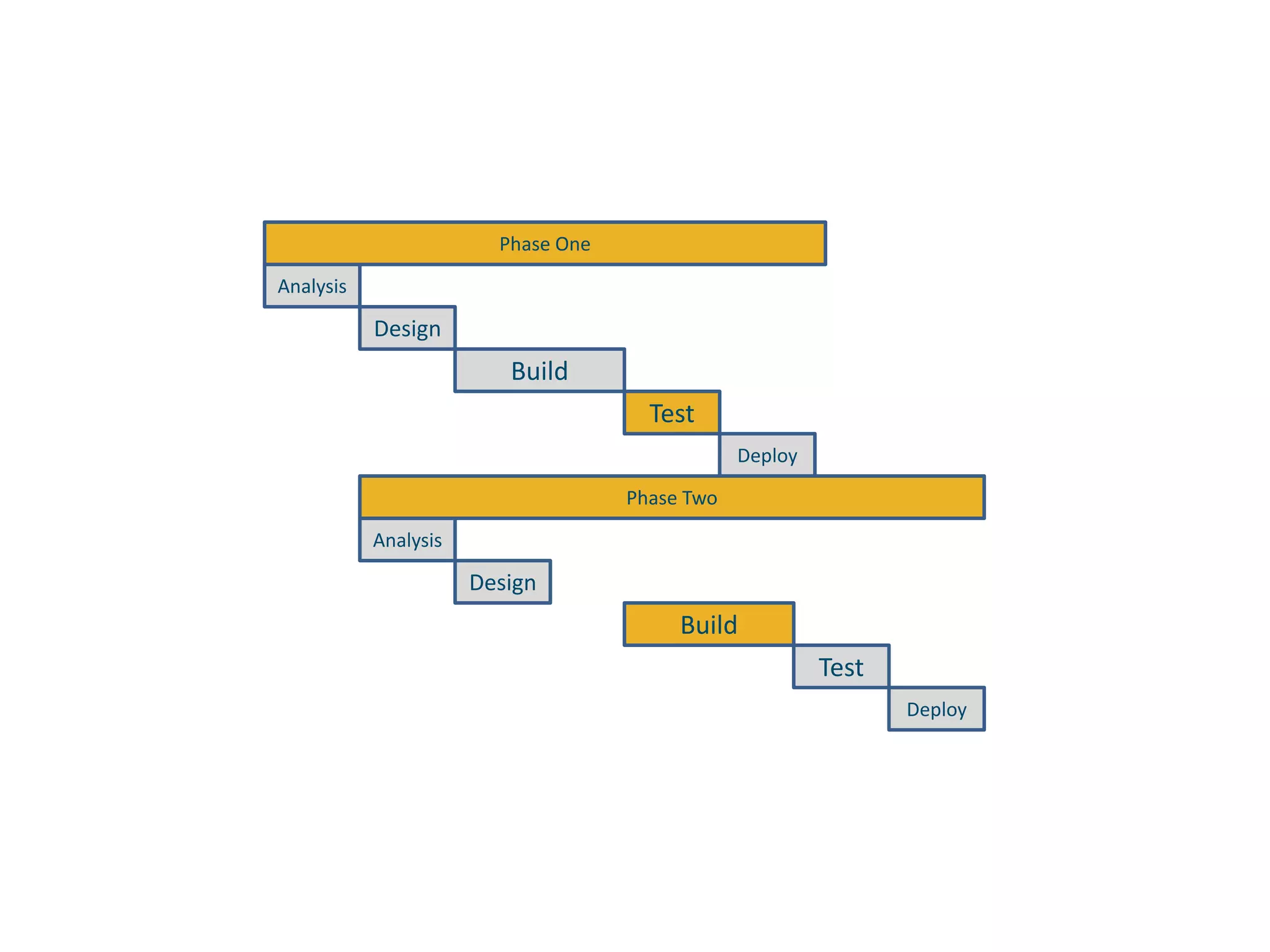
Phase OneAnalysisDesignBuildTestDeployPhase TwoAnalysisDesignBuildTestDeployCan we deliver in phases?
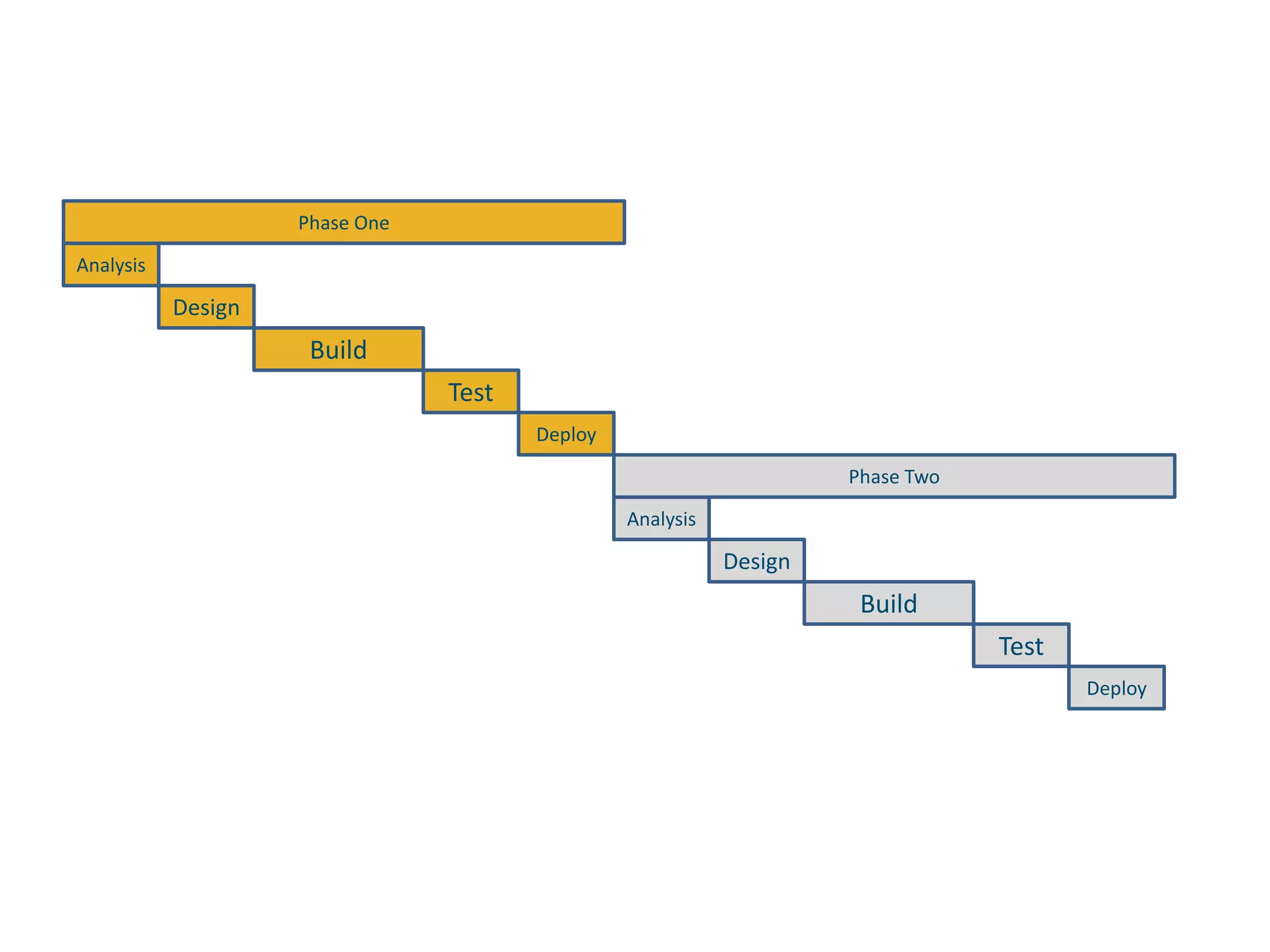
Phase OneAnalysisDesignBuildTestDeployPhase TwoAnalysisDesignBuildTestDeploy
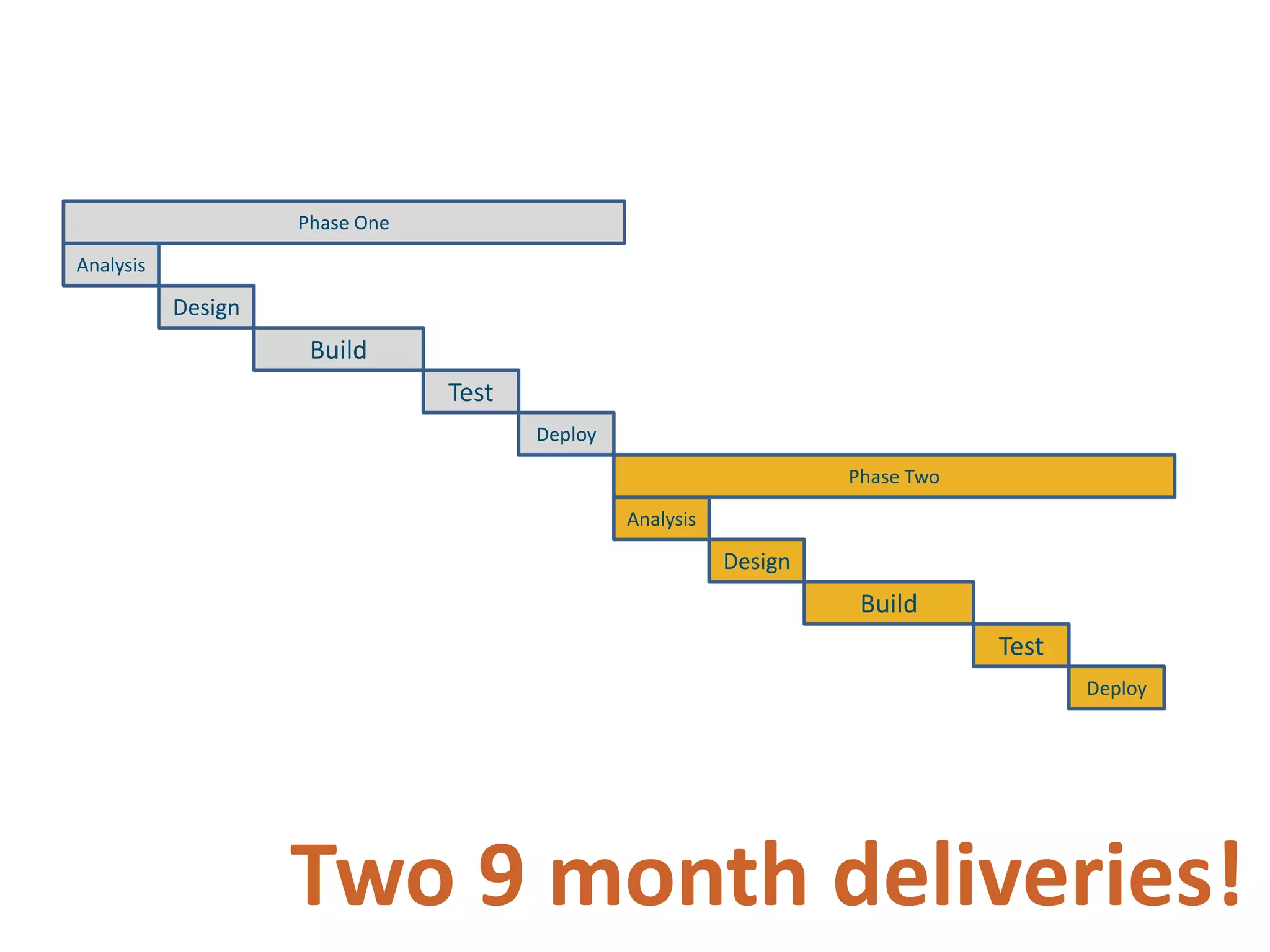
Phase OneAnalysisDesignBuildTestDeployPhase TwoAnalysisDesignBuildTestDeployTwo 9 month deliveries!
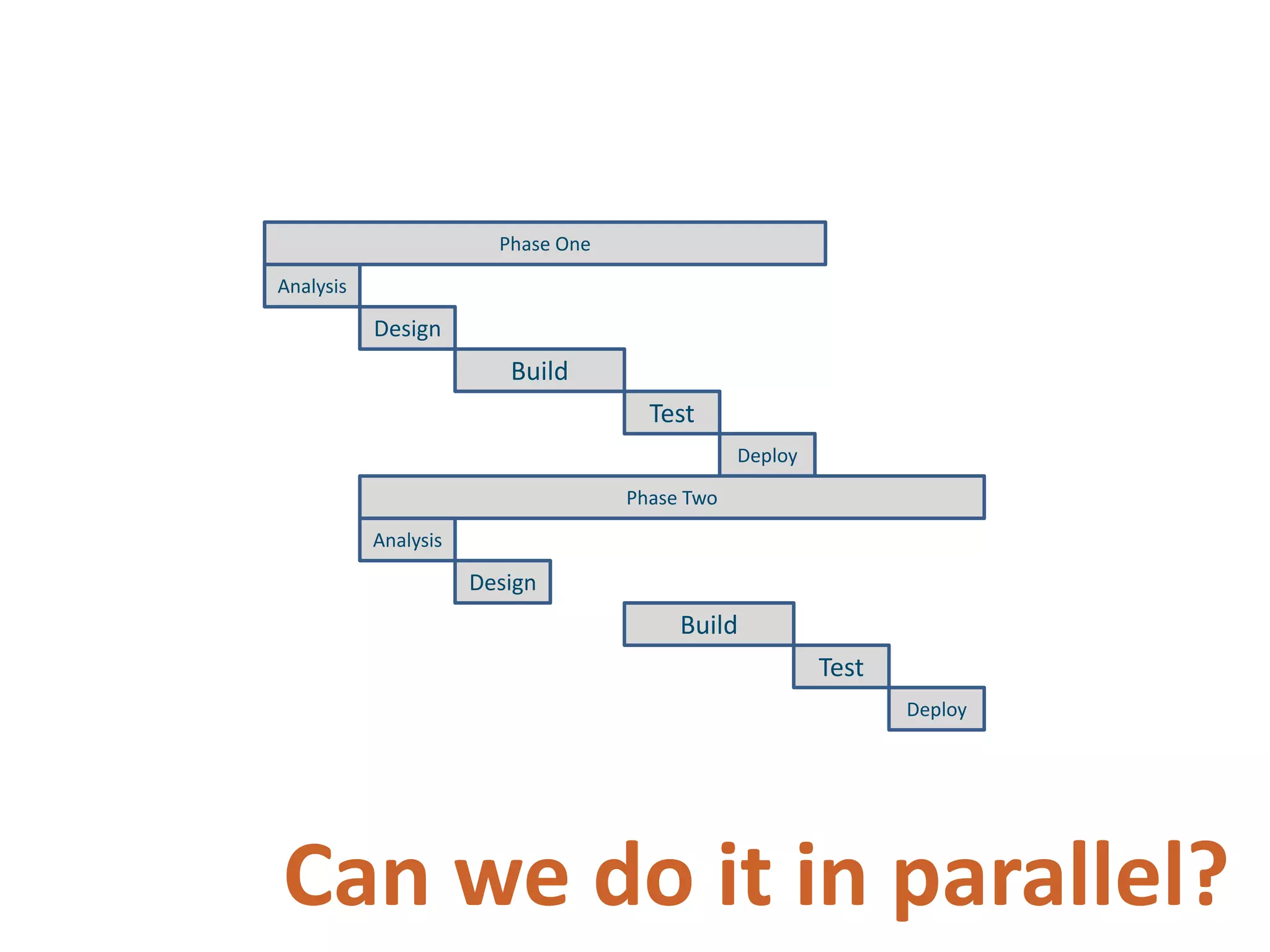
Phase OneAnalysisDesignBuildTestDeployPhase TwoAnalysisDesignBuildTestDeployCan we do it in parallel?
Phase OneAnalysisDesignBuildTestDeployPhase TwoAnalysisDesignBuildTestDeploy
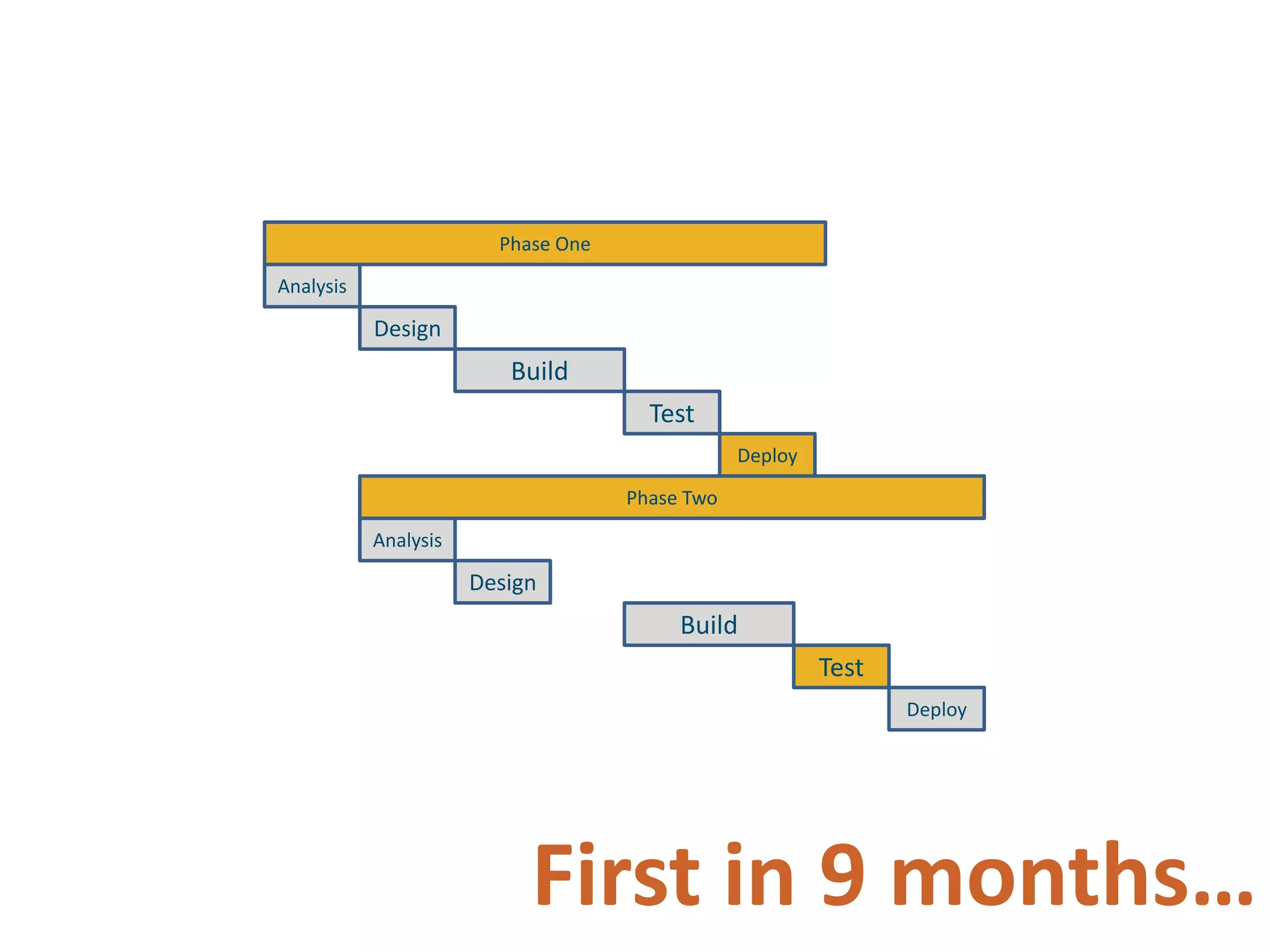
Phase OneAnalysisDesignBuildTestDeployPhase TwoAnalysisDesignBuildTestDeployFirst in 9 months…
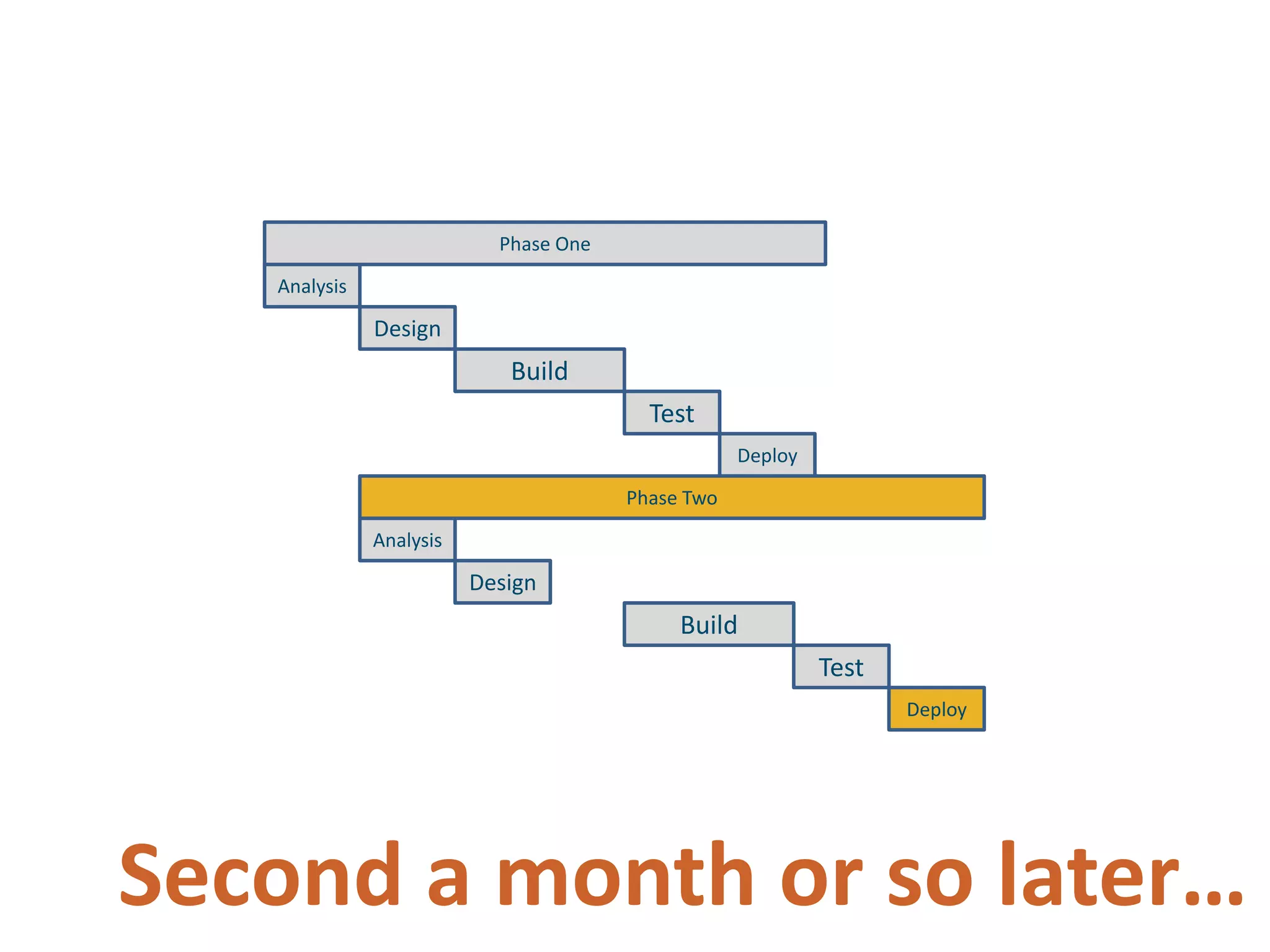
Phase OneAnalysisDesignBuildTestDeployPhase TwoAnalysisDesignBuildTestDeploySecond a month or so later…
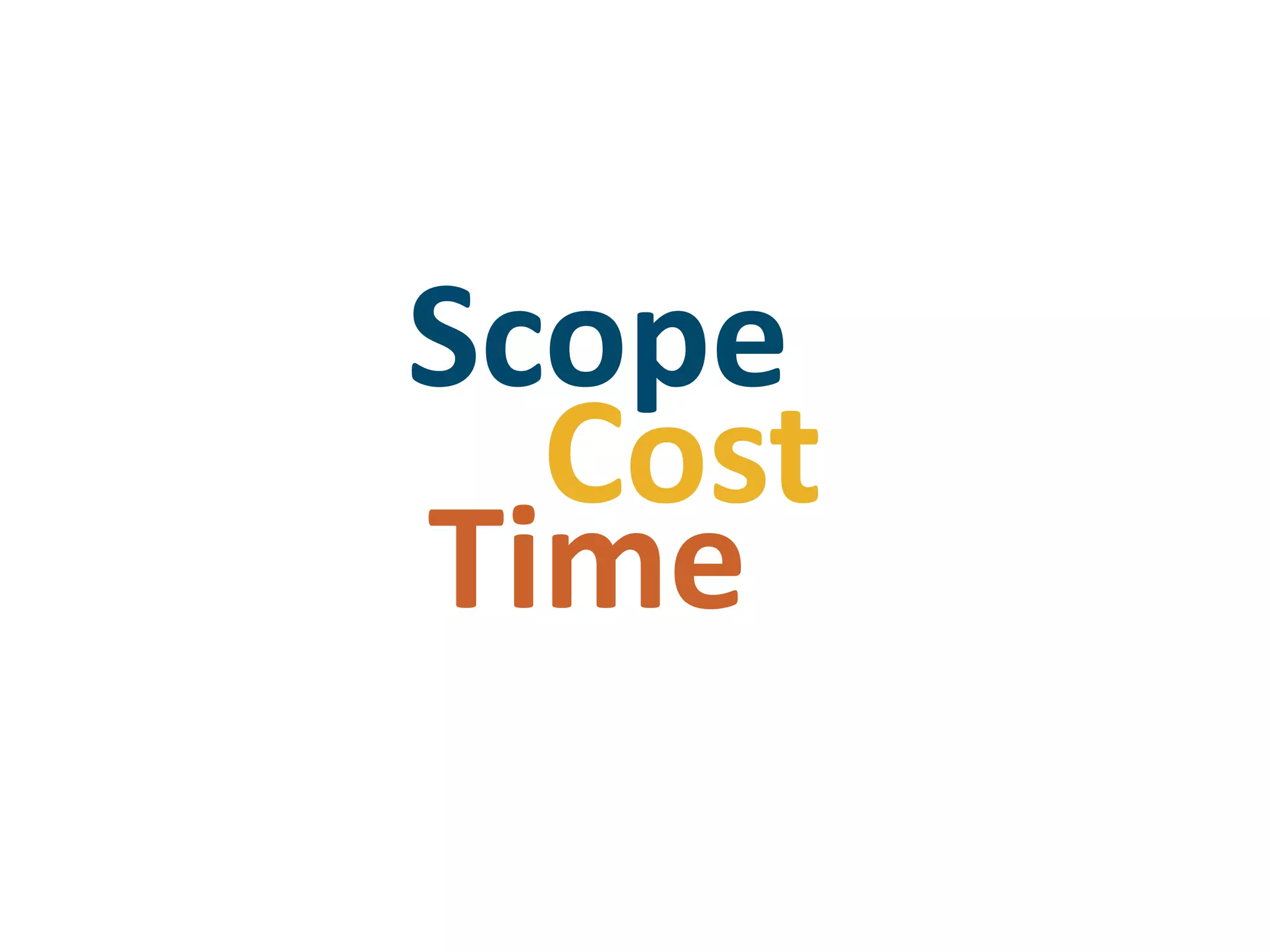
ScopeCostTime
ScopeCostTime
RiskRiskRiskScopeRiskRiskCostTimeRiskRiskRiskRisk
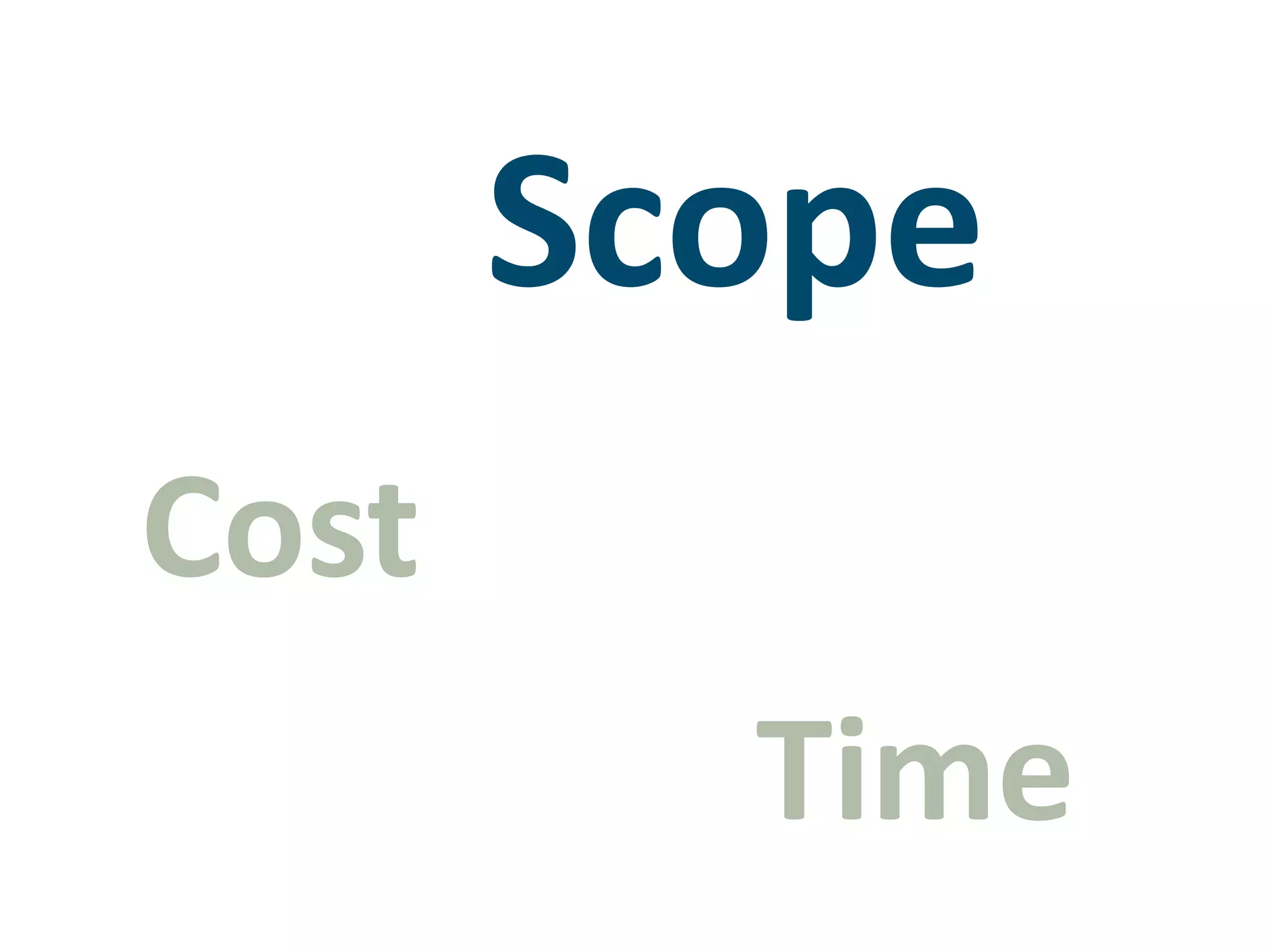
Scopeis our starting placeCostTime
ScopeCostTime
Agile
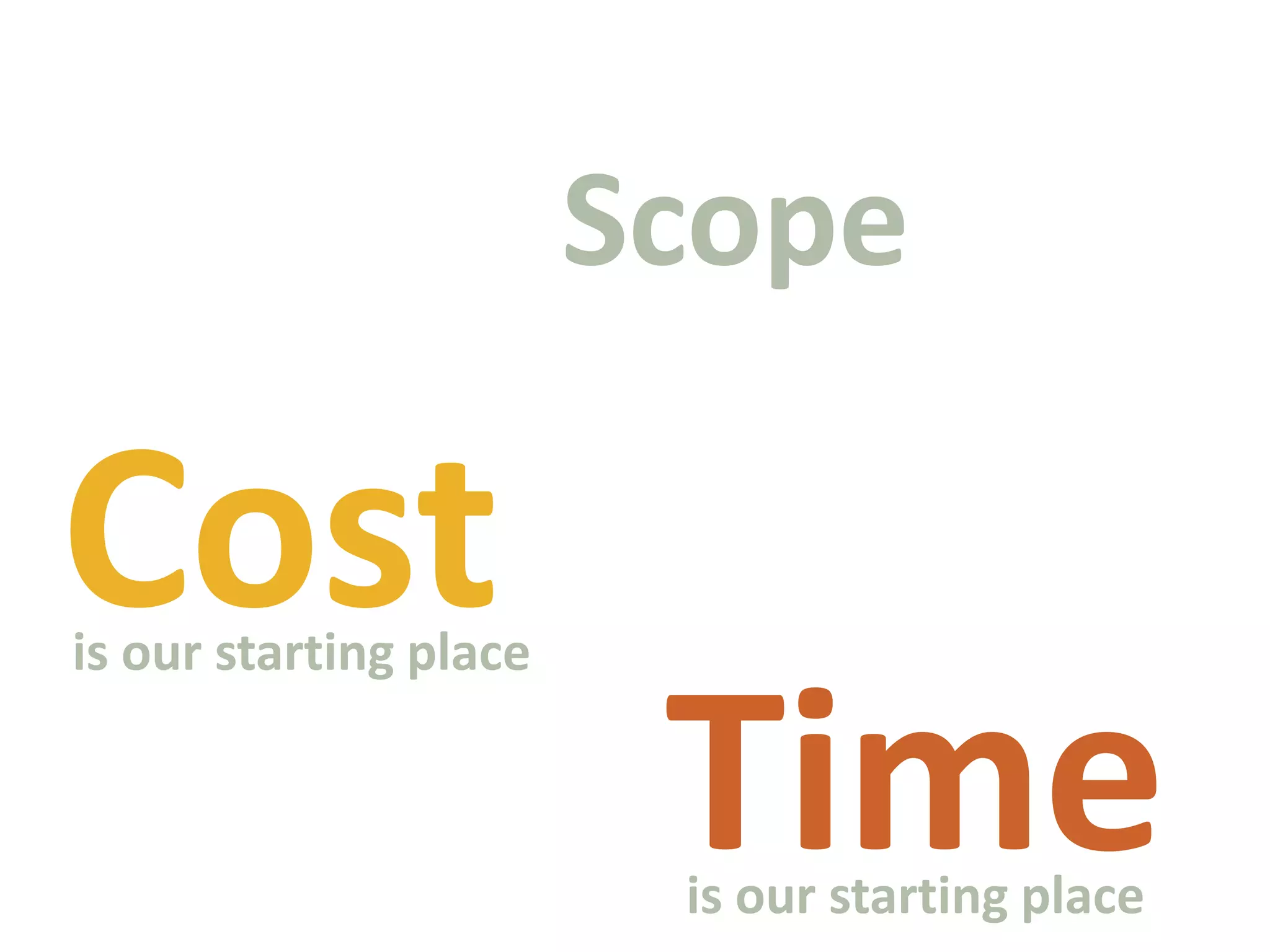
ScopeCostis our starting placeTimeis our starting place
ScopeCostTime
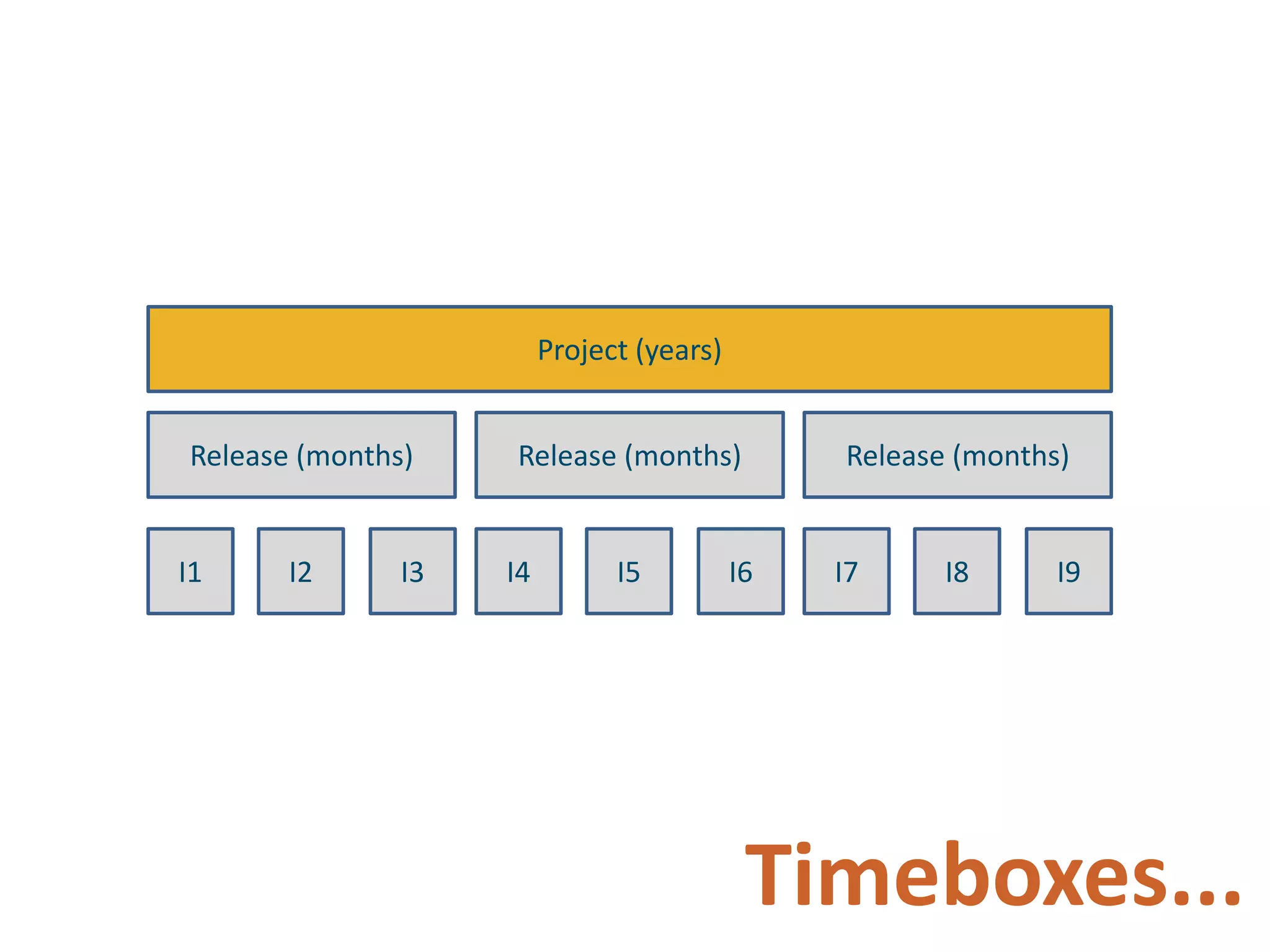
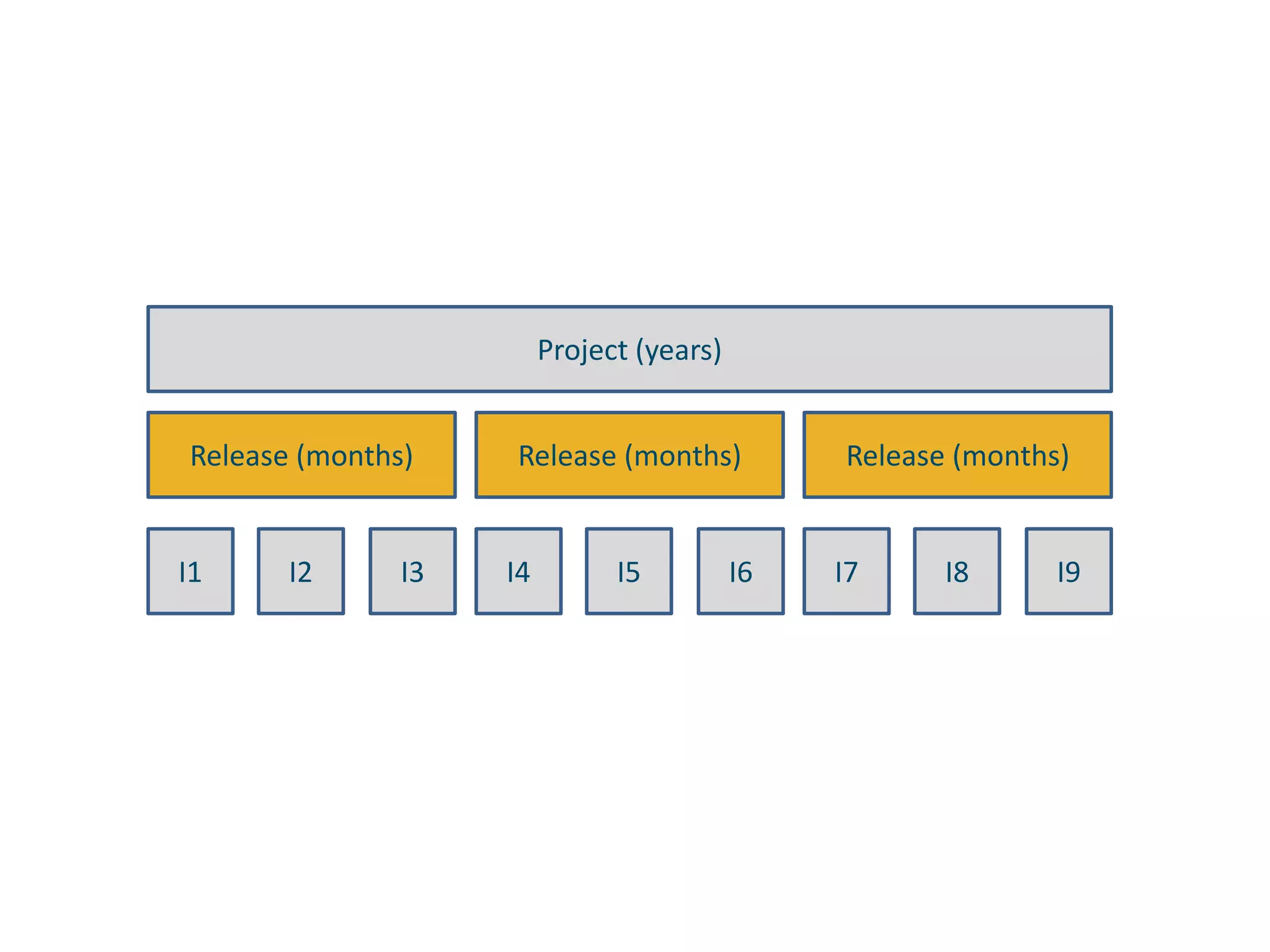
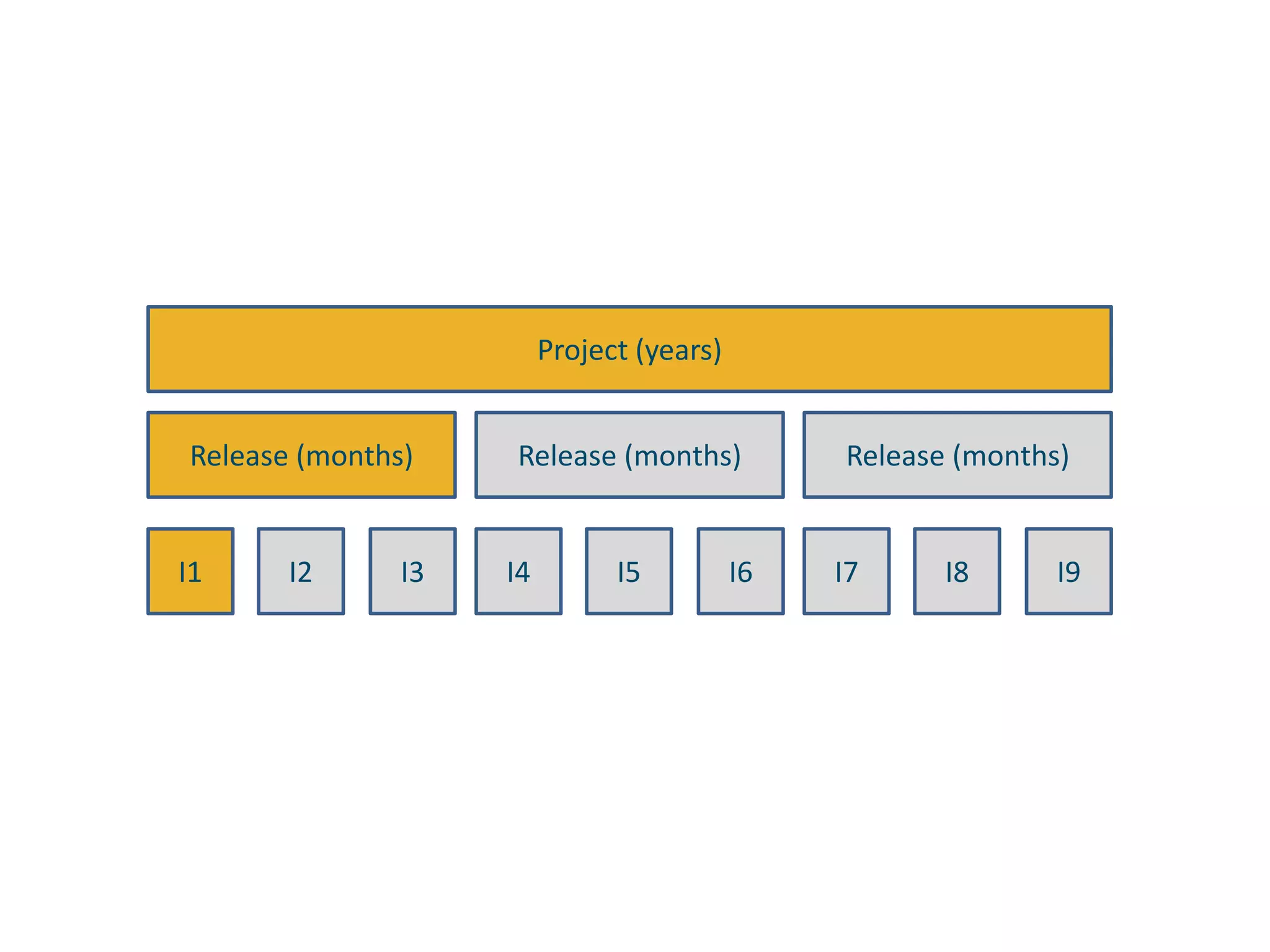
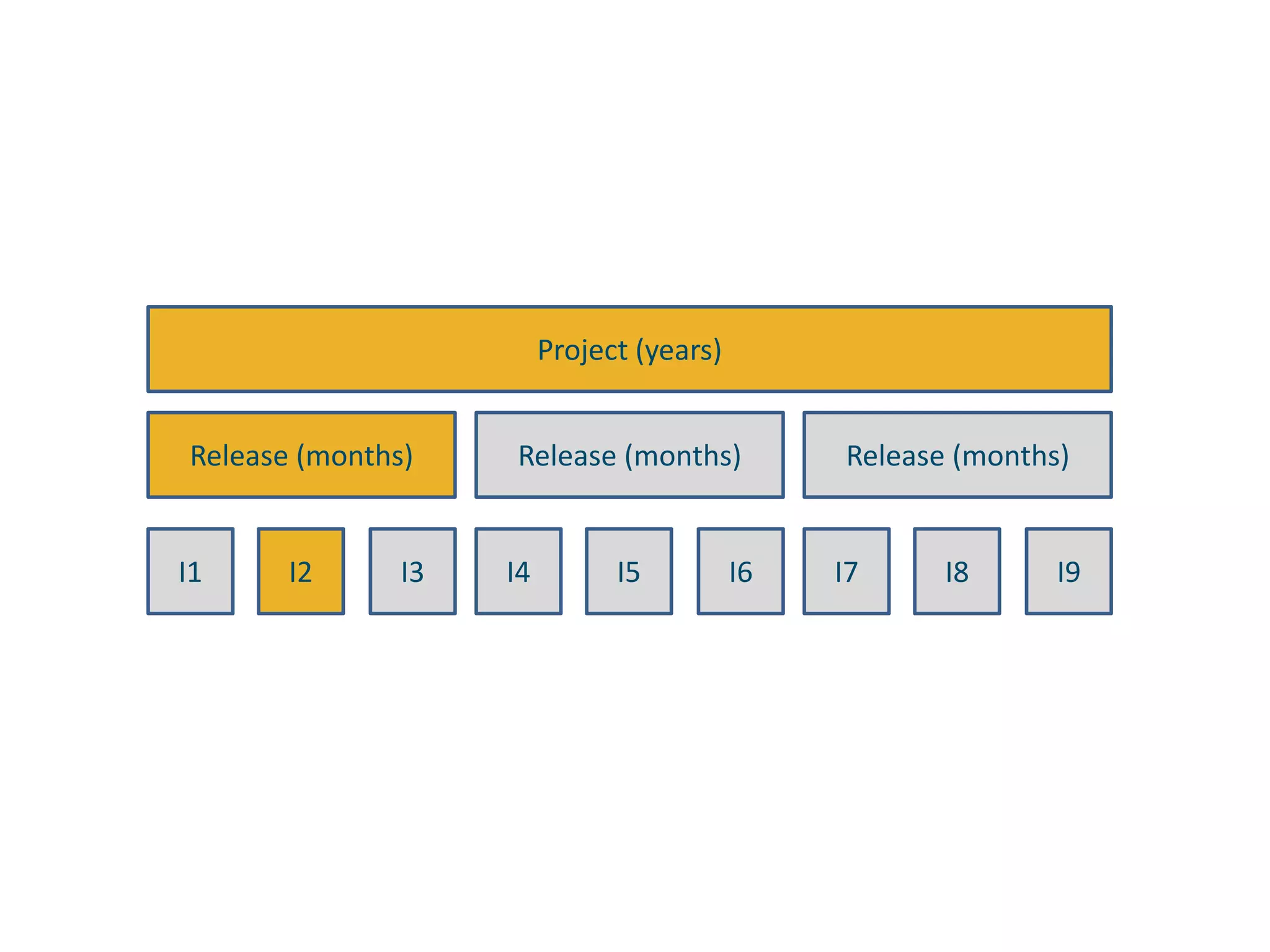
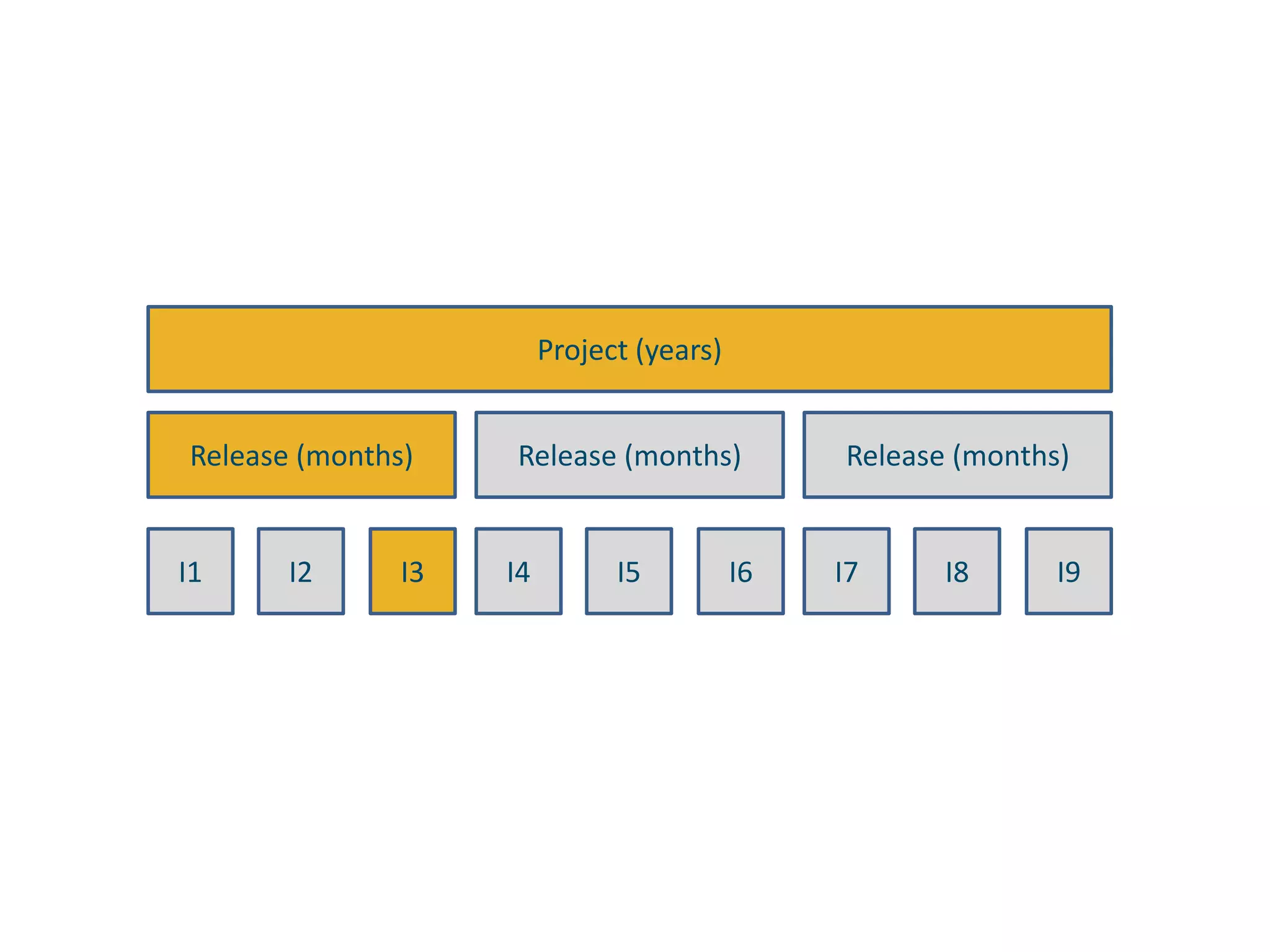
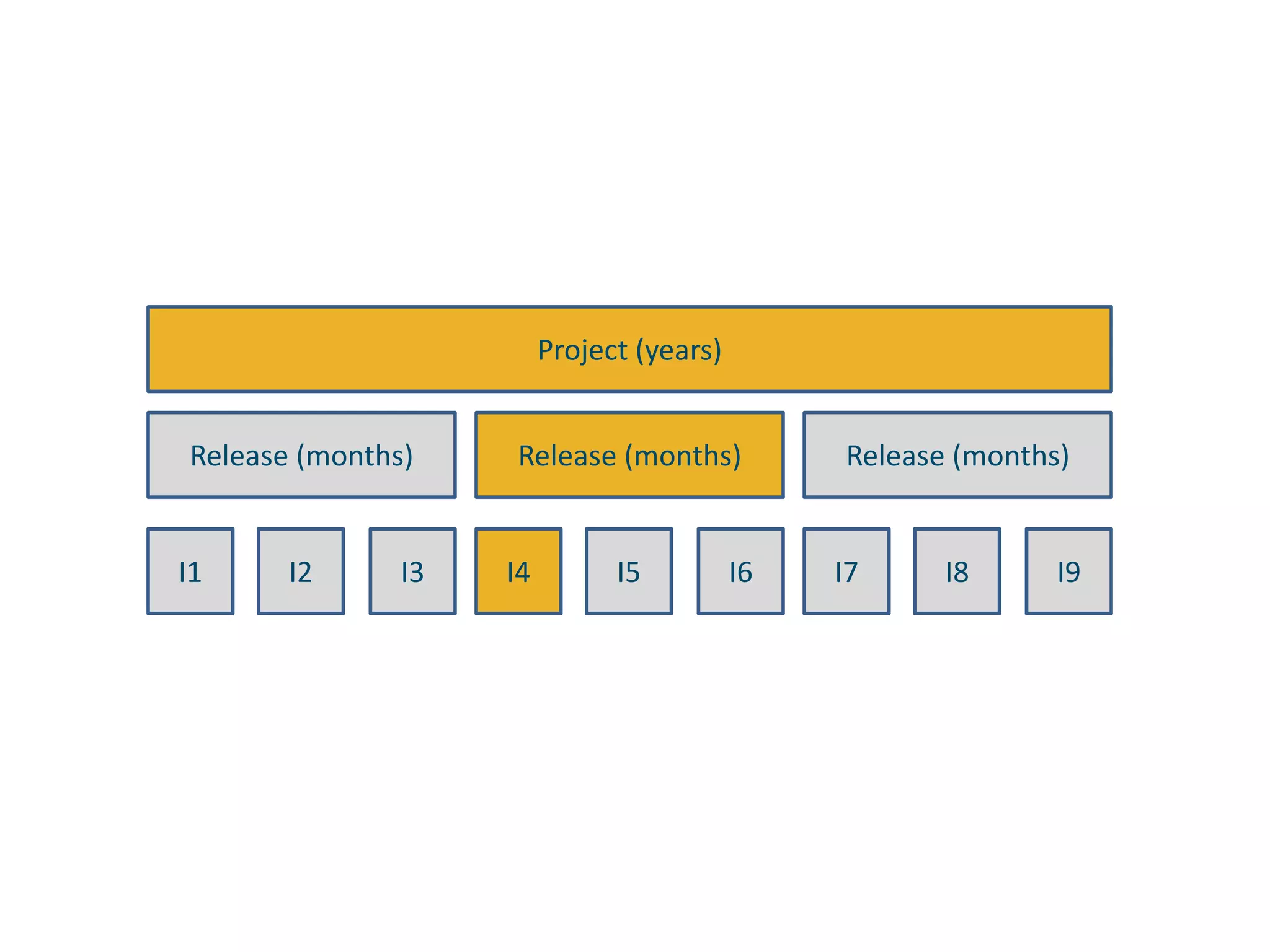
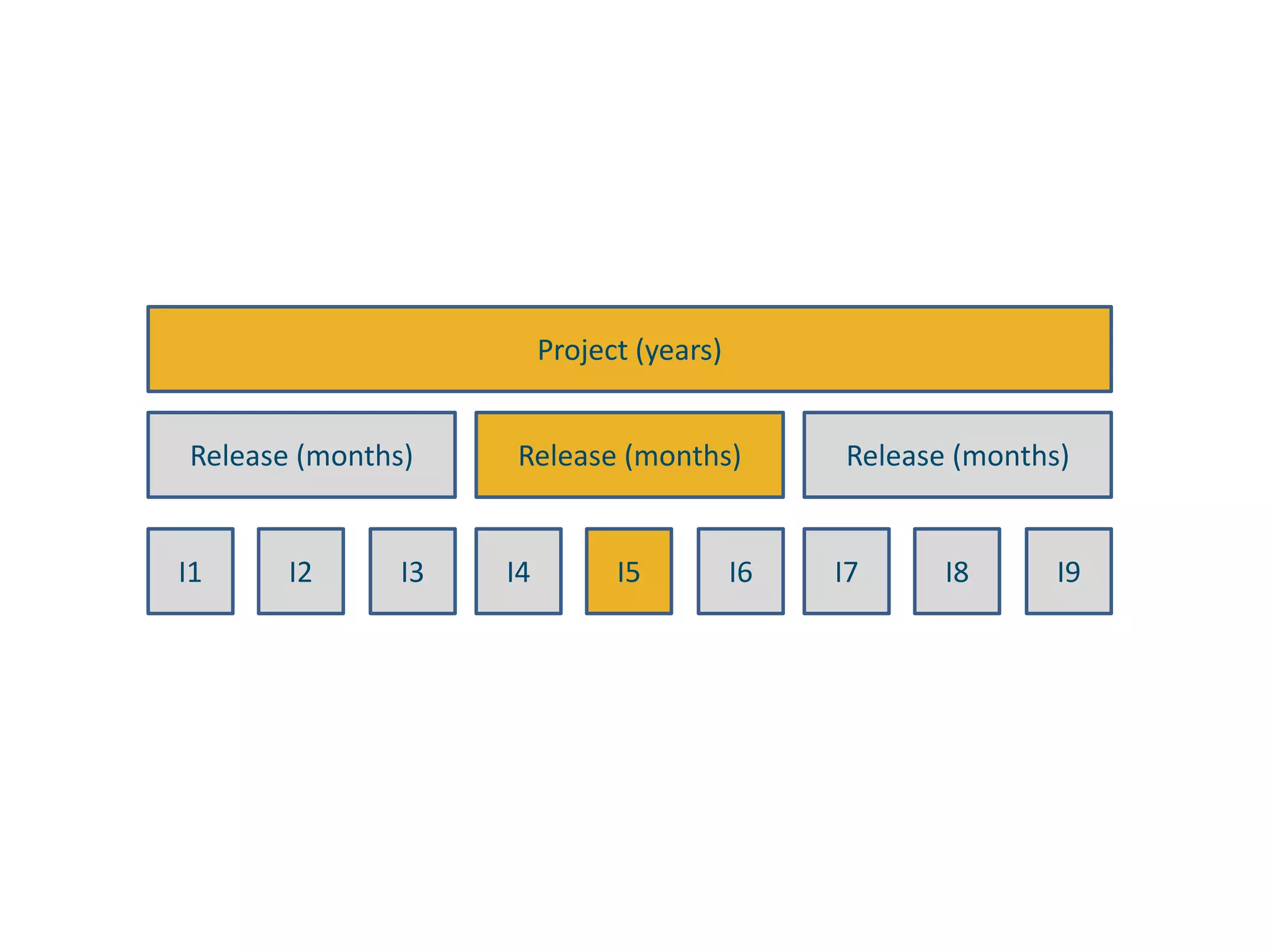
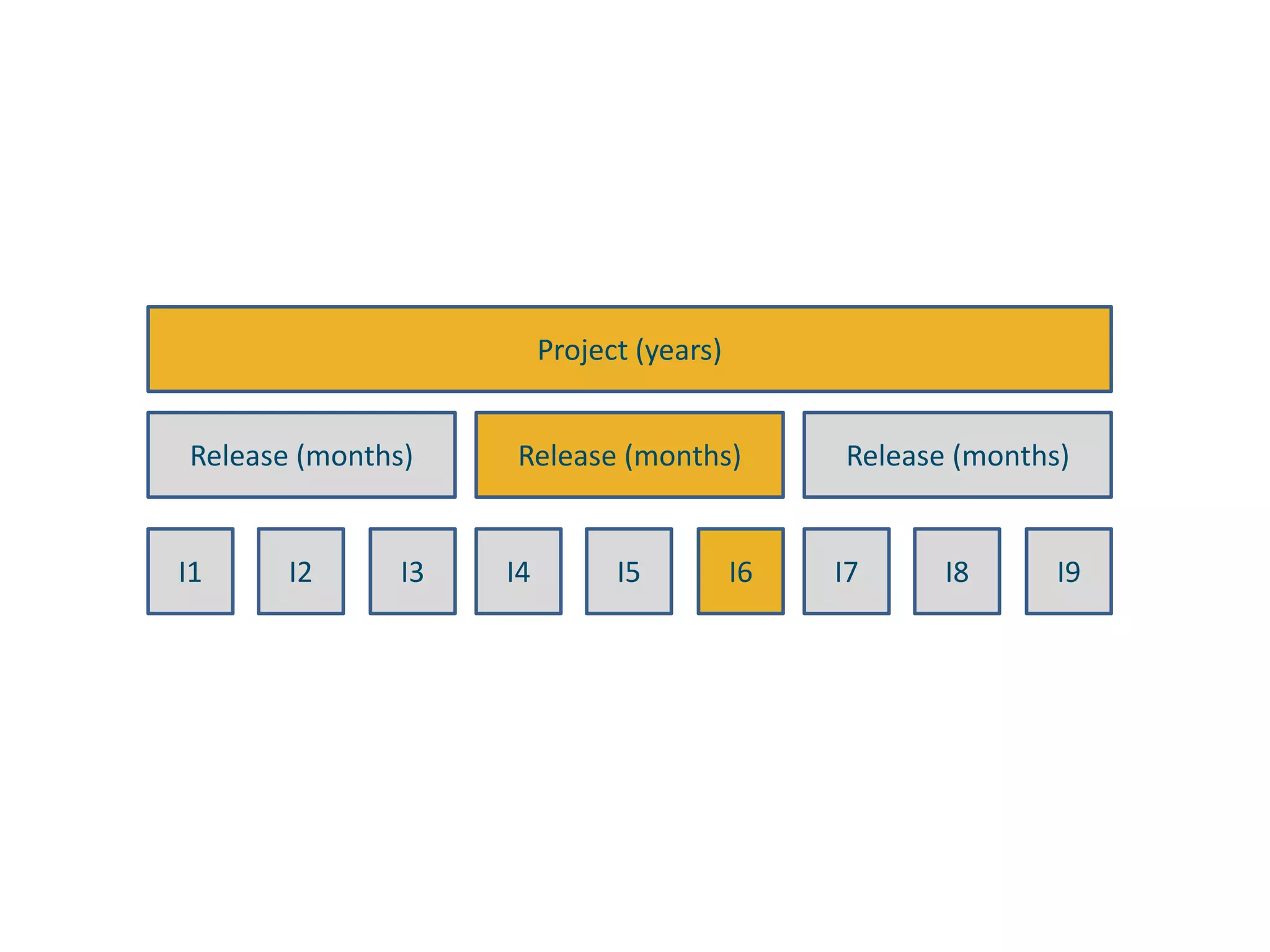
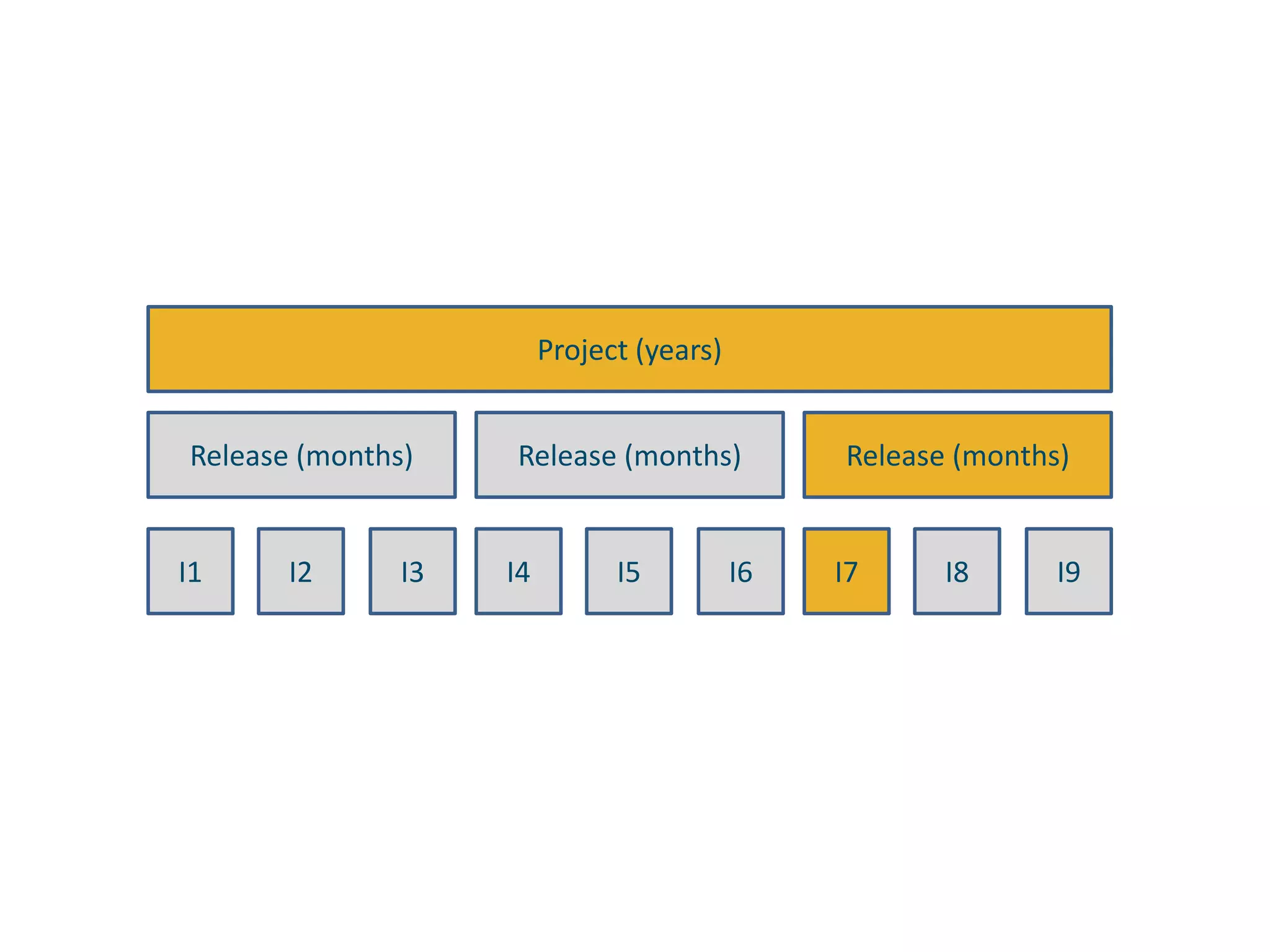
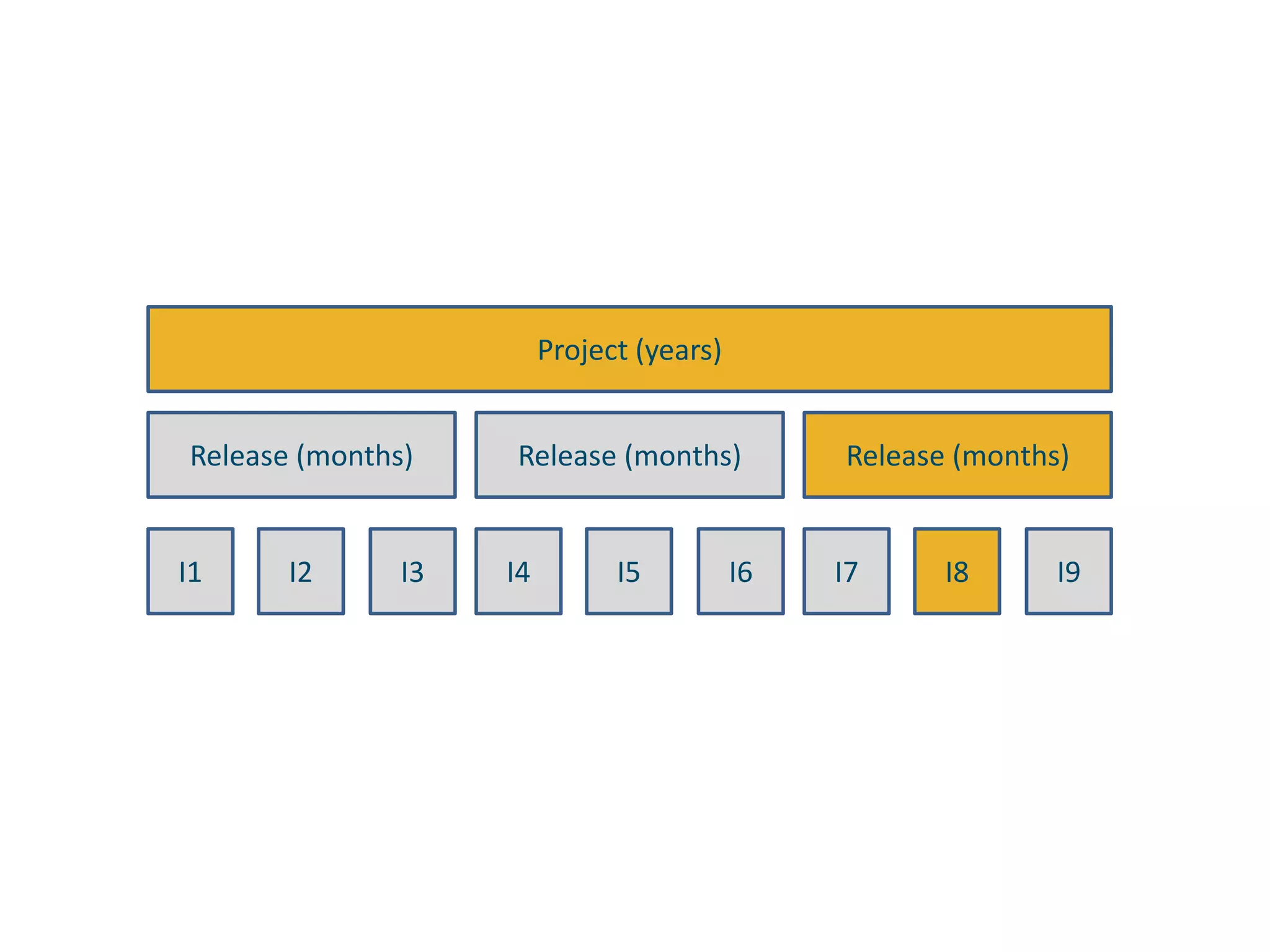
Project (years)Release (months)Release (months)Release (months)I1I2I3I4I5I6I7I8I9Timeboxes...
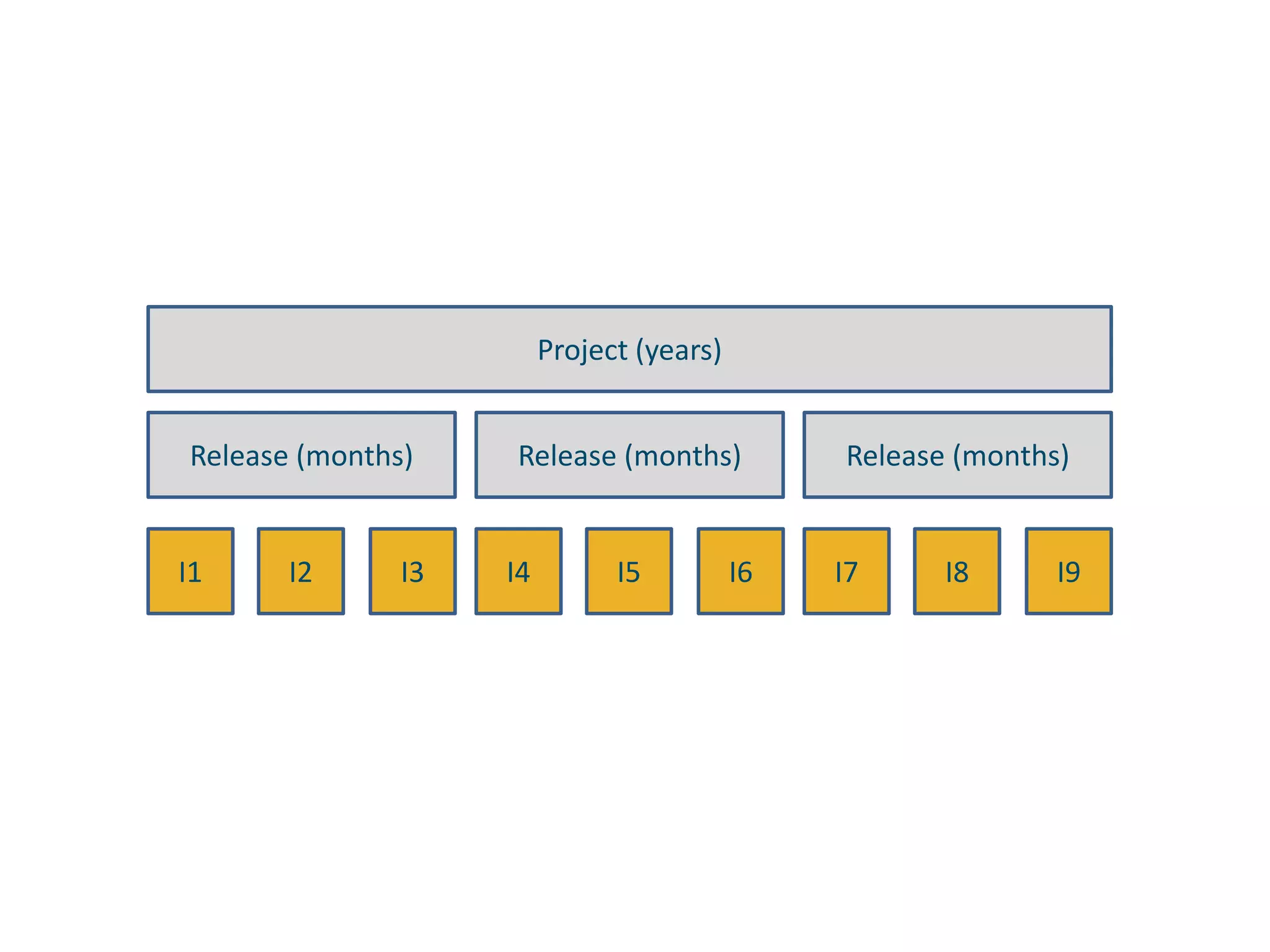
Project (years)Release (months)Release (months)Release (months)I1I2I3I4I5I6I7I8I9
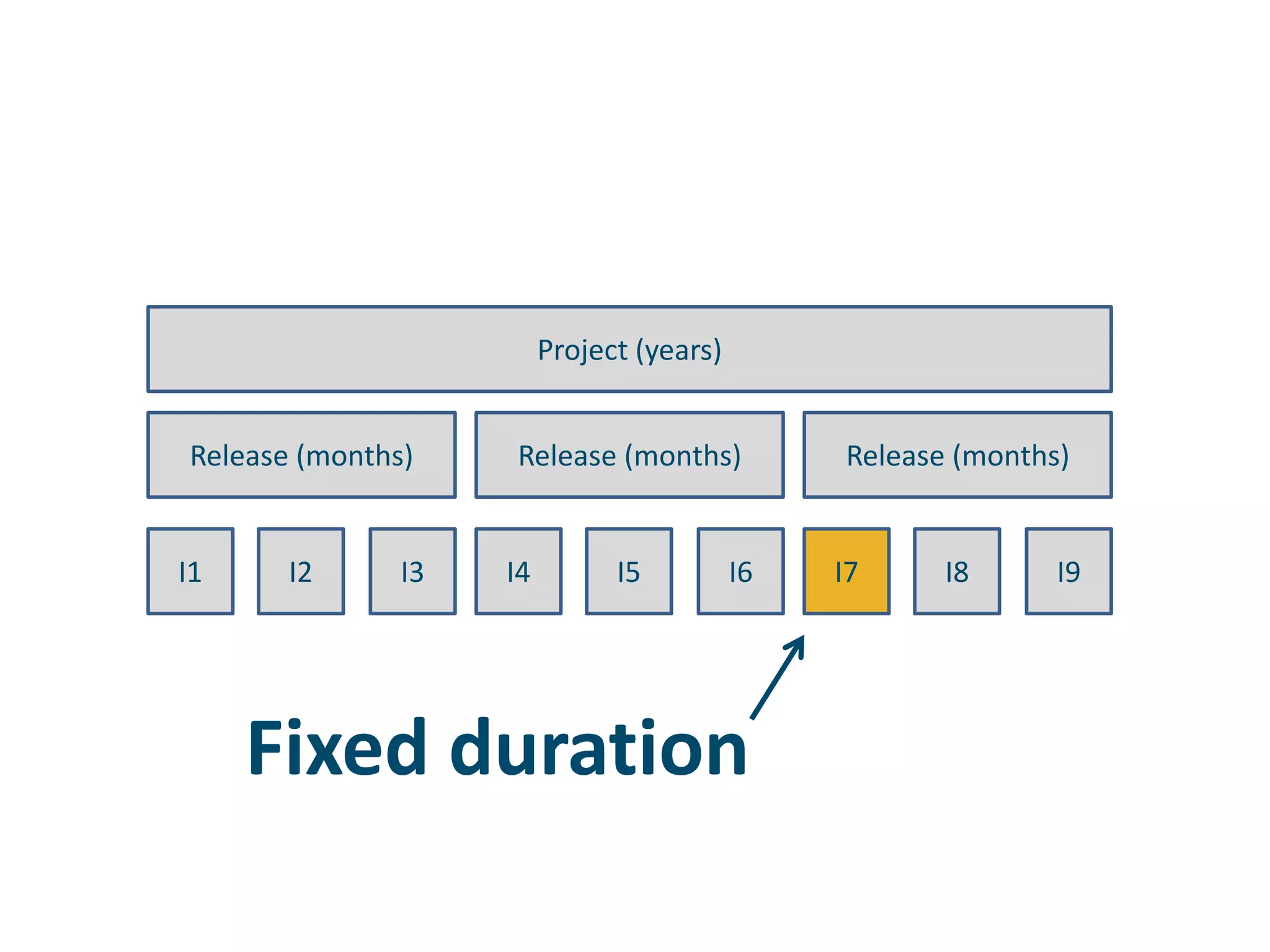
Project (years)Release (months)Release (months)Release (months)I1I2I3I4I5I6I7I8I9Fixed duration
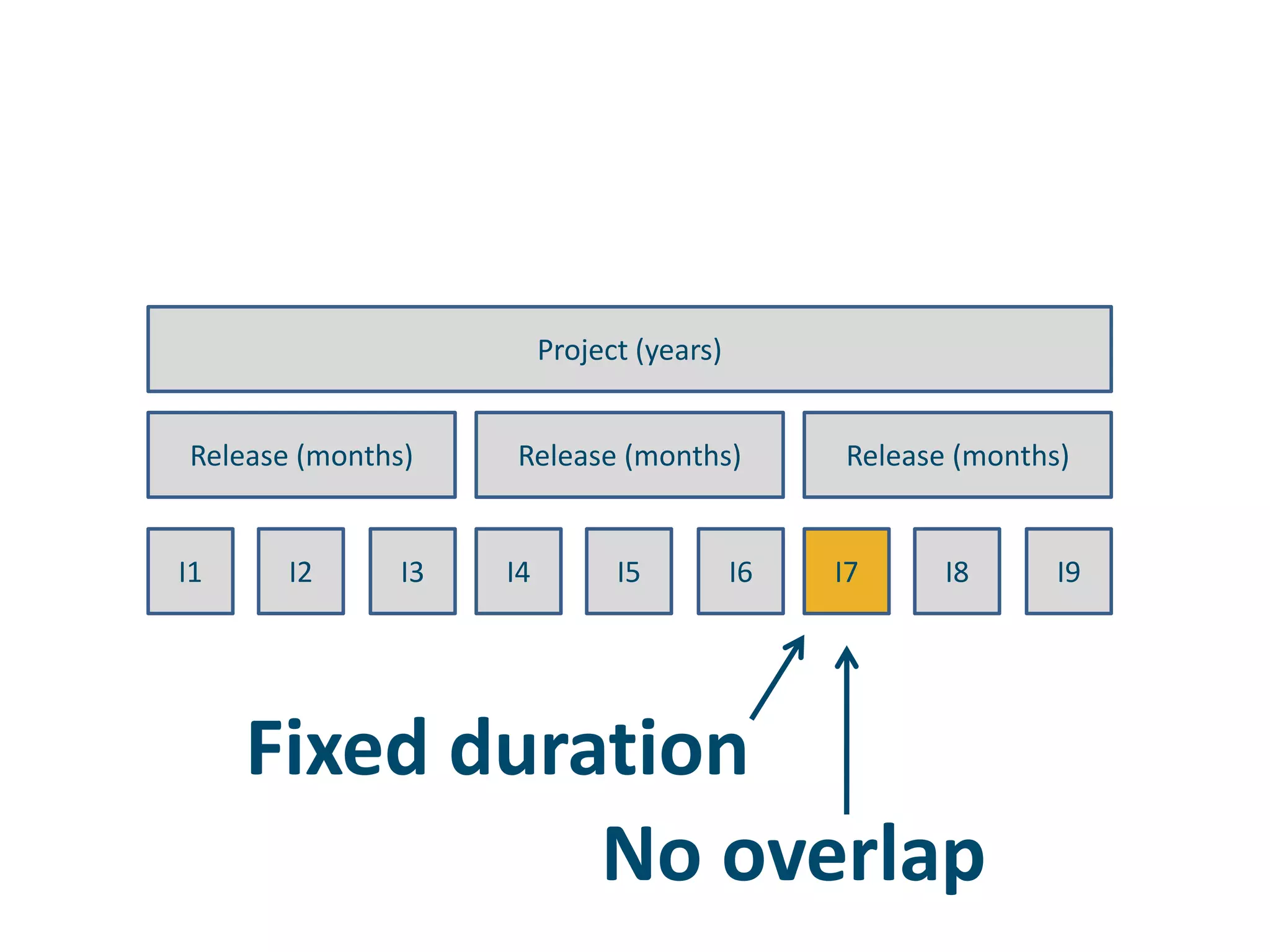
Project (years)Release (months)Release (months)Release (months)I1I2I3I4I5I6I7I8I9Fixed durationNo overlap
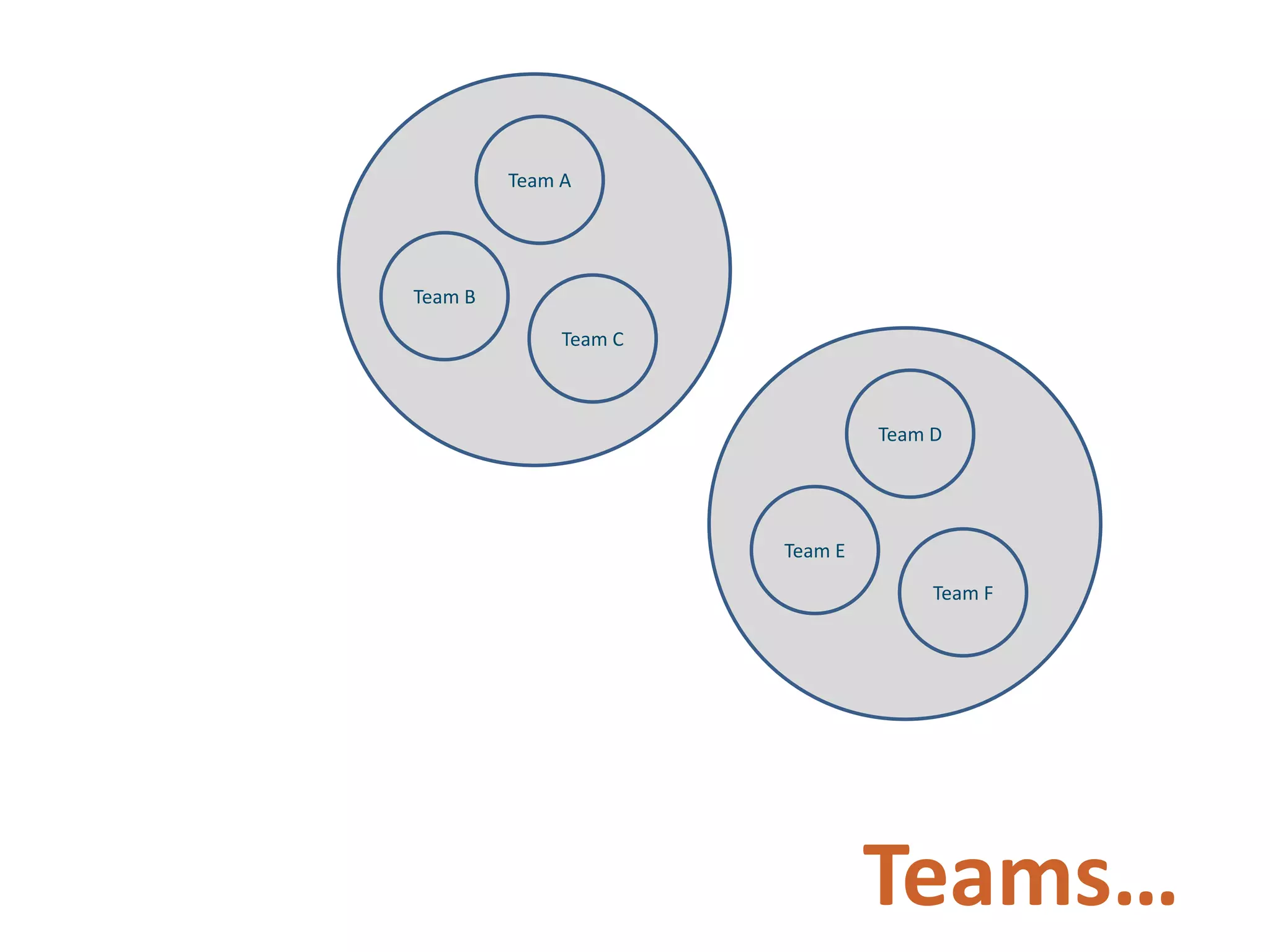
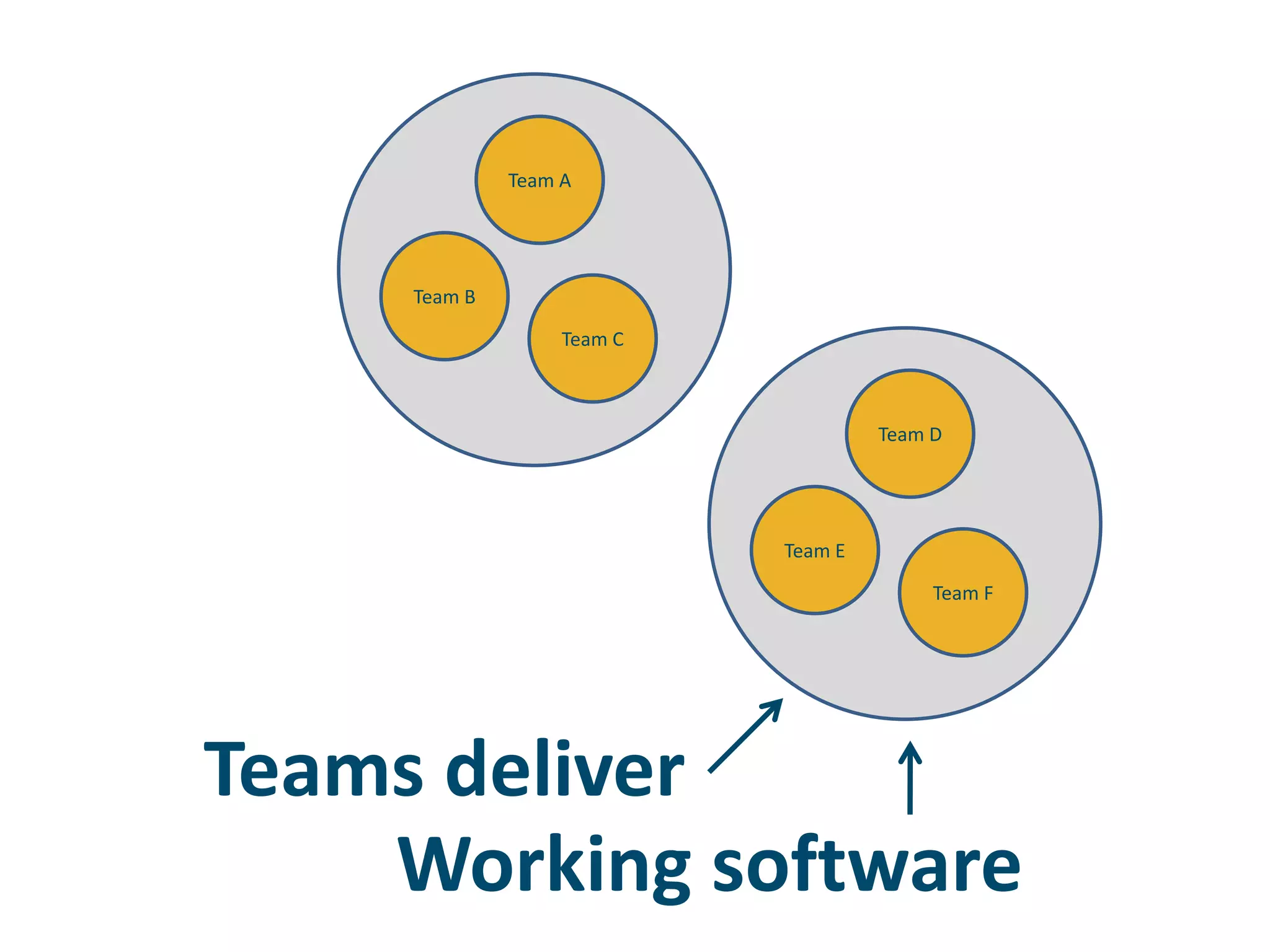
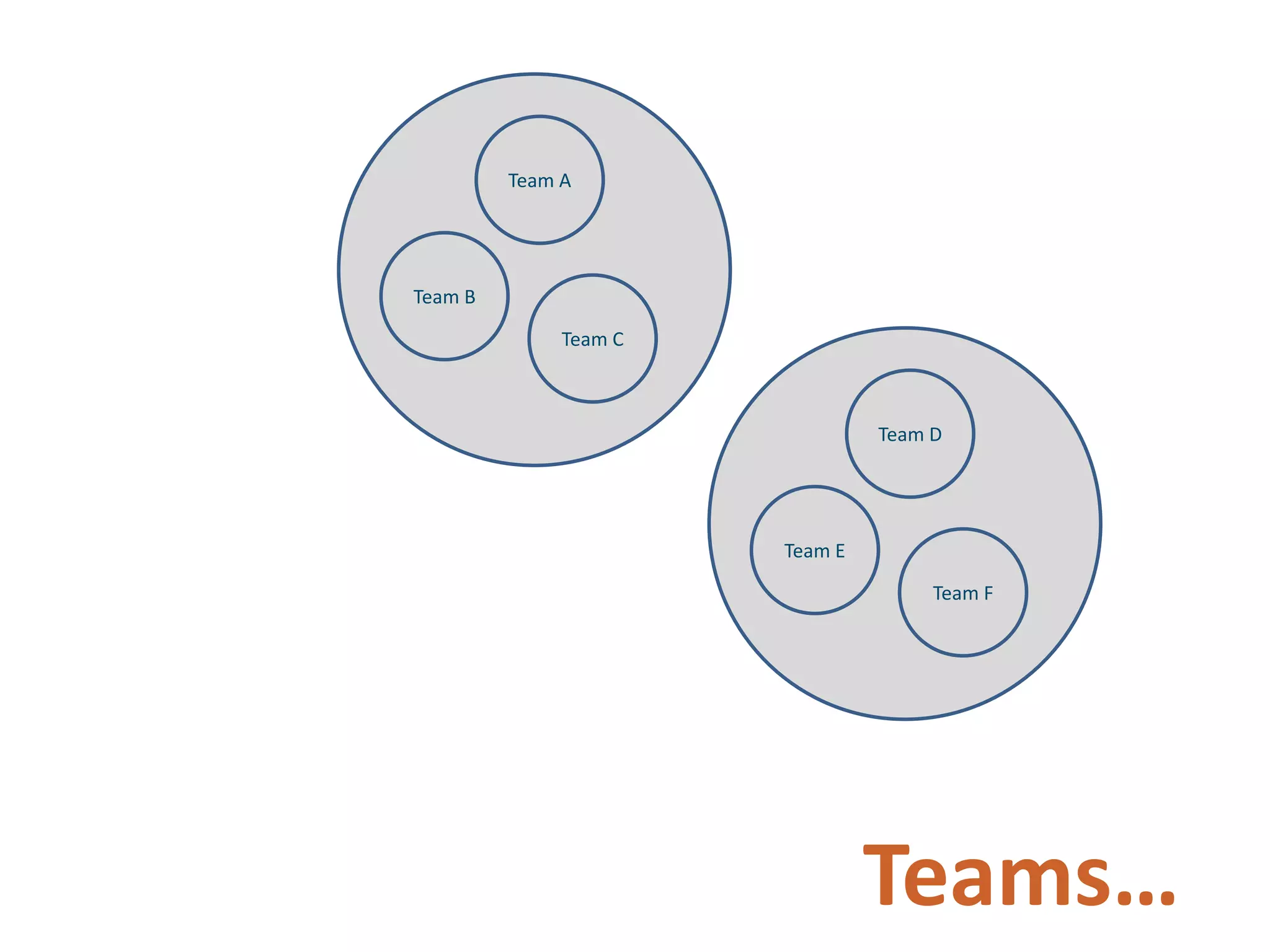
Team ATeam BTeam CTeam DTeam ETeam FTeams…
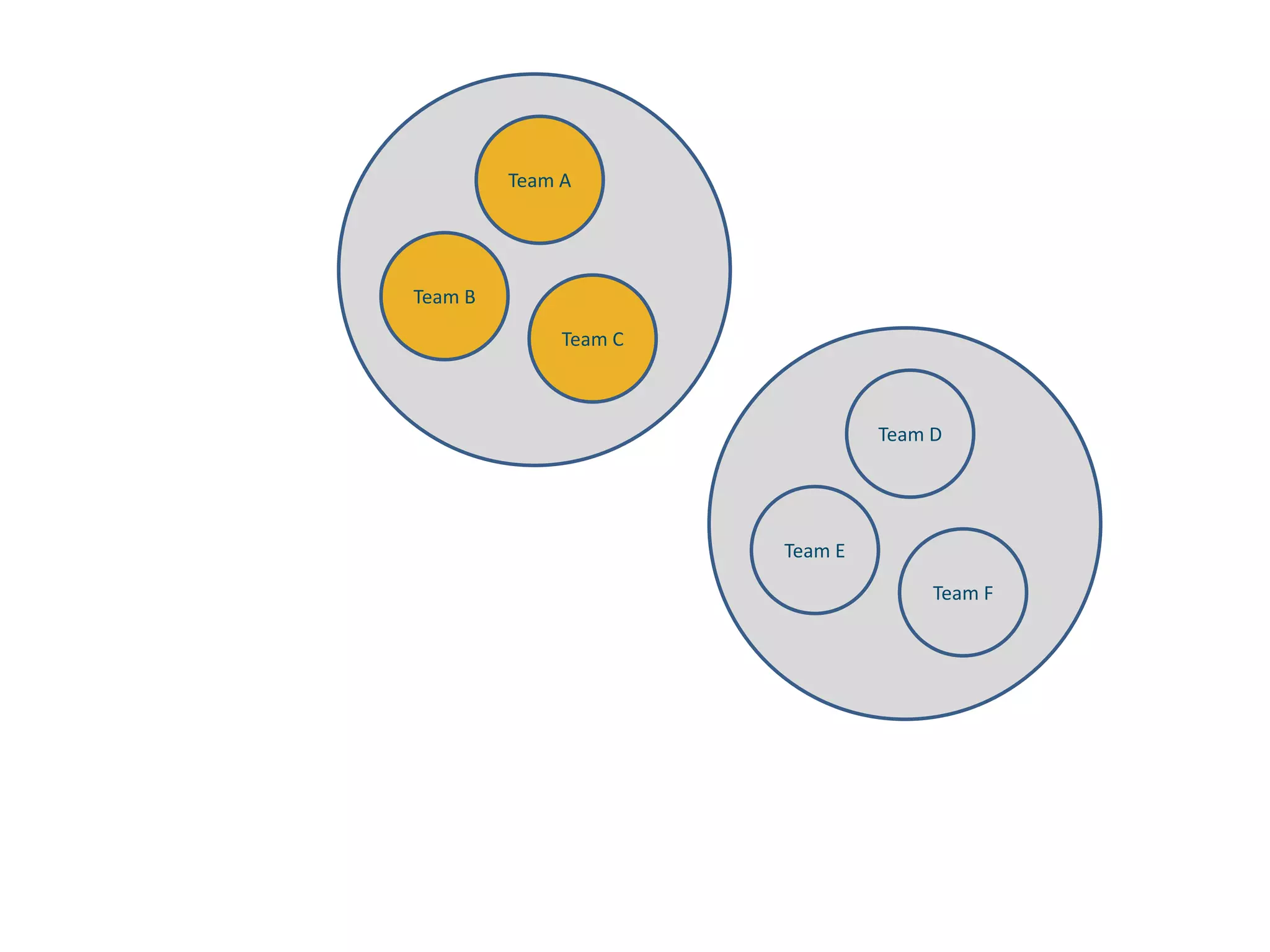
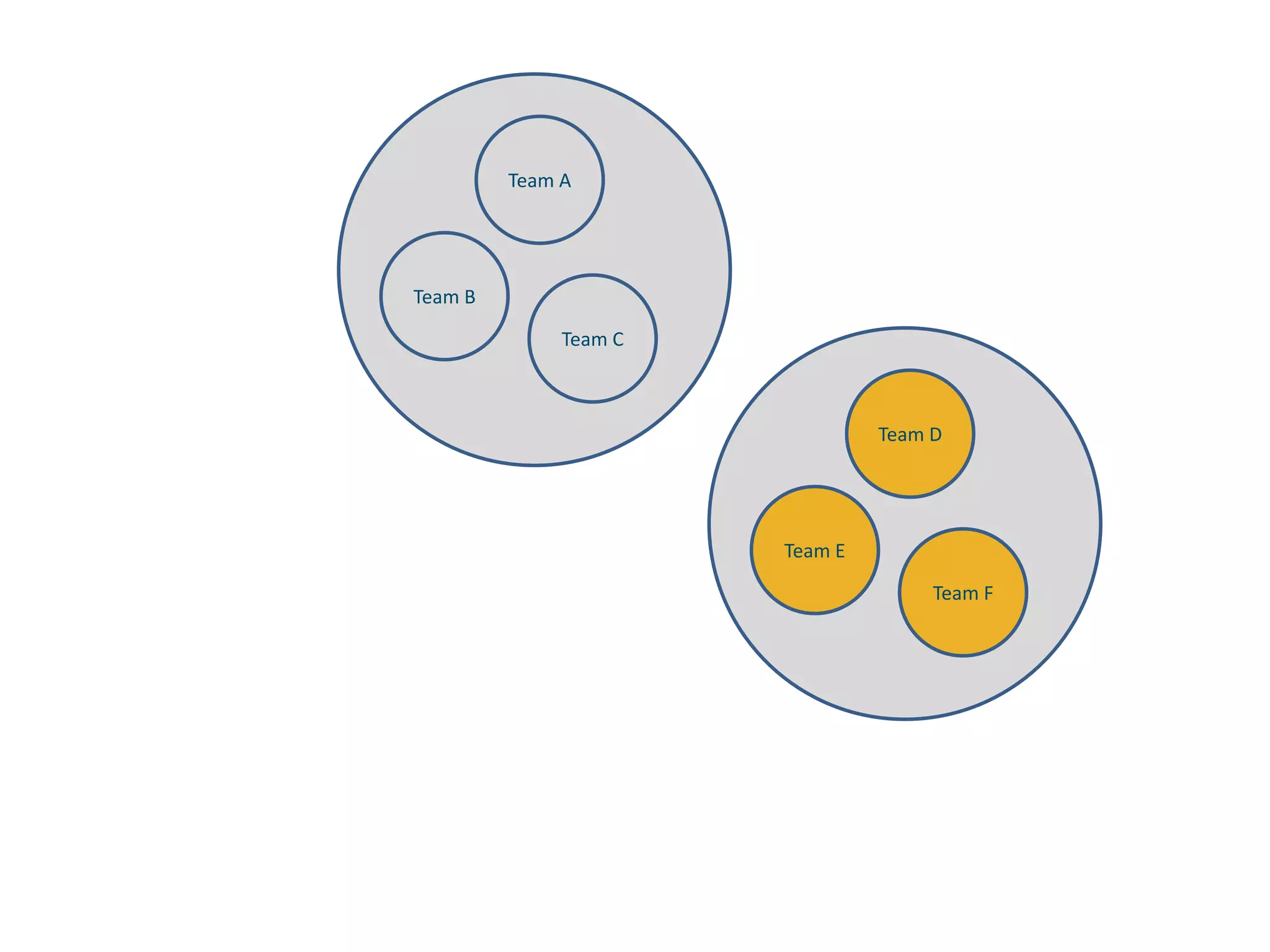
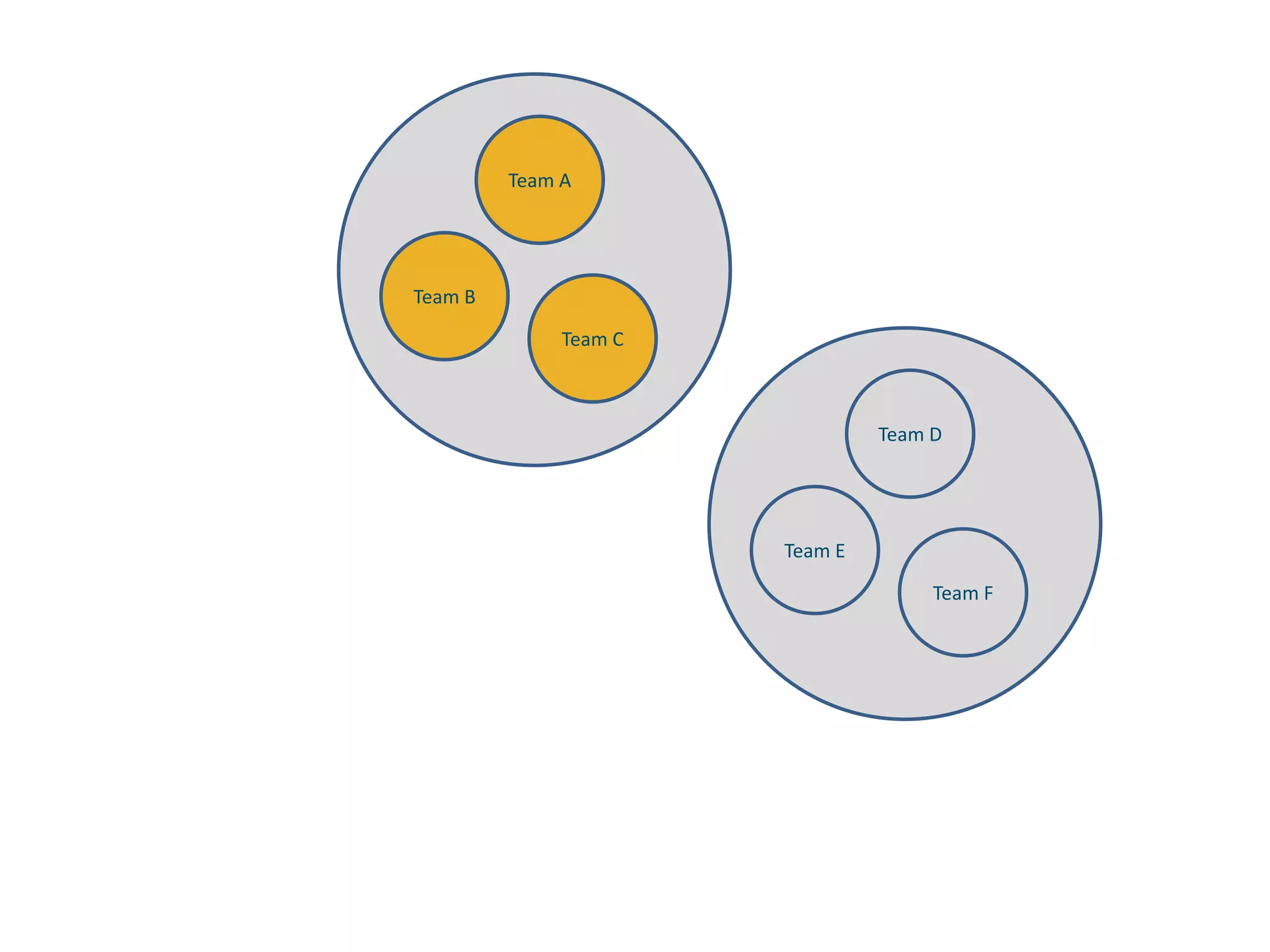
Team ATeam BTeam CTeam DTeam ETeam F
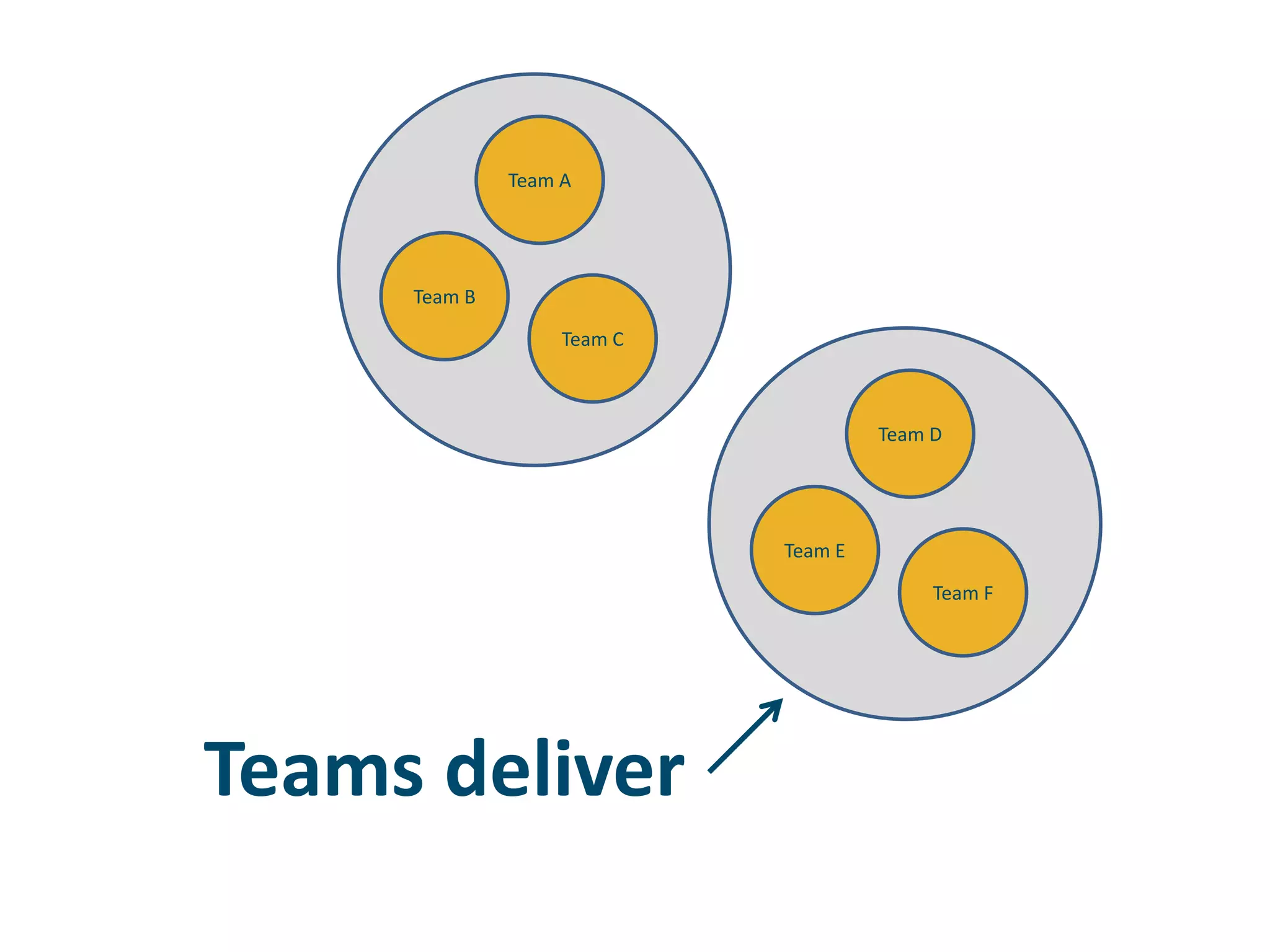
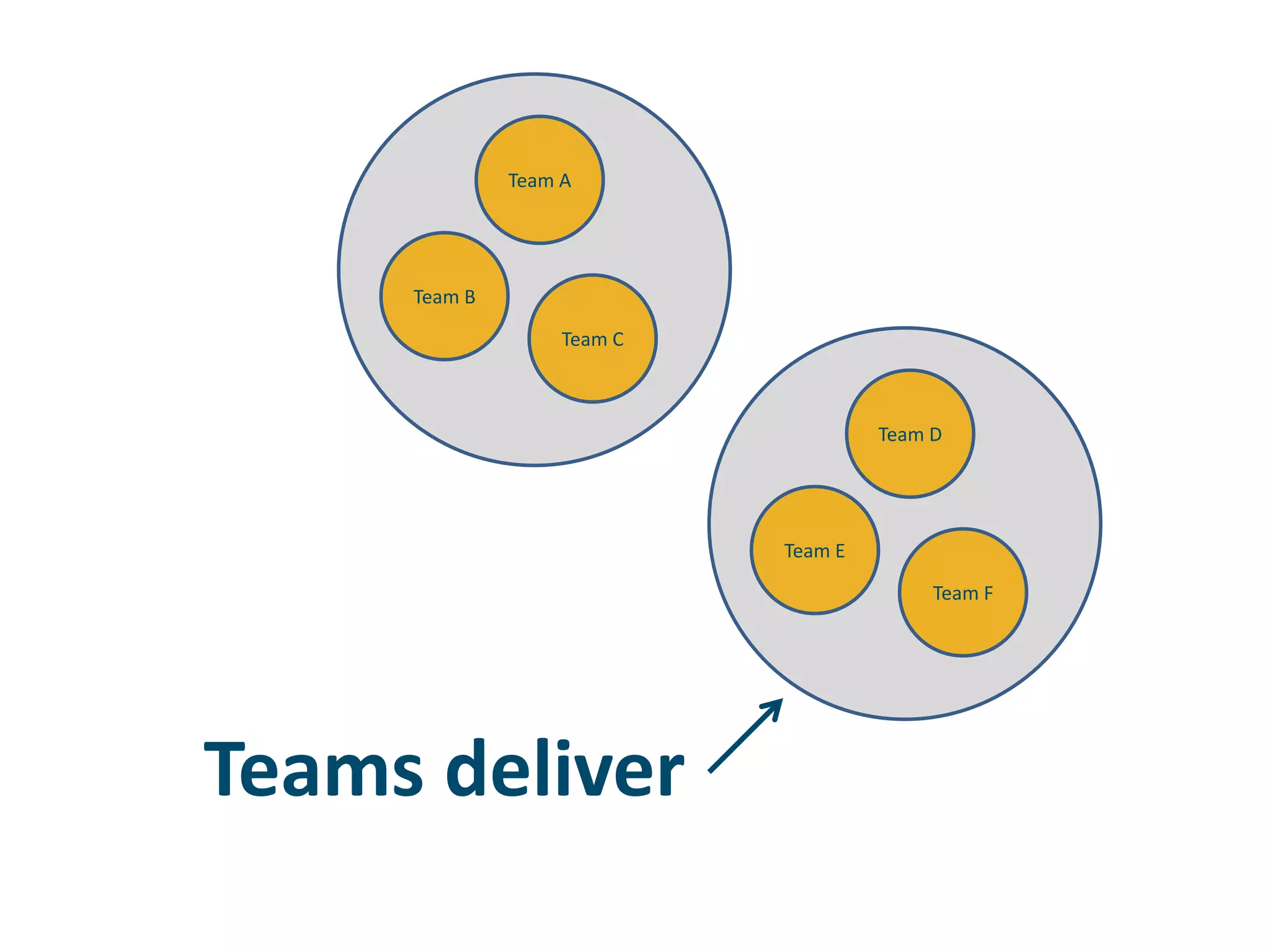
Team ATeam BTeam CTeam DTeam ETeam FTeams deliver
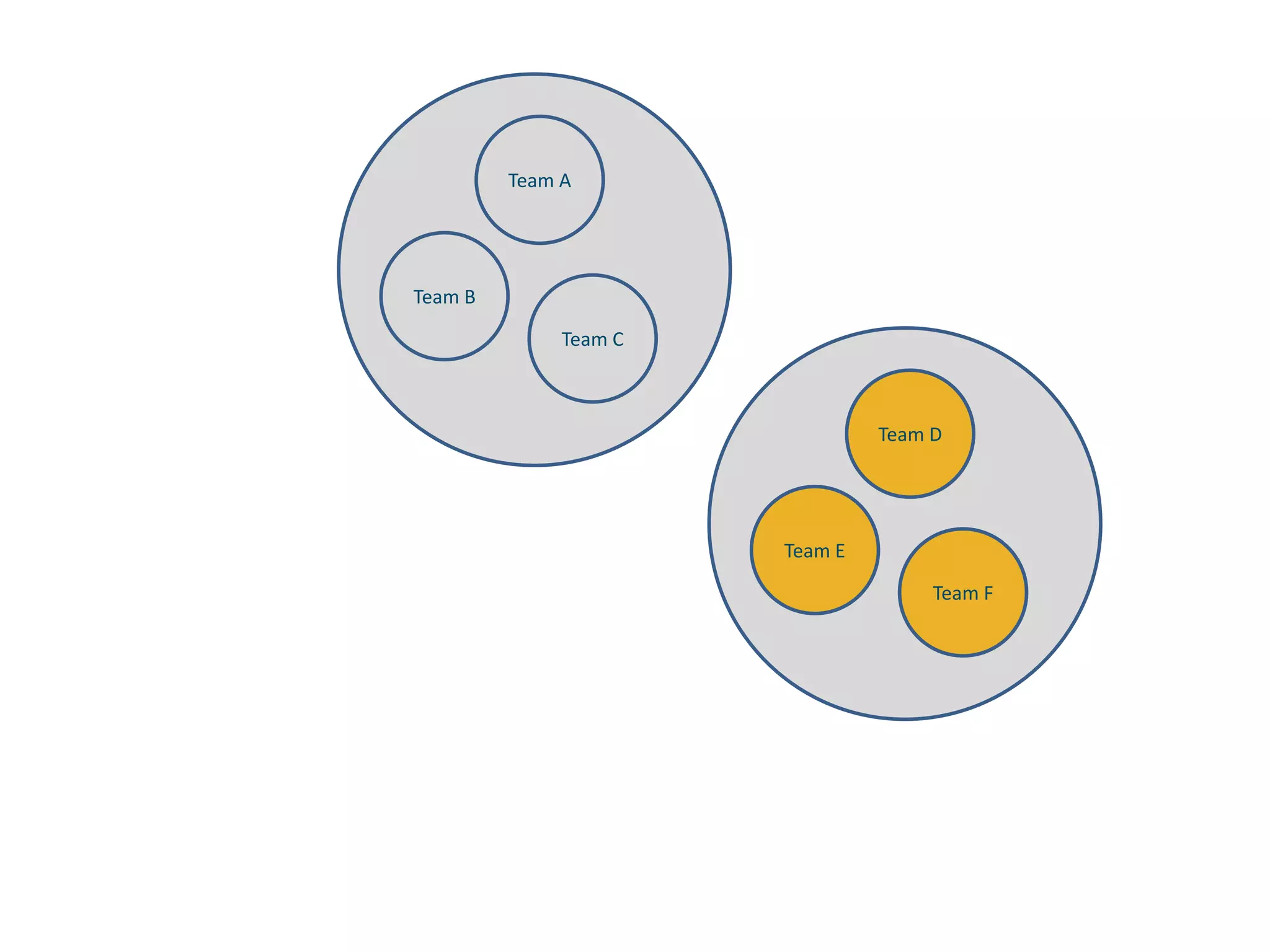
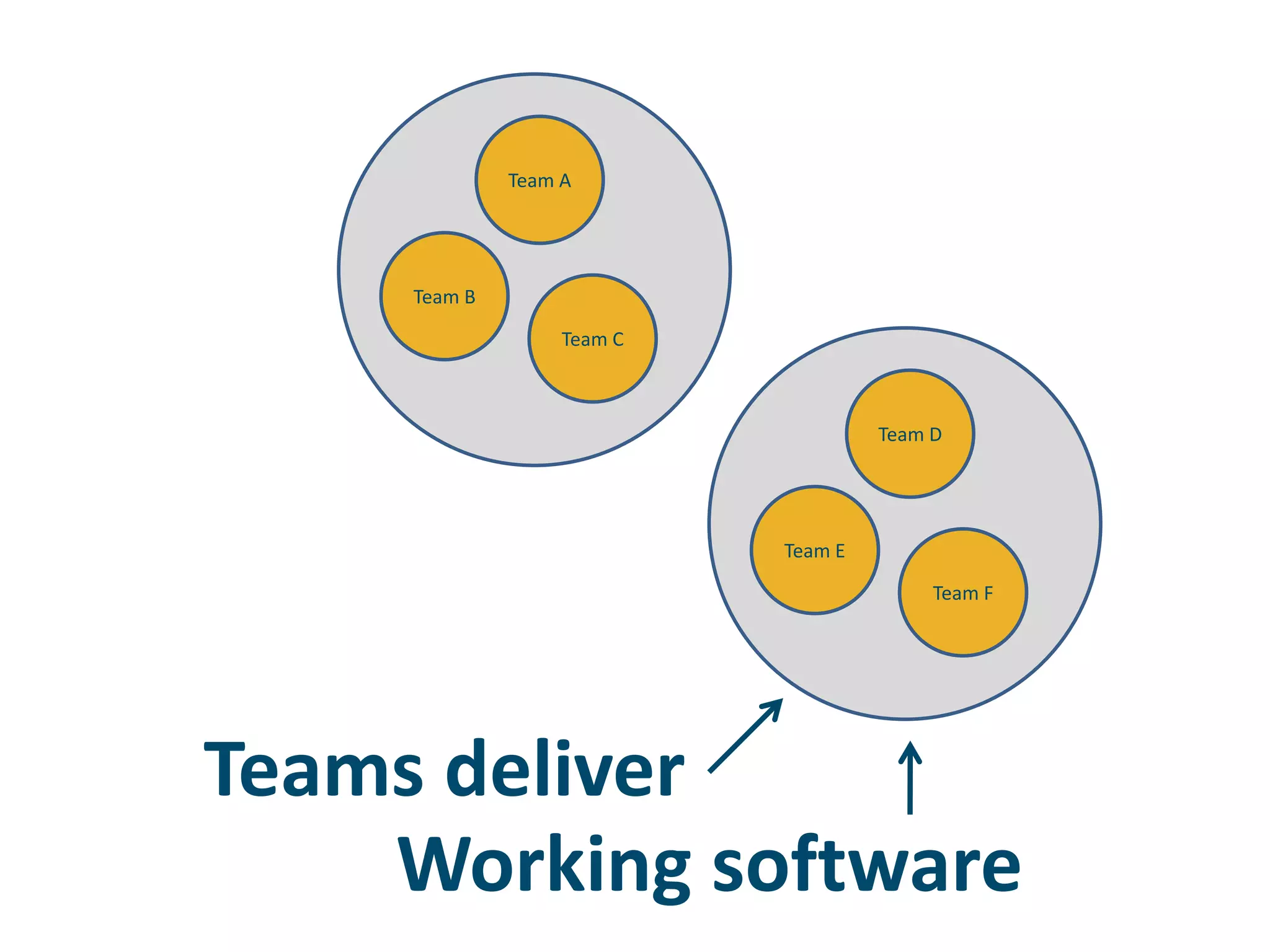
Team ATeam BTeam CTeam DTeam ETeam FTeams deliverWorking software
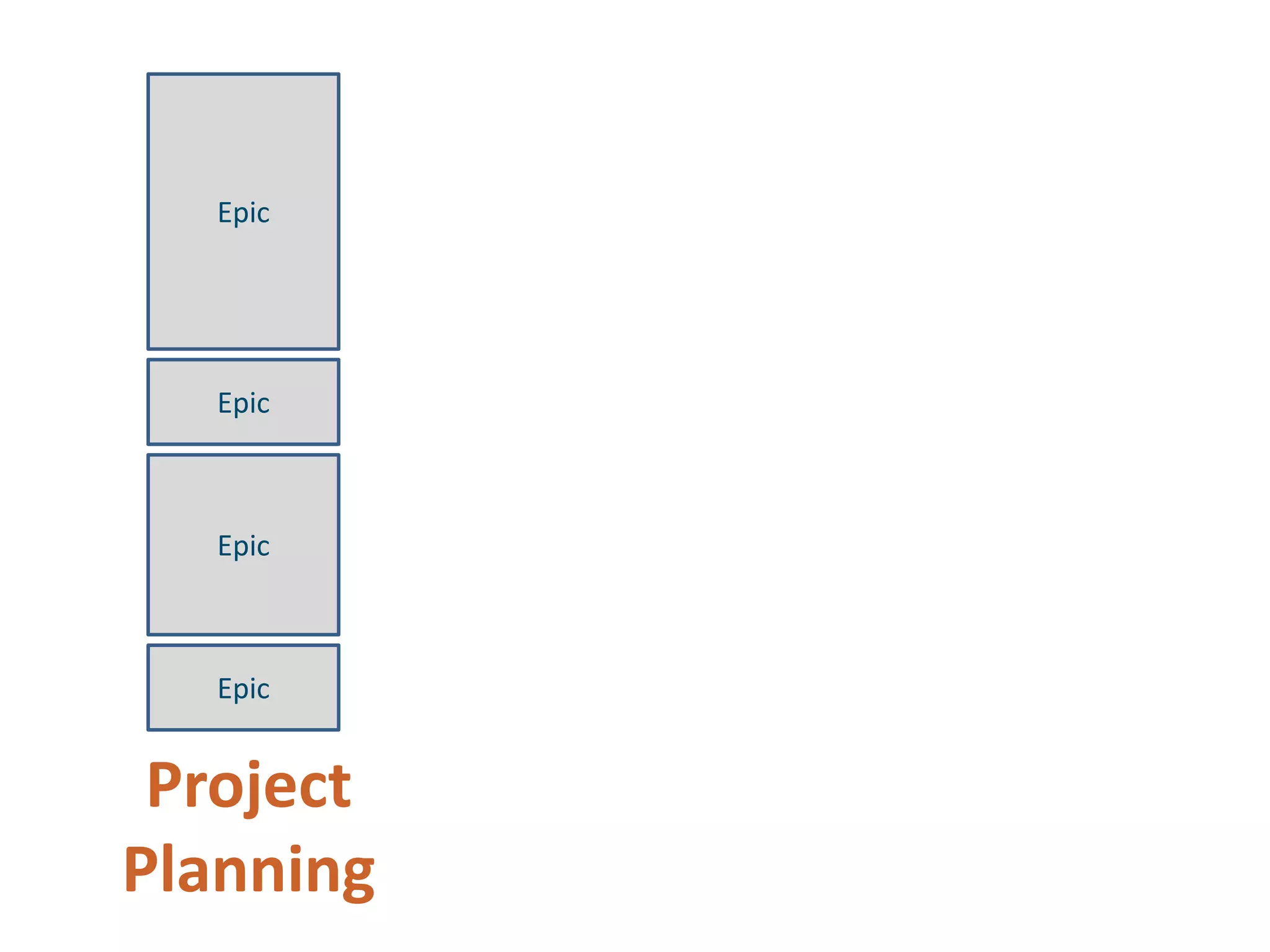
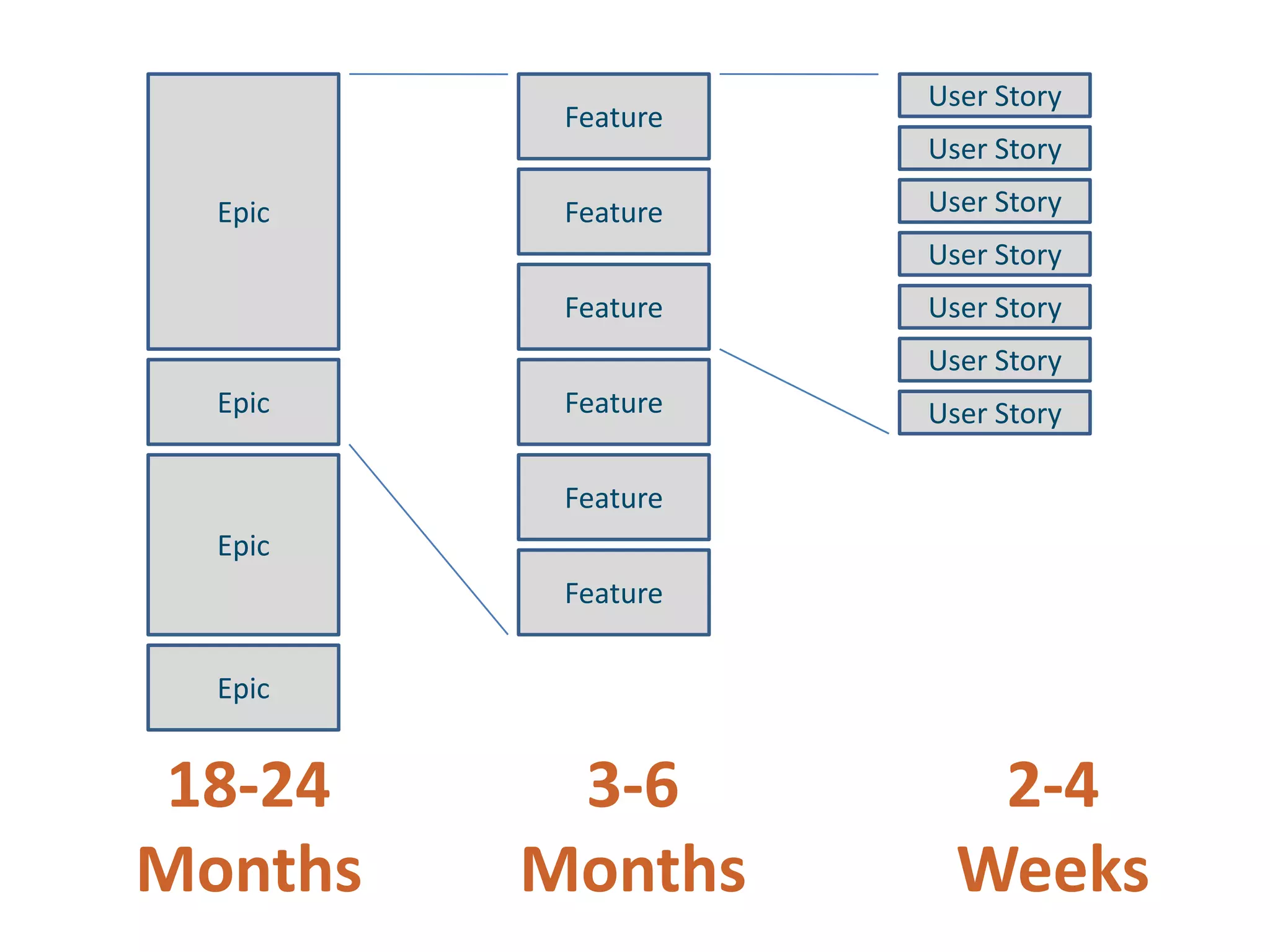
EpicEpicEpicEpicProject Planning
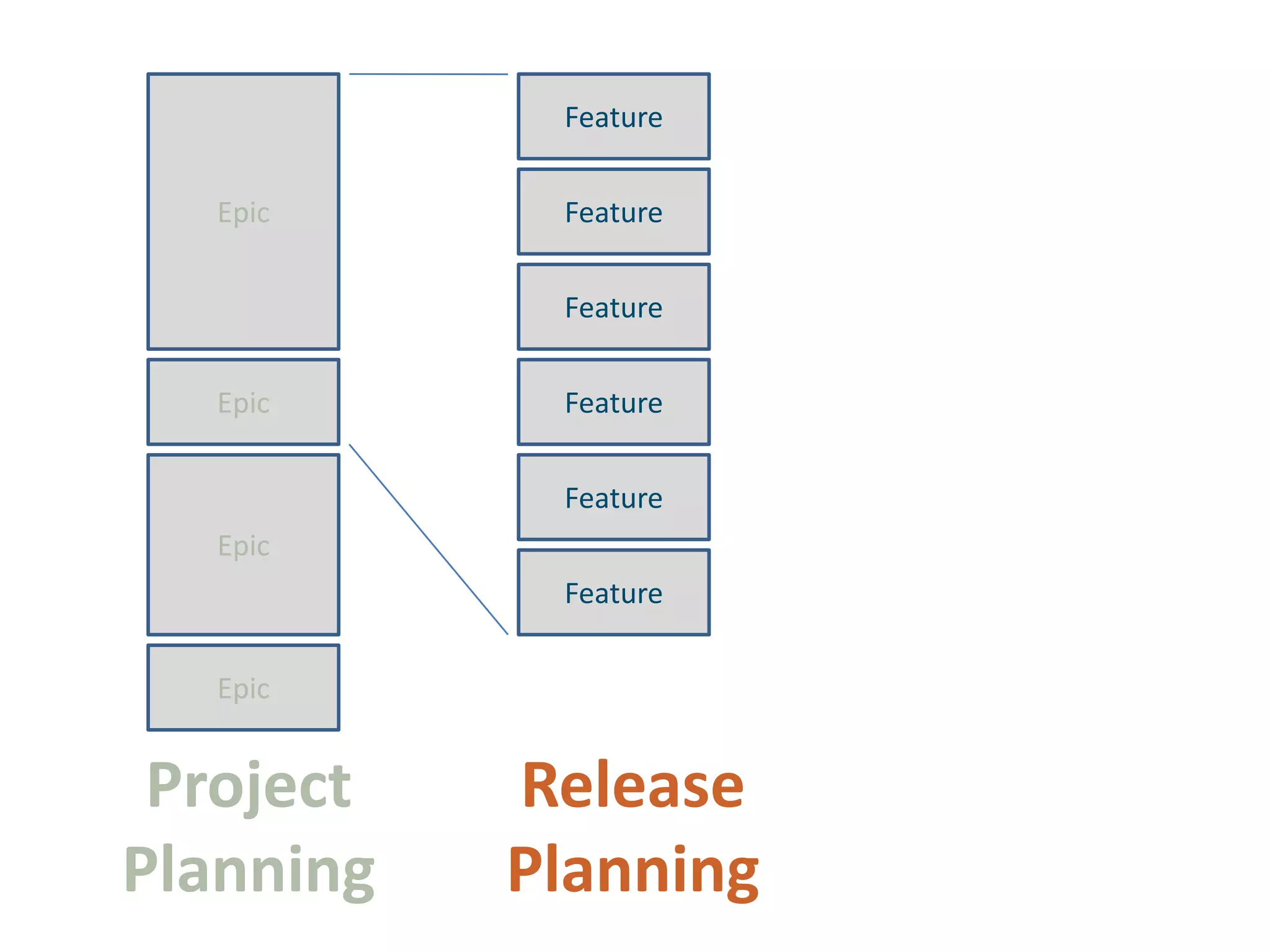
FeatureEpicFeatureFeatureFeatureEpicFeatureEpicFeatureEpicReleasePlanningProject Planning
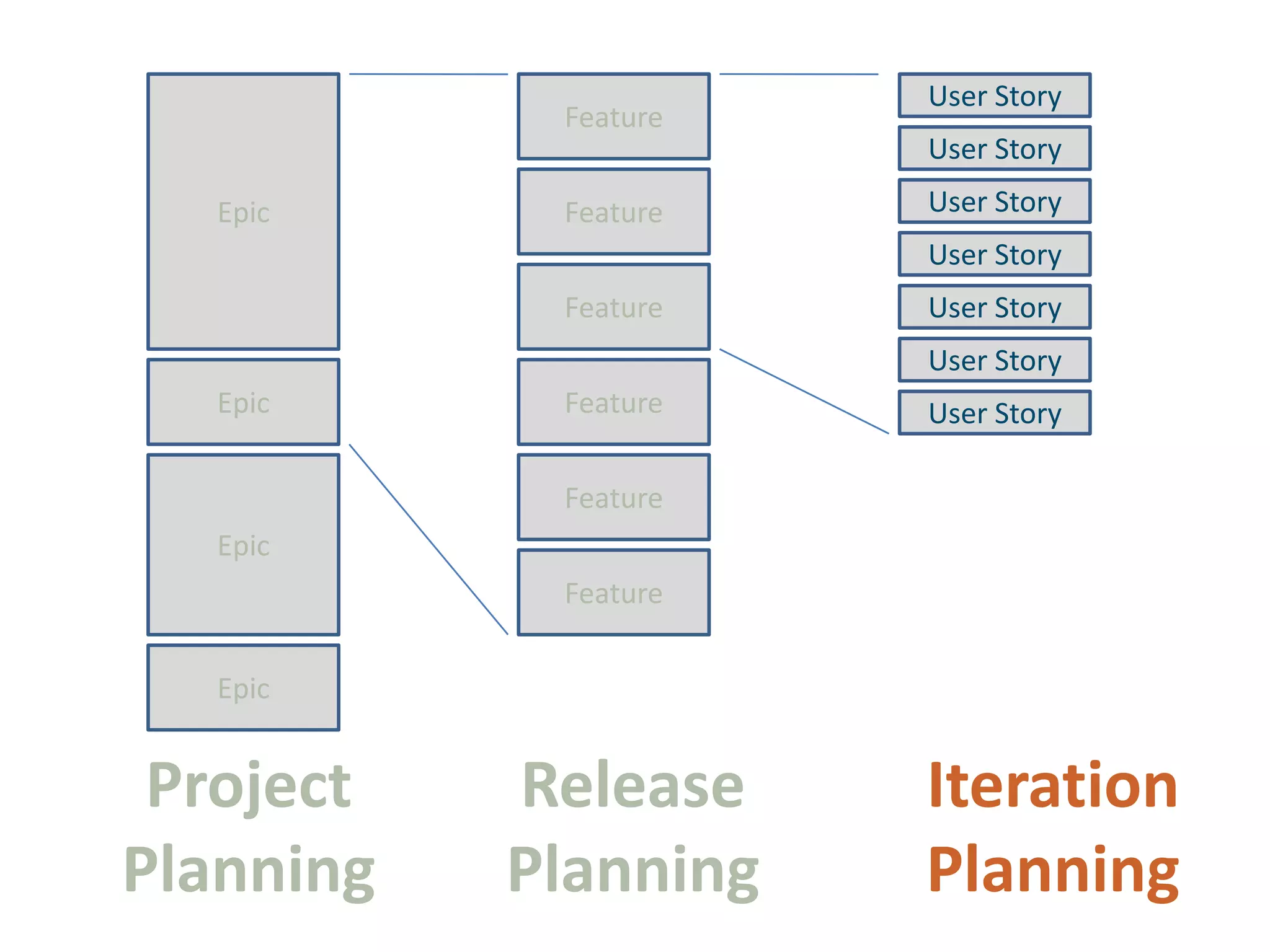
FeatureEpicUser StoryUser StoryFeatureUser StoryUser StoryFeatureUser StoryUser StoryFeatureEpicUser StoryFeatureEpicFeatureEpicReleasePlanningProject PlanningIterationPlanning
FeatureEpicUser StoryUser StoryFeatureUser StoryUser StoryFeatureUser StoryUser StoryFeatureEpicUser StoryFeatureEpicFeatureEpic3-6Months18-24Months2-4Weeks
Project (years)Release (months)Release (months)Release (months)I1I2I3I4I5I6I7I8I9
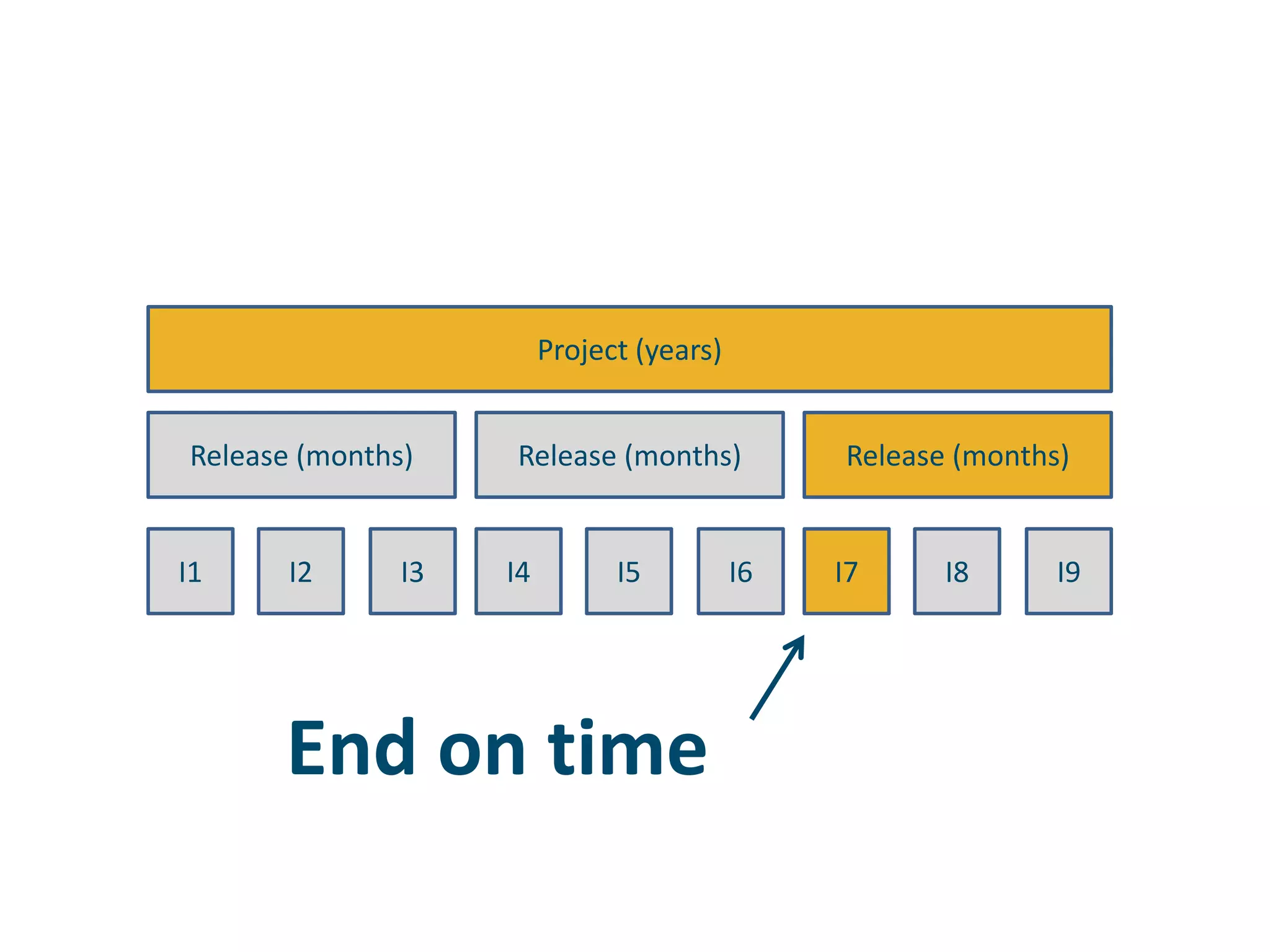
Project (years)Release (months)Release (months)Release (months)I1I2I3I4I5I6I7I8I9End on time
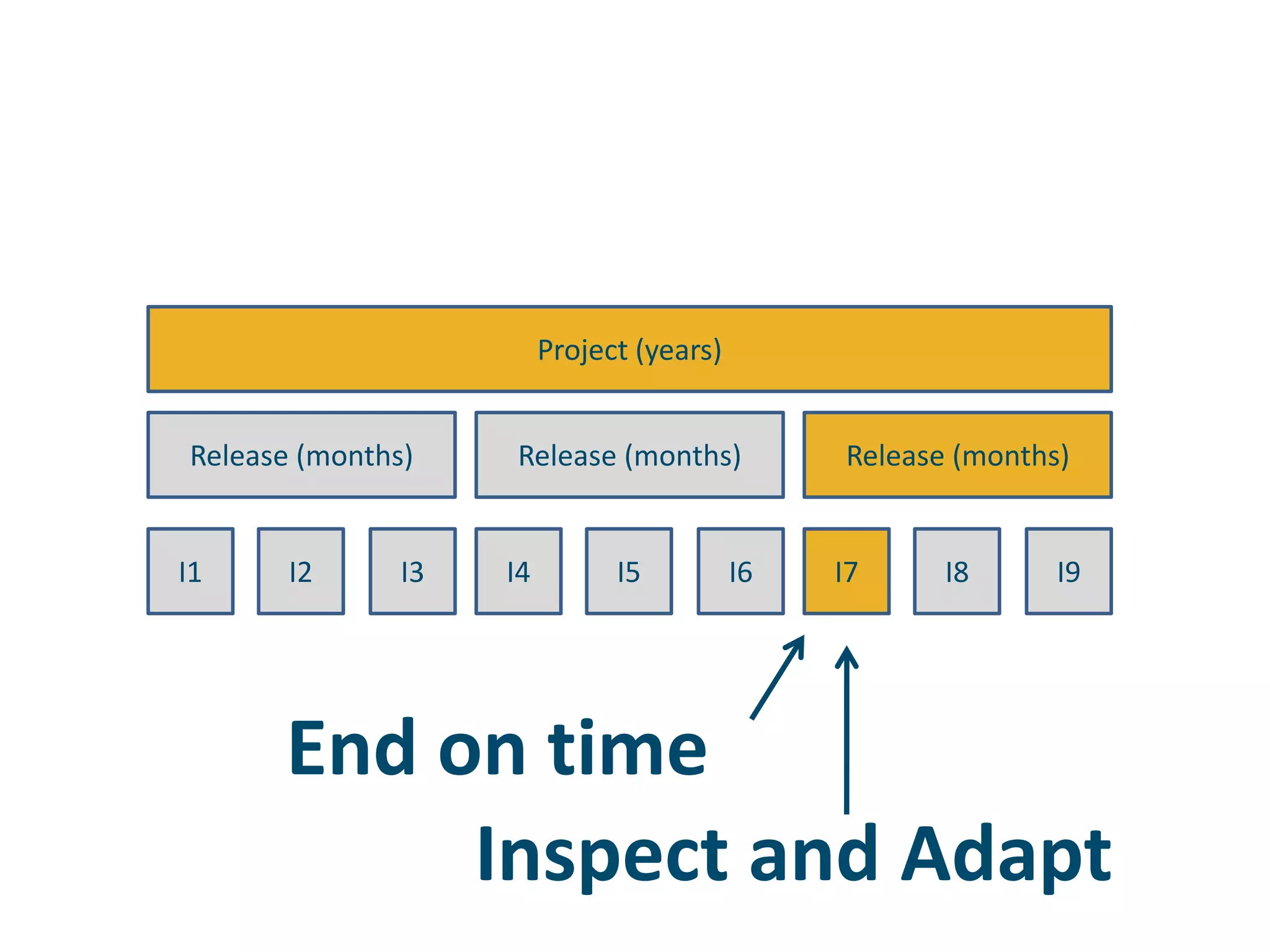
Project (years)Release (months)Release (months)Release (months)I1I2I3I4I5I6I7I8I9End on timeInspect and Adapt
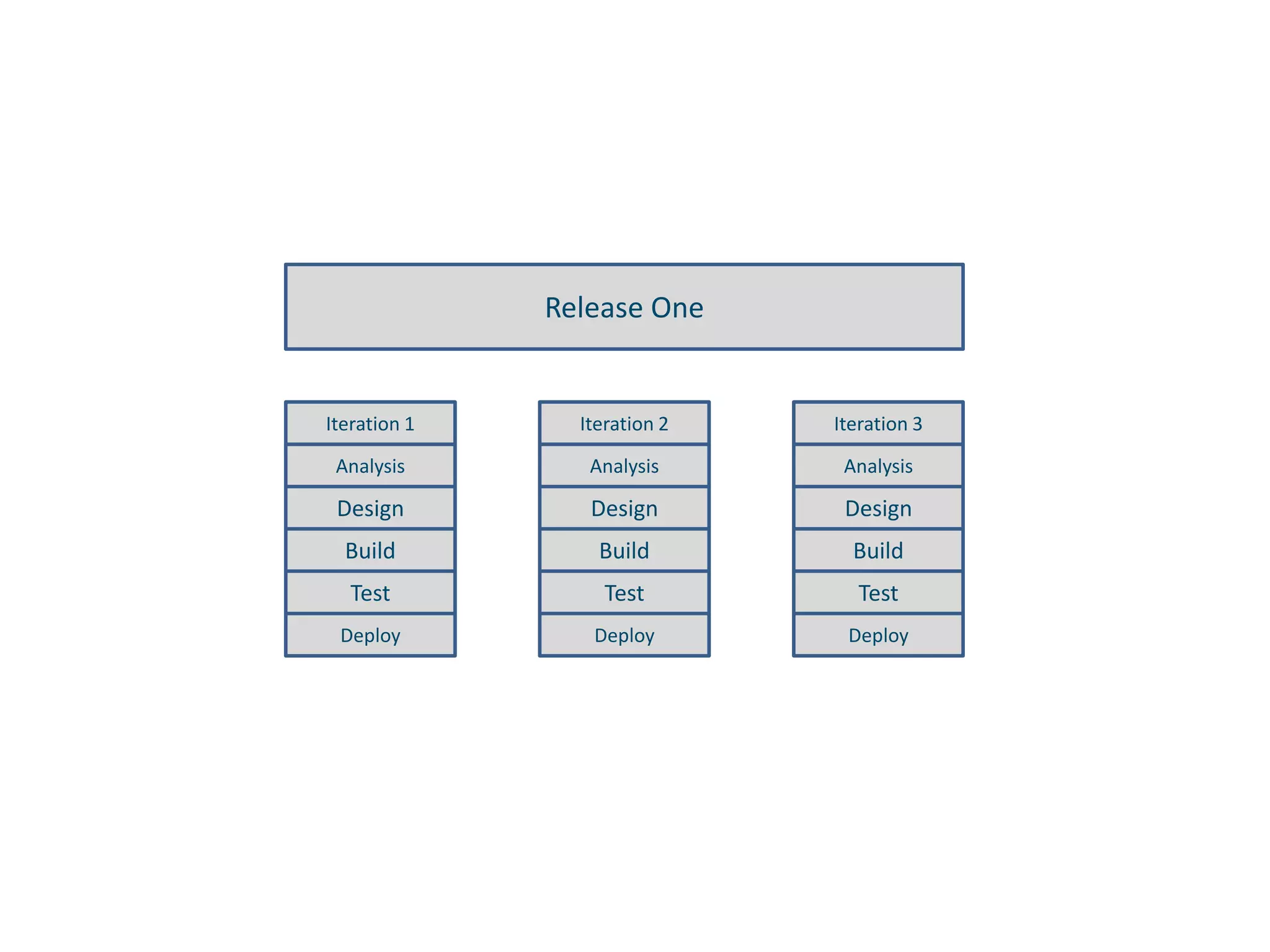
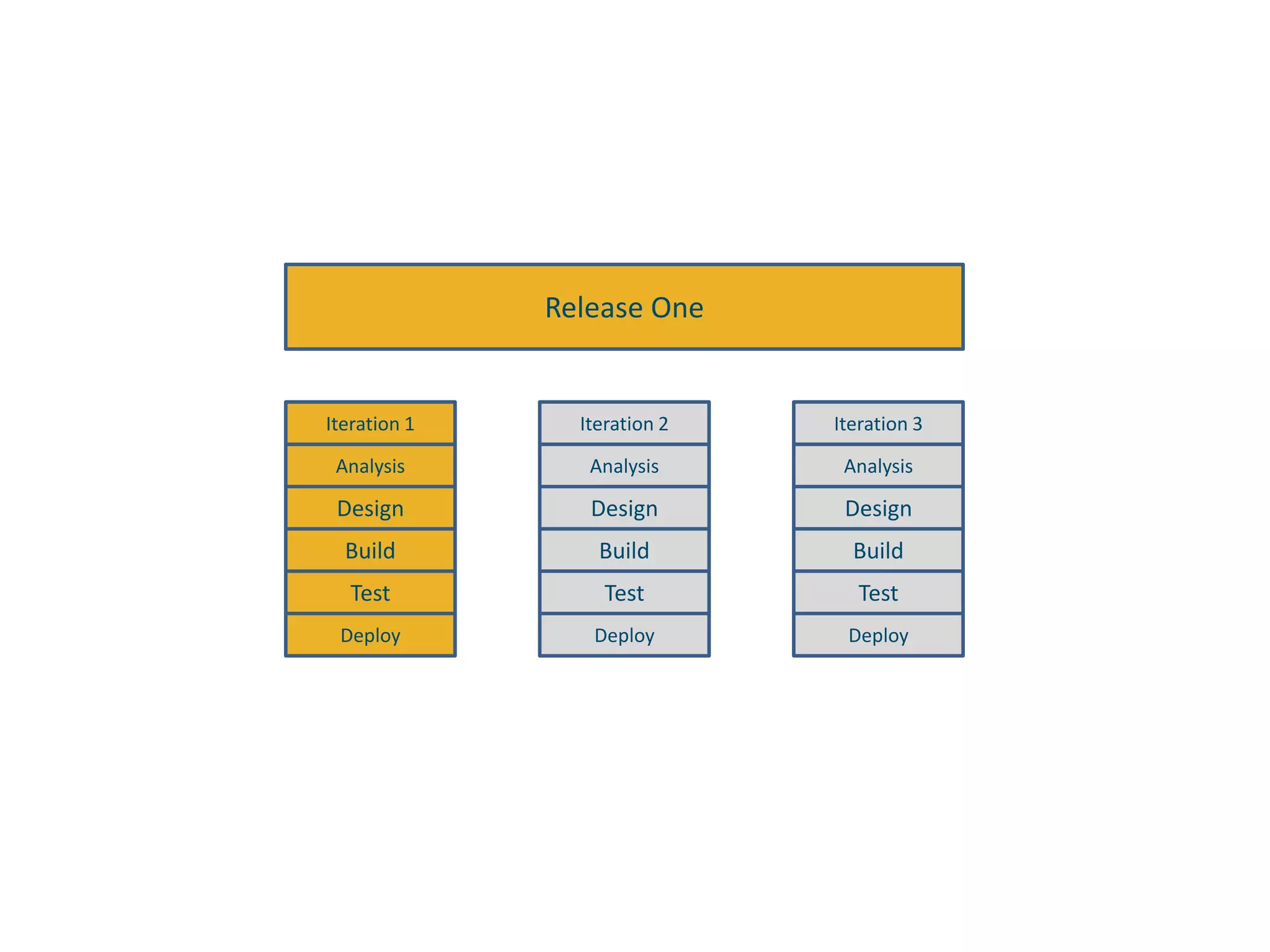
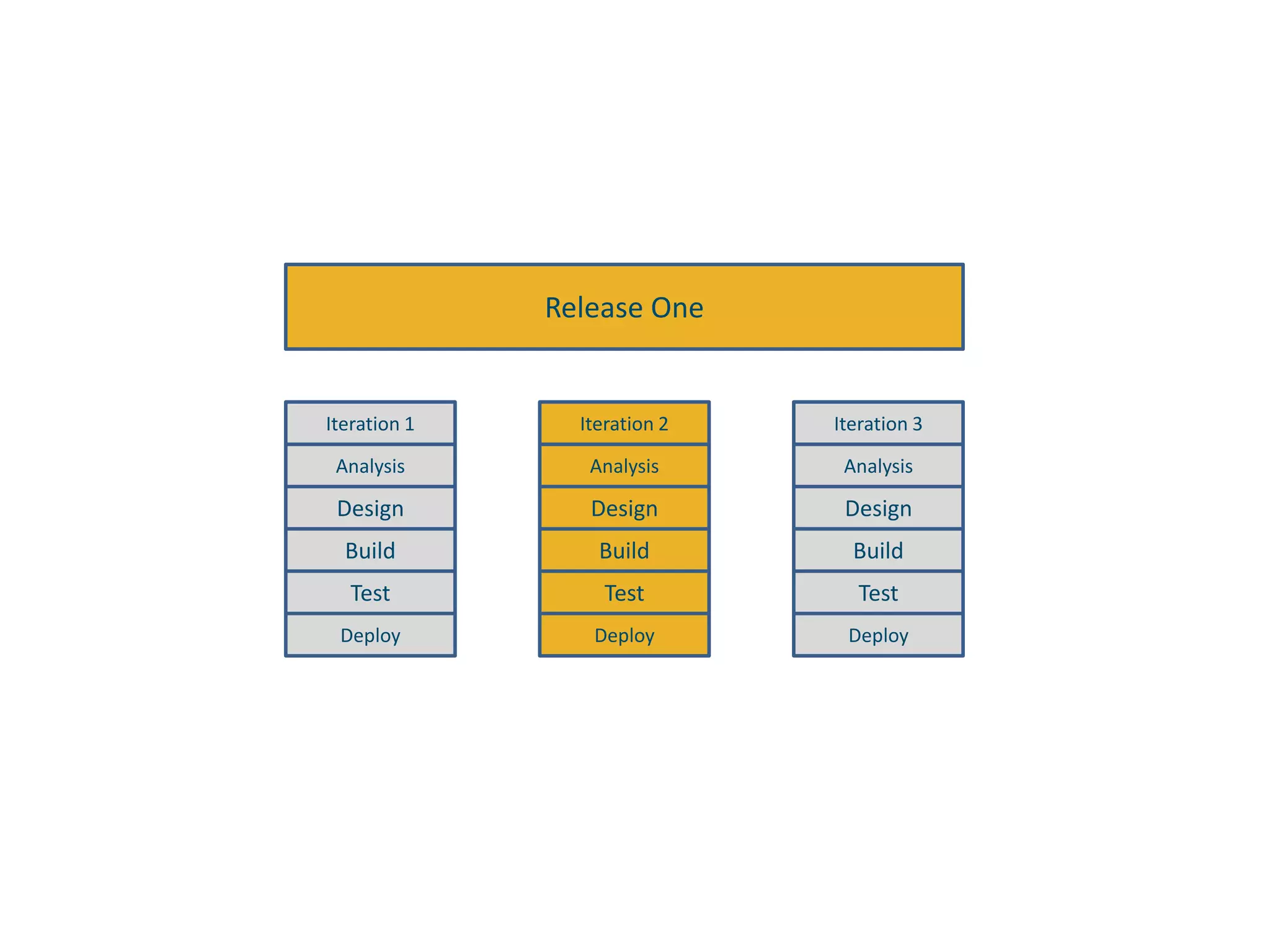
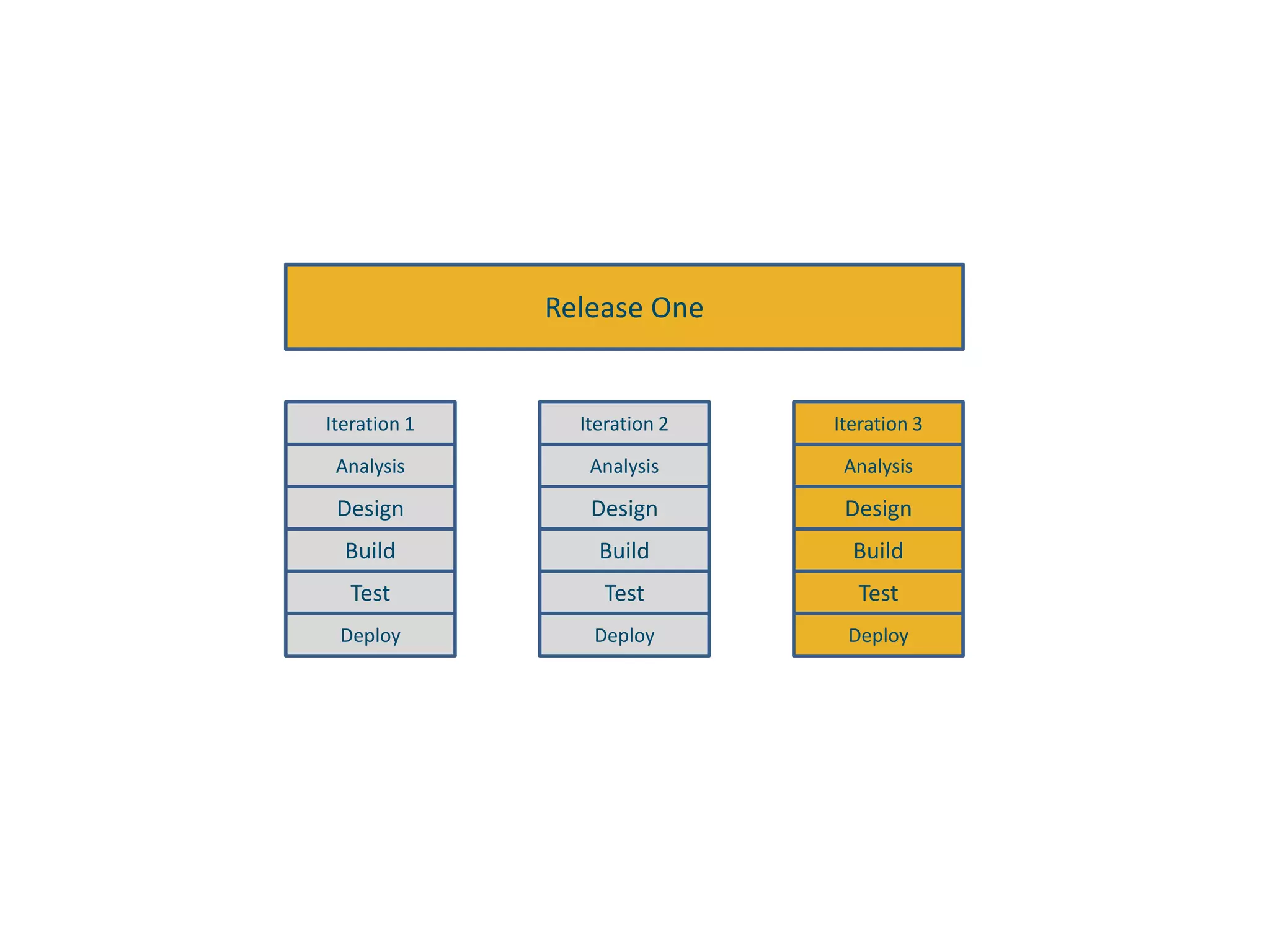
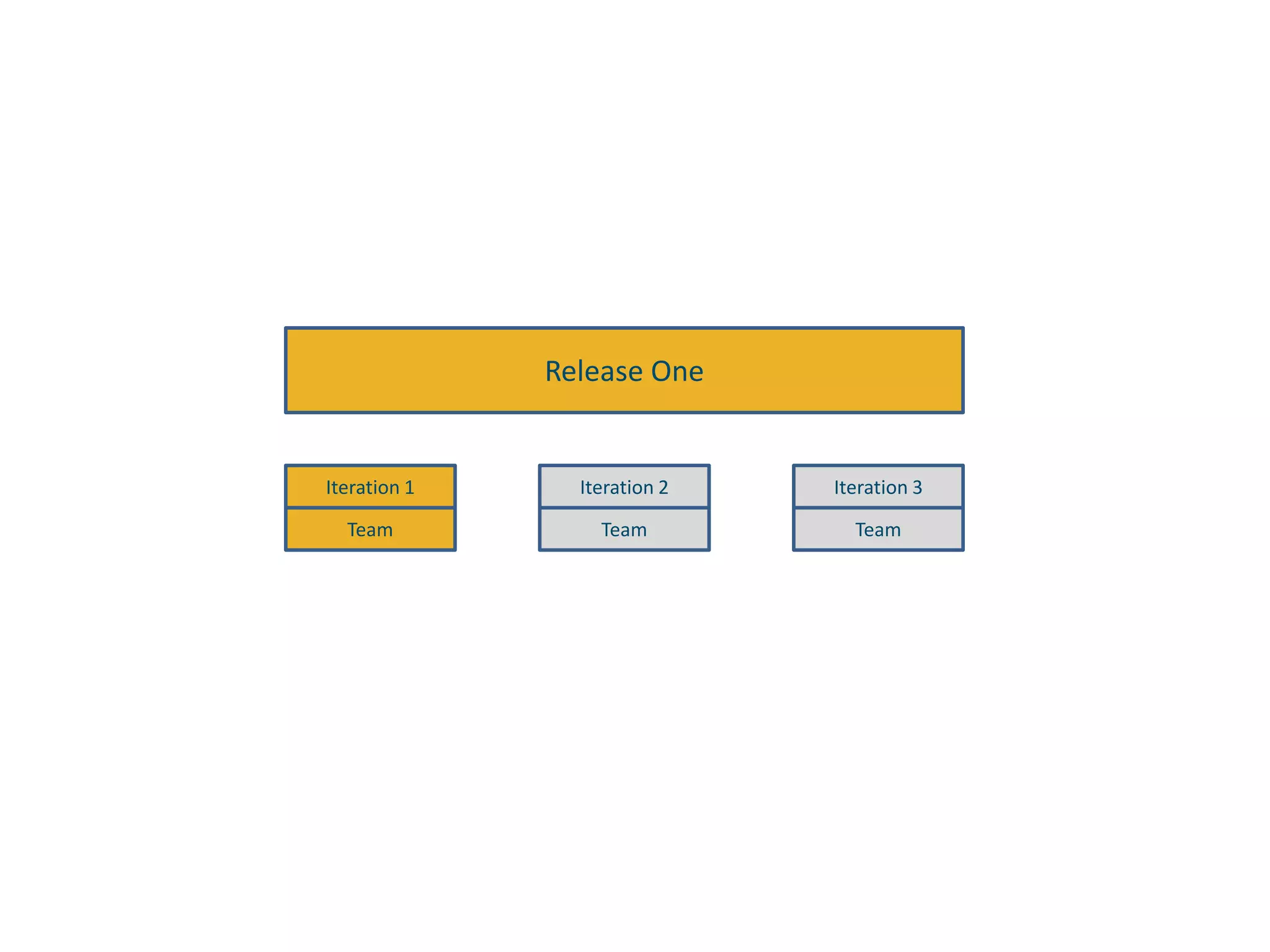
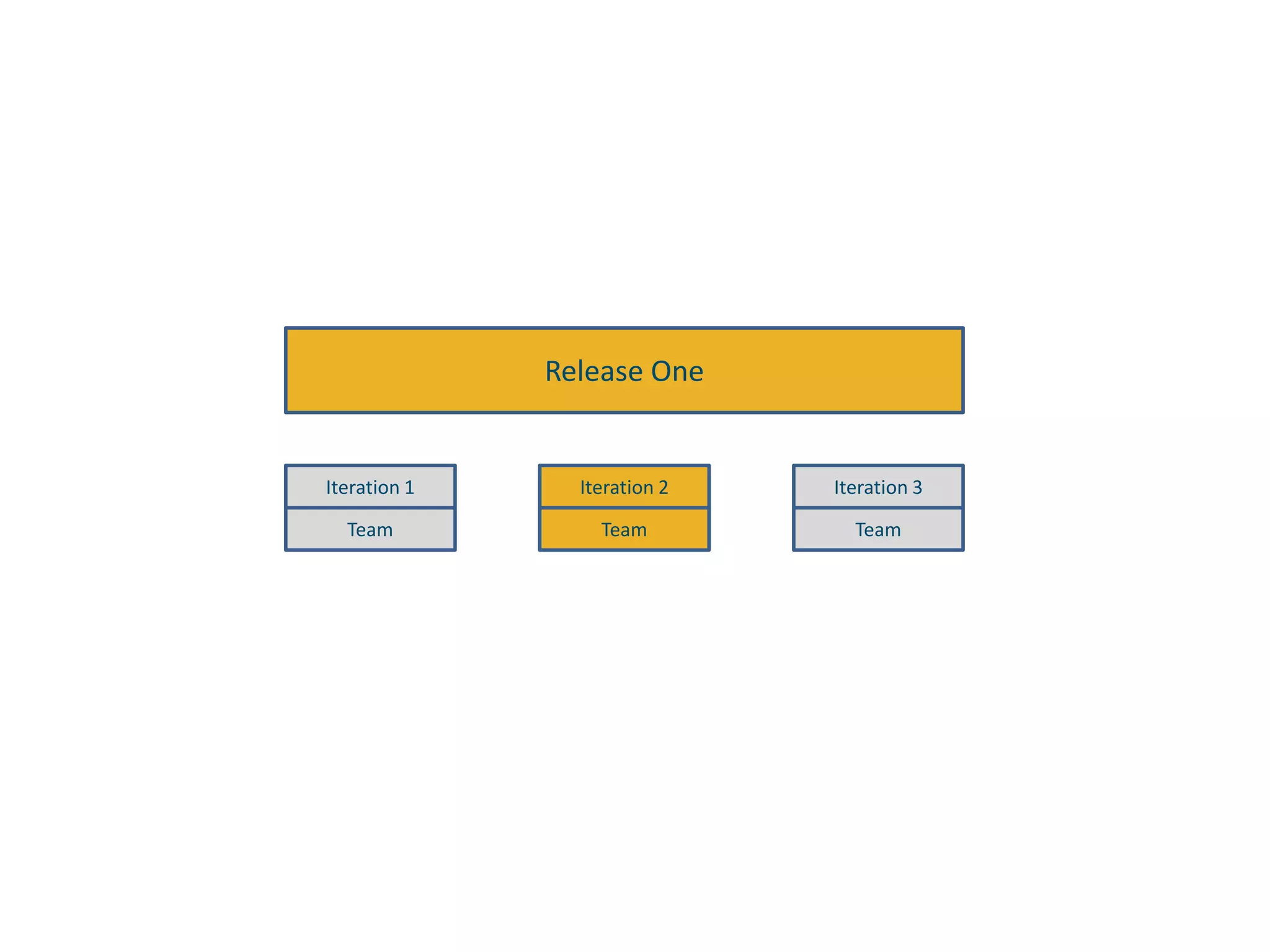
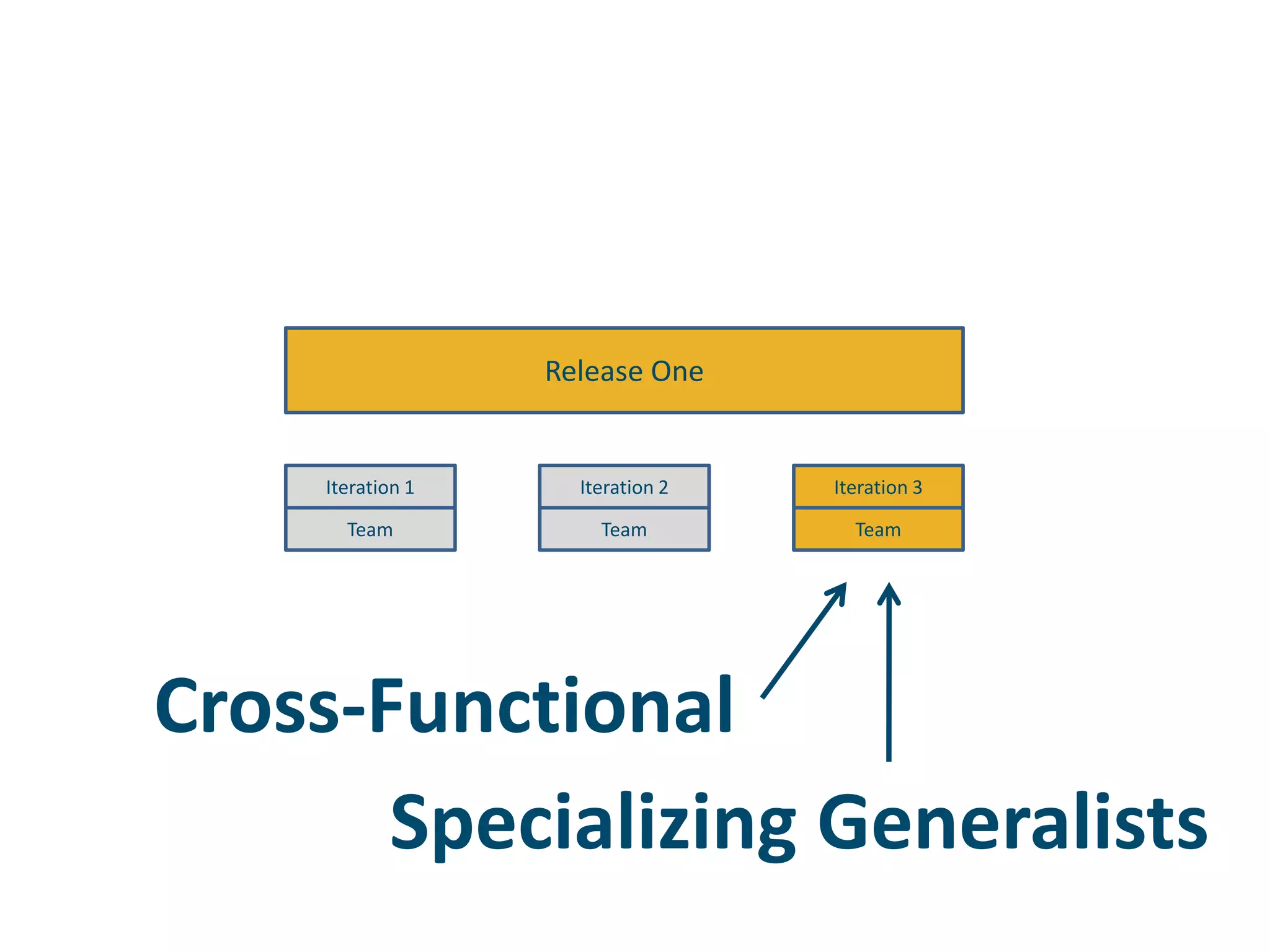
Release OneIteration 1Iteration 2Iteration 3AnalysisAnalysisAnalysisDesignDesignDesignBuildBuildBuildTestTestTestDeployDeployDeploy
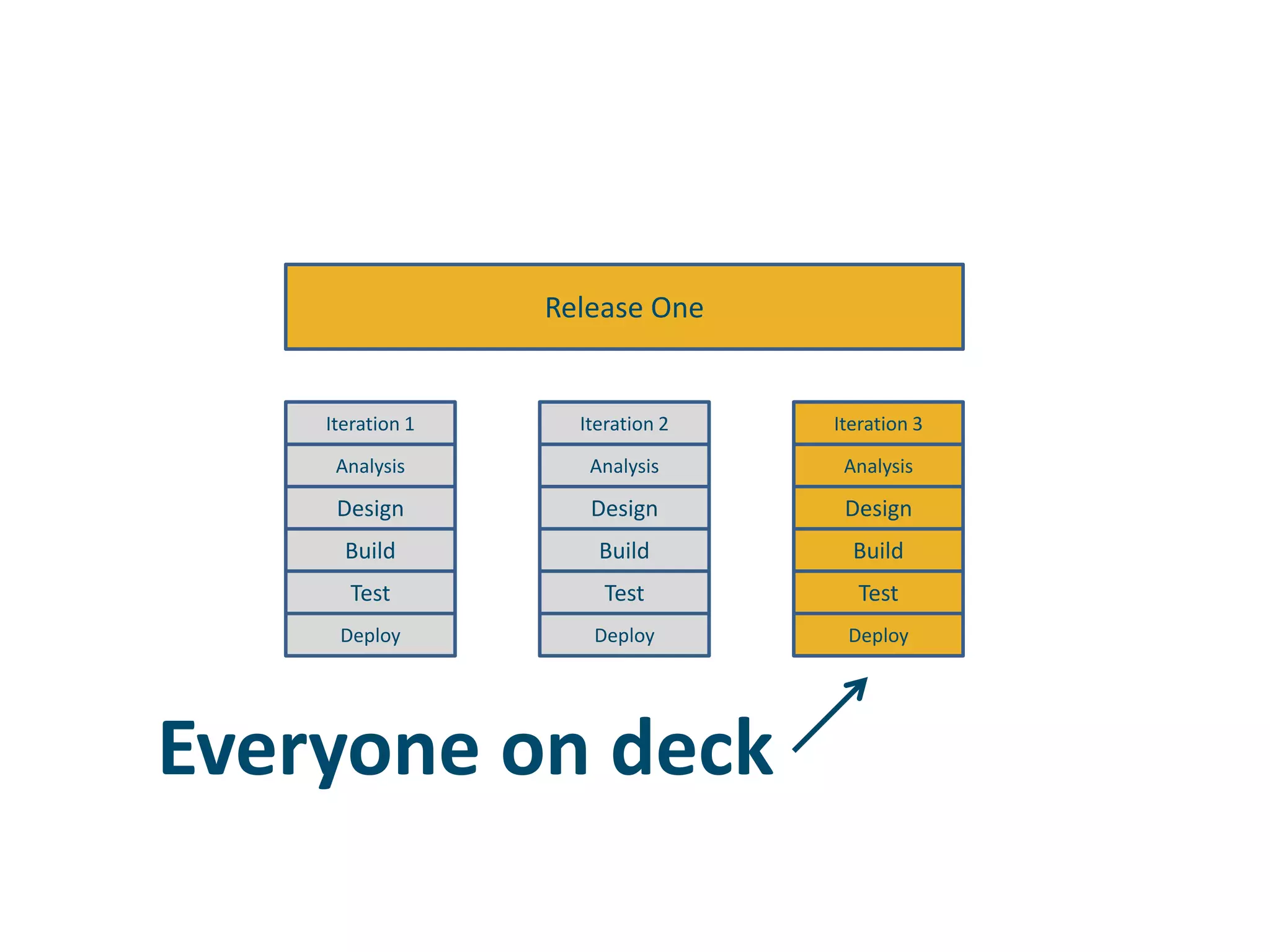
Release OneIteration 1Iteration 2Iteration 3AnalysisAnalysisAnalysisDesignDesignDesignBuildBuildBuildTestTestTestDeployDeployDeployEveryone on deck
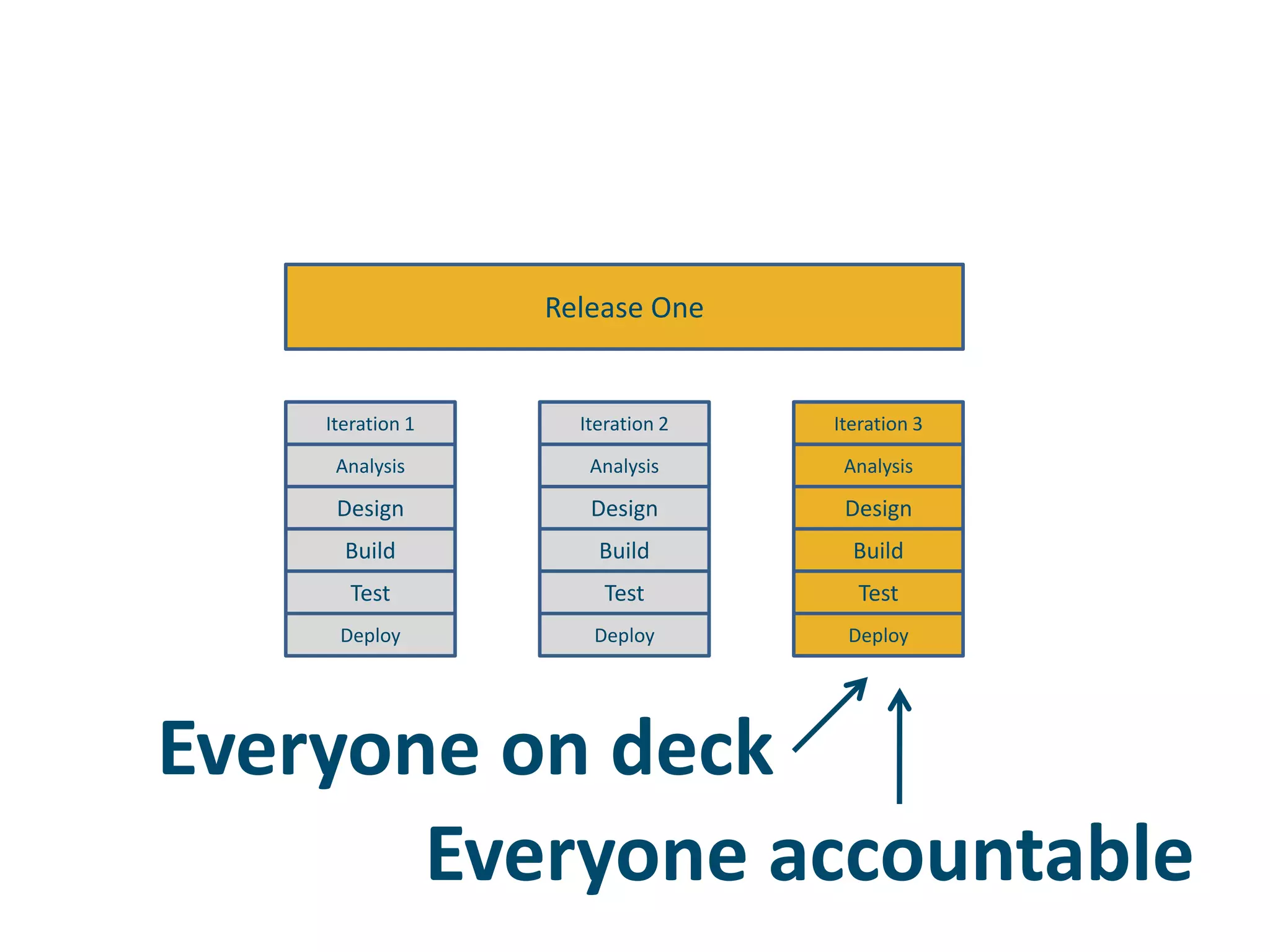
Release OneIteration 1Iteration 2Iteration 3AnalysisAnalysisAnalysisDesignDesignDesignBuildBuildBuildTestTestTestDeployDeployDeployEveryone on deckEveryone accountable
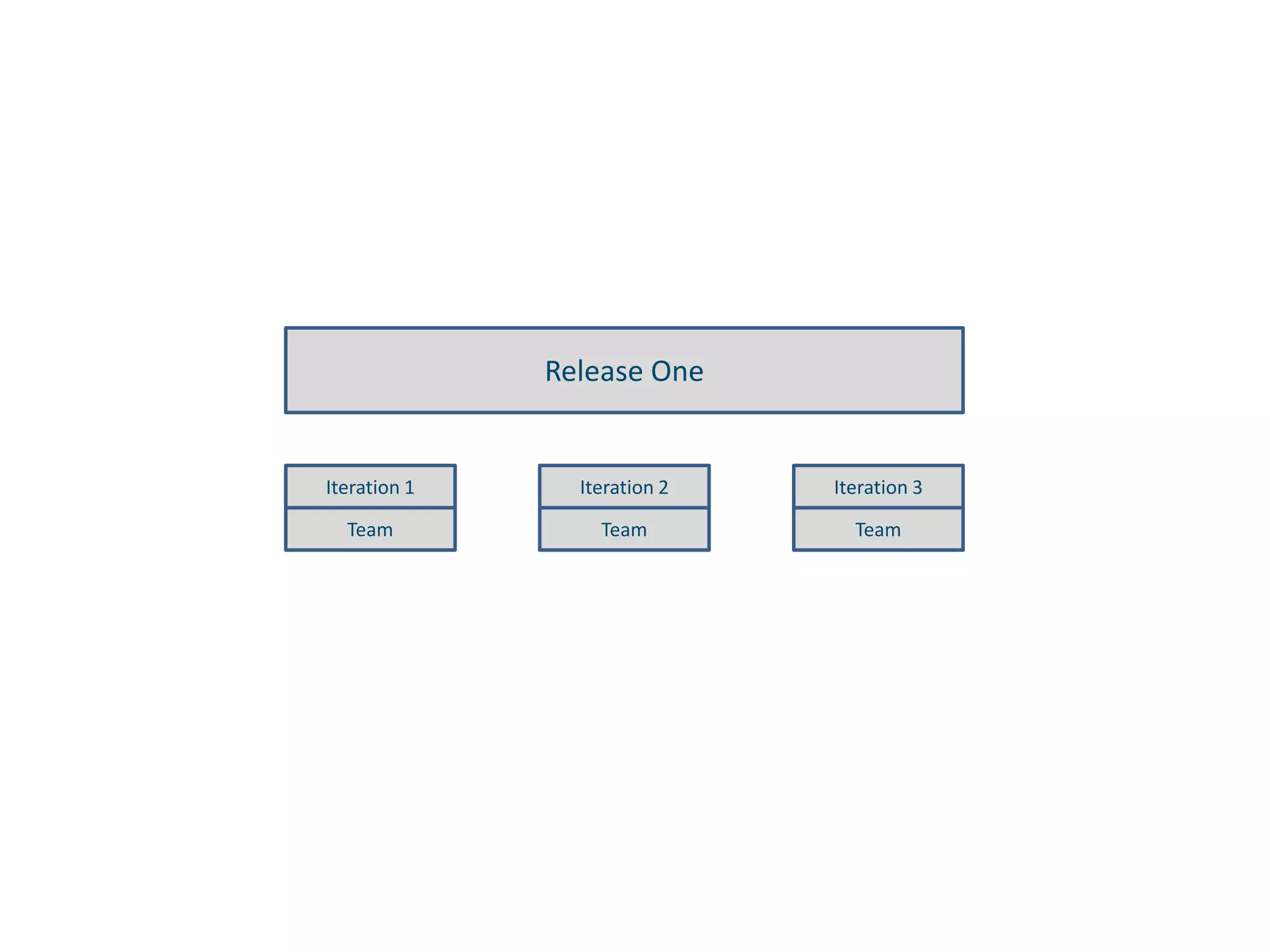
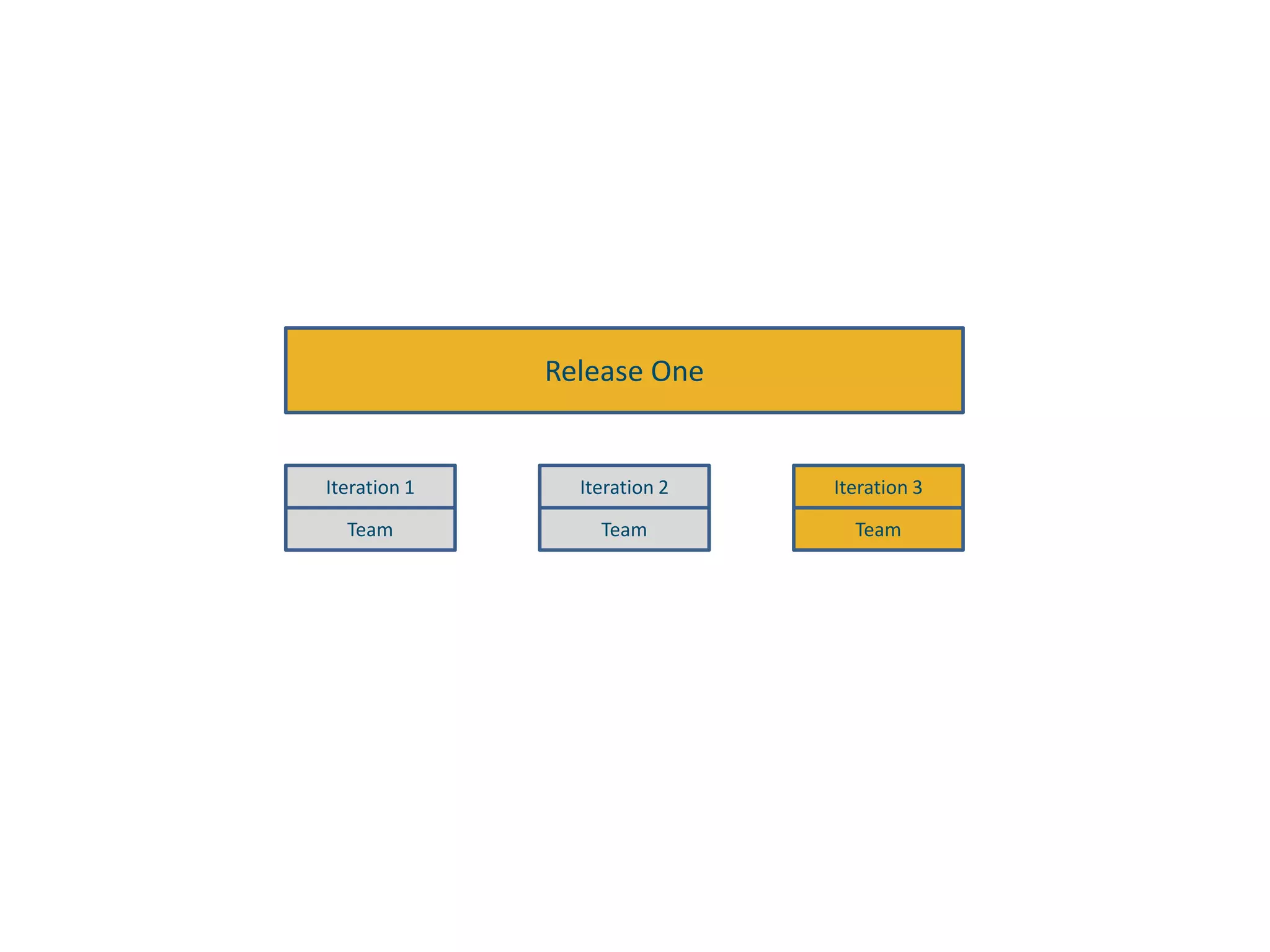
Release OneIteration 1Iteration 2Iteration 3TeamTeamTeam
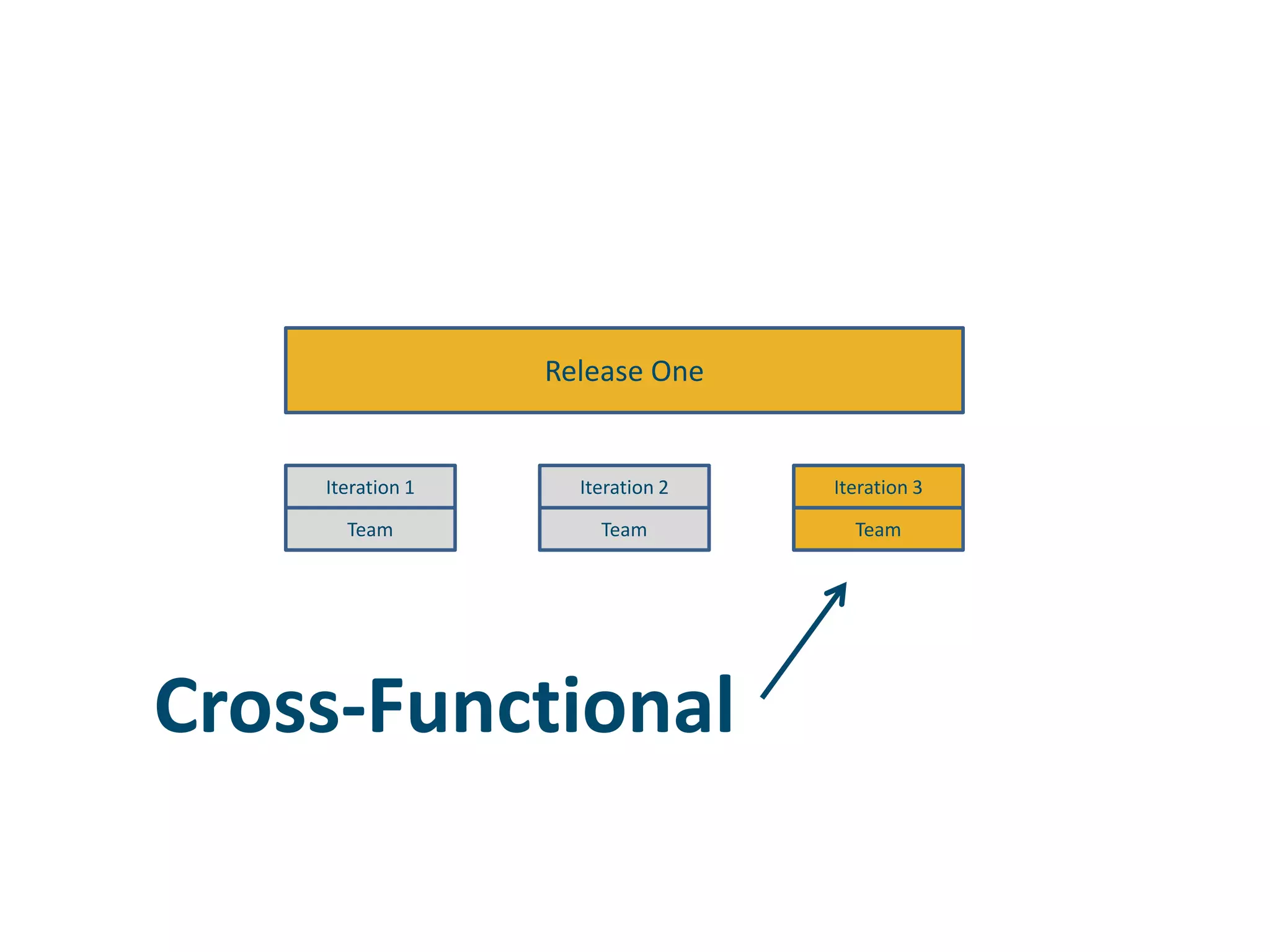
Release OneIteration 1Iteration 2Iteration 3TeamTeamTeamCross-Functional
Release OneIteration 1Iteration 2Iteration 3TeamTeamTeamCross-FunctionalSpecializing Generalists
Team ATeam BTeam CTeam DTeam ETeam FTeams…
Team ATeam BTeam CTeam DTeam ETeam F
Team ATeam BTeam CTeam DTeam ETeam FTeams deliver
Team ATeam BTeam CTeam DTeam ETeam FTeams deliverWorking software
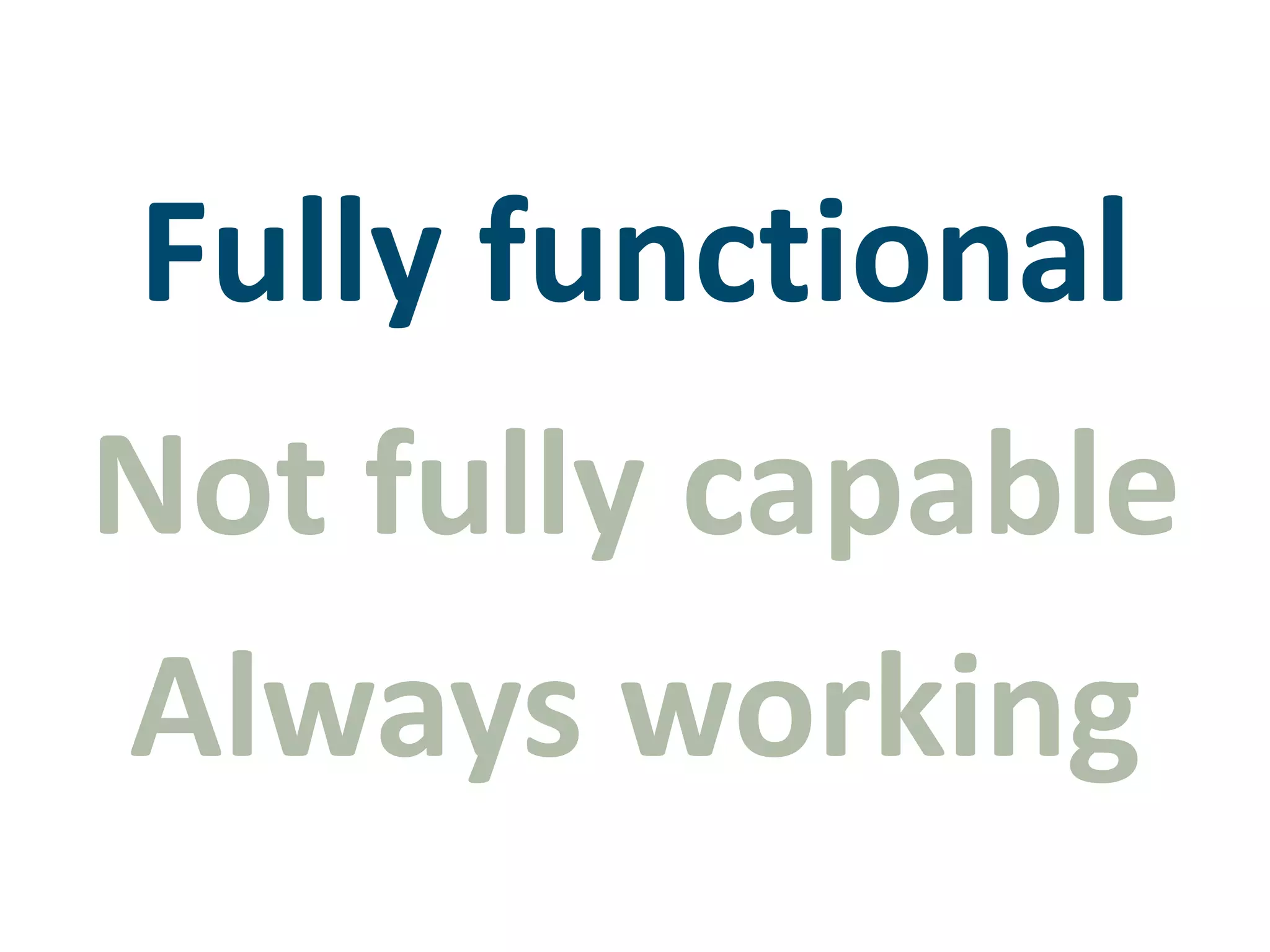
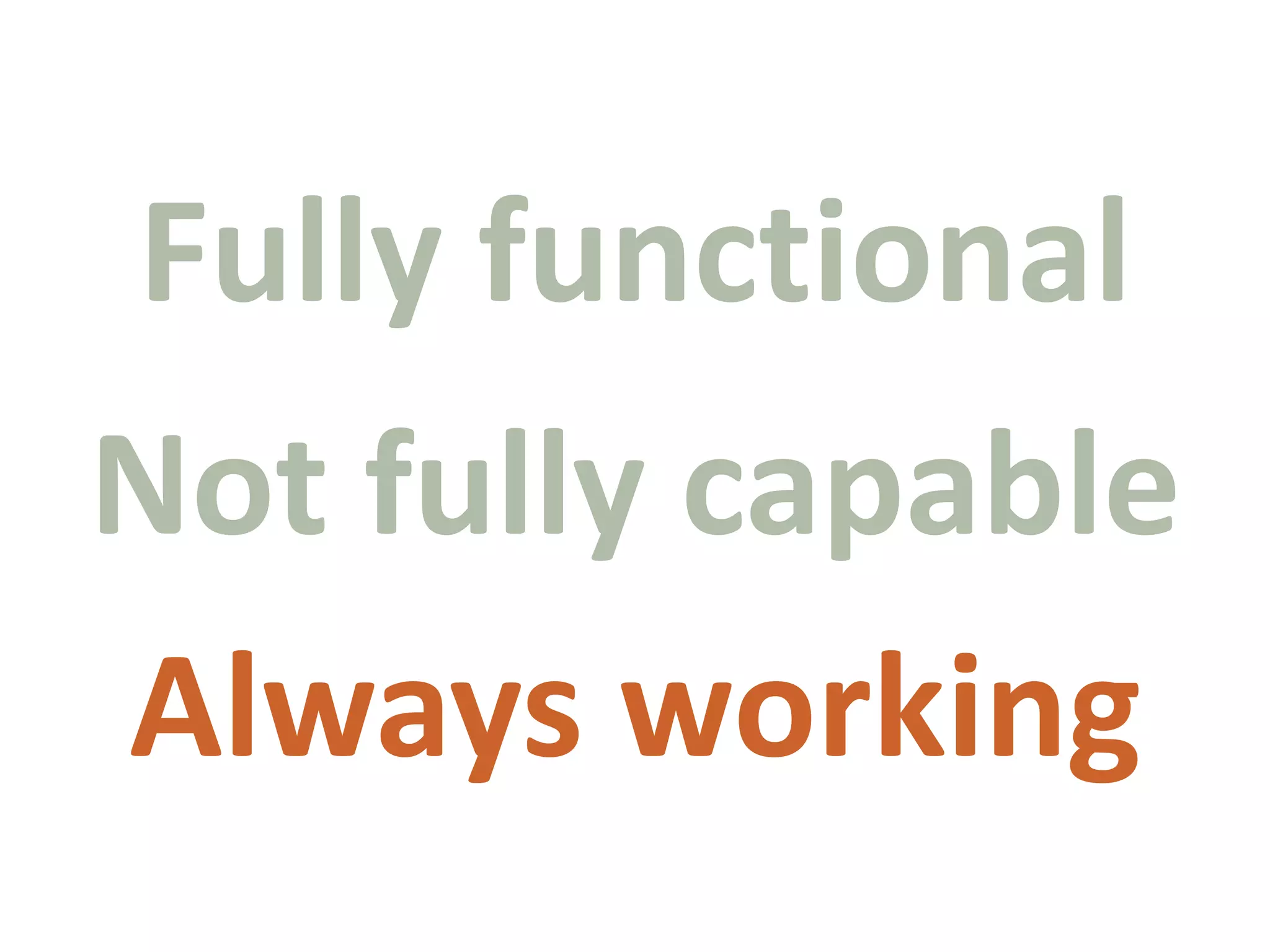
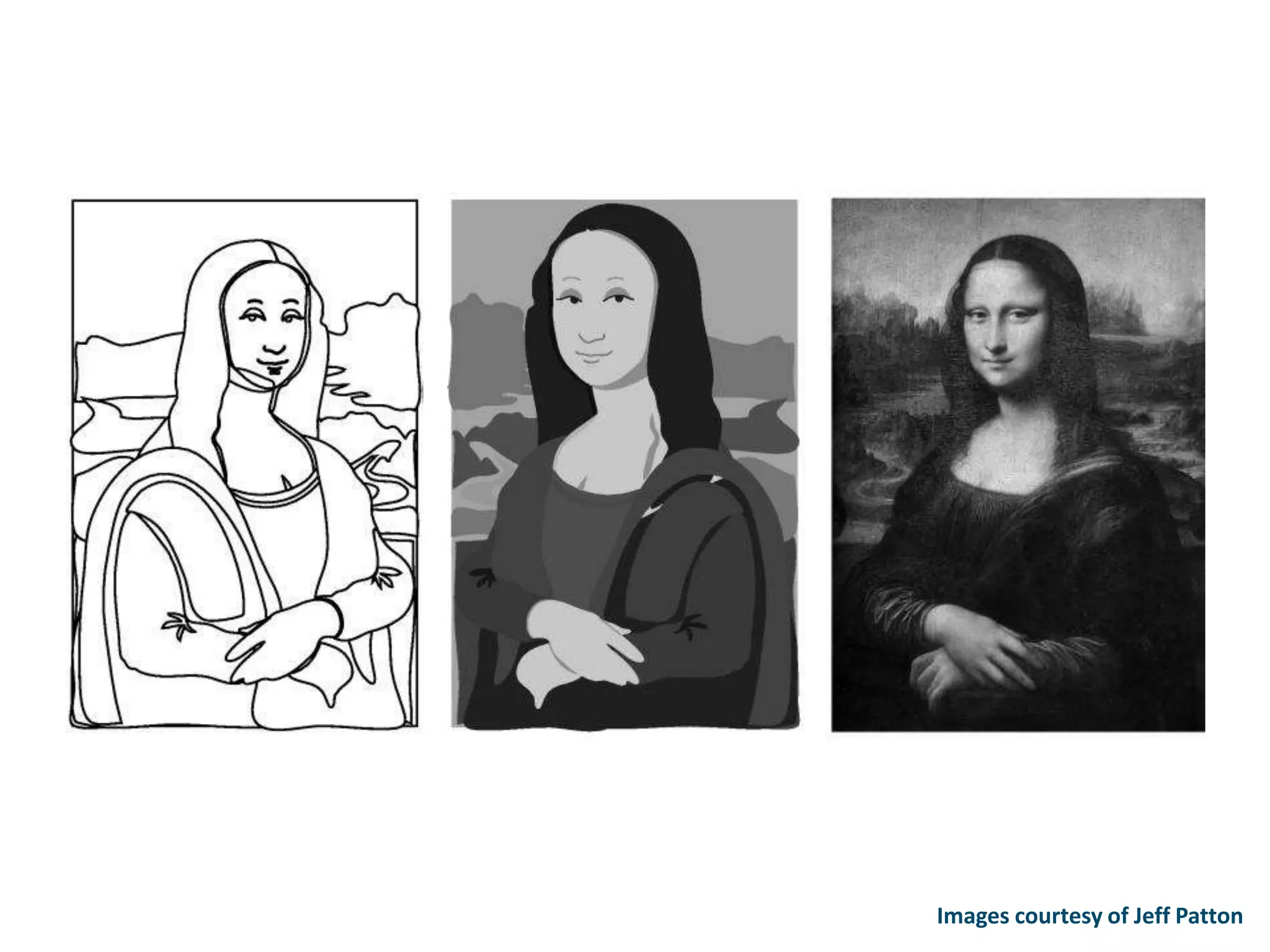
Fully functionalNot fully capableAlways working
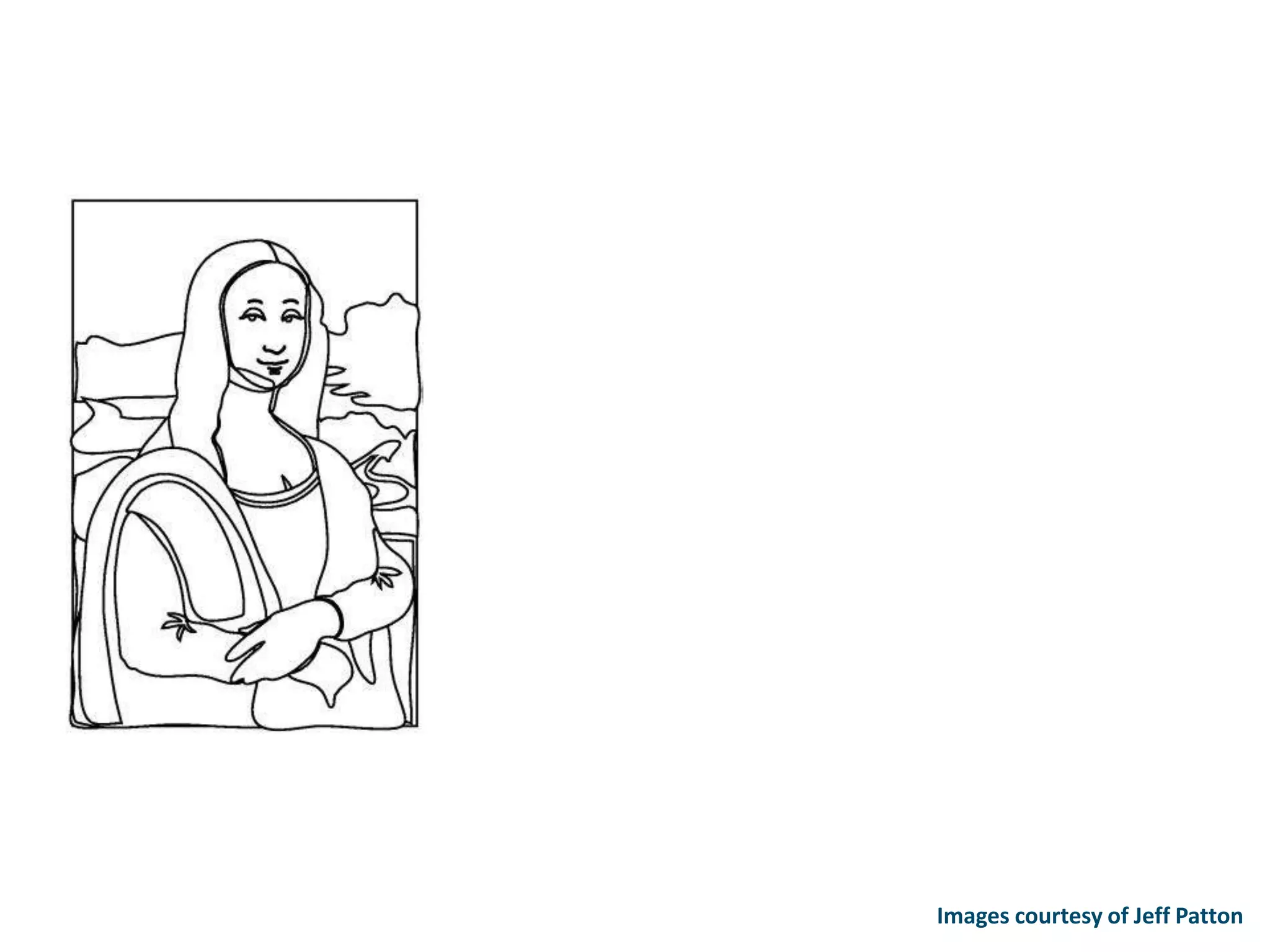
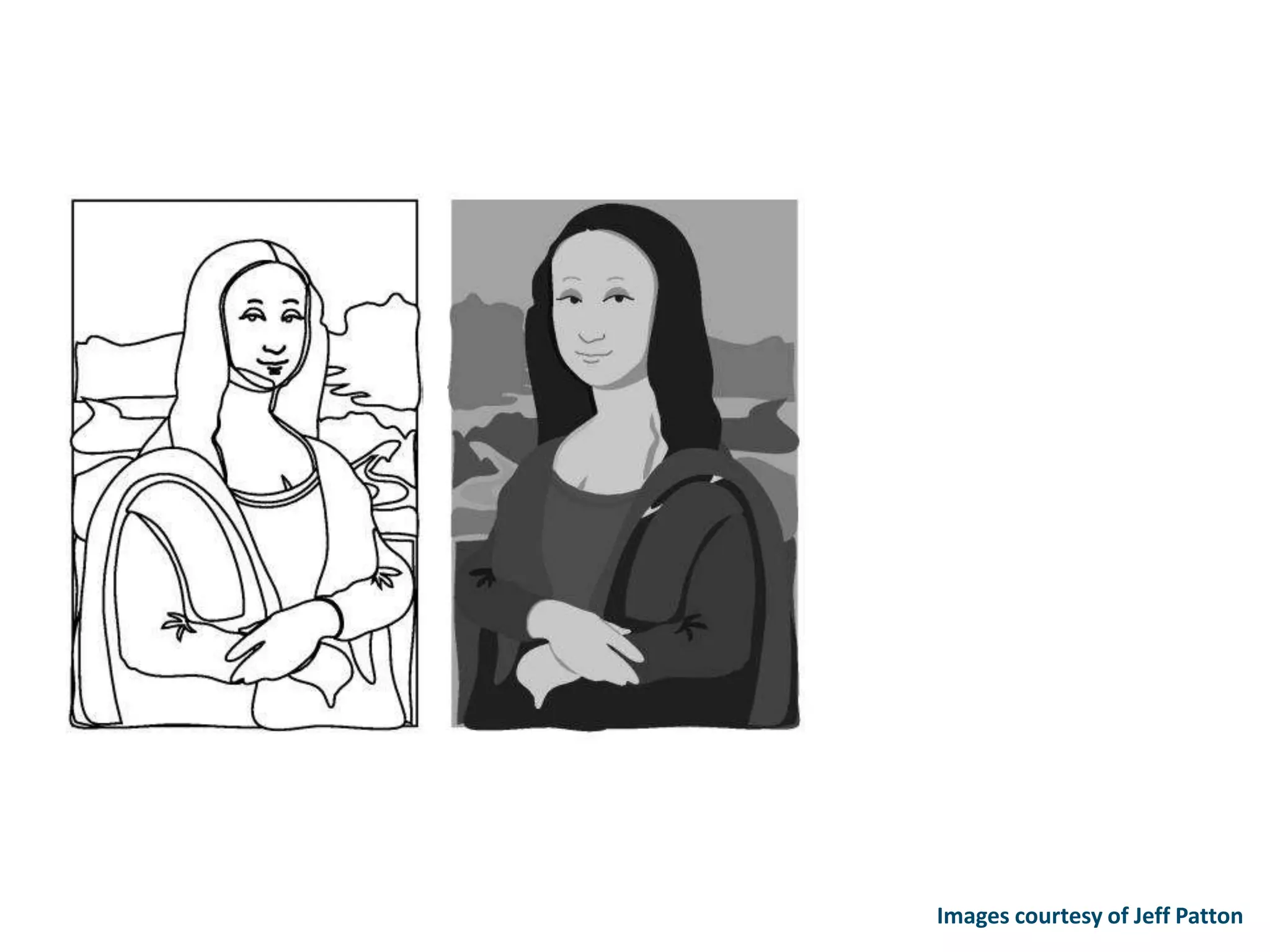
Images courtesy of Jeff Patton
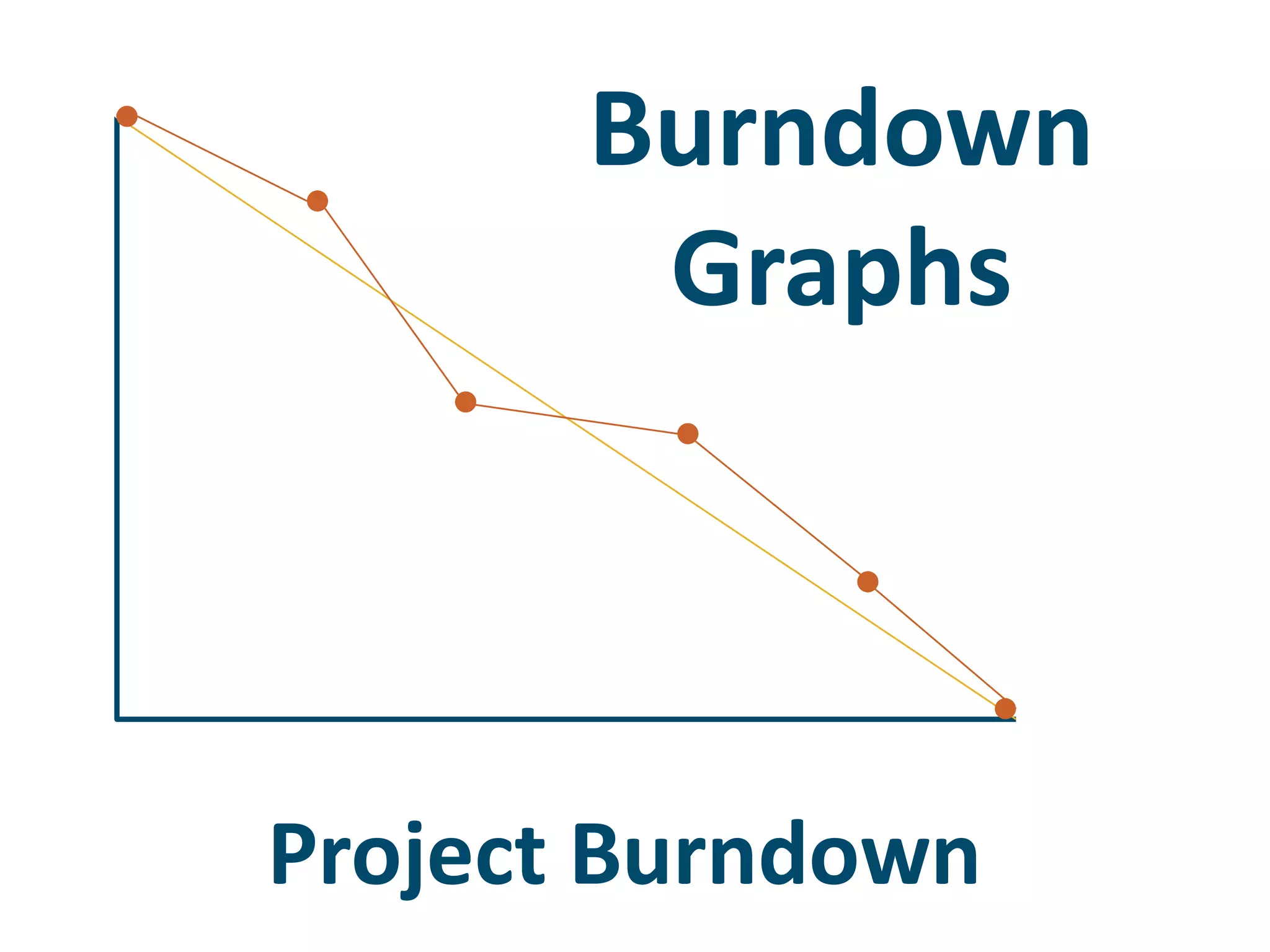
BurndownGraphsProject Burndown
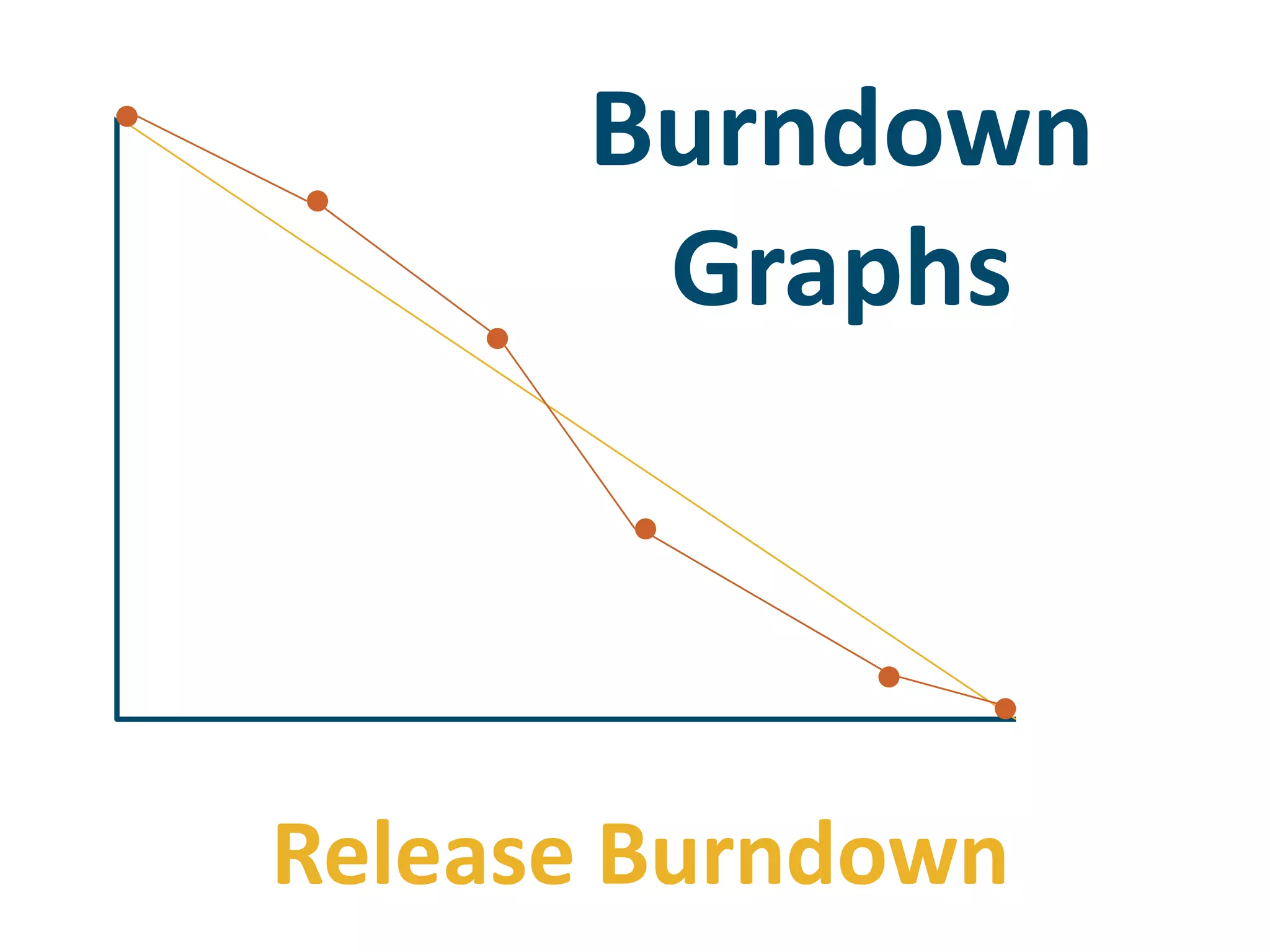
BurndownGraphsRelease Burndown
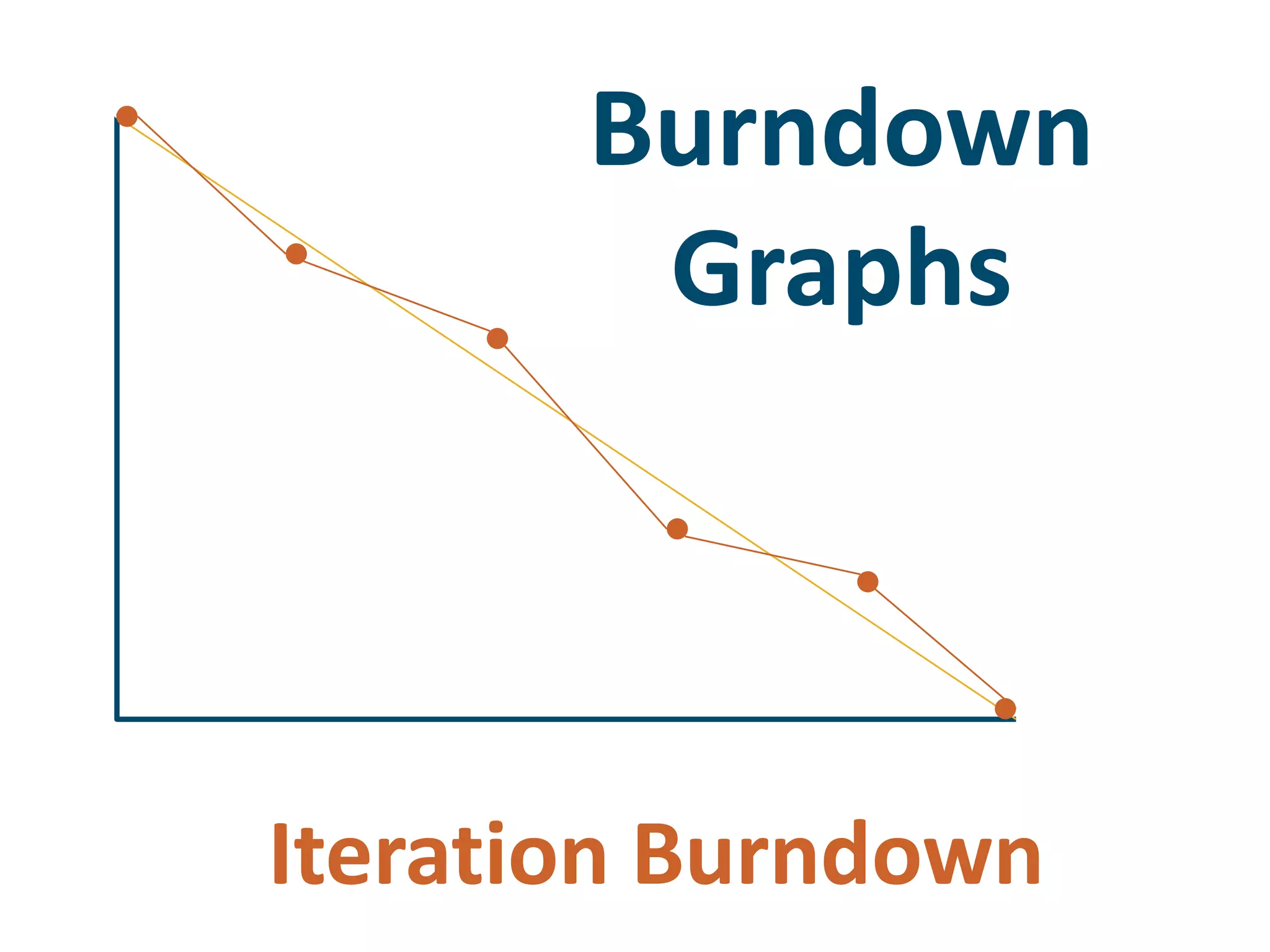
BurndownGraphsIteration Burndown
Earn value
for Real
Inspect andAdapt
Minimize theCostof Change
The essence of ProjectManagement?CostTimeScope
The essence of ProjectManagement?Cost  Time  Scope
The essence of ProjectManagement?Cost  TimeScope
The essence of ProjectManagement?CostTime  Scope
The essence of ProjectManagement?Risk
EmbraceUncertainty
Agileis risk mitigation
Agileis a value system…
EmpowermentSelf-OrganizationTrust IndividualsAccountability
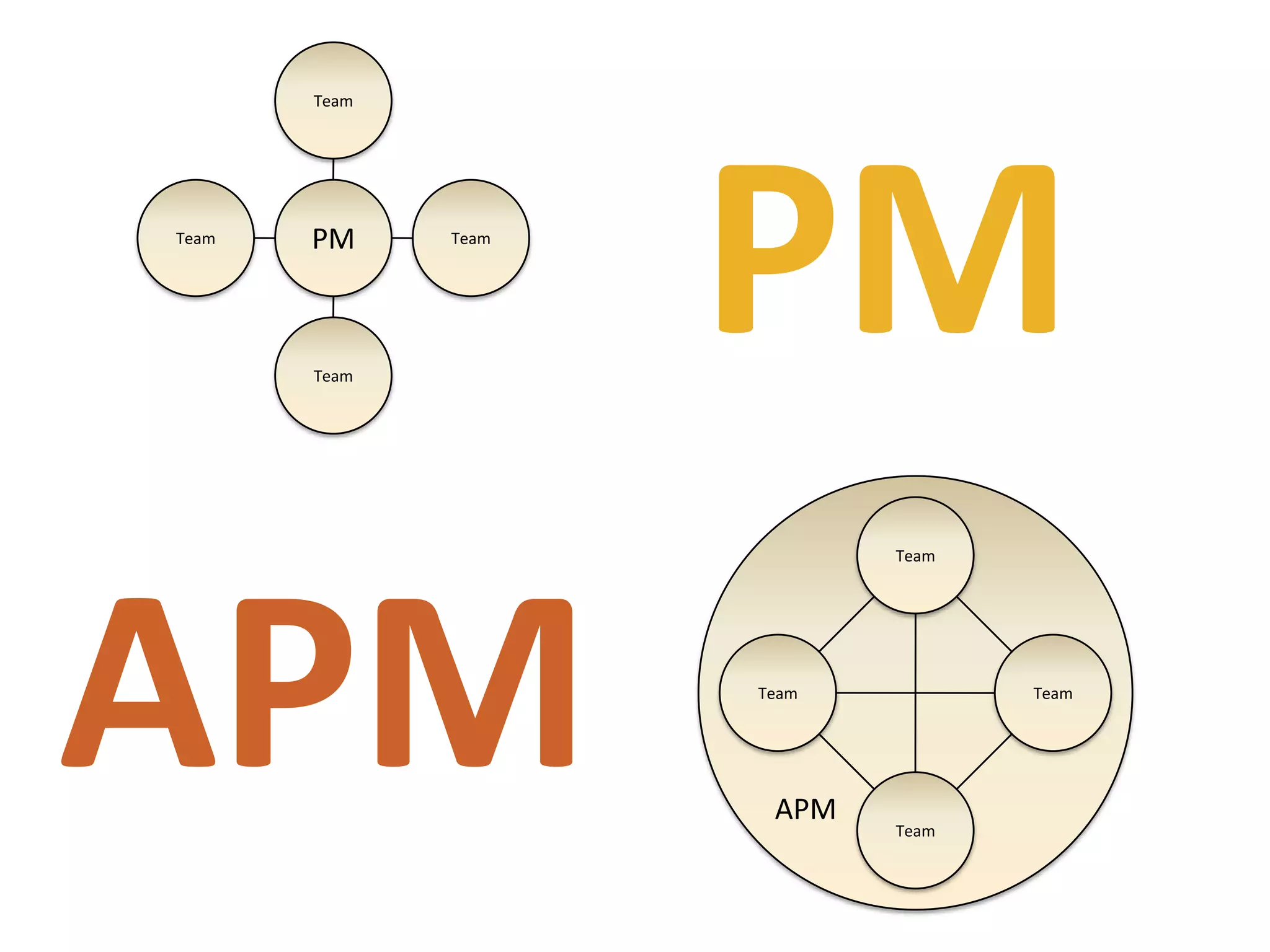
PM
PMA
PMBOK
TimeDeliverables not activitiesReduce DependenciesPrioritize don’t sequenceAlways finish on-time
CostCost = team size X duration Invest don’t spend
CostCost = team size X durationInvest don’t spend
ScopePlan scope in rolling wavesMake trade-offsAllow room for negotiationFrequent customer interaction
RiskBusiness and TechnicalRisk management built inContinuous visibility
QualityQuality not an afterthoughtTest driven developmentContinuous integrationContinuous testing
Comm.Outside the team… the sameCo-locationOsmotic communicationInformation radiators
Int.Charter or vision is okayAgile PM plan and approachIndividual accountabilityChange control built in
Proc.Build contracts for changeBuild relationships on trustCreate win-win agreements
HRMotivated individualsGive them toolsRemove impedimentsSelf-organization
What can…
I do…
Now?
Agile PM PlansPlan FeaturesIterative PlanningDaily Stand-Up
TeamPMPMTeamTeamTeamTeamAPMTeamTeamTeamAPM
Know where you are… know what’s left to go
Take input from reality and deal with it
AgilePMIfinance.groups.yahoo.com/group/pmiagile/
The Agile PMP
Mike Cottmeyermike.cottmeyer@versionone.com www.linkedin.com/in/cottmeyer www.versionone.comblog.versionone.netwww.leadingagile.com

The Agile PMP V3

Editor's Notes

  • #2 I am not here to really talk about any particular flavor of agile or to explain in any kind of detail the practices of agile project managers.   I want you guys to leave understanding what agile project management is... why it is different... why it is sometimes necessary... and how you guys can embrace certain aspects of agile without throwing away everything that you know as a certified PMP.  
  • #10 Agile is an approach to software development that recommends many best practices (TDD, Continuous Integration, Pair Programming)...
  • #11 Agile is an approach to software development that recommends many best practices (TDD, Continuous Integration, Pair Programming)...
  • #12 Agile is a leadership philosophy very similar to what Covey talks about in his book the 8th habit.... valuing the whole person... respect for the individual... creating an empowered and engaged workforce that takes responsibility.  One where people can engage their whole person on the job.  
  • #13 Lastly… Agile is a lightweight project management framework that values frequent planning and delivery... it values lightweight meaningful metrics... and customer collaboration.
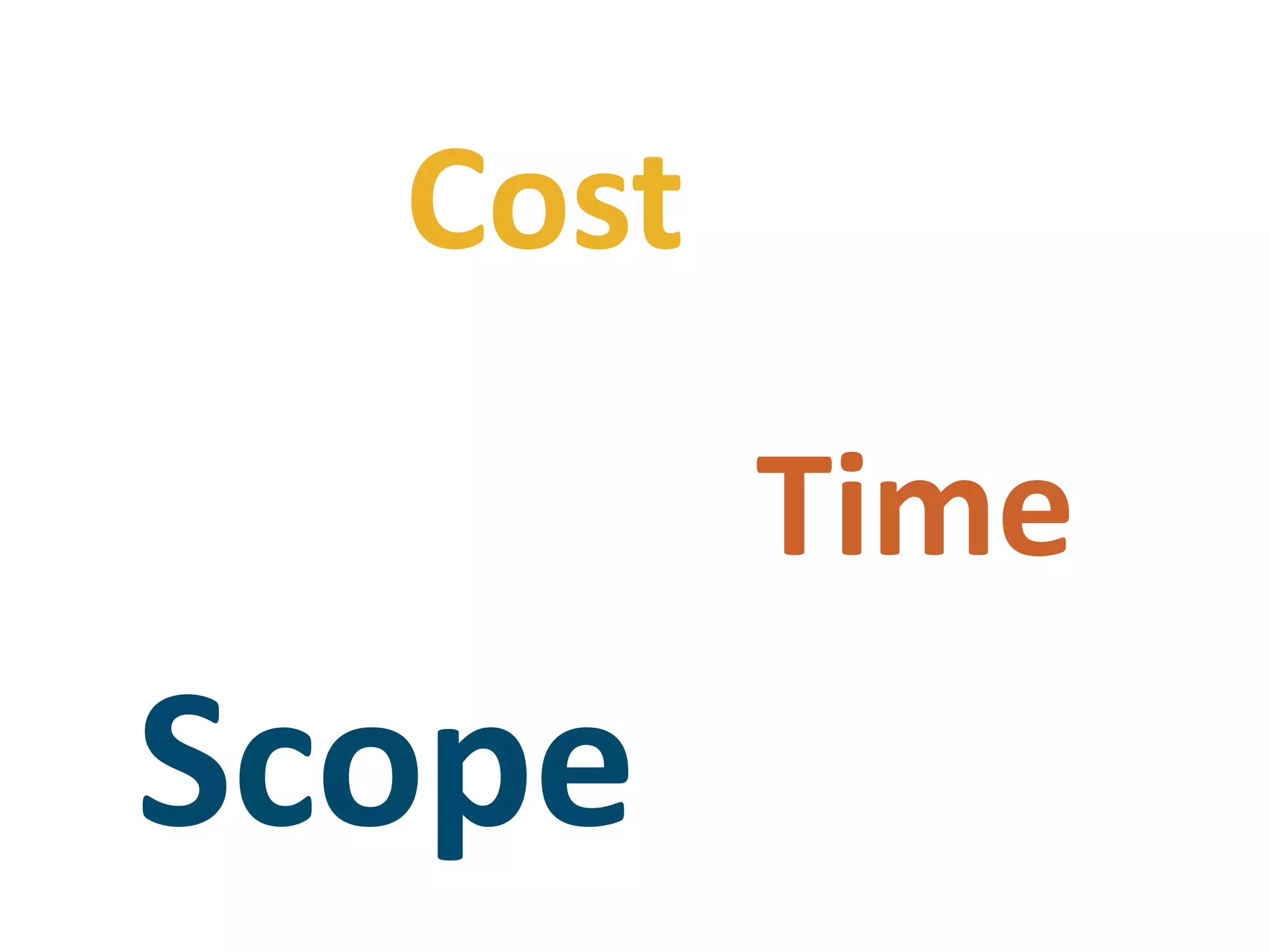
  • #24 Key Takeaway #1:  If scope is not really your primary driver... it is a waste of time and money project planning as if it were.  This is where agile comes in. Agile project management first and foremost elevates time and cost as the primary project constraints and builds a framework for varying scope in the lowest cost way possible.
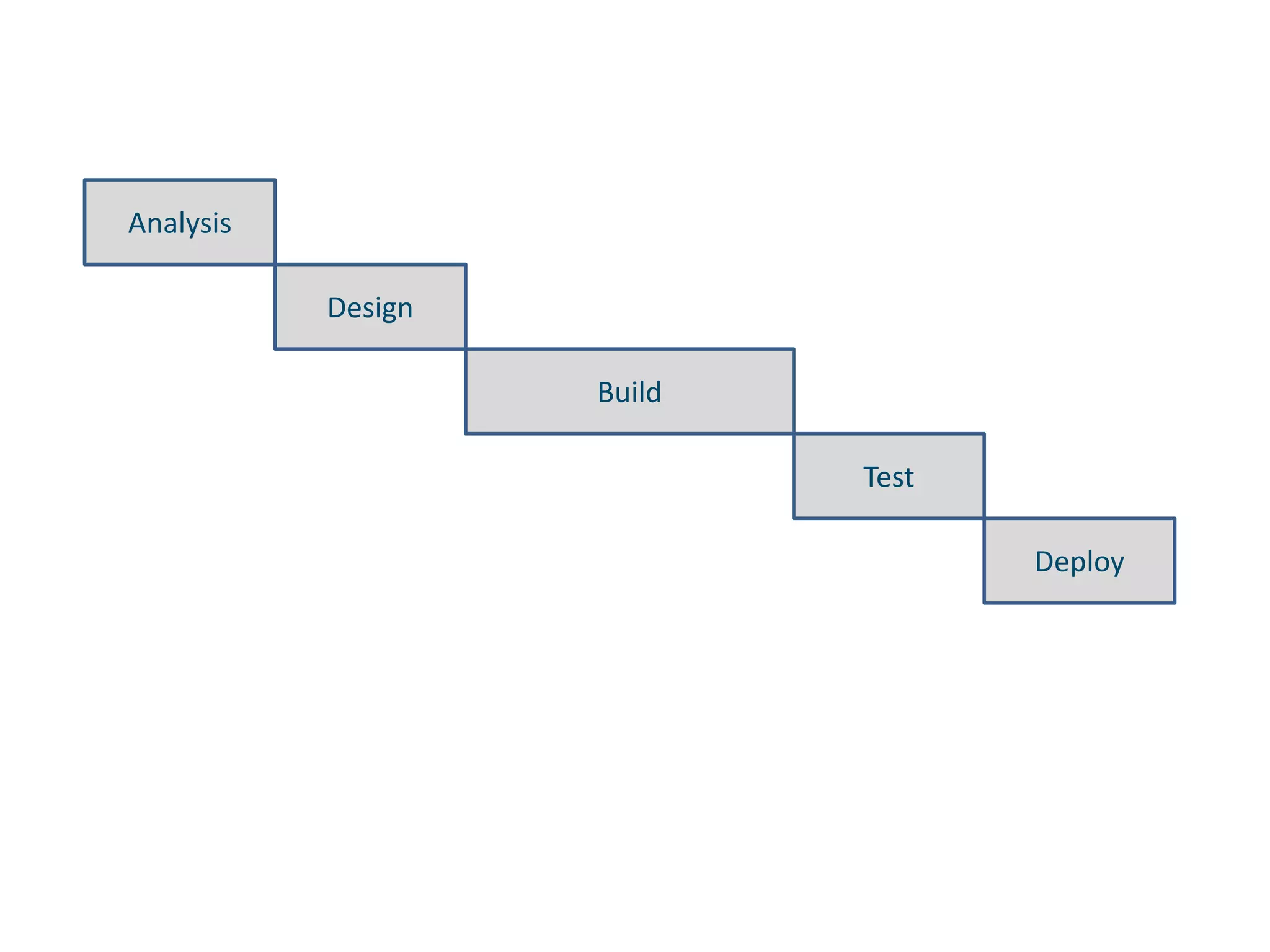
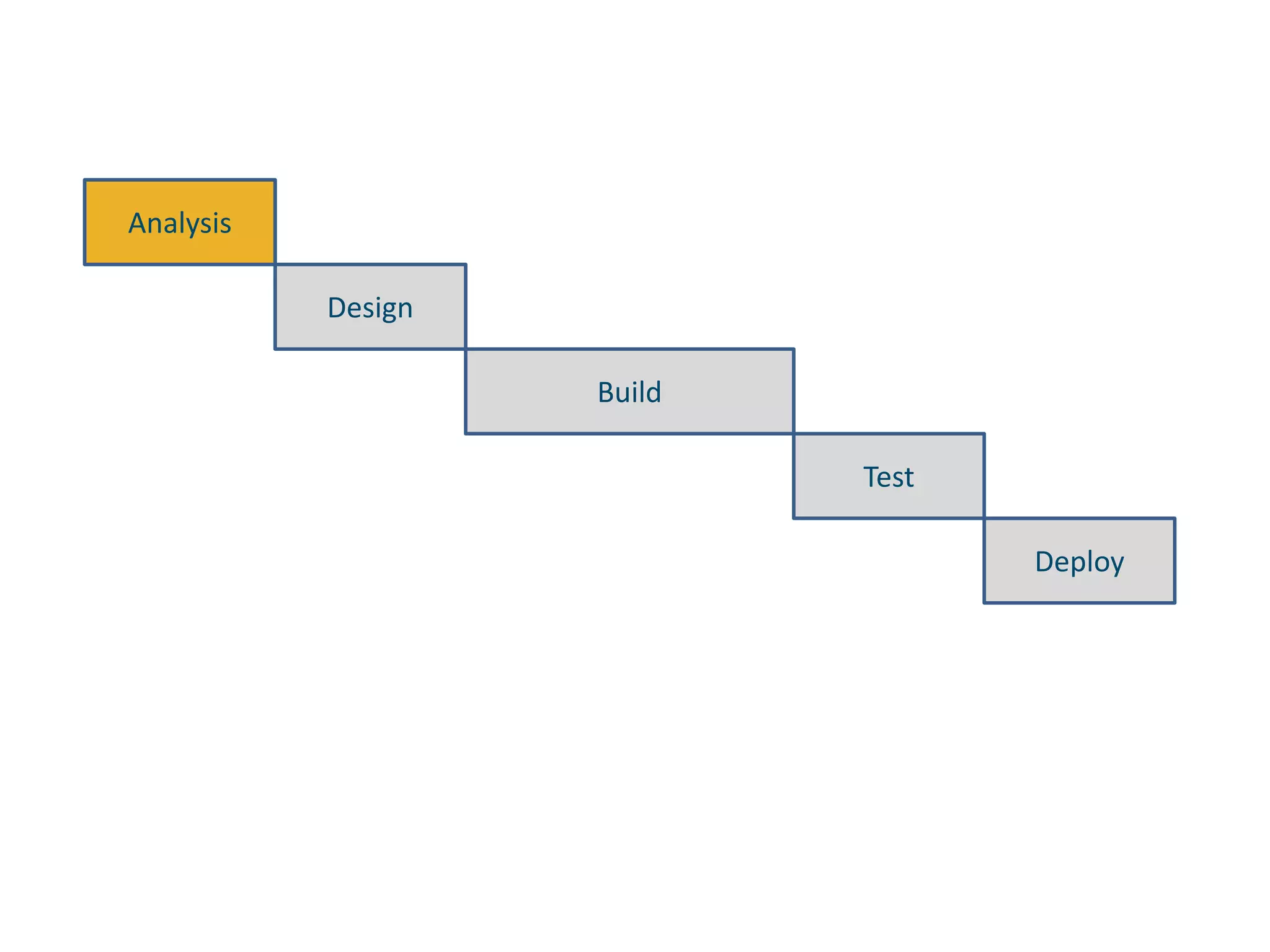
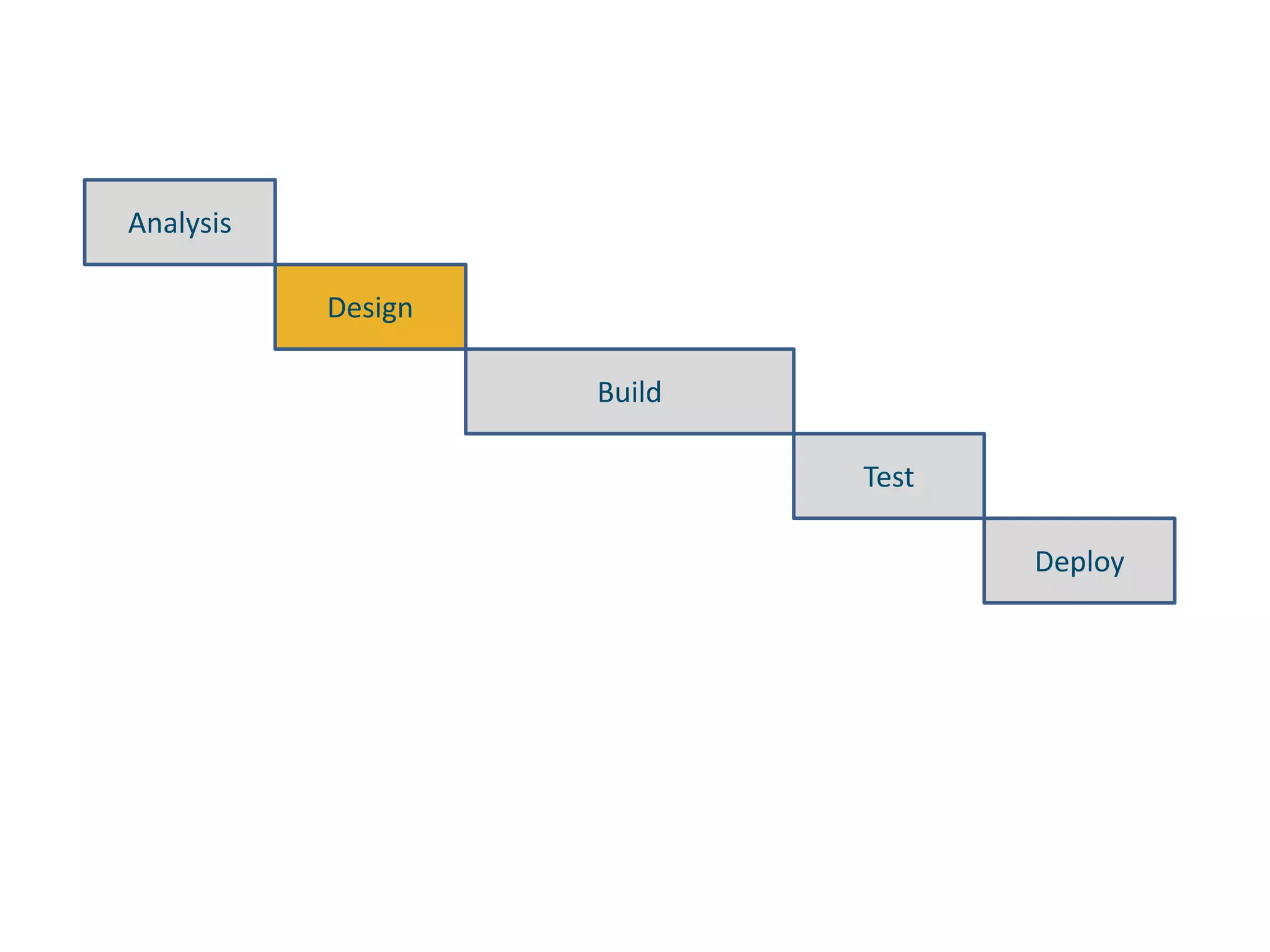
  • #25 We all know that there is a dynamic relationship between time, cost, and scope.  
  • #31 Our project schedule is really where the rubber meets the road.  Our schedule defines when work is going to be done... who is going to do it... and when it needs to be done.  Our schedule helps us keep track of and manage dependencies and keep up with physical percent complete.  
  • #32  Our schedule defines when work is going to be done... who is going to do it... and when it needs to be done.  Our schedule helps us keep track of and manage dependencies and keep up with physical percent complete.  
  • #35 On most software projects building out the schedule is a pretty interesting exercise.  There is a classic chicken and the egg problem.  The customer generally has some idea of what they want and are trying to figure out how its gonna cost and how long it is going to take.  
  • #36 On the other hand, they usually have some idea of their cost constraints…
  • #37 and when they need the product to be done.    
  • #49 So we play the game.  We tighten up the estimates... that usually means making them smaller.  Maybe we can find some extra folks to work on the project in their spare time.  Maybe we make some simplifying assumpitions about the technical solution.   
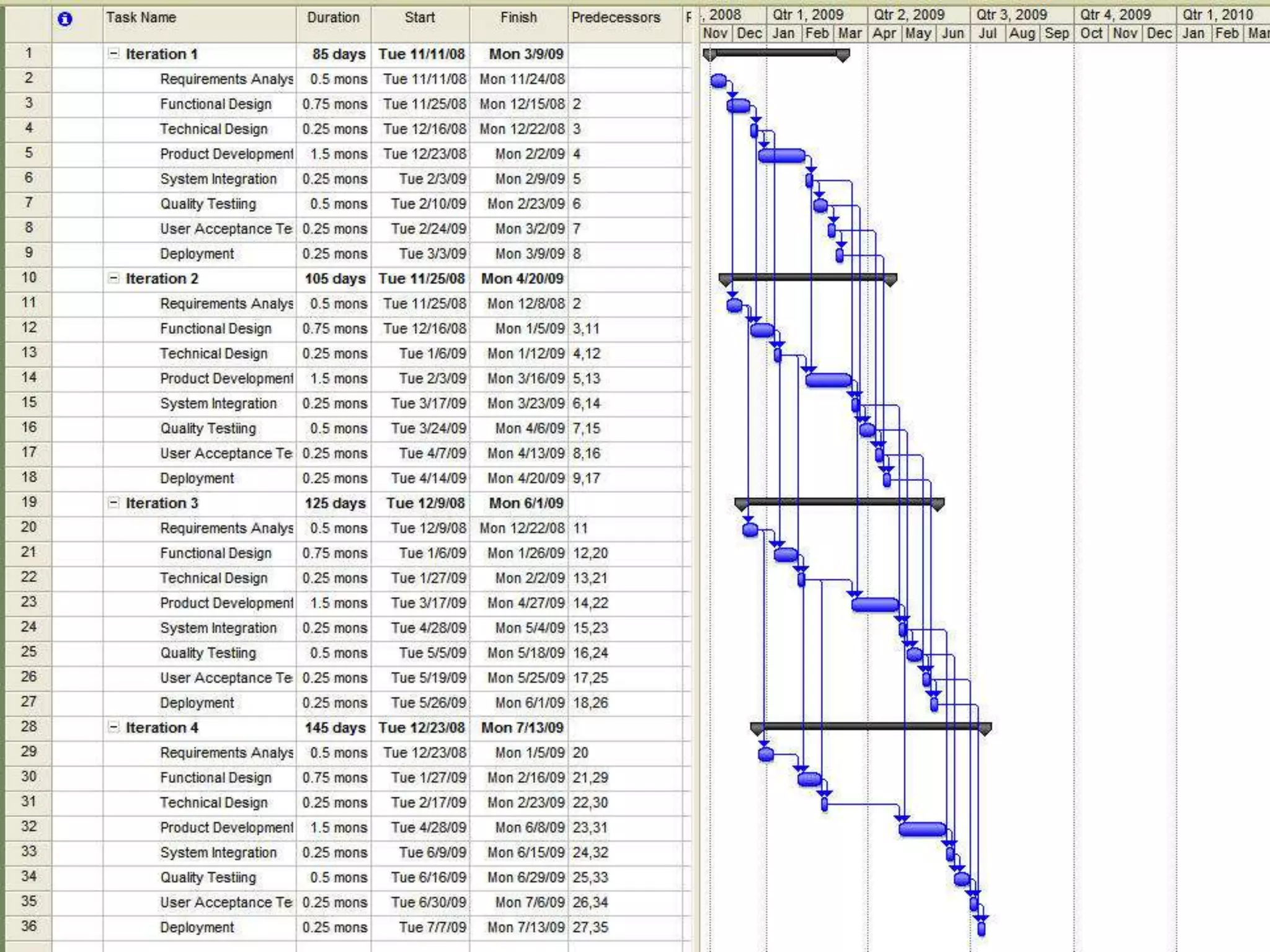
  • #58 If we get really creative, maybe there are something that we can do in parallel.  Maybe we create a series of overlapping waterfalls.  
  • #69 We keep our eyes peel for anything that might prevent is from meeting our project deliverables.
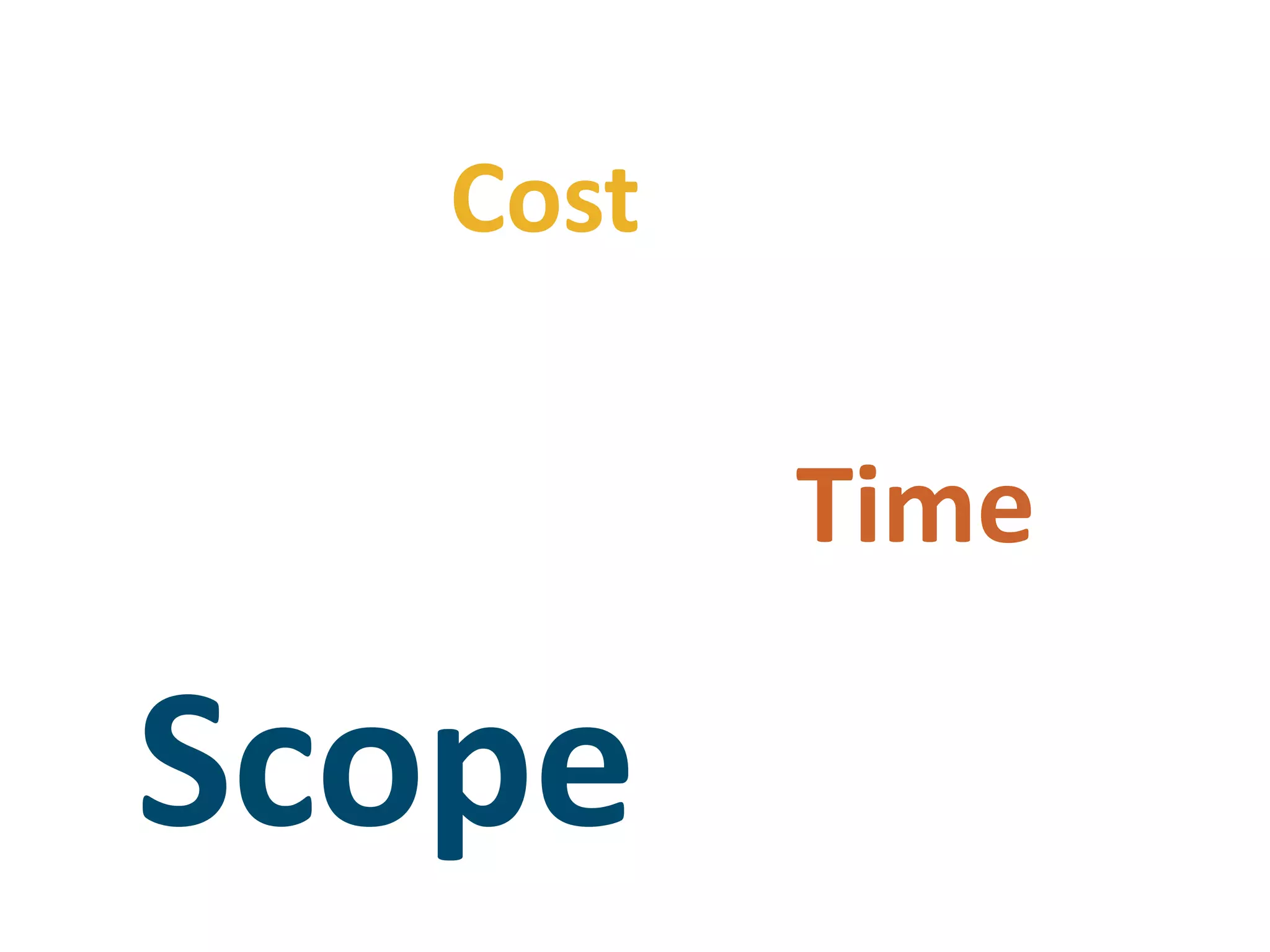
  • #70 Scope is the starting place for this kind of project management.  If scope is really our primary constraint... we have to let time and cost be calculated based on project size and resource availability.  
  • #71 What we are seeing in many of our software projects is that scope is not neccesarily the primary driver.  What we learned through the Gaant charts on the earlier slides... more often than not... time and cost are actually our primary constraints.  
  • #72 Key Takeaway #1:  If scope is not really your primary driver... it is a waste of time and money project planning as if it were.  This is where agile comes in. Agile project management first and foremost elevates time and cost as the primary project constraints and builds a framework for varying scope in the lowest cost way possible.
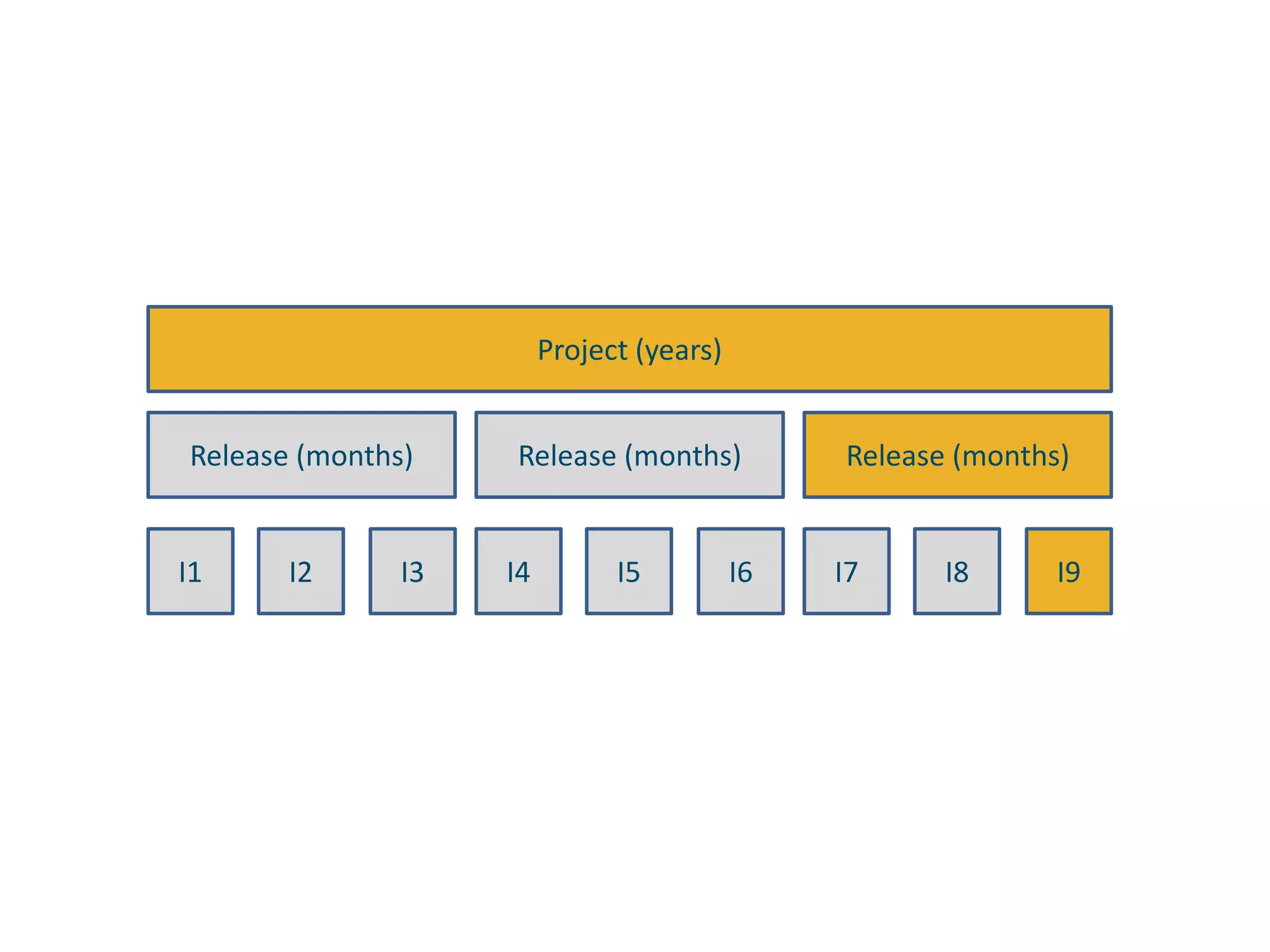
  • #73 What we are seeing in many of our software projects is that scope is not neccesarily the primary driver.  What we learned through the Gaant charts on the earlier slides... more often than not... time and cost are actually our primary constraints.  
  • #74 Scope is the starting place for this kind of project management.  If scope is really our primary constraint... we have to let time and cost be calculated based on project size and resource availability.  
  • #130 By delivering working product in short cycles... by keeping the evolviing product highly visible to our customers... and inspecting outcomes frequently... we are able to learn about our processes... about ourselves...and our customers and their requirements as we are building the product.  We do less work up front that is subject to change.  Could we do much of what we are talking about with traditional project management and really solid change management?  Sure we could... but at what cost?  How many of you guys build the cost of process... the cost of change management into your project budgets?  Given the pressure to deliver more faster... that was probably the first to go.    I would also suggest there is an opportunity cost for taking the traditional approach toward software development.  We lose the ability to embrace change and learn from our experiences.  If the market changes over the course of the project... we want to be able to adjust our plans to address that new information.  Tradtional methods discourage change becuase we have invested so much in our plans... we are rewarded for staying on plan... and it takes so long to change course.
  • #132 We are still addressing the primary concerns of project managers:  time, cost, scope, and risk... but doing it with a different emphasis.  So agile project managers focus less on predictive up front planning and more on delivering value.  We focus more on collaboration with the business and tapping into engaging the team.  We encourage predictable outcomes by keeping teams together... establishing stable througput... and constantly measuring where we are against our high level and detailed planning.   Remember... time and cost are our primary drivers... scope has to be flexible.  
  • #137 I like to think of agile project management as a risk mitigation technique for when our traditonal assumptions about predictability no longer hold.  It is a risk mitigation technique for when scope is not our primary driver... when time and cost are critical... when flexibility and adaptation are essential.  
  • #138 I like to think of agile project management as a risk mitigation technique for when our traditonal assumptions about predictability no longer hold.  It is a risk mitigation technique for when scope is not our primary driver... when time and cost are critical... when flexibility and adaptation are essential.  
  • #139 As an agile project manager, you are working with the team to make sure that everyone has a sphere of influence.  Rather than tell people what to do, or what to work on, let them to self select tasks.  Let them choose who they want to work with and what they want to work on.  Let them decide on the approach.  Let them decide how to tackle the problem. You are setting the context... you are managing the environment... you are managing the process.  You are also measuring the process and making sure that the outputs of the project team are what you would expect.  We are basically empowering people and expecting them to act and behave like adults.
  • #142 The tradeoff for all this empowerment, self-organization, and trust... is extremely high visibility.  We are constantly monitoring what is being build.  We are constantly inspecting outcomes.  We are constantly making small commitments to each other and to our project and to our organization.  We are accountable to our project and to each other.  Because we are committing and delivering very frequently... because we are delivering and inspecting outcomes often... we never get too far off before we have a chance to correct.  
  • #143 •Define deliverables not activities •Strive to reduce dependencies between deliverables•Prioritize don’t sequence.  Work from the top of the list.•Estimate based on relative size•Releases and iterations always end on time.
  • #144 •Define deliverables not activities •Strive to reduce dependencies between deliverables•Prioritize don’t sequence.  Work from the top of the list.•Estimate based on relative size•Releases and iterations always end on time.
  • #145 •Define deliverables not activities •Strive to reduce dependencies between deliverables•Prioritize don’t sequence.  Work from the top of the list.•Estimate based on relative size•Releases and iterations always end on time.
  • #146 •Define deliverables not activities •Strive to reduce dependencies between deliverables•Prioritize don’t sequence.  Work from the top of the list.•Estimate based on relative size•Releases and iterations always end on time.
  • #151 •Cost is defined by your willingness to invest •Cost estimates are the product of the team size and project duration
  • #152 •Scope is defined at progressive levels of detail. •Plan scope, deal with project realities, and make tradeoffs.•Allow room for scope negotiation when planning project scope•Collaboration and frequent interaction
  • #156 •Communication planning can be thought of in the traditional sense when looking outside the project team •Collocation•Information radiators•Osmotic communication
  • #159 •Quality is not an afterthought •Test first design•Test driven development•Continuous integration•Continuous testing
  • #163 •Agile has room for a Charter or a Vision statement •Project management plans and approach statements•More empowering style of management based on individual accountability•Change control is built into the process. Tradeoffs managed in real time.
  • #171 •Agile does not deal much with procurement •Approach contracts with adaptability in mind•Build relationships based on trust•Create win-win agreements
  • #174 •Staffing based on available people and willingness to invest •Build your team around motivated people•Give them what they need to be successful and remove impediments•Allow teams to self-organize
  • #182 One of the easy... most straightforward things you can do is to start building your project plans around product deliverables.  Documents are great... but they are not what you sell to your customer... you sell working product.  Activities are great... but no one really cares how hard you are working or how many hours along you are.  Break your deliverables into smaller pieces... build those deliverables into your project plan... and when you track earned value... you will really be measuring the value delivered rather than the hours burned on the project.  
  • #184 Another easy thing to do is start doing daily standup meetings.  These daily touch base meetings keep everyone on the team focused and aware of what is going on and if the team has any blocking issues.  Agile recommends keeping these to 15 minutes and focused solely on keeping everyone in the know.  Any detailed discussion take place after the meeting only between those people directly impacted by the conversation.   
  • #185 A lot of how agile will impact you will come down to how you see yourself as a project manager.  Do you allow yourself to be the hub of activity?  Do you get off on having everyone come to you when a big decision needs to be made?  An agile project manager sees themselves less as the hub of all project activity.  An agile project manager serves more as the wheel.  They protect the team, remove obstacles, keep the project moving, and make sure the team members are connected to each other