Downloaded 28 times

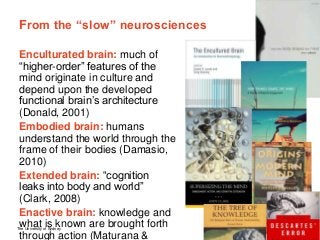
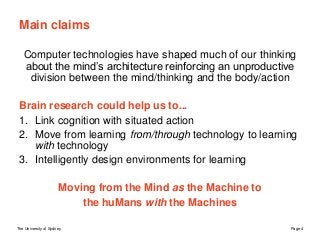
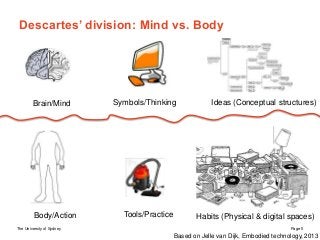
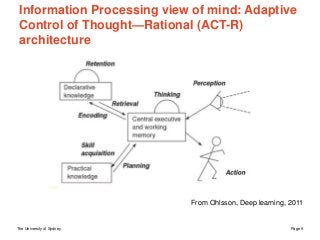
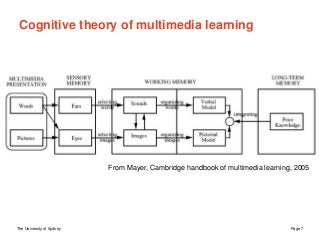
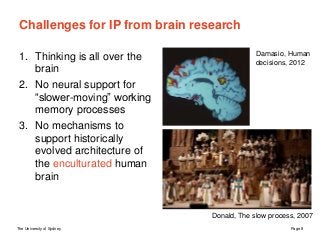
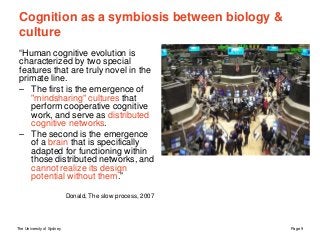
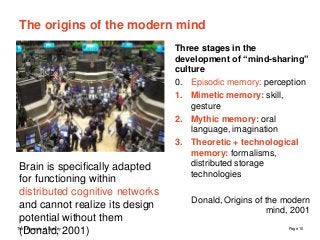
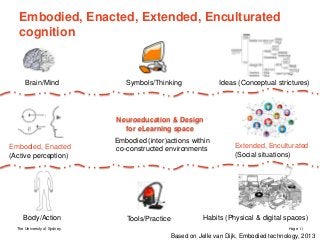
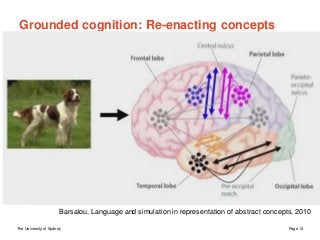
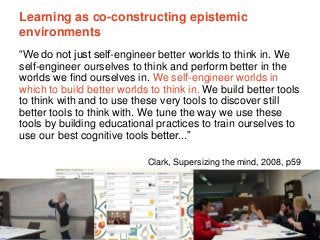
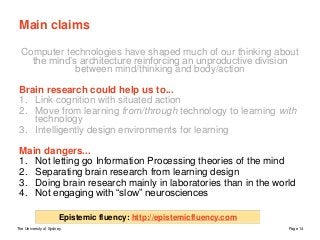

Understanding the learning brain in the world How does the brain learn? Some answers to this question are briefly summarised in this presentation that was made in the symposium “The Mind and the Machine: Brain, mind and digital learning environments” at ascilite 2015. (They are elaborated in Epistemic fluency book.) Many of our insights draw on what we call “slow” or “long” neurosciences, to include evolutionary neuroscience, neuroanthropology, neuroarchaeology and neurolinguistics, that study cultural and social evolution of human brain and mind, rather than just traditional “fast” cognitive neuroscience that primarily look at micro processes in human brain. The main our claim is that neurosciences, broadly taken, already now offer a lot of useful knowledge for teaching, learning and educational design and contributions of these fields to education will be more radical than the emerging educational neuroscience field in its current shape tends to embrace and envision. Neuro-scientific evidence challenges us to rethinking cognitive theories of learning and link cognition with situated action within materially textured (digital and physical) world. To put it short “Brains, bodies and things play equal role in the drama of human cultural becoming” (Malafouris, 2013, 2) and this cannot be ignored. In educational technology field, “slow” neurosciences force us to move away from thinking about the Mind as the Machine to thinking about how Humans learn and think with the Machines.


