Supporting  Groupwork  with Online Learning   Kelli McGraw http://kellimcgraw.wordpress.com/
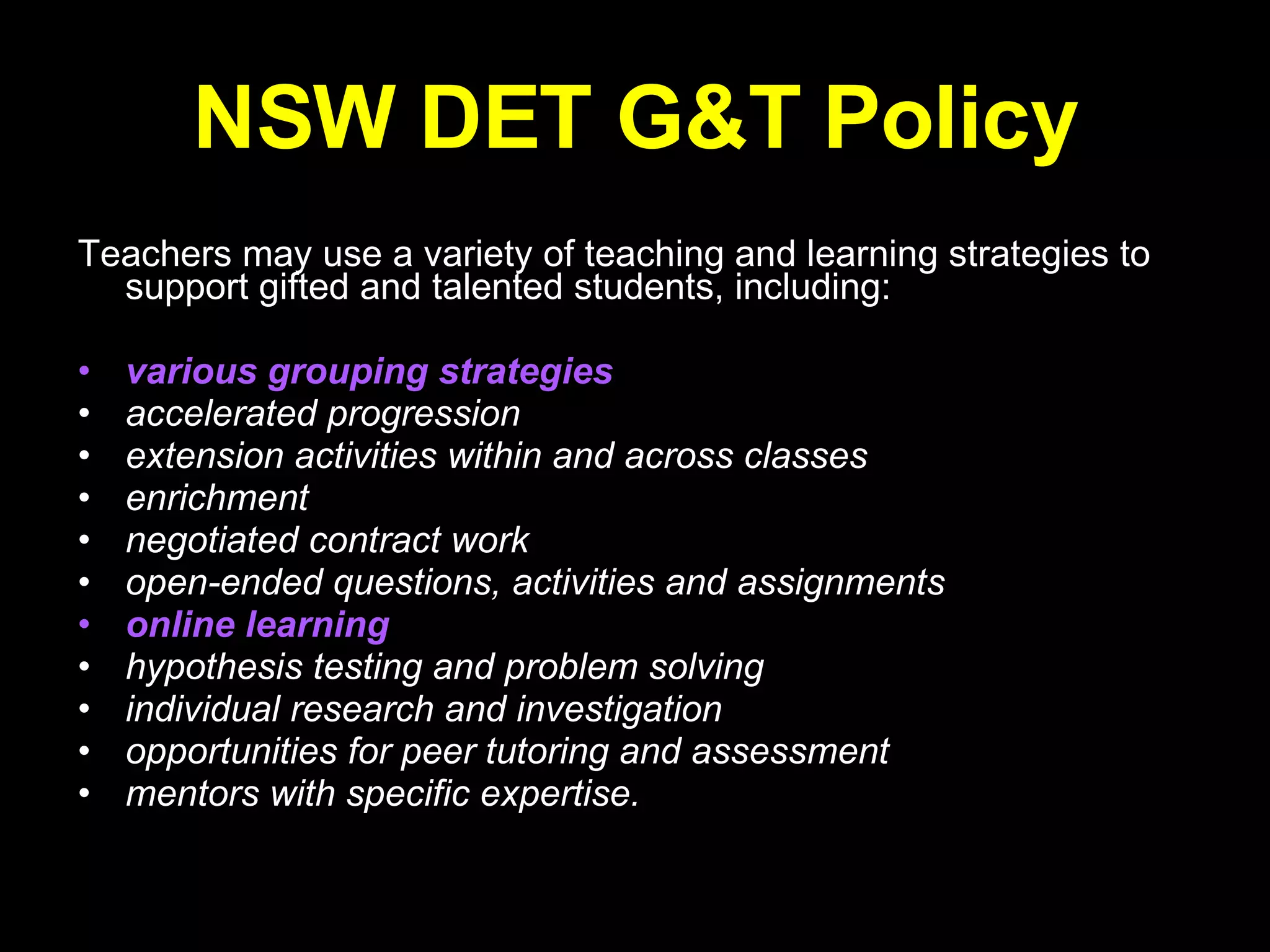
NSW DET G&T Policy Teachers may use a variety of teaching and learning strategies to support gifted and talented students, including:  various   grouping strategies   accelerated progression   extension activities within and across classes   enrichment   negotiated contract work   open-ended questions, activities and assignments   online learning   hypothesis testing and problem solving   individual research and investigation   opportunities for peer tutoring and assessment   mentors with specific expertise.
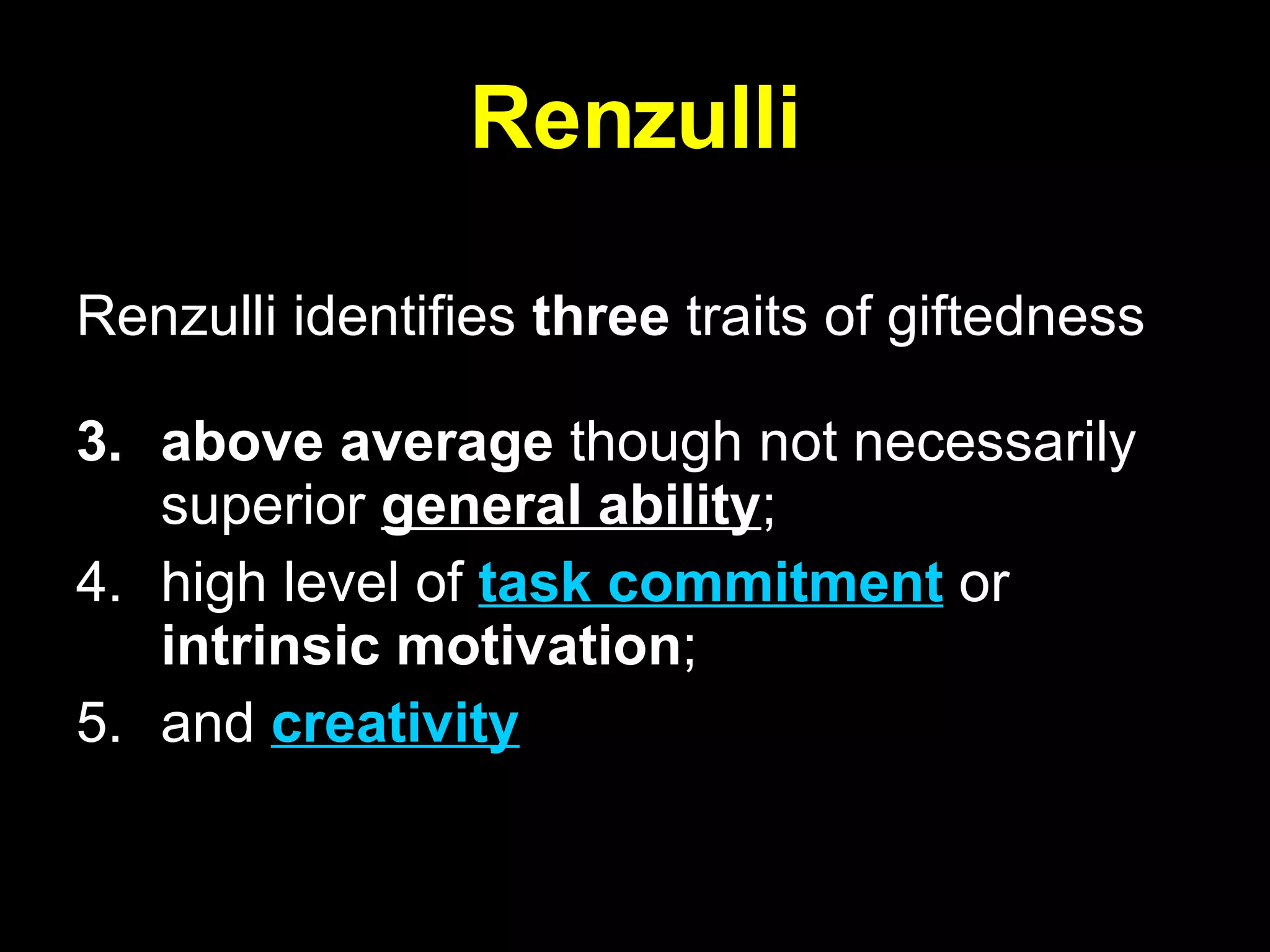
Renzulli Renzulli identifies  three  traits of giftedness  above average  though not necessarily superior  general ability ;  high level of  task commitment  or  intrinsic motivation ;  and  creativity
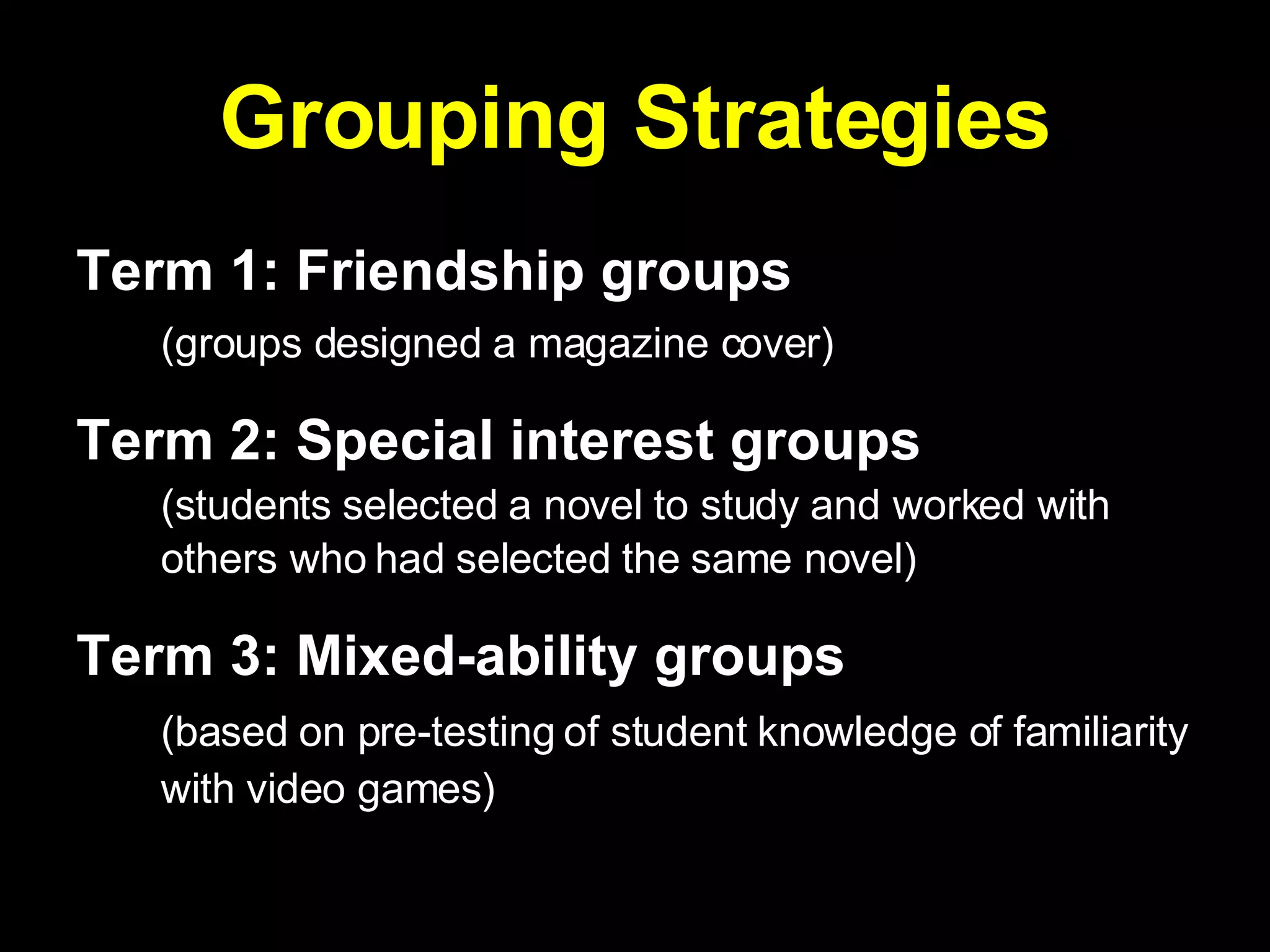
Grouping Strategies Term 1: Friendship groups   (groups designed a magazine cover) Term 2: Special interest groups   (students selected a novel to study and worked with others who had selected the same novel)   Term 3: Mixed-ability groups   (based on pre-testing of student knowledge of familiarity with video games)


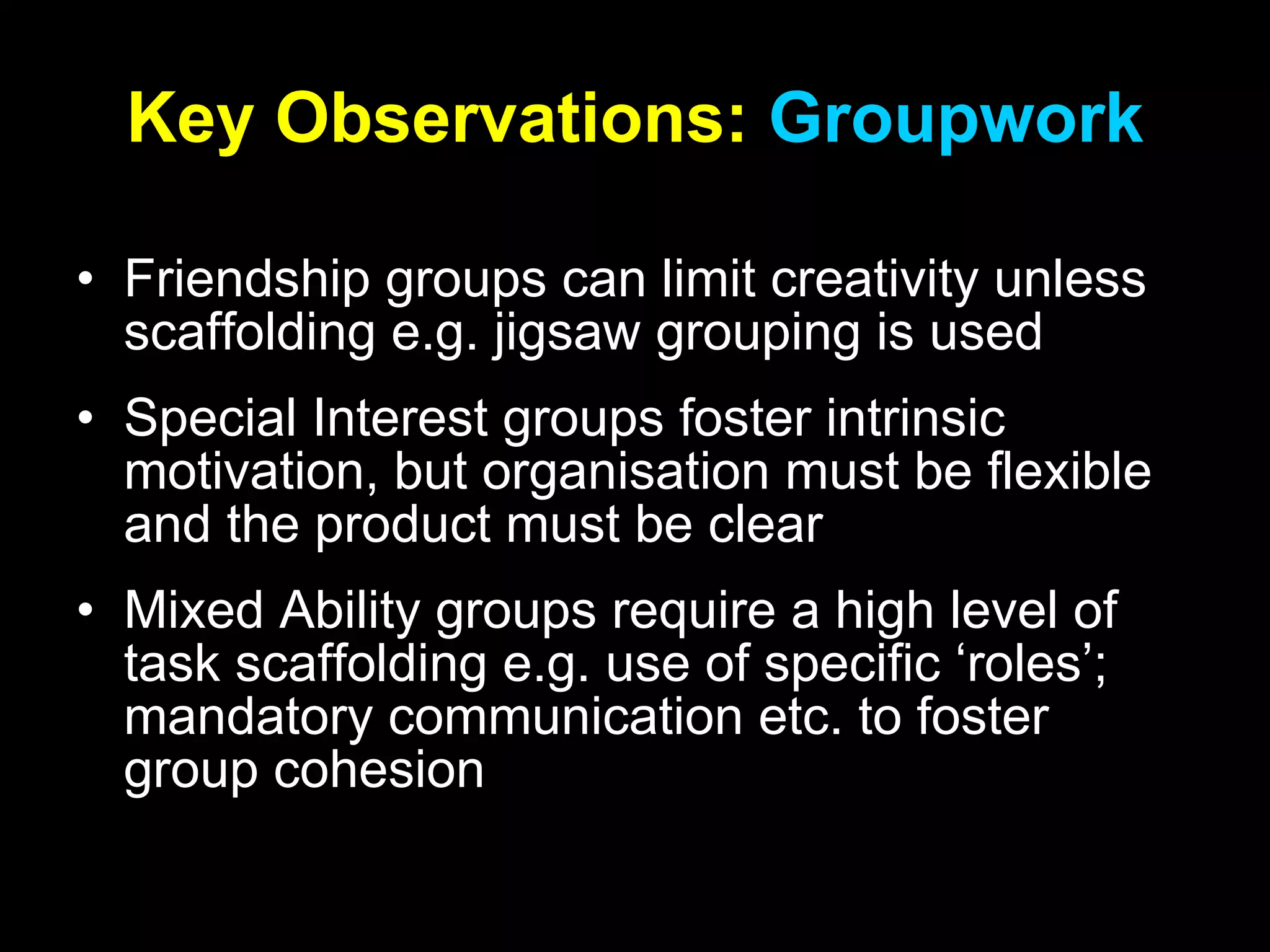
Key   Observations:  Groupwork Friendship groups can limit creativity unless scaffolding e.g. jigsaw grouping is used Special Interest groups foster intrinsic motivation, but organisation must be flexible and the product must be clear Mixed Ability groups require a high level of task scaffolding e.g. use of specific ‘roles’; mandatory communication etc. to foster group cohesion
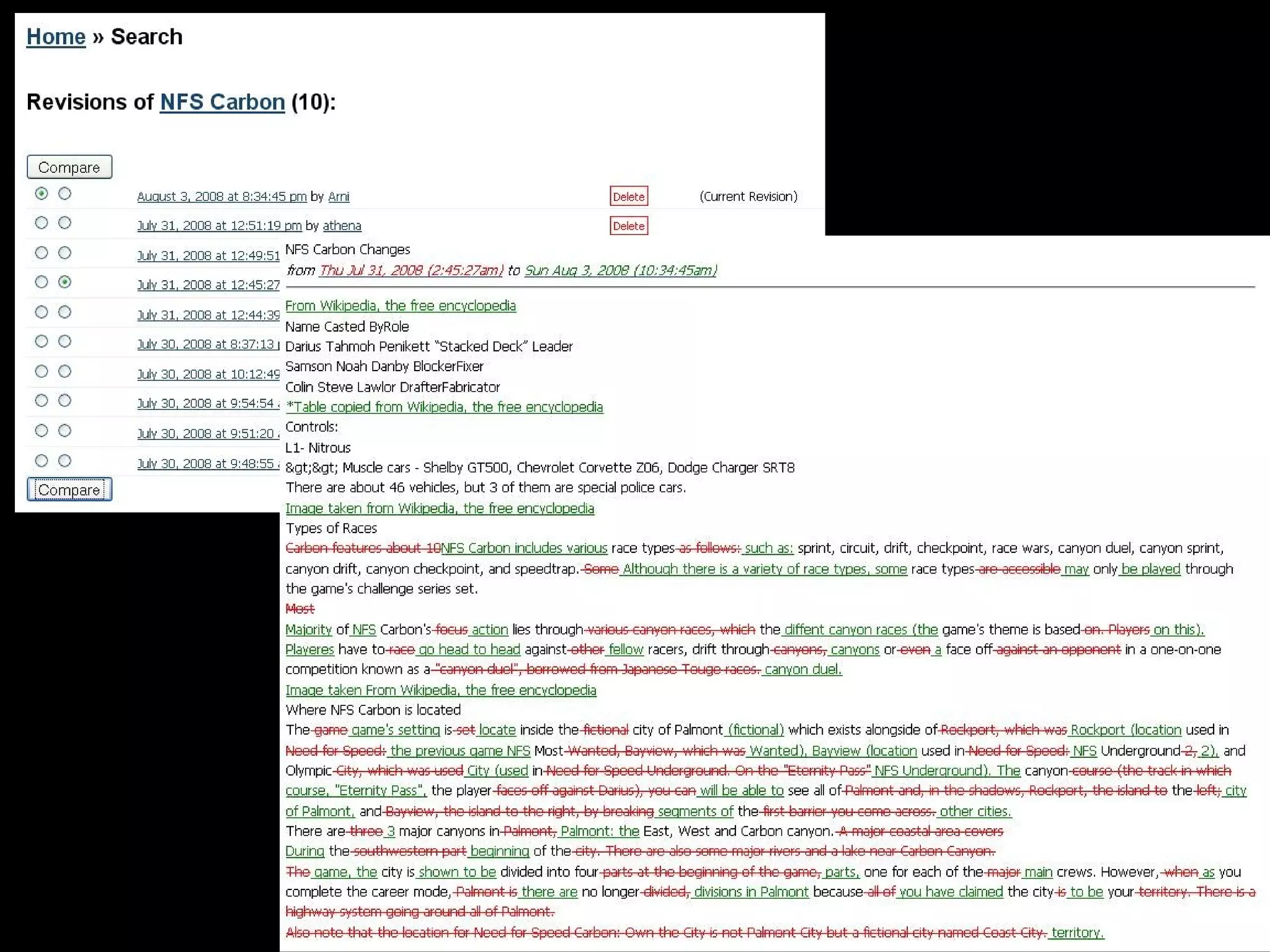
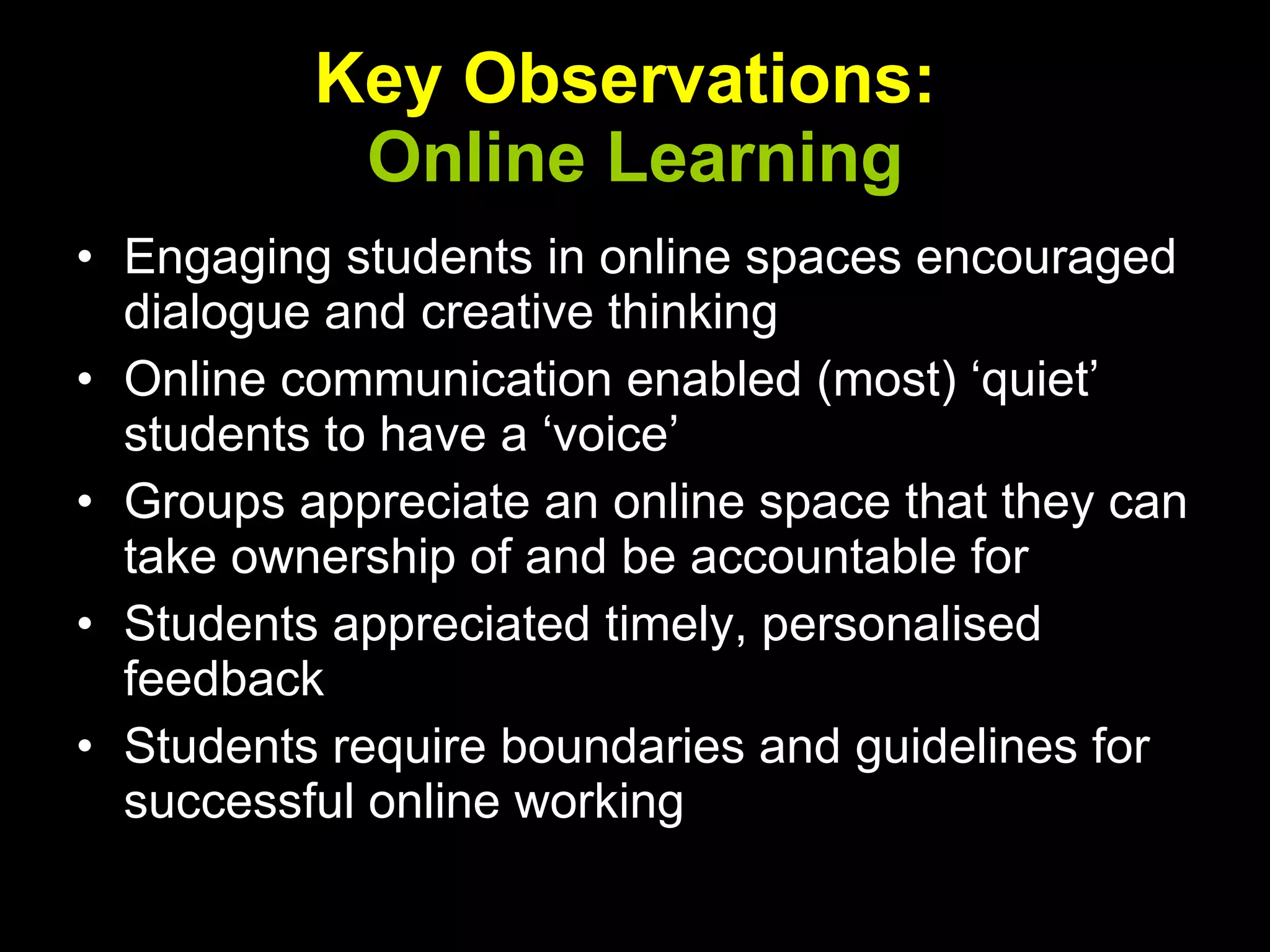
Key   Observations:  Online Learning Engaging students in online spaces encouraged dialogue and creative thinking Online communication enabled (most) ‘quiet’ students to have a ‘voice’ Groups appreciate an online space that they can take ownership of and be accountable for Students appreciated timely, personalised feedback Students require boundaries and guidelines for successful online working
The End   Kelli McGraw http://kellimcgraw.wordpress.com/

GaTe Action Research

  • 1.
    Supporting Groupwork with Online Learning Kelli McGraw http://kellimcgraw.wordpress.com/
  • 2.
    NSW DET G&TPolicy Teachers may use a variety of teaching and learning strategies to support gifted and talented students, including: various grouping strategies accelerated progression extension activities within and across classes enrichment negotiated contract work open-ended questions, activities and assignments online learning hypothesis testing and problem solving individual research and investigation opportunities for peer tutoring and assessment mentors with specific expertise.
  • 3.
    Renzulli Renzulli identifies three traits of giftedness above average though not necessarily superior general ability ; high level of task commitment or intrinsic motivation ; and creativity
  • 4.
    Grouping Strategies Term1: Friendship groups (groups designed a magazine cover) Term 2: Special interest groups (students selected a novel to study and worked with others who had selected the same novel) Term 3: Mixed-ability groups (based on pre-testing of student knowledge of familiarity with video games)
  • 5.
  • 6.
  • 7.
  • 8.
  • 9.
  • 10.
  • 11.
    Key Observations: Groupwork Friendship groups can limit creativity unless scaffolding e.g. jigsaw grouping is used Special Interest groups foster intrinsic motivation, but organisation must be flexible and the product must be clear Mixed Ability groups require a high level of task scaffolding e.g. use of specific ‘roles’; mandatory communication etc. to foster group cohesion
  • 12.
    Key Observations: Online Learning Engaging students in online spaces encouraged dialogue and creative thinking Online communication enabled (most) ‘quiet’ students to have a ‘voice’ Groups appreciate an online space that they can take ownership of and be accountable for Students appreciated timely, personalised feedback Students require boundaries and guidelines for successful online working
  • 13.
    The End Kelli McGraw http://kellimcgraw.wordpress.com/