Explaining ideal gas
     behavior
Elastic and Inelastic collisions
Explaining ideal gas behavior
• Kinetic Energy is the energy associated with the
  motion of particles – molecules, atoms, and ions.
  Some molecules may posses more than the average
  kinetic energy; others may have less than the
  average kinetic energy. It is the average kinetic
  energy that is proportional to absolute
  temperature, the more kinetic energy the substance
  has and the more rapidly the particles move
Elastic and Inelastic
           collisions
• A ball bouncing on the ground loses
  some kinetic energy on collision. The
  lost kinetic energy changes into heat
  as a result of friction.
• The ball thus gradually slows down
  until it comes to rest. Collisions with
  loss of Energy are term Inelastic.
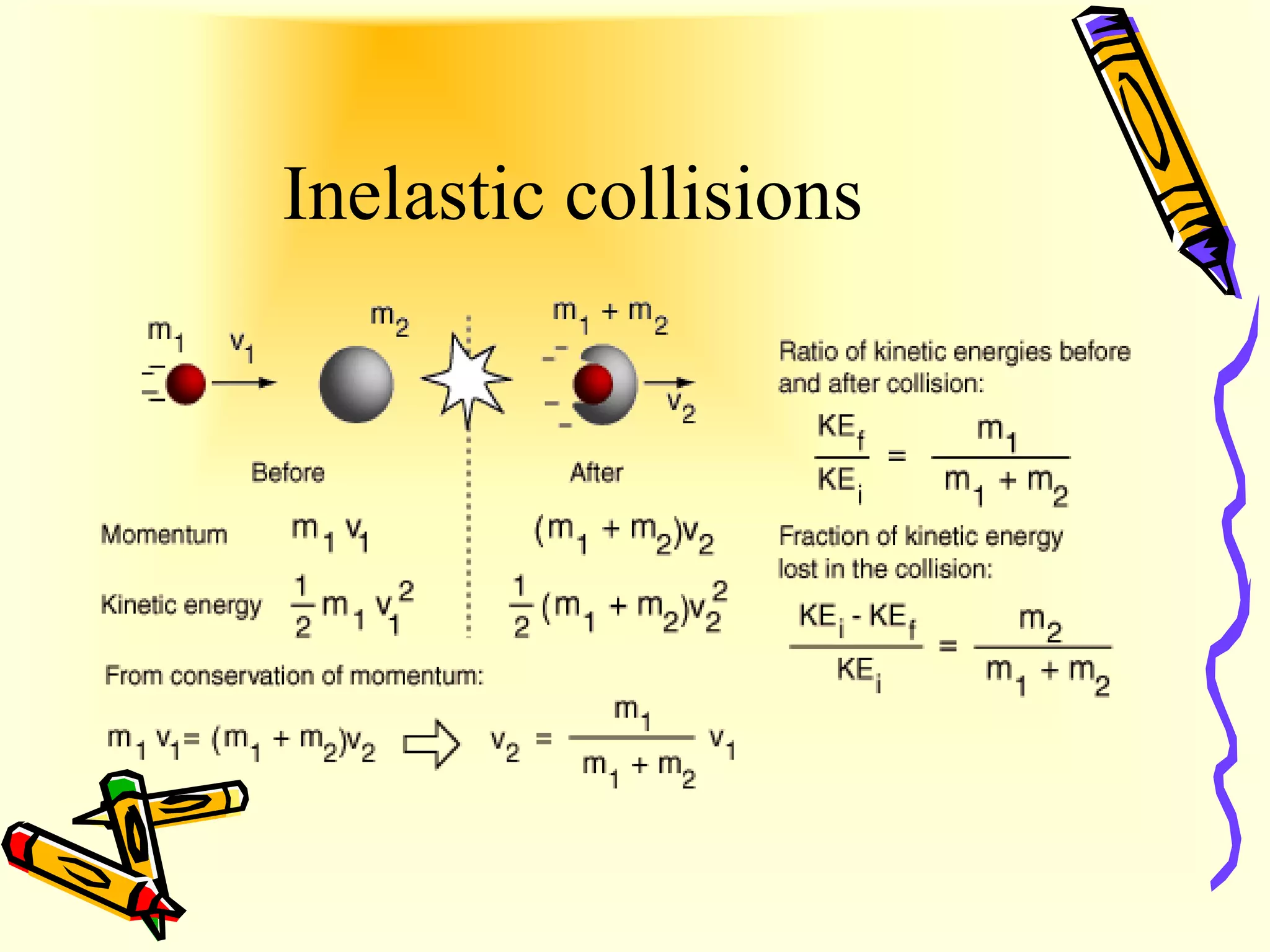
Inelastic collision
• Perfectly elastic collisions are those
  in which no kinetic energy is lost in
  the collision. Macroscopic collisions
  are generally inelastic and do not
  conserve kinetic energy, though of
  course the total energy is conserved.
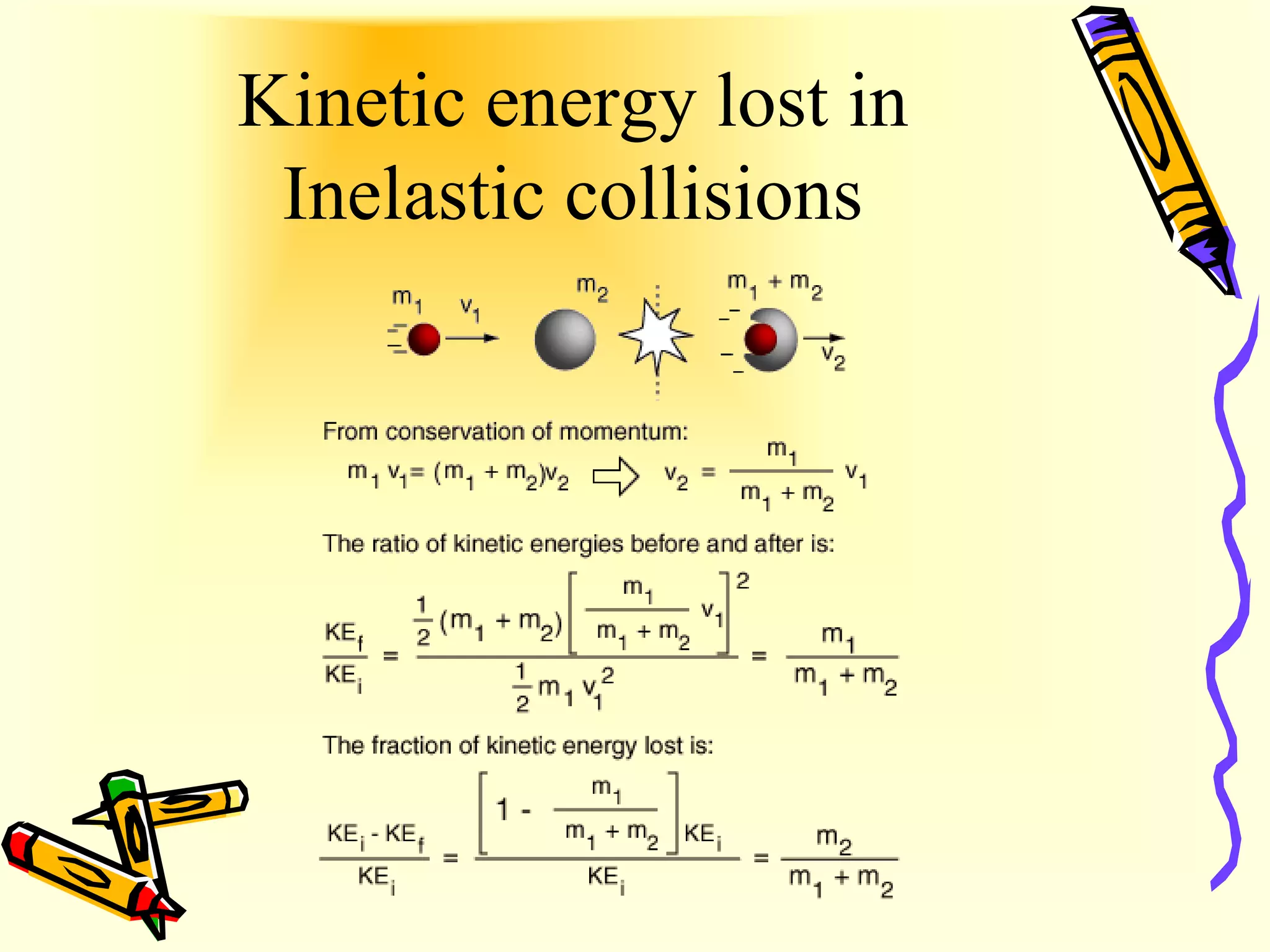
  The extreme inelastic collision is one
  in which the colliding objects stick
  together after the collision, and this
  case may be analyzed in general
Inelastic collisions
Kinetic energy lost in
 Inelastic collisions
Elastic collision
• If collisions between gas particles involved
  friction, the molecules would gradually
  slowdown and lose kinetic energy
• The gas pressure would slowly drop to
  zero. However, this is never observed of
  gases. We can thus, postulate that
  molecular collisions in gases are
  frictionless or perfectly elastic.

Explaining ideal gas behavior

  • 1.
    Explaining ideal gas behavior Elastic and Inelastic collisions
  • 2.
    Explaining ideal gasbehavior • Kinetic Energy is the energy associated with the motion of particles – molecules, atoms, and ions. Some molecules may posses more than the average kinetic energy; others may have less than the average kinetic energy. It is the average kinetic energy that is proportional to absolute temperature, the more kinetic energy the substance has and the more rapidly the particles move
  • 3.
    Elastic and Inelastic collisions • A ball bouncing on the ground loses some kinetic energy on collision. The lost kinetic energy changes into heat as a result of friction. • The ball thus gradually slows down until it comes to rest. Collisions with loss of Energy are term Inelastic.
  • 4.
    Inelastic collision • Perfectlyelastic collisions are those in which no kinetic energy is lost in the collision. Macroscopic collisions are generally inelastic and do not conserve kinetic energy, though of course the total energy is conserved. The extreme inelastic collision is one in which the colliding objects stick together after the collision, and this case may be analyzed in general
  • 5.
  • 6.
    Kinetic energy lostin Inelastic collisions
  • 7.
    Elastic collision • Ifcollisions between gas particles involved friction, the molecules would gradually slowdown and lose kinetic energy • The gas pressure would slowly drop to zero. However, this is never observed of gases. We can thus, postulate that molecular collisions in gases are frictionless or perfectly elastic.