

syntagm
The Psychological Basis of Nerdiness
and its Implications for UCD
William Hudson
User Experience Strategist
william.hudson@syntagm.co.uk
syntagmsyntagm
Empathizing/Systemizing Theory
• Large-scale study of 450 IT workers (see
Hudson, William, 2009, Reduced Empathizing
Skills Increase Challenges for User-Centered
Design, CHI 2009 Conference, Boston and
British HCI Group Conference, Cambridge)
Nerdiness & UCD 2
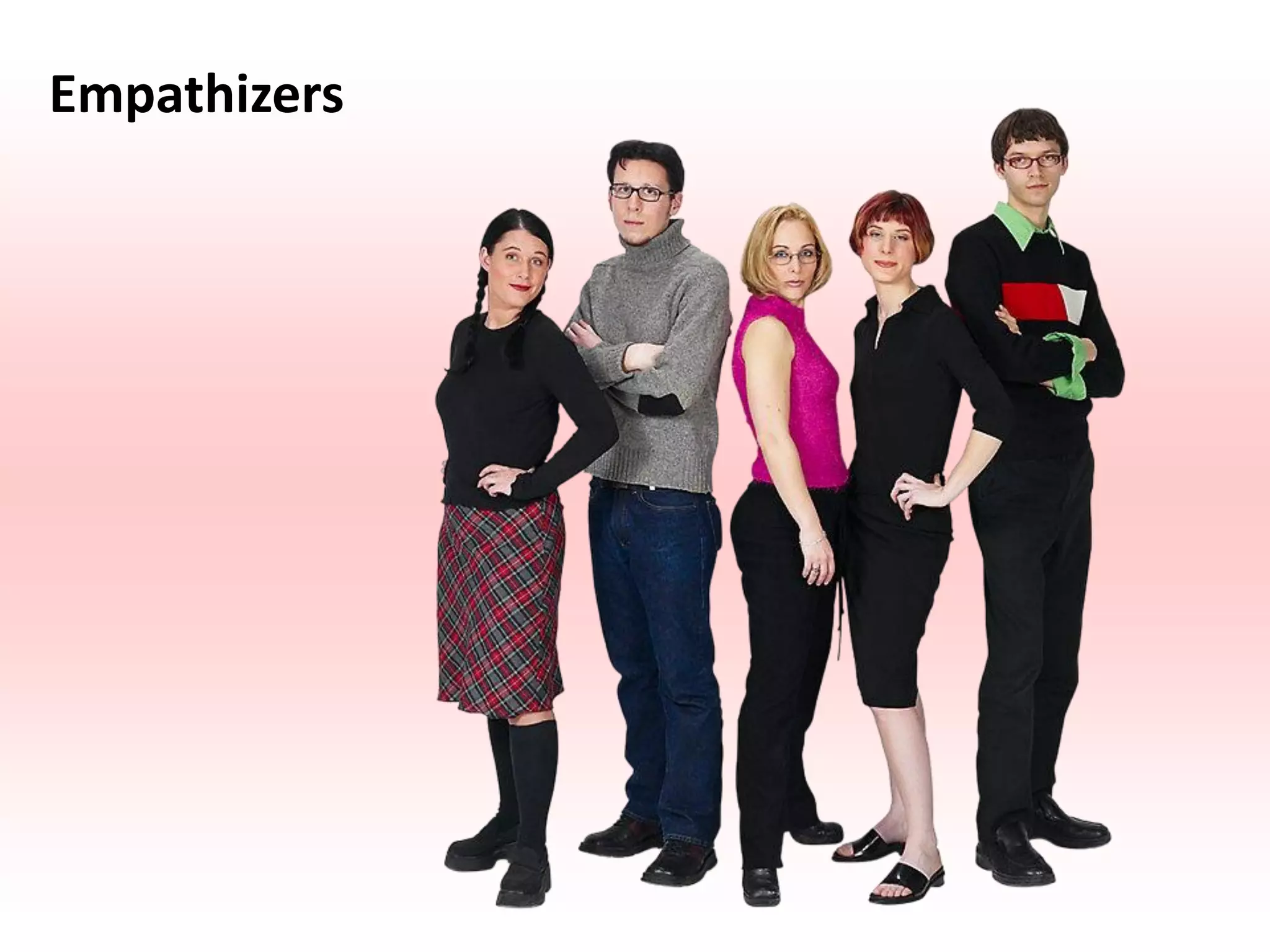
Empathizers
3Nerdiness & UCD
syntagmsyntagm
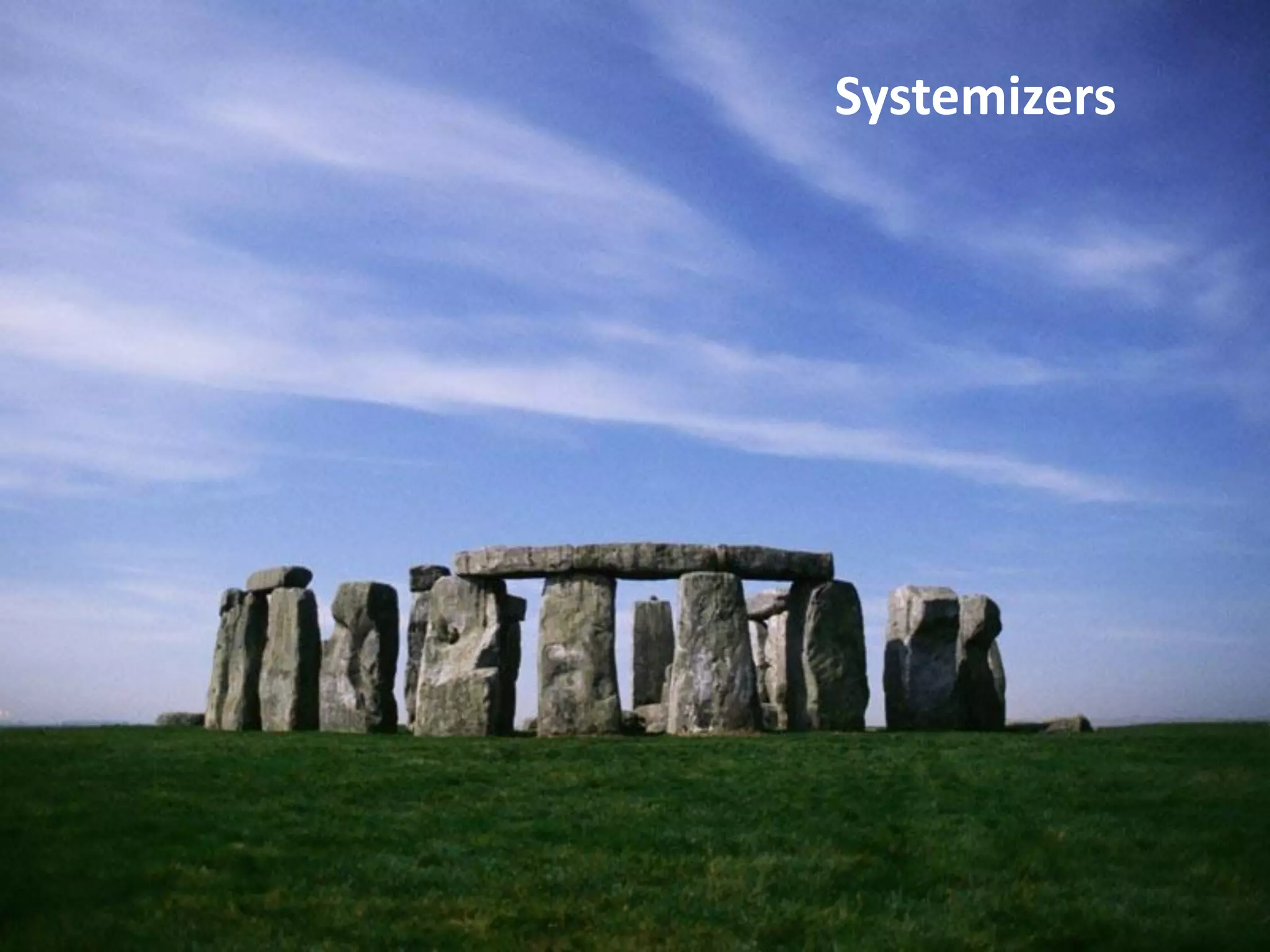
Systemizers
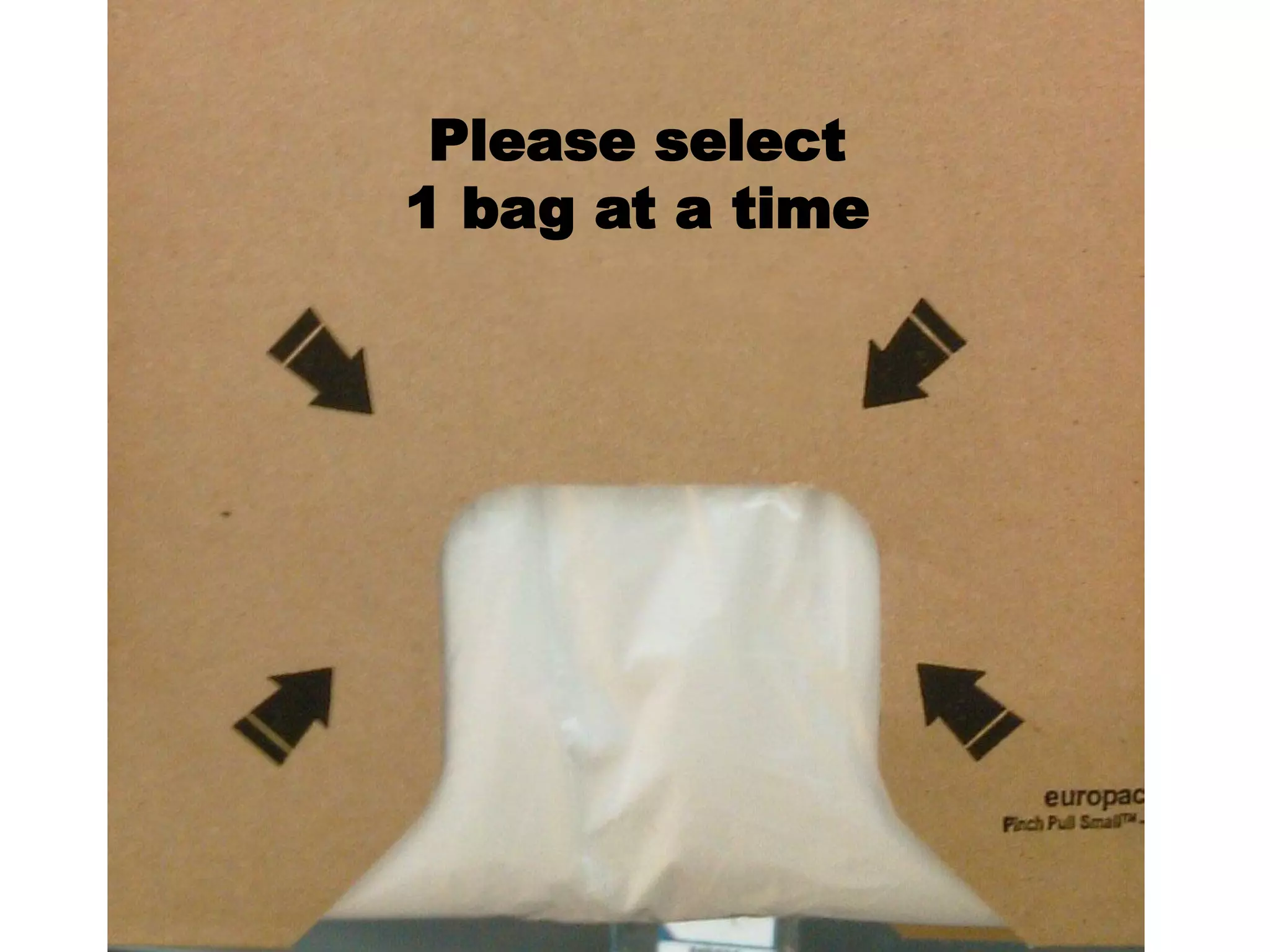
Please select
1 bag at a time
Nerdiness & UCD 6
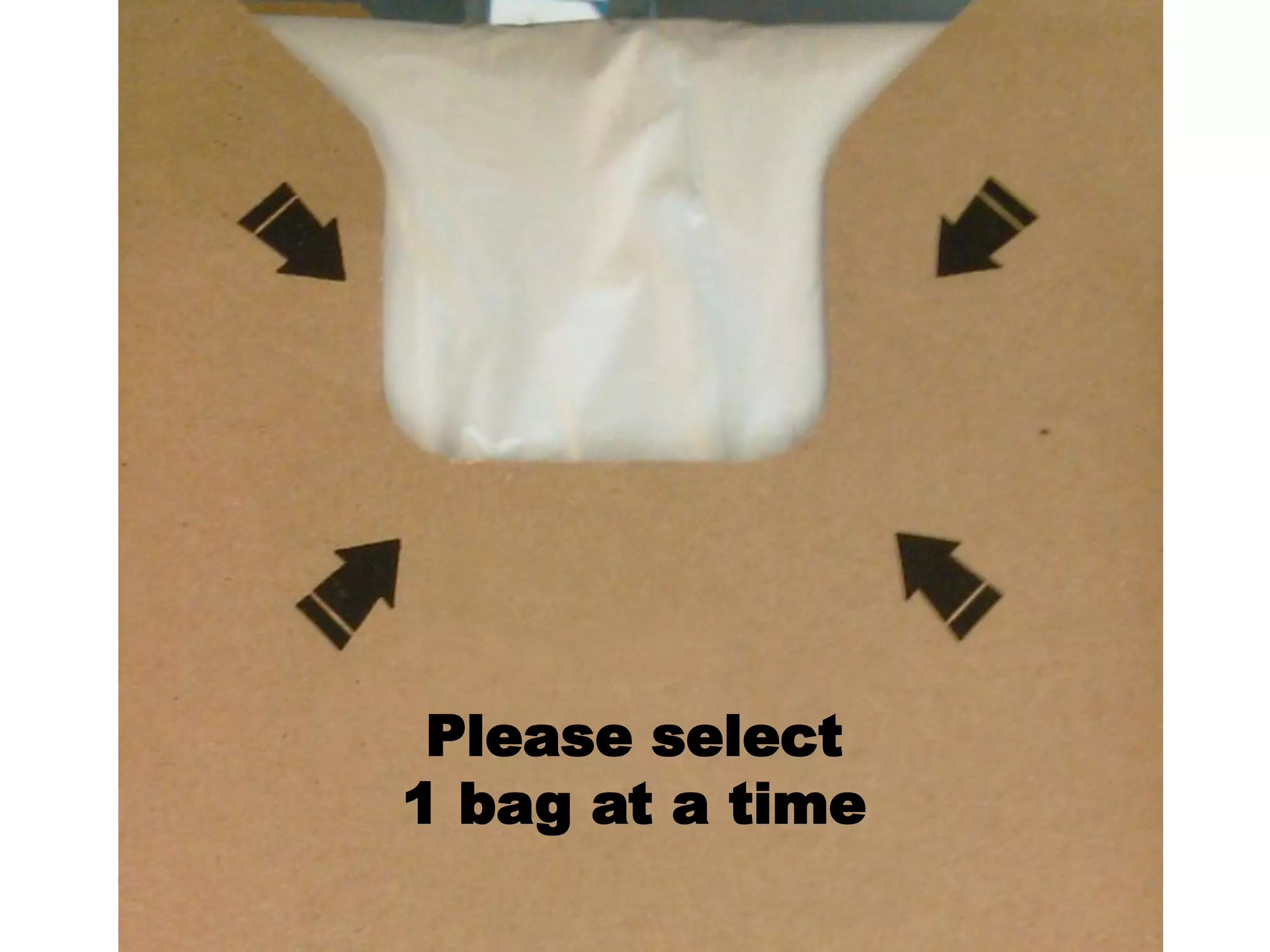
Please select
1 bag at a time
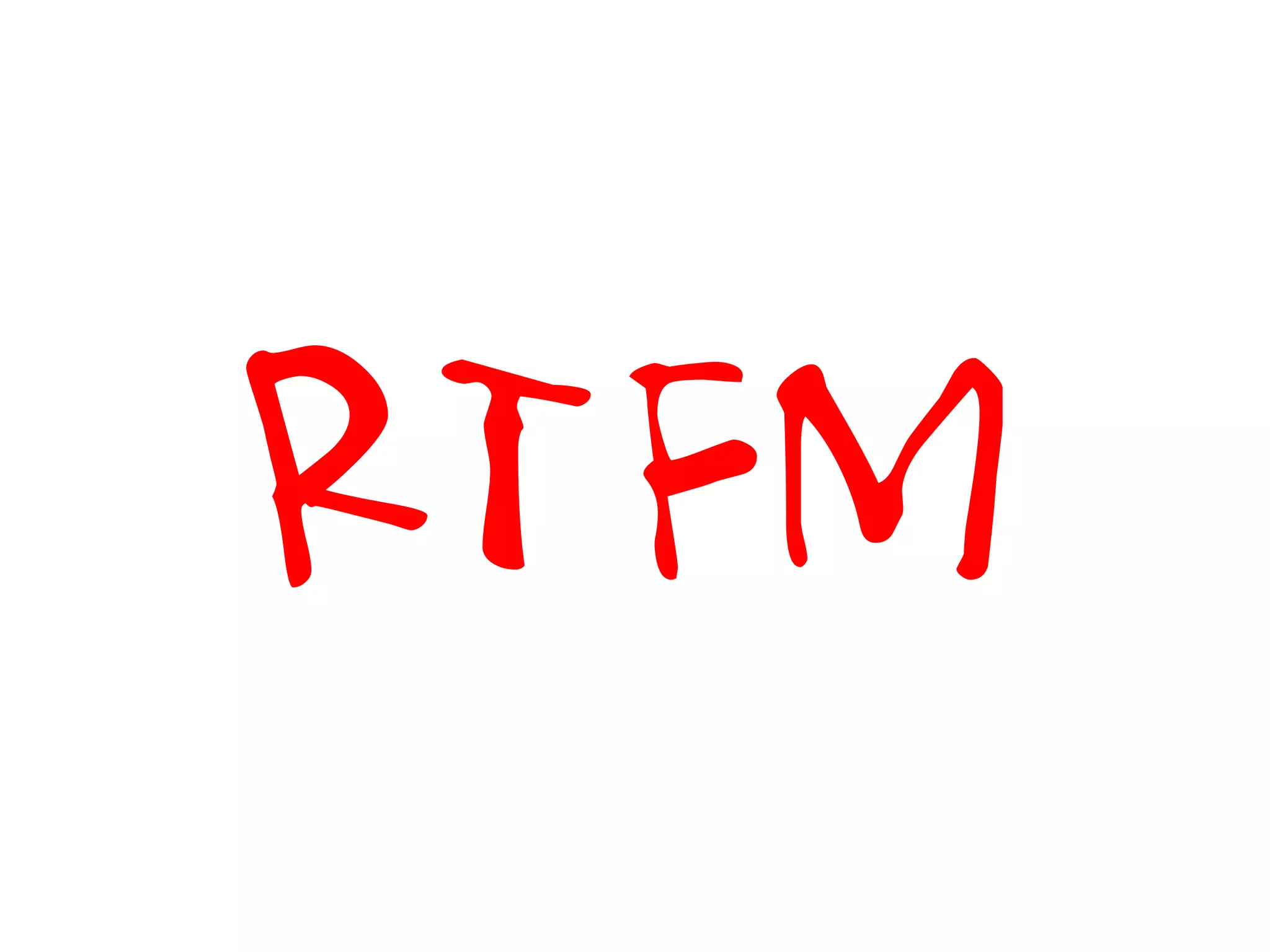
RTFM
Nerdiness & UCD 8
syntagmsyntagm
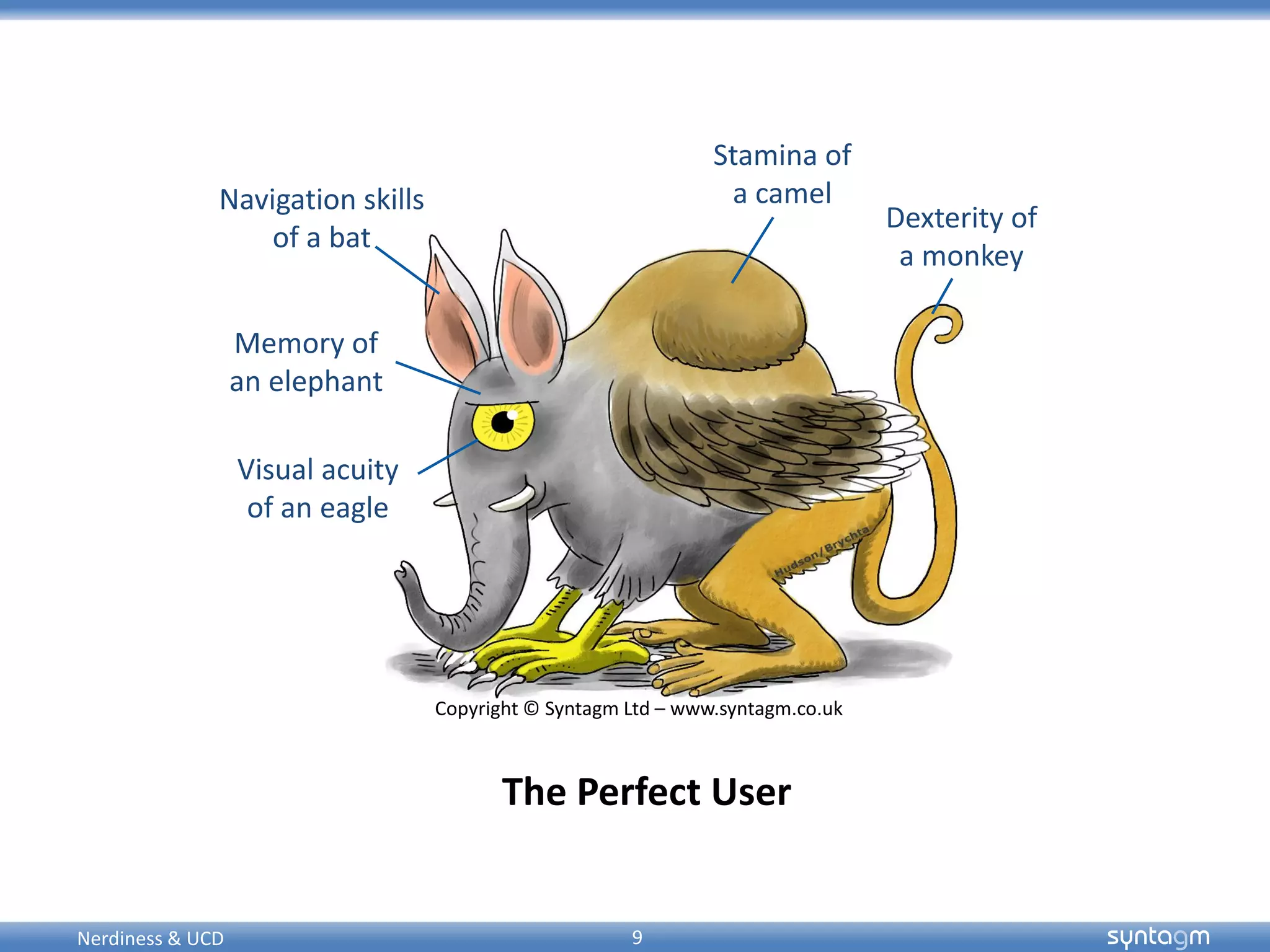
The Perfect User
Visual acuity
of an eagle
Memory of
an elephant
Navigation skills
of a bat
Stamina of
a camel
Dexterity of
a monkey
Copyright © Syntagm Ltd – www.syntagm.co.uk
9Nerdiness & UCD
syntagmsyntagm
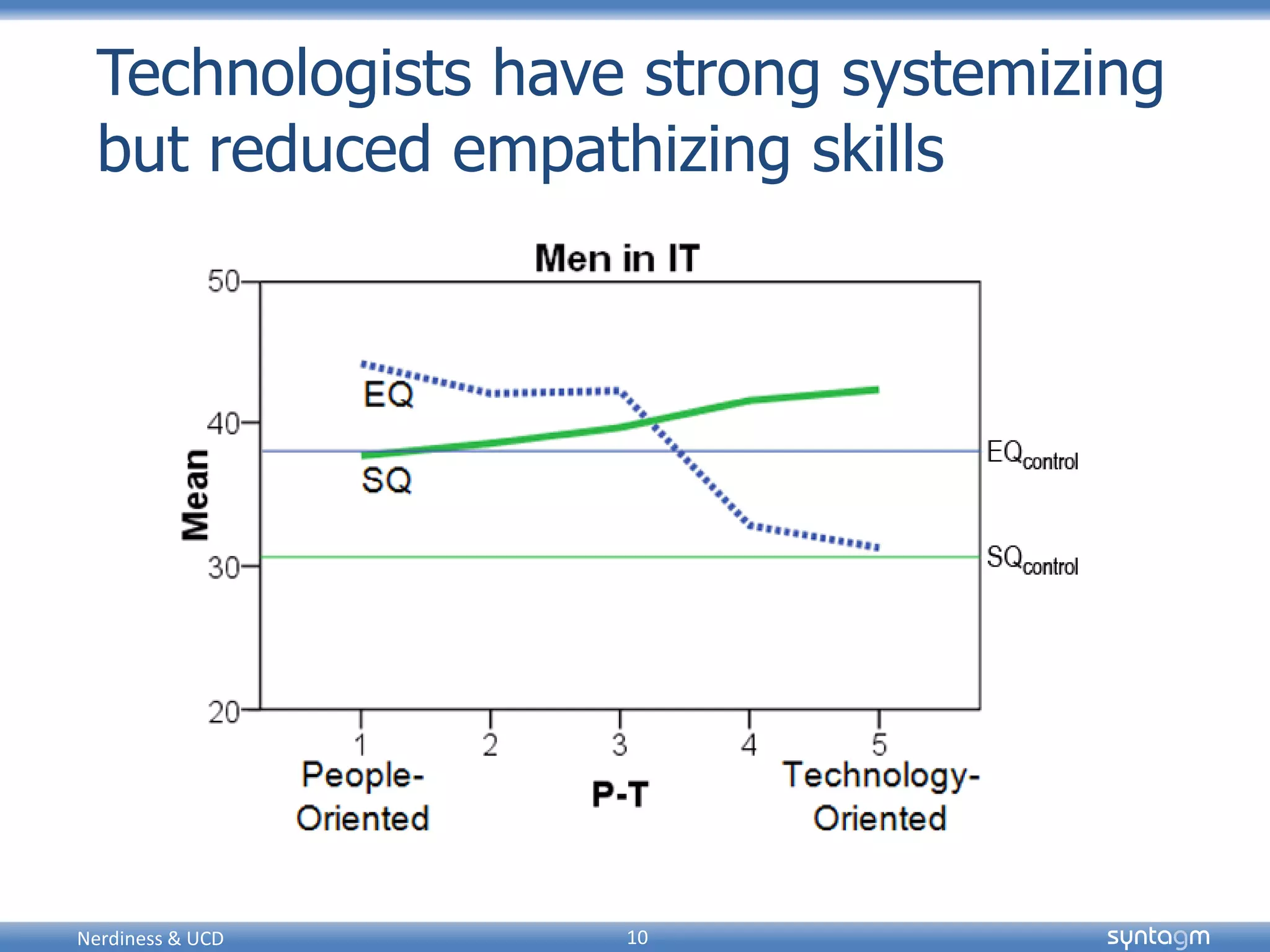
Technologists have strong systemizing
but reduced empathizing skills
Nerdiness & UCD 10
syntagmsyntagm11Nerdiness & UCD
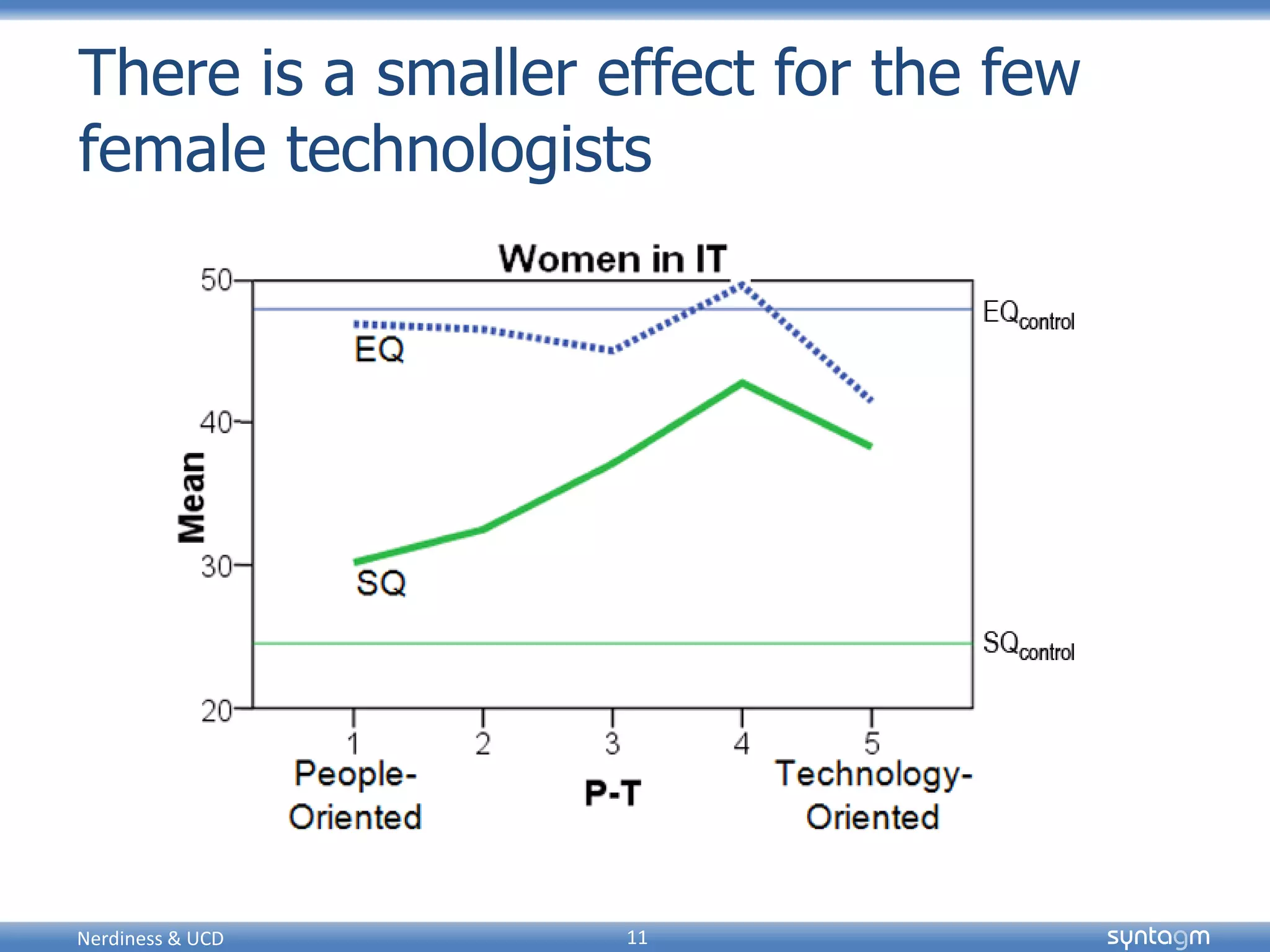
There is a smaller effect for the few
female technologists
syntagmsyntagm
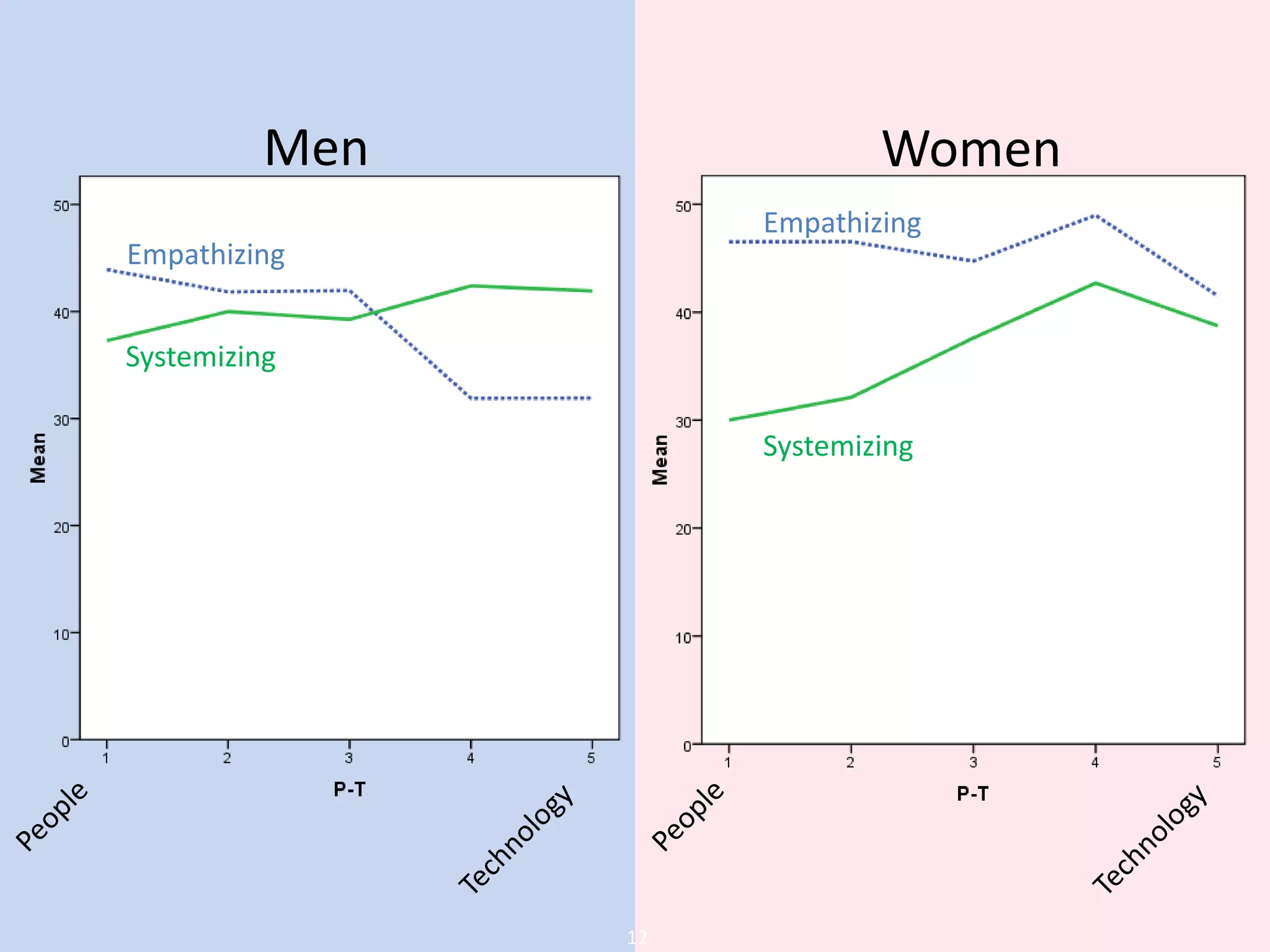
Men Women
Systemizing
Empathizing
Empathizing
Systemizing
12
syntagm
Agile is Nerdy Too
13
syntagmsyntagm
Agile Psychology
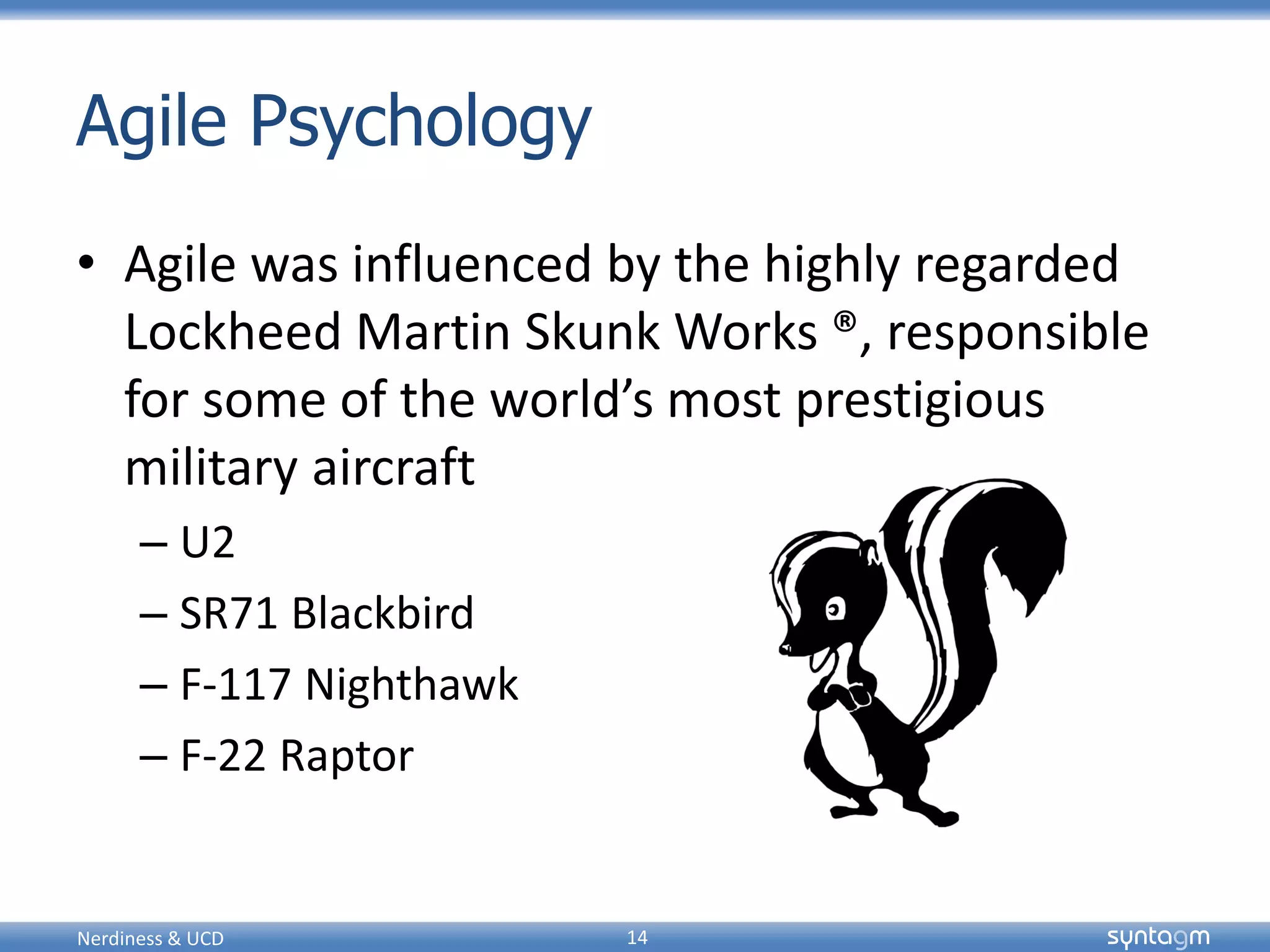
• Agile was influenced by the highly regarded
Lockheed Martin Skunk Works ®, responsible
for some of the world’s most prestigious
military aircraft
– U2
– SR71 Blackbird
– F-117 Nighthawk
– F-22 Raptor
Nerdiness & UCD 14
syntagmsyntagm
Agile Psychology
• Skunk Work® teams
– Are small (10% to 25% of a ‘normal’ project)
– Co-located (usually near the manufacturing
facility)
– Work to short time-scales
– Use minimal documentation
– Test products continuously
– Restrict access to outsiders
Nerdiness & UCD 15
(See http://www.lockheedmartin.com/aeronautics/skunkworks)
syntagmsyntagm
Agile Psychology
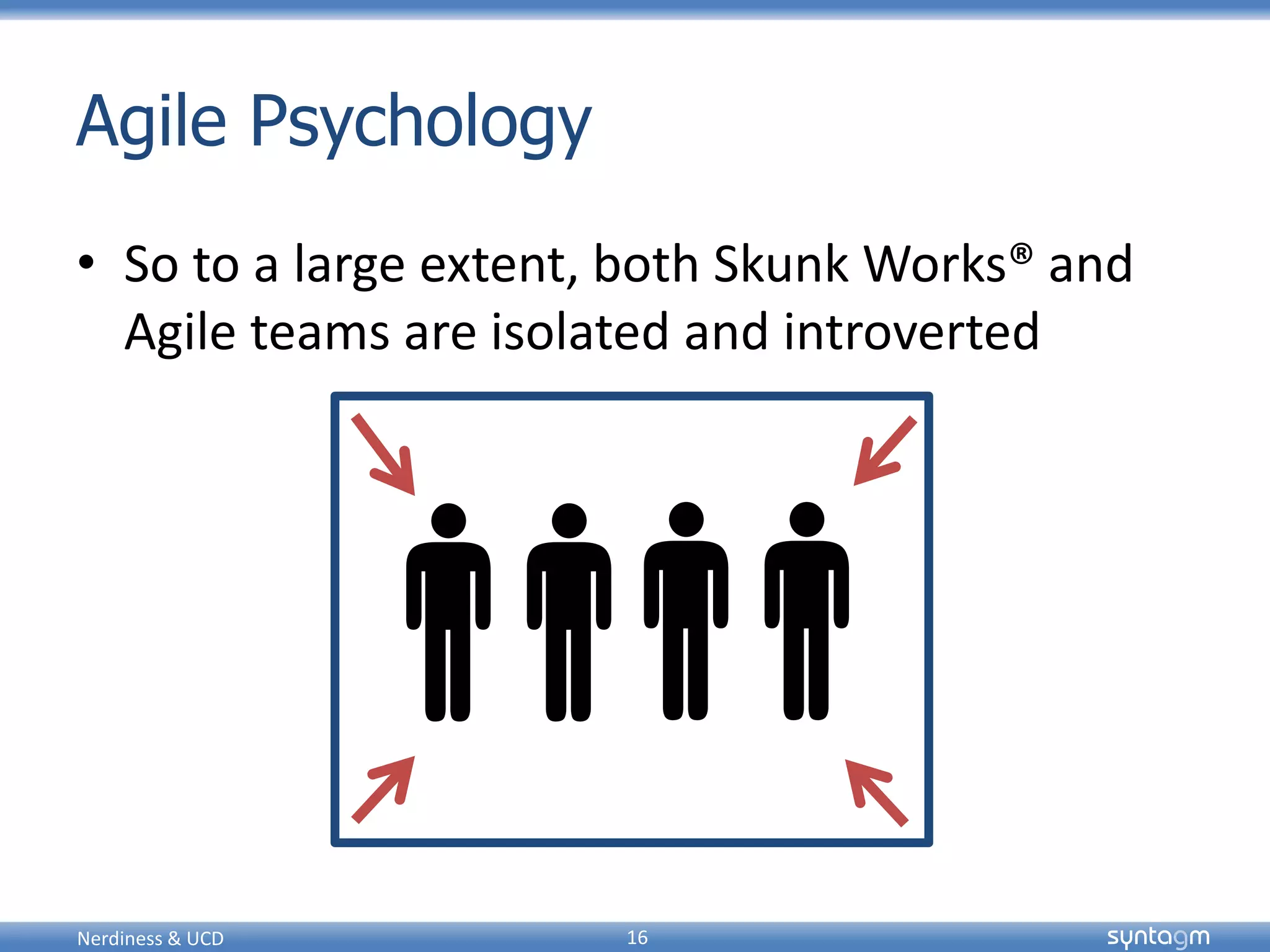
• So to a large extent, both Skunk Works® and
Agile teams are isolated and introverted
Nerdiness & UCD 16
syntagmsyntagm
Agile Psychology
• Isolation and introversion may be desirable for
building some things – jet fighters, for instance
– The users of jet fighters are considered as just
another system component
• Isolation and introversion not so helpful with
interactive systems intended for a broad range
of users
• So how do we need to change the Agile
approach to user-centred design?
Nerdiness & UCD 17
syntagmsyntagm
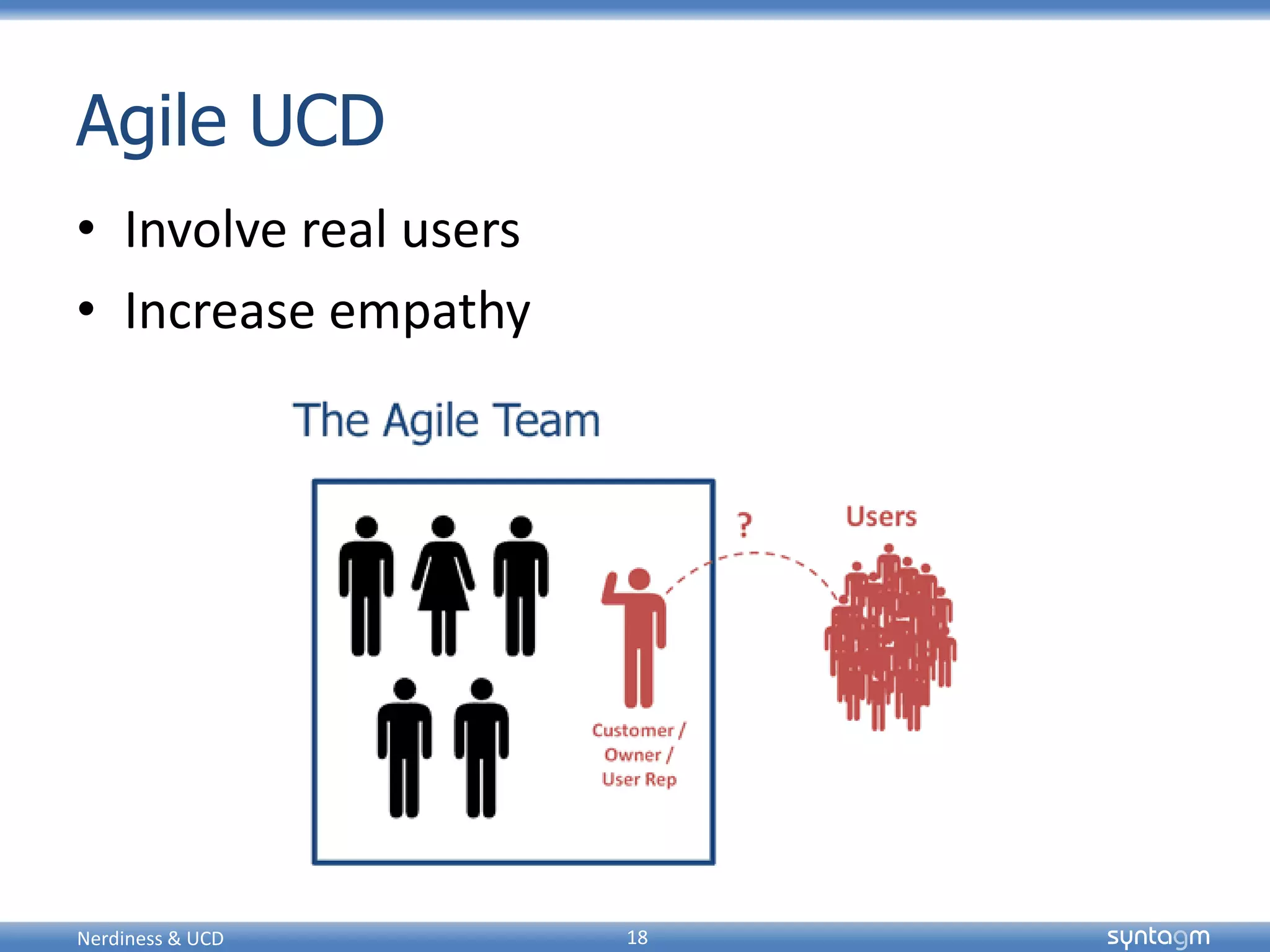
Agile UCD
• Involve real users
• Increase empathy
Nerdiness & UCD 18
syntagmsyntagm
Increasing Empathy
• Two types of empathy
– Cognitive: being aware what someone is thinking
– Affective: being aware what someone is feeling
• Developers need to at least be aware that users
may have different views or understandings of a
problem and its potential solutions (cognitive
empathy)
• Partitioning UCD into a separate team or
department is not realistic in small teams (using
Agile approaches, for example)
Nerdiness & UCD 19
syntagmsyntagm
Increasing Empathy
• Two points to consider
– People-oriented people have higher EQ scores
than technologists
– Even the lowest EQ scores for women were above
the average for men
Nerdiness & UCD 20
syntagmsyntagm
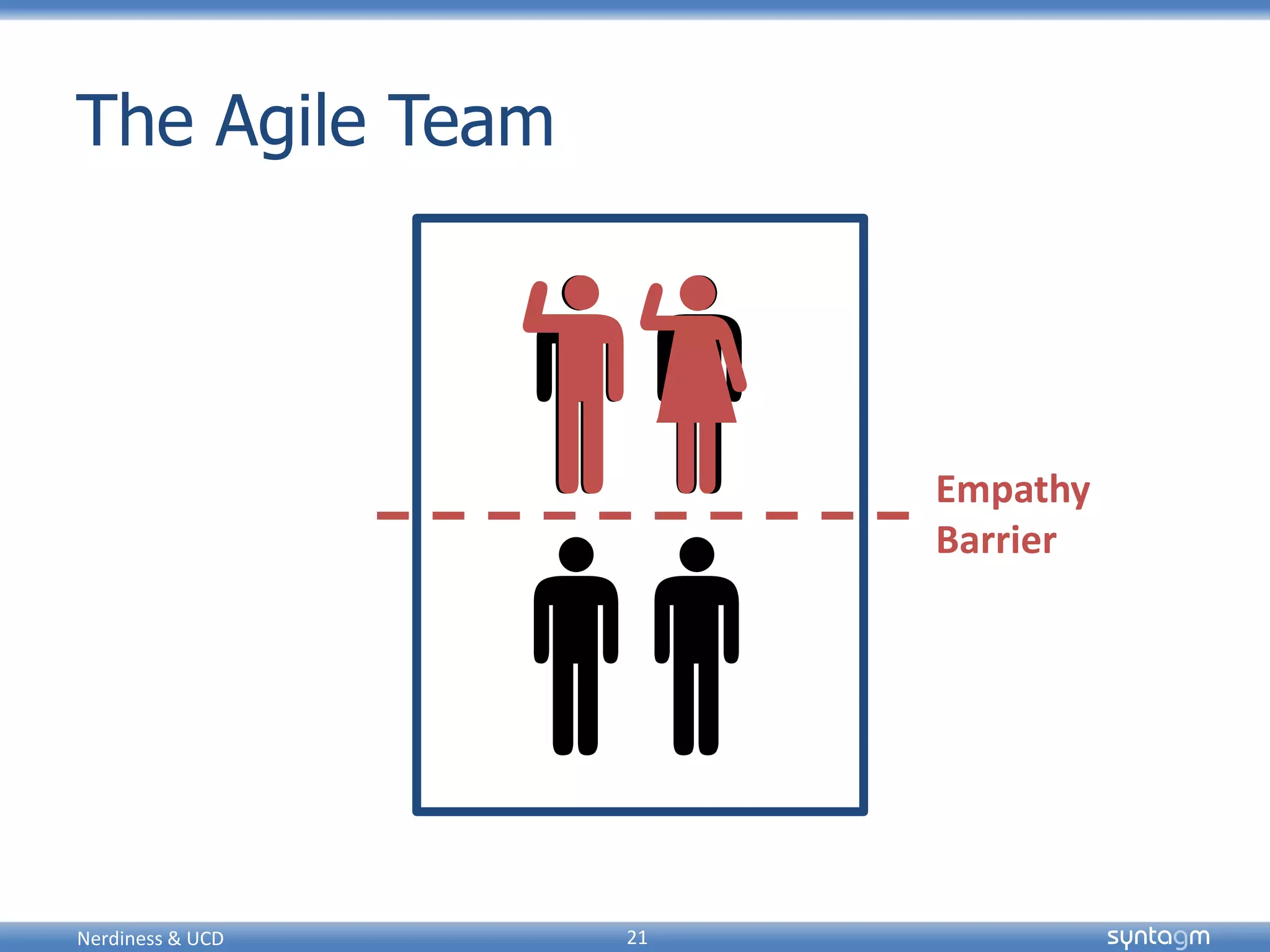
The Agile Team
21Nerdiness & UCD
Empathy
Barrier
syntagmsyntagm
Increasing Empathy
• Because of the ‘empathy barrier’ increasing
the EQ balance in a team alone may not be
sufficient to improve engagement with UCD
• We need to consider other ways of increasing
empathy for everyone in the team
– Teaching it
– Enhancing it
– Applying empathy-promoting design techniques
Nerdiness & UCD 22
syntagmsyntagm
Increasing Empathy
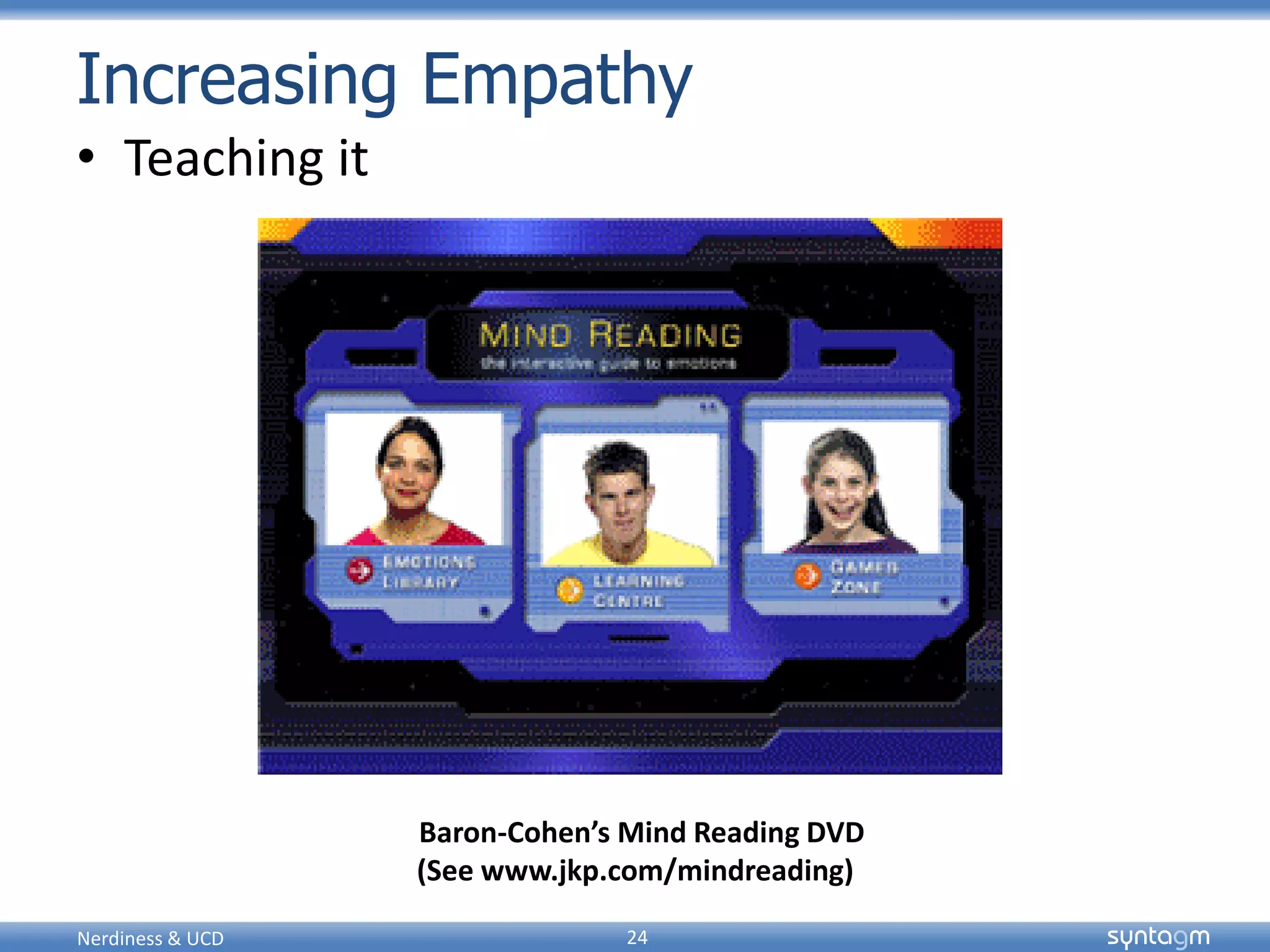
• Teaching it
– ‘Mind Reading’ is an interactive DVD from Simon
Baron-Cohen and colleagues at the ARC
• Enhancing it (drugs)
– Oxytocin improves "mind-reading" in humans
Domes, G., M. Heinrichs, et al. (2007). "Oxytocin improves ‘mind-reading’ in
humans." Biological Psychiatry 61(6): 731-733.
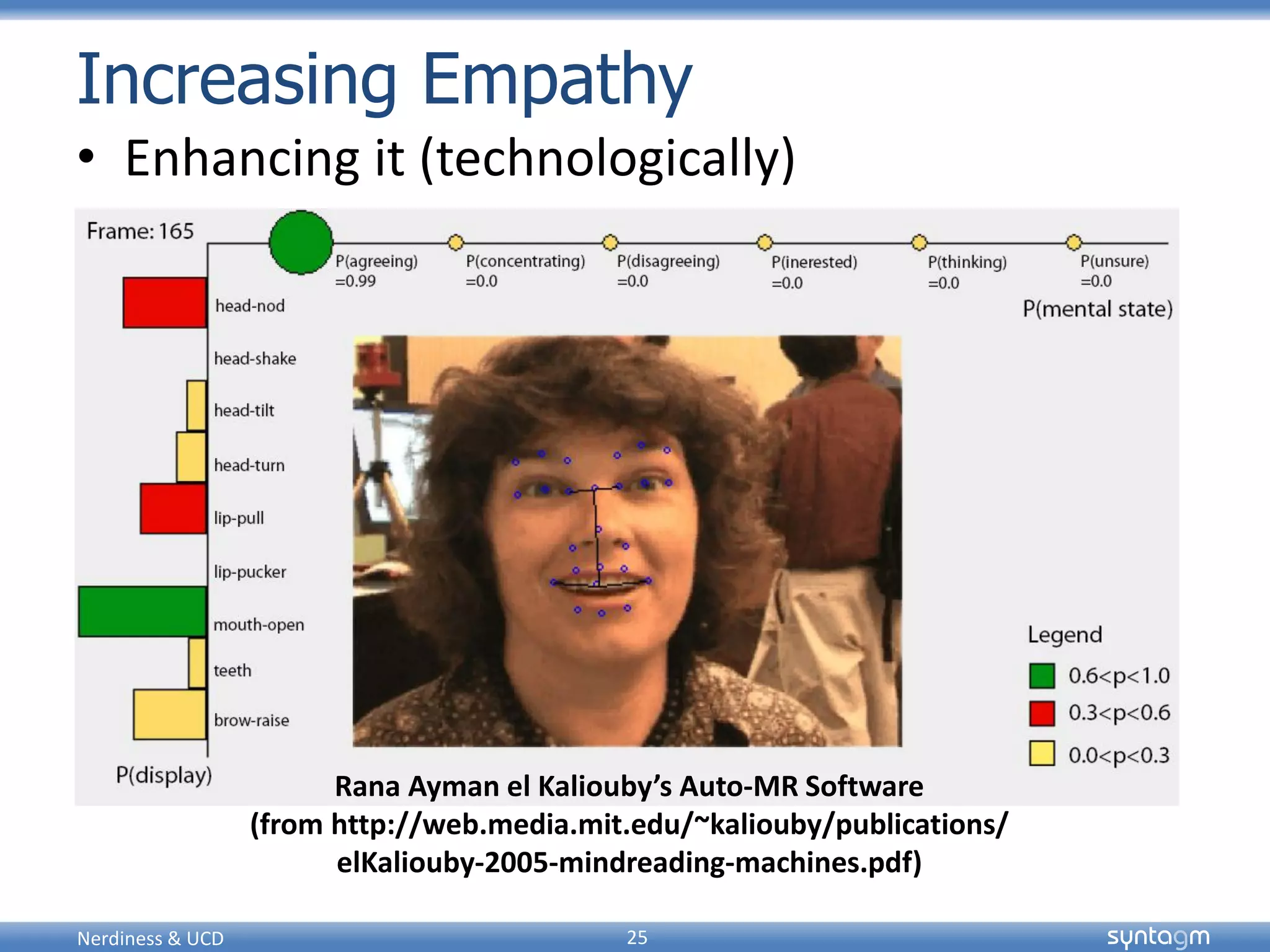
• Enhancing it (technology)
– Automated ‘mind reading’
Nerdiness & UCD 23
syntagmsyntagm
Increasing Empathy
• Teaching it
Nerdiness & UCD 24
Baron-Cohen’s Mind Reading DVD
(See www.jkp.com/mindreading)
syntagmsyntagm
Increasing Empathy
• Enhancing it (technologically)
Nerdiness & UCD 25
Rana Ayman el Kaliouby’s Auto-MR Software
(from http://web.media.mit.edu/~kaliouby/publications/
elKaliouby-2005-mindreading-machines.pdf)
syntagmsyntagm
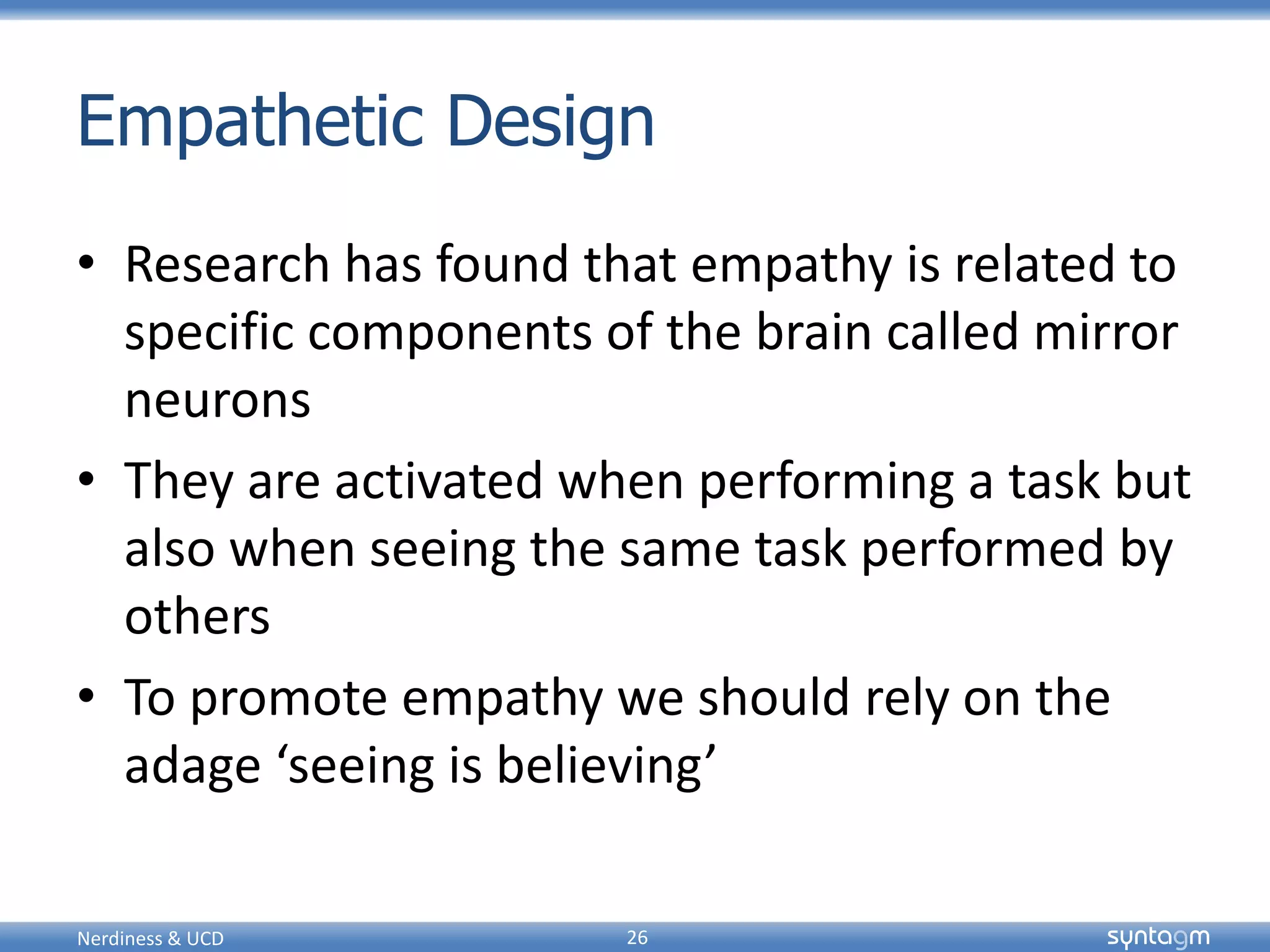
Empathetic Design
• Research has found that empathy is related to
specific components of the brain called mirror
neurons
• They are activated when performing a task but
also when seeing the same task performed by
others
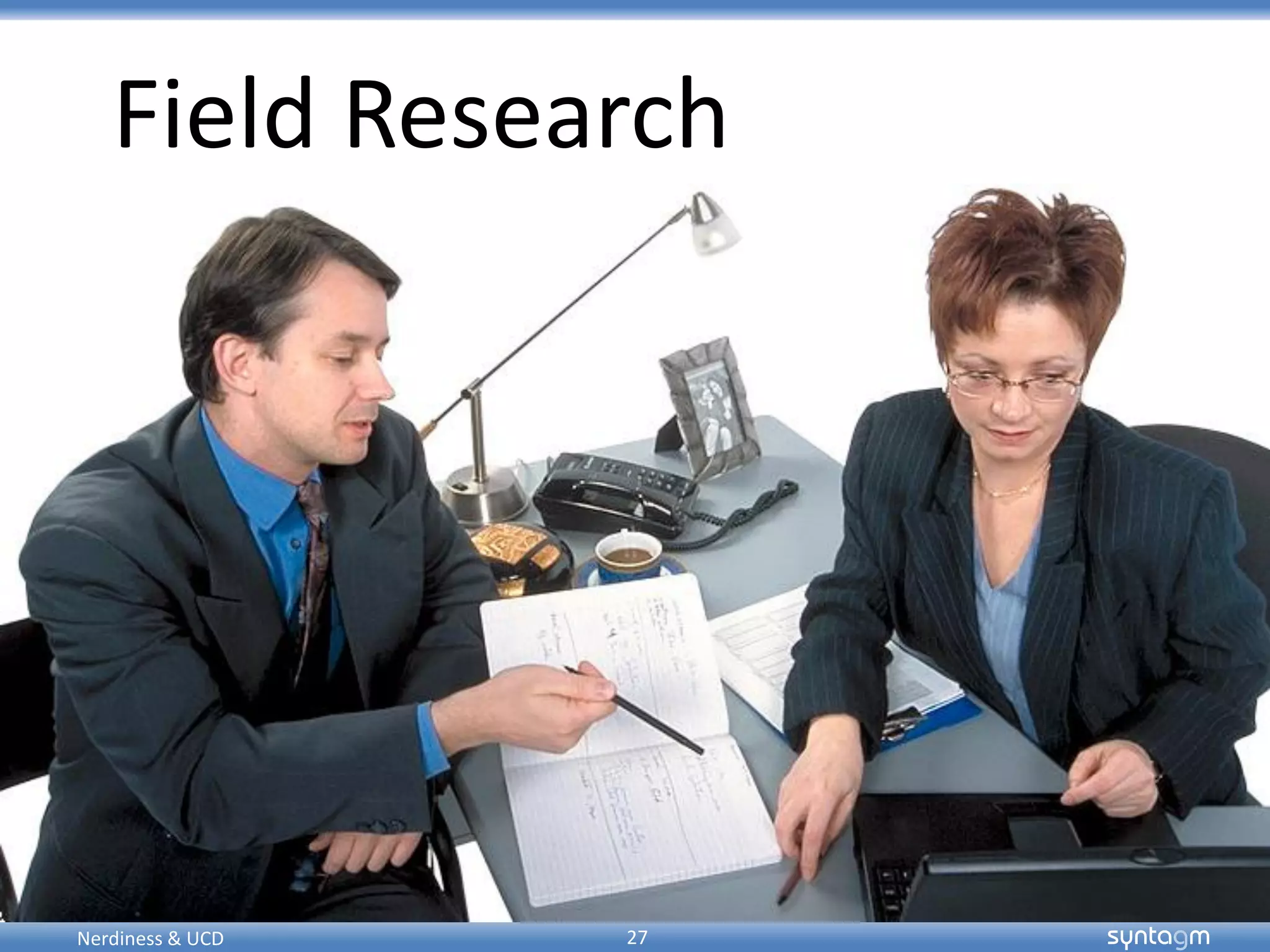
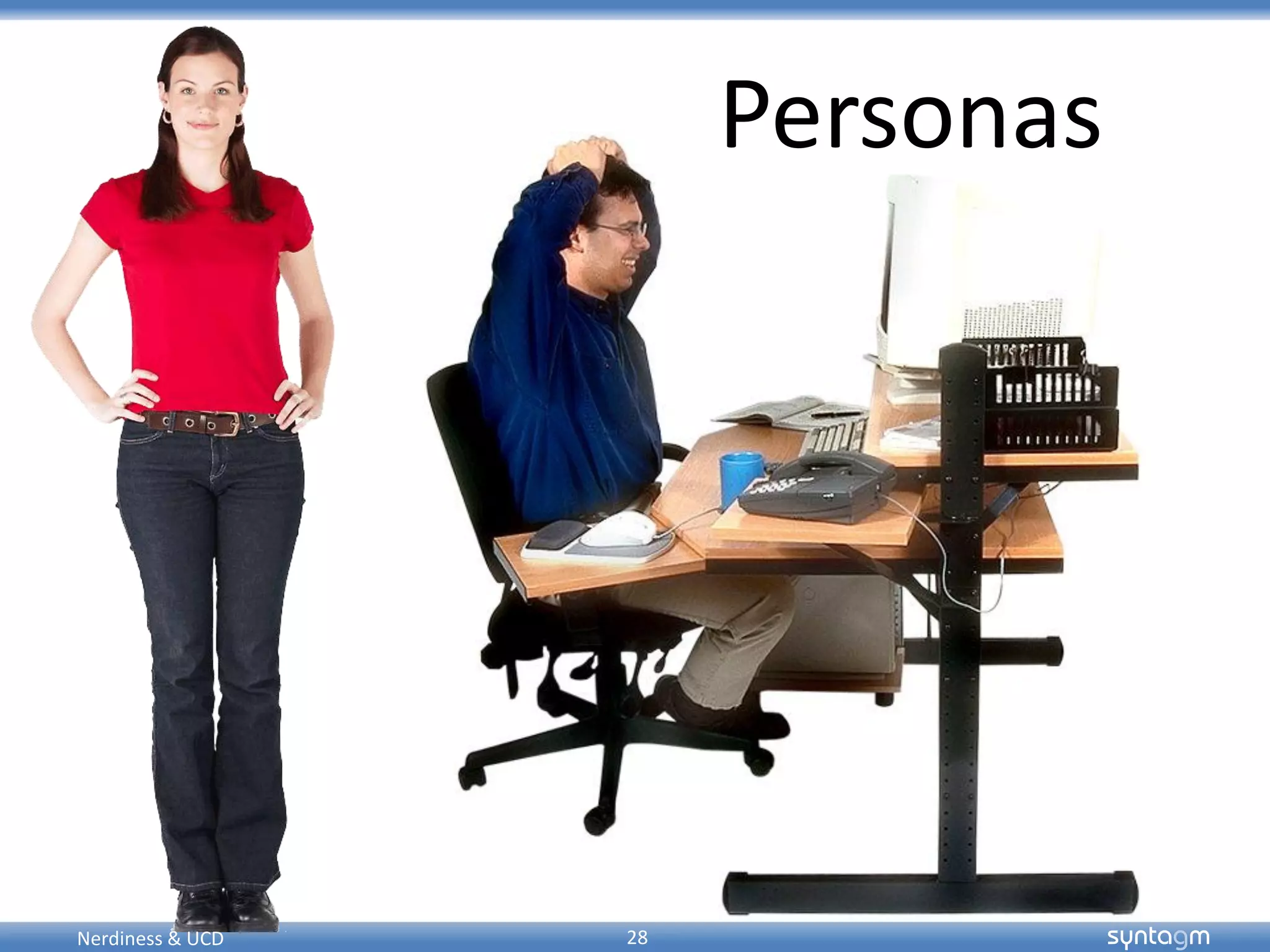
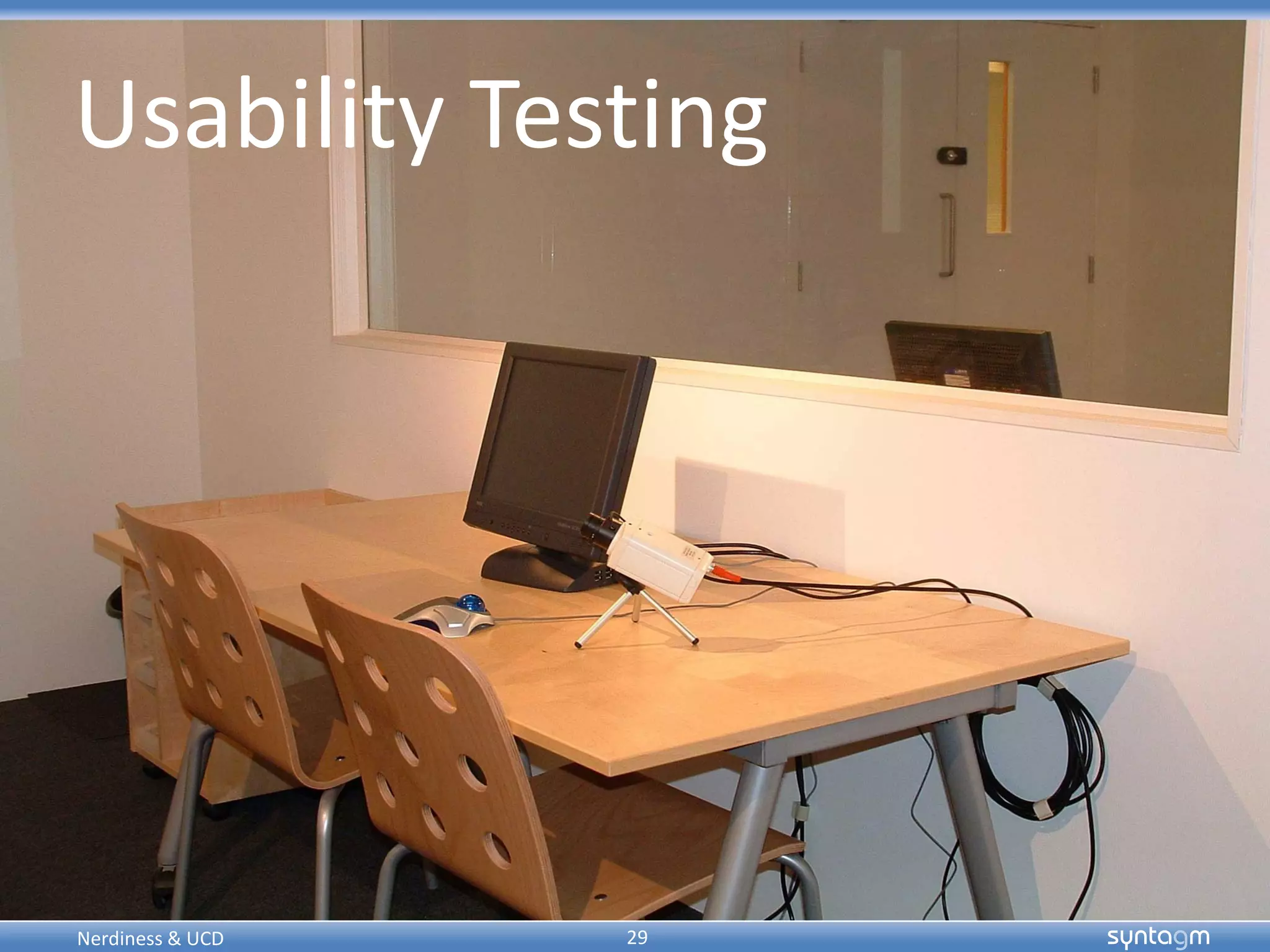
• To promote empathy we should rely on the
adage ‘seeing is believing’
Nerdiness & UCD 26
syntagmsyntagm
Field Research
27Nerdiness & UCD
syntagmsyntagm
Personas
28Nerdiness & UCD
syntagmsyntagm
Usability Testing
29Nerdiness & UCD
syntagmsyntagm
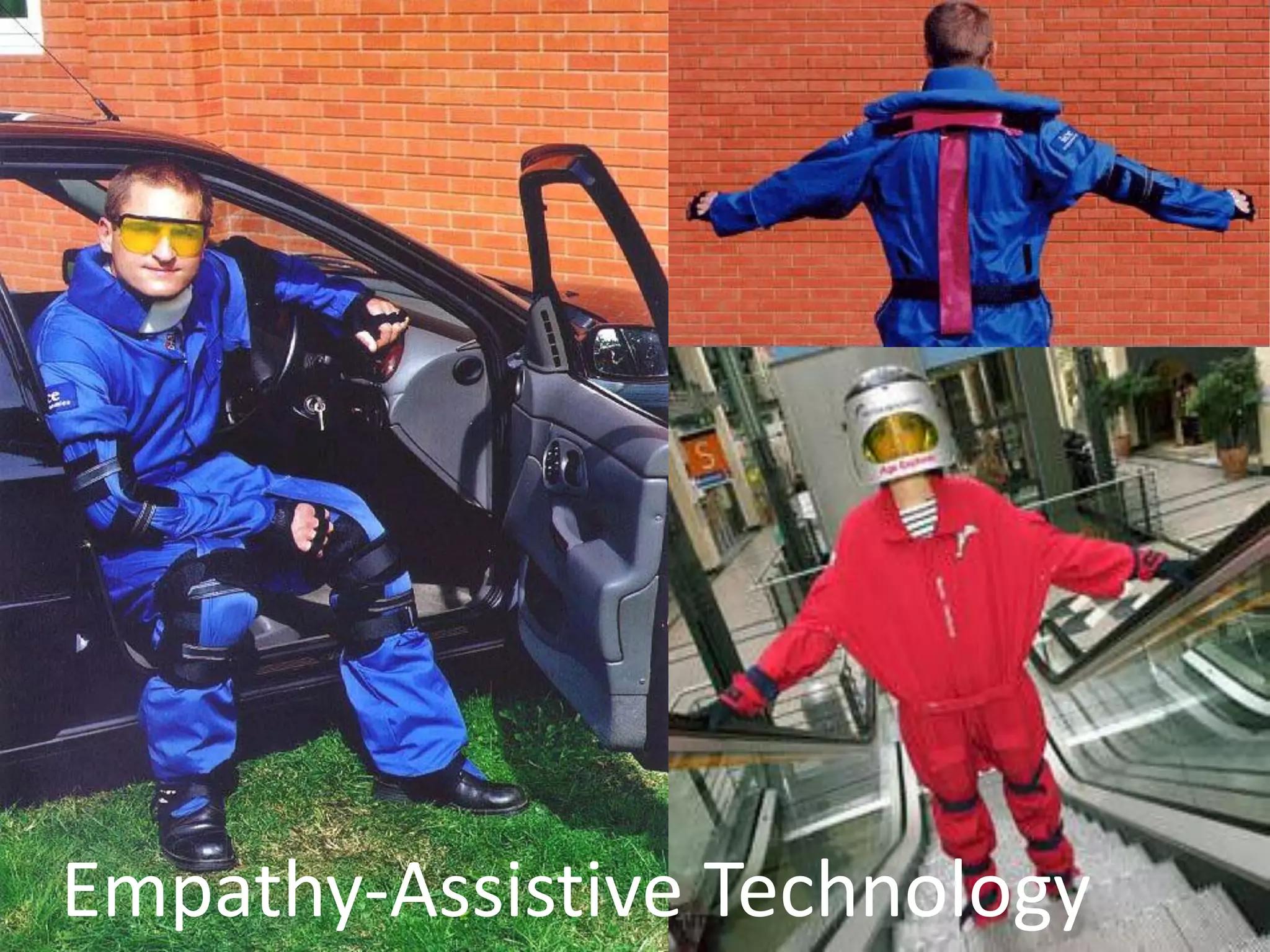
Empathy-Assistive Technology
syntagmsyntagm
Agile UX & UCD One-Day Course
- Hamburg, 5 November 2010
- London, 15 November 2010
Persona-Driven Design Workshop
- London, 6 December 2010
• A prime goal for both the course and the
workshop is to address when and how to
promote empathy in design
• Visit www.syntagm.co.uk/design/courses
Nerdiness & UCD 31
syntagm32
www.syntagm.co.uk/design
Nerdiness & UCD

The psychological basis of nerdiness and its impact on user-centred design