Crisis Mapping Presentation for UN OCHA

Loading...

Flash Player 9 (or above) is needed to view presentations.

We have detected that you do not have it on your computer. To install it, go here.

0 comments

Post a comment

    Post a comment
    Embed Video
    Edit your comment Cancel

    Notes on slide 1

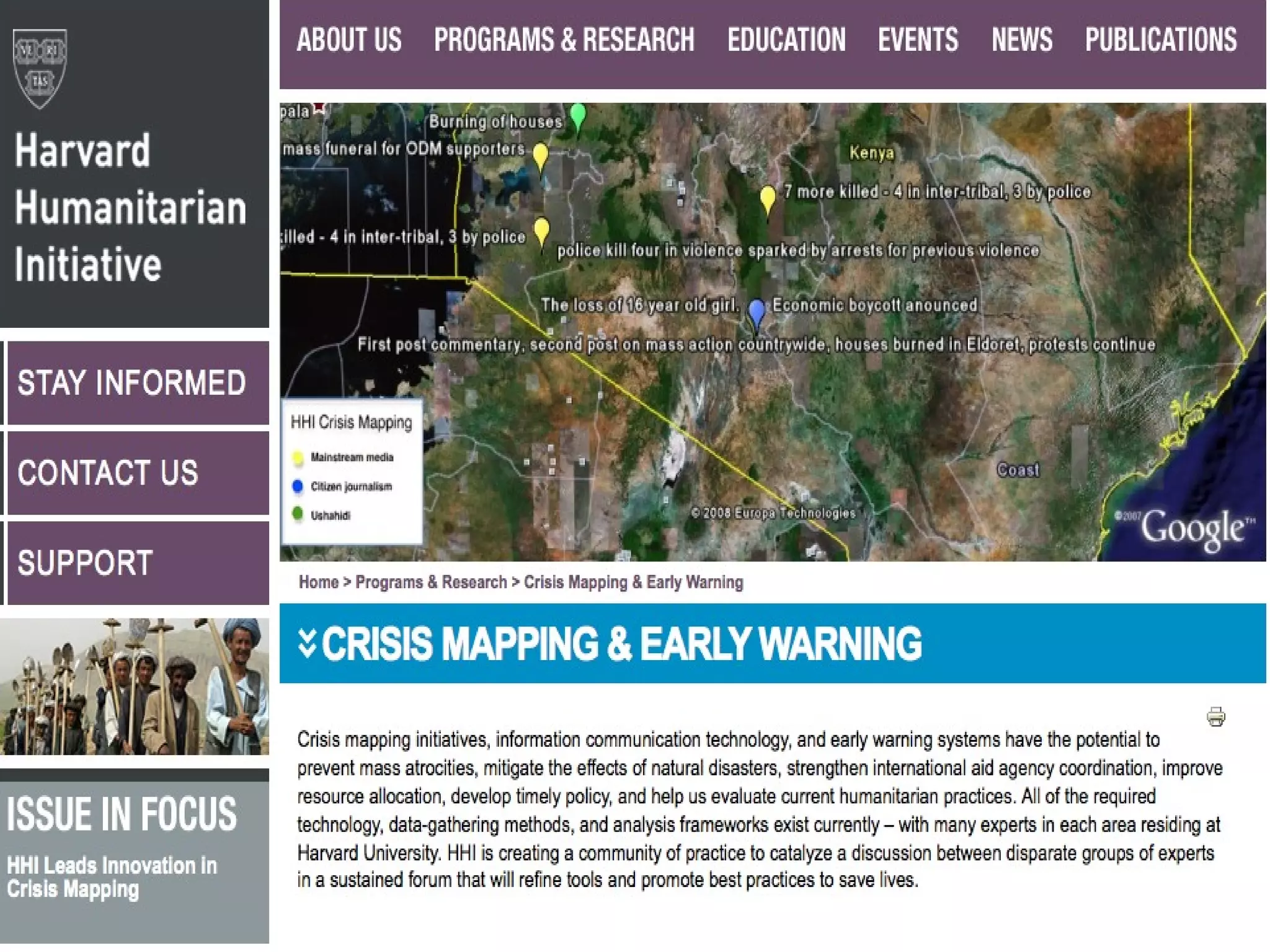
    PATRICK: Talk off concept note to HU 18-month program War is a public health problem Independent evaluators, incubate novel initiatives, technical consultants with Harvard expertise/credibility, convening power Shared Learning Group on Early Warning Multidisciplinary approach to identify solutions beyond our own field of interest Competitive advantages: Harvard faculty, extensive partnerships with NGOs, research network, multidisciplinary approach Goal: establish center of excellence to promote exchange and analysis via dedicated workshops, working papers, symposia, joint projects Focus on innovative thinking and technologies to maximize impact of conflict early warning, crisis mapping and humanitarian response Use of information and technology to empower at-risk communities to get out of harm’s way Take a deliberate cross-disciplinary approach to identify lessons learned and best practices across sectors 100 consultations with multiple partners in diverse sectors Relevant input from Google Predict and Prevent website: “ This initiative will use information and technology to empower communities to predict and prevent emerging threats before they become local, regional, or global crises.” “ This initiative supports two inter-related pathways from prediction to prevention. The first is vulnerability mapping and identification of "hot spots." The second, creating systems to better detect threats to provide early warning and enable a rapid response.” “ Innovative, event-based surveillance at the community level in the developing world” “ Understanding the complex drivers that lead to emerging threats can help communities anticipate surprises and reduce vulnerability.” “ Improving data collection, sharing, and analysis for enhanced vulnerability mapping and modeling” “ Contributing to enhanced resilience of communities to withstand threats and adapt to changes” “ Timely, accurate, and accessible information can help prevent localized health crises from becoming regional or global threats. Google.org is focusing on: (1) Using innovative methods to quickly find threats wherever they occur; (2) Confirming outbreaks and identifying their cause; (3) Alerting key stakeholders, from villagers to global health authorities.”

    PATRICK: Talk off concept note to HU 18-month program War is a public health problem Independent evaluators, incubate novel initiatives, technical consultants with Harvard expertise/credibility, convening power Shared Learning Group on Early Warning Multidisciplinary approach to identify solutions beyond our own field of interest Competitive advantages: Harvard faculty, extensive partnerships with NGOs, research network, multidisciplinary approach Goal: establish center of excellence to promote exchange and analysis via dedicated workshops, working papers, symposia, joint projects Focus on innovative thinking and technologies to maximize impact of conflict early warning, crisis mapping and humanitarian response Use of information and technology to empower at-risk communities to get out of harm’s way Take a deliberate cross-disciplinary approach to identify lessons learned and best practices across sectors 100 consultations with multiple partners in diverse sectors Relevant input from Google Predict and Prevent website: “ This initiative will use information and technology to empower communities to predict and prevent emerging threats before they become local, regional, or global crises.” “ This initiative supports two inter-related pathways from prediction to prevention. The first is vulnerability mapping and identification of "hot spots." The second, creating systems to better detect threats to provide early warning and enable a rapid response.” “ Innovative, event-based surveillance at the community level in the developing world” “ Understanding the complex drivers that lead to emerging threats can help communities anticipate surprises and reduce vulnerability.” “ Improving data collection, sharing, and analysis for enhanced vulnerability mapping and modeling” “ Contributing to enhanced resilience of communities to withstand threats and adapt to changes” “ Timely, accurate, and accessible information can help prevent localized health crises from becoming regional or global threats. Google.org is focusing on: (1) Using innovative methods to quickly find threats wherever they occur; (2) Confirming outbreaks and identifying their cause; (3) Alerting key stakeholders, from villagers to global health authorities.”

    PATRICK: Talk off concept note to HU 18-month program War is a public health problem Independent evaluators, incubate novel initiatives, technical consultants with Harvard expertise/credibility, convening power Shared Learning Group on Early Warning Multidisciplinary approach to identify solutions beyond our own field of interest Competitive advantages: Harvard faculty, extensive partnerships with NGOs, research network, multidisciplinary approach Goal: establish center of excellence to promote exchange and analysis via dedicated workshops, working papers, symposia, joint projects Focus on innovative thinking and technologies to maximize impact of conflict early warning, crisis mapping and humanitarian response Use of information and technology to empower at-risk communities to get out of harm’s way Take a deliberate cross-disciplinary approach to identify lessons learned and best practices across sectors 100 consultations with multiple partners in diverse sectors Relevant input from Google Predict and Prevent website: “ This initiative will use information and technology to empower communities to predict and prevent emerging threats before they become local, regional, or global crises.” “ This initiative supports two inter-related pathways from prediction to prevention. The first is vulnerability mapping and identification of "hot spots." The second, creating systems to better detect threats to provide early warning and enable a rapid response.” “ Innovative, event-based surveillance at the community level in the developing world” “ Understanding the complex drivers that lead to emerging threats can help communities anticipate surprises and reduce vulnerability.” “ Improving data collection, sharing, and analysis for enhanced vulnerability mapping and modeling” “ Contributing to enhanced resilience of communities to withstand threats and adapt to changes” “ Timely, accurate, and accessible information can help prevent localized health crises from becoming regional or global threats. Google.org is focusing on: (1) Using innovative methods to quickly find threats wherever they occur; (2) Confirming outbreaks and identifying their cause; (3) Alerting key stakeholders, from villagers to global health authorities.”

    PATRICK: Talk off concept note to HU 18-month program War is a public health problem Independent evaluators, incubate novel initiatives, technical consultants with Harvard expertise/credibility, convening power Shared Learning Group on Early Warning Multidisciplinary approach to identify solutions beyond our own field of interest Competitive advantages: Harvard faculty, extensive partnerships with NGOs, research network, multidisciplinary approach Goal: establish center of excellence to promote exchange and analysis via dedicated workshops, working papers, symposia, joint projects Focus on innovative thinking and technologies to maximize impact of conflict early warning, crisis mapping and humanitarian response Use of information and technology to empower at-risk communities to get out of harm’s way Take a deliberate cross-disciplinary approach to identify lessons learned and best practices across sectors 100 consultations with multiple partners in diverse sectors Relevant input from Google Predict and Prevent website: “ This initiative will use information and technology to empower communities to predict and prevent emerging threats before they become local, regional, or global crises.” “ This initiative supports two inter-related pathways from prediction to prevention. The first is vulnerability mapping and identification of "hot spots." The second, creating systems to better detect threats to provide early warning and enable a rapid response.” “ Innovative, event-based surveillance at the community level in the developing world” “ Understanding the complex drivers that lead to emerging threats can help communities anticipate surprises and reduce vulnerability.” “ Improving data collection, sharing, and analysis for enhanced vulnerability mapping and modeling” “ Contributing to enhanced resilience of communities to withstand threats and adapt to changes” “ Timely, accurate, and accessible information can help prevent localized health crises from becoming regional or global threats. Google.org is focusing on: (1) Using innovative methods to quickly find threats wherever they occur; (2) Confirming outbreaks and identifying their cause; (3) Alerting key stakeholders, from villagers to global health authorities.”

    PATRICK: Talk off concept note to HU 18-month program War is a public health problem Independent evaluators, incubate novel initiatives, technical consultants with Harvard expertise/credibility, convening power Shared Learning Group on Early Warning Multidisciplinary approach to identify solutions beyond our own field of interest Competitive advantages: Harvard faculty, extensive partnerships with NGOs, research network, multidisciplinary approach Goal: establish center of excellence to promote exchange and analysis via dedicated workshops, working papers, symposia, joint projects Focus on innovative thinking and technologies to maximize impact of conflict early warning, crisis mapping and humanitarian response Use of information and technology to empower at-risk communities to get out of harm’s way Take a deliberate cross-disciplinary approach to identify lessons learned and best practices across sectors 100 consultations with multiple partners in diverse sectors Relevant input from Google Predict and Prevent website: “ This initiative will use information and technology to empower communities to predict and prevent emerging threats before they become local, regional, or global crises.” “ This initiative supports two inter-related pathways from prediction to prevention. The first is vulnerability mapping and identification of "hot spots." The second, creating systems to better detect threats to provide early warning and enable a rapid response.” “ Innovative, event-based surveillance at the community level in the developing world” “ Understanding the complex drivers that lead to emerging threats can help communities anticipate surprises and reduce vulnerability.” “ Improving data collection, sharing, and analysis for enhanced vulnerability mapping and modeling” “ Contributing to enhanced resilience of communities to withstand threats and adapt to changes” “ Timely, accurate, and accessible information can help prevent localized health crises from becoming regional or global threats. Google.org is focusing on: (1) Using innovative methods to quickly find threats wherever they occur; (2) Confirming outbreaks and identifying their cause; (3) Alerting key stakeholders, from villagers to global health authorities.”

    JENNIFER/GREGG: [to provide introduction to HHI and presentation] **Vulnerability + Tactics = patterns **Populations **Larry Brilliant TED, early detection, early response, cf patterns Relevant pointers from Google Predict and Prevent website: “ This initiative will use information and technology to empower communities to predict and prevent emerging threats before they become local, regional, or global crises.” “ This initiative supports two inter-related pathways from prediction to prevention. The first is vulnerability mapping and identification of "hot spots." The second, creating systems to better detect threats to provide early warning and enable a rapid response.” “ Understanding the complex drivers that lead to emerging threats can help communities anticipate surprises and reduce vulnerability.” “ Improving data collection, sharing, and analysis for enhanced vulnerability mapping and modeling” “ Contributing to enhanced resilience of communities to withstand threats and adapt to changes” “ Timely, accurate, and accessible information can help prevent localized health crises from becoming regional or global threats. Google.org is focusing on: (1) Using innovative methods to quickly find threats wherever they occur; (2) Confirming outbreaks and identifying their cause; (3) Alerting key stakeholders, from villagers to global health authorities.” “ Innovative, event-based surveillance at the community level in the developing world” “ Integrated vulnerability mapping to the drivers of emerging infectious diseases” Mobile phone, information sharing; access to information, build knowledge, improve capacity to predict/prevent emerging threats

    JENNIFER/GREGG: [to provide introduction to HHI and presentation] **Vulnerability + Tactics = patterns **Populations **Larry Brilliant TED, early detection, early response, cf patterns Relevant pointers from Google Predict and Prevent website: “ This initiative will use information and technology to empower communities to predict and prevent emerging threats before they become local, regional, or global crises.” “ This initiative supports two inter-related pathways from prediction to prevention. The first is vulnerability mapping and identification of "hot spots." The second, creating systems to better detect threats to provide early warning and enable a rapid response.” “ Understanding the complex drivers that lead to emerging threats can help communities anticipate surprises and reduce vulnerability.” “ Improving data collection, sharing, and analysis for enhanced vulnerability mapping and modeling” “ Contributing to enhanced resilience of communities to withstand threats and adapt to changes” “ Timely, accurate, and accessible information can help prevent localized health crises from becoming regional or global threats. Google.org is focusing on: (1) Using innovative methods to quickly find threats wherever they occur; (2) Confirming outbreaks and identifying their cause; (3) Alerting key stakeholders, from villagers to global health authorities.” “ Innovative, event-based surveillance at the community level in the developing world” “ Integrated vulnerability mapping to the drivers of emerging infectious diseases” Mobile phone, information sharing; access to information, build knowledge, improve capacity to predict/prevent emerging threats

    JENNIFER/GREGG: [to provide introduction to HHI and presentation] **Vulnerability + Tactics = patterns **Populations **Larry Brilliant TED, early detection, early response, cf patterns Relevant pointers from Google Predict and Prevent website: “ This initiative will use information and technology to empower communities to predict and prevent emerging threats before they become local, regional, or global crises.” “ This initiative supports two inter-related pathways from prediction to prevention. The first is vulnerability mapping and identification of "hot spots." The second, creating systems to better detect threats to provide early warning and enable a rapid response.” “ Understanding the complex drivers that lead to emerging threats can help communities anticipate surprises and reduce vulnerability.” “ Improving data collection, sharing, and analysis for enhanced vulnerability mapping and modeling” “ Contributing to enhanced resilience of communities to withstand threats and adapt to changes” “ Timely, accurate, and accessible information can help prevent localized health crises from becoming regional or global threats. Google.org is focusing on: (1) Using innovative methods to quickly find threats wherever they occur; (2) Confirming outbreaks and identifying their cause; (3) Alerting key stakeholders, from villagers to global health authorities.” “ Innovative, event-based surveillance at the community level in the developing world” “ Integrated vulnerability mapping to the drivers of emerging infectious diseases” Mobile phone, information sharing; access to information, build knowledge, improve capacity to predict/prevent emerging threats

    JENNIFER/GREGG: [to provide introduction to HHI and presentation] **Vulnerability + Tactics = patterns **Populations **Larry Brilliant TED, early detection, early response, cf patterns Relevant pointers from Google Predict and Prevent website: “ This initiative will use information and technology to empower communities to predict and prevent emerging threats before they become local, regional, or global crises.” “ This initiative supports two inter-related pathways from prediction to prevention. The first is vulnerability mapping and identification of "hot spots." The second, creating systems to better detect threats to provide early warning and enable a rapid response.” “ Understanding the complex drivers that lead to emerging threats can help communities anticipate surprises and reduce vulnerability.” “ Improving data collection, sharing, and analysis for enhanced vulnerability mapping and modeling” “ Contributing to enhanced resilience of communities to withstand threats and adapt to changes” “ Timely, accurate, and accessible information can help prevent localized health crises from becoming regional or global threats. Google.org is focusing on: (1) Using innovative methods to quickly find threats wherever they occur; (2) Confirming outbreaks and identifying their cause; (3) Alerting key stakeholders, from villagers to global health authorities.” “ Innovative, event-based surveillance at the community level in the developing world” “ Integrated vulnerability mapping to the drivers of emerging infectious diseases” Mobile phone, information sharing; access to information, build knowledge, improve capacity to predict/prevent emerging threats

    Favorites, Groups & Events

    Crisis Mapping Presentation for UN OCHA - Presentation Transcript

    1. Patrick Meier iRevolution Blog [email_address] mapping
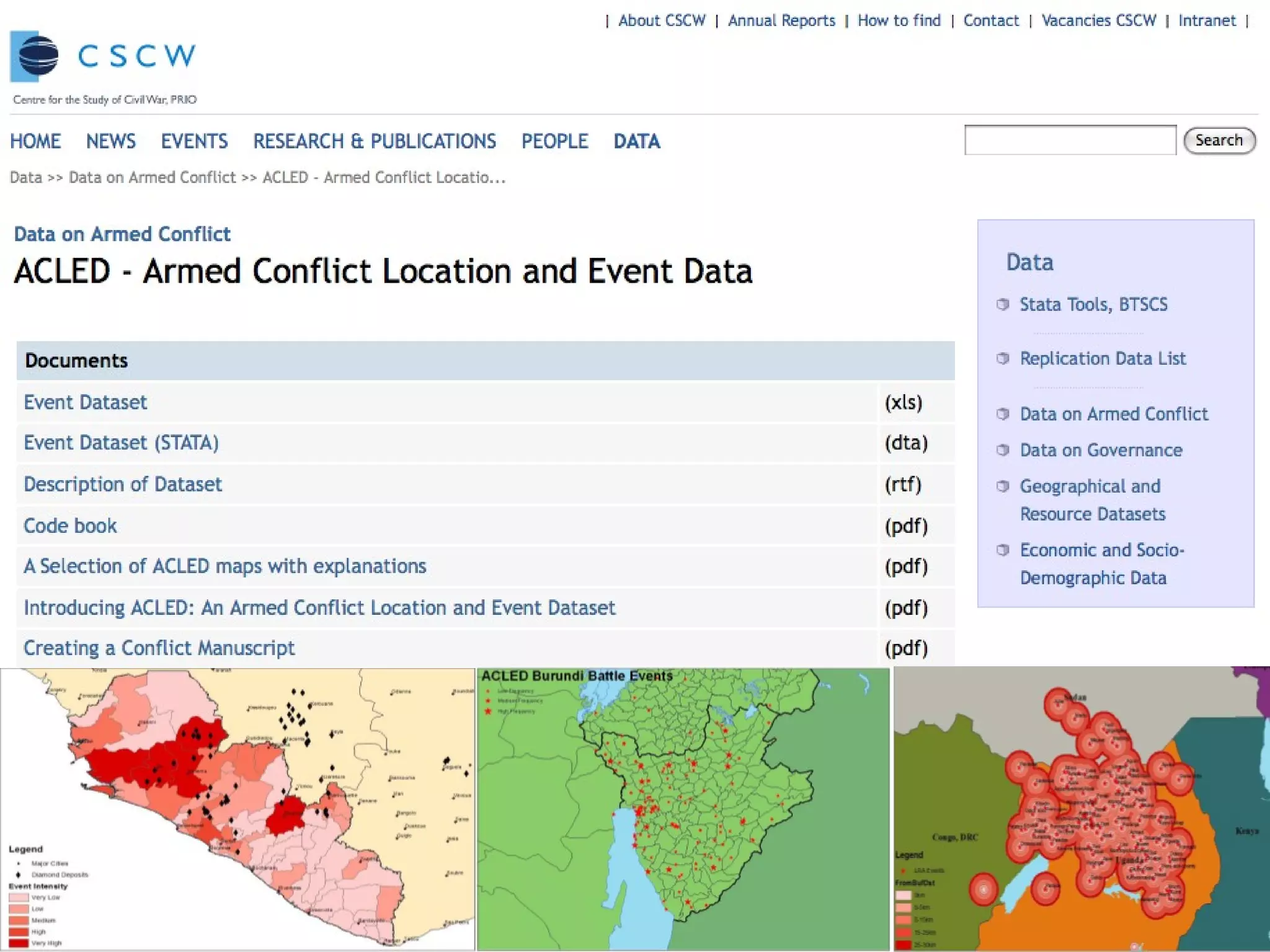
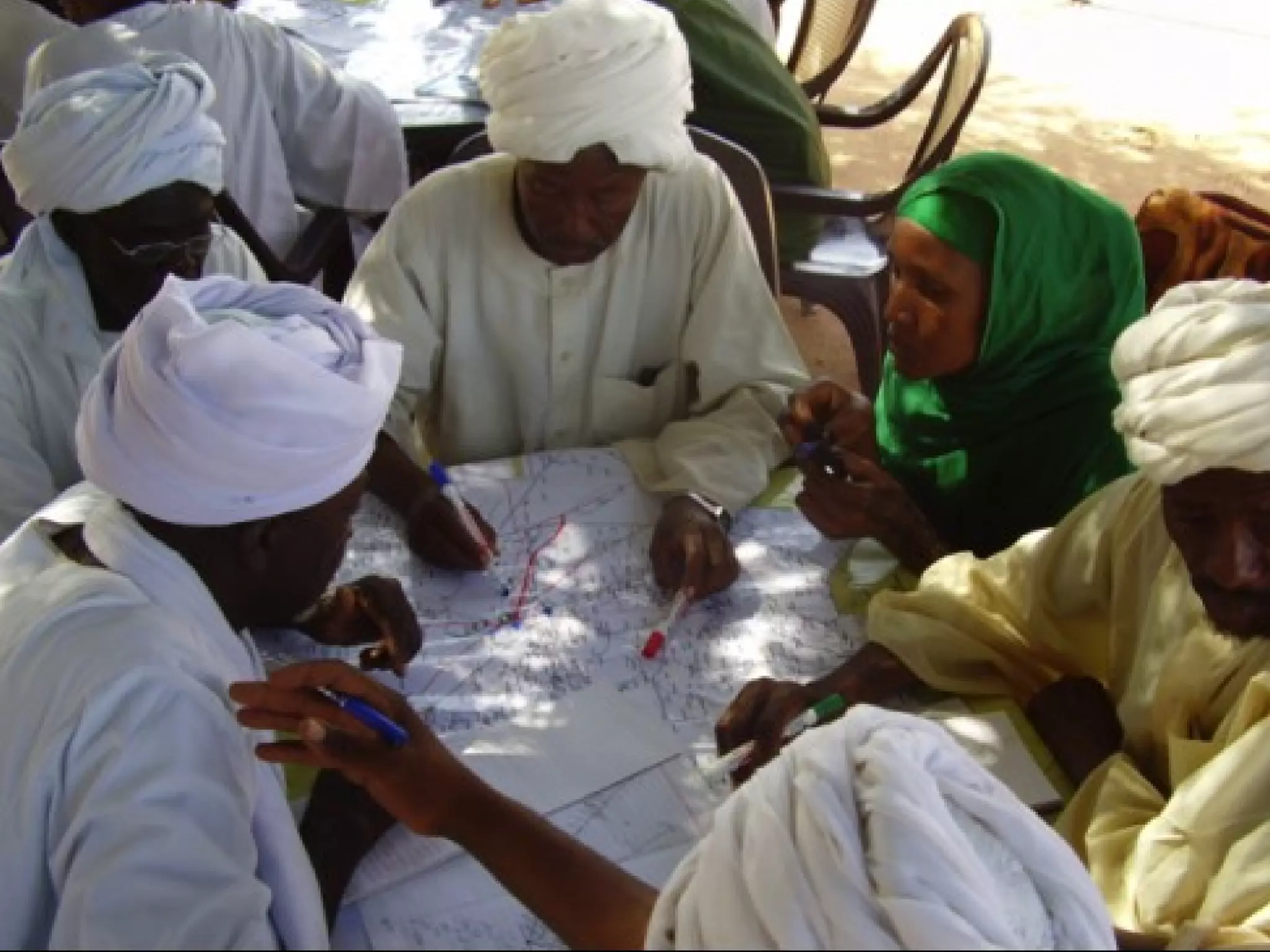
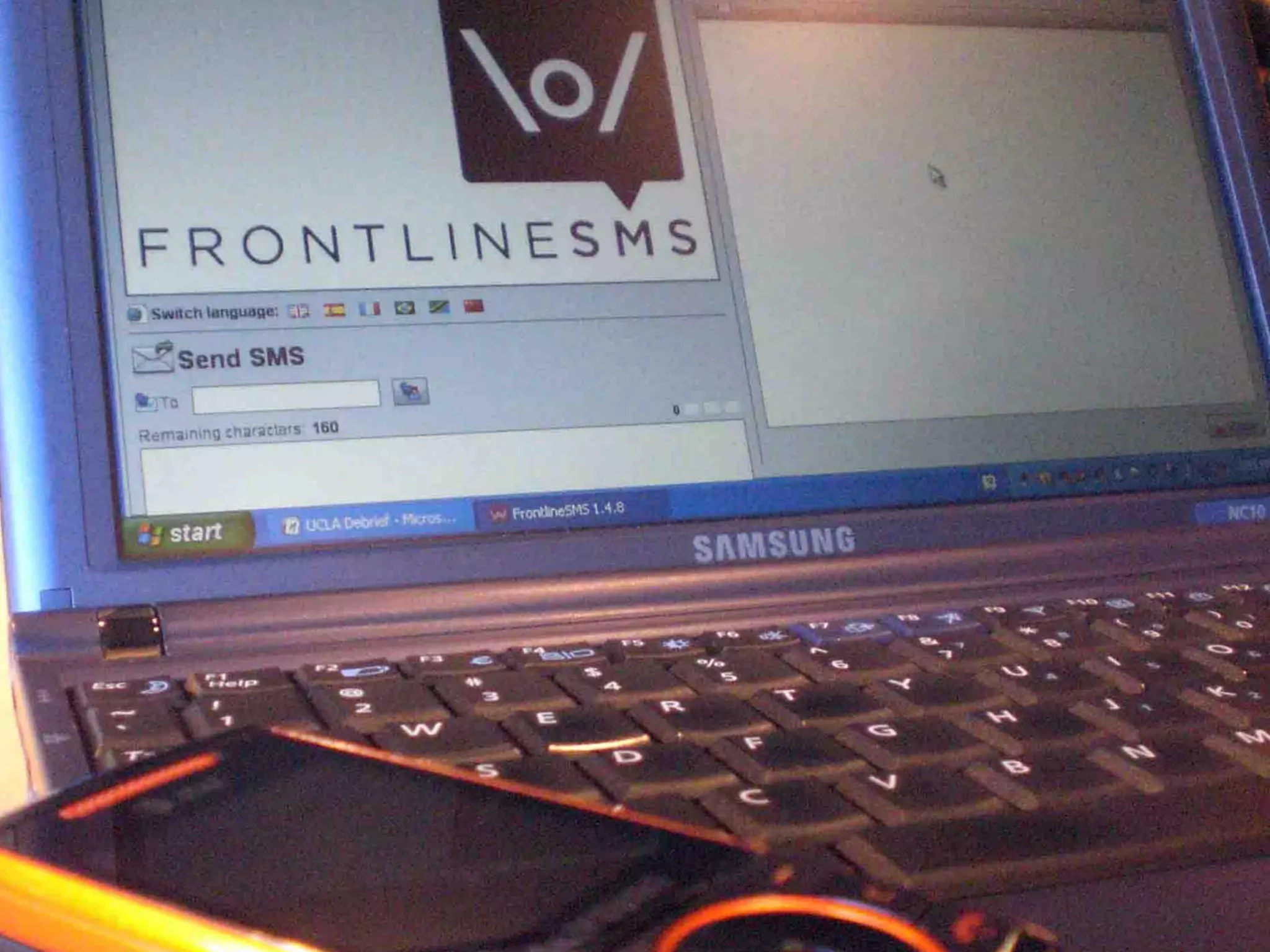
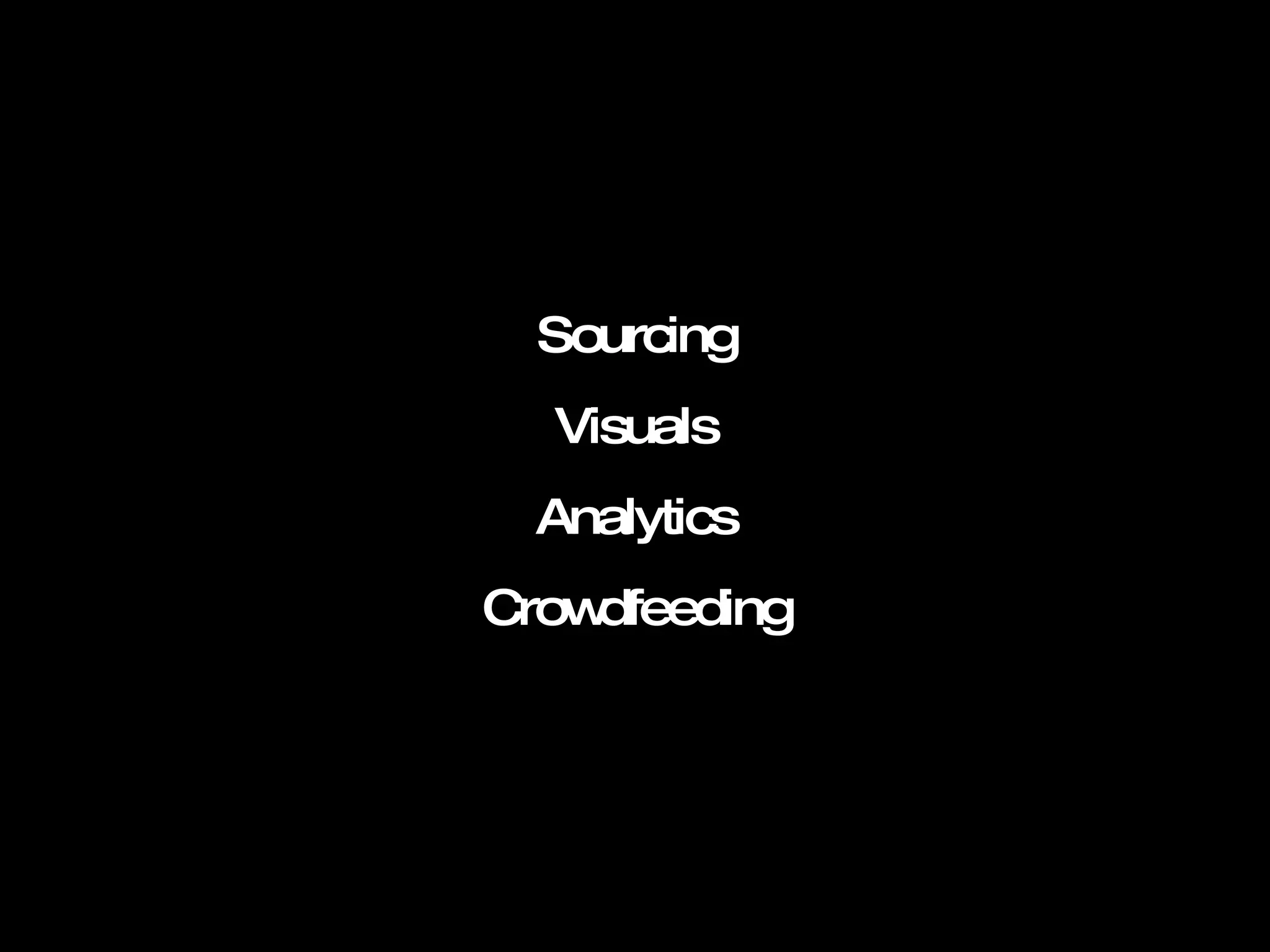
    2. 1. Crisis Map Sourcing 2. Crisis Mapping Platforms 3. Sourcing to Crowdfeeding 4. Crisis Mapping Analytics Crisis Mapping
    3.  
    4. mapping
    5. Sourcing Visuals Analytics Crowdfeeding
    6. Sourcing
    7.  
    8.  
    9.  
    10. Patrick Meier
    11.  
    12.  
    13.  
    14.  
    15.  
    16.  
    17.  
    18.  
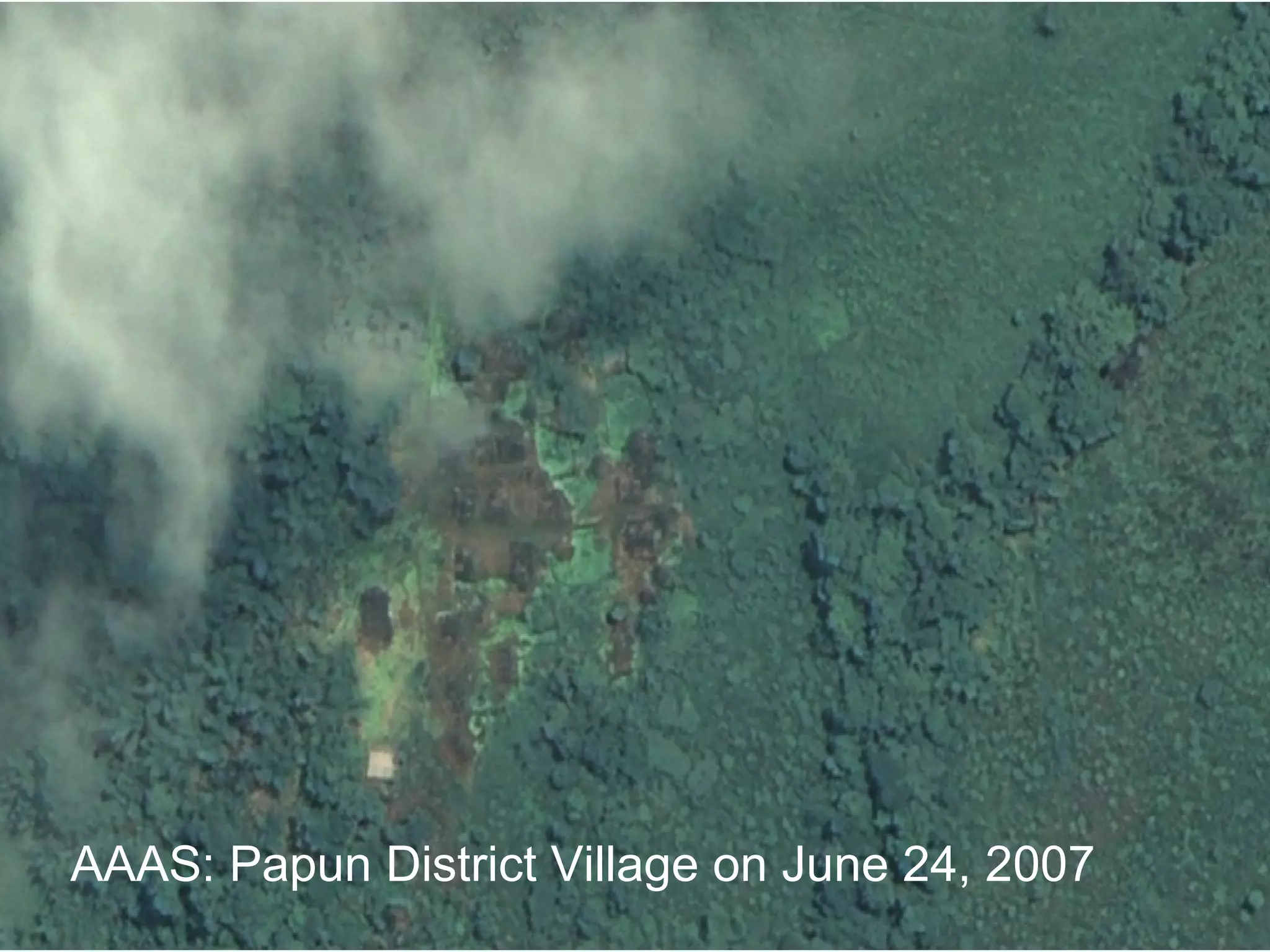
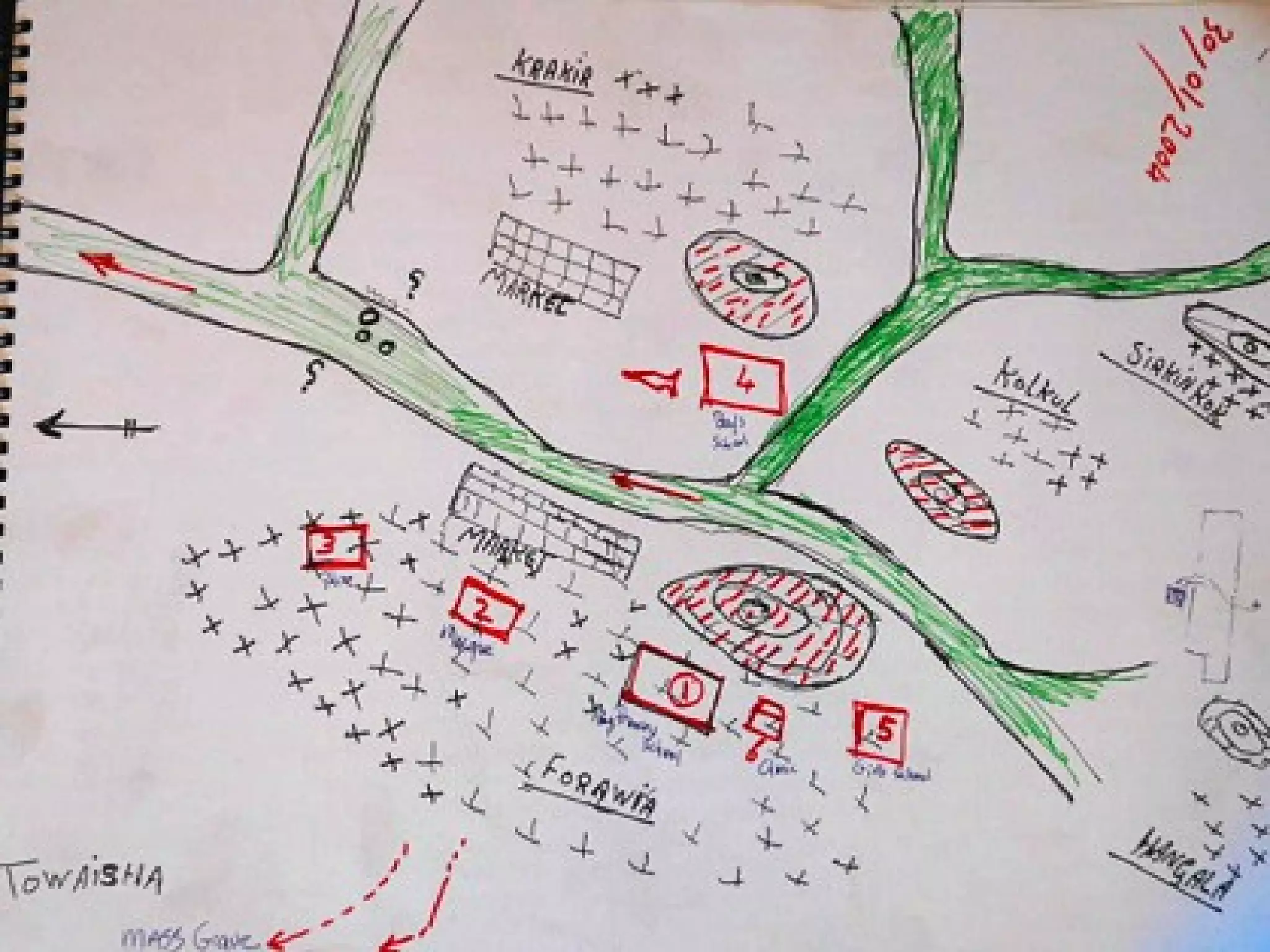
    19. AAAS: Papun District Village on June 24, 2007
    20.  
    21.  
    22. Visuals
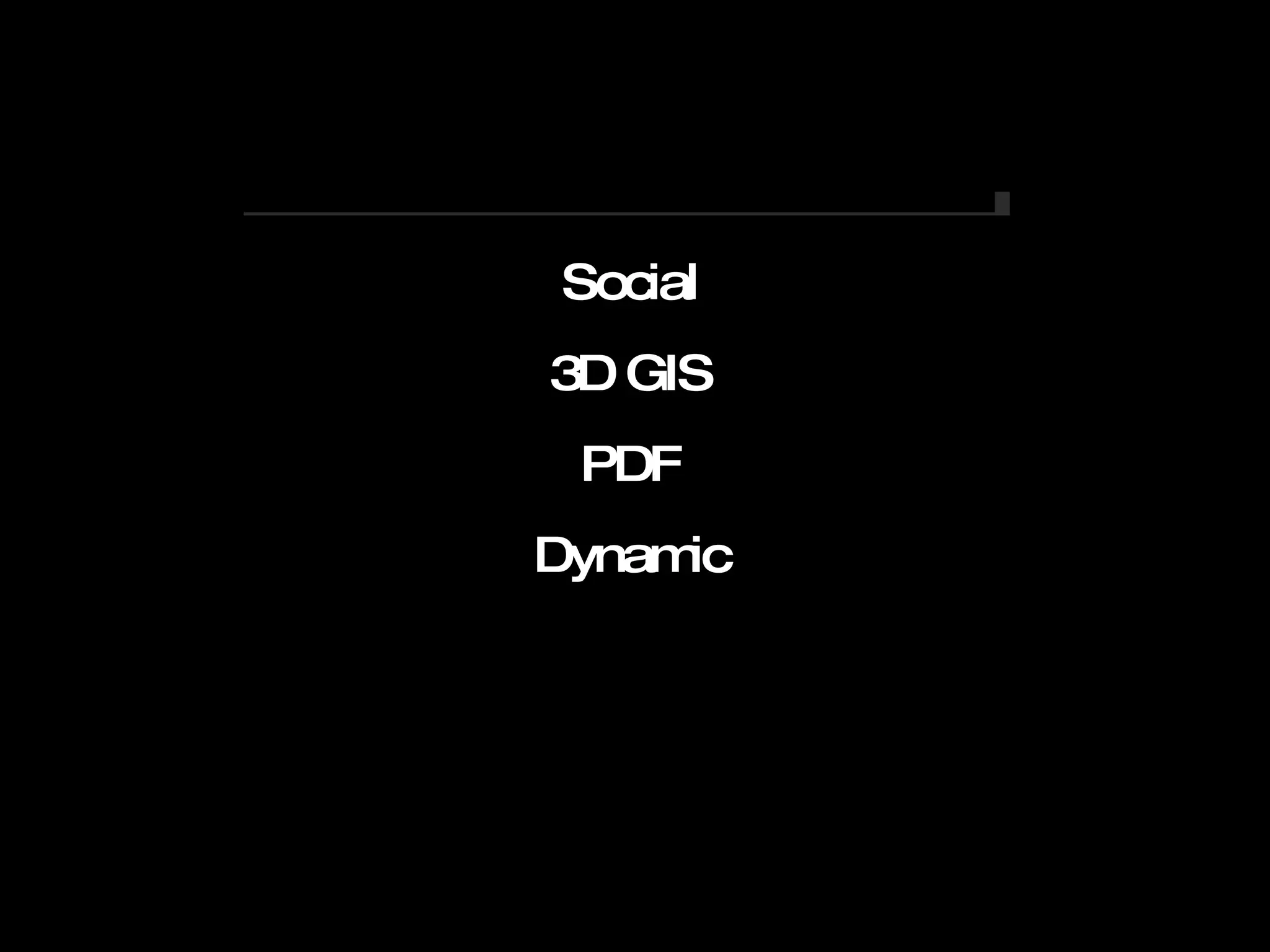
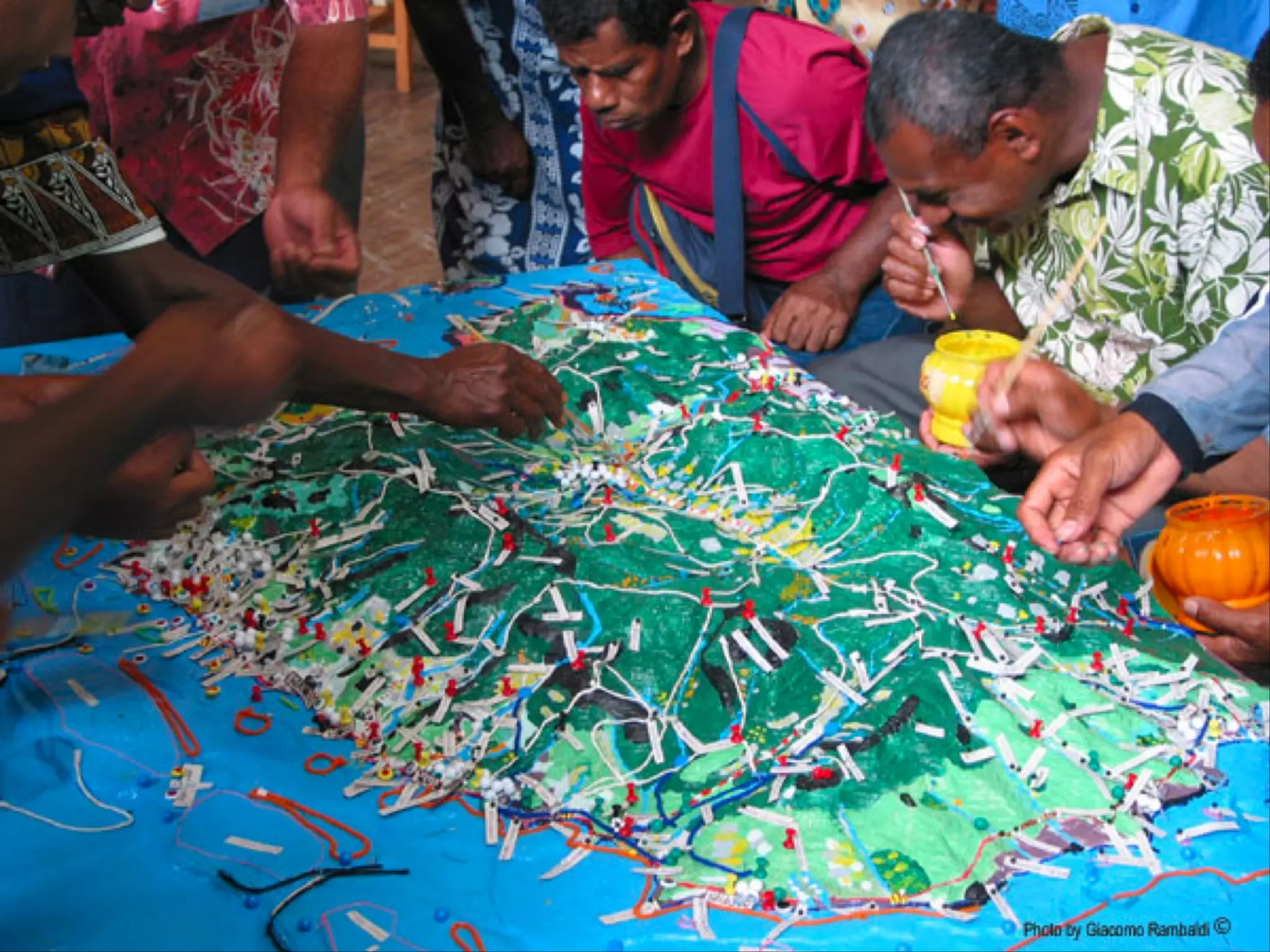
    23. Social 3D GIS PDF Dynamic
    24.  
    25.  
    26.  
    27.  
    28.  
    29.  
    30. Analytics
    31.  
    32.  
    33.  
    34. Feeding
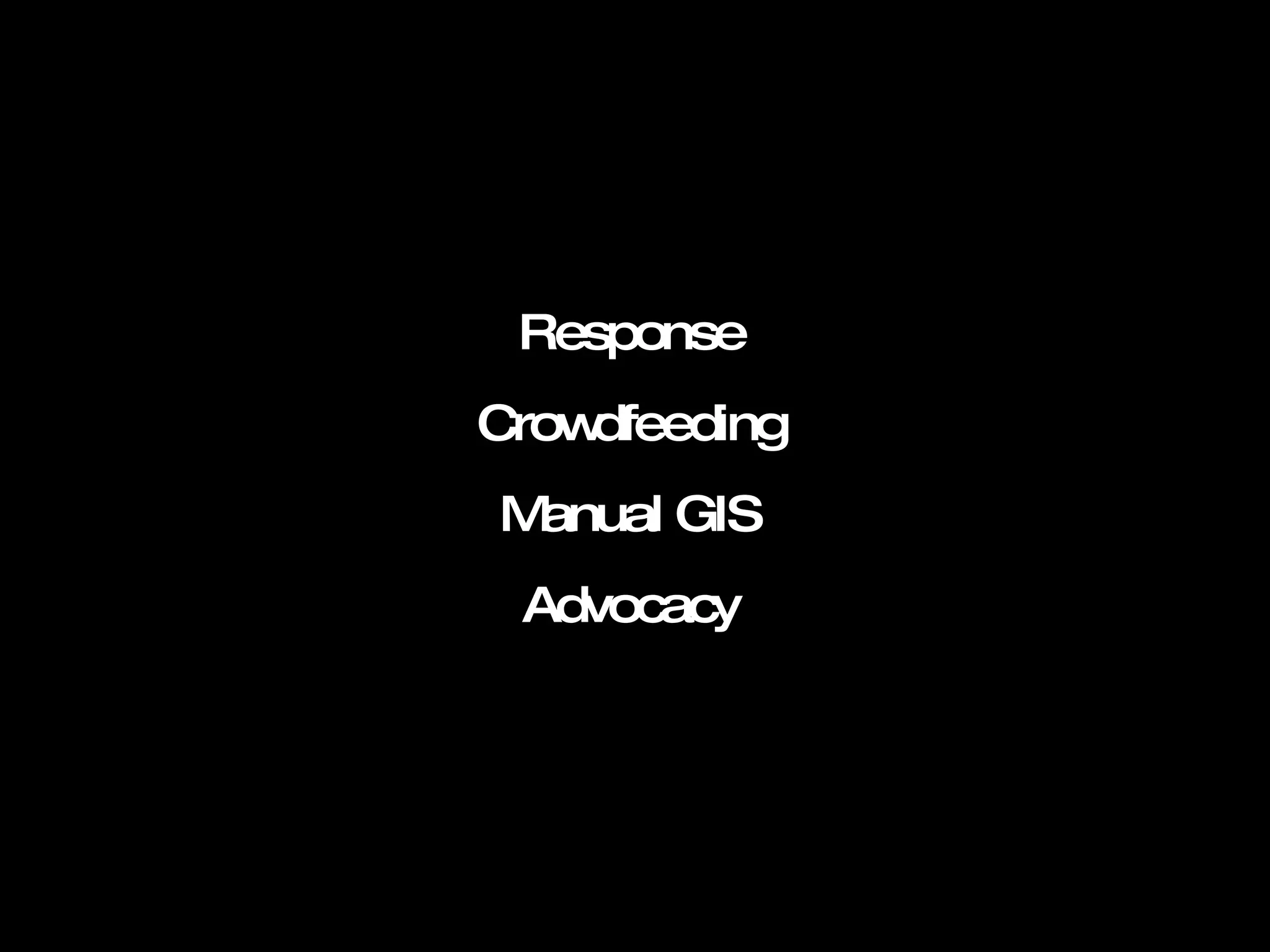
    35. Response Crowdfeeding Manual GIS Advocacy
    36.  
    37.  
    38.  
    39.  
    40.  
    41. Sourcing Visuals Analytics Crowdfeeding
    42.  
    43. Patrick Meier iRevolution Blog [email_address]

    + Patrick MeierPatrick Meier, 5 months ago

    custom

    291 views, 0 favs, 0 embeds more stats

    A presentation I gave to UN OCHA in Nairobi on Cris more

    More info about this document

    © All Rights Reserved

    Go to text version

    • Total Views 291
      • 291 on SlideShare
      • 0 from embeds
    • Comments 0
    • Favorites 0
    • Downloads 6
    Most viewed embeds

    more

    All embeds

    less

    Flagged as inappropriate Flag as inappropriate
    Flag as inappropriate

    Select your reason for flagging this presentation as inappropriate. If needed, use the feedback form to let us know more details.

    Cancel
    File a copyright complaint
    Having problems? Go to our helpdesk?

    Categories