Why Choose Xen For Your Cloud?


                                  Todd Deshane
         Build an Open Source Cloud Day - Boston
                               December 9, 2011
Who am I?

● Xen.org Technology Evangelist

● Involvement with Xen started in 2003 as graduate student

● Co-author of research paper:
   ○ "Xen and the Art of Repeated Research"
   ○ USENIX 2004

● Co-author of the "Running Xen" book

● XCP/cloud integrator and tester
Outline

● Xen in the cloud history

● Xen architecture and security benefits

● XCP

● Project Kronos
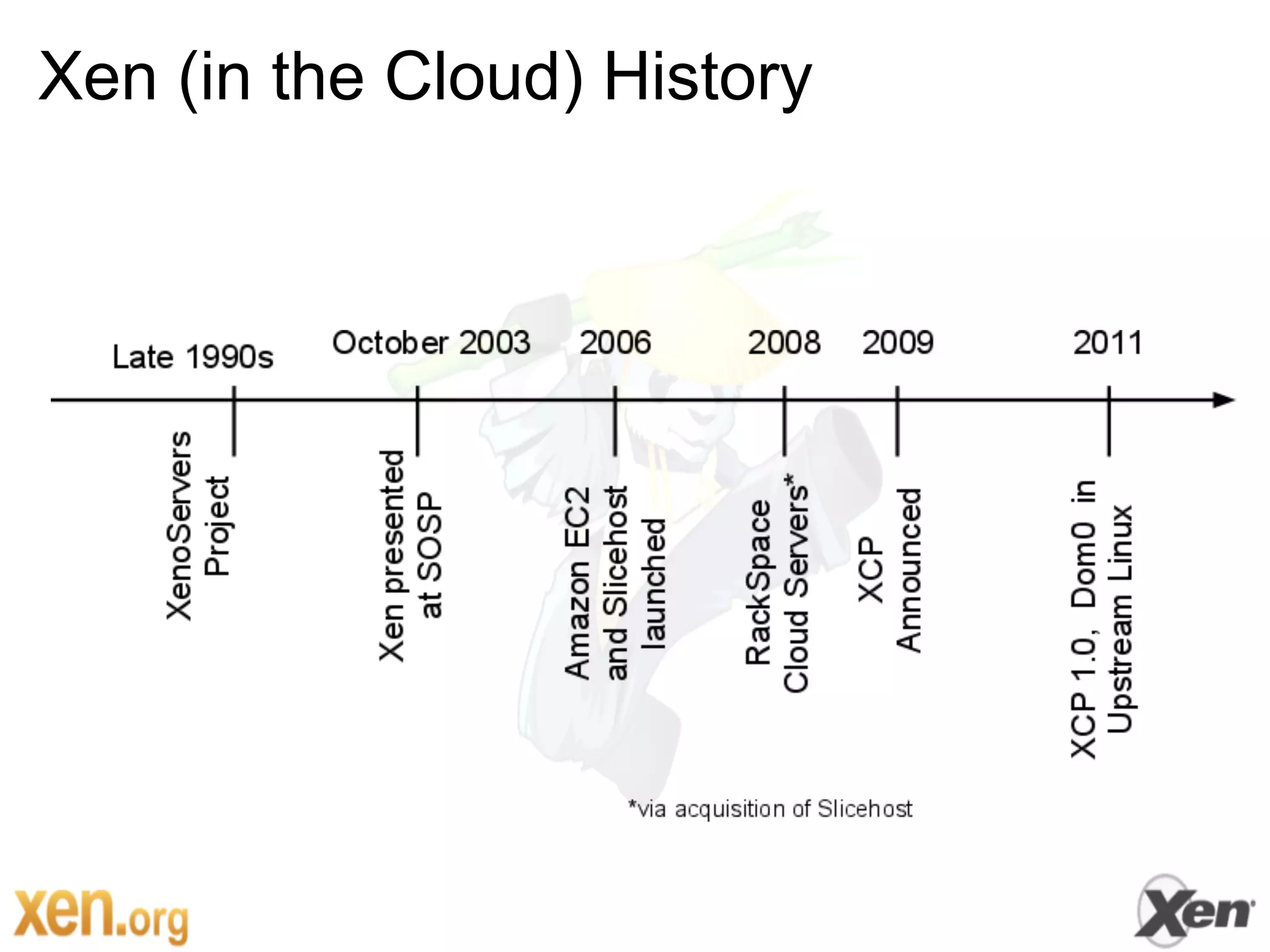
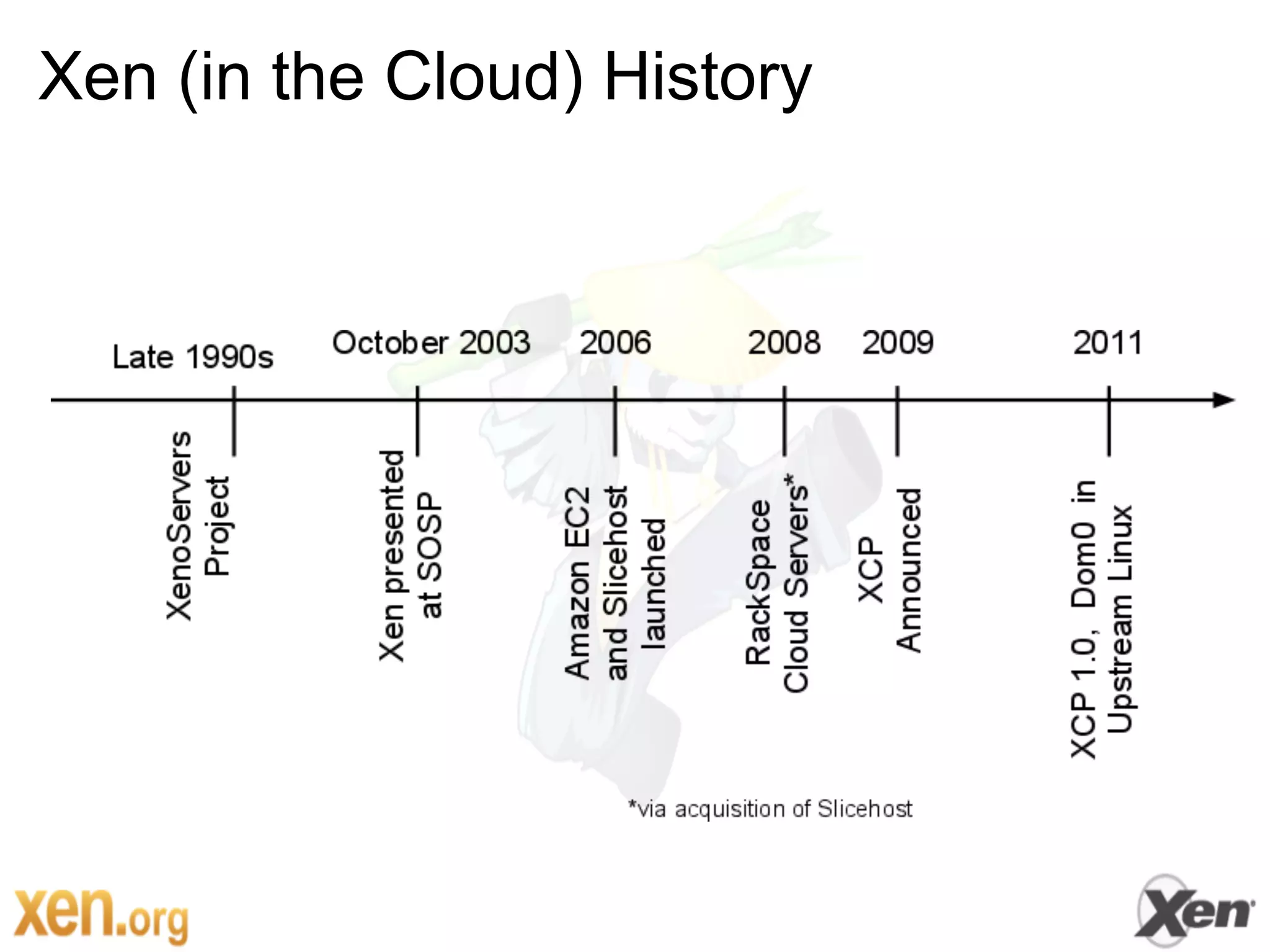
Xen (in the Cloud) History
Global Public Computing

"This dissertation proposes a new distributed computing
paradigm, termed global public computing, which allows any
user to run any code anywhere. Such platforms price
computing resources, and ultimately charge users for resources
consumed."
            - Evangelos Kotsovinos, PhD dissertation, 2004
Xen (in the Cloud) History
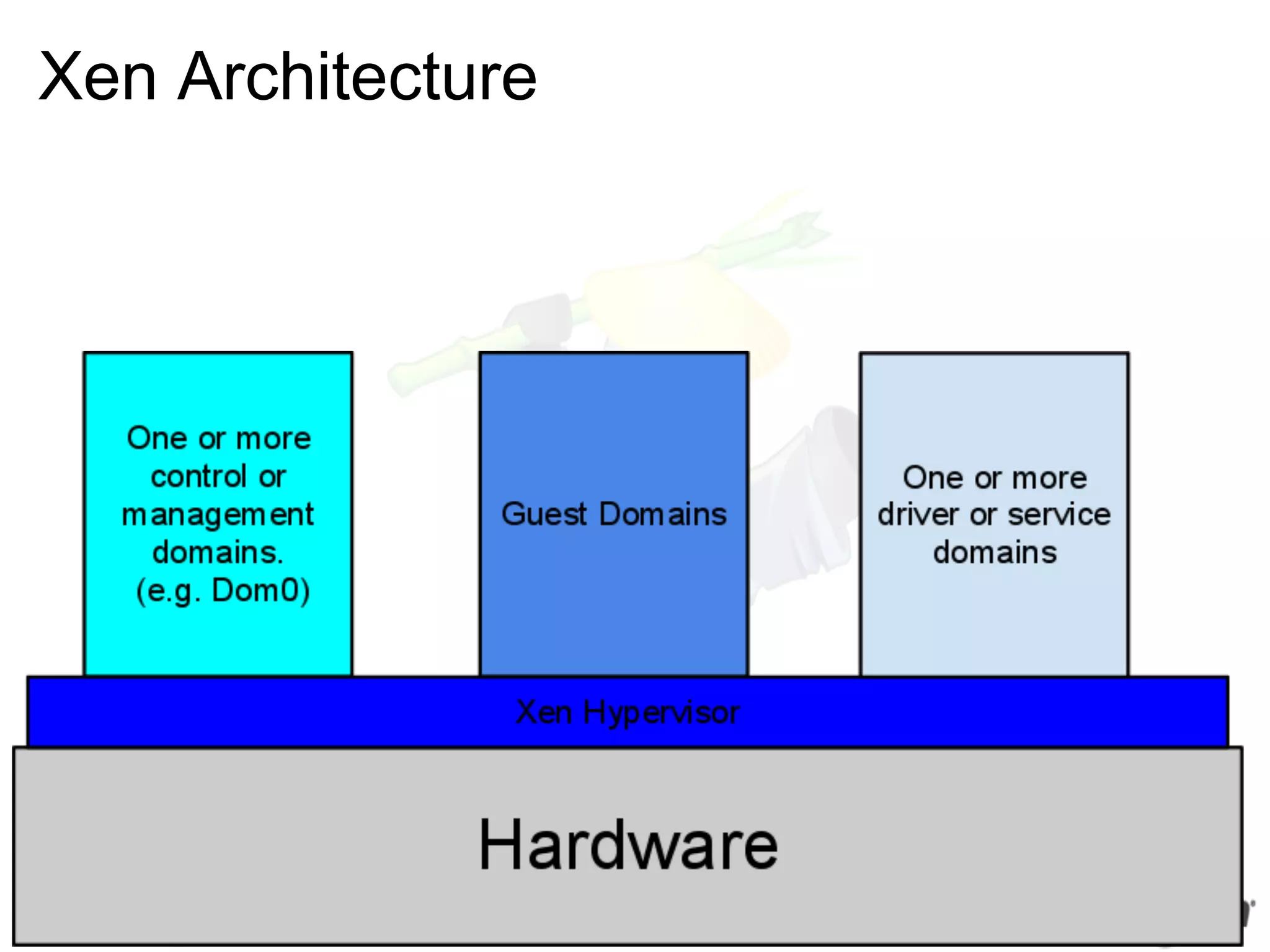
Xen Architecture
Xen Architectural Security Advantages

● Small, clean, disaggregatable trusted computing base
   ○ Xen hypervisor (guest scheduling, virtual hardware
     abstraction)
   ○ Management/control domain can be broken up into
     multiple domains
   ○ Driver domains can isolate hardware functions (e.g.
     network or storage driver domains)
● Well-defined trusted computing base
   ○ Need only trust hypervisor and compartmentalized
     management, control, and driver domains
   ○ No extra services in hypervisor layer
   ○ Full OS not needed (as is with type-2 hypervisor)
Xen Cloud Platform (XCP)

● Open source version of Citrix XenServer
   ○ http://wiki.xen.org/wiki/XCP/XenServer_Feature_Matrix

● Enterprise-ready server virtualization and cloud platform

● Built-in support and templates for Windows and Linux
  guests

● Datacenter and cloud-ready management API
   ○ XenAPI (XAPI) is fully open source
   ○ CloudStack and OpenStack integration

● Open vSwitch support built-in
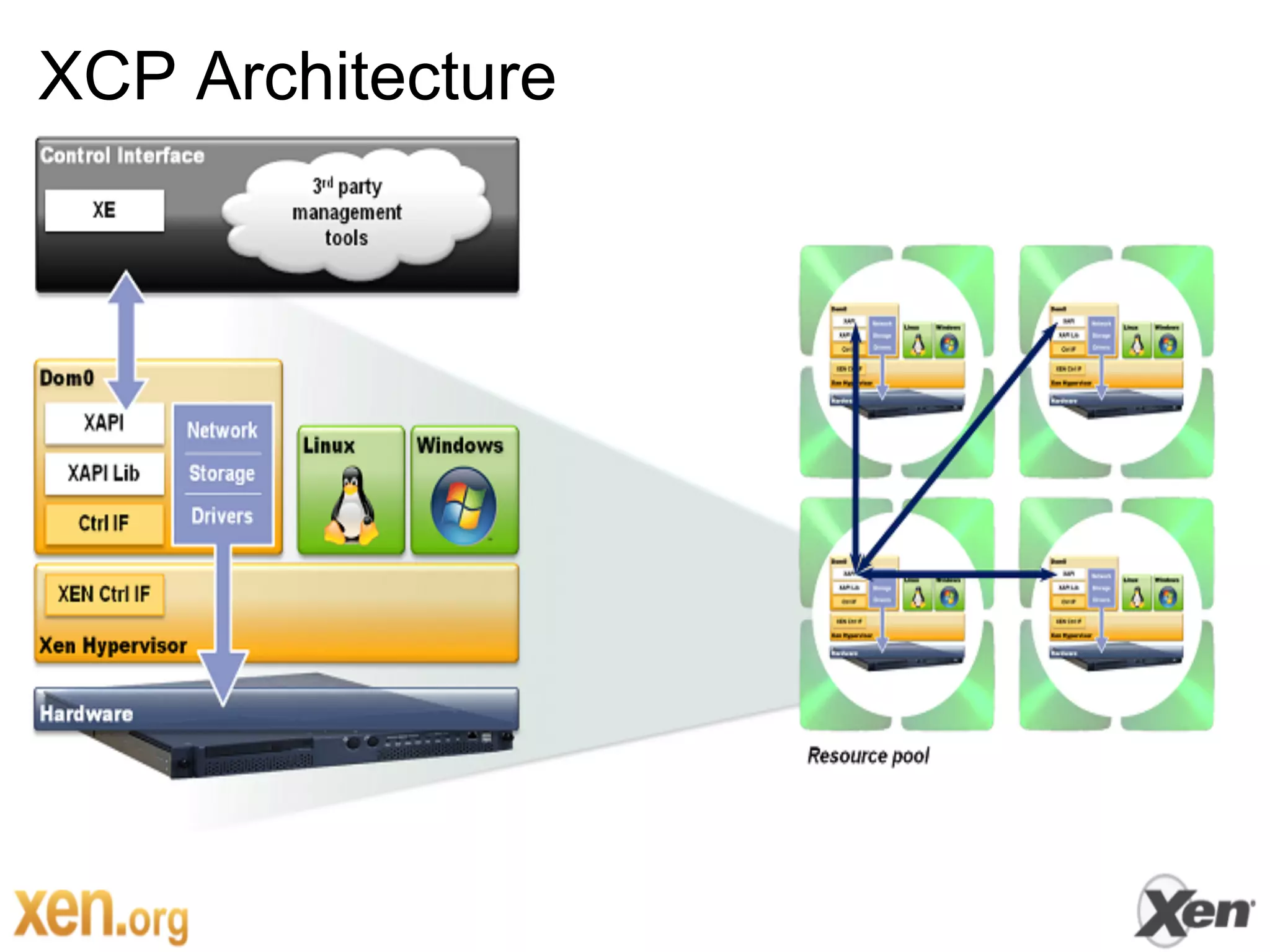
XCP Architecture
Xen API (XAPI)

● VM lifecycle: live snapshots, checkpoint, migration

● Resource pools: live relocation, auto configuration, disaster
  recovery

● Flexible storage, networking, and power management

● Event tracking: progress, notification

● Upgrade and patching capabilities

● Real-time performance monitoring and alerting
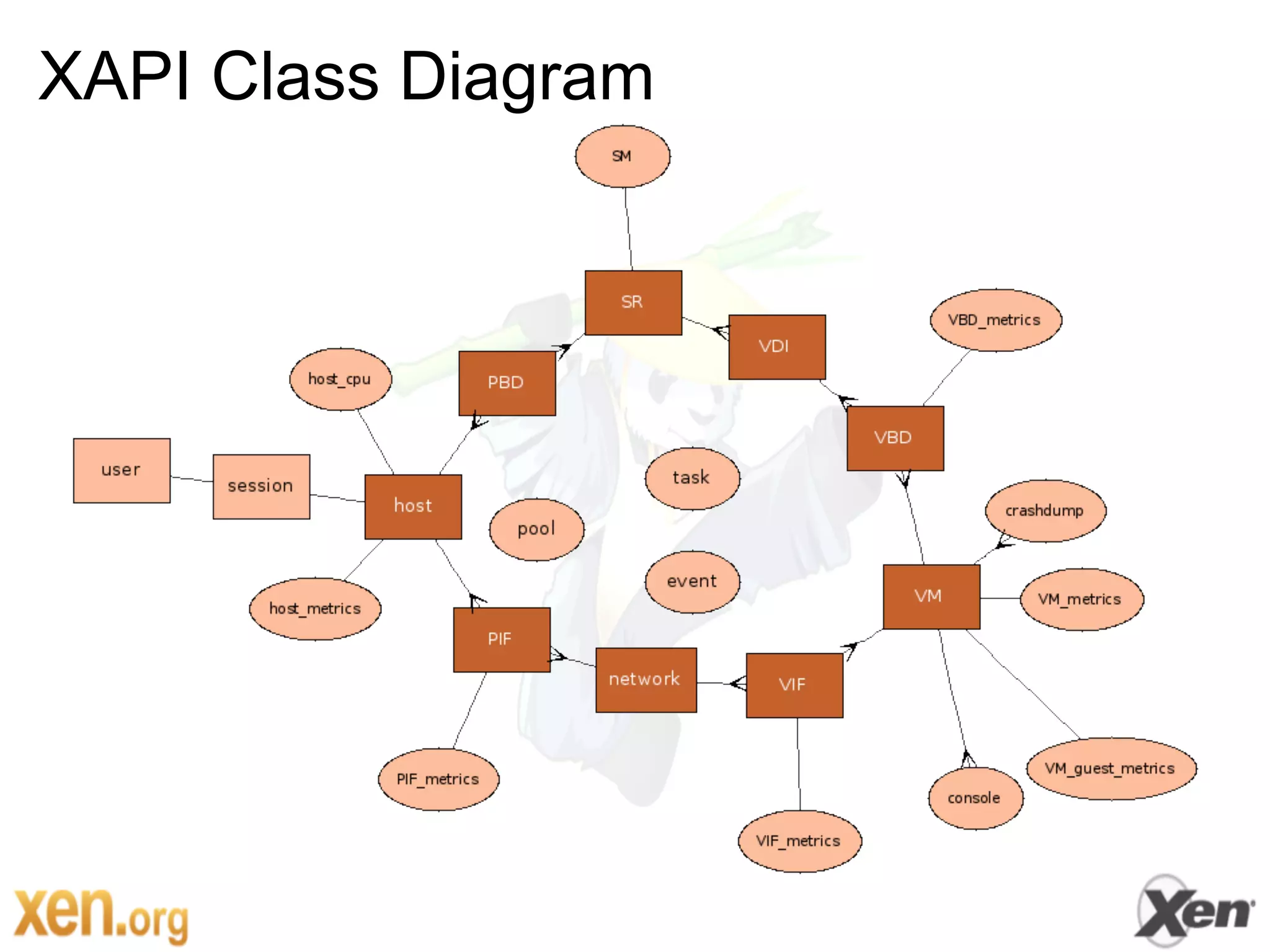
XAPI Class Diagram
Open vSwitch

● Software switch, similar to:
   ○ VMware vNetwork Distributed Switch
   ○ Cisco Nexus 1000V.

● Distribution agnostic. Plugs right into Linux kernel.

● Reuses existing Linux kernel networking subsystems.

● Backwards-compatible with traditional userspace tools.

● Free and Open Source http://openvswitch.org/
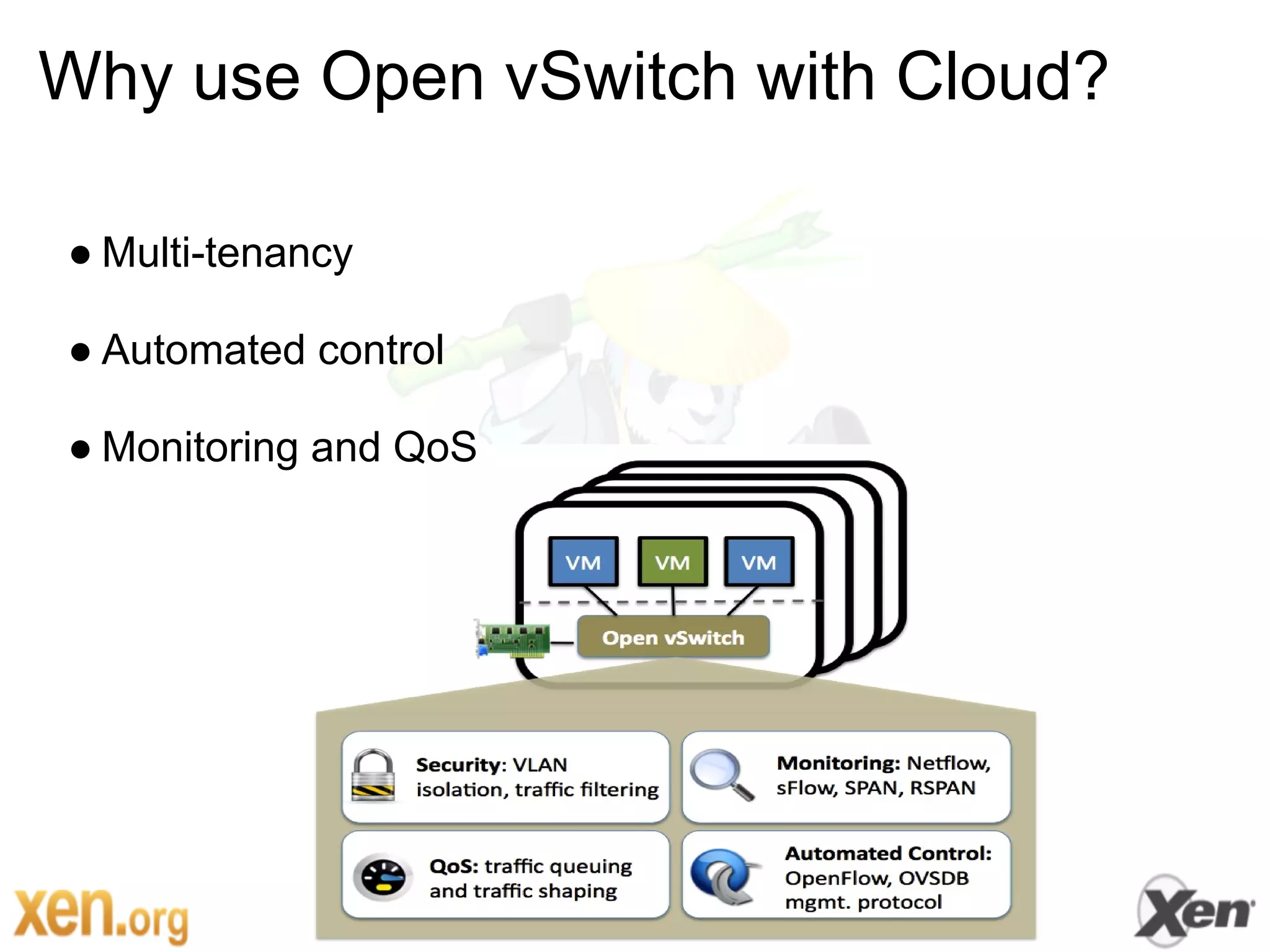
Why use Open vSwitch with Cloud?

● Multi-tenancy

● Automated control

● Monitoring and QoS
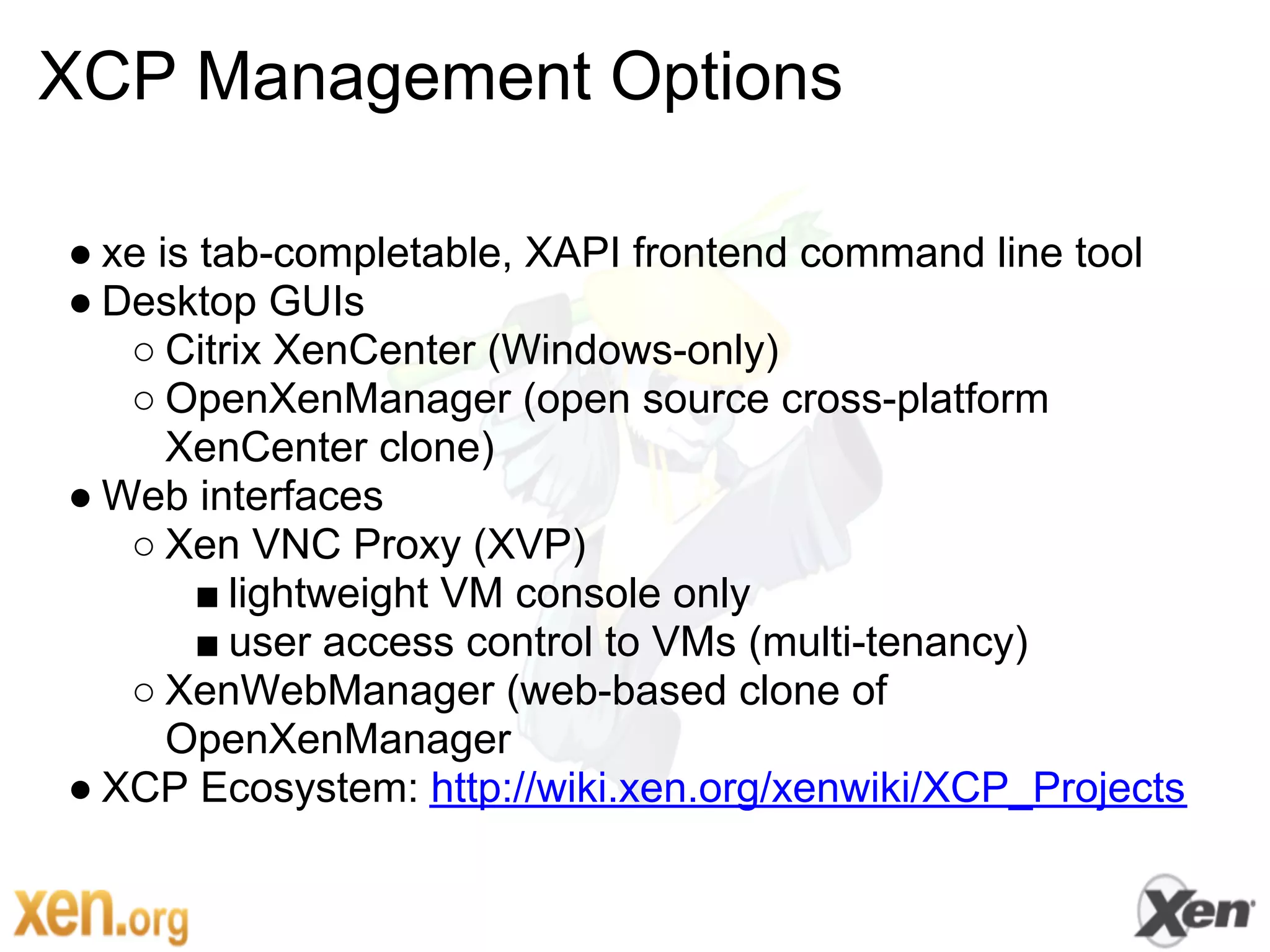
XCP Management Options

● xe is tab-completable, XAPI frontend command line tool
● Desktop GUIs
   ○ Citrix XenCenter (Windows-only)
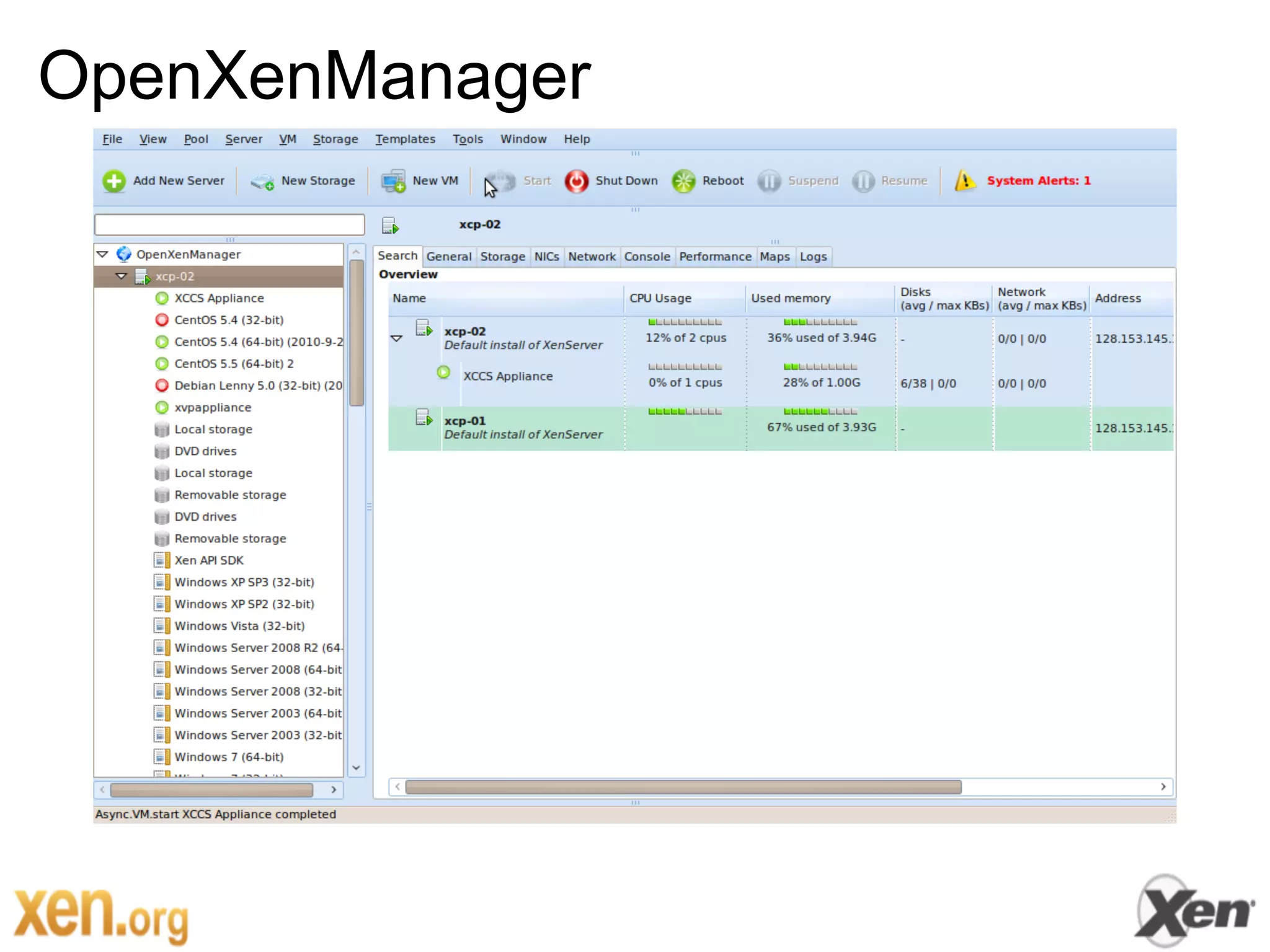
   ○ OpenXenManager (open source cross-platform
      XenCenter clone)
● Web interfaces
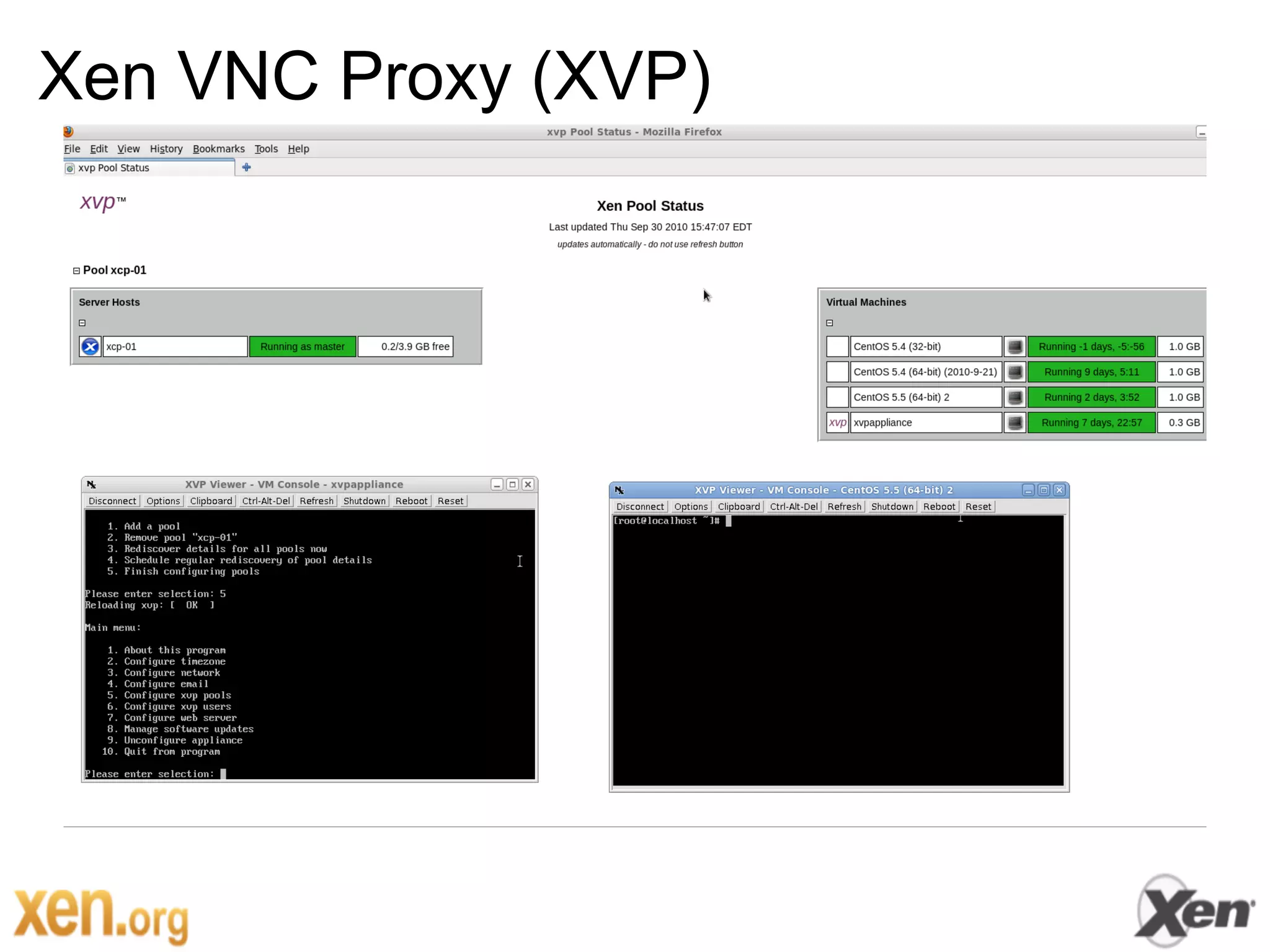
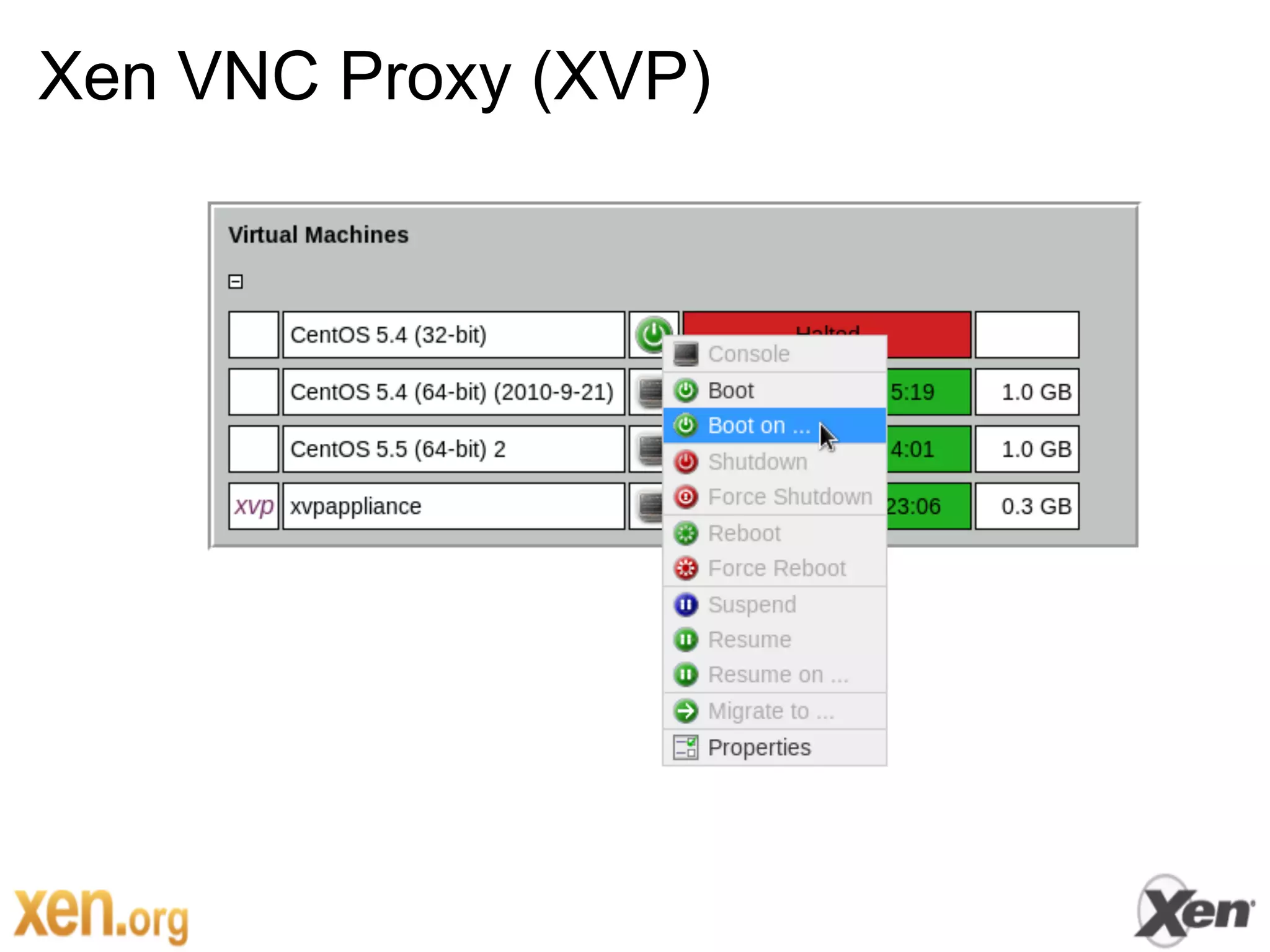
   ○ Xen VNC Proxy (XVP)
        ■ lightweight VM console only
        ■ user access control to VMs (multi-tenancy)
   ○ XenWebManager (web-based clone of
      OpenXenManager
● XCP Ecosystem: http://wiki.xen.org/xenwiki/XCP_Projects
OpenXenManager
Xen VNC Proxy (XVP)
Xen VNC Proxy (XVP)
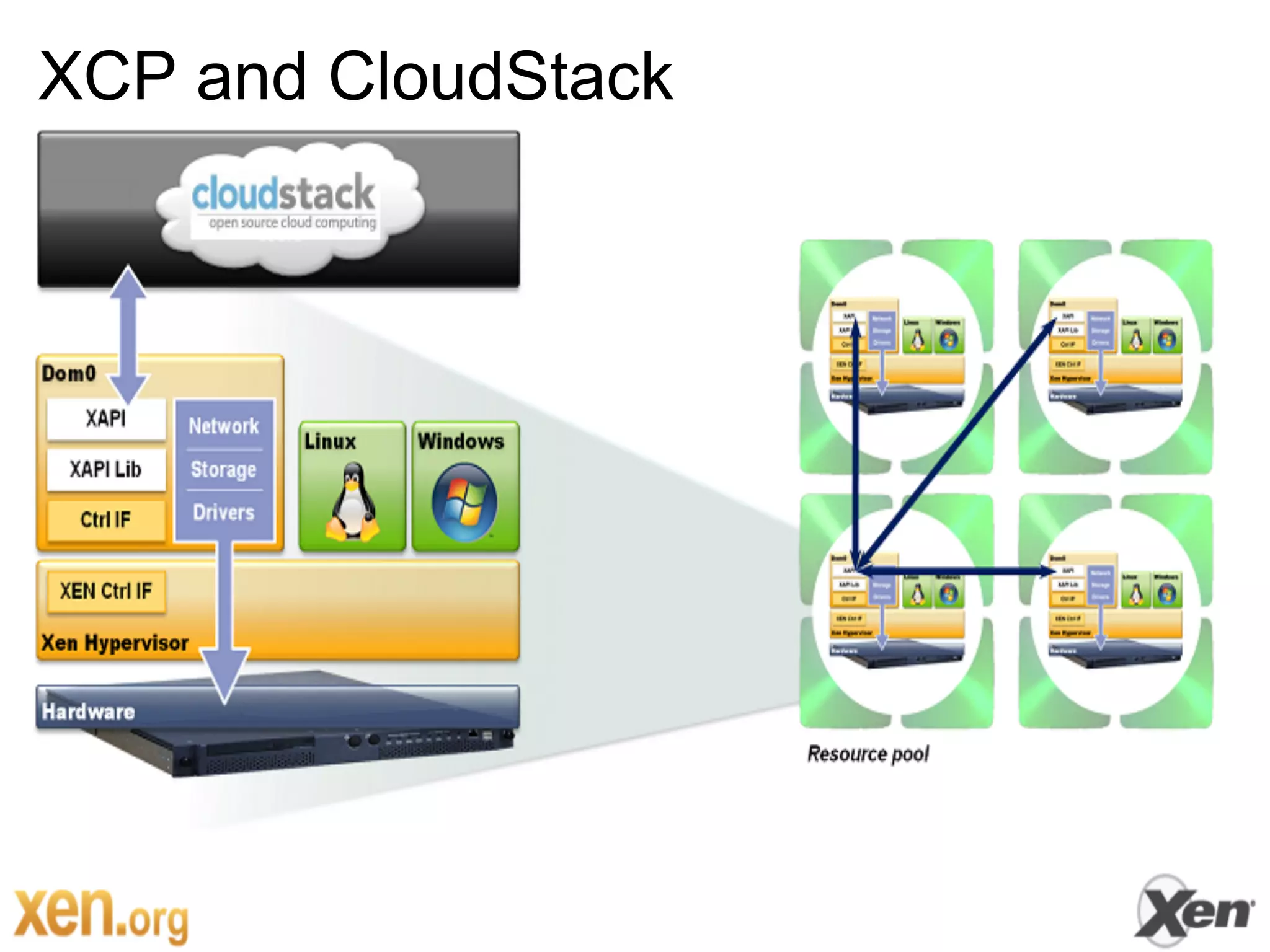
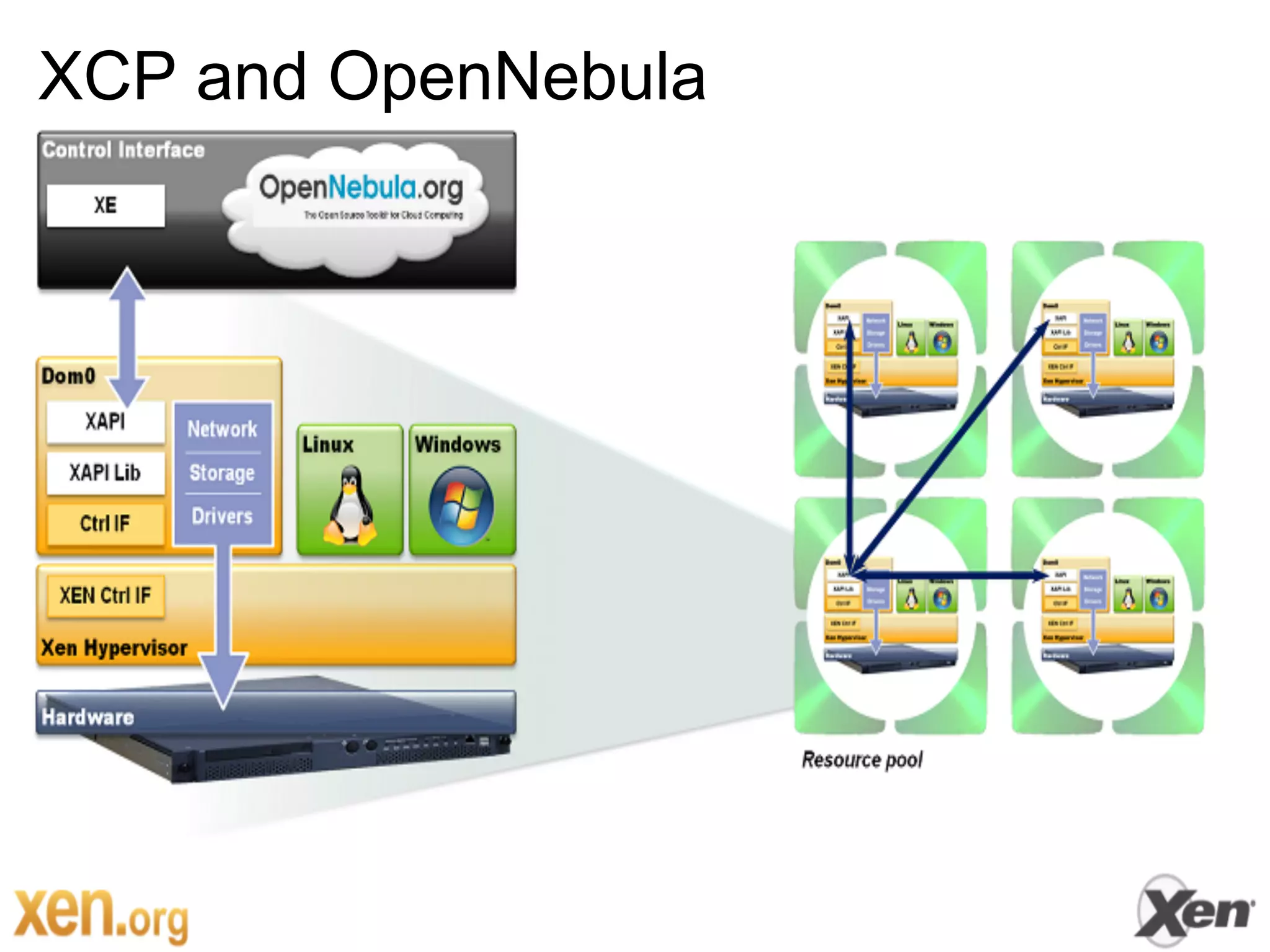
XCP and Cloud Orchestration Tools

● XCP and OpenStack

● XCP and CloudStack

● XCP and OpenNebula
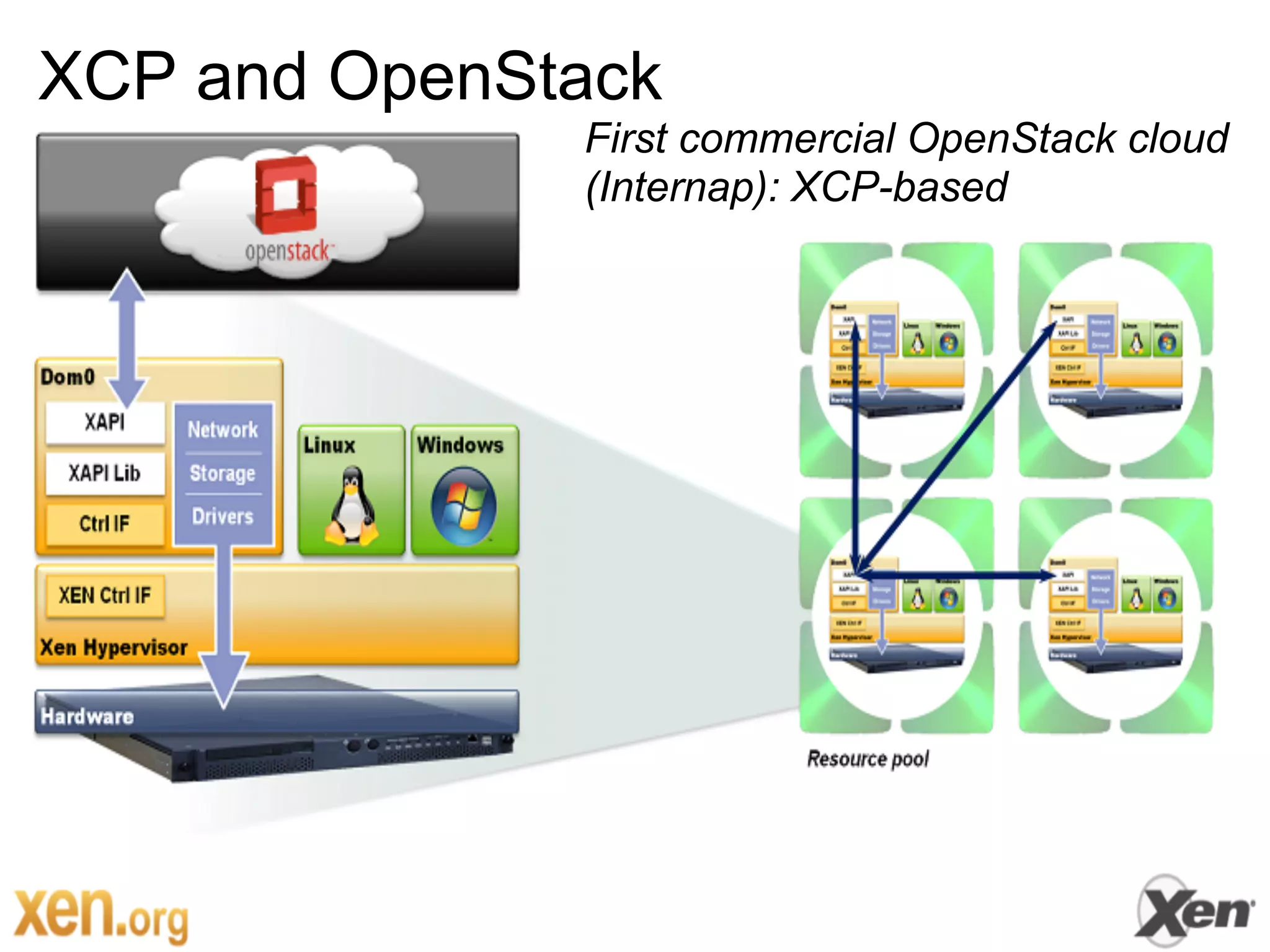
XCP and OpenStack
              First commercial OpenStack cloud
              (Internap): XCP-based
XCP and CloudStack
XCP and OpenNebula
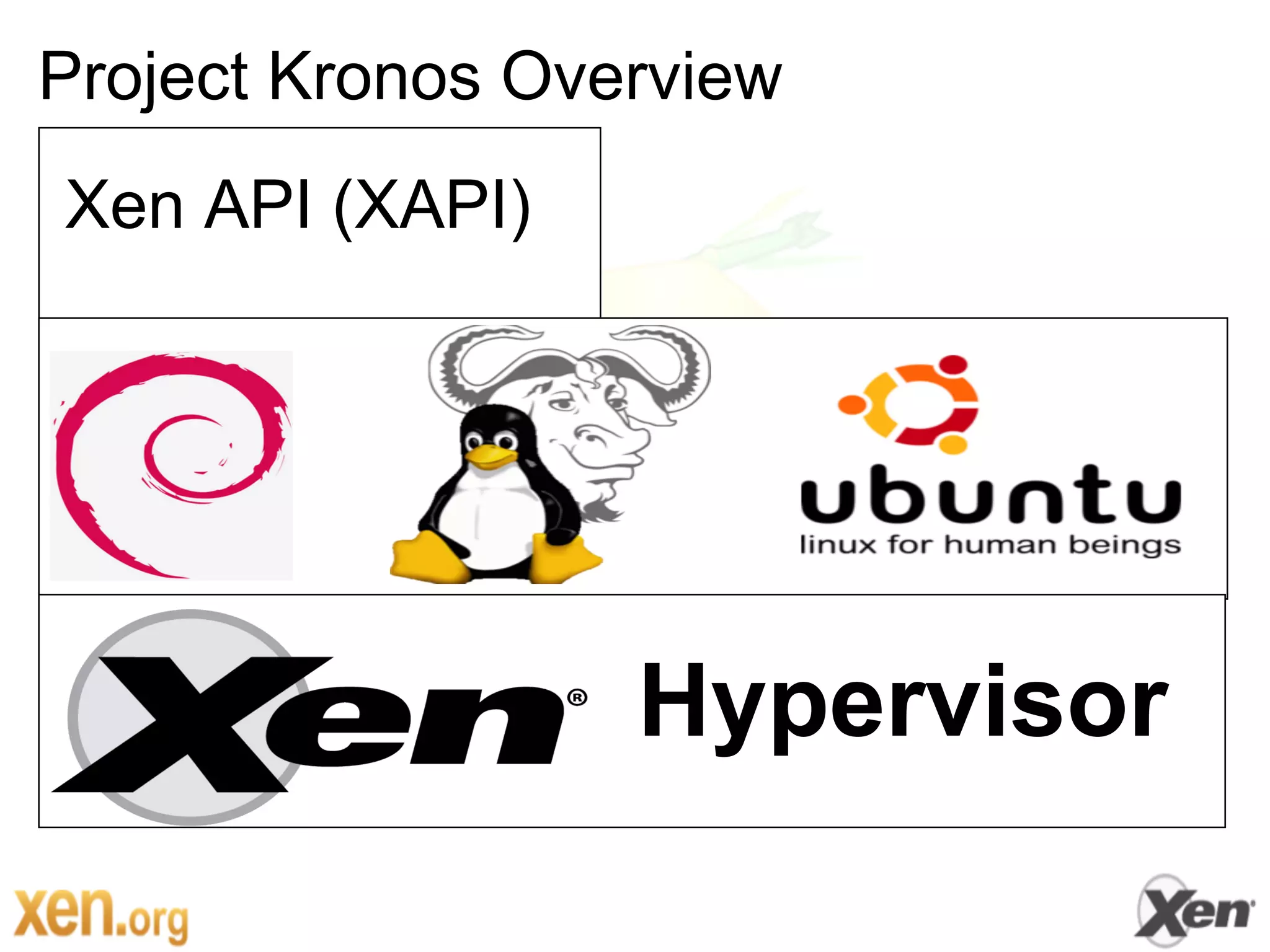
Project Kronos

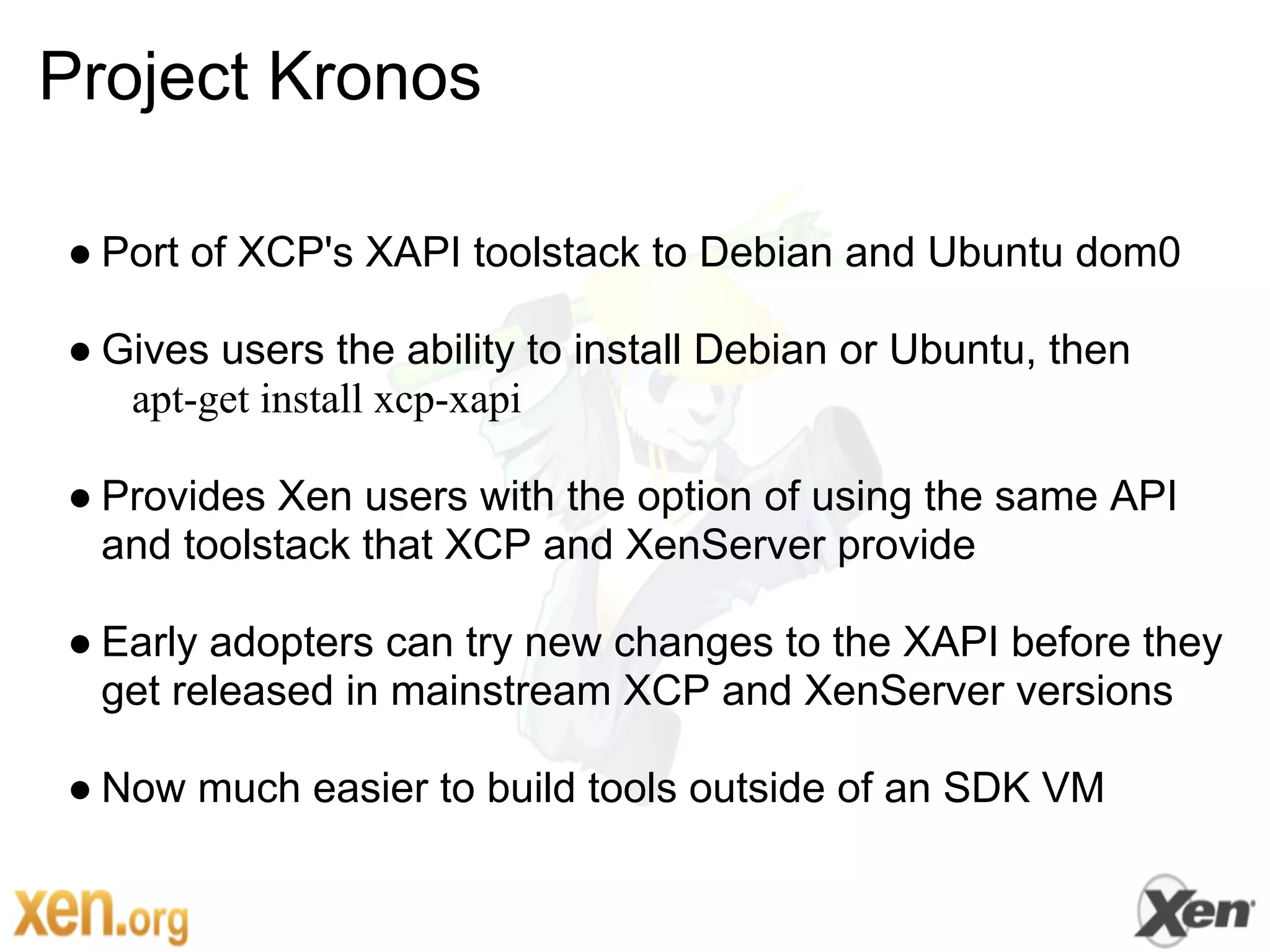
● Port of XCP's XAPI toolstack to Debian and Ubuntu dom0

● Gives users the ability to install Debian or Ubuntu, then
   apt-get install xcp-xapi

● Provides Xen users with the option of using the same API
  and toolstack that XCP and XenServer provide

● Early adopters can try new changes to the XAPI before they
  get released in mainstream XCP and XenServer versions

● Now much easier to build tools outside of an SDK VM
Project Kronos Overview
Xen API (XAPI)


                  Hypervisor
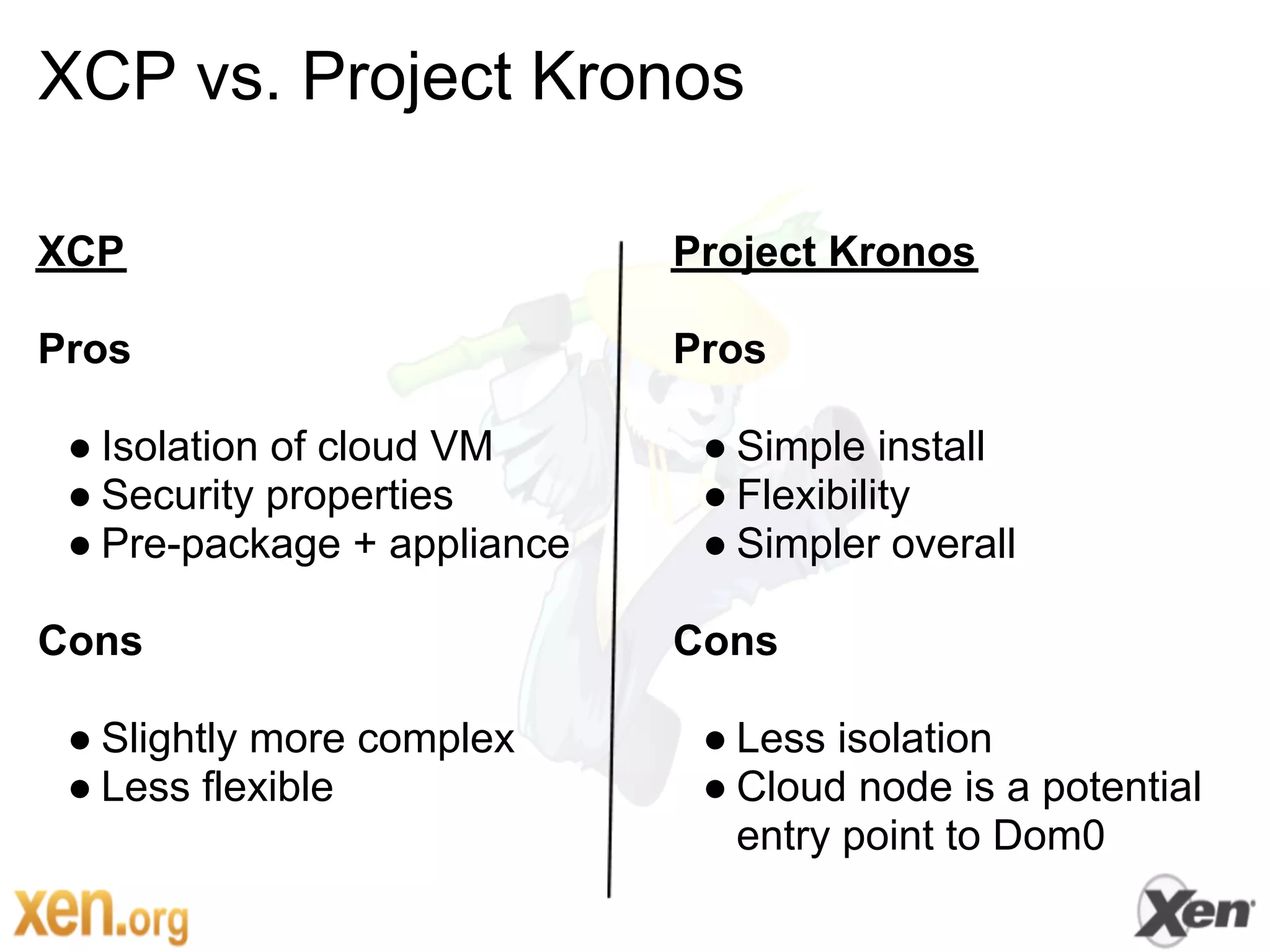
XCP vs. Project Kronos

XCP                          Project Kronos

Pros                         Pros

 ● Isolation of cloud VM      ● Simple install
 ● Security properties        ● Flexibility
 ● Pre-package + appliance    ● Simpler overall

Cons                         Cons

 ● Slightly more complex      ● Less isolation
 ● Less flexible              ● Cloud node is a potential
                                entry point to Dom0
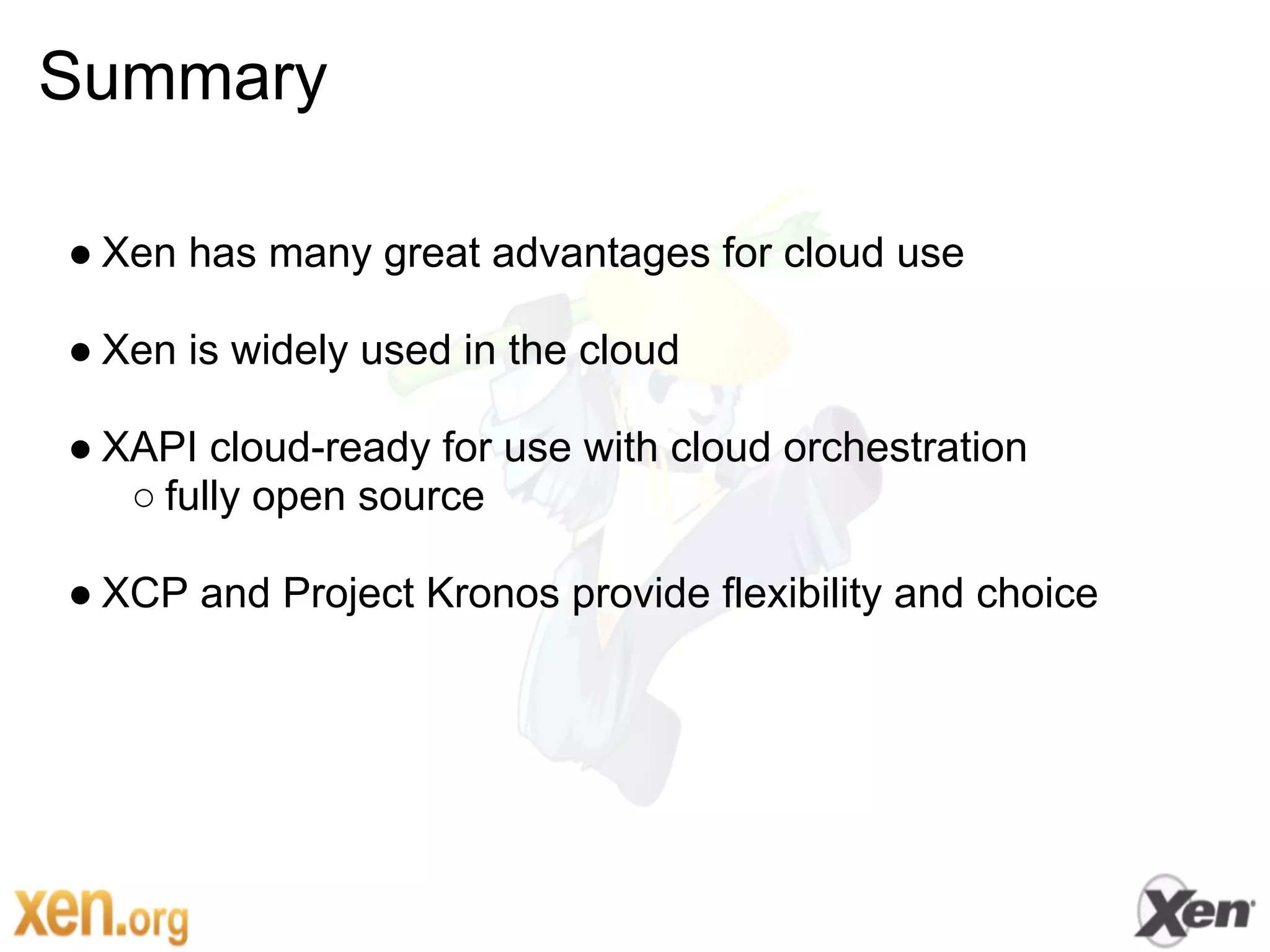
Summary

● Xen has many great advantages for cloud use

● Xen is widely used in the cloud

● XAPI cloud-ready for use with cloud orchestration
   ○ fully open source

● XCP and Project Kronos provide flexibility and choice
Thank You!

Why Choose Xen For Your Cloud?

  • 1.
    Why Choose XenFor Your Cloud? Todd Deshane Build an Open Source Cloud Day - Boston December 9, 2011
  • 2.
    Who am I? ●Xen.org Technology Evangelist ● Involvement with Xen started in 2003 as graduate student ● Co-author of research paper: ○ "Xen and the Art of Repeated Research" ○ USENIX 2004 ● Co-author of the "Running Xen" book ● XCP/cloud integrator and tester
  • 3.
    Outline ● Xen inthe cloud history ● Xen architecture and security benefits ● XCP ● Project Kronos
  • 4.
    Xen (in theCloud) History
  • 5.
    Global Public Computing "Thisdissertation proposes a new distributed computing paradigm, termed global public computing, which allows any user to run any code anywhere. Such platforms price computing resources, and ultimately charge users for resources consumed." - Evangelos Kotsovinos, PhD dissertation, 2004
  • 6.
    Xen (in theCloud) History
  • 7.
  • 8.
    Xen Architectural SecurityAdvantages ● Small, clean, disaggregatable trusted computing base ○ Xen hypervisor (guest scheduling, virtual hardware abstraction) ○ Management/control domain can be broken up into multiple domains ○ Driver domains can isolate hardware functions (e.g. network or storage driver domains) ● Well-defined trusted computing base ○ Need only trust hypervisor and compartmentalized management, control, and driver domains ○ No extra services in hypervisor layer ○ Full OS not needed (as is with type-2 hypervisor)
  • 9.
    Xen Cloud Platform(XCP) ● Open source version of Citrix XenServer ○ http://wiki.xen.org/wiki/XCP/XenServer_Feature_Matrix ● Enterprise-ready server virtualization and cloud platform ● Built-in support and templates for Windows and Linux guests ● Datacenter and cloud-ready management API ○ XenAPI (XAPI) is fully open source ○ CloudStack and OpenStack integration ● Open vSwitch support built-in
  • 10.
  • 11.
    Xen API (XAPI) ●VM lifecycle: live snapshots, checkpoint, migration ● Resource pools: live relocation, auto configuration, disaster recovery ● Flexible storage, networking, and power management ● Event tracking: progress, notification ● Upgrade and patching capabilities ● Real-time performance monitoring and alerting
  • 12.
  • 13.
    Open vSwitch ● Softwareswitch, similar to: ○ VMware vNetwork Distributed Switch ○ Cisco Nexus 1000V. ● Distribution agnostic. Plugs right into Linux kernel. ● Reuses existing Linux kernel networking subsystems. ● Backwards-compatible with traditional userspace tools. ● Free and Open Source http://openvswitch.org/
  • 14.
    Why use OpenvSwitch with Cloud? ● Multi-tenancy ● Automated control ● Monitoring and QoS
  • 15.
    XCP Management Options ●xe is tab-completable, XAPI frontend command line tool ● Desktop GUIs ○ Citrix XenCenter (Windows-only) ○ OpenXenManager (open source cross-platform XenCenter clone) ● Web interfaces ○ Xen VNC Proxy (XVP) ■ lightweight VM console only ■ user access control to VMs (multi-tenancy) ○ XenWebManager (web-based clone of OpenXenManager ● XCP Ecosystem: http://wiki.xen.org/xenwiki/XCP_Projects
  • 16.
  • 17.
  • 18.
  • 19.
    XCP and CloudOrchestration Tools ● XCP and OpenStack ● XCP and CloudStack ● XCP and OpenNebula
  • 20.
    XCP and OpenStack First commercial OpenStack cloud (Internap): XCP-based
  • 21.
  • 22.
  • 23.
    Project Kronos ● Portof XCP's XAPI toolstack to Debian and Ubuntu dom0 ● Gives users the ability to install Debian or Ubuntu, then apt-get install xcp-xapi ● Provides Xen users with the option of using the same API and toolstack that XCP and XenServer provide ● Early adopters can try new changes to the XAPI before they get released in mainstream XCP and XenServer versions ● Now much easier to build tools outside of an SDK VM
  • 24.
  • 25.
    Project Kronos Overview XenAPI (XAPI) Hypervisor
  • 26.
    XCP vs. ProjectKronos XCP Project Kronos Pros Pros ● Isolation of cloud VM ● Simple install ● Security properties ● Flexibility ● Pre-package + appliance ● Simpler overall Cons Cons ● Slightly more complex ● Less isolation ● Less flexible ● Cloud node is a potential entry point to Dom0
  • 27.
    Summary ● Xen hasmany great advantages for cloud use ● Xen is widely used in the cloud ● XAPI cloud-ready for use with cloud orchestration ○ fully open source ● XCP and Project Kronos provide flexibility and choice
  • 28.