Building a business case for internal communication - what the research says……. www.lcp.org.uk
2007/2008 Communication ROI study Effective employee communication is a leading indicator of financial performance  Firms that communicate effectively are four times as likely to report high levels of employee engagement as firms that communicate less effectively  Since the 2003/2004 study, there has been a decline in the number of companies that take the time to explain the reasons behind major decisions and give employees the opportunity to provide input into decisions that affect them and into how the work gets done.
2007/2008 Communication ROI study The six practices of high-performing companies: Focusing managers and other employees on customer needs  Engaging employees in running the business  Helping managers communicate effectively  Leveraging the talents of internal communicators to manage change effectively  Measuring the impact of employee communication  Branding the employee experience  Watson Wyatt
2007/2008 Communication ROI study " Top-performing companies treat communication as a key business driver. They use communication to educate managers and engage employees in the business by providing line-of-sight to customers’ needs and business goals. "  Kathryn Yates, Watson Wyatt
Top seven macro trends in IC Democratisation of information  Strategic imperative: From information to influence  Employee engagement  Demonstrating ROI  Globalisation  Simplicity  The emerging trend: Personalisation Stromberg Consulting  2006
‘ Research shows that messages from leaders, and most importantly supervisors, are more important to employees than those that originate from the internal communications department. ’ Stromberg Consulting, 2006
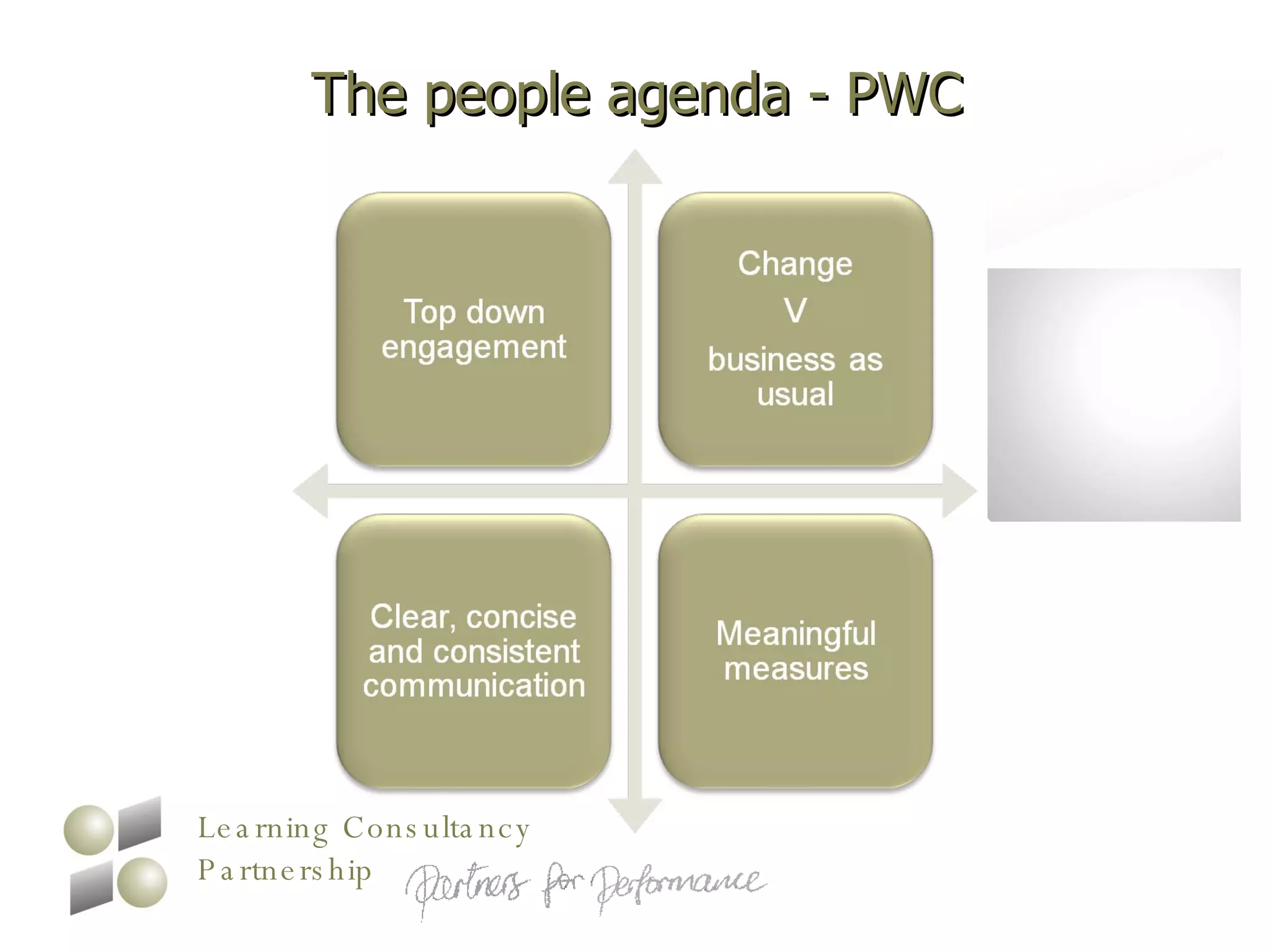
The people agenda - PWC
The people agenda - PWC “ The successful implementation of change is dependant on the way that people understand their roles in a broader strategic context; how closely aligned they are to a shared vision; and their ability to see how their actions and decisions impact in a wider context. "  PricewaterhouseCoopers
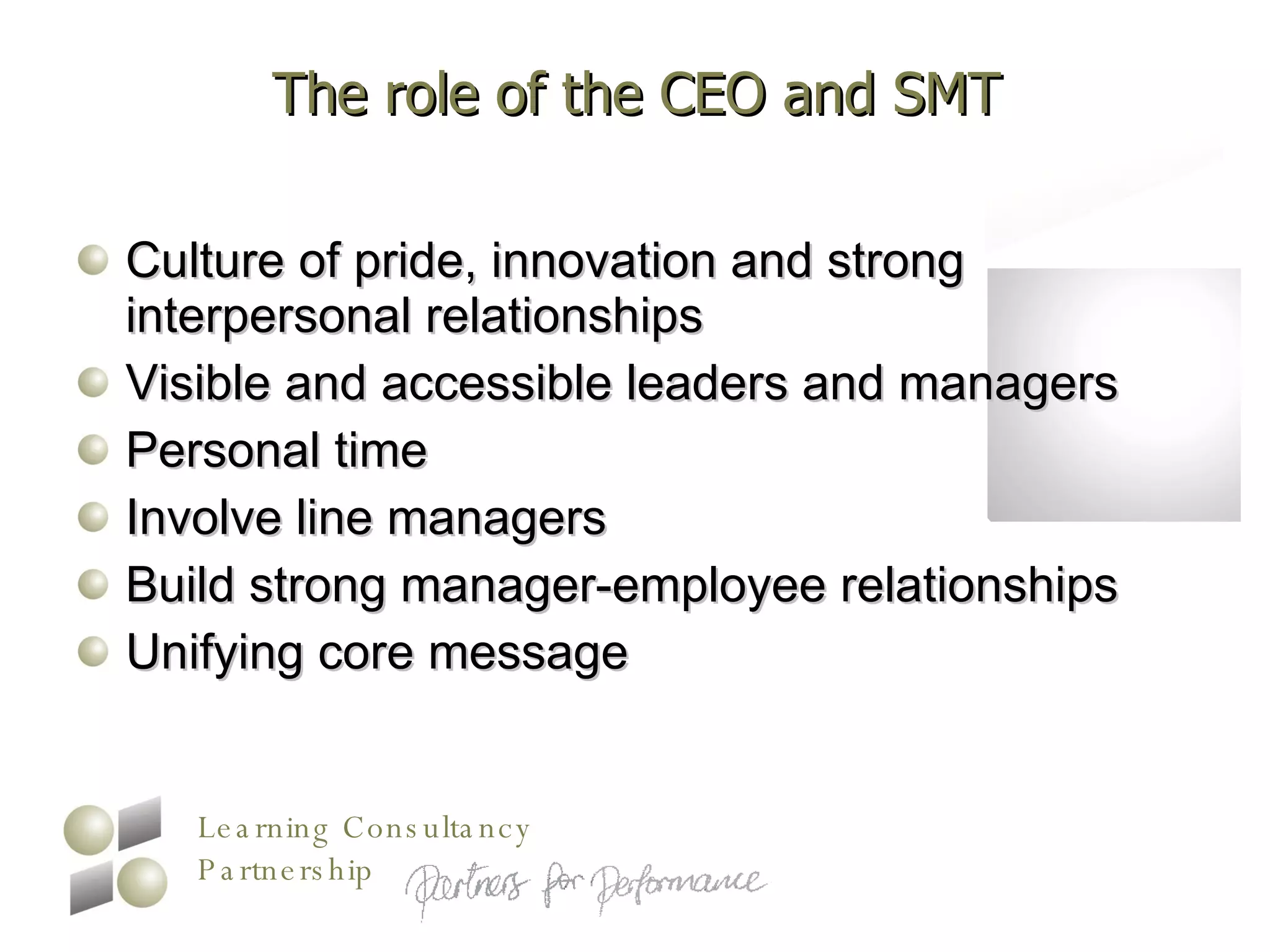
The role of the CEO and SMT Culture of pride, innovation and strong interpersonal relationships Visible and accessible leaders and managers Personal time Involve line managers Build strong manager-employee relationships Unifying core message
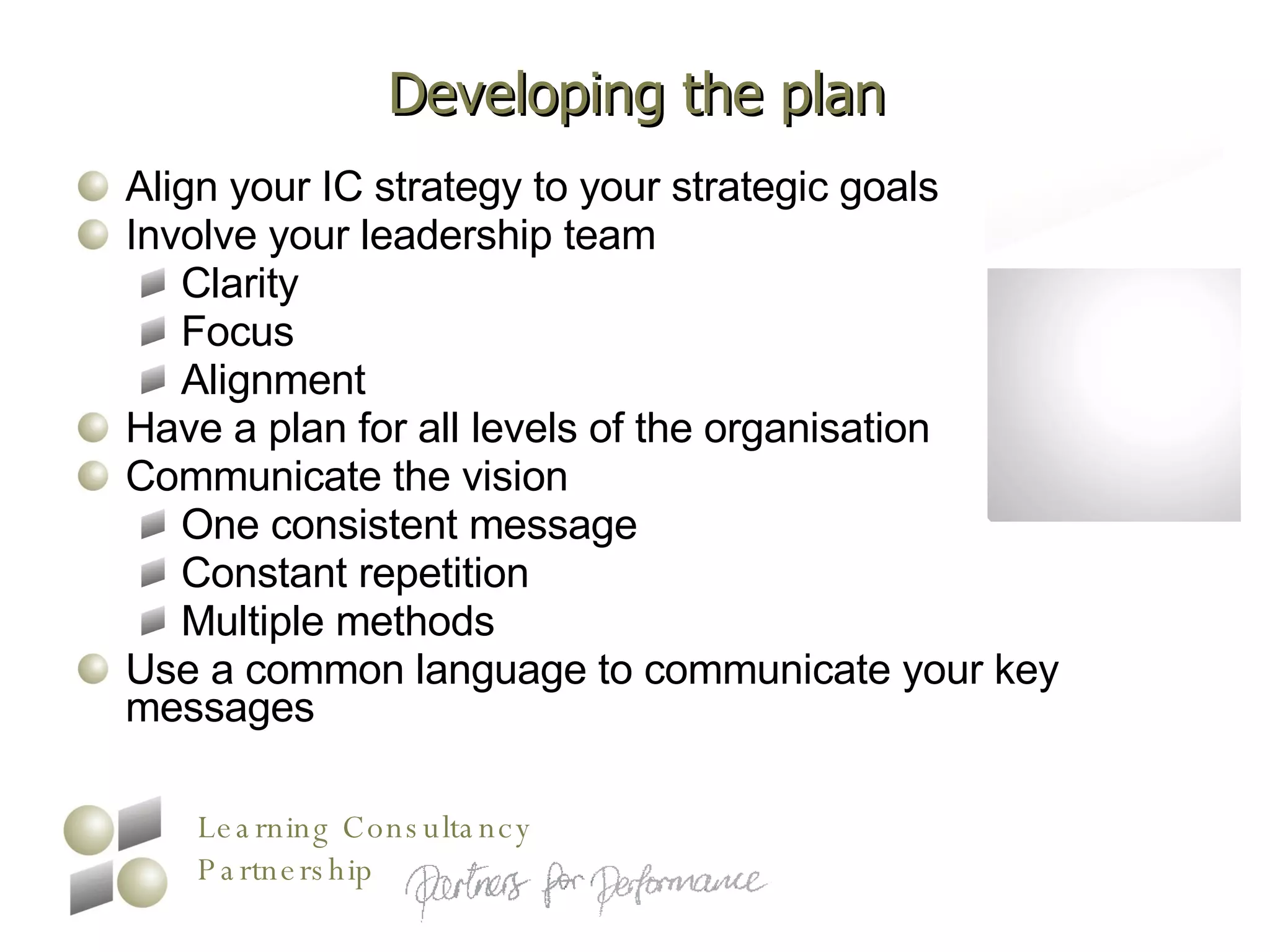
Developing the plan Align your IC strategy to your strategic goals Involve your leadership team Clarity Focus Alignment Have a plan for all levels of the organisation Communicate the vision One consistent message Constant repetition Multiple methods Use a common language to communicate your key messages
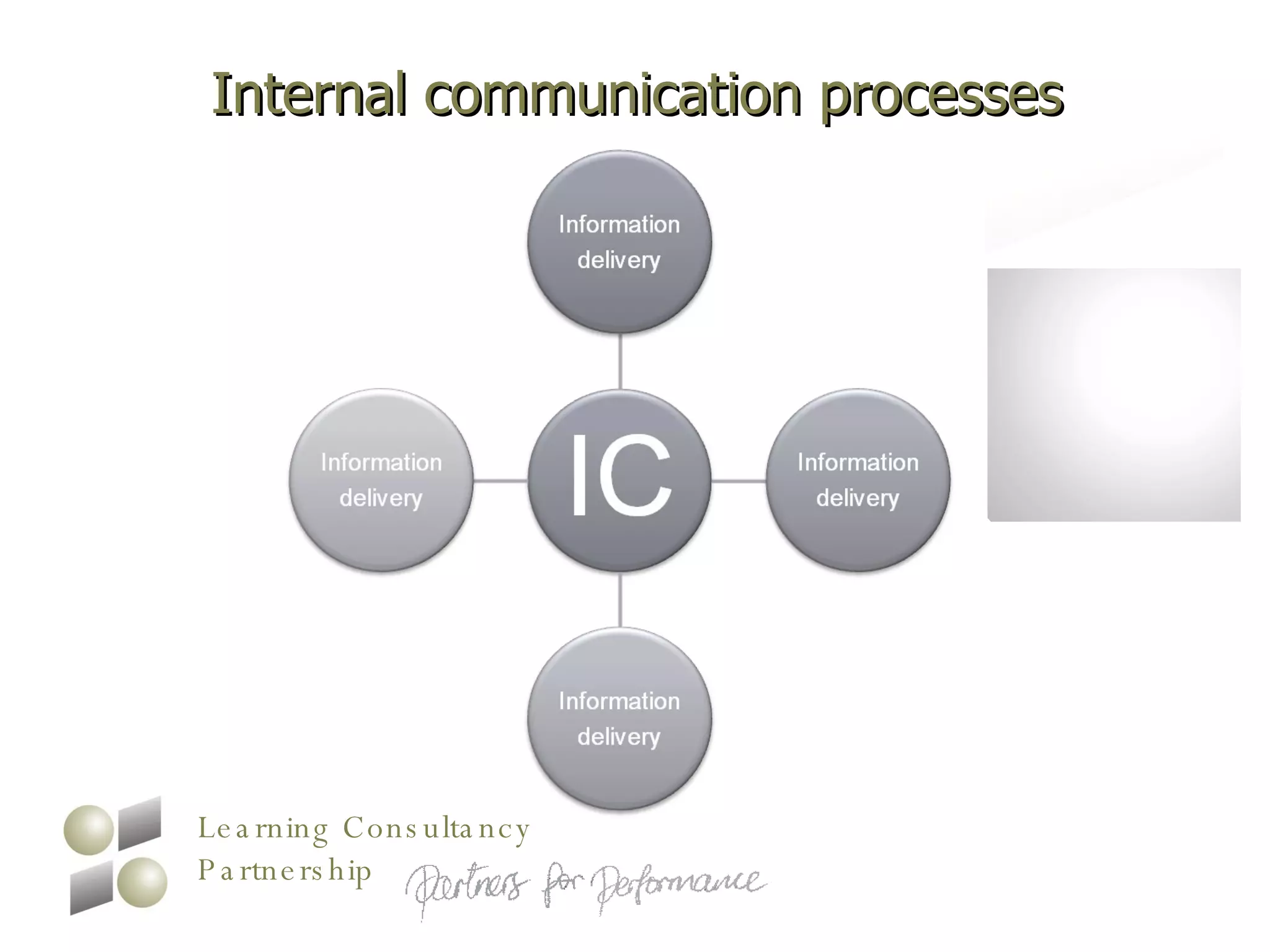
Internal communication processes

A Business Case for Internal Communication

  • 1.
    Building a businesscase for internal communication - what the research says……. www.lcp.org.uk
  • 2.
    2007/2008 Communication ROIstudy Effective employee communication is a leading indicator of financial performance Firms that communicate effectively are four times as likely to report high levels of employee engagement as firms that communicate less effectively Since the 2003/2004 study, there has been a decline in the number of companies that take the time to explain the reasons behind major decisions and give employees the opportunity to provide input into decisions that affect them and into how the work gets done.
  • 3.
    2007/2008 Communication ROIstudy The six practices of high-performing companies: Focusing managers and other employees on customer needs Engaging employees in running the business Helping managers communicate effectively Leveraging the talents of internal communicators to manage change effectively Measuring the impact of employee communication Branding the employee experience Watson Wyatt
  • 4.
    2007/2008 Communication ROIstudy " Top-performing companies treat communication as a key business driver. They use communication to educate managers and engage employees in the business by providing line-of-sight to customers’ needs and business goals. " Kathryn Yates, Watson Wyatt
  • 5.
    Top seven macrotrends in IC Democratisation of information Strategic imperative: From information to influence Employee engagement Demonstrating ROI Globalisation Simplicity The emerging trend: Personalisation Stromberg Consulting 2006
  • 6.
    ‘ Research showsthat messages from leaders, and most importantly supervisors, are more important to employees than those that originate from the internal communications department. ’ Stromberg Consulting, 2006
  • 7.
  • 8.
    The people agenda- PWC “ The successful implementation of change is dependant on the way that people understand their roles in a broader strategic context; how closely aligned they are to a shared vision; and their ability to see how their actions and decisions impact in a wider context. " PricewaterhouseCoopers
  • 9.
    The role ofthe CEO and SMT Culture of pride, innovation and strong interpersonal relationships Visible and accessible leaders and managers Personal time Involve line managers Build strong manager-employee relationships Unifying core message
  • 10.
    Developing the planAlign your IC strategy to your strategic goals Involve your leadership team Clarity Focus Alignment Have a plan for all levels of the organisation Communicate the vision One consistent message Constant repetition Multiple methods Use a common language to communicate your key messages
  • 11.