Deliverable One Larry Beck, Ph.D. Recreation and Tourism Management RTM 305 and 404
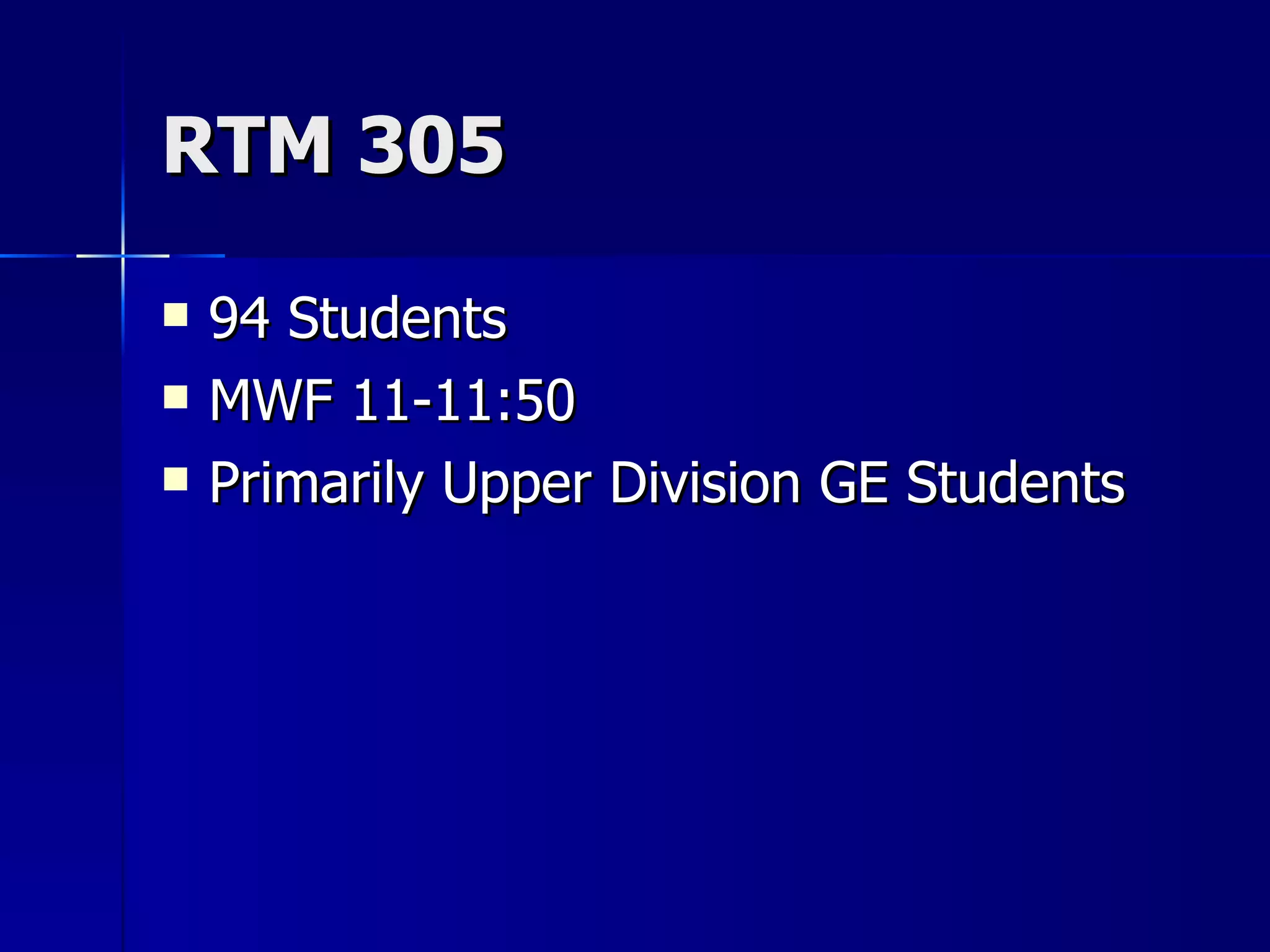
RTM 305 94 Students MWF 11-11:50 Primarily Upper Division GE Students
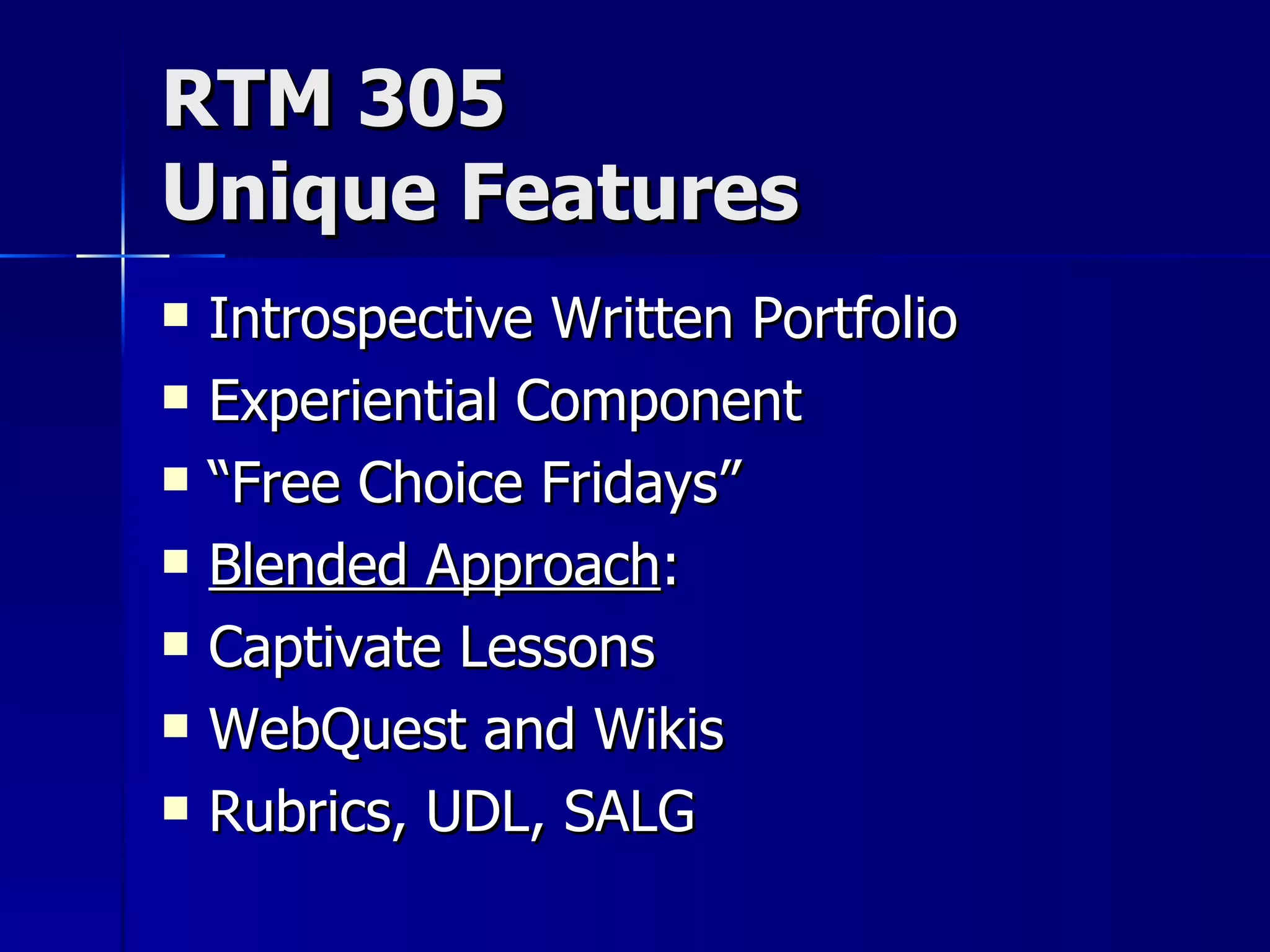
RTM 305 Unique Features Introspective Written Portfolio Experiential Component “ Free Choice Fridays” Blended Approach : Captivate Lessons WebQuest and Wikis Rubrics, UDL, SALG
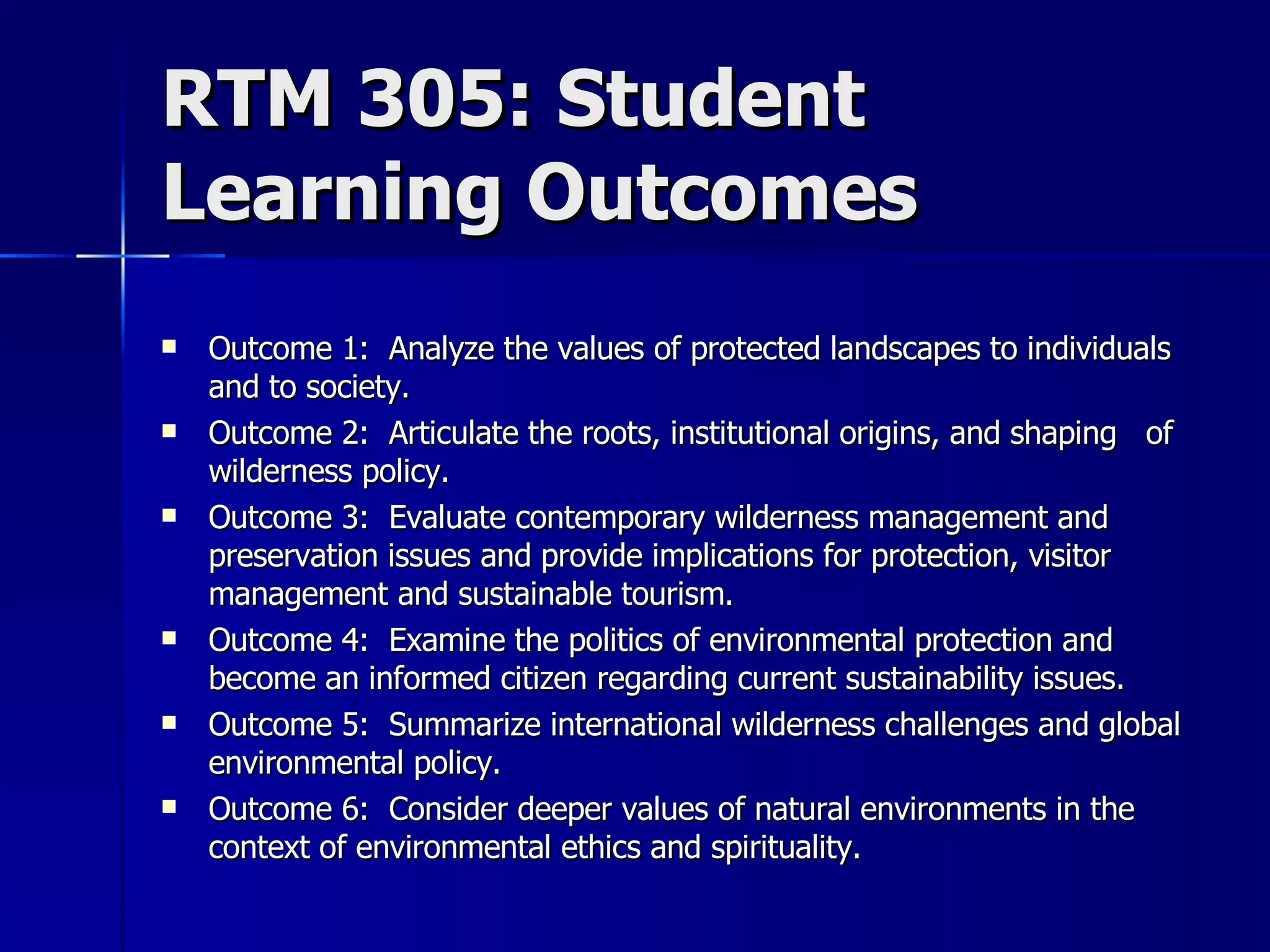
RTM 305: Student Learning Outcomes Outcome 1:  Analyze the values of protected landscapes to individuals and to society. Outcome 2:  Articulate the roots, institutional origins, and shaping  of wilderness policy. Outcome 3:  Evaluate contemporary wilderness management and preservation issues and provide implications for protection, visitor management and sustainable tourism. Outcome 4:  Examine the politics of environmental protection and become an informed citizen regarding current sustainability issues. Outcome 5:  Summarize international wilderness challenges and global environmental policy. Outcome 6:  Consider deeper values of natural environments in the context of environmental ethics and spirituality.
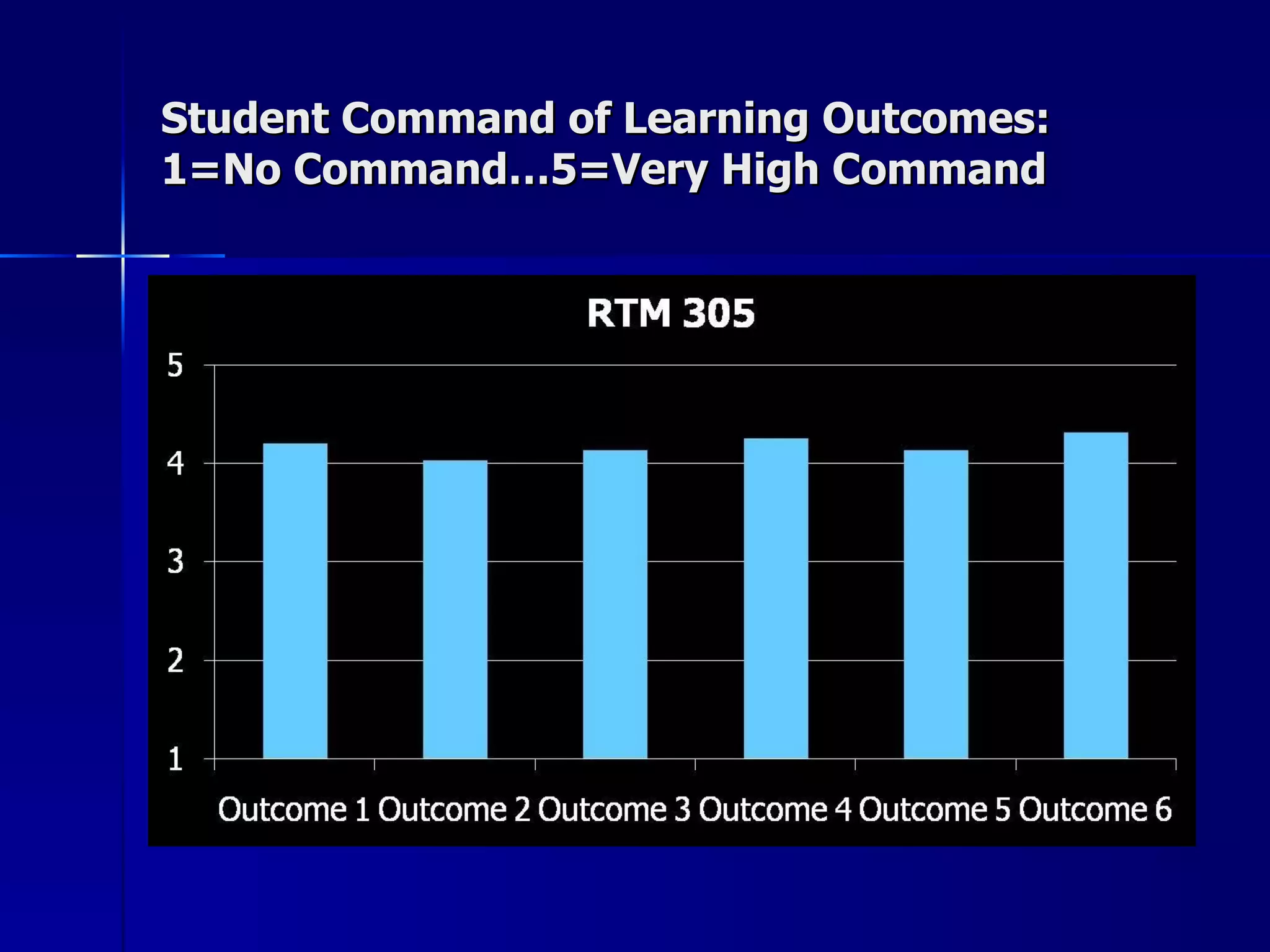
Student Command of Learning Outcomes: 1=No Command…5=Very High Command
RTM 404 63 Students Wednesday, 7-9:40 p.m. Primarily Upper Division GE Students
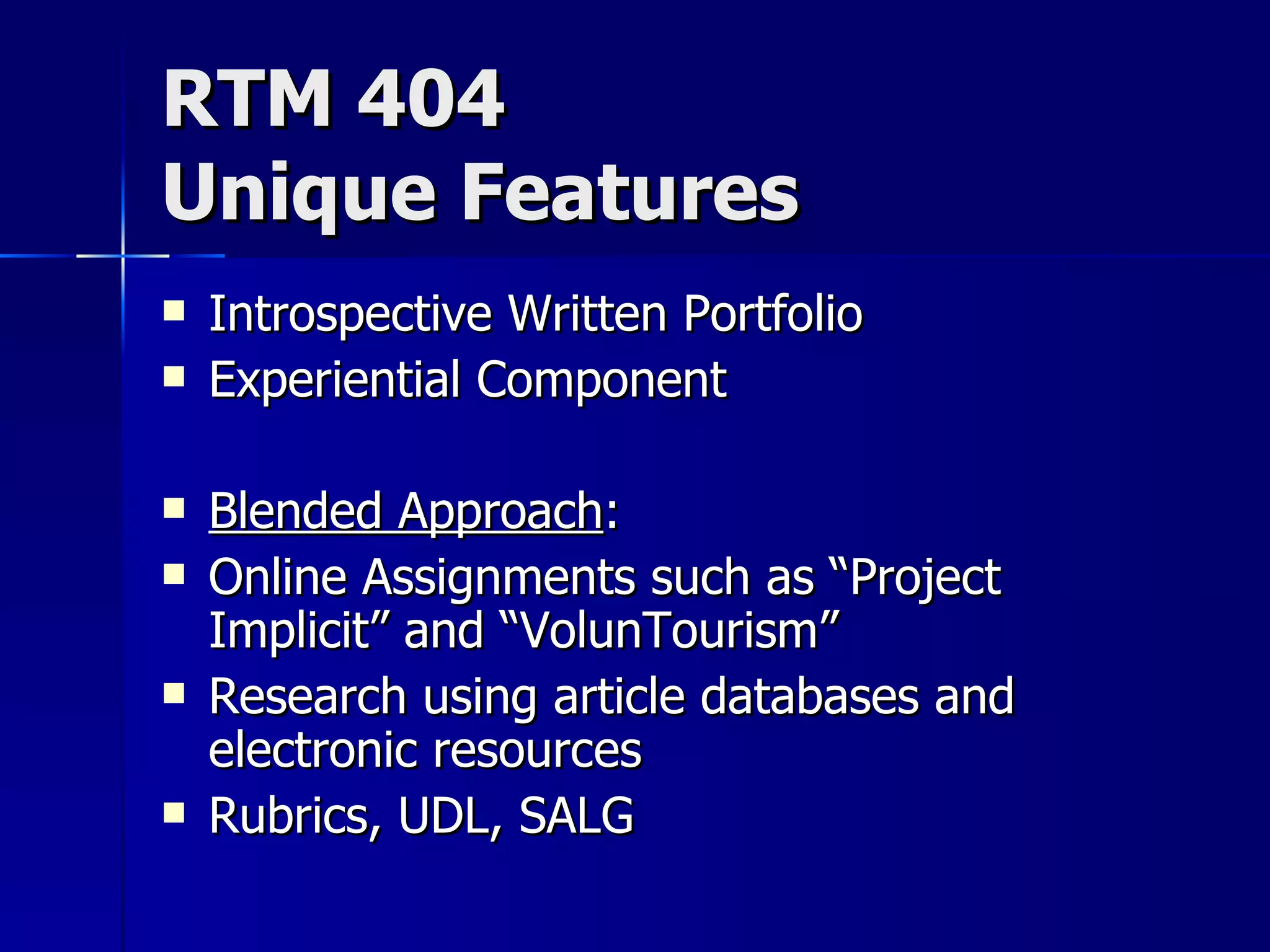
RTM 404 Unique Features Introspective Written Portfolio Experiential Component Blended Approach : Online Assignments such as “Project Implicit” and “VolunTourism” Research using article databases and electronic resources  Rubrics, UDL, SALG
Student Comment: Cultural Experience at Rancho La Mentada “ Instead of staying at a hotel, I stayed at a family ranch in cabins, very far away from the city.  Instead of eating at a restaurant, I had homemade traditional meals.  Instead of visiting museums, I learned first hand about the culture from the Kumeyaay [themselves].  Instead of going on a city tour, I went on a tour of the vast land around the ranch.  Instead of taking [another] form of transportation, I went on horseback!”
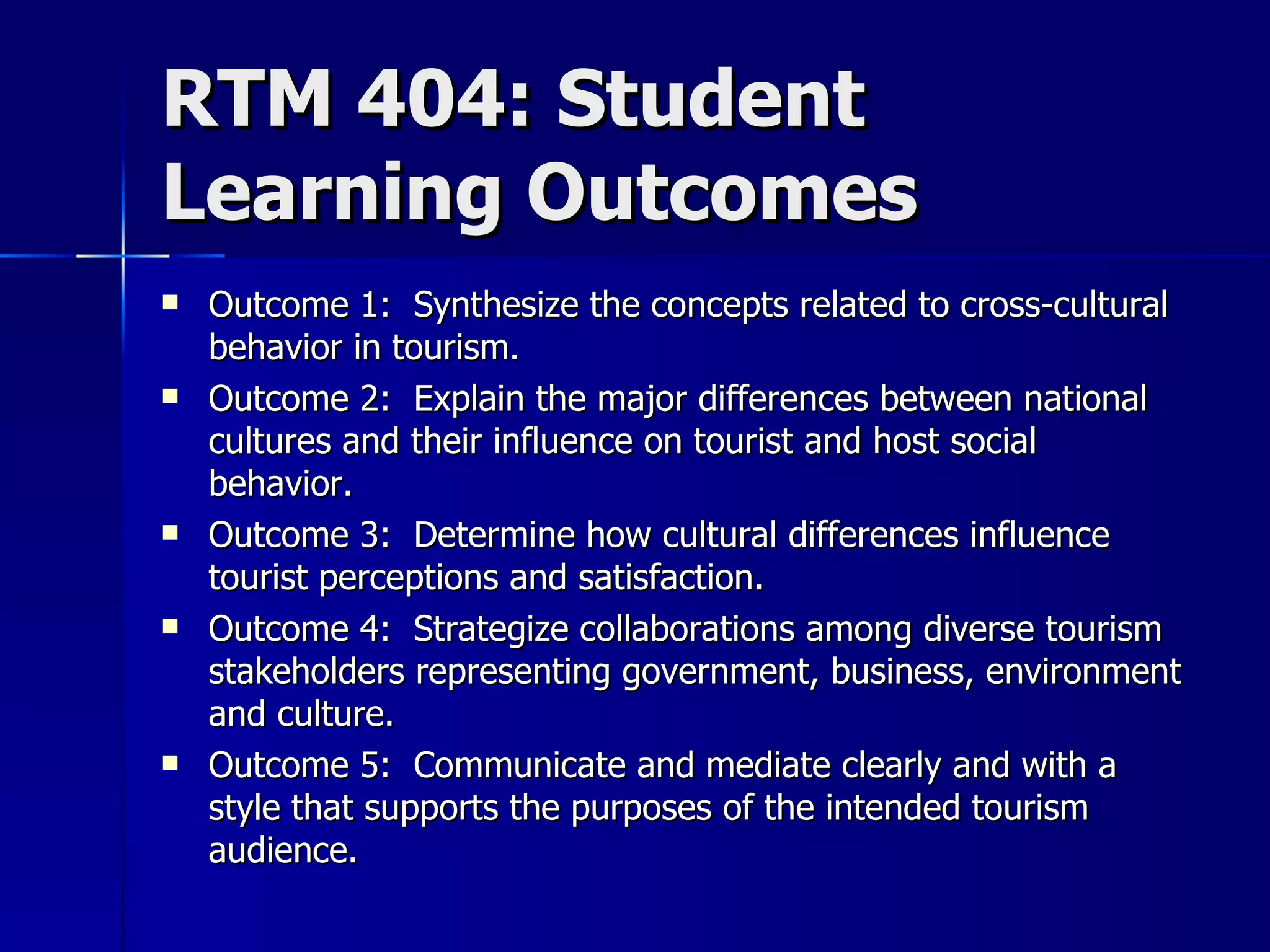
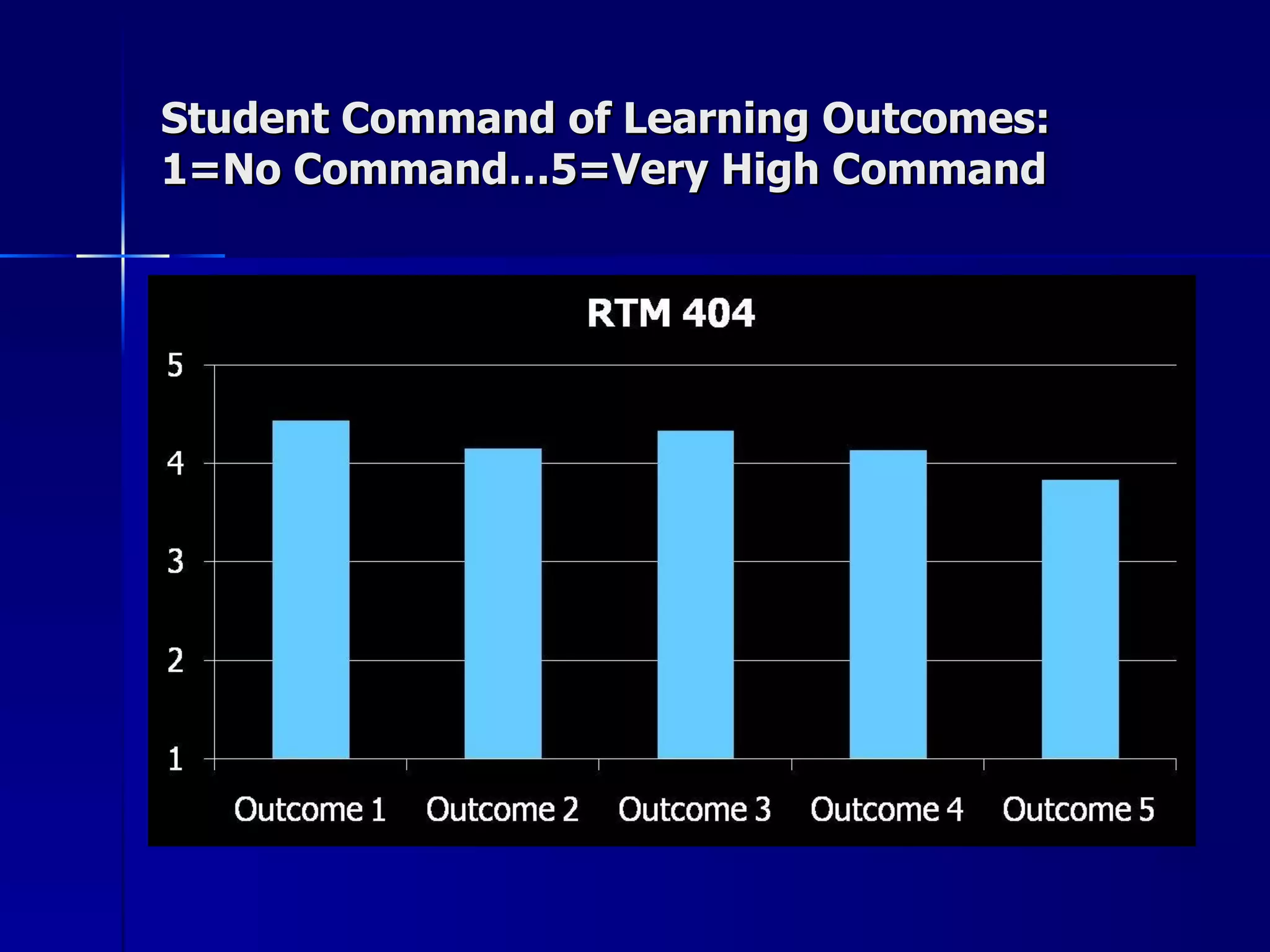
RTM 404: Student Learning Outcomes Outcome 1:  Synthesize the concepts related to cross-cultural behavior in tourism. Outcome 2:  Explain the major differences between national cultures and their influence on tourist and host social behavior. Outcome 3:  Determine how cultural differences influence tourist perceptions and satisfaction. Outcome 4:  Strategize collaborations among diverse tourism stakeholders representing government, business, environment and culture. Outcome 5:  Communicate and mediate clearly and with a style that supports the purposes of the intended tourism audience.
Student Command of Learning Outcomes: 1=No Command…5=Very High Command
Summer 2007 The goal was to “blend” RTM 305 in a comprehensive manner in which  overall  course goals and learning outcomes were addressed.  The major feature was creating the initial two Captivate lectures.  I also initiated use of rubrics, UDL statements and closed captions, and SALG at the conclusion of the course.  I completed the WebQuest during the summer.
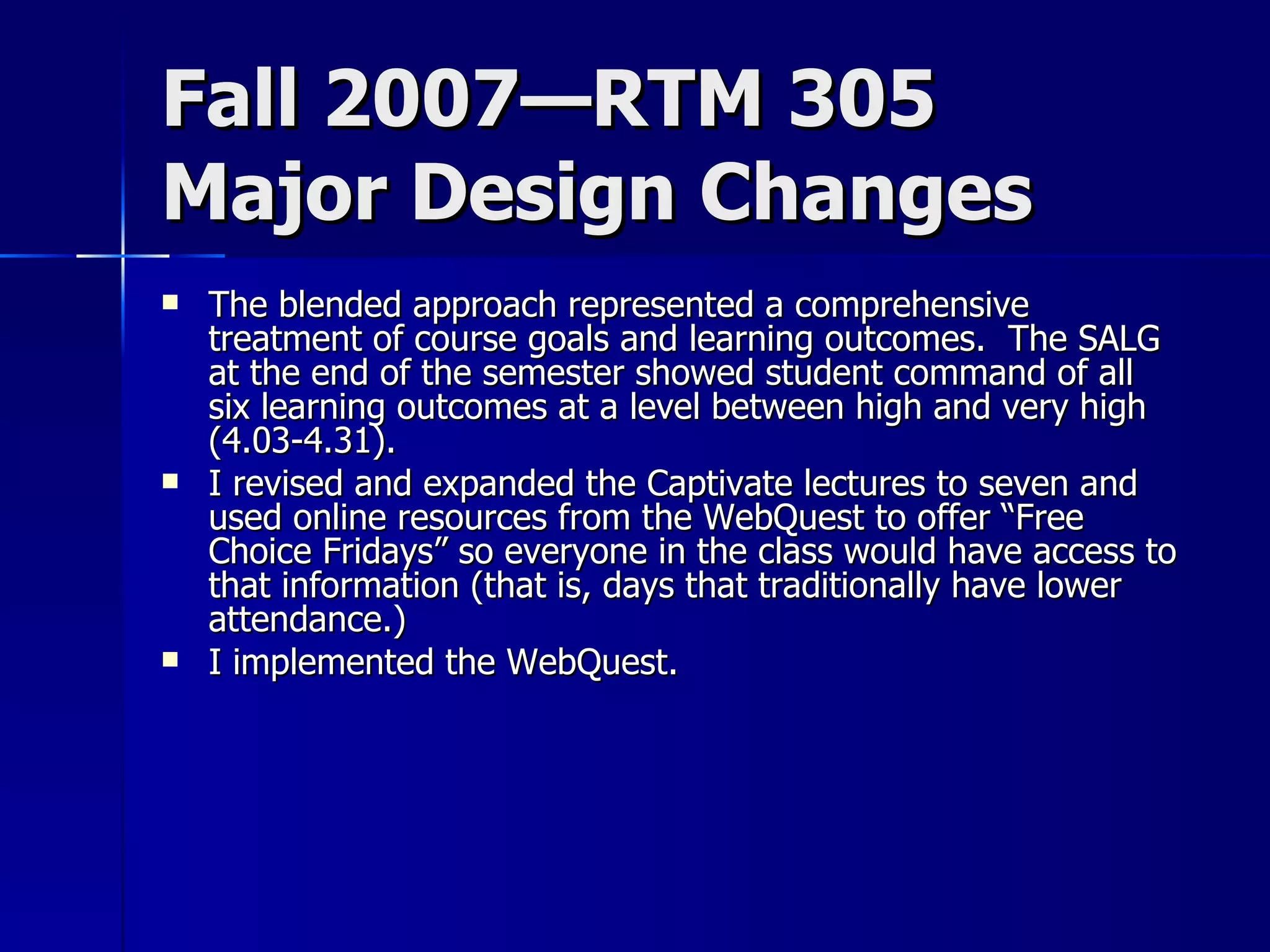
Fall 2007—RTM 305 Major Design Changes The blended approach represented a comprehensive treatment of course goals and learning outcomes.  The SALG at the end of the semester showed student command of all six learning outcomes at a level between high and very high (4.03-4.31). I revised and expanded the Captivate lectures to seven and used online resources from the WebQuest to offer “Free Choice Fridays” so everyone in the class would have access to that information (that is, days that traditionally have lower attendance.) I implemented the WebQuest.
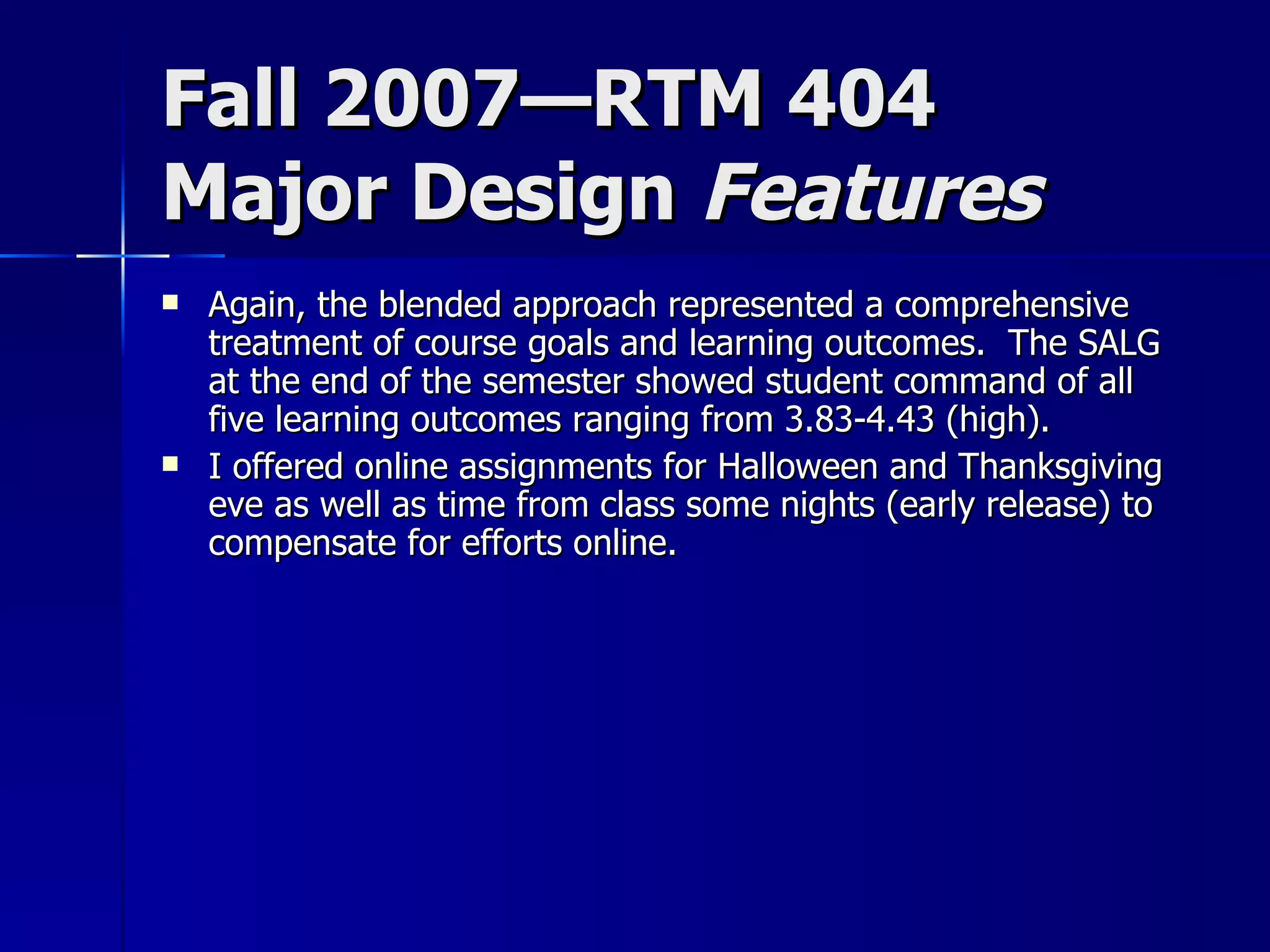
Fall 2007—RTM 404 Major Design  Features Again, the blended approach represented a comprehensive treatment of course goals and learning outcomes.  The SALG at the end of the semester showed student command of all five learning outcomes ranging from 3.83-4.43 (high). I offered online assignments for Halloween and Thanksgiving eve as well as time from class some nights (early release) to compensate for efforts online.
Student Experiences RTM 305  89% Response Rate
Adobe Captivate  Online presentations that include traditional PowerPoint slides and narration with options to pause, review, replay, etc.
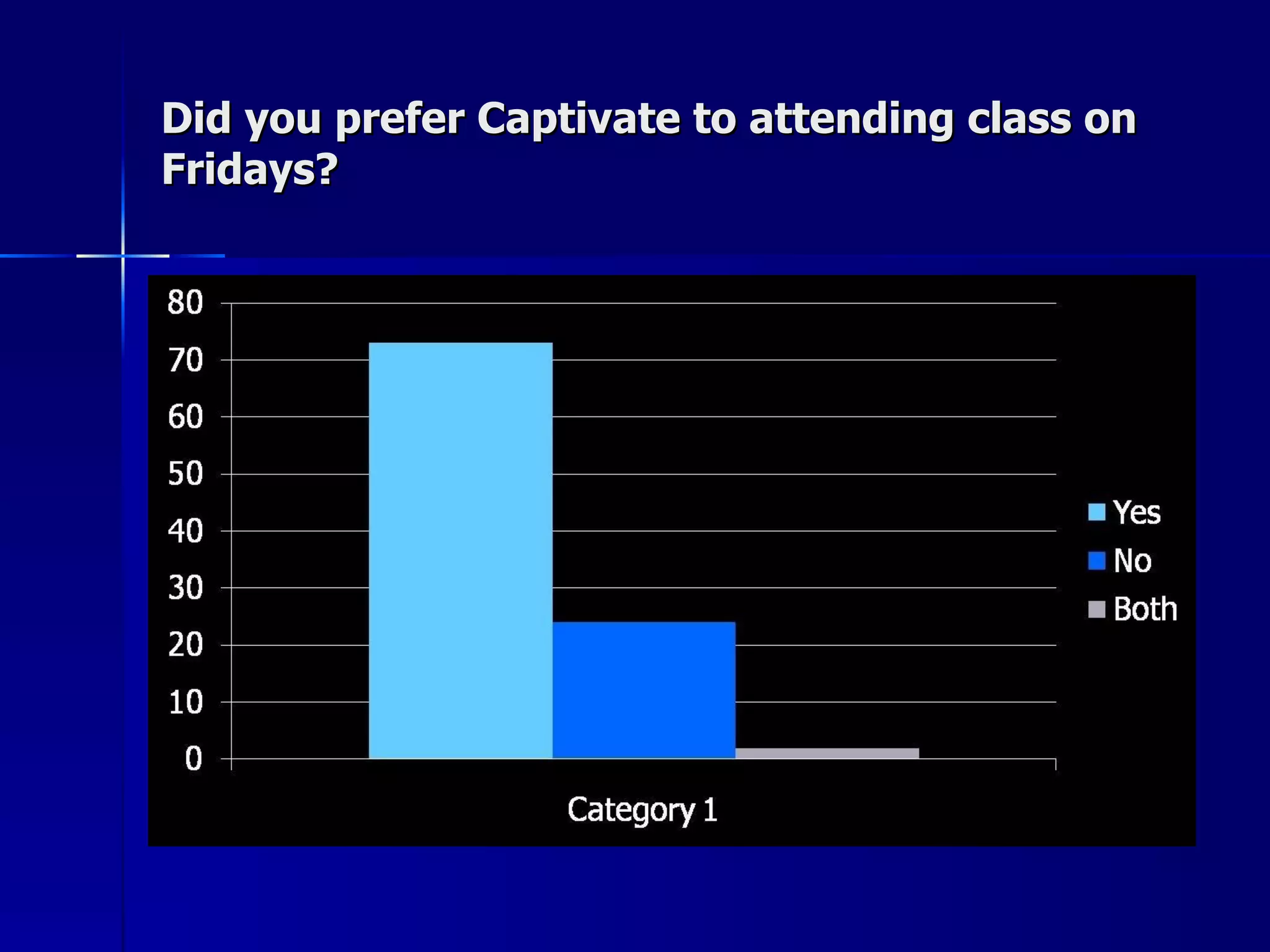
Did you prefer Captivate to attending class on Fridays?
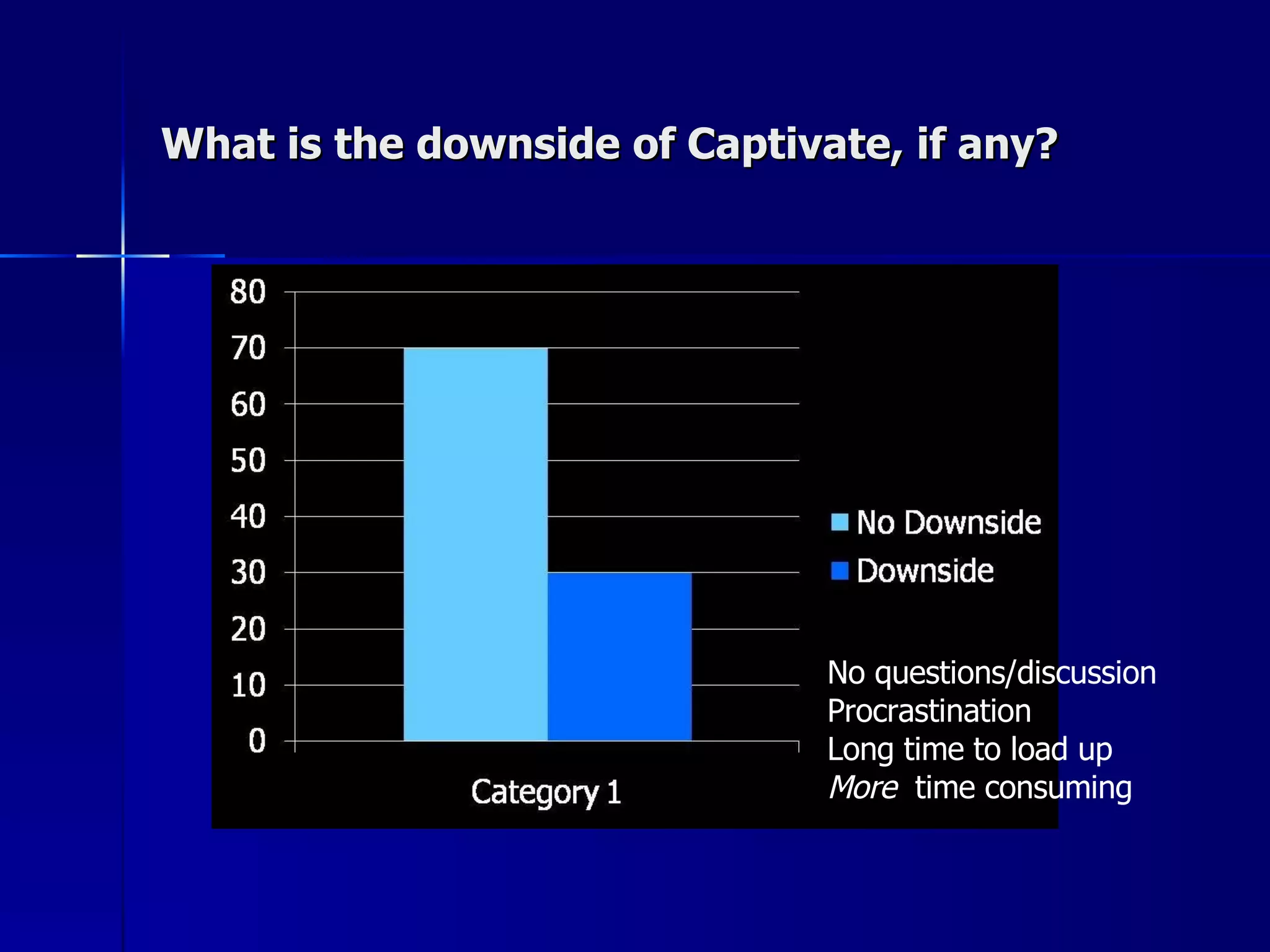
What is the downside of Captivate, if any? No questions/discussion Procrastination  Long time to load up More   time consuming
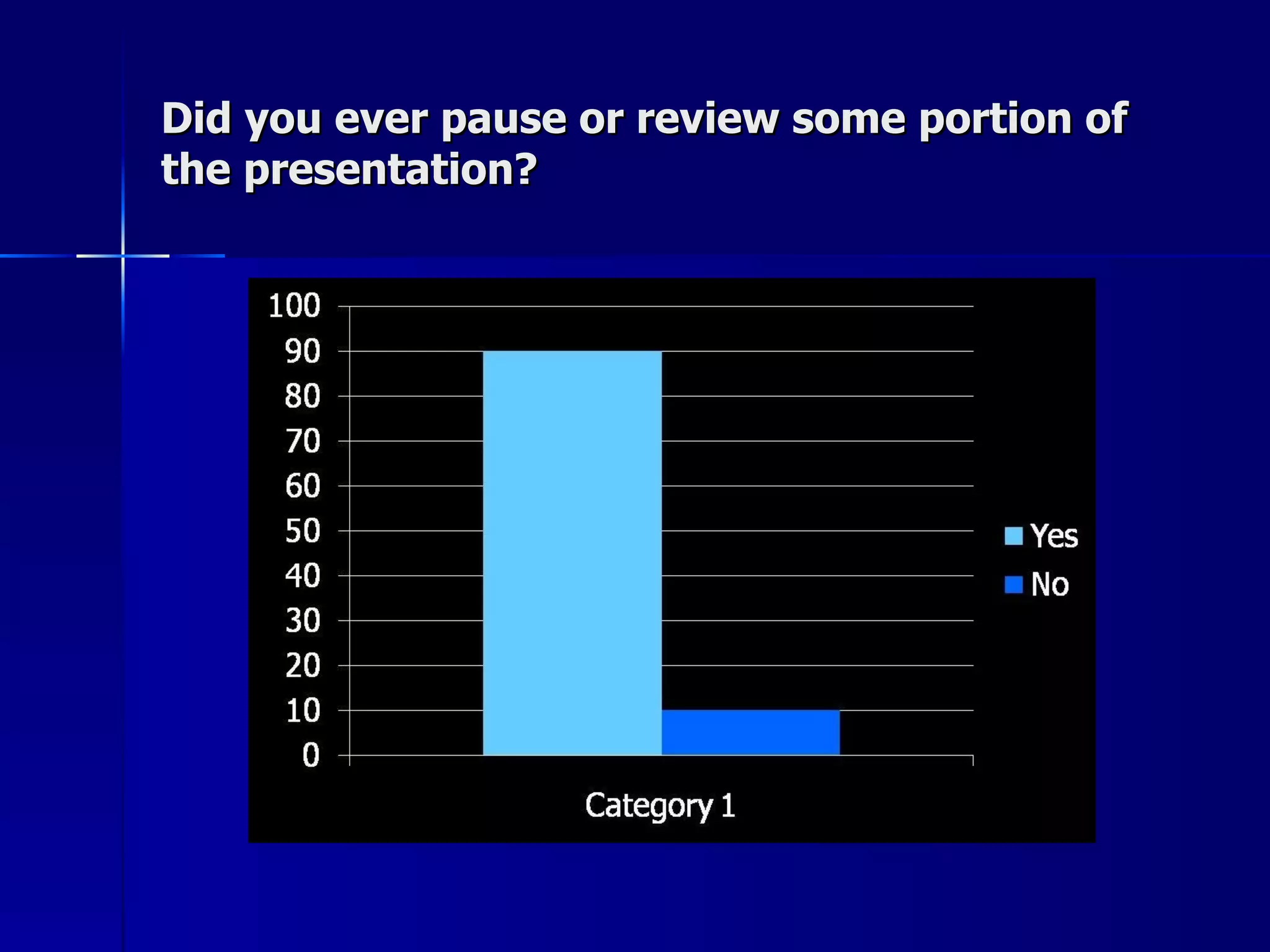
Did you ever pause or review some portion of the presentation?
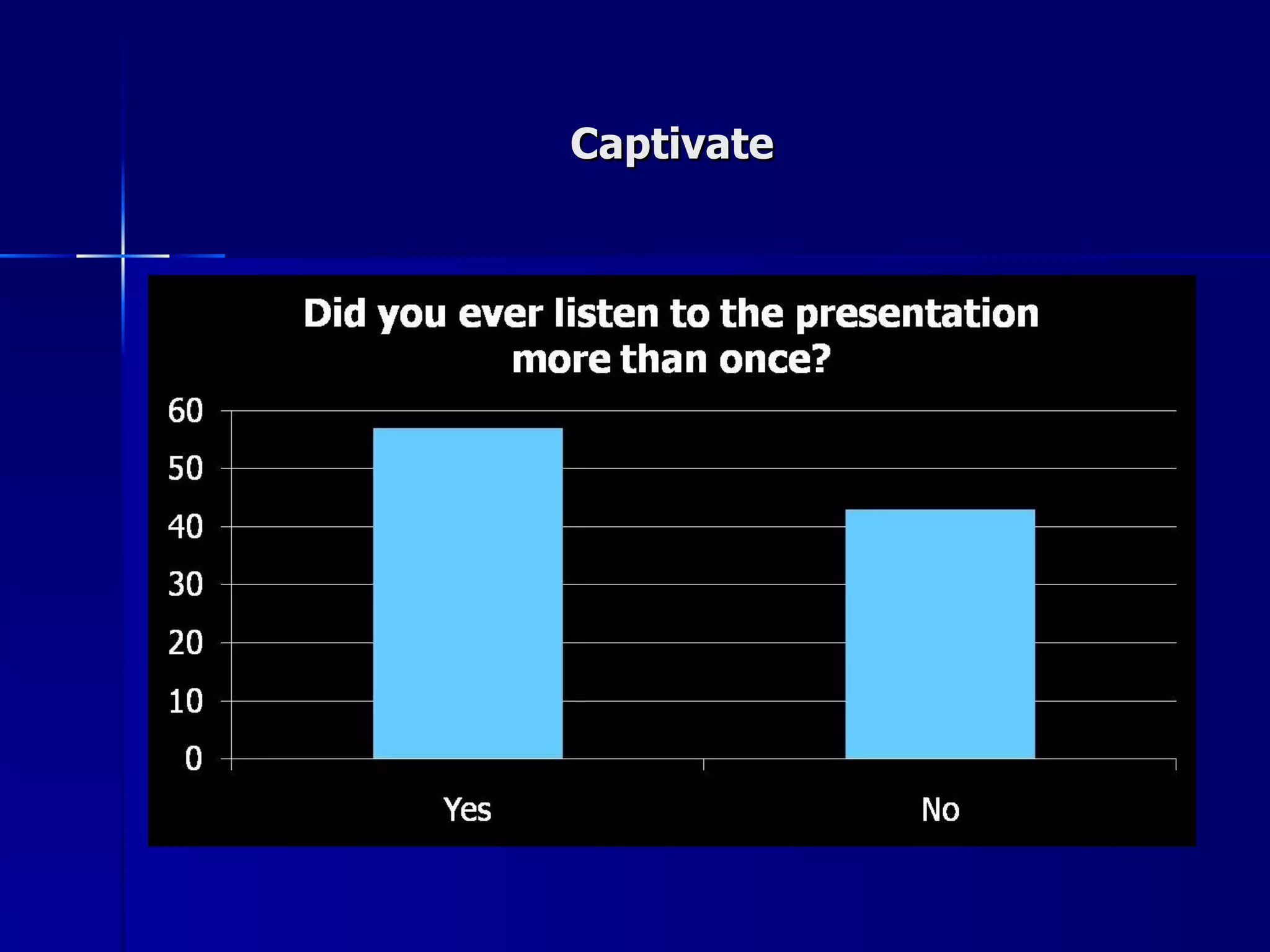
Captivate
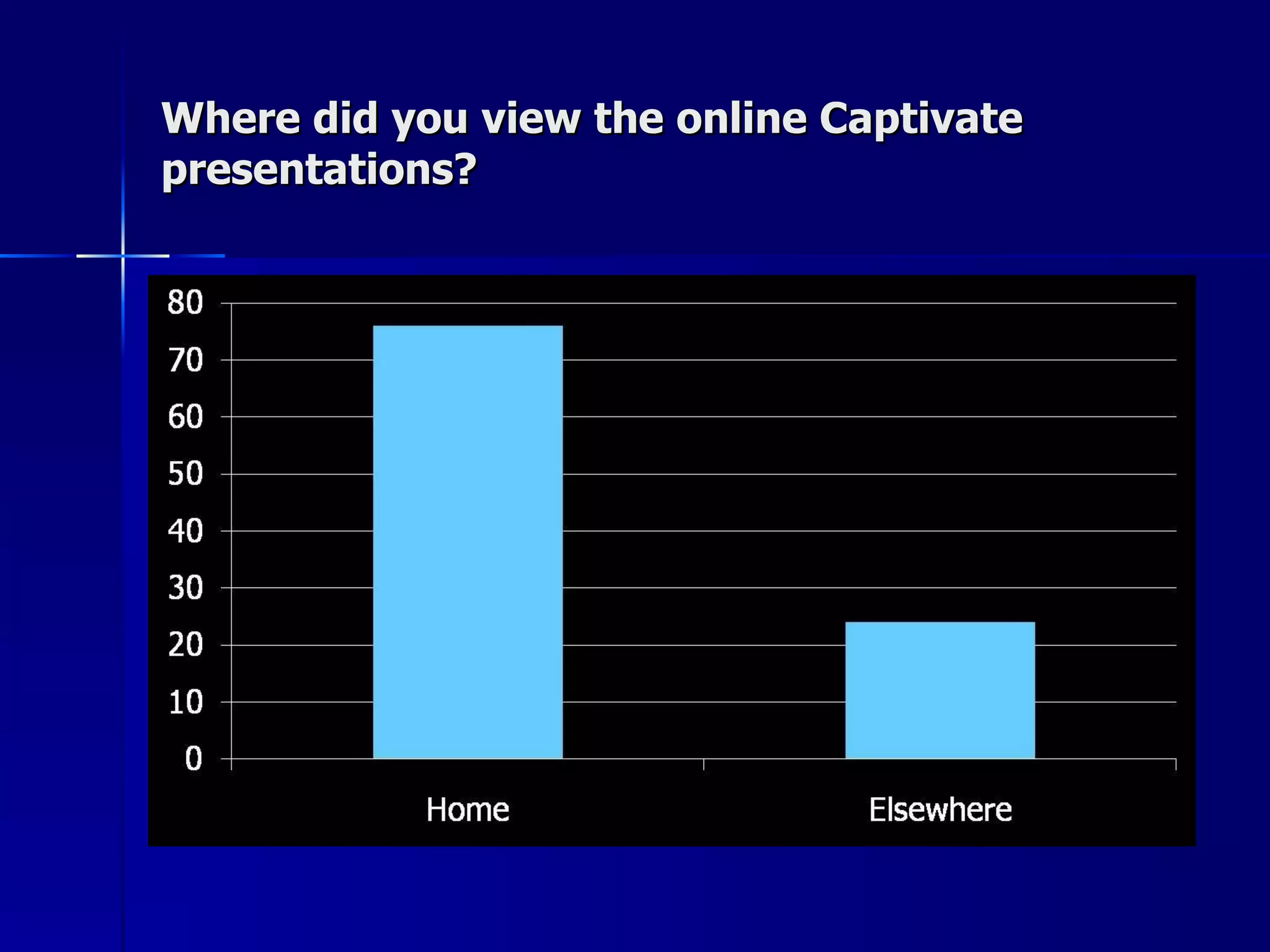
Where did you view the online Captivate presentations?
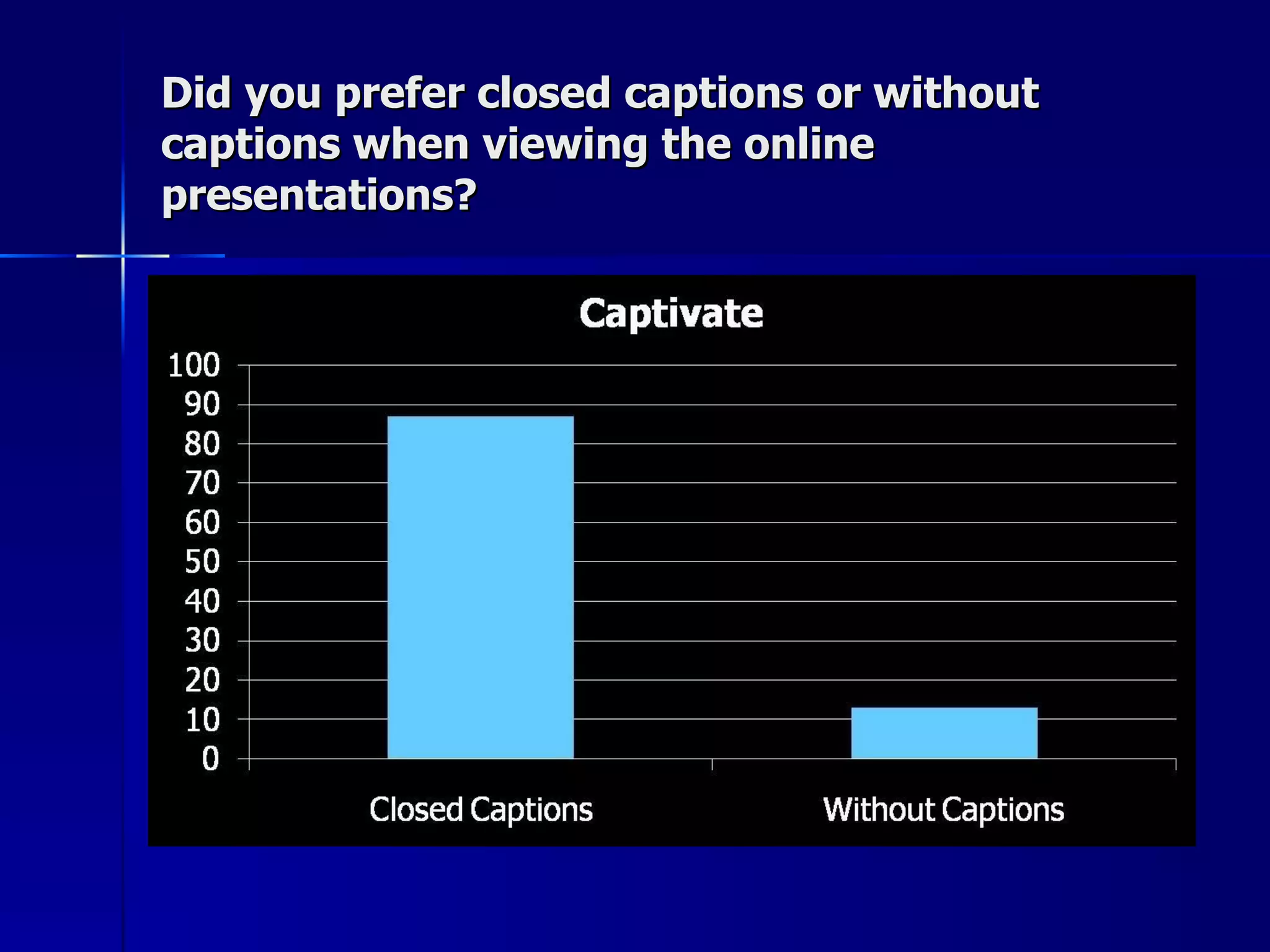
Did you prefer closed captions or without captions when viewing the online presentations?
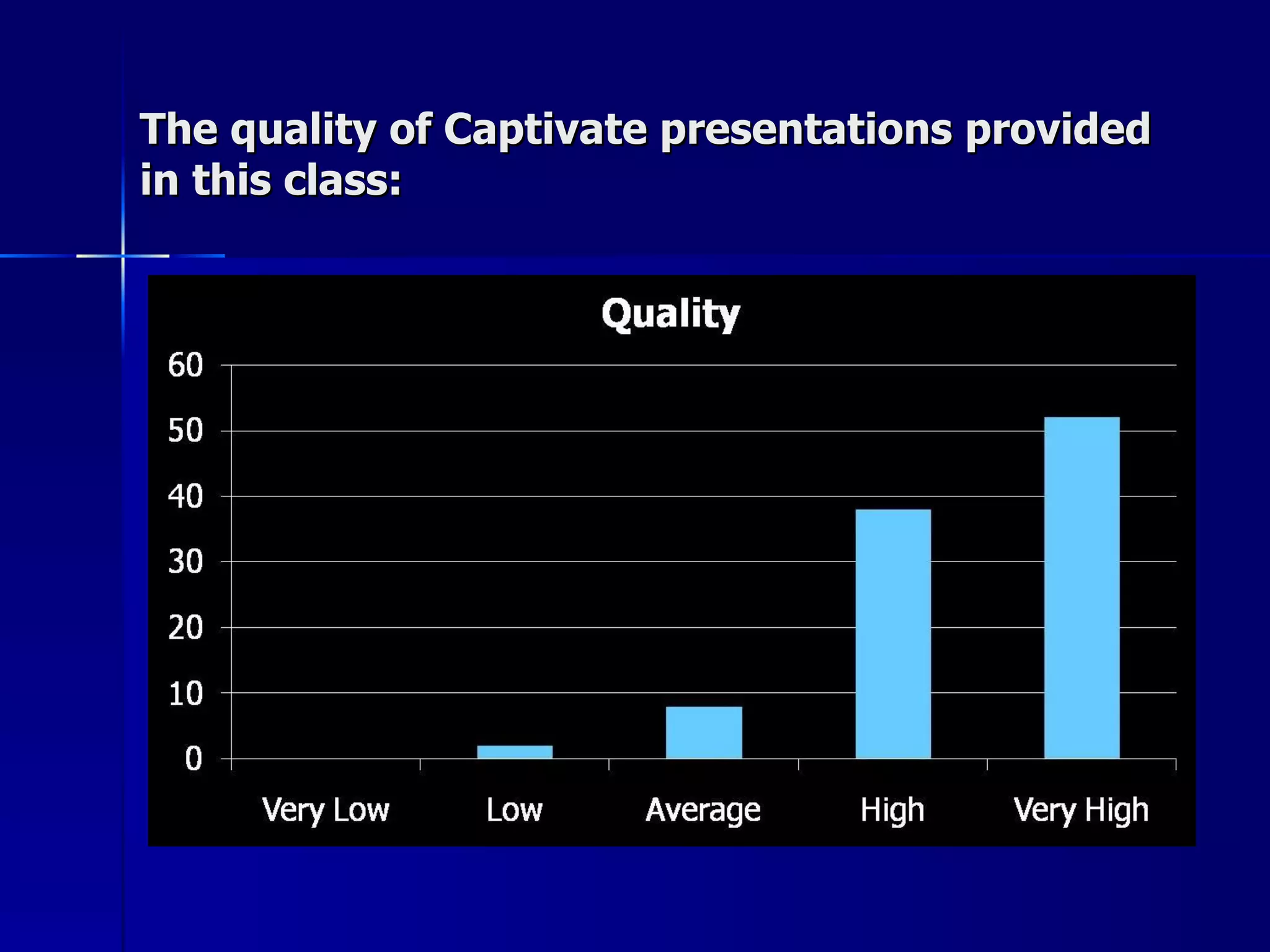
The quality of Captivate presentations provided in this class:
WebQuest Overall Assessment
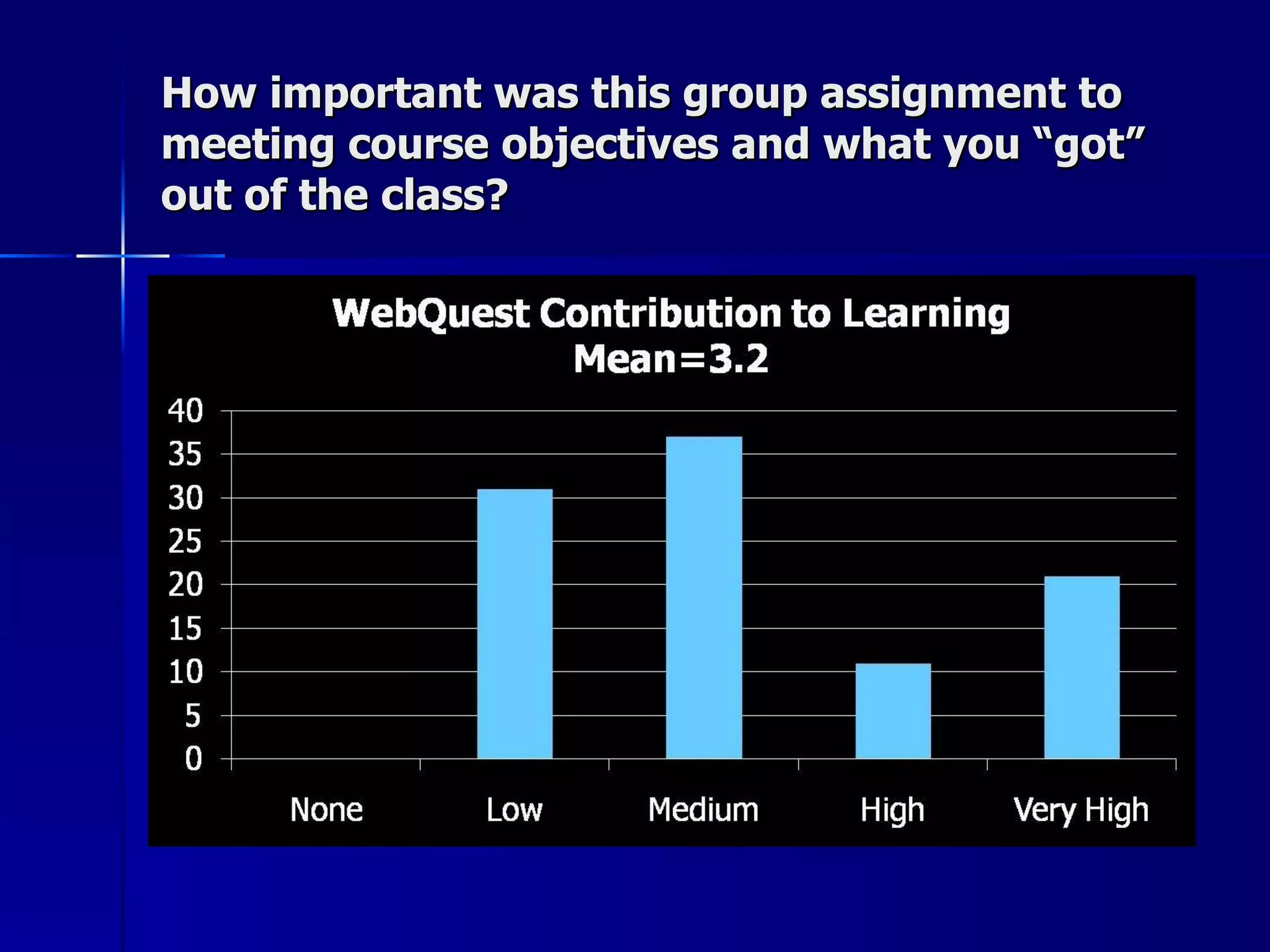
How important was this group assignment to meeting course objectives and what you “got” out of the class?
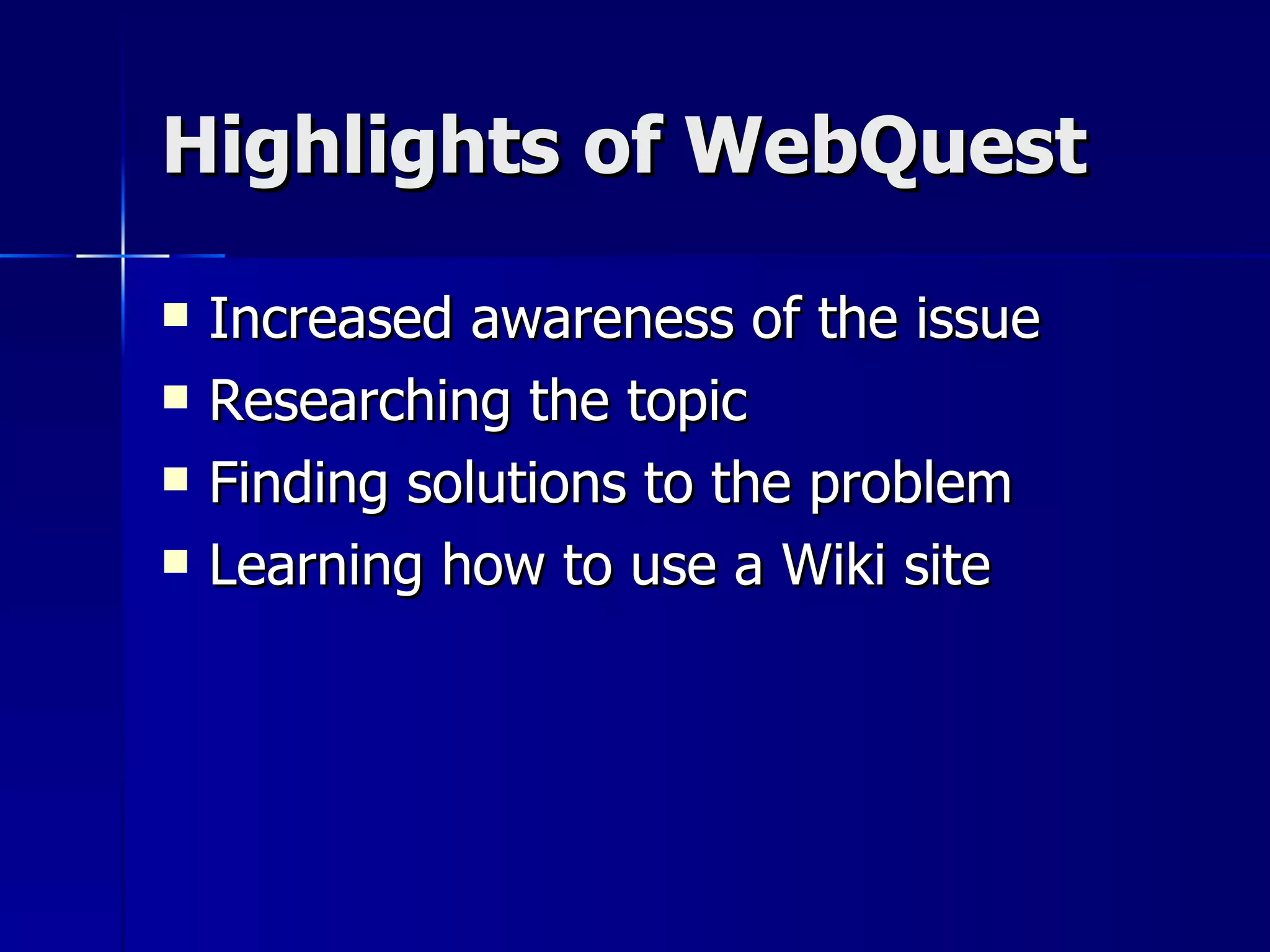
Highlights of WebQuest Increased awareness of the issue Researching the topic Finding solutions to the problem Learning how to use a Wiki site
Lowlights of WebQuest Group aspect (not everyone contributed equally to the project)
New Strategy Require mandatory meeting dates throughout the semester and periodic deadlines to keep groups on task Presentation of Wiki to the entire class Provide better overview of the benefits of this assignment (21 st  Century Skills)
WebQuest and 21 st  Century Skills Information and technological literacy Inventive and creative thinking Collaboration and communication Creating real-world solutions to contemporary issues
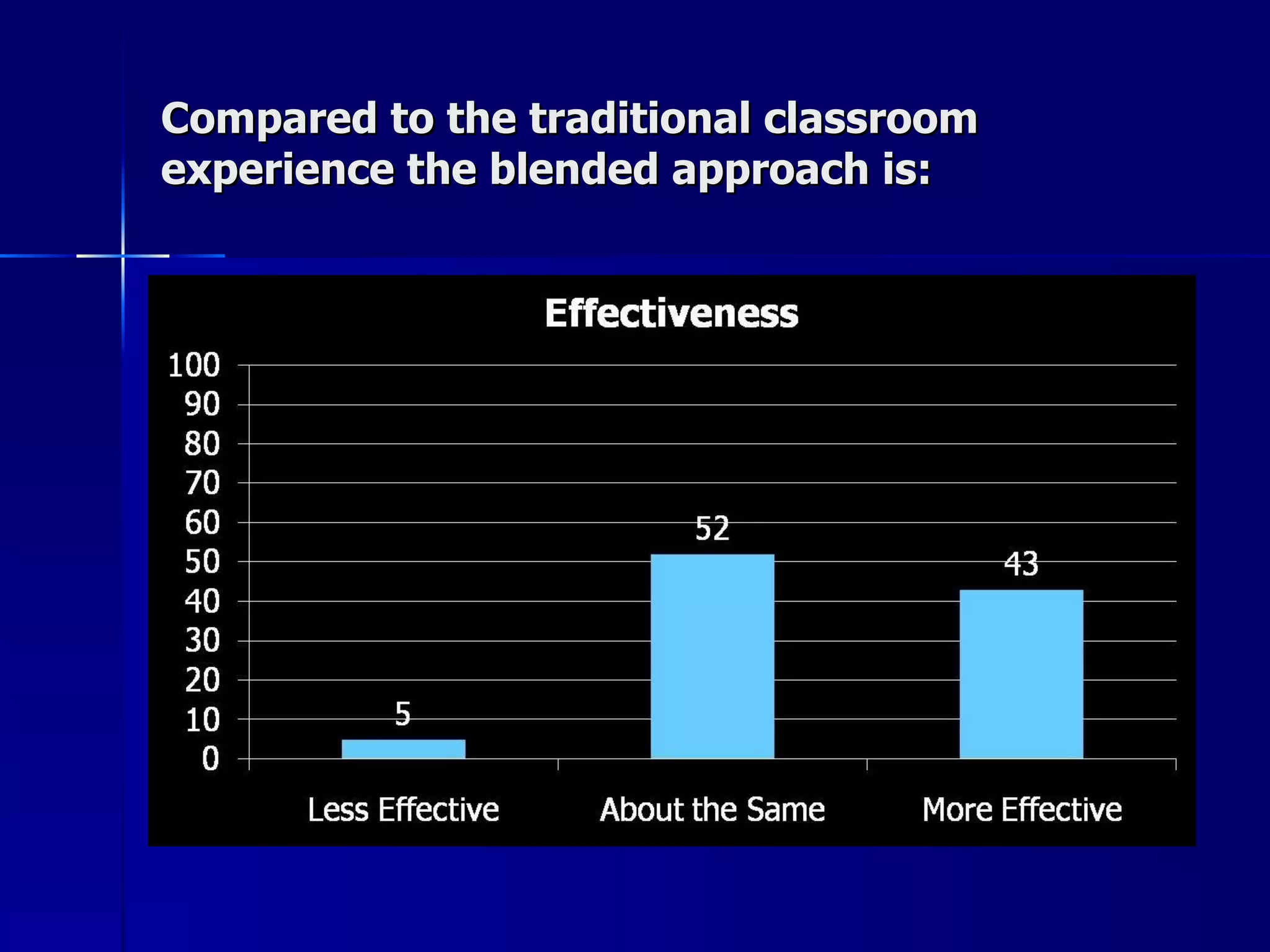
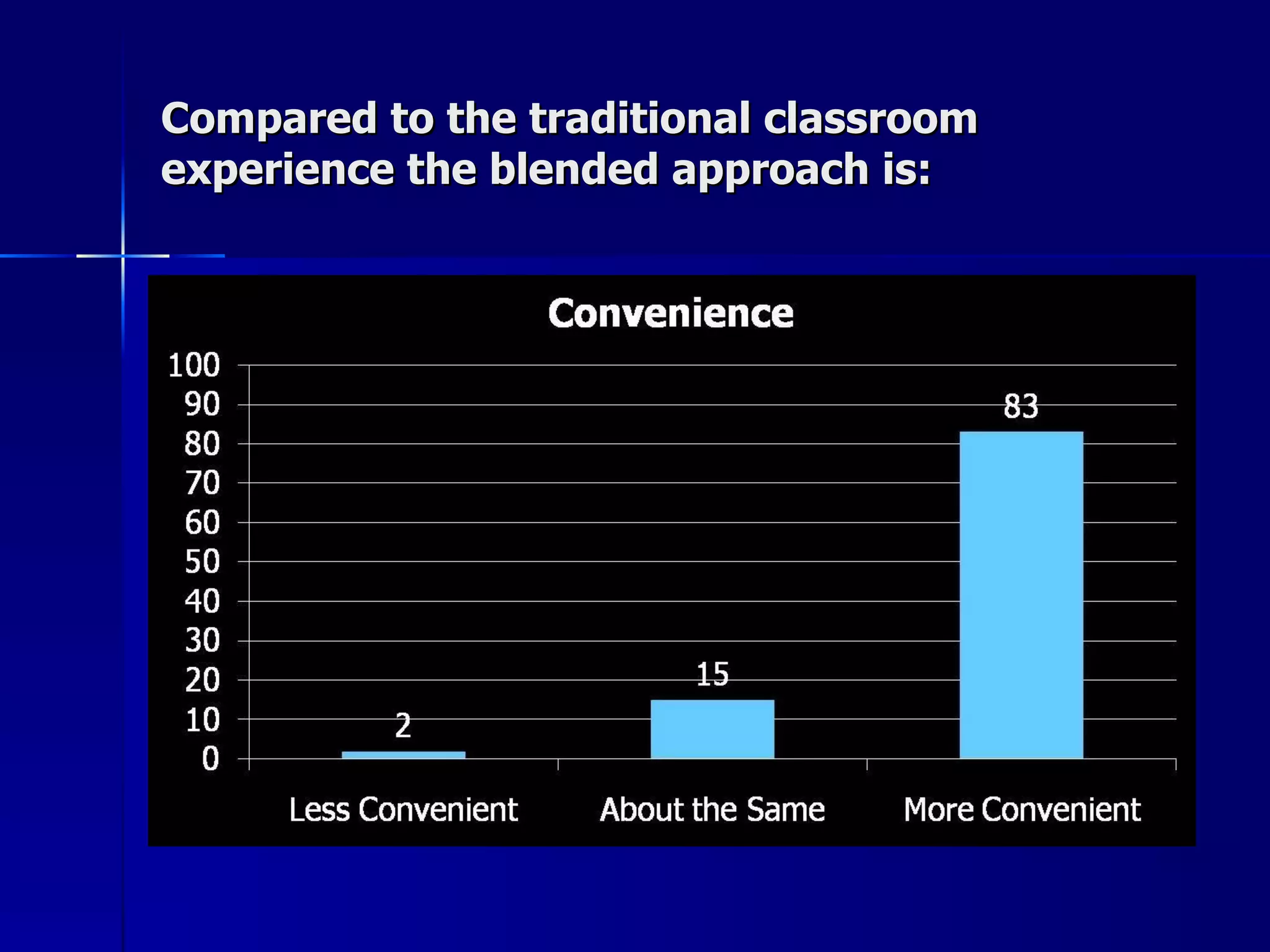
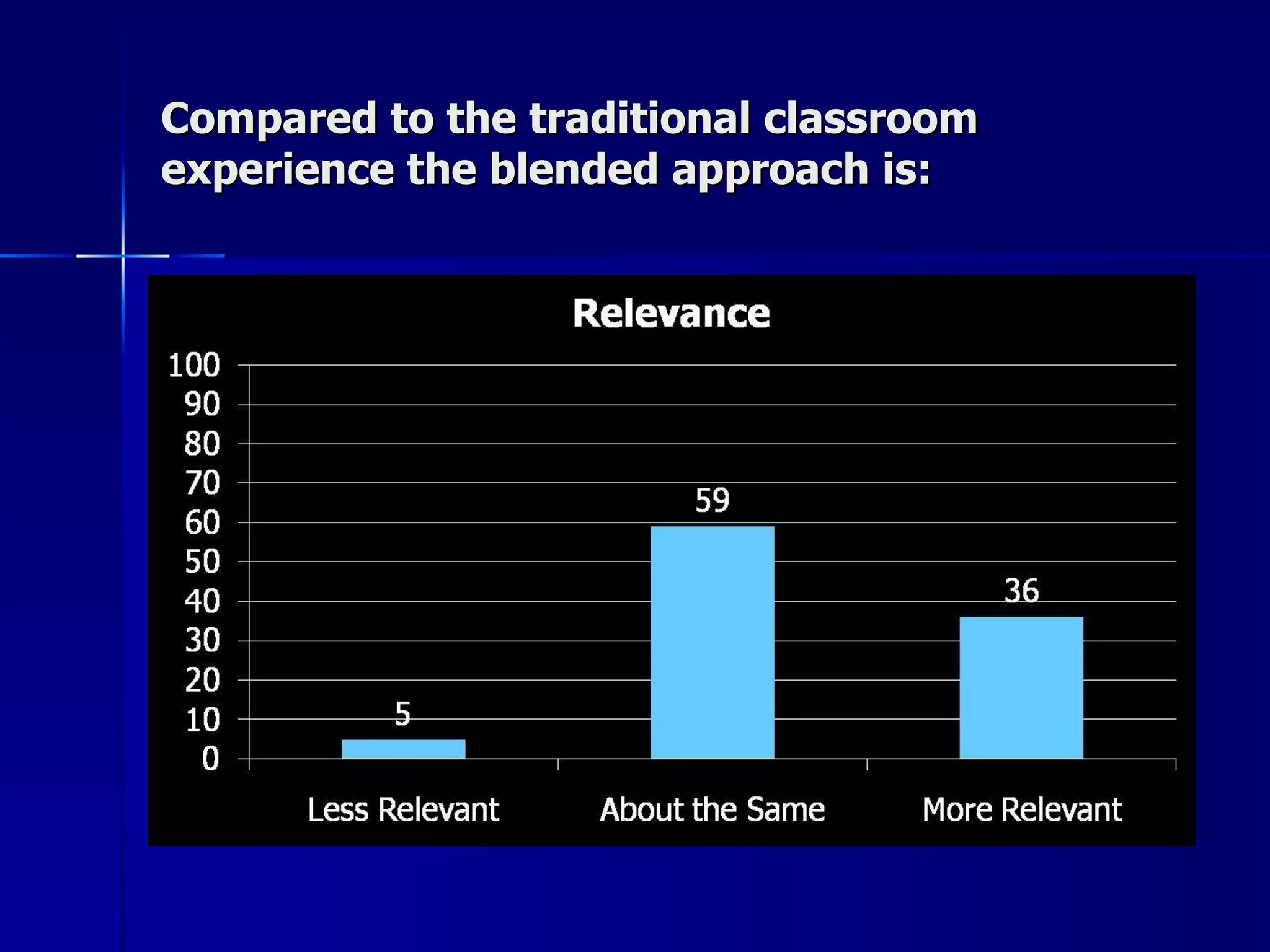
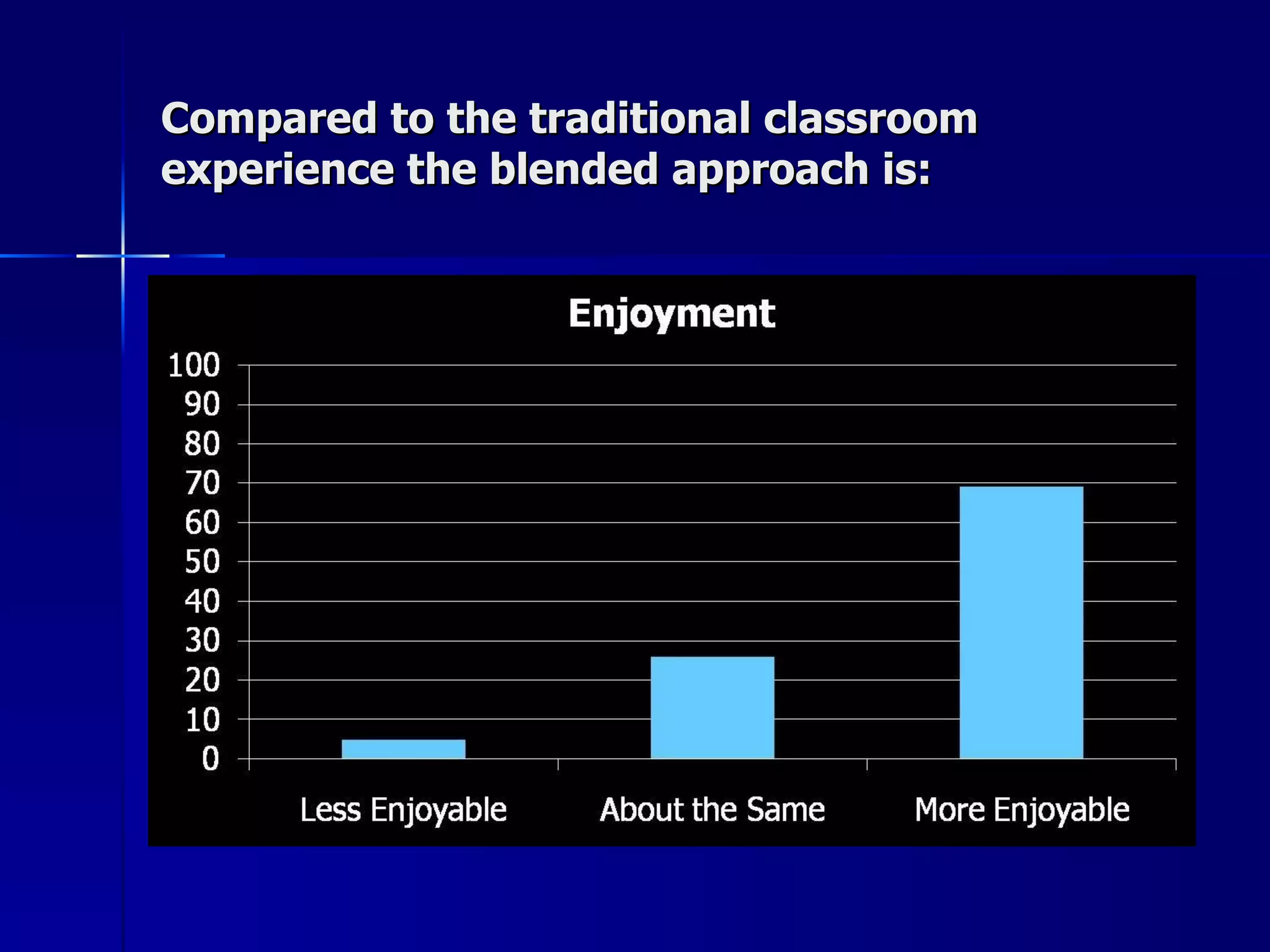
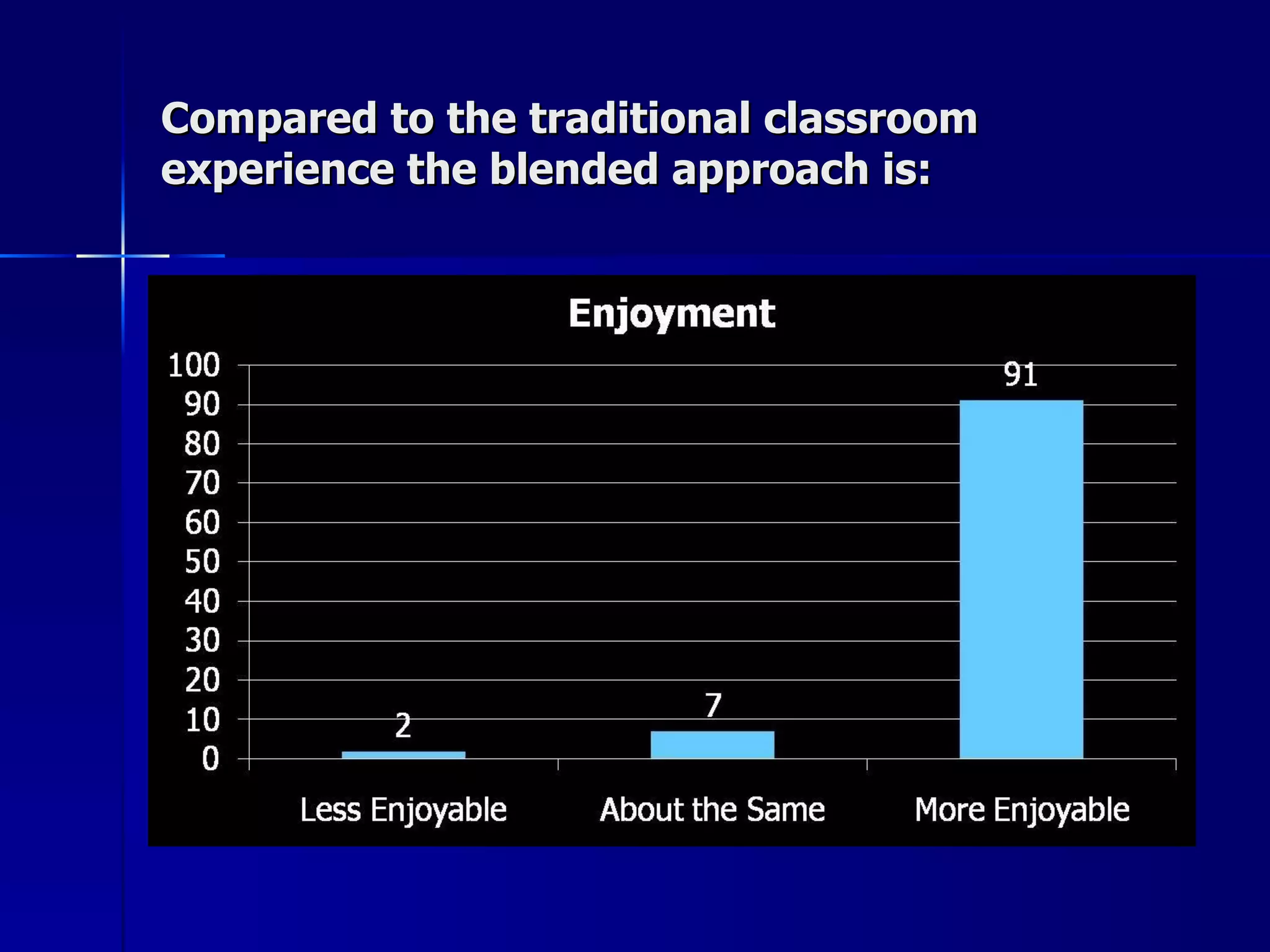
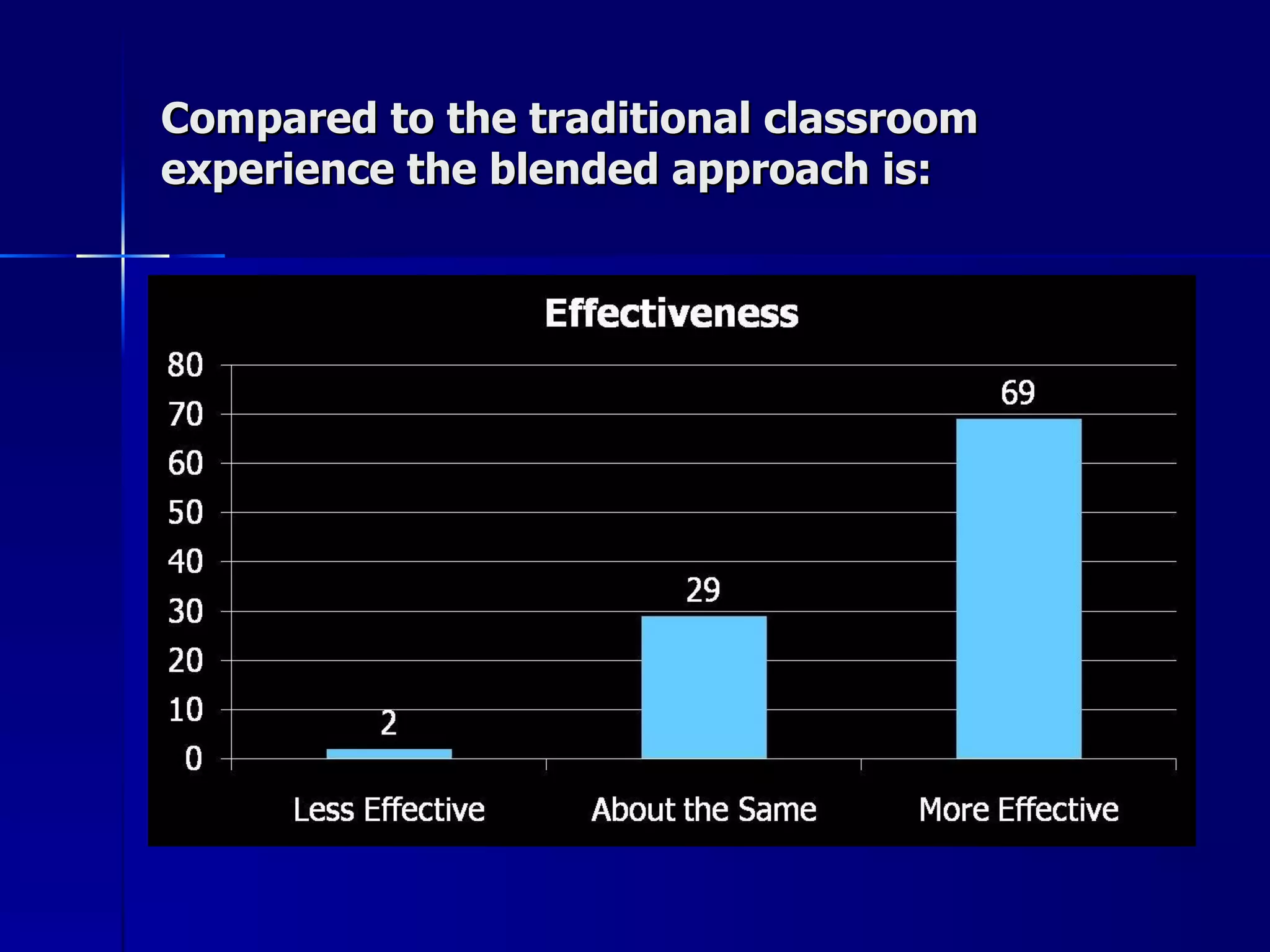
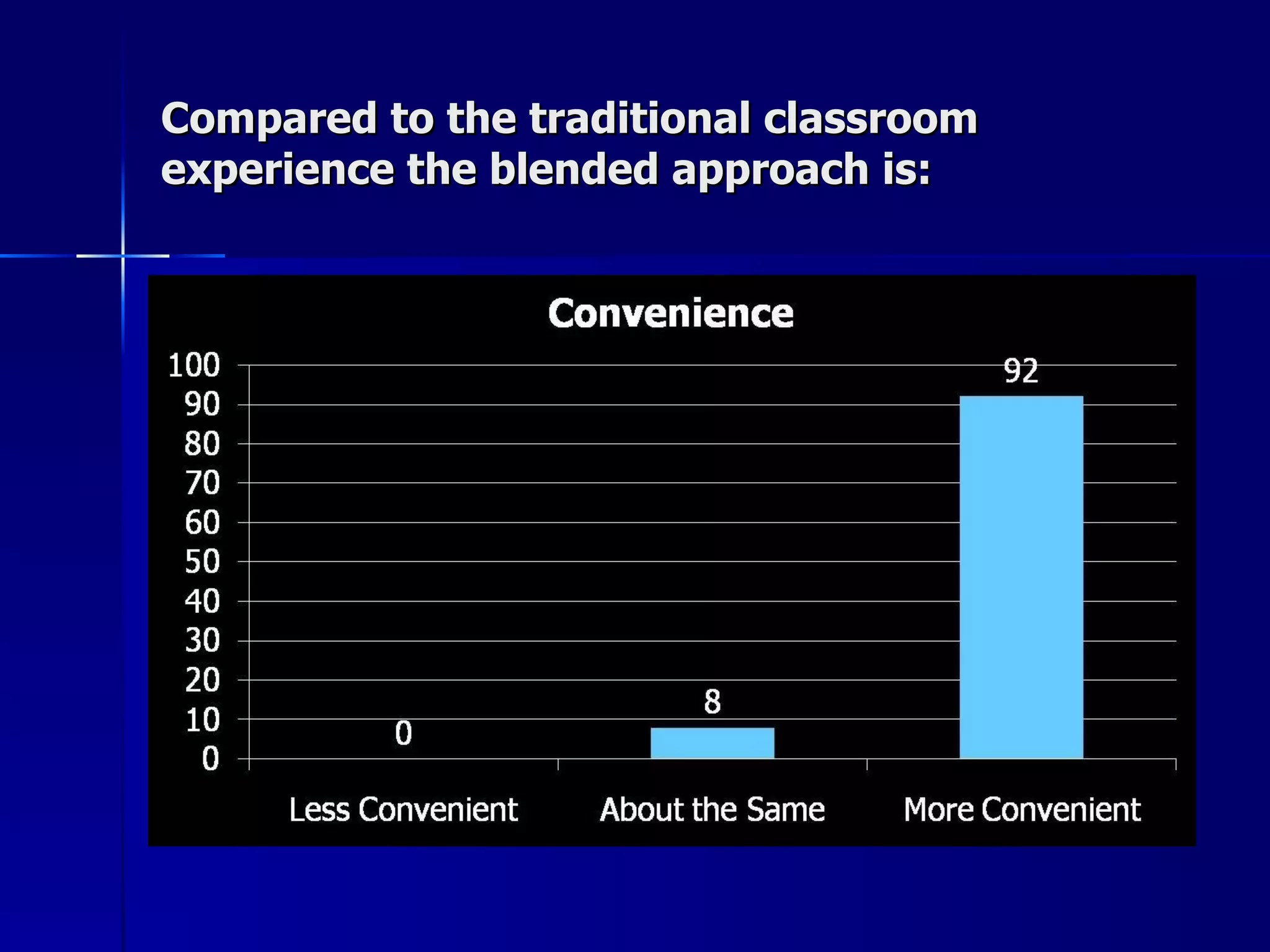
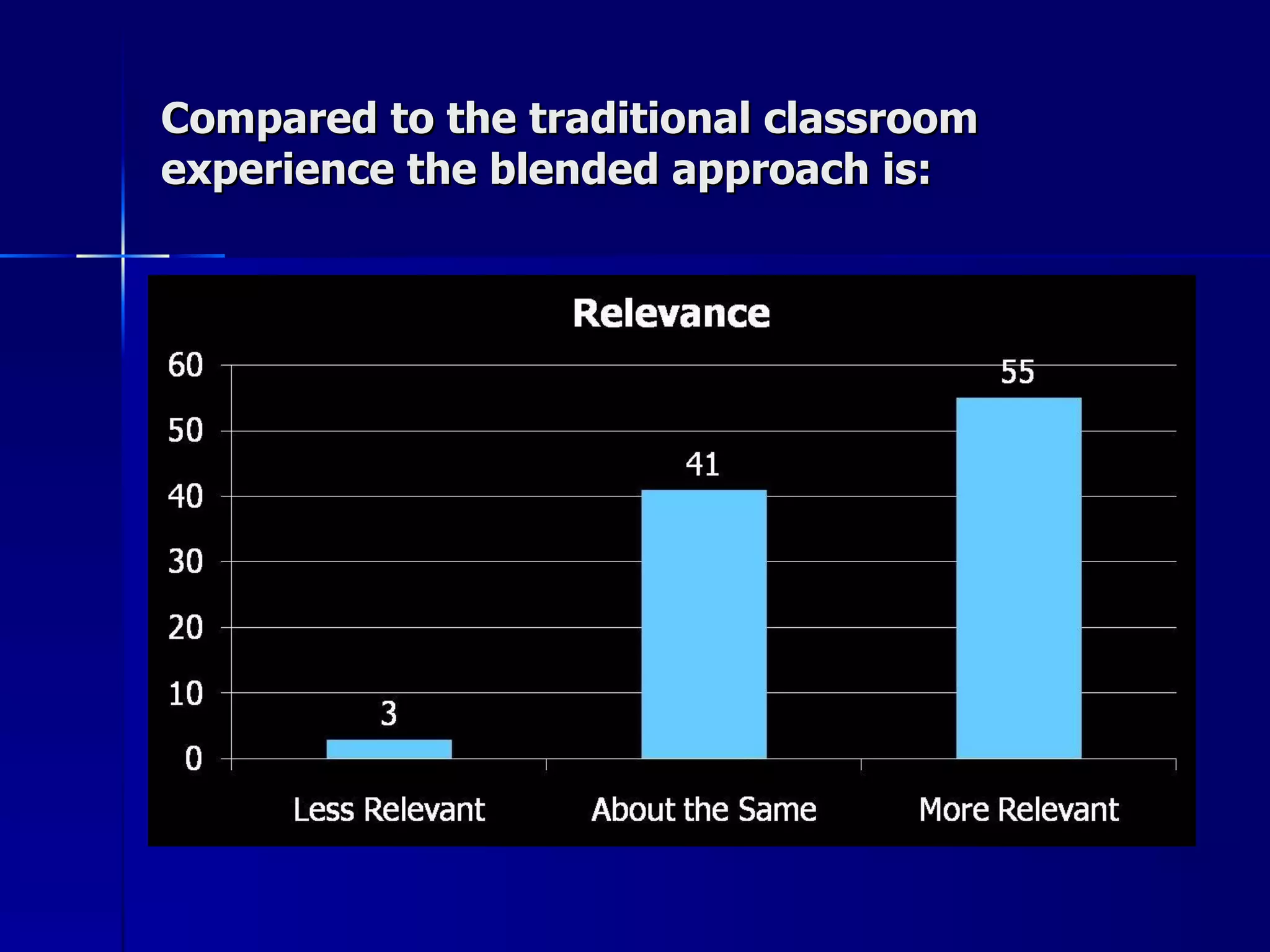
Overall Assessment of Blended Learning RTM 305
Compared to the traditional classroom experience the blended approach is:
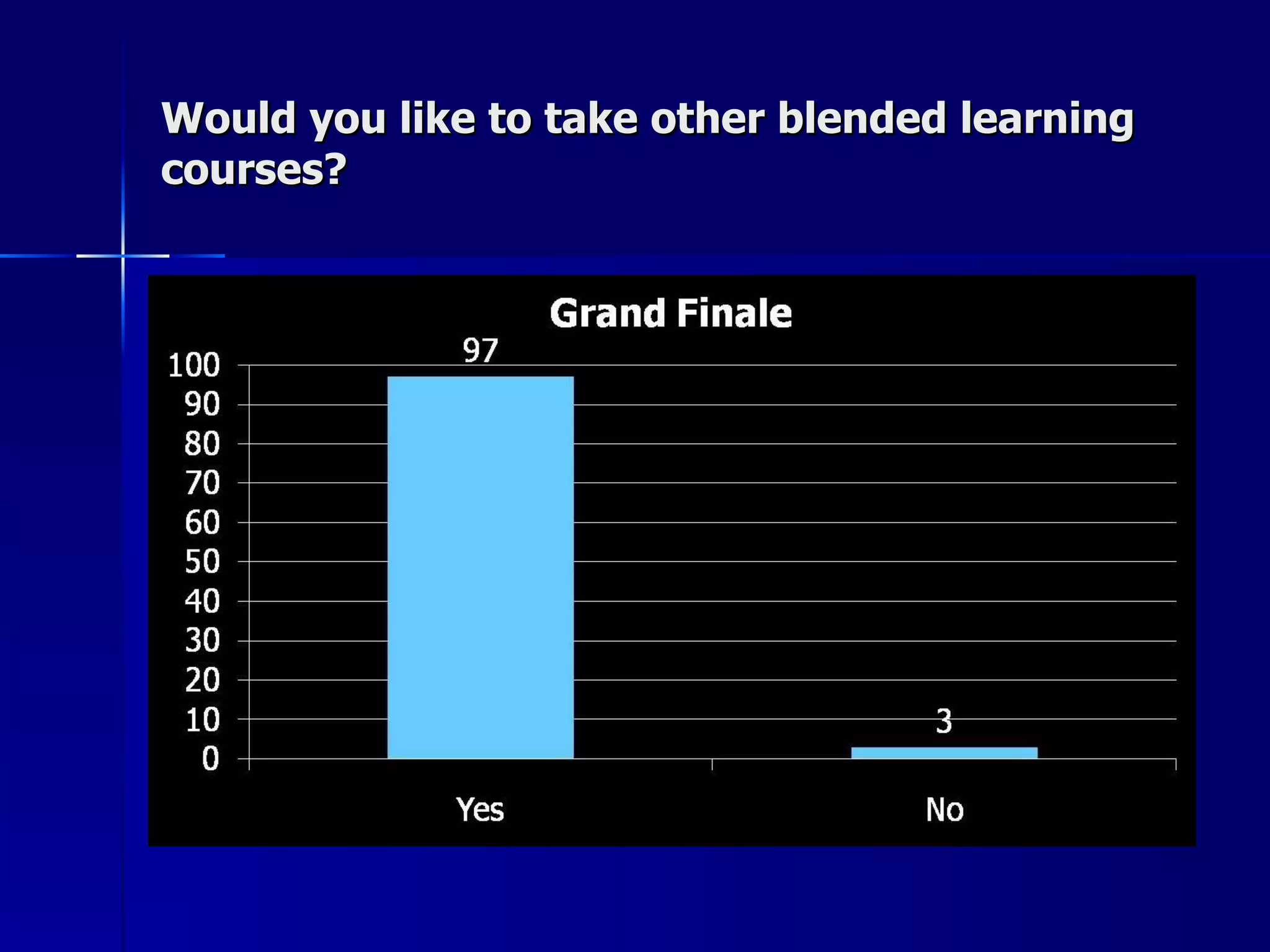
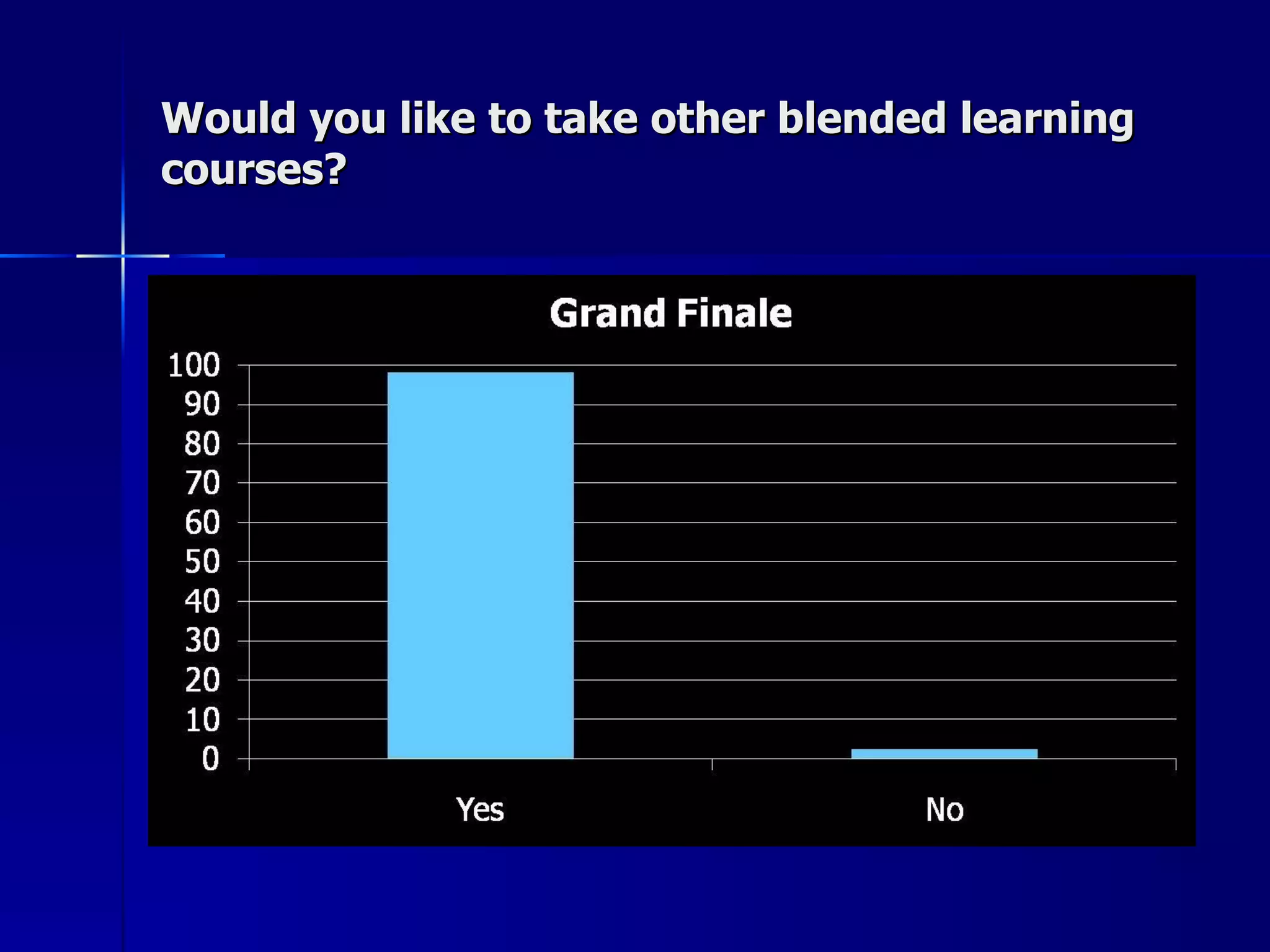
Would you like to take other blended learning courses?
RTM 404 Cross Cultural Perspectives of Tourism
Overall Assessment of Blended Learning 94% Response Rate
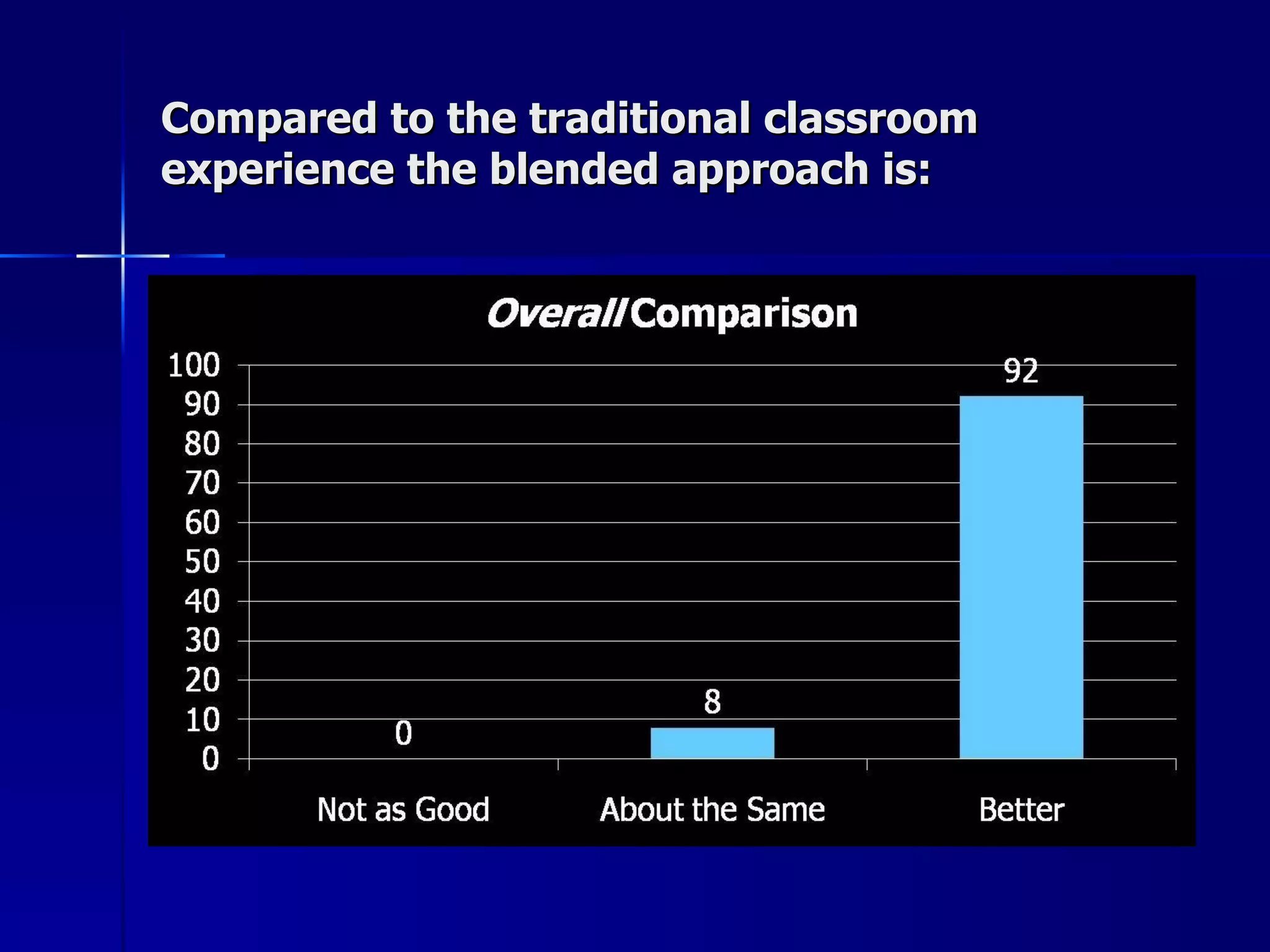
Compared to the traditional classroom experience the blended approach is:
Would you like to take other blended learning courses?
What do you like best about the blended learning approach? “ Being able to do things on my own time.” “ Blended learning allows the student to have some flexibility in the class schedule.  It’s great because the class isn’t so boring as a traditional lecture class.” “ Allowed for higher level of autonomy while maintaining great organization and meeting learning objectives.” “ You really learn about your resources out there and how to use them.” “ I was able to learn using other mediums besides a standard lecture.  I seemed to learn more personally.” “ We have more freedom, so to speak.” “ It makes the student more involved.” “ Generally, teachers doing something special for their class care more about the class, which makes it more fun.” “ Only thing I would change is size of class.  Too big!”
“ Deeper” Dimensions of the Course RTM 404
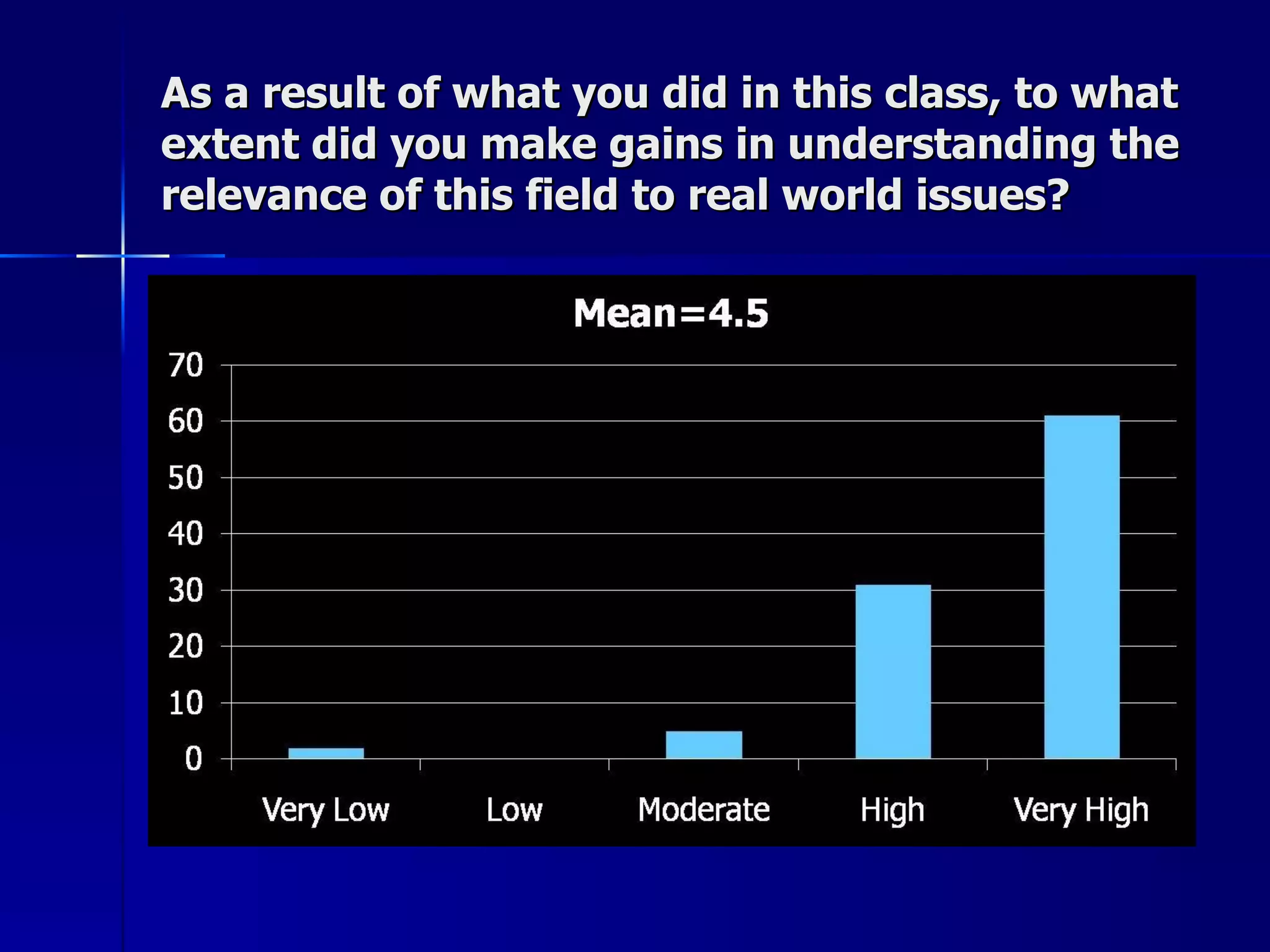
As a result of what you did in this class, to what extent did you make gains in understanding the relevance of this field to real world issues?
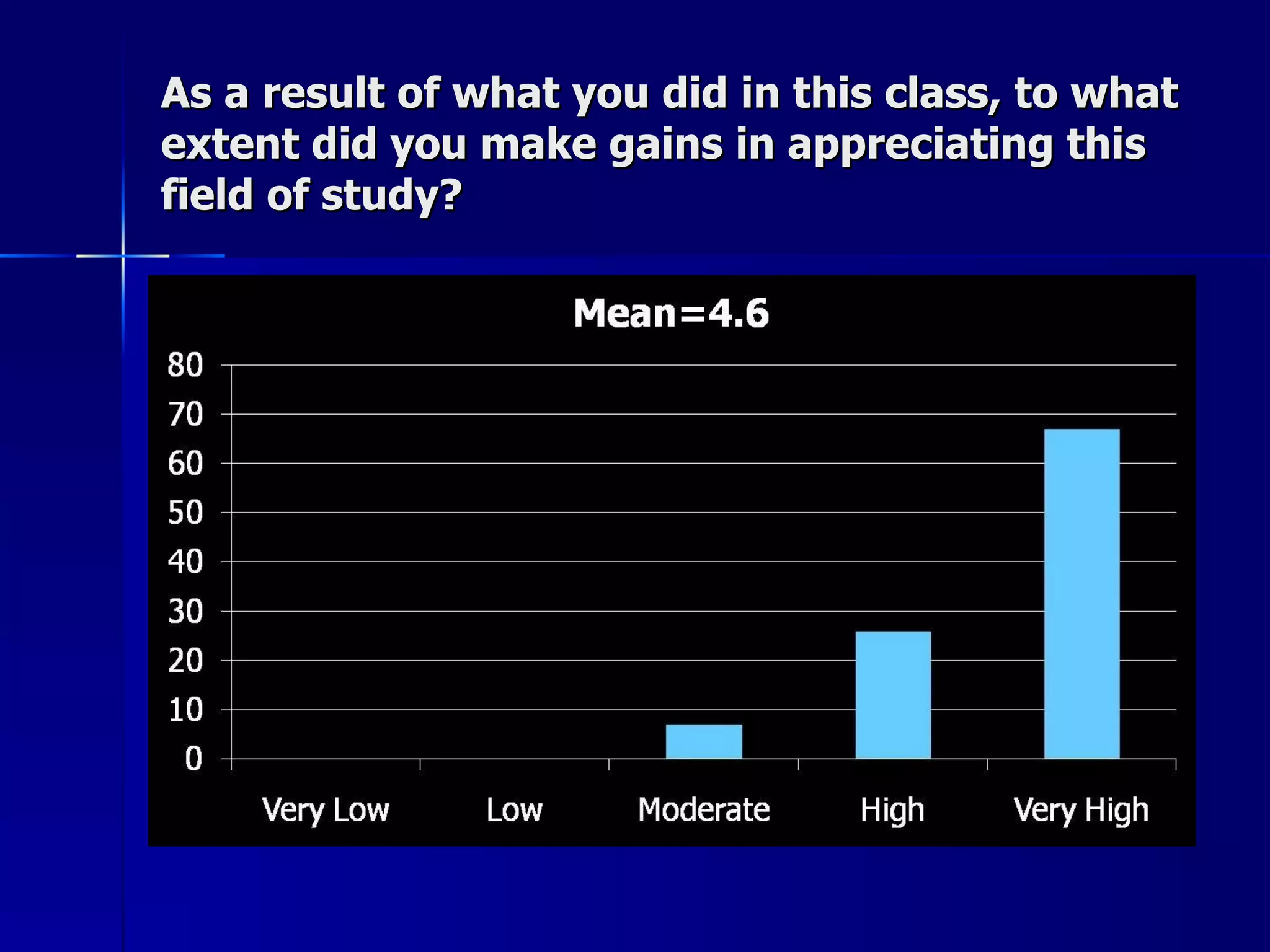
As a result of what you did in this class, to what extent did you make gains in appreciating this field of study?
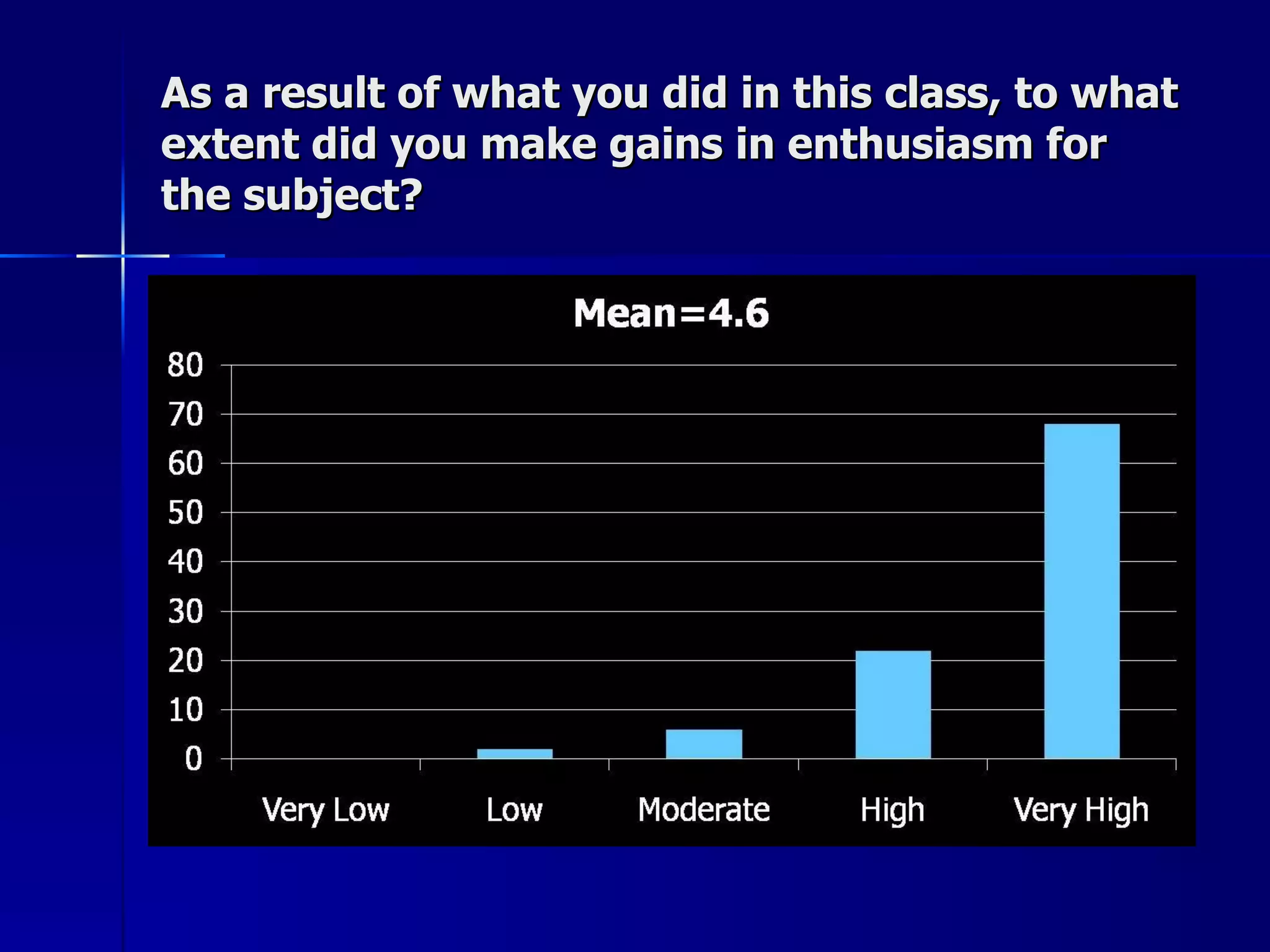
As a result of what you did in this class, to what extent did you make gains in enthusiasm for the subject?
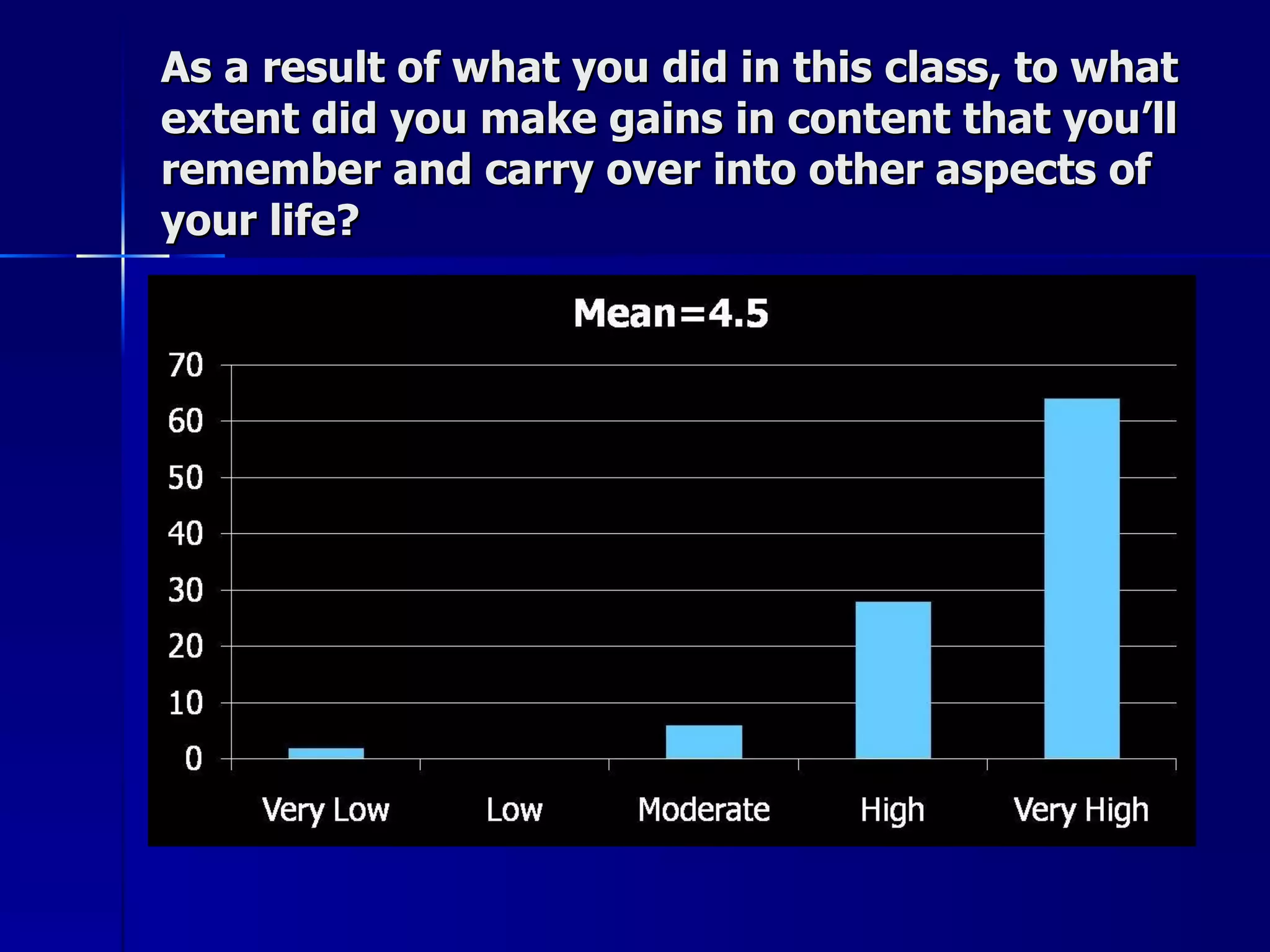
As a result of what you did in this class, to what extent did you make gains in content that you’ll remember and carry over into other aspects of your life?

Larry Beck First Iteration, Course Design

  • 1.
    Deliverable One LarryBeck, Ph.D. Recreation and Tourism Management RTM 305 and 404
  • 2.
    RTM 305 94Students MWF 11-11:50 Primarily Upper Division GE Students
  • 3.
    RTM 305 UniqueFeatures Introspective Written Portfolio Experiential Component “ Free Choice Fridays” Blended Approach : Captivate Lessons WebQuest and Wikis Rubrics, UDL, SALG
  • 4.
    RTM 305: StudentLearning Outcomes Outcome 1: Analyze the values of protected landscapes to individuals and to society. Outcome 2: Articulate the roots, institutional origins, and shaping of wilderness policy. Outcome 3: Evaluate contemporary wilderness management and preservation issues and provide implications for protection, visitor management and sustainable tourism. Outcome 4: Examine the politics of environmental protection and become an informed citizen regarding current sustainability issues. Outcome 5: Summarize international wilderness challenges and global environmental policy. Outcome 6: Consider deeper values of natural environments in the context of environmental ethics and spirituality.
  • 5.
    Student Command ofLearning Outcomes: 1=No Command…5=Very High Command
  • 6.
    RTM 404 63Students Wednesday, 7-9:40 p.m. Primarily Upper Division GE Students
  • 7.
    RTM 404 UniqueFeatures Introspective Written Portfolio Experiential Component Blended Approach : Online Assignments such as “Project Implicit” and “VolunTourism” Research using article databases and electronic resources Rubrics, UDL, SALG
  • 8.
    Student Comment: CulturalExperience at Rancho La Mentada “ Instead of staying at a hotel, I stayed at a family ranch in cabins, very far away from the city. Instead of eating at a restaurant, I had homemade traditional meals. Instead of visiting museums, I learned first hand about the culture from the Kumeyaay [themselves]. Instead of going on a city tour, I went on a tour of the vast land around the ranch. Instead of taking [another] form of transportation, I went on horseback!”
  • 9.
    RTM 404: StudentLearning Outcomes Outcome 1: Synthesize the concepts related to cross-cultural behavior in tourism. Outcome 2: Explain the major differences between national cultures and their influence on tourist and host social behavior. Outcome 3: Determine how cultural differences influence tourist perceptions and satisfaction. Outcome 4: Strategize collaborations among diverse tourism stakeholders representing government, business, environment and culture. Outcome 5: Communicate and mediate clearly and with a style that supports the purposes of the intended tourism audience.
  • 10.
    Student Command ofLearning Outcomes: 1=No Command…5=Very High Command
  • 11.
    Summer 2007 Thegoal was to “blend” RTM 305 in a comprehensive manner in which overall course goals and learning outcomes were addressed. The major feature was creating the initial two Captivate lectures. I also initiated use of rubrics, UDL statements and closed captions, and SALG at the conclusion of the course. I completed the WebQuest during the summer.
  • 12.
    Fall 2007—RTM 305Major Design Changes The blended approach represented a comprehensive treatment of course goals and learning outcomes. The SALG at the end of the semester showed student command of all six learning outcomes at a level between high and very high (4.03-4.31). I revised and expanded the Captivate lectures to seven and used online resources from the WebQuest to offer “Free Choice Fridays” so everyone in the class would have access to that information (that is, days that traditionally have lower attendance.) I implemented the WebQuest.
  • 13.
    Fall 2007—RTM 404Major Design Features Again, the blended approach represented a comprehensive treatment of course goals and learning outcomes. The SALG at the end of the semester showed student command of all five learning outcomes ranging from 3.83-4.43 (high). I offered online assignments for Halloween and Thanksgiving eve as well as time from class some nights (early release) to compensate for efforts online.
  • 14.
    Student Experiences RTM305 89% Response Rate
  • 15.
    Adobe Captivate Online presentations that include traditional PowerPoint slides and narration with options to pause, review, replay, etc.
  • 16.
    Did you preferCaptivate to attending class on Fridays?
  • 17.
    What is thedownside of Captivate, if any? No questions/discussion Procrastination Long time to load up More time consuming
  • 18.
    Did you everpause or review some portion of the presentation?
  • 19.
  • 20.
    Where did youview the online Captivate presentations?
  • 21.
    Did you preferclosed captions or without captions when viewing the online presentations?
  • 22.
    The quality ofCaptivate presentations provided in this class:
  • 23.
  • 24.
    How important wasthis group assignment to meeting course objectives and what you “got” out of the class?
  • 25.
    Highlights of WebQuestIncreased awareness of the issue Researching the topic Finding solutions to the problem Learning how to use a Wiki site
  • 26.
    Lowlights of WebQuestGroup aspect (not everyone contributed equally to the project)
  • 27.
    New Strategy Requiremandatory meeting dates throughout the semester and periodic deadlines to keep groups on task Presentation of Wiki to the entire class Provide better overview of the benefits of this assignment (21 st Century Skills)
  • 28.
    WebQuest and 21st Century Skills Information and technological literacy Inventive and creative thinking Collaboration and communication Creating real-world solutions to contemporary issues
  • 29.
    Overall Assessment ofBlended Learning RTM 305
  • 30.
    Compared to thetraditional classroom experience the blended approach is:
  • 31.
    Compared to thetraditional classroom experience the blended approach is:
  • 32.
    Compared to thetraditional classroom experience the blended approach is:
  • 33.
    Compared to thetraditional classroom experience the blended approach is:
  • 34.
    Would you liketo take other blended learning courses?
  • 35.
    RTM 404 CrossCultural Perspectives of Tourism
  • 36.
    Overall Assessment ofBlended Learning 94% Response Rate
  • 37.
    Compared to thetraditional classroom experience the blended approach is:
  • 38.
    Compared to thetraditional classroom experience the blended approach is:
  • 39.
    Compared to thetraditional classroom experience the blended approach is:
  • 40.
    Compared to thetraditional classroom experience the blended approach is:
  • 41.
    Compared to thetraditional classroom experience the blended approach is:
  • 42.
    Would you liketo take other blended learning courses?
  • 43.
    What do youlike best about the blended learning approach? “ Being able to do things on my own time.” “ Blended learning allows the student to have some flexibility in the class schedule. It’s great because the class isn’t so boring as a traditional lecture class.” “ Allowed for higher level of autonomy while maintaining great organization and meeting learning objectives.” “ You really learn about your resources out there and how to use them.” “ I was able to learn using other mediums besides a standard lecture. I seemed to learn more personally.” “ We have more freedom, so to speak.” “ It makes the student more involved.” “ Generally, teachers doing something special for their class care more about the class, which makes it more fun.” “ Only thing I would change is size of class. Too big!”
  • 44.
    “ Deeper” Dimensionsof the Course RTM 404
  • 45.
    As a resultof what you did in this class, to what extent did you make gains in understanding the relevance of this field to real world issues?
  • 46.
    As a resultof what you did in this class, to what extent did you make gains in appreciating this field of study?
  • 47.
    As a resultof what you did in this class, to what extent did you make gains in enthusiasm for the subject?
  • 48.
    As a resultof what you did in this class, to what extent did you make gains in content that you’ll remember and carry over into other aspects of your life?