MySQL
Multi-Master Replication
Challenge
Michael Naumov
About Wix
1. We provide a platform to build your own and free awesome web site for any device
2. About 40M Registered Users
3. Around 1.3M new registrations every month
4. About 500 employees with 4 offices around the world.
Why do we need Multi-Master topology?
The Vision: Multiple, active DBMS servers with exactly the same data
1. Simple high availability model
2. Operate systems over multiple sites
3. Access geographically “close” data
BUT!
It is not so easy to do as its seems
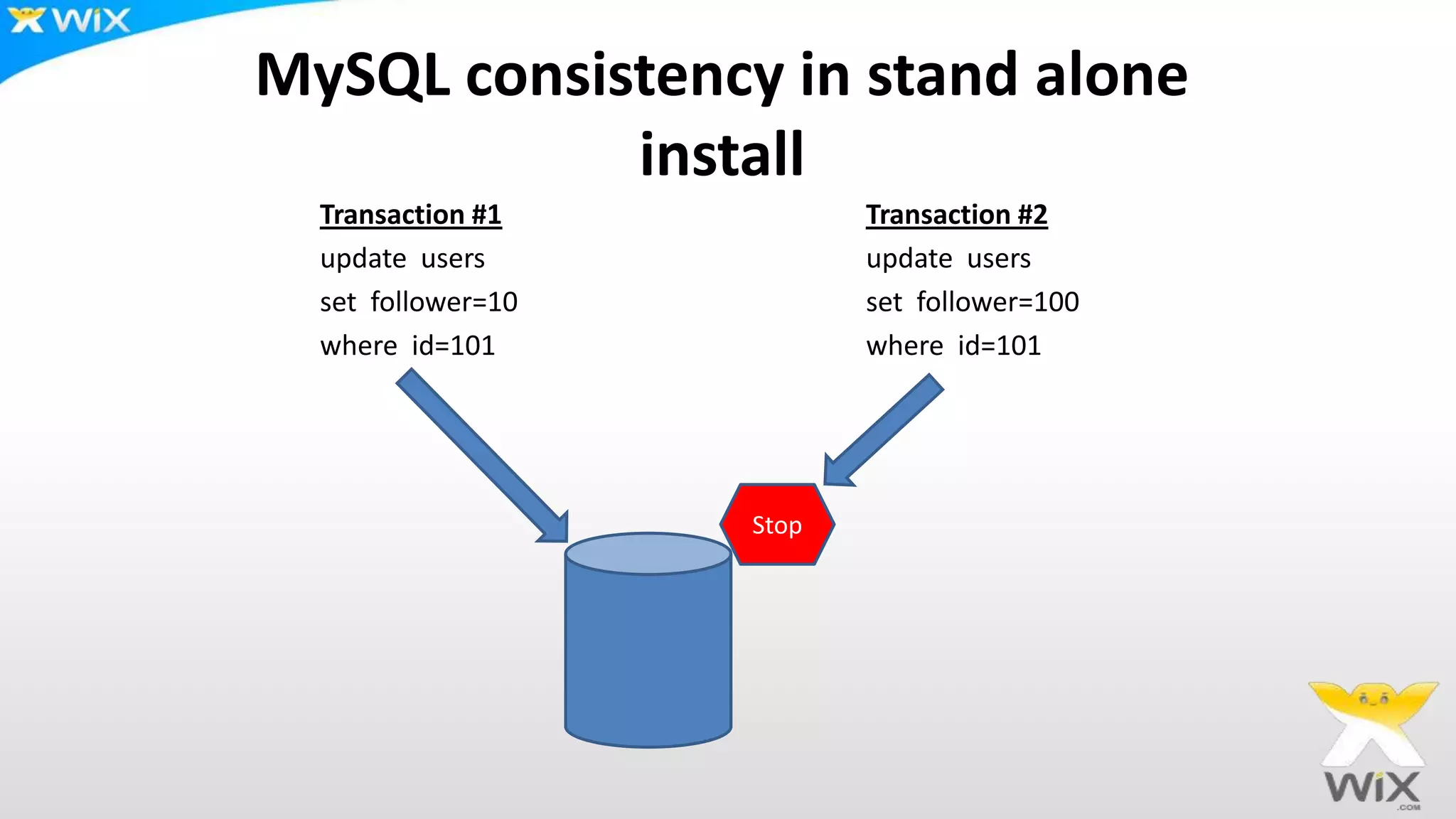
MySQL consistency in stand alone
install
Transaction #1 Transaction #2
update users update users
set follower=10 set follower=100
where id=101 where id=101
Stop
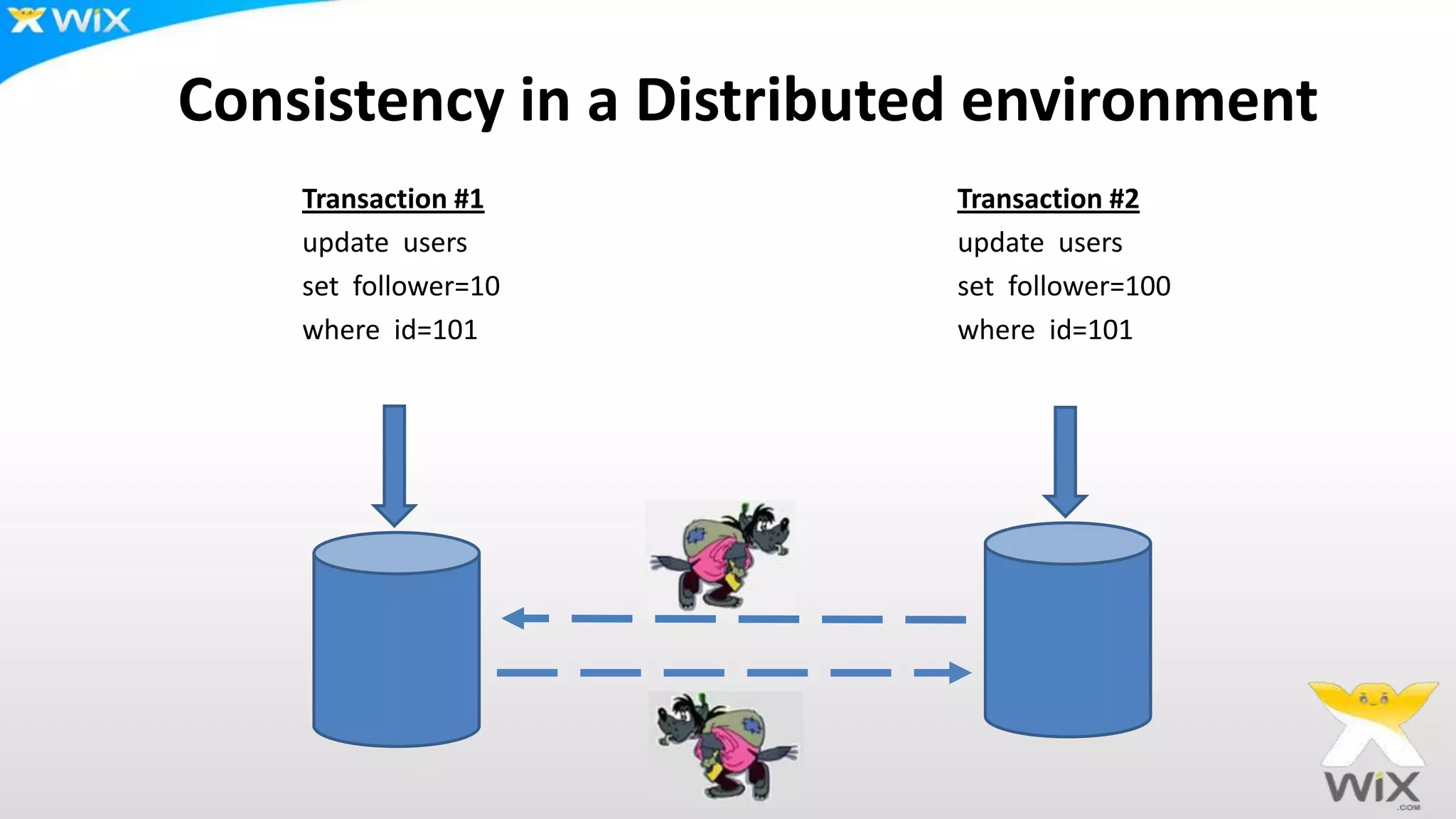
Consistency in a Distributed environment
Transaction #1 Transaction #2
update users update users
set follower=10 set follower=100
where id=101 where id=101
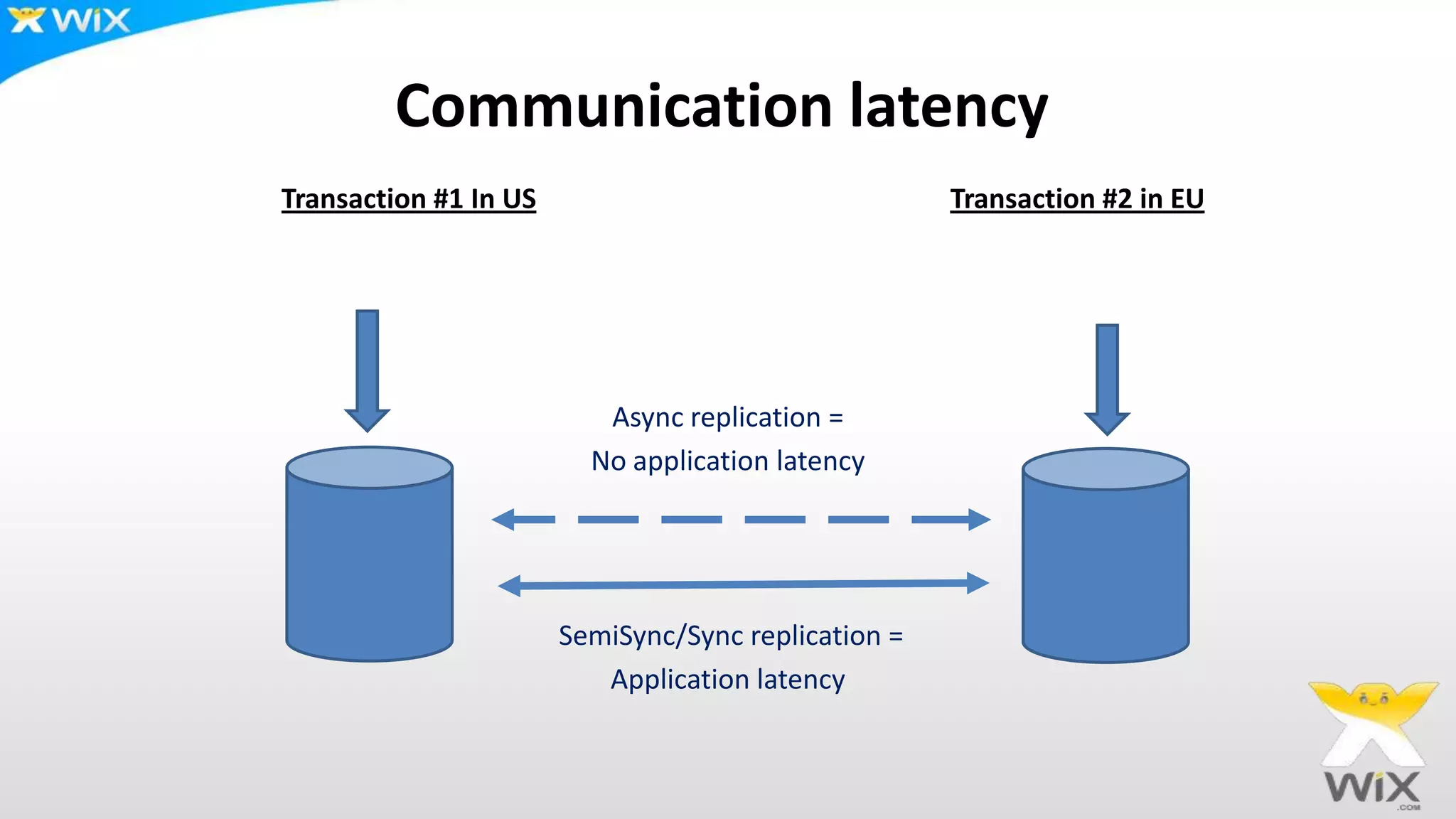
Communication latency
Transaction #1 In US Transaction #2 in EU
Async replication =
No application latency
SemiSync/Sync replication =
Application latency
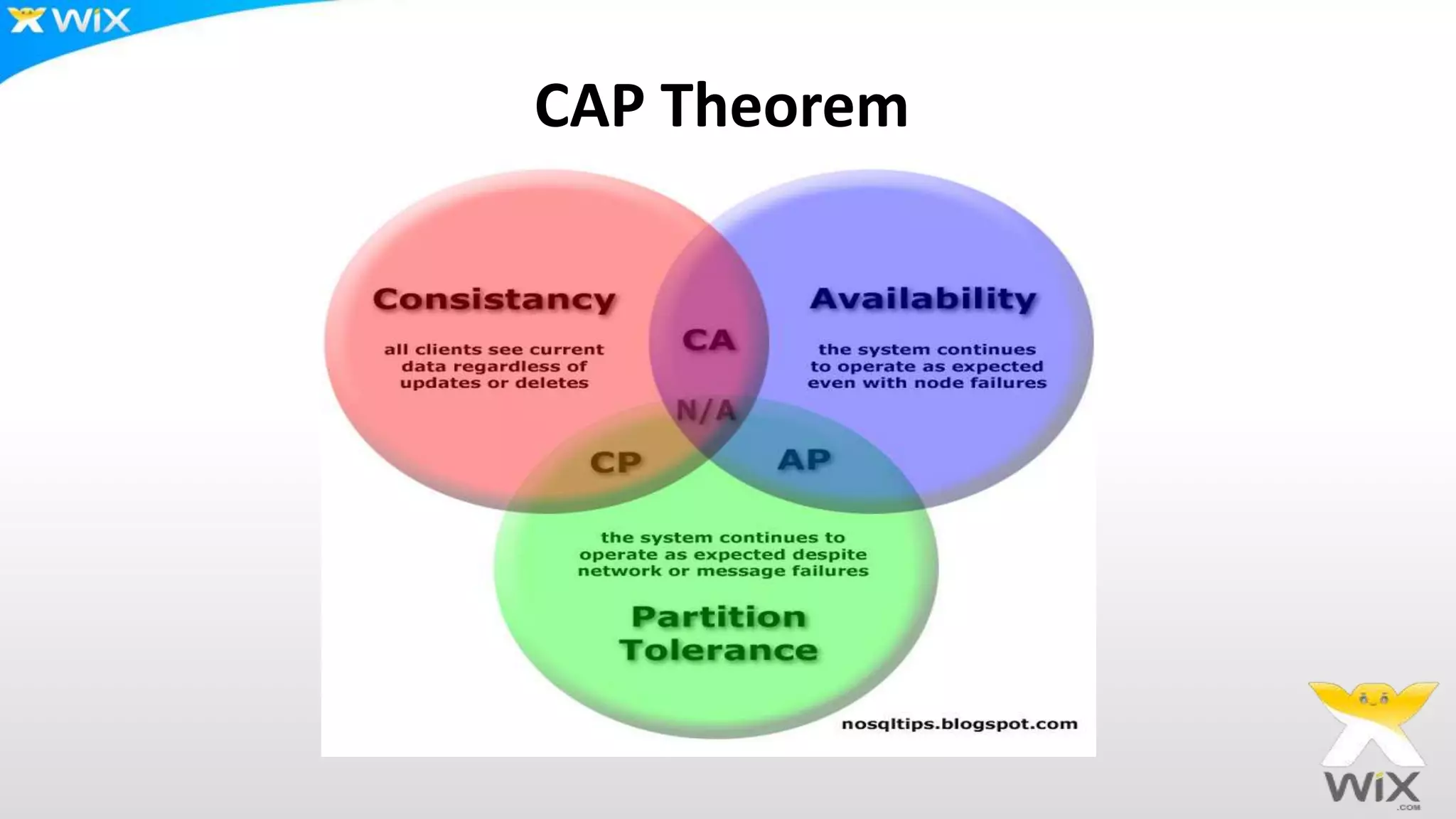
CAP Theorem
So what are the solutions out there?
MySQL Native Replication
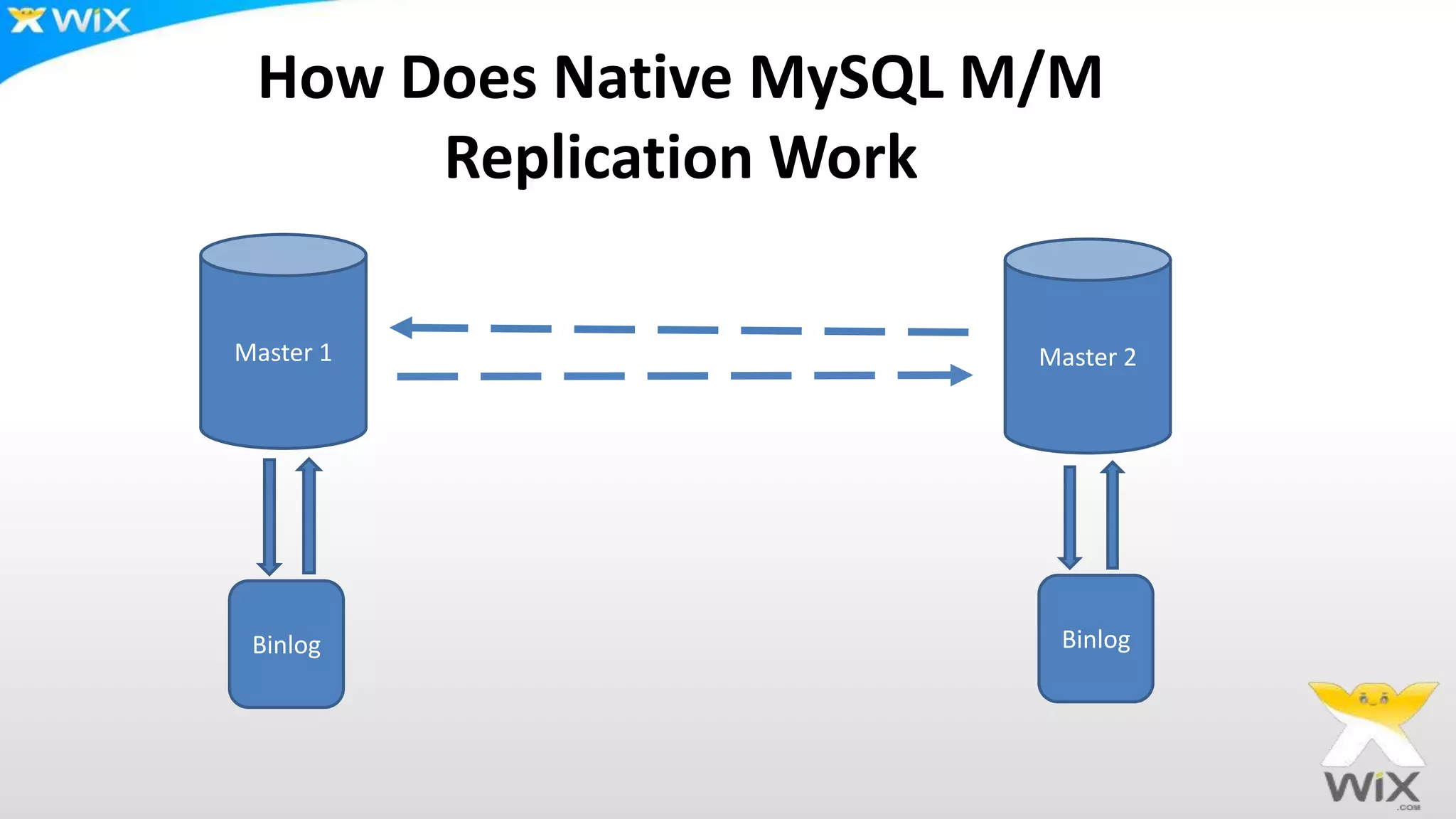
How Does Native MySQL M/M
Replication Work
Master 1 Master 2
Binlog Binlog
• Statement replication = send client SQL
• Row replication = send changed rows
• Use row replication for multi-master
Row vs. Statement Replication
Auto-Increment Key Offsets
• Set different keys on each server to avoid primary key collisions
[my.cnf]
server-id=1
auto-increment-offset = 1
auto-increment-increment = 4
...
[my.cnf]
server-id=2
auto-increment-offset = 2
auto-increment-increment = 4
...
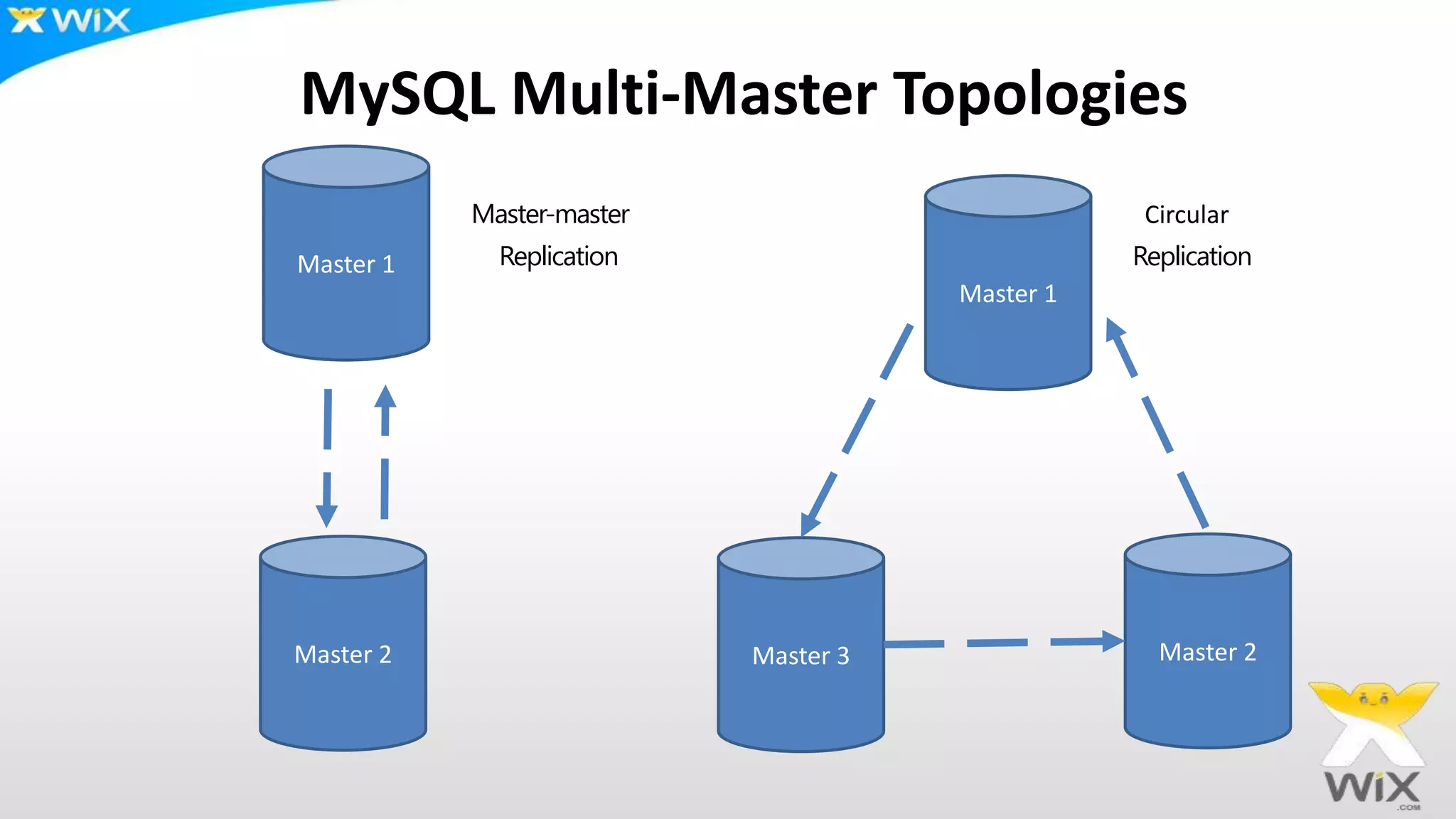
MySQL Multi-Master Topologies
Master 1
Master 2 Master 3 Master 2
Master 1
Master-master Circular
Replication Replication
MySQLNative Replication Summary
• Built in with well-known capabilities
• MySQL replication by default is asynchronous. In addition to the built-in asynchronous
replication, MySQL 5.5 and above supports semi-synchronous replication.
• Very limited topology support
• Very limited conflict avoidance
• Not a good choice for multi-master if there are
writes to more than 1 master
MySQL Cluster (NDB)
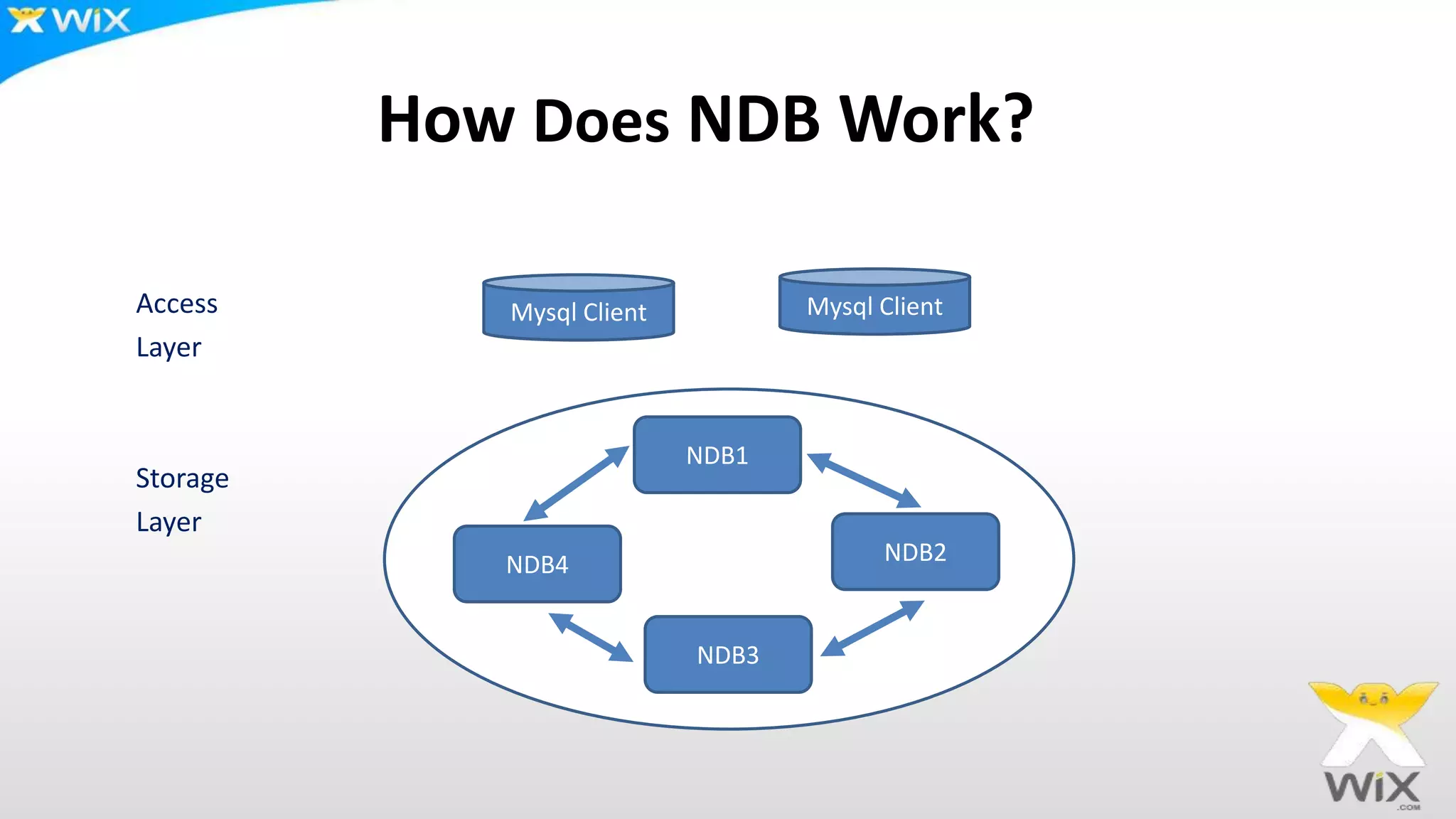
How Does NDB Work?
Access
Layer
Storage
Layer
Mysql Client Mysql Client
NDB1
NDB2NDB4
NDB3
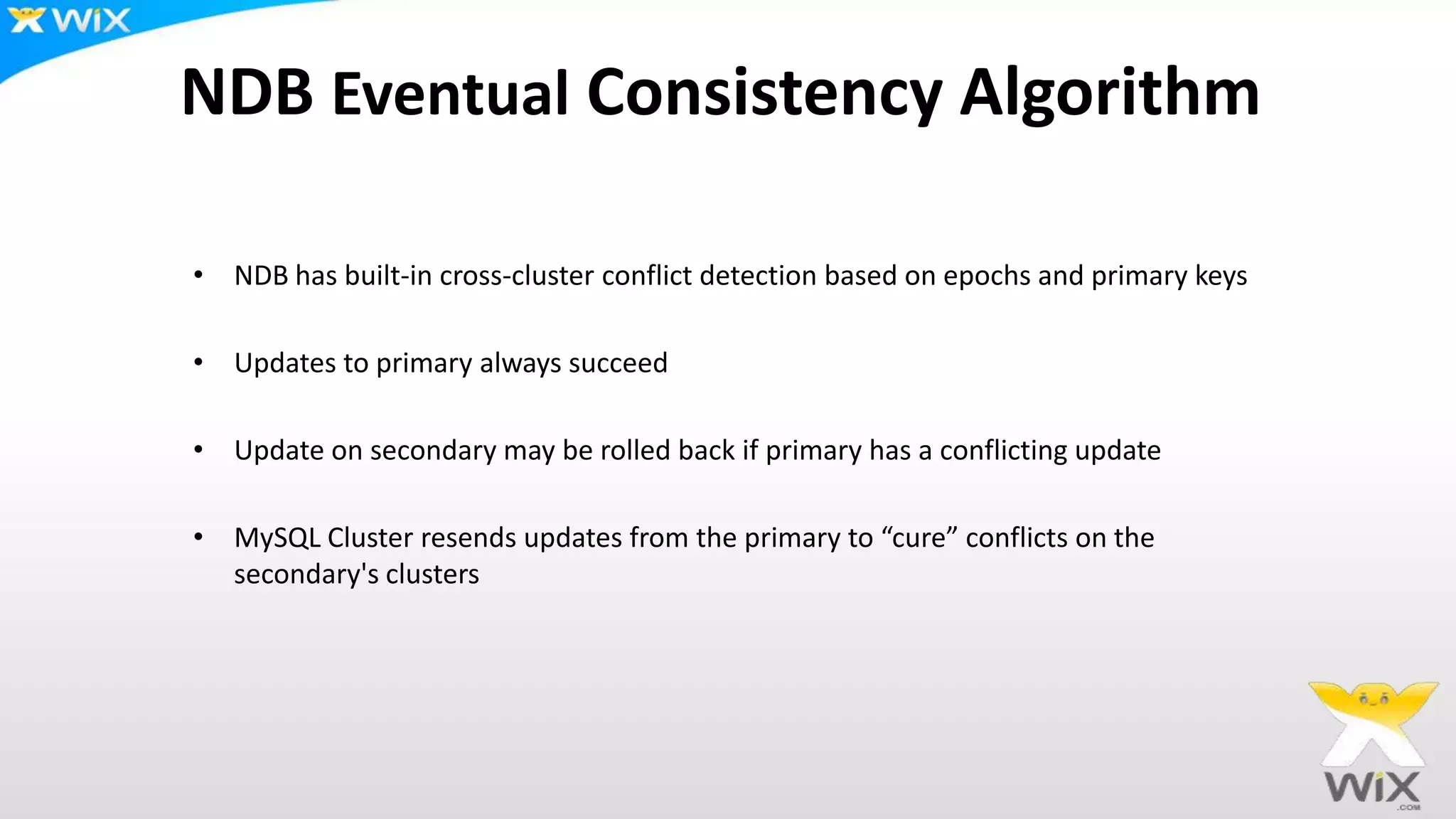
NDB Eventual Consistency Algorithm
• NDB has built-in cross-cluster conflict detection based on epochs and primary keys
• Updates to primary always succeed
• Update on secondary may be rolled back if primary has a conflicting update
• MySQL Cluster resends updates from the primary to “cure” conflicts on the
secondary's clusters
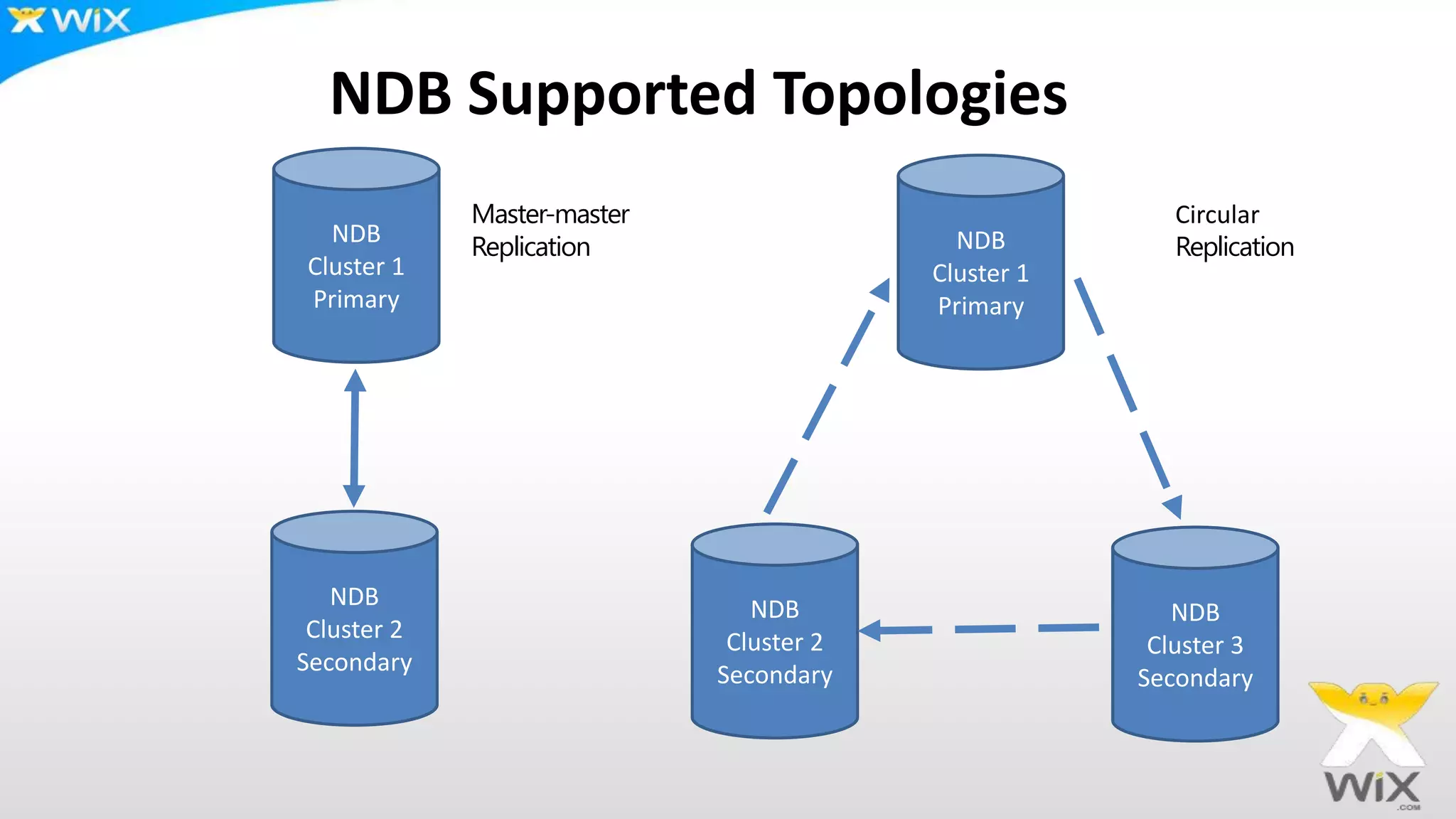
NDB Supported Topologies
NDB
Cluster 2
Secondary
NDB
Cluster 2
Secondary
NDB
Cluster 3
Secondary
NDB
Cluster 1
Primary
Master-master Circular
Replication Replication
NDB
Cluster 1
Primary
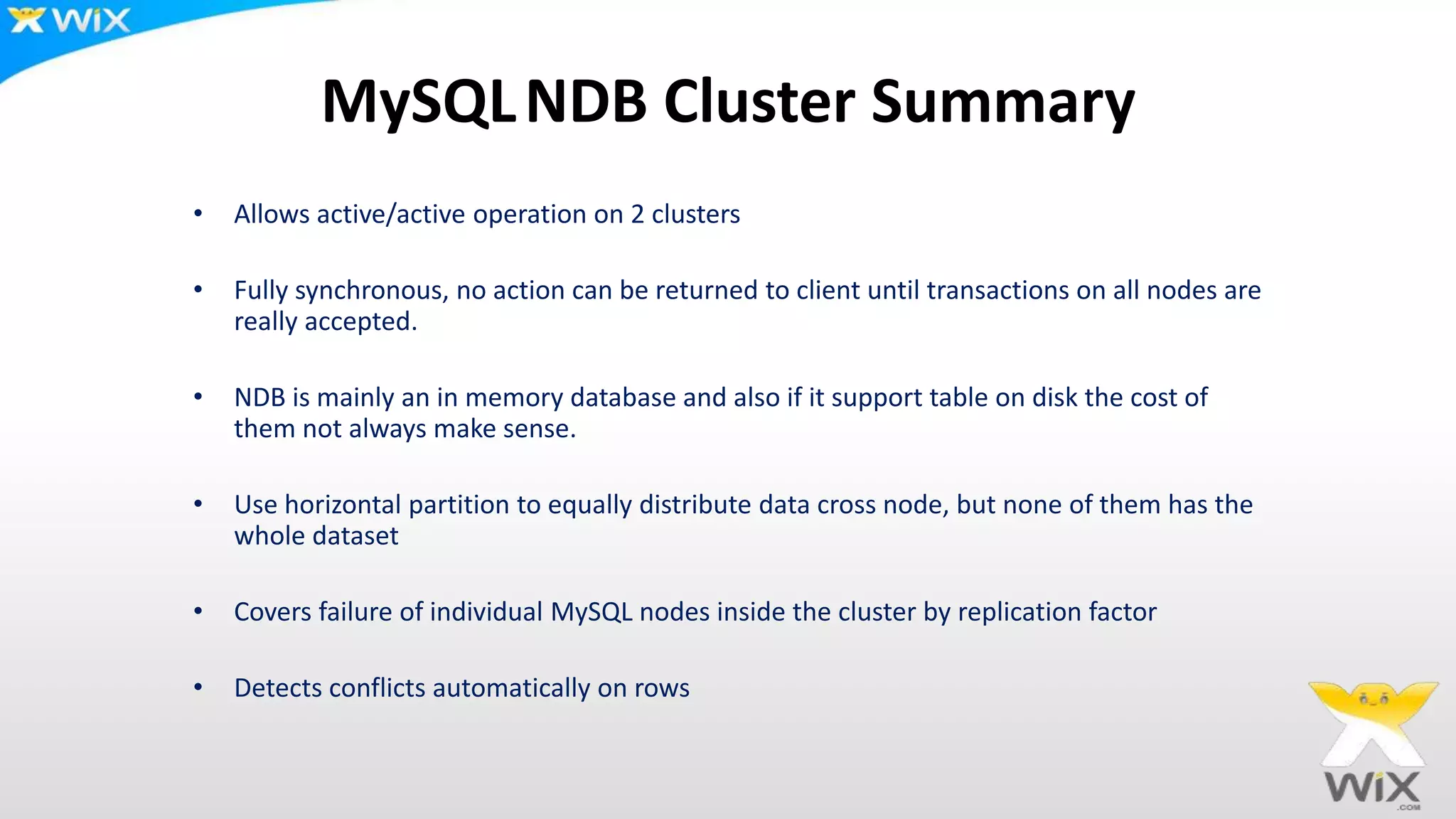
MySQLNDB Cluster Summary
• Allows active/active operation on 2 clusters
• Fully synchronous, no action can be returned to client until transactions on all nodes are
really accepted.
• NDB is mainly an in memory database and also if it support table on disk the cost of
them not always make sense.
• Use horizontal partition to equally distribute data cross node, but none of them has the
whole dataset
• Covers failure of individual MySQL nodes inside the cluster by replication factor
• Detects conflicts automatically on rows
Galera
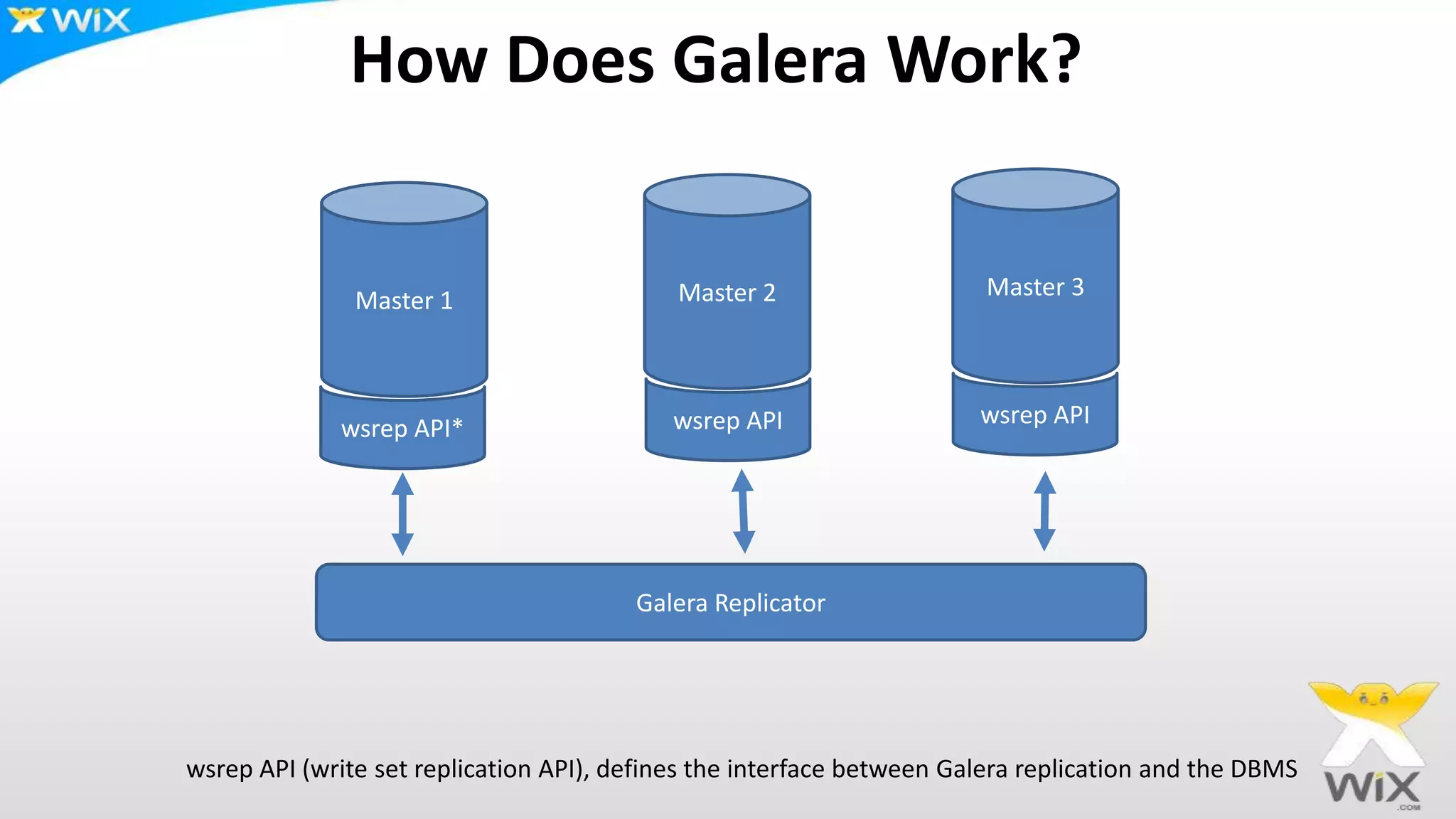
How Does Galera Work?
Galera Replicator
Master 1 Master 2 Master 3
wsrep API* wsrep API wsrep API
wsrep API (write set replication API), defines the interface between Galera replication and the DBMS
Galera approach is Data Centric
• Data does not belong to a node – Node belong to data. Using global transaction Id’s
• Connect to any nodes for writes
• No headache for auto increment. Galera will do it for you
• Galera replicate the full dataset across ALL nodes.
• Galera replicate data synchronously from one node to cluster on the commit, but
apply them on each node by a FIFO queue (multi thread).
Galera Summary
• Galera require InnoDB to work.
• Galera data replication overhead, increase with the number of nodes present in the
cluster.
• Galera do not offers any parallelism between the nodes when retrieving the data;
clients rely on the single node they access.
• Synchronous replication
• Percona XtraDB Cluster is based on Galera
Tungsten
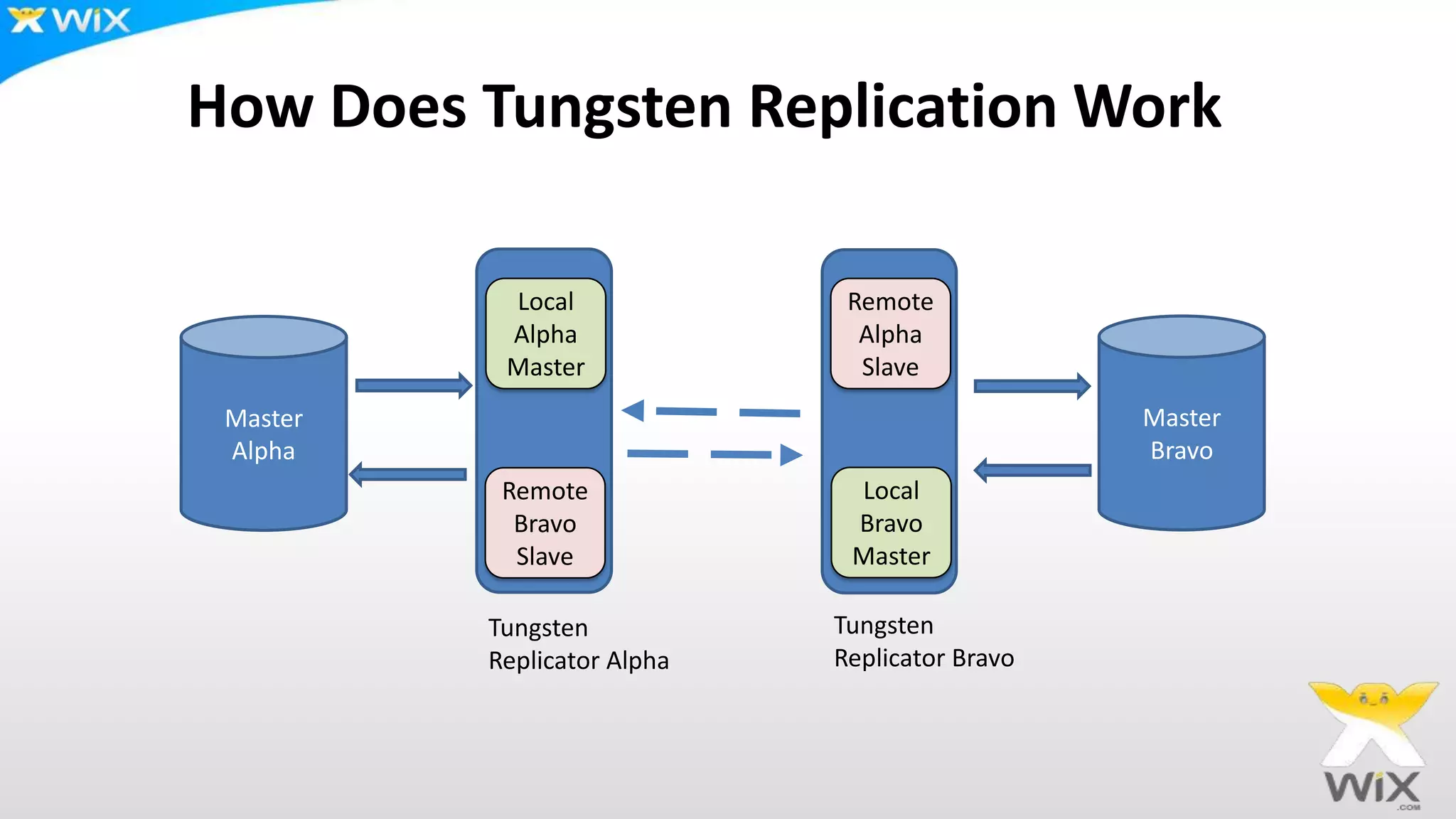
How Does Tungsten Replication Work
Master
Alpha
Master
Bravo
Remote
Bravo
Slave
Tungsten
Replicator Alpha
Tungsten
Replicator Bravo
Local
Alpha
Master
Local
Bravo
Master
Remote
Alpha
Slave
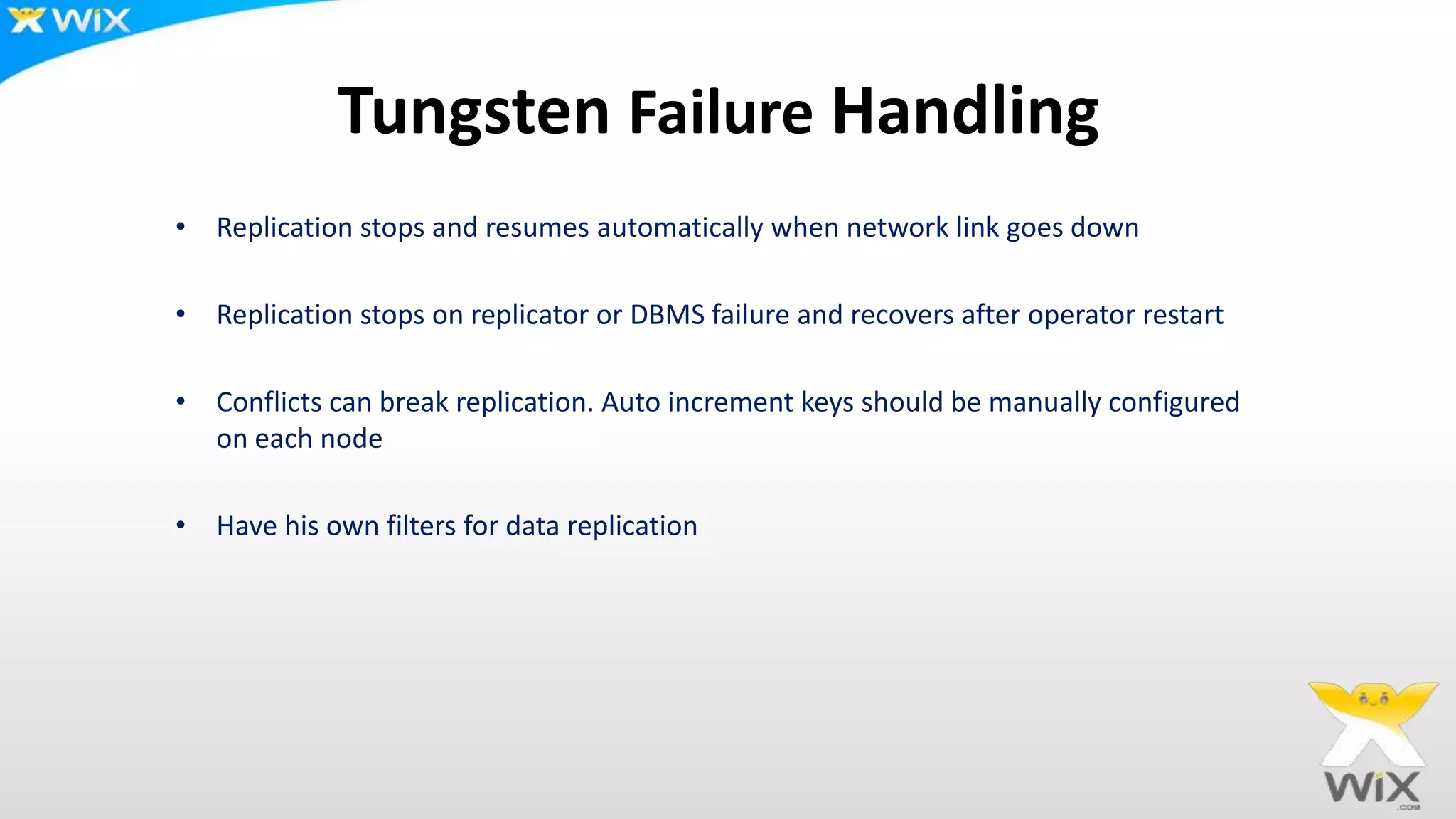
Tungsten Failure Handling
• Replication stops and resumes automatically when network link goes down
• Replication stops on replicator or DBMS failure and recovers after operator restart
• Conflicts can break replication. Auto increment keys should be manually configured
on each node
• Have his own filters for data replication
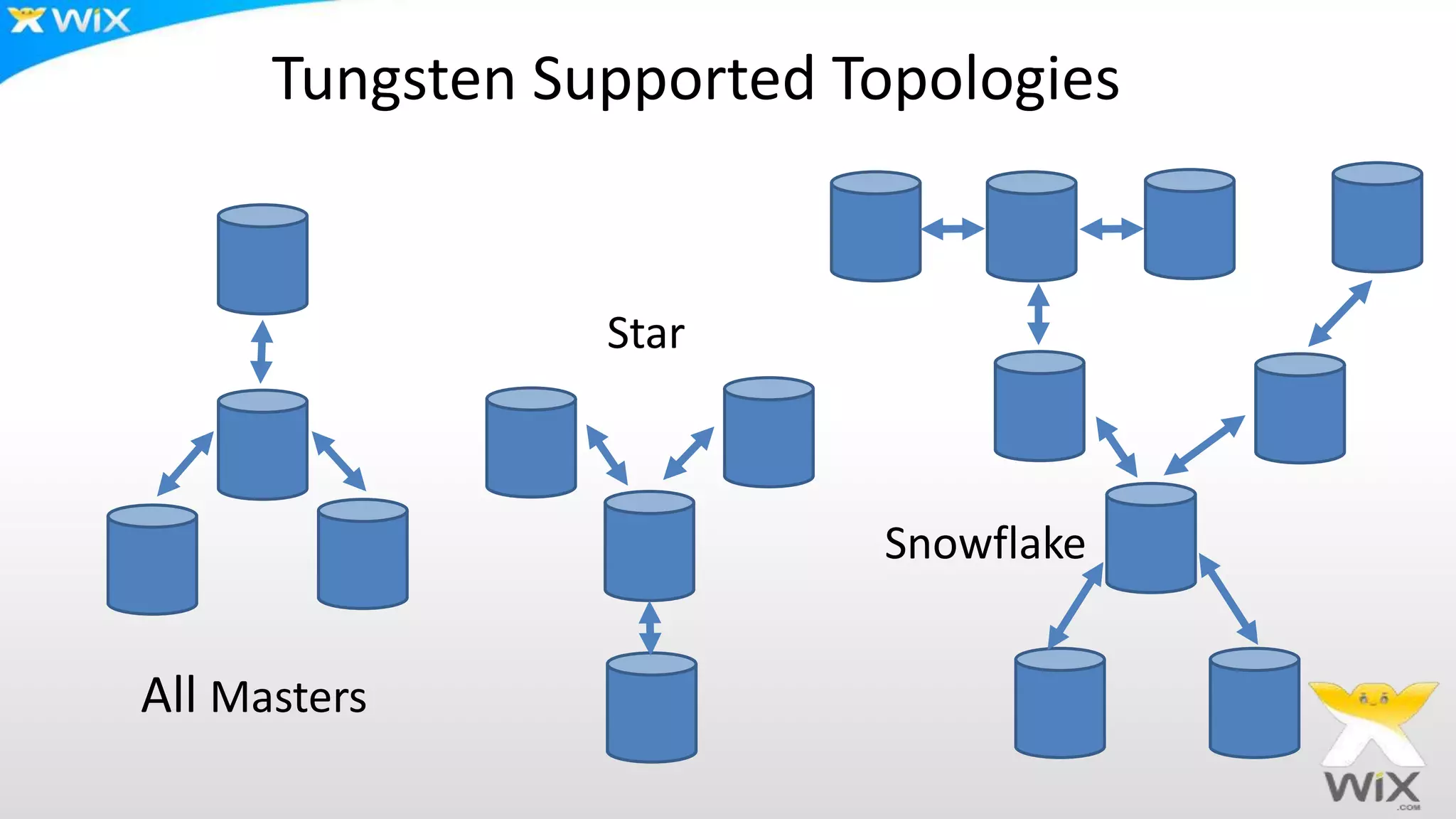
Tungsten Supported Topologies
All Masters
Star
Snowflake
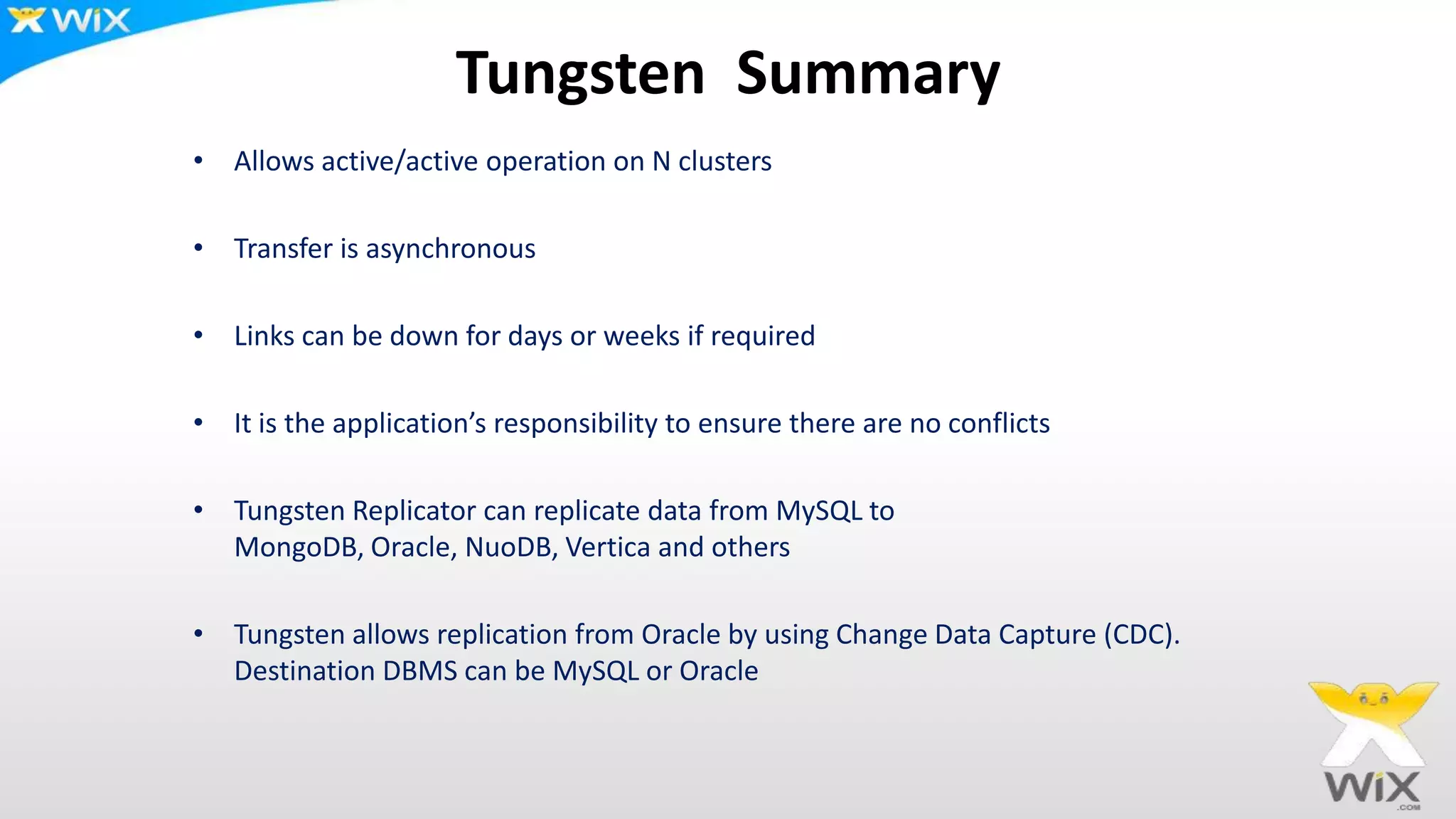
Tungsten Summary
• Allows active/active operation on N clusters
• Transfer is asynchronous
• Links can be down for days or weeks if required
• It is the application’s responsibility to ensure there are no conflicts
• Tungsten Replicator can replicate data from MySQL to
MongoDB, Oracle, NuoDB, Vertica and others
• Tungsten allows replication from Oracle by using Change Data Capture (CDC).
Destination DBMS can be MySQL or Oracle
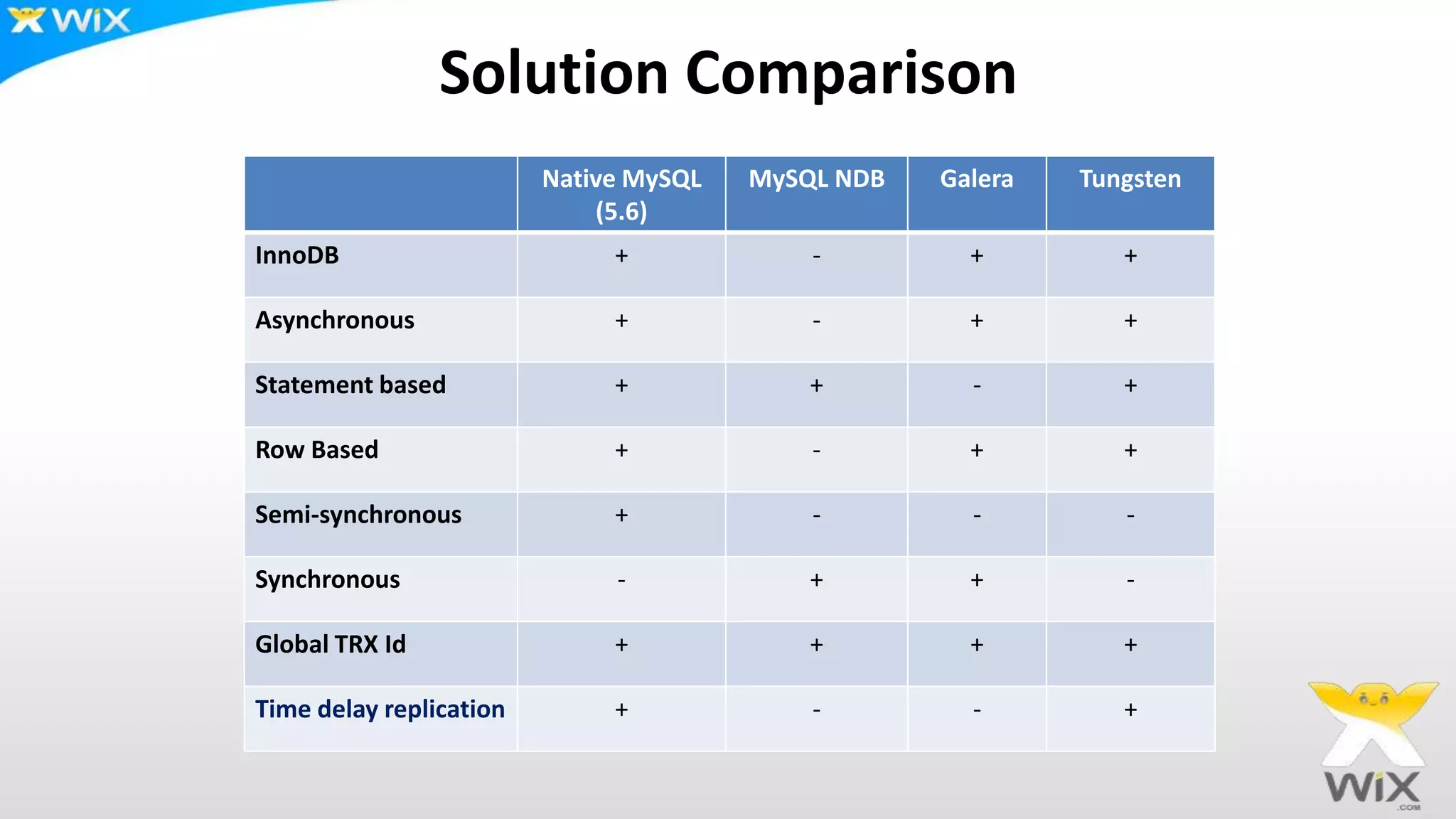
Solution Comparison
Native MySQL
(5.6)
MySQL NDB Galera Tungsten
InnoDB + - + +
Asynchronous + - + +
Statement based + + - +
Row Based + - + +
Semi-synchronous + - - -
Synchronous - + + -
Global TRX Id + + + +
Time delay replication + - - +
Thank you all
@NaumovMichael
http://goo.gl/OqaigN

MySQL Multi Master Replication

  • 1.
  • 2.
    About Wix 1. Weprovide a platform to build your own and free awesome web site for any device 2. About 40M Registered Users 3. Around 1.3M new registrations every month 4. About 500 employees with 4 offices around the world.
  • 3.
    Why do weneed Multi-Master topology? The Vision: Multiple, active DBMS servers with exactly the same data 1. Simple high availability model 2. Operate systems over multiple sites 3. Access geographically “close” data
  • 4.
    BUT! It is notso easy to do as its seems
  • 5.
    MySQL consistency instand alone install Transaction #1 Transaction #2 update users update users set follower=10 set follower=100 where id=101 where id=101 Stop
  • 6.
    Consistency in aDistributed environment Transaction #1 Transaction #2 update users update users set follower=10 set follower=100 where id=101 where id=101
  • 7.
    Communication latency Transaction #1In US Transaction #2 in EU Async replication = No application latency SemiSync/Sync replication = Application latency
  • 8.
  • 9.
    So what arethe solutions out there?
  • 10.
  • 11.
    How Does NativeMySQL M/M Replication Work Master 1 Master 2 Binlog Binlog
  • 12.
    • Statement replication= send client SQL • Row replication = send changed rows • Use row replication for multi-master Row vs. Statement Replication
  • 13.
    Auto-Increment Key Offsets •Set different keys on each server to avoid primary key collisions [my.cnf] server-id=1 auto-increment-offset = 1 auto-increment-increment = 4 ... [my.cnf] server-id=2 auto-increment-offset = 2 auto-increment-increment = 4 ...
  • 14.
    MySQL Multi-Master Topologies Master1 Master 2 Master 3 Master 2 Master 1 Master-master Circular Replication Replication
  • 15.
    MySQLNative Replication Summary •Built in with well-known capabilities • MySQL replication by default is asynchronous. In addition to the built-in asynchronous replication, MySQL 5.5 and above supports semi-synchronous replication. • Very limited topology support • Very limited conflict avoidance • Not a good choice for multi-master if there are writes to more than 1 master
  • 16.
  • 17.
    How Does NDBWork? Access Layer Storage Layer Mysql Client Mysql Client NDB1 NDB2NDB4 NDB3
  • 18.
    NDB Eventual ConsistencyAlgorithm • NDB has built-in cross-cluster conflict detection based on epochs and primary keys • Updates to primary always succeed • Update on secondary may be rolled back if primary has a conflicting update • MySQL Cluster resends updates from the primary to “cure” conflicts on the secondary's clusters
  • 19.
    NDB Supported Topologies NDB Cluster2 Secondary NDB Cluster 2 Secondary NDB Cluster 3 Secondary NDB Cluster 1 Primary Master-master Circular Replication Replication NDB Cluster 1 Primary
  • 20.
    MySQLNDB Cluster Summary •Allows active/active operation on 2 clusters • Fully synchronous, no action can be returned to client until transactions on all nodes are really accepted. • NDB is mainly an in memory database and also if it support table on disk the cost of them not always make sense. • Use horizontal partition to equally distribute data cross node, but none of them has the whole dataset • Covers failure of individual MySQL nodes inside the cluster by replication factor • Detects conflicts automatically on rows
  • 21.
  • 22.
    How Does GaleraWork? Galera Replicator Master 1 Master 2 Master 3 wsrep API* wsrep API wsrep API wsrep API (write set replication API), defines the interface between Galera replication and the DBMS
  • 23.
    Galera approach isData Centric • Data does not belong to a node – Node belong to data. Using global transaction Id’s • Connect to any nodes for writes • No headache for auto increment. Galera will do it for you • Galera replicate the full dataset across ALL nodes. • Galera replicate data synchronously from one node to cluster on the commit, but apply them on each node by a FIFO queue (multi thread).
  • 24.
    Galera Summary • Galerarequire InnoDB to work. • Galera data replication overhead, increase with the number of nodes present in the cluster. • Galera do not offers any parallelism between the nodes when retrieving the data; clients rely on the single node they access. • Synchronous replication • Percona XtraDB Cluster is based on Galera
  • 25.
  • 26.
    How Does TungstenReplication Work Master Alpha Master Bravo Remote Bravo Slave Tungsten Replicator Alpha Tungsten Replicator Bravo Local Alpha Master Local Bravo Master Remote Alpha Slave
  • 27.
    Tungsten Failure Handling •Replication stops and resumes automatically when network link goes down • Replication stops on replicator or DBMS failure and recovers after operator restart • Conflicts can break replication. Auto increment keys should be manually configured on each node • Have his own filters for data replication
  • 28.
    Tungsten Supported Topologies AllMasters Star Snowflake
  • 29.
    Tungsten Summary • Allowsactive/active operation on N clusters • Transfer is asynchronous • Links can be down for days or weeks if required • It is the application’s responsibility to ensure there are no conflicts • Tungsten Replicator can replicate data from MySQL to MongoDB, Oracle, NuoDB, Vertica and others • Tungsten allows replication from Oracle by using Change Data Capture (CDC). Destination DBMS can be MySQL or Oracle
  • 30.
    Solution Comparison Native MySQL (5.6) MySQLNDB Galera Tungsten InnoDB + - + + Asynchronous + - + + Statement based + + - + Row Based + - + + Semi-synchronous + - - - Synchronous - + + - Global TRX Id + + + + Time delay replication + - - +
  • 31.