WHAT IS
AN ANDROID
AND WHY DOES IT MATTER?
ADVERTISING ID
TAKE 5:
What is
an Android
Advertising ID
and Why Does
It Matter?
Semi-Permanent
Device Identifiers
Copyright © 2015 All rights reserved worldwide. | www.apsalar.com 2
Android Advertising ID is a device identifier for advertisers to use in anonymously tracking user activity
on Android devices. An Android Advertising ID is somewhat analogous to an advertising cookie, in that it
enables an advertiser to understand that a user of a particular phone has taken an action like a click or an
app install.
Android Advertising IDs take the place of cookies in mobile advertising delivered to Android devices
because cookies are problematic in the mobile world. For more information on why cookies don’t work in
mobile, refer to the Take 5 entitled, Why Do They Say Cookies Don’t Work in Mobile?
Advertisers want to be able to associate advertising actions to specific anonymized individuals. Android
Advertising IDs (and their iPhone siblings, IDFAs) help an advertiser identify the specific phone where the
ad action takes place.
Third-party cookies, which are commonly used on the PC web for tracking, tend to have short life spans
– anything from 1 to 30 days on average. By contrast, the Android Advertising ID doesn’t change unless a
user decides to change it in their phone settings. Few consumers feel a need to take this action, so Android
Advertising IDs can offer a better foundation for a persistent and anonymized consumer profile.
Also, an advertising ID is the same for all of the apps and browsers on a phone, so it can be a powerful way
to aggregate customer behavior across all of these disconnected environments. Thus, device IDs like IDFA
are very useful as the foundation for customer profiles in data management platforms, or DMPs. They
enable a brand to accurately aggregate data about a customer to a specific, anonymized profile.
Copyright © 2015 All rights reserved worldwide. | www.apsalar.com 3
Android ID (ANDI)
and
Android Advertising ID
Using Android
Advertising ID
Before Android Advertising ID, advertisers could track actions on Android phones using a device iden-
tifier called Android ID (or ANDI.) The big advantage for the Advertiser ID is that it provides consumer
choice. An Android ID is a permanent device number, and sharing it could not be turned off, whereas
users have the option to opt out of Android Advertising ID tracking, or to change their ID periodically.
If an app is downloaded from Google Play, it has an Android Advertising ID. If the app is downloaded
from another store, tracking and measurement companies like Apsalar are permitted to track using the
ANDI, but must not connect the Advertising ID to the ANDI.
When consumers take actions as a result of ads, like clicking a banner, playing a video, or installing an
app, media companies can pass the Android Advertising ID with information about the consumer action
that took place as a result of the advertising. Most media companies do pass Android Advertising IDs.
Some media companies, including some large social networks, do not pass device IDs to advertisers, but
do allow you to target specific IDs within their properties.
Apsalar helps advertisers by associating in-app and omni-channel consumer actions to these semi per-
manent identifiers. This helps them create powerful customer profiles and understand their audience, in
addition to the relative performance of different media vendors.
The Android Advertiser enables an advertiser to individually target specific individuals that have taken
actions in the past. This sort of individual targeting is becoming increasingly common as programmatic
media and social media advertising grow in popularity.
Copyright © 2015 All rights reserved worldwide. | www.apsalar.com 4
ABOUT TAKE 5
The Take 5 series is designed to help
senior marketers learn more about
data-driven customer marketing by
creating short educational pieces that
can be read and absorbed in less than
five minutes. The main content of each
Take 5 is 600 words or less to stay
focused and brief. The Take 5 series
will also be available as a collection
– a primer on data driven customer
marketing.
Visit
www.Apsalar.com/Resources
for more Take 5 content!
ABOUT APSALAR
Apsalar, the leader in mobile data management, helps direct marketing brands get
better marketing effectiveness by providing a mobile data management platform
that delivers a true understanding of customer behavior in apps and across other
marketing channels.
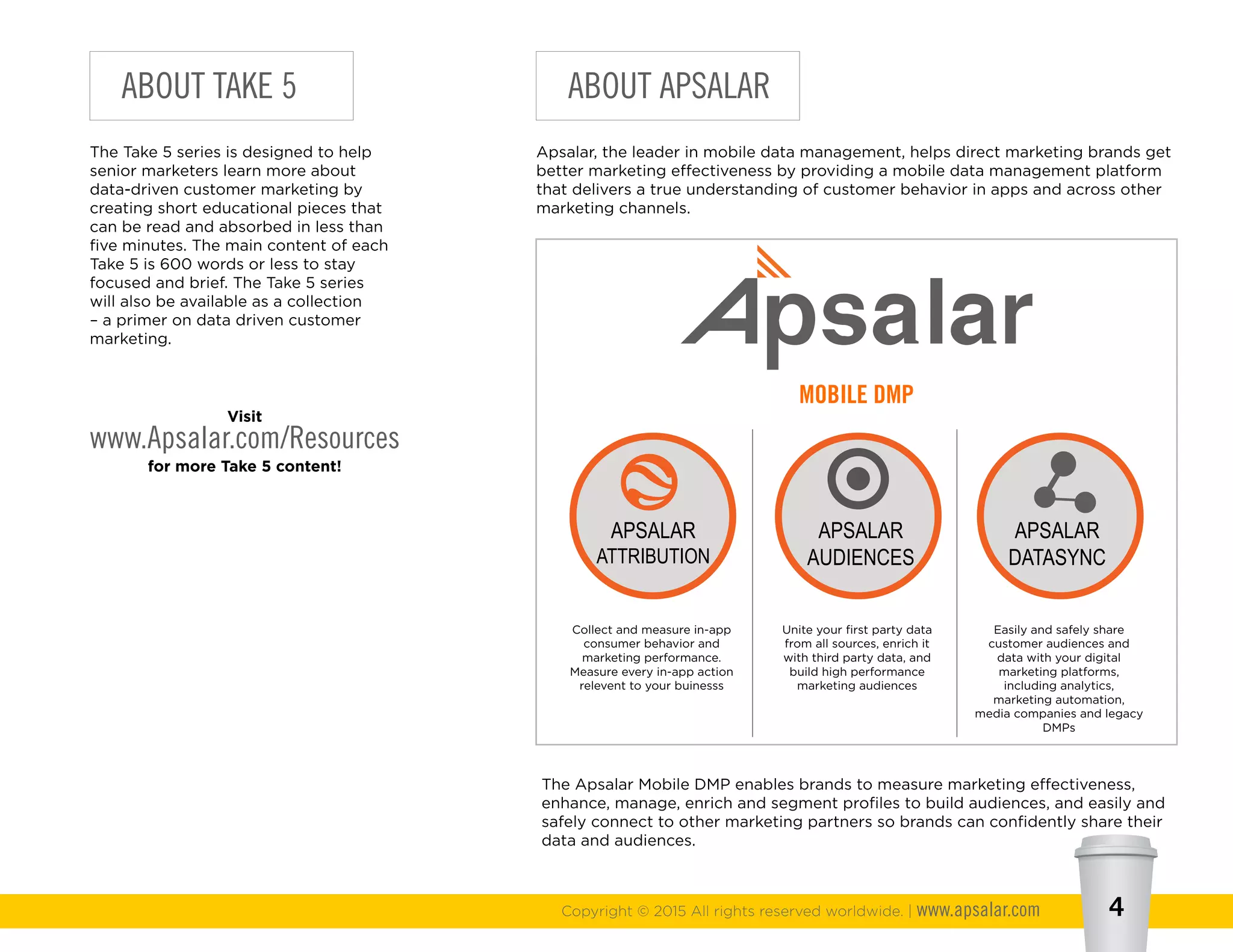
The Apsalar Mobile DMP enables brands to measure marketing effectiveness,
enhance, manage, enrich and segment profiles to build audiences, and easily and
safely connect to other marketing partners so brands can confidently share their
data and audiences.
APSALAR
ATTRIBUTION
APSALAR
AUDIENCES
APSALAR
DATASYNC
MOBILE DMP
Collect and measure in-app
consumer behavior and
marketing performance.
Measure every in-app action
relevent to your buinesss
Unite your first party data
from all sources, enrich it
with third party data, and
build high performance
marketing audiences
Easily and safely share
customer audiences and
data with your digital
marketing platforms,
including analytics,
marketing automation,
media companies and legacy
DMPs

What is an Android Advertising ID?

  • 1.
    WHAT IS AN ANDROID ANDWHY DOES IT MATTER? ADVERTISING ID TAKE 5:
  • 2.
    What is an Android AdvertisingID and Why Does It Matter? Semi-Permanent Device Identifiers Copyright © 2015 All rights reserved worldwide. | www.apsalar.com 2 Android Advertising ID is a device identifier for advertisers to use in anonymously tracking user activity on Android devices. An Android Advertising ID is somewhat analogous to an advertising cookie, in that it enables an advertiser to understand that a user of a particular phone has taken an action like a click or an app install. Android Advertising IDs take the place of cookies in mobile advertising delivered to Android devices because cookies are problematic in the mobile world. For more information on why cookies don’t work in mobile, refer to the Take 5 entitled, Why Do They Say Cookies Don’t Work in Mobile? Advertisers want to be able to associate advertising actions to specific anonymized individuals. Android Advertising IDs (and their iPhone siblings, IDFAs) help an advertiser identify the specific phone where the ad action takes place. Third-party cookies, which are commonly used on the PC web for tracking, tend to have short life spans – anything from 1 to 30 days on average. By contrast, the Android Advertising ID doesn’t change unless a user decides to change it in their phone settings. Few consumers feel a need to take this action, so Android Advertising IDs can offer a better foundation for a persistent and anonymized consumer profile. Also, an advertising ID is the same for all of the apps and browsers on a phone, so it can be a powerful way to aggregate customer behavior across all of these disconnected environments. Thus, device IDs like IDFA are very useful as the foundation for customer profiles in data management platforms, or DMPs. They enable a brand to accurately aggregate data about a customer to a specific, anonymized profile.
  • 3.
    Copyright © 2015All rights reserved worldwide. | www.apsalar.com 3 Android ID (ANDI) and Android Advertising ID Using Android Advertising ID Before Android Advertising ID, advertisers could track actions on Android phones using a device iden- tifier called Android ID (or ANDI.) The big advantage for the Advertiser ID is that it provides consumer choice. An Android ID is a permanent device number, and sharing it could not be turned off, whereas users have the option to opt out of Android Advertising ID tracking, or to change their ID periodically. If an app is downloaded from Google Play, it has an Android Advertising ID. If the app is downloaded from another store, tracking and measurement companies like Apsalar are permitted to track using the ANDI, but must not connect the Advertising ID to the ANDI. When consumers take actions as a result of ads, like clicking a banner, playing a video, or installing an app, media companies can pass the Android Advertising ID with information about the consumer action that took place as a result of the advertising. Most media companies do pass Android Advertising IDs. Some media companies, including some large social networks, do not pass device IDs to advertisers, but do allow you to target specific IDs within their properties. Apsalar helps advertisers by associating in-app and omni-channel consumer actions to these semi per- manent identifiers. This helps them create powerful customer profiles and understand their audience, in addition to the relative performance of different media vendors. The Android Advertiser enables an advertiser to individually target specific individuals that have taken actions in the past. This sort of individual targeting is becoming increasingly common as programmatic media and social media advertising grow in popularity.
  • 4.
    Copyright © 2015All rights reserved worldwide. | www.apsalar.com 4 ABOUT TAKE 5 The Take 5 series is designed to help senior marketers learn more about data-driven customer marketing by creating short educational pieces that can be read and absorbed in less than five minutes. The main content of each Take 5 is 600 words or less to stay focused and brief. The Take 5 series will also be available as a collection – a primer on data driven customer marketing. Visit www.Apsalar.com/Resources for more Take 5 content! ABOUT APSALAR Apsalar, the leader in mobile data management, helps direct marketing brands get better marketing effectiveness by providing a mobile data management platform that delivers a true understanding of customer behavior in apps and across other marketing channels. The Apsalar Mobile DMP enables brands to measure marketing effectiveness, enhance, manage, enrich and segment profiles to build audiences, and easily and safely connect to other marketing partners so brands can confidently share their data and audiences. APSALAR ATTRIBUTION APSALAR AUDIENCES APSALAR DATASYNC MOBILE DMP Collect and measure in-app consumer behavior and marketing performance. Measure every in-app action relevent to your buinesss Unite your first party data from all sources, enrich it with third party data, and build high performance marketing audiences Easily and safely share customer audiences and data with your digital marketing platforms, including analytics, marketing automation, media companies and legacy DMPs