CRISs, IRs and their interoperability: an updated picture 
[with some focus on Portuguese initiatives] 
Pablo de Castro 
euroCRIS Board member 
GrandIR Ltd 
pcastromartin@gmail.com 
http://orcid.org/0000-0001-6300-1033
System interoperability (beyond CRIS/IR): the key concept 
Publications 
Bibtex, 
Refman 
Uploaded 
Harvested 
L inked 
Full Text 
Repository 
Open Access 
Activities 
University of 
St Andrews 
CRIS 
(Pure) 
Fed Out 
Industry / SME’s 
Interface 
HEI – Strategic 
Planning, Benchmarking 
REF, RCUK 
SFC, HESA 
Public, Media 
Recognition / Impact 
Collaborations 
Research Pools 
WoS, arXiv, 
PubMed, 
Scopus… 
Pulled In 
Manual 
Input 
University 
Structure [HR] 
Staff Records 
[HR] 
Student 
Records 
[Registry] 
Projects, Grants, 
KT 
[Finance] 
Entered 
Award / 
recognition 
Dissemination 
/ Engagement 
Research data sets 
(multiple locations and 
formats) 
Impact 
Indicators 
Measures 
Case 
Studies
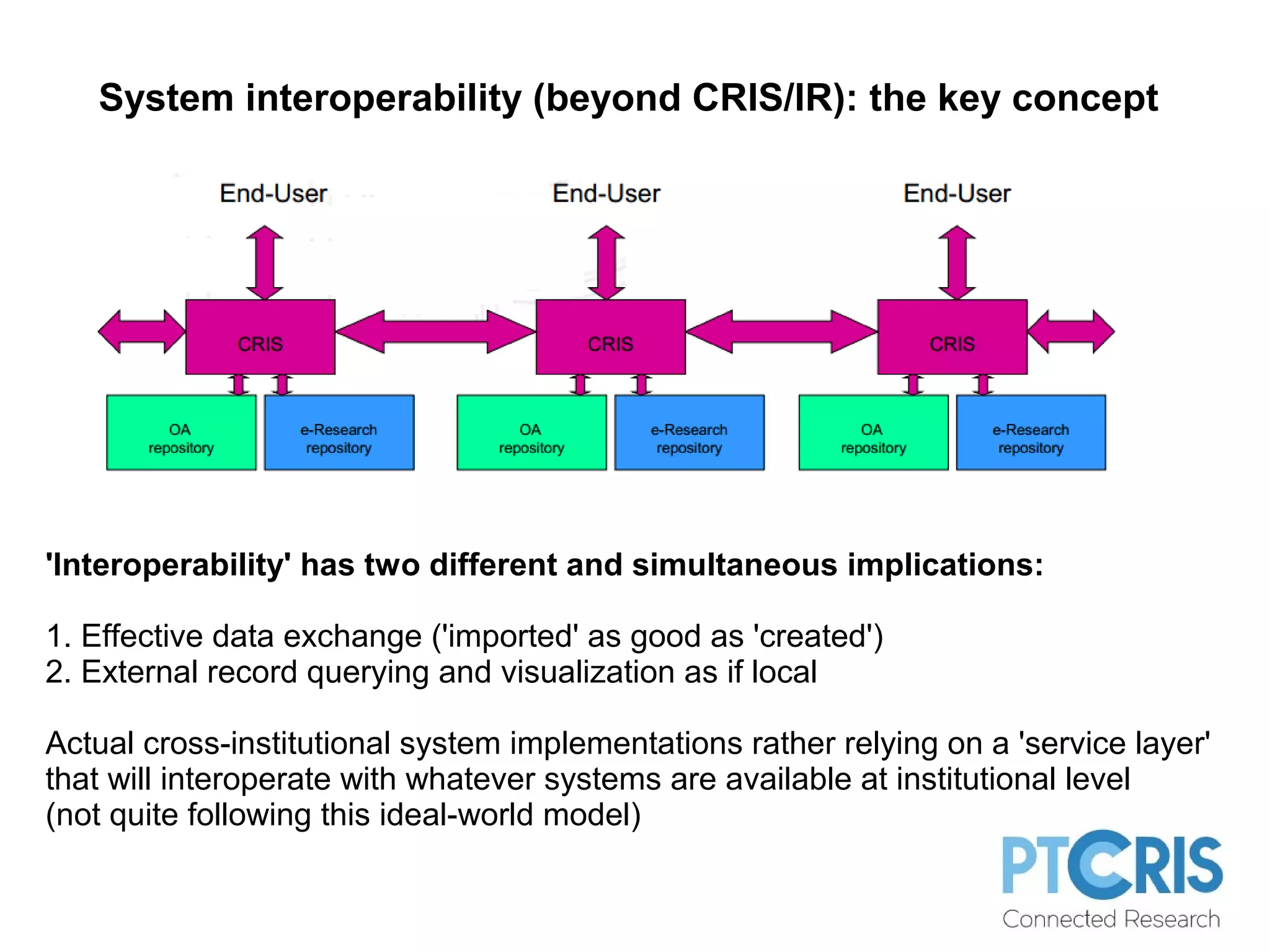
System interoperability (beyond CRIS/IR): the key concept 
'Interoperability' has two different and simultaneous implications: 
1. Effective data exchange ('imported' as good as 'created') 
2. External record querying and visualization as if local 
Actual cross-institutional system implementations rather relying on a 'service layer' 
that will interoperate with whatever systems are available at institutional level 
(not quite following this ideal-world model)
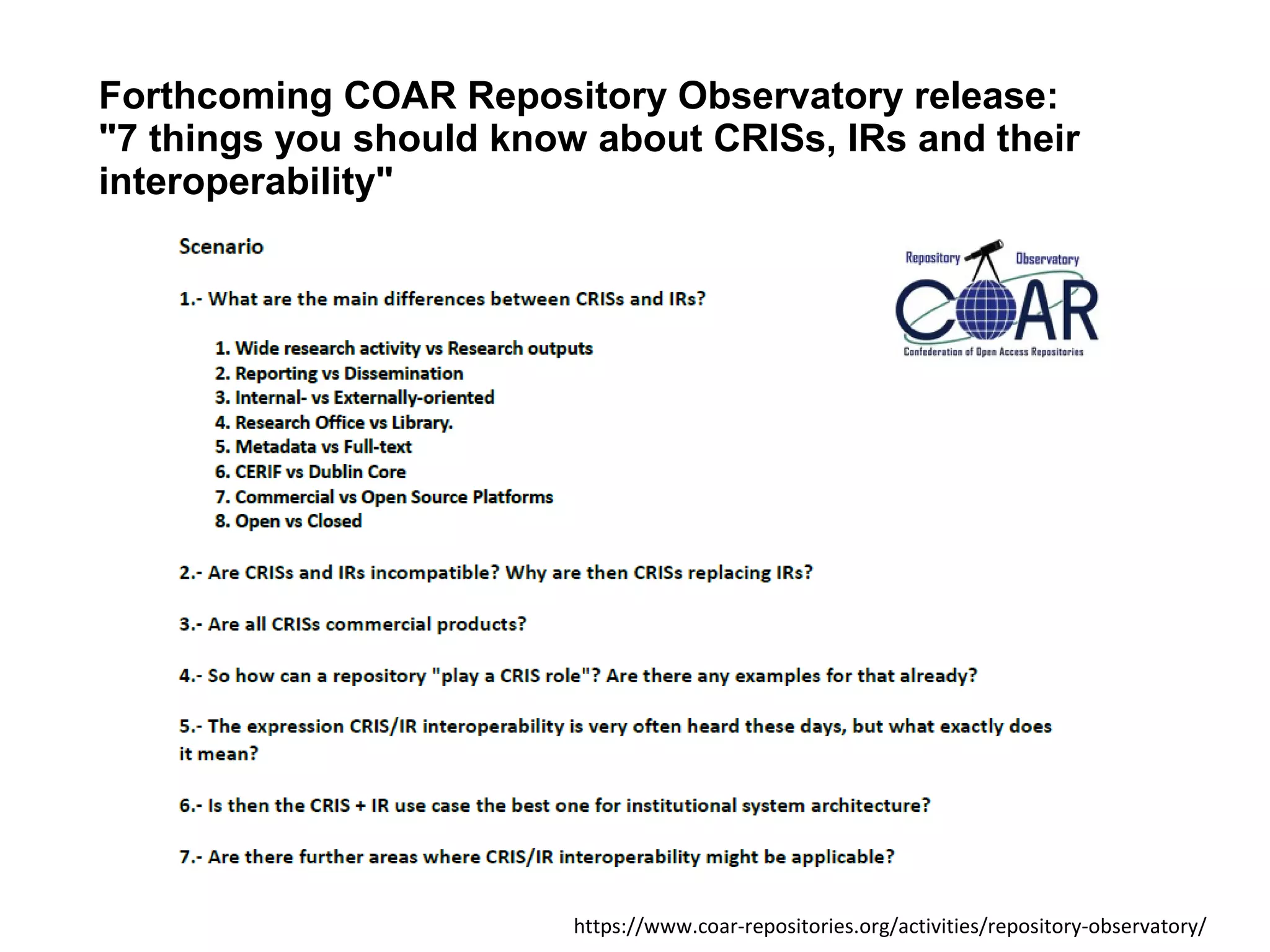
Forthcoming COAR Repository Observatory release: 
"7 things you should know about CRISs, IRs and their 
interoperability" 
https://www.coar-repositories.org/activities/repository-observatory/
Forthcoming COAR Repository Observatory release: 
"7 things you should know about CRISs, IRs and their 
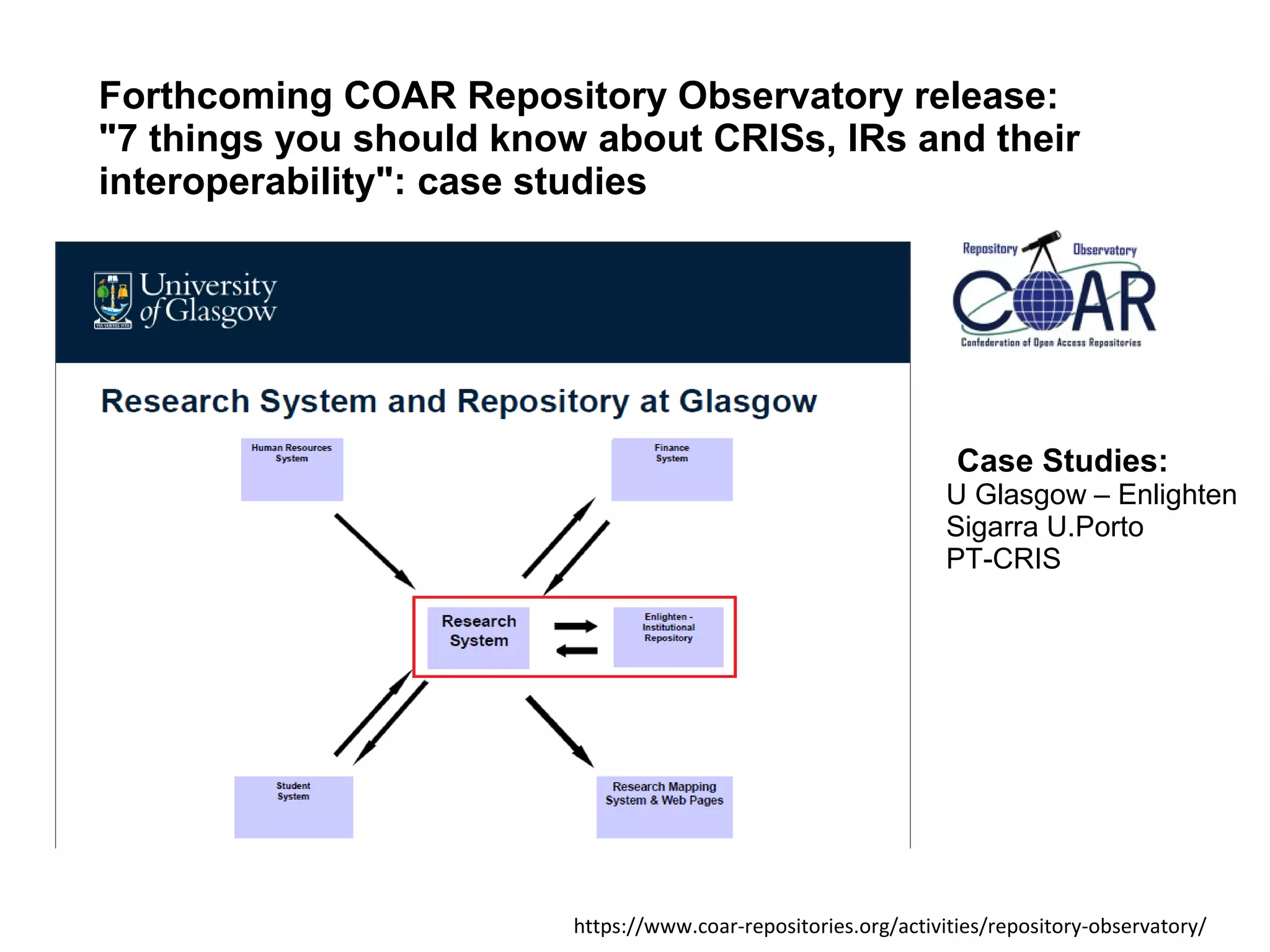
interoperability": case studies 
Case Studies: 
U Glasgow – Enlighten 
Sigarra U.Porto 
PT-CRIS 
https://www.coar-repositories.org/activities/repository-observatory/
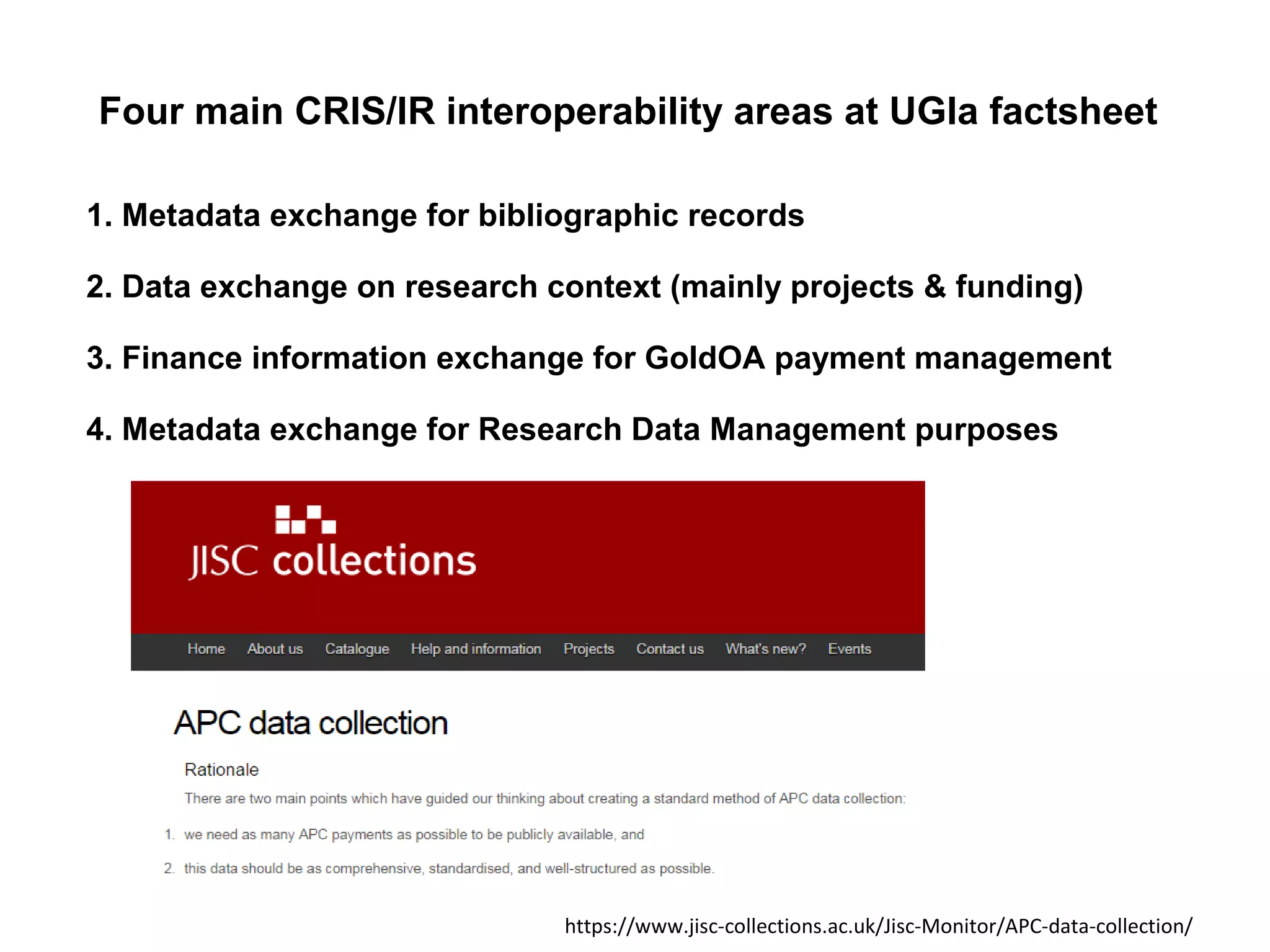
Four main CRIS/IR interoperability areas at UGla factsheet 
1. Metadata exchange for bibliographic records 
2. Data exchange on research context (mainly projects & funding) 
3. Finance information exchange for GoldOA payment management 
4. Metadata exchange for Research Data Management purposes 
https://www.jisc-collections.ac.uk/Jisc-Monitor/APC-data-collection/
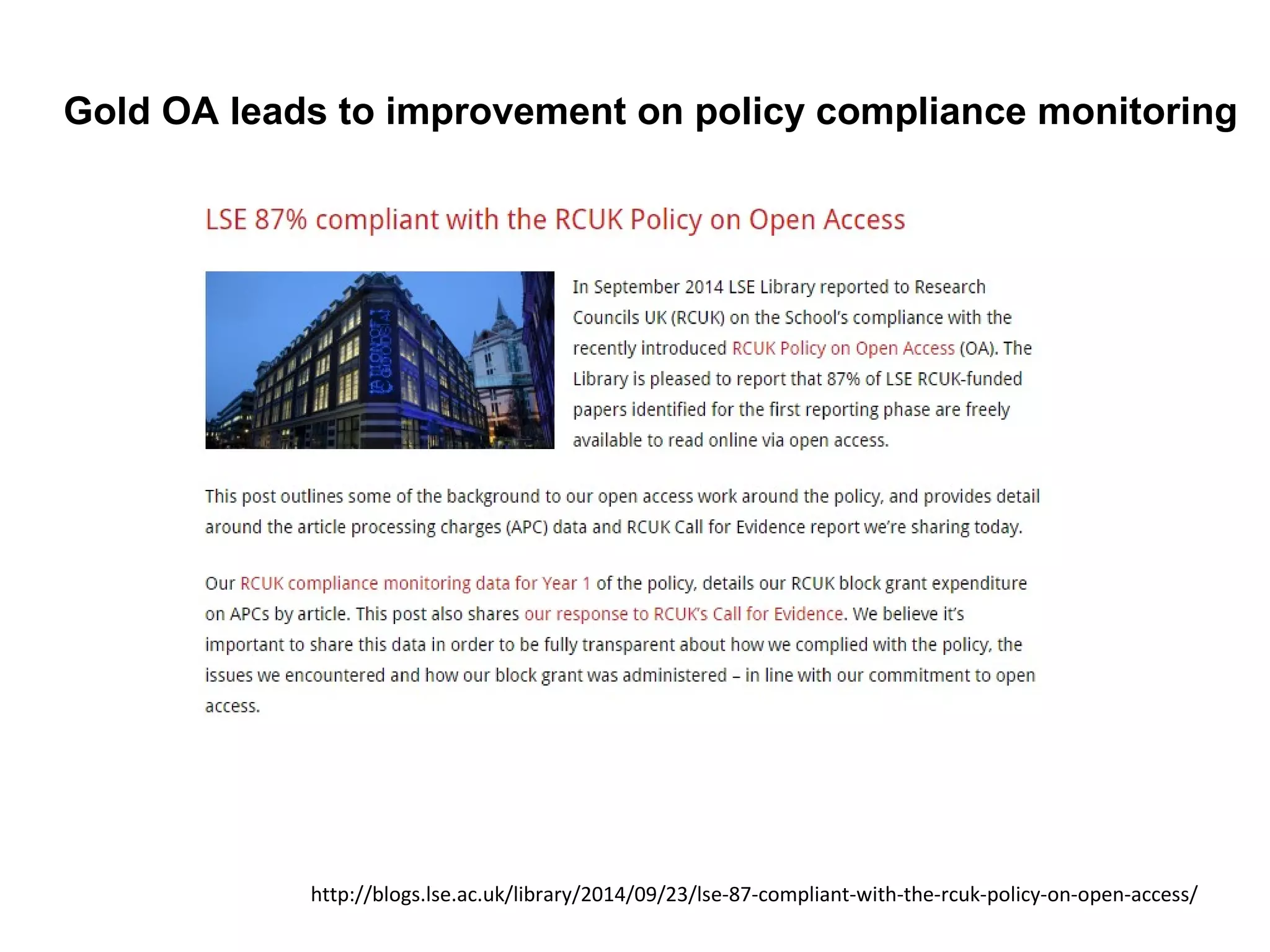
Gold OA leads to improvement on policy compliance monitoring 
http://blogs.lse.ac.uk/library/2014/09/23/lse-87-compliant-with-the-rcuk-policy-on-open-access/
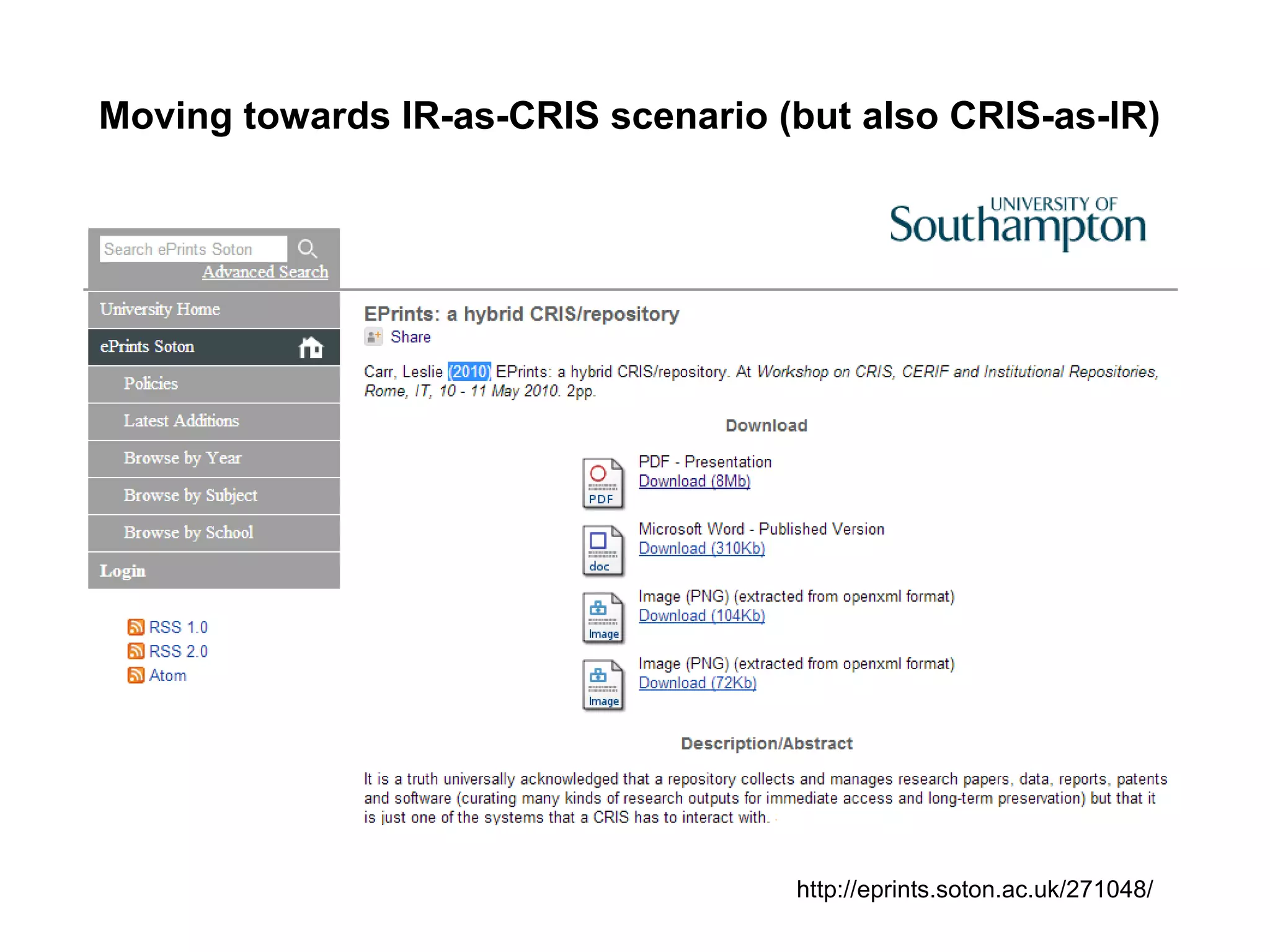
Moving towards IR-as-CRIS scenario (but also CRIS-as-IR) 
http://eprints.soton.ac.uk/271048/
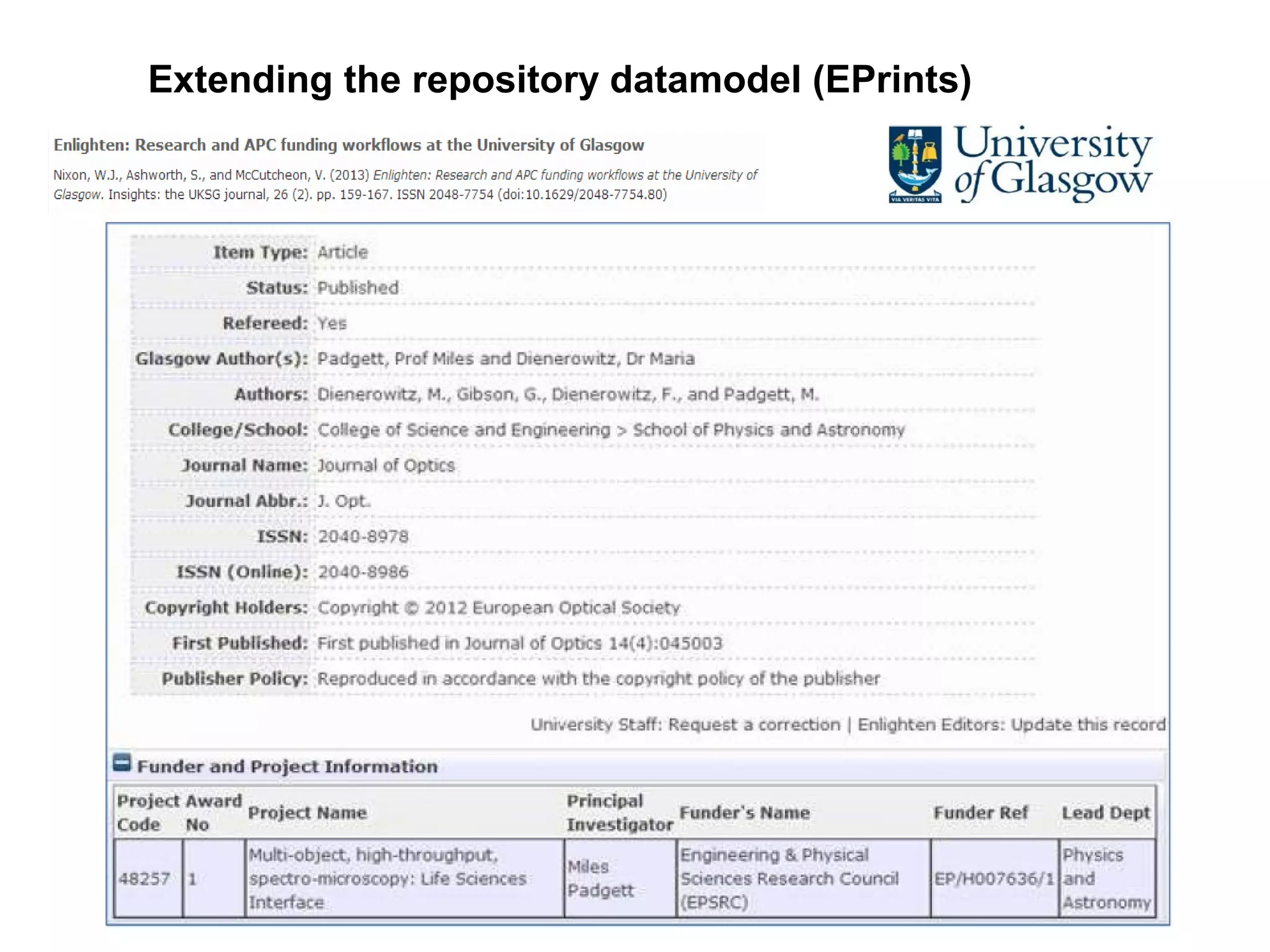
Extending the repository datamodel (EPrints)
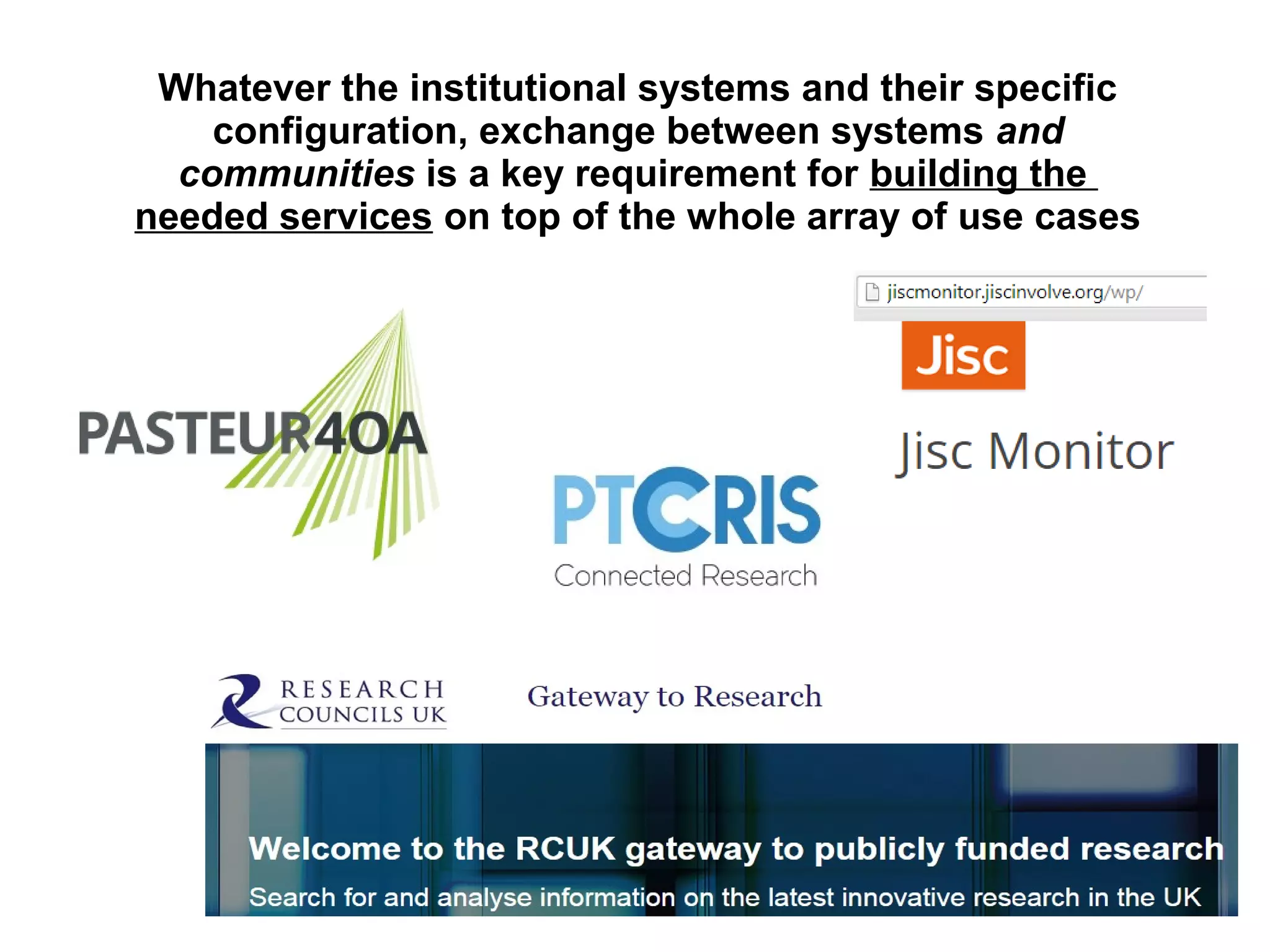
Whatever the institutional systems and their specific 
configuration, exchange between systems and 
communities is a key requirement for building the 
needed services on top of the whole array of use cases
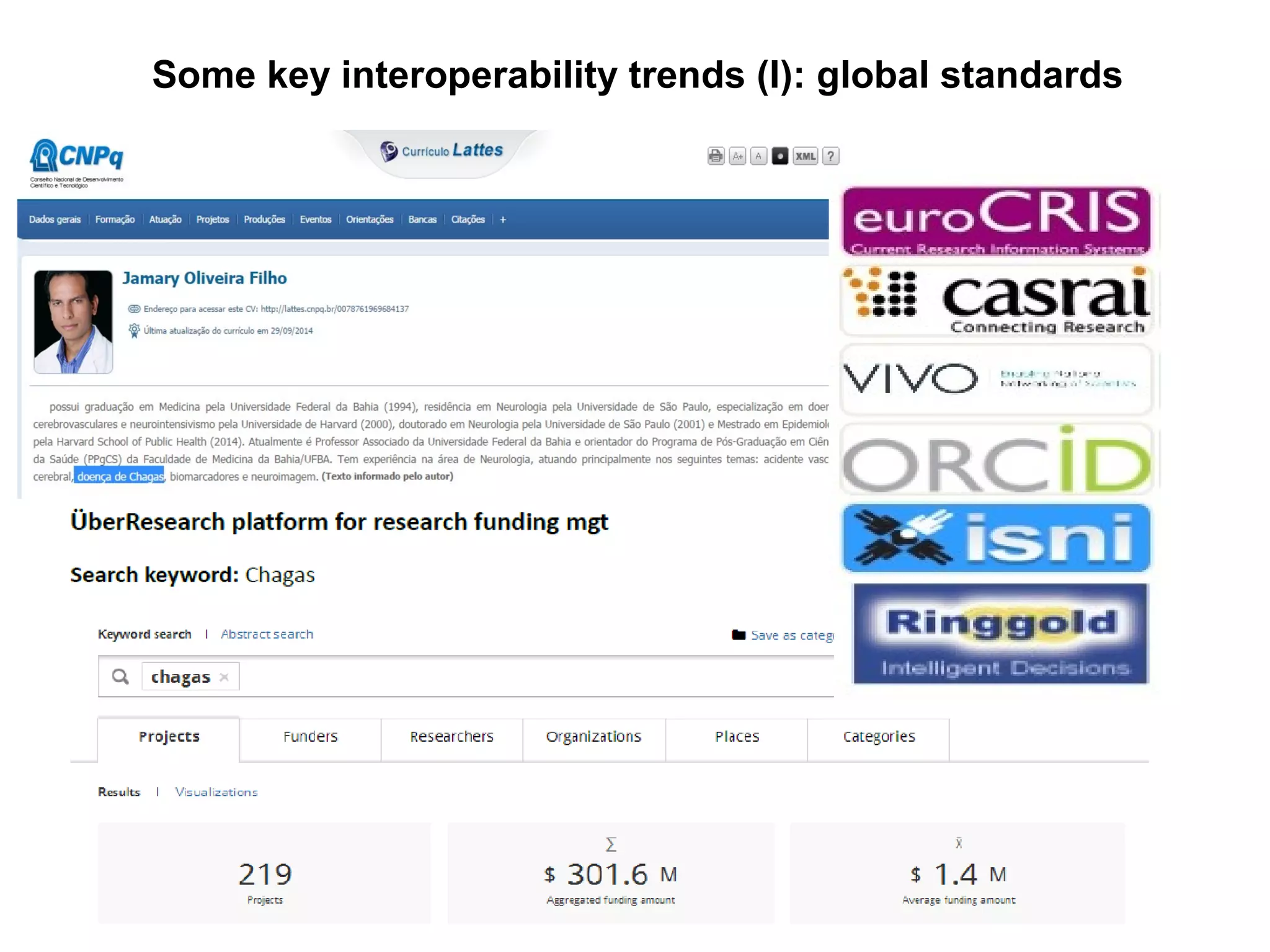
Some key interoperability trends (I): global standards
Some key interoperability trends (II): CERIF-XML 
[OpenAIRE – H2020] 
https://guidelines.openaire.eu/wiki/OpenAIRE_Guidelines:_For_CRIS
Some key interoperability trends (II): CERIF-XML 
[Portal de la Recerca de Catalunya – Catalan Research Portal]
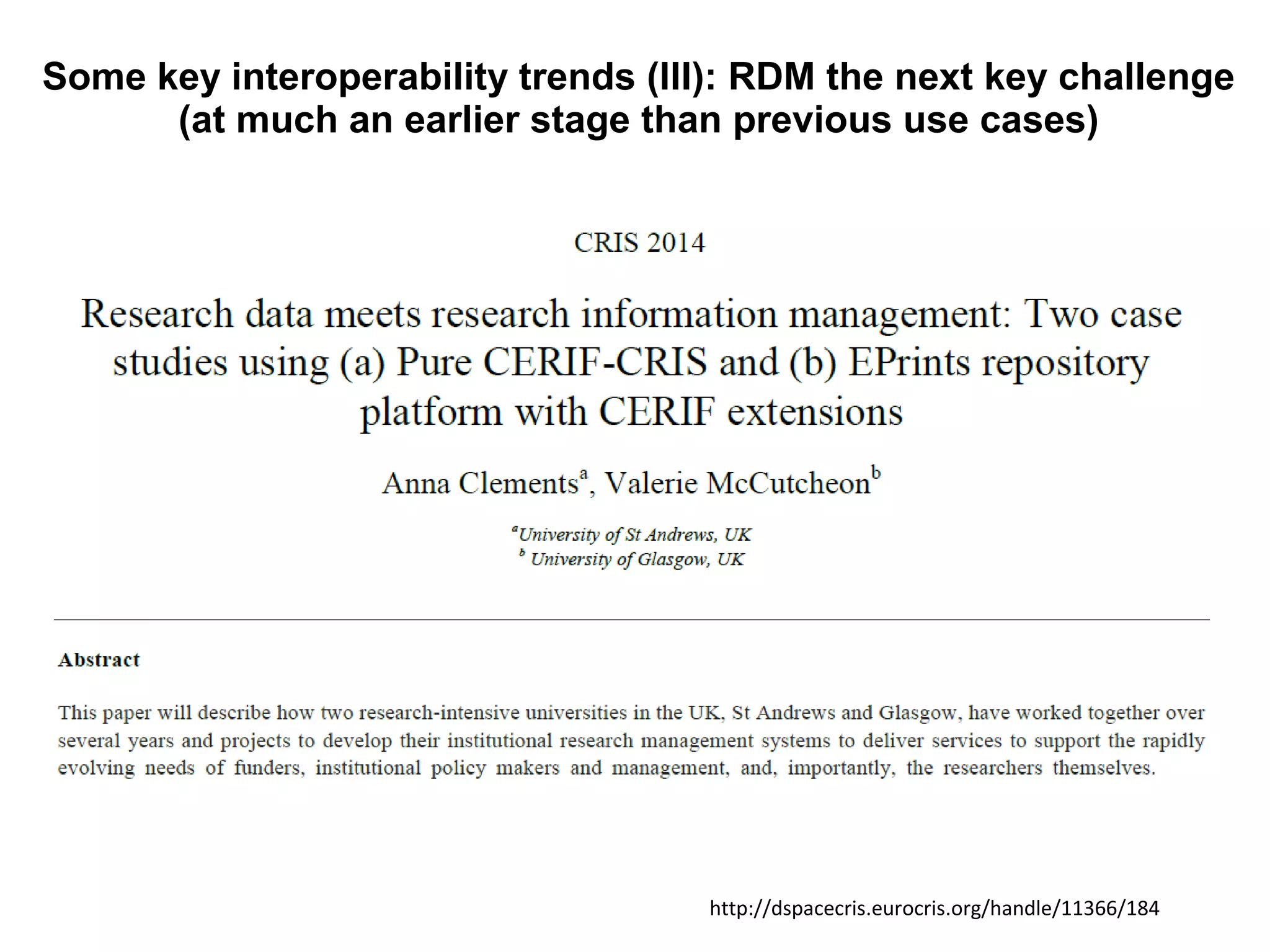
Some key interoperability trends (III): RDM the next key challenge 
(at much an earlier stage than previous use cases) 
http://dspacecris.eurocris.org/handle/11366/184
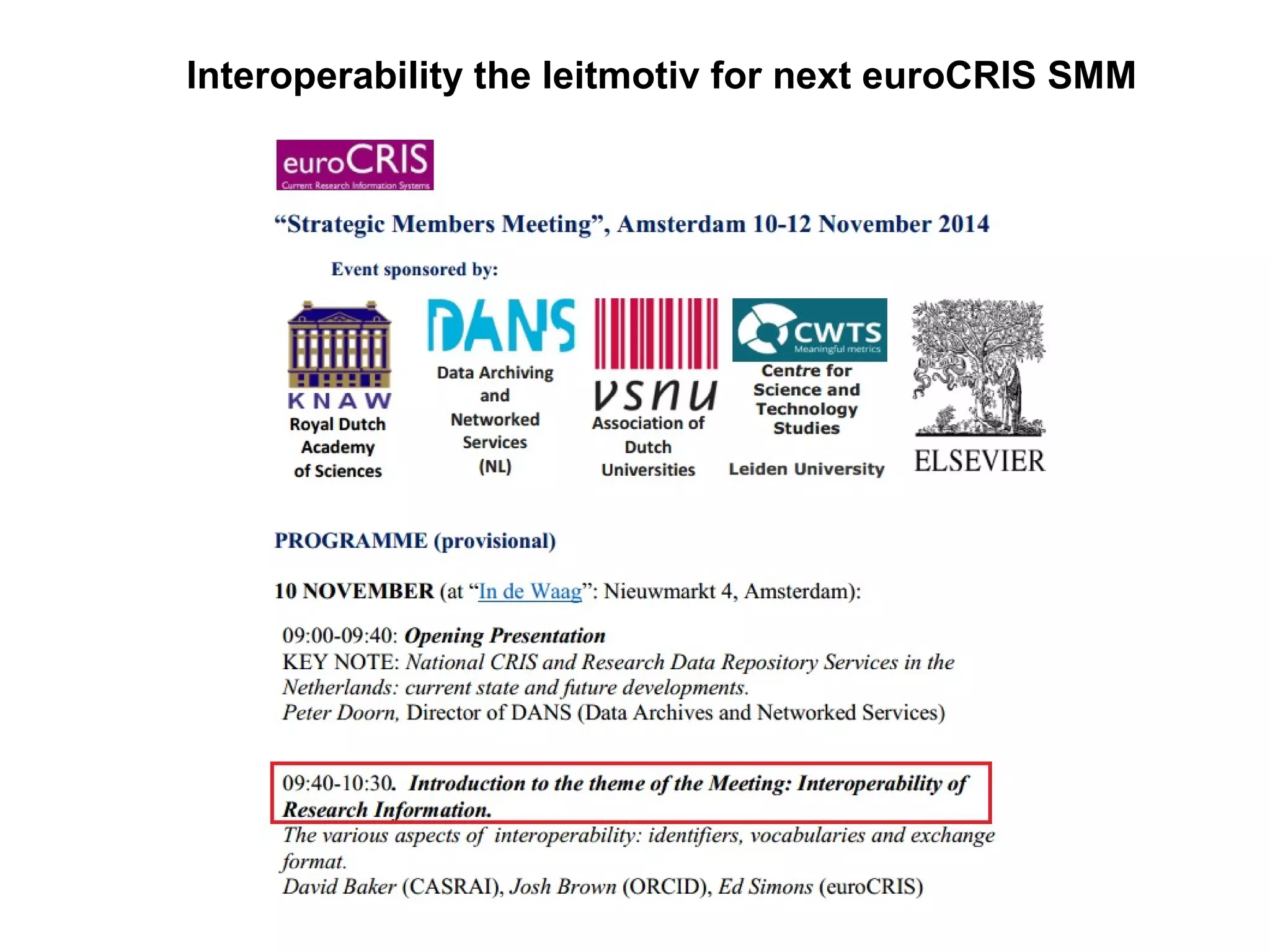
Interoperability the leitmotiv for next euroCRIS SMM
Obrigado! 
Pablo de Castro 
euroCRIS Board member 
GrandIR Ltd 
pcastromartin@gmail.com 
http://orcid.org/0000-0001-6300-1033

CRISs, IRs and their interoperability: an updated picture

  • 1.
    CRISs, IRs andtheir interoperability: an updated picture [with some focus on Portuguese initiatives] Pablo de Castro euroCRIS Board member GrandIR Ltd pcastromartin@gmail.com http://orcid.org/0000-0001-6300-1033
  • 2.
    System interoperability (beyondCRIS/IR): the key concept Publications Bibtex, Refman Uploaded Harvested L inked Full Text Repository Open Access Activities University of St Andrews CRIS (Pure) Fed Out Industry / SME’s Interface HEI – Strategic Planning, Benchmarking REF, RCUK SFC, HESA Public, Media Recognition / Impact Collaborations Research Pools WoS, arXiv, PubMed, Scopus… Pulled In Manual Input University Structure [HR] Staff Records [HR] Student Records [Registry] Projects, Grants, KT [Finance] Entered Award / recognition Dissemination / Engagement Research data sets (multiple locations and formats) Impact Indicators Measures Case Studies
  • 3.
    System interoperability (beyondCRIS/IR): the key concept 'Interoperability' has two different and simultaneous implications: 1. Effective data exchange ('imported' as good as 'created') 2. External record querying and visualization as if local Actual cross-institutional system implementations rather relying on a 'service layer' that will interoperate with whatever systems are available at institutional level (not quite following this ideal-world model)
  • 4.
    Forthcoming COAR RepositoryObservatory release: "7 things you should know about CRISs, IRs and their interoperability" https://www.coar-repositories.org/activities/repository-observatory/
  • 5.
    Forthcoming COAR RepositoryObservatory release: "7 things you should know about CRISs, IRs and their interoperability": case studies Case Studies: U Glasgow – Enlighten Sigarra U.Porto PT-CRIS https://www.coar-repositories.org/activities/repository-observatory/
  • 6.
    Four main CRIS/IRinteroperability areas at UGla factsheet 1. Metadata exchange for bibliographic records 2. Data exchange on research context (mainly projects & funding) 3. Finance information exchange for GoldOA payment management 4. Metadata exchange for Research Data Management purposes https://www.jisc-collections.ac.uk/Jisc-Monitor/APC-data-collection/
  • 7.
    Gold OA leadsto improvement on policy compliance monitoring http://blogs.lse.ac.uk/library/2014/09/23/lse-87-compliant-with-the-rcuk-policy-on-open-access/
  • 8.
    Moving towards IR-as-CRISscenario (but also CRIS-as-IR) http://eprints.soton.ac.uk/271048/
  • 9.
    Extending the repositorydatamodel (EPrints)
  • 10.
    Whatever the institutionalsystems and their specific configuration, exchange between systems and communities is a key requirement for building the needed services on top of the whole array of use cases
  • 11.
    Some key interoperabilitytrends (I): global standards
  • 12.
    Some key interoperabilitytrends (II): CERIF-XML [OpenAIRE – H2020] https://guidelines.openaire.eu/wiki/OpenAIRE_Guidelines:_For_CRIS
  • 13.
    Some key interoperabilitytrends (II): CERIF-XML [Portal de la Recerca de Catalunya – Catalan Research Portal]
  • 14.
    Some key interoperabilitytrends (III): RDM the next key challenge (at much an earlier stage than previous use cases) http://dspacecris.eurocris.org/handle/11366/184
  • 15.
    Interoperability the leitmotivfor next euroCRIS SMM
  • 16.
    Obrigado! Pablo deCastro euroCRIS Board member GrandIR Ltd pcastromartin@gmail.com http://orcid.org/0000-0001-6300-1033