A match made in heaven or is hell freezing over?
Bram van Pelt
Identity 3.0 and Oracle
Who Am I
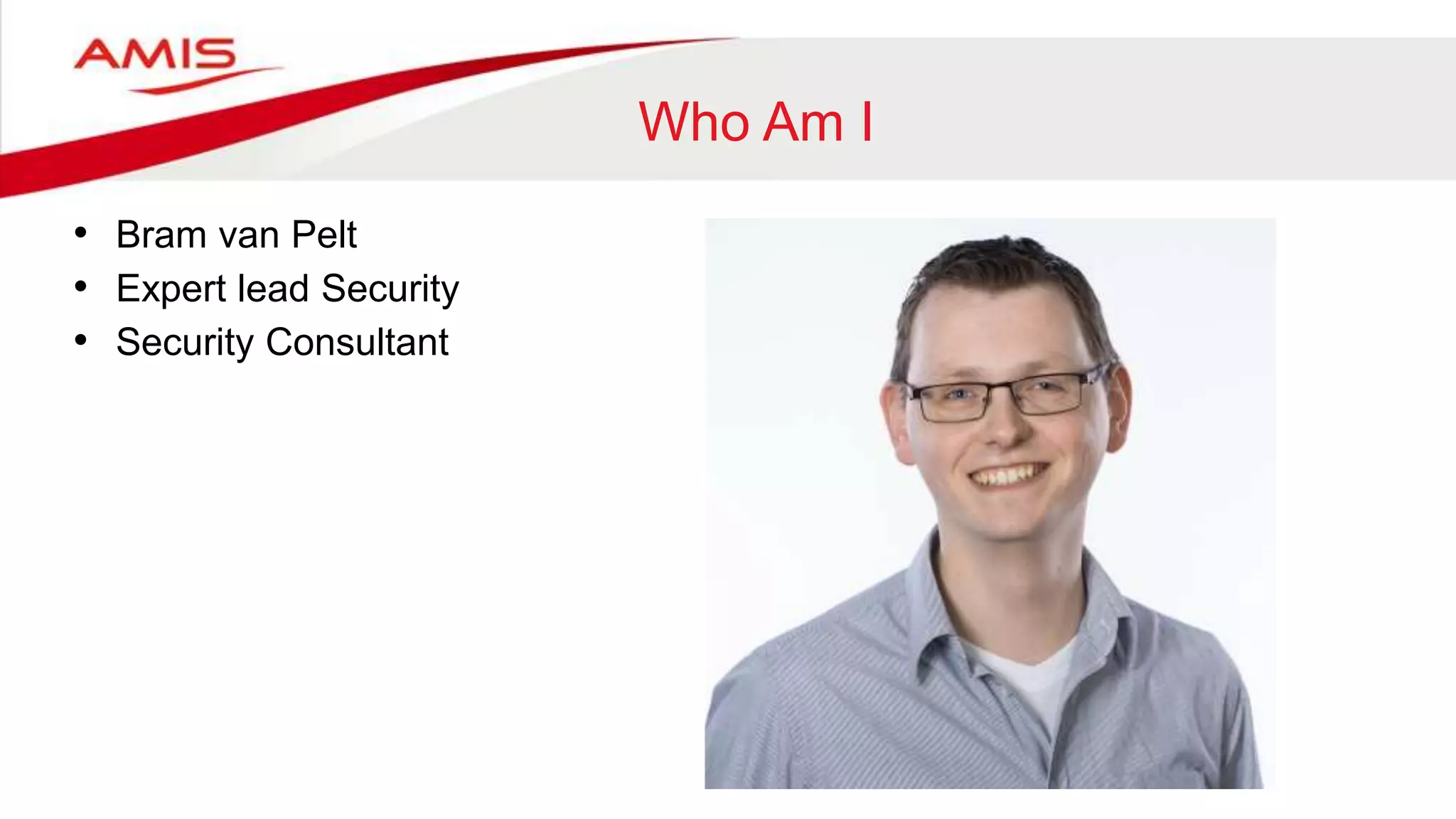
• Bram van Pelt
• Expert lead Security
• Security Consultant
What will we be covering
Agenda
• The evolution of the identity
• Identity 3.0
• Oracle POC implementation
Definitions
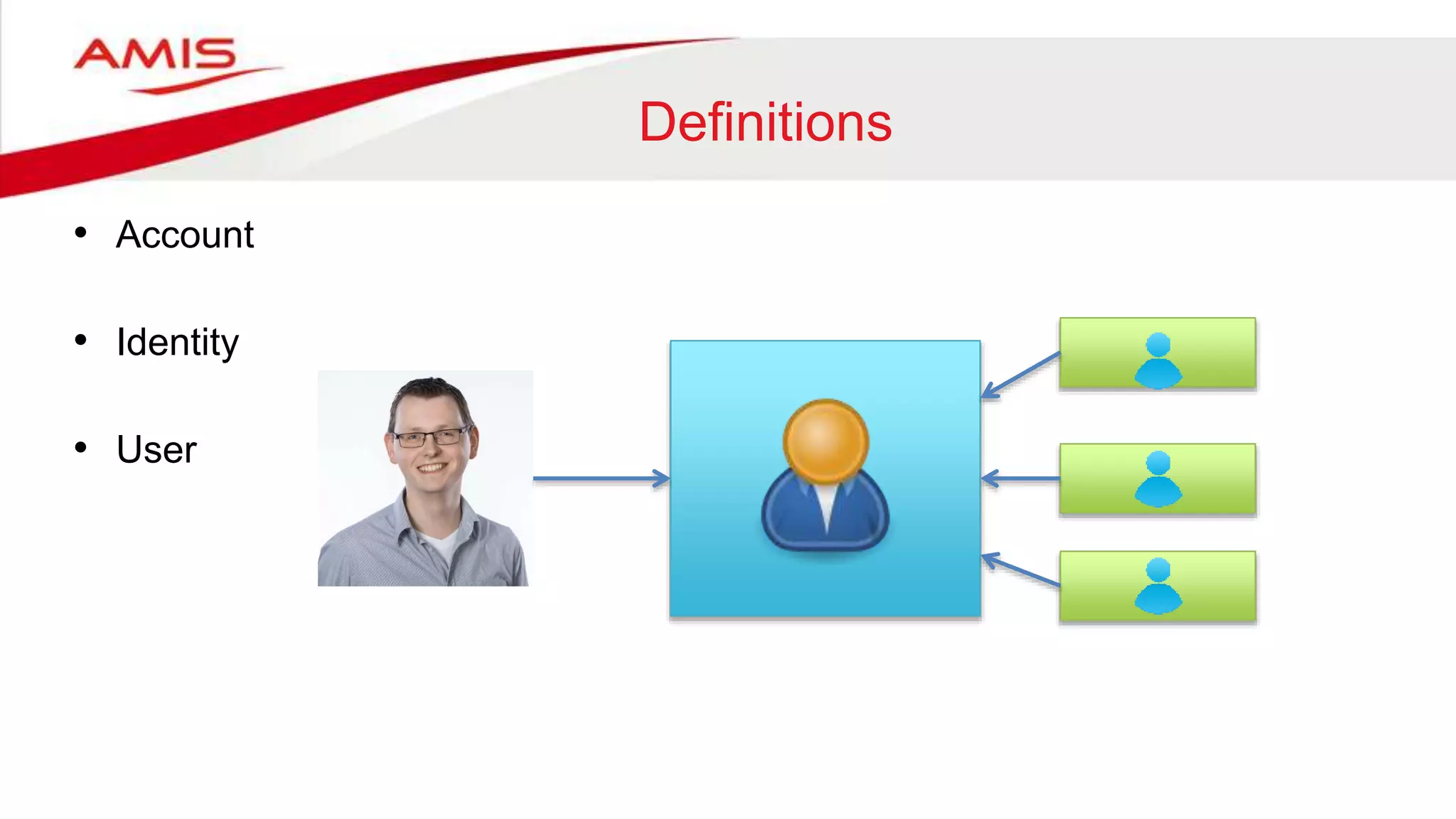
• Account
• Identity
• User
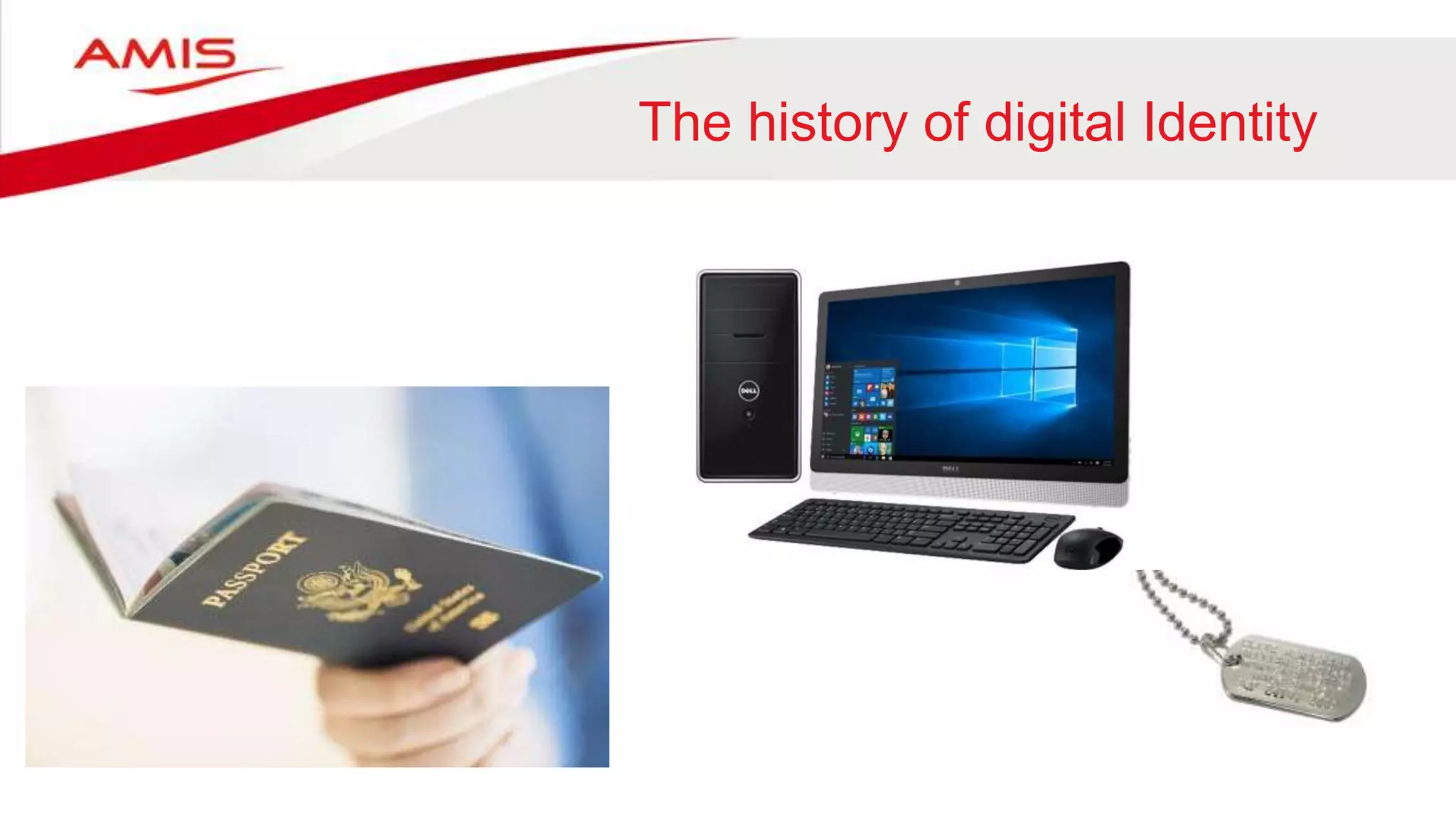
The history of digital Identity
Identity 1.0
• Jericho Forum
• De-perimeterisation
• COA Framework
COA Framework
• Technologies
– Endpoint security
– Secure communications
– Secure data (DRM)
COA Framework
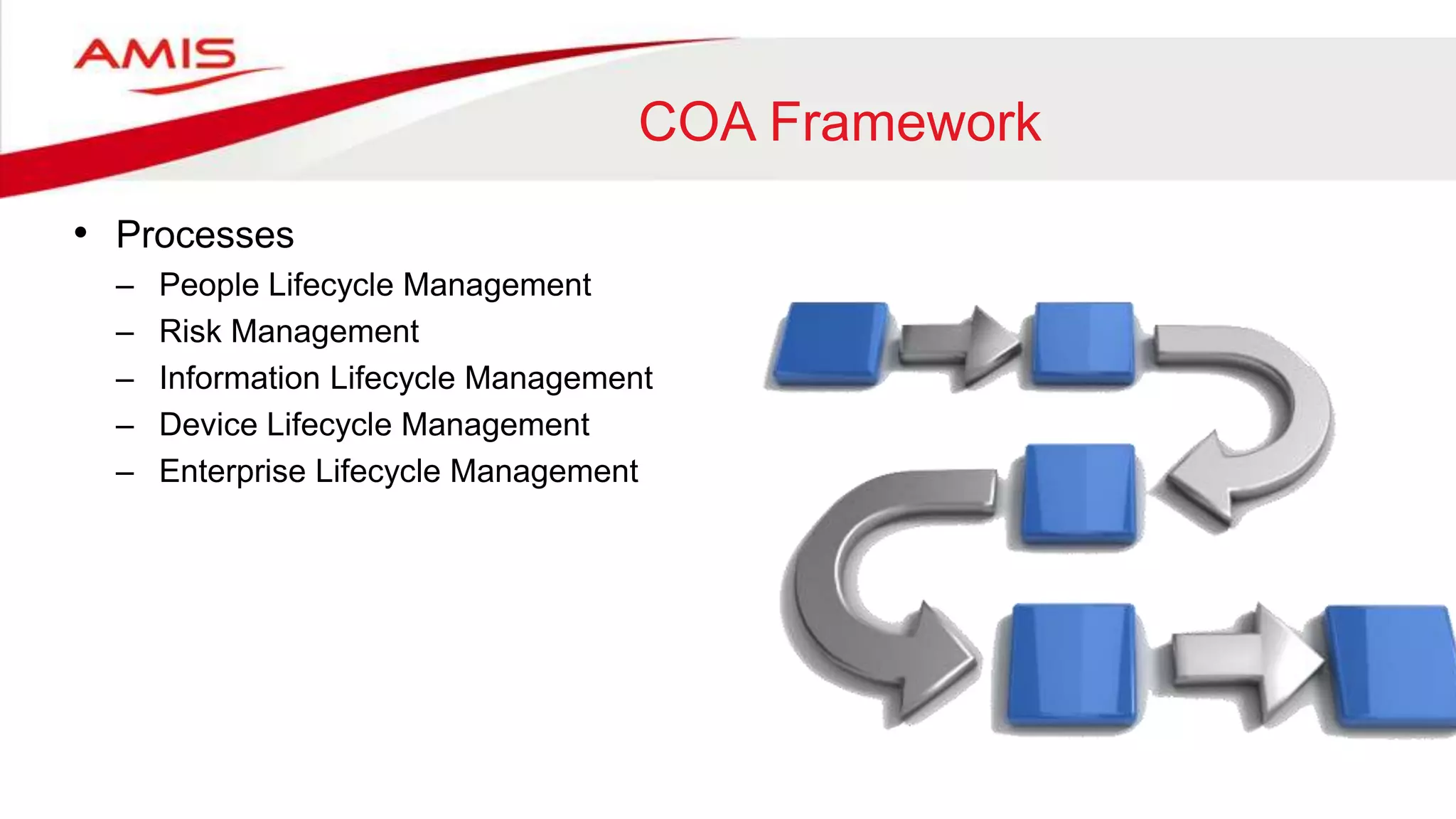
• Processes
– People Lifecycle Management
– Risk Management
– Information Lifecycle Management
– Device Lifecycle Management
– Enterprise Lifecycle Management
COA Framework
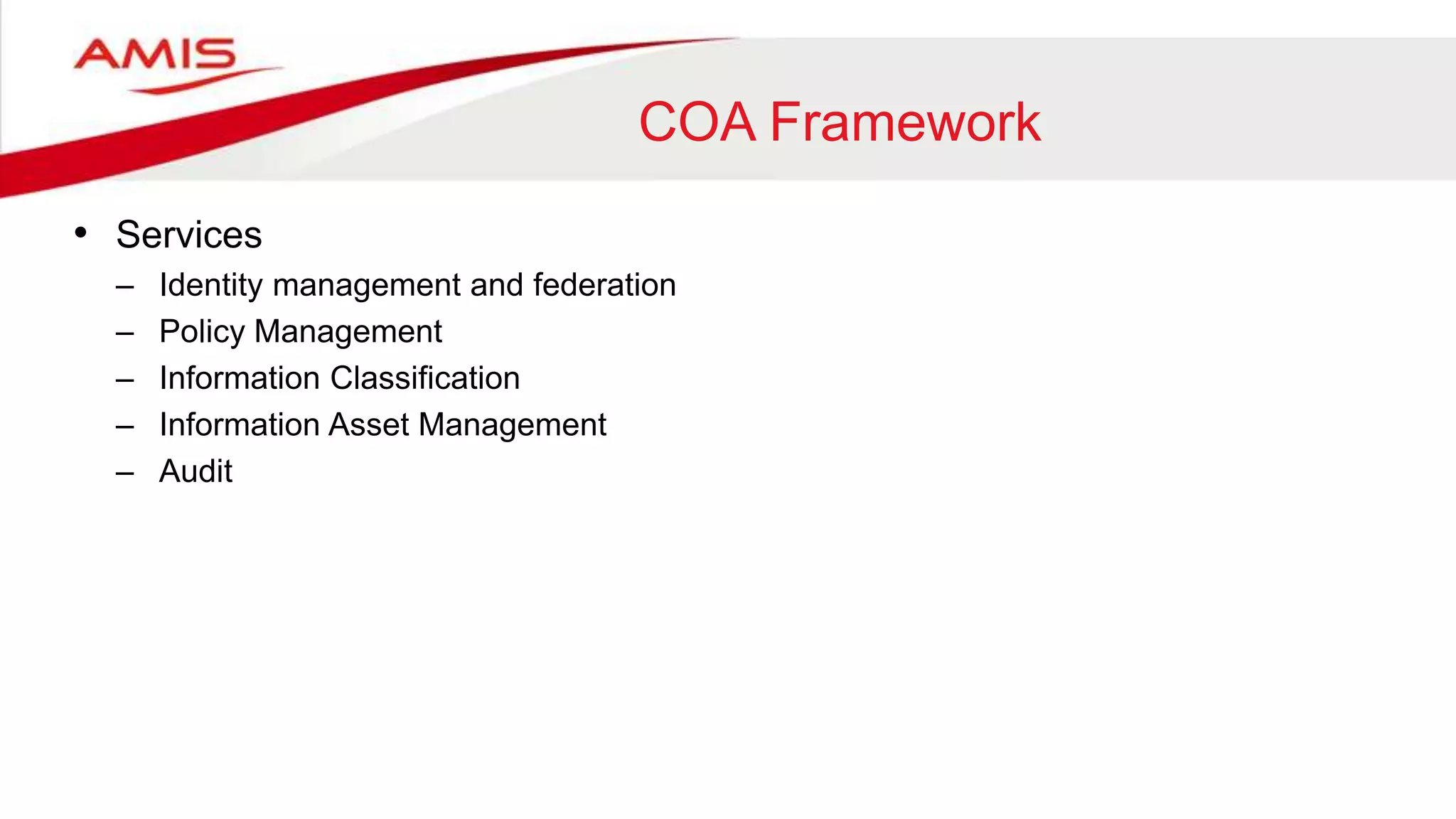
• Services
– Identity management and federation
– Policy Management
– Information Classification
– Information Asset Management
– Audit
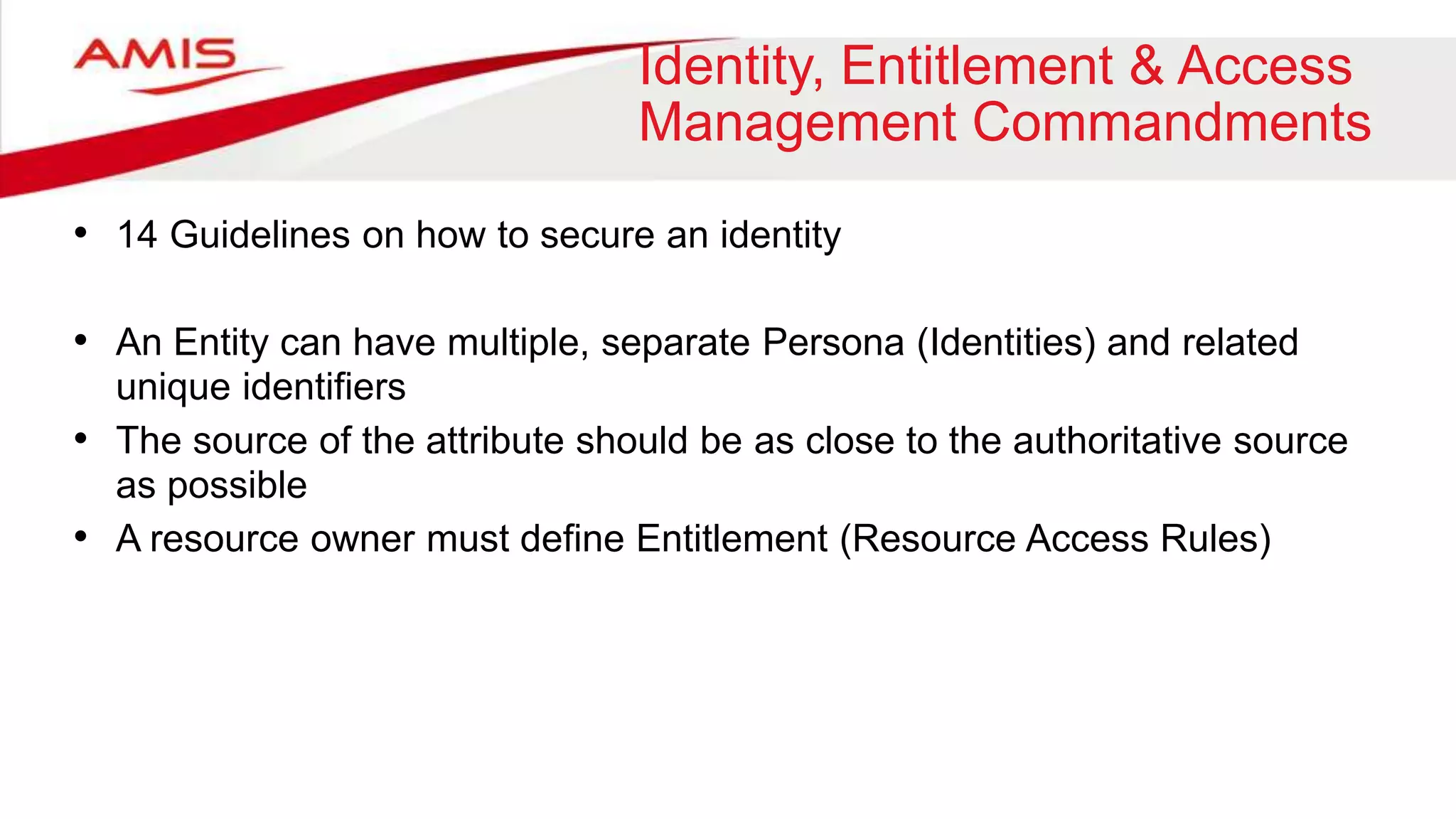
Identity 2.0
• Securely collaborating in clouds
• Identity, Entitlement & Access Management Commandments
Identity, Entitlement & Access
Management Commandments
• 14 Guidelines on how to secure an identity
• An Entity can have multiple, separate Persona (Identities) and related
unique identifiers
• The source of the attribute should be as close to the authoritative source
as possible
• A resource owner must define Entitlement (Resource Access Rules)
Identity 3.0
• Bring your own identity
• Using identity to enhance privacy
• “We believe that with a single global identity eco-system all this is
possible.”
Identity 3.0 definitions
• External identifier
A provider for attributes other than the user.
• Core identifier
The “bring your own identity” attribute provider
• Persona
A mix of attributes which are provided by the core identifier and optionally external
identifiers
Identity 3.0 principles: Risk
• Decisions around identity are taken by the
entity that is assuming the risk; with full
visibility of the identity and attributes of all
the entities in the transaction chain.
• Attributes of an Identity will be signed by the
authoritative source for those attributes.
Identity 3.0 principles: Privacy
• Every entity shall need only one identity which is unique and private unto
the entity; there will be no body issuing or recording identities.
• The Identity ecosystem will be privacy enhancing; attributes will be
minimised, asserting only such information that is relevant to the
transaction.
• Entities will only maintain attributes for which they are the authoritative
source.
Identity 3.0 principles:
Functionality
• The digital representation and function of an entity type will be
indistinguishable from another entity type, and will be interchangeable in
operation.
• The Identity ecosystem will operate without the need for identity brokers,
CA of last resort or other centralized infrastructure.
• Identity shall be (as much as possible) invisible to the end user; identity
and attribute verification and exchange should be a background operation
until such time that increased levels of user verification is required.
The inner workings
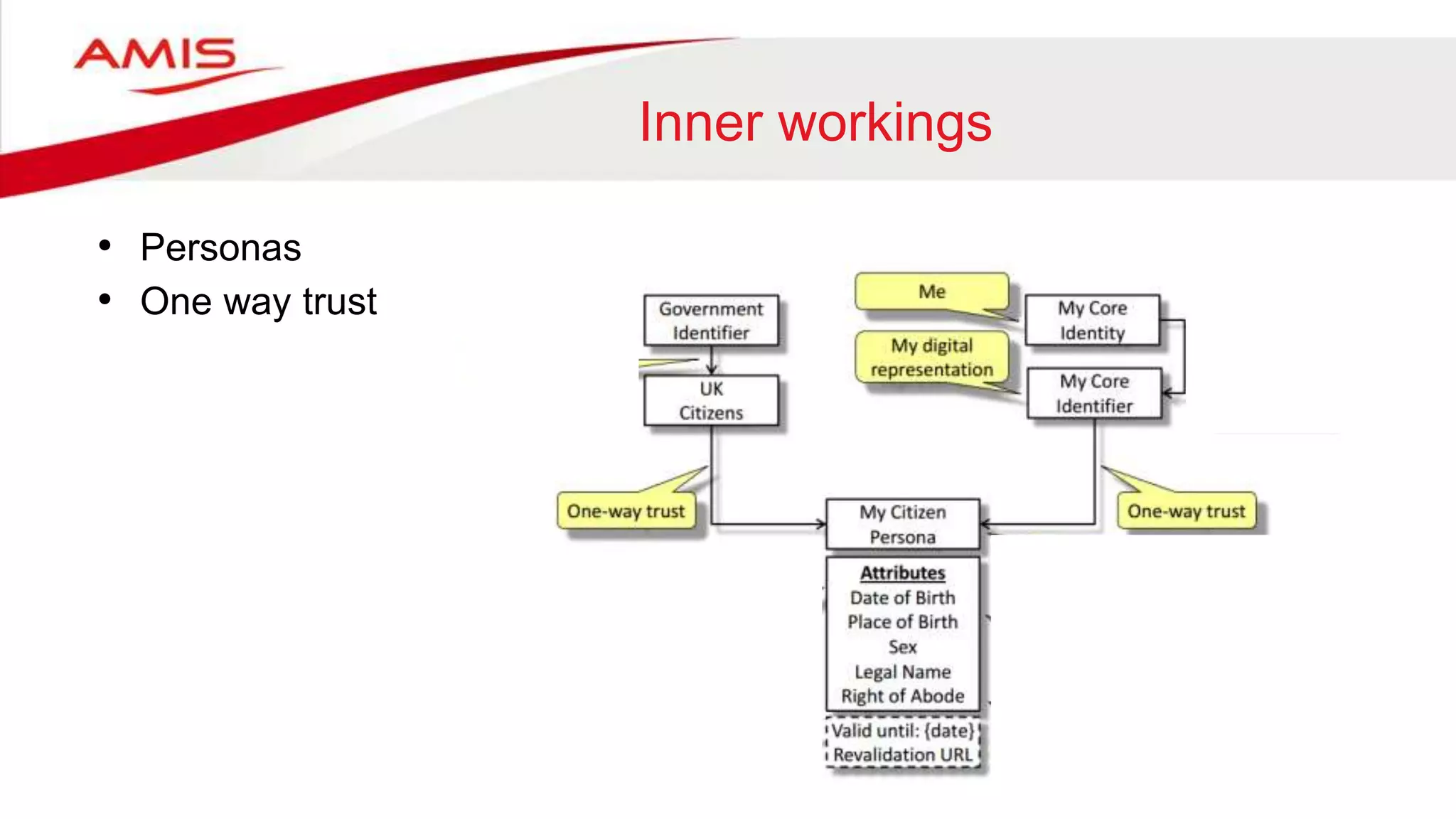
Inner workings
• Personas
• One way trust
Persona’s
19
[Entity: Organization]
Government
[Entity: Person]
Yourself
Citizen Persona with authoritative
(cryptographically) signed
attributes
Date of Birth = 01 Jan 2000
Place of Birth = London, UK
Sex at Birth = Male
Name at Birth = John Doe
Citizenship = Full British
Issued = 01 Jan 2015
Revalidation = gid.citizen.gov.uk
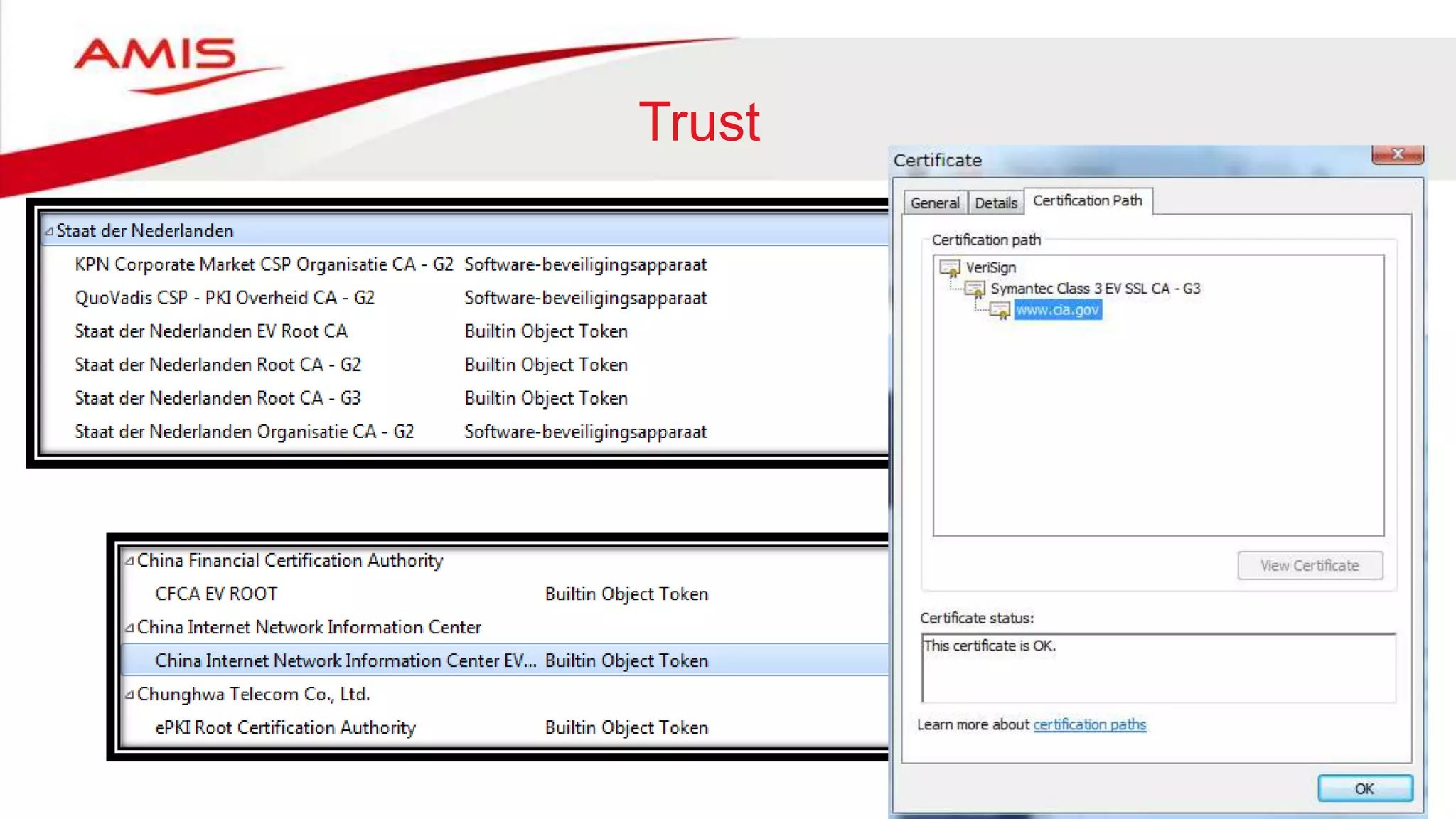
Trust
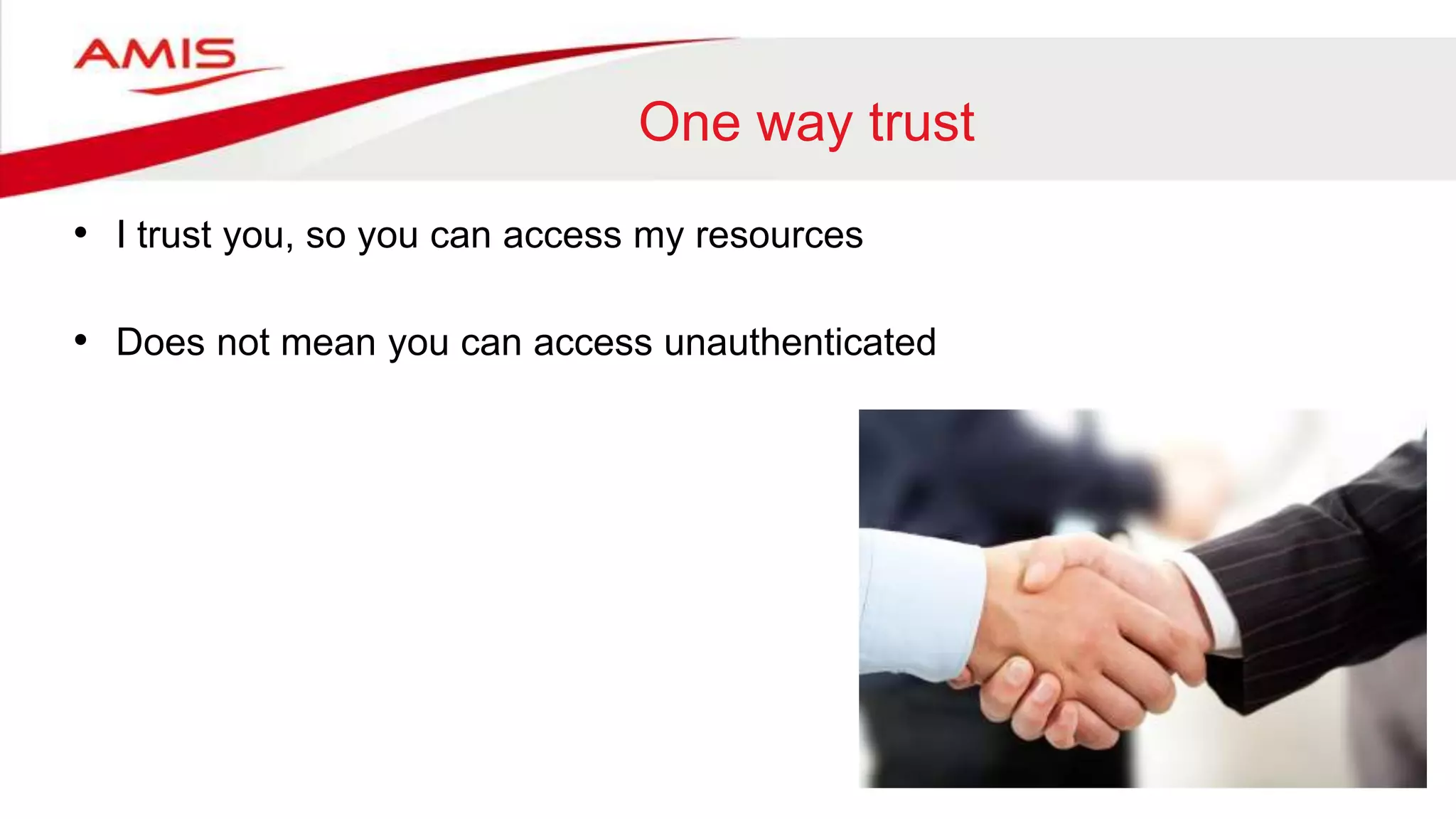
One way trust
• I trust you, so you can access my resources
• Does not mean you can access unauthenticated
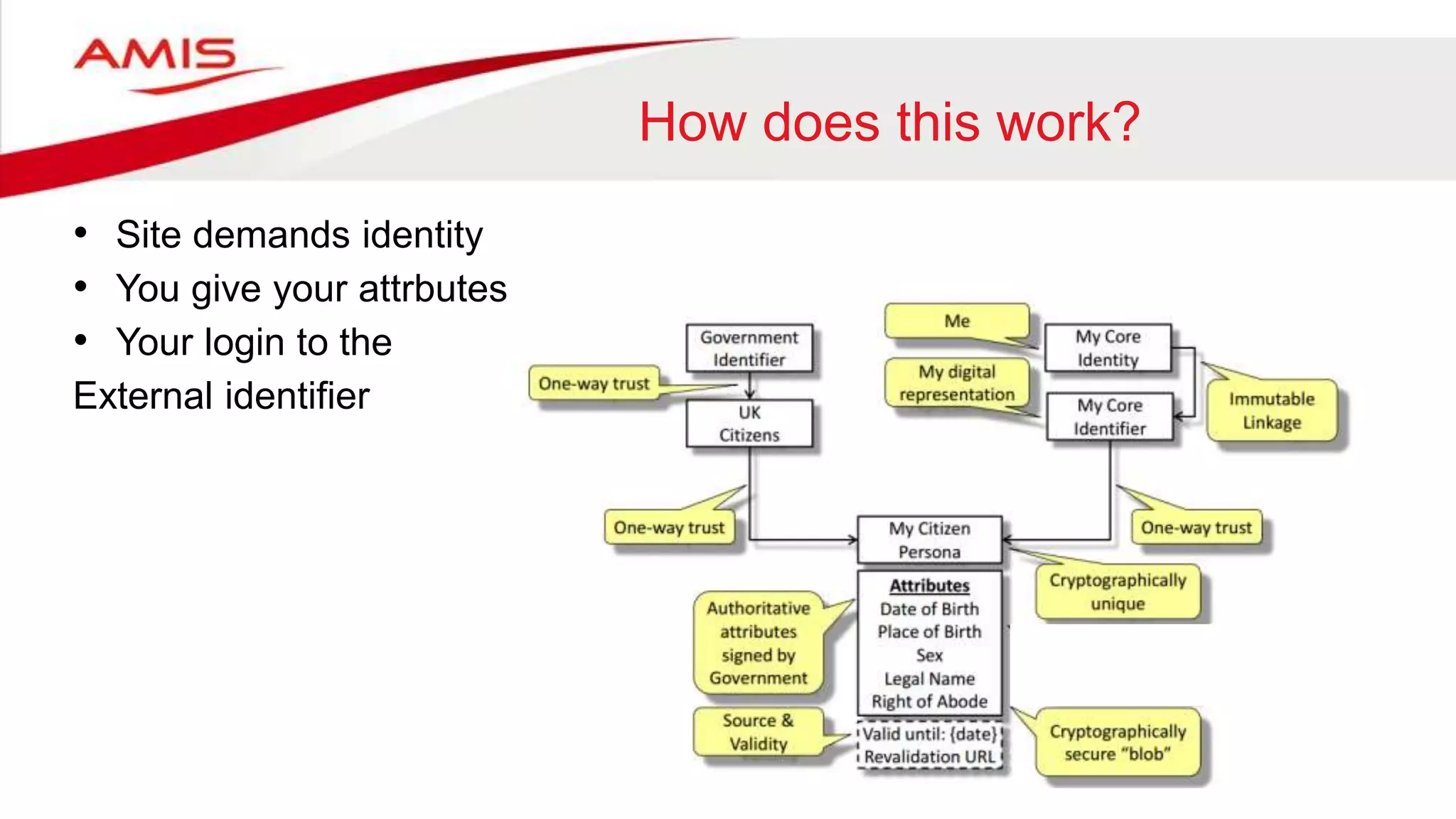
How does this work?
• Site demands identity
• You give your attrbutes
• Your login to the
External identifier
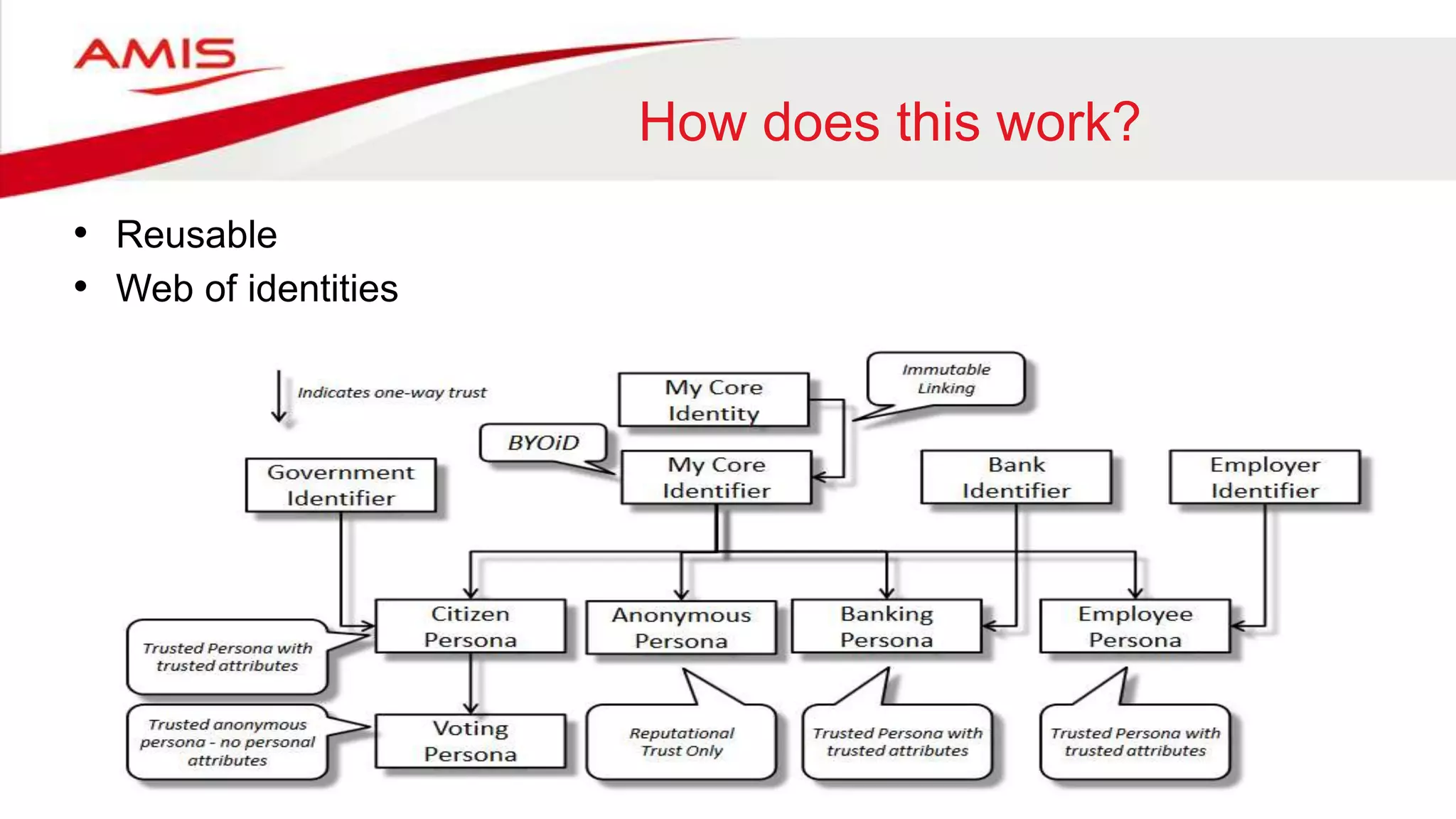
How does this work?
• Reusable
• Web of identities
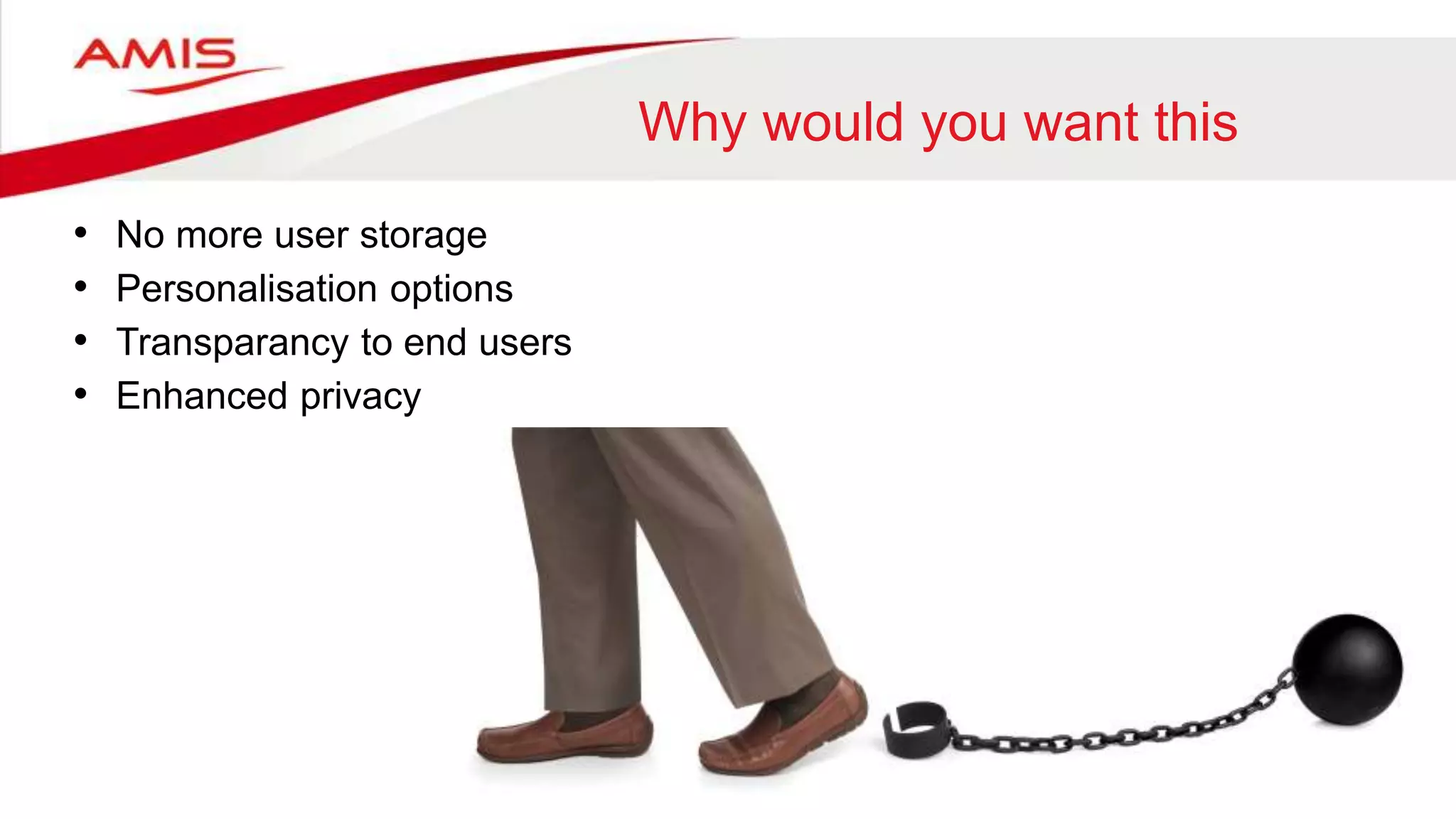
Why would you want this
• No more user storage
• Personalisation options
• Transparancy to end users
• Enhanced privacy
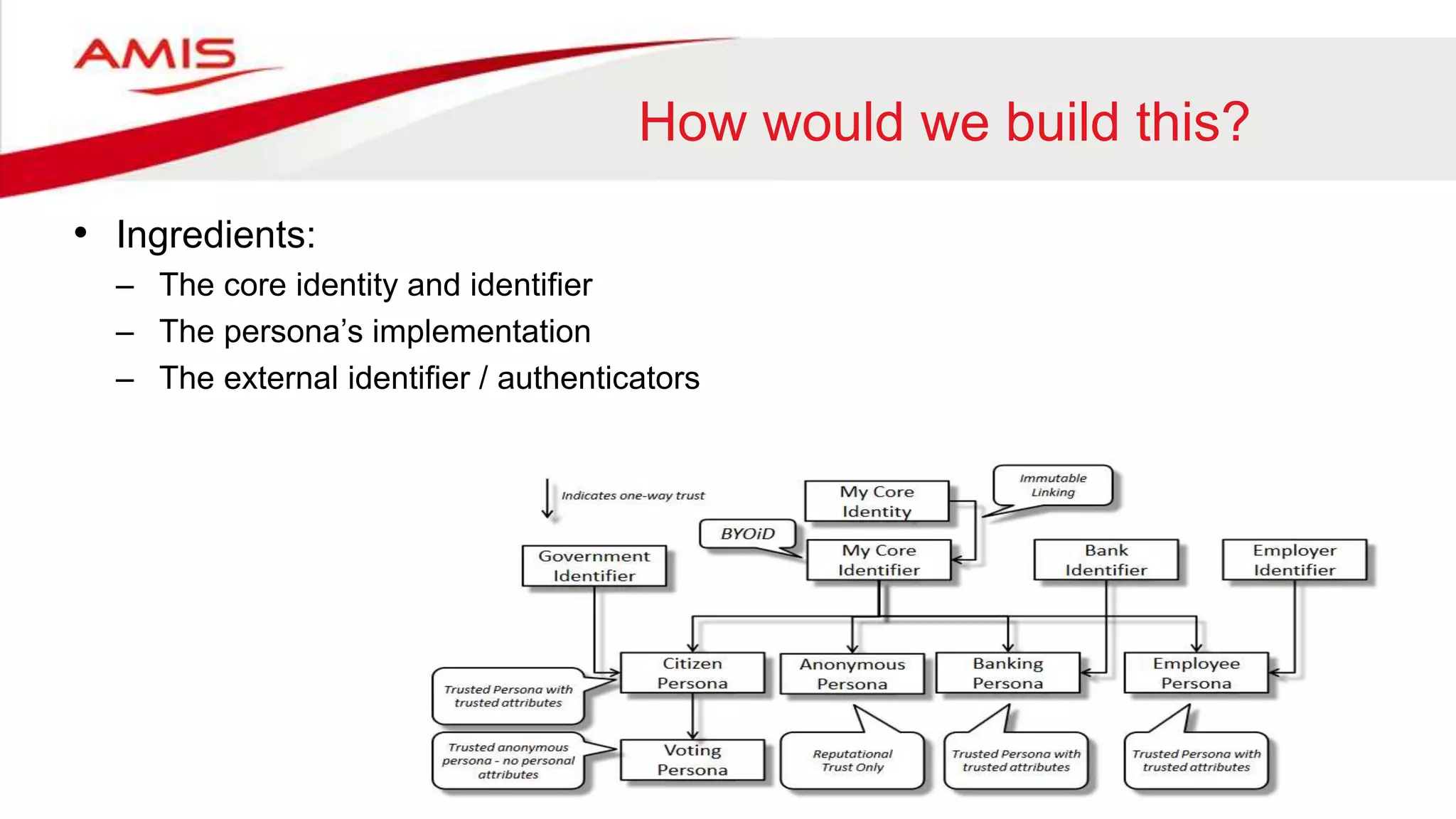
How would we build this?
• Ingredients:
– The core identity and identifier
– The persona’s implementation
– The external identifier / authenticators
The core identity and Identifier
• This is a personal device which you have on you, if possible…
• Phones
• Dyn-dns via browsers
• Personal component
The Persona implementation
• Basically an “identity cookbook”
• Trusts to identifiers
• One way cryptographic trust
– Signed attributes
The external identifier /
authenticator
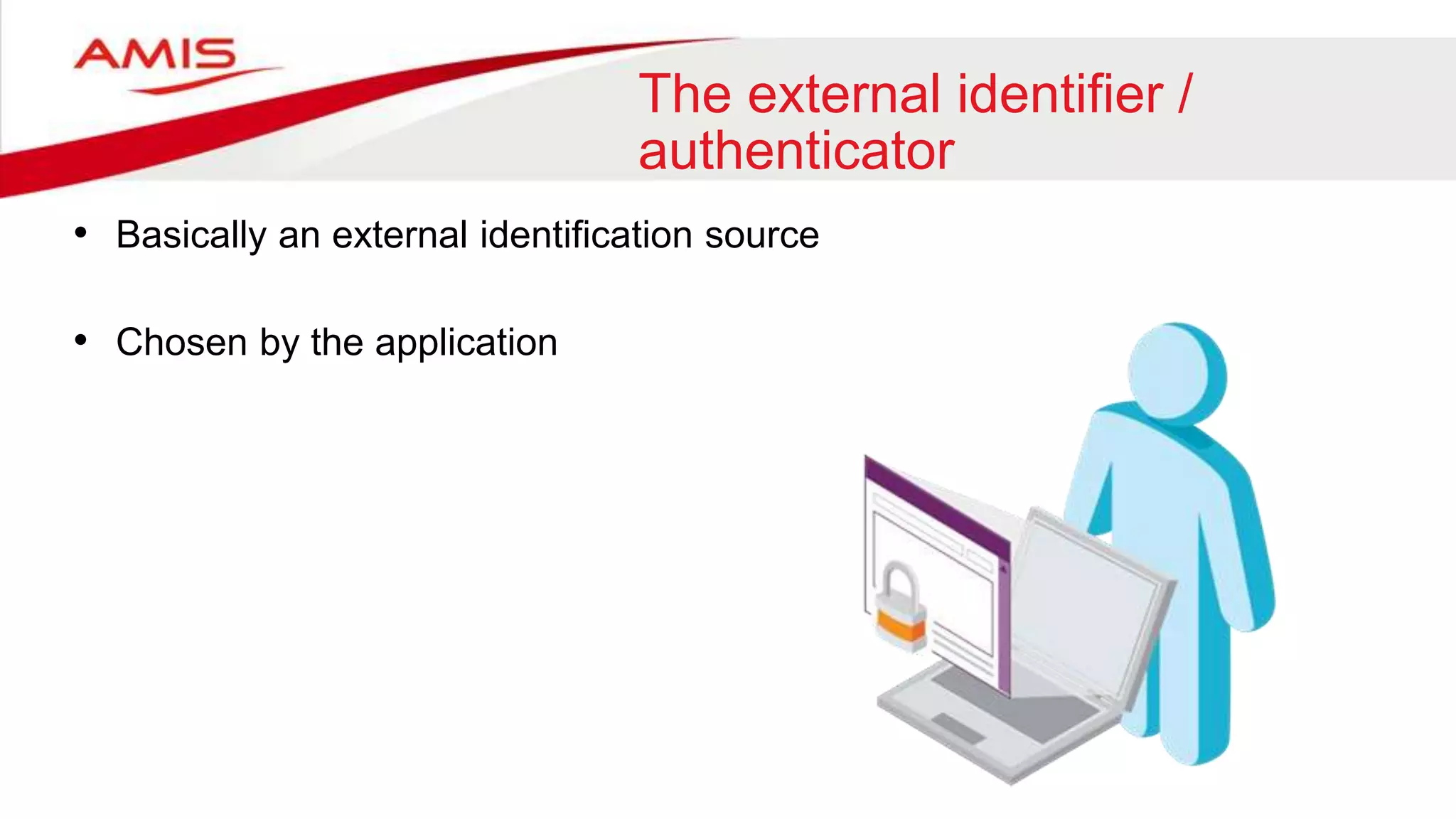
• Basically an external identification source
• Chosen by the application
How would we build this?
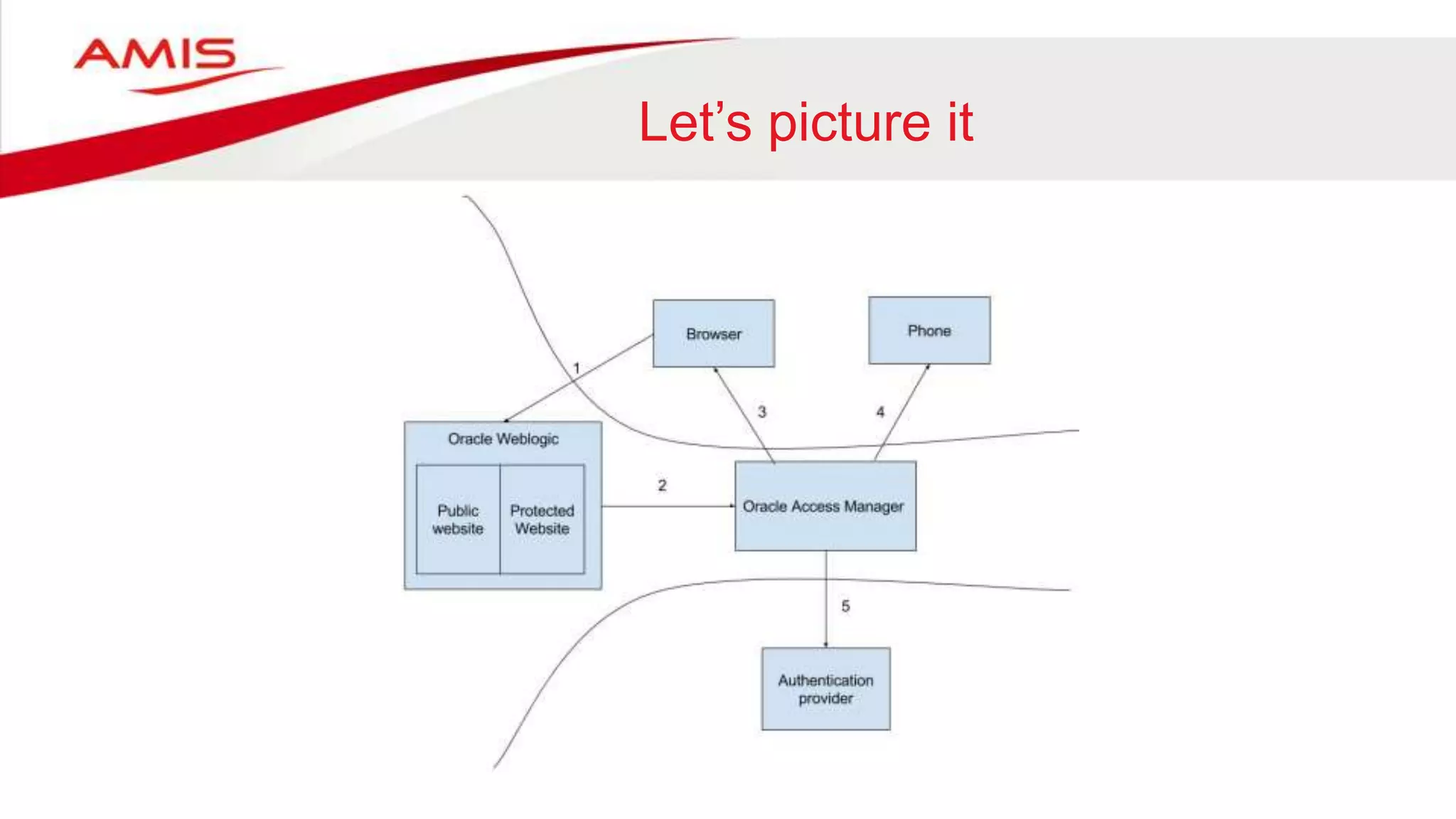
• Oracle Weblogic Server
– SAML Trust to an access manager
• Oracle Access Manager
– Key retrieval using dyndns
– External authentication (Using SAML or OAuth2)
• Personal authenticators…
– Todo…
Let’s picture it
What do we need
• Oracle:
– Authentication modules to authenticate using DYNDNS / IPV6
– Personal authenticators
– Expanded control over authentication chains
YOU
Special Thanks
• Global Identity Foundation
• Jericho Forum
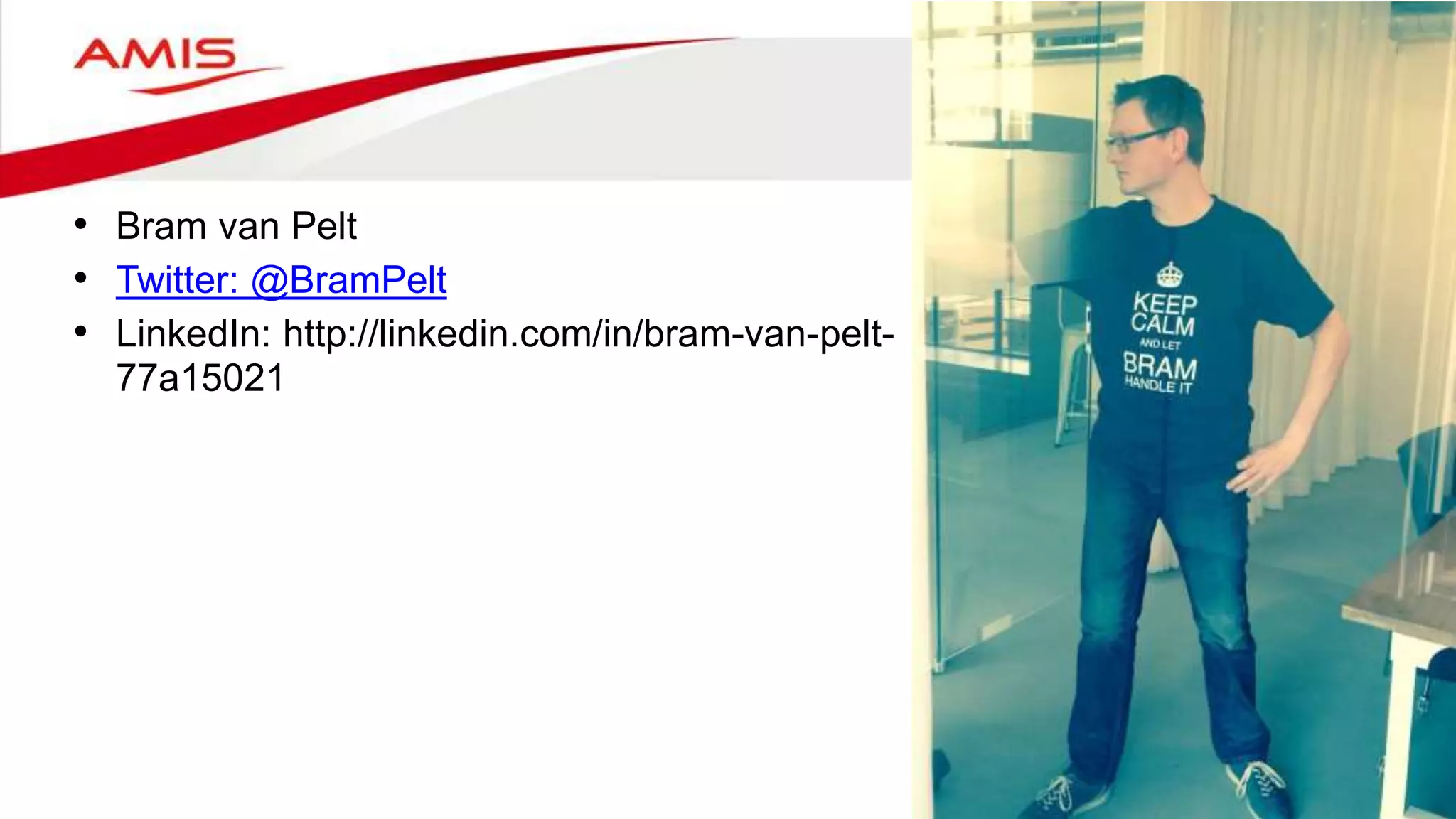
• Bram van Pelt
• Twitter: @BramPelt
• LinkedIn: http://linkedin.com/in/bram-van-pelt-
77a15021
Identity 3.0 and Oracle at AMIS25

Identity 3.0 and Oracle at AMIS25

  • 1.
    A match madein heaven or is hell freezing over? Bram van Pelt Identity 3.0 and Oracle
  • 2.
    Who Am I •Bram van Pelt • Expert lead Security • Security Consultant
  • 3.
    What will webe covering Agenda • The evolution of the identity • Identity 3.0 • Oracle POC implementation
  • 4.
  • 5.
    The history ofdigital Identity
  • 6.
    Identity 1.0 • JerichoForum • De-perimeterisation • COA Framework
  • 7.
    COA Framework • Technologies –Endpoint security – Secure communications – Secure data (DRM)
  • 8.
    COA Framework • Processes –People Lifecycle Management – Risk Management – Information Lifecycle Management – Device Lifecycle Management – Enterprise Lifecycle Management
  • 9.
    COA Framework • Services –Identity management and federation – Policy Management – Information Classification – Information Asset Management – Audit
  • 10.
    Identity 2.0 • Securelycollaborating in clouds • Identity, Entitlement & Access Management Commandments
  • 11.
    Identity, Entitlement &Access Management Commandments • 14 Guidelines on how to secure an identity • An Entity can have multiple, separate Persona (Identities) and related unique identifiers • The source of the attribute should be as close to the authoritative source as possible • A resource owner must define Entitlement (Resource Access Rules)
  • 12.
    Identity 3.0 • Bringyour own identity • Using identity to enhance privacy • “We believe that with a single global identity eco-system all this is possible.”
  • 13.
    Identity 3.0 definitions •External identifier A provider for attributes other than the user. • Core identifier The “bring your own identity” attribute provider • Persona A mix of attributes which are provided by the core identifier and optionally external identifiers
  • 14.
    Identity 3.0 principles:Risk • Decisions around identity are taken by the entity that is assuming the risk; with full visibility of the identity and attributes of all the entities in the transaction chain. • Attributes of an Identity will be signed by the authoritative source for those attributes.
  • 15.
    Identity 3.0 principles:Privacy • Every entity shall need only one identity which is unique and private unto the entity; there will be no body issuing or recording identities. • The Identity ecosystem will be privacy enhancing; attributes will be minimised, asserting only such information that is relevant to the transaction. • Entities will only maintain attributes for which they are the authoritative source.
  • 16.
    Identity 3.0 principles: Functionality •The digital representation and function of an entity type will be indistinguishable from another entity type, and will be interchangeable in operation. • The Identity ecosystem will operate without the need for identity brokers, CA of last resort or other centralized infrastructure. • Identity shall be (as much as possible) invisible to the end user; identity and attribute verification and exchange should be a background operation until such time that increased levels of user verification is required.
  • 17.
  • 18.
  • 19.
    Persona’s 19 [Entity: Organization] Government [Entity: Person] Yourself CitizenPersona with authoritative (cryptographically) signed attributes Date of Birth = 01 Jan 2000 Place of Birth = London, UK Sex at Birth = Male Name at Birth = John Doe Citizenship = Full British Issued = 01 Jan 2015 Revalidation = gid.citizen.gov.uk
  • 20.
  • 21.
    One way trust •I trust you, so you can access my resources • Does not mean you can access unauthenticated
  • 22.
    How does thiswork? • Site demands identity • You give your attrbutes • Your login to the External identifier
  • 23.
    How does thiswork? • Reusable • Web of identities
  • 24.
    Why would youwant this • No more user storage • Personalisation options • Transparancy to end users • Enhanced privacy
  • 25.
    How would webuild this? • Ingredients: – The core identity and identifier – The persona’s implementation – The external identifier / authenticators
  • 26.
    The core identityand Identifier • This is a personal device which you have on you, if possible… • Phones • Dyn-dns via browsers • Personal component
  • 27.
    The Persona implementation •Basically an “identity cookbook” • Trusts to identifiers • One way cryptographic trust – Signed attributes
  • 28.
    The external identifier/ authenticator • Basically an external identification source • Chosen by the application
  • 29.
    How would webuild this? • Oracle Weblogic Server – SAML Trust to an access manager • Oracle Access Manager – Key retrieval using dyndns – External authentication (Using SAML or OAuth2) • Personal authenticators… – Todo…
  • 30.
  • 31.
    What do weneed • Oracle: – Authentication modules to authenticate using DYNDNS / IPV6 – Personal authenticators – Expanded control over authentication chains
  • 32.
  • 33.
    Special Thanks • GlobalIdentity Foundation • Jericho Forum
  • 34.
    • Bram vanPelt • Twitter: @BramPelt • LinkedIn: http://linkedin.com/in/bram-van-pelt- 77a15021

Editor's Notes

  • #5 An account is a digital representation of a user An identity is a collection of accounts of a user A user is a natural person
  • #8 Technology, Process, Services
  • #12 For a full rundown, see: https://collaboration.opengroup.org/jericho/Jericho%20Forum%20Identity%20Commandments%20v1.0.pdf
  • #15 The full risk principles are: - Decisions around identity are taken by the entity that is assuming the risk; with full visibility of the identity and attributes of all the entities in the transaction chain. - Attributes of an Identity will be signed by the authoritative source for those attributes. - Identity will work off-line as well as on-line; with a lack of on-line verification simply another factor in the risk equation.
  • #16 The full privacy principles are: -Every entity shall need only one identity which is unique and private unto the entity; there will be no body issuing or recording identities. -The Identity ecosystem will be privacy enhancing; attributes will be minimised, asserting only such information that is relevant to the transaction. -Entities will only maintain attributes for which they are the authoritative source. -The identity of one entity to another will be cryptographically unique; negating the need for user-names or passwords and minimising attribute aggregation. -The biometrics (or other authentication method) of an entity will remain within the sole control of the entity; biometric information will not be used, exchanged or stored outside of the entities sole control.
  • #17 The full functionalityprinciples are: -The digital representation and function of an entity type will be indistinguishable from another entity type, and will be interchangeable in operation. -The Identity ecosystem will operate without the need for identity brokers, CA of last resort or other centralized infrastructure. -Identity will be simply expandable to encompass the security of data; E-mail (for example) can be encrypted simply by having an entities e-mail attributes shared with them. -Identity shall be (as much as possible) invisible to the end user; identity and attribute verification and exchange should be a background operation until such time that increased levels of user verification is required. -Everyone plays their part – no more!
  • #22 Example wallet