itcoins
Topics to be discussed

•
•
•
•

What is bitcoin
How it works
How is it valued
Pros and Cons
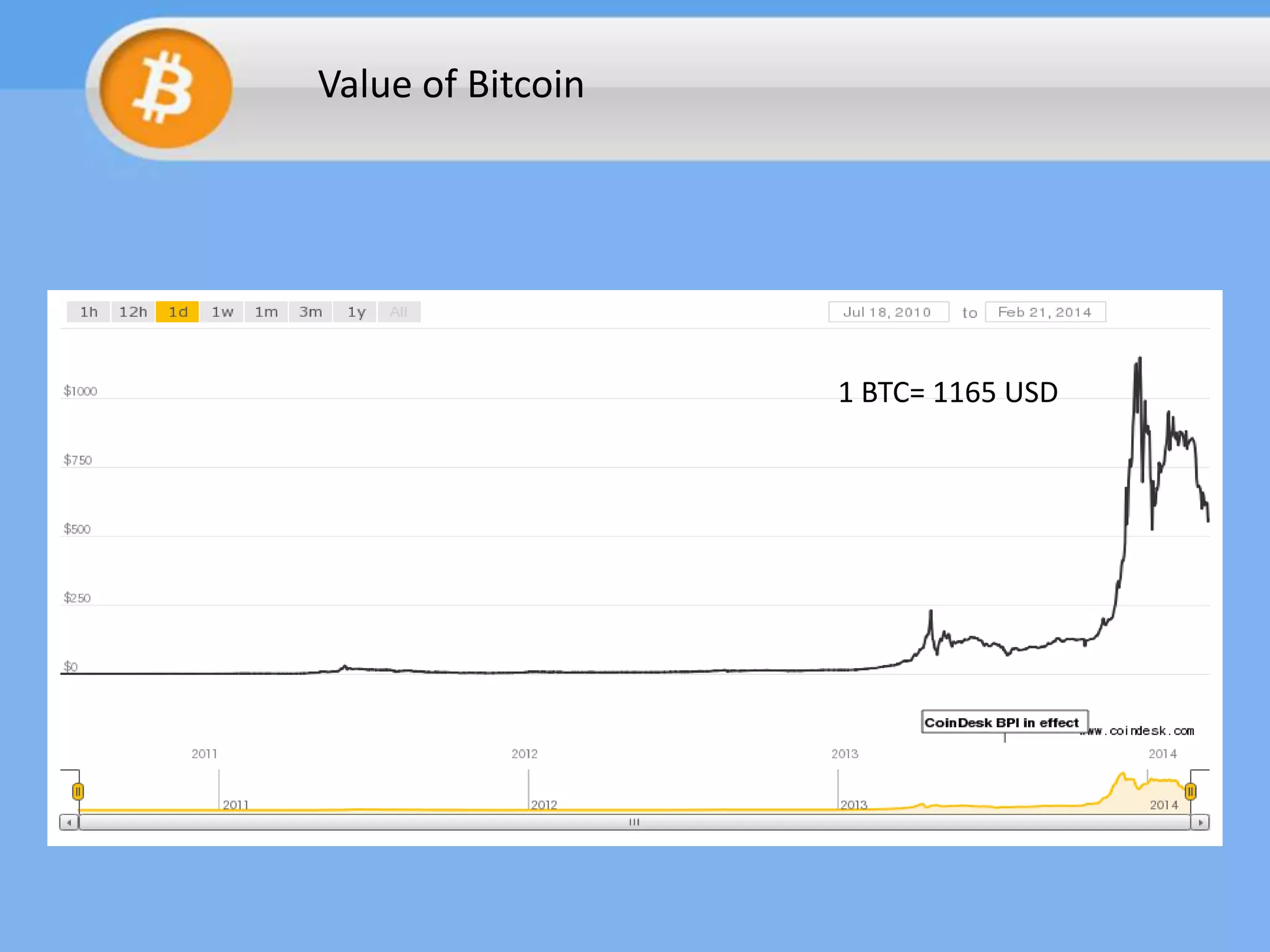
Value of Bitcoin

1 BTC= 1165 USD
What is Bitcoin?

Bitcoin is a digital currency and form of
decentralized electronic money which was
developed by Satoshi Nakamoto in 2008.
The developer released a software that could be used
to digitally send, receive, and store bitcoins.
The project is now maintained by a
community of developers and is available
as an open-source software.
What is Bitcoin?
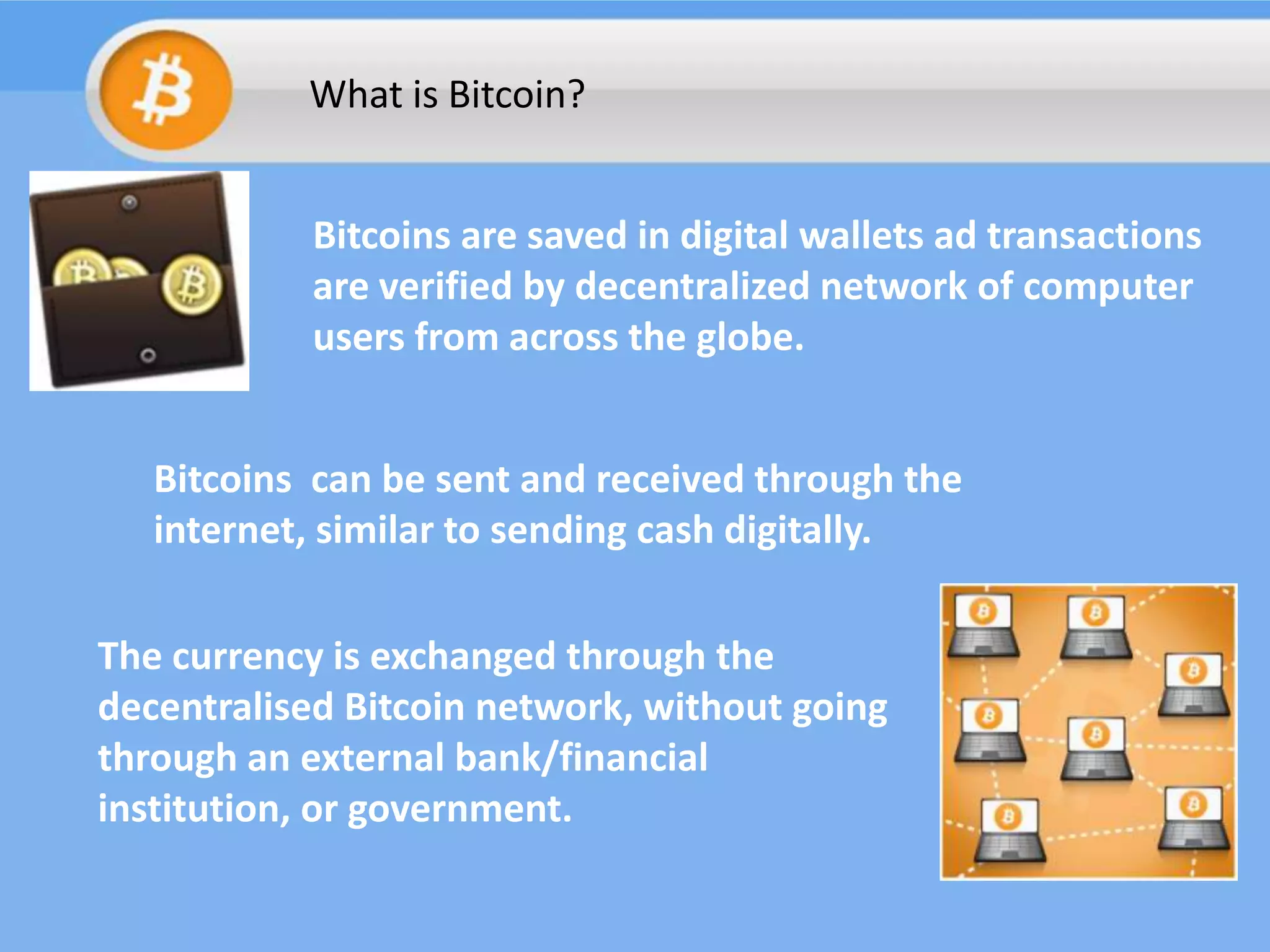
Bitcoins are saved in digital wallets ad transactions
are verified by decentralized network of computer
users from across the globe.

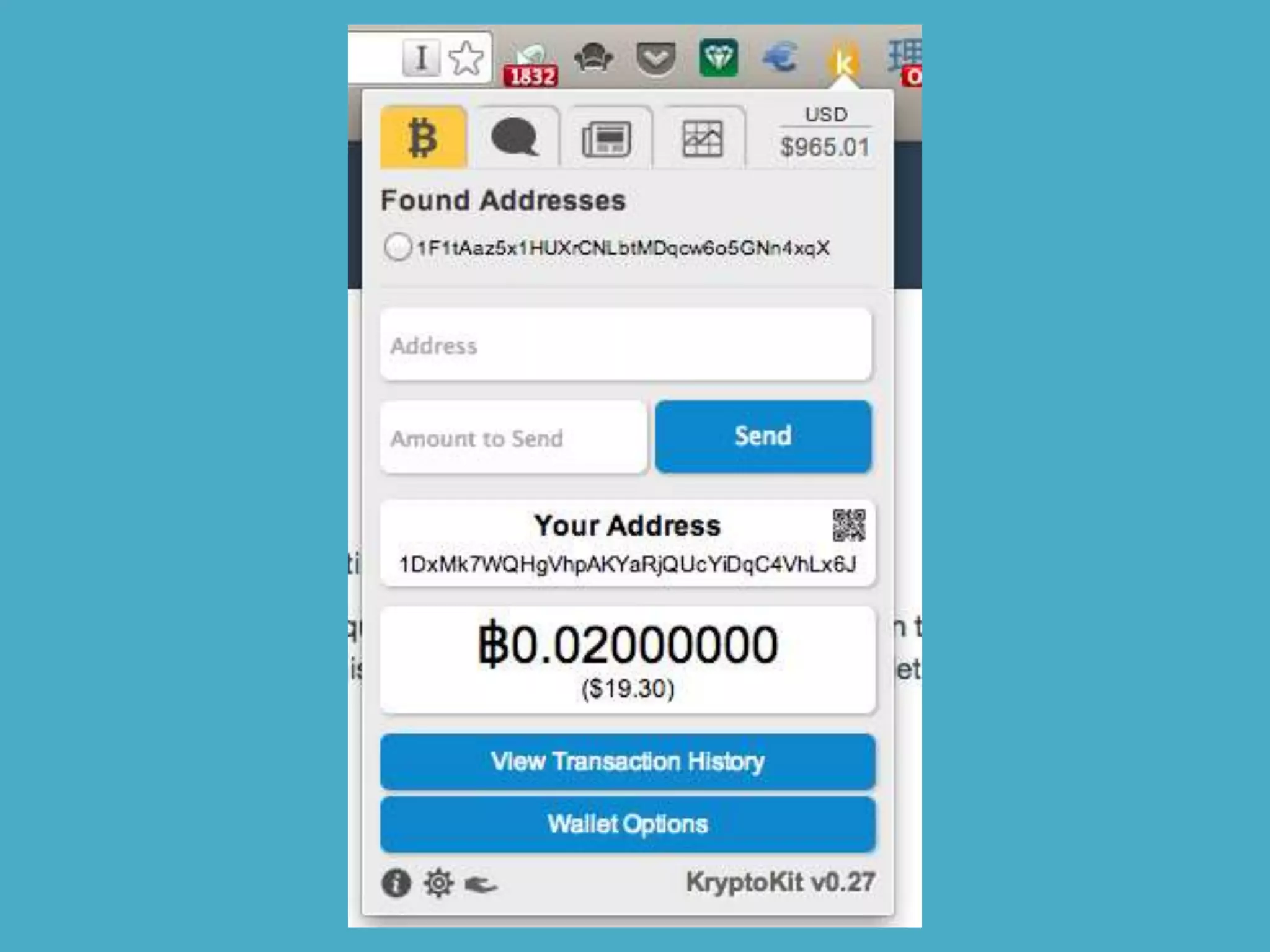
Bitcoins can be sent and received through the
internet, similar to sending cash digitally.
The currency is exchanged through the
decentralised Bitcoin network, without going
through an external bank/financial
institution, or government.
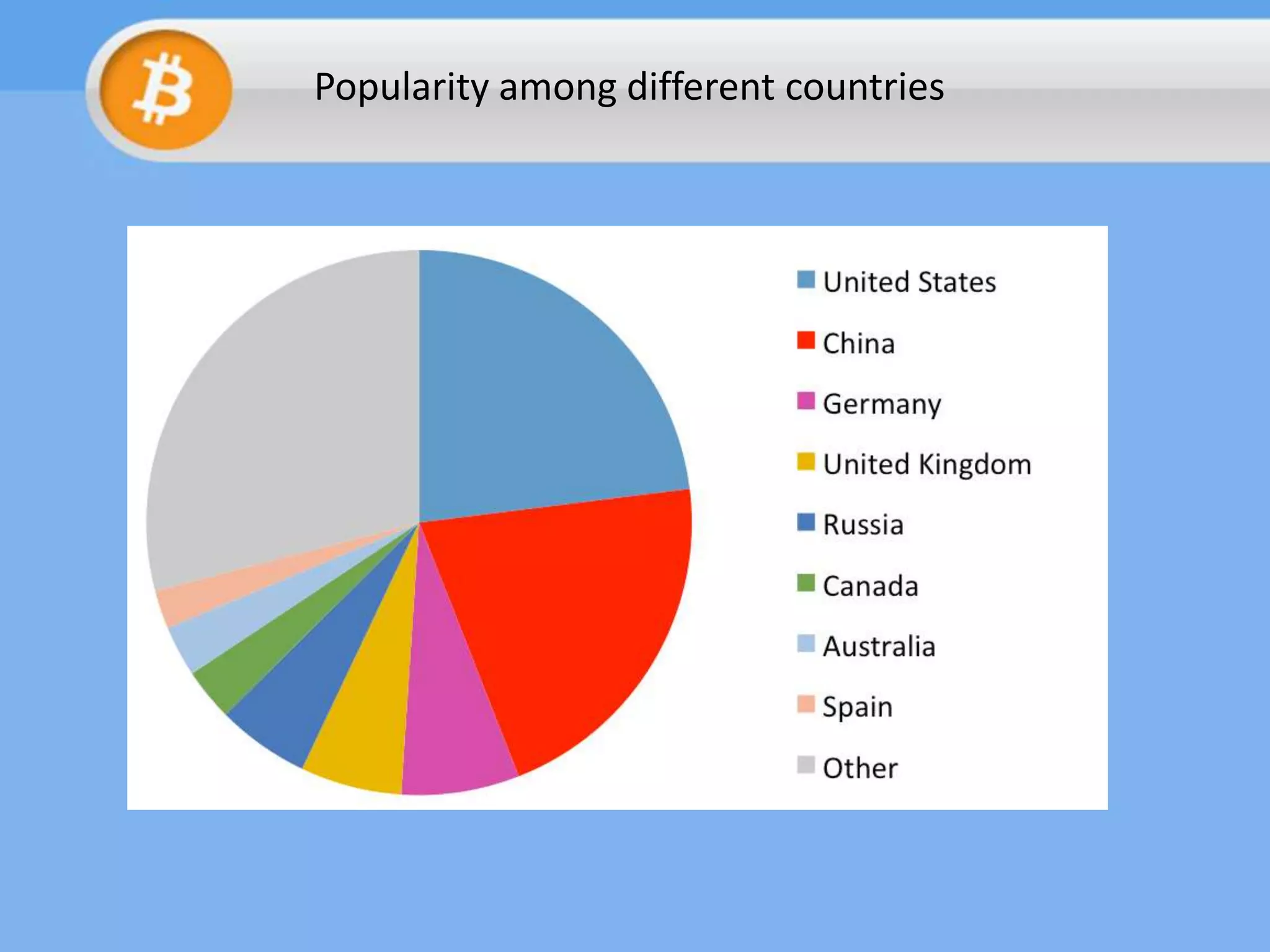
Popularity among different countries
How it works?

• Every “account” consists of the public key ( =
bitcoin address) and the private key.
• Anyone who knows your public key, can send
you bitcoins.
• To spend bitcoins, you have to know the
private key.
• The transaction is broadcasted to the bitcoin
network.
• The miners confirm the transactions.

”14nRKoXJAUpKYYbzw6Yrqh9gW2p26zerpW”
How is it valued?

A number of electronic marketplaces called
“Bitcoin exchanges” allow for the purchase or
sale of bitcoins using different currencies.

Jan 2014: There were about 14 million Bitcoins in
circulation
Acceptance!!!

Many retailers like Overstock, OkCupid have
started accepting BitCoins as a payment.
Many others like Amazon etc. may soon join.

You can use Bitcoins to buy music, books, food, etc.
Acceptance!!!

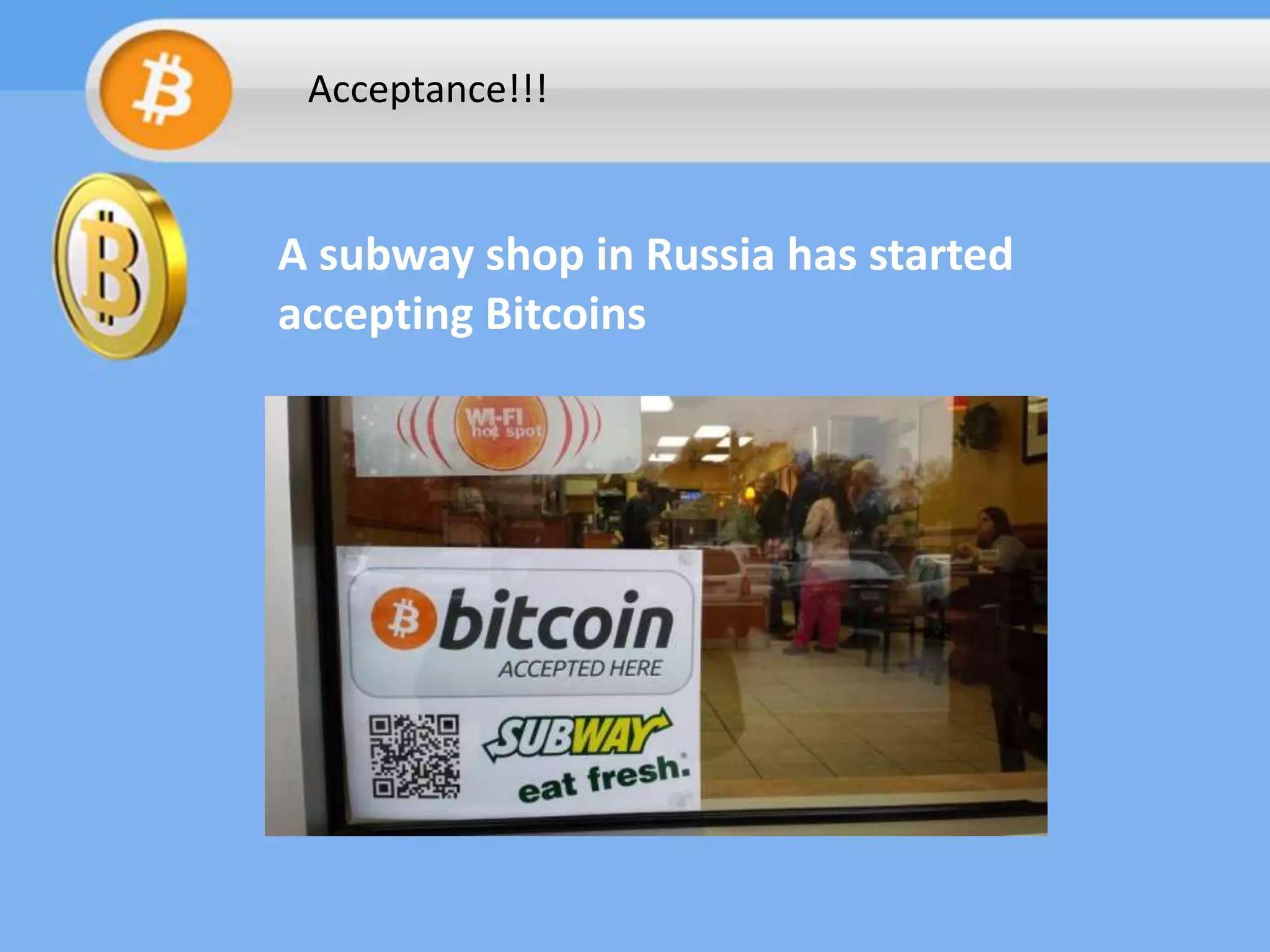
A subway shop in Russia has started
accepting Bitcoins
Pros

• No unpredictable inflation by ”printing more
money” by political decision.
• Transactions travel instantly
• Send money in seconds to anyone with
internet access – with zero transaction costs.
• Highly anonymous, in certain conditions
• Every transaction is public, though!
• If you memorize your private key, the only way
to steal your bitcoins (even for the authorities)
is to torture you (or spy or hack your
computer).
• Easy to use
• You can choose the tool (usability / security)
Cons

 Bitcoin is rather new and its still in marginal use ->
high volatility.
 BTC money supply:
500,000,000 €
 EUR money supply: 5,000,000,000,000 €
 It’s currency for the internet – take down the
internet, and you cannot use bitcoins.
 Perhaps not suitable for any country’s official
currency.
 Lose your private key -> lose your bitcoins.
 No means to cancel the transaction!
Reactions and critics

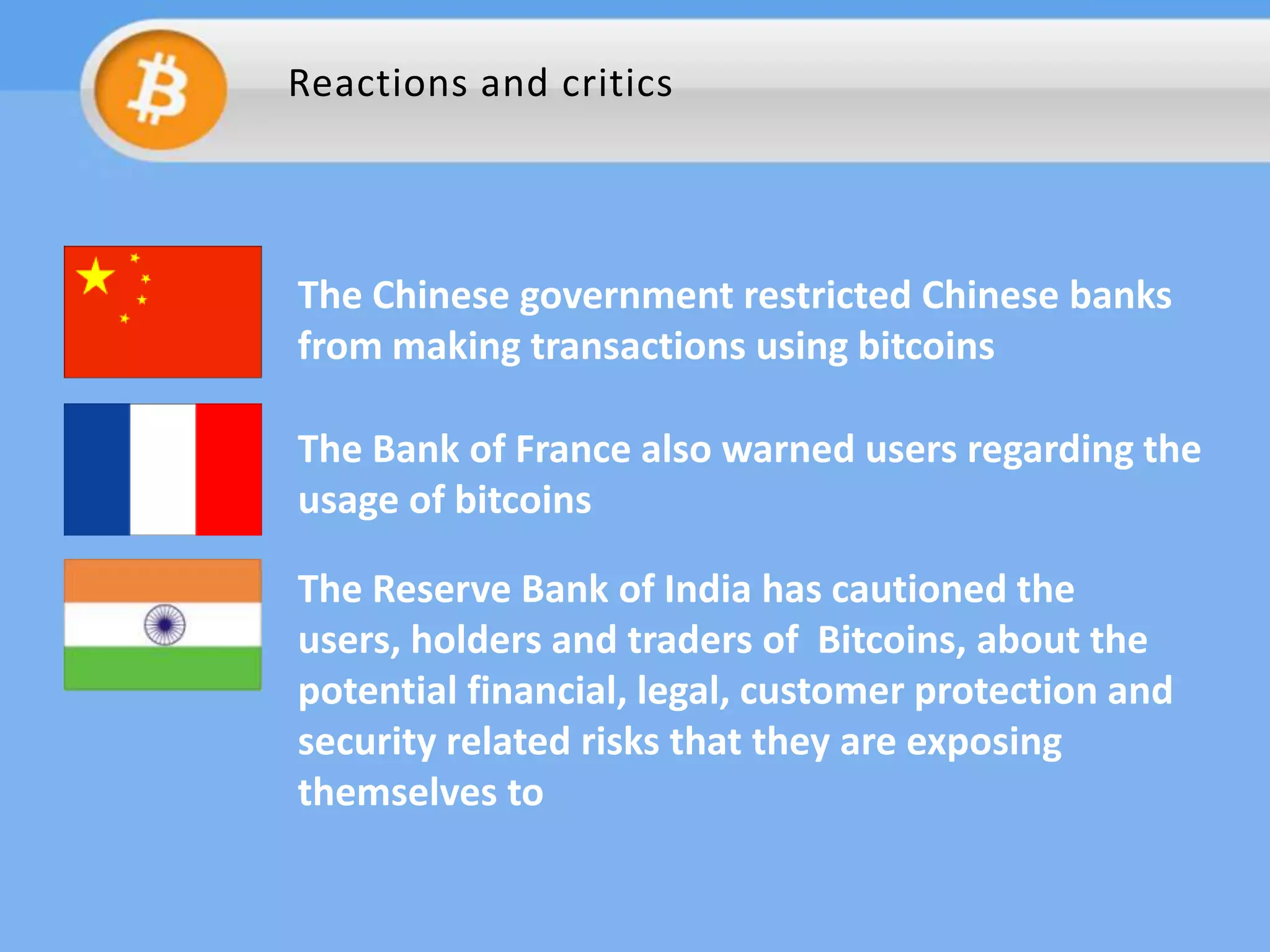
The Chinese government restricted Chinese banks
from making transactions using bitcoins
The Bank of France also warned users regarding the
usage of bitcoins
The Reserve Bank of India has cautioned the
users, holders and traders of Bitcoins, about the
potential financial, legal, customer protection and
security related risks that they are exposing
themselves to
Reactions and critics

The Chinese government restricted Chinese banks from
making transactions using bitcoins
The Bank of France also warned users regarding the usage of
bitcoins

The Reserve Bank of India has cautioned the users, holders and
traders of Bitcoins, about the potential
financial, legal, customer protection and security related risks
that they are exposing themselves to

Eps assignment

  • 1.
  • 2.
    Topics to bediscussed • • • • What is bitcoin How it works How is it valued Pros and Cons
  • 3.
    Value of Bitcoin 1BTC= 1165 USD
  • 4.
    What is Bitcoin? Bitcoinis a digital currency and form of decentralized electronic money which was developed by Satoshi Nakamoto in 2008. The developer released a software that could be used to digitally send, receive, and store bitcoins. The project is now maintained by a community of developers and is available as an open-source software.
  • 5.
    What is Bitcoin? Bitcoinsare saved in digital wallets ad transactions are verified by decentralized network of computer users from across the globe. Bitcoins can be sent and received through the internet, similar to sending cash digitally. The currency is exchanged through the decentralised Bitcoin network, without going through an external bank/financial institution, or government.
  • 6.
  • 7.
    How it works? •Every “account” consists of the public key ( = bitcoin address) and the private key. • Anyone who knows your public key, can send you bitcoins. • To spend bitcoins, you have to know the private key. • The transaction is broadcasted to the bitcoin network. • The miners confirm the transactions. ”14nRKoXJAUpKYYbzw6Yrqh9gW2p26zerpW”
  • 9.
    How is itvalued? A number of electronic marketplaces called “Bitcoin exchanges” allow for the purchase or sale of bitcoins using different currencies. Jan 2014: There were about 14 million Bitcoins in circulation
  • 10.
    Acceptance!!! Many retailers likeOverstock, OkCupid have started accepting BitCoins as a payment. Many others like Amazon etc. may soon join. You can use Bitcoins to buy music, books, food, etc.
  • 11.
    Acceptance!!! A subway shopin Russia has started accepting Bitcoins
  • 12.
    Pros • No unpredictableinflation by ”printing more money” by political decision. • Transactions travel instantly • Send money in seconds to anyone with internet access – with zero transaction costs. • Highly anonymous, in certain conditions • Every transaction is public, though! • If you memorize your private key, the only way to steal your bitcoins (even for the authorities) is to torture you (or spy or hack your computer). • Easy to use • You can choose the tool (usability / security)
  • 13.
    Cons  Bitcoin israther new and its still in marginal use -> high volatility.  BTC money supply: 500,000,000 €  EUR money supply: 5,000,000,000,000 €  It’s currency for the internet – take down the internet, and you cannot use bitcoins.  Perhaps not suitable for any country’s official currency.  Lose your private key -> lose your bitcoins.  No means to cancel the transaction!
  • 14.
    Reactions and critics TheChinese government restricted Chinese banks from making transactions using bitcoins The Bank of France also warned users regarding the usage of bitcoins The Reserve Bank of India has cautioned the users, holders and traders of Bitcoins, about the potential financial, legal, customer protection and security related risks that they are exposing themselves to
  • 15.
    Reactions and critics TheChinese government restricted Chinese banks from making transactions using bitcoins The Bank of France also warned users regarding the usage of bitcoins The Reserve Bank of India has cautioned the users, holders and traders of Bitcoins, about the potential financial, legal, customer protection and security related risks that they are exposing themselves to