What is Comedy?

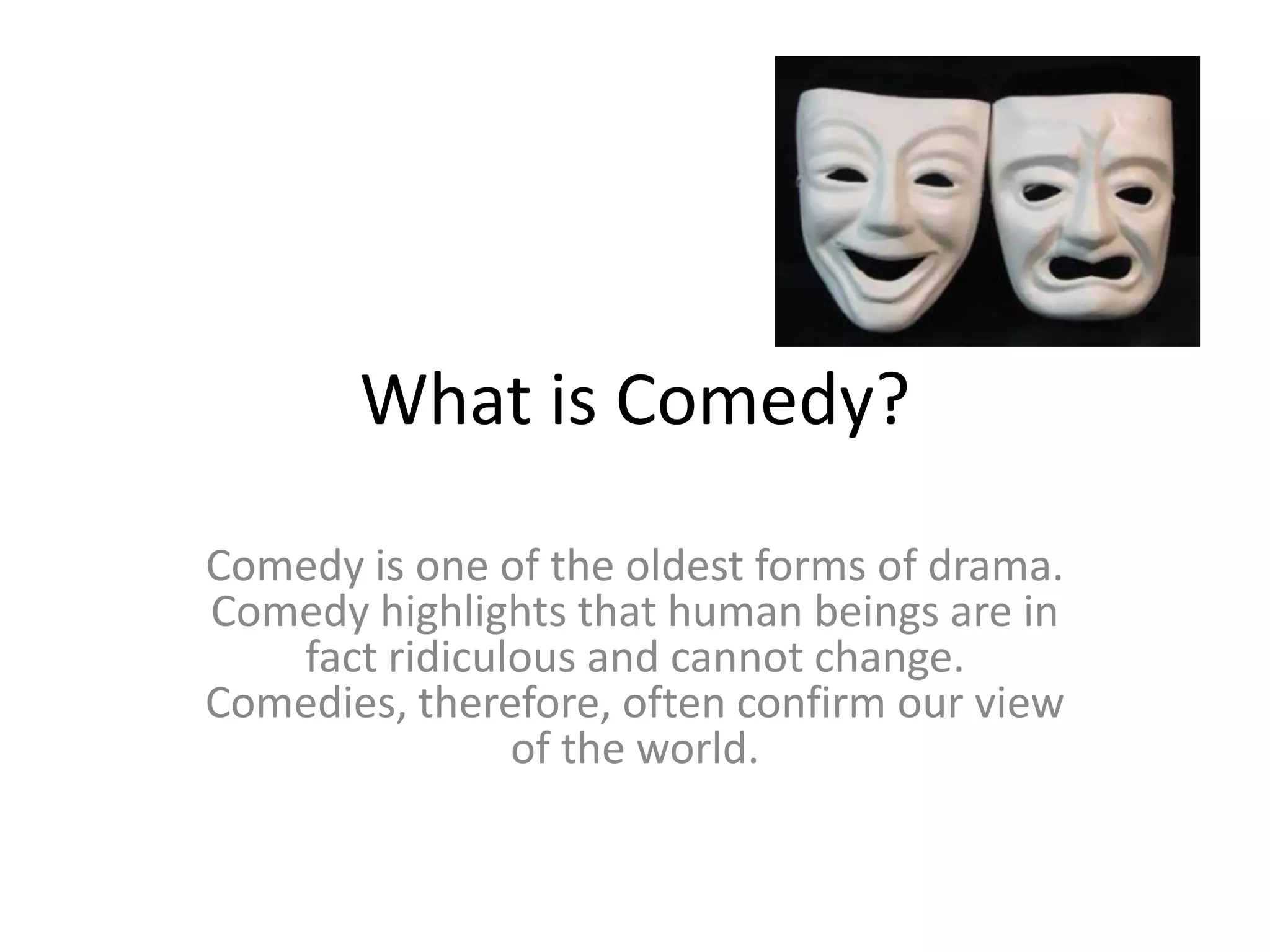
Comedy is one of the oldest forms of drama.
Comedy highlights that human beings are in
   fact ridiculous and cannot change.
Comedies, therefore, often confirm our view
               of the world.
Some writers and observers felt that
 religious dramas should contain nothing

                              Medieval Comedy
 comic or amusing within them, and that
  sacred texts should be treated as such.
  Others disagreed and felt that humour
 could often be used very well to instruct.

                                                  Malapropism: a
  The medieval period developed dramatic          comical confusion of
  comedy in new ways:                             words
                                                  Bawdy: generally
• Dramas were usually Christian themed and        applied to language
  either explored episodes from the Bible or      that is coarse or lewd
                                                  Pun: a play on words
  scenes from the lives of saints with comic      Double entendre:
  sequences within them.                          an expression that
                                                  has two meanings.
• These were usually bawdy and contained down     The first meaning
                                                  may be obvious, but
  to earth humour.                                a second meaning
• The language they were written in had lots of   may be either ironic
                                                  or rude
  puns and double entendres, which the
  audience would find amusing.
  It seems that by the end of the medieval
  period, attitudes had changed and comedy
  was now a legitimate and important genre of
  writing.
Shakespearean Comedy
• The main kind of comedies Shakespeare wrote
  are often labelled romantic comedies.
• These plays are quite light-hearted, but do have
  some darker and more disturbing elements to
  them.
• Like the model set in previous centuries,
  Shakespeare realised that the best kind of
  comedy is generated by a series of mix-ups where
  disorder is rife and life is turned upside down.
• All of his comedies look at the foolishness of
  human beings.
• They often have interlinked plots
Shakespeare’s Comedies
   Northrop Frye states that Shakespeare’s comedies are:
• Set in the rural world, meaning that urban and business concerns can be
  forgotten.
• Time is also forgotten. There are no clocks.
• The older, restrictive generation can be dispensed with.
• There is often gender confusion.
• The mythical and real merge.
• It is a temporary holiday atmosphere.
• There is no social hierarchy.
• There is a ‘old world’ (belonging to older people or parental figures), a
  ‘green world’ (a forest, wood or non-urban environment – a world of
  freedom but also confusion) and a ‘new world’ (a world created out of the
  resolution of the play – one that has learnt from its past mistakes and
  resolved previous problems).
Restoration Comedy                        Beaus - relaxed,
                                                              attractive and self-
    Puritanism and the Civil War had put a stop to much       confident men
    comedy on stage in Britain in the middle of the 17th      Rakes – men who
    Century. However dramatic comedy flourished again in the live an irresponsible
    final decades of the century.                             and immoral life
                                                              Fops – men who
•   Dramas that looked at sexual relationships within polite
                                                              are dandy like and a
    society
                                                              little effeminate.
•   Marriage is a central theme                               They often pay a lot
•   Key stock characters include beaus, rakes, fobs, bawds,   of attention to their
    scheming valets, young and older women, and country       appearance and
    squires.                                                  clothes
•   They are mainly written in prose, though with some verse Valets – personal
    sections.                                                 servants who took
•   There is focus on repartee and wit.                       care of a
                                                              gentleman’s clothes
•   The tone is bawdy, cynical and amoral.                    and lifestyle
•   There are often double or triple plot-lines.              Squires –
•   Money, sexual commerce and social standing are key issues.gentlemen from the
                                                              countryside
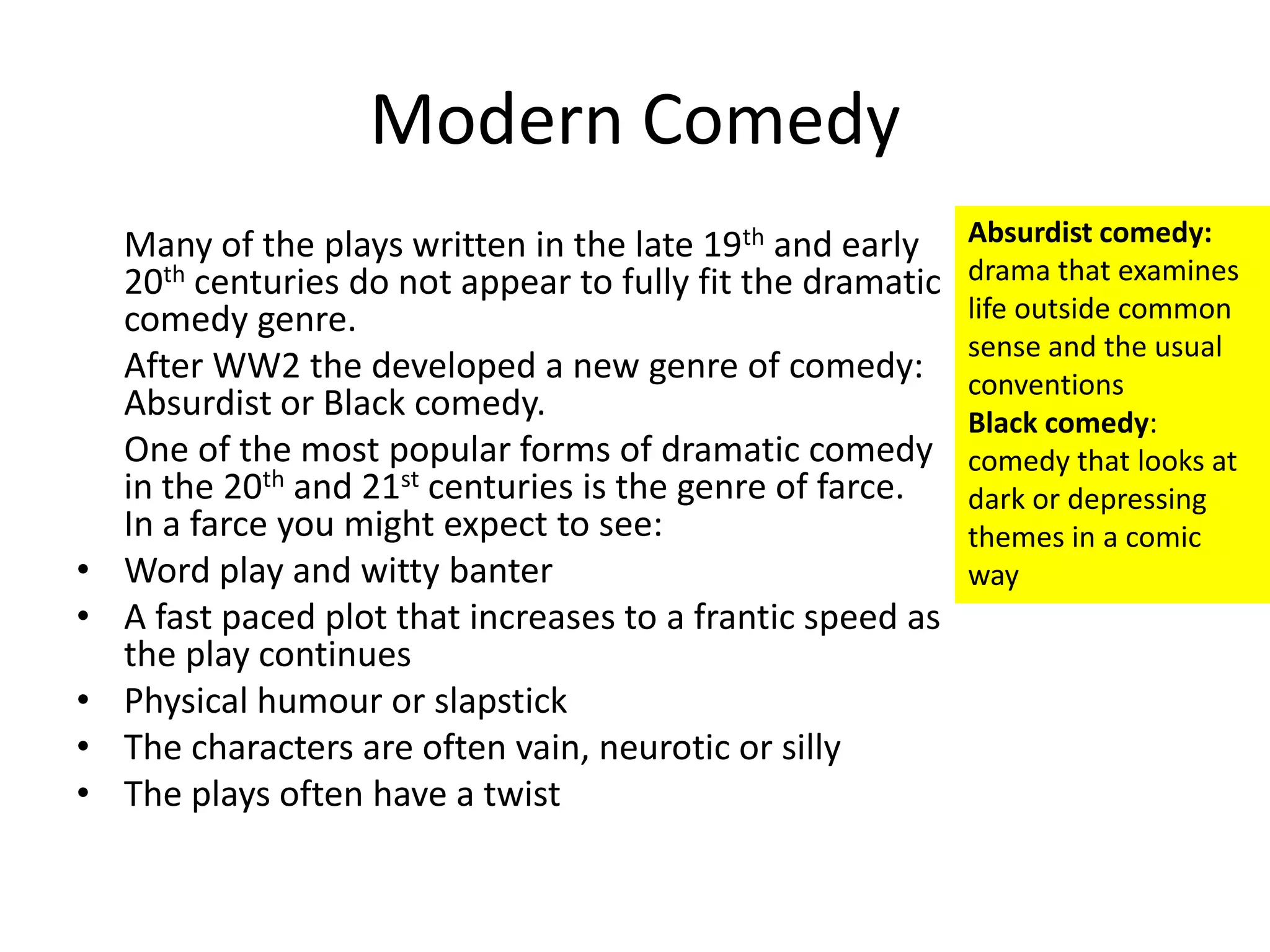
Modern Comedy
    Many of the plays written in the late 19th and early     Absurdist comedy:
    20th centuries do not appear to fully fit the dramatic   drama that examines
    comedy genre.                                            life outside common
                                                             sense and the usual
    After WW2 the developed a new genre of comedy:           conventions
    Absurdist or Black comedy.                               Black comedy:
    One of the most popular forms of dramatic comedy         comedy that looks at
    in the 20th and 21st centuries is the genre of farce.    dark or depressing
    In a farce you might expect to see:                      themes in a comic
•   Word play and witty banter                               way
•   A fast paced plot that increases to a frantic speed as
    the play continues
•   Physical humour or slapstick
•   The characters are often vain, neurotic or silly
•   The plays often have a twist
Contemporary Dramatic Comedy
Contemporary comedies is more difficult to
define than the dramatic comedy of the past.
This is because contemporary plays incorporate
lots of elements of other styles of drama.
Contemporary comedy still uses many of the
generic elements of the past, but reworks them
in new and alternative ways. Very often, the
traditional setting for dramatic comedy are
revised, with playwrights seeking new ways of
how comedy can be used to expose and discuss
the human condition.
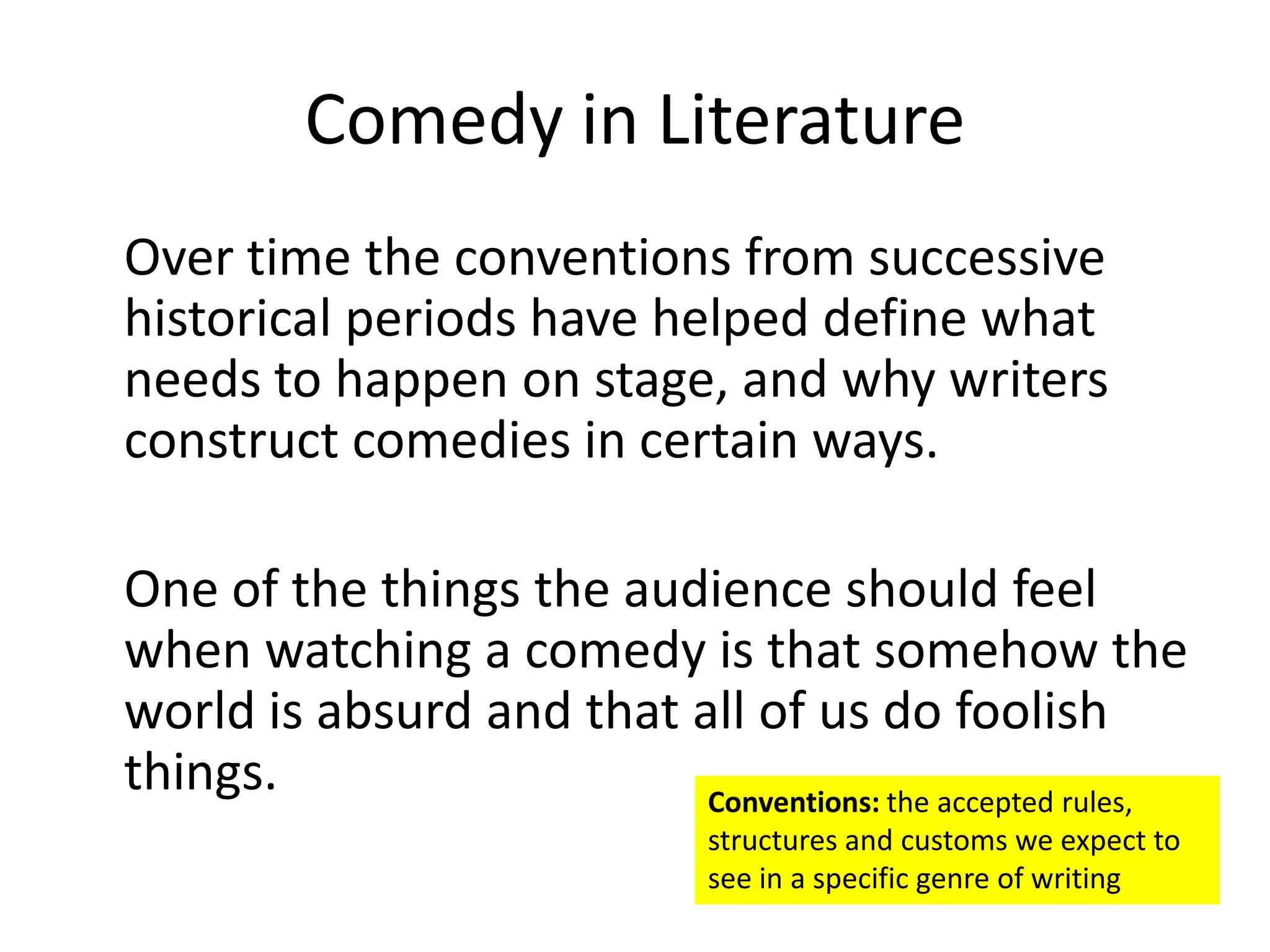
Comedy in Literature
Over time the conventions from successive
historical periods have helped define what
needs to happen on stage, and why writers
construct comedies in certain ways.

One of the things the audience should feel
when watching a comedy is that somehow the
world is absurd and that all of us do foolish
things.                   Conventions: the accepted rules,
                               structures and customs we expect to
                               see in a specific genre of writing

What is comedy

  • 1.
    What is Comedy? Comedyis one of the oldest forms of drama. Comedy highlights that human beings are in fact ridiculous and cannot change. Comedies, therefore, often confirm our view of the world.
  • 2.
    Some writers andobservers felt that religious dramas should contain nothing Medieval Comedy comic or amusing within them, and that sacred texts should be treated as such. Others disagreed and felt that humour could often be used very well to instruct. Malapropism: a The medieval period developed dramatic comical confusion of comedy in new ways: words Bawdy: generally • Dramas were usually Christian themed and applied to language either explored episodes from the Bible or that is coarse or lewd Pun: a play on words scenes from the lives of saints with comic Double entendre: sequences within them. an expression that has two meanings. • These were usually bawdy and contained down The first meaning may be obvious, but to earth humour. a second meaning • The language they were written in had lots of may be either ironic or rude puns and double entendres, which the audience would find amusing. It seems that by the end of the medieval period, attitudes had changed and comedy was now a legitimate and important genre of writing.
  • 3.
    Shakespearean Comedy • Themain kind of comedies Shakespeare wrote are often labelled romantic comedies. • These plays are quite light-hearted, but do have some darker and more disturbing elements to them. • Like the model set in previous centuries, Shakespeare realised that the best kind of comedy is generated by a series of mix-ups where disorder is rife and life is turned upside down. • All of his comedies look at the foolishness of human beings. • They often have interlinked plots
  • 4.
    Shakespeare’s Comedies Northrop Frye states that Shakespeare’s comedies are: • Set in the rural world, meaning that urban and business concerns can be forgotten. • Time is also forgotten. There are no clocks. • The older, restrictive generation can be dispensed with. • There is often gender confusion. • The mythical and real merge. • It is a temporary holiday atmosphere. • There is no social hierarchy. • There is a ‘old world’ (belonging to older people or parental figures), a ‘green world’ (a forest, wood or non-urban environment – a world of freedom but also confusion) and a ‘new world’ (a world created out of the resolution of the play – one that has learnt from its past mistakes and resolved previous problems).
  • 5.
    Restoration Comedy Beaus - relaxed, attractive and self- Puritanism and the Civil War had put a stop to much confident men comedy on stage in Britain in the middle of the 17th Rakes – men who Century. However dramatic comedy flourished again in the live an irresponsible final decades of the century. and immoral life Fops – men who • Dramas that looked at sexual relationships within polite are dandy like and a society little effeminate. • Marriage is a central theme They often pay a lot • Key stock characters include beaus, rakes, fobs, bawds, of attention to their scheming valets, young and older women, and country appearance and squires. clothes • They are mainly written in prose, though with some verse Valets – personal sections. servants who took • There is focus on repartee and wit. care of a gentleman’s clothes • The tone is bawdy, cynical and amoral. and lifestyle • There are often double or triple plot-lines. Squires – • Money, sexual commerce and social standing are key issues.gentlemen from the countryside
  • 6.
    Modern Comedy Many of the plays written in the late 19th and early Absurdist comedy: 20th centuries do not appear to fully fit the dramatic drama that examines comedy genre. life outside common sense and the usual After WW2 the developed a new genre of comedy: conventions Absurdist or Black comedy. Black comedy: One of the most popular forms of dramatic comedy comedy that looks at in the 20th and 21st centuries is the genre of farce. dark or depressing In a farce you might expect to see: themes in a comic • Word play and witty banter way • A fast paced plot that increases to a frantic speed as the play continues • Physical humour or slapstick • The characters are often vain, neurotic or silly • The plays often have a twist
  • 7.
    Contemporary Dramatic Comedy Contemporarycomedies is more difficult to define than the dramatic comedy of the past. This is because contemporary plays incorporate lots of elements of other styles of drama. Contemporary comedy still uses many of the generic elements of the past, but reworks them in new and alternative ways. Very often, the traditional setting for dramatic comedy are revised, with playwrights seeking new ways of how comedy can be used to expose and discuss the human condition.
  • 8.
    Comedy in Literature Overtime the conventions from successive historical periods have helped define what needs to happen on stage, and why writers construct comedies in certain ways. One of the things the audience should feel when watching a comedy is that somehow the world is absurd and that all of us do foolish things. Conventions: the accepted rules, structures and customs we expect to see in a specific genre of writing