Downloaded 10 times

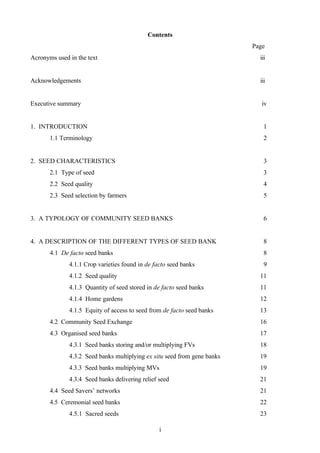

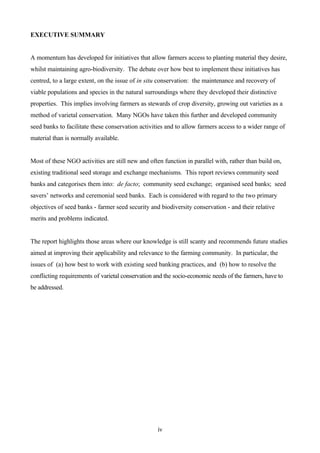


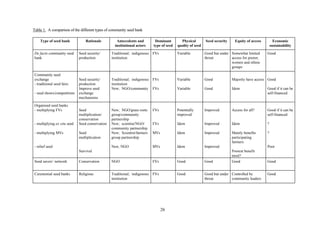
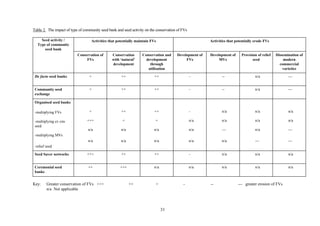



This document presents a typology of community seed banks, categorizing them into 5 types: de facto seed banks, ceremonial seed banks, community seed exchange, organized seed banks, and seed savers' networks. It describes the key characteristics of each type and compares them in terms of providing seed security and conserving agrobiodiversity. De facto seed banks refer to informal on-farm storage of seed. Community seed exchanges involve occasional sharing of seed varieties between individuals and groups. Organized seed banks have more formal institutional arrangements for storing and distributing seed. Seed savers' networks focus on preserving heirloom seed varieties. Ceremonial seed banks store seed for cultural and religious purposes. The document highlights gaps in understanding of how community


