Original Research
Magnetic Resonance Imaging and Permanent
Cosmetics (Tattoos): Survey of Complications and
Adverse Events
Whitney D. Tope, MD, MPhil,1
and Frank G. Shellock, PhD2*
Purpose: To use a survey to determine the incidence of
complications and adverse events in individuals with per-
manent cosmetics (e.g., tattooed eyeliner, eyebrows, lips,
cheeks, etc.) who underwent magnetic resonance (MR) im-
aging.
Materials and Methods: A questionnaire was distributed
to clients of cosmetic tattoo technicians. This survey asked
study subjects for demographic data, information about
their tattoos, and for their experiences during MR imaging
procedures.
Results: Data obtained from 1032 surveys were tabulated.
One hundred thirty-five (13.1%) study subjects underwent
MR imaging after having permanent cosmetics applied. Of
these, only two individuals (1.5%) experienced problems
associated with MR imaging. One subject reported a sen-
sation of “slight tingling” and the other subject reported a
sensation of “burning”; both sensations were transient in
nature.
Conclusion: Based on these findings and information in
the peer-reviewed literature, it appears that MR imaging
may be performed in patients with permanent cosmetics
without any serious soft tissue reactions or adverse events.
Therefore, the presence of permanent cosmetics should not
prevent a patient from undergoing MR imaging.
Key words: magnetic resonance imaging, safety; magnetic
resonance imaging, bioeffects; heating; artifacts; magnetic
resonance imaging
J. Magn. Reson. Imaging 2002;15:180–184.
© 2002 Wiley-Liss, Inc.
TRADITIONAL (I.E., DECORATIVE) and cosmetic tat-
tooing have been performed for thousands of years. In
the United States, cosmetic tattooing or “permanent
cosmetics” are used to reshape, recolor, recreate, or
modify eye shadow, eyeliner, eyebrows, lips, beauty
marks, and cheek blush (1). Additionally, permanent
cosmetics are often used aesthetically to enhance nip-
ple-areola reconstruction (2).
Magnetic resonance (MR) imaging is a frequently
used imaging modality, particularly for evaluating the
brain, head, neck, and other anatomic regions where
cosmetic tattoos are typically applied. Unfortunately,
there is much confusion regarding MR safety aspects of
permanent cosmetics (3–6). For example, based on a
few reports of symptoms localized to the tattooed area
during MR imaging, many radiologists have refused to
perform MR procedures on individuals with permanent
cosmetics, particularly tattooed eyeliner (unpublished
observations, F. G. Shellock, 2000). Obviously, this un-
due concern for possible adverse events prevents pa-
tients with cosmetic tattoos from access to an extremely
important diagnostic imaging technique.
While it is well-known that cosmetic tattoos may
cause MR imaging artifacts (3–11) and that both cos-
metic and decorative tattoos may cause relatively mi-
nor, short-term cutaneous reactions (3,8,11–16), the
frequency and severity of soft tissue reactions or other
related problems associated with MR imaging and cos-
metic tattoos is unknown. Therefore, the purpose of
this investigation was to determine the frequency and
severity of adverse events associated with MR imaging
in a population of subjects with permanent cosmetics.
MATERIALS AND METHODS
A questionnaire was developed to survey individuals
with permanent cosmetics to determine the incidence
and severity of complications or adverse events associ-
ated with MR imaging. The questionnaire asked study
subjects for basic demographic data, information about
their cosmetic tattoos, information about their MR im-
aging examinations, and their experiences with these
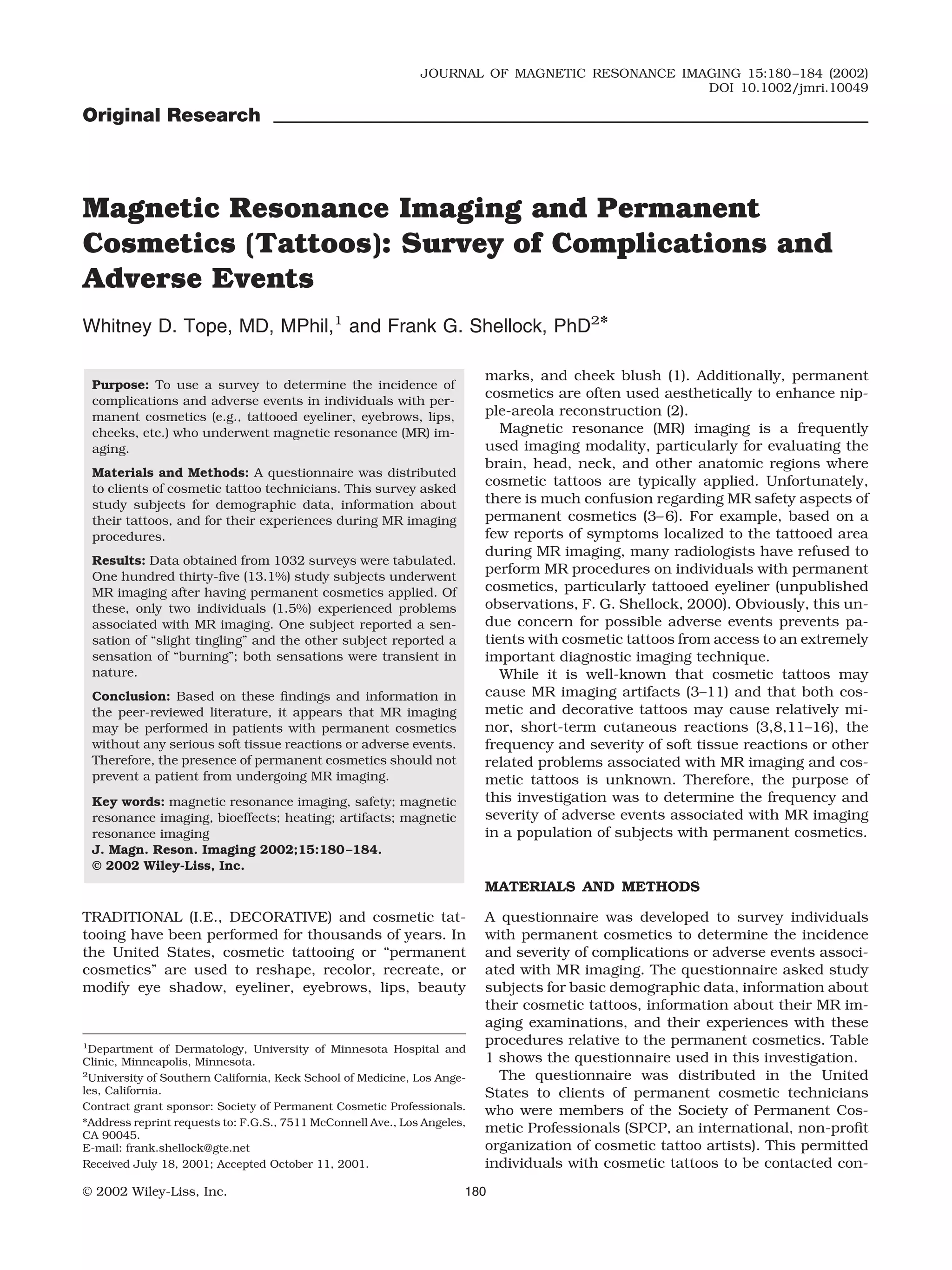
procedures relative to the permanent cosmetics. Table
1 shows the questionnaire used in this investigation.
The questionnaire was distributed in the United
States to clients of permanent cosmetic technicians
who were members of the Society of Permanent Cos-
metic Professionals (SPCP, an international, non-profit
organization of cosmetic tattoo artists). This permitted
individuals with cosmetic tattoos to be contacted con-
1
Department of Dermatology, University of Minnesota Hospital and
Clinic, Minneapolis, Minnesota.
2
University of Southern California, Keck School of Medicine, Los Ange-
les, California.
Contract grant sponsor: Society of Permanent Cosmetic Professionals.
*Address reprint requests to: F.G.S., 7511 McConnell Ave., Los Angeles,
CA 90045.
E-mail: frank.shellock@gte.net
Received July 18, 2001; Accepted October 11, 2001.
JOURNAL OF MAGNETIC RESONANCE IMAGING 15:180–184 (2002)
DOI 10.1002/jmri.10049
© 2002 Wiley-Liss, Inc. 180
fidentially through client lists of members of the SPCP.
The study subjects were assured that the questionnaire
would be analyzed with anonymity maintained. The
questionnaires were returned to the primary author
(W.D.T.) for tabulation, and the results were analyzed
using simple descriptive data techniques.
RESULTS
Of a total of 3065 questionnaires that were distributed,
1037 (34%) were returned for analysis. Five surveys
contained insufficient data for inclusion (i.e., the an-
swers were incomplete), leaving a total of 1032 ques-
tionnaires available for tabulation.
The majority (1027; 99.5%) of the study subjects with
permanent cosmetics were women. The ages of these
individuals ranged from 14 to 93 years old. Caucasians
formed the largest racial population (961; 93%) for the
respondents (14 [1%] Asian; 16 [2%] Latino; six [1%]
African-American; two [0.2%] Native American; 30 [3%]
data not provided).
Eight hundred ninety-seven (897/1032; 87%) study
subjects with permanent cosmetics reported that they
never had MR imaging examinations (Non-MRI Group),
while 135 (135/1032; 13%) study subjects underwent
MR imaging after application of permanent cosmetics
(MRI Group). The mean age of the Non-MRI Group (50 Ϯ
5 years old) was significantly younger (P Ͻ 0.05) than
that of the MRI Group (56 Ϯ 5 years old). For the Non-
MRI Group, five study subjects (6%) reported that the
MR facility personnel or radiologists would not allow
them to have MR imaging procedures due to potential
complications with cosmetic tattoos.
For the MRI Group (N ϭ 135), tattoo site information
was available in 131 subjects (97%). These subjects
reported a total of 210 individual tattoos (i.e., 61 sub-
jects, 45%, had more than one cosmetic tattoo). Of
these, 210 permanent cosmetics were applied to the
following body sites: 85 (41%) eyelid, 75 (36%) eyebrow,
34 (16%) lip, six (3%) cheek, four (2%) areola, and six
(3%) trunk.
Information on tattoo pigment color was available for
112 of the 135 (83%) study subjects in the MRI Group.
Notably, 91 of these study subjects (67%) reported that
they had permanent cosmetics that were applied using
pigment colors (e.g., brown, black, red, and flesh) that
typically contain iron oxide.
For the MRI Group (N ϭ 135), information on the
cosmetic tattoos and body sites for the MR imaging
examinations was available for 133 (98%) of the sub-
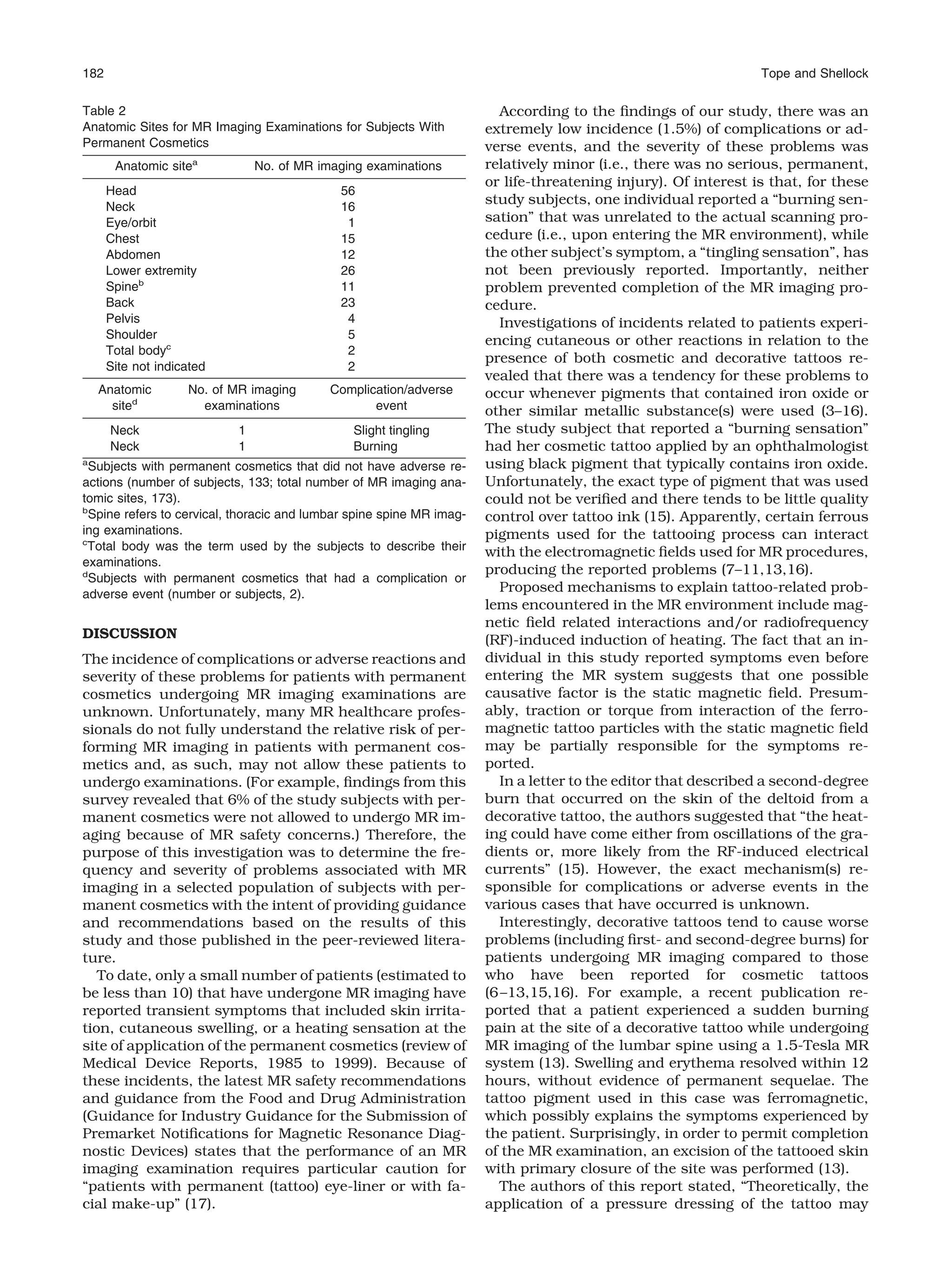
jects and is shown in Table 2. Forty of these subjects
had MR imaging examinations involving more than one
anatomic region (i.e., for a total of 173 MR imaging
examinations). Fifty-six (42%) of the subjects in the MRI
Group had MR imaging examinations that involved the
immediate anatomic site where the permanent cos-
metic was applied (Table 2).
One hundred thirty-three (133/135, 98.5%) of the
MRI Group reported that there were no complications,
adverse events, or other problems associated with MR
imaging. Two (2/135, 1.5%) study subjects in the MRI
Group reported complications or adverse events asso-
ciated with MR imaging. One subject experienced
“slight tingling” before MR imaging began and the other
subject reported a “burning” sensation that started be-
fore entering the magnet (i.e., while in the MR system
room, in the MR environment) that resolved by the end
of the examination. Both of these subjects were women
who had blue-black pigment colors used for periorbital
(i.e., eyelid/eyeliner) tattoos and underwent MR imag-
ing of the cervical spine. Each tattoo had been applied
at least nine months prior to the MR imaging examina-
tion. In neither case did the severity of symptoms war-
rant cessation of the MR imaging. Neither subject re-
ported any other problem with the tattooed areas (e.g.,
erythema, edema, irritation, etc.) subsequent to MR
imaging.
Table 1
Cosmetic Tattoo and Magnetic Resonance Imaging (MRI)
Research Survey
Part I: Client Information
Age Race Sex State of Residence
Please check the appropriate response:
(1) I have cosmetic tattooing, but have never had an MRI.
(2) My doctor recommended that I have an MRI, but the
radiologist wouldn’t allow me to have an MRI because
of potential complications with cosmetic tattooing.
(3) I have cosmetic tattooing and have had an MRI.
If you checked #1, you have finished the survey.
Part II: If you checked #2, or #3, please answer the following
questions:
Site for cosmetic tattoo (check all that apply):
eyelid eyebrow cheeks lips
areola other (specify)
Pigment colors used: Unknown:
Approximate date of your cosmetic tattoo procedure? / /
Part III: If you checked #3, please answer the following questions:
Area of body scanned by MRI:
head eye/orbit chest abdomen other
(specify)
Did you have any complications in the area of the cosmetic
tattoo from the MRI? Yes No
If yes, please describe the complications you experienced (any
specific symptoms you experienced and how long they lasted)?
Note: to gather as much information as possible, it will be
important to contact your radiologist about your MRI scan and
permanent cosmetic technician about your cosmetic tattoo. To
do this, we will need the following information. If you do not wish
to release this information, simply leave the spaces blank.
Thank you for your cooperation.
Name Date of Birth / /
Radiologist’s Name Radiologist’s Phone Number
Approximate date of MRI scan / /
Permanent Cosmetic Technician’s Name
Phone number
All of this information will be held in the strictest confidence and
only be used for research purposes. Your signature allows us to
request access to your MRI report and films, only.
MRI and Permanent Cosmetics 181
DISCUSSION
The incidence of complications or adverse reactions and
severity of these problems for patients with permanent
cosmetics undergoing MR imaging examinations are
unknown. Unfortunately, many MR healthcare profes-
sionals do not fully understand the relative risk of per-
forming MR imaging in patients with permanent cos-
metics and, as such, may not allow these patients to
undergo examinations. (For example, findings from this
survey revealed that 6% of the study subjects with per-
manent cosmetics were not allowed to undergo MR im-
aging because of MR safety concerns.) Therefore, the
purpose of this investigation was to determine the fre-
quency and severity of problems associated with MR
imaging in a selected population of subjects with per-
manent cosmetics with the intent of providing guidance
and recommendations based on the results of this
study and those published in the peer-reviewed litera-
ture.
To date, only a small number of patients (estimated to
be less than 10) that have undergone MR imaging have
reported transient symptoms that included skin irrita-
tion, cutaneous swelling, or a heating sensation at the
site of application of the permanent cosmetics (review of
Medical Device Reports, 1985 to 1999). Because of
these incidents, the latest MR safety recommendations
and guidance from the Food and Drug Administration
(Guidance for Industry Guidance for the Submission of
Premarket Notifications for Magnetic Resonance Diag-
nostic Devices) states that the performance of an MR
imaging examination requires particular caution for
“patients with permanent (tattoo) eye-liner or with fa-
cial make-up” (17).
According to the findings of our study, there was an
extremely low incidence (1.5%) of complications or ad-
verse events, and the severity of these problems was
relatively minor (i.e., there was no serious, permanent,
or life-threatening injury). Of interest is that, for these
study subjects, one individual reported a “burning sen-
sation” that was unrelated to the actual scanning pro-
cedure (i.e., upon entering the MR environment), while
the other subject’s symptom, a “tingling sensation”, has
not been previously reported. Importantly, neither
problem prevented completion of the MR imaging pro-
cedure.
Investigations of incidents related to patients experi-
encing cutaneous or other reactions in relation to the
presence of both cosmetic and decorative tattoos re-
vealed that there was a tendency for these problems to
occur whenever pigments that contained iron oxide or
other similar metallic substance(s) were used (3–16).
The study subject that reported a “burning sensation”
had her cosmetic tattoo applied by an ophthalmologist
using black pigment that typically contains iron oxide.
Unfortunately, the exact type of pigment that was used
could not be verified and there tends to be little quality
control over tattoo ink (15). Apparently, certain ferrous
pigments used for the tattooing process can interact
with the electromagnetic fields used for MR procedures,
producing the reported problems (7–11,13,16).
Proposed mechanisms to explain tattoo-related prob-
lems encountered in the MR environment include mag-
netic field related interactions and/or radiofrequency
(RF)-induced induction of heating. The fact that an in-
dividual in this study reported symptoms even before
entering the MR system suggests that one possible
causative factor is the static magnetic field. Presum-
ably, traction or torque from interaction of the ferro-
magnetic tattoo particles with the static magnetic field
may be partially responsible for the symptoms re-
ported.
In a letter to the editor that described a second-degree
burn that occurred on the skin of the deltoid from a
decorative tattoo, the authors suggested that “the heat-
ing could have come either from oscillations of the gra-
dients or, more likely from the RF-induced electrical
currents” (15). However, the exact mechanism(s) re-
sponsible for complications or adverse events in the
various cases that have occurred is unknown.
Interestingly, decorative tattoos tend to cause worse
problems (including first- and second-degree burns) for
patients undergoing MR imaging compared to those
who have been reported for cosmetic tattoos
(6–13,15,16). For example, a recent publication re-
ported that a patient experienced a sudden burning
pain at the site of a decorative tattoo while undergoing
MR imaging of the lumbar spine using a 1.5-Tesla MR
system (13). Swelling and erythema resolved within 12
hours, without evidence of permanent sequelae. The
tattoo pigment used in this case was ferromagnetic,
which possibly explains the symptoms experienced by
the patient. Surprisingly, in order to permit completion
of the MR examination, an excision of the tattooed skin
with primary closure of the site was performed (13).
The authors of this report stated, “Theoretically, the
application of a pressure dressing of the tattoo may
Table 2
Anatomic Sites for MR Imaging Examinations for Subjects With
Permanent Cosmetics
Anatomic sitea
No. of MR imaging examinations
Head 56
Neck 16
Eye/orbit 1
Chest 15
Abdomen 12
Lower extremity 26
Spineb
11
Back 23
Pelvis 4
Shoulder 5
Total bodyc
2
Site not indicated 2
Anatomic
sited
No. of MR imaging
examinations
Complication/adverse
event
Neck 1 Slight tingling
Neck 1 Burning
a
Subjects with permanent cosmetics that did not have adverse re-
actions (number of subjects, 133; total number of MR imaging ana-
tomic sites, 173).
b
Spine refers to cervical, thoracic and lumbar spine spine MR imag-
ing examinations.
c
Total body was the term used by the subjects to describe their
examinations.
d
Subjects with permanent cosmetics that had a complication or
adverse event (number or subjects, 2).
182 Tope and Shellock
prevent any tissue distortion due to ferromagnetic pull”
(13). However, this simple, relatively benign procedure
was not attempted for this patient. They also indicated
that, “In some cases, removal of the tattoo may be the
most practical means of allowing MRI” (13).
Kanal and Shellock (14) commented on this report in
a letter to the editor, suggesting that the response to
this situation was “rather aggressive”. Clearly the
trauma, expense, and morbidity associated with exci-
sion of a tattoo far exceed those that may be associated
with ferromagnetic tattoo interactions. A firmly applied
pressure bandage may be used if there is any concern
related to “movement” of the ferromagnetic particles in
the tattoo pigment (14). Additionally, direct application
of a cold compress to the site of a tattoo would also
likely mitigate any heating sensation that may occur in
association with MR imaging.
A comprehensive search of the peer-reviewed litera-
ture supports the results of this present investigation
(8–10). That is, symptoms rarely occur, the symptoms
are transient in nature, and the severity of the symp-
toms is relatively minor. Furthermore, when one con-
siders the many millions of clinical MR procedures that
have been conducted in patients over the past 15 years
and that only a very small percentage of these individ-
uals have had minor, short-term problems related to
the presence of permanent cosmetics, it is apparent
that this MR safety concern has an extremely low rate of
occurrence and relatively insignificant consequences.
With regard to artifacts, none of the study subjects in
this investigation were informed that the MR images
were substandard due to the presence of tattoos and
none of the examinations had to be repeated. Neverthe-
less, imaging artifacts associated with permanent cos-
metics have been reported (7–10). These artifacts are
predominantly associated with the presence of pig-
ments that use iron oxide and occur in the immediate
area of the tattoo. As such, tattoo-related MR imaging
artifacts should not prevent a diagnostically adequate
MR imaging procedure from being performed, especially
in consideration that careful selection of imaging pa-
rameters may easily minimize artifacts related to me-
tallic objects (3,4).
The only possible exception to this is if the anatomy of
interest is in the exact same position of where the tattoo
was applied using an iron oxide-based pigment. For
example, Weiss et al (7) reported that heavy metal par-
ticles used in the pigment base of mascara and eyelin-
ing tattoos cause alterations of the local magnetic field
in adjacent tissues. These changes in normal signal
may result in distortion of the globes. In some cases, the
distortion may mimic actual ocular disease, such as a
ciliary body melanoma or cyst.
This investigation has possible limitations. For exam-
ple, precise MR imaging details that may influence com-
plications or adverse events in patients with cosmetic
tattoos were unknown (i.e., static magnetic field
strength of the MR system, imaging parameters, type of
RF coil, RF power deposition, etc.). Given the limita-
tions of MR imaging knowledge held by the respondents
to this survey, this lack of information is understand-
able; however, we believe that it can be safely assumed
that the subjects in this investigation underwent MR
imaging procedures using standard, MR imaging tech-
niques and procedures. Additionally, it would be ad-
vantageous to evaluate additional subjects with both
cosmetic and decorative tattoos that undergo MR imag-
ing. Thus, additional research that acquires specific MR
imaging information in a larger group of tattooed sub-
jects is warranted. This may help determine a mecha-
nism responsible for the cutaneous reactions that
sometime occur in the MR setting.
In consideration of the findings of this study and the
available literature pertaining to MR imaging and pa-
tients with cosmetic tattoos, the following patient man-
agement guidelines are recommended:
1. The Pre-MR Procedure Screening Form should in-
clude a question pertaining to the presence of per-
manent cosmetics or decorative tattoos (3–5).
2. Before undergoing an MR imaging examination,
the patient should be asked if he or she has a
permanent coloring technique (i.e., tattooing) ap-
plied to any part of the body. This includes cos-
metic applications such as eyeliner, lip-liner, lip
coloring, and decorative designs.
3. The patient should be informed of the relatively
minor risk associated with the site of the tattoo.
4. The patient should be advised to immediately in-
form the MR technologist regarding any unusual
sensation felt at the site of the tattoo in association
with the MR imaging procedure.
5. The patient should be closely monitored using vi-
sual and auditory means throughout the entire
operation of the MR system to ensure safety.
6. As a precautionary measure, a cold compress (e.g.,
wet wash cloth) may be applied to the tattoo site
during the MR imaging procedure.
In conclusion, because of the relatively remote possi-
bility of having an incident occur in a patient with a
permanent cosmetic and due to the relatively minor,
short-term complication or adverse event that may
develop (i.e., transient cutaneous redness and swell-
ing), the patient should be permitted to undergo MR
imaging. Any problem of performing an MR imaging
procedure in a patient that has a cosmetic tattoo is
unlikely to prevent the examination, since the impor-
tant diagnostic information that is provided by this
imaging modality is typically critical to the care and
management of the patient.
REFERENCES
1. Halder RM, Pham HN, Hreadon JY, Johnson HA. Micropigmenta-
tion for the treatment of vitiligo. J Dermatol Surg Oncol 1989;15:
1092–1098.
2. Becker H. The use of intradermal tattoo to enhance the final result
of nipple-areola reconstruction. [Letter] Plast Reconstr Surg 1986;
77:673.
3. Shellock FG. 2001. Guide to MR procedures and metallic objects:
update 2001, 7th ed. Philadelphia: Lippincott Williams & Wilkins
Healthcare.
4. Shellock FG. 2001. Magnetic resonance procedures: health effects
and safety. Boca Raton, FL: CRC Press, LLC.
5. Shellock FG. 2001. www.MRIsafety.com.
6. Tattoos. FDA medical bulletin 1994;24:8.
7. Weiss RA, Saint-Louis LA, Haik BG, McCord CD, Taveras JL. Mas-
cara and eyelining tattoos: MRI artifacts. Ann Ophthalmol 1989;
21:129–131.
MRI and Permanent Cosmetics 183
8. Carr JJ. Danger in performing MR imaging on women who have
tattooed eyeliner or similar types of permanent cosmetic injections.
AJR Am J Roentgenol 1995;165:1546–1547.
9. Lund A, Nelson ID, Wirtschafter ID, Williams PA. Tattooing of eye-
lids: magnetic resonance imaging artifacts. Ophthalmic Surg 1986;
17:550–553.
10. Jackson JG, Acker H. Permanent eyeliner and MR imaging. [Letter]
AJR Am J Roentgenol 1987;149:1080.
11. Gomey M. Tattoo pigments, patient clothing, and magnetic reso-
nance imaging (Risk Management Bulletin 12748-8/95). Napa, CA:
The Doctors’ Company; 1995.
12. van Buren A. Dear Abby. The Oregonian July 23, 1994 and October
22, 1994.
13. Kreidstein ML, Giguere D, Freiberg A. MRI interaction with tattoo
pigments: case report, pathophysiology, and management. Plast
Reconstr Surg 1997;99:1717–1720.
14. Kanal E, Shellock FG. MRI interaction with tattoo pigments. [Let-
ter] Plast Reconstr Surg 1998;101:1150–1151.
15. Wagle WA, Smith M. Tattoo-induced skin burn during MR imaging.
[Letter] Am J Roentgenol AJR 2000:174:1795.
16. Vahlensieck M. Tattoo-related cutaneous inflammation (burn
grade I) in a mid-field MR scanner. [Letter] Eur Radiol 2000;10:97.
17. Zaremba L. 2001. FDA guidance for MR system safety and patient
exposures: current status and future considerations. In: magnetic
resonance procedures: health effects and safety. CRC Press, Boca
Raton, p. 183–196.
184 Tope and Shellock

Magnetic Resonance Imaging & Permanent Cosmetics (Tattoos) - Adverse Events

  • 1.
    Original Research Magnetic ResonanceImaging and Permanent Cosmetics (Tattoos): Survey of Complications and Adverse Events Whitney D. Tope, MD, MPhil,1 and Frank G. Shellock, PhD2* Purpose: To use a survey to determine the incidence of complications and adverse events in individuals with per- manent cosmetics (e.g., tattooed eyeliner, eyebrows, lips, cheeks, etc.) who underwent magnetic resonance (MR) im- aging. Materials and Methods: A questionnaire was distributed to clients of cosmetic tattoo technicians. This survey asked study subjects for demographic data, information about their tattoos, and for their experiences during MR imaging procedures. Results: Data obtained from 1032 surveys were tabulated. One hundred thirty-five (13.1%) study subjects underwent MR imaging after having permanent cosmetics applied. Of these, only two individuals (1.5%) experienced problems associated with MR imaging. One subject reported a sen- sation of “slight tingling” and the other subject reported a sensation of “burning”; both sensations were transient in nature. Conclusion: Based on these findings and information in the peer-reviewed literature, it appears that MR imaging may be performed in patients with permanent cosmetics without any serious soft tissue reactions or adverse events. Therefore, the presence of permanent cosmetics should not prevent a patient from undergoing MR imaging. Key words: magnetic resonance imaging, safety; magnetic resonance imaging, bioeffects; heating; artifacts; magnetic resonance imaging J. Magn. Reson. Imaging 2002;15:180–184. © 2002 Wiley-Liss, Inc. TRADITIONAL (I.E., DECORATIVE) and cosmetic tat- tooing have been performed for thousands of years. In the United States, cosmetic tattooing or “permanent cosmetics” are used to reshape, recolor, recreate, or modify eye shadow, eyeliner, eyebrows, lips, beauty marks, and cheek blush (1). Additionally, permanent cosmetics are often used aesthetically to enhance nip- ple-areola reconstruction (2). Magnetic resonance (MR) imaging is a frequently used imaging modality, particularly for evaluating the brain, head, neck, and other anatomic regions where cosmetic tattoos are typically applied. Unfortunately, there is much confusion regarding MR safety aspects of permanent cosmetics (3–6). For example, based on a few reports of symptoms localized to the tattooed area during MR imaging, many radiologists have refused to perform MR procedures on individuals with permanent cosmetics, particularly tattooed eyeliner (unpublished observations, F. G. Shellock, 2000). Obviously, this un- due concern for possible adverse events prevents pa- tients with cosmetic tattoos from access to an extremely important diagnostic imaging technique. While it is well-known that cosmetic tattoos may cause MR imaging artifacts (3–11) and that both cos- metic and decorative tattoos may cause relatively mi- nor, short-term cutaneous reactions (3,8,11–16), the frequency and severity of soft tissue reactions or other related problems associated with MR imaging and cos- metic tattoos is unknown. Therefore, the purpose of this investigation was to determine the frequency and severity of adverse events associated with MR imaging in a population of subjects with permanent cosmetics. MATERIALS AND METHODS A questionnaire was developed to survey individuals with permanent cosmetics to determine the incidence and severity of complications or adverse events associ- ated with MR imaging. The questionnaire asked study subjects for basic demographic data, information about their cosmetic tattoos, information about their MR im- aging examinations, and their experiences with these procedures relative to the permanent cosmetics. Table 1 shows the questionnaire used in this investigation. The questionnaire was distributed in the United States to clients of permanent cosmetic technicians who were members of the Society of Permanent Cos- metic Professionals (SPCP, an international, non-profit organization of cosmetic tattoo artists). This permitted individuals with cosmetic tattoos to be contacted con- 1 Department of Dermatology, University of Minnesota Hospital and Clinic, Minneapolis, Minnesota. 2 University of Southern California, Keck School of Medicine, Los Ange- les, California. Contract grant sponsor: Society of Permanent Cosmetic Professionals. *Address reprint requests to: F.G.S., 7511 McConnell Ave., Los Angeles, CA 90045. E-mail: frank.shellock@gte.net Received July 18, 2001; Accepted October 11, 2001. JOURNAL OF MAGNETIC RESONANCE IMAGING 15:180–184 (2002) DOI 10.1002/jmri.10049 © 2002 Wiley-Liss, Inc. 180
  • 2.
    fidentially through clientlists of members of the SPCP. The study subjects were assured that the questionnaire would be analyzed with anonymity maintained. The questionnaires were returned to the primary author (W.D.T.) for tabulation, and the results were analyzed using simple descriptive data techniques. RESULTS Of a total of 3065 questionnaires that were distributed, 1037 (34%) were returned for analysis. Five surveys contained insufficient data for inclusion (i.e., the an- swers were incomplete), leaving a total of 1032 ques- tionnaires available for tabulation. The majority (1027; 99.5%) of the study subjects with permanent cosmetics were women. The ages of these individuals ranged from 14 to 93 years old. Caucasians formed the largest racial population (961; 93%) for the respondents (14 [1%] Asian; 16 [2%] Latino; six [1%] African-American; two [0.2%] Native American; 30 [3%] data not provided). Eight hundred ninety-seven (897/1032; 87%) study subjects with permanent cosmetics reported that they never had MR imaging examinations (Non-MRI Group), while 135 (135/1032; 13%) study subjects underwent MR imaging after application of permanent cosmetics (MRI Group). The mean age of the Non-MRI Group (50 Ϯ 5 years old) was significantly younger (P Ͻ 0.05) than that of the MRI Group (56 Ϯ 5 years old). For the Non- MRI Group, five study subjects (6%) reported that the MR facility personnel or radiologists would not allow them to have MR imaging procedures due to potential complications with cosmetic tattoos. For the MRI Group (N ϭ 135), tattoo site information was available in 131 subjects (97%). These subjects reported a total of 210 individual tattoos (i.e., 61 sub- jects, 45%, had more than one cosmetic tattoo). Of these, 210 permanent cosmetics were applied to the following body sites: 85 (41%) eyelid, 75 (36%) eyebrow, 34 (16%) lip, six (3%) cheek, four (2%) areola, and six (3%) trunk. Information on tattoo pigment color was available for 112 of the 135 (83%) study subjects in the MRI Group. Notably, 91 of these study subjects (67%) reported that they had permanent cosmetics that were applied using pigment colors (e.g., brown, black, red, and flesh) that typically contain iron oxide. For the MRI Group (N ϭ 135), information on the cosmetic tattoos and body sites for the MR imaging examinations was available for 133 (98%) of the sub- jects and is shown in Table 2. Forty of these subjects had MR imaging examinations involving more than one anatomic region (i.e., for a total of 173 MR imaging examinations). Fifty-six (42%) of the subjects in the MRI Group had MR imaging examinations that involved the immediate anatomic site where the permanent cos- metic was applied (Table 2). One hundred thirty-three (133/135, 98.5%) of the MRI Group reported that there were no complications, adverse events, or other problems associated with MR imaging. Two (2/135, 1.5%) study subjects in the MRI Group reported complications or adverse events asso- ciated with MR imaging. One subject experienced “slight tingling” before MR imaging began and the other subject reported a “burning” sensation that started be- fore entering the magnet (i.e., while in the MR system room, in the MR environment) that resolved by the end of the examination. Both of these subjects were women who had blue-black pigment colors used for periorbital (i.e., eyelid/eyeliner) tattoos and underwent MR imag- ing of the cervical spine. Each tattoo had been applied at least nine months prior to the MR imaging examina- tion. In neither case did the severity of symptoms war- rant cessation of the MR imaging. Neither subject re- ported any other problem with the tattooed areas (e.g., erythema, edema, irritation, etc.) subsequent to MR imaging. Table 1 Cosmetic Tattoo and Magnetic Resonance Imaging (MRI) Research Survey Part I: Client Information Age Race Sex State of Residence Please check the appropriate response: (1) I have cosmetic tattooing, but have never had an MRI. (2) My doctor recommended that I have an MRI, but the radiologist wouldn’t allow me to have an MRI because of potential complications with cosmetic tattooing. (3) I have cosmetic tattooing and have had an MRI. If you checked #1, you have finished the survey. Part II: If you checked #2, or #3, please answer the following questions: Site for cosmetic tattoo (check all that apply): eyelid eyebrow cheeks lips areola other (specify) Pigment colors used: Unknown: Approximate date of your cosmetic tattoo procedure? / / Part III: If you checked #3, please answer the following questions: Area of body scanned by MRI: head eye/orbit chest abdomen other (specify) Did you have any complications in the area of the cosmetic tattoo from the MRI? Yes No If yes, please describe the complications you experienced (any specific symptoms you experienced and how long they lasted)? Note: to gather as much information as possible, it will be important to contact your radiologist about your MRI scan and permanent cosmetic technician about your cosmetic tattoo. To do this, we will need the following information. If you do not wish to release this information, simply leave the spaces blank. Thank you for your cooperation. Name Date of Birth / / Radiologist’s Name Radiologist’s Phone Number Approximate date of MRI scan / / Permanent Cosmetic Technician’s Name Phone number All of this information will be held in the strictest confidence and only be used for research purposes. Your signature allows us to request access to your MRI report and films, only. MRI and Permanent Cosmetics 181
  • 3.
    DISCUSSION The incidence ofcomplications or adverse reactions and severity of these problems for patients with permanent cosmetics undergoing MR imaging examinations are unknown. Unfortunately, many MR healthcare profes- sionals do not fully understand the relative risk of per- forming MR imaging in patients with permanent cos- metics and, as such, may not allow these patients to undergo examinations. (For example, findings from this survey revealed that 6% of the study subjects with per- manent cosmetics were not allowed to undergo MR im- aging because of MR safety concerns.) Therefore, the purpose of this investigation was to determine the fre- quency and severity of problems associated with MR imaging in a selected population of subjects with per- manent cosmetics with the intent of providing guidance and recommendations based on the results of this study and those published in the peer-reviewed litera- ture. To date, only a small number of patients (estimated to be less than 10) that have undergone MR imaging have reported transient symptoms that included skin irrita- tion, cutaneous swelling, or a heating sensation at the site of application of the permanent cosmetics (review of Medical Device Reports, 1985 to 1999). Because of these incidents, the latest MR safety recommendations and guidance from the Food and Drug Administration (Guidance for Industry Guidance for the Submission of Premarket Notifications for Magnetic Resonance Diag- nostic Devices) states that the performance of an MR imaging examination requires particular caution for “patients with permanent (tattoo) eye-liner or with fa- cial make-up” (17). According to the findings of our study, there was an extremely low incidence (1.5%) of complications or ad- verse events, and the severity of these problems was relatively minor (i.e., there was no serious, permanent, or life-threatening injury). Of interest is that, for these study subjects, one individual reported a “burning sen- sation” that was unrelated to the actual scanning pro- cedure (i.e., upon entering the MR environment), while the other subject’s symptom, a “tingling sensation”, has not been previously reported. Importantly, neither problem prevented completion of the MR imaging pro- cedure. Investigations of incidents related to patients experi- encing cutaneous or other reactions in relation to the presence of both cosmetic and decorative tattoos re- vealed that there was a tendency for these problems to occur whenever pigments that contained iron oxide or other similar metallic substance(s) were used (3–16). The study subject that reported a “burning sensation” had her cosmetic tattoo applied by an ophthalmologist using black pigment that typically contains iron oxide. Unfortunately, the exact type of pigment that was used could not be verified and there tends to be little quality control over tattoo ink (15). Apparently, certain ferrous pigments used for the tattooing process can interact with the electromagnetic fields used for MR procedures, producing the reported problems (7–11,13,16). Proposed mechanisms to explain tattoo-related prob- lems encountered in the MR environment include mag- netic field related interactions and/or radiofrequency (RF)-induced induction of heating. The fact that an in- dividual in this study reported symptoms even before entering the MR system suggests that one possible causative factor is the static magnetic field. Presum- ably, traction or torque from interaction of the ferro- magnetic tattoo particles with the static magnetic field may be partially responsible for the symptoms re- ported. In a letter to the editor that described a second-degree burn that occurred on the skin of the deltoid from a decorative tattoo, the authors suggested that “the heat- ing could have come either from oscillations of the gra- dients or, more likely from the RF-induced electrical currents” (15). However, the exact mechanism(s) re- sponsible for complications or adverse events in the various cases that have occurred is unknown. Interestingly, decorative tattoos tend to cause worse problems (including first- and second-degree burns) for patients undergoing MR imaging compared to those who have been reported for cosmetic tattoos (6–13,15,16). For example, a recent publication re- ported that a patient experienced a sudden burning pain at the site of a decorative tattoo while undergoing MR imaging of the lumbar spine using a 1.5-Tesla MR system (13). Swelling and erythema resolved within 12 hours, without evidence of permanent sequelae. The tattoo pigment used in this case was ferromagnetic, which possibly explains the symptoms experienced by the patient. Surprisingly, in order to permit completion of the MR examination, an excision of the tattooed skin with primary closure of the site was performed (13). The authors of this report stated, “Theoretically, the application of a pressure dressing of the tattoo may Table 2 Anatomic Sites for MR Imaging Examinations for Subjects With Permanent Cosmetics Anatomic sitea No. of MR imaging examinations Head 56 Neck 16 Eye/orbit 1 Chest 15 Abdomen 12 Lower extremity 26 Spineb 11 Back 23 Pelvis 4 Shoulder 5 Total bodyc 2 Site not indicated 2 Anatomic sited No. of MR imaging examinations Complication/adverse event Neck 1 Slight tingling Neck 1 Burning a Subjects with permanent cosmetics that did not have adverse re- actions (number of subjects, 133; total number of MR imaging ana- tomic sites, 173). b Spine refers to cervical, thoracic and lumbar spine spine MR imag- ing examinations. c Total body was the term used by the subjects to describe their examinations. d Subjects with permanent cosmetics that had a complication or adverse event (number or subjects, 2). 182 Tope and Shellock
  • 4.
    prevent any tissuedistortion due to ferromagnetic pull” (13). However, this simple, relatively benign procedure was not attempted for this patient. They also indicated that, “In some cases, removal of the tattoo may be the most practical means of allowing MRI” (13). Kanal and Shellock (14) commented on this report in a letter to the editor, suggesting that the response to this situation was “rather aggressive”. Clearly the trauma, expense, and morbidity associated with exci- sion of a tattoo far exceed those that may be associated with ferromagnetic tattoo interactions. A firmly applied pressure bandage may be used if there is any concern related to “movement” of the ferromagnetic particles in the tattoo pigment (14). Additionally, direct application of a cold compress to the site of a tattoo would also likely mitigate any heating sensation that may occur in association with MR imaging. A comprehensive search of the peer-reviewed litera- ture supports the results of this present investigation (8–10). That is, symptoms rarely occur, the symptoms are transient in nature, and the severity of the symp- toms is relatively minor. Furthermore, when one con- siders the many millions of clinical MR procedures that have been conducted in patients over the past 15 years and that only a very small percentage of these individ- uals have had minor, short-term problems related to the presence of permanent cosmetics, it is apparent that this MR safety concern has an extremely low rate of occurrence and relatively insignificant consequences. With regard to artifacts, none of the study subjects in this investigation were informed that the MR images were substandard due to the presence of tattoos and none of the examinations had to be repeated. Neverthe- less, imaging artifacts associated with permanent cos- metics have been reported (7–10). These artifacts are predominantly associated with the presence of pig- ments that use iron oxide and occur in the immediate area of the tattoo. As such, tattoo-related MR imaging artifacts should not prevent a diagnostically adequate MR imaging procedure from being performed, especially in consideration that careful selection of imaging pa- rameters may easily minimize artifacts related to me- tallic objects (3,4). The only possible exception to this is if the anatomy of interest is in the exact same position of where the tattoo was applied using an iron oxide-based pigment. For example, Weiss et al (7) reported that heavy metal par- ticles used in the pigment base of mascara and eyelin- ing tattoos cause alterations of the local magnetic field in adjacent tissues. These changes in normal signal may result in distortion of the globes. In some cases, the distortion may mimic actual ocular disease, such as a ciliary body melanoma or cyst. This investigation has possible limitations. For exam- ple, precise MR imaging details that may influence com- plications or adverse events in patients with cosmetic tattoos were unknown (i.e., static magnetic field strength of the MR system, imaging parameters, type of RF coil, RF power deposition, etc.). Given the limita- tions of MR imaging knowledge held by the respondents to this survey, this lack of information is understand- able; however, we believe that it can be safely assumed that the subjects in this investigation underwent MR imaging procedures using standard, MR imaging tech- niques and procedures. Additionally, it would be ad- vantageous to evaluate additional subjects with both cosmetic and decorative tattoos that undergo MR imag- ing. Thus, additional research that acquires specific MR imaging information in a larger group of tattooed sub- jects is warranted. This may help determine a mecha- nism responsible for the cutaneous reactions that sometime occur in the MR setting. In consideration of the findings of this study and the available literature pertaining to MR imaging and pa- tients with cosmetic tattoos, the following patient man- agement guidelines are recommended: 1. The Pre-MR Procedure Screening Form should in- clude a question pertaining to the presence of per- manent cosmetics or decorative tattoos (3–5). 2. Before undergoing an MR imaging examination, the patient should be asked if he or she has a permanent coloring technique (i.e., tattooing) ap- plied to any part of the body. This includes cos- metic applications such as eyeliner, lip-liner, lip coloring, and decorative designs. 3. The patient should be informed of the relatively minor risk associated with the site of the tattoo. 4. The patient should be advised to immediately in- form the MR technologist regarding any unusual sensation felt at the site of the tattoo in association with the MR imaging procedure. 5. The patient should be closely monitored using vi- sual and auditory means throughout the entire operation of the MR system to ensure safety. 6. As a precautionary measure, a cold compress (e.g., wet wash cloth) may be applied to the tattoo site during the MR imaging procedure. In conclusion, because of the relatively remote possi- bility of having an incident occur in a patient with a permanent cosmetic and due to the relatively minor, short-term complication or adverse event that may develop (i.e., transient cutaneous redness and swell- ing), the patient should be permitted to undergo MR imaging. Any problem of performing an MR imaging procedure in a patient that has a cosmetic tattoo is unlikely to prevent the examination, since the impor- tant diagnostic information that is provided by this imaging modality is typically critical to the care and management of the patient. REFERENCES 1. Halder RM, Pham HN, Hreadon JY, Johnson HA. Micropigmenta- tion for the treatment of vitiligo. J Dermatol Surg Oncol 1989;15: 1092–1098. 2. Becker H. The use of intradermal tattoo to enhance the final result of nipple-areola reconstruction. [Letter] Plast Reconstr Surg 1986; 77:673. 3. Shellock FG. 2001. Guide to MR procedures and metallic objects: update 2001, 7th ed. Philadelphia: Lippincott Williams & Wilkins Healthcare. 4. Shellock FG. 2001. Magnetic resonance procedures: health effects and safety. Boca Raton, FL: CRC Press, LLC. 5. Shellock FG. 2001. www.MRIsafety.com. 6. Tattoos. FDA medical bulletin 1994;24:8. 7. Weiss RA, Saint-Louis LA, Haik BG, McCord CD, Taveras JL. Mas- cara and eyelining tattoos: MRI artifacts. Ann Ophthalmol 1989; 21:129–131. MRI and Permanent Cosmetics 183
  • 5.
    8. Carr JJ.Danger in performing MR imaging on women who have tattooed eyeliner or similar types of permanent cosmetic injections. AJR Am J Roentgenol 1995;165:1546–1547. 9. Lund A, Nelson ID, Wirtschafter ID, Williams PA. Tattooing of eye- lids: magnetic resonance imaging artifacts. Ophthalmic Surg 1986; 17:550–553. 10. Jackson JG, Acker H. Permanent eyeliner and MR imaging. [Letter] AJR Am J Roentgenol 1987;149:1080. 11. Gomey M. Tattoo pigments, patient clothing, and magnetic reso- nance imaging (Risk Management Bulletin 12748-8/95). Napa, CA: The Doctors’ Company; 1995. 12. van Buren A. Dear Abby. The Oregonian July 23, 1994 and October 22, 1994. 13. Kreidstein ML, Giguere D, Freiberg A. MRI interaction with tattoo pigments: case report, pathophysiology, and management. Plast Reconstr Surg 1997;99:1717–1720. 14. Kanal E, Shellock FG. MRI interaction with tattoo pigments. [Let- ter] Plast Reconstr Surg 1998;101:1150–1151. 15. Wagle WA, Smith M. Tattoo-induced skin burn during MR imaging. [Letter] Am J Roentgenol AJR 2000:174:1795. 16. Vahlensieck M. Tattoo-related cutaneous inflammation (burn grade I) in a mid-field MR scanner. [Letter] Eur Radiol 2000;10:97. 17. Zaremba L. 2001. FDA guidance for MR system safety and patient exposures: current status and future considerations. In: magnetic resonance procedures: health effects and safety. CRC Press, Boca Raton, p. 183–196. 184 Tope and Shellock