Downloaded 17 times
![XMPP for Cloud Services Cloud Camp – Milan 10 september 2009 Alessandro Malgaroli (Bluendo) [email_address] Fabio Forno (Bluendo) [email_address] Salvatore Loreto (Ericsson Research) [email_address]](https://image.slidesharecdn.com/xmppforcloudcomputing-110130105843-phpapp02/75/Xmppforcloudcomputing-1-2048.jpg)
![XMPP Architecture Distributed Network, comprising servers, clients and components (server extensions) End-to-end communication in XMPP is logically peer-to-peer but physically client-to-server-to-server-to-client Federation across different domains capulet.org montague.org balcony.capulet.org [email_address] [email_address] clients servers components](https://image.slidesharecdn.com/xmppforcloudcomputing-110130105843-phpapp02/75/Xmppforcloudcomputing-7-2048.jpg)
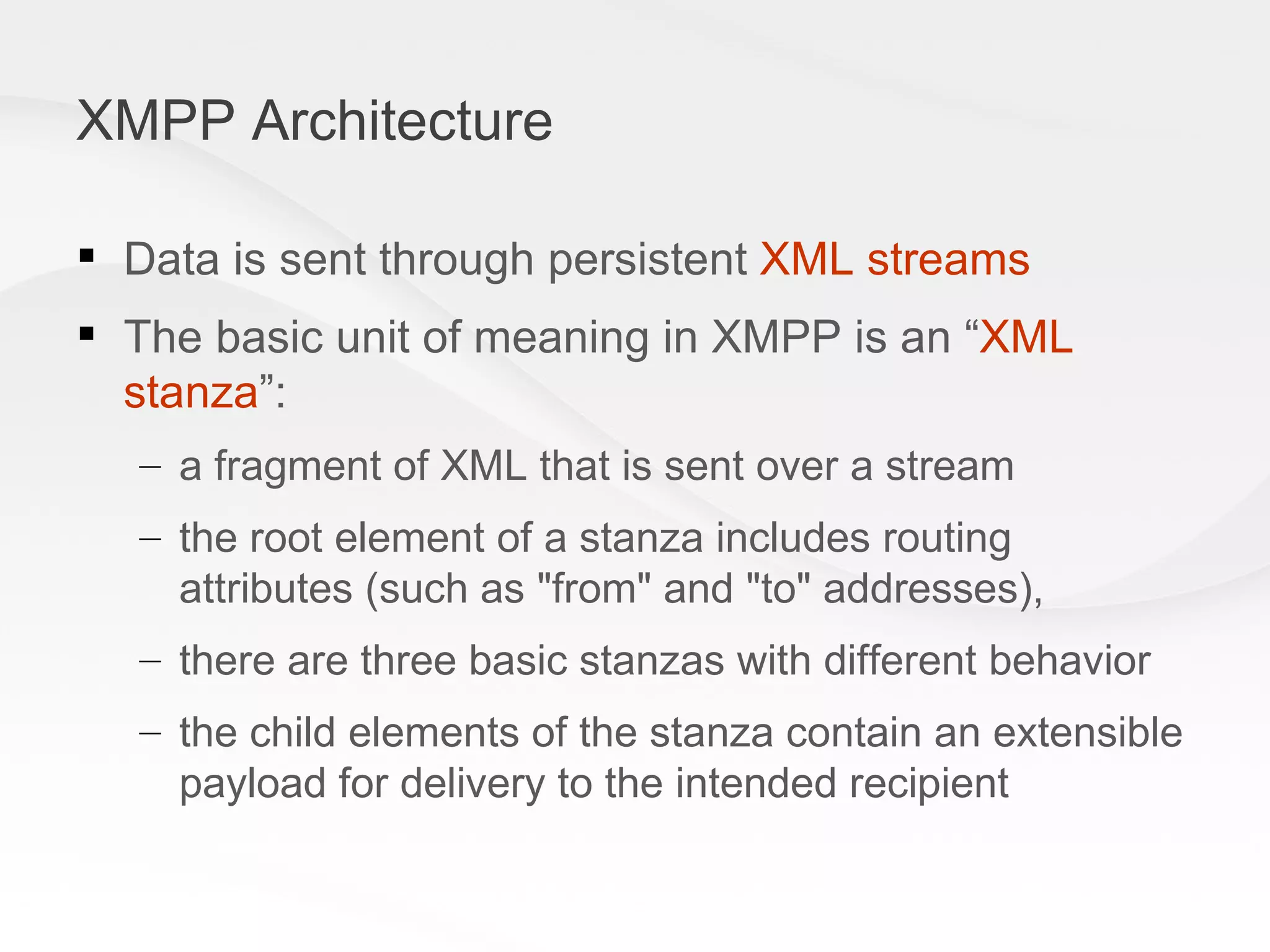
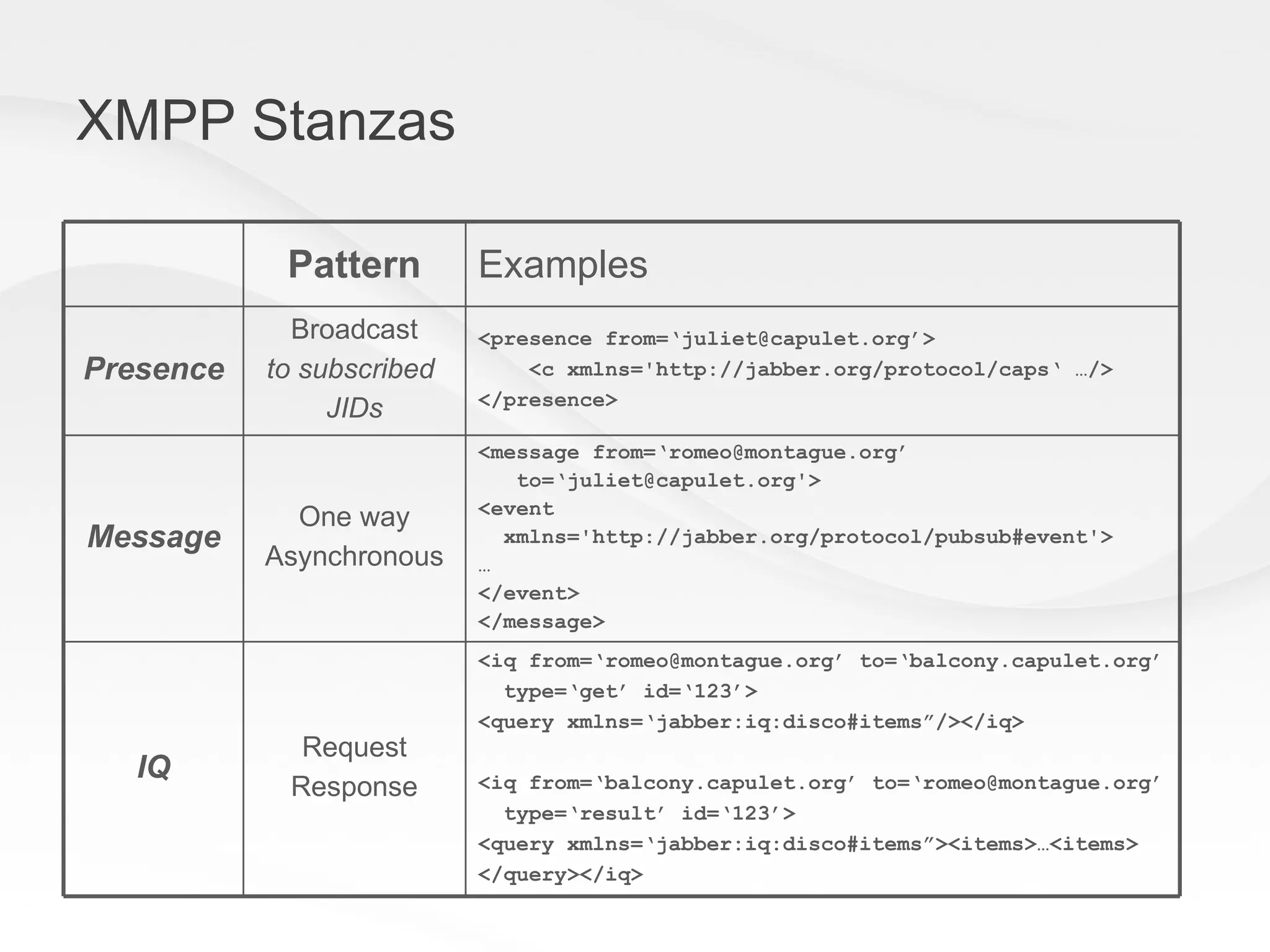
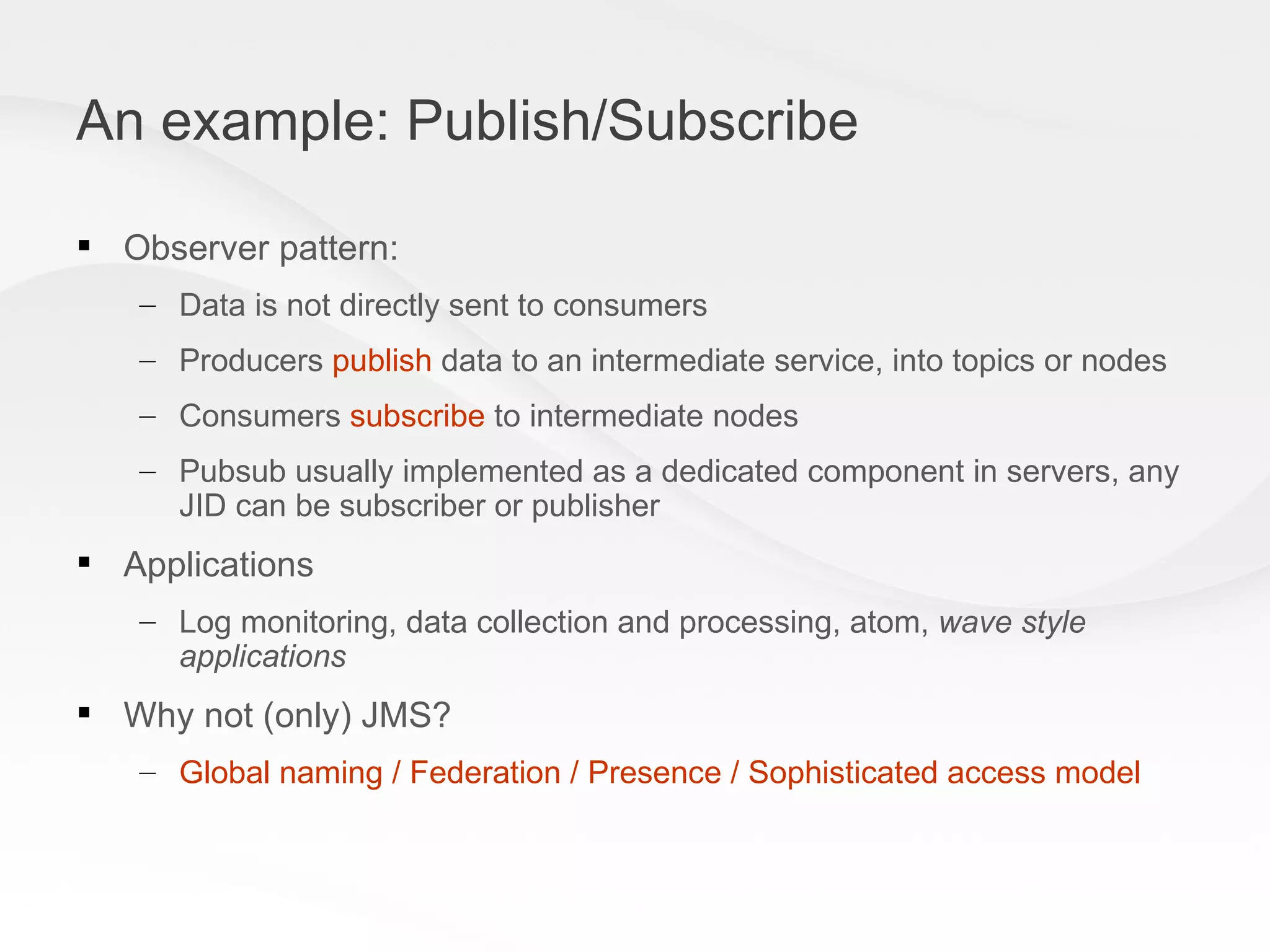
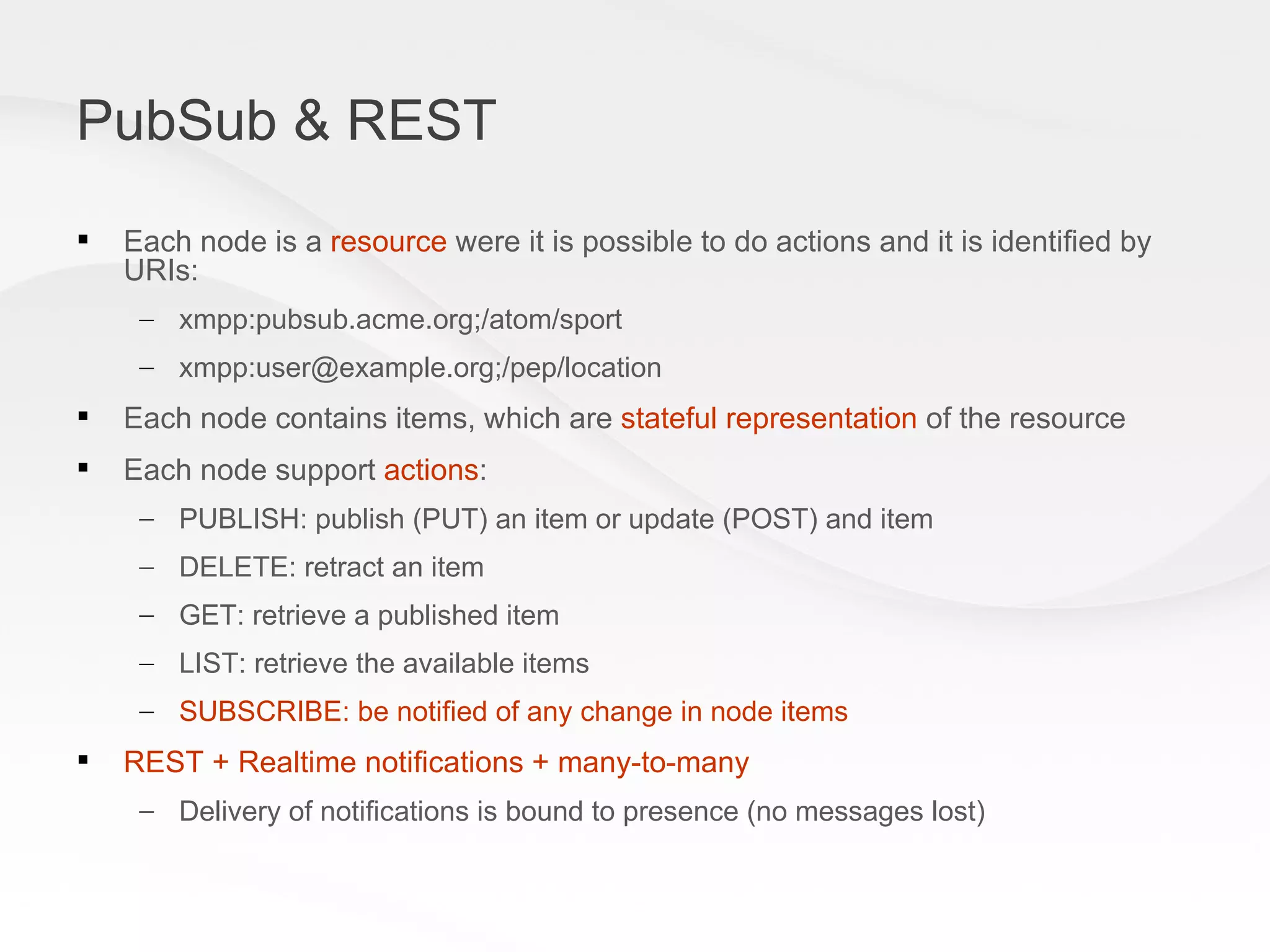
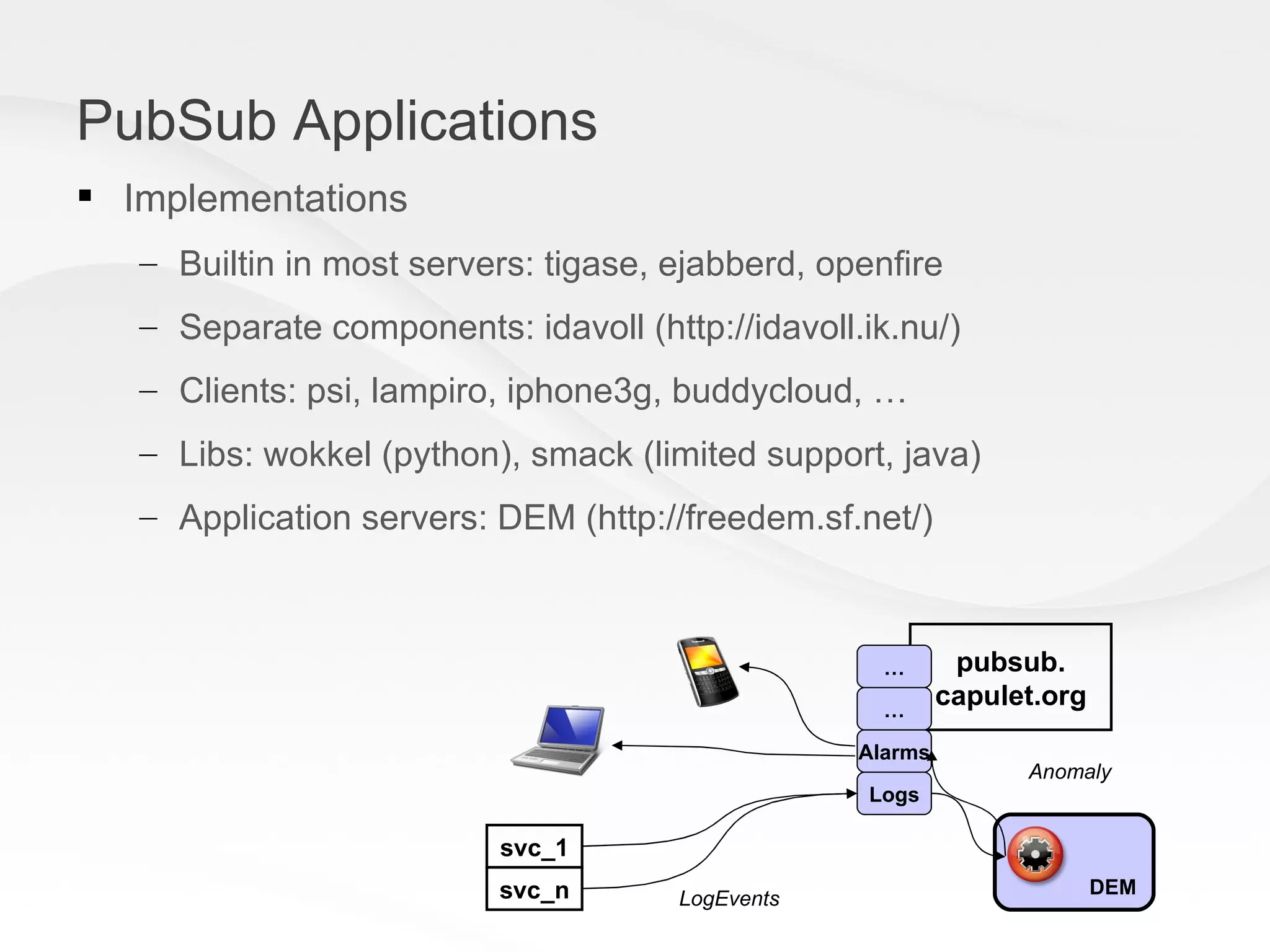

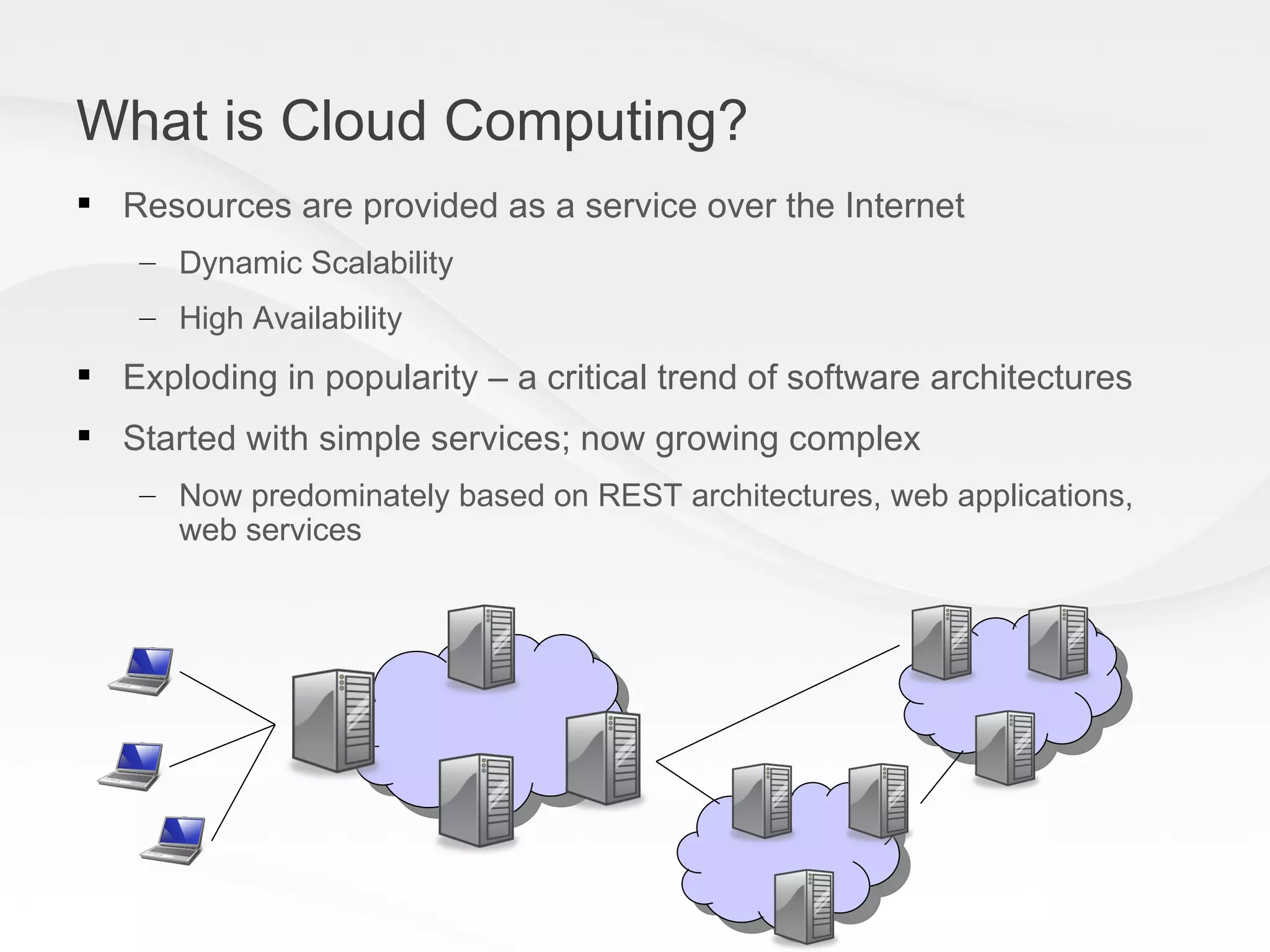
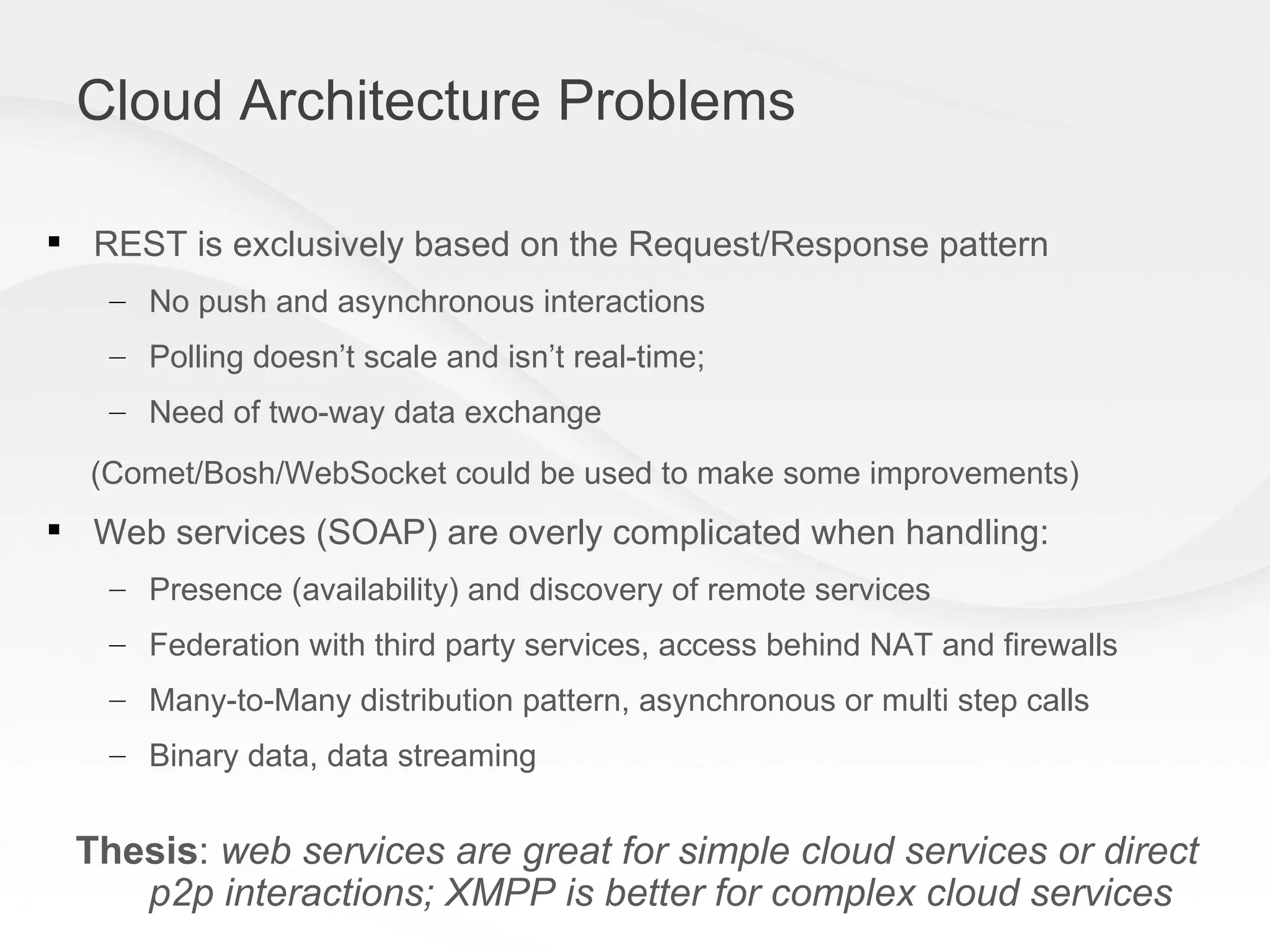
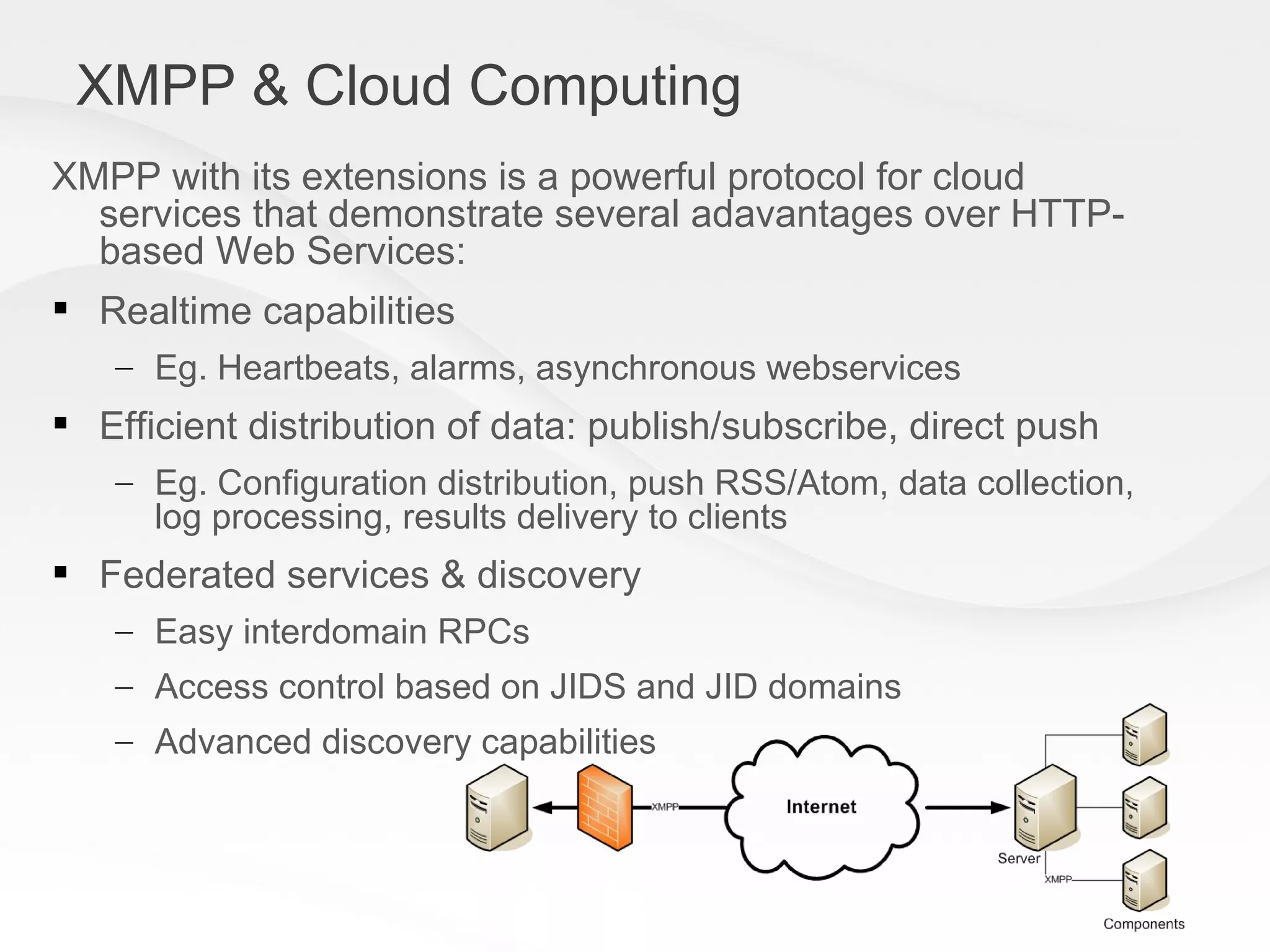
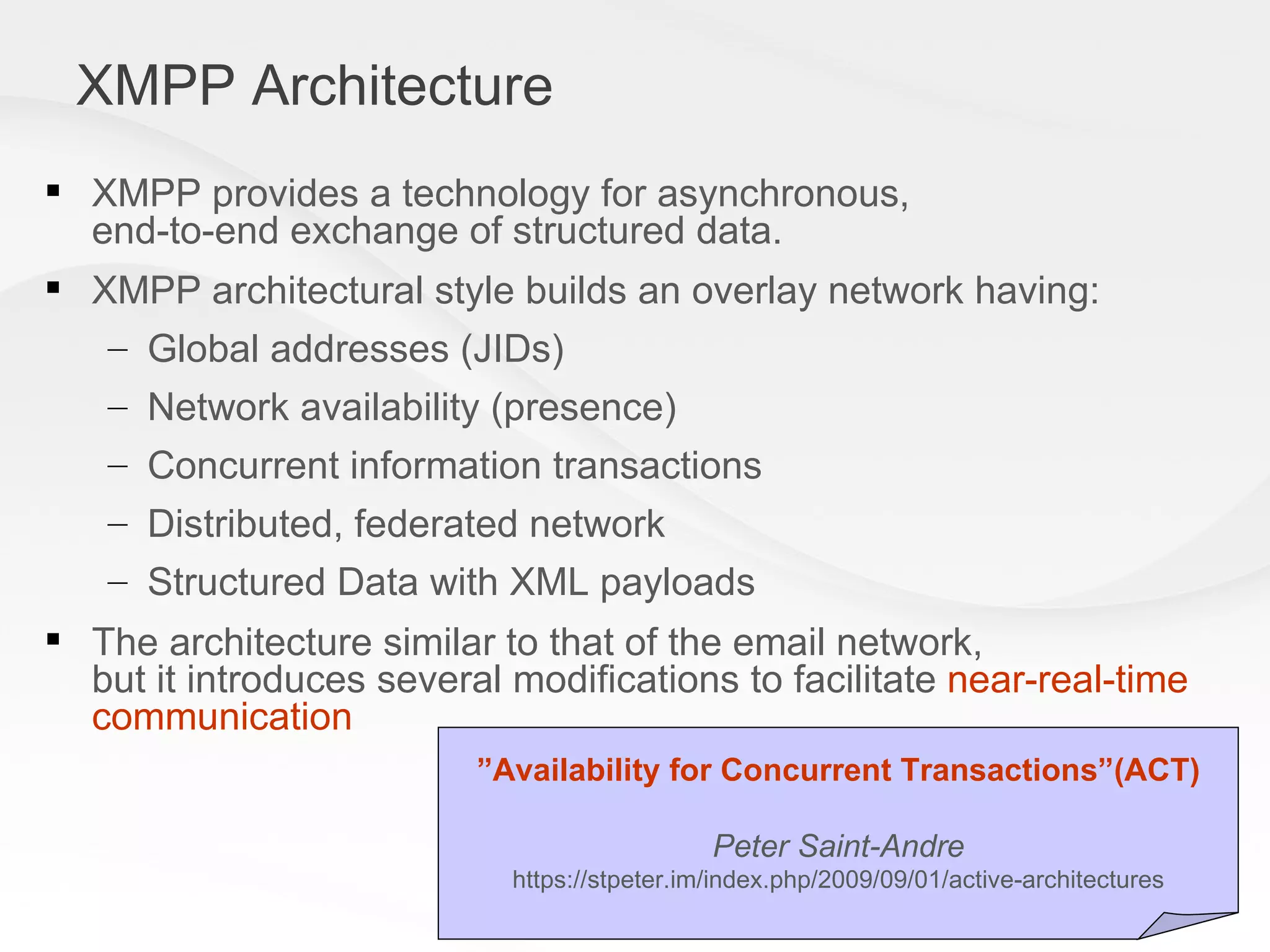
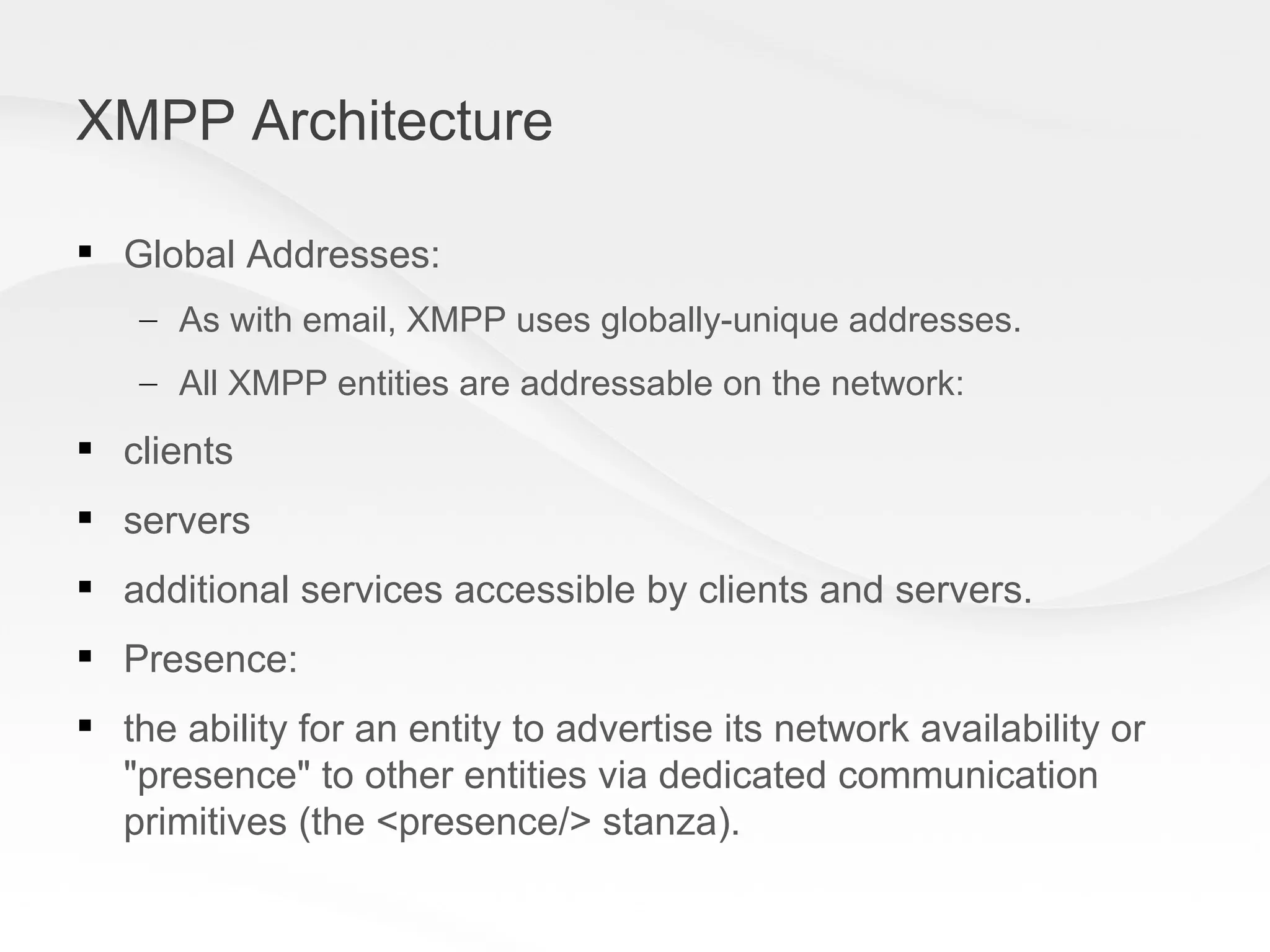
The document discusses using the Extensible Messaging and Presence Protocol (XMPP) for complex cloud services as an alternative to Representational State Transfer (REST) architectures that are commonly used. Some key advantages of XMPP mentioned include its support for real-time capabilities through features like publish/subscribe, efficient data distribution, federated services and discovery, and access control. The document provides an overview of the XMPP architecture including its use of globally unique addresses, presence information, XML stanzas to transport data, and how it can be used to implement publish/subscribe applications in a cloud environment.


![Command & [e]Mission Control: Using Command and Event Buses to create a CQRS-...](https://cdn.slidesharecdn.com/ss_thumbnails/command-emission-promise-slideshare-180219100802-thumbnail.jpg?width=640&height=640&fit=bounds)


![Vibe Coding vs. Spec-Driven Development [Free Meetup]](https://cdn.slidesharecdn.com/ss_thumbnails/vibecodingvsspecdrivendevelopment-251209105622-43f455e7-thumbnail.jpg?width=640&height=640&fit=bounds)


