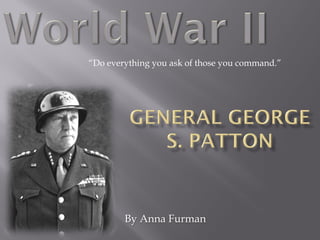
“Do everything you ask of those you command.”


        By Anna Furman
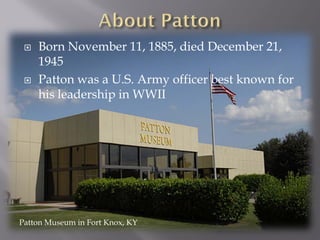
   Born November 11, 1885, died December 21,
     1945
    Patton was a U.S. Army officer best known for
     his leadership in WWII


Patton Museum in Fort Knox, KY
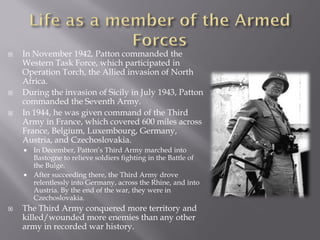
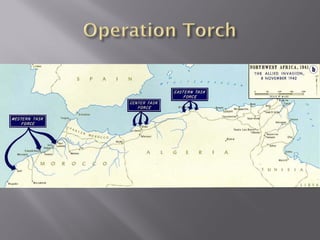
   In November 1942, Patton commanded the
    Western Task Force, which participated in
    Operation Torch, the Allied invasion of North
    Africa.
   During the invasion of Sicily in July 1943, Patton
    commanded the Seventh Army.
   In 1944, he was given command of the Third
    Army in France, which covered 600 miles across
    France, Belgium, Luxembourg, Germany,
    Austria, and Czechoslovakia.
     In December, Patton’s Third Army marched into
      Bastogne to relieve soldiers fighting in the Battle of
      the Bulge.
     After succeeding there, the Third Army drove
      relentlessly into Germany, across the Rhine, and into
      Austria. By the end of the war, they were in
      Czechoslovakia.
   The Third Army conquered more territory and
    killed/wounded more enemies than any other
    army in recorded war history.
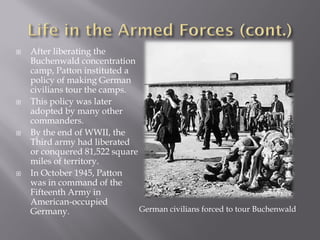
   After liberating the
    Buchenwald concentration
    camp, Patton instituted a
    policy of making German
    civilians tour the camps.
   This policy was later
    adopted by many other
    commanders.
   By the end of WWII, the
    Third army had liberated
    or conquered 81,522 square
    miles of territory.
   In October 1945, Patton
    was in command of the
    Fifteenth Army in
    American-occupied
    Germany.                   German civilians forced to tour Buchenwald
   On December ninth Patton
    suffered injuries from an
    automobile accident.
   He died 12 days later, on
    December 21, 1945, at the age of
    60.
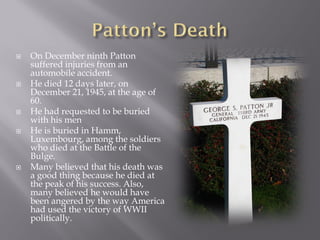
   He had requested to be buried
    with his men
   He is buried in Hamm,
    Luxembourg, among the soldiers
    who died at the Battle of the
    Bulge.
   Many believed that his death was
    a good thing because he died at
    the peak of his success. Also,
    many believed he would have
    been angered by the way America
    had used the victory of WWII
    politically.
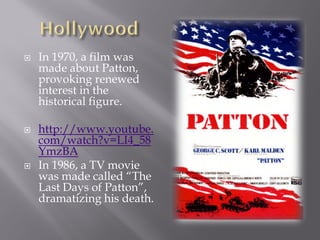
   In 1970, a film was
    made about Patton,
    provoking renewed
    interest in the
    historical figure.

   http://www.youtube.
    com/watch?v=LI4_58
    YmzBA
   In 1986, a TV movie
    was made called “The
    Last Days of Patton”,
    dramatizing his death.
   George Patton was a vital character in war history
    because of his tremendous achievements during
    his military years. Other than WWII, he helped
    and inspired many militaristic ideals and
    strategies. For instance, he was the first to use a
    motor vehicle for battle. He was an inspiration to
    his troops because he expected more out of himself
    than he did out of his subordinates. Before battle,
    he told his troops that they must kill the enemy,
    even if he should surrender, so that they are
    viewed as killers. His philosophy was that this
    reputation would make enemies more hesitant to
    fight.
   Patton’s role in World War II was also
    immensely important, especially as
    commander of the Third Army. His troops
    conquered and liberated more territory than
    any other army in war history. He is very well
    known for his heroism in the Battle of the
    Bulge, when he turned his troops 100 miles in a
    different direction than was their goal to help
    the forces holding Bastogne. His speeches back
    home also had a great impact on the American
    people. His views were, many times, very
    controversial and he became known for his
    extreme perspective.
   http://www.generalpatton.com/biography.html
   http://www.patton-
    mania.com/George_S_Patton/george_s_patton.ht
    ml
   http://en.wikipedia.org/wiki/George_S._Patton

WWII project: George S. Patton

  • 1.
    “Do everything youask of those you command.” By Anna Furman
  • 2.
    Born November 11, 1885, died December 21, 1945  Patton was a U.S. Army officer best known for his leadership in WWII Patton Museum in Fort Knox, KY
  • 3.
    In November 1942, Patton commanded the Western Task Force, which participated in Operation Torch, the Allied invasion of North Africa.  During the invasion of Sicily in July 1943, Patton commanded the Seventh Army.  In 1944, he was given command of the Third Army in France, which covered 600 miles across France, Belgium, Luxembourg, Germany, Austria, and Czechoslovakia.  In December, Patton’s Third Army marched into Bastogne to relieve soldiers fighting in the Battle of the Bulge.  After succeeding there, the Third Army drove relentlessly into Germany, across the Rhine, and into Austria. By the end of the war, they were in Czechoslovakia.  The Third Army conquered more territory and killed/wounded more enemies than any other army in recorded war history.
  • 5.
    After liberating the Buchenwald concentration camp, Patton instituted a policy of making German civilians tour the camps.  This policy was later adopted by many other commanders.  By the end of WWII, the Third army had liberated or conquered 81,522 square miles of territory.  In October 1945, Patton was in command of the Fifteenth Army in American-occupied Germany. German civilians forced to tour Buchenwald
  • 6.
    On December ninth Patton suffered injuries from an automobile accident.  He died 12 days later, on December 21, 1945, at the age of 60.  He had requested to be buried with his men  He is buried in Hamm, Luxembourg, among the soldiers who died at the Battle of the Bulge.  Many believed that his death was a good thing because he died at the peak of his success. Also, many believed he would have been angered by the way America had used the victory of WWII politically.
  • 7.
    In 1970, a film was made about Patton, provoking renewed interest in the historical figure.  http://www.youtube. com/watch?v=LI4_58 YmzBA  In 1986, a TV movie was made called “The Last Days of Patton”, dramatizing his death.
  • 8.
    George Patton was a vital character in war history because of his tremendous achievements during his military years. Other than WWII, he helped and inspired many militaristic ideals and strategies. For instance, he was the first to use a motor vehicle for battle. He was an inspiration to his troops because he expected more out of himself than he did out of his subordinates. Before battle, he told his troops that they must kill the enemy, even if he should surrender, so that they are viewed as killers. His philosophy was that this reputation would make enemies more hesitant to fight.
  • 9.
    Patton’s role in World War II was also immensely important, especially as commander of the Third Army. His troops conquered and liberated more territory than any other army in war history. He is very well known for his heroism in the Battle of the Bulge, when he turned his troops 100 miles in a different direction than was their goal to help the forces holding Bastogne. His speeches back home also had a great impact on the American people. His views were, many times, very controversial and he became known for his extreme perspective.
  • 10.
    http://www.generalpatton.com/biography.html  http://www.patton- mania.com/George_S_Patton/george_s_patton.ht ml  http://en.wikipedia.org/wiki/George_S._Patton