Writing Process
Concerns and Strategies
Presented by Angelica A. Valerio
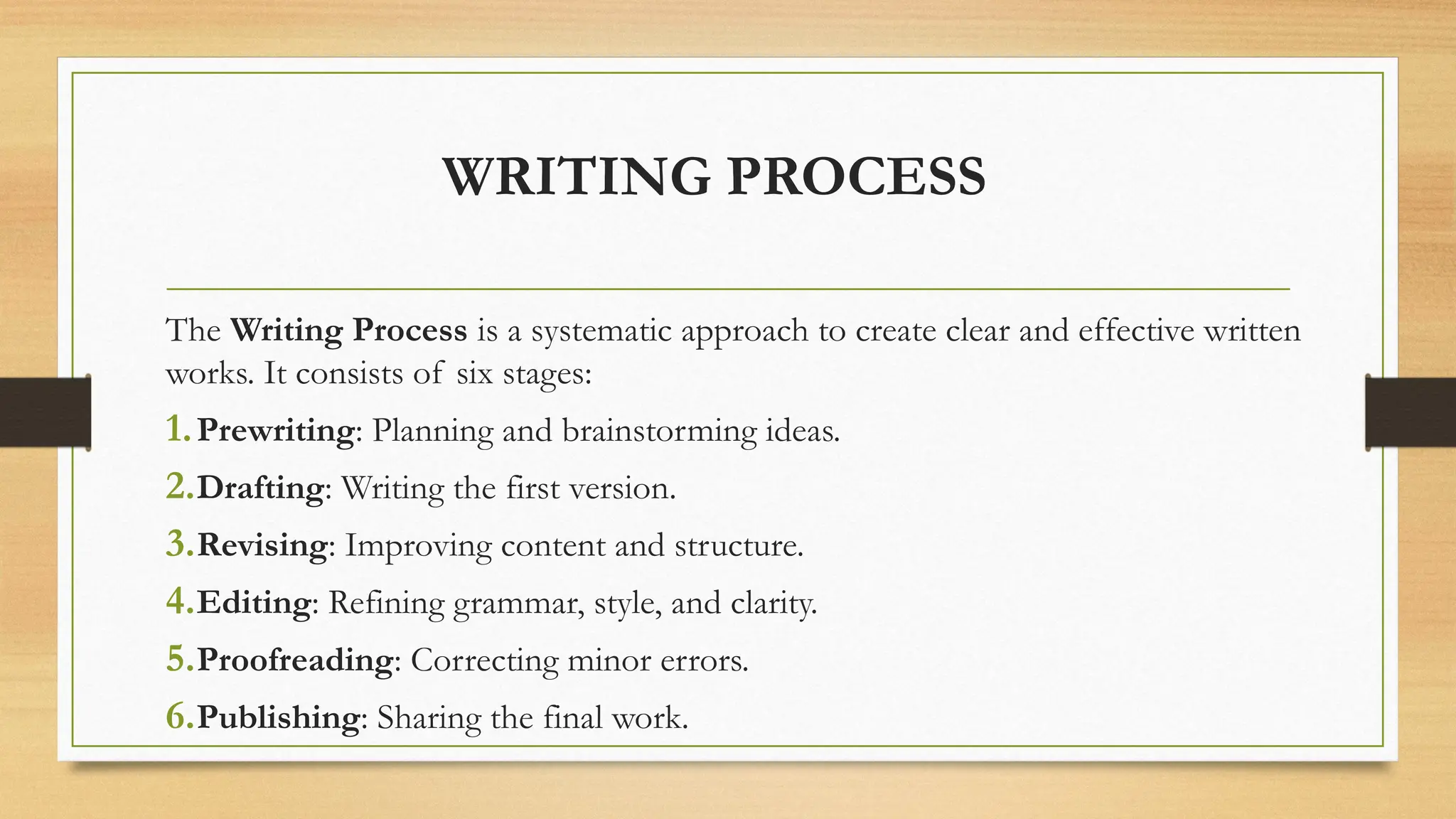
WRITING PROCESS
The Writing Process is a systematic approach to create clear and effective written
works. It consists of six stages:
1.Prewriting: Planning and brainstorming ideas.
2.Drafting: Writing the first version.
3.Revising: Improving content and structure.
4.Editing: Refining grammar, style, and clarity.
5.Proofreading: Correcting minor errors.
6.Publishing: Sharing the final work.
PREWRITING
Description: This is the planning stage where ideas are explored and organized.
Concerns:
•Writers may struggle with finding ideas or understanding the purpose of their writing.
•Difficulty organizing thoughts coherently.
Strategies:
•Brainstorm ideas using techniques like mind mapping.
Example: Create a mind map for an essay about environmental issues.
•Use graphic organizers to arrange ideas logically.
Example: Use a Venn diagram to compare two topics.
•Clarify the purpose and audience before starting.
Example: Decide if the piece is for an academic audience or a casual blog.
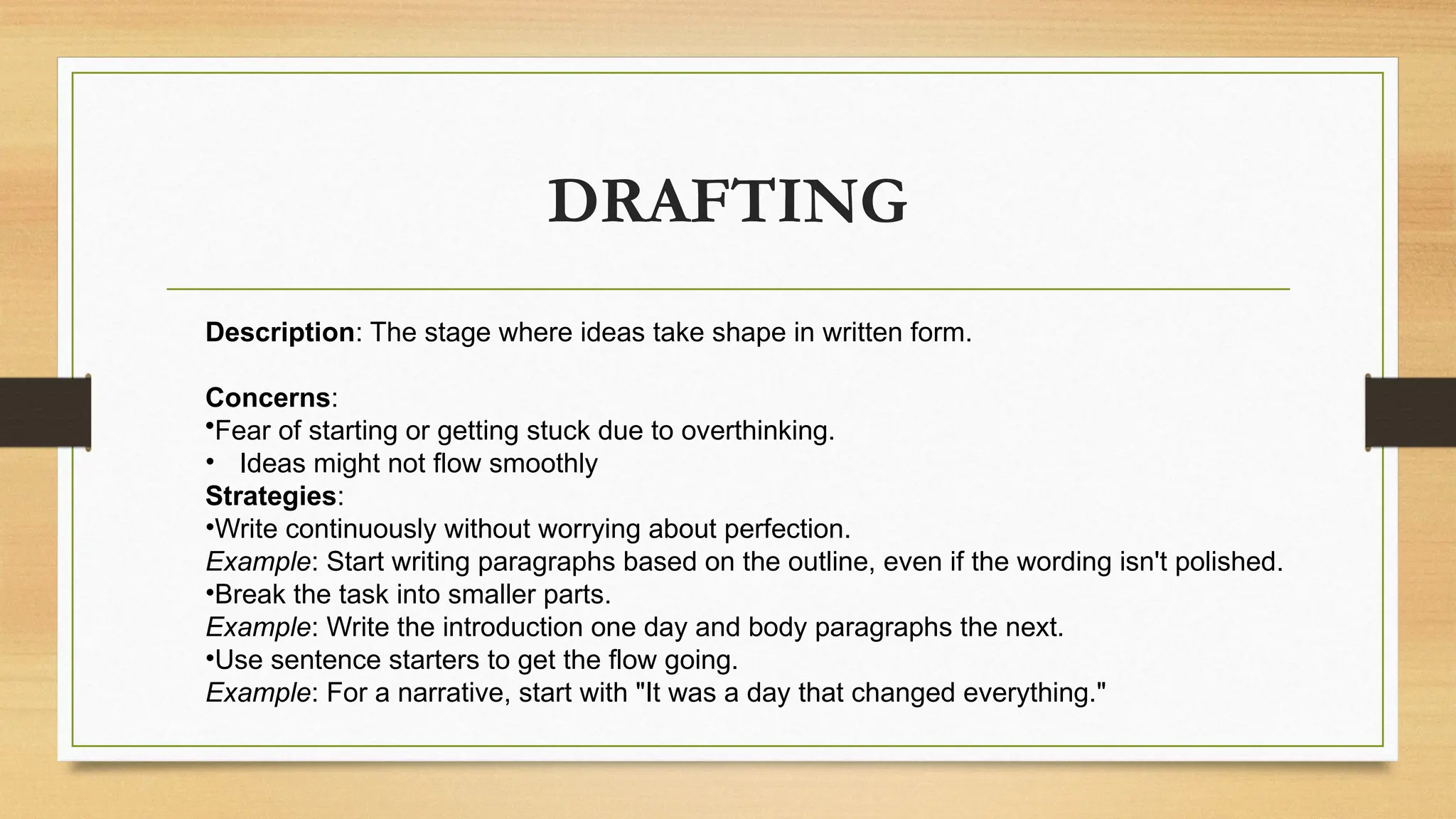
DRAFTING
Description: The stage where ideas take shape in written form.
Concerns:
•Fear of starting or getting stuck due to overthinking.
• Ideas might not flow smoothly
Strategies:
•Write continuously without worrying about perfection.
Example: Start writing paragraphs based on the outline, even if the wording isn't polished.
•Break the task into smaller parts.
Example: Write the introduction one day and body paragraphs the next.
•Use sentence starters to get the flow going.
Example: For a narrative, start with "It was a day that changed everything."
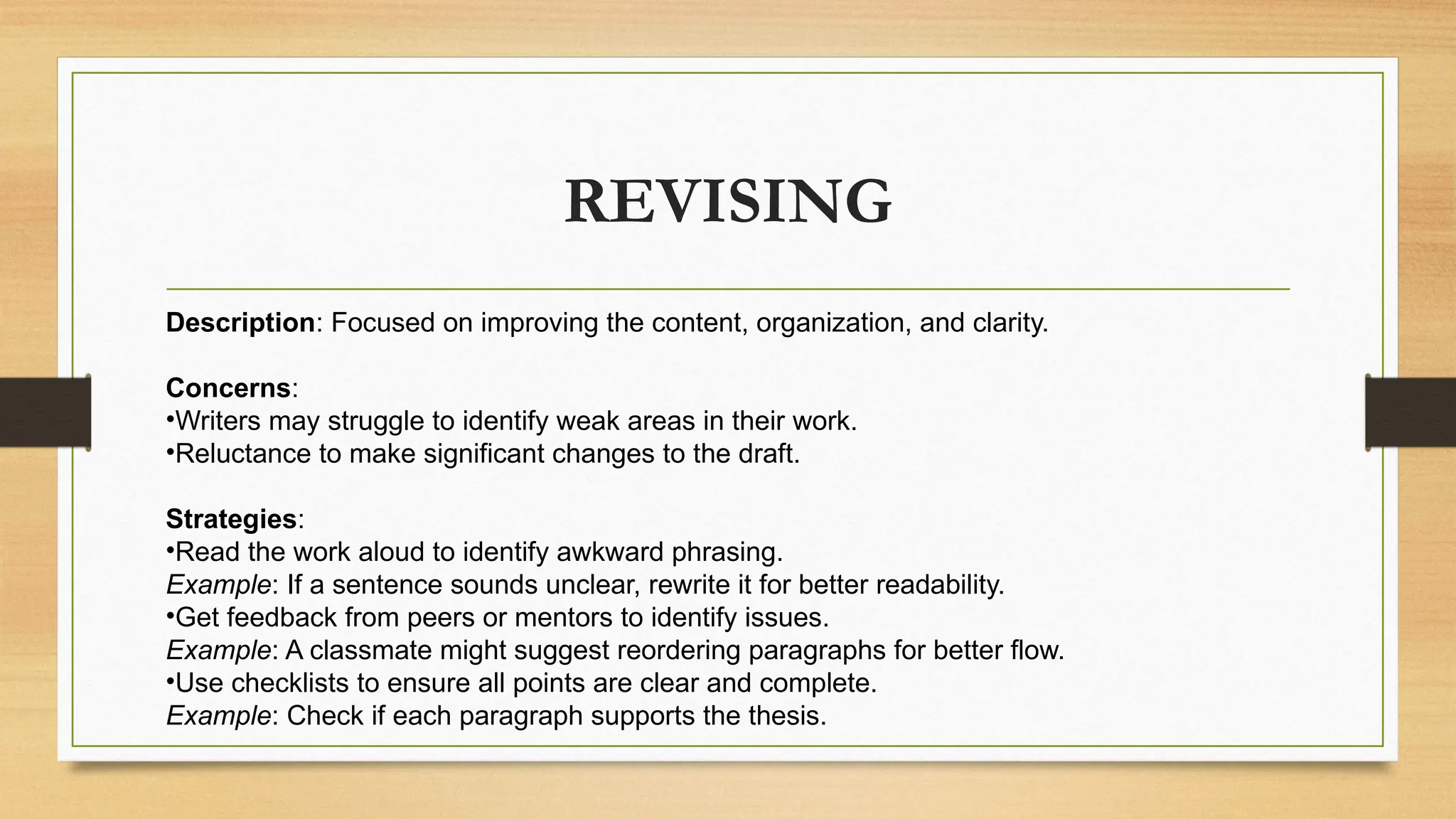
REVISING
Description: Focused on improving the content, organization, and clarity.
Concerns:
•Writers may struggle to identify weak areas in their work.
•Reluctance to make significant changes to the draft.
Strategies:
•Read the work aloud to identify awkward phrasing.
Example: If a sentence sounds unclear, rewrite it for better readability.
•Get feedback from peers or mentors to identify issues.
Example: A classmate might suggest reordering paragraphs for better flow.
•Use checklists to ensure all points are clear and complete.
Example: Check if each paragraph supports the thesis.
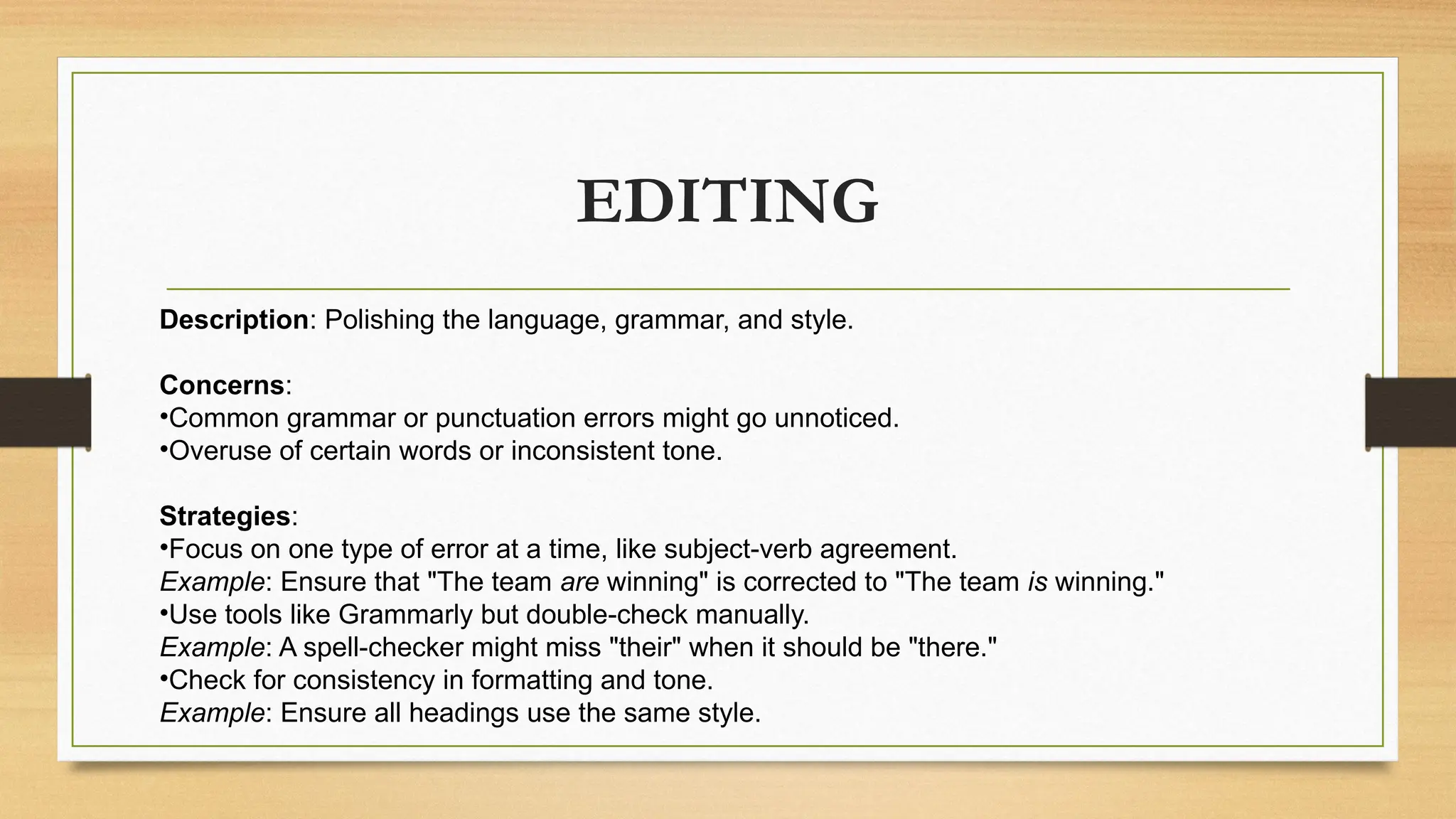
EDITING
Description: Polishing the language, grammar, and style.
Concerns:
•Common grammar or punctuation errors might go unnoticed.
•Overuse of certain words or inconsistent tone.
Strategies:
•Focus on one type of error at a time, like subject-verb agreement.
Example: Ensure that "The team are winning" is corrected to "The team is winning."
•Use tools like Grammarly but double-check manually.
Example: A spell-checker might miss "their" when it should be "there."
•Check for consistency in formatting and tone.
Example: Ensure all headings use the same style.
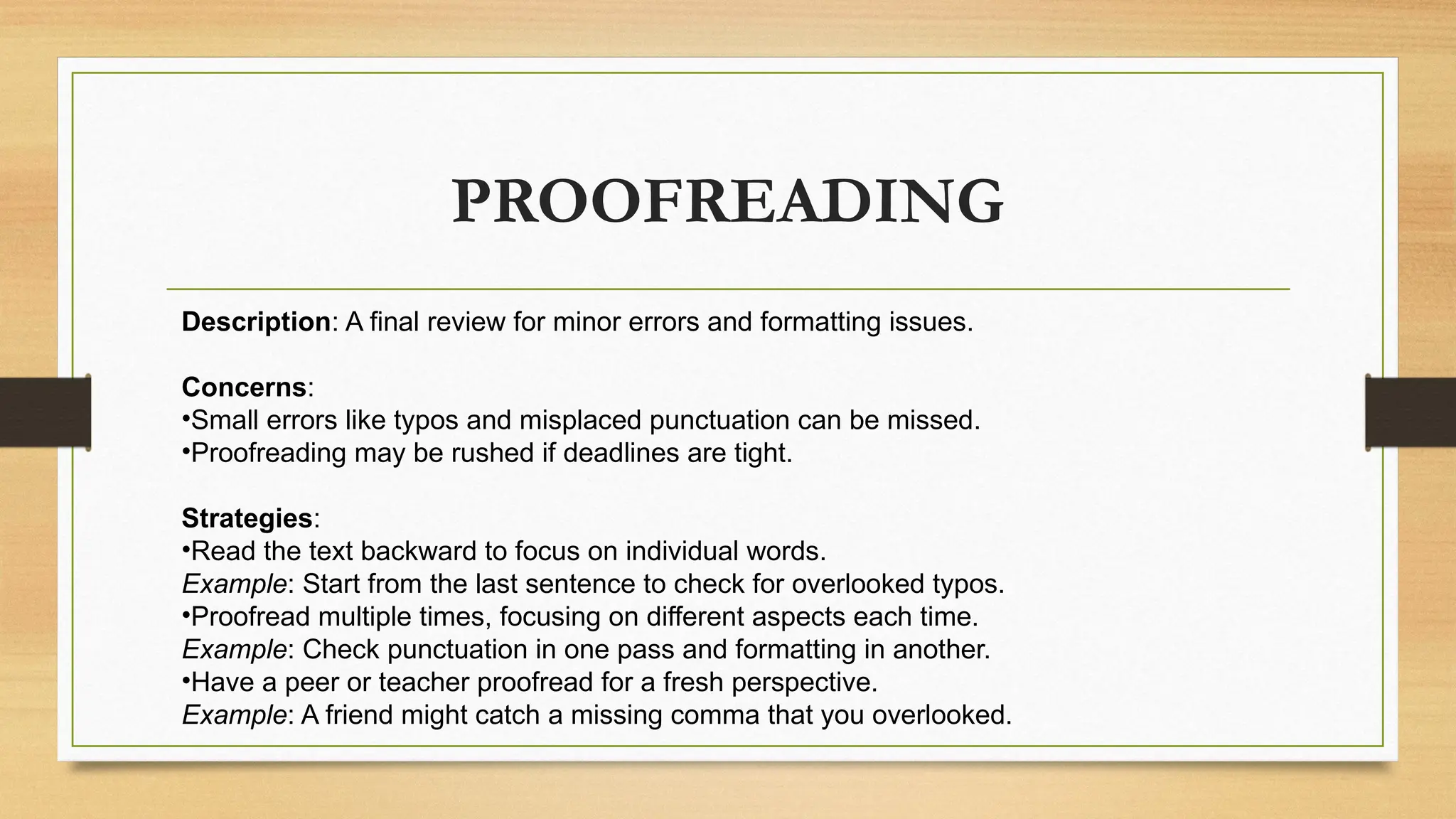
PROOFREADING
Description: A final review for minor errors and formatting issues.
Concerns:
•Small errors like typos and misplaced punctuation can be missed.
•Proofreading may be rushed if deadlines are tight.
Strategies:
•Read the text backward to focus on individual words.
Example: Start from the last sentence to check for overlooked typos.
•Proofread multiple times, focusing on different aspects each time.
Example: Check punctuation in one pass and formatting in another.
•Have a peer or teacher proofread for a fresh perspective.
Example: A friend might catch a missing comma that you overlooked.
PUBLISHING
Description: The final step where the work is shared with its audience.
Concerns:
•Anxiety about how the work will be received.
•Ensuring the final document meets all guidelines.
Strategies:
•Double-check formatting, citations, and submission requirements.
Example: Use APA style for academic papers or ensure the document is properly paginated.
•Use publishing platforms to present work attractively.
Example: Create a class booklet or upload it to a blog.
•Celebrate accomplishments to build confidence.
Example: Share the work in a group presentation or display it on a bulletin board.
THANK YOU!

Writing Process Concerns and Strategies.pptx

  • 1.
    Writing Process Concerns andStrategies Presented by Angelica A. Valerio
  • 2.
    WRITING PROCESS The WritingProcess is a systematic approach to create clear and effective written works. It consists of six stages: 1.Prewriting: Planning and brainstorming ideas. 2.Drafting: Writing the first version. 3.Revising: Improving content and structure. 4.Editing: Refining grammar, style, and clarity. 5.Proofreading: Correcting minor errors. 6.Publishing: Sharing the final work.
  • 3.
    PREWRITING Description: This isthe planning stage where ideas are explored and organized. Concerns: •Writers may struggle with finding ideas or understanding the purpose of their writing. •Difficulty organizing thoughts coherently. Strategies: •Brainstorm ideas using techniques like mind mapping. Example: Create a mind map for an essay about environmental issues. •Use graphic organizers to arrange ideas logically. Example: Use a Venn diagram to compare two topics. •Clarify the purpose and audience before starting. Example: Decide if the piece is for an academic audience or a casual blog.
  • 4.
    DRAFTING Description: The stagewhere ideas take shape in written form. Concerns: •Fear of starting or getting stuck due to overthinking. • Ideas might not flow smoothly Strategies: •Write continuously without worrying about perfection. Example: Start writing paragraphs based on the outline, even if the wording isn't polished. •Break the task into smaller parts. Example: Write the introduction one day and body paragraphs the next. •Use sentence starters to get the flow going. Example: For a narrative, start with "It was a day that changed everything."
  • 5.
    REVISING Description: Focused onimproving the content, organization, and clarity. Concerns: •Writers may struggle to identify weak areas in their work. •Reluctance to make significant changes to the draft. Strategies: •Read the work aloud to identify awkward phrasing. Example: If a sentence sounds unclear, rewrite it for better readability. •Get feedback from peers or mentors to identify issues. Example: A classmate might suggest reordering paragraphs for better flow. •Use checklists to ensure all points are clear and complete. Example: Check if each paragraph supports the thesis.
  • 6.
    EDITING Description: Polishing thelanguage, grammar, and style. Concerns: •Common grammar or punctuation errors might go unnoticed. •Overuse of certain words or inconsistent tone. Strategies: •Focus on one type of error at a time, like subject-verb agreement. Example: Ensure that "The team are winning" is corrected to "The team is winning." •Use tools like Grammarly but double-check manually. Example: A spell-checker might miss "their" when it should be "there." •Check for consistency in formatting and tone. Example: Ensure all headings use the same style.
  • 7.
    PROOFREADING Description: A finalreview for minor errors and formatting issues. Concerns: •Small errors like typos and misplaced punctuation can be missed. •Proofreading may be rushed if deadlines are tight. Strategies: •Read the text backward to focus on individual words. Example: Start from the last sentence to check for overlooked typos. •Proofread multiple times, focusing on different aspects each time. Example: Check punctuation in one pass and formatting in another. •Have a peer or teacher proofread for a fresh perspective. Example: A friend might catch a missing comma that you overlooked.
  • 8.
    PUBLISHING Description: The finalstep where the work is shared with its audience. Concerns: •Anxiety about how the work will be received. •Ensuring the final document meets all guidelines. Strategies: •Double-check formatting, citations, and submission requirements. Example: Use APA style for academic papers or ensure the document is properly paginated. •Use publishing platforms to present work attractively. Example: Create a class booklet or upload it to a blog. •Celebrate accomplishments to build confidence. Example: Share the work in a group presentation or display it on a bulletin board.
  • 9.