WASTE MANAGEMENT
TRAINING
BY
NDANYUZWE ELIYAZARI
EHS OFFICER
MPANGA SHPP
14TH
FEBRUARY 2024
SAEMS Engineering Ltd
SCOPE
1. Objectives
2. Definitions
3. Types of waste generated at Mpanga SHPP
4. Management of waste water
5. Management of solid waste
6. SAEMS waste management plan
Training Objectives
By the end of this training, participants should be able
to understand;
SAEMS Waste Management Plan
Management of Solid Waste
Different types of Waste Water
Sorting of Waste
Impact of Poor handling ofWaste to human health
and the Environment
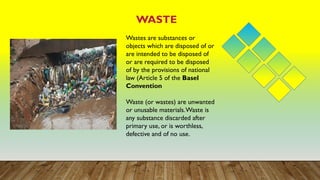
WASTE
Wastes are substances or
objects which are disposed of or
are intended to be disposed of
or are required to be disposed
of by the provisions of national
law (Article 5 of the Basel
Convention
Waste (or wastes) are unwanted
or unusable materials.Waste is
any substance discarded after
primary use, or is worthless,
defective and of no use.
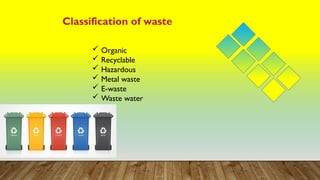
Classification of waste
 Organic
 Recyclable
 Hazardous
 Metal waste
 E-waste
 Waste water
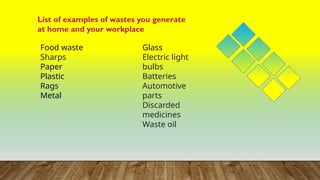
List of examples of wastes you generate
at home and your workplace
Food waste
Sharps
Paper
Plastic
Rags
Metal
Glass
Electric light
bulbs
Batteries
Automotive
parts
Discarded
medicines
Waste oil
Waste management
Waste management means activities relating to the
collection, transportation, storage, treatment and
disposal of waste, including the management of
waste at source and during decommissioning of
waste management facilities
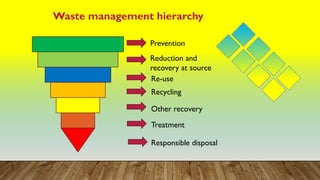
Waste management hierarchy
Prevention
Reduction and
recovery at source
Re-use
Recycling
Treatment
Other recovery
Responsible disposal
Management of organic waste
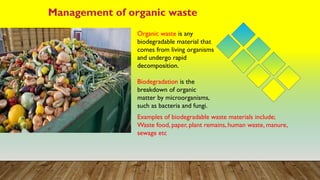
Organic waste is any
biodegradable material that
comes from living organisms
and undergo rapid
decomposition.
Biodegradation is the
breakdown of organic
matter by microorganisms,
such as bacteria and fungi.
Examples of biodegradable waste materials include;
Waste food, paper, plant remains, human waste, manure,
sewage etc
Management of organic waste
This can be achieved through the following strategies;
 Buy and cook only what you need
 Properly store your food materials (refrigeration, salting, sun drying etc
 Make good use of your leftovers e.g. donating leftover food to the
needy
 Add to plant soils
 Composting
 Convert food waste into biogas
 Divert leftover food and other wastes like banana peelings into animal
feed
 Ingeneration
 Disposal
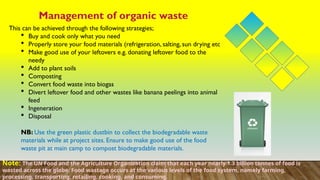
NB: Use the green plastic dustbin to collect the biodegradable waste
materials while at project sites. Ensure to make good use of the food
waste pit at main camp to compost biodegradable materials.
Note: The UN Food and the Agriculture Organization claim that each year nearly 1.3 billion tonnes of food is
wasted across the globe. Food wastage occurs at the various levels of the food system, namely farming,
processing, transporting, retailing, cooking, and consuming.
Management of recyclable waste
Recyclable material means any material or group
of materials that has or retains useful physical or
chemical properties after serving its original
purpose(s) or function(s), that is collected,
separated or processed, and returned to the
economic mainstream in the form of raw
materials or products.
Examples of recyclable wastes generated in our
surroundings include plastic bottles and
containers, food and beverage cans, glass bottles
and containers, paper, cardboards, steel, aluminium
etc
Management of recyclable waste continued…
 Reducing the amount of solid waste generated
 Recycling as much refuse as possible
 Transforming waste in an environmentally safe manner
 Proper onsite collection and sorting. Use the blue
plastic dust bin to collect plastics, glasses etc for
Mpanga project sites.
 Safe disposal
Management of recyclable waste continued…
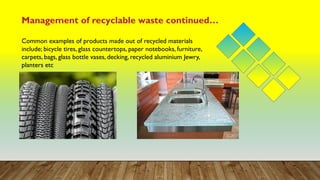
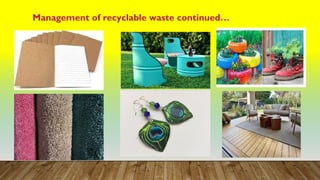
Common examples of products made out of recycled materials
include; bicycle tires, glass countertops, paper notebooks, furniture,
carpets, bags, glass bottle vases, decking, recycled aluminium Jewry,
planters etc
Management of recyclable waste continued…
Plastic pollution
Plastic pollution is the accumulation of synthetic plastic
products in the environment that reaches an extent where it
causes problems for wildlife habitats, ecosystems and
human populations.
How does plastic pollution occur
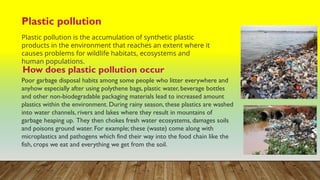
Poor garbage disposal habits among some people who litter everywhere and
anyhow especially after using polythene bags, plastic water, beverage bottles
and other non-biodegradable packaging materials lead to increased amount
plastics within the environment. During rainy season, these plastics are washed
into water channels, rivers and lakes where they result in mountains of
garbage heaping up. They then chokes fresh water ecosystems, damages soils
and poisons ground water. For example; these (waste) come along with
microplastics and pathogens which find their way into the food chain like the
fish, crops we eat and everything we get from the soil.
Impact of plastic pollution
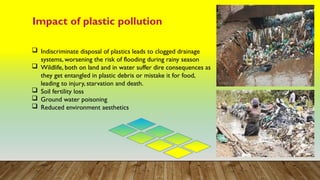
 Indiscriminate disposal of plastics leads to clogged drainage
systems, worsening the risk of flooding during rainy season
 Wildlife, both on land and in water suffer dire consequences as
they get entangled in plastic debris or mistake it for food,
leading to injury, starvation and death.
 Soil fertility loss
 Ground water poisoning
 Reduced environment aesthetics
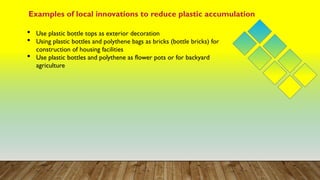
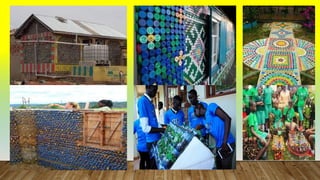
Examples of local innovations to reduce plastic accumulation
 Use plastic bottle tops as exterior decoration
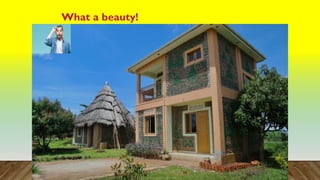
 Using plastic bottles and polythene bags as bricks (bottle bricks) for
construction of housing facilities
 Use plastic bottles and polythene as flower pots or for backyard
agriculture
What a beauty!
Management of hazardous waste
Hazardous waste is waste that has substantial or potential
threats to public health or the environment.They usually have
one or more of the following hazardous traits: ignitability,
reactivity, corrosivity, toxicity.
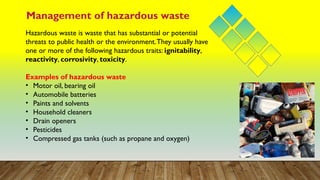
Examples of hazardous waste
• Motor oil, bearing oil
• Automobile batteries
• Paints and solvents
• Household cleaners
• Drain openers
• Pesticides
• Compressed gas tanks (such as propane and oxygen)
Significance of hazardous waste
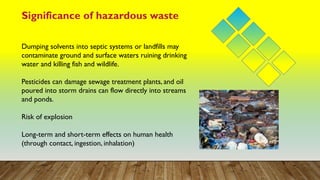
Dumping solvents into septic systems or landfills may
contaminate ground and surface waters ruining drinking
water and killing fish and wildlife.
Pesticides can damage sewage treatment plants, and oil
poured into storm drains can flow directly into streams
and ponds.
Risk of explosion
Long-term and short-term effects on human health
(through contact, ingestion, inhalation)
Ways of managing hazardous waste at Mpanga HPP
Mpanga hydropower plant has plastic colour coded dust bins in
every site. Use the red bin to collect all waste materials that are
hazardous in nature. Don’t forget to use heavy duty gloves, overall,
safety gumboots and a mask while handling such wastes. Make use
of the data sheet to clearly understand the nature/behaviour of the
hazardous material you're dealing with.
The plant also has a licenced storage facility for hazardous waste.
Regularly inspect the facility and check for any leakages and
cleanliness. Fortunately, the project has a memorandum of
understanding with a licenced party to collect, transport and
dispose of such waste on accumulation.
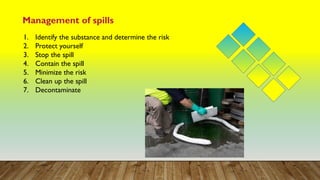
Management of spills
1. Identify the substance and determine the risk
2. Protect yourself
3. Stop the spill
4. Contain the spill
5. Minimize the risk
6. Clean up the spill
7. Decontaminate
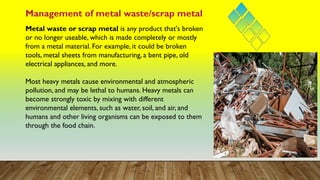
Metal waste or scrap metal is any product that's broken
or no longer useable, which is made completely or mostly
from a metal material. For example, it could be broken
tools, metal sheets from manufacturing, a bent pipe, old
electrical appliances, and more.
Most heavy metals cause environmental and atmospheric
pollution, and may be lethal to humans. Heavy metals can
become strongly toxic by mixing with different
environmental elements, such as water, soil, and air, and
humans and other living organisms can be exposed to them
through the food chain.
Management of metal waste/scrap metal
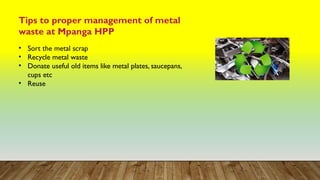
Tips to proper management of metal
waste at Mpanga HPP
• Sort the metal scrap
• Recycle metal waste
• Donate useful old items like metal plates, saucepans,
cups etc
• Reuse
Electronic waste management
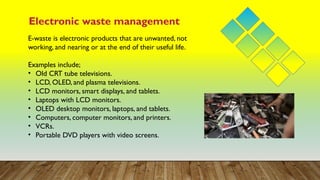
E-waste is electronic products that are unwanted, not
working, and nearing or at the end of their useful life.
Examples include;
• Old CRT tube televisions.
• LCD, OLED, and plasma televisions.
• LCD monitors, smart displays, and tablets.
• Laptops with LCD monitors.
• OLED desktop monitors, laptops, and tablets.
• Computers, computer monitors, and printers.
• VCRs.
• Portable DVD players with video screens.
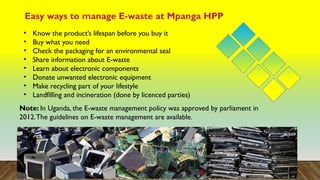
Easy ways to manage E-waste at Mpanga HPP
• Know the product’s lifespan before you buy it
• Buy what you need
• Check the packaging for an environmental seal
• Share information about E-waste
• Learn about electronic components
• Donate unwanted electronic equipment
• Make recycling part of your lifestyle
• Landfilling and incineration (done by licenced parties)
Note: In Uganda, the E-waste management policy was approved by parliament in
2012.The guidelines on E-waste management are available.
Management of waste water
Waste water can be defined as used water from any
combination of domestic, industrial, commercial or
agricultural activities, surface runoff/storm water, and any
sewer inflow or sewer infiltration.
The main types of wastewater are:
1. Greywater – from showers, baths, hand basins,
washing machines, laundry troughs and kitchens.
2. Blackwater – for example, toilet waste.
3. Sewage – a combination of greywater, blackwater and
trade waste.
4. Industrial wastewater – includes all wastewater waste
except sewage.
Management of waste water continued…
Wastewater can contain microorganisms, bacteria and viruses that can cause disease.This can
include eye and nose infections or gastroenteritis (gastro or upset stomach).Wastewater can also
contain pollutants.These can impact water quality, harm plants and animals and present risks to
human health.
Pollutants include:
 Suspended solids or sediment – soil, sand and other particles can build up in waterways
 microorganisms – can spread disease (for example, harmful bacteria, virus, protozoa and
helminth)
 Chemicals and heavy metals – in industrial waste and naturally present in the environment.These
can be harmful in large amounts.
 Nutrients (Nitrogen and Phosphorus) – wastewater high in nutrients entering a water body can
cause harmful algal blooms that impact water quality and cause fish kills.
 Water with too high or too low pH also presents a risk to the environment (biota) and human
health when there is close human contact.
All these can impact water quality, harm plants and animals that depend on water and present risks
to human health.
Management of waste water continued…
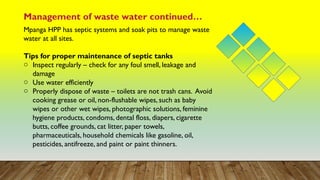
Mpanga HPP has septic systems and soak pits to manage waste
water at all sites.
Tips for proper maintenance of septic tanks
o Inspect regularly – check for any foul smell, leakage and
damage
o Use water efficiently
o Properly dispose of waste – toilets are not trash cans. Avoid
cooking grease or oil, non-flushable wipes, such as baby
wipes or other wet wipes, photographic solutions, feminine
hygiene products, condoms, dental floss, diapers, cigarette
butts, coffee grounds, cat litter, paper towels,
pharmaceuticals, household chemicals like gasoline, oil,
pesticides, antifreeze, and paint or paint thinners.
Waste management plan for Mpanga HPP
Policy statements
SAEMS recognizes the importance of meeting legal requirements
and responsibly minimizing waste disposal cost and project induced
social costs in its waste management plan.
Only hazardous materials taken off site as a waste are to be
recorded and documented as a waste.
SAEMS committed to build partners rather than contractors to
ensure efficient and cost effective transportation, storage and
treatment of its waste and disposal of residues.
As a responsible business entity, we do care about people’s attitude
on us where we operate. SAEMS will be responsive to public
attitude on its waste management.
Waste management plan for Mpanga HPP continued…
Policy objectives
1. To ensure that project’s waste management is performed in
accordance with the waste legislative requirements.
2. Prevent adverse impacts to the environmental from wastes
generated by operation and maintenance activities of the project
by the implementation of waste management principles and best
practice disposal strategies in line with statutory and regulatory
requirements.
3. Promote awareness among workforce through sensitizing and
training in order to increase and encourage waste minimization,
reuse and recycling.
4. Ensure the safe handling and storage of wastes at project site and
project’s ancillary services location.
Waste management plan for Mpanga HPP continued…
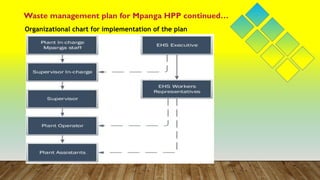
Organizational chart for implementation of the plan
Waste management plan for Mpanga HPP continued…
 Expected wastes and management measures at Mpanga HPP
 Standard operating procedures for waste storage at Mpanga
HPP
1. Storm water protection equipment and materials
2. Waste storage
3. Sub contracts & sub-contractors
4. Employee training
5. Record keeping and documentation
Thank you for
participating!
Any questions?
Training assessment
1. Waste can be defined as;
A. Useful materials that humans live with daily
B. Animal and plant remains ready for dumping
C. Unwanted substances
D. None of the above
2. Plastic wastes are always collected in;
E. Food waste pit
F. Green dustbins
G. Blue dustbins
H. Red dustbins
3. In waste management hierarchy;
I. Prevention is better than re-use
J. Recycling is better than prevention
K. Disposal is better than re-use
L. A&C
Training assessment
4. Absorbent socks and pads are important during;
A. Working in water-logged environments
B. Spill management
C. Cleaning of sensitive machine parts
D. All the above
5. The following can damage a septic tank when improperly
dumped in the toilet or sink except;
E. Condoms
F. Oil
G. Baby wipes
H. None of the above
6. Gloves, masks, overalls and gumboots are used during;
I. Handling of hazardous materials
J. Collecting sharp objects
K. Packaging of food remains as animal feeds
L. All the above
Training assessment
7. Wastes from electronic gadgets are commonly referred to as;
A. Scrap metal
B. Biodegradable waste
C. Electronic waste
D. Hazardous waste
8. How can old clothes be managed at Mpanga hydropower
project?
E. Donate to people in need
F. Leave them on soil in compound to rot away
G. Burn them
H. Non of the above
Training assessment
9. List two ways in which waste materials can be useful
10. Give two new products from recycled plastics
Good luck
End of assessment

Workplace Waste Management training.pptx

  • 1.
    WASTE MANAGEMENT TRAINING BY NDANYUZWE ELIYAZARI EHSOFFICER MPANGA SHPP 14TH FEBRUARY 2024 SAEMS Engineering Ltd
  • 2.
    SCOPE 1. Objectives 2. Definitions 3.Types of waste generated at Mpanga SHPP 4. Management of waste water 5. Management of solid waste 6. SAEMS waste management plan
  • 3.
    Training Objectives By theend of this training, participants should be able to understand; SAEMS Waste Management Plan Management of Solid Waste Different types of Waste Water Sorting of Waste Impact of Poor handling ofWaste to human health and the Environment
  • 4.
    WASTE Wastes are substancesor objects which are disposed of or are intended to be disposed of or are required to be disposed of by the provisions of national law (Article 5 of the Basel Convention Waste (or wastes) are unwanted or unusable materials.Waste is any substance discarded after primary use, or is worthless, defective and of no use.
  • 5.
    Classification of waste Organic  Recyclable  Hazardous  Metal waste  E-waste  Waste water
  • 6.
    List of examplesof wastes you generate at home and your workplace Food waste Sharps Paper Plastic Rags Metal Glass Electric light bulbs Batteries Automotive parts Discarded medicines Waste oil
  • 7.
    Waste management Waste managementmeans activities relating to the collection, transportation, storage, treatment and disposal of waste, including the management of waste at source and during decommissioning of waste management facilities
  • 8.
    Waste management hierarchy Prevention Reductionand recovery at source Re-use Recycling Treatment Other recovery Responsible disposal
  • 9.
    Management of organicwaste Organic waste is any biodegradable material that comes from living organisms and undergo rapid decomposition. Biodegradation is the breakdown of organic matter by microorganisms, such as bacteria and fungi. Examples of biodegradable waste materials include; Waste food, paper, plant remains, human waste, manure, sewage etc
  • 10.
    Management of organicwaste This can be achieved through the following strategies;  Buy and cook only what you need  Properly store your food materials (refrigeration, salting, sun drying etc  Make good use of your leftovers e.g. donating leftover food to the needy  Add to plant soils  Composting  Convert food waste into biogas  Divert leftover food and other wastes like banana peelings into animal feed  Ingeneration  Disposal NB: Use the green plastic dustbin to collect the biodegradable waste materials while at project sites. Ensure to make good use of the food waste pit at main camp to compost biodegradable materials. Note: The UN Food and the Agriculture Organization claim that each year nearly 1.3 billion tonnes of food is wasted across the globe. Food wastage occurs at the various levels of the food system, namely farming, processing, transporting, retailing, cooking, and consuming.
  • 11.
    Management of recyclablewaste Recyclable material means any material or group of materials that has or retains useful physical or chemical properties after serving its original purpose(s) or function(s), that is collected, separated or processed, and returned to the economic mainstream in the form of raw materials or products. Examples of recyclable wastes generated in our surroundings include plastic bottles and containers, food and beverage cans, glass bottles and containers, paper, cardboards, steel, aluminium etc
  • 12.
    Management of recyclablewaste continued…  Reducing the amount of solid waste generated  Recycling as much refuse as possible  Transforming waste in an environmentally safe manner  Proper onsite collection and sorting. Use the blue plastic dust bin to collect plastics, glasses etc for Mpanga project sites.  Safe disposal
  • 13.
    Management of recyclablewaste continued… Common examples of products made out of recycled materials include; bicycle tires, glass countertops, paper notebooks, furniture, carpets, bags, glass bottle vases, decking, recycled aluminium Jewry, planters etc
  • 14.
    Management of recyclablewaste continued…
  • 15.
    Plastic pollution Plastic pollutionis the accumulation of synthetic plastic products in the environment that reaches an extent where it causes problems for wildlife habitats, ecosystems and human populations. How does plastic pollution occur Poor garbage disposal habits among some people who litter everywhere and anyhow especially after using polythene bags, plastic water, beverage bottles and other non-biodegradable packaging materials lead to increased amount plastics within the environment. During rainy season, these plastics are washed into water channels, rivers and lakes where they result in mountains of garbage heaping up. They then chokes fresh water ecosystems, damages soils and poisons ground water. For example; these (waste) come along with microplastics and pathogens which find their way into the food chain like the fish, crops we eat and everything we get from the soil.
  • 16.
    Impact of plasticpollution  Indiscriminate disposal of plastics leads to clogged drainage systems, worsening the risk of flooding during rainy season  Wildlife, both on land and in water suffer dire consequences as they get entangled in plastic debris or mistake it for food, leading to injury, starvation and death.  Soil fertility loss  Ground water poisoning  Reduced environment aesthetics
  • 17.
    Examples of localinnovations to reduce plastic accumulation  Use plastic bottle tops as exterior decoration  Using plastic bottles and polythene bags as bricks (bottle bricks) for construction of housing facilities  Use plastic bottles and polythene as flower pots or for backyard agriculture
  • 19.
  • 20.
    Management of hazardouswaste Hazardous waste is waste that has substantial or potential threats to public health or the environment.They usually have one or more of the following hazardous traits: ignitability, reactivity, corrosivity, toxicity. Examples of hazardous waste • Motor oil, bearing oil • Automobile batteries • Paints and solvents • Household cleaners • Drain openers • Pesticides • Compressed gas tanks (such as propane and oxygen)
  • 21.
    Significance of hazardouswaste Dumping solvents into septic systems or landfills may contaminate ground and surface waters ruining drinking water and killing fish and wildlife. Pesticides can damage sewage treatment plants, and oil poured into storm drains can flow directly into streams and ponds. Risk of explosion Long-term and short-term effects on human health (through contact, ingestion, inhalation)
  • 22.
    Ways of managinghazardous waste at Mpanga HPP Mpanga hydropower plant has plastic colour coded dust bins in every site. Use the red bin to collect all waste materials that are hazardous in nature. Don’t forget to use heavy duty gloves, overall, safety gumboots and a mask while handling such wastes. Make use of the data sheet to clearly understand the nature/behaviour of the hazardous material you're dealing with. The plant also has a licenced storage facility for hazardous waste. Regularly inspect the facility and check for any leakages and cleanliness. Fortunately, the project has a memorandum of understanding with a licenced party to collect, transport and dispose of such waste on accumulation.
  • 23.
    Management of spills 1.Identify the substance and determine the risk 2. Protect yourself 3. Stop the spill 4. Contain the spill 5. Minimize the risk 6. Clean up the spill 7. Decontaminate
  • 24.
    Metal waste orscrap metal is any product that's broken or no longer useable, which is made completely or mostly from a metal material. For example, it could be broken tools, metal sheets from manufacturing, a bent pipe, old electrical appliances, and more. Most heavy metals cause environmental and atmospheric pollution, and may be lethal to humans. Heavy metals can become strongly toxic by mixing with different environmental elements, such as water, soil, and air, and humans and other living organisms can be exposed to them through the food chain. Management of metal waste/scrap metal
  • 25.
    Tips to propermanagement of metal waste at Mpanga HPP • Sort the metal scrap • Recycle metal waste • Donate useful old items like metal plates, saucepans, cups etc • Reuse
  • 26.
    Electronic waste management E-wasteis electronic products that are unwanted, not working, and nearing or at the end of their useful life. Examples include; • Old CRT tube televisions. • LCD, OLED, and plasma televisions. • LCD monitors, smart displays, and tablets. • Laptops with LCD monitors. • OLED desktop monitors, laptops, and tablets. • Computers, computer monitors, and printers. • VCRs. • Portable DVD players with video screens.
  • 27.
    Easy ways tomanage E-waste at Mpanga HPP • Know the product’s lifespan before you buy it • Buy what you need • Check the packaging for an environmental seal • Share information about E-waste • Learn about electronic components • Donate unwanted electronic equipment • Make recycling part of your lifestyle • Landfilling and incineration (done by licenced parties) Note: In Uganda, the E-waste management policy was approved by parliament in 2012.The guidelines on E-waste management are available.
  • 28.
    Management of wastewater Waste water can be defined as used water from any combination of domestic, industrial, commercial or agricultural activities, surface runoff/storm water, and any sewer inflow or sewer infiltration. The main types of wastewater are: 1. Greywater – from showers, baths, hand basins, washing machines, laundry troughs and kitchens. 2. Blackwater – for example, toilet waste. 3. Sewage – a combination of greywater, blackwater and trade waste. 4. Industrial wastewater – includes all wastewater waste except sewage.
  • 29.
    Management of wastewater continued… Wastewater can contain microorganisms, bacteria and viruses that can cause disease.This can include eye and nose infections or gastroenteritis (gastro or upset stomach).Wastewater can also contain pollutants.These can impact water quality, harm plants and animals and present risks to human health. Pollutants include:  Suspended solids or sediment – soil, sand and other particles can build up in waterways  microorganisms – can spread disease (for example, harmful bacteria, virus, protozoa and helminth)  Chemicals and heavy metals – in industrial waste and naturally present in the environment.These can be harmful in large amounts.  Nutrients (Nitrogen and Phosphorus) – wastewater high in nutrients entering a water body can cause harmful algal blooms that impact water quality and cause fish kills.  Water with too high or too low pH also presents a risk to the environment (biota) and human health when there is close human contact. All these can impact water quality, harm plants and animals that depend on water and present risks to human health.
  • 30.
    Management of wastewater continued… Mpanga HPP has septic systems and soak pits to manage waste water at all sites. Tips for proper maintenance of septic tanks o Inspect regularly – check for any foul smell, leakage and damage o Use water efficiently o Properly dispose of waste – toilets are not trash cans. Avoid cooking grease or oil, non-flushable wipes, such as baby wipes or other wet wipes, photographic solutions, feminine hygiene products, condoms, dental floss, diapers, cigarette butts, coffee grounds, cat litter, paper towels, pharmaceuticals, household chemicals like gasoline, oil, pesticides, antifreeze, and paint or paint thinners.
  • 31.
    Waste management planfor Mpanga HPP Policy statements SAEMS recognizes the importance of meeting legal requirements and responsibly minimizing waste disposal cost and project induced social costs in its waste management plan. Only hazardous materials taken off site as a waste are to be recorded and documented as a waste. SAEMS committed to build partners rather than contractors to ensure efficient and cost effective transportation, storage and treatment of its waste and disposal of residues. As a responsible business entity, we do care about people’s attitude on us where we operate. SAEMS will be responsive to public attitude on its waste management.
  • 32.
    Waste management planfor Mpanga HPP continued… Policy objectives 1. To ensure that project’s waste management is performed in accordance with the waste legislative requirements. 2. Prevent adverse impacts to the environmental from wastes generated by operation and maintenance activities of the project by the implementation of waste management principles and best practice disposal strategies in line with statutory and regulatory requirements. 3. Promote awareness among workforce through sensitizing and training in order to increase and encourage waste minimization, reuse and recycling. 4. Ensure the safe handling and storage of wastes at project site and project’s ancillary services location.
  • 33.
    Waste management planfor Mpanga HPP continued… Organizational chart for implementation of the plan
  • 34.
    Waste management planfor Mpanga HPP continued…  Expected wastes and management measures at Mpanga HPP  Standard operating procedures for waste storage at Mpanga HPP 1. Storm water protection equipment and materials 2. Waste storage 3. Sub contracts & sub-contractors 4. Employee training 5. Record keeping and documentation
  • 35.
  • 36.
    Training assessment 1. Wastecan be defined as; A. Useful materials that humans live with daily B. Animal and plant remains ready for dumping C. Unwanted substances D. None of the above 2. Plastic wastes are always collected in; E. Food waste pit F. Green dustbins G. Blue dustbins H. Red dustbins 3. In waste management hierarchy; I. Prevention is better than re-use J. Recycling is better than prevention K. Disposal is better than re-use L. A&C
  • 37.
    Training assessment 4. Absorbentsocks and pads are important during; A. Working in water-logged environments B. Spill management C. Cleaning of sensitive machine parts D. All the above 5. The following can damage a septic tank when improperly dumped in the toilet or sink except; E. Condoms F. Oil G. Baby wipes H. None of the above 6. Gloves, masks, overalls and gumboots are used during; I. Handling of hazardous materials J. Collecting sharp objects K. Packaging of food remains as animal feeds L. All the above
  • 38.
    Training assessment 7. Wastesfrom electronic gadgets are commonly referred to as; A. Scrap metal B. Biodegradable waste C. Electronic waste D. Hazardous waste 8. How can old clothes be managed at Mpanga hydropower project? E. Donate to people in need F. Leave them on soil in compound to rot away G. Burn them H. Non of the above
  • 39.
    Training assessment 9. Listtwo ways in which waste materials can be useful 10. Give two new products from recycled plastics Good luck End of assessment