WIRELESS E-VEHICLE
CHARGING
PRESENTED BY,
N.MAHA LAKSHMI
R.VIJAYADHARSHINI
(III-EEE)
KONGUNADU COLLEGE OF ENGINEERING AND TECHNOLOGY
Introduction to
Wireless E Vehicle
Charging
Wireless e vehicle charging, also known as wireless electric vehicle
charging, is a cutting-edge technology that allows electric vehicles to
charge without the need for physical cables. This innovative approach
aims to simplify the charging process and enhance the user
experience.
Benefits of wireless charging stations
Convenience
Wireless charging offers
an effortless way to
power up electric
vehicles without the
hassle of cords and
plugs.
Safety
Eliminates the risk of
electric shock or short
circuits associated with
traditional charging
methods, ensuring a
safer charging
experience.
Aesthetics
Enhances the visual
appeal of parking areas
with a clutter-free and
futuristic charging
infrastructure.
How Wireless Charging Works
Inductive Charging
Inductive wireless charging
uses an electromagnetic
field to transfer energy
between two objects,
typically a charging pad and
a compatible device.
The charging pad contains a
coil that creates an
alternating electromagnetic
field, while the device has a
coil to receive the energy
and convert it into electric
current to charge the
battery.
Resonant Charging
Resonant wireless charging
operates on the principle of
magnetic resonance,
allowing for more flexibility
in the distance and
alignment between the
charging pad and the
device.
It can efficiently transfer
power over longer
distances, making it ideal
for electric vehicle wireless
charging systems.
Charging Process
When a compatible device is
placed within the charging
range, the electromagnetic
field induces a current in
the receiving coil, initiating
the charging process
without the need for
physical connection.
This eliminates the hassle of
cords and plugs, providing a
convenient and efficient
way to power up electric
vehicles and portable
electronics.
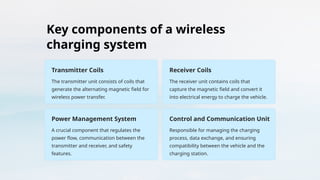
Key components of a wireless
charging system
Transmitter Coils
The transmitter unit consists of coils that
generate the alternating magnetic field for
wireless power transfer.
Receiver Coils
The receiver unit contains coils that
capture the magnetic field and convert it
into electrical energy to charge the vehicle.
Power Management System
A crucial component that regulates the
power flow, communication between the
transmitter and receiver, and safety
features.
Control and Communication Unit
Responsible for managing the charging
process, data exchange, and ensuring
compatibility between the vehicle and the
charging station.
Advantages of Wireless Charging
over Traditional Methods
Convenience
Wireless charging
eliminates the need
for cumbersome
cables, making it
more convenient for
users.
Efficiency
It offers efficient
power transfer
without the need for
direct physical
contact between the
vehicle and the
charging station.
Flexibility
Wireless charging
allows for flexible
alignment, reducing
the margin of error
for drivers and
enhancing ease of
use.
Safety
It minimizes the risk
of electrical hazards
and reduces wear
and tear on charging
connectors.
Challenges and Limitations of
Wireless Charging Technology
One of the major challenges of wireless charging technology is the limited efficiency compared to
wired charging, resulting in longer charging times.
Another limitation is the high installation costs associated with implementing wireless charging
infrastructure, making it less adaptable for widespread use.
Furthermore, the range and alignment requirements for effective charging pose technical hurdles,
especially for larger vehicles and public charging scenarios.
Current Market Trends and
Adoption of Wireless Charging
Stations
1 Increased Demand
As electric vehicles become more popular, the demand for wireless charging
stations is on the rise.
2 Integration in Infrastructure
Major cities and urban centers are incorporating wireless charging infrastructure
into public spaces and parking facilities.
3 Partnerships with Automakers
Automakers are collaborating with charging station providers to integrate wireless
charging technology into their vehicle models.
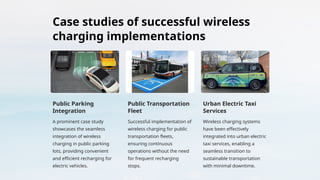
Case studies of successful wireless
charging implementations
Public Parking
Integration
A prominent case study
showcases the seamless
integration of wireless
charging in public parking
lots, providing convenient
and efficient recharging for
electric vehicles.
Public Transportation
Fleet
Successful implementation of
wireless charging for public
transportation fleets,
ensuring continuous
operations without the need
for frequent recharging
stops.
Urban Electric Taxi
Services
Wireless charging systems
have been effectively
integrated into urban electric
taxi services, enabling a
seamless transition to
sustainable transportation
with minimal downtime.
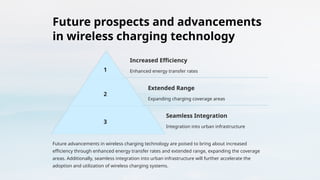
Future prospects and advancements
in wireless charging technology
1
Increased Efficiency
Enhanced energy transfer rates
2
Extended Range
Expanding charging coverage areas
3
Seamless Integration
Integration into urban infrastructure
Future advancements in wireless charging technology are poised to bring about increased
efficiency through enhanced energy transfer rates and extended range, expanding the coverage
areas. Additionally, seamless integration into urban infrastructure will further accelerate the
adoption and utilization of wireless charging systems.
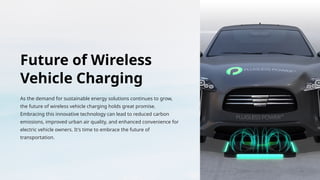
Future of Wireless
Vehicle Charging
As the demand for sustainable energy solutions continues to grow,
the future of wireless vehicle charging holds great promise.
Embracing this innovative technology can lead to reduced carbon
emissions, improved urban air quality, and enhanced convenience for
electric vehicle owners. It's time to embrace the future of
transportation.
WIRELESS Electric VEHICLE CHARGING POWER POINT PRESENTATION

WIRELESS Electric VEHICLE CHARGING POWER POINT PRESENTATION

  • 1.
    WIRELESS E-VEHICLE CHARGING PRESENTED BY, N.MAHALAKSHMI R.VIJAYADHARSHINI (III-EEE) KONGUNADU COLLEGE OF ENGINEERING AND TECHNOLOGY
  • 2.
    Introduction to Wireless EVehicle Charging Wireless e vehicle charging, also known as wireless electric vehicle charging, is a cutting-edge technology that allows electric vehicles to charge without the need for physical cables. This innovative approach aims to simplify the charging process and enhance the user experience.
  • 3.
    Benefits of wirelesscharging stations Convenience Wireless charging offers an effortless way to power up electric vehicles without the hassle of cords and plugs. Safety Eliminates the risk of electric shock or short circuits associated with traditional charging methods, ensuring a safer charging experience. Aesthetics Enhances the visual appeal of parking areas with a clutter-free and futuristic charging infrastructure.
  • 4.
    How Wireless ChargingWorks Inductive Charging Inductive wireless charging uses an electromagnetic field to transfer energy between two objects, typically a charging pad and a compatible device. The charging pad contains a coil that creates an alternating electromagnetic field, while the device has a coil to receive the energy and convert it into electric current to charge the battery. Resonant Charging Resonant wireless charging operates on the principle of magnetic resonance, allowing for more flexibility in the distance and alignment between the charging pad and the device. It can efficiently transfer power over longer distances, making it ideal for electric vehicle wireless charging systems. Charging Process When a compatible device is placed within the charging range, the electromagnetic field induces a current in the receiving coil, initiating the charging process without the need for physical connection. This eliminates the hassle of cords and plugs, providing a convenient and efficient way to power up electric vehicles and portable electronics.
  • 5.
    Key components ofa wireless charging system Transmitter Coils The transmitter unit consists of coils that generate the alternating magnetic field for wireless power transfer. Receiver Coils The receiver unit contains coils that capture the magnetic field and convert it into electrical energy to charge the vehicle. Power Management System A crucial component that regulates the power flow, communication between the transmitter and receiver, and safety features. Control and Communication Unit Responsible for managing the charging process, data exchange, and ensuring compatibility between the vehicle and the charging station.
  • 6.
    Advantages of WirelessCharging over Traditional Methods Convenience Wireless charging eliminates the need for cumbersome cables, making it more convenient for users. Efficiency It offers efficient power transfer without the need for direct physical contact between the vehicle and the charging station. Flexibility Wireless charging allows for flexible alignment, reducing the margin of error for drivers and enhancing ease of use. Safety It minimizes the risk of electrical hazards and reduces wear and tear on charging connectors.
  • 7.
    Challenges and Limitationsof Wireless Charging Technology One of the major challenges of wireless charging technology is the limited efficiency compared to wired charging, resulting in longer charging times. Another limitation is the high installation costs associated with implementing wireless charging infrastructure, making it less adaptable for widespread use. Furthermore, the range and alignment requirements for effective charging pose technical hurdles, especially for larger vehicles and public charging scenarios.
  • 8.
    Current Market Trendsand Adoption of Wireless Charging Stations 1 Increased Demand As electric vehicles become more popular, the demand for wireless charging stations is on the rise. 2 Integration in Infrastructure Major cities and urban centers are incorporating wireless charging infrastructure into public spaces and parking facilities. 3 Partnerships with Automakers Automakers are collaborating with charging station providers to integrate wireless charging technology into their vehicle models.
  • 9.
    Case studies ofsuccessful wireless charging implementations Public Parking Integration A prominent case study showcases the seamless integration of wireless charging in public parking lots, providing convenient and efficient recharging for electric vehicles. Public Transportation Fleet Successful implementation of wireless charging for public transportation fleets, ensuring continuous operations without the need for frequent recharging stops. Urban Electric Taxi Services Wireless charging systems have been effectively integrated into urban electric taxi services, enabling a seamless transition to sustainable transportation with minimal downtime.
  • 10.
    Future prospects andadvancements in wireless charging technology 1 Increased Efficiency Enhanced energy transfer rates 2 Extended Range Expanding charging coverage areas 3 Seamless Integration Integration into urban infrastructure Future advancements in wireless charging technology are poised to bring about increased efficiency through enhanced energy transfer rates and extended range, expanding the coverage areas. Additionally, seamless integration into urban infrastructure will further accelerate the adoption and utilization of wireless charging systems.
  • 11.
    Future of Wireless VehicleCharging As the demand for sustainable energy solutions continues to grow, the future of wireless vehicle charging holds great promise. Embracing this innovative technology can lead to reduced carbon emissions, improved urban air quality, and enhanced convenience for electric vehicle owners. It's time to embrace the future of transportation.