Be
optimist
Optimism
is not the refusal to see what is
wrong,
it is the desire not to dwell on it.
2021.12.10 /om@
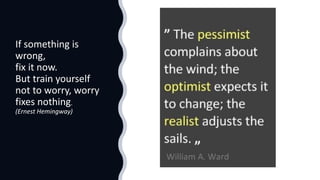
If something is
wrong,
fix it now.
But train yourself
not to worry, worry
fixes nothing.
(Ernest Hemingway)
Pessimism comes from the
temperament,
optimism from the will.
(Alain)
I’m not an optimist.
That makes me sound naïve.
I’m a very serious “possibilist.”
That’s something I made up.
It means someone who neither hopes
without reason,
nor fears without reason,
someone who constantly resists the
overdramatic worldview.
As a possibilist, I see all this progress,
and it fills me with conviction
and hope that further progress is possible.
This is not optimistic.
(Hans Rosling, #FactFullness)
Act like it it’s
impossible to fail.
(Winston Churchill)
It's the story of the two salesmen who went
down to Africa in the 1900s.
They were sent down to find if there was any
opportunity for selling shoes, and they wrote
telegrams back to Manchester.
One of them wrote,
“Situation hopeless.
Stop.
They don't wear shoes.”
The other one wrote,
"Glorious opportunity.
They don't have any shoes yet."
Win#17 optimism
Win#17 optimism
Win#17 optimism

Win#17 optimism

  • 1.
    Be optimist Optimism is not therefusal to see what is wrong, it is the desire not to dwell on it. 2021.12.10 /om@
  • 4.
    If something is wrong, fixit now. But train yourself not to worry, worry fixes nothing. (Ernest Hemingway)
  • 5.
    Pessimism comes fromthe temperament, optimism from the will. (Alain)
  • 6.
    I’m not anoptimist. That makes me sound naïve. I’m a very serious “possibilist.” That’s something I made up. It means someone who neither hopes without reason, nor fears without reason, someone who constantly resists the overdramatic worldview. As a possibilist, I see all this progress, and it fills me with conviction and hope that further progress is possible. This is not optimistic. (Hans Rosling, #FactFullness)
  • 7.
    Act like itit’s impossible to fail. (Winston Churchill)
  • 11.
    It's the storyof the two salesmen who went down to Africa in the 1900s. They were sent down to find if there was any opportunity for selling shoes, and they wrote telegrams back to Manchester. One of them wrote, “Situation hopeless. Stop. They don't wear shoes.” The other one wrote, "Glorious opportunity. They don't have any shoes yet."