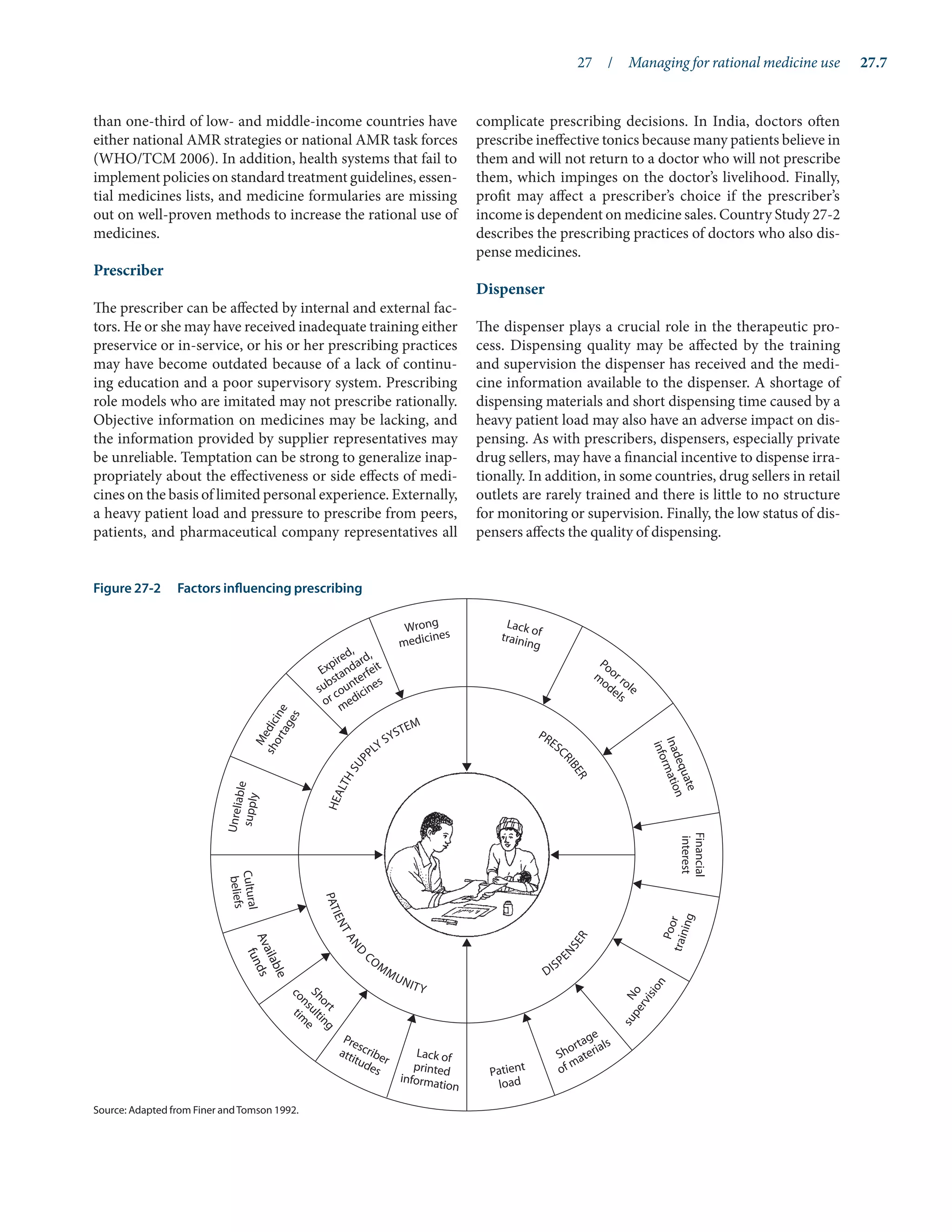
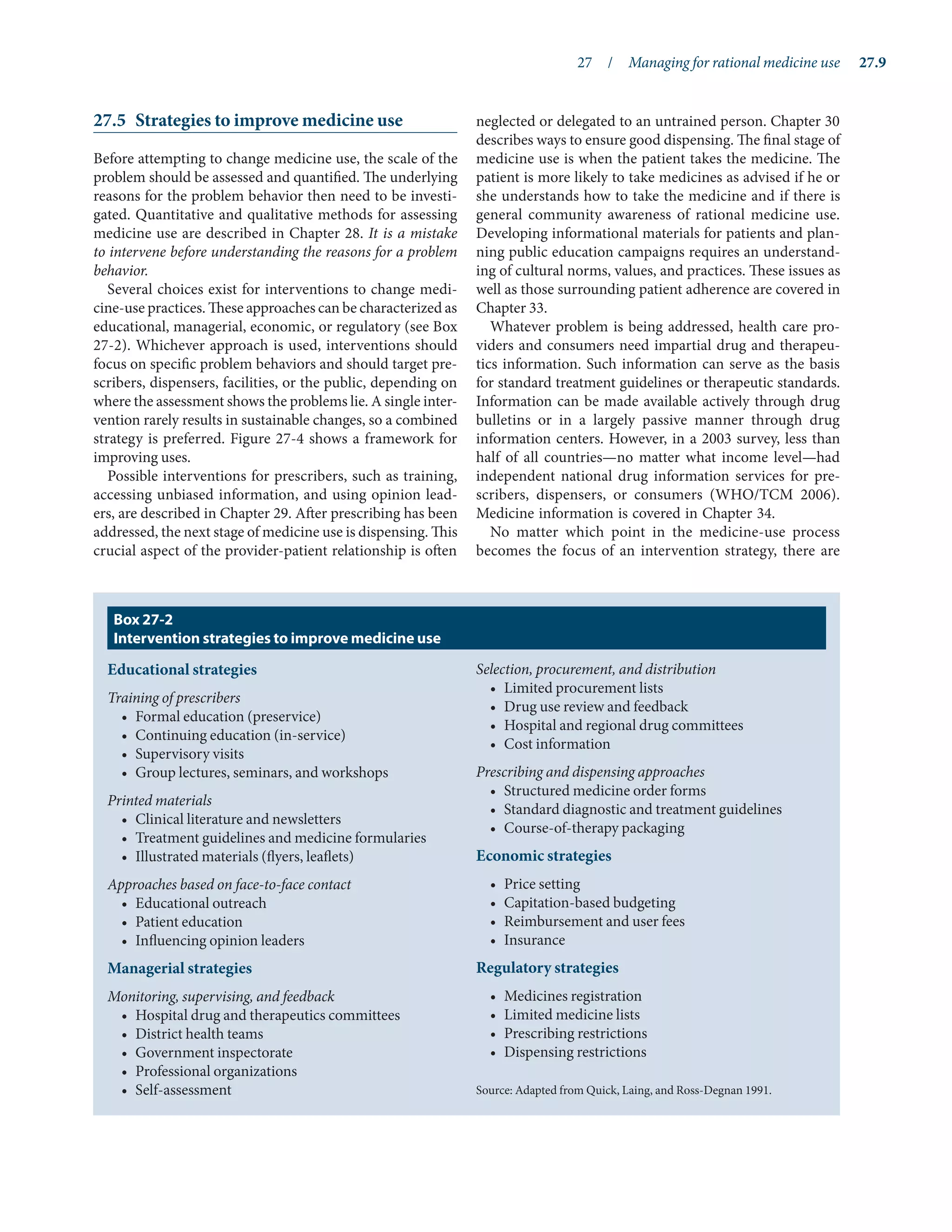
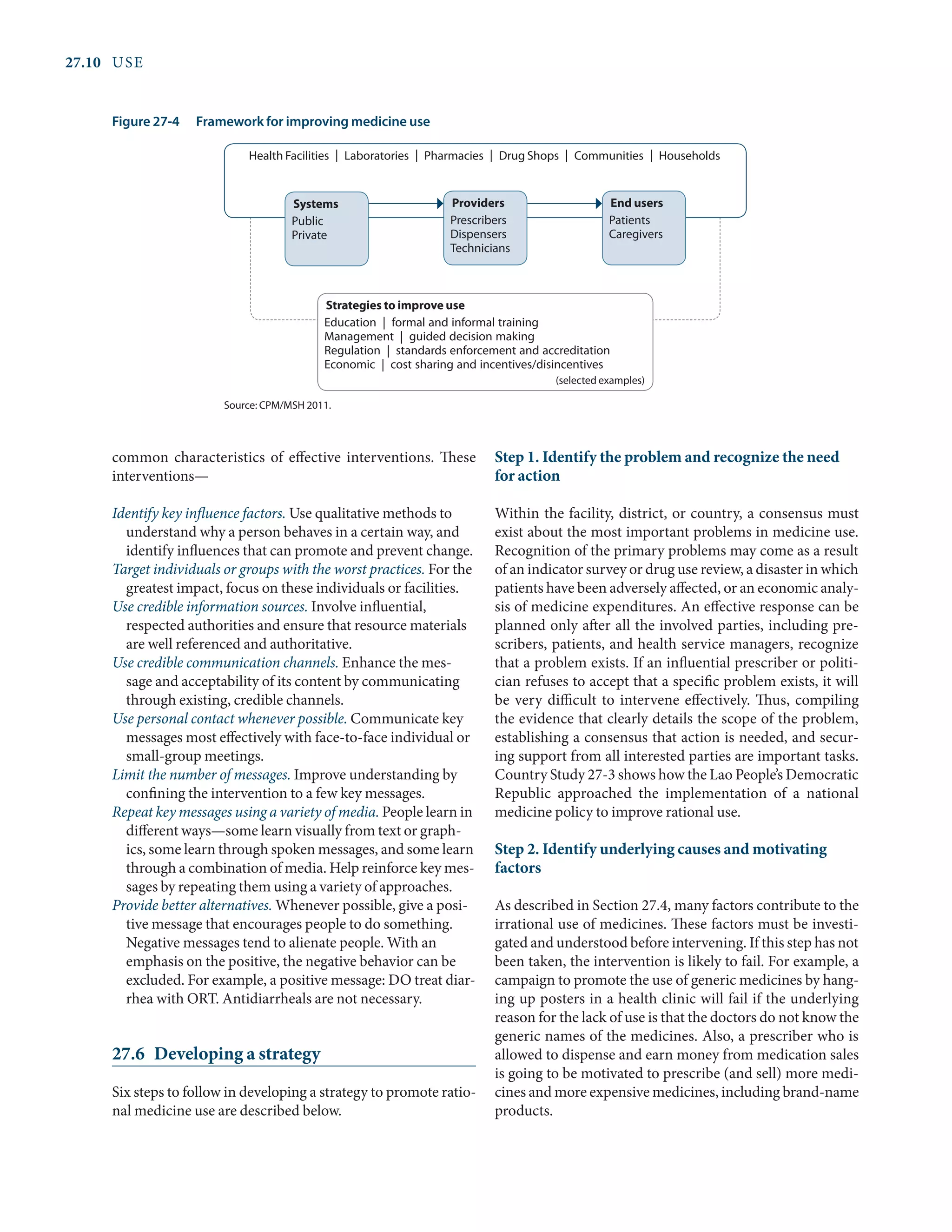
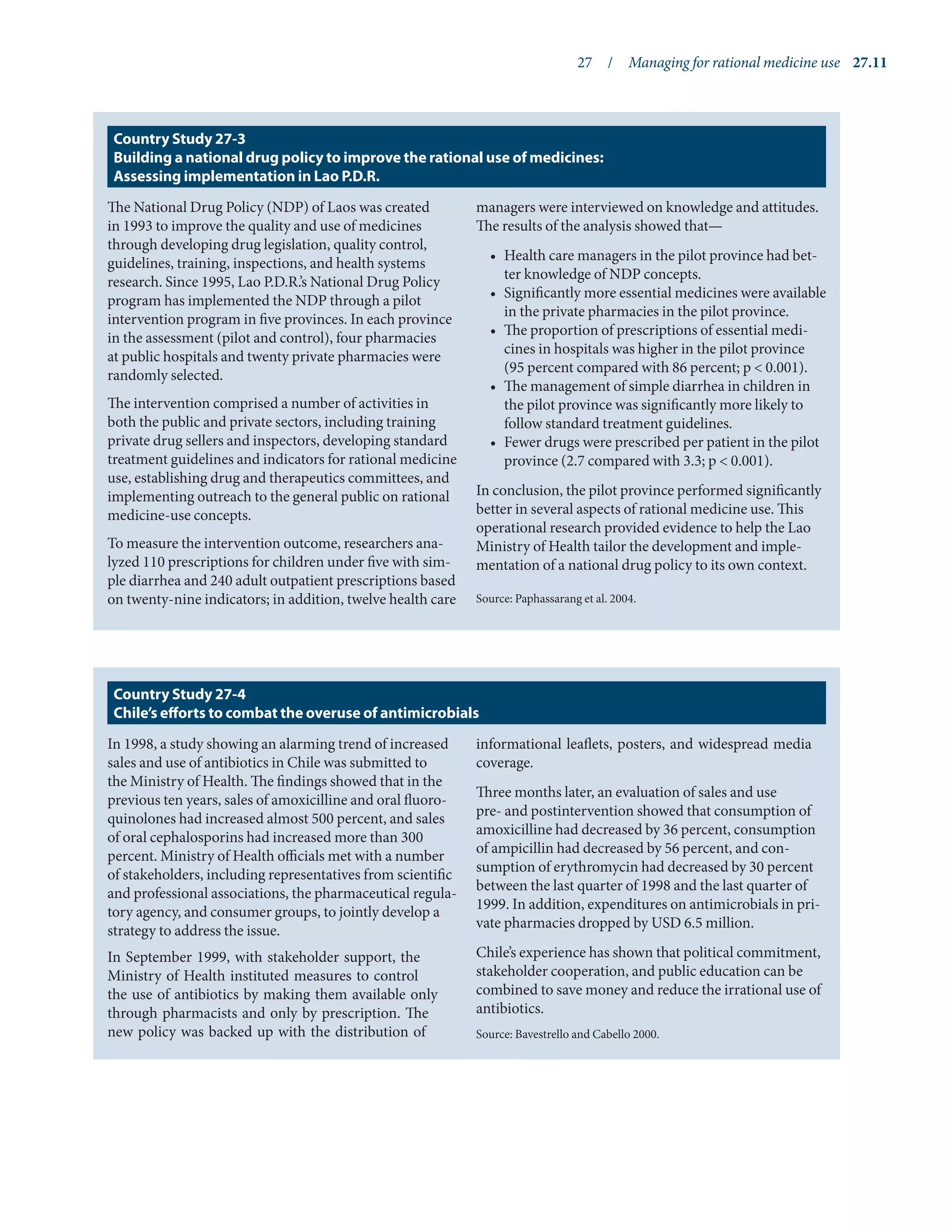
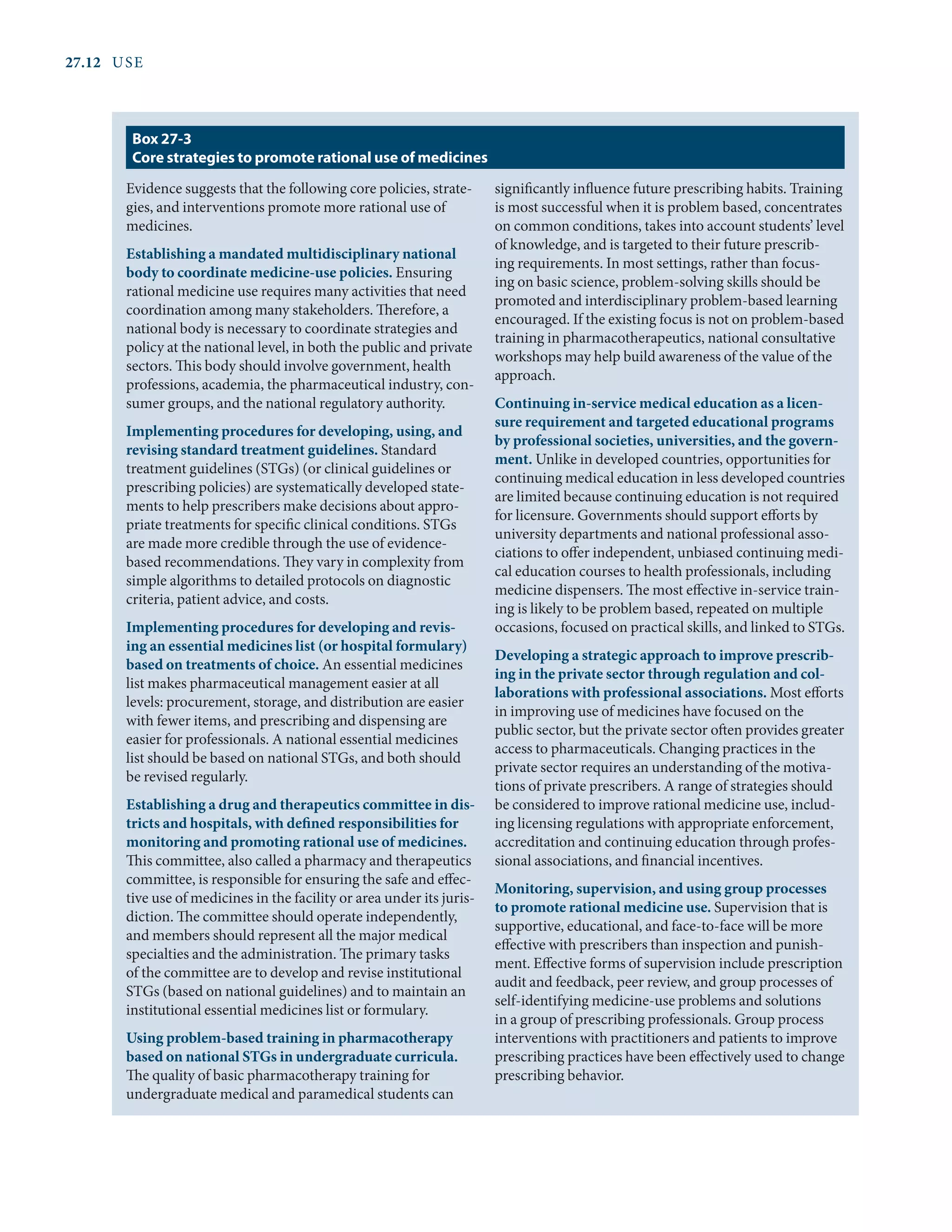
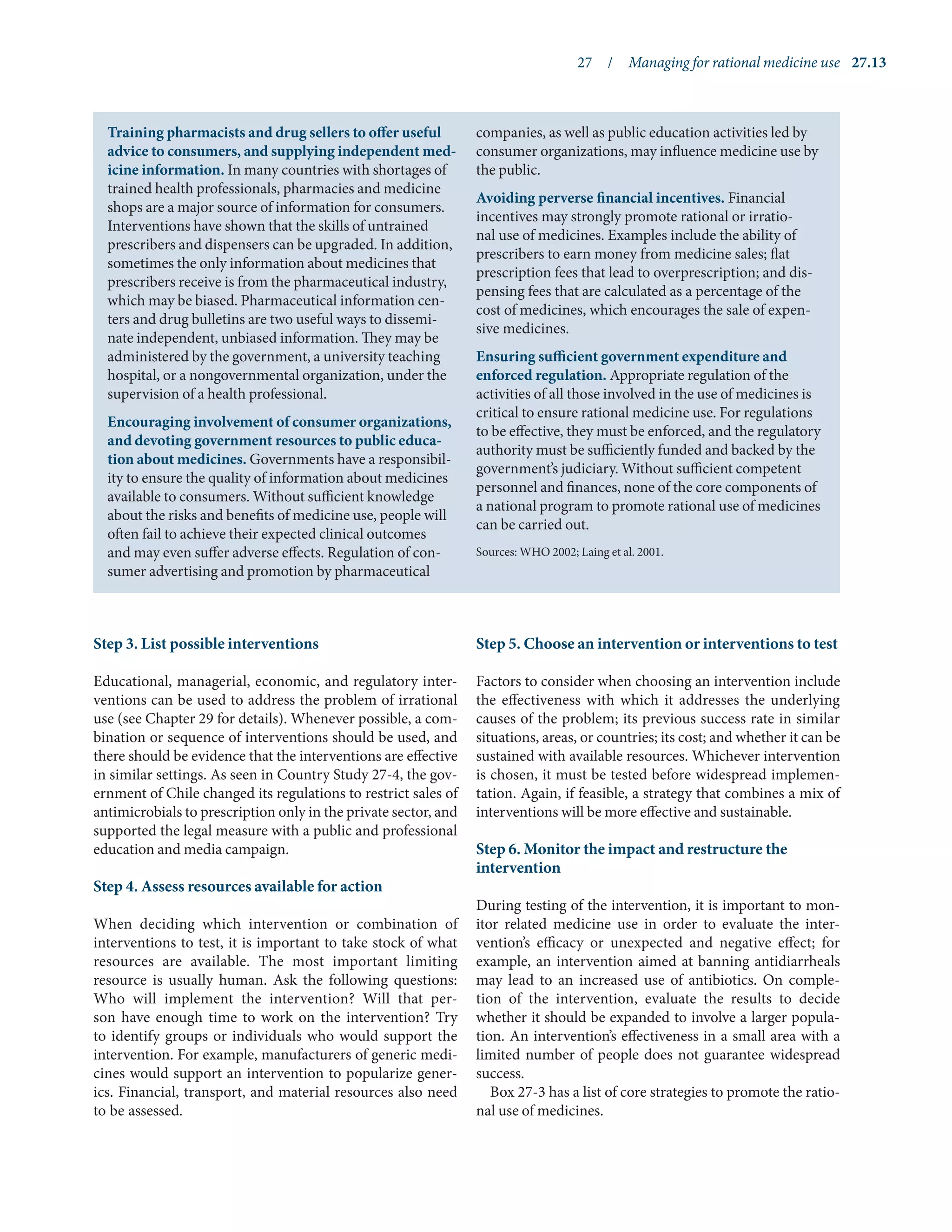
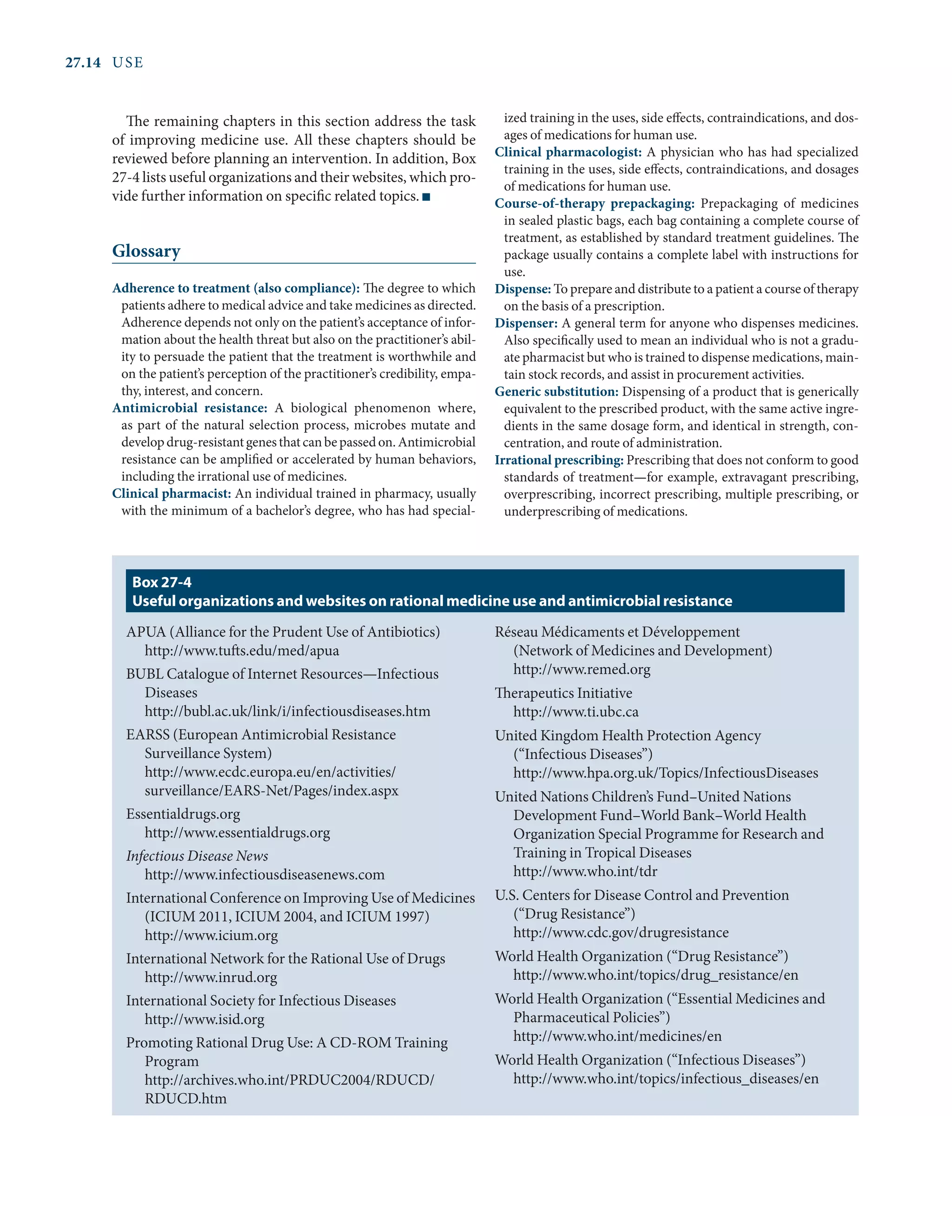
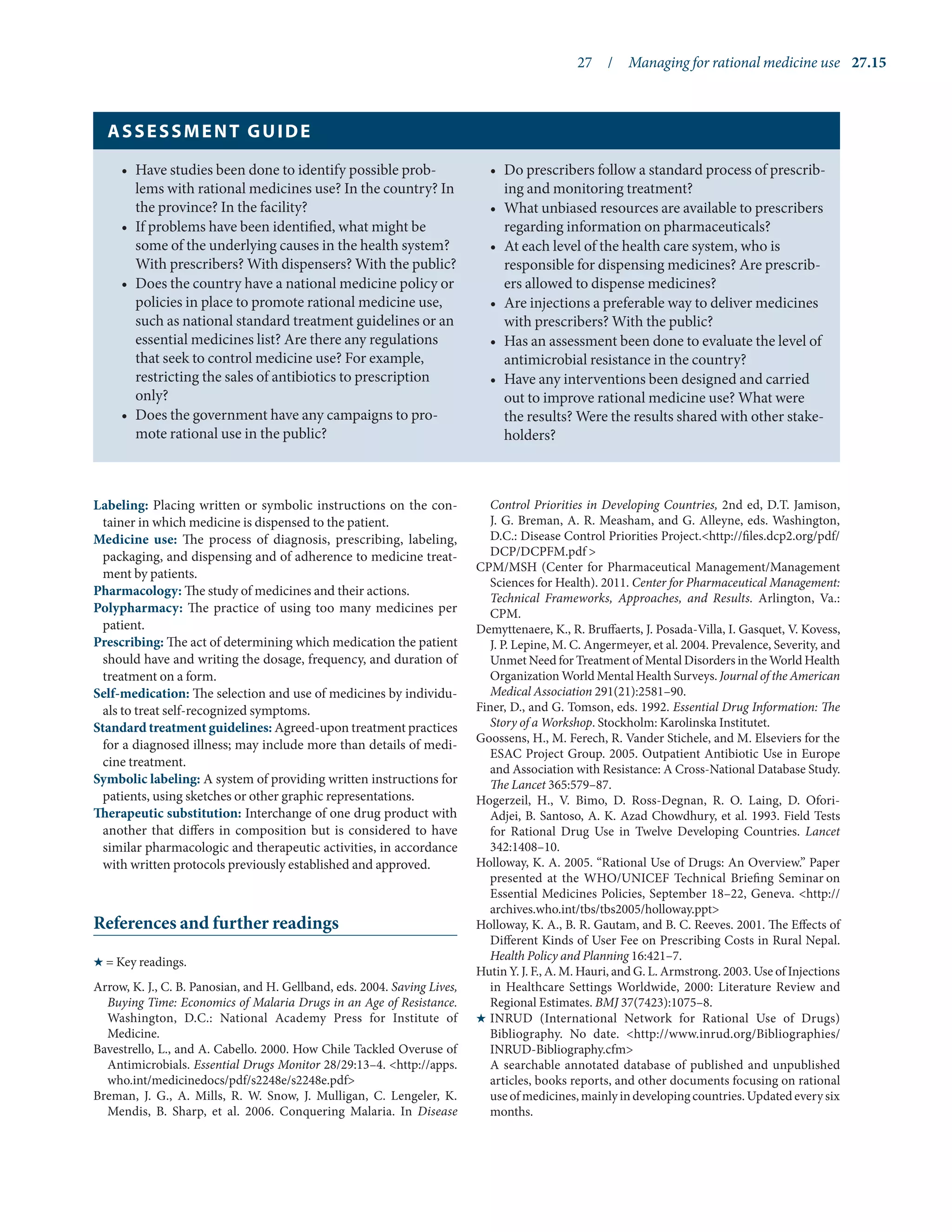
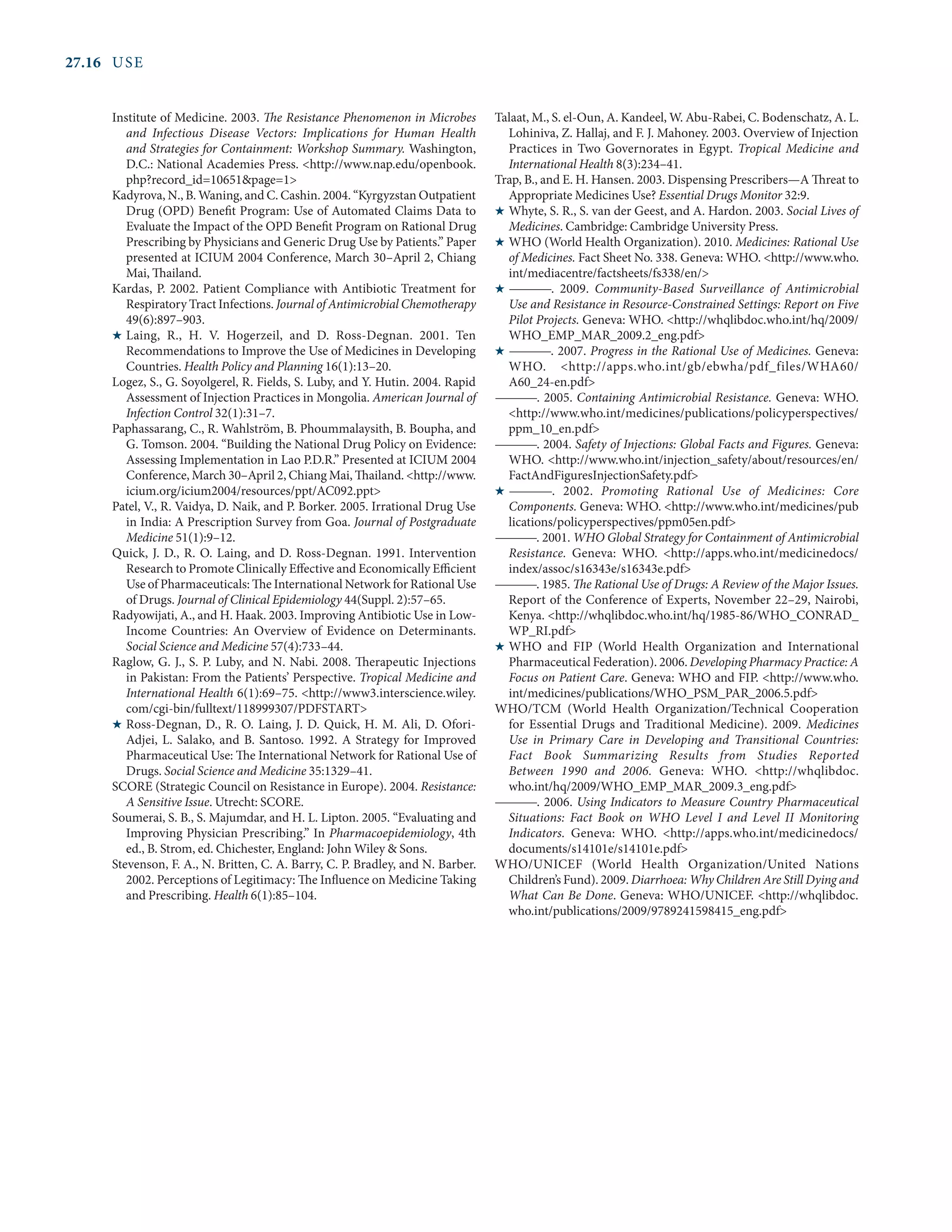
This document discusses rational and irrational medicine use. It defines rational use and provides examples of irrational use, such as polypharmacy, use of unnecessary or wrong medicines, underuse of effective medicines, and incorrect use. Irrational use can negatively impact quality of care, increase antimicrobial resistance and costs, and cause adverse reactions. Factors underlying irrational use include issues with prescribers, dispensers, patients, and health systems. Strategies to address irrational use involve educational, managerial, economic and regulatory approaches. When implementing interventions it is important to identify the problem, understand its causes, consider possible solutions and resources, choose an intervention, and monitor its impact through restructuring as needed. The most effective interventions target key influencers, facilities