What to do when your
customer says
“NO”
Presented by :
Abhishek kumar
pibm
Prepare for the decline
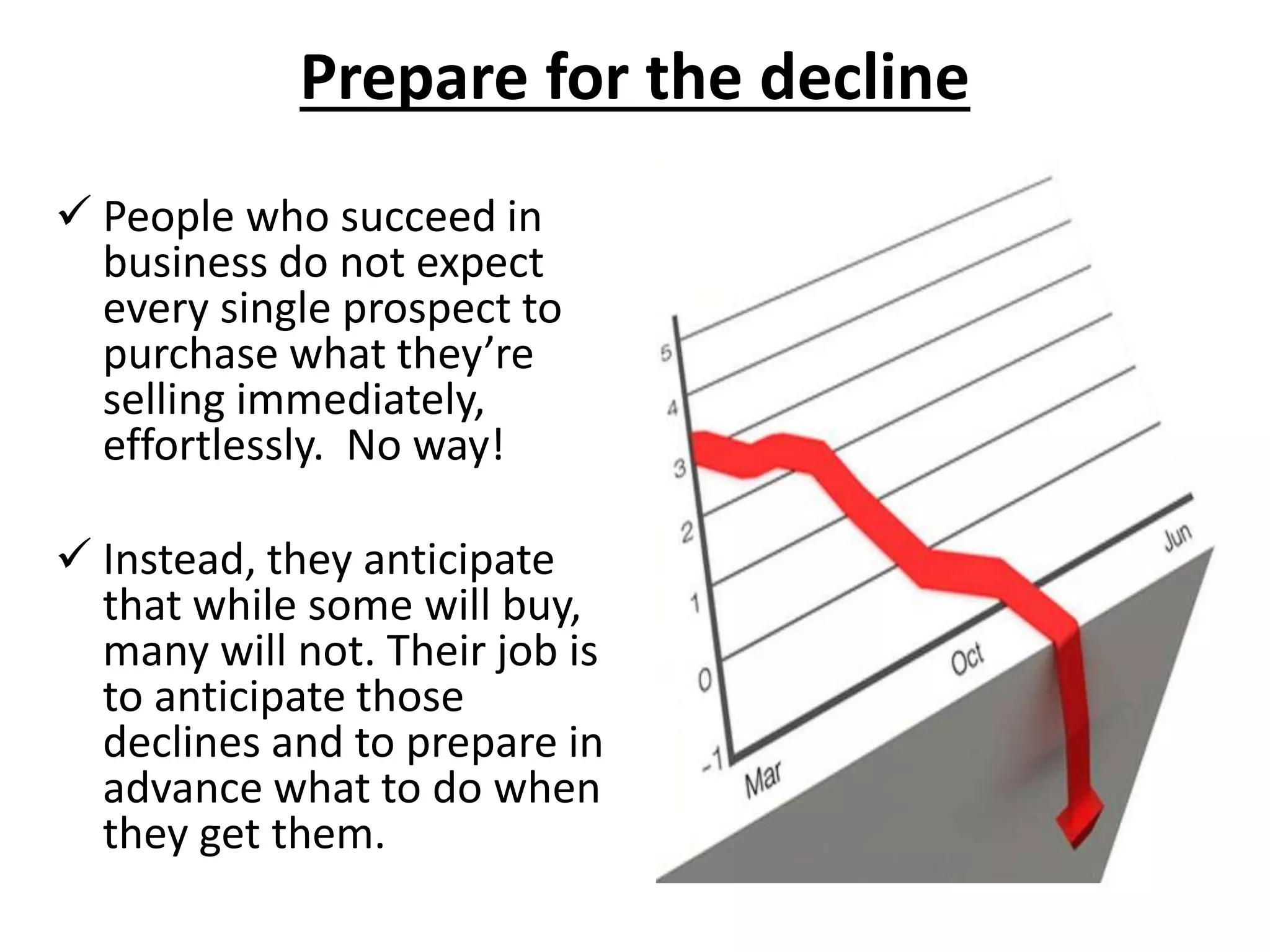
 People who succeed in
business do not expect
every single prospect to
purchase what they’re
selling immediately,
effortlessly. No way!
 Instead, they anticipate
that while some will buy,
many will not. Their job is
to anticipate those
declines and to prepare in
advance what to do when
they get them.
Pay heed on every potential objection
you will hear. Then answer them.
• The worst possible way to handle an
objection is spontaneously, on the fly. To
render the best reply, you must consider the
best reply, crafting, improving it as you go.
• Face it: some people are going to decline
your offer. You should be prepared to
respond immediately when it happens. This
means brainstorming all possible objections
and coming up with the best, most telling
responses. Your use of these responses must
be swift and sure. There’s no time for
improvisation when your sale hangs in the
balance!
Ask customers why they’ve declined
your offer
• The first step upon hearing the
customer decline your offer… is to ask
why.
• Treat “why” as an essential tool in
making the sale. The minute your
prospect starts telling you why, you are
on your way to a certain sale because
the very act of answering this question
opens avenues to overcome objections
• Listen carefully !
When your initial offer is not enough
• If you have presented your offer
clearly… if you feel the customer
understands it but is still not
willing to bite, it’s time to
IMPROVE YOUR OFFER!
• Before you ask a single customer
for a sale, you must brainstorm
every single thing you can offer
prospects to induce them to buy.
• FAB to be at the finger tips along
with the extra goodies you can
offer a customer
When money or lack thereof is the
problem
• Be prepared to hear from customers over
and over again that money is the problem.
This may or may not be true.
• Improving the offer may well induce the
customer to ‘fess up and buy… or risk
losing the terrific offer you have made.
• For real situations, we should have
planned in advance. Can we offer :
 Improved payment terms
 Readily available credit resources
(like those at www.paypal.com)
 Details on how to secure a pre-paid credit
card, etc.
What to do when your customer says no

What to do when your customer says no

  • 1.
    What to dowhen your customer says “NO” Presented by : Abhishek kumar pibm
  • 2.
    Prepare for thedecline  People who succeed in business do not expect every single prospect to purchase what they’re selling immediately, effortlessly. No way!  Instead, they anticipate that while some will buy, many will not. Their job is to anticipate those declines and to prepare in advance what to do when they get them.
  • 3.
    Pay heed onevery potential objection you will hear. Then answer them. • The worst possible way to handle an objection is spontaneously, on the fly. To render the best reply, you must consider the best reply, crafting, improving it as you go. • Face it: some people are going to decline your offer. You should be prepared to respond immediately when it happens. This means brainstorming all possible objections and coming up with the best, most telling responses. Your use of these responses must be swift and sure. There’s no time for improvisation when your sale hangs in the balance!
  • 4.
    Ask customers whythey’ve declined your offer • The first step upon hearing the customer decline your offer… is to ask why. • Treat “why” as an essential tool in making the sale. The minute your prospect starts telling you why, you are on your way to a certain sale because the very act of answering this question opens avenues to overcome objections • Listen carefully !
  • 5.
    When your initialoffer is not enough • If you have presented your offer clearly… if you feel the customer understands it but is still not willing to bite, it’s time to IMPROVE YOUR OFFER! • Before you ask a single customer for a sale, you must brainstorm every single thing you can offer prospects to induce them to buy. • FAB to be at the finger tips along with the extra goodies you can offer a customer
  • 6.
    When money orlack thereof is the problem • Be prepared to hear from customers over and over again that money is the problem. This may or may not be true. • Improving the offer may well induce the customer to ‘fess up and buy… or risk losing the terrific offer you have made. • For real situations, we should have planned in advance. Can we offer :  Improved payment terms  Readily available credit resources (like those at www.paypal.com)  Details on how to secure a pre-paid credit card, etc.