What is
Security Orchestration?
Introduction
Some things just go together. Peanut butter and jelly. Gin and tonic.
Bacon and more bacon. The same is true for security automation and
orchestration. So much so that, the two often get used
interchangeably. However, just like peanut butter will never actually
be jelly, security orchestration and security automation aren’t the
same thing.
Security Operation & Tools
The vast majority of security operations centers typically have
dozens of security tools to detect, investigate and remediate threats.
Because organizations have a tendency to favor investing in best-of-
breed tools, most teams are left to manage tools that don’t talk to
one another. This in itself introduces a huge amount of inefficiency
and wasted time as security analysts in enterprise organizations and
managed security services providers (MSSPs) alike navigate multiple
screens and learn a variety of systems to do their jobs effectively.
CyberSecurity & SOC
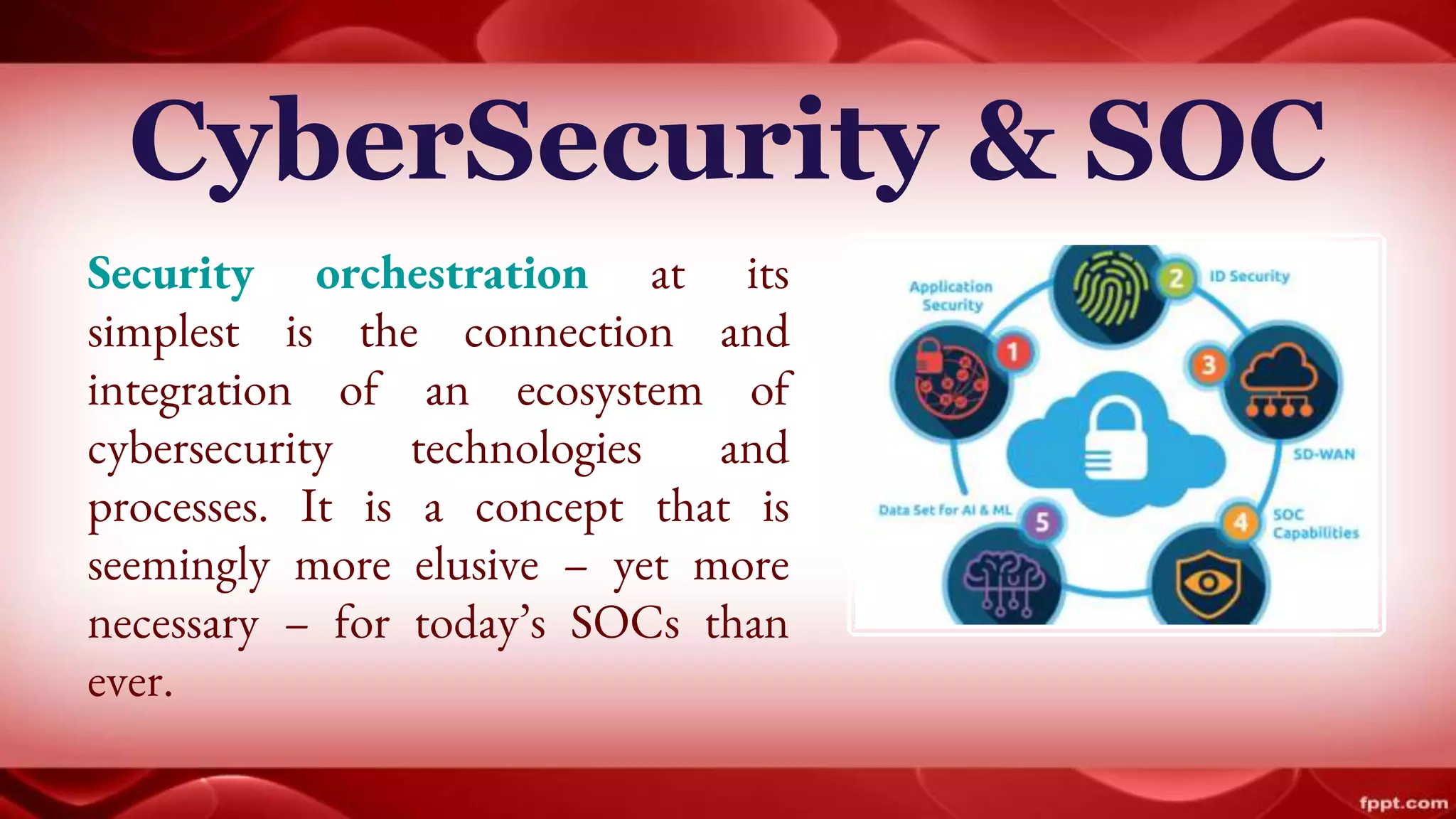
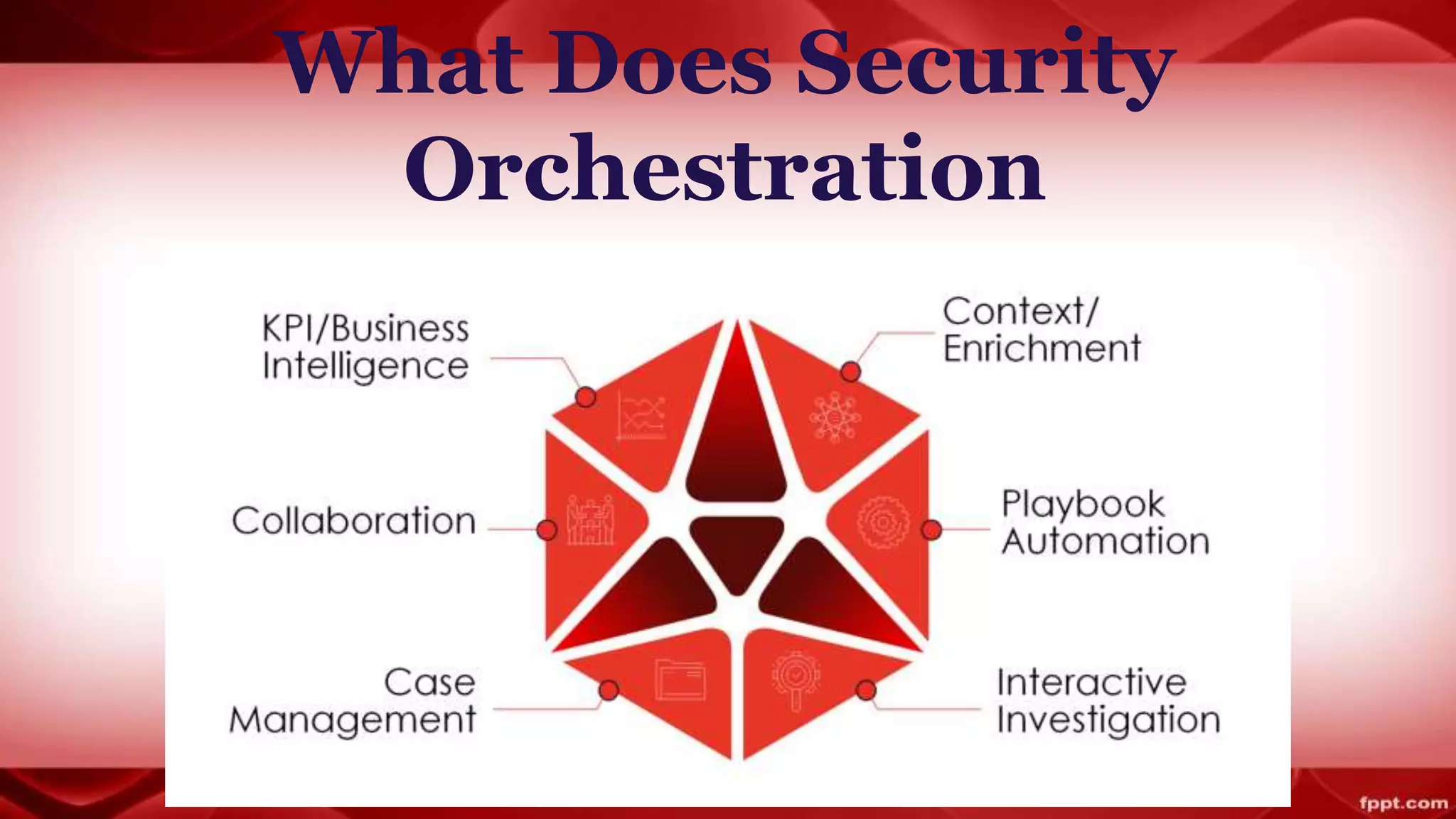
Security orchestration at its
simplest is the connection and
integration of an ecosystem of
cybersecurity technologies and
processes. It is a concept that is
seemingly more elusive – yet more
necessary – for today’s SOCs than
ever.
What Does Security
Orchestration
Security Orchestration
Remedies
Teams have become accustomed to relying on tribal knowledge and
filling in the blanks on their own as they investigate, triage and
remediate security events. And did we mention that most of these
tasks are done manually? It’s no wonder why investigations take
longer, steps get missed and each incident is handled differently.
Security orchestration remedies these challenges by bringing
together disparate tools so they work in concert with one another
and by codifying and streamlining the processes that surround the
technologies.
Going Beyond Alerts
Context is everything when investigating a security alert. Let’s say
you have a user who received a suspected phishing email. On its
own, that alert doesn’t tell you much. You would have to put on
your detective hat and start looking for other clues.
What IP did it come from?
Did any other users receive an email from the same IP?
What does threat intelligence say?
The list goes on and on.
Security CSI
Security analysts roughly follow the same thought processes, often
whiteboarding out the various steps, entities and relationships
involved in a threat.
This would be an important step for the team investigating our
phishing example, and a time-consuming one given the amount of
manual effort involved.
Teamwork & Dream Work
Investigating and remediating cybersecurity incidents is rarely a
solo effort. Tier 1 analysts often need to escalate to Tier 2 and Tier
3 personnel. Managers and CISOs require visibility and the ability
to jump in when needed. Security orchestration provides a
mechanism for collaboration by breaking down not just silos
between the various security technologies, but also by providing a
hub for security processes and the people running them.
How The System Is Going
As with any technology, security orchestration is only useful if it
works as intended. Measurement and KPIs are notoriously tough
for SOC teams – and that’s when they know what to measure and
how to best extract reporting from their various tools.
Security orchestration enables robust reporting and business
intelligence because of the way it brings together disparate tools and
processes.
Conclusion
Those in the know understand that security orchestration and its
benefits stretch much further than simple security automation to
bring together the various tools and techniques used by security
operations. Yes, it’s easy to see why security orchestration and
automation are used in the same breath – they certainly go
together. And really, would you want one without the other?

What is Security Orchestration?

  • 1.
  • 2.
    Introduction Some things justgo together. Peanut butter and jelly. Gin and tonic. Bacon and more bacon. The same is true for security automation and orchestration. So much so that, the two often get used interchangeably. However, just like peanut butter will never actually be jelly, security orchestration and security automation aren’t the same thing.
  • 3.
    Security Operation &Tools The vast majority of security operations centers typically have dozens of security tools to detect, investigate and remediate threats. Because organizations have a tendency to favor investing in best-of- breed tools, most teams are left to manage tools that don’t talk to one another. This in itself introduces a huge amount of inefficiency and wasted time as security analysts in enterprise organizations and managed security services providers (MSSPs) alike navigate multiple screens and learn a variety of systems to do their jobs effectively.
  • 4.
    CyberSecurity & SOC Securityorchestration at its simplest is the connection and integration of an ecosystem of cybersecurity technologies and processes. It is a concept that is seemingly more elusive – yet more necessary – for today’s SOCs than ever.
  • 5.
  • 6.
    Security Orchestration Remedies Teams havebecome accustomed to relying on tribal knowledge and filling in the blanks on their own as they investigate, triage and remediate security events. And did we mention that most of these tasks are done manually? It’s no wonder why investigations take longer, steps get missed and each incident is handled differently. Security orchestration remedies these challenges by bringing together disparate tools so they work in concert with one another and by codifying and streamlining the processes that surround the technologies.
  • 7.
    Going Beyond Alerts Contextis everything when investigating a security alert. Let’s say you have a user who received a suspected phishing email. On its own, that alert doesn’t tell you much. You would have to put on your detective hat and start looking for other clues. What IP did it come from? Did any other users receive an email from the same IP? What does threat intelligence say? The list goes on and on.
  • 8.
    Security CSI Security analystsroughly follow the same thought processes, often whiteboarding out the various steps, entities and relationships involved in a threat. This would be an important step for the team investigating our phishing example, and a time-consuming one given the amount of manual effort involved.
  • 9.
    Teamwork & DreamWork Investigating and remediating cybersecurity incidents is rarely a solo effort. Tier 1 analysts often need to escalate to Tier 2 and Tier 3 personnel. Managers and CISOs require visibility and the ability to jump in when needed. Security orchestration provides a mechanism for collaboration by breaking down not just silos between the various security technologies, but also by providing a hub for security processes and the people running them.
  • 10.
    How The SystemIs Going As with any technology, security orchestration is only useful if it works as intended. Measurement and KPIs are notoriously tough for SOC teams – and that’s when they know what to measure and how to best extract reporting from their various tools. Security orchestration enables robust reporting and business intelligence because of the way it brings together disparate tools and processes.
  • 11.
    Conclusion Those in theknow understand that security orchestration and its benefits stretch much further than simple security automation to bring together the various tools and techniques used by security operations. Yes, it’s easy to see why security orchestration and automation are used in the same breath – they certainly go together. And really, would you want one without the other?