Understanding the
Essence of
Performance
Management Systems
Introduction to
Performance Management
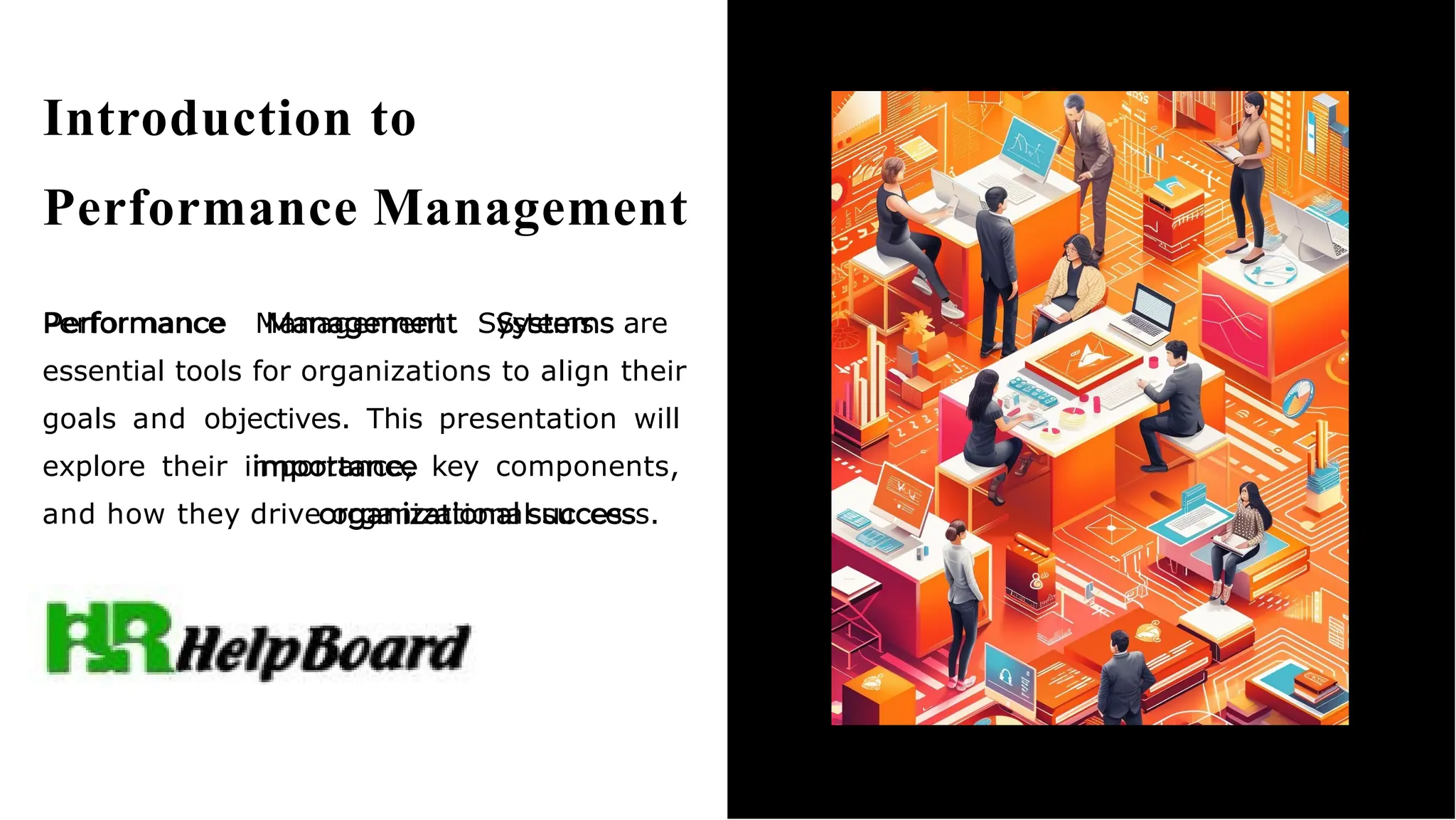
Performance Management Systems are
essential tools for organizations to align their
goals and objectives. This presentation will
explore their importance, key components,
and how they drive organizational success.
What is
Performance
Management?
Performance Management
refers
to the
continuous process of identifying,
measuring,
and
developing
individuals and
the performance
of teams. It
ensures that
organizational goals are met through
effective feedback and accountability.
Benefits of
Performance Management
Implementing an effective Performance
Management System leads to increased
employee motivation, better alignment of
organizational goals, and improved overall
performance. It also fosters a culture of
continuous improvement.
Setting SMART
Goals
Goals should be Specific, Measurable
, Achievable, Relevant, and Time-bound
(SMART). This framework ensures clarity and
focus, enabling employees to understand
their objectives and how to achieve them.
What is
Performance
Management?
Performance Management
refers
to the
continuous process of identifying,
measuring,
and
developing
individuals and
the performance
of teams. It
ensures that
organizational goals are met through
effective feedback and accountability.
Continuous Feedback
Mechanisms
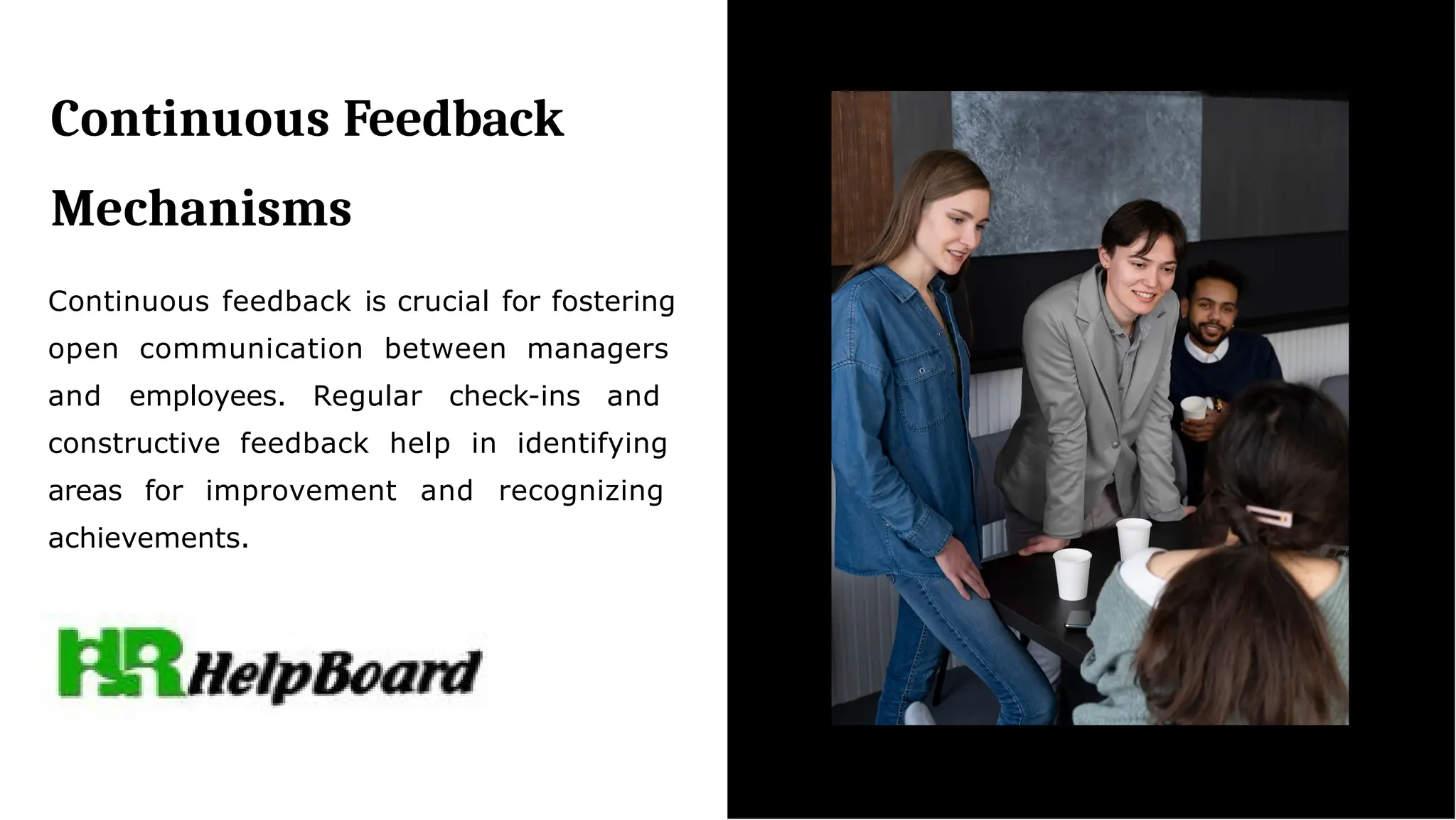
Continuous feedback is crucial for fostering
open communication between managers
and employees. Regular check-ins and
constructive feedback help in identifying
areas for improvement and recognizing
achievements.
Performance Appraisal
Process
The performance appraisal process involves
evaluating employee performance against
set goals. This helps in identifying strengths
and areas for development, ensuring that
employees receive fair and constructive
evaluations.
Training and
Development
Training and development are integral to
performance management. By investing in
employee growth, organizations can
enhance skills and competencies, leading to
improved job satisfaction and retention
rates.
Challenges in Performance Management
Common challenges include bias in
evaluations, lack of clarity in expectations,
and inadequate feedback mechanisms.
Addressing these issues is vital for creating
an effective performance management
culture.
Conclusion
In conclusion, a well-implemented Performance Management
System is vital for aligning individual and organizational goals. By
focusing on continuous improvement and effective
communication, organizations can achieve sustained success.
Thanks!
Do you have any questions?
info@hrhelpboard.com |
+919899990261 www.hrhelpboard.com

Performance Management System Meaning , Benefits of Performance Management System

  • 1.
  • 2.
    Introduction to Performance Management PerformanceManagement Systems are essential tools for organizations to align their goals and objectives. This presentation will explore their importance, key components, and how they drive organizational success.
  • 3.
    What is Performance Management? Performance Management refers tothe continuous process of identifying, measuring, and developing individuals and the performance of teams. It ensures that organizational goals are met through effective feedback and accountability.
  • 4.
    Benefits of Performance Management Implementingan effective Performance Management System leads to increased employee motivation, better alignment of organizational goals, and improved overall performance. It also fosters a culture of continuous improvement.
  • 5.
    Setting SMART Goals Goals shouldbe Specific, Measurable , Achievable, Relevant, and Time-bound (SMART). This framework ensures clarity and focus, enabling employees to understand their objectives and how to achieve them.
  • 6.
    What is Performance Management? Performance Management refers tothe continuous process of identifying, measuring, and developing individuals and the performance of teams. It ensures that organizational goals are met through effective feedback and accountability.
  • 7.
    Continuous Feedback Mechanisms Continuous feedbackis crucial for fostering open communication between managers and employees. Regular check-ins and constructive feedback help in identifying areas for improvement and recognizing achievements.
  • 8.
    Performance Appraisal Process The performanceappraisal process involves evaluating employee performance against set goals. This helps in identifying strengths and areas for development, ensuring that employees receive fair and constructive evaluations.
  • 9.
    Training and Development Training anddevelopment are integral to performance management. By investing in employee growth, organizations can enhance skills and competencies, leading to improved job satisfaction and retention rates.
  • 10.
    Challenges in PerformanceManagement Common challenges include bias in evaluations, lack of clarity in expectations, and inadequate feedback mechanisms. Addressing these issues is vital for creating an effective performance management culture.
  • 11.
    Conclusion In conclusion, awell-implemented Performance Management System is vital for aligning individual and organizational goals. By focusing on continuous improvement and effective communication, organizations can achieve sustained success.
  • 12.
    Thanks! Do you haveany questions? info@hrhelpboard.com | +919899990261 www.hrhelpboard.com