What is
Functional
Programming?
Eric Normand
Outline
The problem with software: complexity
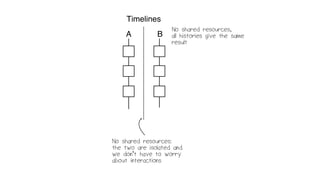
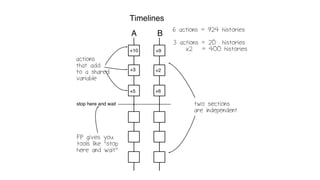
Mastering time
Mastering (state)space
Mastering architecture
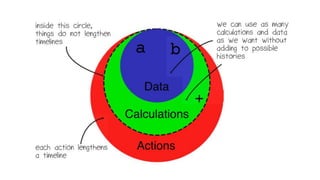
A model of functional programming
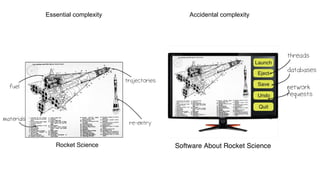
The problem with software: complexity
Essential complexity Accidental complexity
Sources of complexity
Possible histories
Possible codepaths
Possible changes
Mastering time
Mastering (state)space
Mastering architecture
For a video and the transcript
of this presentation,
click here:
https://lispcast.com/what-is-functional-programming-2/
Mastering time
JavaScript has this problem, too
var ovenTemperature = 100;
ajaxGet("http://api.com/number", function(number) {
ovenTemperature *= number;
});
ajaxGet("http://api.com/number", function(number) {
ovenTemperature += number;
});
Where do timelines come from?
Multiple threads
Multiple processes
Multiple machines
Async operations
What's the problem?
Many histories are more than we can keep in our heads
Different histories give different results
Sometimes we can't reproduce the bad history (heisenbug)
Mastering (state)space
Each conditional creates at least 2 branches
Branches multiply the number of possible codepaths
More codepaths means it's harder to hold in your head
Do all codepaths do the right thing?
Mastering architecture
Guarding against unforeseen change
Stratified design
Layers built on layers
Each layer adds domain meaning to the layer below it
Chemistry
Fundamental cooking techniques
Cuisine building blocks
Dishes
protein, acid, heat, etc.
chopping, slicing, applying heat, etc.
sauces, trinity, roux, browning, etc.
gumbo, jambalaya, étouffée, etc
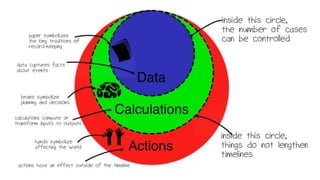
A model of functional programming
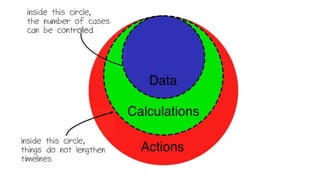
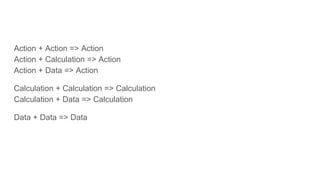
Action + Action => Action
Action + Calculation => Action
Action + Data => Action
Calculation + Calculation => Calculation
Calculation + Data => Calculation
Data + Data => Data
Eric Normand
Follow Eric on:
Eric Normand @EricNormand
eric@lispcast.comlispcast.com

What is Functional Programming?