Absolutism?
In your notebooks, write your own definition of
absolutism. What does this word mean to you?
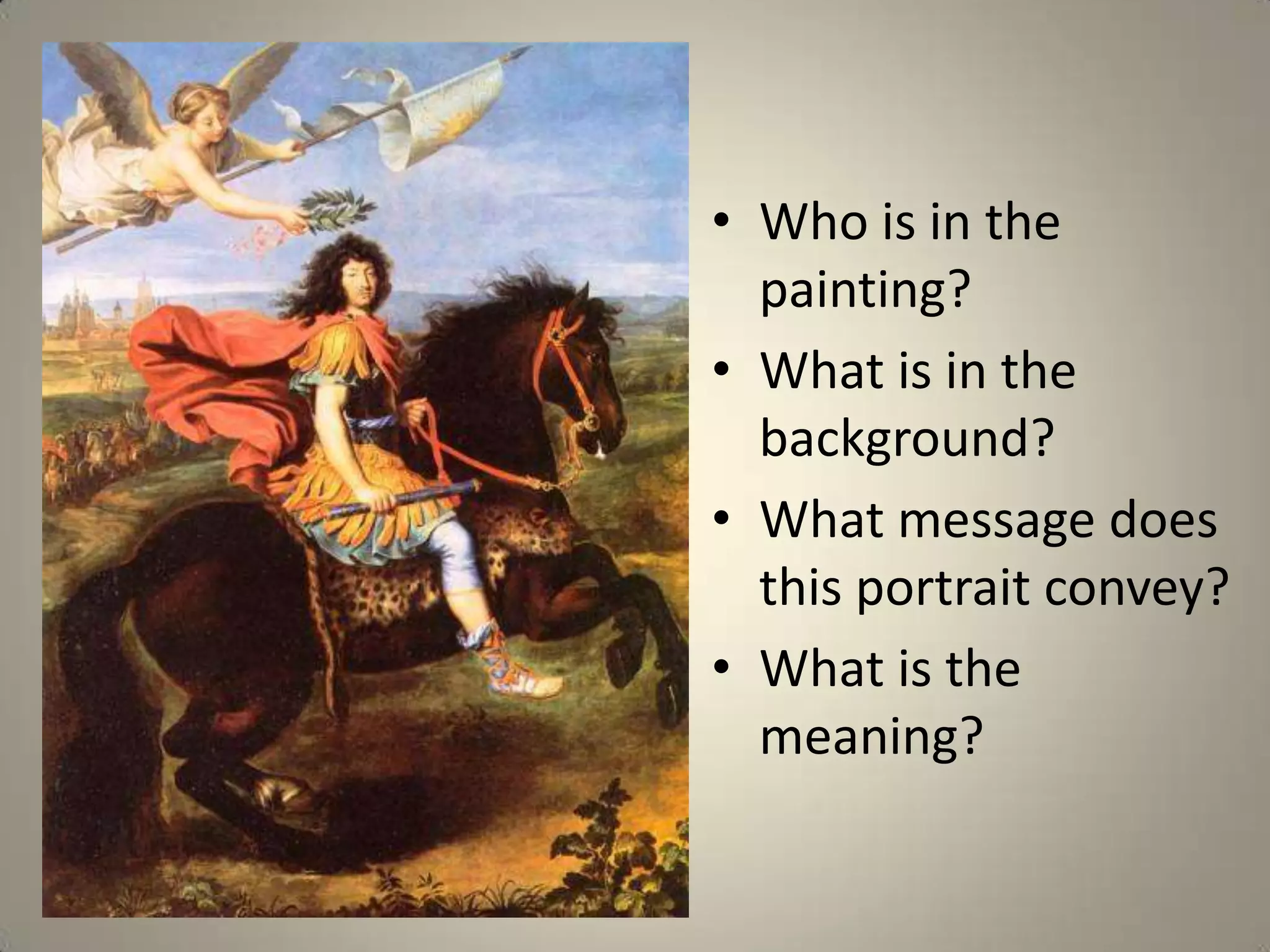
• Who is in the
  painting?
• What is in the
  background?
• What message does
  this portrait convey?
• What is the
  meaning?
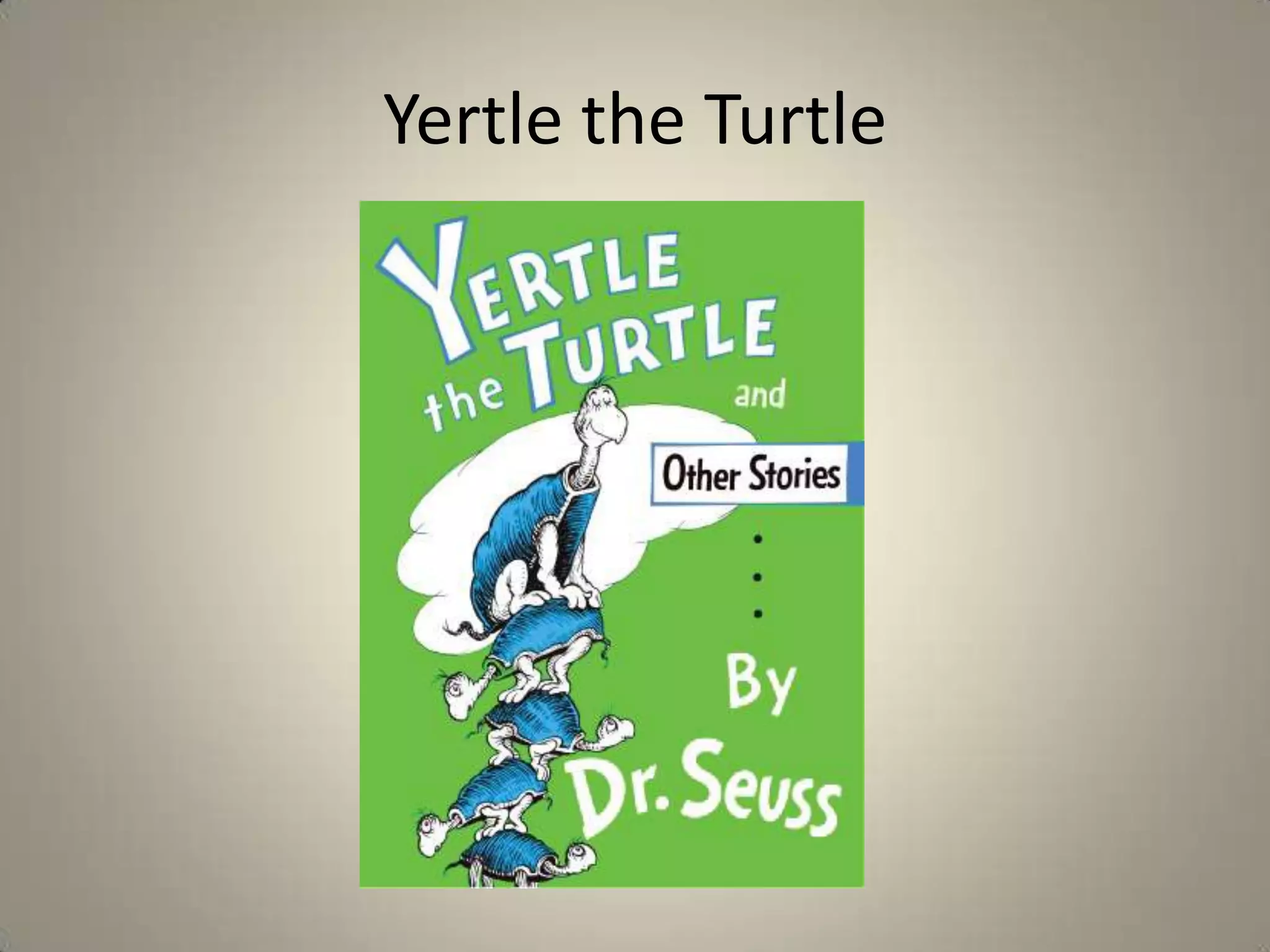
Yertle the Turtle
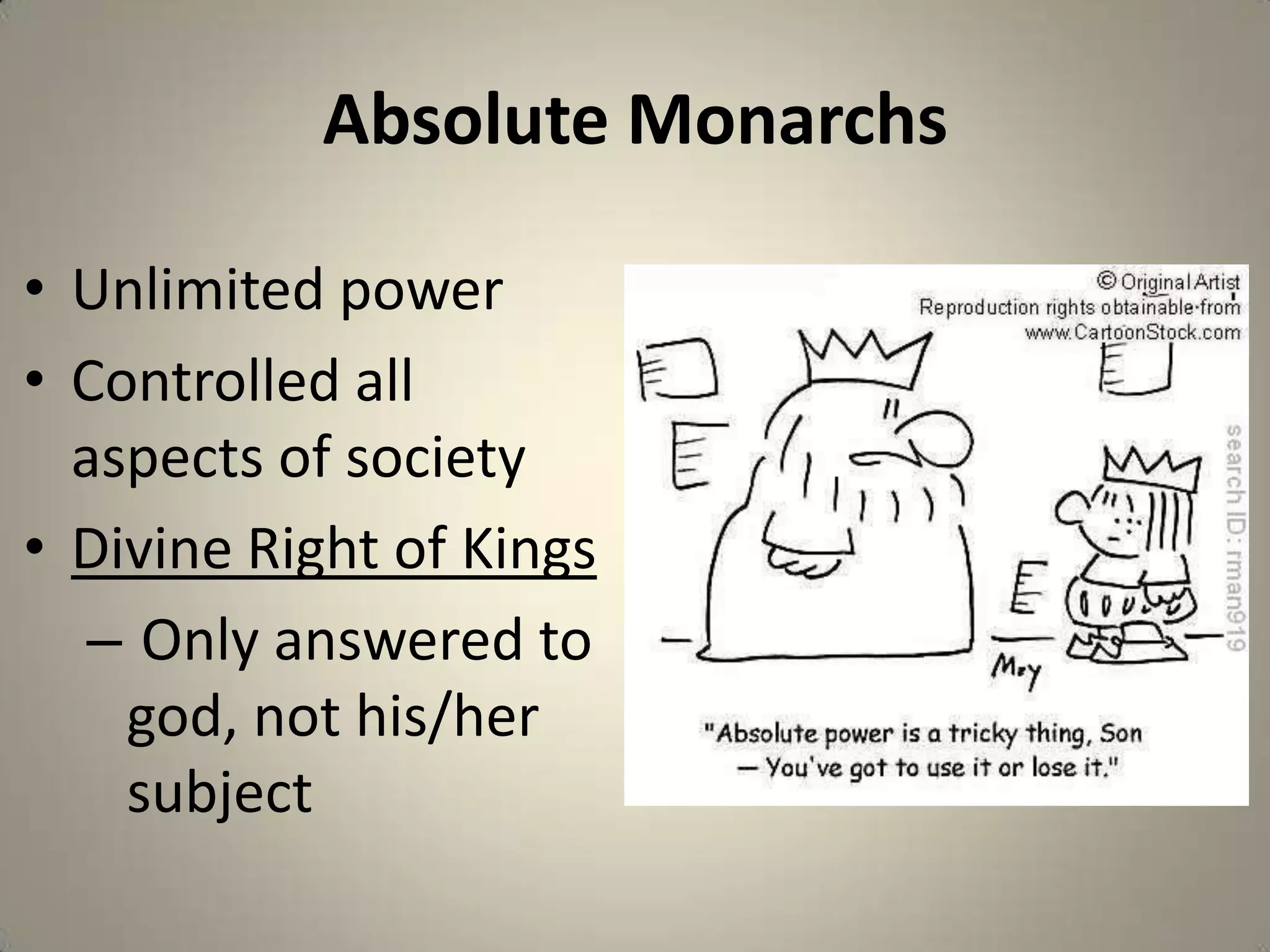
Absolute Monarchs

• Unlimited power
• Controlled all
  aspects of society
• Divine Right of Kings
   – Only answered to
    god, not his/her
    subject
Absolute vs. Enlightened Rulers
• An enlightened despot - considered reforms in
  order to create more efficient societies, but
  not at the expense of their own power.

• Absolutism and the Social Contract Theory
  – Argued about the legitimate source of political
    power centered on divine right
  – Which enlightened thinker’s ideas/beliefs does this
    theory conflict with?
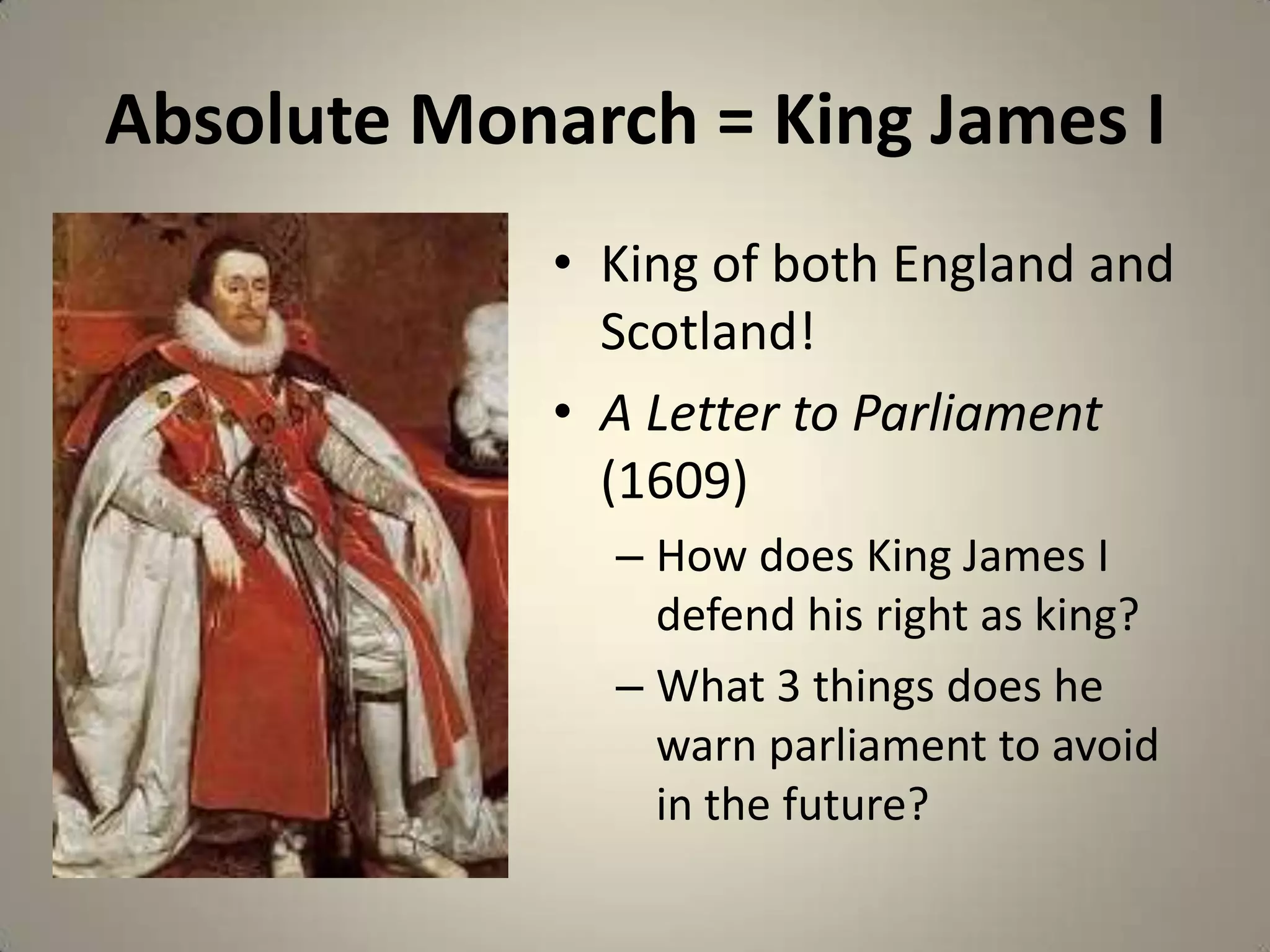
Absolute Monarch = King James I
             • King of both England and
               Scotland!
             • A Letter to Parliament
               (1609)
               – How does King James I
                 defend his right as king?
               – What 3 things does he
                 warn parliament to avoid
                 in the future?
Dear King James I!
• Write a response to King James I’s letter to
  parliament from the perspective of one of the
  6 enlightened thinkers.

  – Think of what he/she would think about this letter
    and how they would react to it.
Absolute or Enlightened?
           You be the judge!
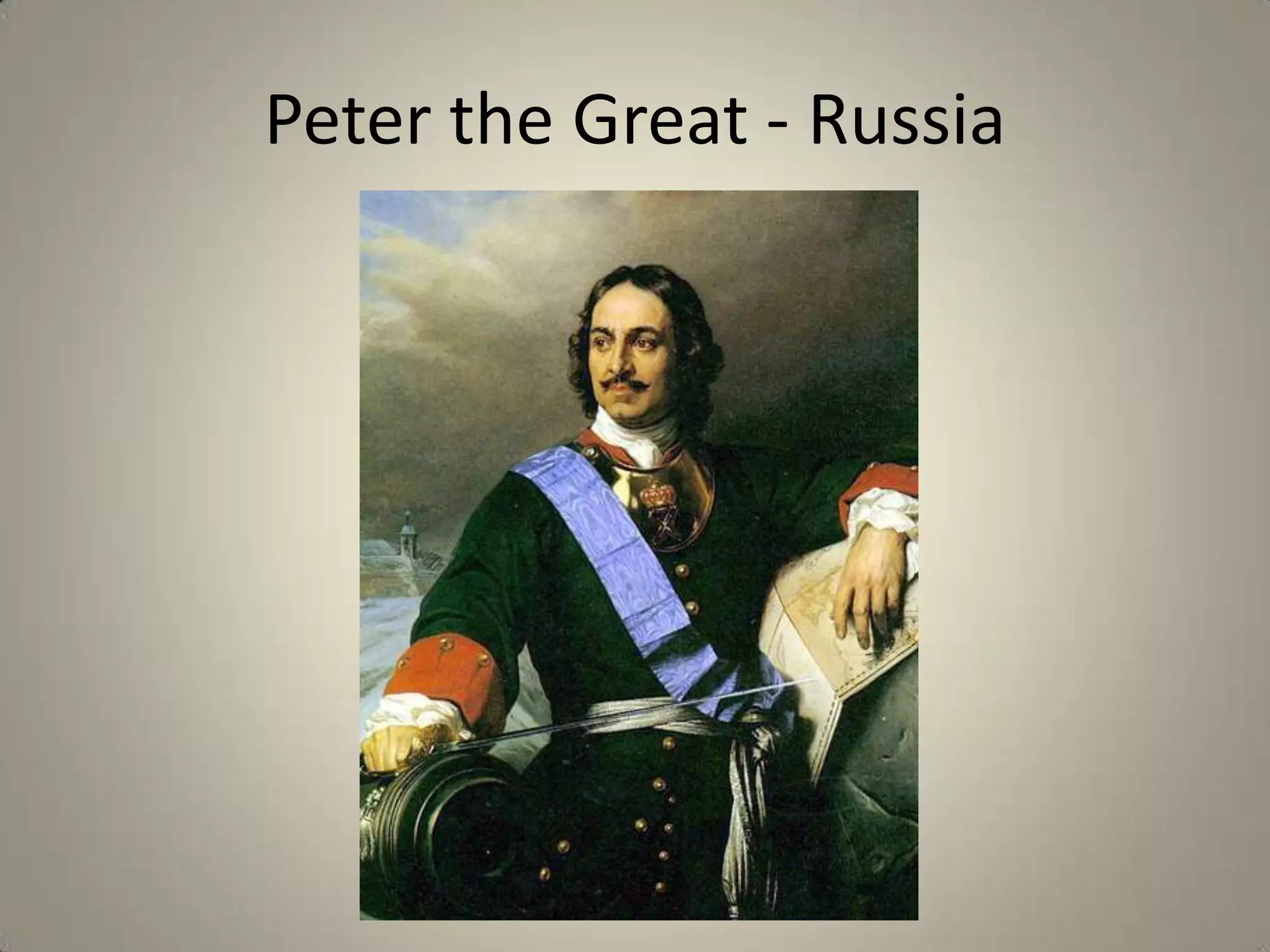
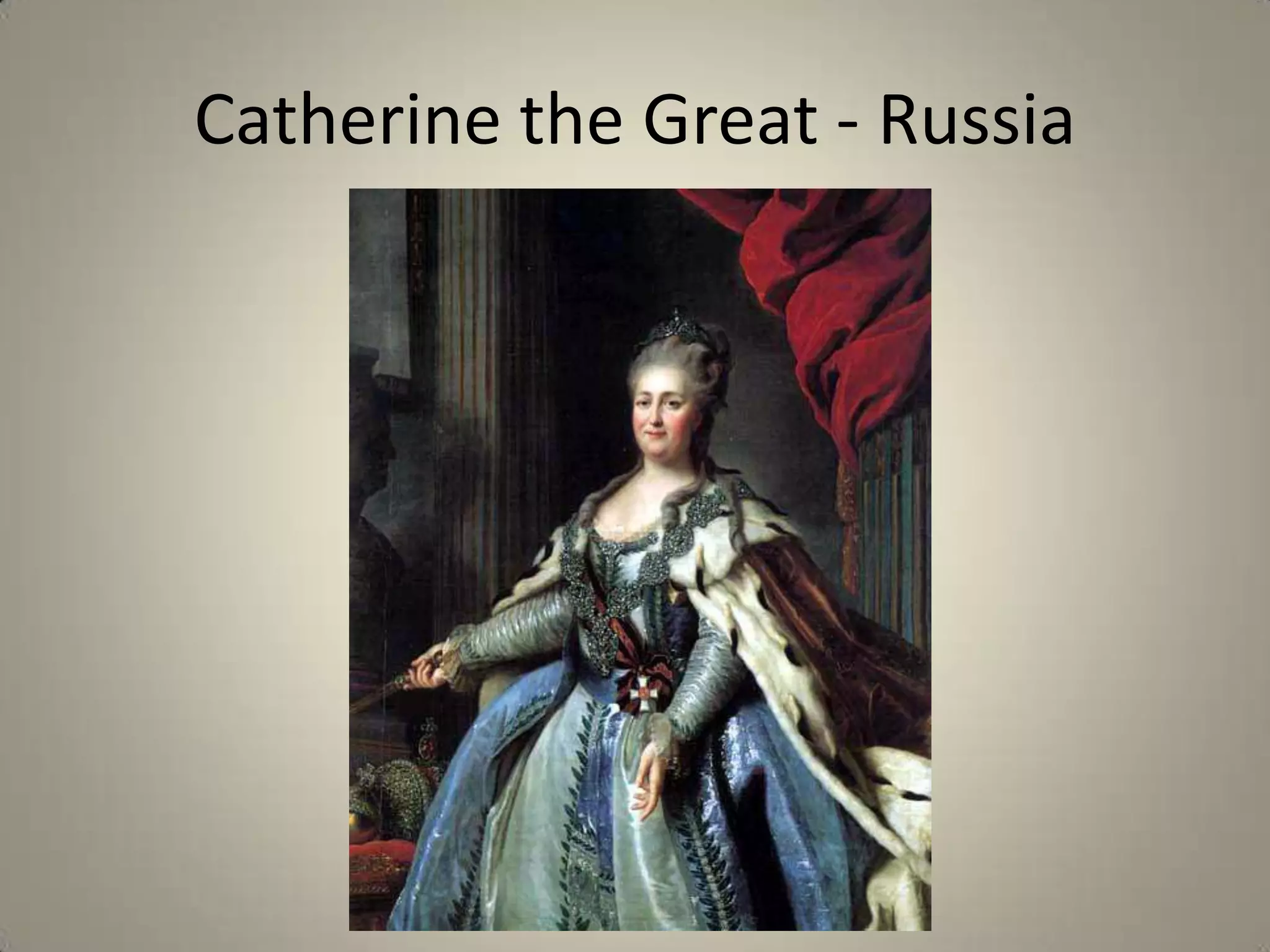
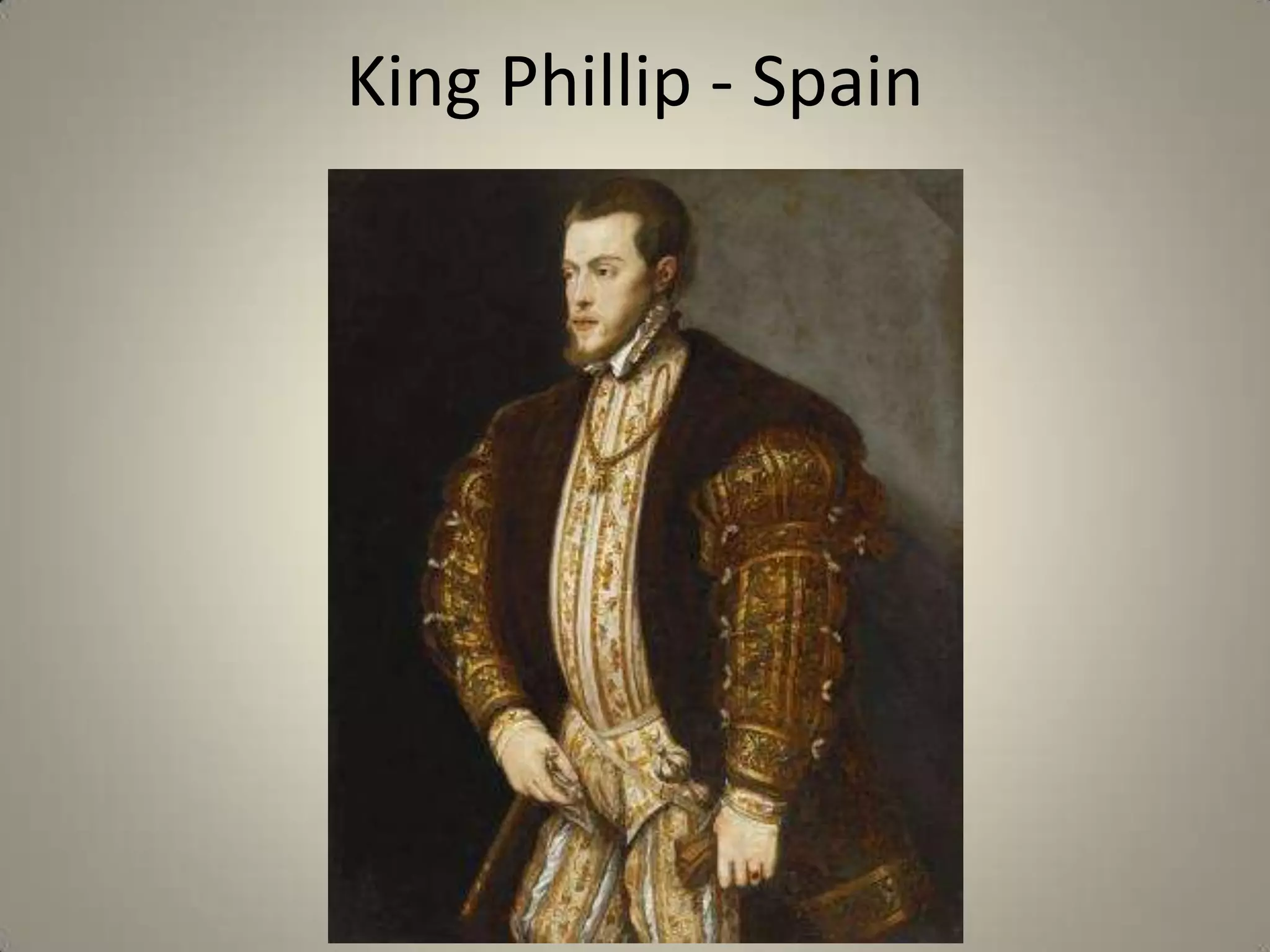
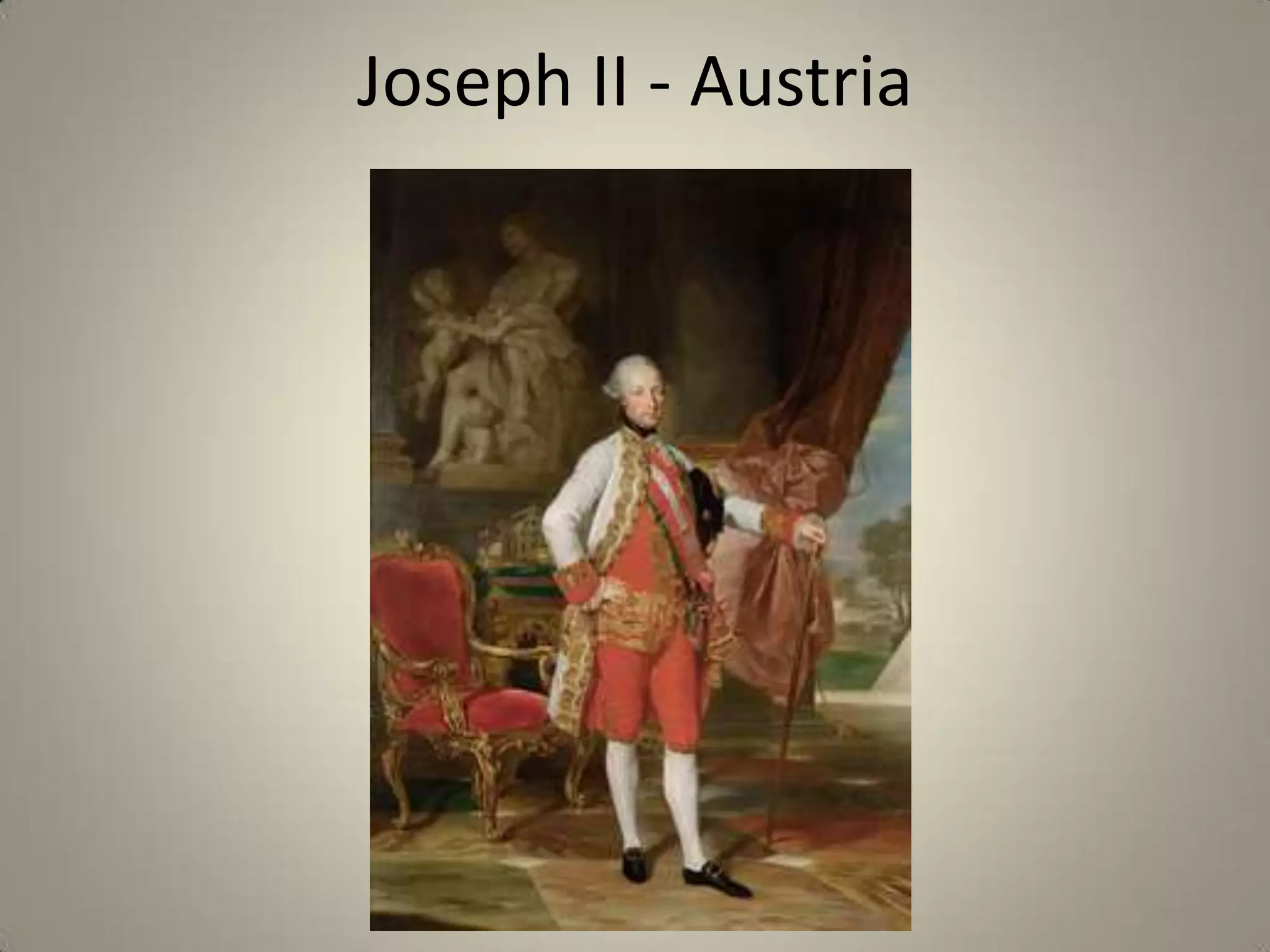
Vote which 18th Century monarchs you think
 were either absolute or enlightened rulers.
Peter the Great - Russia
Catherine the Great - Russia
King Phillip - Spain
Joseph II - Austria
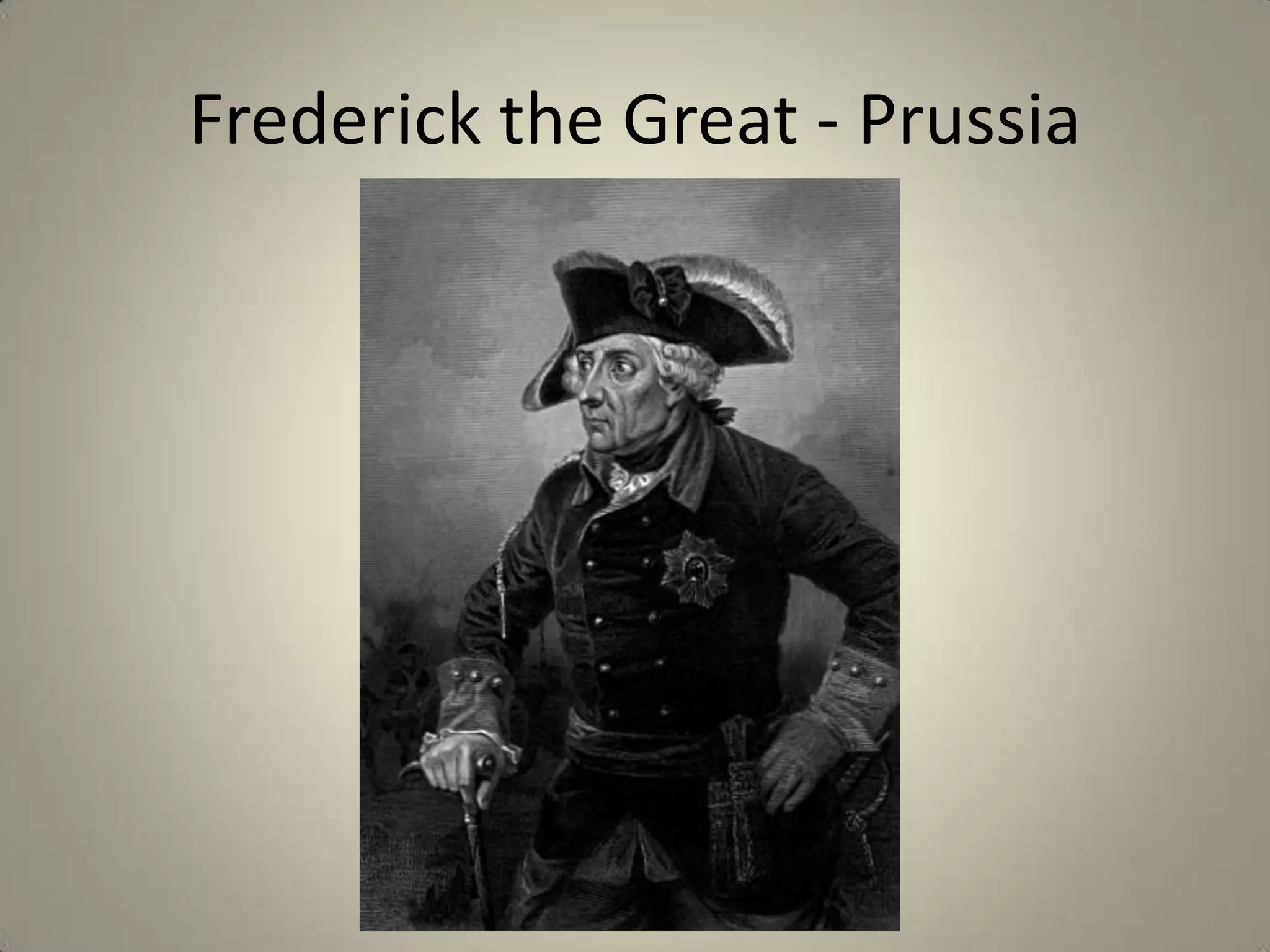
Frederick the Great - Prussia
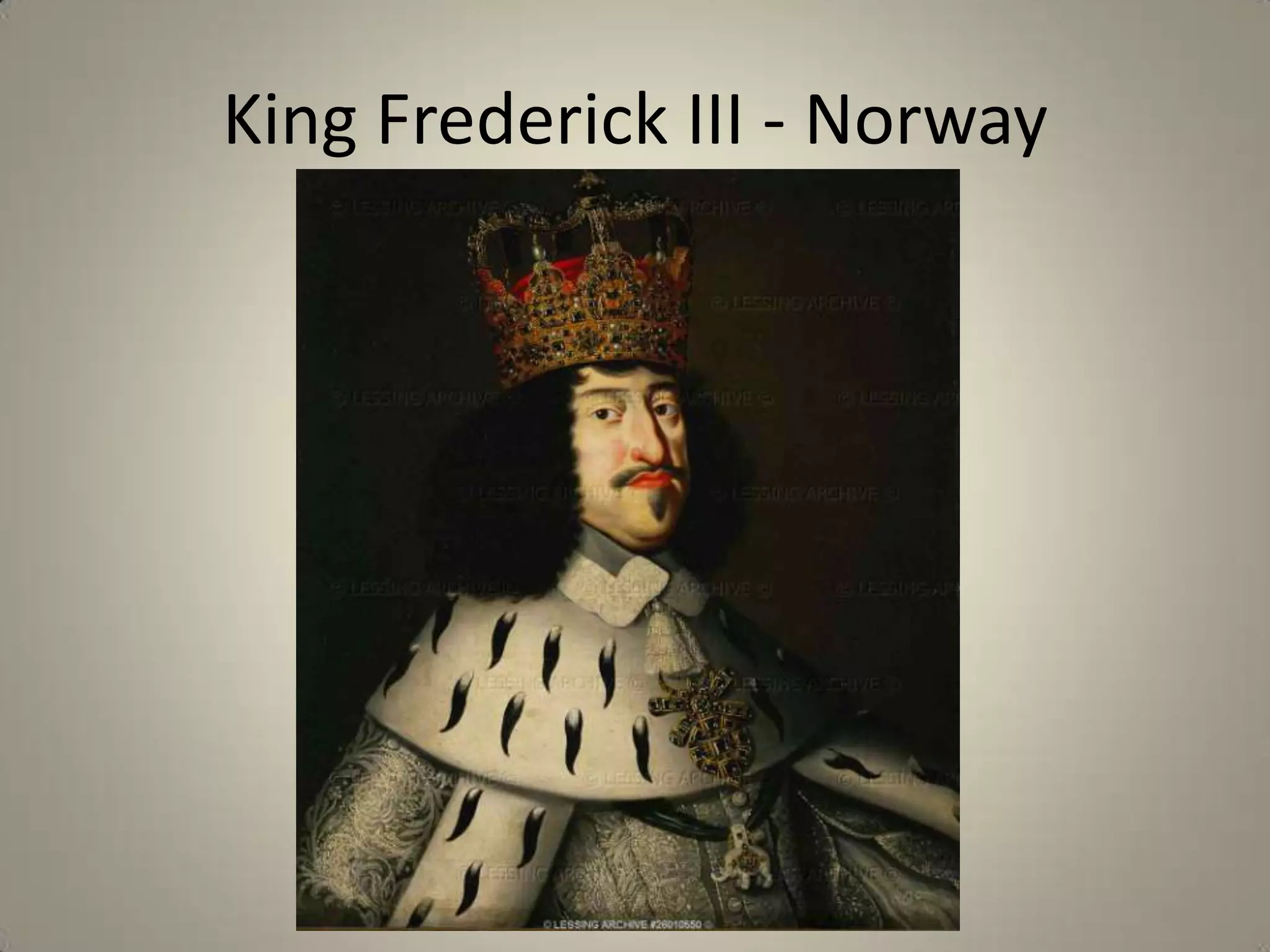
King Frederick III - Norway
And here are the results.
The Good…
• Catherine the Great – Russia
• Frederick the Great – Prussia
• Joseph II - Austria
The Bad…
•   King Phillip – Spain
•   Peter the Great – Russia
•   King Frederick III – Norway
•   King Louis XIV - France
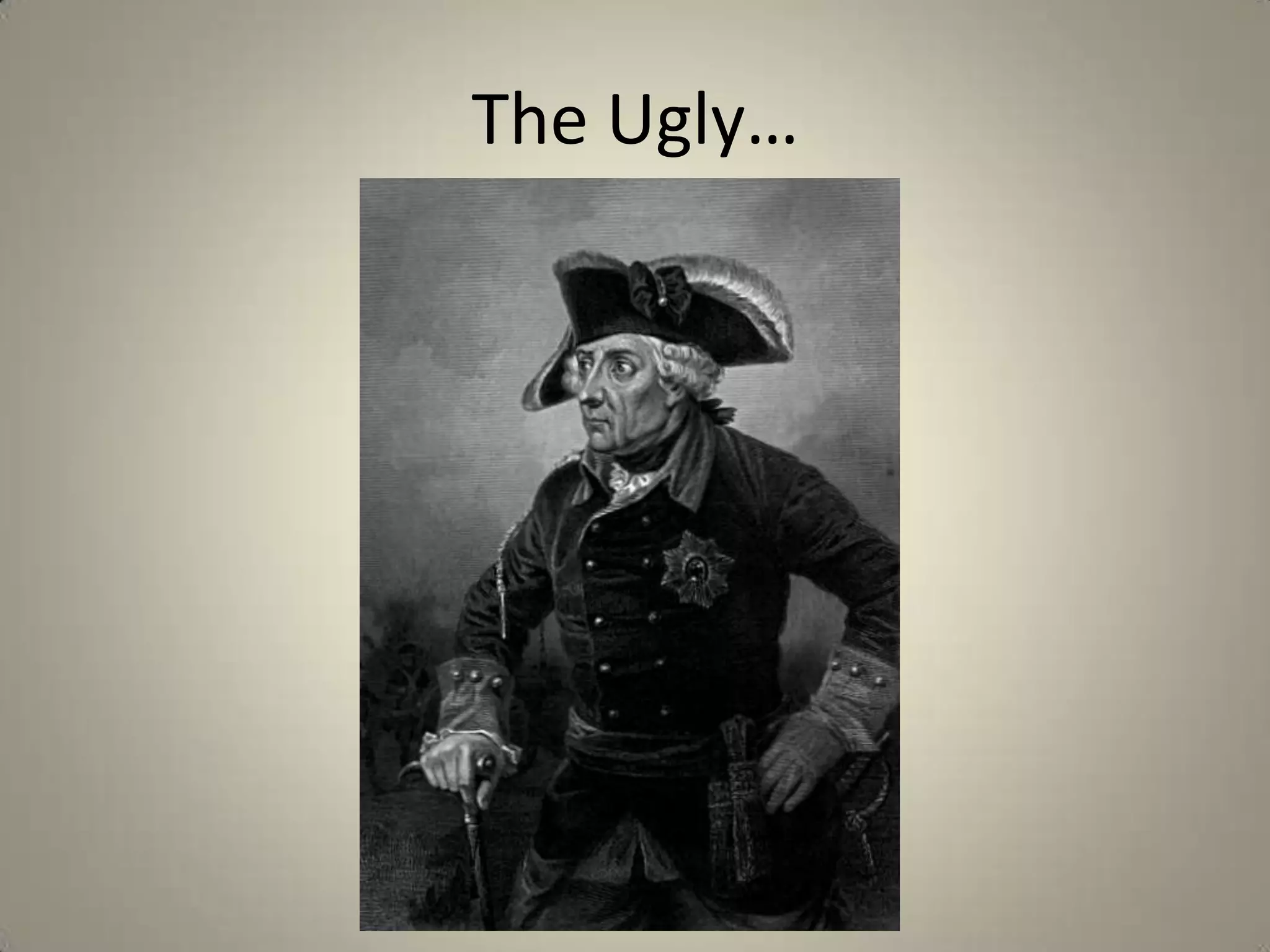
The Ugly…
• How does the idea behind an absolute
  monarch conflict with the ideas of the
  enlightened thinkers?

• Choose one of the ideas of the philosophes to
  examine this question.

What is absolutism

  • 1.
    Absolutism? In your notebooks,write your own definition of absolutism. What does this word mean to you?
  • 2.
    • Who isin the painting? • What is in the background? • What message does this portrait convey? • What is the meaning?
  • 3.
  • 4.
    Absolute Monarchs • Unlimitedpower • Controlled all aspects of society • Divine Right of Kings – Only answered to god, not his/her subject
  • 5.
    Absolute vs. EnlightenedRulers • An enlightened despot - considered reforms in order to create more efficient societies, but not at the expense of their own power. • Absolutism and the Social Contract Theory – Argued about the legitimate source of political power centered on divine right – Which enlightened thinker’s ideas/beliefs does this theory conflict with?
  • 6.
    Absolute Monarch =King James I • King of both England and Scotland! • A Letter to Parliament (1609) – How does King James I defend his right as king? – What 3 things does he warn parliament to avoid in the future?
  • 7.
    Dear King JamesI! • Write a response to King James I’s letter to parliament from the perspective of one of the 6 enlightened thinkers. – Think of what he/she would think about this letter and how they would react to it.
  • 8.
    Absolute or Enlightened? You be the judge! Vote which 18th Century monarchs you think were either absolute or enlightened rulers.
  • 9.
  • 10.
  • 11.
  • 12.
    Joseph II -Austria
  • 13.
  • 14.
  • 15.
    And here arethe results.
  • 16.
    The Good… • Catherinethe Great – Russia • Frederick the Great – Prussia • Joseph II - Austria
  • 17.
    The Bad… • King Phillip – Spain • Peter the Great – Russia • King Frederick III – Norway • King Louis XIV - France
  • 18.
  • 19.
    • How doesthe idea behind an absolute monarch conflict with the ideas of the enlightened thinkers? • Choose one of the ideas of the philosophes to examine this question.