What Is a Pull Up?Why You
Should Do Chin Ups?
A pull-up is also a strength exercise that focuses
on the upper-body. It is a closed-chain
movement in which you suspend your body with
your hands and then pull up. During this action,
your shoulders adduct and extend, as the
elbows flex, to bring the elbows to the torso. In
a pull up, the palms face away from the person
doing the exercise.
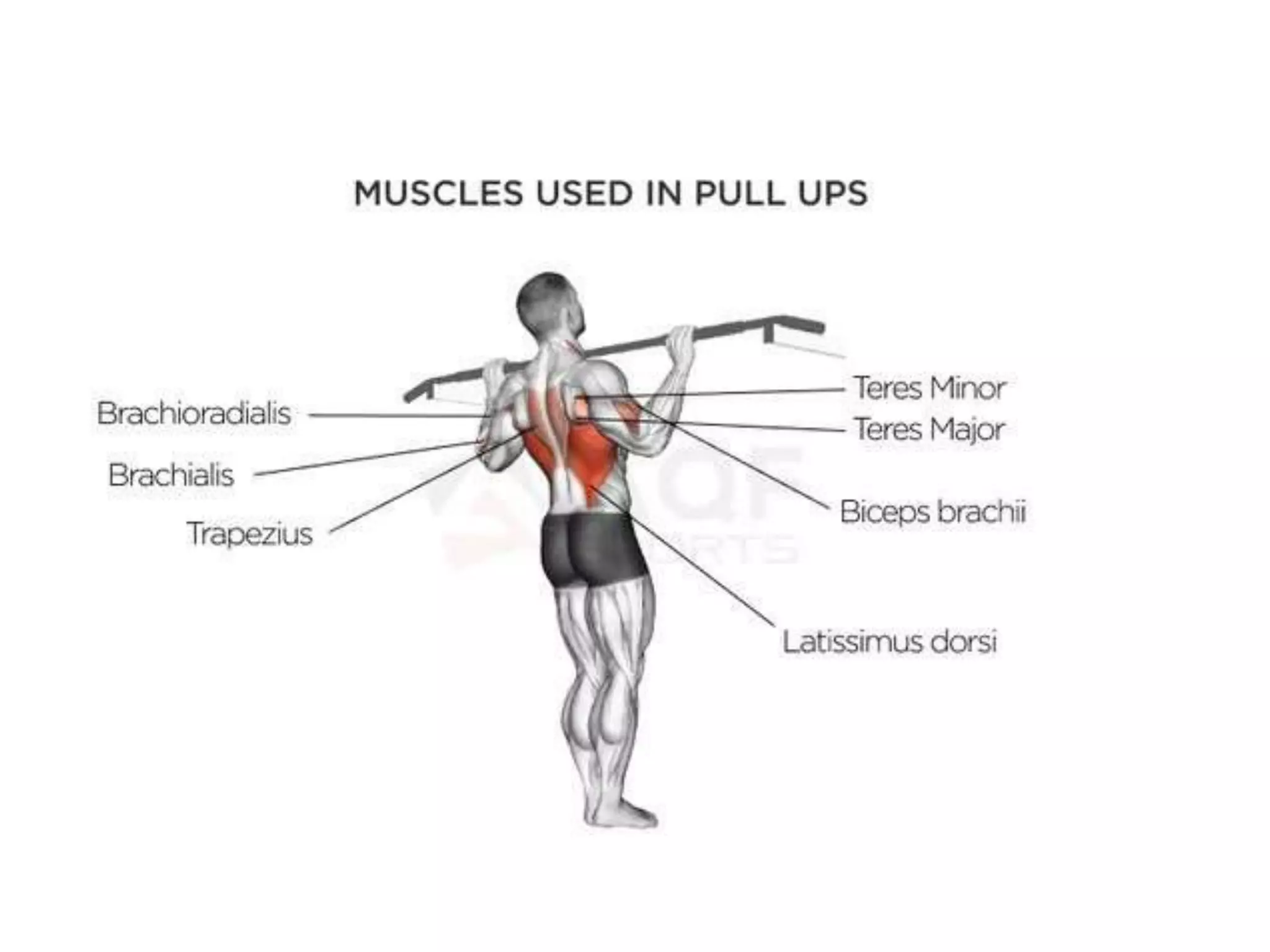
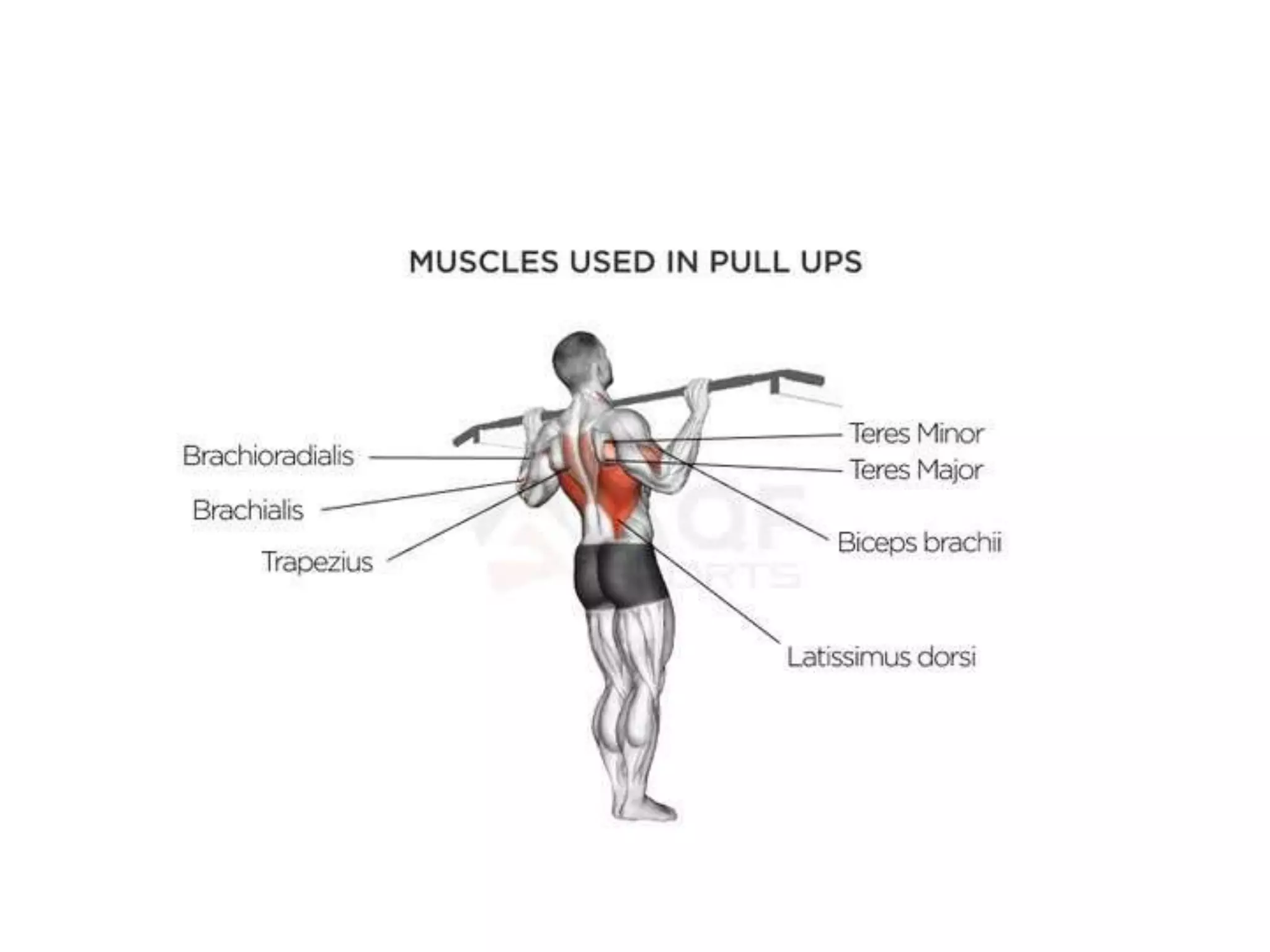
What Muscles Do Pull Ups Work?
Pull-ups primarily work the back muscles,
particularly the lats as well as shoulder and
chest muscles. In contrast to chin ups, pull ups
engage the lower trapezius muscles better. They
are located in the back and between the
shoulder blades.
Overhand pull ups grips enhance the activation of
the posterior chain. The posterior chain muscles are
located on the backside of the body. These muscles
are significant for everyday movements.
People who can benefit more from pull ups include
overhead athletes, for instance, volleyball players
and pitches because of the overuse of pectorals and
biceps during the sport. So, if you train your
posterior chain over the anterior chain, it can help
you prevent risks of injury and improve your overall
shoulder health in the long run.
Benefits of Pull Ups
• Improve Physical Health
Resistance or strength training with exercises,
such as pull ups can also boost your overall
physical health. Studies (1) have shown that
taking part in strength training on a regular basis
can help decrease visceral fat and assist you in
managing type 2 diabetes.
In addition, pull ups can also aid in the reduction
of resting blood pressure and discomfort and
back pain linked to diseases such as fibromyalgia
and arthritis. But keep in mind that it is better
for you to consult your physician before you
start doing strength training exercises because
they may not be safe for you and their results
can also vary person to person.
• Challenge Your Muscles
Pull ups are one of the most challenging strength
training exercises. When you challenge your body
muscles with difficult exercises you improve your
overall fitness level as well. If you have not tried
doing pull ups before you should try introducing
them to your workout routine as they can improve
how strong you look and feel. You can also try
underhand pull up and supinated grip pull ups.
Plus, if you keep doing the same set of exercises
over and over again, your body will plateau after
some time. But if you add in challenging
exercises, such as the pull ups, you will observe
a significant improvement in your strength.
• They Work Out So Much at Once
Another perk of doing pull ups regularly, is that
they target multiple muscle groups
simultaneously, also known as a compound
exercise. They come in handy when you are on a
time crunch because every pull up works your
core, lats, wrists, shoulders, grip strength,
biceps, forearms, and triceps.
Other than that, every time you attempt a pull-
up you lift your own body weight. This makes it
one of the best bodyweight exercises because of
its capability to give you a shredded upper body.
So, if you want to target maximum muscles, at
the same time, then pull up is definitely the way
to go for you.
Improve Mental Health
• Strength resistance movements such as pull ups
also have positive impacts on mental health.
According to a study review (2), there is a positive
correlation between strength training and:
• reducing fatigue
• decreasing anxiety symptoms
• reducing depression
• improving cognitive function
• and improving self-esteem
Why You Should Do Pull Ups?
Pull ups are perfect for everyone who wants to
achieve the coveted V-shape and build a strong
upper back.
In a nutshell, pull ups involve your palms being
pronated (overhand grip) and they face away
from your body. In chin ups, on the contrary, the
palms are supinated (underhand grip), and they
face towards your body. Besides, pull-ups are
usually performed at shoulder width or wide
grip whereas chin-ups are performed at narrow
grip or shoulder width.
Other than that, there is a third type of grip as
well, known as the neutral grip, which involves
the palms facing each other, for example during
hammer curls. This grip usually demands the use
of a special bar with parallel handles.

What Is a Pull Up?What Muscles Do Pull Ups Work?Benefits of Pull Ups

  • 1.
    What Is aPull Up?Why You Should Do Chin Ups?
  • 3.
    A pull-up isalso a strength exercise that focuses on the upper-body. It is a closed-chain movement in which you suspend your body with your hands and then pull up. During this action, your shoulders adduct and extend, as the elbows flex, to bring the elbows to the torso. In a pull up, the palms face away from the person doing the exercise.
  • 4.
    What Muscles DoPull Ups Work? Pull-ups primarily work the back muscles, particularly the lats as well as shoulder and chest muscles. In contrast to chin ups, pull ups engage the lower trapezius muscles better. They are located in the back and between the shoulder blades.
  • 5.
    Overhand pull upsgrips enhance the activation of the posterior chain. The posterior chain muscles are located on the backside of the body. These muscles are significant for everyday movements. People who can benefit more from pull ups include overhead athletes, for instance, volleyball players and pitches because of the overuse of pectorals and biceps during the sport. So, if you train your posterior chain over the anterior chain, it can help you prevent risks of injury and improve your overall shoulder health in the long run.
  • 7.
    Benefits of PullUps • Improve Physical Health Resistance or strength training with exercises, such as pull ups can also boost your overall physical health. Studies (1) have shown that taking part in strength training on a regular basis can help decrease visceral fat and assist you in managing type 2 diabetes.
  • 8.
    In addition, pullups can also aid in the reduction of resting blood pressure and discomfort and back pain linked to diseases such as fibromyalgia and arthritis. But keep in mind that it is better for you to consult your physician before you start doing strength training exercises because they may not be safe for you and their results can also vary person to person.
  • 9.
    • Challenge YourMuscles Pull ups are one of the most challenging strength training exercises. When you challenge your body muscles with difficult exercises you improve your overall fitness level as well. If you have not tried doing pull ups before you should try introducing them to your workout routine as they can improve how strong you look and feel. You can also try underhand pull up and supinated grip pull ups.
  • 10.
    Plus, if youkeep doing the same set of exercises over and over again, your body will plateau after some time. But if you add in challenging exercises, such as the pull ups, you will observe a significant improvement in your strength.
  • 11.
    • They WorkOut So Much at Once Another perk of doing pull ups regularly, is that they target multiple muscle groups simultaneously, also known as a compound exercise. They come in handy when you are on a time crunch because every pull up works your core, lats, wrists, shoulders, grip strength, biceps, forearms, and triceps.
  • 12.
    Other than that,every time you attempt a pull- up you lift your own body weight. This makes it one of the best bodyweight exercises because of its capability to give you a shredded upper body. So, if you want to target maximum muscles, at the same time, then pull up is definitely the way to go for you.
  • 13.
    Improve Mental Health •Strength resistance movements such as pull ups also have positive impacts on mental health. According to a study review (2), there is a positive correlation between strength training and: • reducing fatigue • decreasing anxiety symptoms • reducing depression • improving cognitive function • and improving self-esteem
  • 14.
    Why You ShouldDo Pull Ups? Pull ups are perfect for everyone who wants to achieve the coveted V-shape and build a strong upper back.
  • 15.
    In a nutshell,pull ups involve your palms being pronated (overhand grip) and they face away from your body. In chin ups, on the contrary, the palms are supinated (underhand grip), and they face towards your body. Besides, pull-ups are usually performed at shoulder width or wide grip whereas chin-ups are performed at narrow grip or shoulder width.
  • 16.
    Other than that,there is a third type of grip as well, known as the neutral grip, which involves the palms facing each other, for example during hammer curls. This grip usually demands the use of a special bar with parallel handles.