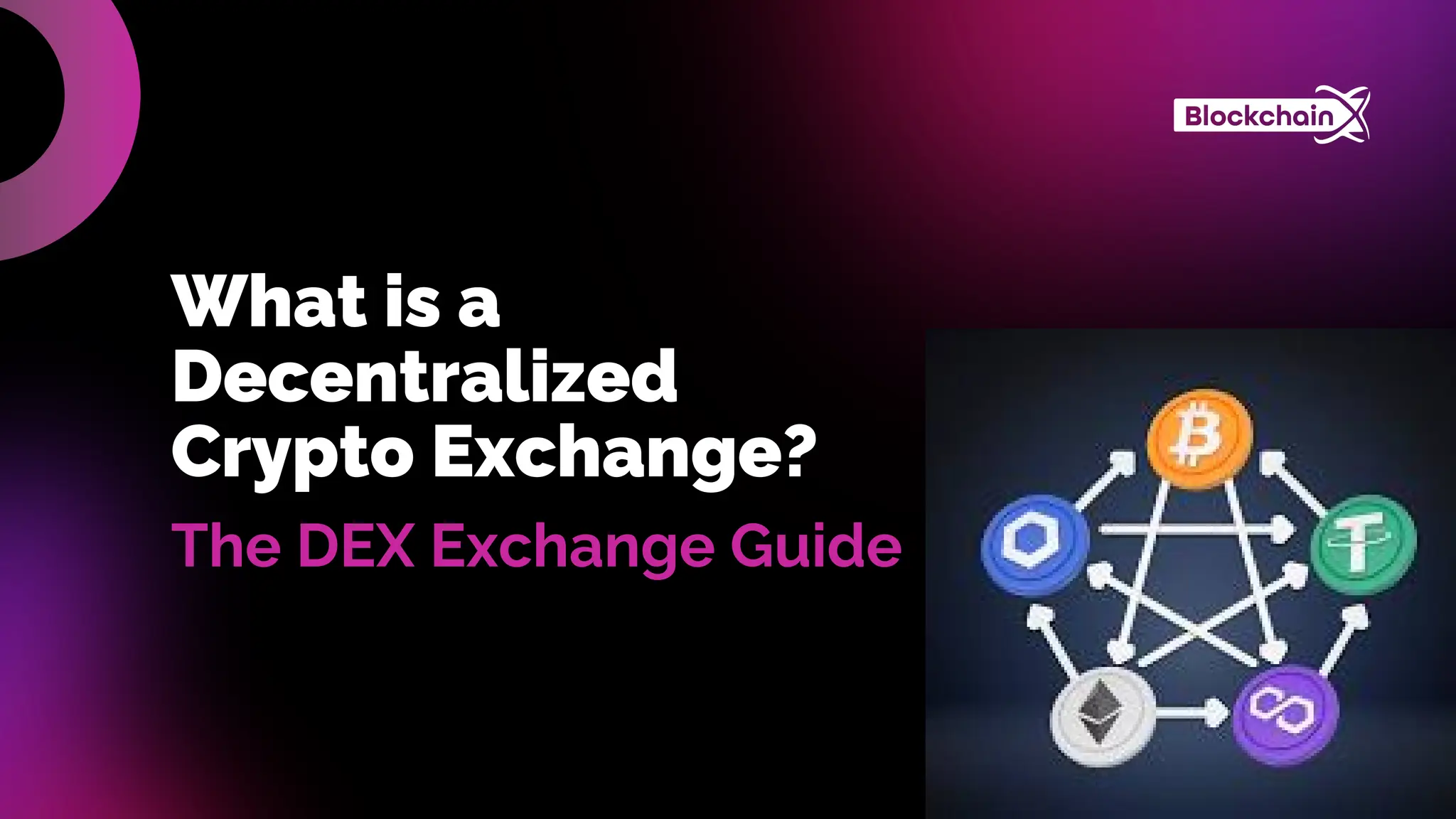
A Decentralized Exchange (DEX) Development Company specializes in building secure, scalable, and user-friendly decentralized trading platforms that enable peer-to-peer cryptocurrency transactions without the need for intermediaries.
Decentralized Crypto
Exchange: Introduction
Decentralizedcrypto exchanges were developed as an
alternative to centralized crypto exchanges, offering
direct peer-to-peer cryptocurrency trading and access to
the growing decentralized exchange development
finance space. Instead of a centralized operation, such as
Coinbase, tasked with facilitating transactions, DEXs rely
on smart contracts, programs that execute pre-
programmed outcomes when certain requirements are
met.
This is called non-custodial because DEX users have
complete control over their cryptocurrency assets and
their private keys , rather than handing custody over to a
central organization.
3.
Development and Management
Acentralized crypto exchange is developed traditionally using programming languages
like Java or Python, similar to other
applications like Twitter or Uber. Developers are responsible for maintenance, transaction processing, custody of funds, and
much more.
CEX and DEX: The Main Differences
Involvement of fiat currencies
Decentralized cryptocurrency exchanges only allow the exchange of cryptocurrencies with each other; fiat currencies (US
dollars, euros, etc.) are not involved. Centralized exchanges, on the other hand, offer services for purchasing cryptocurrencies
with fiat currencies via bank transfer.
Included cryptocurrencies
Similar to traditional exchanges, centralized crypto exchanges typically include all major cryptocurrencies, while decentralized
exchanges are usually specific to a blockchain ecosystem on which they are built.
Anonymity
Since fiat currencies (e.g. US dollars or euros) are involved, central crypto exchanges require KYC (Know-Your-Customer), the
provision of personal information such as name, email address, telephone number and possibly a scan of a government-issued
photo ID.
4.
A DEX isa type of decentralized application and is governed by smart
contracts. Smart contracts, in this context, represent a pool of assets.
When users want to trade or exchange assets, they interact with a
smart contract. This contract handles the locking and unblocking
during a trade. A smart contract is a self-executing program and
replaces the intermediaries typically responsible for facilitating
transactions between two currencies.
How does a decentralized
crypto exchange work?
Decentralized crypto exchanges, on the other hand, use the network fees of the blockchain network on which they are built.
Network fees, as such, depend largely on network congestion and the size of the transfer. Transfers require more computing
power and are more expensive to process. These fees are distributed among the network participants, or nodes, for verifying
the transaction.
5.
How do Decentralized
CryptocurrencyExchanges
Work?
Independent directories like CoinMarketCap list all decentralized crypto
exchanges along with the cryptocurrencies they support. Users can browse
the site and select a platform that best suits their needs based on their
assets.
Access to decentralized crypto exchanges is via a decentralized crypto
wallet, which allows users to send cryptocurrencies to the crypto exchange.
On a DEX page, users can connect supported wallets, which they can top
up beforehand via a centralized crypto exchange if necessary.
When users enter an amount to convert, they receive a breakdown of the
transfer, including the associated transaction fee and the expected amount
the beneficiary will receive.
6.
Is The Futureof Crypto
Exchanges Decentralized?
Although a relatively new trend, decentralized crypto exchanges have recently
gained significant traction. For example, DEX trading volume on the Ethereum
network has grown from just $3 billion in 2019 to a staggering $620 billion in 2021. At
the beginning of 2019, DEX transactions accounted for just 0.11% of global trading
volume, which increased to 6% by August 2022.
Despite certain drawbacks, decentralized exchanges offer great value to the end
user while remaining true to the core philosophy of blockchain: complete
decentralization. Learn more about the latest trends here: Exchange Trends 2025.
A decentralized crypto exchange, also called a DEX, is a peer-to-peer (P2P)
marketplace. It allows traders to buy and sell cryptocurrencies directly without
relying on third parties. DEXs replace intermediaries such as banks, brokers, or
payment services with self-executing smart contracts.