Centralized vs. Decentralized
Cryptocurrency Exchanges:
Which One to Build?
A Comparative Analysis
Cryptocurrency exchanges facilitate the buying, selling, and trading of digital
assets.
They serve as a vital component of the crypto ecosystem, with two main
type dominating the space: Centralized and Decentralized Exchanges (CEX
& DEX).
Understanding their differences is crucial for anyone considering building
a new platform.
Understanding
Cryptocurrency Exchanges
01 02 03
CPurpose of crypto
exchanges
Importance of selecting the
right model
Overview of Centralized
and Decentralized
Exchanges
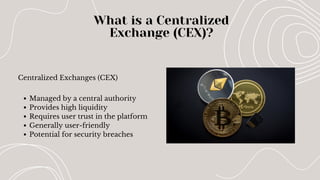
Centralized Exchanges (CEX)
What is a Centralized
Exchange (CEX)?
Managed by a central authority
Provides high liquidity
Requires user trust in the platform
Generally user-friendly
Potential for security breaches
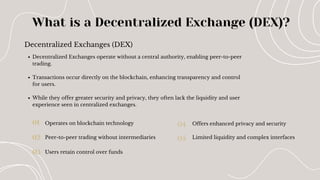
Decentralized Exchanges (DEX)
What is a Decentralized Exchange (DEX)?
01
02
03
04
05
Decentralized Exchanges operate without a central authority, enabling peer-to-peer
trading.
Transactions occur directly on the blockchain, enhancing transparency and control
for users.
While they offer greater security and privacy, they often lack the liquidity and user
experience seen in centralized exchanges.
Operates on blockchain technology
Peer-to-peer trading without intermediaries
Users retain control over funds
Offers enhanced privacy and security
Limited liquidity and complex interfaces
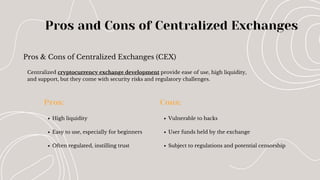
Pros & Cons of Centralized Exchanges (CEX)
Pros and Cons of Centralized Exchanges
Pros: Cons:
Centralized cryptocurrency exchange development provide ease of use, high liquidity,
and support, but they come with security risks and regulatory challenges.
High liquidity
Easy to use, especially for beginners
Often regulated, instilling trust
Vulnerable to hacks
User funds held by the exchange
Subject to regulations and potential censorship
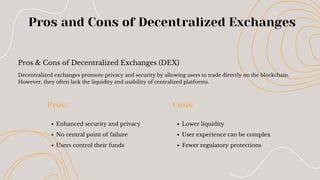
Pros & Cons of Decentralized Exchanges (DEX)
Pros and Cons of Decentralized Exchanges
Enhanced security and privacy
No central point of failure
Users control their funds
Pros:
Lower liquidity
User experience can be complex
Fewer regulatory protections
Cons:
Decentralized exchanges promote privacy and security by allowing users to trade directly on the blockchain.
However, they often lack the liquidity and usability of centralized platforms.
Key Considerations for
Building a Crypto
Exchange
Before choosing which type of crypto exchange software to build, factors like
target users, security, compliance, and liquidity must be considered. Balancing
these elements can help in selecting the right model for your exchange.
Key Points:
Target audience: novice or experienced traders
Security and trust factors
Regulatory environment
Liquidity needs and potential amarket volume
Technical expertise and resources
Key Points:
Which One Should You
Build?
Choosing between a CEX and DEX largely
depends on your priorities and resources.
Centralized exchanges are ideal for those
focused on accessibility and support, while
decentralized exchanges align with a vision
prioritizing privacy and autonomy.
For ease of use and support: CEX
For security and user control: DEX
Balance between resources, target users, and goals
Conclusion
Key Points:
Both CEX and DEX serve essential roles in the crypto market
Choose based on user needs, resources, and strategic goals
Ensure compliance, security, and adaptability
Both Cryptocurrency exchange development centralized
and decentralized exchanges have unique advantages and
challenges. Your choice will shape the user experience,
security, and regulatory demands of the platform, making
this decision crucial for the long-term success of your
exchange.
Thank
You
77088895550
www.blockchainx.tech
contact@blockchainx.tech

Centralized vs. Decentralized Cryptocurrency Exchanges Which One to Build.pdf

  • 1.
    Centralized vs. Decentralized CryptocurrencyExchanges: Which One to Build? A Comparative Analysis
  • 2.
    Cryptocurrency exchanges facilitatethe buying, selling, and trading of digital assets. They serve as a vital component of the crypto ecosystem, with two main type dominating the space: Centralized and Decentralized Exchanges (CEX & DEX). Understanding their differences is crucial for anyone considering building a new platform. Understanding Cryptocurrency Exchanges 01 02 03 CPurpose of crypto exchanges Importance of selecting the right model Overview of Centralized and Decentralized Exchanges
  • 3.
    Centralized Exchanges (CEX) Whatis a Centralized Exchange (CEX)? Managed by a central authority Provides high liquidity Requires user trust in the platform Generally user-friendly Potential for security breaches
  • 4.
    Decentralized Exchanges (DEX) Whatis a Decentralized Exchange (DEX)? 01 02 03 04 05 Decentralized Exchanges operate without a central authority, enabling peer-to-peer trading. Transactions occur directly on the blockchain, enhancing transparency and control for users. While they offer greater security and privacy, they often lack the liquidity and user experience seen in centralized exchanges. Operates on blockchain technology Peer-to-peer trading without intermediaries Users retain control over funds Offers enhanced privacy and security Limited liquidity and complex interfaces
  • 5.
    Pros & Consof Centralized Exchanges (CEX) Pros and Cons of Centralized Exchanges Pros: Cons: Centralized cryptocurrency exchange development provide ease of use, high liquidity, and support, but they come with security risks and regulatory challenges. High liquidity Easy to use, especially for beginners Often regulated, instilling trust Vulnerable to hacks User funds held by the exchange Subject to regulations and potential censorship
  • 6.
    Pros & Consof Decentralized Exchanges (DEX) Pros and Cons of Decentralized Exchanges Enhanced security and privacy No central point of failure Users control their funds Pros: Lower liquidity User experience can be complex Fewer regulatory protections Cons: Decentralized exchanges promote privacy and security by allowing users to trade directly on the blockchain. However, they often lack the liquidity and usability of centralized platforms.
  • 7.
    Key Considerations for Buildinga Crypto Exchange Before choosing which type of crypto exchange software to build, factors like target users, security, compliance, and liquidity must be considered. Balancing these elements can help in selecting the right model for your exchange. Key Points: Target audience: novice or experienced traders Security and trust factors Regulatory environment Liquidity needs and potential amarket volume Technical expertise and resources
  • 8.
    Key Points: Which OneShould You Build? Choosing between a CEX and DEX largely depends on your priorities and resources. Centralized exchanges are ideal for those focused on accessibility and support, while decentralized exchanges align with a vision prioritizing privacy and autonomy. For ease of use and support: CEX For security and user control: DEX Balance between resources, target users, and goals
  • 9.
    Conclusion Key Points: Both CEXand DEX serve essential roles in the crypto market Choose based on user needs, resources, and strategic goals Ensure compliance, security, and adaptability Both Cryptocurrency exchange development centralized and decentralized exchanges have unique advantages and challenges. Your choice will shape the user experience, security, and regulatory demands of the platform, making this decision crucial for the long-term success of your exchange.
  • 10.