What challenges does Globalisation
pose for cultural identity?
  Tim Fairhall
What is Globalisation?

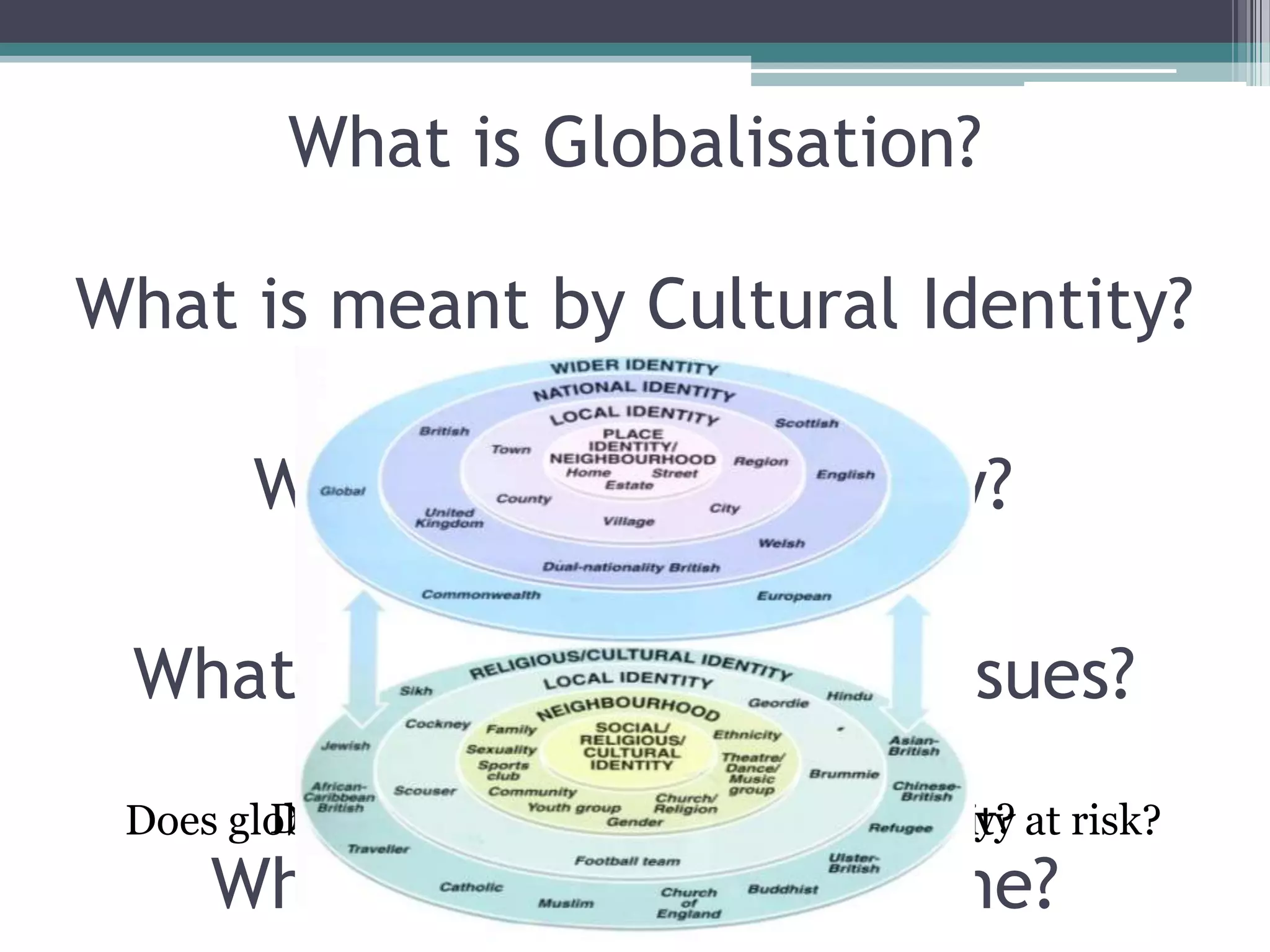
What is meant by Cultural Identity?

        Why it is contemporary?

 What are the knowledge issues?
 Does globalisation put are theseof individuality? at risk?
        Does thiswhat peoples’ cultural identity
             If so mark the end problems?
     Why does this interest me?
Ethnographies


        Art and                                           Official Journals /
      Photography                                           News Articles


                                    The
                                  Knower
                                   (ME)

                                                                  Documentaries
Historical
Evidence


                    News Items                   Tribes
Nayan Chanda – Far Eastern Economic
Review, 2008
Acknowledging globalisation as a secular trend of human
history does not mean accepting the unfairness, injustice and
inequality that have come in its wake. The leisurely pace of the
past is over. Goods, ideas and culture are rushing across
national borders with unthinkable speed and unprecedented
volume – overwhelming many, and affecting their lives in ways
that are beyond their control. Today’s protesters are right to
draw attention to these negative aspects. Certainly the
pernicious aspects of globalisation need to be addressed and
prudently remedied. However, protesters are wrong to think
that the restless movement of people and ideas across the globe
can be arrested, and by so doing solve its marginal ill-effects.
To be sure, fix globalisation. But to demand a stop to
globalisation is to demand that life as we know it should cease’.
Theories

     1. Hyperglobalisationism


     2. Global Sceptism


     3. Transformationalism


     4. Homogenesism
Source 1 – Facts and Figures
  AoK:             Science & Maths                    WoK:             Reason

  Use of facts and figures as a source

   Clearly shows the necessary details.     Possibility of skewing data towards one
                                                              view.

      Based on facts and evidence.          Not everything can be distinguished as
                                                       (absolute) truth

  Fair representation of important and        Outdated, little clue of the future
                relevant                                   changes.

Sources: www.internetworldstats.com, UN World Tourism Organisation http://unwto.org,
      www.cnnmoney.com: companies’ annual reports (2006), SIL international
                               (www.ethnologue.com)
Source 2 - Ethnography                                                     AoK:                    History
 ANTHROPOLOGY TODAY VOL 20 NO 2, APRIL 2004                                WoK:                    Language
                                                                                                   Emotion
  Author’s use of the area of knowledge and ways of
                        knowing.
                      The Mursi know that the lip-plate is
                      seen as a sign of their backwardness by
                                                  powerful outsiders […]
                            Ironically, it is the
growing need of the Mursi for cash that drives
them to supply the tourists’ demands for
photographs.
             Engages with the reader.                                   Possible exaggeration of reality.
 [One claim] made about the lip-plate [is] Thirty years ago, the Mursi saw themselves
                                                as occupying a central position in relation to
 that the practice originated in an attempt to
                                                the outside world, geographically and
 make women less attractive to slave morally. They saw the values which gave
 traders […] The on facts and evidence.
          Based lip-plate worn by Mursi meaning to their lives as located in the is not the past.”
                                                                          “the history
 women is an expression of female social physical space they occupied.
 adulthood and reproductive potential […]
On the one hand, the lip-plate is prized   Since the regular arrival of tourists they have
by Mursi as Allows identification.
               a mark of their cultural    come to realise that the centre judgement
                                                              Personal which they            can affect validity.
                                           once saw themselves inhabiting has slipped
identity. On the other hand, they
                                           away from them.
recognise that

               Empathy created.                                      Language is intended to give reader
                                                    , living on the margins of the Ethiopian
                                           state.                            similar opinions.
Source 3 – Photographs of the Singsing
AoK:          Art        Tribes Art Wolfe (1997)          WoK:           Perception
       Potrayal of the Singsing celebration dance as
                        photograph.

        Accurate representation.              Not full representation as it is solely one
                                                          part of the event.
Objective – no interpretation presented.      Striking images could have an influence
                                                            on opinions.
   Prejudice
     Neutral look at the dance.                 Criteria of “good” and “bad” varies.
   Ethnocentrism
   Understanding of tourists attending          “Hawthorne effect” is this reliable?
                views.                           Could it be put on for the camera?

 It is a depiction of the dance and that is     Is the photography itself really art?
                the art form.
Conclusion
 It is clear to see Globalisation has two types of
effects on a culture and in particular the identity of
that culture – being both positive and negative. On
one hand globalisation has crossed borders and
allowed for growth and expansion of ideology and
materials to almost every part of the world. It
marks sustainable progress, as in a continual
learning of new ideas and values. On the other hand
what comes with it is the domination by global
companies and negative effects on the environment
from travel. This makes it an issue that needs to be
controlled.
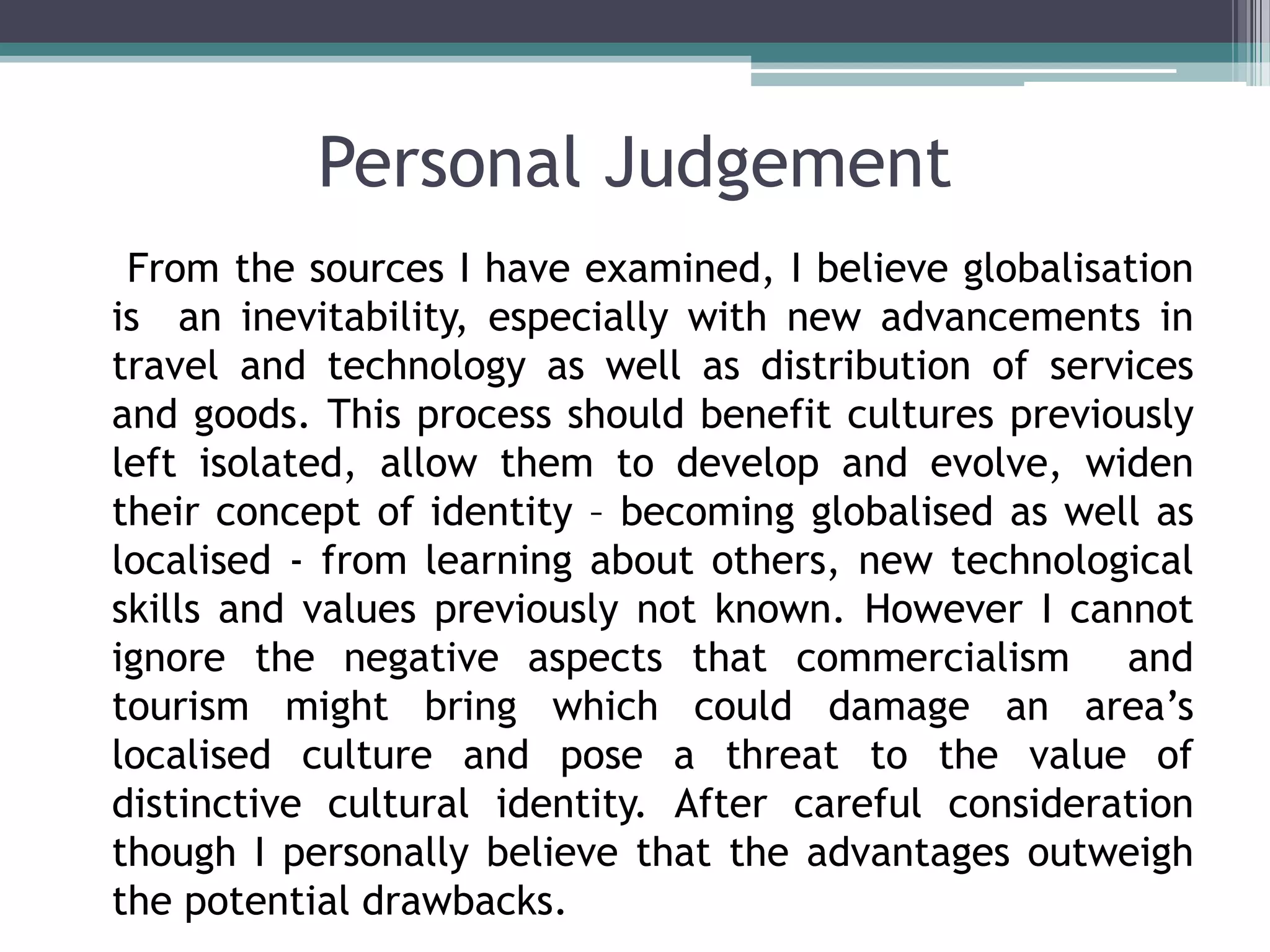
Personal Judgement
 From the sources I have examined, I believe globalisation
is an inevitability, especially with new advancements in
travel and technology as well as distribution of services
and goods. This process should benefit cultures previously
left isolated, allow them to develop and evolve, widen
their concept of identity – becoming globalised as well as
localised - from learning about others, new technological
skills and values previously not known. However I cannot
ignore the negative aspects that commercialism and
tourism might bring which could damage an area’s
localised culture and pose a threat to the value of
distinctive cultural identity. After careful consideration
though I personally believe that the advantages outweigh
the potential drawbacks.
YouTube is one of the biggest website attractions with over 100
        million videos being watched daily worldwide.


                  http://www.youtube.com/watch?v=J---
                  aiyznGQ&feature=player_embedded


This makes it a key effect of globalisation in modern day society
           as it unites people from across the globe.

What challenges does Globalisation pose for cultural identity?

  • 1.
    What challenges doesGlobalisation pose for cultural identity? Tim Fairhall
  • 2.
    What is Globalisation? Whatis meant by Cultural Identity? Why it is contemporary? What are the knowledge issues? Does globalisation put are theseof individuality? at risk? Does thiswhat peoples’ cultural identity If so mark the end problems? Why does this interest me?
  • 3.
    Ethnographies Art and Official Journals / Photography News Articles The Knower (ME) Documentaries Historical Evidence News Items Tribes
  • 4.
    Nayan Chanda –Far Eastern Economic Review, 2008 Acknowledging globalisation as a secular trend of human history does not mean accepting the unfairness, injustice and inequality that have come in its wake. The leisurely pace of the past is over. Goods, ideas and culture are rushing across national borders with unthinkable speed and unprecedented volume – overwhelming many, and affecting their lives in ways that are beyond their control. Today’s protesters are right to draw attention to these negative aspects. Certainly the pernicious aspects of globalisation need to be addressed and prudently remedied. However, protesters are wrong to think that the restless movement of people and ideas across the globe can be arrested, and by so doing solve its marginal ill-effects. To be sure, fix globalisation. But to demand a stop to globalisation is to demand that life as we know it should cease’.
  • 5.
    Theories 1. Hyperglobalisationism 2. Global Sceptism 3. Transformationalism 4. Homogenesism
  • 6.
    Source 1 –Facts and Figures AoK: Science & Maths WoK: Reason Use of facts and figures as a source Clearly shows the necessary details. Possibility of skewing data towards one view. Based on facts and evidence. Not everything can be distinguished as (absolute) truth Fair representation of important and Outdated, little clue of the future relevant changes. Sources: www.internetworldstats.com, UN World Tourism Organisation http://unwto.org, www.cnnmoney.com: companies’ annual reports (2006), SIL international (www.ethnologue.com)
  • 7.
    Source 2 -Ethnography AoK: History ANTHROPOLOGY TODAY VOL 20 NO 2, APRIL 2004 WoK: Language Emotion Author’s use of the area of knowledge and ways of knowing. The Mursi know that the lip-plate is seen as a sign of their backwardness by powerful outsiders […] Ironically, it is the growing need of the Mursi for cash that drives them to supply the tourists’ demands for photographs. Engages with the reader. Possible exaggeration of reality. [One claim] made about the lip-plate [is] Thirty years ago, the Mursi saw themselves as occupying a central position in relation to that the practice originated in an attempt to the outside world, geographically and make women less attractive to slave morally. They saw the values which gave traders […] The on facts and evidence. Based lip-plate worn by Mursi meaning to their lives as located in the is not the past.” “the history women is an expression of female social physical space they occupied. adulthood and reproductive potential […] On the one hand, the lip-plate is prized Since the regular arrival of tourists they have by Mursi as Allows identification. a mark of their cultural come to realise that the centre judgement Personal which they can affect validity. once saw themselves inhabiting has slipped identity. On the other hand, they away from them. recognise that Empathy created. Language is intended to give reader , living on the margins of the Ethiopian state. similar opinions.
  • 8.
    Source 3 –Photographs of the Singsing AoK: Art Tribes Art Wolfe (1997) WoK: Perception Potrayal of the Singsing celebration dance as photograph. Accurate representation. Not full representation as it is solely one part of the event. Objective – no interpretation presented. Striking images could have an influence on opinions. Prejudice Neutral look at the dance. Criteria of “good” and “bad” varies. Ethnocentrism Understanding of tourists attending “Hawthorne effect” is this reliable? views. Could it be put on for the camera? It is a depiction of the dance and that is Is the photography itself really art? the art form.
  • 9.
    Conclusion It isclear to see Globalisation has two types of effects on a culture and in particular the identity of that culture – being both positive and negative. On one hand globalisation has crossed borders and allowed for growth and expansion of ideology and materials to almost every part of the world. It marks sustainable progress, as in a continual learning of new ideas and values. On the other hand what comes with it is the domination by global companies and negative effects on the environment from travel. This makes it an issue that needs to be controlled.
  • 10.
    Personal Judgement Fromthe sources I have examined, I believe globalisation is an inevitability, especially with new advancements in travel and technology as well as distribution of services and goods. This process should benefit cultures previously left isolated, allow them to develop and evolve, widen their concept of identity – becoming globalised as well as localised - from learning about others, new technological skills and values previously not known. However I cannot ignore the negative aspects that commercialism and tourism might bring which could damage an area’s localised culture and pose a threat to the value of distinctive cultural identity. After careful consideration though I personally believe that the advantages outweigh the potential drawbacks.
  • 11.
    YouTube is oneof the biggest website attractions with over 100 million videos being watched daily worldwide. http://www.youtube.com/watch?v=J--- aiyznGQ&feature=player_embedded This makes it a key effect of globalisation in modern day society as it unites people from across the globe.