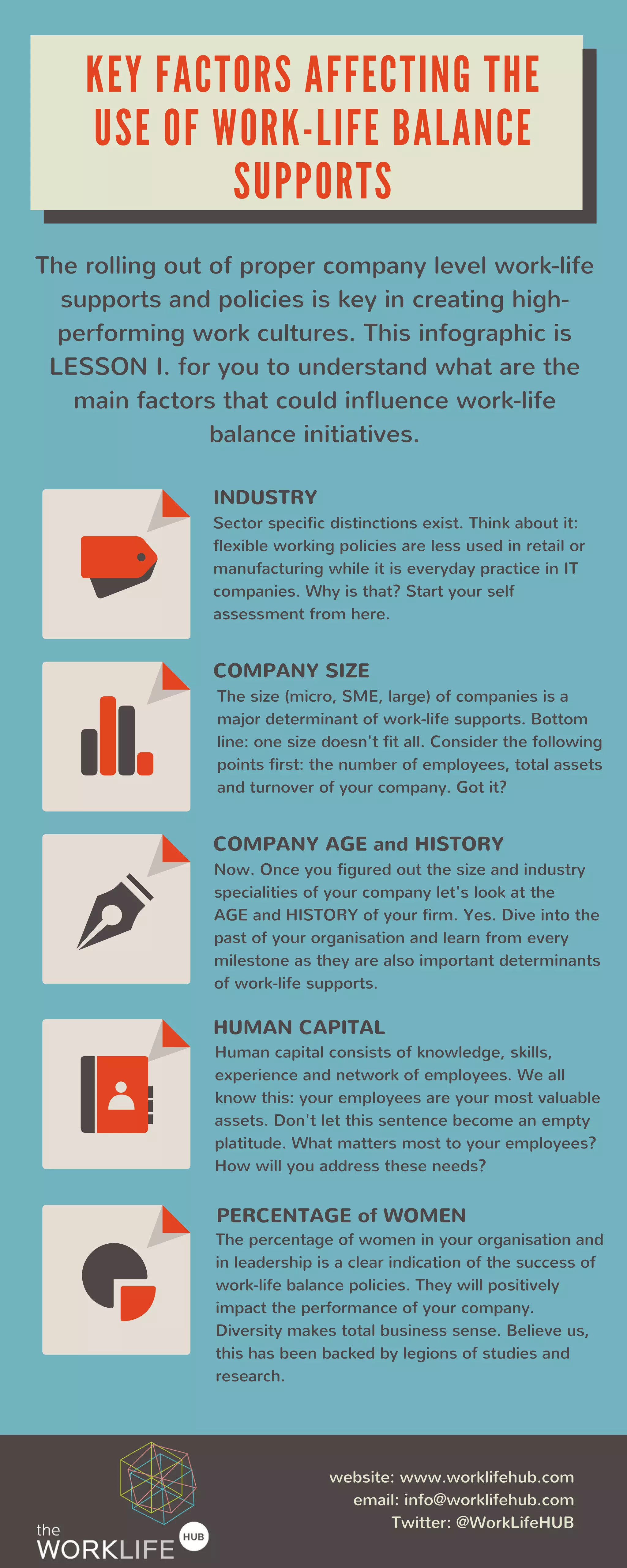
KEY FA CTORS A FFECTING THE
USE OF WORK- LIFE BA LA NCE
SUPPORTS
The rolling out of proper company level work-life
supports and policies is key in creating high-
performing work cultures. This infographic is
LESSON I. for you to understand what are the
main factors that could influence work-life
balance initiatives.
INDUSTRY
Sector specific distinctions exist. Think about it:
flexible working policies are less used in retail or
manufacturing while it is everyday practice in IT
companies. Why is that? Start your self
assessment from here.
COMPANY SIZE
The size (micro, SME, large) of companies is a
major determinant of work-life supports. Bottom
line: one size doesn't fit all. Consider the following
points first: the number of employees, total assets
and turnover of your company. Got it?
COMPANY AGE and HISTORY
Now. Once you figured out the size and industry
specialities of your company let's look at the
AGE and HISTORY of your firm. Yes. Dive into the
past of your organisation and learn from every
milestone as they are also important determinants
of work-life supports.
HUMAN CAPITAL
Human capital consists of knowledge, skills,
experience and network of employees. We all
know this: your employees are your most valuable
assets. Don't let this sentence become an empty
platitude. What matters most to your employees?
How will you address these needs?
The percentage of women in your organisation and
in leadership is a clear indication of the success of
work-life balance policies. They will positively
impact the performance of your company.
Diversity makes total business sense. Believe us,
this has been backed by legions of studies and
research.
website: www.worklifehub.com
email: info@worklifehub.com
Twitter: @WorkLifeHUB
PERCENTAGE of WOMEN

What are the key factors when setting up organisational work life balance policies-

  • 1.
    KEY FA CTORSA FFECTING THE USE OF WORK- LIFE BA LA NCE SUPPORTS The rolling out of proper company level work-life supports and policies is key in creating high- performing work cultures. This infographic is LESSON I. for you to understand what are the main factors that could influence work-life balance initiatives. INDUSTRY Sector specific distinctions exist. Think about it: flexible working policies are less used in retail or manufacturing while it is everyday practice in IT companies. Why is that? Start your self assessment from here. COMPANY SIZE The size (micro, SME, large) of companies is a major determinant of work-life supports. Bottom line: one size doesn't fit all. Consider the following points first: the number of employees, total assets and turnover of your company. Got it? COMPANY AGE and HISTORY Now. Once you figured out the size and industry specialities of your company let's look at the AGE and HISTORY of your firm. Yes. Dive into the past of your organisation and learn from every milestone as they are also important determinants of work-life supports. HUMAN CAPITAL Human capital consists of knowledge, skills, experience and network of employees. We all know this: your employees are your most valuable assets. Don't let this sentence become an empty platitude. What matters most to your employees? How will you address these needs? The percentage of women in your organisation and in leadership is a clear indication of the success of work-life balance policies. They will positively impact the performance of your company. Diversity makes total business sense. Believe us, this has been backed by legions of studies and research. website: www.worklifehub.com email: info@worklifehub.com Twitter: @WorkLifeHUB PERCENTAGE of WOMEN