WHAT ARE
ENDPOINT
DEVICES?
www.digitdefence.com
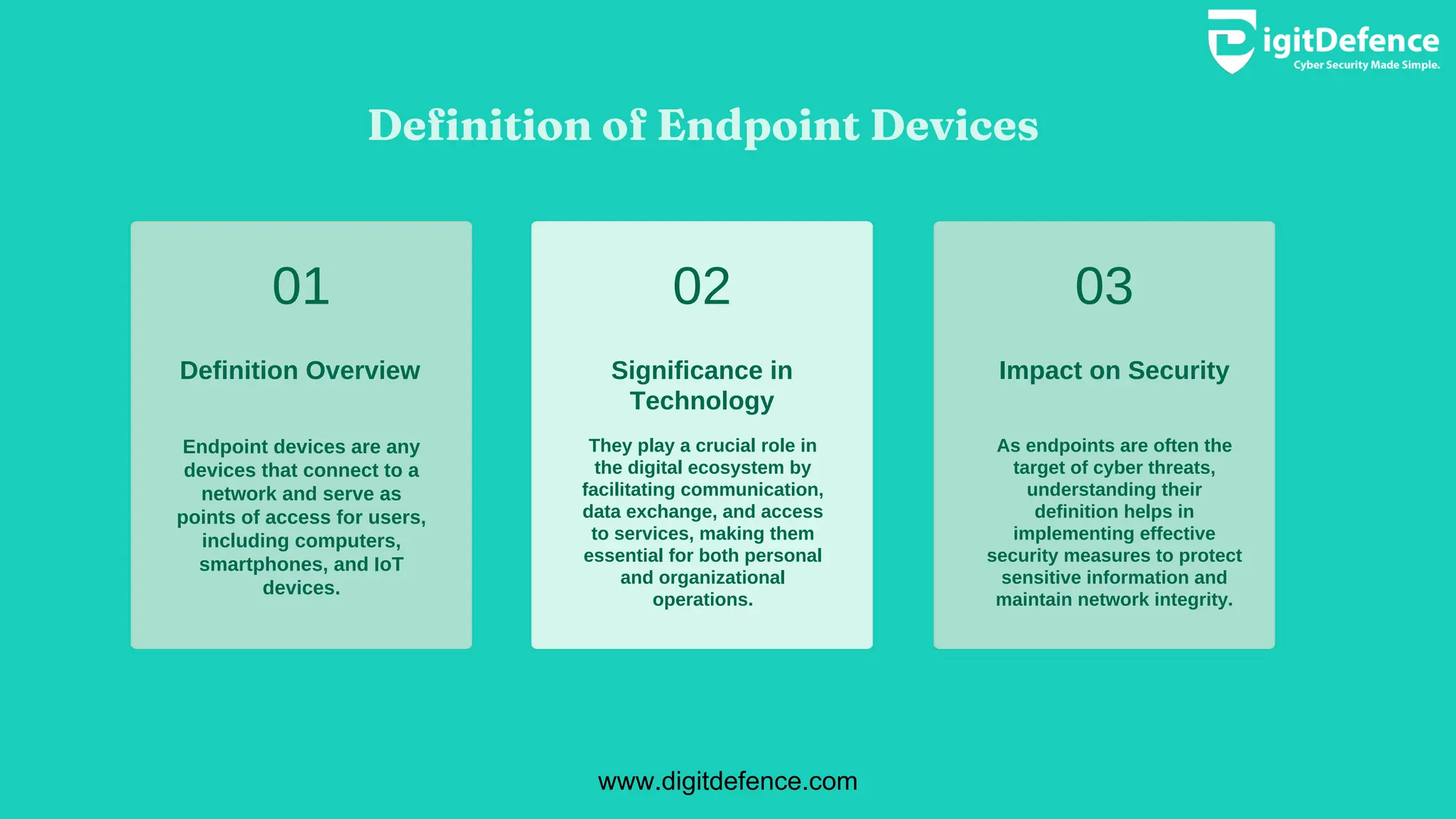
Definition of Endpoint Devices
01 02 03
Definition Overview Significance in
Technology
Impact on Security
Endpoint devices are any
devices that connect to a
network and serve as
points of access for users,
including computers,
smartphones, and IoT
devices.
They play a crucial role in
the digital ecosystem by
facilitating communication,
data exchange, and access
to services, making them
essential for both personal
and organizational
operations.
As endpoints are often the
target of cyber threats,
understanding their
definition helps in
implementing effective
security measures to protect
sensitive information and
maintain network integrity.
www.digitdefence.com
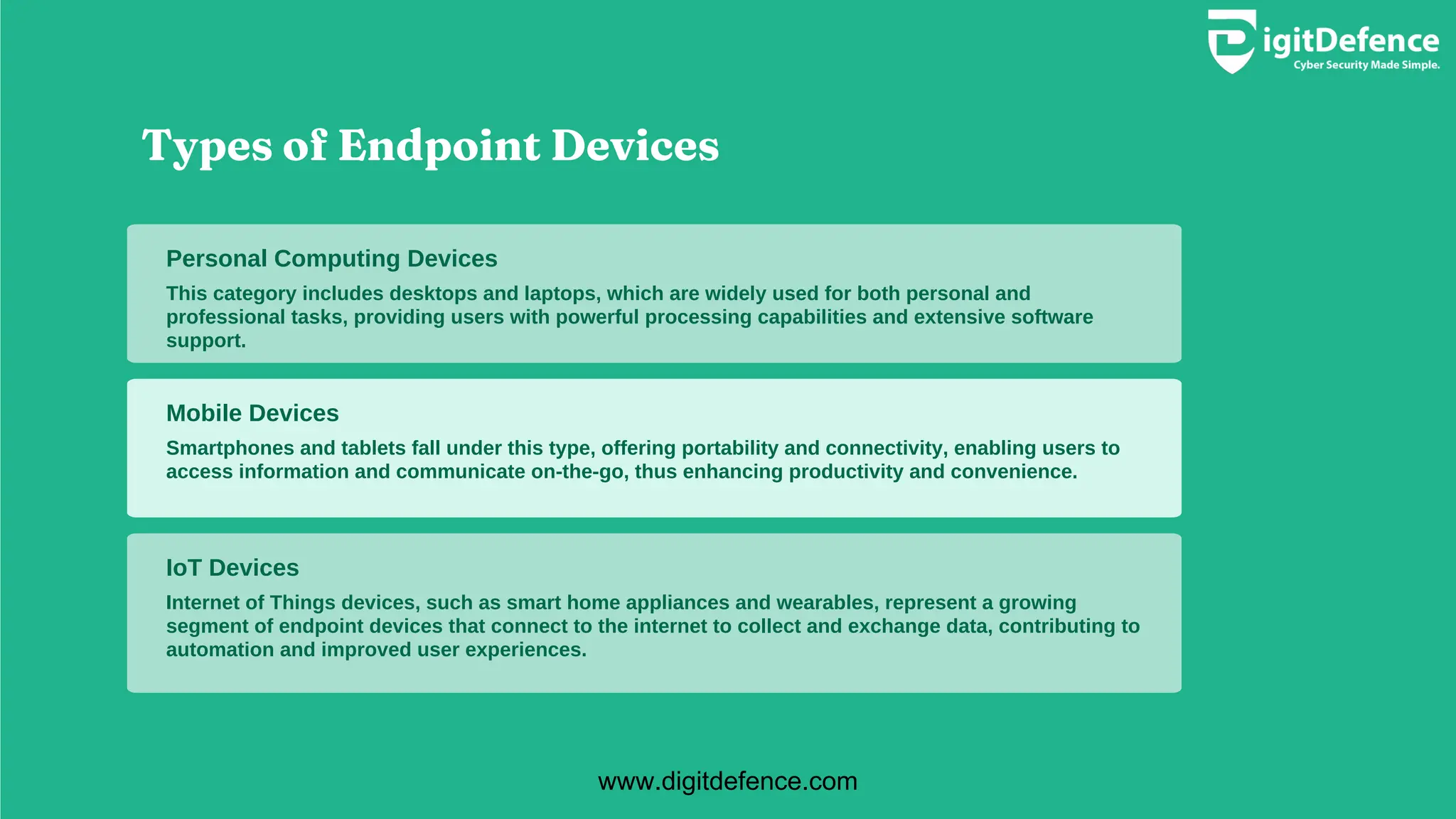
Personal Computing Devices
Mobile Devices
IoT Devices
This category includes desktops and laptops, which are widely used for both personal and
professional tasks, providing users with powerful processing capabilities and extensive software
support.
Smartphones and tablets fall under this type, offering portability and connectivity, enabling users to
access information and communicate on-the-go, thus enhancing productivity and convenience.
Internet of Things devices, such as smart home appliances and wearables, represent a growing
segment of endpoint devices that connect to the internet to collect and exchange data, contributing to
automation and improved user experiences.
Types of Endpoint Devices
www.digitdefence.com
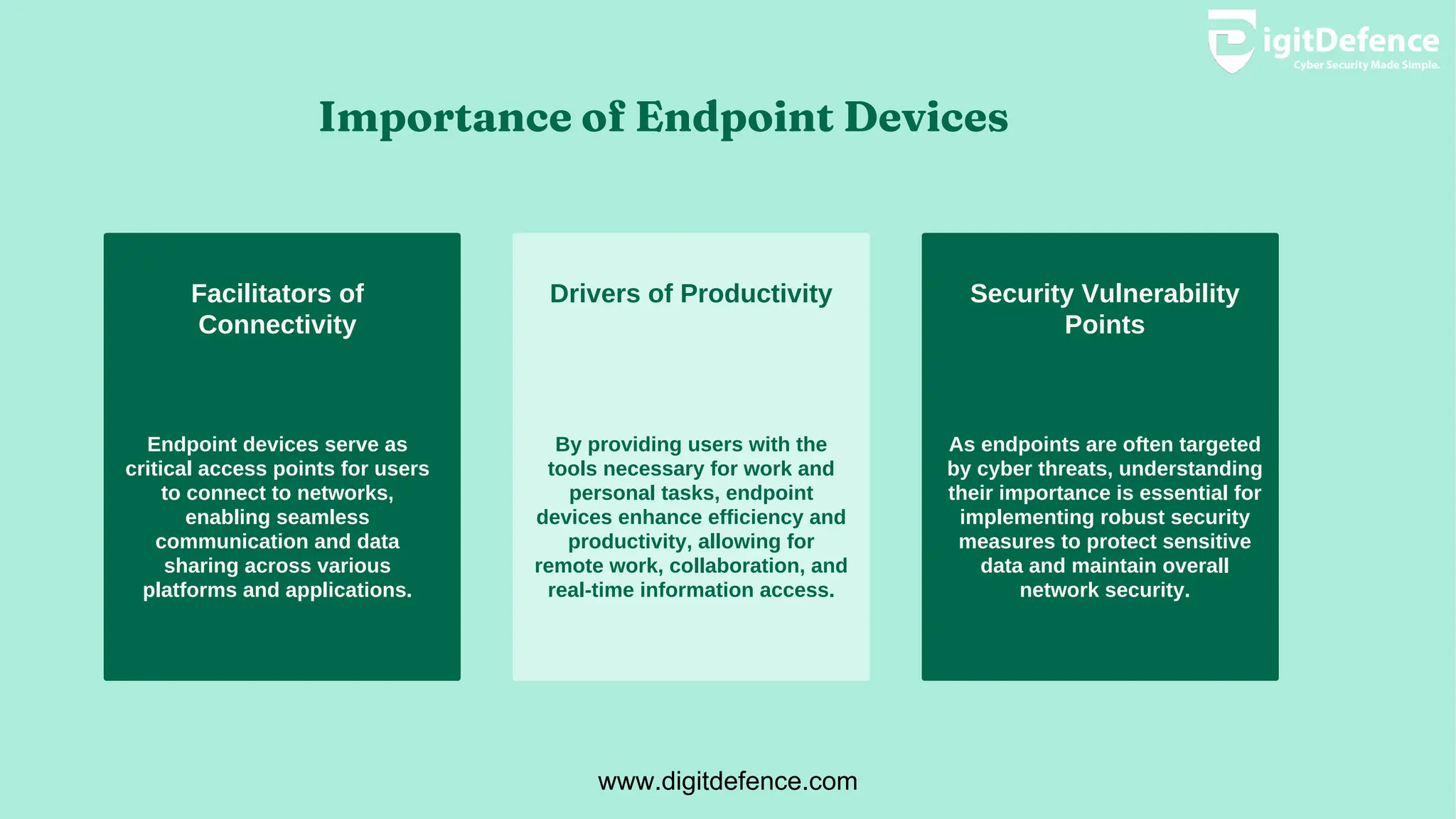
Importance of Endpoint Devices
Facilitators of
Connectivity
Endpoint devices serve as
critical access points for users
to connect to networks,
enabling seamless
communication and data
sharing across various
platforms and applications.
Drivers of Productivity
By providing users with the
tools necessary for work and
personal tasks, endpoint
devices enhance efficiency and
productivity, allowing for
remote work, collaboration, and
real-time information access.
Security Vulnerability
Points
As endpoints are often targeted
by cyber threats, understanding
their importance is essential for
implementing robust security
measures to protect sensitive
data and maintain overall
network security.
www.digitdefence.com
Personal Computers and Laptops
01 02 03
Role in Networking Diverse
Functionality
Security Challenges
Personal computers and
laptops serve as primary
endpoint devices that
connect users to
networks, enabling
access to resources,
applications, and the
internet for both personal
and professional use.
These devices support a
wide range of functions,
from basic tasks like web
browsing and document
editing to complex
operations such as
software development and
graphic design,
showcasing their versatility
in various environments.
As common targets for
cyberattacks, personal
computers and laptops
require robust security
measures, including
antivirus software and
firewalls, to protect
sensitive data from threats
like malware and phishing
attacks.
www.digitdefence.com
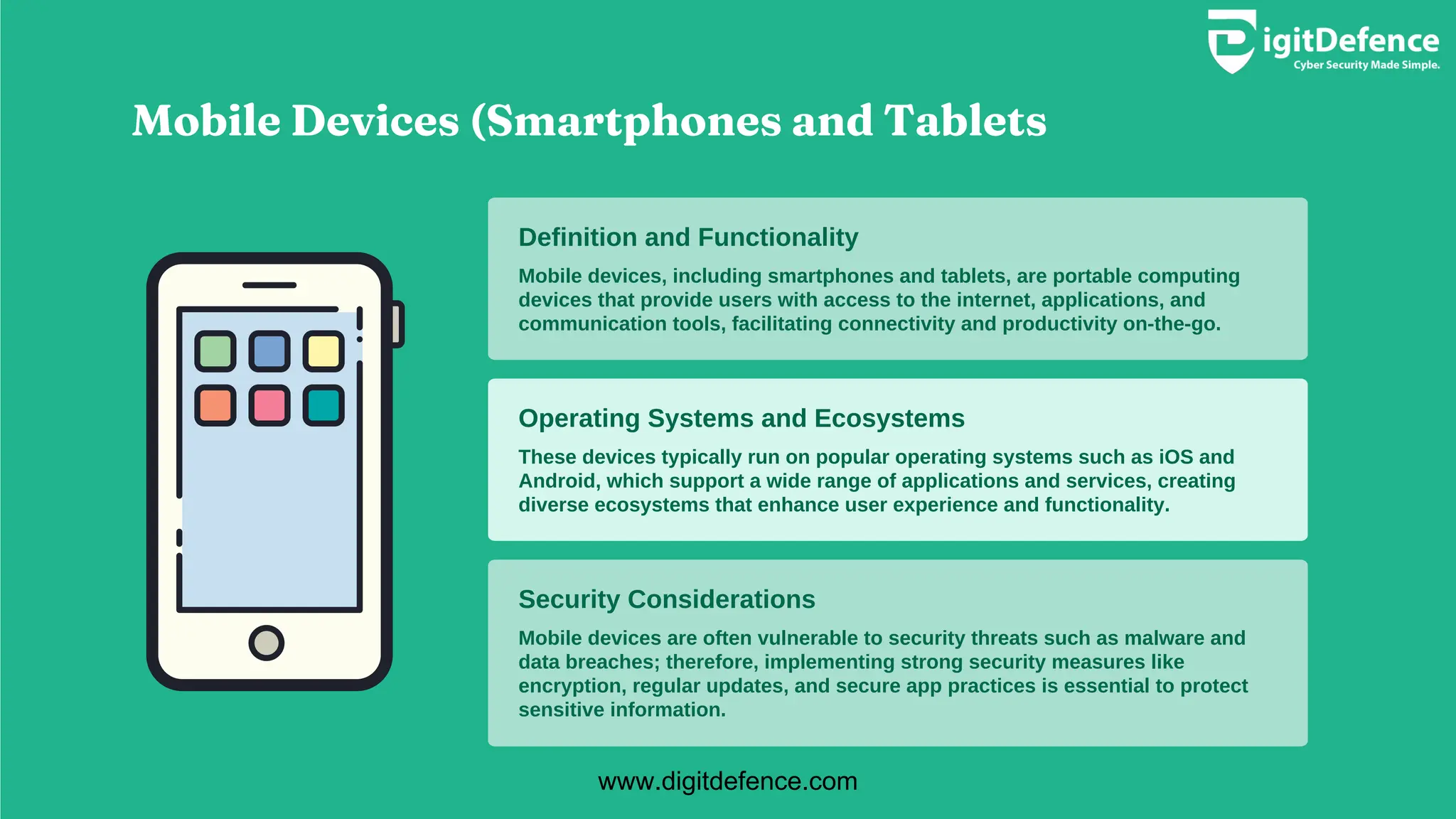
Definition and Functionality
Operating Systems and Ecosystems
Security Considerations
Mobile devices, including smartphones and tablets, are portable computing
devices that provide users with access to the internet, applications, and
communication tools, facilitating connectivity and productivity on-the-go.
These devices typically run on popular operating systems such as iOS and
Android, which support a wide range of applications and services, creating
diverse ecosystems that enhance user experience and functionality.
Mobile devices are often vulnerable to security threats such as malware and
data breaches; therefore, implementing strong security measures like
encryption, regular updates, and secure app practices is essential to protect
sensitive information.
Mobile Devices (Smartphones and Tablets
www.digitdefence.com
IoT Devices (Smart Home Devices)
Definition of IoT Devices Examples of Smart Home
Devices
Impact on Daily Life
IoT devices, or Internet of Things
devices, are interconnected
gadgets that communicate over
the internet, enabling automation
and remote control of various
home functions, such as lighting,
heating, and security systems.
Common examples include smart
thermostats, smart speakers, and
security cameras, which enhance
convenience and energy efficiency
while providing users with real-
time monitoring and control
through mobile applications.
The integration of IoT devices into
homes transforms daily living by
improving comfort, increasing
energy savings, and enhancing
security, ultimately leading to a
more efficient and connected
lifestyle.
www.digitdefence.com
Vulnerabilities of Endpoint Devices
01 02 03
Common Attack
Vectors
Inadequate Security
Measures
Data Leakage Risks
Endpoint devices are
susceptible to various
attack vectors, including
malware, phishing, and
ransomware, which exploit
software vulnerabilities or
user behavior to gain
unauthorized access to
sensitive data.
Many endpoint devices lack
robust security
configurations, such as
outdated software or weak
passwords, making them
easy targets for
cybercriminals who can
exploit these weaknesses to
infiltrate networks.
Endpoint devices often
store sensitive information
locally, increasing the risk
of data leakage through
physical theft or unsecured
connections, necessitating
strong encryption and data
protection strategies to
mitigate these threats.
www.digitdefence.com
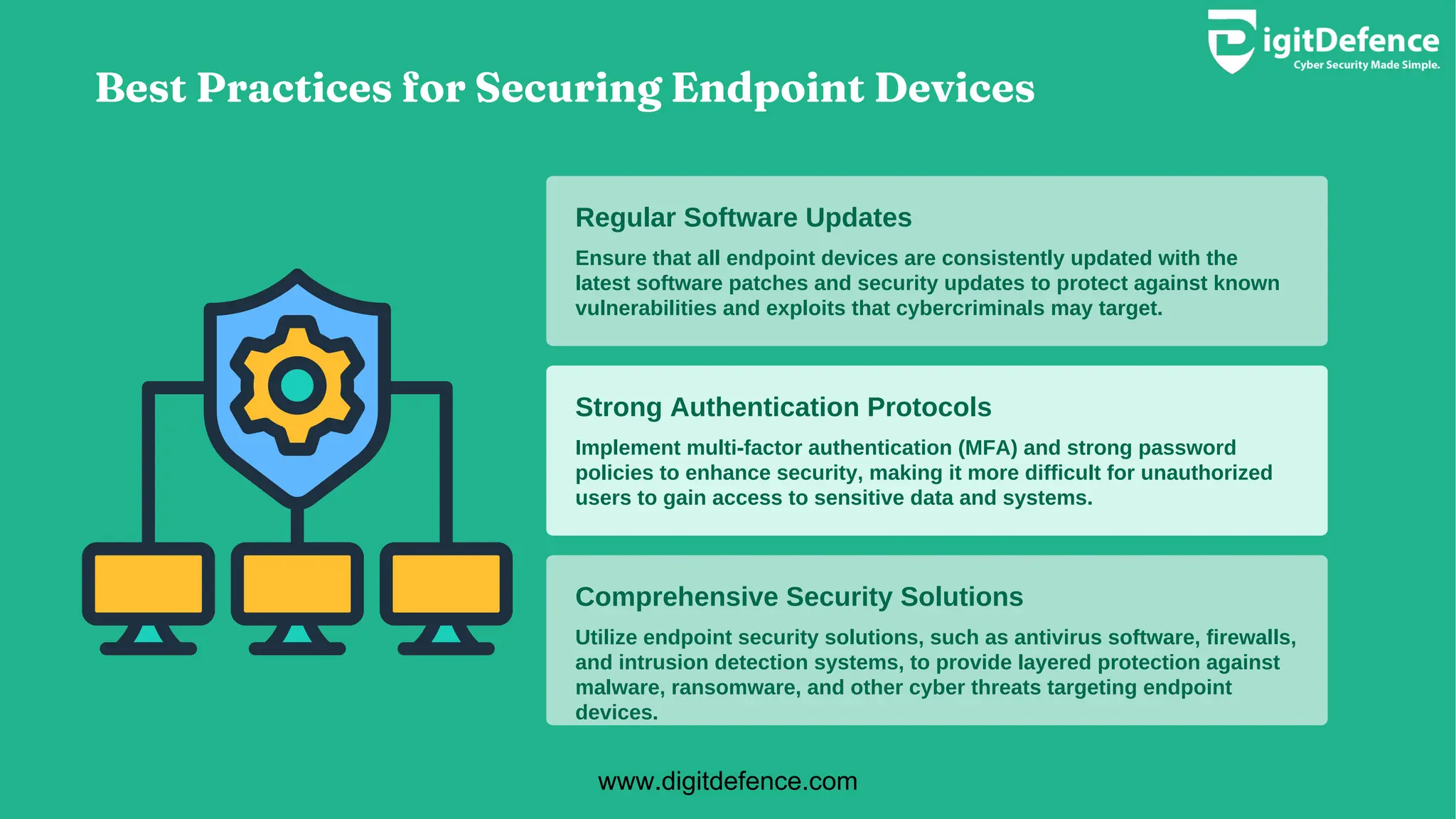
Best Practices for Securing Endpoint Devices
Regular Software Updates
Strong Authentication Protocols
Comprehensive Security Solutions
Ensure that all endpoint devices are consistently updated with the
latest software patches and security updates to protect against known
vulnerabilities and exploits that cybercriminals may target.
Implement multi-factor authentication (MFA) and strong password
policies to enhance security, making it more difficult for unauthorized
users to gain access to sensitive data and systems.
Utilize endpoint security solutions, such as antivirus software, firewalls,
and intrusion detection systems, to provide layered protection against
malware, ransomware, and other cyber threats targeting endpoint
devices.
www.digitdefence.com

What Are Endpoint Devices_.presentation.pdf

  • 1.
  • 2.
    Definition of EndpointDevices 01 02 03 Definition Overview Significance in Technology Impact on Security Endpoint devices are any devices that connect to a network and serve as points of access for users, including computers, smartphones, and IoT devices. They play a crucial role in the digital ecosystem by facilitating communication, data exchange, and access to services, making them essential for both personal and organizational operations. As endpoints are often the target of cyber threats, understanding their definition helps in implementing effective security measures to protect sensitive information and maintain network integrity. www.digitdefence.com
  • 3.
    Personal Computing Devices MobileDevices IoT Devices This category includes desktops and laptops, which are widely used for both personal and professional tasks, providing users with powerful processing capabilities and extensive software support. Smartphones and tablets fall under this type, offering portability and connectivity, enabling users to access information and communicate on-the-go, thus enhancing productivity and convenience. Internet of Things devices, such as smart home appliances and wearables, represent a growing segment of endpoint devices that connect to the internet to collect and exchange data, contributing to automation and improved user experiences. Types of Endpoint Devices www.digitdefence.com
  • 4.
    Importance of EndpointDevices Facilitators of Connectivity Endpoint devices serve as critical access points for users to connect to networks, enabling seamless communication and data sharing across various platforms and applications. Drivers of Productivity By providing users with the tools necessary for work and personal tasks, endpoint devices enhance efficiency and productivity, allowing for remote work, collaboration, and real-time information access. Security Vulnerability Points As endpoints are often targeted by cyber threats, understanding their importance is essential for implementing robust security measures to protect sensitive data and maintain overall network security. www.digitdefence.com
  • 5.
    Personal Computers andLaptops 01 02 03 Role in Networking Diverse Functionality Security Challenges Personal computers and laptops serve as primary endpoint devices that connect users to networks, enabling access to resources, applications, and the internet for both personal and professional use. These devices support a wide range of functions, from basic tasks like web browsing and document editing to complex operations such as software development and graphic design, showcasing their versatility in various environments. As common targets for cyberattacks, personal computers and laptops require robust security measures, including antivirus software and firewalls, to protect sensitive data from threats like malware and phishing attacks. www.digitdefence.com
  • 6.
    Definition and Functionality OperatingSystems and Ecosystems Security Considerations Mobile devices, including smartphones and tablets, are portable computing devices that provide users with access to the internet, applications, and communication tools, facilitating connectivity and productivity on-the-go. These devices typically run on popular operating systems such as iOS and Android, which support a wide range of applications and services, creating diverse ecosystems that enhance user experience and functionality. Mobile devices are often vulnerable to security threats such as malware and data breaches; therefore, implementing strong security measures like encryption, regular updates, and secure app practices is essential to protect sensitive information. Mobile Devices (Smartphones and Tablets www.digitdefence.com
  • 7.
    IoT Devices (SmartHome Devices) Definition of IoT Devices Examples of Smart Home Devices Impact on Daily Life IoT devices, or Internet of Things devices, are interconnected gadgets that communicate over the internet, enabling automation and remote control of various home functions, such as lighting, heating, and security systems. Common examples include smart thermostats, smart speakers, and security cameras, which enhance convenience and energy efficiency while providing users with real- time monitoring and control through mobile applications. The integration of IoT devices into homes transforms daily living by improving comfort, increasing energy savings, and enhancing security, ultimately leading to a more efficient and connected lifestyle. www.digitdefence.com
  • 8.
    Vulnerabilities of EndpointDevices 01 02 03 Common Attack Vectors Inadequate Security Measures Data Leakage Risks Endpoint devices are susceptible to various attack vectors, including malware, phishing, and ransomware, which exploit software vulnerabilities or user behavior to gain unauthorized access to sensitive data. Many endpoint devices lack robust security configurations, such as outdated software or weak passwords, making them easy targets for cybercriminals who can exploit these weaknesses to infiltrate networks. Endpoint devices often store sensitive information locally, increasing the risk of data leakage through physical theft or unsecured connections, necessitating strong encryption and data protection strategies to mitigate these threats. www.digitdefence.com
  • 9.
    Best Practices forSecuring Endpoint Devices Regular Software Updates Strong Authentication Protocols Comprehensive Security Solutions Ensure that all endpoint devices are consistently updated with the latest software patches and security updates to protect against known vulnerabilities and exploits that cybercriminals may target. Implement multi-factor authentication (MFA) and strong password policies to enhance security, making it more difficult for unauthorized users to gain access to sensitive data and systems. Utilize endpoint security solutions, such as antivirus software, firewalls, and intrusion detection systems, to provide layered protection against malware, ransomware, and other cyber threats targeting endpoint devices. www.digitdefence.com